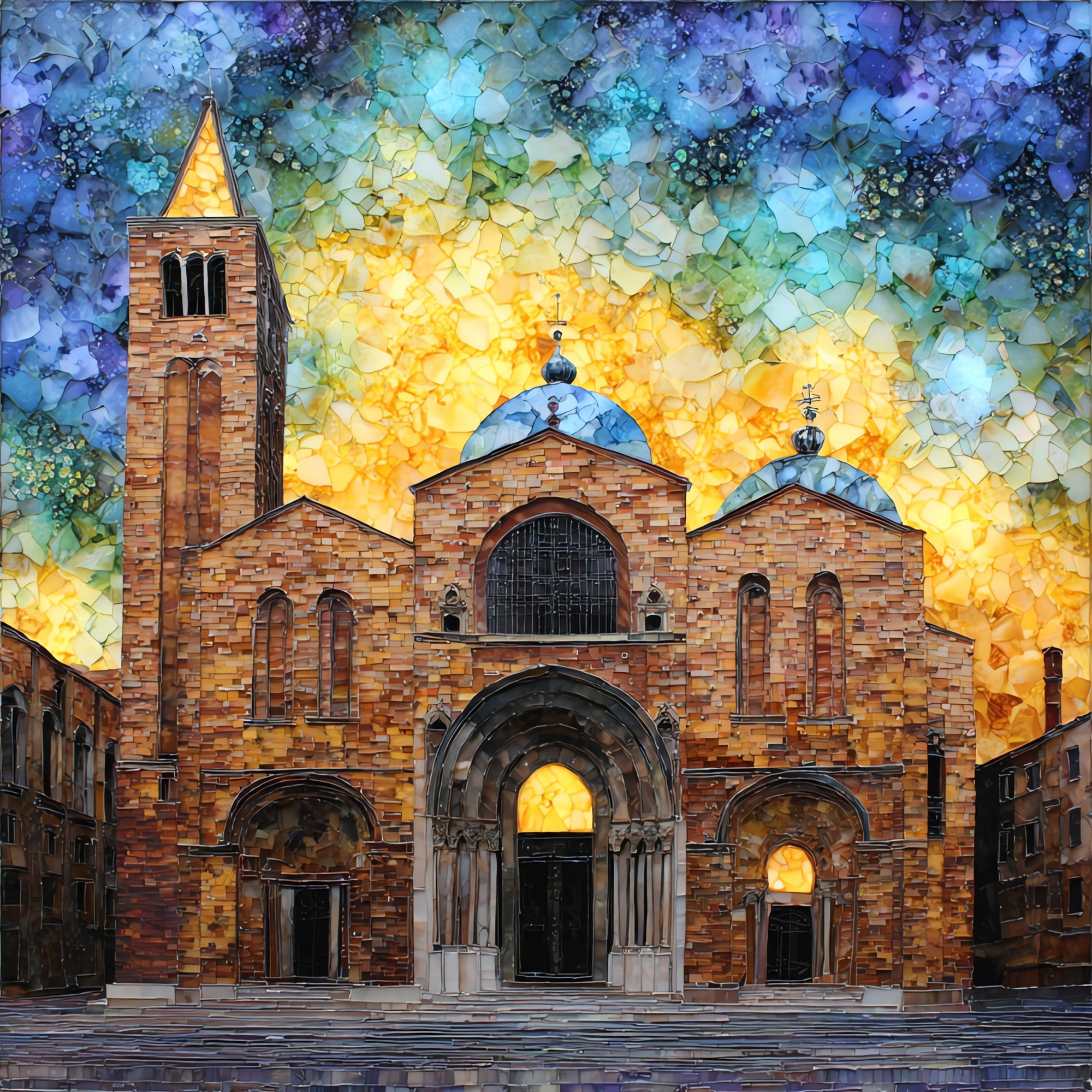
Frari Basilica
— the gold at the end of the long brick dark.
Not only on a wall.
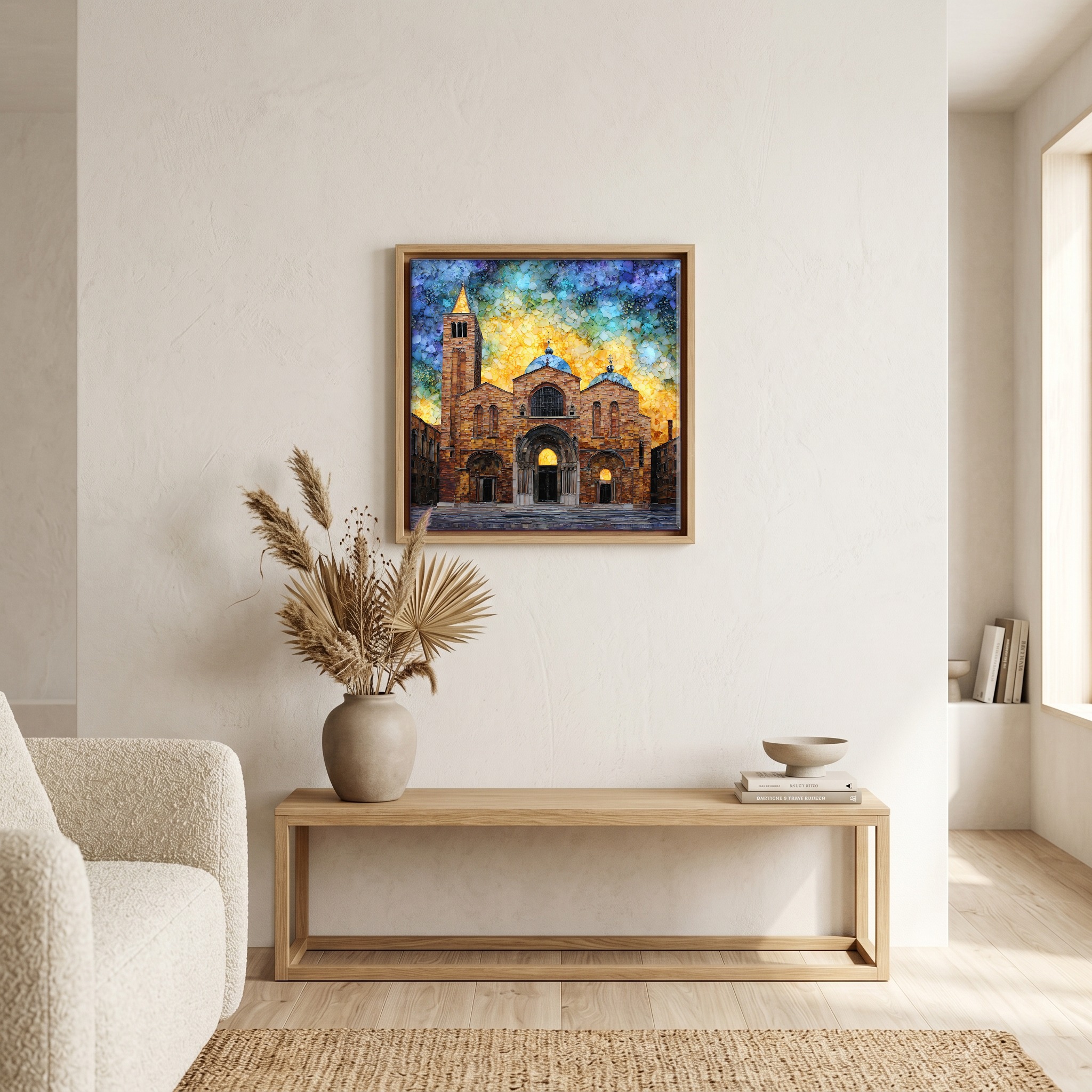
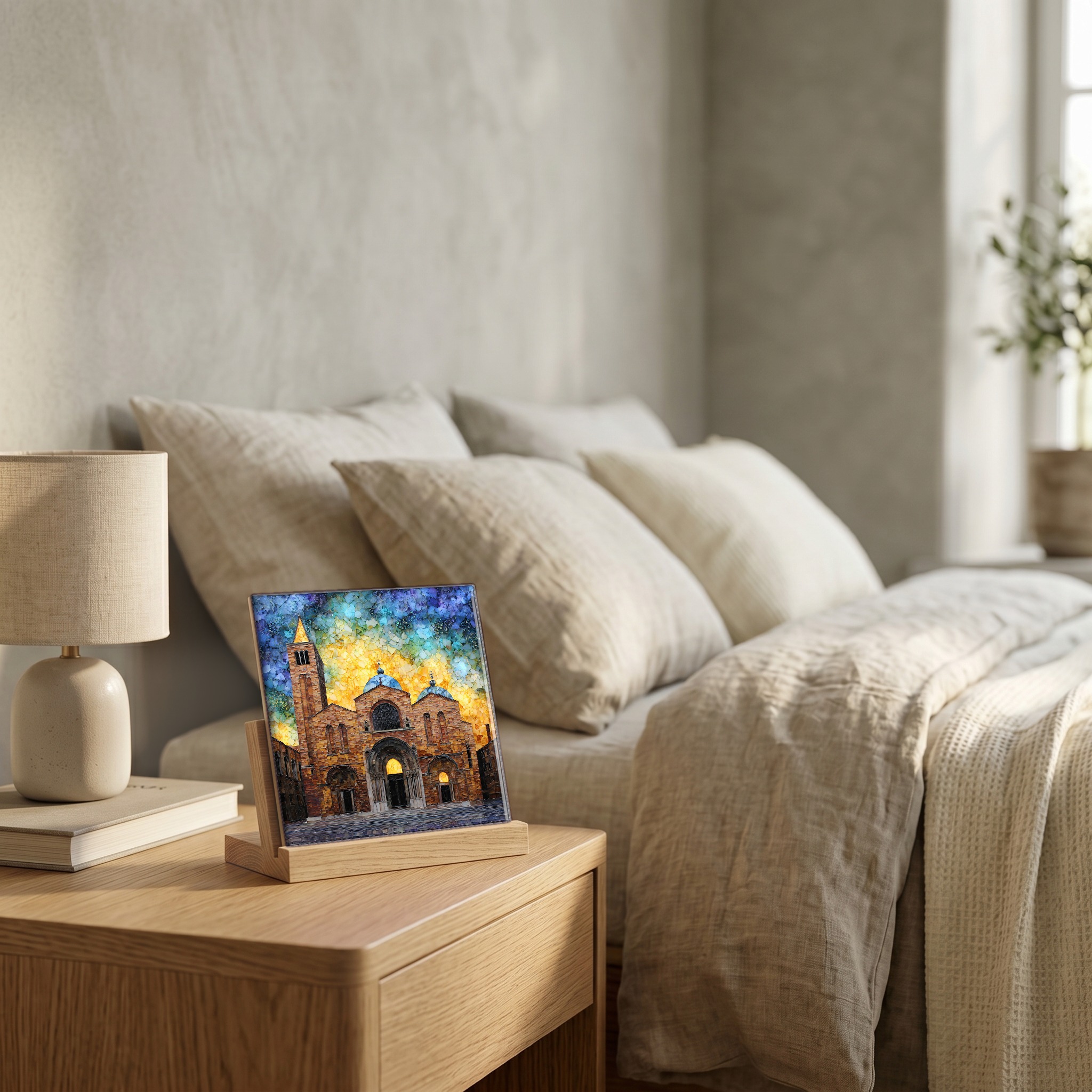
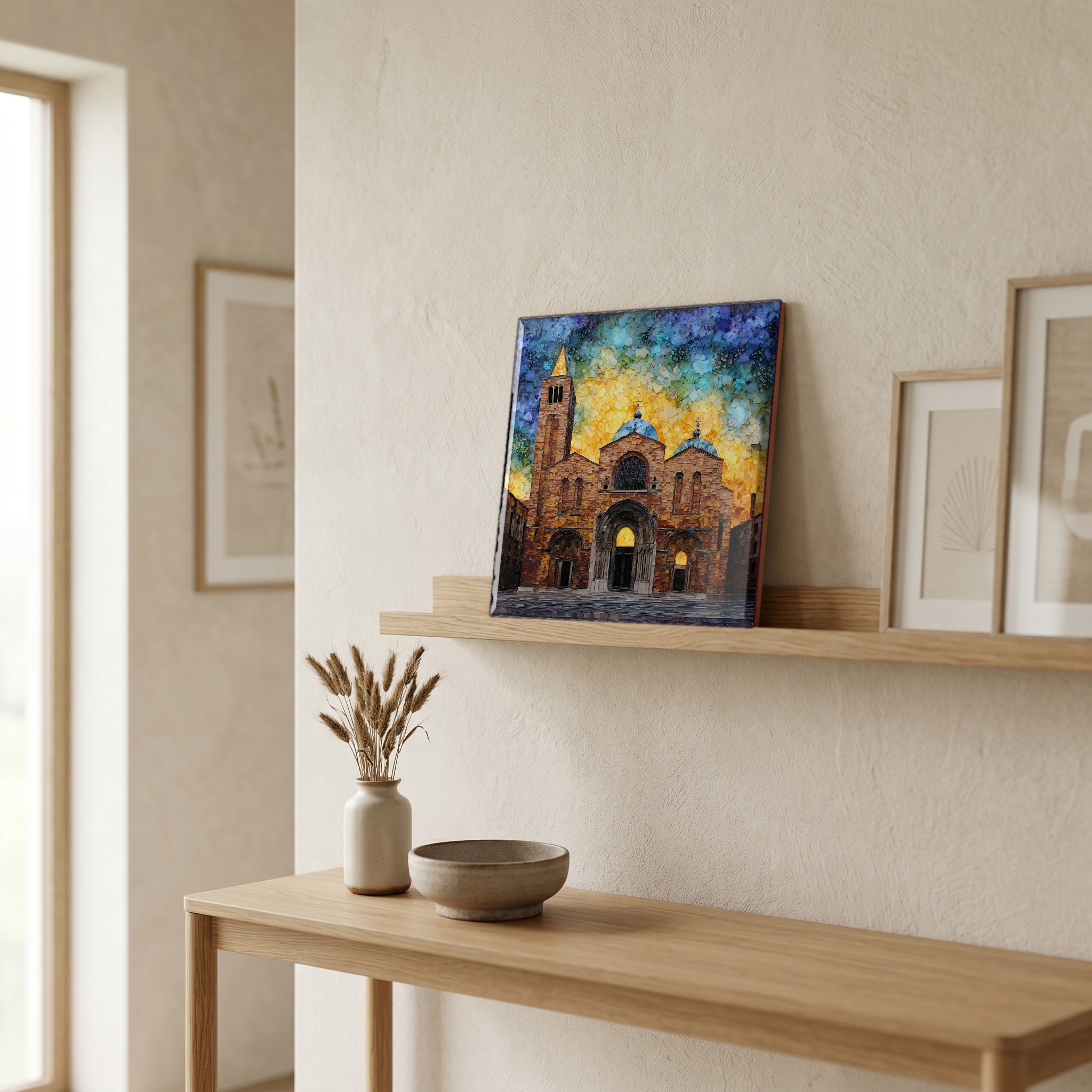
“A brick Gothic church in San Polo, the quiet quarter of Venice, west of the crowds at the Rialto. The Franciscans started it around 1330 and finished a century and a half later. Inside, the nave runs long and dim until it reaches the high altar, where Titian's Assumption has hung since 1518, a wall of red and gold the whole building seems built to carry. Past it, a carved wooden choir still stands in the middle of the floor, the way it did in 1475. People come in talking and go quiet without being asked.
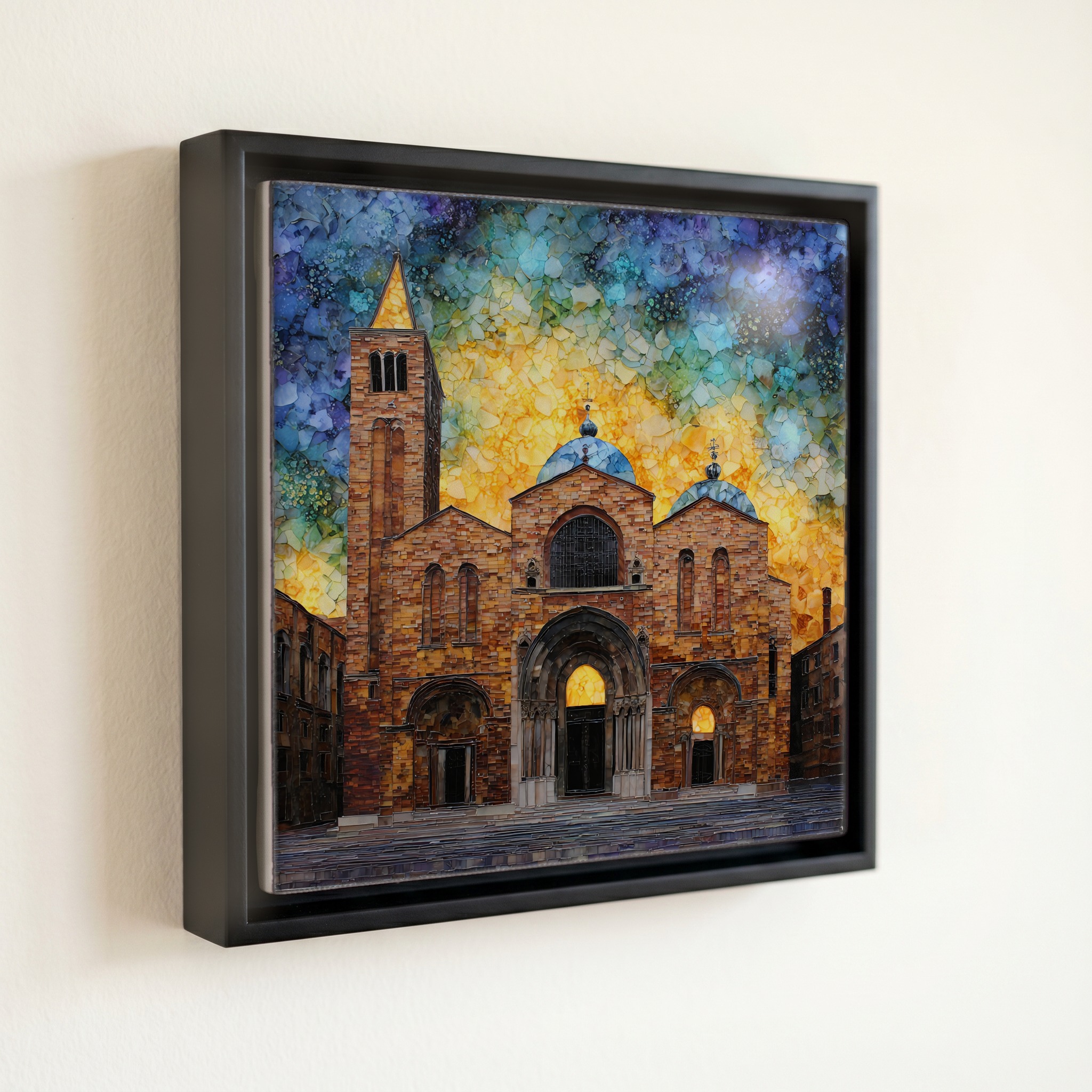
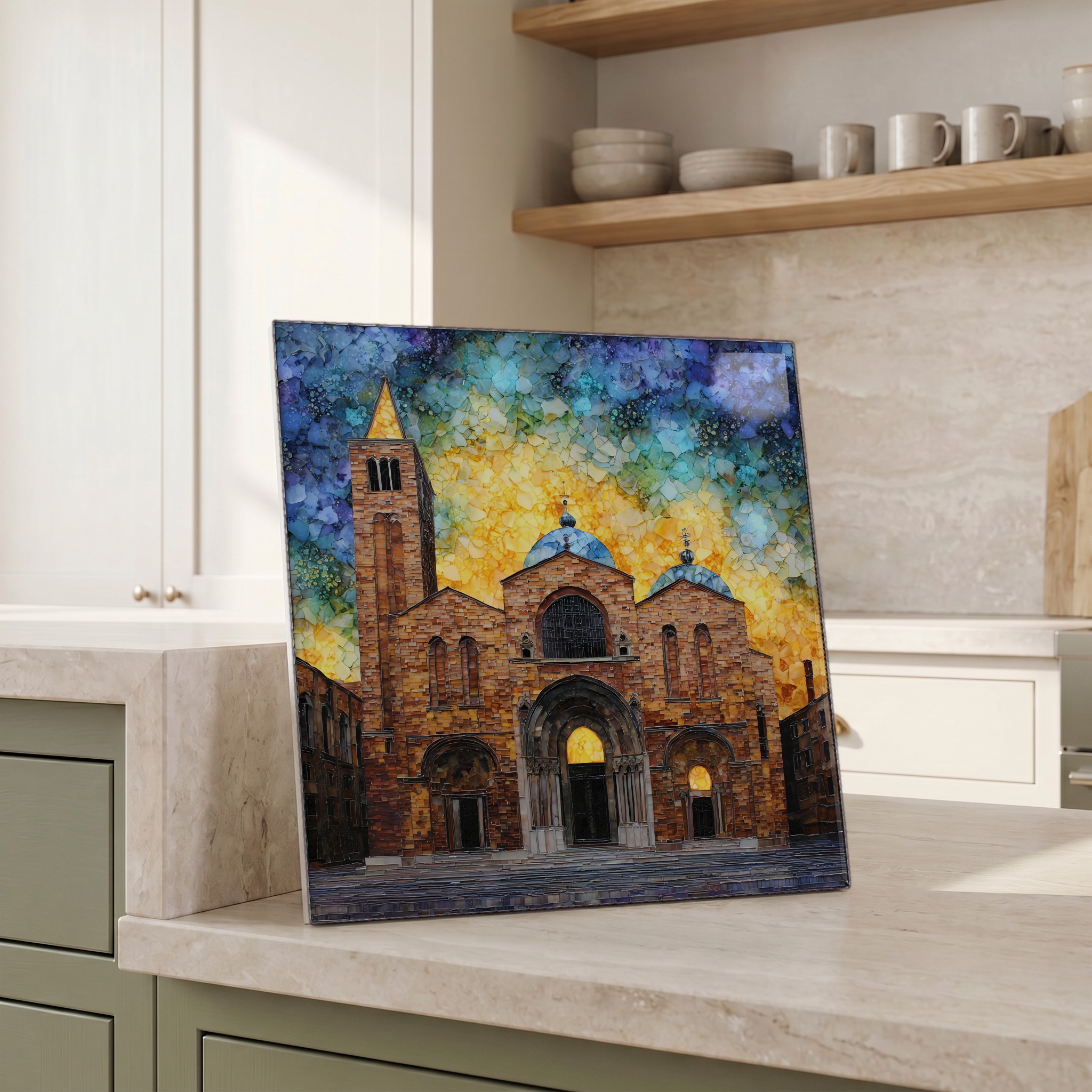
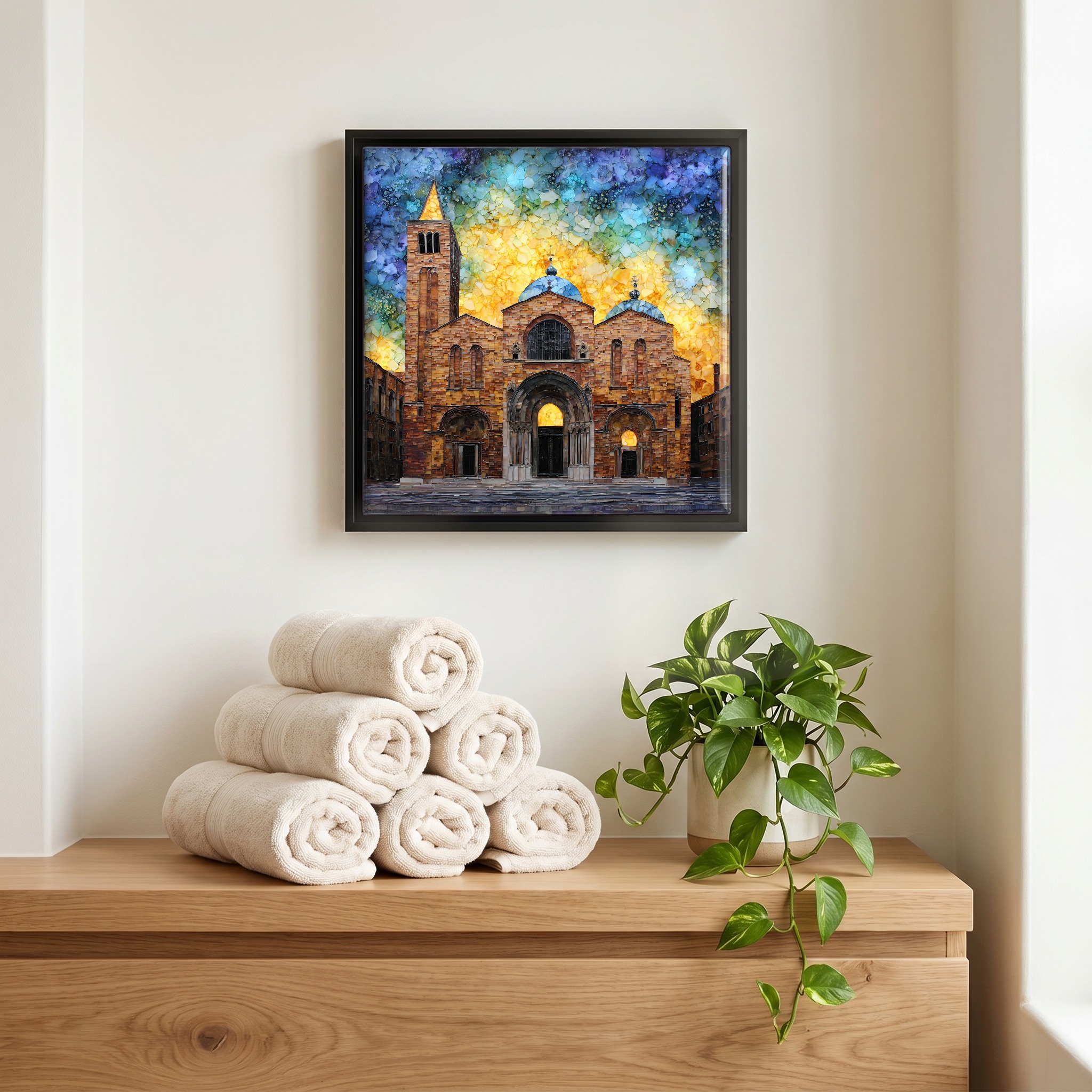
Frari Basilica, on ceramic.
Each tile is finished by hand in our Knoxville studio. Artwork is slowly infused into the ceramic surface under high heat and pressure, and rests beneath a thin glossy finish. The colour lives in the surface, not on top of it.
Pick any four 4-inch tiles — National Parks you've been to, a Smokies set, the four seasons of one place. $ for a set of , cork-backed, ready to live on the table.
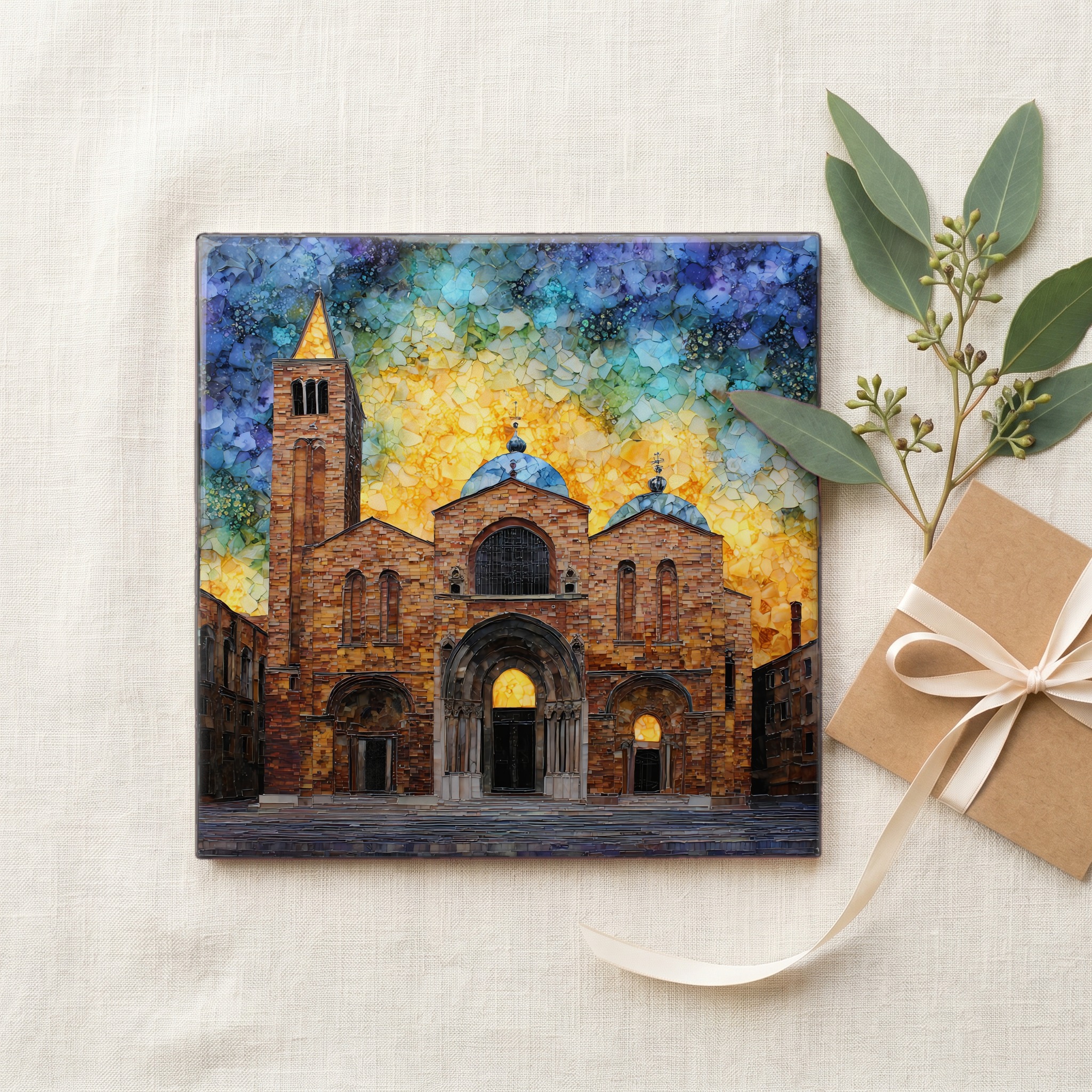
Each tile ships in a kraft box, tied with cream ribbon, with a handwritten note from the studio if you'd like to add one.
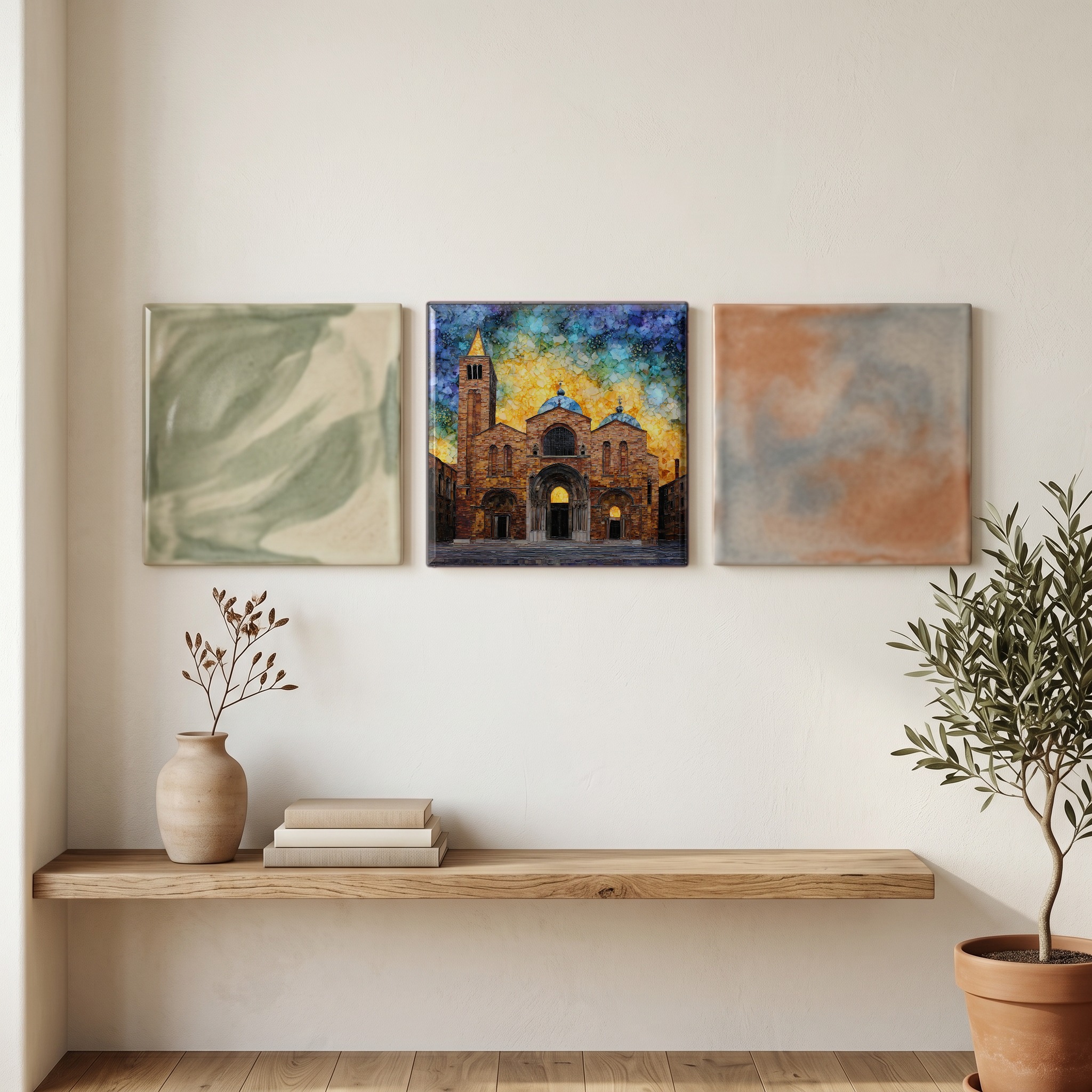
Three or five different vistas, hung together — a chapter of places you've been, or want to go.
The place, in three passes.
The Frari stands in Campo dei Frari, in the San Polo sestiere of Venice, the quieter half of the city west of the Grand Canal. The Franciscans were granted the land in 1231, under Doge Jacopo Tiepolo; the present Gothic church replaced an earlier one and was consecrated on 27 May 1492, after more than a century of building. It is one of the two great mendicant churches of Venice, the Franciscan counterpart to the Dominicans' Santi Giovanni e Paolo across the city. Today it belongs to the Chorus association of Venetian churches, which maintains it and a dozen others as working parishes open to visitors.
The church is Venetian Gothic, built of plain red brick rather than marble, its scale set to hold the large congregations Franciscan preaching drew. The campanile, completed in 1396, is the second-tallest bell tower in Venice after the one in Piazza San Marco, standing around 70 metres. Inside, the Frari keeps something most Venetian churches lost: a carved wooden choir for the friars, enclosed by a screen put up in 1475, still standing in the middle of the nave rather than tucked behind the altar. The screen splits the space in two, so the great hall opens only as you walk around it and the high altar arrives at the far end.
What draws most visitors is the art. Titian's Assumption of the Virgin, painted between 1516 and 1518, rises over the high altar in a surge of red and gold that reset Venetian painting; his Pesaro Madonna, finished in 1526, hangs on the nave wall nearby. The sacristy holds Giovanni Bellini's triptych of 1488, and a chapel keeps Donatello's wooden Saint John the Baptist. The Frari is also a burial church: Titian lies here, as does Doge Francesco Foscari, and Antonio Canova is remembered by a marble pyramid finished in 1827. It remains a working church and part of the Chorus circuit, so there is an admission charge and visitors are asked to stay quiet and cover their shoulders.