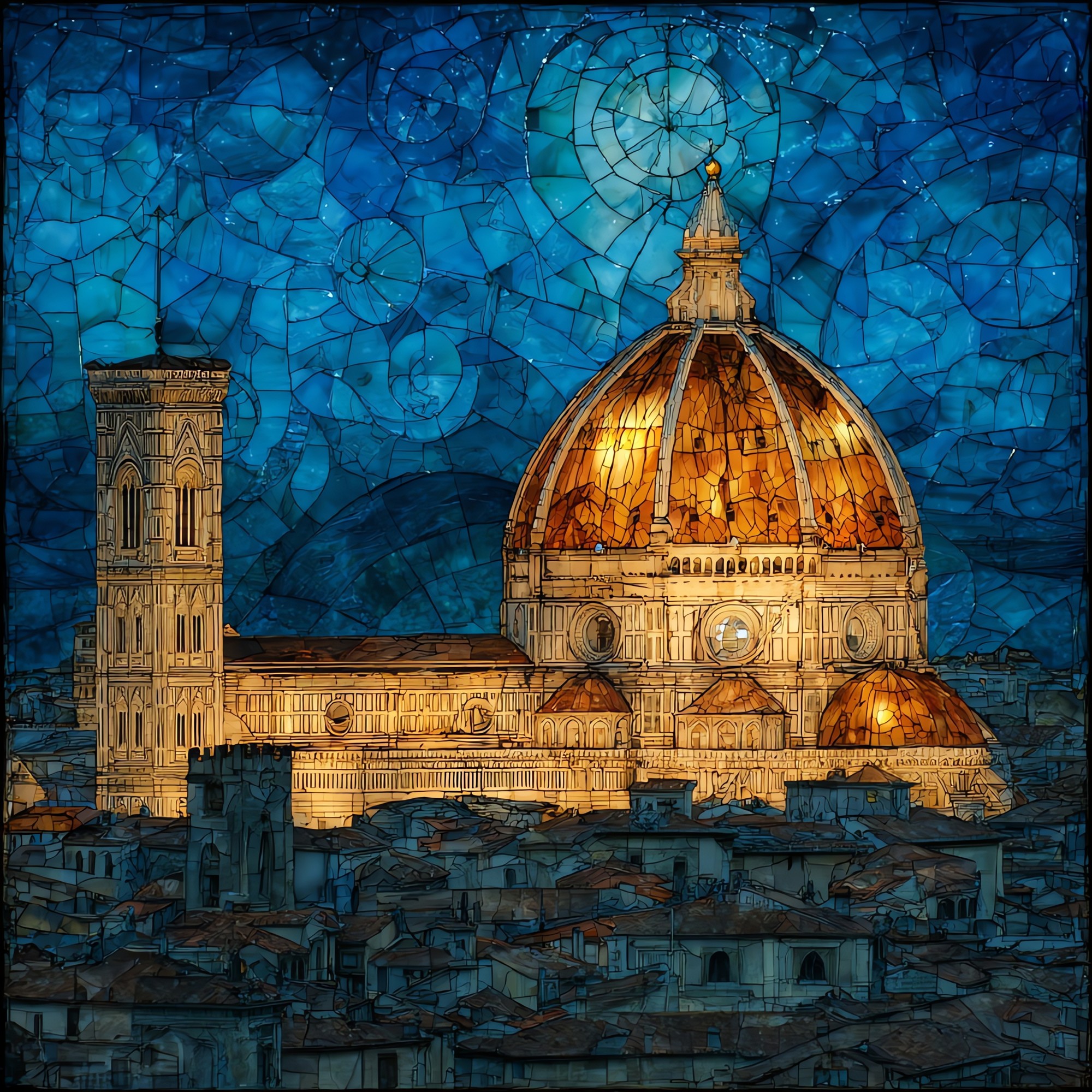
Florence Duomo
— — the dome the light keeps coming back to.
Not only on a wall.
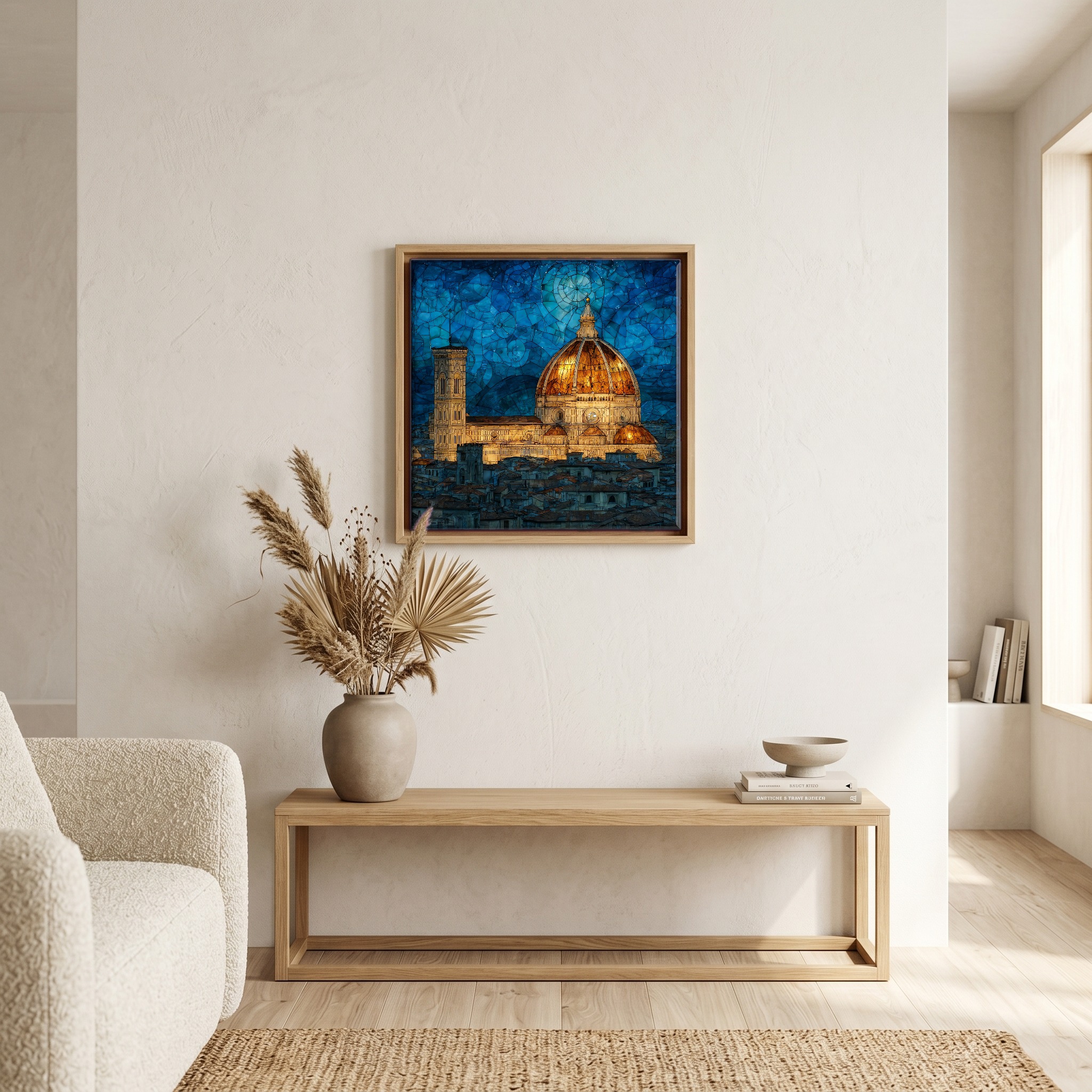
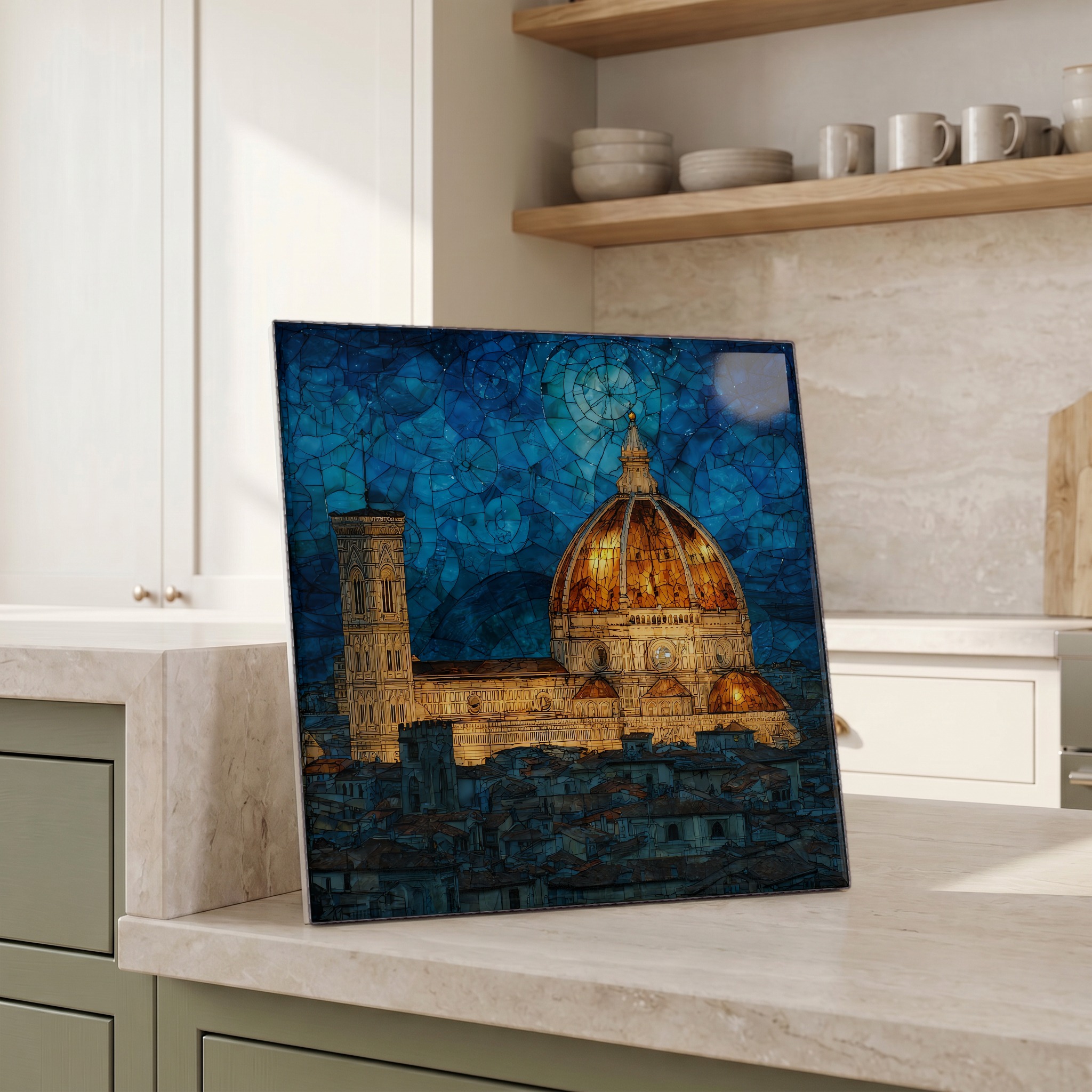
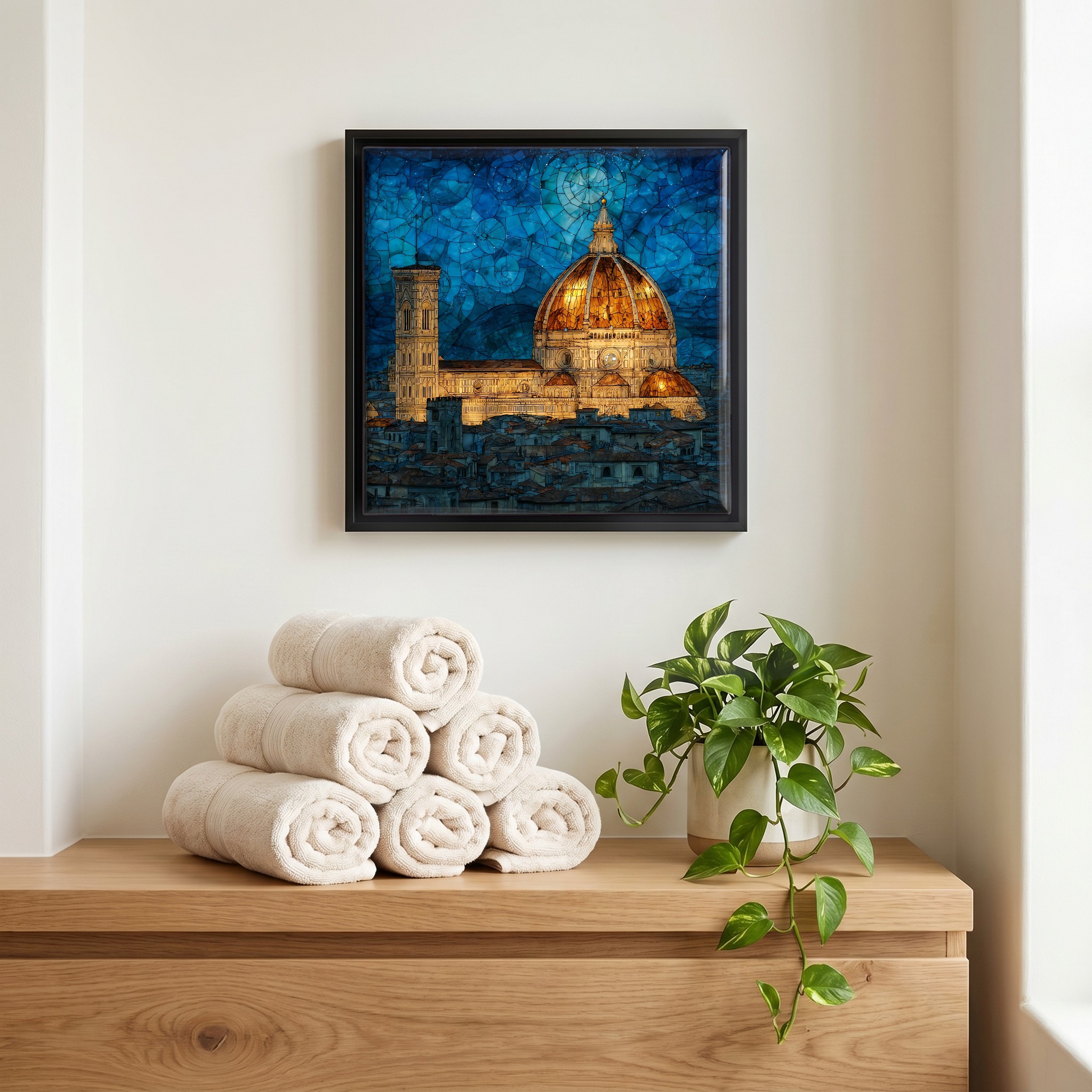
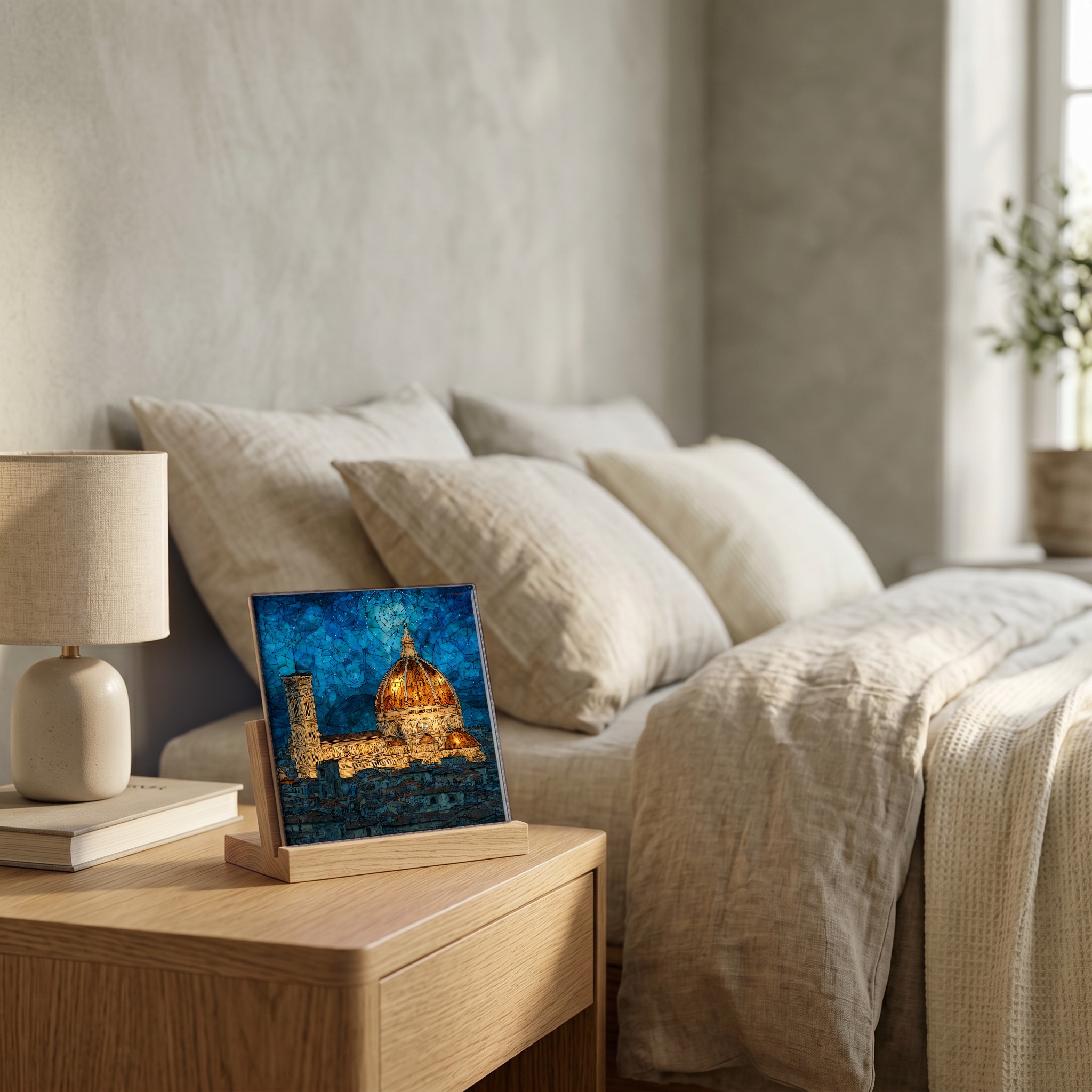
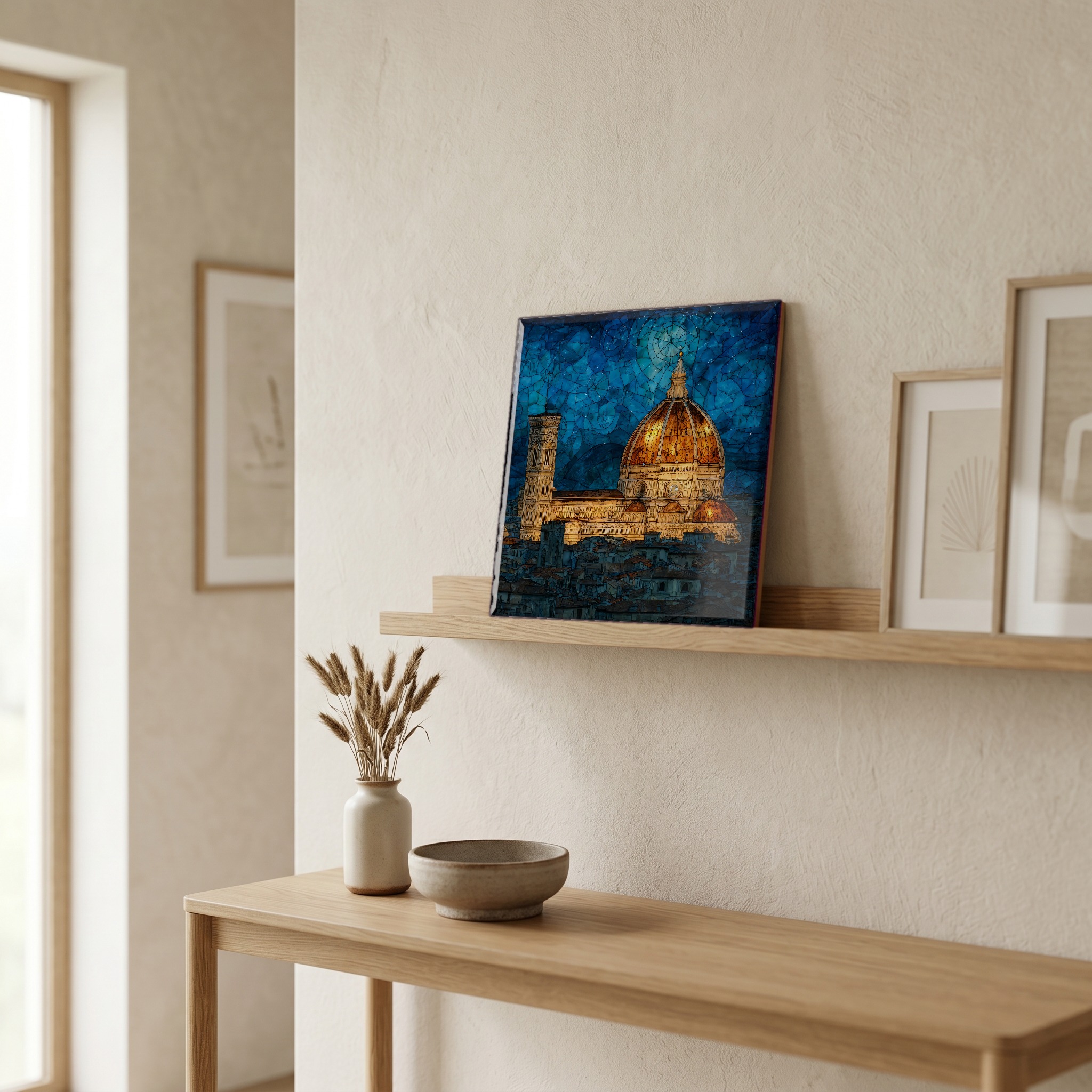
“Brunelleschi closed the dome in 1436 and Florence has been answering to it ever since. The cathedral sits in old Florence between the Arno and the hills of Fiesole, faced in white Carrara, green Prato, and pink Maremma marble that catches different light at every hour. The dome is brick. Four million of them, set in a herringbone pattern that holds itself up without a centring frame, an engineering method no one had managed before. From a window in Oltrarno, or a rooftop in San Lorenzo, it's the thing the eye finds first.
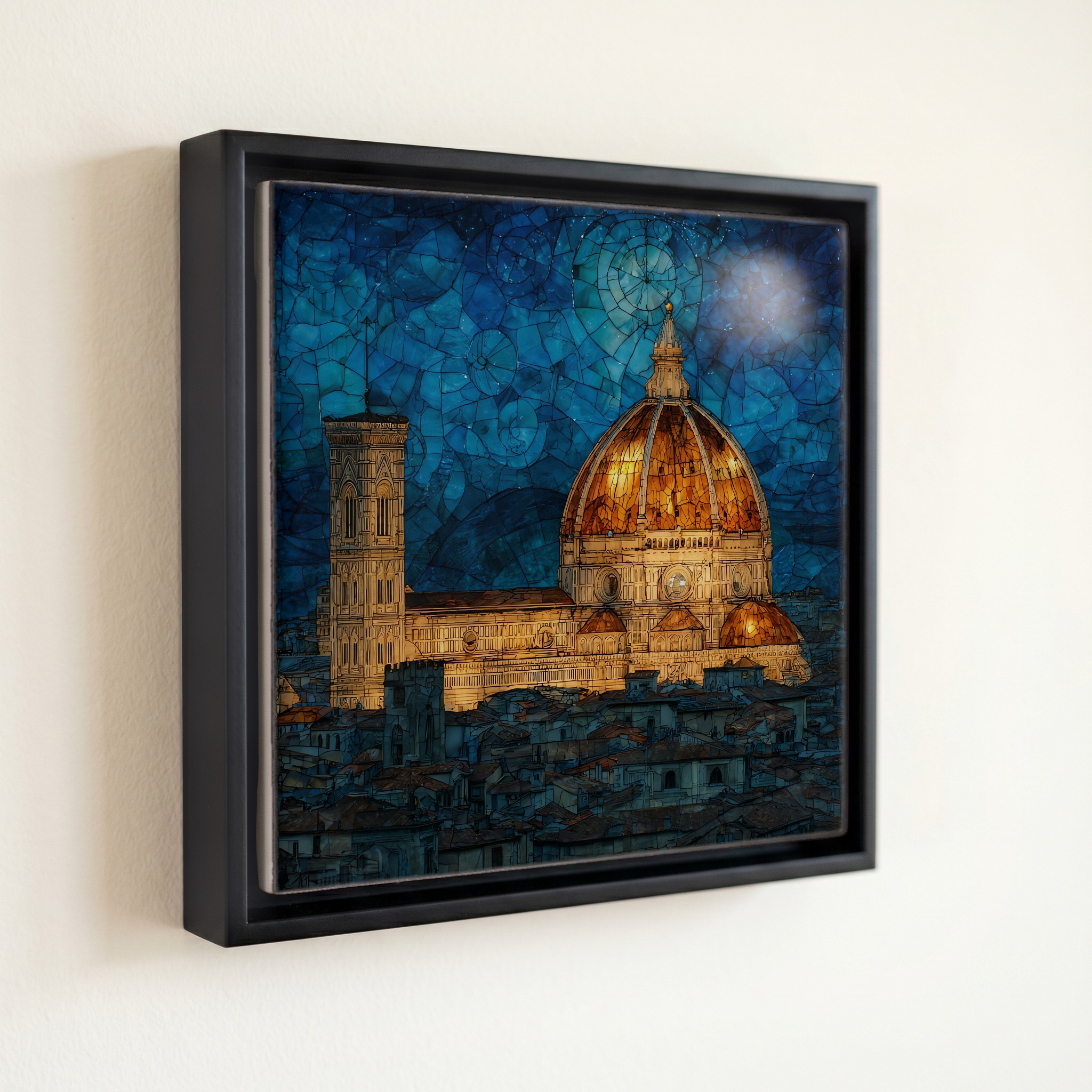
Florence Duomo, on ceramic.
Each tile is finished by hand in our Knoxville studio. Artwork is slowly infused into the ceramic surface under high heat and pressure, and rests beneath a thin glossy finish. The colour lives in the surface, not on top of it.
Pick any four 4-inch tiles — National Parks you've been to, a Smokies set, the four seasons of one place. $ for a set of , cork-backed, ready to live on the table.
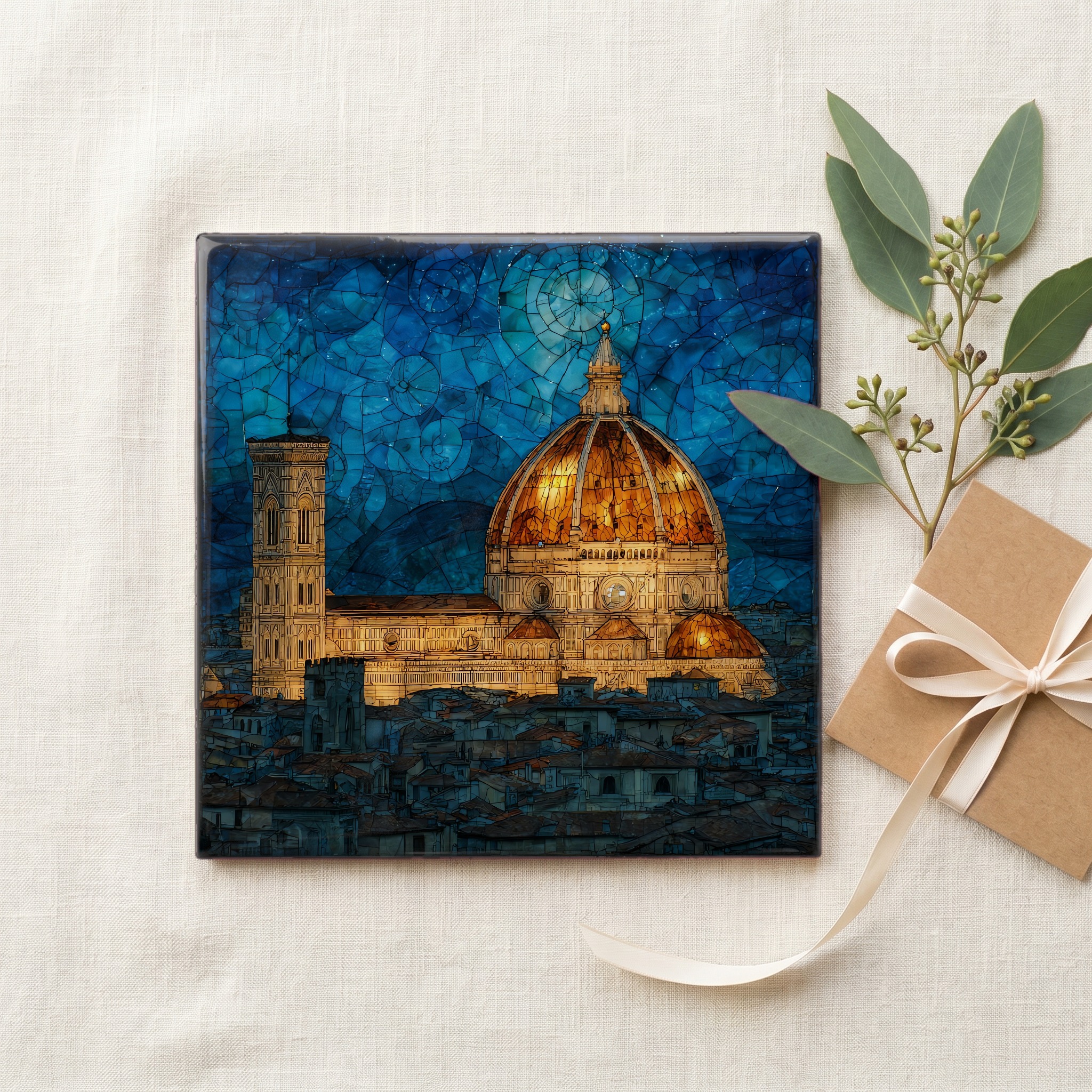
Each tile ships in a kraft box, tied with cream ribbon, with a handwritten note from the studio if you'd like to add one.
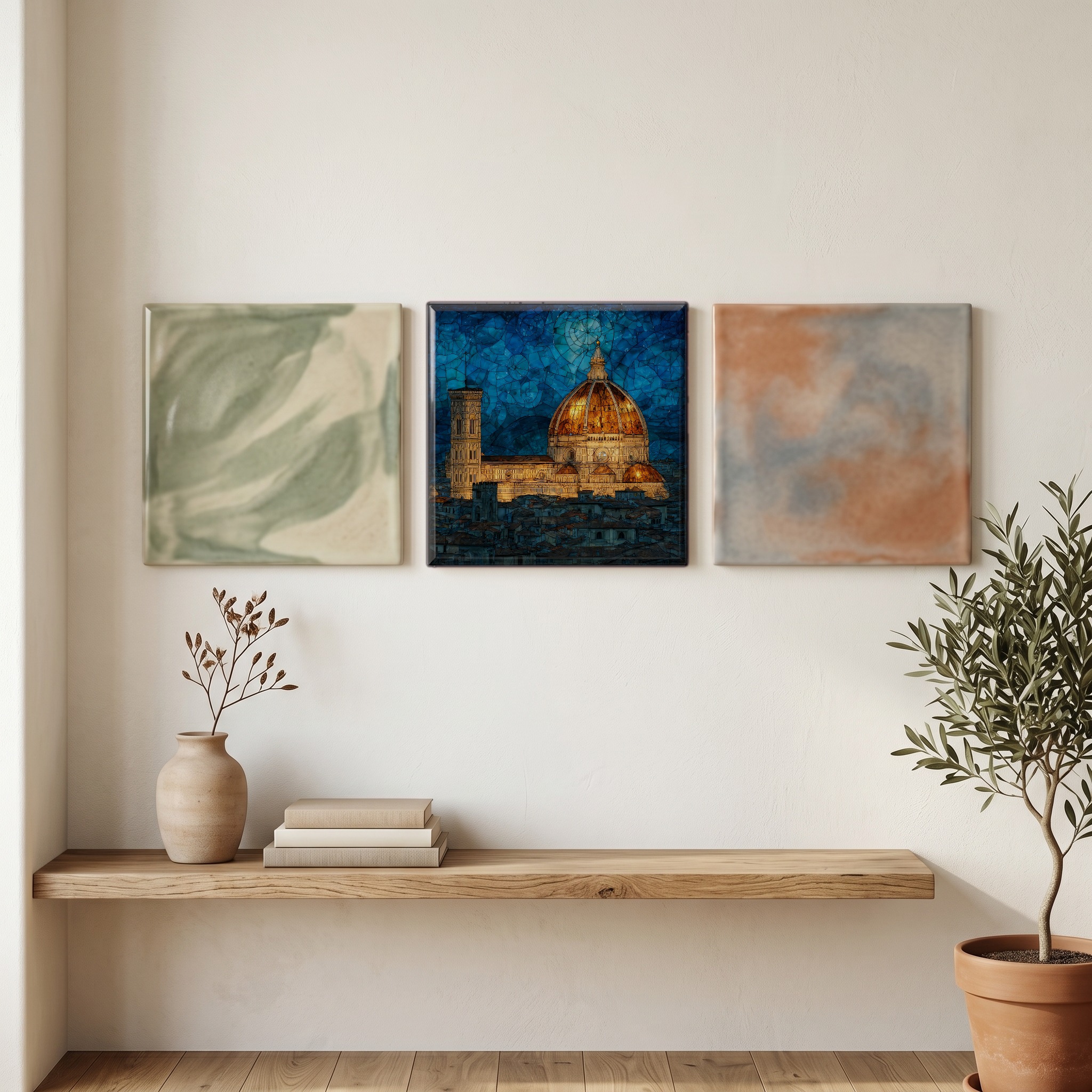
Three or five different vistas, hung together — a chapter of places you've been, or want to go.
The place, in three passes.
The Cathedral of Santa Maria del Fiore stands at the centre of Florence, in Tuscany, on a site occupied by the older church of Santa Reparata since the fourth century. Construction of the present cathedral began in 1296 under the architect Arnolfo di Cambio and continued in stages for over 140 years, with the dome completed by Filippo Brunelleschi in 1436. The complex includes the cathedral, the freestanding bell tower designed by Giotto in 1334, and the octagonal Baptistery of San Giovanni, which is older than both and dates to at least the 11th century. The Historic Centre of Florence has been a UNESCO World Heritage Site since 1982.
The cathedral's exterior is faced in three marbles quarried in three different parts of central Italy: white from Carrara, green from Prato, and pink from the Maremma region of southern Tuscany. The dome itself is the work of Filippo Brunelleschi, completed in 1436 and built from roughly four million bricks set in a self-supporting herringbone pattern. At about 45 metres in diameter at its base and around 114 metres to the top of the lantern, it was the largest masonry dome in the world for centuries, and remains the largest brick dome ever built. Brunelleschi worked without a wooden centring frame, an engineering choice contemporaries thought impossible until they watched it hold.
Entry to the cathedral itself is free, but the dome, the campanile, the baptistery, the crypt of Santa Reparata, and the Opera del Duomo Museum all require a combined ticket booked through the cathedral's official site. The dome climb is 463 steps with no lift, and reservations for a specific time slot are required to manage crowds in the narrow corridors between the dome's two shells. Giotto's Campanile is 84.7 metres tall and a separate climb of 414 steps. The complex is open most days, with the cathedral itself closed to tourists on Sundays during services. Early morning and late afternoon slots tend to be quieter than the midday hours, when most coach tours arrive.