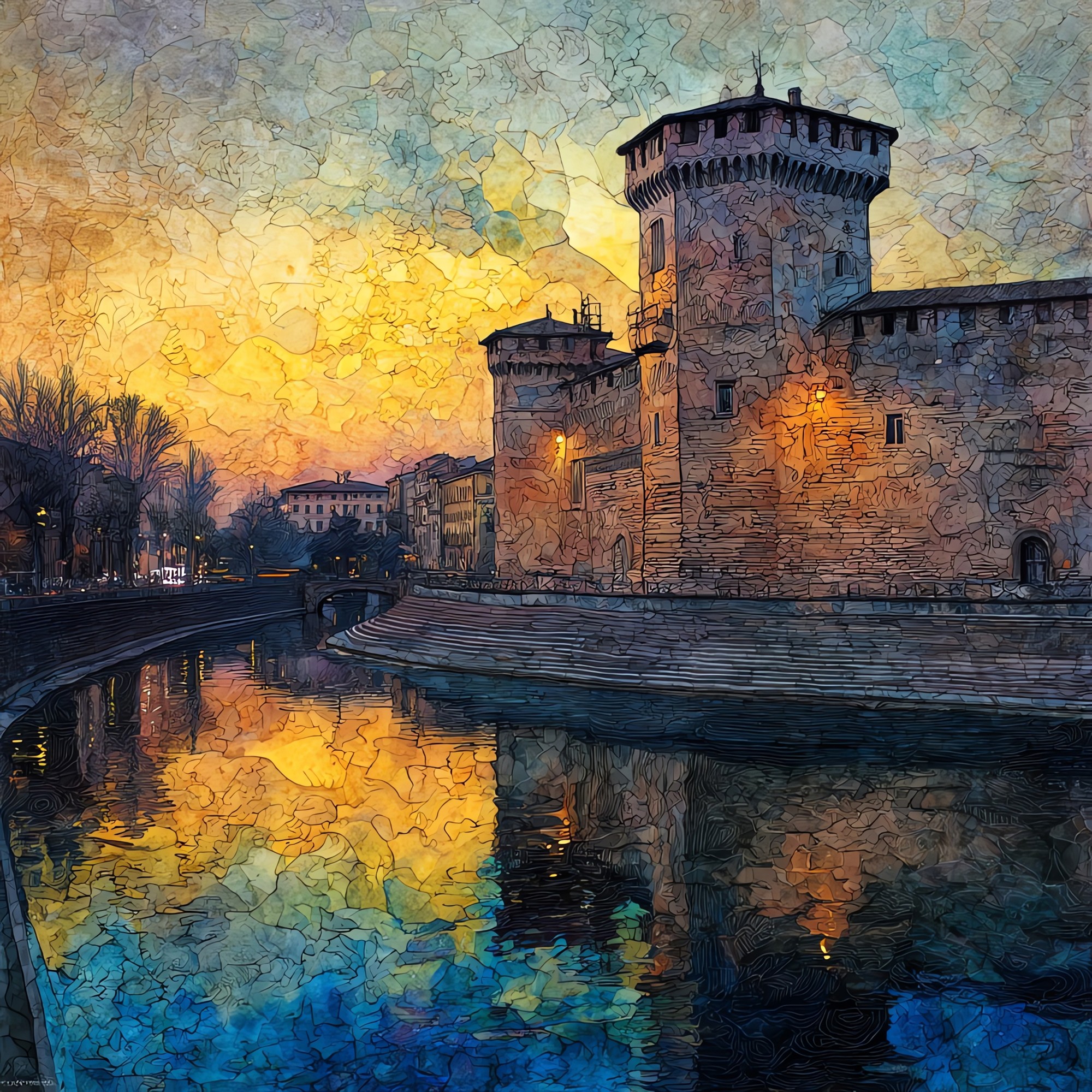
Este Castle
— red brick standing in the water it kept.
Not only on a wall.
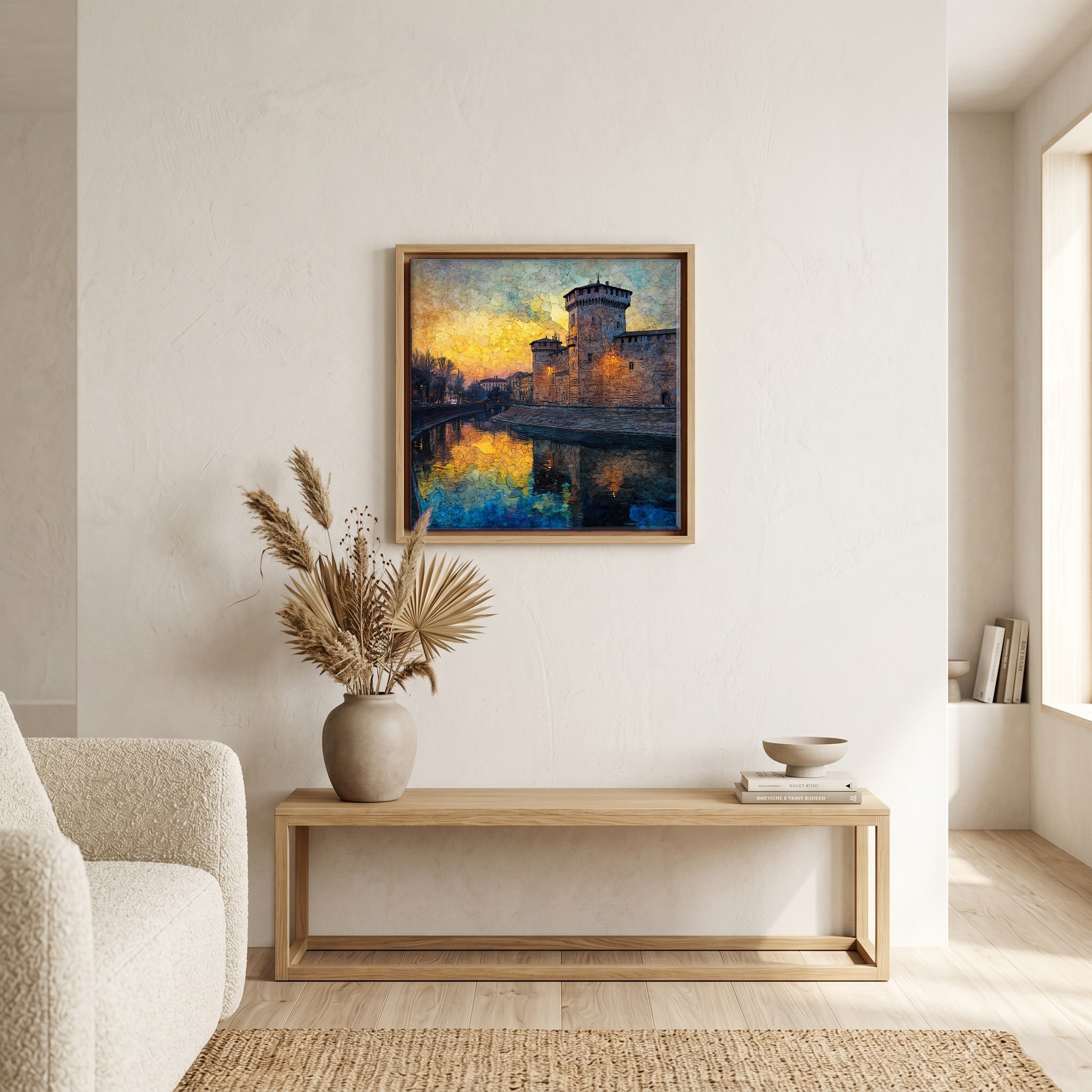
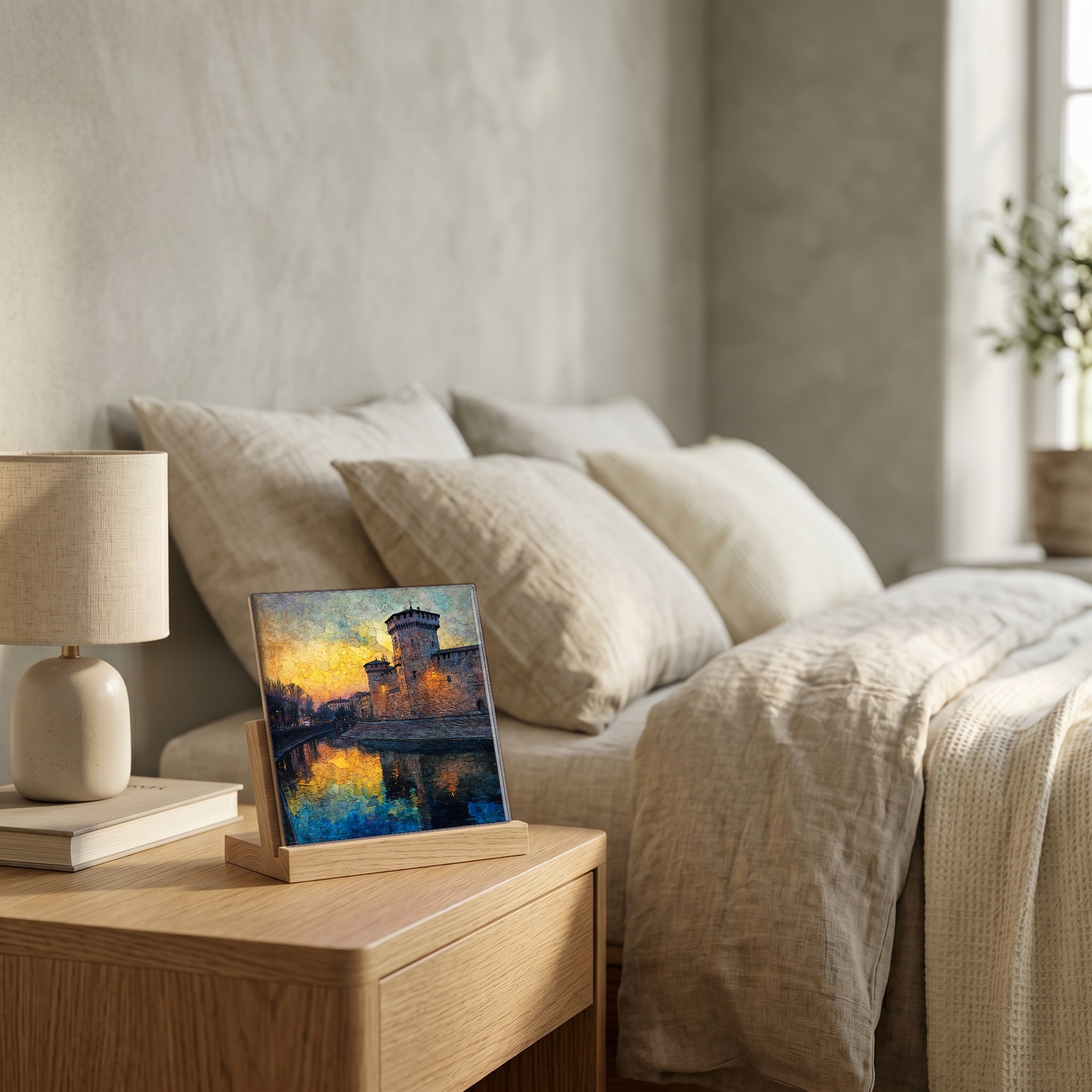
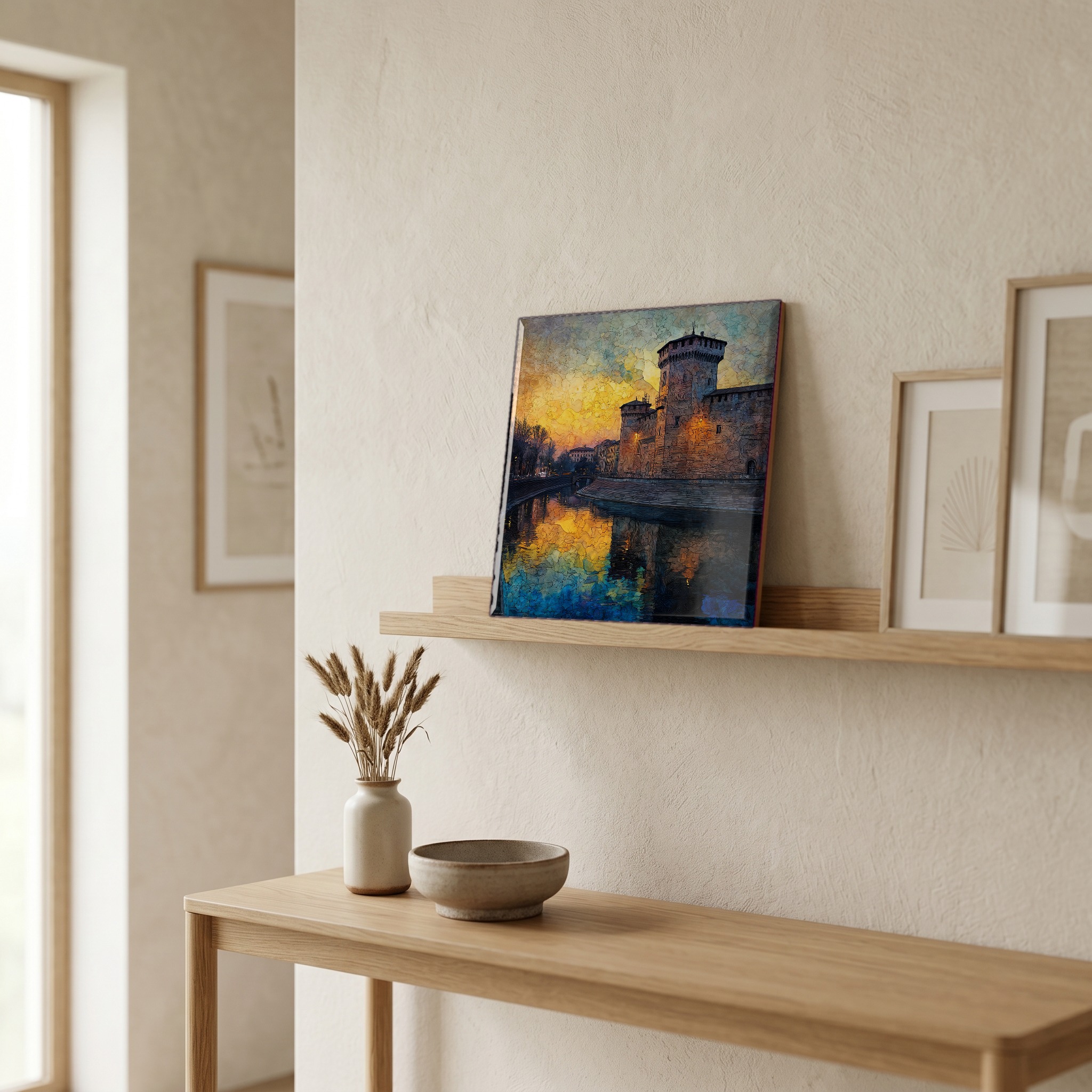
“A fortress in the middle of a city, with water still in its moat. Most Italian castles lost theirs to dry stone centuries ago; this one kept its drawbridges and the green ring around its feet. The Este family built it in a hurry, in 1385, after a bad year and an angry crowd, then spent two hundred years softening it into a home. Red brick the whole way up. From the top of the Lions' Tower the rooftops of Ferrara run flat to the edge of the old walls, and the moat below holds the sky.
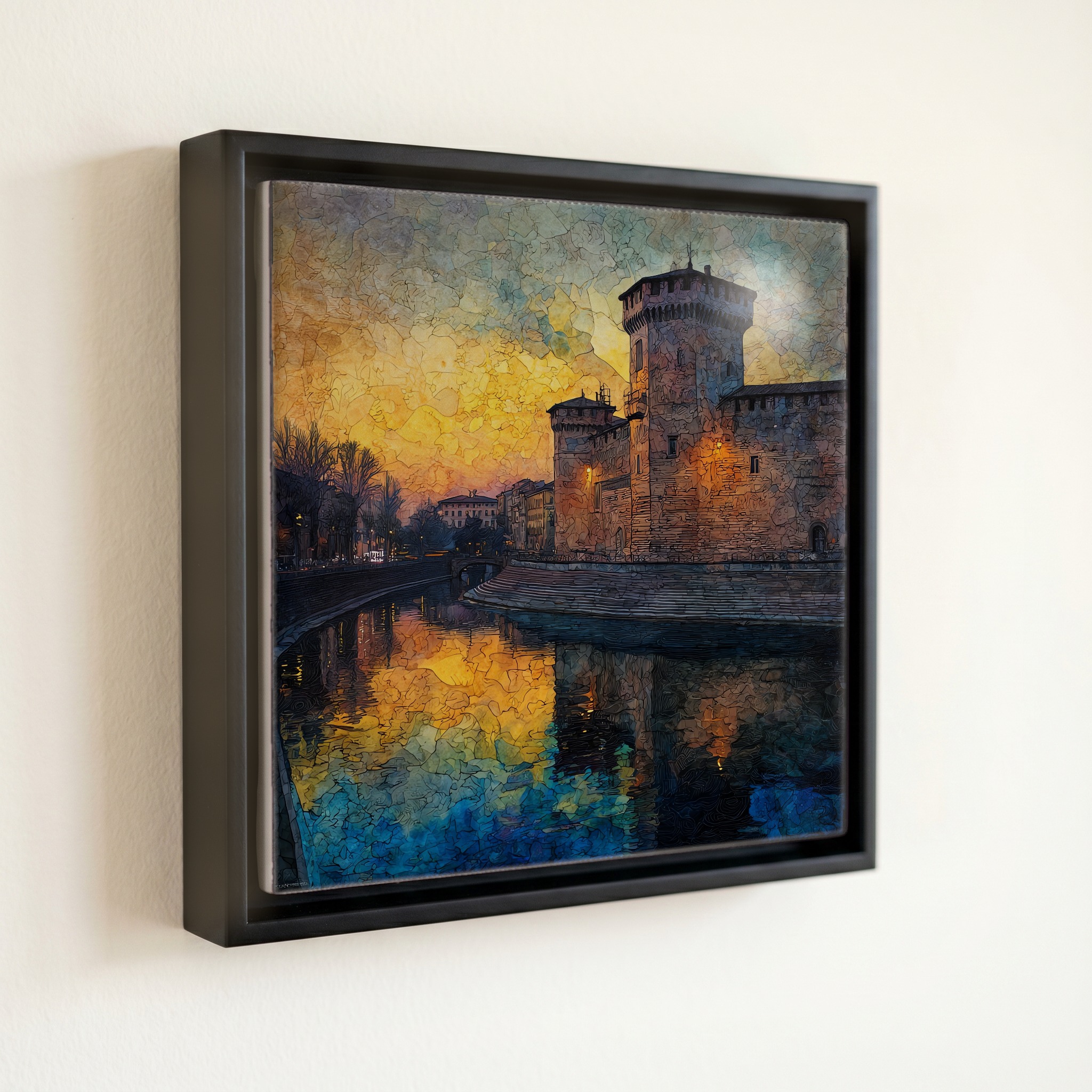
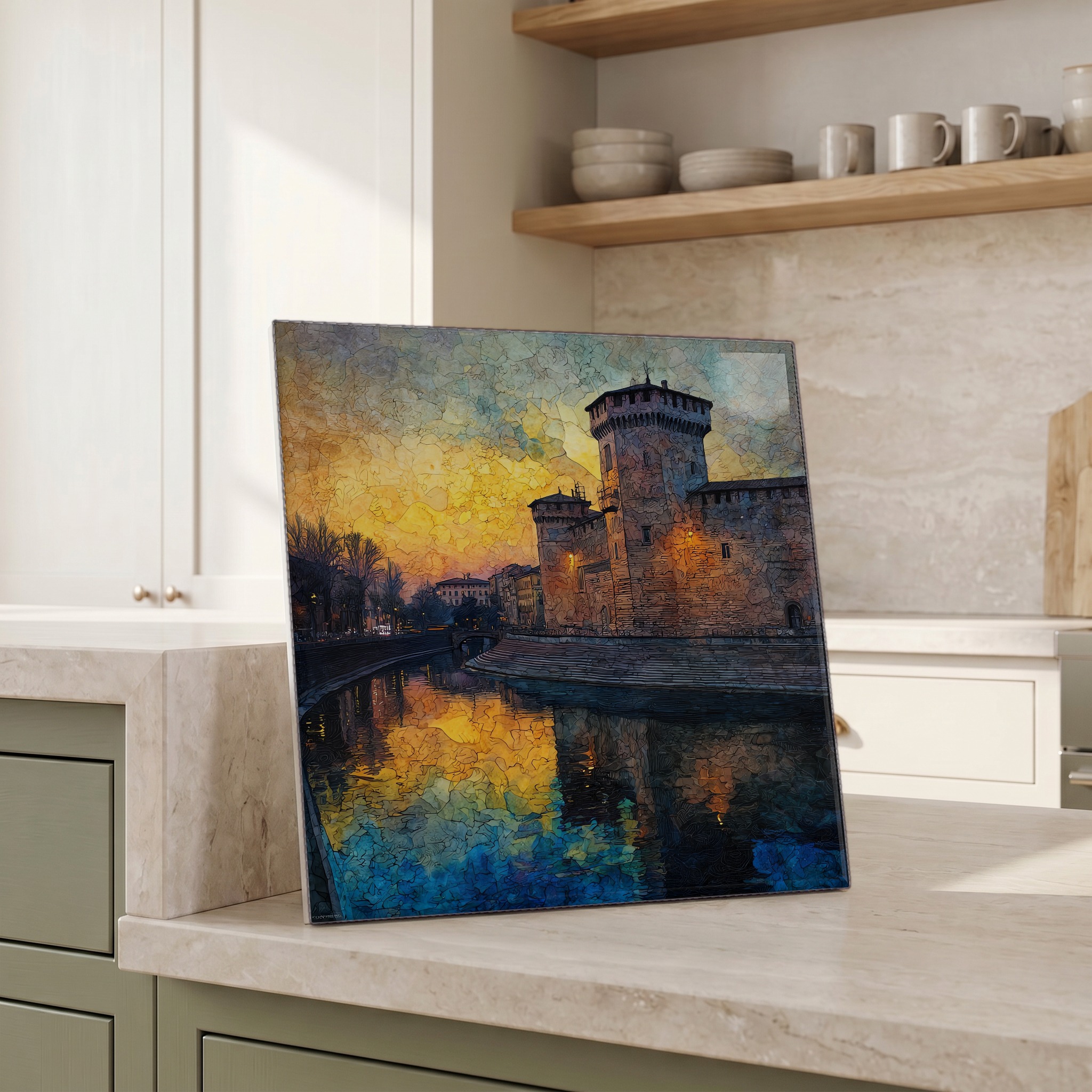
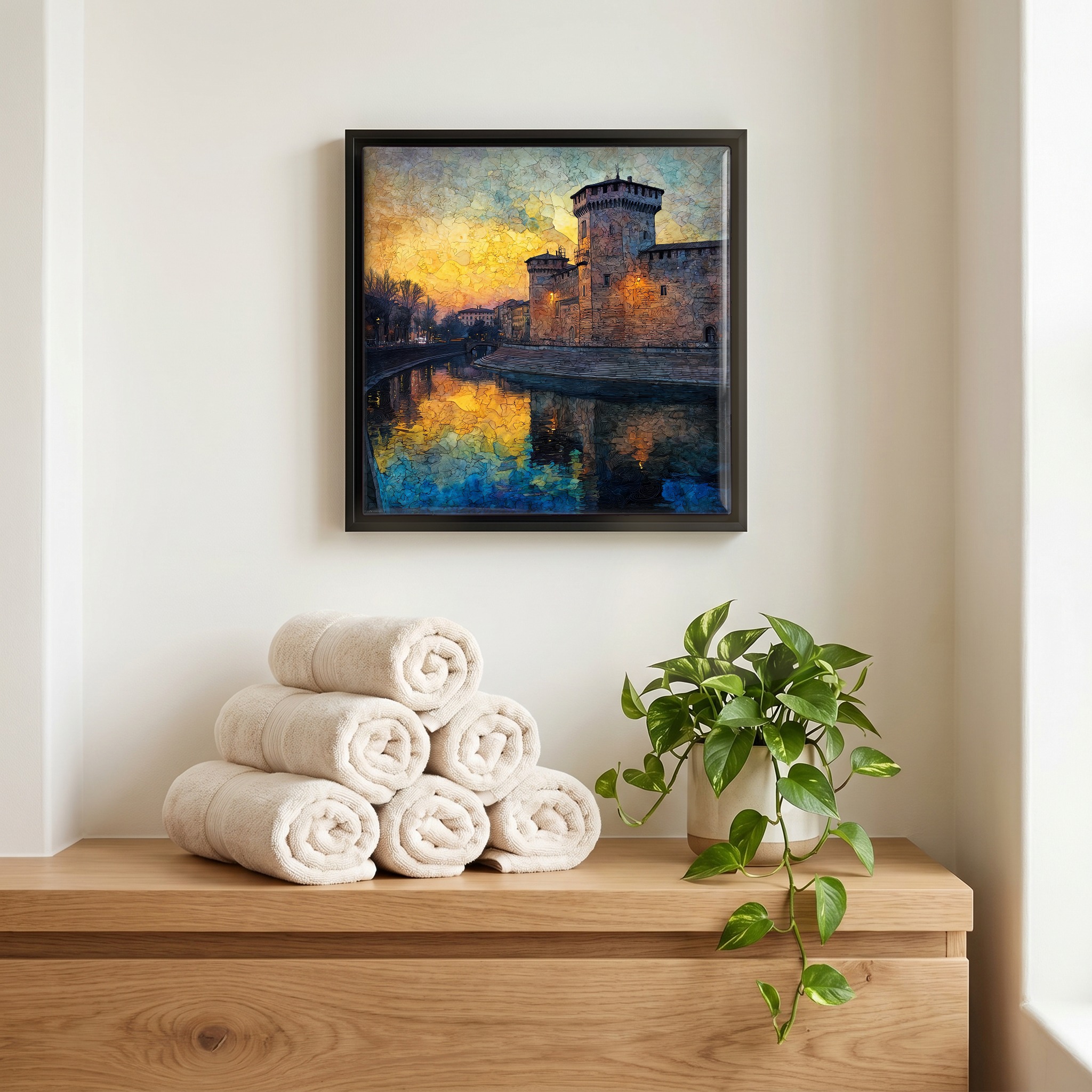
Este Castle, on ceramic.
Each tile is finished by hand in our Knoxville studio. Artwork is slowly infused into the ceramic surface under high heat and pressure, and rests beneath a thin glossy finish. The colour lives in the surface, not on top of it.
Pick any four 4-inch tiles — National Parks you've been to, a Smokies set, the four seasons of one place. $ for a set of , cork-backed, ready to live on the table.
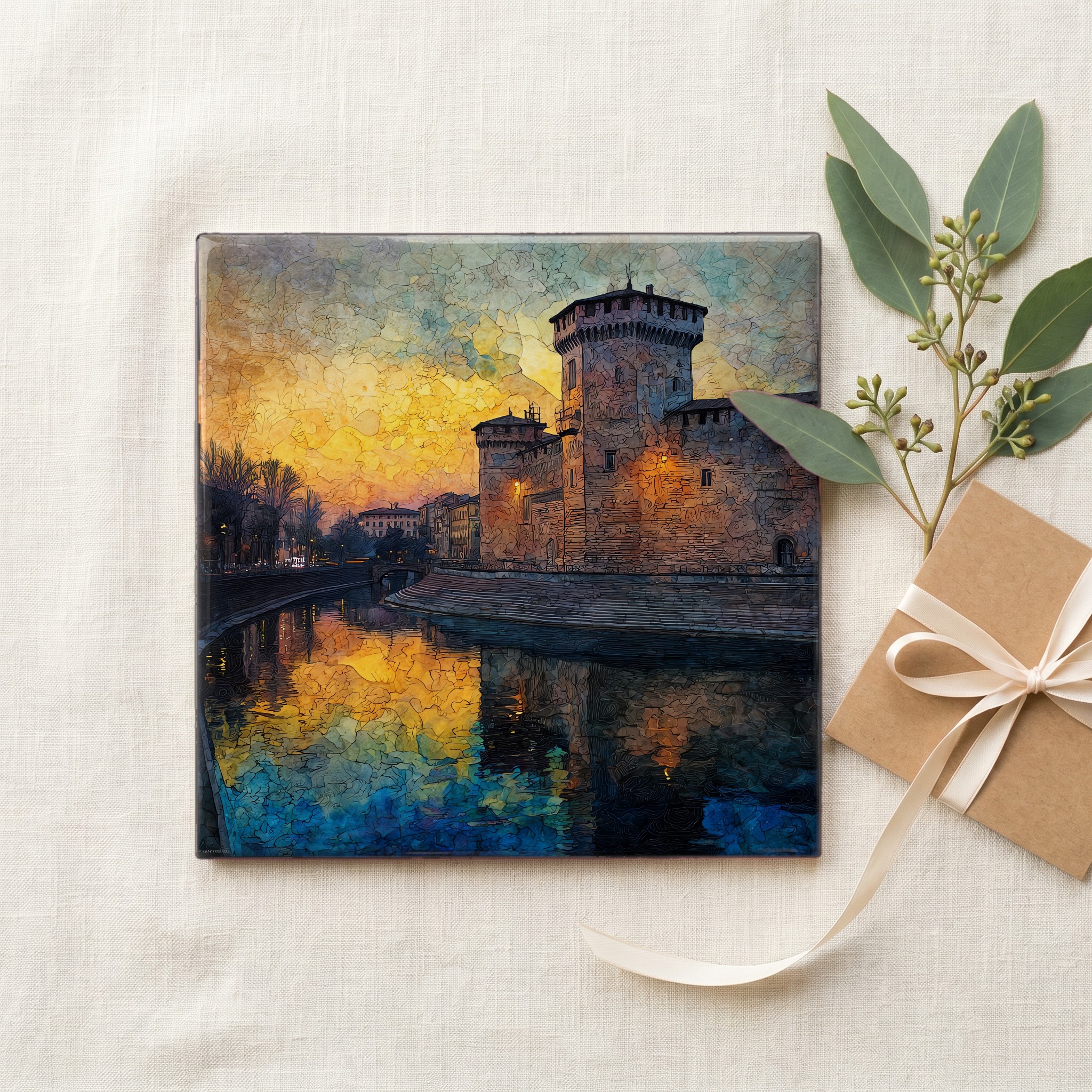
Each tile ships in a kraft box, tied with cream ribbon, with a handwritten note from the studio if you'd like to add one.
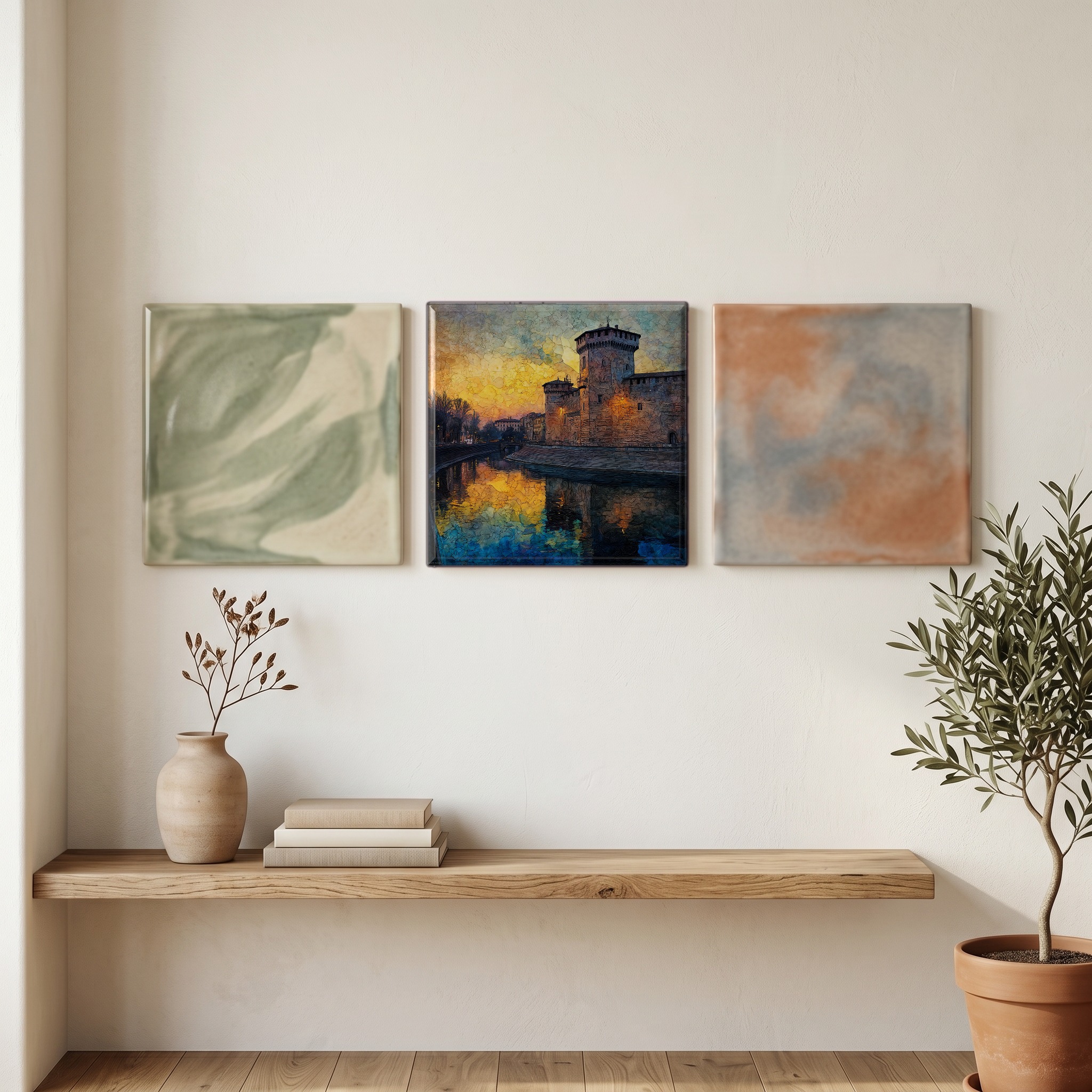
Three or five different vistas, hung together — a chapter of places you've been, or want to go.
The place, in three passes.
The Castello Estense stands in the center of Ferrara, in Italy's Emilia-Romagna region, about 50 kilometres north of Bologna and a short drive from the Po. Construction began on 29 September 1385, ordered by Marquis Niccolò II d'Este and designed by the architect Bartolino da Novara, after a tax revolt turned the city against its rulers. A wide moat with drawbridges rings the whole block, and four towers mark its corners. The d'Este family governed Ferrara from here until 1598, when the duchy passed to the Papal States. Today the fortress and the wider city sit inside the UNESCO World Heritage site inscribed in 1995, Ferrara, City of the Renaissance, and its Po Delta.
The whole castle is built of red brick, the local building material of the Po plain, rising from the water in four square towers. The oldest, the Torre dei Leoni on the northeast corner, began as a thirteenth-century watchtower in the city wall; Bartolino da Novara wrapped three new towers and a ring of buildings around a central courtyard to match it. For its first century the place was a war machine, plain and defensive. From the late 1400s the d'Este softened it into a court residence, adding frescoed ceilings, a roof garden, and marble loggias over the brick. The result reads as two buildings in one: a fortress on the outside, a Renaissance palace within.
The castle is a museum now, at Largo Castello 1, open daily except Tuesday from 10:00 to 18:00. The route runs through the ducal apartments, the frescoed ceilings of the Game Room and the Hall of Dawn, the prison cells in the basement, and the orange garden the dukes kept on the roof. The set-piece is the Torre dei Leoni: 120 steps to a terrace with the only high view over Ferrara, where the medieval street grid and the long Renaissance avenues of the Herculean Addition lie flat to the city walls. The towers stay floodlit after dark, when the brick and its reflection in the moat hold the light.