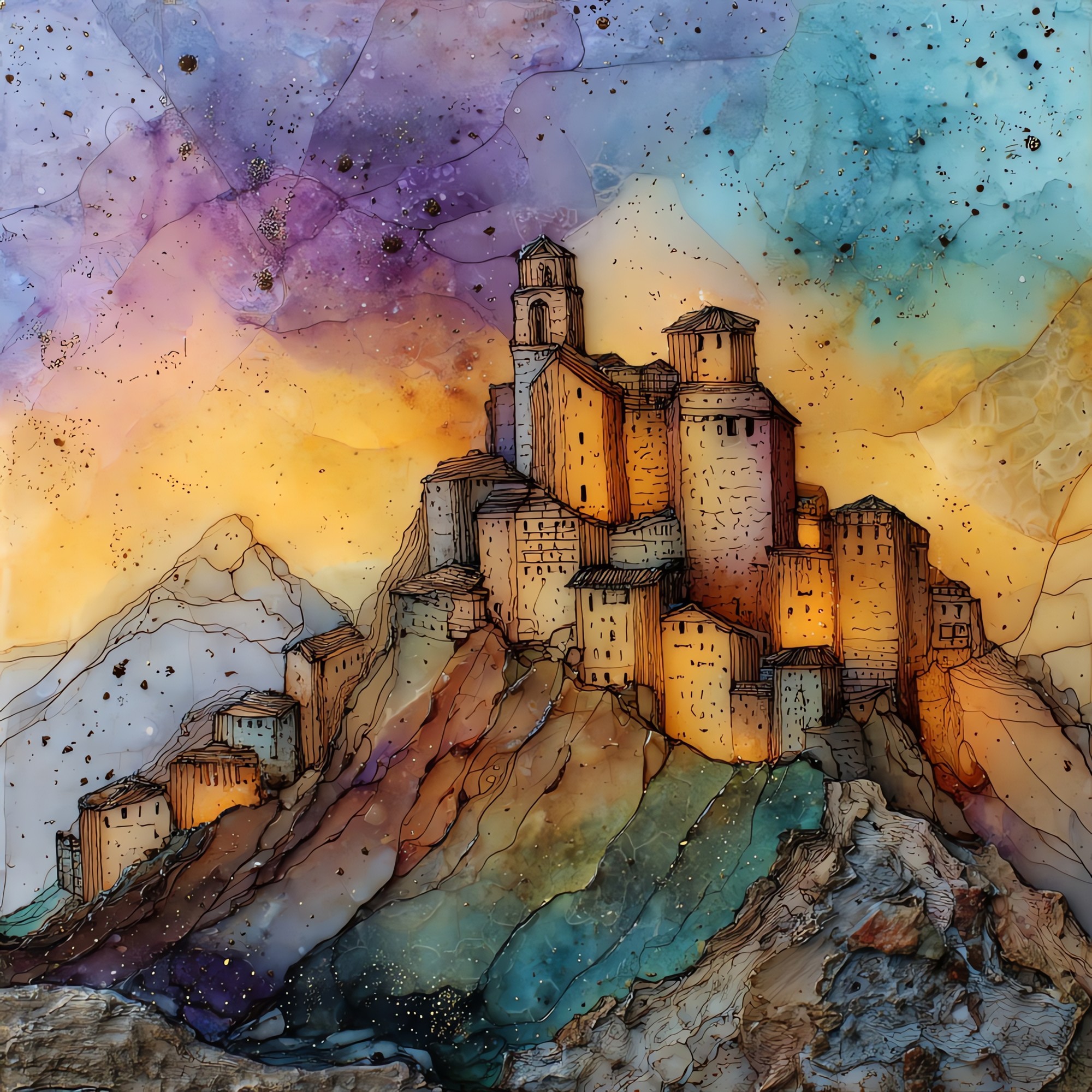
Erice
— the morning the cloud climbs the mountain.
Not only on a wall.
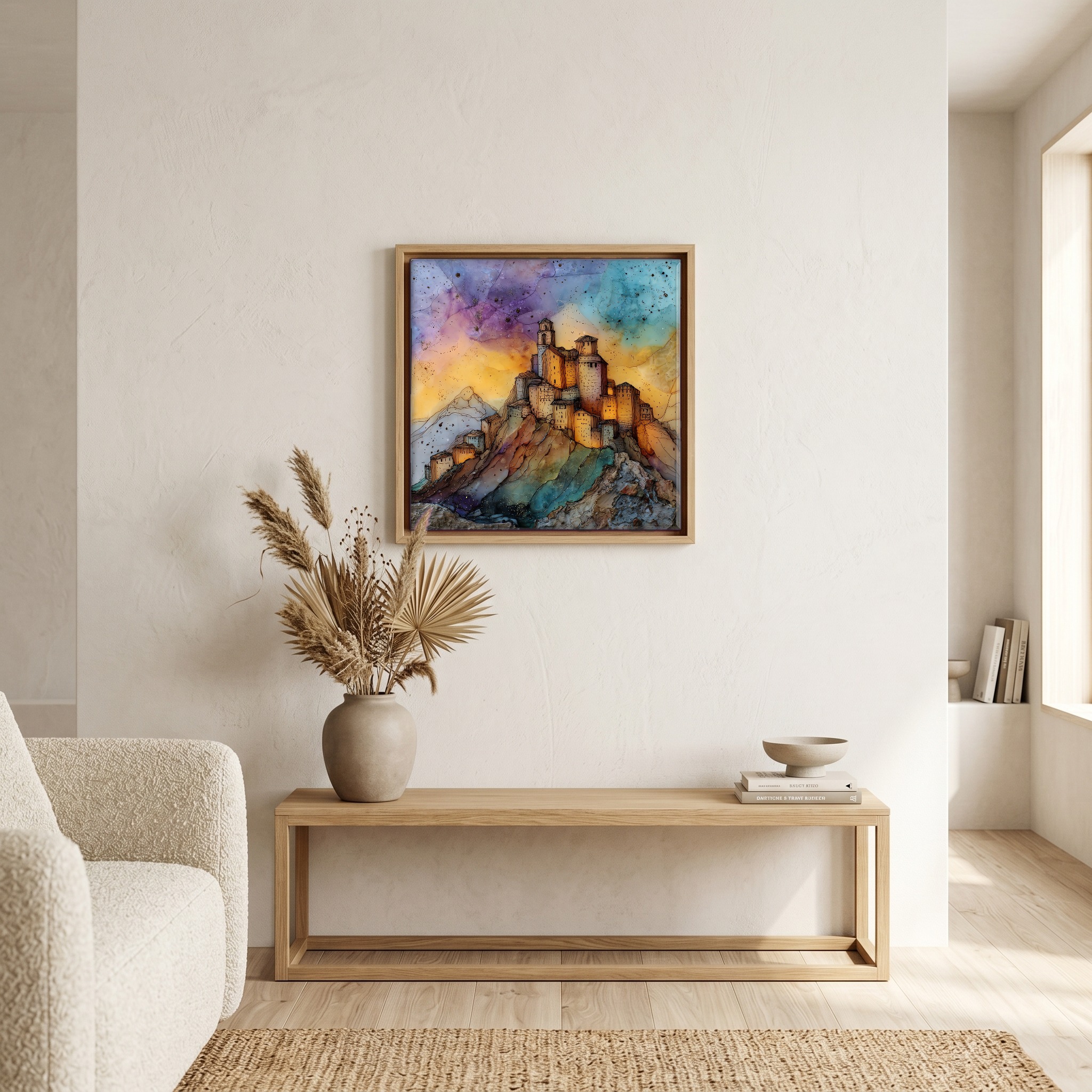
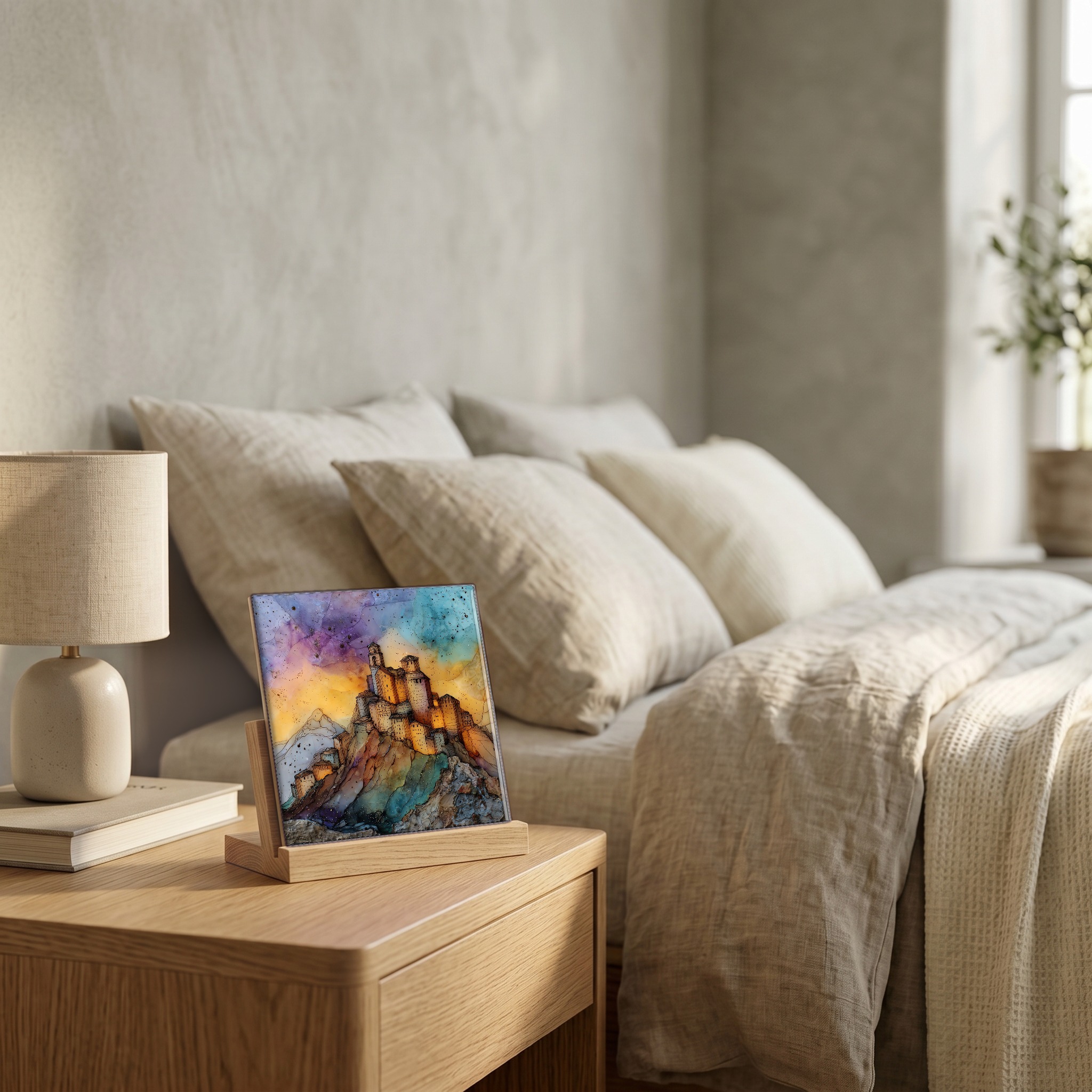
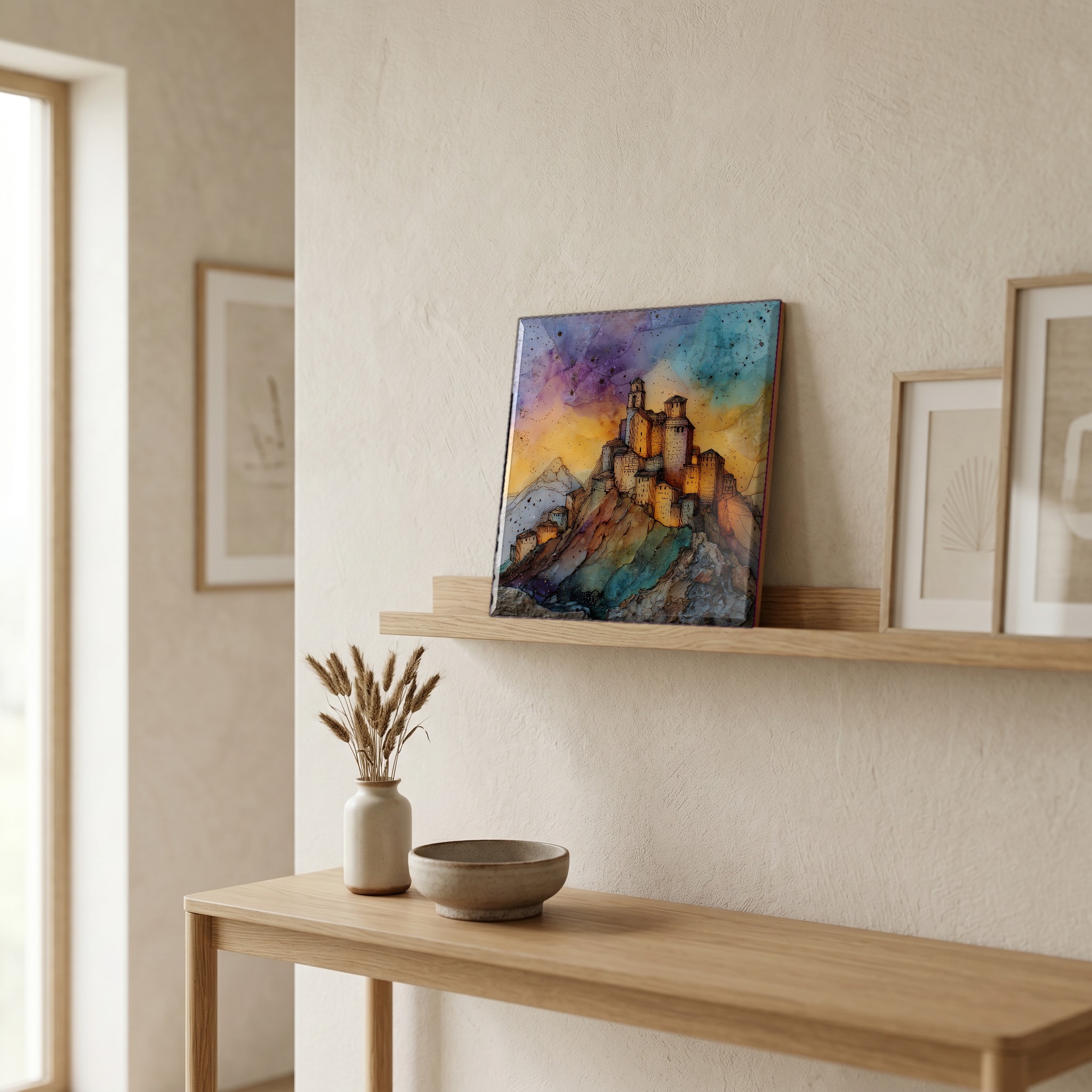
“A medieval town on a triangular cliff above Trapani, on the western tip of Sicily. Marble underfoot in patterns that wear smooth from a thousand years of feet. Norman walls. A castle on the ground where the ancients kept a temple to Venus. The cloud comes up the mountain most mornings and sits in the courtyards for an hour before it lifts. A small bakery near the Chiesa Madre still makes genovesi (almond pastry with sweet ricotta) to a recipe the cloistered nuns wrote down centuries ago. The cable car from Trapani takes ten minutes; most drive the long road up instead.
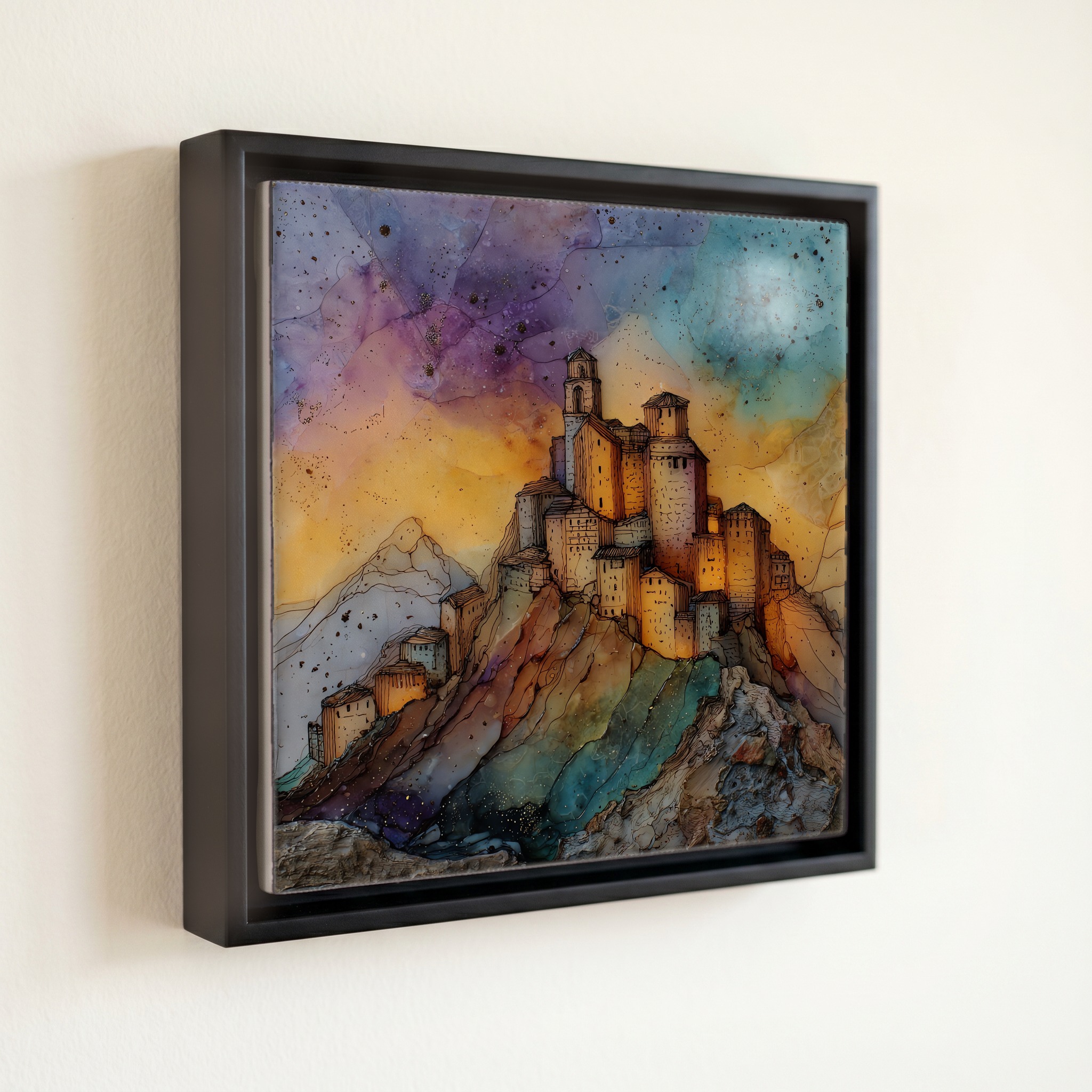
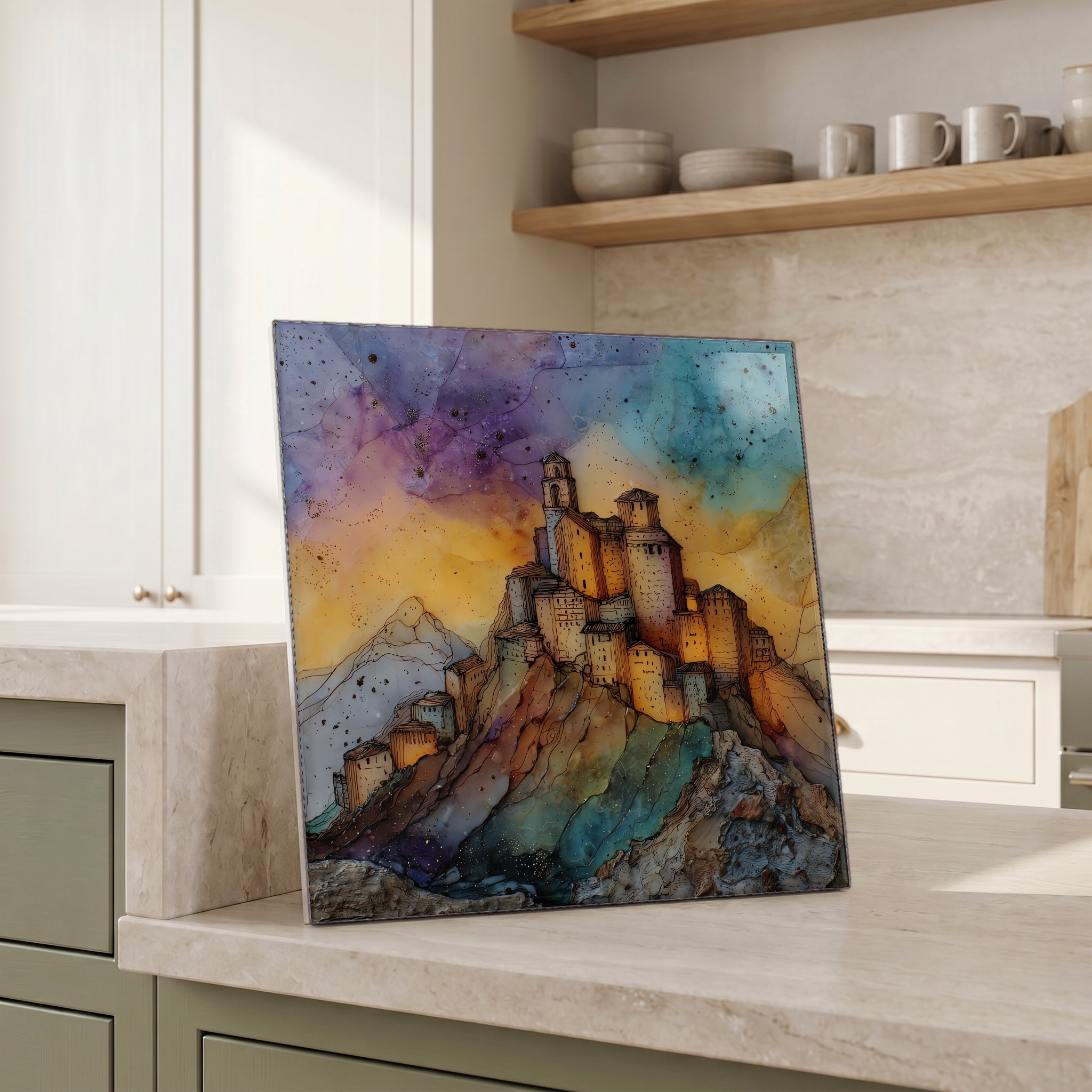
Erice, on ceramic.
Each tile is finished by hand in our Knoxville studio. Artwork is slowly infused into the ceramic surface under high heat and pressure, and rests beneath a thin glossy finish. The colour lives in the surface, not on top of it.
Pick any four 4-inch tiles — National Parks you've been to, a Smokies set, the four seasons of one place. $ for a set of , cork-backed, ready to live on the table.
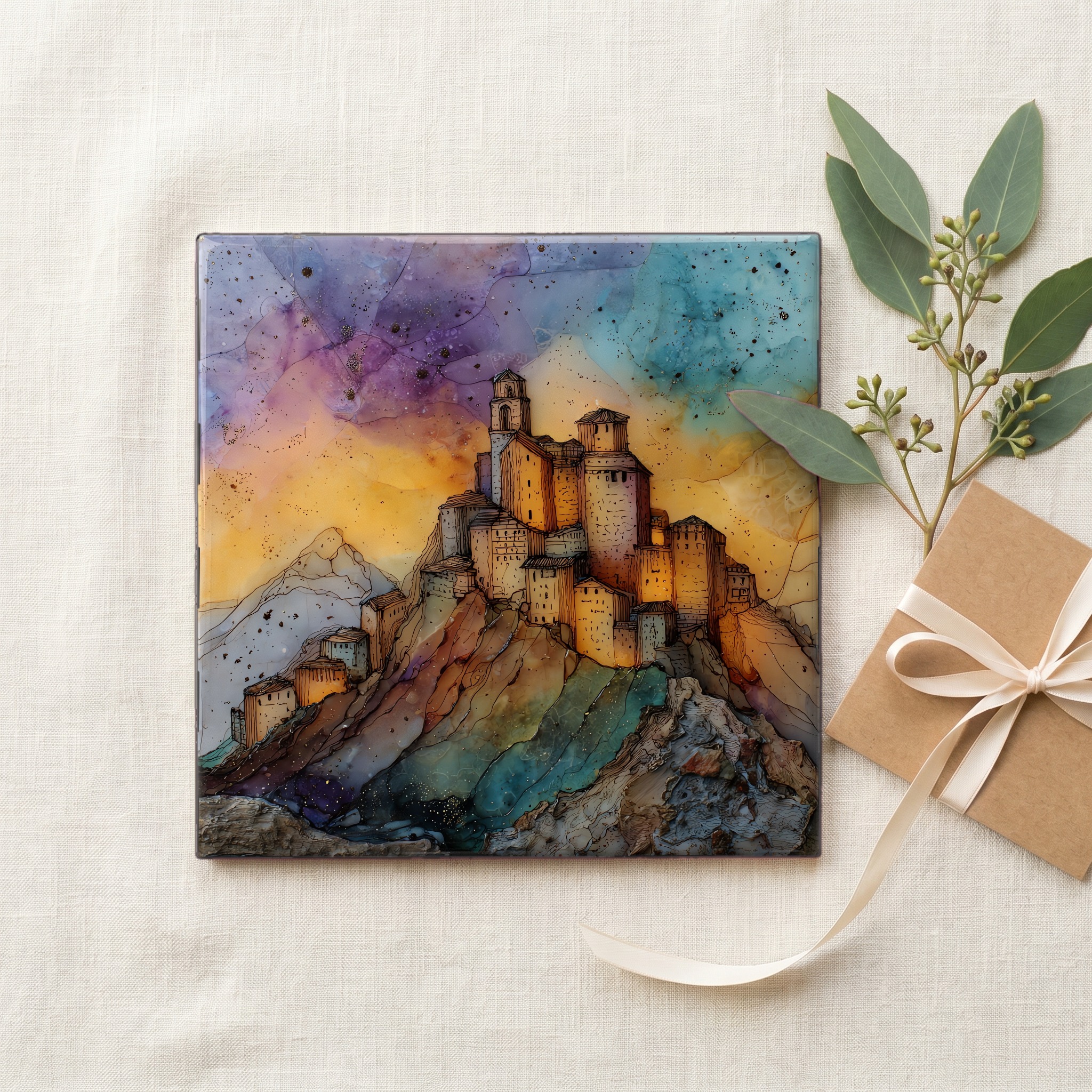
Each tile ships in a kraft box, tied with cream ribbon, with a handwritten note from the studio if you'd like to add one.
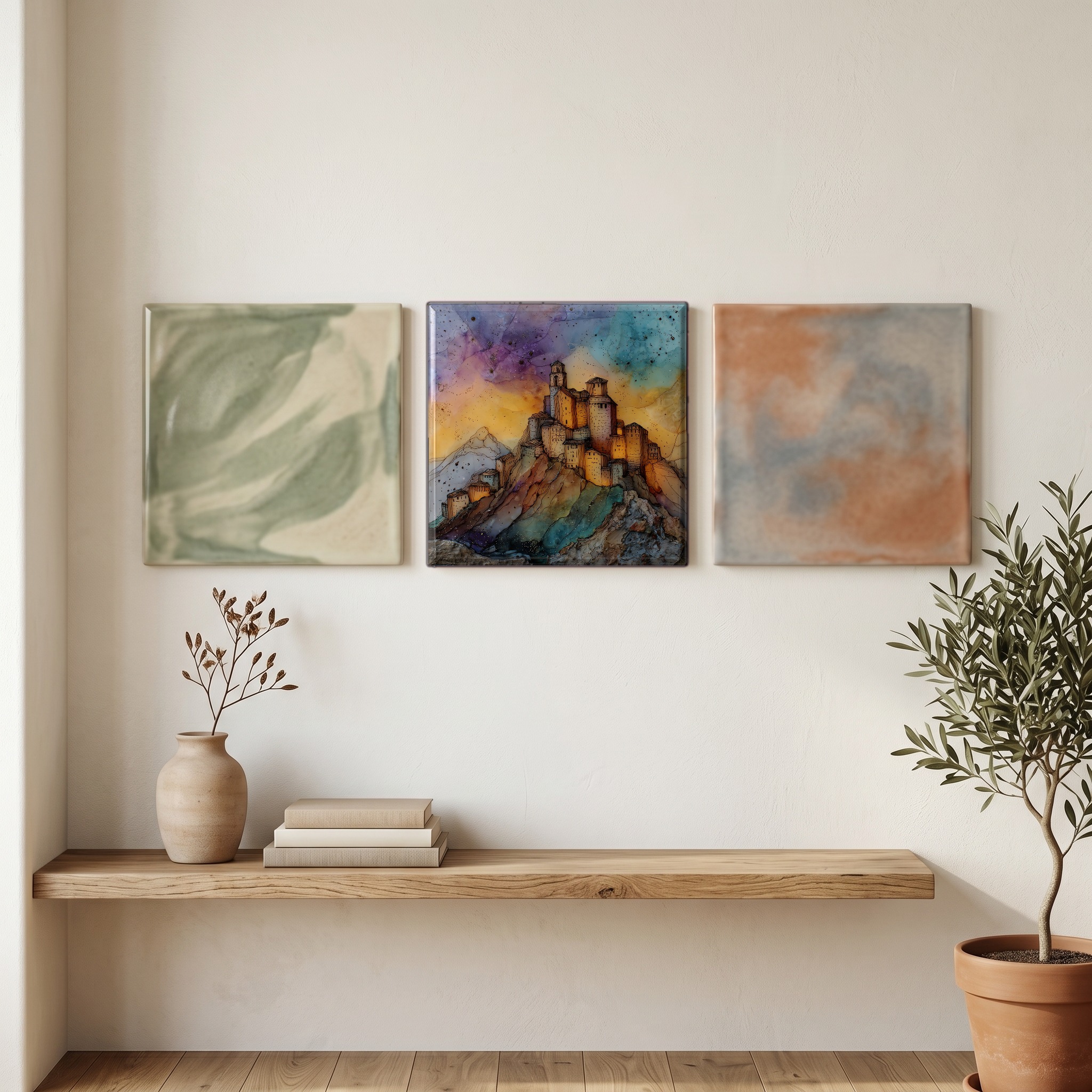
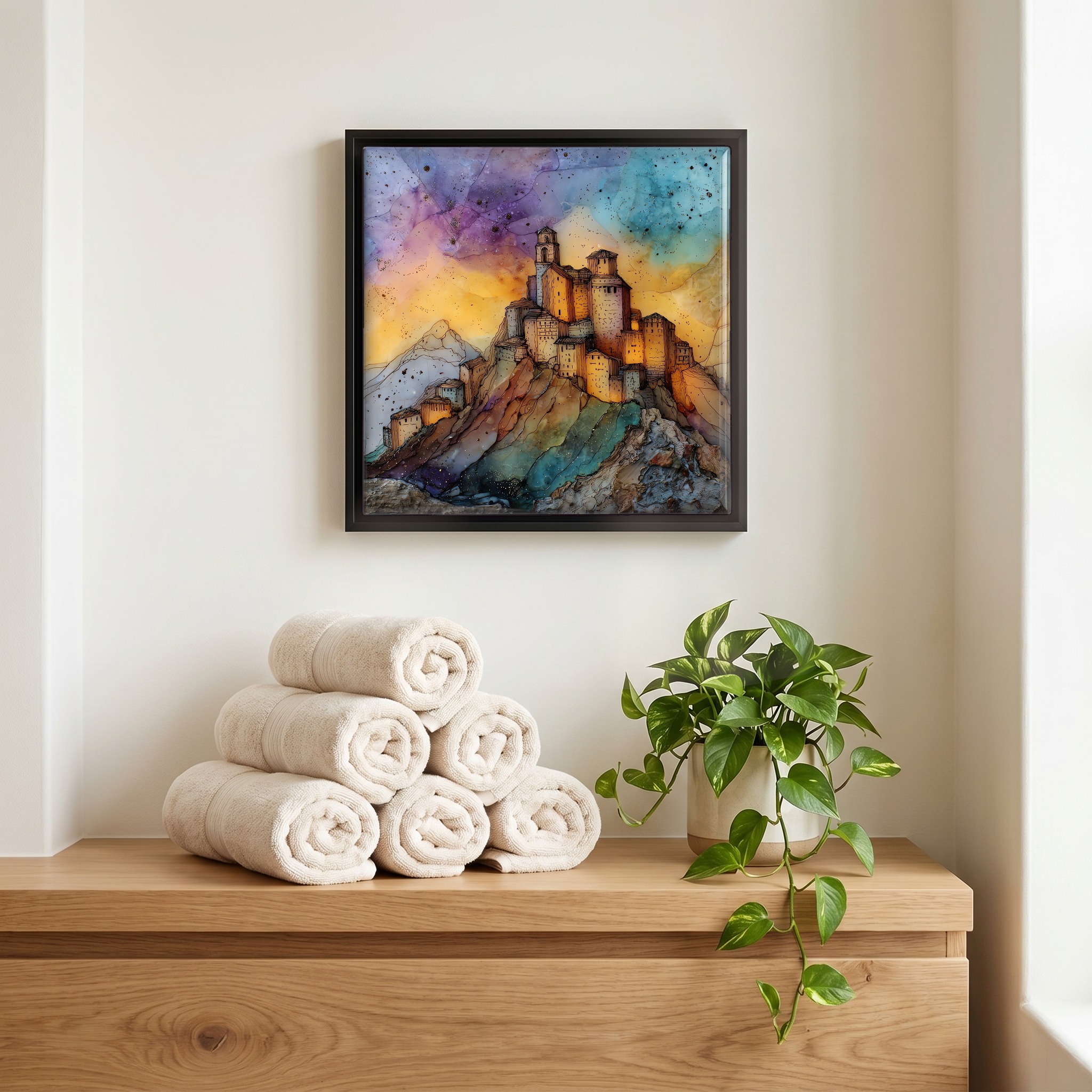
Three or five different vistas, hung together — a chapter of places you've been, or want to go.
The place, in three passes.
Erice sits at 751 metres on Monte San Giuliano, the steep limestone outcrop above the port of Trapani on the western tip of Sicily. The historic town is triangular, walled on the cliff side and open on the other two, with long views across the Stagnone lagoon to the Egadi Islands and, on the clearest days, as far as Tunisia. The site was settled by the Elymians before Greek colonisation, fortified in turn by the Phoenicians, Carthaginians, and Romans, and given its present medieval shape under the Normans in the twelfth century. The town is small enough to walk in an hour and dense enough to take a day. The Funivia Erice cable car opened in 2005 and links the historic centre to Trapani in about ten minutes.
Most mornings of the year, cloud climbs Monte San Giuliano and settles on Erice for an hour or two before it lifts, exposing the marble pavers and the Egadi Islands in one motion. Sicilians have a name for it: the kiss of Venus, after the ancient sanctuary the Normans built over. The town stands at 751 metres on a cliff where humid sea air rises against cold limestone and condenses. Winter brings real cold for Sicily, with snow possible on the summit. Summer averages around five degrees Celsius cooler than Trapani at the foot of the mountain, enough that the town's bakers keep their cream fillings overnight without much trouble.
Marble is the surface of Erice. The narrow vicoli are paved in white stone laid in geometric panels that the rain polishes and the centuries wear soft. The Chiesa Madre, the Real Duomo, was begun in 1314 under Frederick III of Aragon, partly from stones taken from earlier Phoenician and Roman walls. The Castello di Venere, on the eastern cliff, was raised by the Normans in the twelfth century on the foundations of the ancient sanctuary to Venus Erycina, itself built over a Phoenician temple to Astarte. As many as sixty churches once stood inside the walls. Since 1963, the Ettore Majorana Foundation, an international scientific centre named for the Sicilian physicist, has occupied a cluster of the historic buildings.