Wender·Vista
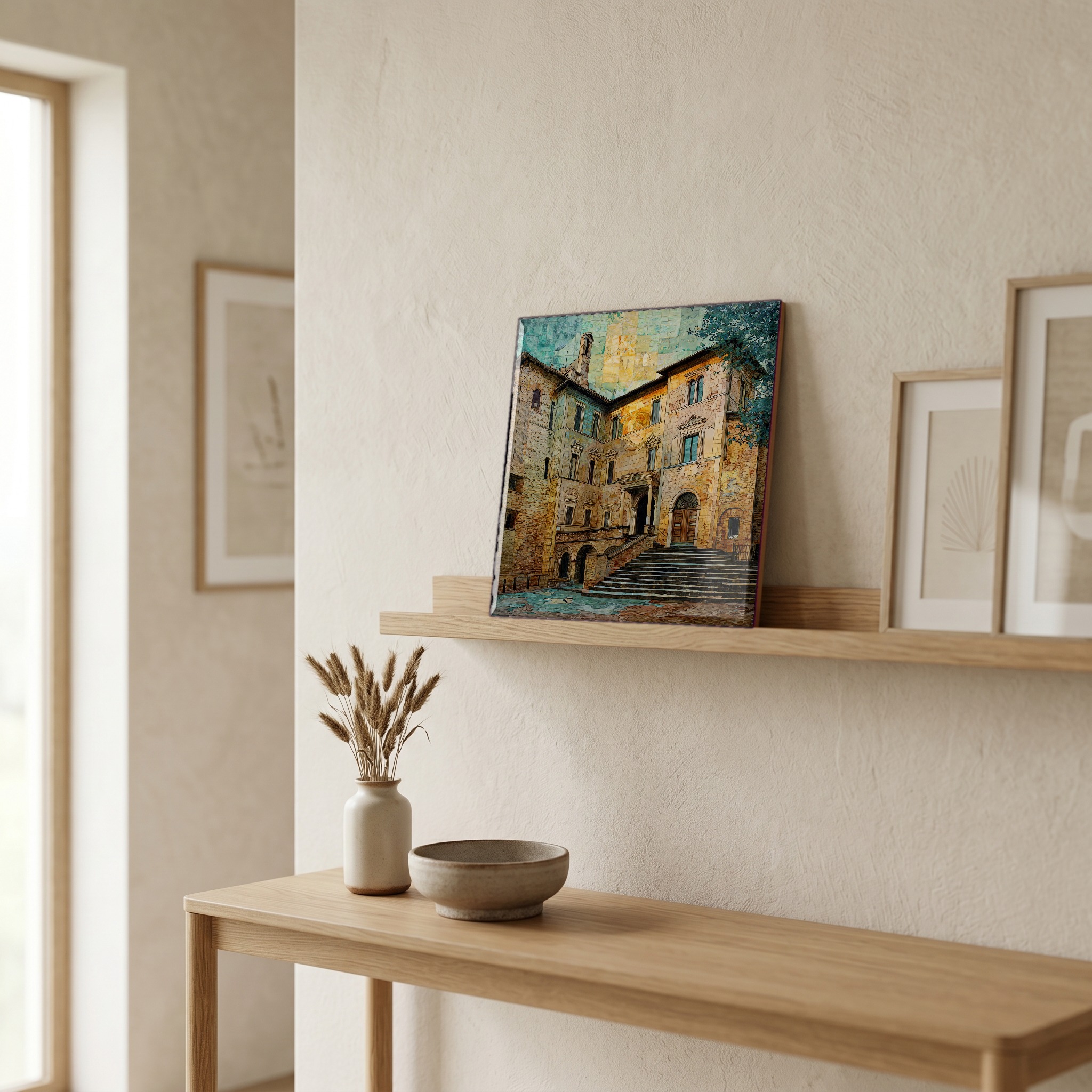
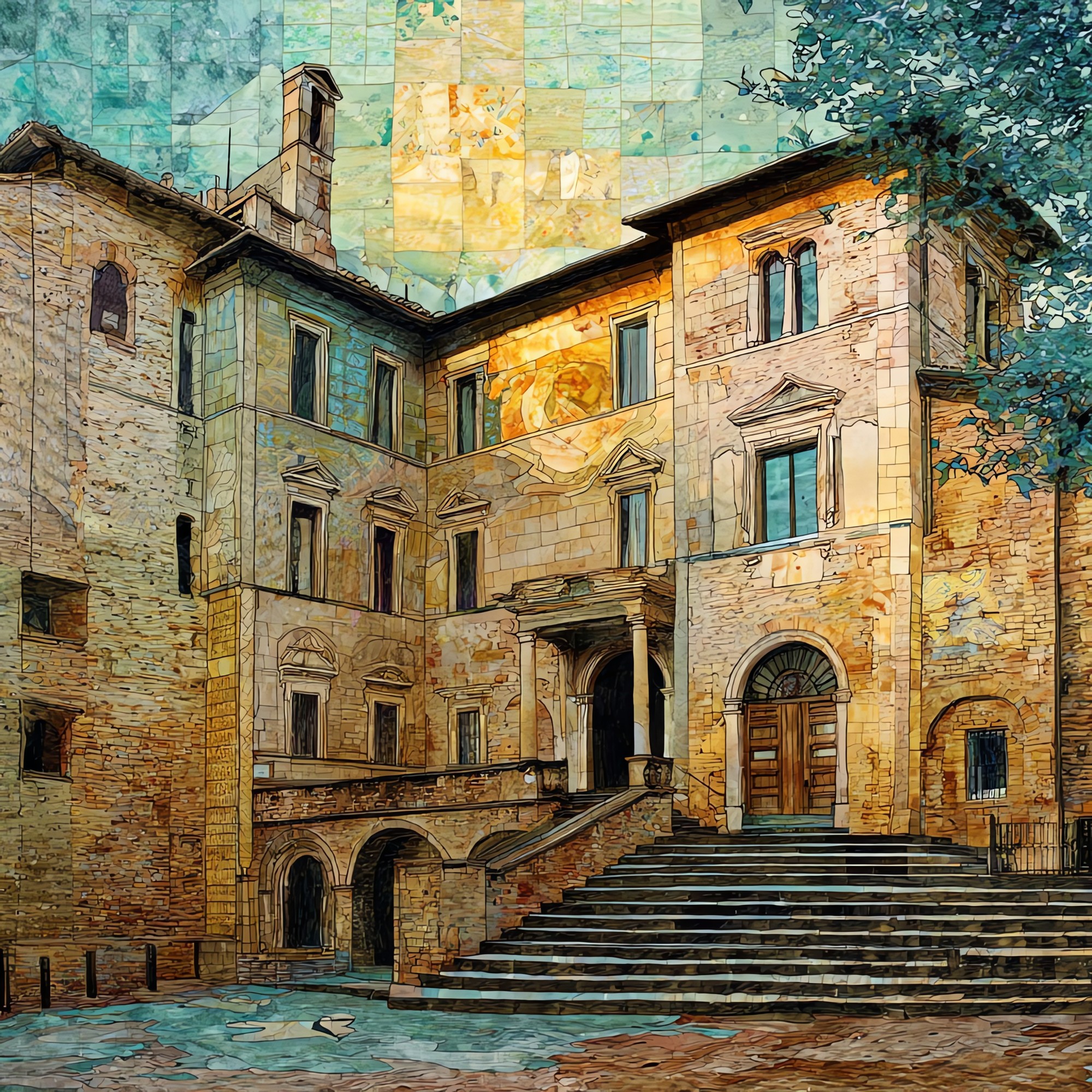
Ducal Palace of Urbino
shown on ceramic, 12-inch tileItaly
high above Urbino, in Italy's Marche

Ducal Palace of Urbino

two towers, and the valley falling away behind them.

Where it lives

Not only on a wall.

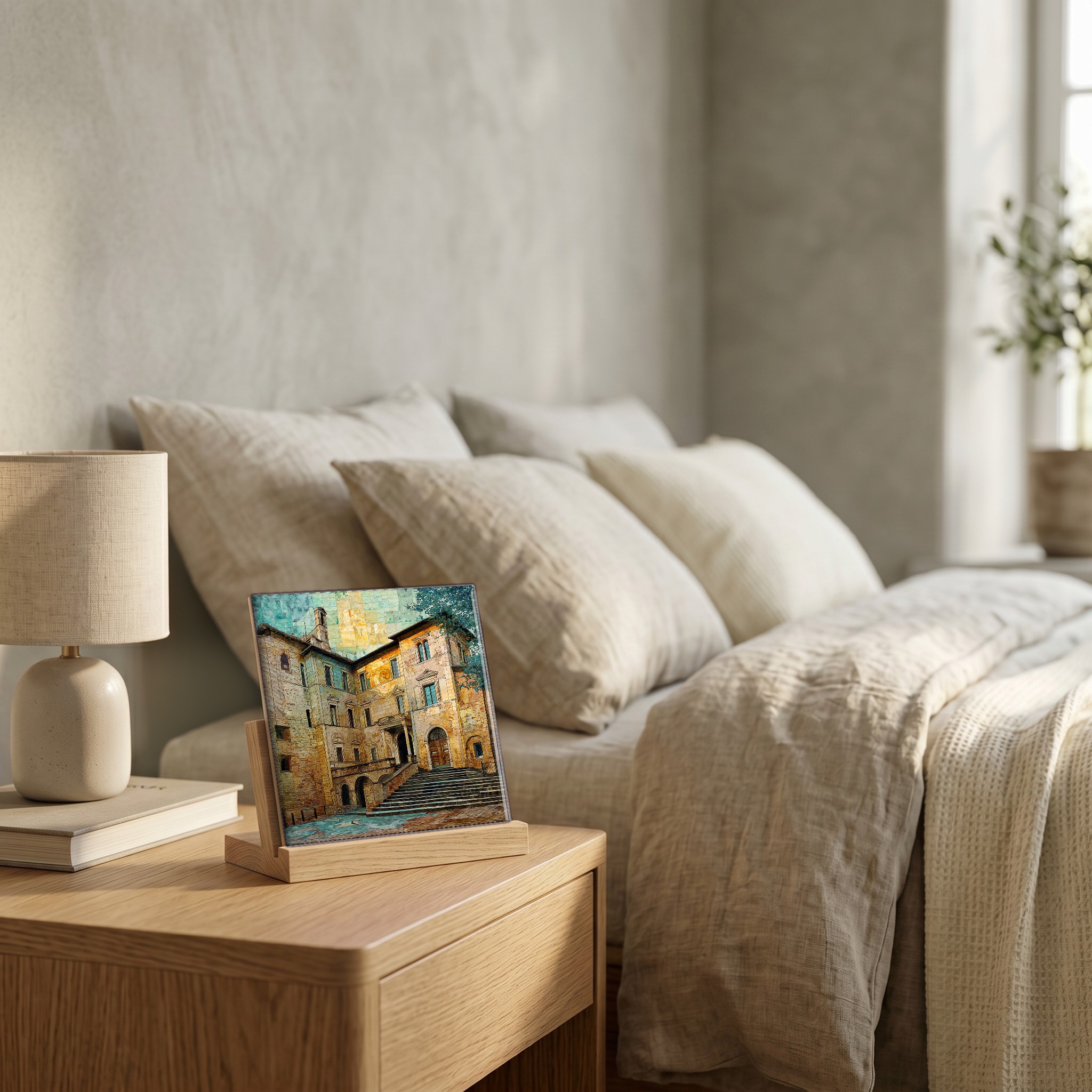
A small tile on the nightstand catching the morning. A larger one above the fire. Yours, wherever you spend the slow hours.
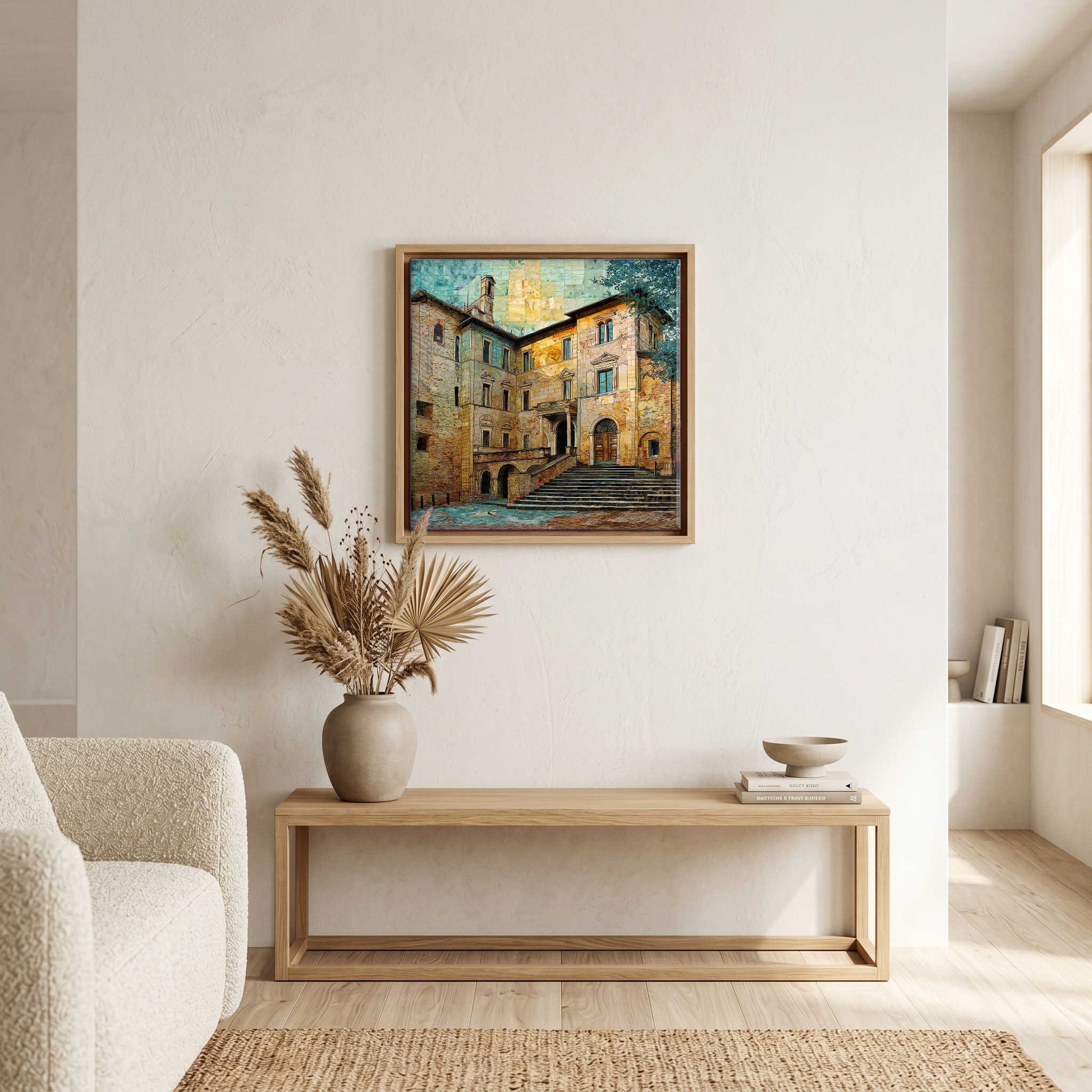
Above the bench, in a warm oak surround.
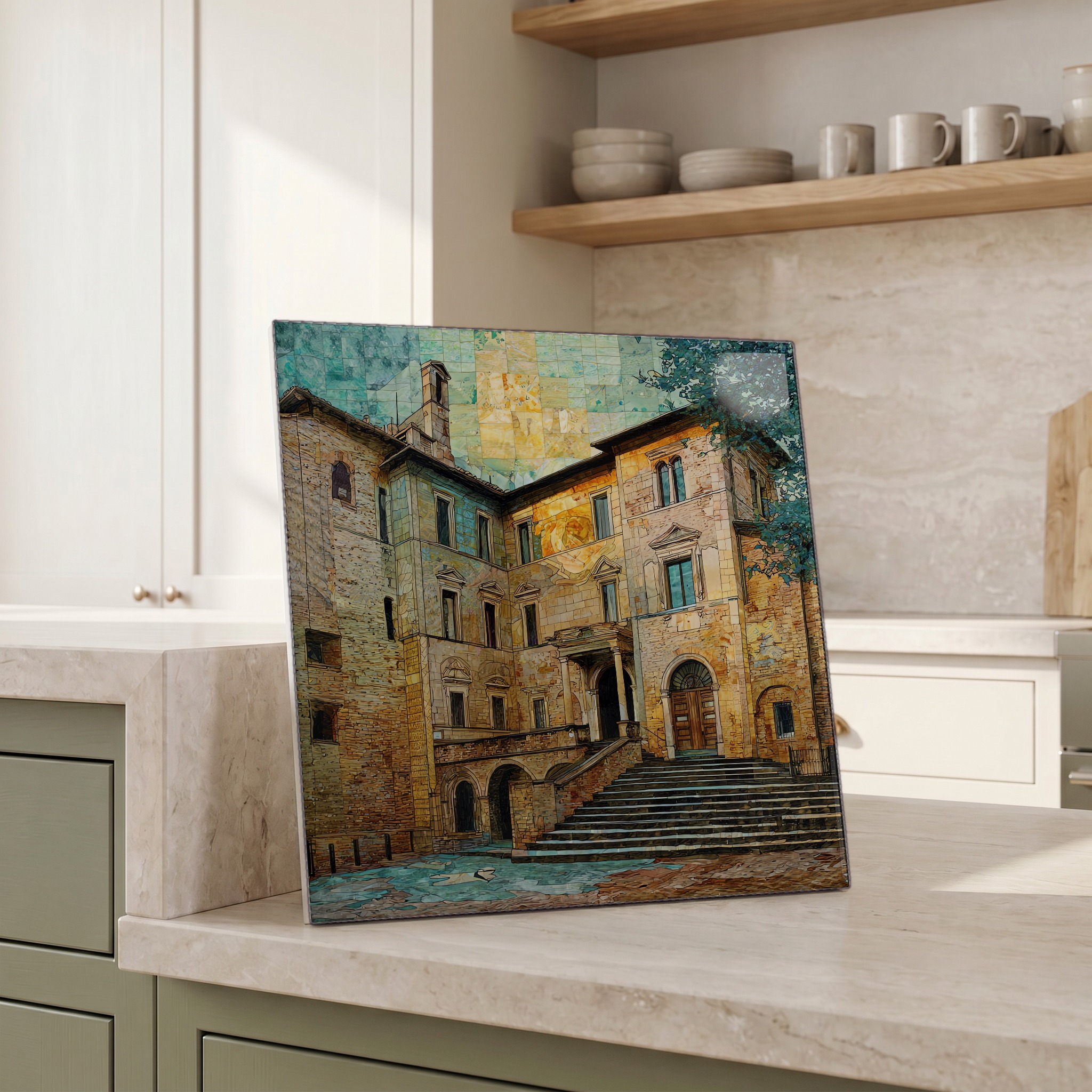
Beside the kettle, propped on the counter.
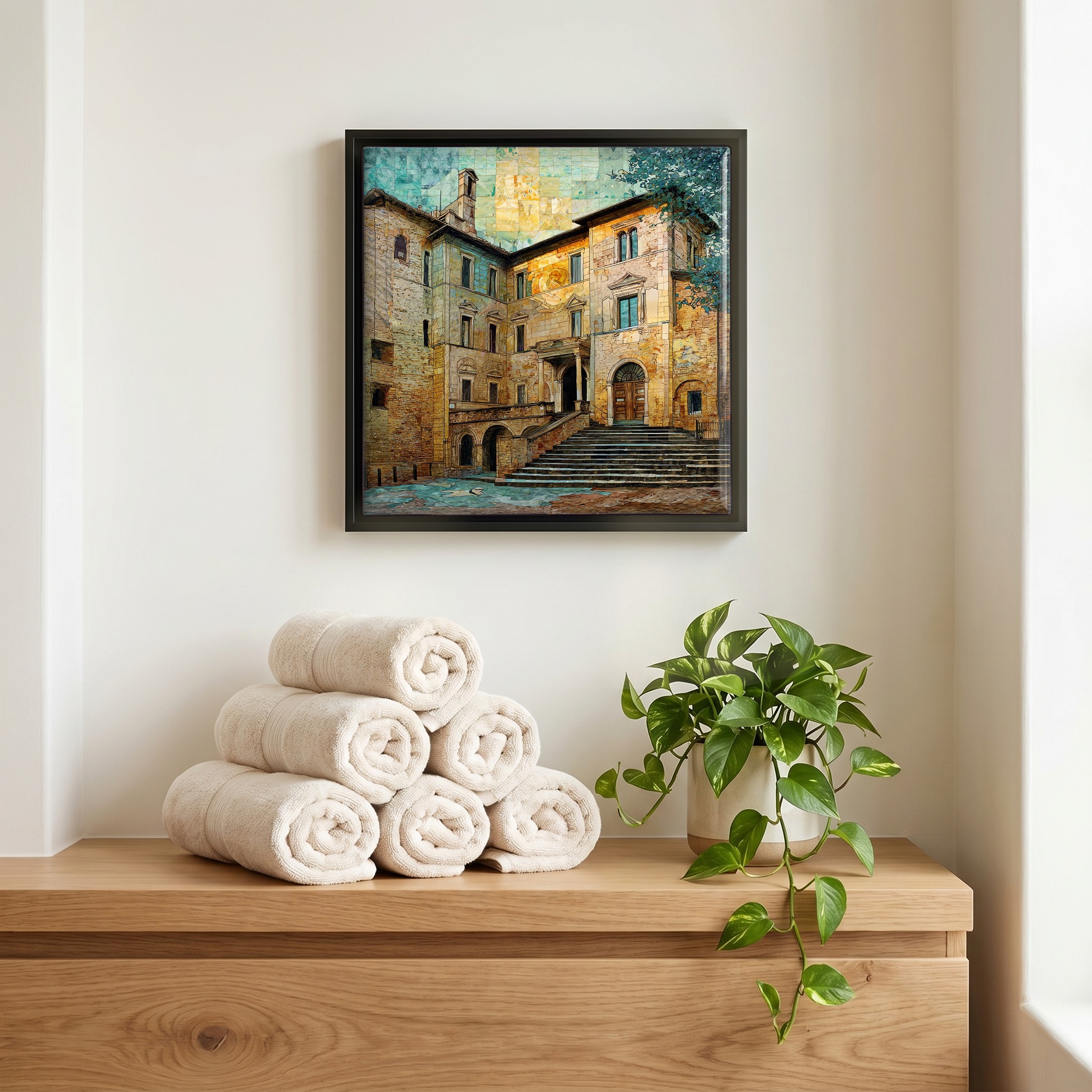
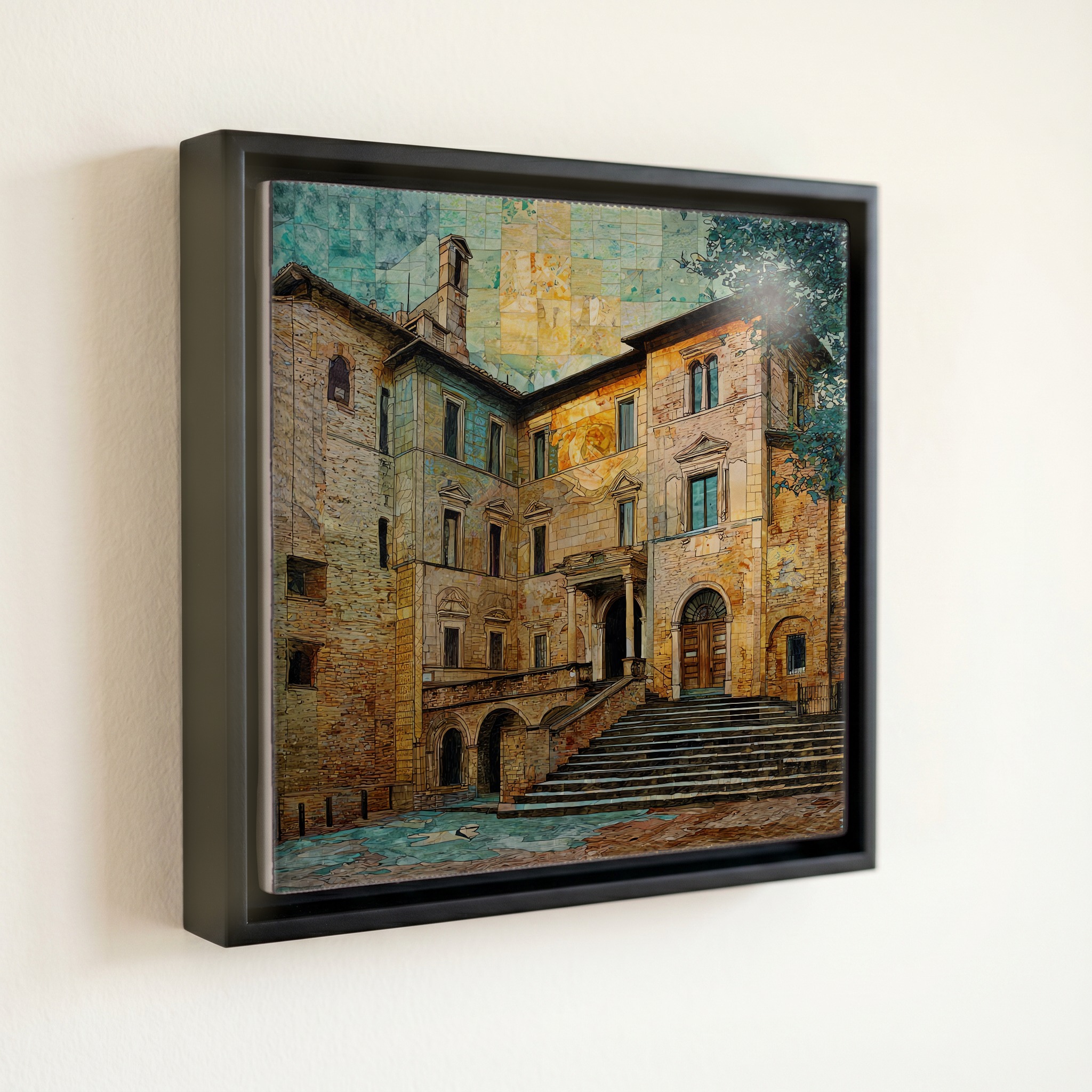
Above the linens, in a slim black surround.
On the nightstand, on a light oak stand.
On a picture ledge, where the light comes in.
a note from the studio

The Renaissance palace Federico da Montefeltro raised on the hill at Urbino, the one a courtier later called a city in the form of a palace. The twin towers of its west front face away from the streets, out toward the Marche countryside, the way the duke's small study turned its back on the town. Inside, the studiolo is barely larger than a closet, its lower walls inlaid with wood that pretends to be open cupboards and half-shut lattice doors. People climb the hill for Piero della Francesca's Flagellation and stay for the quiet. The light through the loggia does most of the talking.
from the studio
shown in a slim black floating frame · 6 × 6 in
— bring it home

Ducal Palace of Urbino, on ceramic.

Each tile is finished by hand in our Knoxville studio. Artwork is slowly infused into the ceramic surface under high heat and pressure, and rests beneath a thin glossy finish. The colour lives in the surface, not on top of it.

What kind of piece?
One tile — square or rectangle.
How big?
the popular one — counter, shelf, nightstand
6 × 6 in · 15 cm · 1.6 lb
Surface finish
A clear glossy finish — the artwork reads as if under resin. Ideal for show-pieces and framed wall art.
How it sits
A hidden cleat — sits ¼″ proud of the wall.
$58
Hand-finished and shipped from our studio at the foot of the Smokies. On your wall in about ten days.
size
6 × 6 in
15 cm
weighs
1.6 lb
solid in the hand
surface
ceramic, hand-finished
art rests beneath a thin glossy finish
from
Knoxville, TN
our family studio, at the foot of the Smokies
— start a Coaster Set

Pick any four 4-inch tiles — National Parks you've been to, a Smokies set, the four seasons of one place. $ for a set of , cork-backed, ready to live on the table.
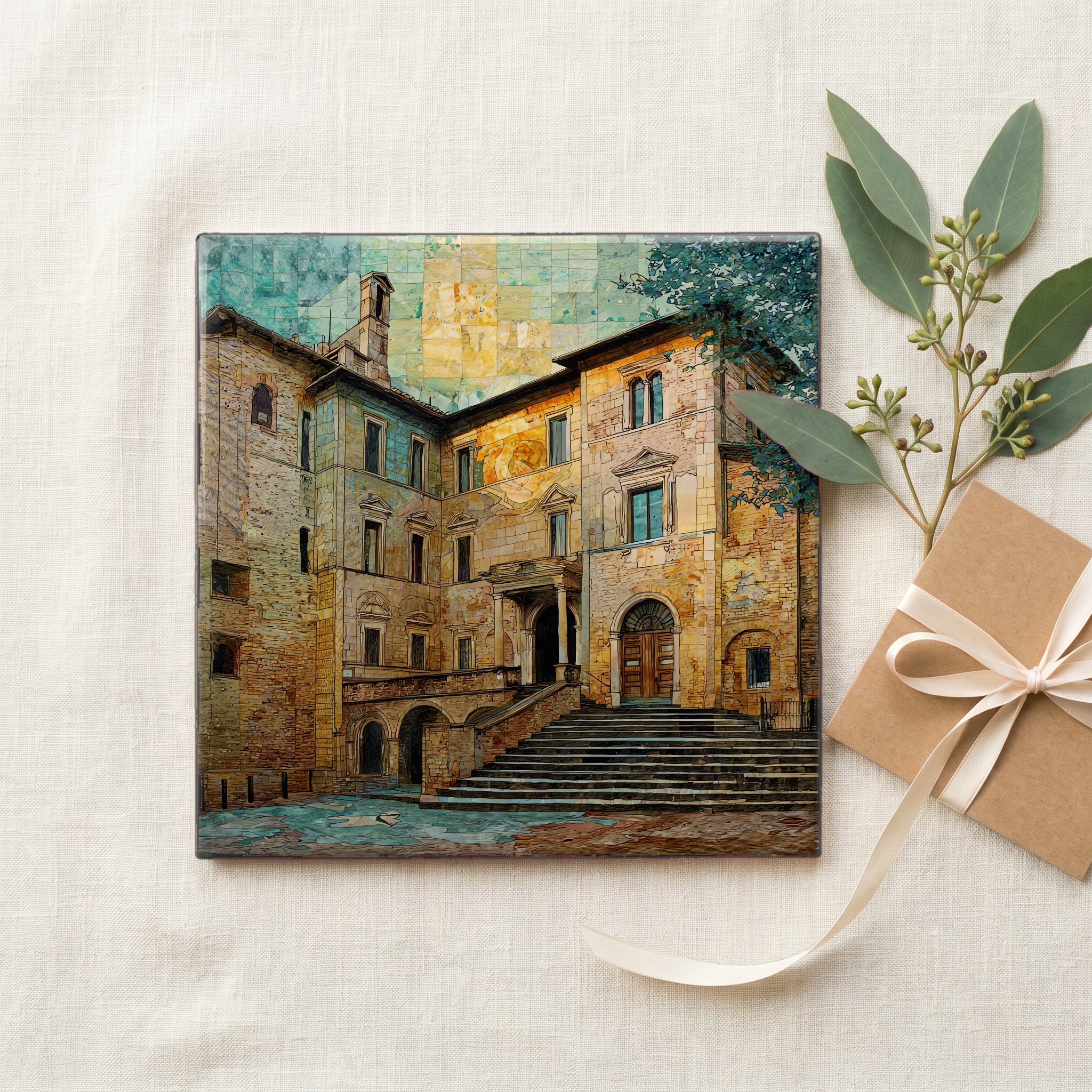
comes gift-ready
comes gift-ready

Each tile ships in a kraft box, tied with cream ribbon, with a handwritten note from the studio if you'd like to add one.
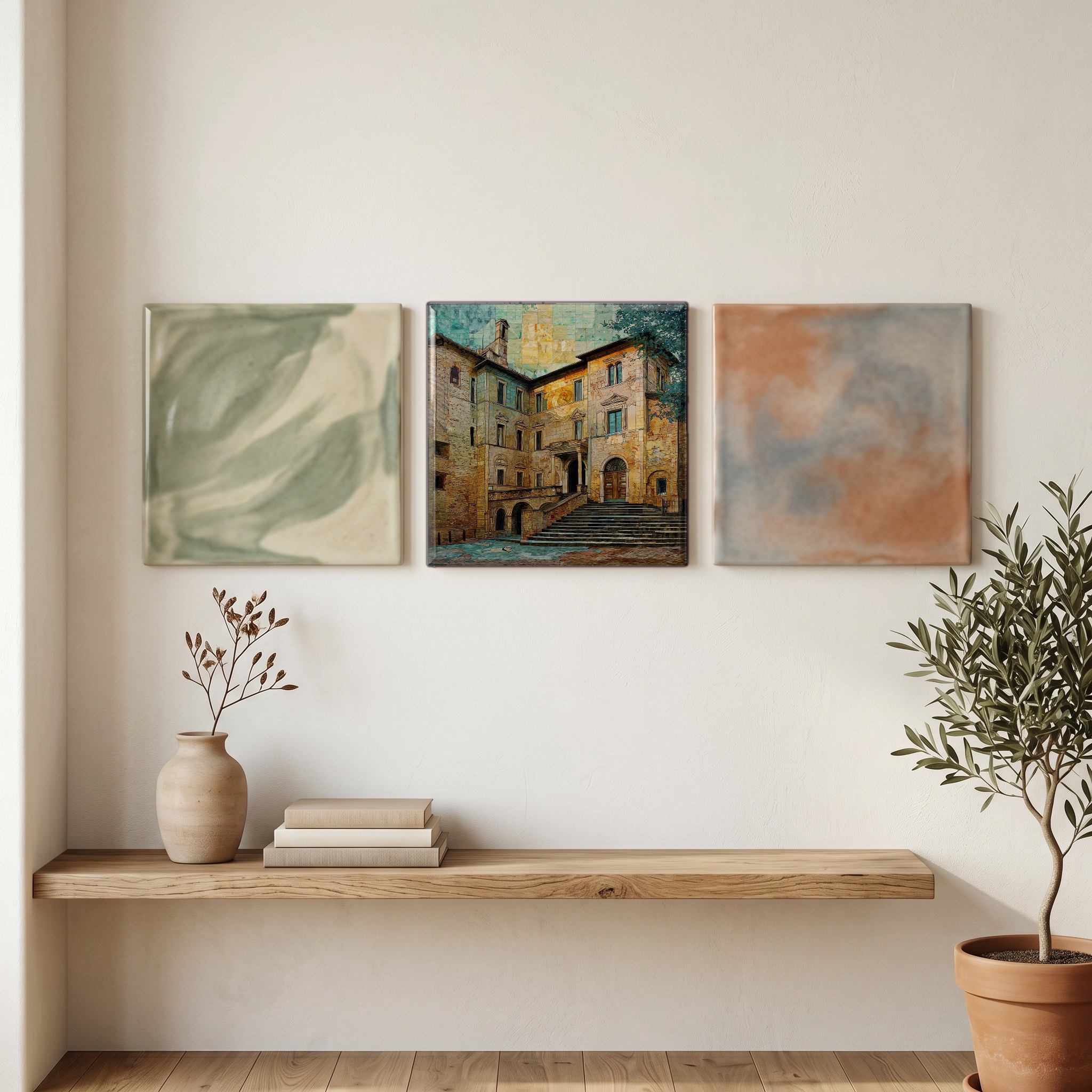
or build a grouping
or build a grouping

Three or five different vistas, hung together — a chapter of places you've been, or want to go.

about Ducal Palace of Urbino

The place, in three passes.

A little of what's known, in case you fall down the rabbit hole — or want to go see it yourself.
the place

The Ducal Palace stands at the top of Urbino, a walled hill town in the Marche, the region on Italy's Adriatic side, in the province of Pesaro and Urbino. Duke Federico da Montefeltro began building it around 1454, enlarging an older palace into the seat of one of the Renaissance's great courts. The town sits roughly 35 kilometres inland from the coast at Pesaro, reached by winding road through the Marche hills; Urbino has no railway station of its own. Since 1998 the historic centre of Urbino, the palace at its core, has been a UNESCO World Heritage Site. The palace now houses the Galleria Nazionale delle Marche.

the stone

What makes the building famous is less its size than its proportion. After 1465 Federico brought in the Dalmatian architect Luciano Laurana to give the palace its courtyard and its western front, the Facciata dei Torricini, where two slender round towers frame a stack of loggias looking out over the valley. Laurana's arcaded courtyard, with its even rhythm of columns in pale stone and brick, is often cited as one of the purest statements of early Renaissance architecture. Francesco di Giorgio Martini carried the work on after Laurana left, and the young Donato Bramante, born nearby at Fermignano, is thought to have learned from what he saw here. The effect is calm rather than grand.

the visit

The palace is open as the Galleria Nazionale delle Marche, one of the most important collections of Renaissance painting in Italy. It runs Tuesday through Sunday, from about 8:30 in the morning until just after 19:00, and closes on Mondays, 25 December, and 1 January. The rooms hold Piero della Francesca's Flagellation of Christ and his Madonna di Senigallia, Raphael's La Muta, and Paolo Uccello's predella of the Desecrated Host. The single space people remember is the studiolo, Federico's study of about 3.6 by 3.4 metres, its lower walls covered in intarsia, inlaid wood that fakes open cupboards, a caged bird, and a half-shelved lute in convincing perspective. Portraits of great thinkers by Joos van Wassenhove once hung above them.

where
Italy · Urbino, Marche
position
43.7233° N · 12.6378° E
the neighborhood

What's nearby.

A handful of named places within an hour's walk or short drive. Some we've already painted; some we will.
0.1 km S
Duomo di Urbino
cathedral
0.2 km N
Piazza della Repubblica
town square
0.3 km NW
Oratorio di San Giovanni
frescoed oratory
0.4 km N
Casa di Raffaello
house museum
0.5 km W
Fortezza Albornoz
hilltop fortress
N
Ducal Palace of Urbino
Duomo di Urbino
Piazza della Repubblica
Oratorio di San Giovanni
Casa di Raffaello
Fortezza Albornoz
common questions

What people ask.

A few questions we get about Ducal Palace of Urbino — and about bringing the piece home.
about the place

The Ducal Palace stands at the top of Urbino, a hill town in the Marche region of east-central Italy, in the province of Pesaro and Urbino. It sits roughly 35 kilometres inland from the Adriatic coast at Pesaro.

Duke Federico da Montefeltro began the palace around 1454. The Dalmatian architect Luciano Laurana designed its courtyard and twin-towered west front after 1465, and Francesco di Giorgio Martini continued the work after Laurana left.

The studiolo is Duke Federico's private study, about 3.6 by 3.4 metres, its lower walls covered in intarsia, wood inlay that creates trompe-l'oeil cupboards, instruments, and latticework doors representing the liberal arts. It is one of the most famous small rooms of the Renaissance.

The gallery in the palace holds Piero della Francesca's Flagellation of Christ and Madonna di Senigallia, Raphael's La Muta, Paolo Uccello's Miracle of the Desecrated Host, and a late Resurrection by Titian, among major fifteenth-century works.

Yes. The historic centre of Urbino, with the Ducal Palace at its core, has been a UNESCO World Heritage Site since 1998, recognised as a remarkably complete Renaissance city.

The palace, home to the Galleria Nazionale delle Marche, opens Tuesday through Sunday, from about 8:30 in the morning until just after 19:00. It closes on Mondays, 25 December, and 1 January.

The twin round towers belong to the Facciata dei Torricini, the western front designed by Luciano Laurana. They frame a stack of loggias that face away from the town, out over the Marche valley, rather than toward the streets.

about the piece in your home

It has been a meaningful gift for our customers with ties to Urbino or a love of Italian art. The palace is the emblem of the town and of Federico da Montefeltro's court. A Small or Keepsake with a handwritten note from the studio carries well.

The artwork runs to deep stained-glass colour and gold. It sits well in jewel-tone Maximalist rooms, in Old-World European studies, and against a dark library wall or a plaster-toned hallway, where the twin towers and loggias hold the eye.

Yes. The return to dark-academia interiors and book-lined studies suits a Renaissance court piece like this one, which depicts the studiolo, one of history's most famous small studies. A Medium works above a desk.

Above a console or a reading chair, a single Large holds the wall on its own. Over a sofa or a wide credenza, a four-tile Mural reads as one image, and a nine-tile Mural makes the palace the room's focal point. Smaller walls take a Medium.

Yes. For a backsplash, a shower wall, or a humid bathroom, choose the Dura Satin or Matte finish, both soft-sheen and scratch-resistant. The Glossy finish is better kept to framed wall pieces in drier rooms.

Wipe it with a soft microfibre cloth and a little water. The colour is slowly infused into the ceramic surface under high heat and pressure and lives beneath a thin finish, so it needs no polish and no special cleaner.

Yes. Every WenderVista piece is original to Wender Studios, our family studio in Knoxville, Tennessee. We paint and hand-finish each one in-house, with no outside licensing, so this view of the Ducal Palace is ours alone.

if this one stayed with you

A few you might also love.

Hand-picked by the eye that found Sorapis. Same air, same kind of quiet.
— a collection

The Italian Dolomites,
painted slow.

The valleys between Cortina and Val Gardena, the tarns you walk an hour to see, the towers that turn the colour of a banked fire just before dark. Wander the collection by valley, by season, or follow the path Reid walked.

Tre Cime
Braies
Misurina
Sorapis
Cinque Torri
Sassolungo
Marmolada