Wender·Vista
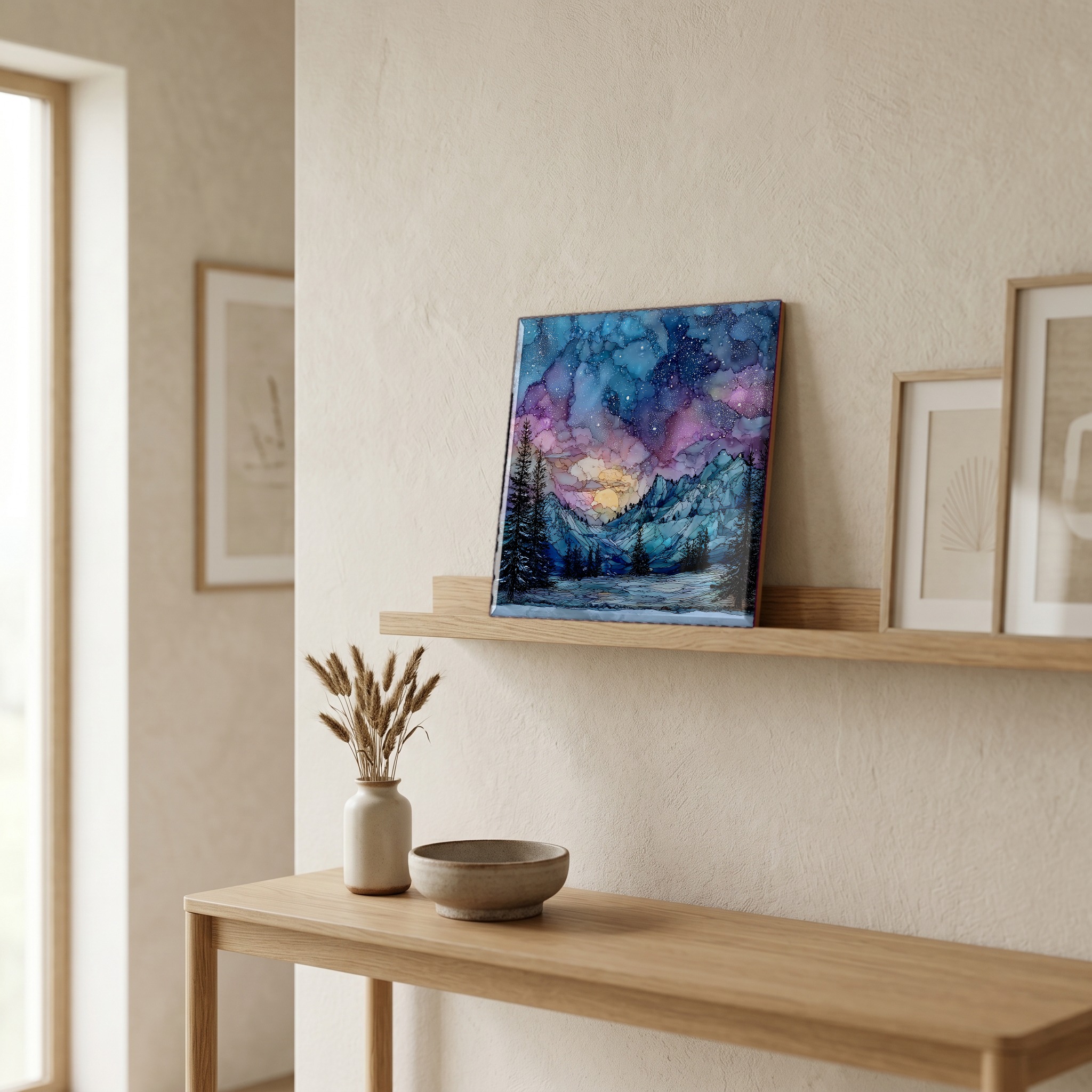
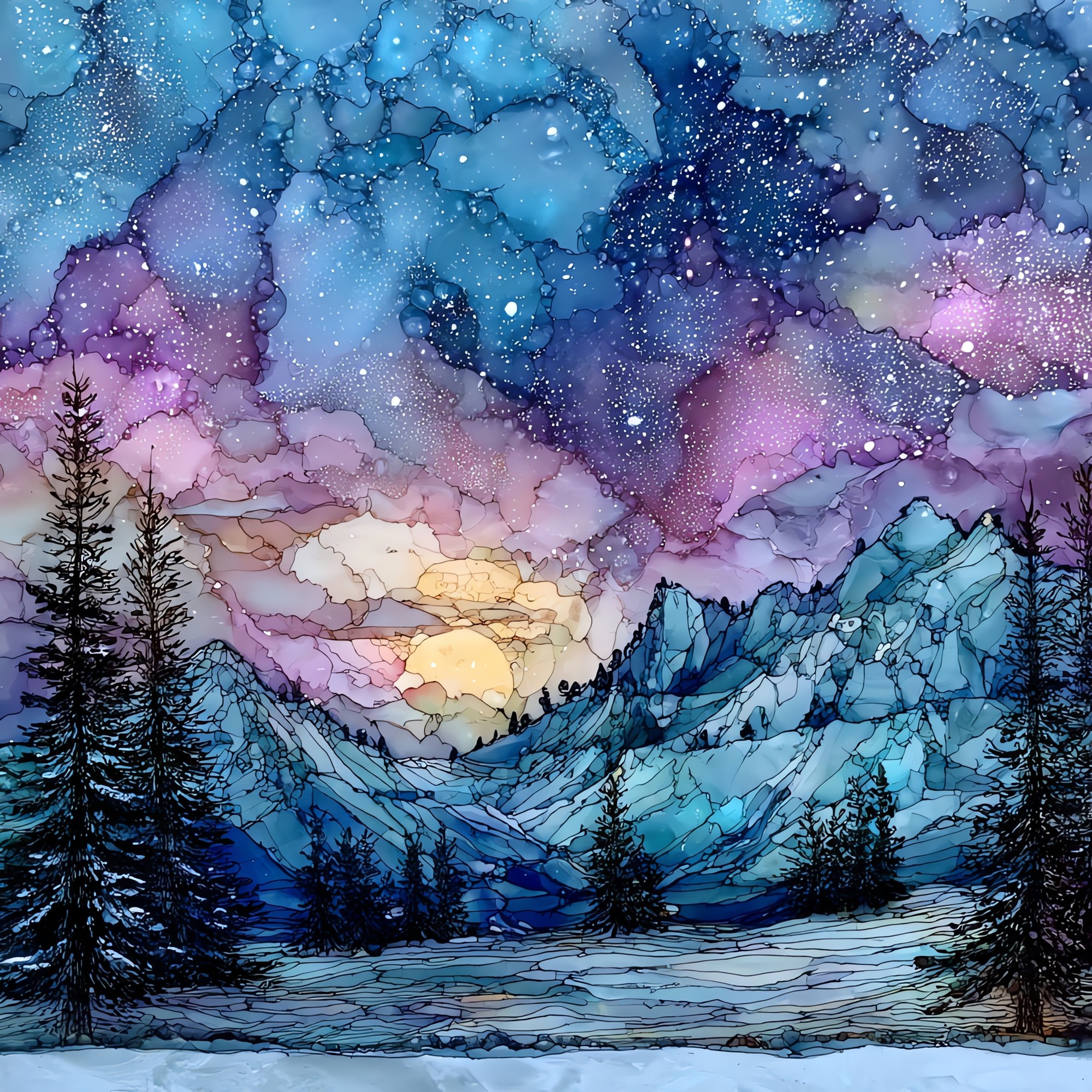
Dolomites Snowfield
shown on ceramic, 12-inch tileItaly
high in the Alps of northeast Italy

Dolomites Snowfield

— the rose the snow keeps after the sun is gone.

Where it lives

Not only on a wall.

A small tile on the nightstand catching the morning. A larger one above the fire. Yours, wherever you spend the slow hours.
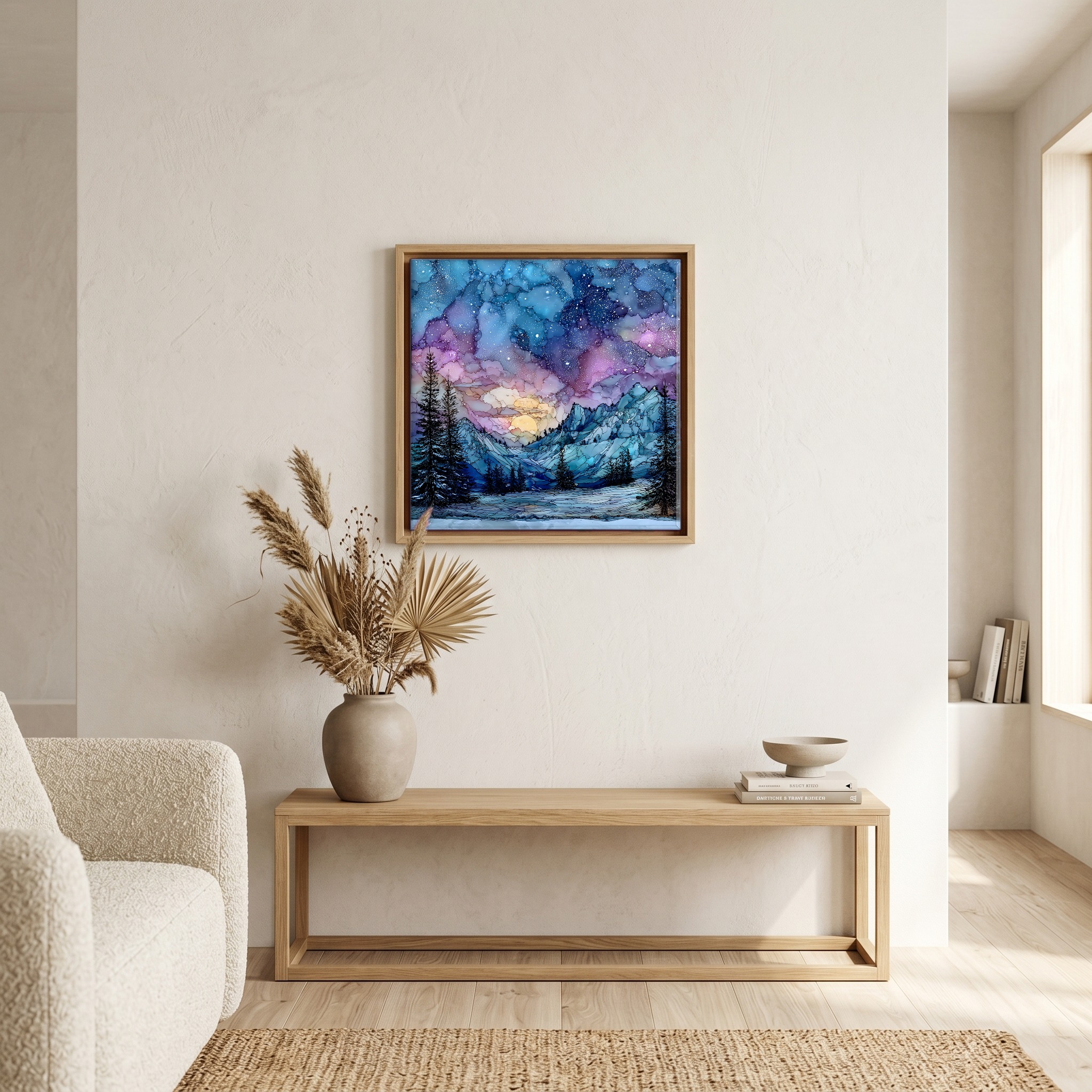
Above the bench, in a warm oak surround.
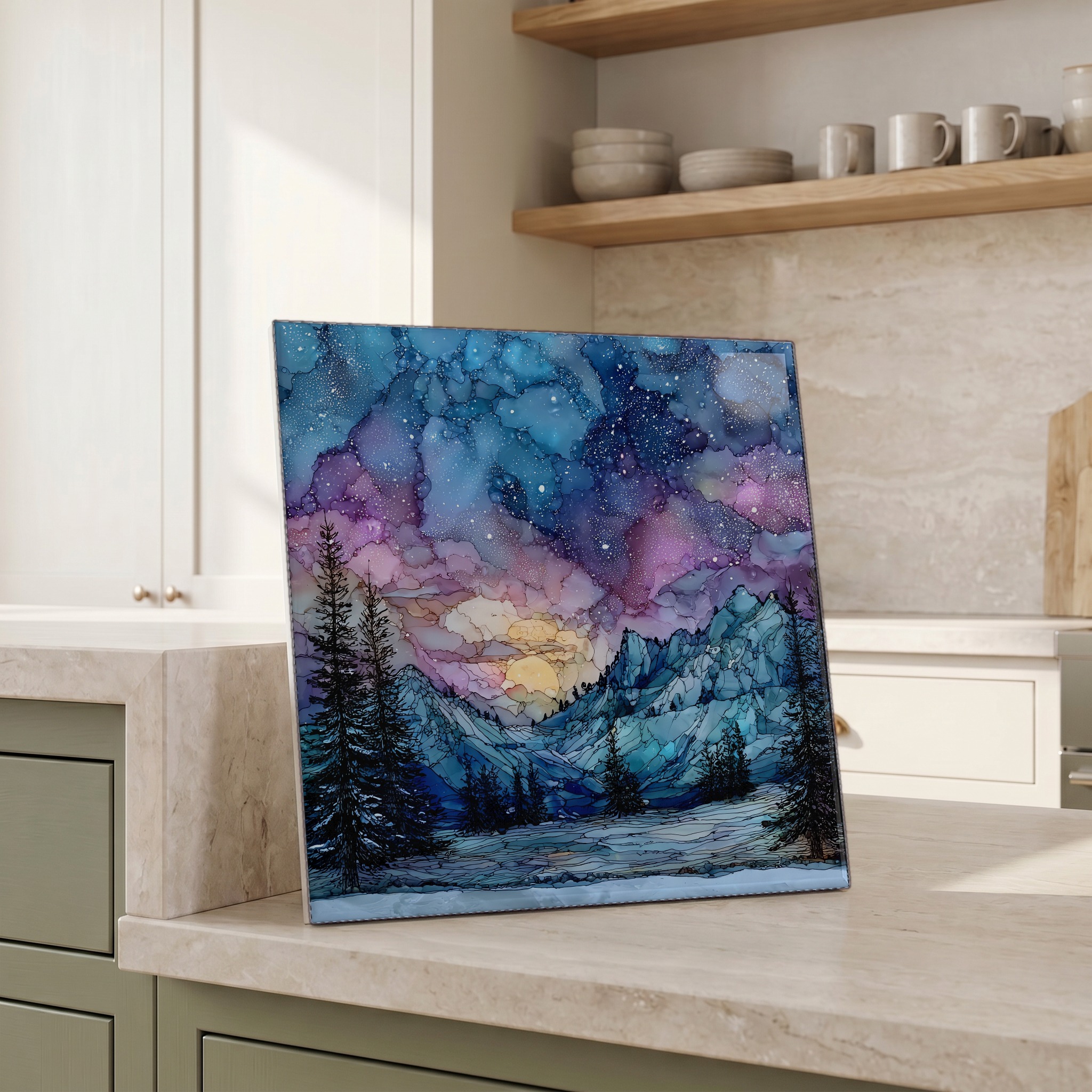
Beside the kettle, propped on the counter.
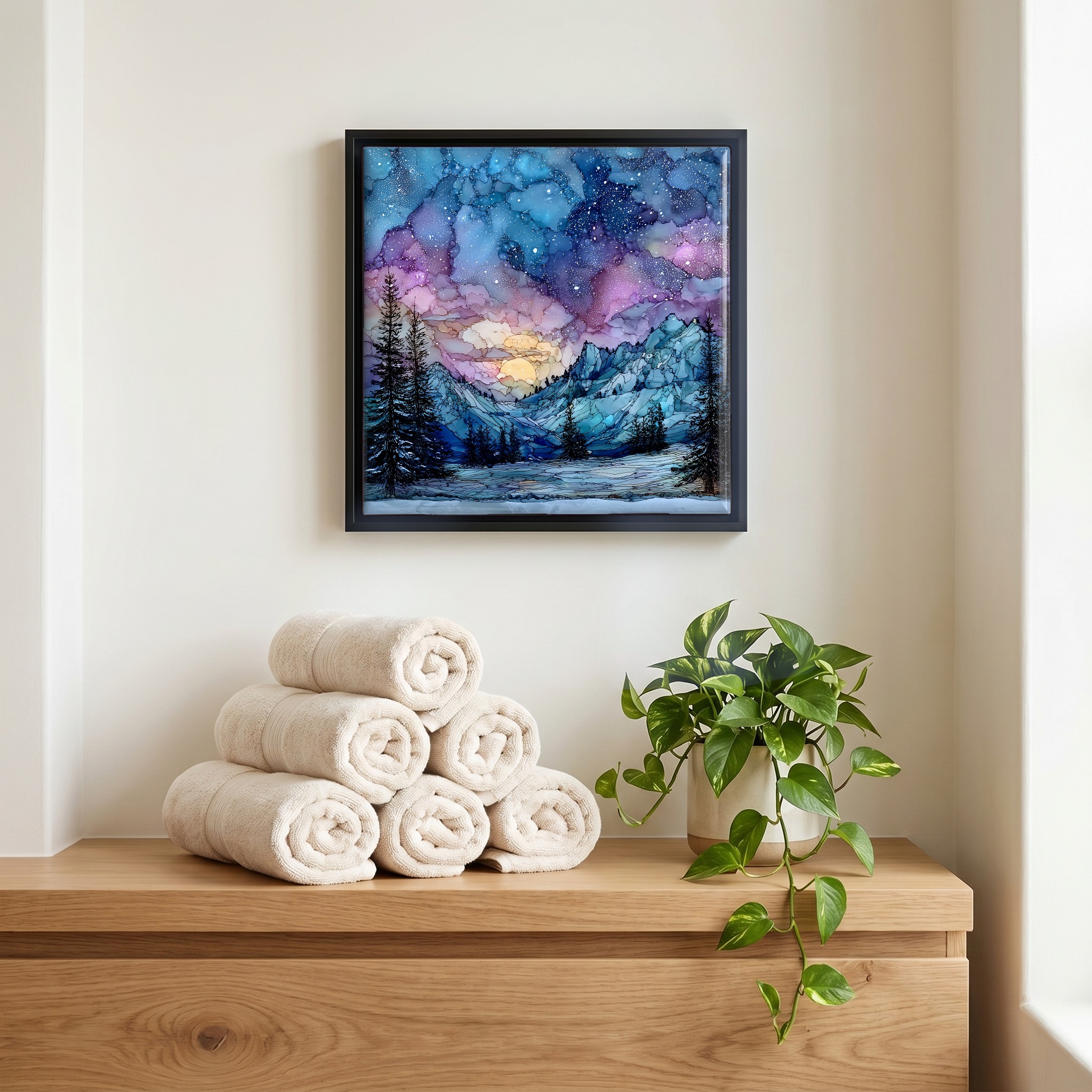
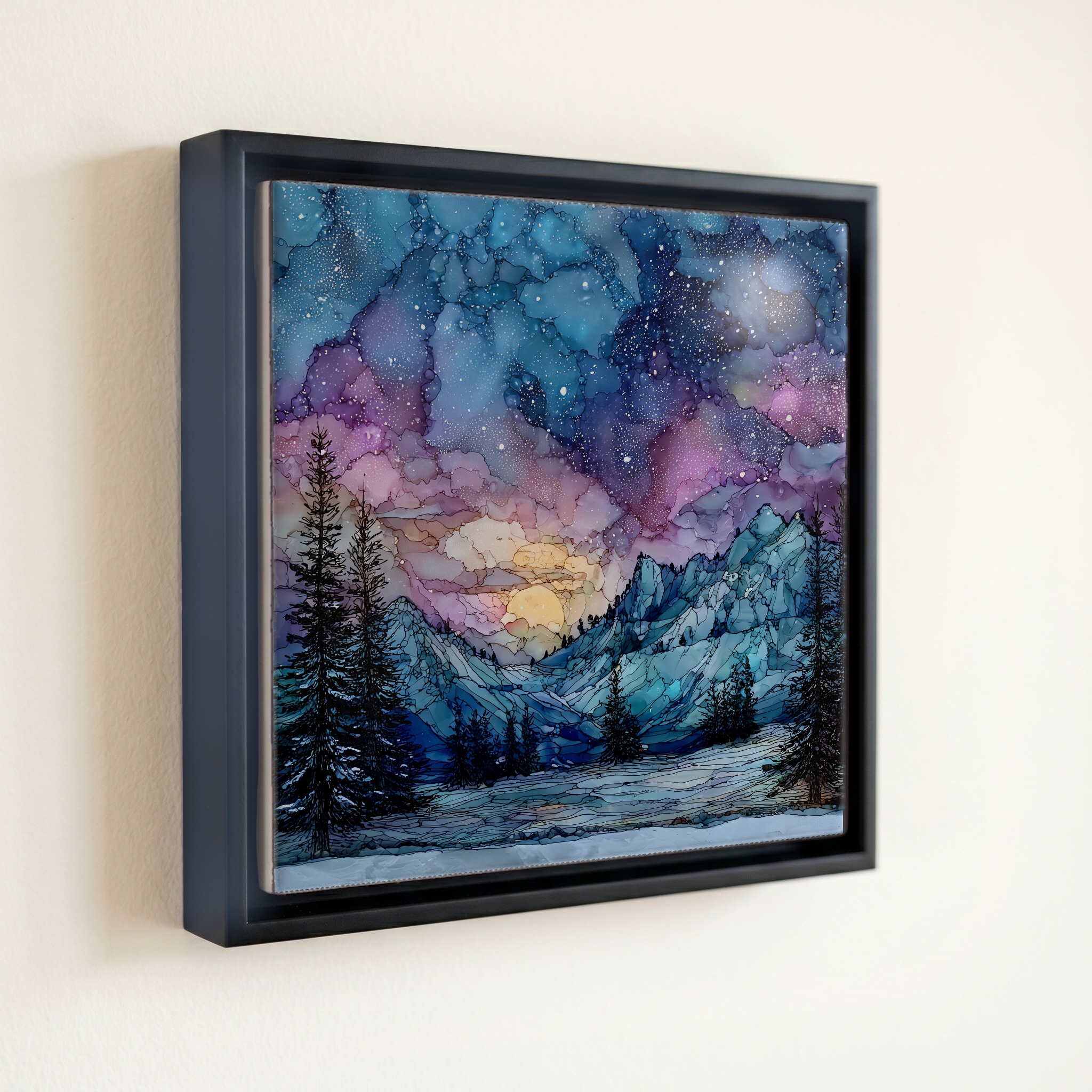
Above the linens, in a slim black surround.
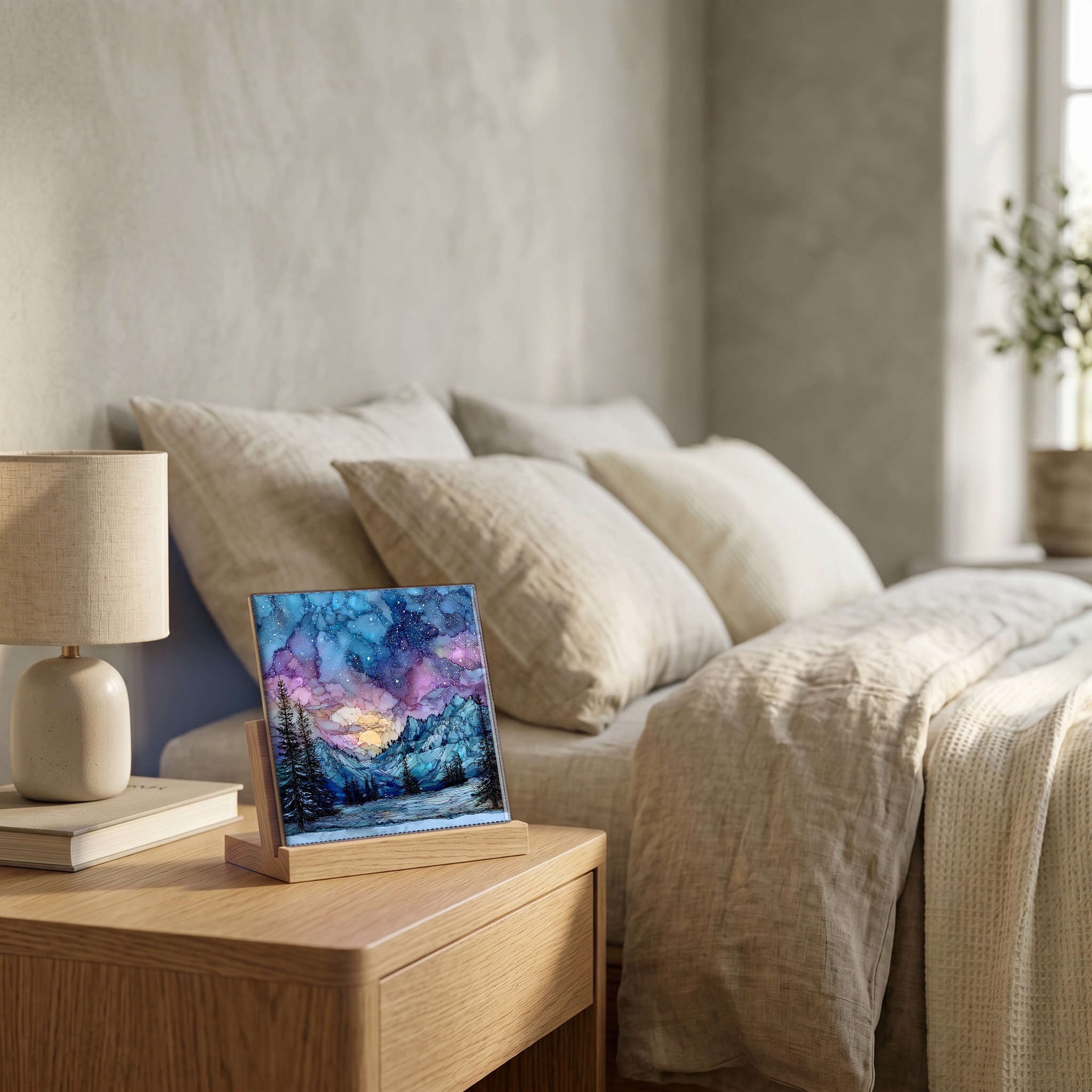
On the nightstand, on a light oak stand.
On a picture ledge, where the light comes in.
a note from the studio

The pale peaks of northeast Italy, the ones named for the rock they are made of. For about ten minutes after the sun drops, the dolomite turns the colour of rose and ember, and the snowfields below catch the same wash. The Ladin people, who have lived in these valleys for centuries, have a word for it: *enrosadira*, the turning-pink. The skiers are mostly down by then. The light belongs to whoever stayed up.
from the studio
shown in a slim black floating frame · 6 × 6 in
— bring it home

Dolomites Snowfield, on ceramic.

Each tile is finished by hand in our Knoxville studio. Artwork is slowly infused into the ceramic surface under high heat and pressure, and rests beneath a thin glossy finish. The colour lives in the surface, not on top of it.

What kind of piece?
One tile — square or rectangle.
How big?
the popular one — counter, shelf, nightstand
6 × 6 in · 15 cm · 1.6 lb
Surface finish
A clear glossy finish — the artwork reads as if under resin. Ideal for show-pieces and framed wall art.
How it sits
A hidden cleat — sits ¼″ proud of the wall.
$58
Hand-finished and shipped from our studio at the foot of the Smokies. On your wall in about ten days.
size
6 × 6 in
15 cm
weighs
1.6 lb
solid in the hand
surface
ceramic, hand-finished
art rests beneath a thin glossy finish
from
Knoxville, TN
our family studio, at the foot of the Smokies
— start a Coaster Set

Pick any four 4-inch tiles — National Parks you've been to, a Smokies set, the four seasons of one place. $ for a set of , cork-backed, ready to live on the table.
comes gift-ready
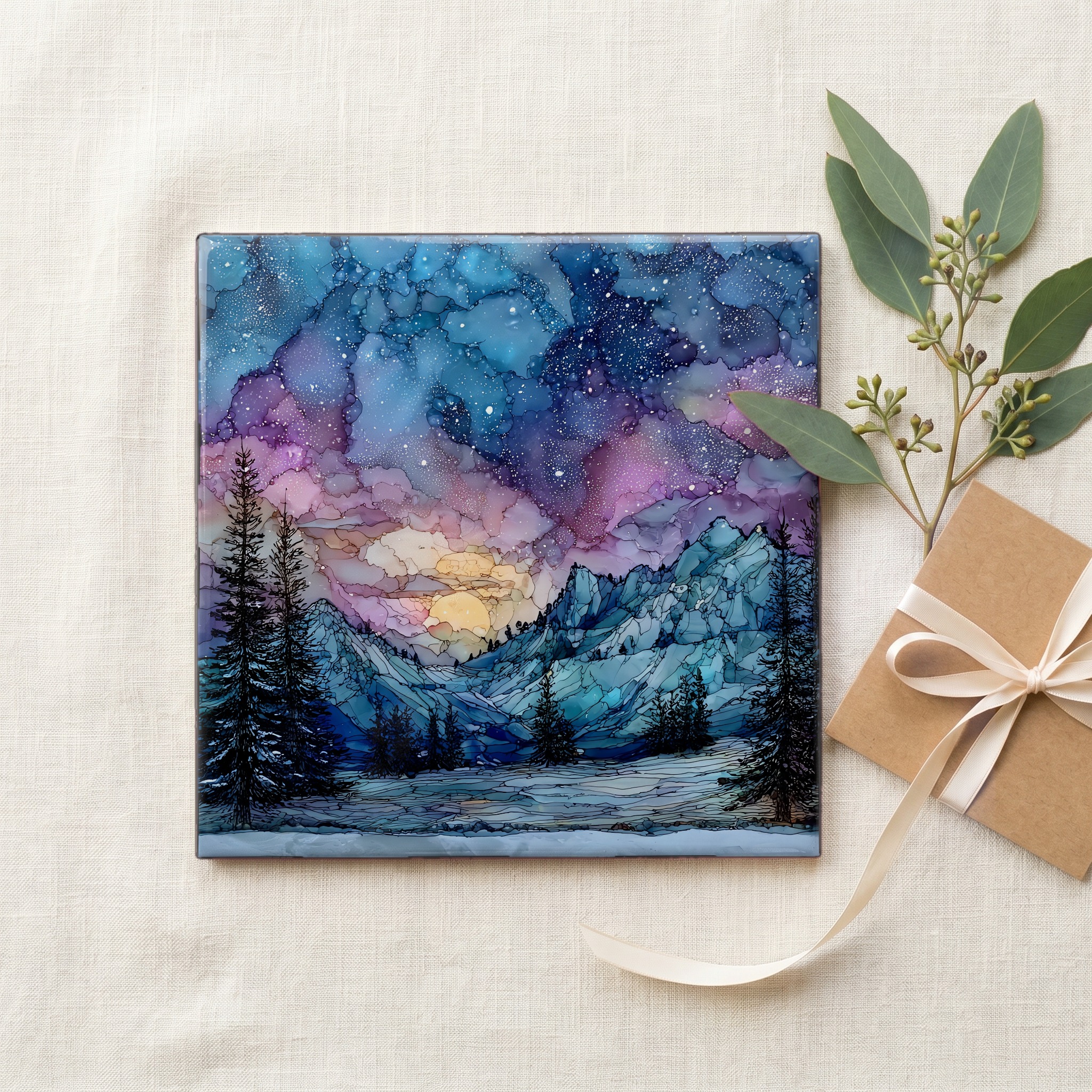
comes gift-ready

Each tile ships in a kraft box, tied with cream ribbon, with a handwritten note from the studio if you'd like to add one.
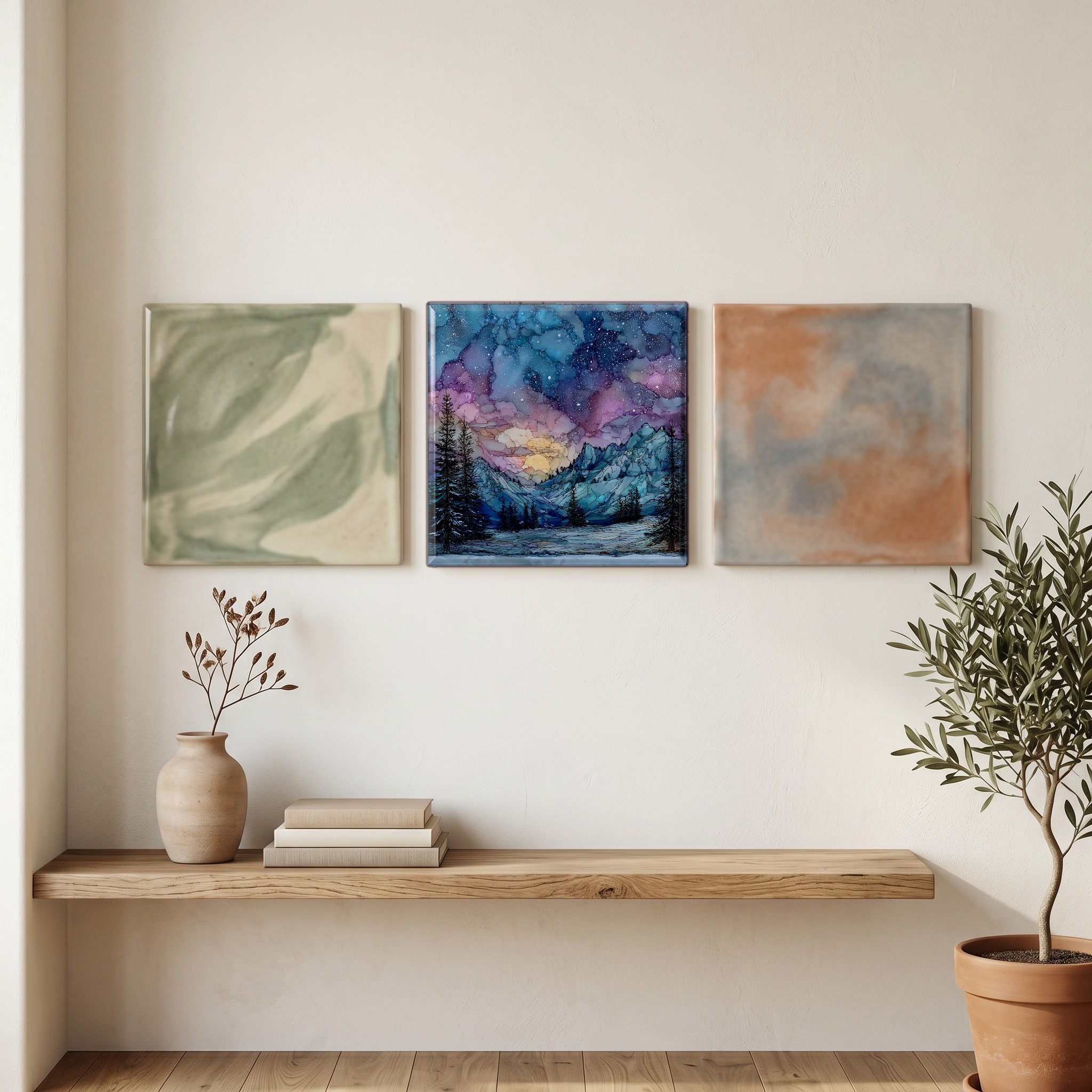
or build a grouping
or build a grouping

Three or five different vistas, hung together — a chapter of places you've been, or want to go.

about Dolomites Snowfield

The place, in three passes.

A little of what's known, in case you fall down the rabbit hole — or want to go see it yourself.
the place

The Dolomites are a range of pale limestone peaks in northeastern Italy, spread across the regions of Veneto, Trentino-Alto Adige and Friuli-Venezia Giulia. They run roughly from the Adige river in the west to the Piave valley in the east, and were inscribed as a UNESCO World Heritage Site in 2009 for the drama of their geology and landscape. The high point is the Marmolada, the glacier-topped summit known as the Queen of the Dolomites, at 3,343 metres above sea level. The range holds well-known groups such as the Tre Cime di Lavaredo and the Sella, and in winter its valleys connect into Dolomiti Superski, among the largest linked ski areas in the world.

the stone

The peaks are made of dolomite, a carbonate rock close to limestone but richer in magnesium. It takes its name from Déodat Gratet de Dolomieu, the French naturalist who first described the mineral in 1791; the mountains were named for the stone afterward, not the other way around. Dolomite weathers to a pale grey-white, almost bone-coloured under the midday sun. That paleness is what makes the evening so strange: when the sun is low the rock takes a warm cast and seems to hold the light long after the valleys have gone blue. Against fresh snow the contrast sharpens, the white field below and the rose-grey wall above.

the light

The Dolomites are known for *enrosadira*, a Ladin word meaning to turn pink. As the sun drops, the pale rock runs through rose, then red, then a cold violet-grey, the colour climbing down the walls as the light fails. The effect repeats at dawn, fainter and slower. It is strongest on clear, still evenings, and in winter the low arc of the sun holds the rose longer while the snowfields below pick up the same wash of colour. The Ladin people, who have lived in these valleys for more than a thousand years and still speak their own Rhaeto-Romance language, named the phenomenon long before the photographers came.

where
Italy · Veneto, Trentino-Alto Adige & Friuli-Venezia Giulia
the neighborhood

What's nearby.

A handful of named places within an hour's walk or short drive. Some we've already painted; some we will.
null km
Tre Cime di Lavaredo
limestone peaks
null km
Marmolada
glaciered peak
null km
Catinaccio (Rosengarten)
mountain group
null km
Cinque Torri
rock towers
null km
Alpe di Siusi
alpine meadow
null km
Lago di Sorapis
glacial lake
null km
Cortina d'Ampezzo
alpine town
N
Dolomites Snowfield
Tre Cime di Lavaredo
Marmolada
Catinaccio (Rosengarten)
Cinque Torri
Alpe di Siusi
Lago di Sorapis
Cortina d'Ampezzo
common questions

What people ask.

A few questions we get about Dolomites Snowfield — and about bringing the piece home.
about the place

The Dolomites are a mountain range in northeastern Italy, spread across the Veneto, Trentino-Alto Adige and Friuli-Venezia Giulia regions. They run from the Adige river in the west to the Piave valley in the east, and were named a UNESCO World Heritage Site in 2009.

The peaks are pale dolomite rock, which catches and holds warm light when the sun sits low. The effect is called *enrosadira*, a Ladin word meaning to turn pink. The rock runs through rose, then red, then violet-grey as the light fails.

The Marmolada is the highest, at 3,343 metres, and the only major Dolomite peak carrying a glacier. Italians call it the Queen of the Dolomites. It sits on the border between the Trentino and Veneto regions.

The range is named for dolomite, the pale carbonate rock the peaks are made of. The rock itself was named for the French geologist Déodat Gratet de Dolomieu, who described it in 1791. The mountains took the name afterward.

Snow usually covers the high Dolomites from about November through April, with the ski season running roughly December to early April. The connected Dolomiti Superski network links twelve valleys and more than a thousand kilometres of slopes.

Several valleys speak Ladin, a Rhaeto-Romance language with roots more than a thousand years old. German and Italian are also widely spoken, a legacy of the region's history as part of Austria-Hungary until 1919.

about the piece in your home

It has carried well for people with ties to the range, from skiers who know Cortina to walkers who have crossed the high passes. A Small or Medium with a handwritten note from the studio suits someone who has stood under these peaks at last light.

The rose, violet and cold-white palette sits easily in alpine-modern, Scandinavian-minimal and jewel-tone rooms. It reads well against pale wood and warm light, where the pink of the rock and snow has room to do its work.

Yes. Alpine-modern and warm-minimalist rooms lean on natural stone tones and quiet colour, and the snowfield's rose-grey wash fits that direction. A single Large over a mantel or a four-tile Mural on a stair wall both work.

Over a sofa, a single Large or a four-tile Mural holds the wall; above a console, a Medium or a row of Coasters in stands suits the smaller span. For a stair wall or a wide room, a nine-tile Mural carries the scene.

Yes. For a shower, backsplash or powder room, choose the Dura Satin or Matte finish, both scratch-resistant and made for vertical, damp settings. The Glossy finish is best kept to framed wall pieces in dry rooms.

Wipe it with a soft microfibre cloth and water. The colour is slowly infused into the ceramic surface under high heat and pressure and lives beneath a thin glossy finish, so it will not fade or lift with ordinary cleaning.

Yes. The Dolomites Snowfield was made by Reid Wender, the studio's curator and eye, in our stained-glass and alcohol-ink visual language, and hand-finished in the Knoxville studio. It is not licensed from another artist or sold by any other store.

if this one stayed with you

A few you might also love.

Hand-picked by the eye that found Sorapis. Same air, same kind of quiet.
— a collection

The Italian Dolomites,
painted slow.

The valleys between Cortina and Val Gardena, the tarns you walk an hour to see, the towers that turn the colour of a banked fire just before dark. Wander the collection by valley, by season, or follow the path Reid walked.

Tre Cime
Braies
Misurina
Sorapis
Cinque Torri
Sassolungo
Marmolada