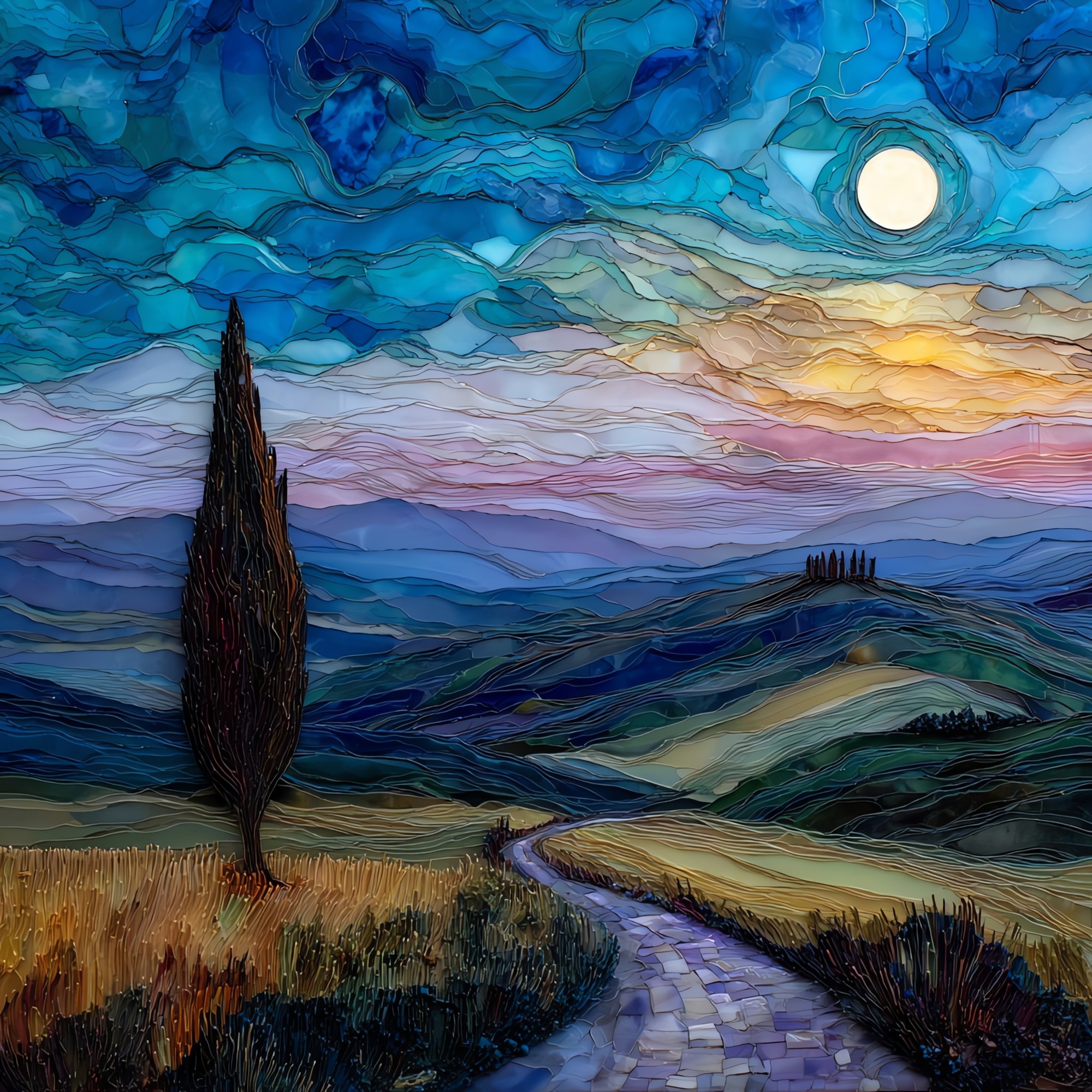
Crete Senesi
— the bare hills the sea left behind.
Not only on a wall.
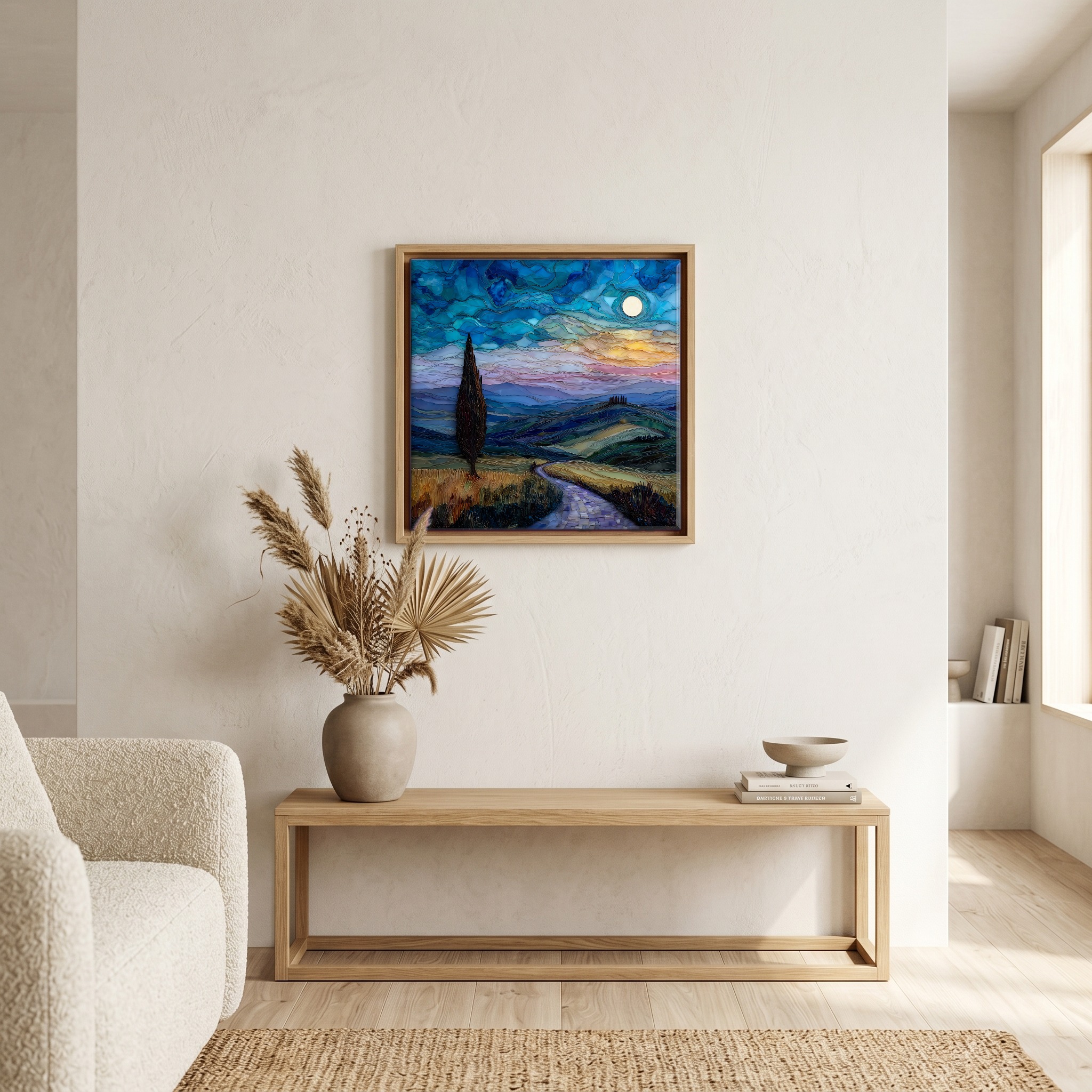
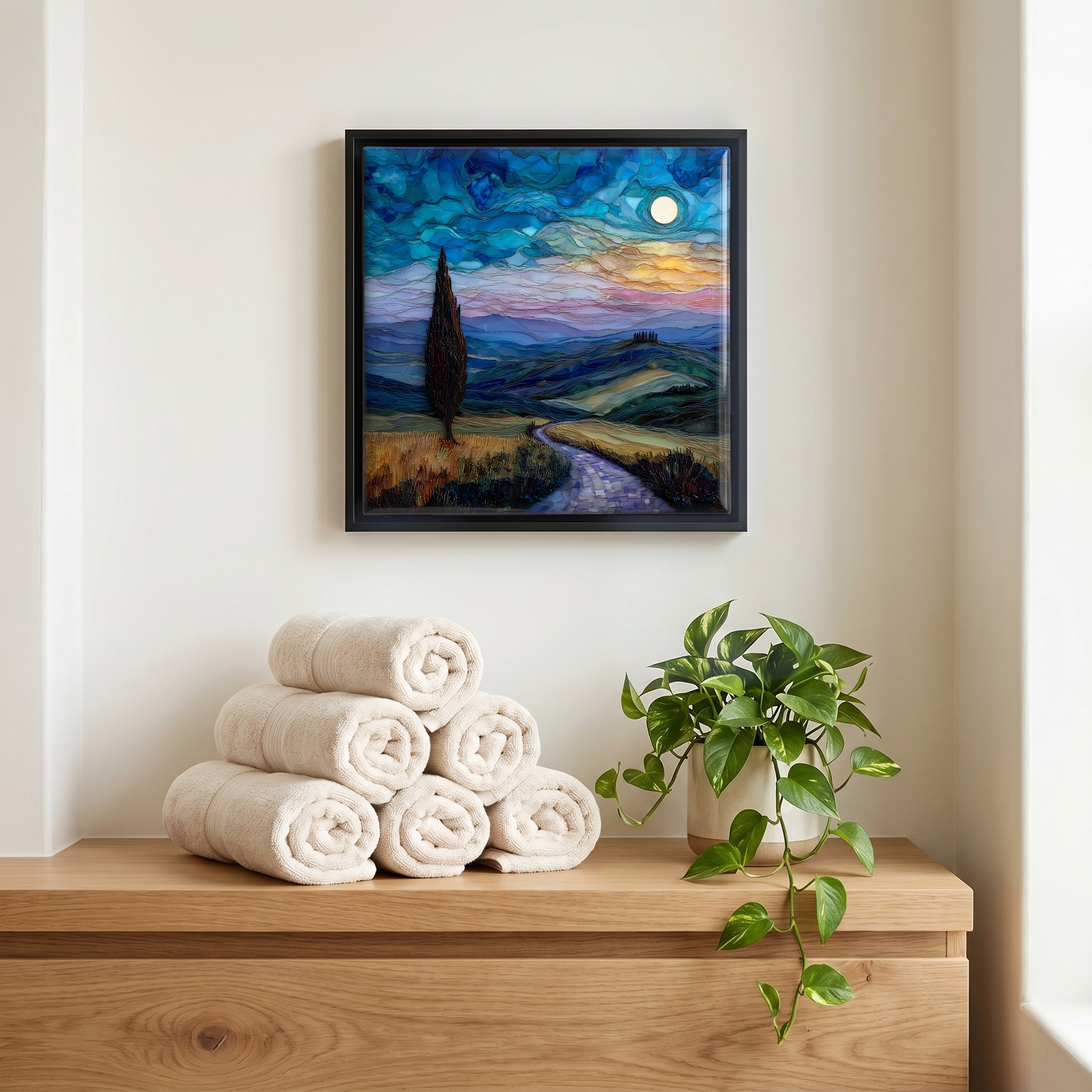
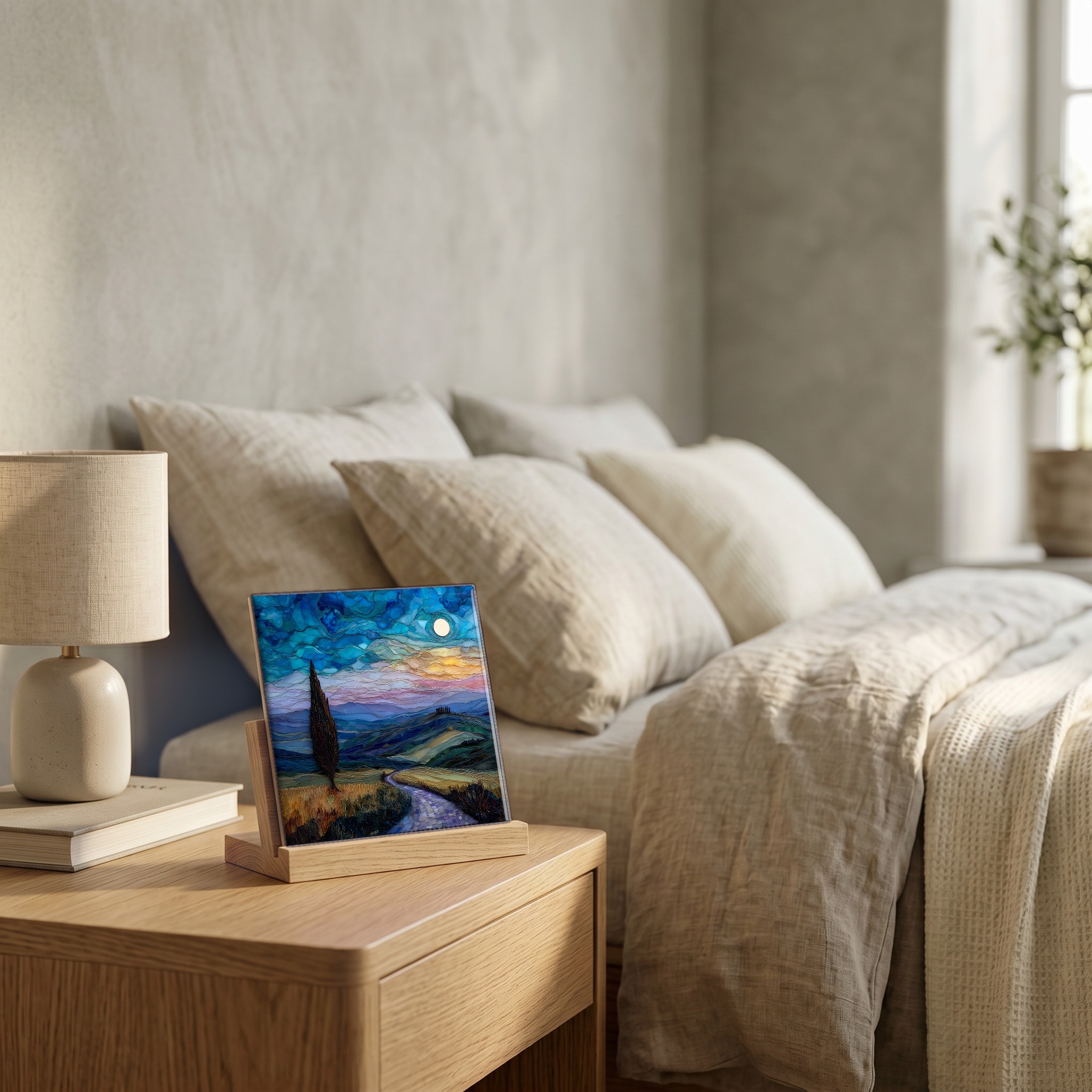
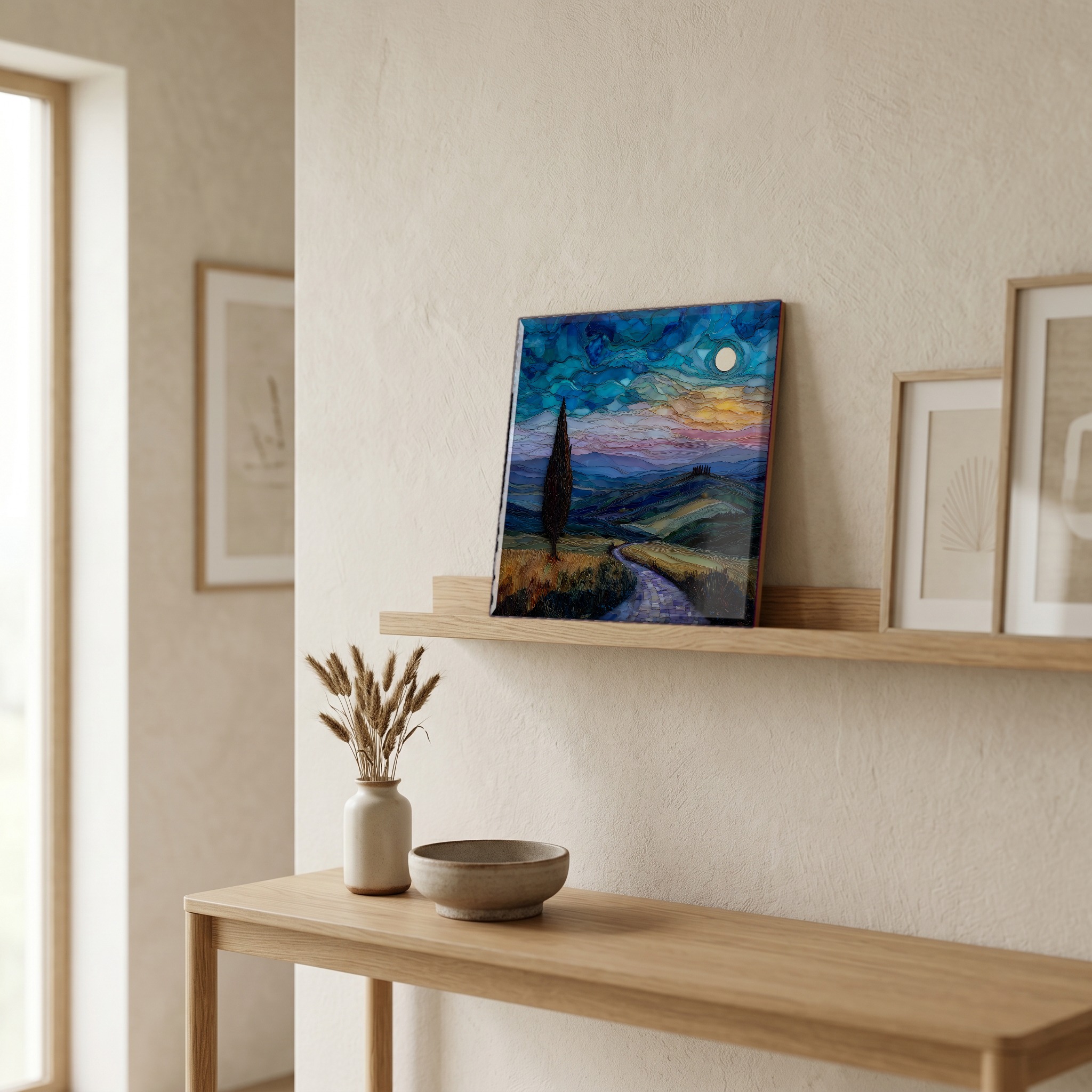
“South of Siena the cultivated hills give out and the ground turns grey. This is mattaione, the floor of a sea that drained off about two and a half million years ago, ploughed into long bare waves every autumn. A handful of cypresses stand where someone planted them a century back, along the rise toward the abbey of Monte Oliveto Maggiore. In spring the wheat comes in green; by July it has gone the colour of straw, and then the clay is turned under again. Coaches slow on the road to Asciano, and most people roll a window down and go quiet.
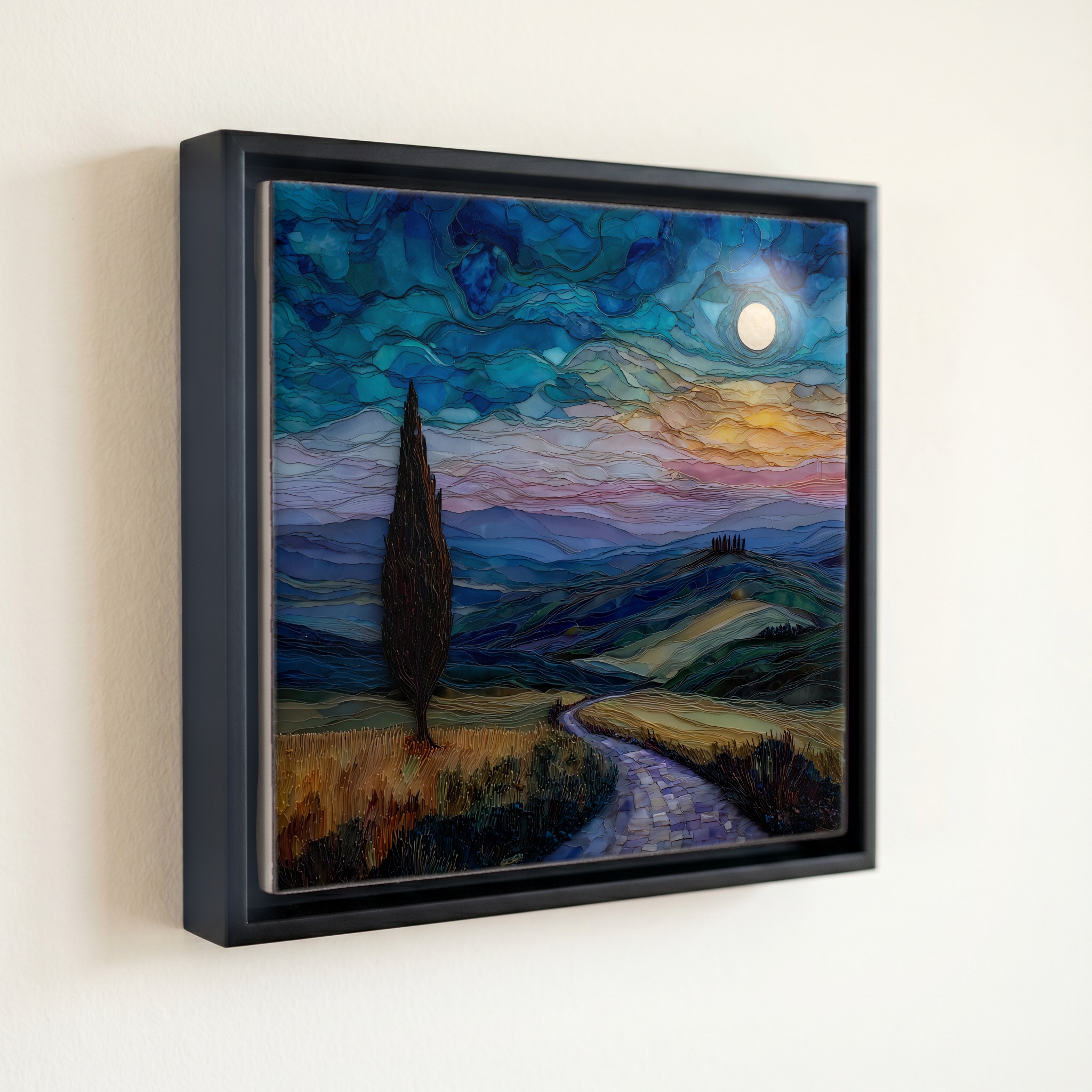
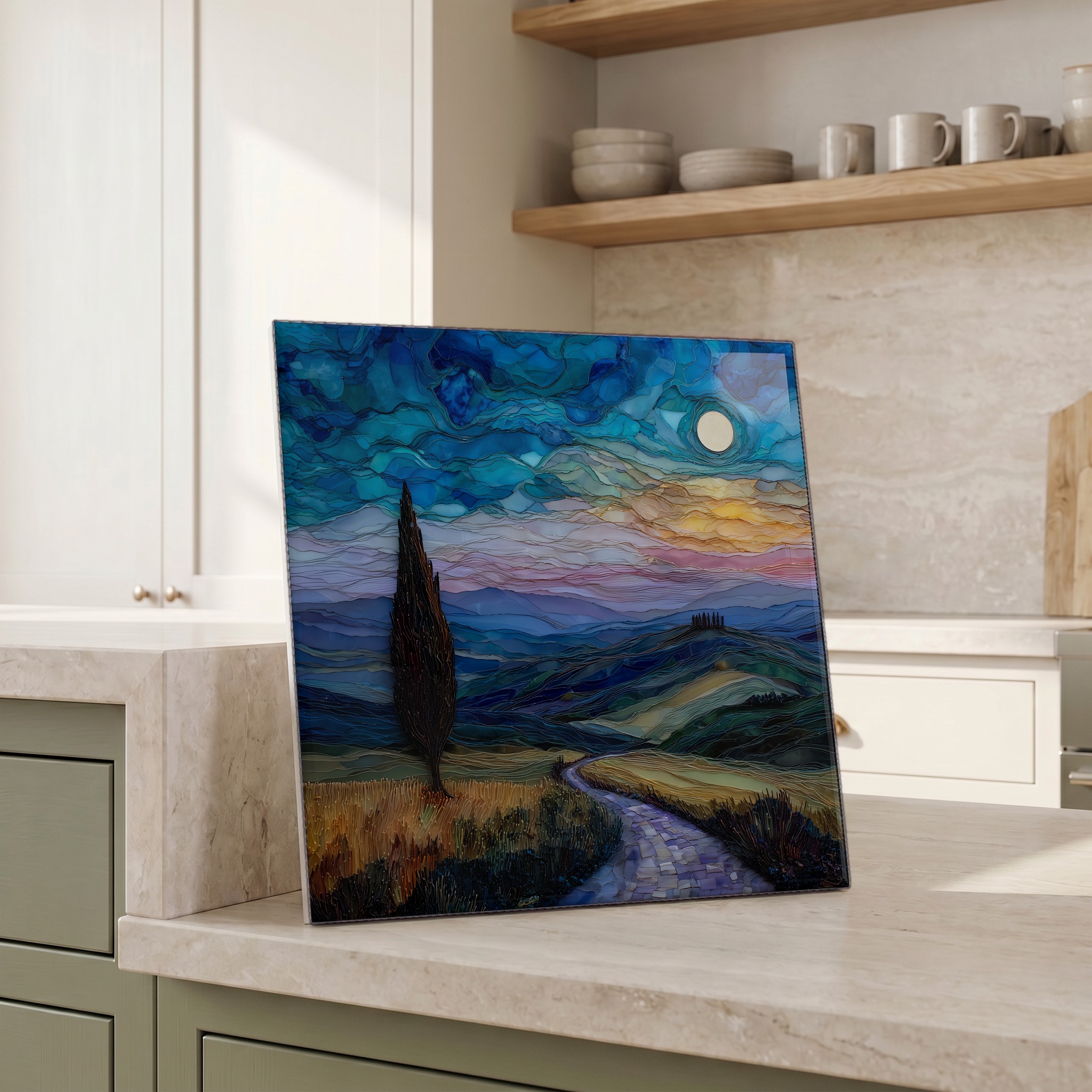
Crete Senesi, on ceramic.
Each tile is finished by hand in our Knoxville studio. Artwork is slowly infused into the ceramic surface under high heat and pressure, and rests beneath a thin glossy finish. The colour lives in the surface, not on top of it.
Pick any four 4-inch tiles — National Parks you've been to, a Smokies set, the four seasons of one place. $ for a set of , cork-backed, ready to live on the table.
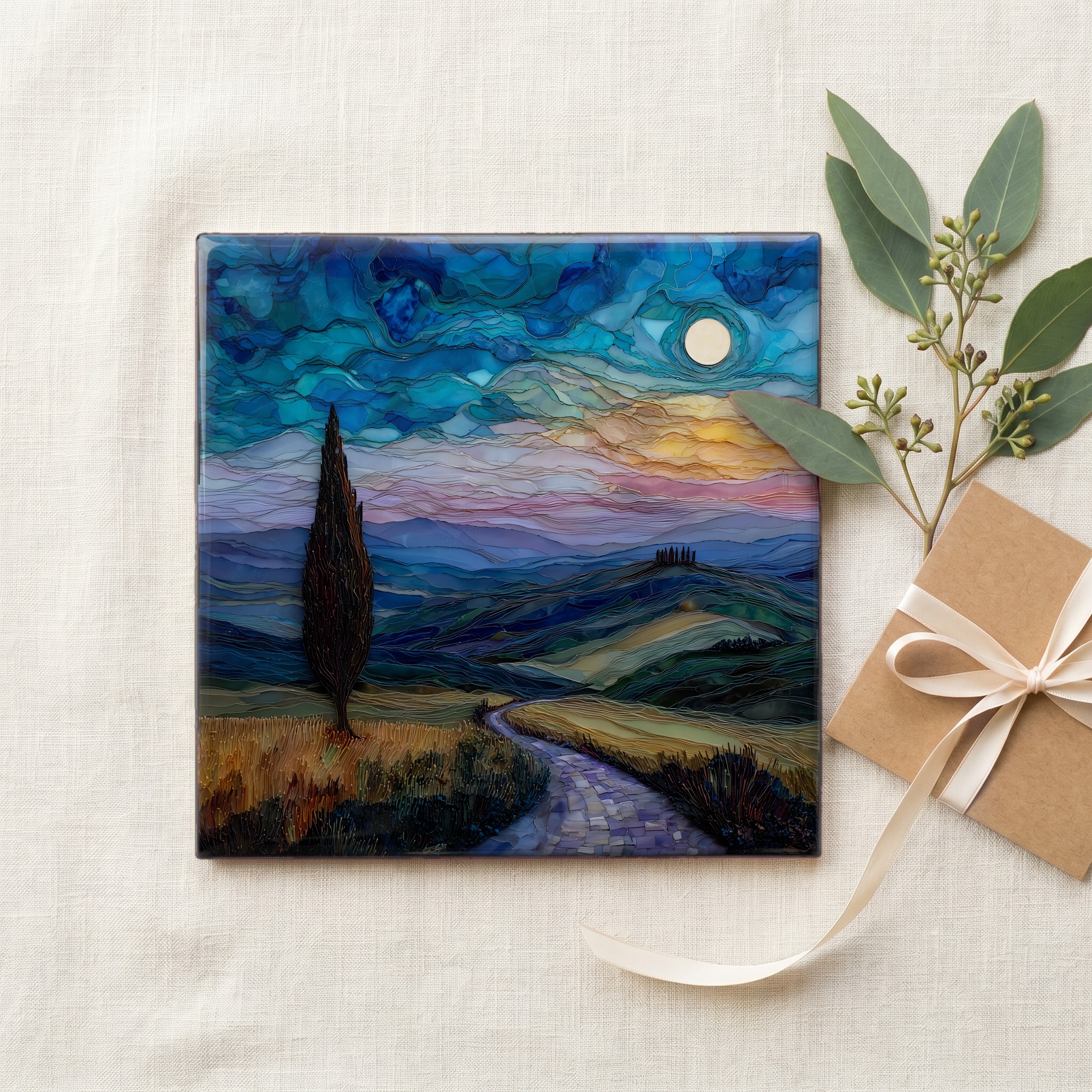
Each tile ships in a kraft box, tied with cream ribbon, with a handwritten note from the studio if you'd like to add one.
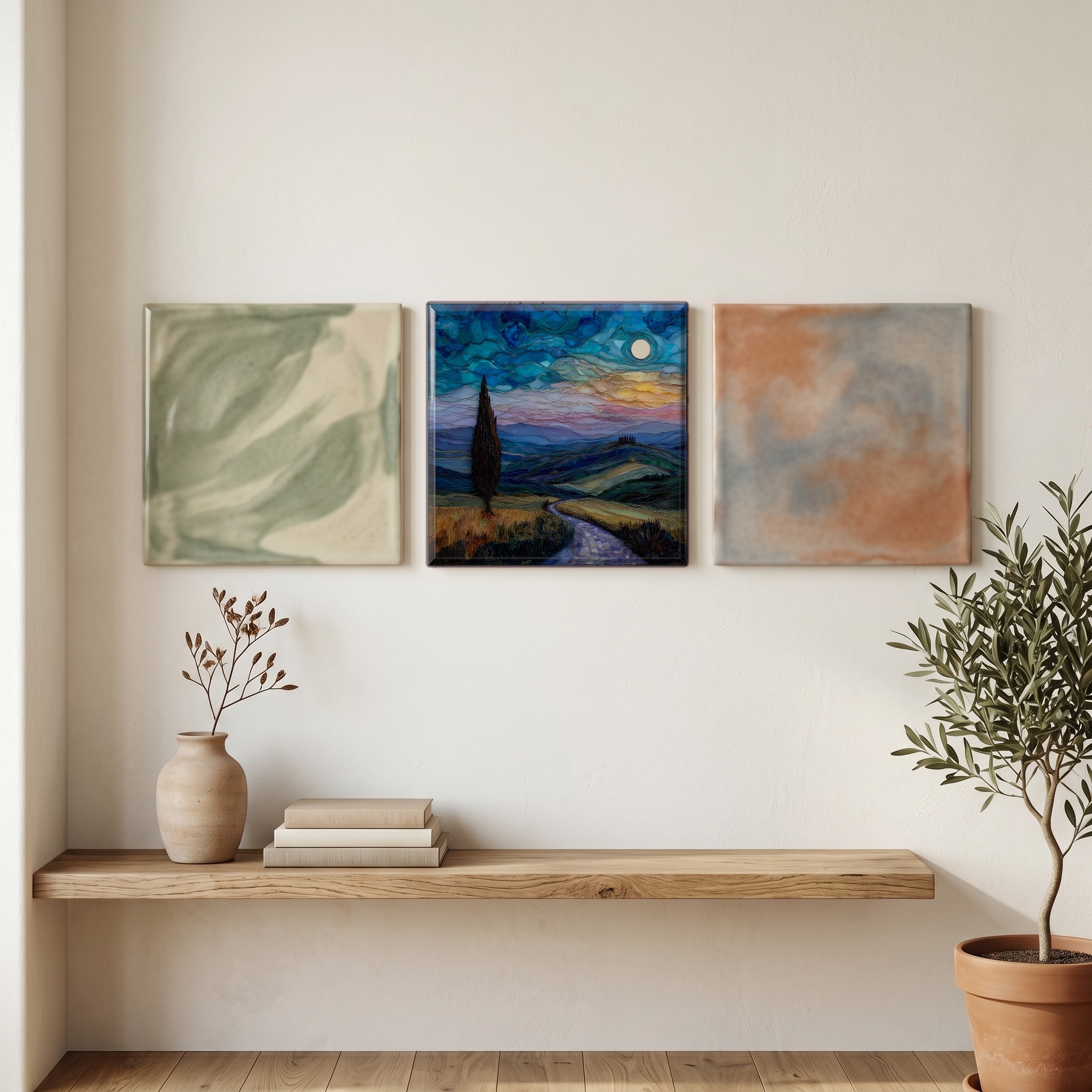
Three or five different vistas, hung together — a chapter of places you've been, or want to go.
The place, in three passes.
The Crete Senesi is a stretch of clay hill country in the province of Siena, beginning a few kilometres south of the city and running down toward the Val d'Orcia. It takes in five comuni, among them Asciano and Buonconvento, the red-brick village counted one of Italy's finest. The name means the clays of Siena: the grey, near-lunar soil is mattaione, the compacted sediment of a Pliocene sea that covered the area between 2.5 and 4.5 million years ago. To the north it meets the Chianti Senese, to the east the Val di Chiana. The Benedictine abbey of Monte Oliveto Maggiore sits about ten kilometres south of Asciano, ringed by cypress and oak.
What gives the Crete Senesi its lunar reputation is erosion. Where the clay sits on gentle slopes of twelve to fifteen percent it weathers into biancane, pale rounded domes that read bleached from a distance; on steeper ground it cuts into calanchi, sharp ridged gullies that hold almost no plant life. Between them lies the Accona Desert, a semi-arid pocket of bare ground south of Asciano. There are few trees, few houses, long views. Rainwater gathers in shallow ponds the locals call fontoni. On a still afternoon the only sound is wind moving over open clay, which is why photographers come for the emptiness as much as for the shapes.
The colour of the Crete Senesi turns on the farming year. Through winter and early spring the planted hills run green with young wheat; by late June and July the grain ripens and the slopes go the colour of straw. After the harvest the clay is ploughed bare, and the grey mattaione shows again until the next sowing. The lone cypresses, and the curving file of them at Agriturismo Baccoleno near Asciano, stand against each of these in turn. Spring and early summer draw the most photographers. The abbey of Monte Oliveto Maggiore, about ten kilometres south, keeps its own hours and is open to visitors most of the year.