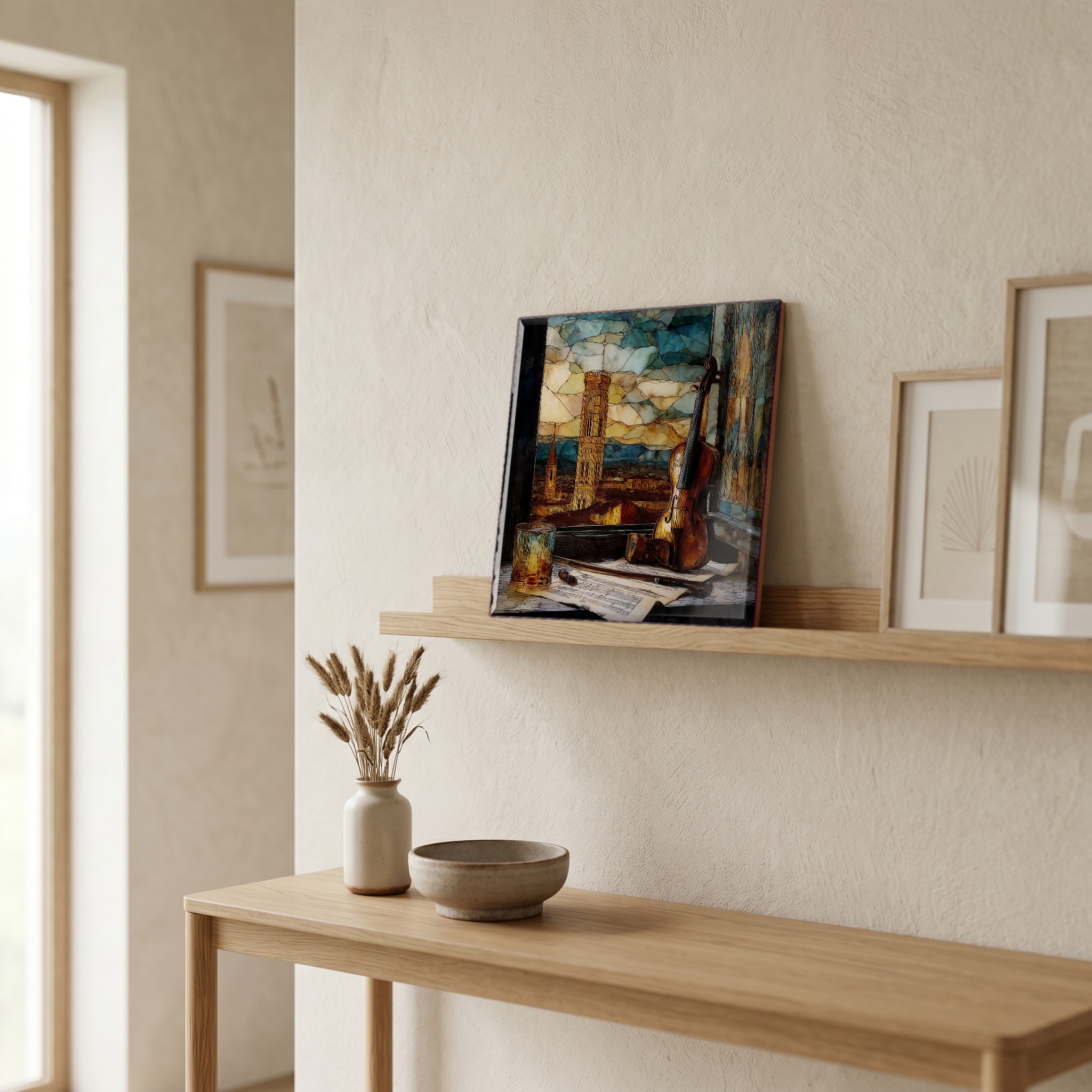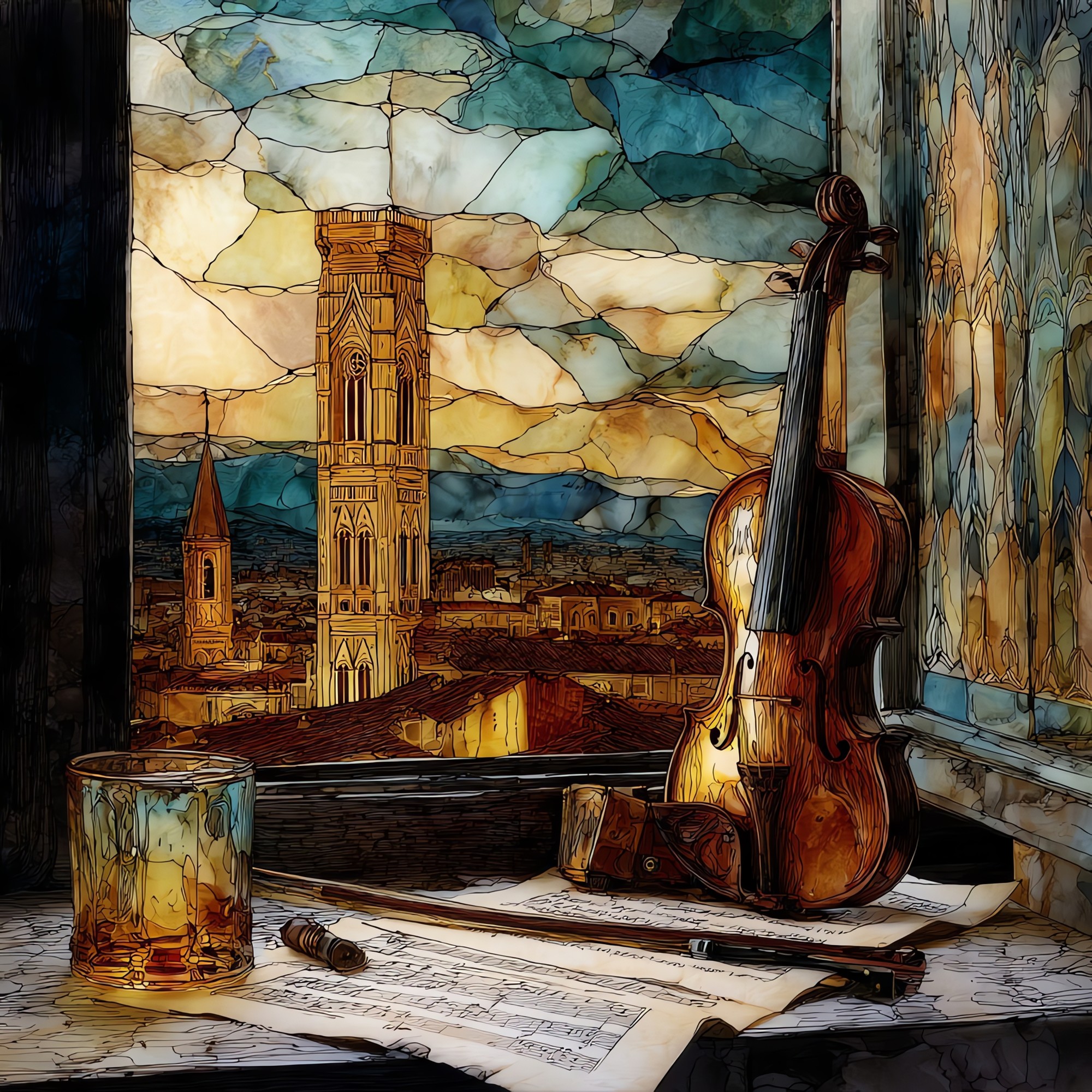
Wender·Vista
Cremona
shown on ceramic, 12-inch tileItaly
on the left bank of the Po, between Milan and Mantua

Cremona

the brick city where the violin was born.

Where it lives

Not only on a wall.

A small tile on the nightstand catching the morning. A larger one above the fire. Yours, wherever you spend the slow hours.
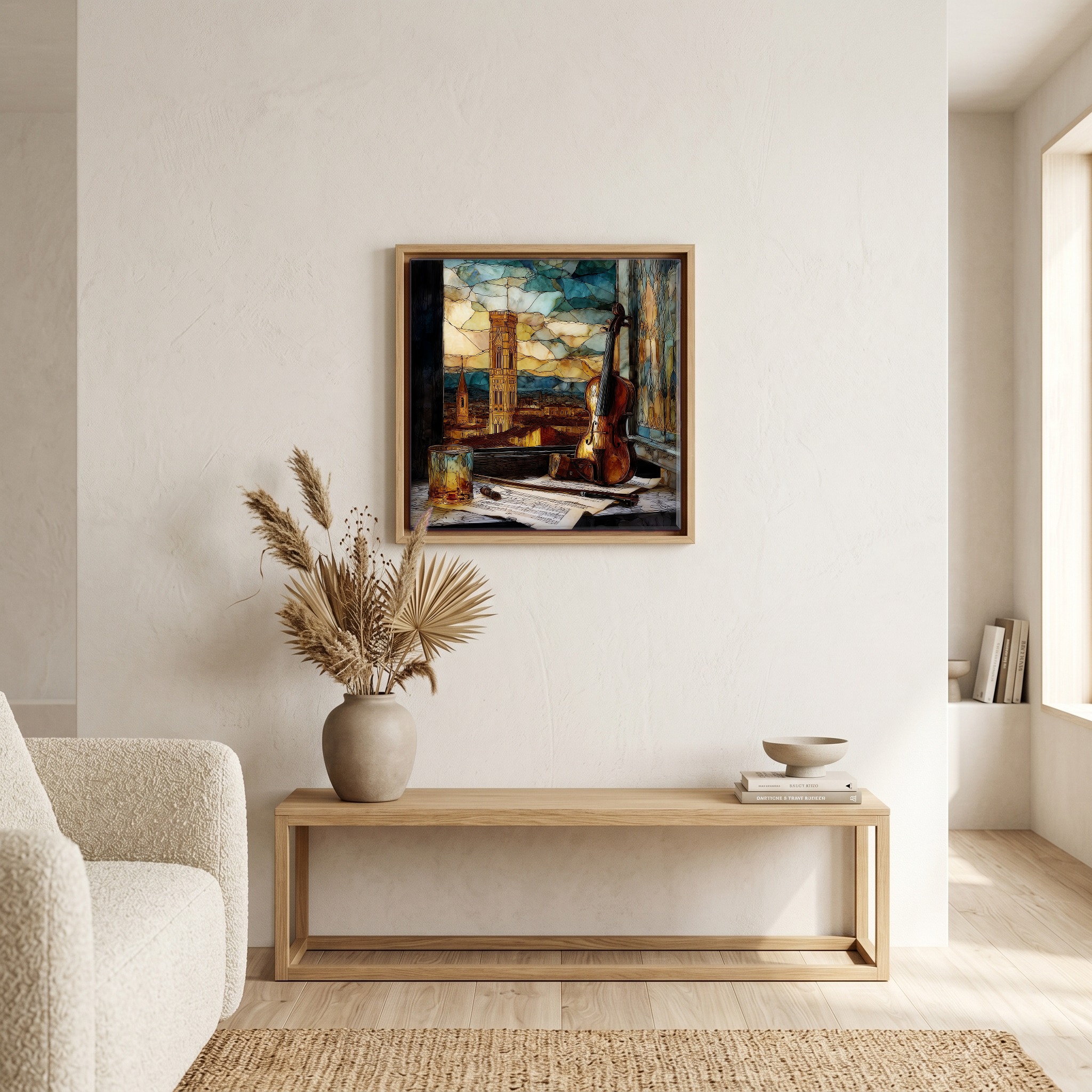
Above the bench, in a warm oak surround.
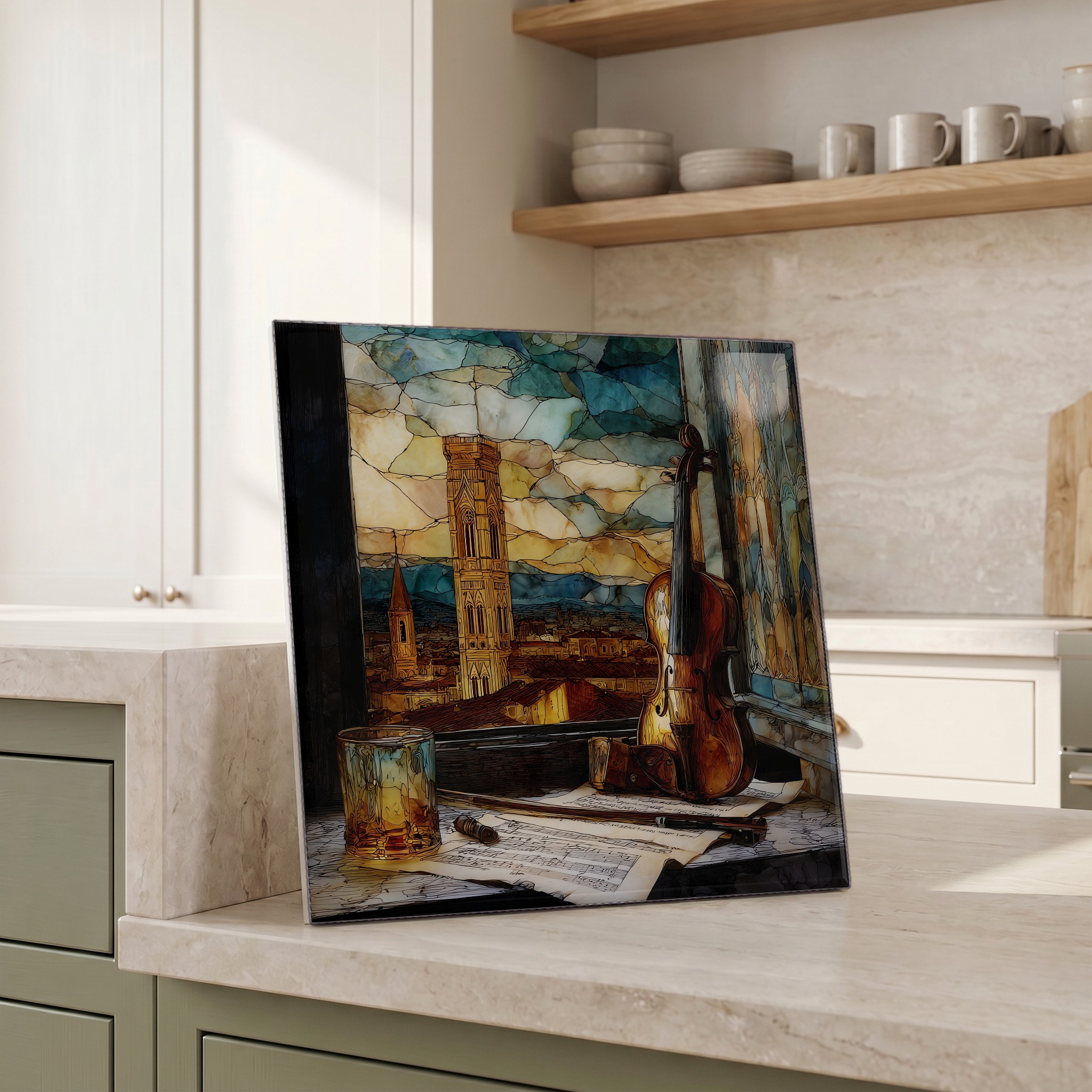
Beside the kettle, propped on the counter.
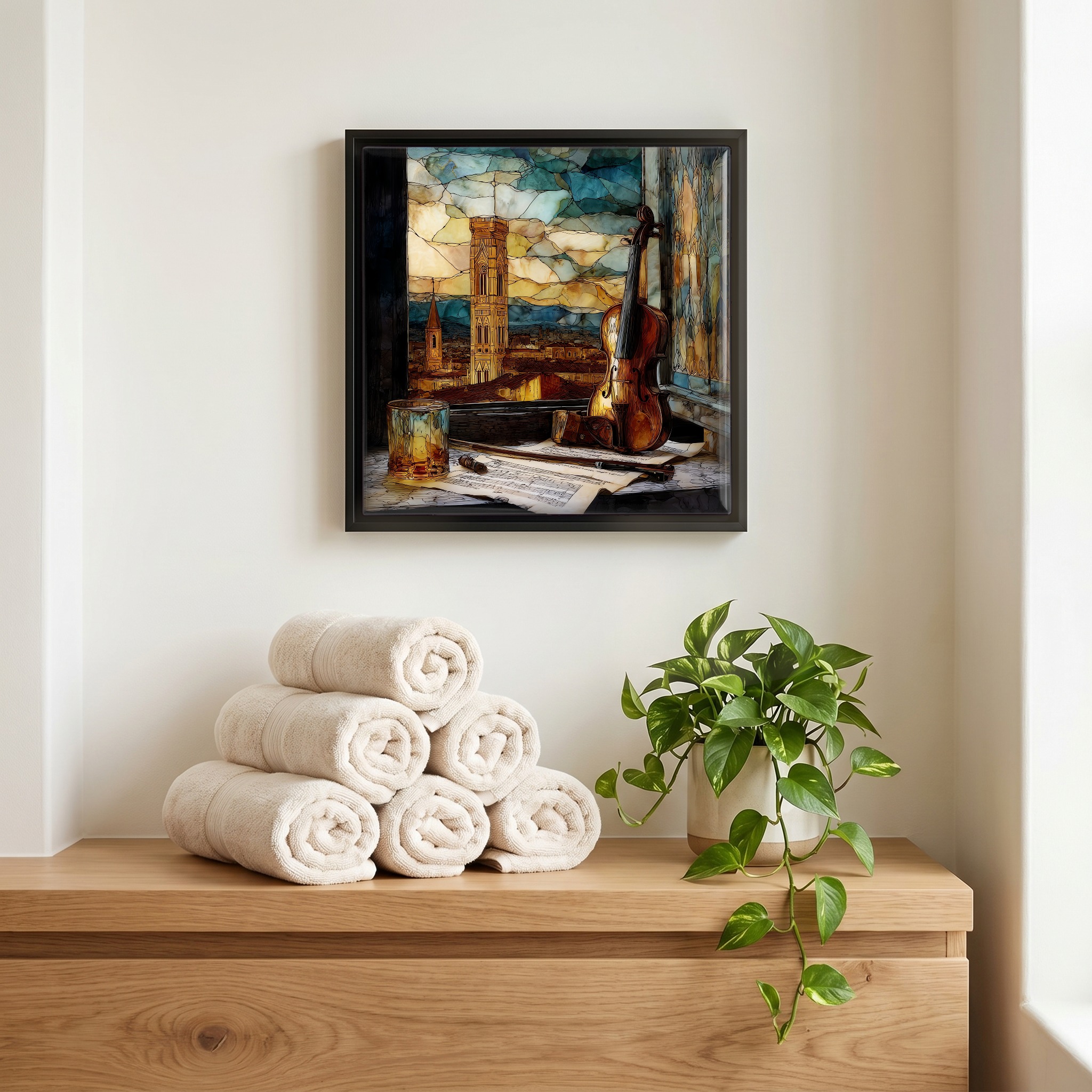
Above the linens, in a slim black surround.
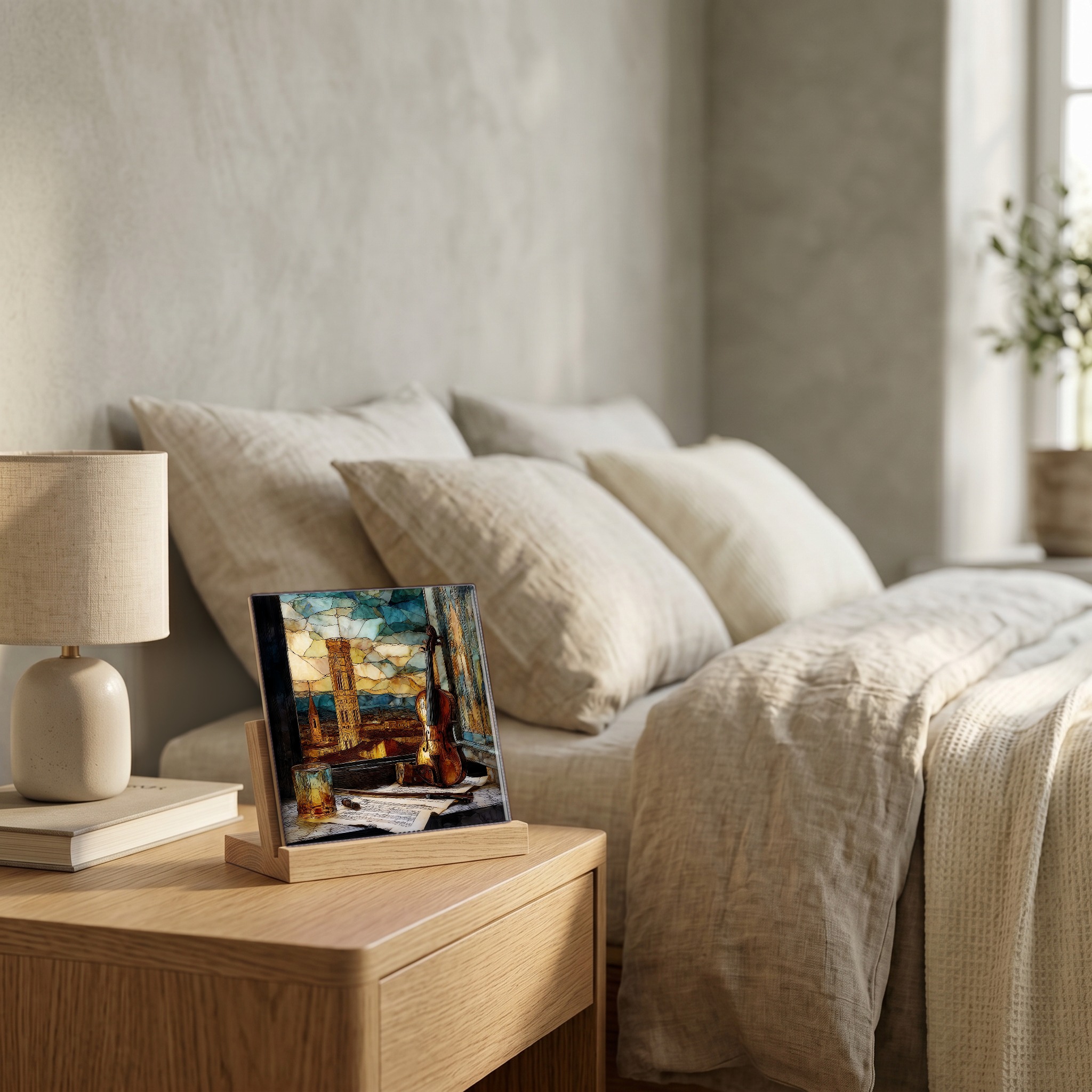
On the nightstand, on a light oak stand.
On a picture ledge, where the light comes in.
a note from the studio

Cremona sits low on the left bank of the Po, the kind of city that does not announce itself. The Torrazzo, a brick bell tower over a hundred metres tall, keeps watch above the cathedral square. A few streets away, luthiers shape spruce and maple in workshops, some of which trace back to the 1500s. Antonio Stradivari worked here. So did Guarneri. The traditional craft was inscribed by UNESCO in 2012. Visitors climb the Torrazzo's 502 steps, stop into the Museo del Violino, and stay for a plate of mostarda. The bells still mark the hours.
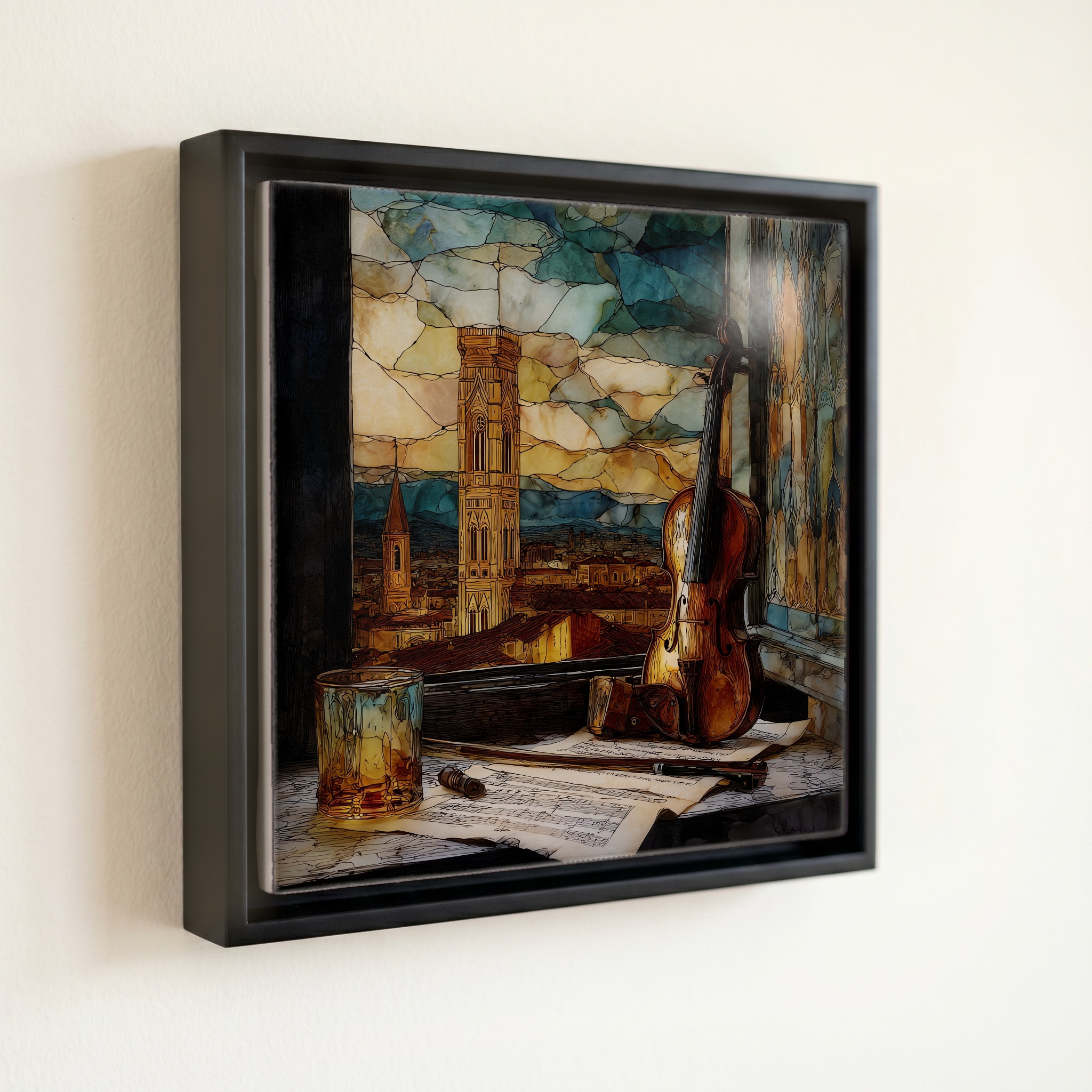
from the studio
shown in a slim black floating frame · 6 × 6 in
— bring it home

Cremona, on ceramic.

Each tile is finished by hand in our Knoxville studio. Artwork is slowly infused into the ceramic surface under high heat and pressure, and rests beneath a thin glossy finish. The colour lives in the surface, not on top of it.

What kind of piece?
One tile — square or rectangle.
How big?
the popular one — counter, shelf, nightstand
6 × 6 in · 15 cm · 1.6 lb
Surface finish
A clear glossy finish — the artwork reads as if under resin. Ideal for show-pieces and framed wall art.
How it sits
A hidden cleat — sits ¼″ proud of the wall.
$58
Hand-finished and shipped from our studio at the foot of the Smokies. On your wall in about ten days.
size
6 × 6 in
15 cm
weighs
1.6 lb
solid in the hand
surface
ceramic, hand-finished
art rests beneath a thin glossy finish
from
Knoxville, TN
our family studio, at the foot of the Smokies
— start a Coaster Set

Pick any four 4-inch tiles — National Parks you've been to, a Smokies set, the four seasons of one place. $ for a set of , cork-backed, ready to live on the table.
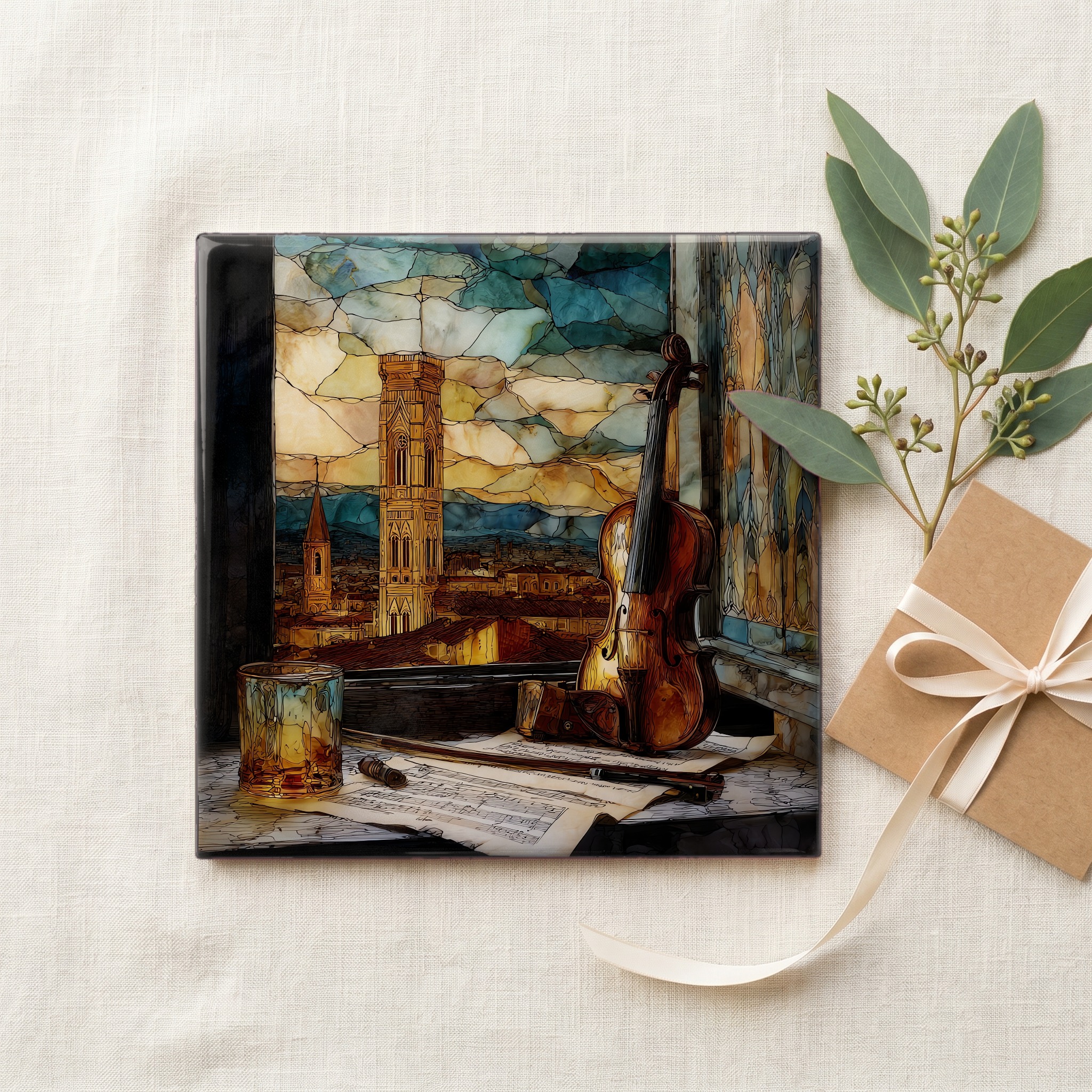
comes gift-ready
comes gift-ready

Each tile ships in a kraft box, tied with cream ribbon, with a handwritten note from the studio if you'd like to add one.
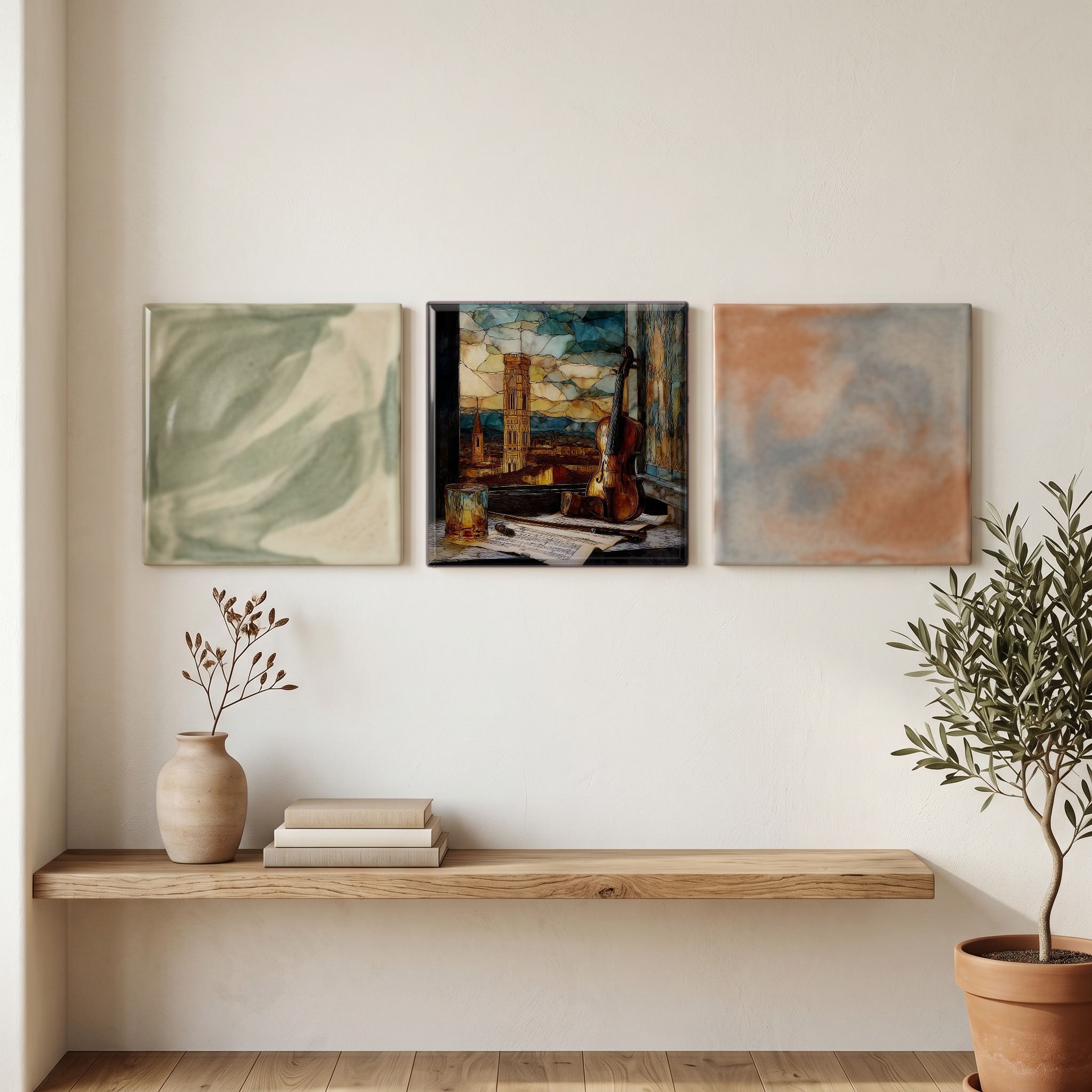
or build a grouping
or build a grouping

Three or five different vistas, hung together — a chapter of places you've been, or want to go.

about Cremona

The place, in three passes.

A little of what's known, in case you fall down the rabbit hole — or want to go see it yourself.
the place

Cremona lies on the left bank of the Po River in Lombardy, northern Italy, about 95 km southeast of Milan and 65 km north of Parma. Roman in origin, founded in 218 BCE as a military colony, the city sits at roughly 45 metres above sea level on the flat fertile plain that gives Lombard cuisine its grana padano and its long tradition of cured meats. The historic centre is dominated by the Piazza del Comune, where the Romanesque Duomo, the octagonal Baptistery, and the Torrazzo bell tower stand together. The Torrazzo, completed around 1305 and reaching 112.27 metres, is among the tallest medieval brick bell towers in Europe.

the stone

The Torrazzo is brick. Built in stages between the 13th and early 14th centuries, the tower joins the Duomo through the Bertazzola, a Renaissance loggia added in the 16th century. The cathedral itself, consecrated in 1190, is Lombard Romanesque with later Gothic and Renaissance additions; its façade is white marble with rose-window inlay, but the body and the surrounding civic buildings are the warm red brick that gives Cremona its colour at the end of the day. The Baptistery, octagonal and finished in 1167, completes the square. Together they form one of the more coherent medieval ensembles in Lombardy, owing more to brick and clay than to quarried stone.

the visit

The Museo del Violino, on Piazza Marconi, holds the city's permanent collection of Stradivari, Amati, and Guarneri instruments and runs daily auditions in its concert hall. The Torrazzo is open to climbers willing to take the 502 steps to the platform, where the astronomical clock face is among the largest in Europe. Around 150 active luthier workshops still operate in Cremona today, many visible through shop windows in the streets off Piazza del Comune. The traditional craft was inscribed on the UNESCO Representative List of Intangible Cultural Heritage in 2012. Cremona is reached by direct train from Milan in about an hour.

where
Italy · Province of Cremona, Lombardy
elevation
45 m · 148 ft
position
45.1333° N · 10.0227° E
the neighborhood

What's nearby.

A handful of named places within an hour's walk or short drive. Some we've already painted; some we will.
22 km NW
Pizzighettone
fortified town
33 km SE
Sabbioneta
Renaissance ideal city
35 km E
Casalmaggiore
Po river town
N
Cremona
Pizzighettone
Sabbioneta
Casalmaggiore
common questions

What people ask.

A few questions we get about Cremona — and about bringing the piece home.
about the place

Cremona is a city in northern Italy, on the left bank of the Po River in Lombardy. It lies about 95 km southeast of Milan and 65 km north of Parma. The city is the capital of the Province of Cremona.

Cremona is the historic centre of European violin-making. Antonio Stradivari, Giuseppe Guarneri, and the Amati family all worked here between the 16th and 18th centuries. UNESCO inscribed the traditional violin craftsmanship of Cremona on its Representative List of Intangible Cultural Heritage in 2012.

The Torrazzo, the brick bell tower beside Cremona Cathedral, stands 112.27 metres tall and was completed around 1305. It is among the tallest medieval brick bell towers in Europe and carries an astronomical clock face on its southern side.

Roughly 150 active luthier workshops operate in Cremona today, many concentrated in the streets around the Piazza del Comune and the Museo del Violino. The trade is still passed down through apprenticeship and through the city's Antonio Stradivari International School of Violin Making.

Spring and early autumn are the most comfortable months: April through June and September through October. The Stradivari Festival typically runs in late September and October, and the Museo del Violino is open year-round, closed on Mondays.

Cremona is reached by direct train from Milan Centrale in about an hour, and from Brescia, Mantua, or Parma in roughly the same time. Most international travellers fly into Milan Linate or Milan Malpensa and continue by rail.

The Cattedrale di Santa Maria Assunta, consecrated in 1190, is one of the finest examples of Lombard Romanesque architecture in northern Italy. It anchors the Piazza del Comune together with the Baptistery, finished in 1167, and the Torrazzo bell tower.

about the piece in your home

It has carried well for customers in the violin world and for anyone who grew up near the Po. The brick Torrazzo and the cathedral square read as Cremona to anyone who knows the city. A Small or Medium ships with a handwritten note from the studio; the Keepsake travels in a coat pocket.

The warm-brick palette sits well in Italian-modern, warm-rustic, and traditional rooms that favour terracotta, umber, and walnut. The reds hold a room without overwhelming it. The piece also reads at home in a music room or library beside brass and aged leather.

Yes. The warm-brick palette and Lombard architectural references fit cleanly into the European-villa and old-world rustic looks that have moved into 2026 mood boards. The tile pairs with linen, terracotta, and matte black hardware better than with cool greys or chrome.

Above a console or a chair, a single Large carries the wall. Above a standard sofa, a four-tile Mural holds the visual weight. For a longer wall or a fireplace surround, a nine-tile Mural is the right scale, with a Coaster Set as a smaller echo on the side table.

Yes. For a kitchen backsplash, a shower, or any damp or splash-prone wall, choose the Dura Satin or Matte finish, which is soft-sheen and scratch-resistant. The Glossy finish is best kept to dry wall-art settings: framed pieces and shelves rather than backsplashes.

Wipe it with a soft microfibre cloth and a little warm water. The colour is slowly infused into the ceramic surface under high heat and pressure, so it will not lift, fade, or rub off with ordinary cleaning. Avoid abrasive pads and bleach.

Yes. Every WenderVista piece is made in-house by Wender Studios in Knoxville, Tennessee, in our distinctive stained-glass and alcohol-ink visual language. We do not license images. The Cremona piece exists only as part of the WenderVista atlas.

if this one stayed with you

A few you might also love.

Hand-picked by the eye that found Sorapis. Same air, same kind of quiet.
— a collection

The Italian Dolomites,
painted slow.

The valleys between Cortina and Val Gardena, the tarns you walk an hour to see, the towers that turn the colour of a banked fire just before dark. Wander the collection by valley, by season, or follow the path Reid walked.

Tre Cime
Braies
Misurina
Sorapis
Cinque Torri
Sassolungo
Marmolada