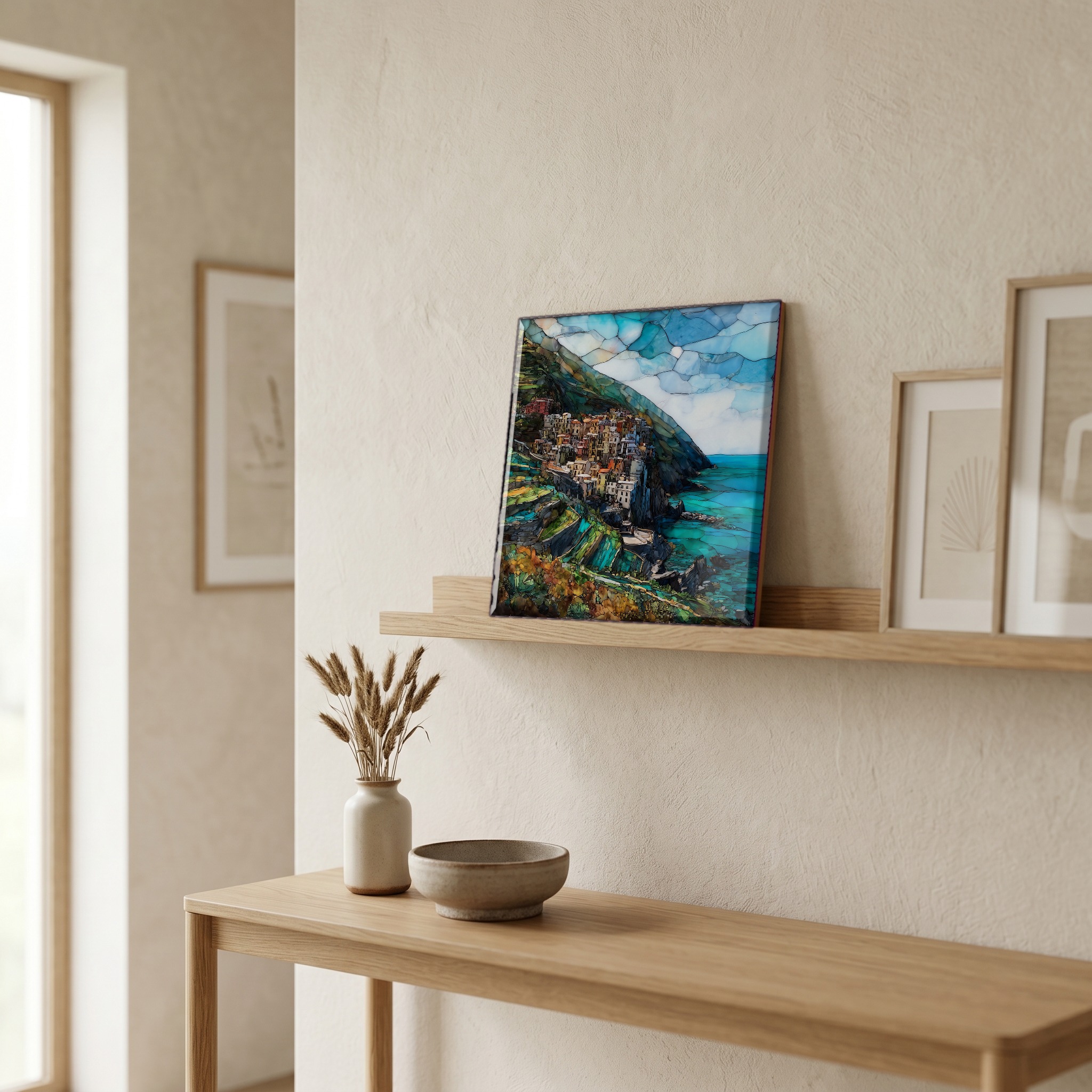
Wender·Vista
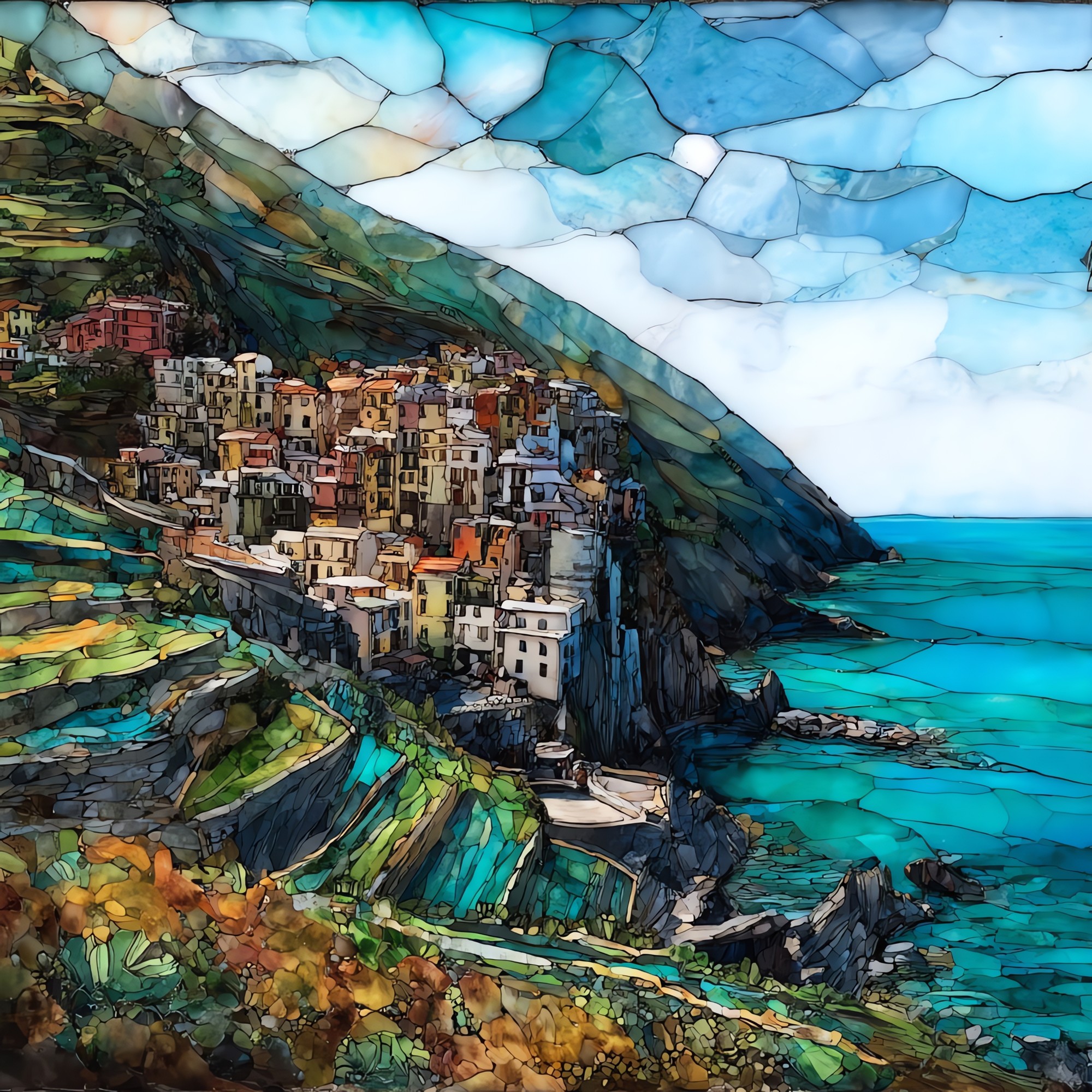
Corniglia
shown on ceramic, 12-inch tileItaly
on a headland above the Ligurian Sea, the middle of the five villages

Corniglia

— the village the sea never climbed to.

Where it lives

Not only on a wall.

A small tile on the nightstand catching the morning. A larger one above the fire. Yours, wherever you spend the slow hours.
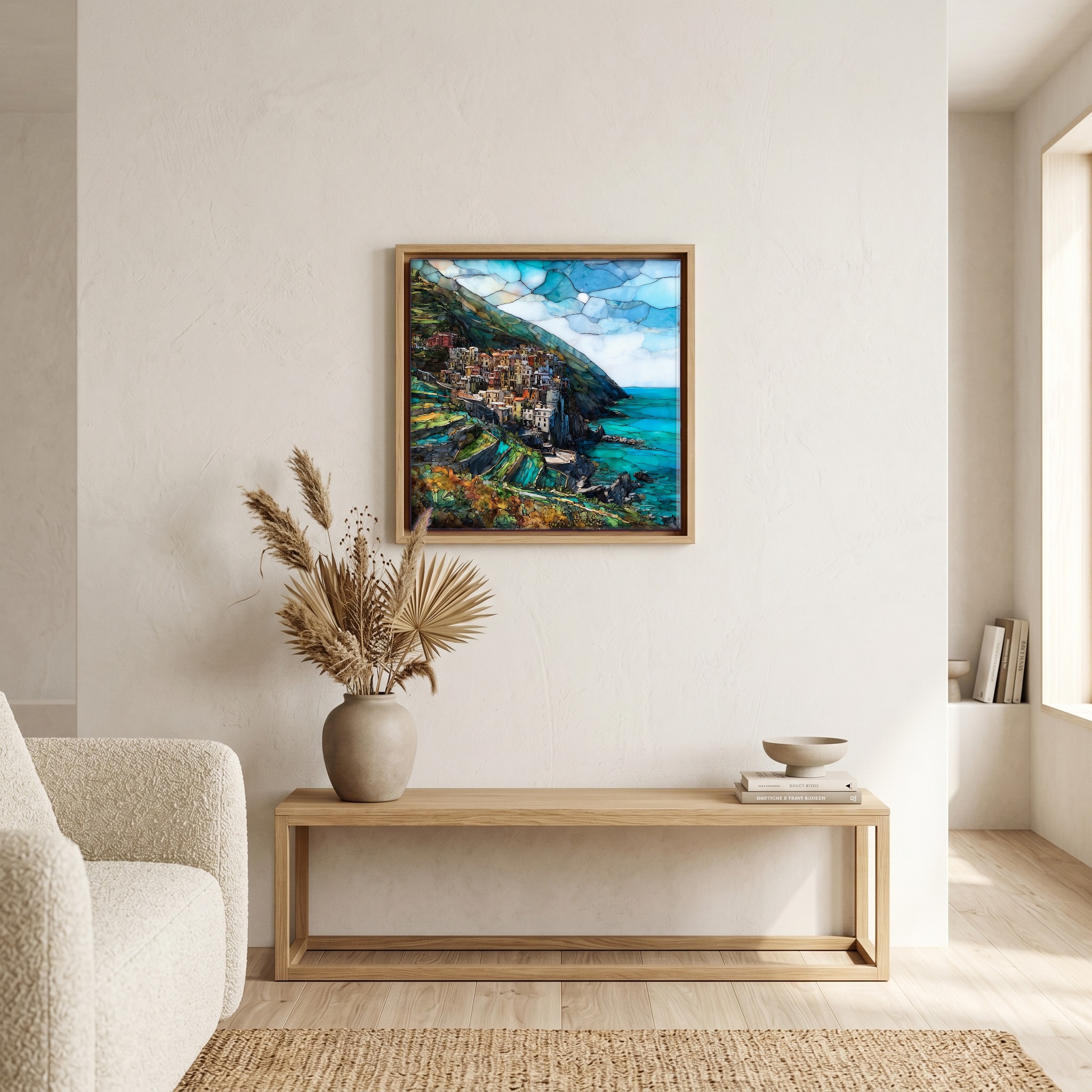
Above the bench, in a warm oak surround.
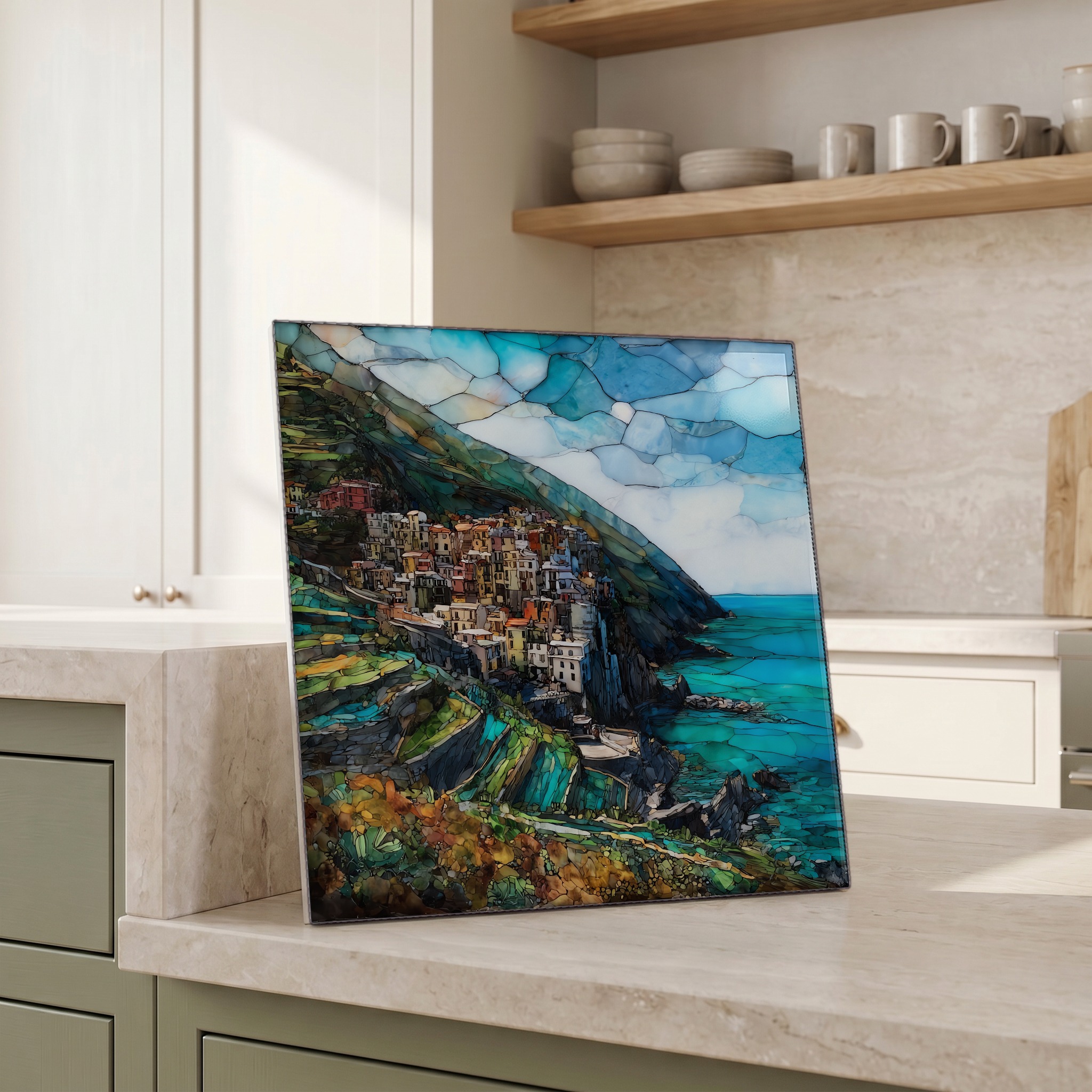
Beside the kettle, propped on the counter.
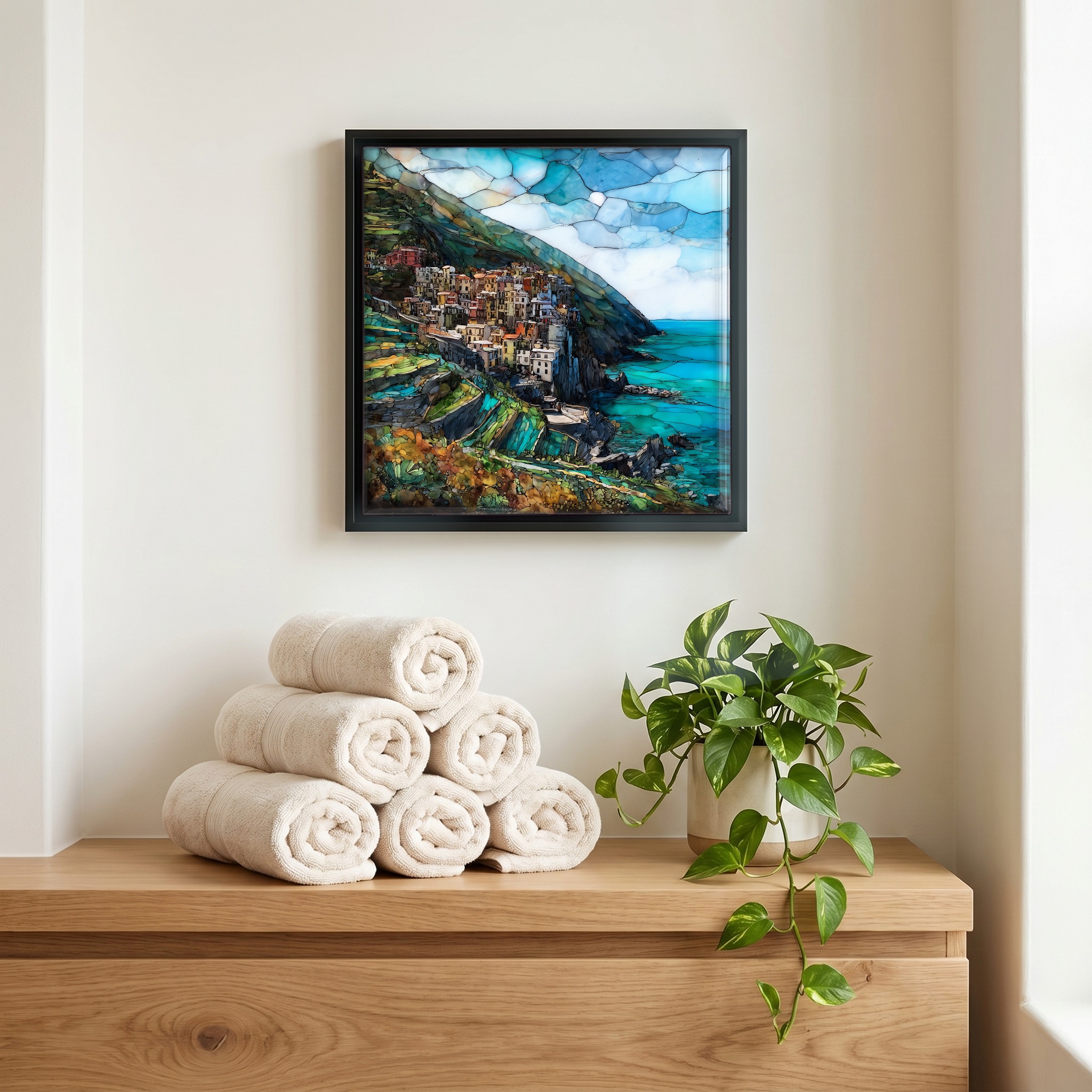
Above the linens, in a slim black surround.
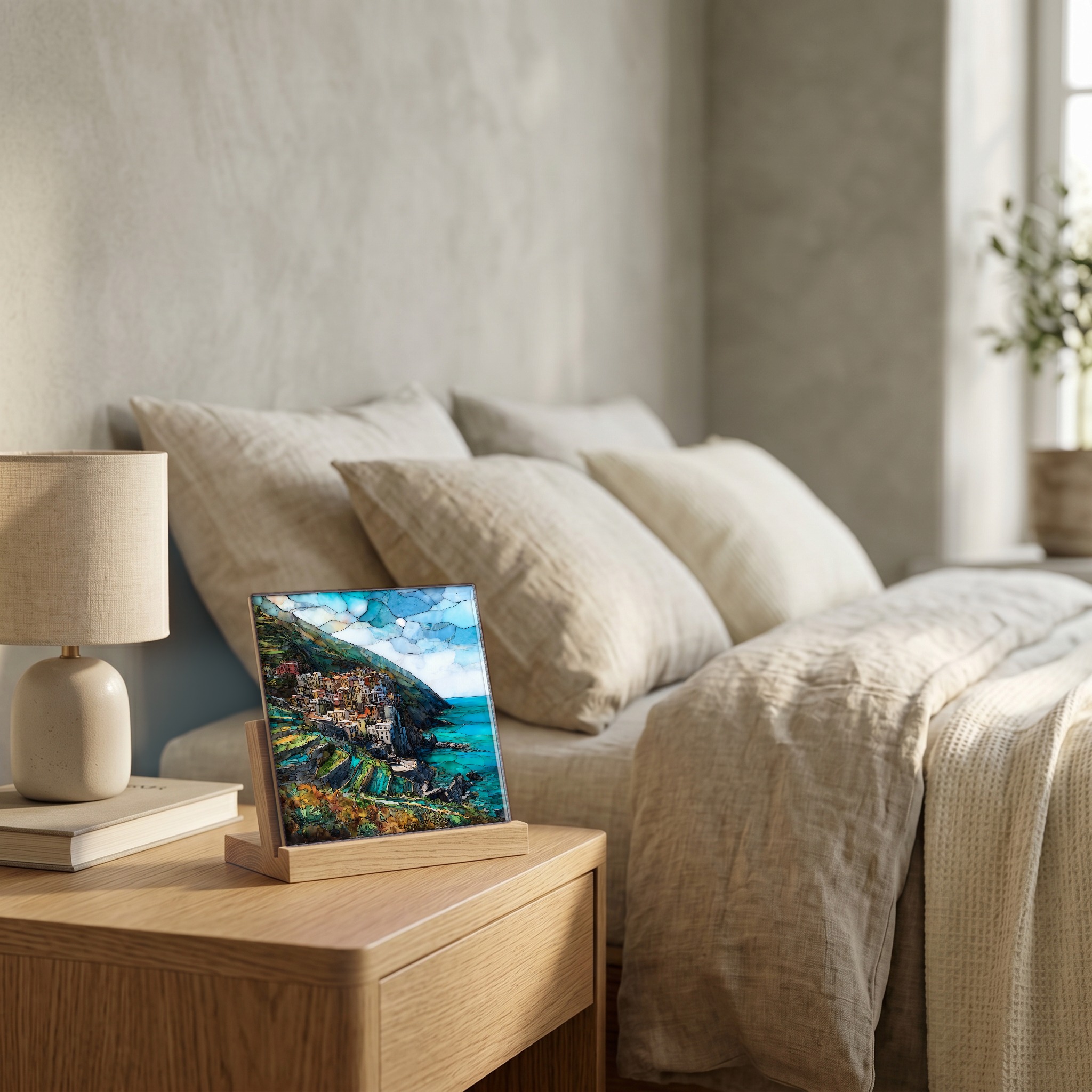
On the nightstand, on a light oak stand.
On a picture ledge, where the light comes in.
a note from the studio

The middle village of the five. The train pulls in at the foot of the cliff and the village sits a hundred metres above; 382 steps up the Lardarina, or the shuttle if the legs say no. Terraced vineyards on every side, the grapes that make Sciacchetrà ripening in the salt air. The other four Cinque Terre villages run down to the harbour; Corniglia is the one that stays back, looks at the sea from a distance, lets the wind do most of the talking.
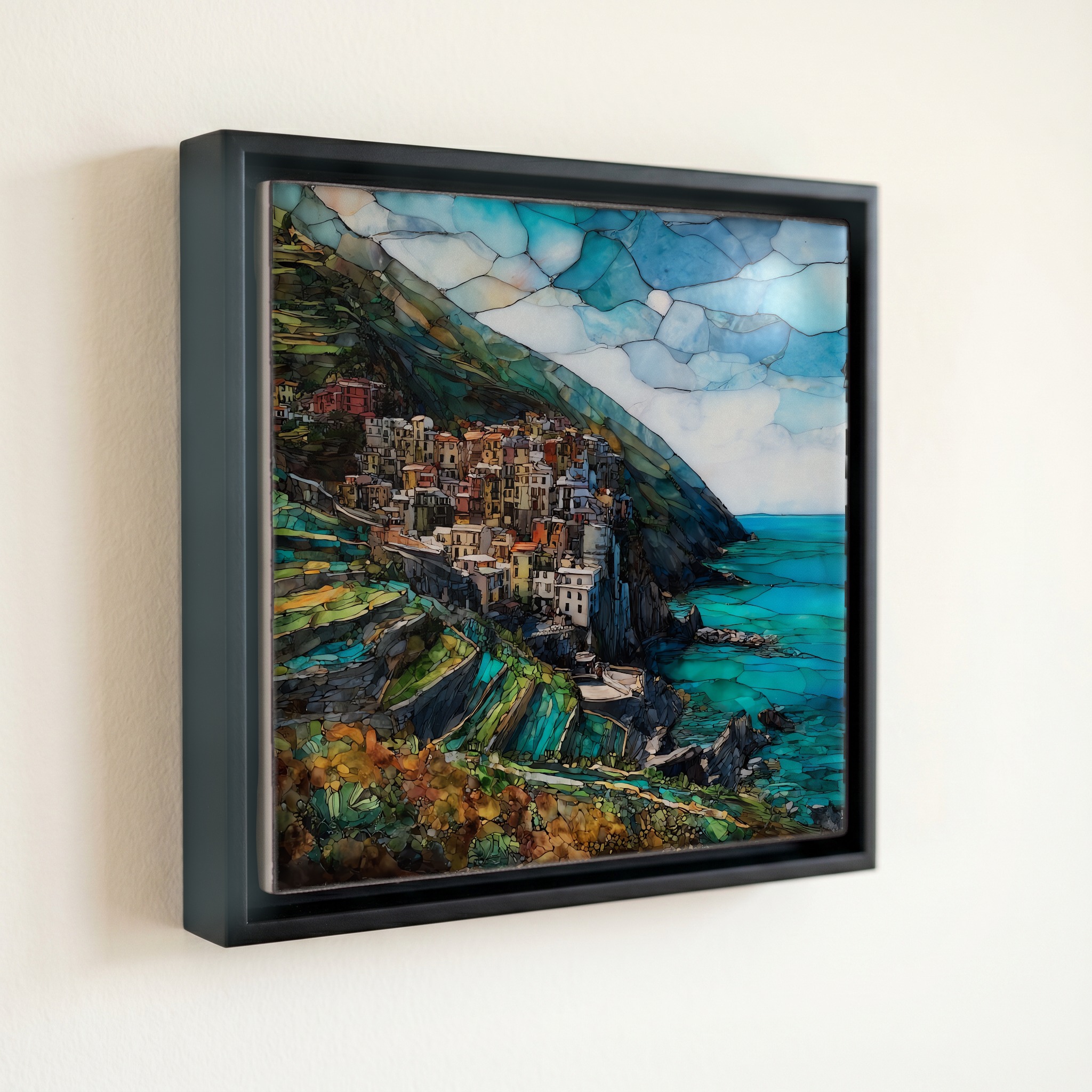
from the studio
shown in a slim black floating frame · 6 × 6 in
— bring it home

Corniglia, on ceramic.

Each tile is finished by hand in our Knoxville studio. Artwork is slowly infused into the ceramic surface under high heat and pressure, and rests beneath a thin glossy finish. The colour lives in the surface, not on top of it.

What kind of piece?
One tile — square or rectangle.
How big?
the popular one — counter, shelf, nightstand
6 × 6 in · 15 cm · 1.6 lb
Surface finish
A clear glossy finish — the artwork reads as if under resin. Ideal for show-pieces and framed wall art.
How it sits
A hidden cleat — sits ¼″ proud of the wall.
$58
Hand-finished and shipped from our studio at the foot of the Smokies. On your wall in about ten days.
size
6 × 6 in
15 cm
weighs
1.6 lb
solid in the hand
surface
ceramic, hand-finished
art rests beneath a thin glossy finish
from
Knoxville, TN
our family studio, at the foot of the Smokies
— start a Coaster Set

Pick any four 4-inch tiles — National Parks you've been to, a Smokies set, the four seasons of one place. $ for a set of , cork-backed, ready to live on the table.
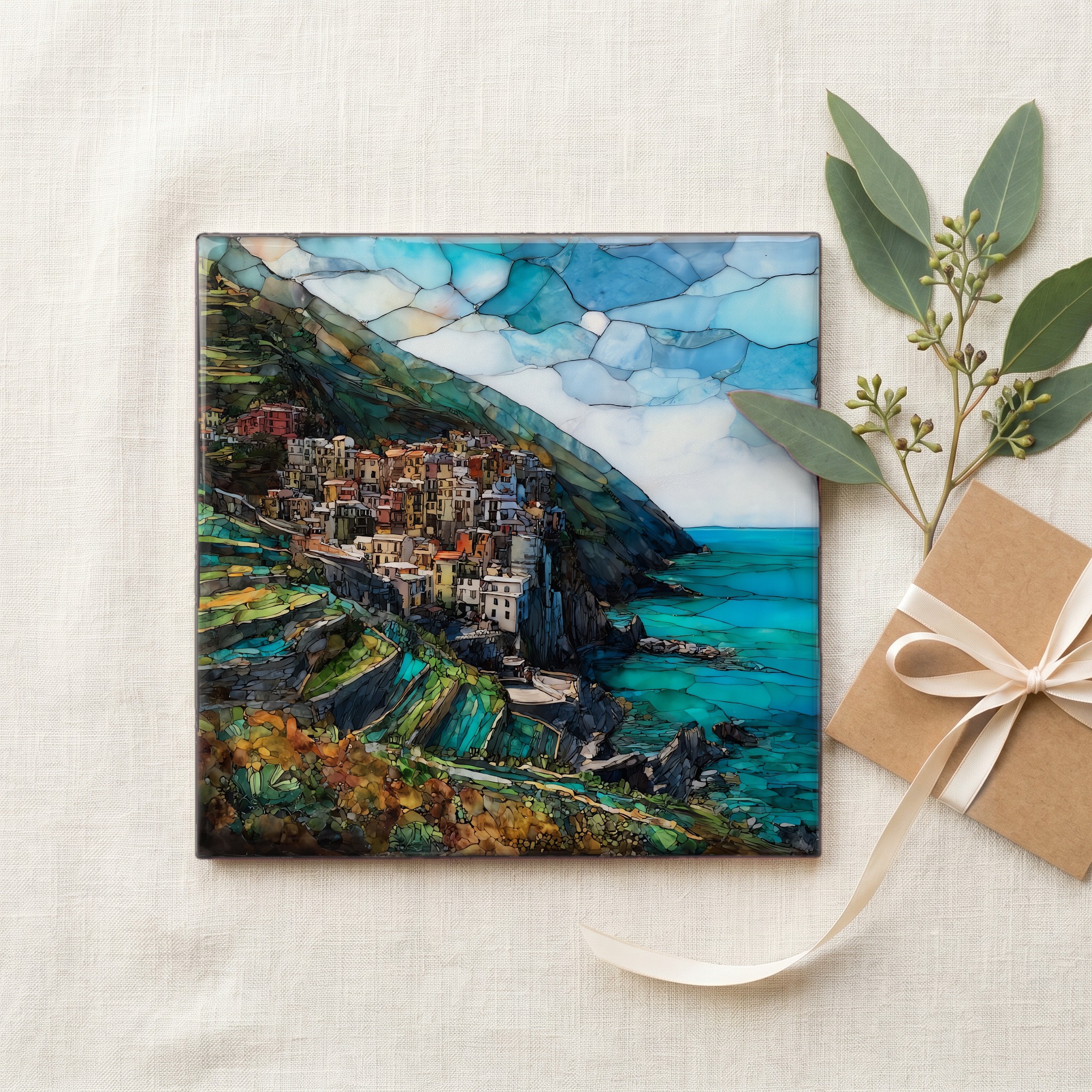
comes gift-ready
comes gift-ready

Each tile ships in a kraft box, tied with cream ribbon, with a handwritten note from the studio if you'd like to add one.
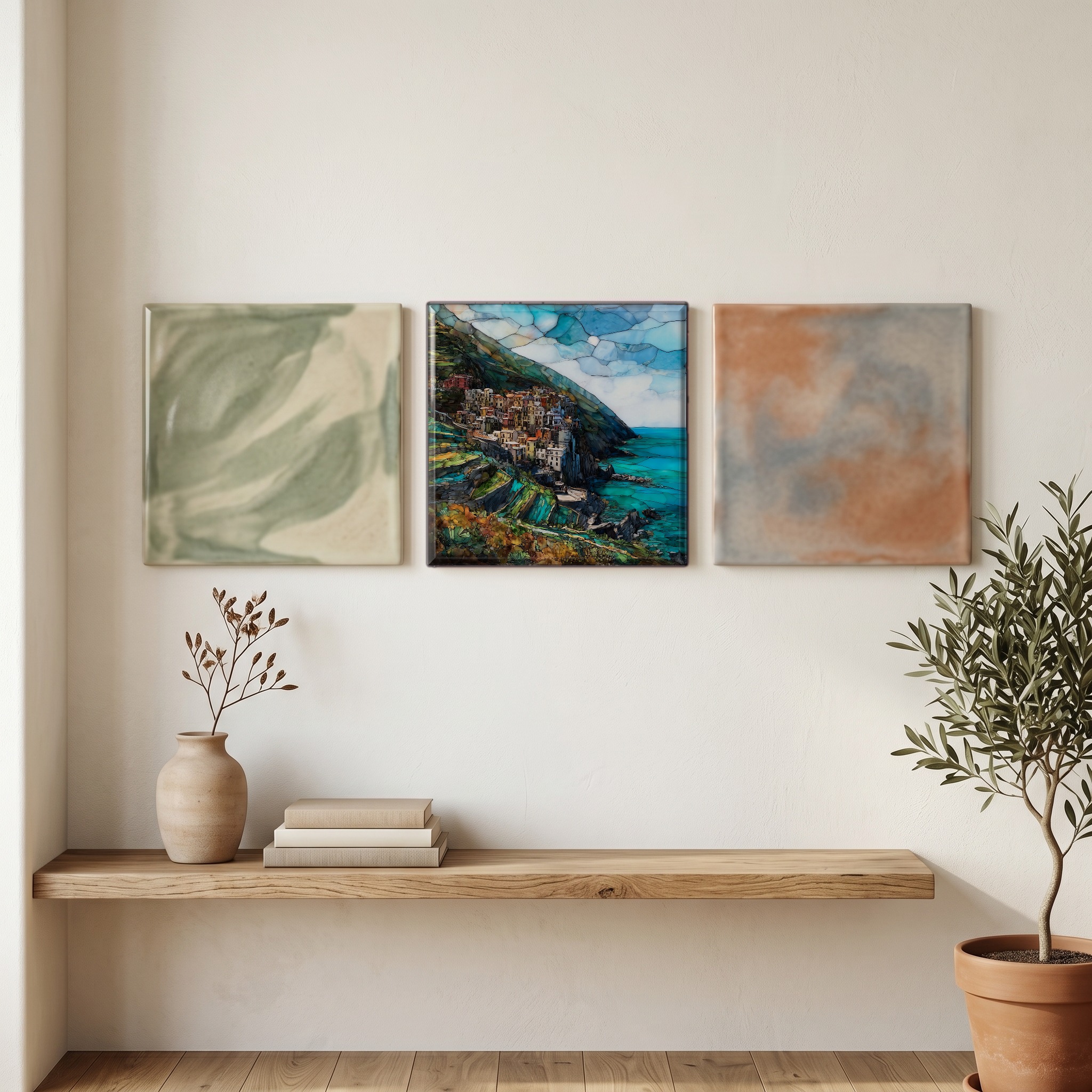
or build a grouping
or build a grouping

Three or five different vistas, hung together — a chapter of places you've been, or want to go.

about Corniglia

The place, in three passes.

A little of what's known, in case you fall down the rabbit hole — or want to go see it yourself.
the place

Corniglia sits on a rocky promontory roughly one hundred metres above the Ligurian Sea, the middle village of the five that make up Cinque Terre on the Italian Riviera. It belongs to the comune of Vernazza, in the Province of La Spezia, region of Liguria. The Cinque Terre National Park, established in 1999, contains all five villages and the terraced slopes between them; the broader cultural landscape was inscribed by UNESCO as a World Heritage Site in 1997. Trains on the Cinque Terre Express line stop at a small station at sea level, and the village proper is reached by the Lardarina staircase or the shuttle bus that switchbacks up the cliff.

the stone

More than 6,000 kilometres of dry-stone walls thread the slopes around Corniglia and the other Cinque Terre villages, built over nearly a thousand years and still maintained by a small number of families. The technique uses no mortar: flat stones laid against the gradient, balanced by weight and friction alone, so rain runs through instead of pushing the walls down. The terraces support the vines that produce Cinque Terre DOC, a dry white, and Sciacchetrà, a sweet dried-grape wine recognised in Liguria since the fourteenth century. UNESCO names the terraced landscape itself, not just the villages, as the heritage.

the visit

Corniglia is the only one of the five villages without a working harbour, so it comes with a climb. From the train station at sea level, the Lardarina rises 382 steps across 33 short flights of red brick to reach the village square; a shuttle bus runs the switchback road for those who prefer not to walk. The Sentiero Azzurro, the blue-marked coastal path that links all five villages, passes through Corniglia between Vernazza to the west and Manarola to the east, both about two kilometres away. The coastal trail sections require a Cinque Terre Card, which also includes unlimited train travel between the villages.

where
Italy · La Spezia, Liguria
within
Cinque Terre National Park
elevation
100 m · 328 ft
position
44.1208° N · 9.7100° E
the neighborhood

What's nearby.

A handful of named places within an hour's walk or short drive. Some we've already painted; some we will.
2 km W
Vernazza
fishing village
2 km E
Manarola
fishing village
5 km NW
Monterosso al Mare
beach village
4 km SE
Riomaggiore
fishing village
10 km SE
La Spezia
port city
10 km NW
Levanto
beach town
N
Corniglia
Vernazza
Manarola
Monterosso al Mare
Riomaggiore
La Spezia
Levanto
common questions

What people ask.

A few questions we get about Corniglia — and about bringing the piece home.
about the place

Corniglia is the middle village of the five that make up Cinque Terre, on the Ligurian coast of Italy. It sits on a rocky headland about a hundred metres above the sea, in the Province of La Spezia, and falls administratively within the comune of Vernazza.

Corniglia is the only one of the Cinque Terre villages that sits on a clifftop rather than at sea level. The promontory has no natural inlet for boats, so the village turned inland toward the vineyards instead, growing on terraces above the water rather than along it.

From the small station at the base of the cliff, the Lardarina climbs 382 brick steps in 33 short flights to the village. A shuttle bus runs the switchback road for visitors who prefer to ride. The climb takes most walkers about fifteen minutes.

The terraces around Corniglia produce two wines under the Cinque Terre denominations: a dry white Cinque Terre DOC and Sciacchetrà, a sweet dried-grape wine made from grapes laid out to raisin in the sun. Sciacchetrà has been recognised in Liguria since the fourteenth century.

Yes. Cinque Terre National Park was established in 1999 and includes all five villages and the terraced slopes around them. The broader Cinque Terre cultural landscape has been a UNESCO World Heritage Site since 1997.

Late spring and early autumn give the most comfortable weather and the lightest crowds. July and August are hot and busy. Winter is quiet and many cafés close, but the terraces show their stone bones and the light is clean.

The Belvedere di Santa Maria gives a long view east and west along the coast. The Church of San Pietro on the village square dates to the fourteenth century. Walking trails leave Corniglia in both directions along the Sentiero Azzurro toward Vernazza and Manarola.

about the piece in your home

Corniglia is the village most walkers remember for the climb up from the train station and the long view from the Belvedere. For someone who has done the Sentiero Azzurro, the tile is a piece of the trail they earned. A Medium or Large with a handwritten note from the studio carries the recognition well.

The palette runs warm: terracotta roofs, vineyard greens, the deep Ligurian blue. It sits well in Mediterranean-modern rooms, in warm minimalist rooms with oak and linen, and in jewel-tone interiors where colour earns its place. Less at home in cool grey schemes.

Yes, especially the Mediterranean wing of coastal-modern, which has shifted away from Hamptons blue-and-white toward Italian Riviera warmth: terracotta, olive, ochre, deeper sea-blues. A Corniglia tile reads as recognisably Riviera without leaning on familiar coastal motifs.

A single Large reads well above a console table or a small sofa. Above a standard sofa, a 4-tile Mural anchors the wall; above a long sectional or a large bed, a 9-tile Mural carries the scale. A Triptych is a quieter option for a hallway.

Yes. Specify Dura Satin or Matte finish for any installation that meets steam, water, or daily wiping: backsplashes, shower walls, powder rooms, kitchen splashes. The Glossy finish is reserved for framed wall pieces in dry rooms.

A soft microfibre cloth and warm water. No abrasive cleaners and no bleach. The colour lives in the ceramic surface and the finish is sealed, so the tile cleans like any quality ceramic.

Yes. Every WenderVista tile comes from a piece Reid Wender curated and our studio hand-finished in Knoxville. We do not licence stock art and we do not reproduce other artists' work. Each place in the atlas has its own painting, made once.

if this one stayed with you

A few you might also love.

Hand-picked by the eye that found Sorapis. Same air, same kind of quiet.
— a collection

The Italian Dolomites,
painted slow.

The valleys between Cortina and Val Gardena, the tarns you walk an hour to see, the towers that turn the colour of a banked fire just before dark. Wander the collection by valley, by season, or follow the path Reid walked.

Tre Cime
Braies
Misurina
Sorapis
Cinque Torri
Sassolungo
Marmolada