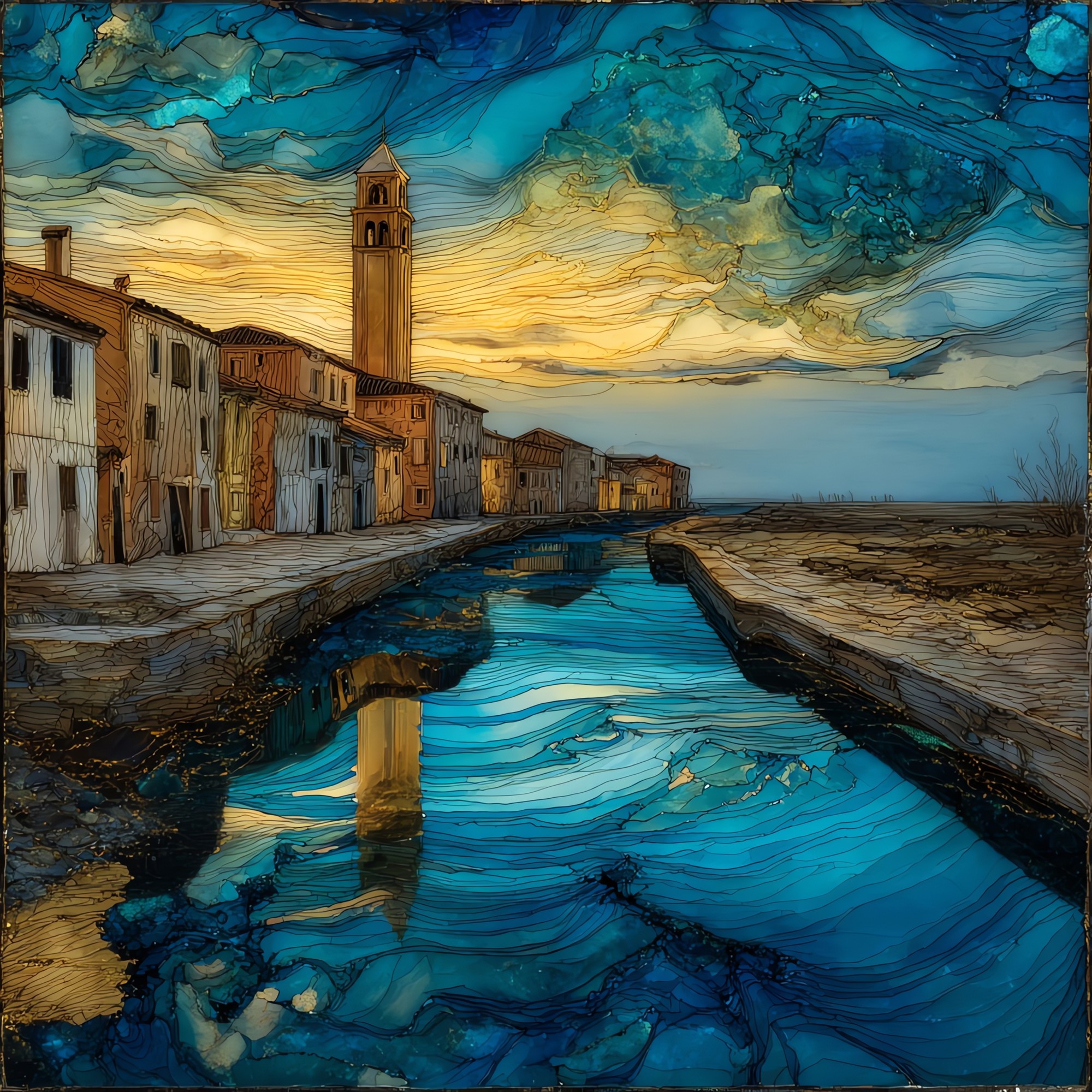
Comacchio
— — the colour the lagoon keeps at dusk.
Not only on a wall.
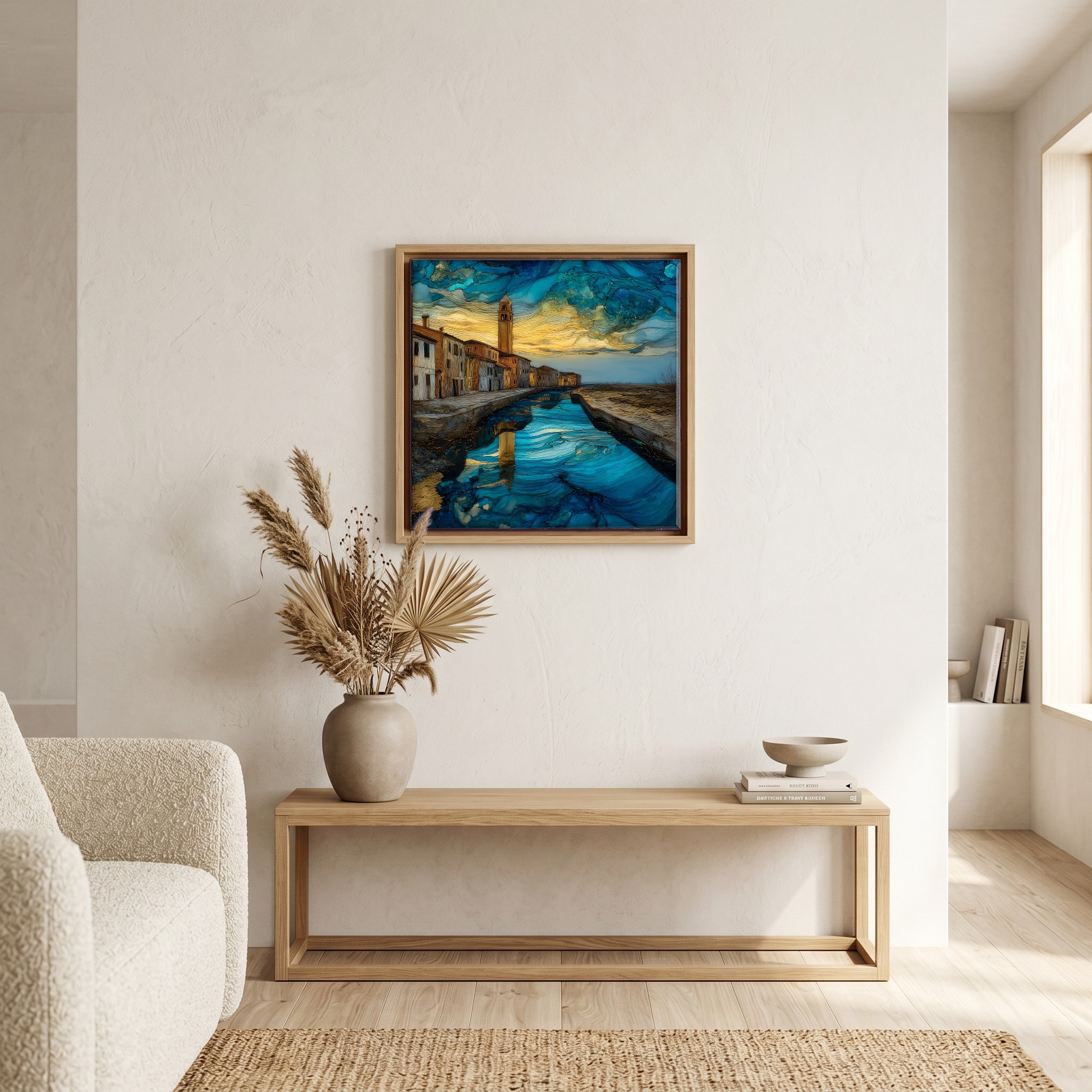
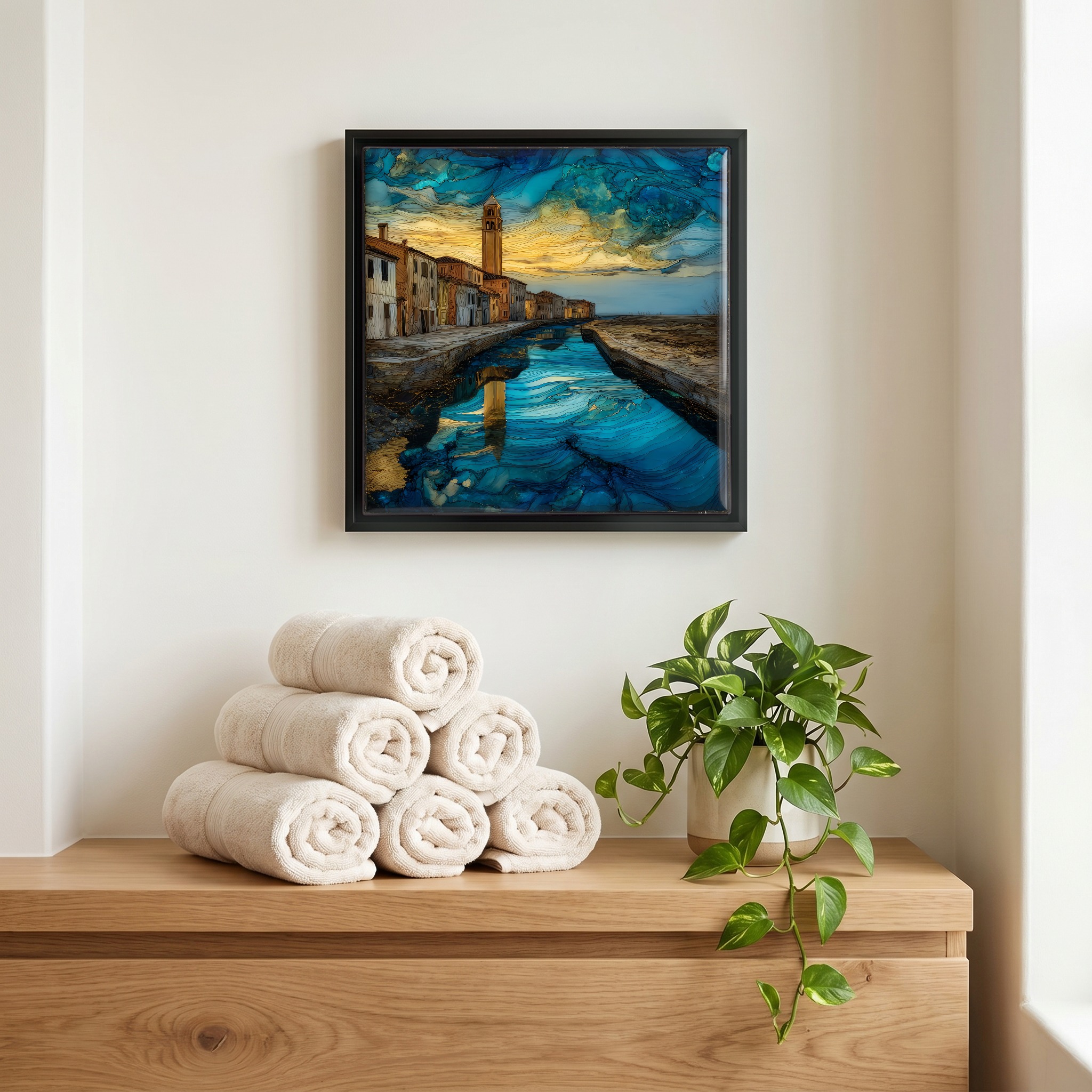
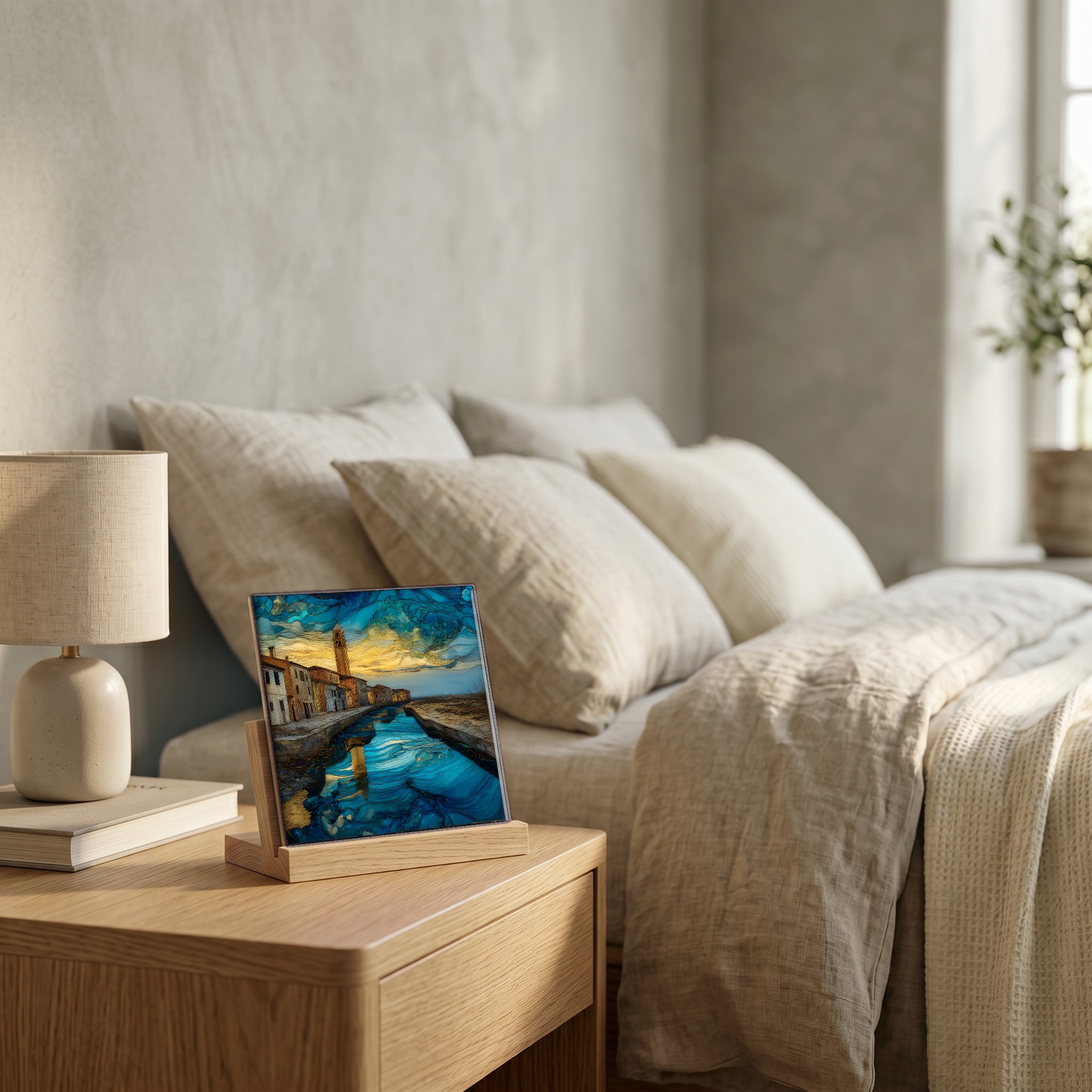
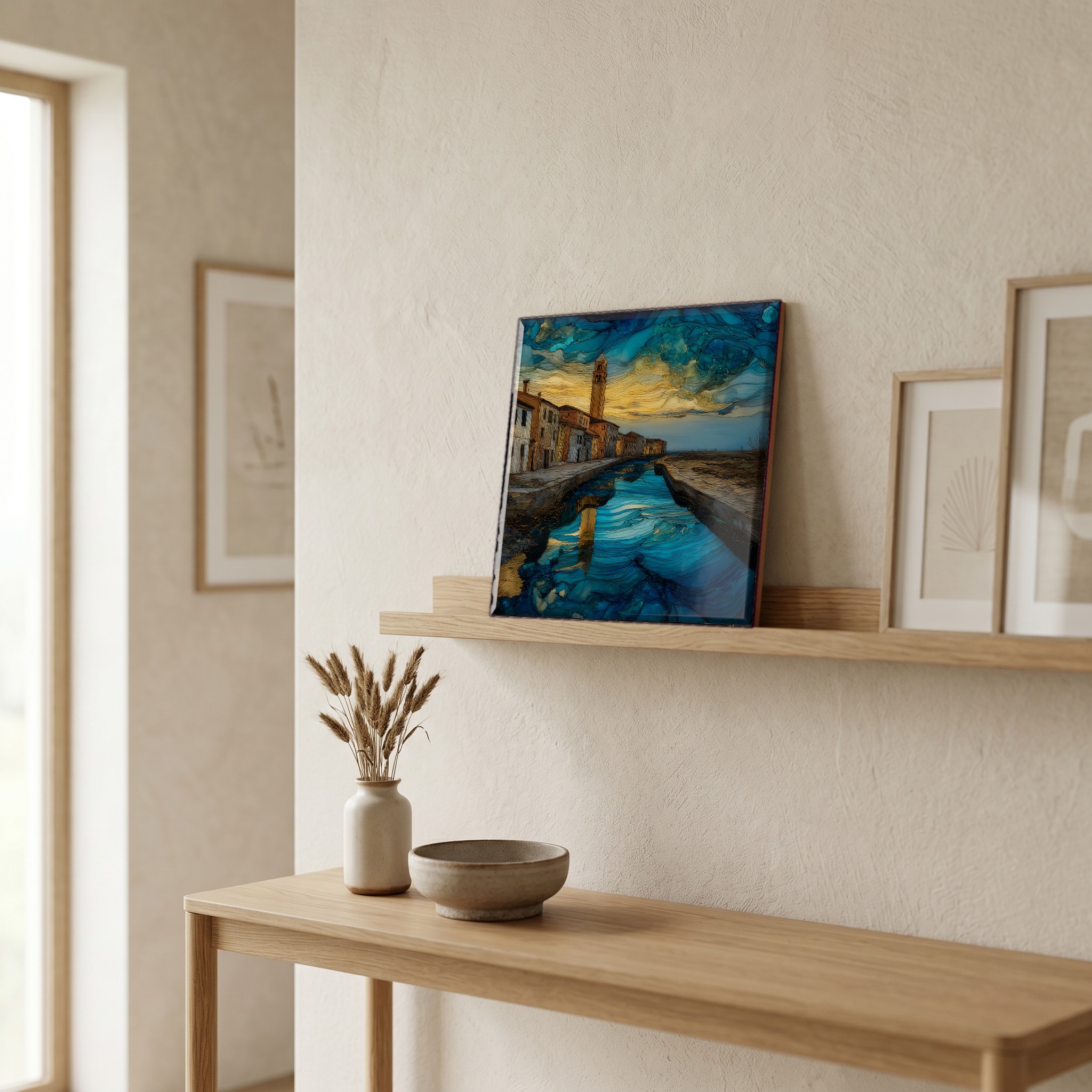
“A town in the Po Delta where the streets are canals and the houses run pink and ochre to the water. Comacchio sits low, barely a metre above the lagoon, and the lagoon is what it has always been about. Eel weirs of cane and wood still stand in the shallows the way they did three hundred years ago. The Trepponti, the five-staircase bridge from 1638, gathers the canals into one knot at the southern edge of the old town. Flamingos work the salt pans at the southern reach of the park. Nobody is hurrying.
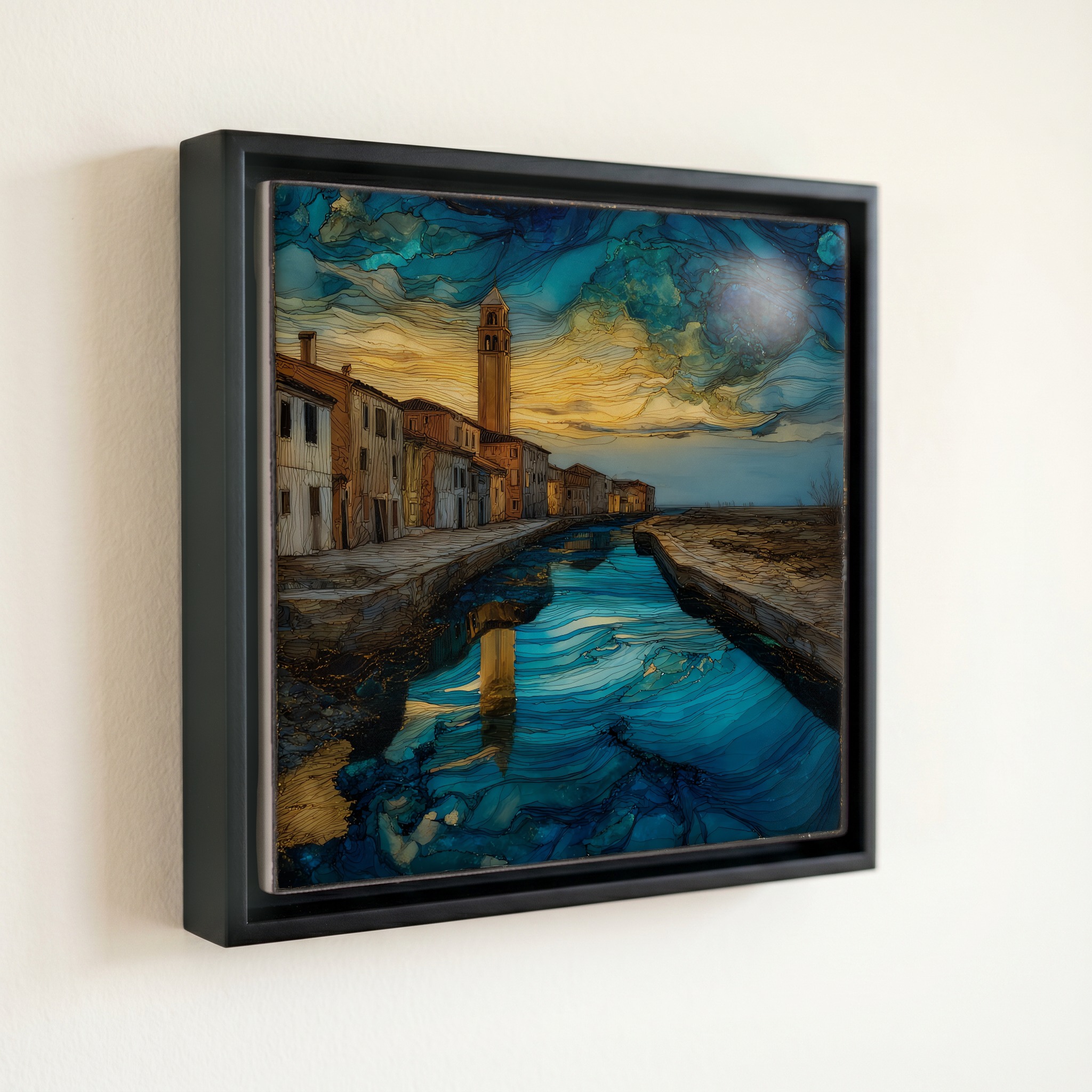
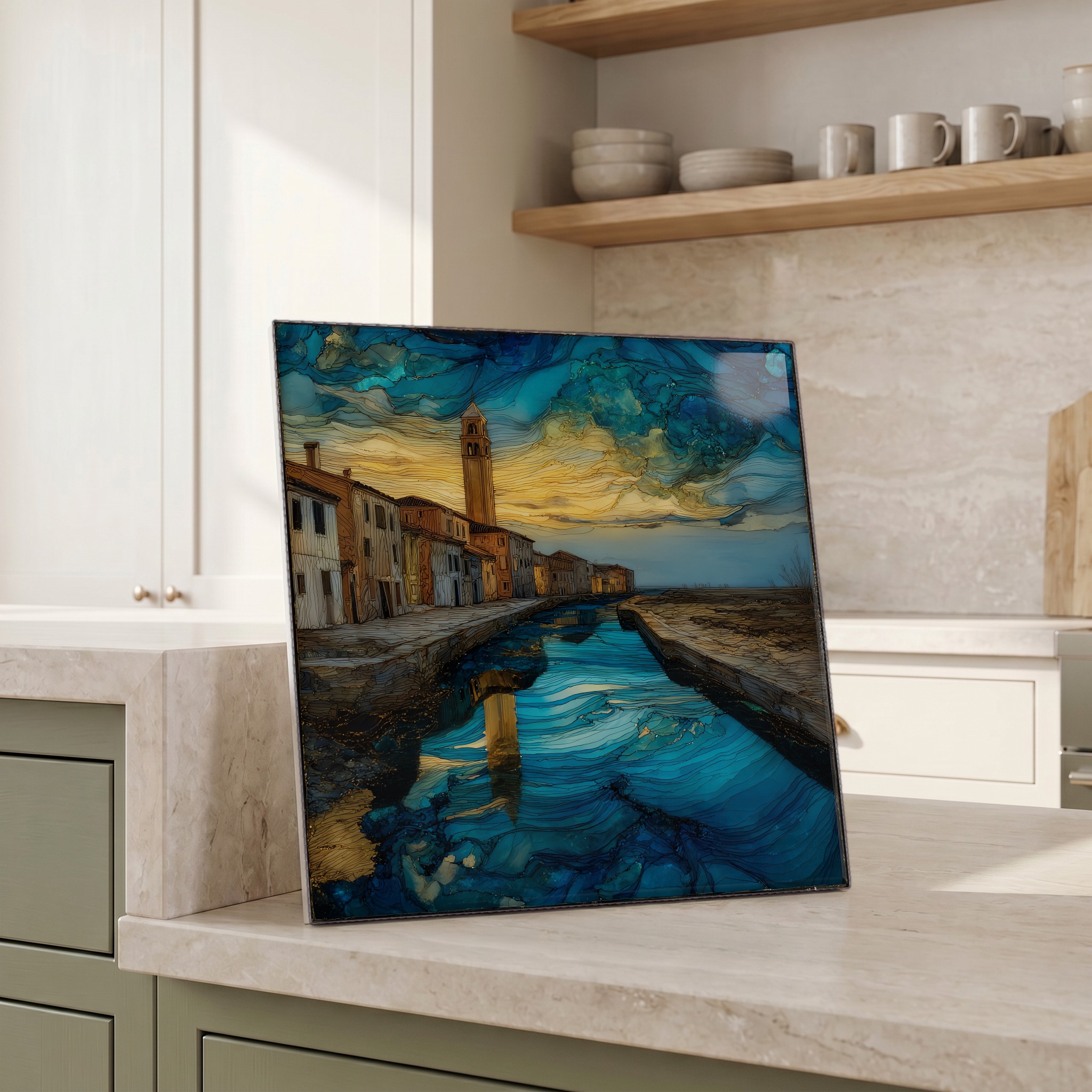
Comacchio, on ceramic.
Each tile is finished by hand in our Knoxville studio. Artwork is slowly infused into the ceramic surface under high heat and pressure, and rests beneath a thin glossy finish. The colour lives in the surface, not on top of it.
Pick any four 4-inch tiles — National Parks you've been to, a Smokies set, the four seasons of one place. $ for a set of , cork-backed, ready to live on the table.
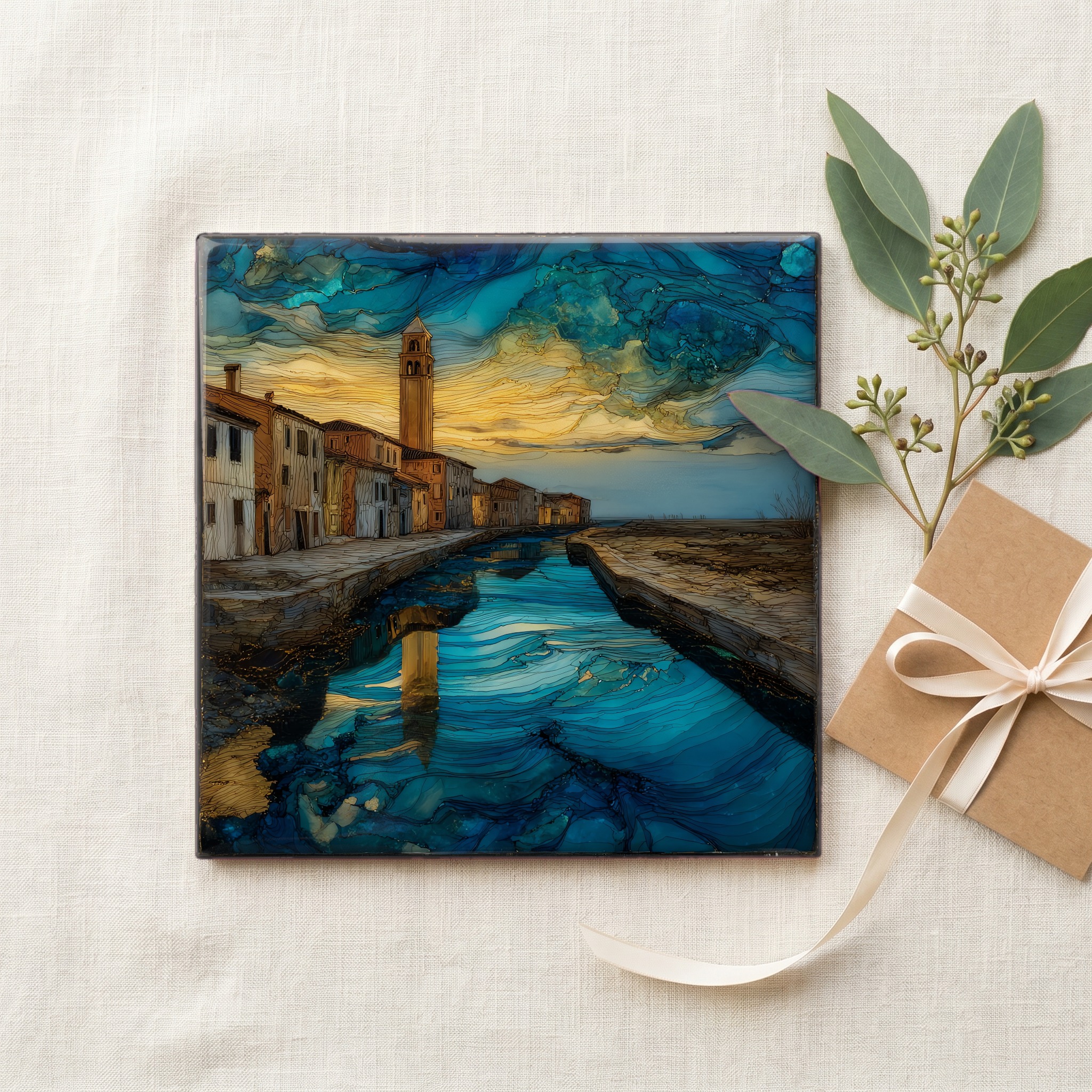
Each tile ships in a kraft box, tied with cream ribbon, with a handwritten note from the studio if you'd like to add one.
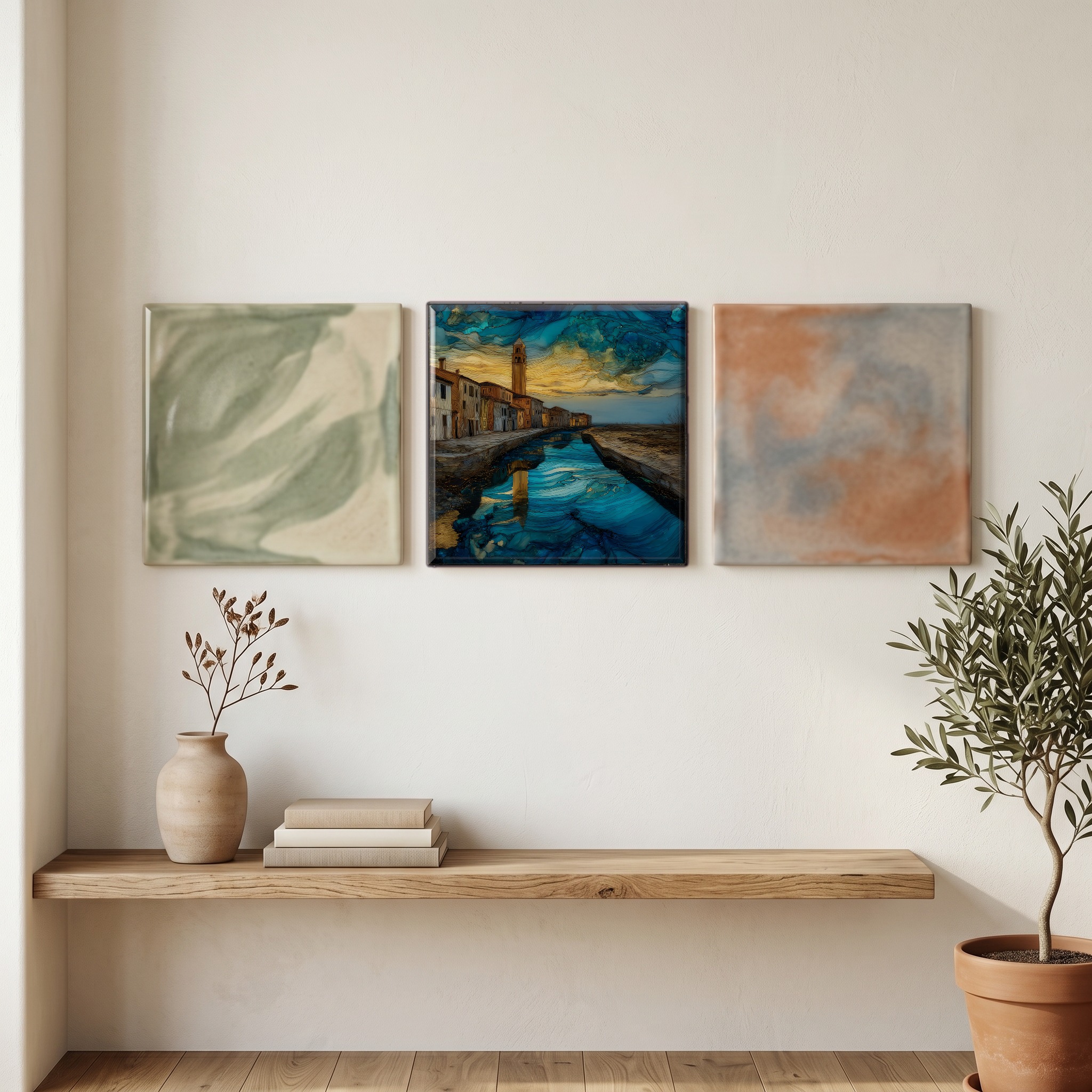
Three or five different vistas, hung together — a chapter of places you've been, or want to go.
The place, in three passes.
Comacchio sits in the lagoons of the Po Delta on Italy's Adriatic coast, in the province of Ferrara, Emilia-Romagna. The old town is built on thirteen small islands threaded by canals and footbridges, barely a metre above sea level. The municipality counts roughly twenty-two thousand residents, including the seven Lidi di Comacchio strung along the coast to the east. The town and the surrounding wetlands fall inside the Parco del Delta del Po Emilia-Romagna, included in the UNESCO inscription 'Ferrara, City of the Renaissance, and its Po Delta' in 1999. From Ferrara it is roughly fifty kilometres south-east by road; Ravenna lies forty kilometres south.
The lagoons are the town. The Valli di Comacchio, the shallow brackish basins that surround it, cover about eleven thousand hectares and have been fished, salted, and managed since Etruscan times. Eels are the historic catch; they arrive from the Sargasso Sea after a long migration and were trapped in lavorieri, cane-and-wood weirs whose shape has hardly changed in three centuries. The Manifattura dei Marinati, the old eel-curing works on the southern canal, now operates as a museum that still marinates a small annual batch. Saltworks at the southern edge of the lagoon, the Salina di Comacchio, have produced sea salt for over a thousand years and are still worked today.
Brick is what the town is built of. The Trepponti, completed in 1638 by the architect Luca Danesi, is the photographed centrepiece of Comacchio's old town: five staircases of brick meeting on one platform over the convergence of three canals. Beside it the Loggia del Grano, the seventeenth-century grain market, opens onto the canal. The Cathedral of San Cassiano, rebuilt in 1659, faces a freestanding bell tower across the central piazza. The streets still keep the lines of a working fishing-town. None of it is monumental; the scale is low, deliberate, weathered by lagoon air.