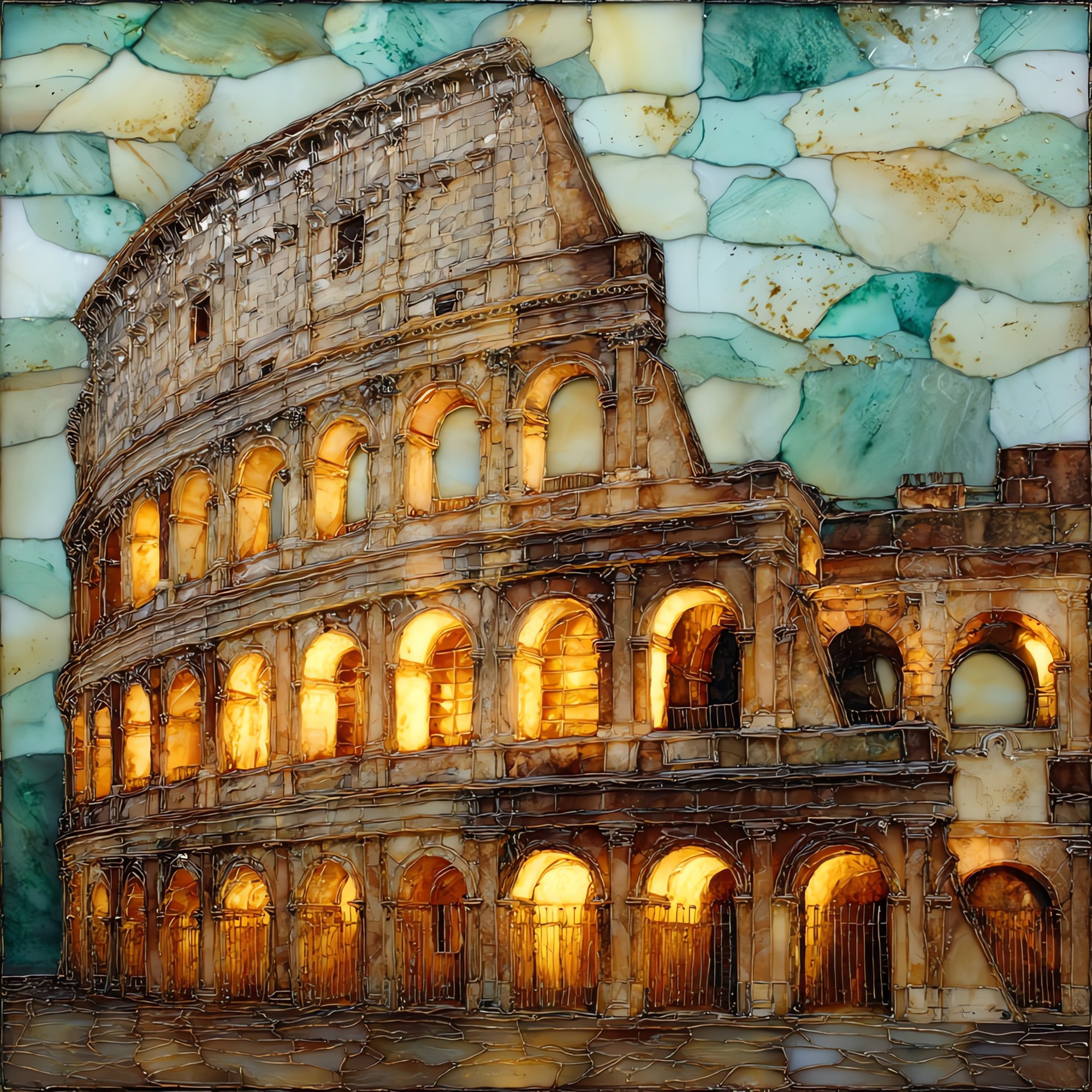
Colosseum
— the ring the centuries kept half of.
Not only on a wall.
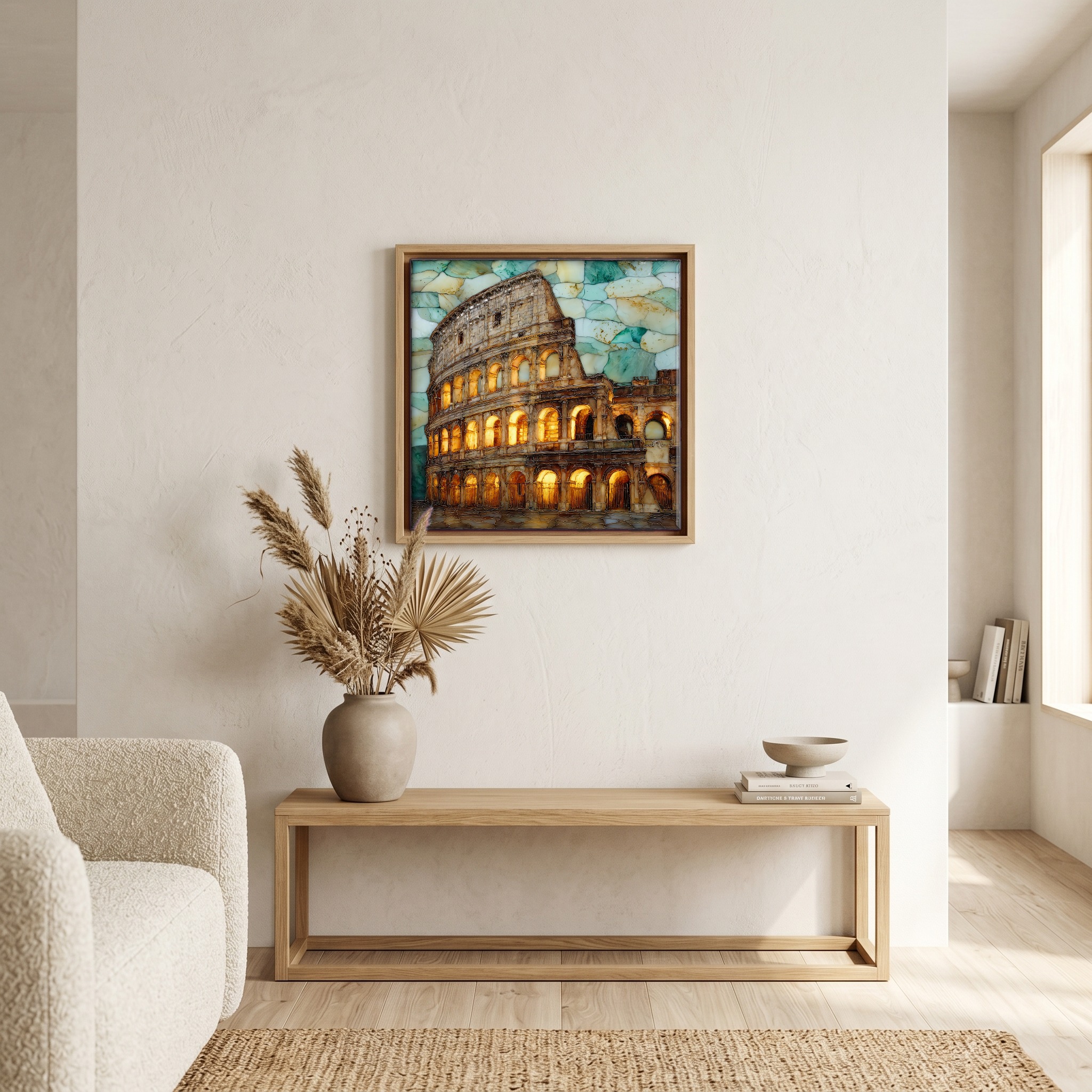
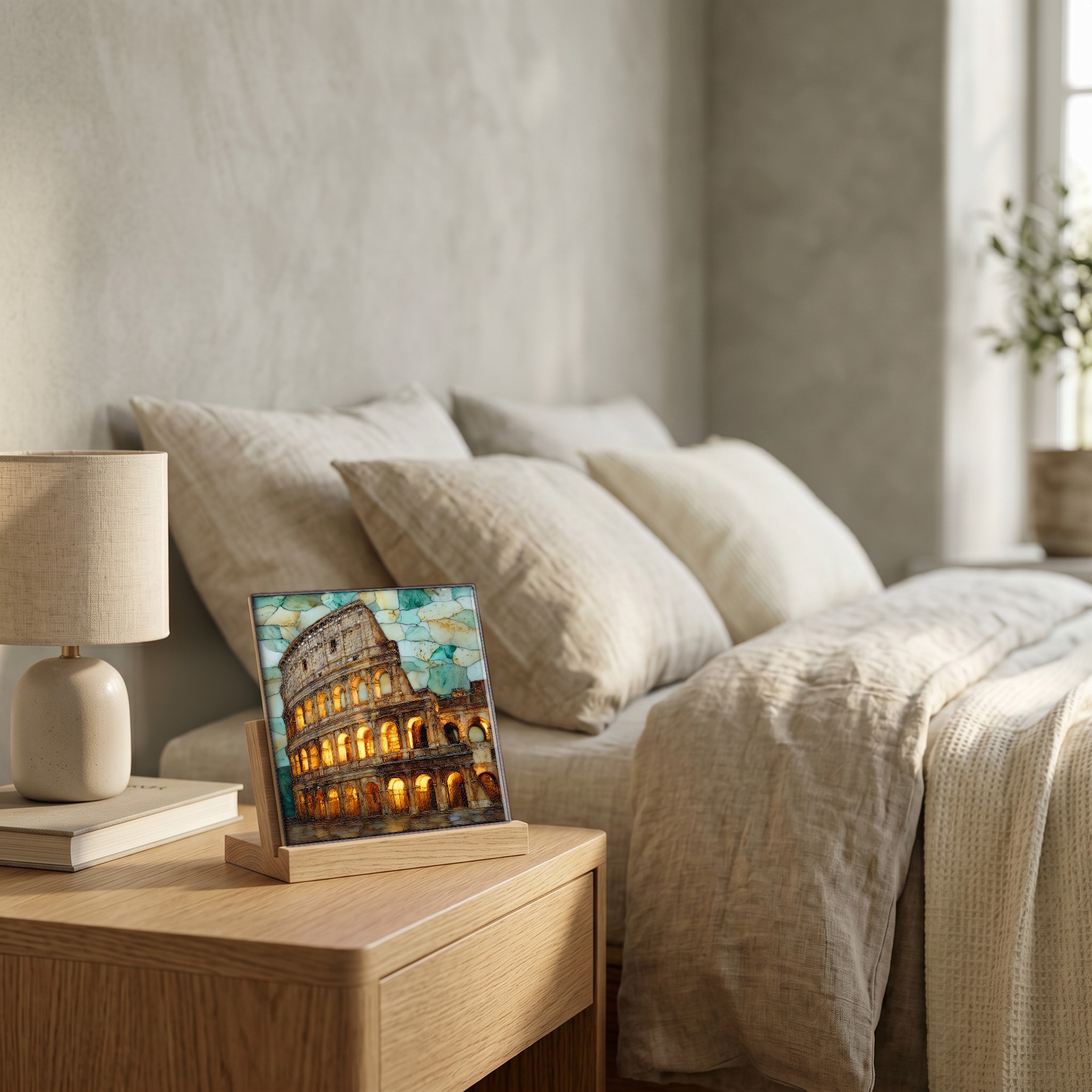
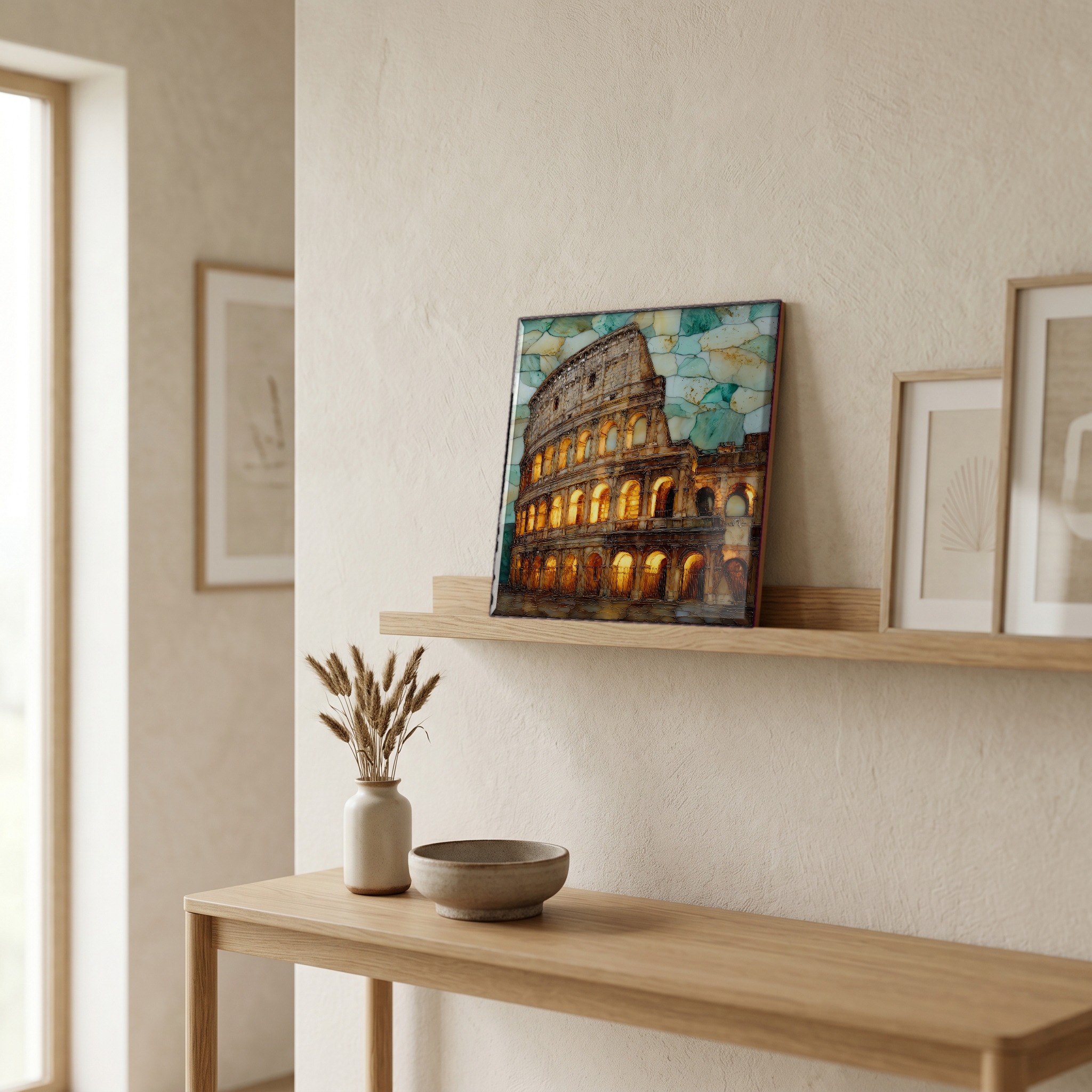
“The largest amphitheatre Rome ever built, and the one the city could never quite tear all the way down. Eighty arches ring the ground floor; the crowd that filled them, fifty thousand and more, has been gone for fifteen centuries. What's left is the shape: a broken oval that holds the morning light along its eastern arc and lets it fall straight through to the exposed floor below. People come by the millions and still go quiet at the first sight of it, the way you do at something that outlasted everyone who built it.
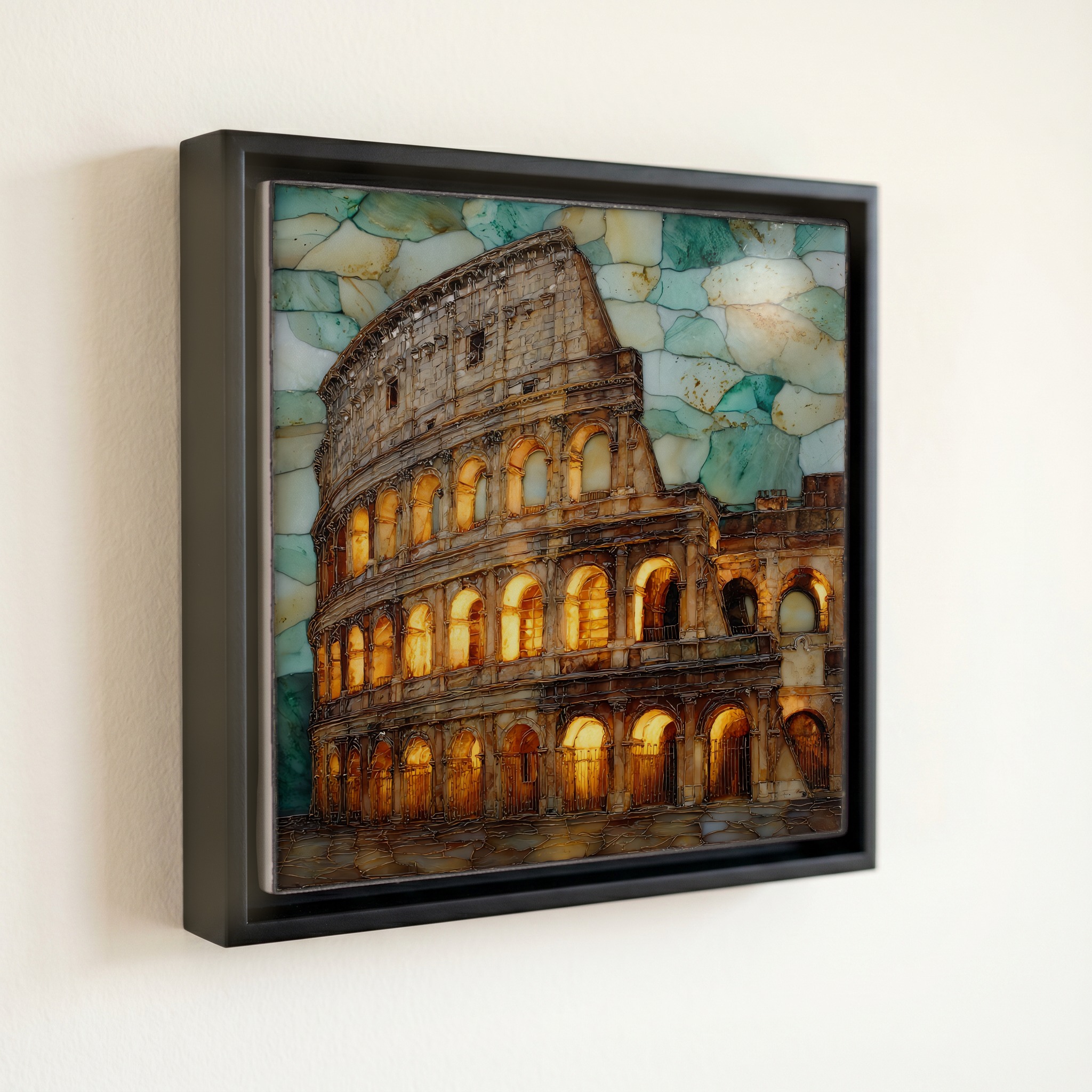
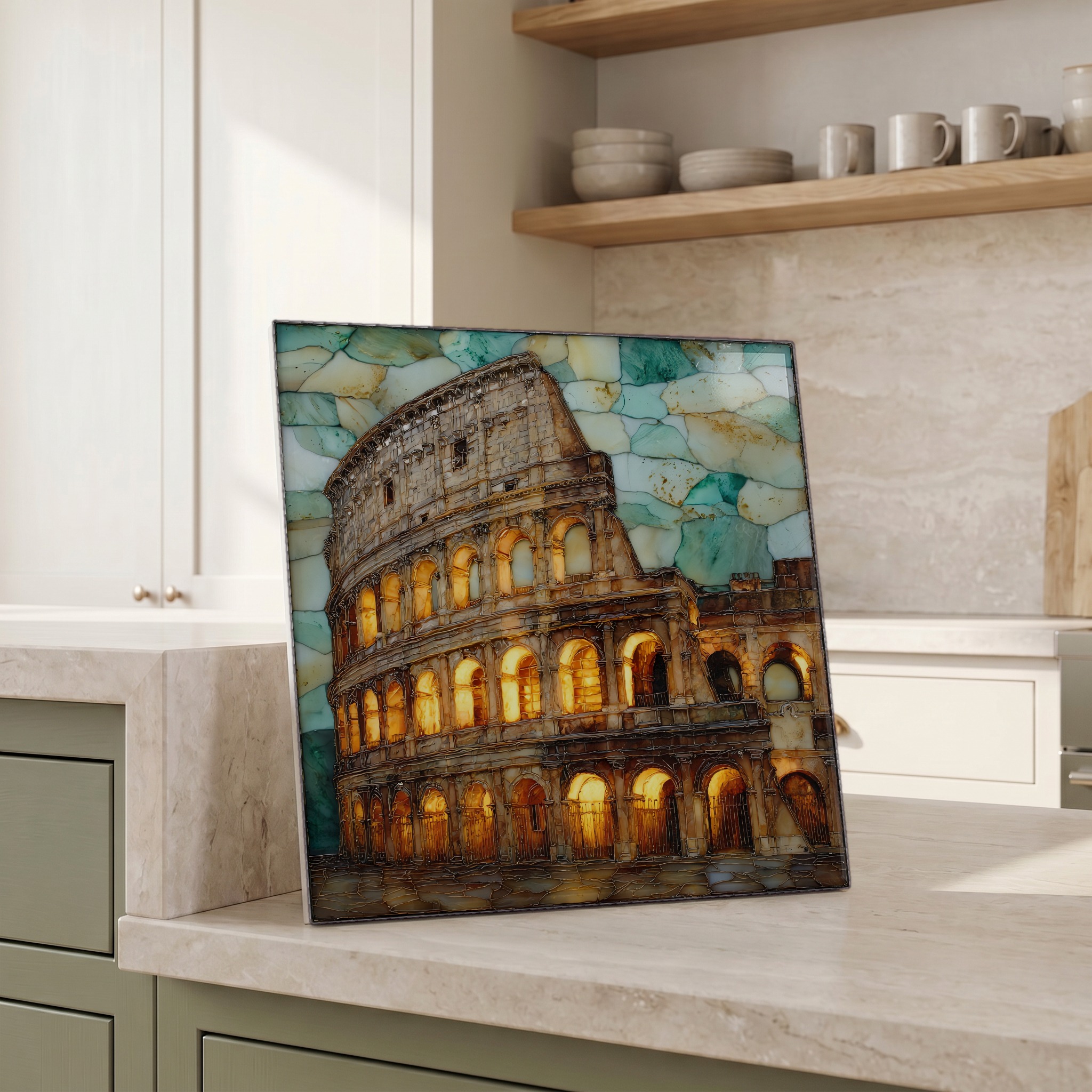
Colosseum, on ceramic.
Each tile is finished by hand in our Knoxville studio. Artwork is slowly infused into the ceramic surface under high heat and pressure, and rests beneath a thin glossy finish. The colour lives in the surface, not on top of it.
Pick any four 4-inch tiles — National Parks you've been to, a Smokies set, the four seasons of one place. $ for a set of , cork-backed, ready to live on the table.
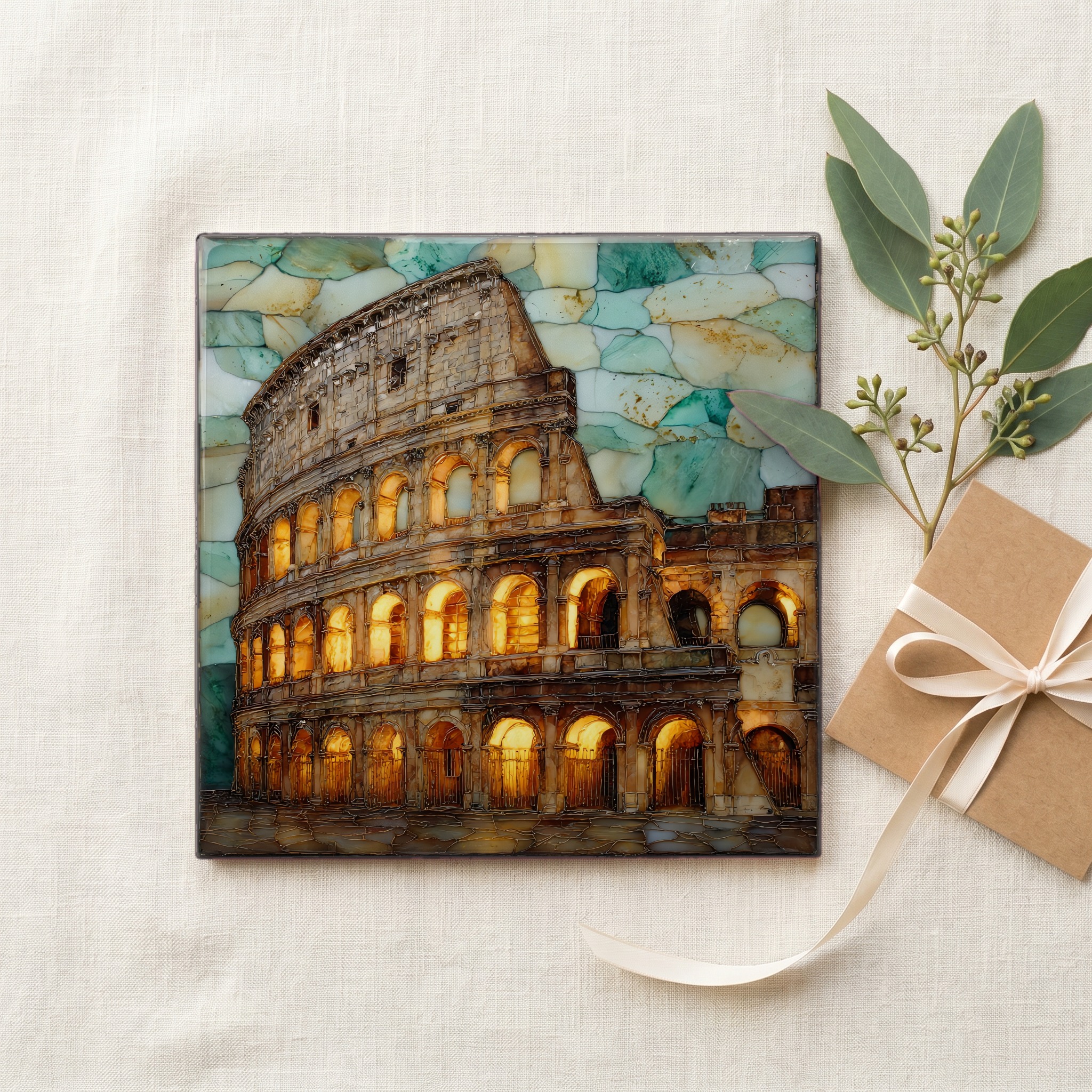
Each tile ships in a kraft box, tied with cream ribbon, with a handwritten note from the studio if you'd like to add one.
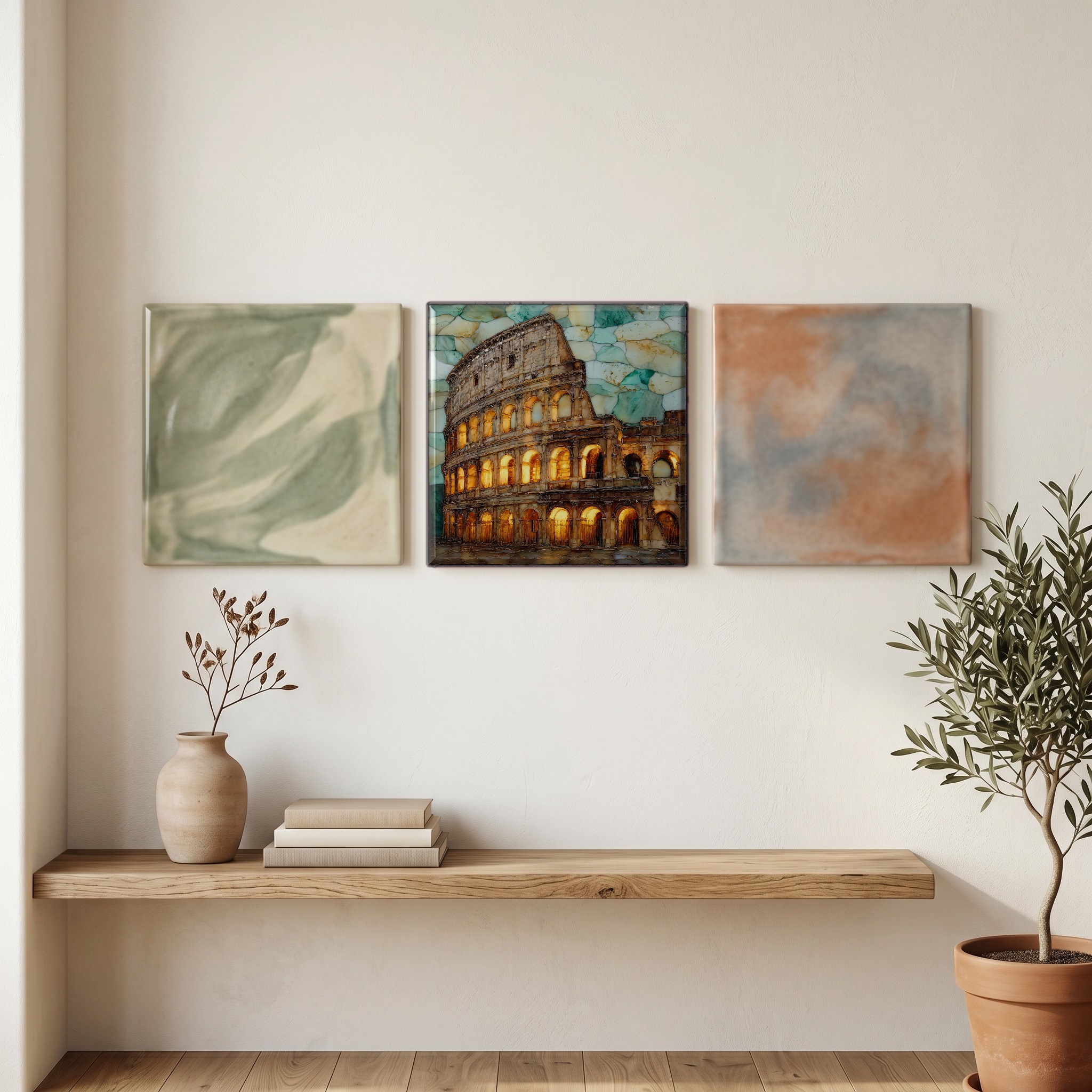
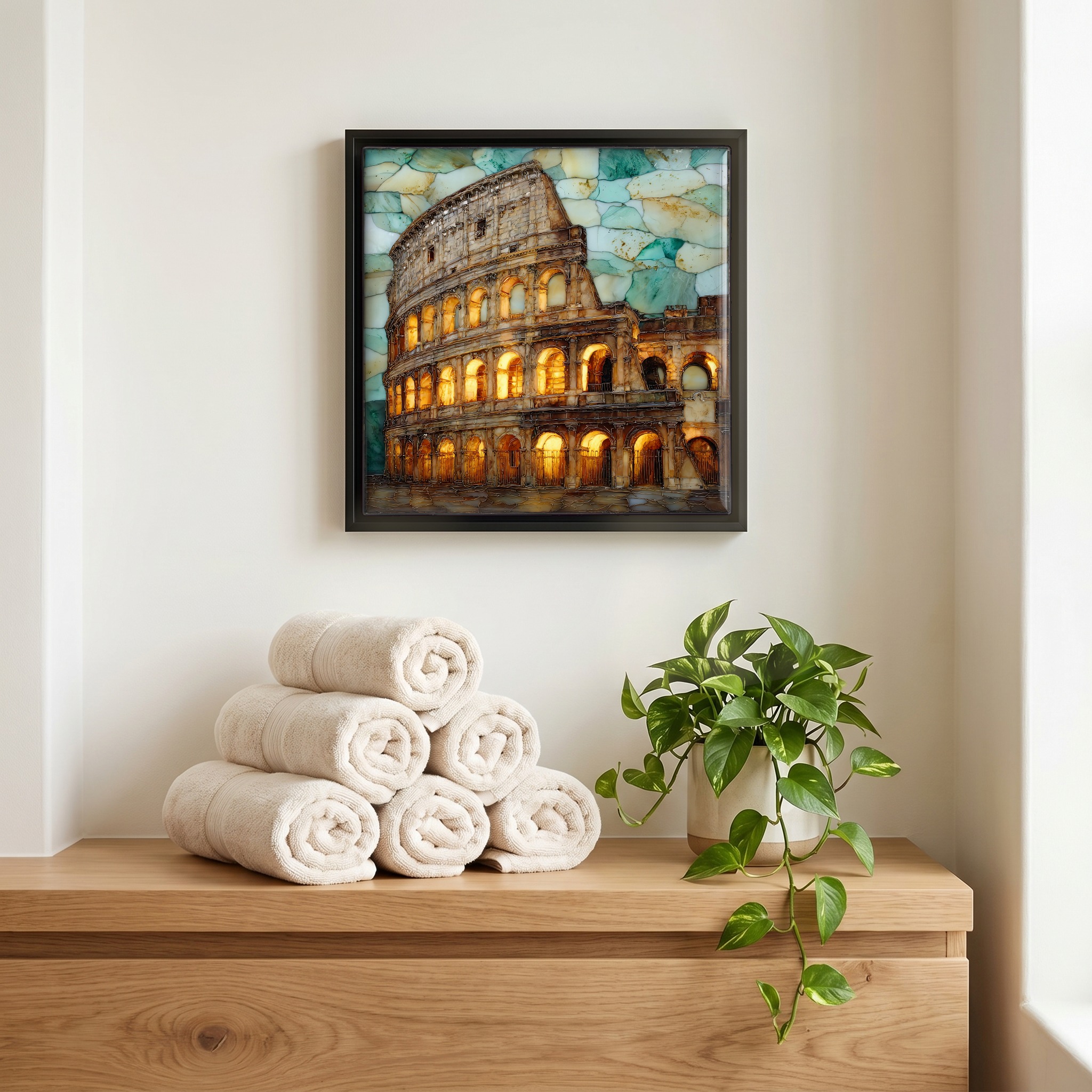
Three or five different vistas, hung together — a chapter of places you've been, or want to go.
The place, in three passes.
The Colosseum stands at the eastern end of the Roman Forum, on the site of an artificial lake that once belonged to Nero's Domus Aurea. Its formal name is the Flavian Amphitheatre, after the dynasty that built it: begun under Vespasian around AD 72 and opened by his son Titus in AD 80, with the upper tiers and underground hypogeum finished under Domitian. At 189 metres long and 156 wide, it is the largest amphitheatre ever raised, seating somewhere between fifty and eighty thousand. It has been part of the UNESCO-listed Historic Centre of Rome since 1980, and in 2007 was named one of the New Seven Wonders of the World.
The fabric is travertine limestone, roughly 100,000 cubic metres of it, quarried at Tivoli some twenty miles east and hauled to Rome along a road widened for the purpose. Tuff and brick-faced concrete fill the inner structure, and iron clamps once held the outer blocks together. Much of what is missing did not fall so much as walk away: after earthquakes, notably the great quake of 1349, brought down the southern outer wall, the stone was carried off for centuries to build palaces, churches, and bridges across the city. The pockmarks across the surviving facade are the holes where medieval scavengers prised the iron clamps out.
The Colosseum is the most visited monument in Italy; the surrounding archaeological park recorded more than twelve million visitors in 2023. Entry is by timed ticket, and the same ticket covers the Roman Forum and Palatine Hill next door. The arena floor and the hypogeum (the two-level warren of tunnels, cages, and lift-shafts beneath the sand, where animals and fighters waited out of sight) are open only on separate guided tours. Early morning, just after opening, is the quietest hour and the one when the low sun reaches deepest through the arcades. The metro stops at the door, at Colosseo on Line B.