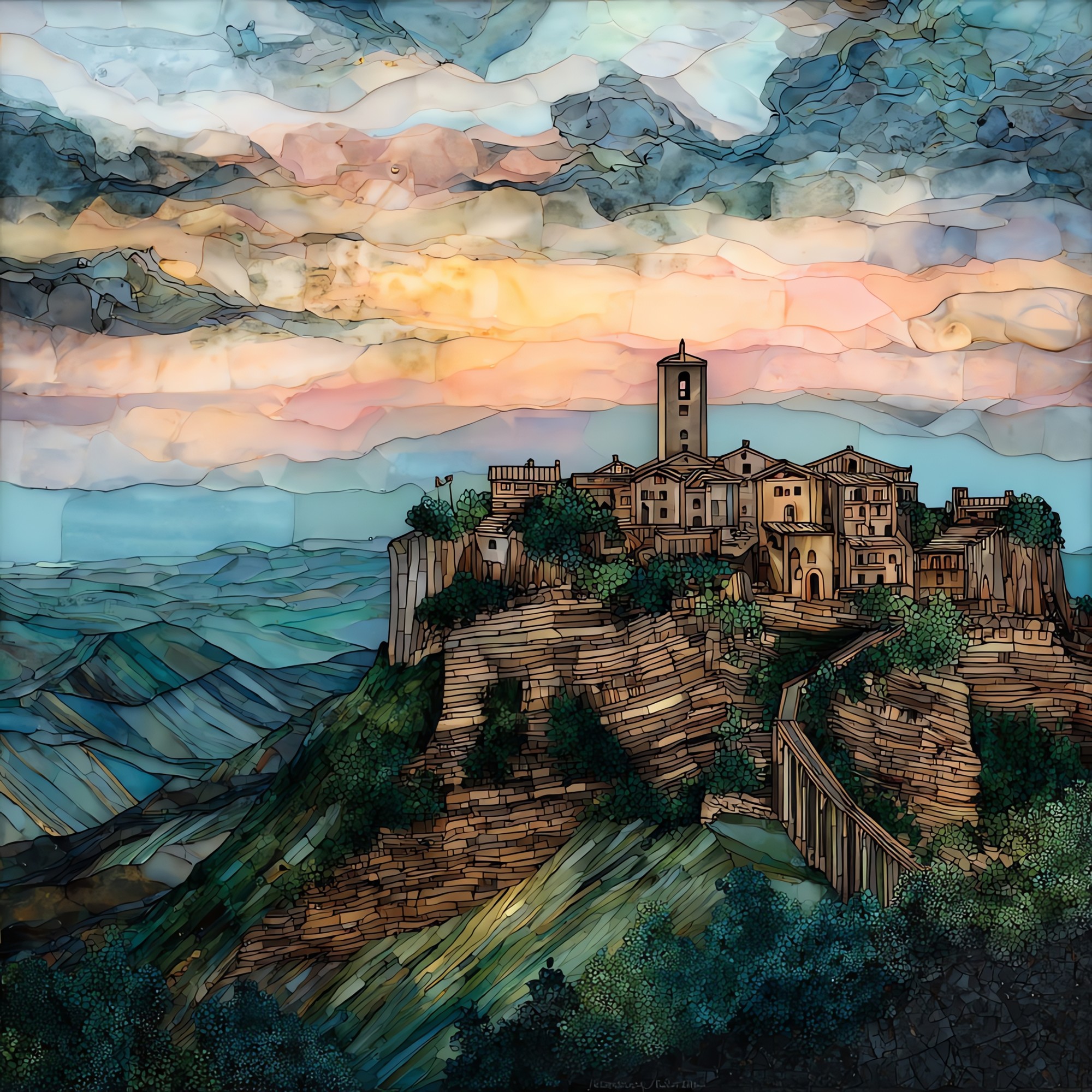
Civita di Bagnoregio
— the town the valley is slowly taking back.
Not only on a wall.
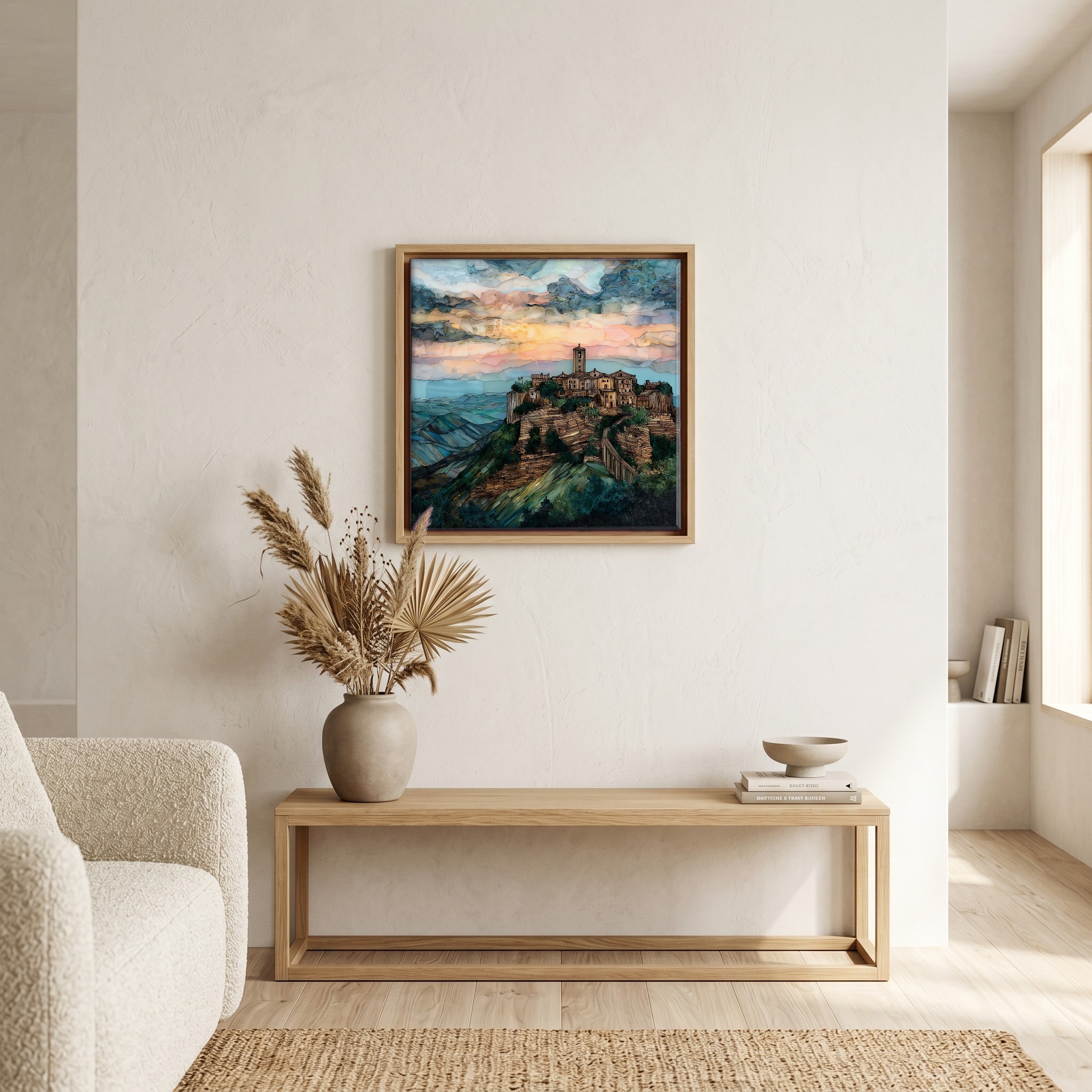

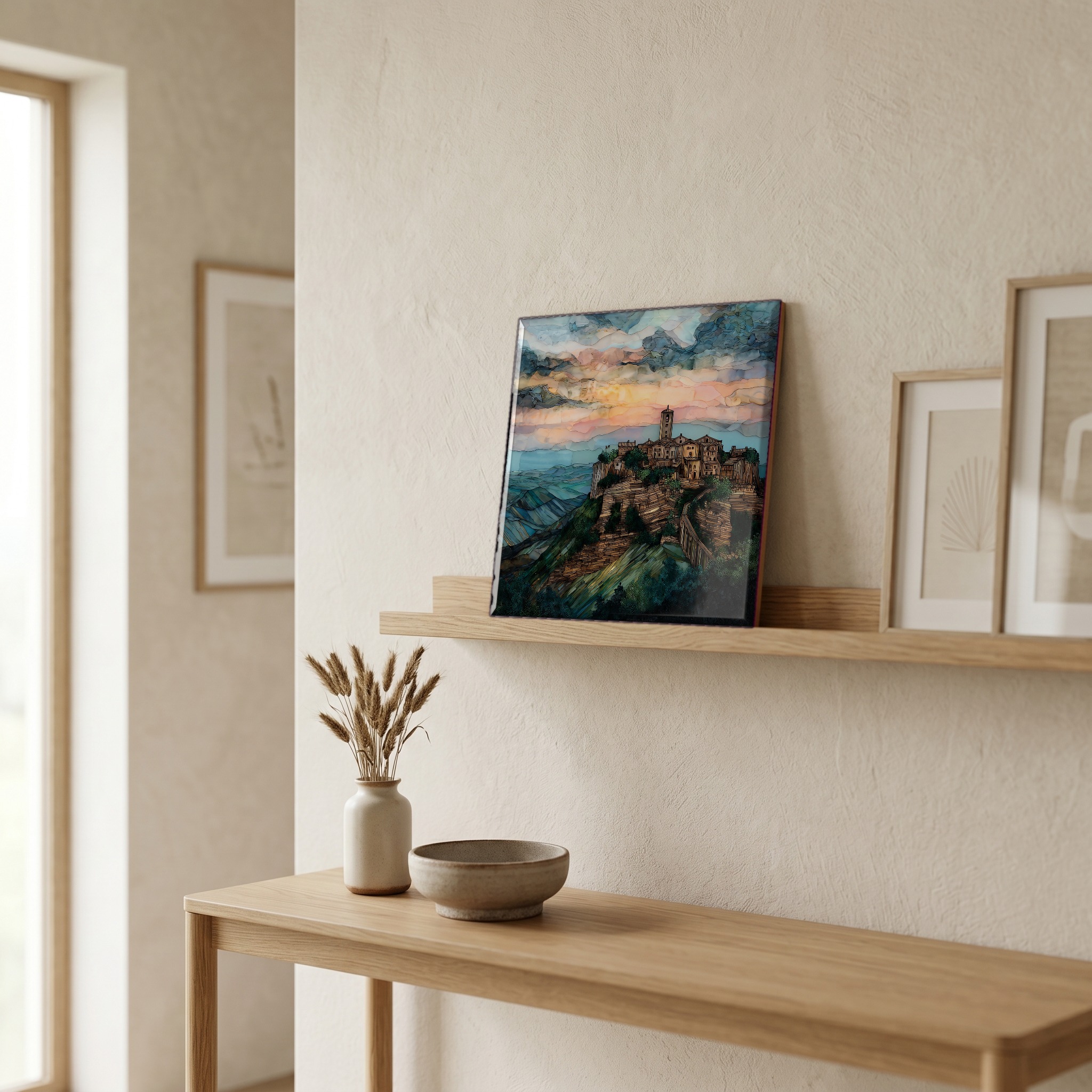
“A town on a spur of tuff, reachable only on foot, across a long bridge that climbs to one gate. They call it la città che muore, the town that is dying, because the clay under the stone keeps slipping into the valley and the edges keep going. Eleven people winter here. By midday the lanes fill, and by dark they empty again. The writer Bonaventura Tecchi grew up nearby and gave it the name. From the badlands below, at the hour the light turns amber, it stops looking like a place that is leaving.
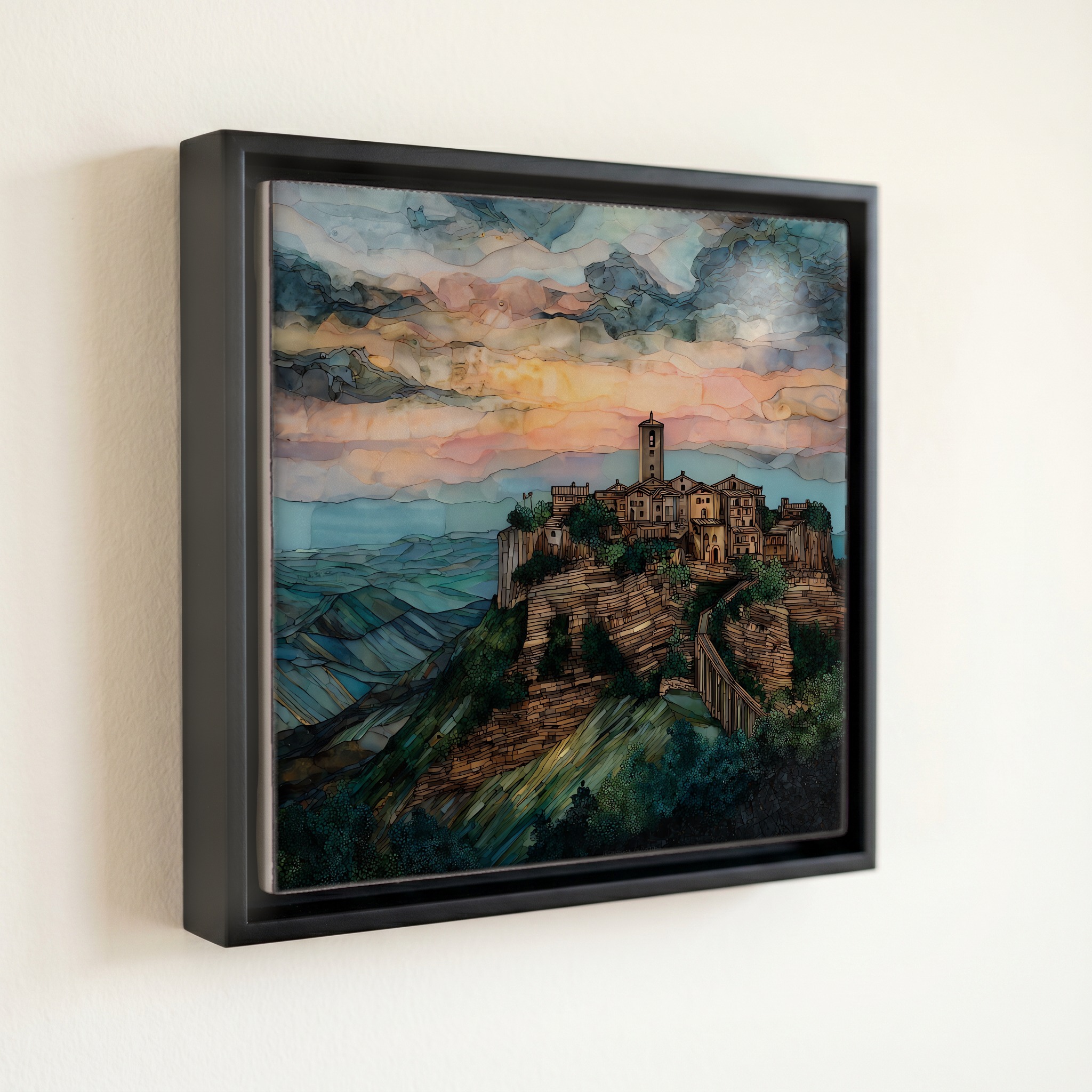
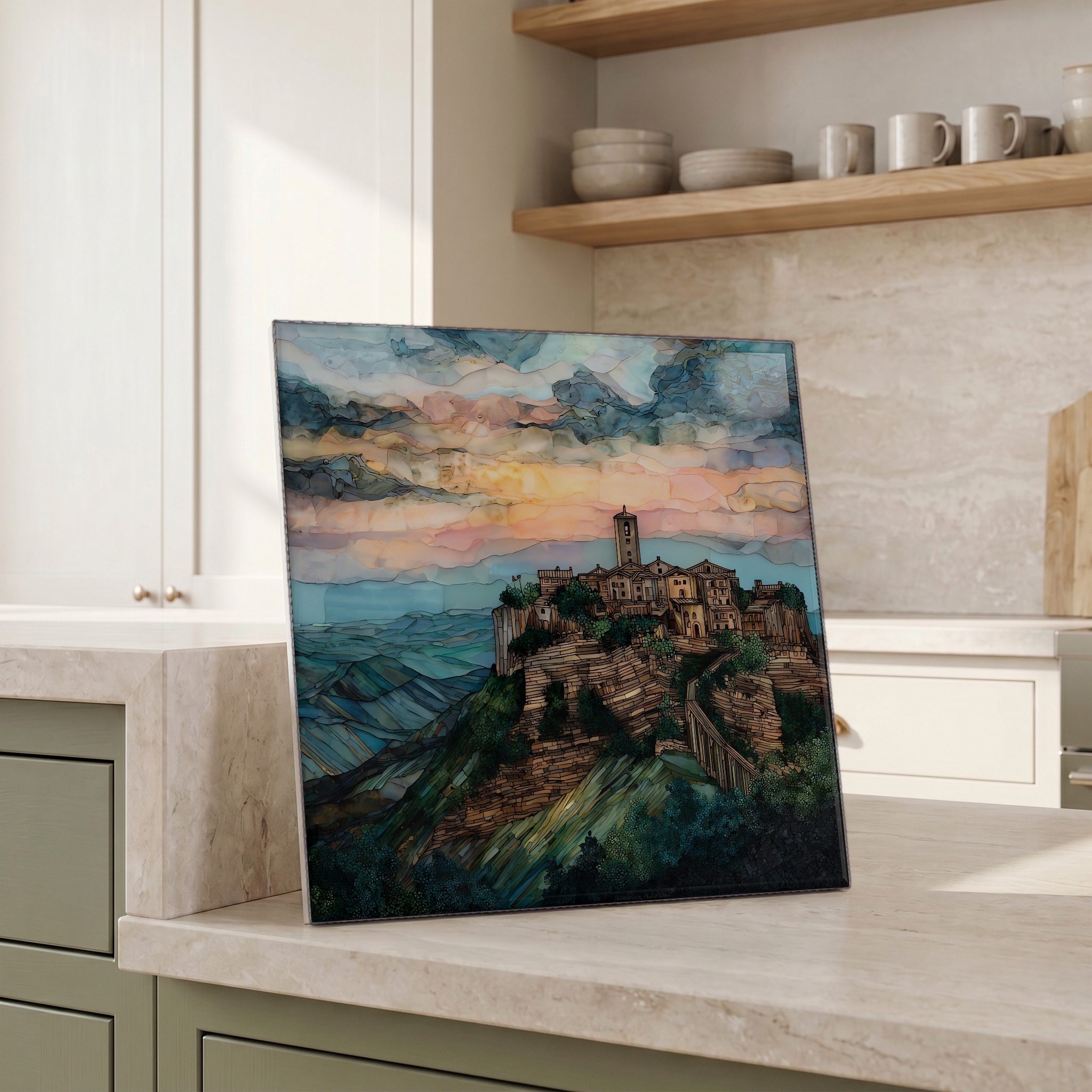
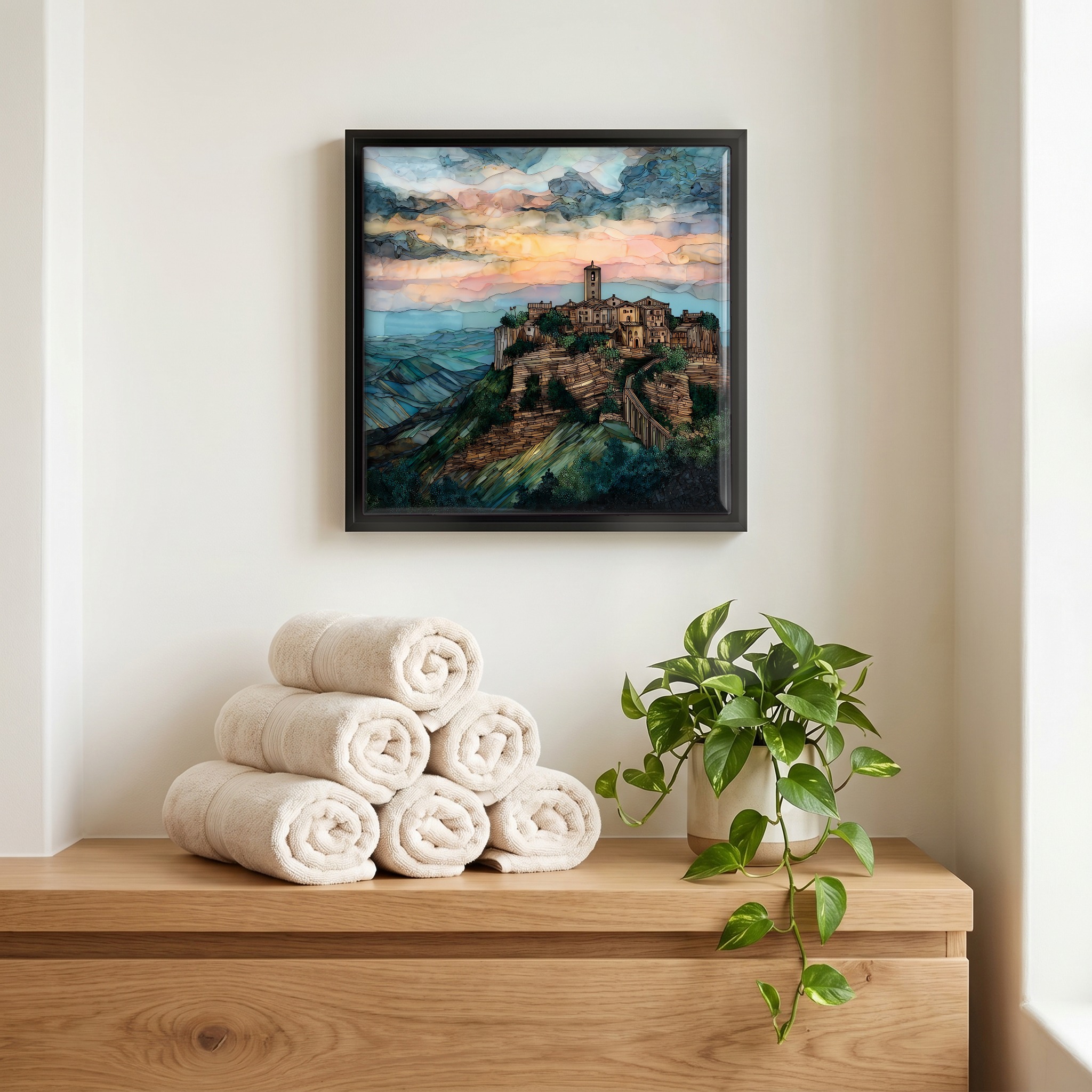
Civita di Bagnoregio, on ceramic.
Each tile is finished by hand in our Knoxville studio. Artwork is slowly infused into the ceramic surface under high heat and pressure, and rests beneath a thin glossy finish. The colour lives in the surface, not on top of it.
Pick any four 4-inch tiles — National Parks you've been to, a Smokies set, the four seasons of one place. $ for a set of , cork-backed, ready to live on the table.
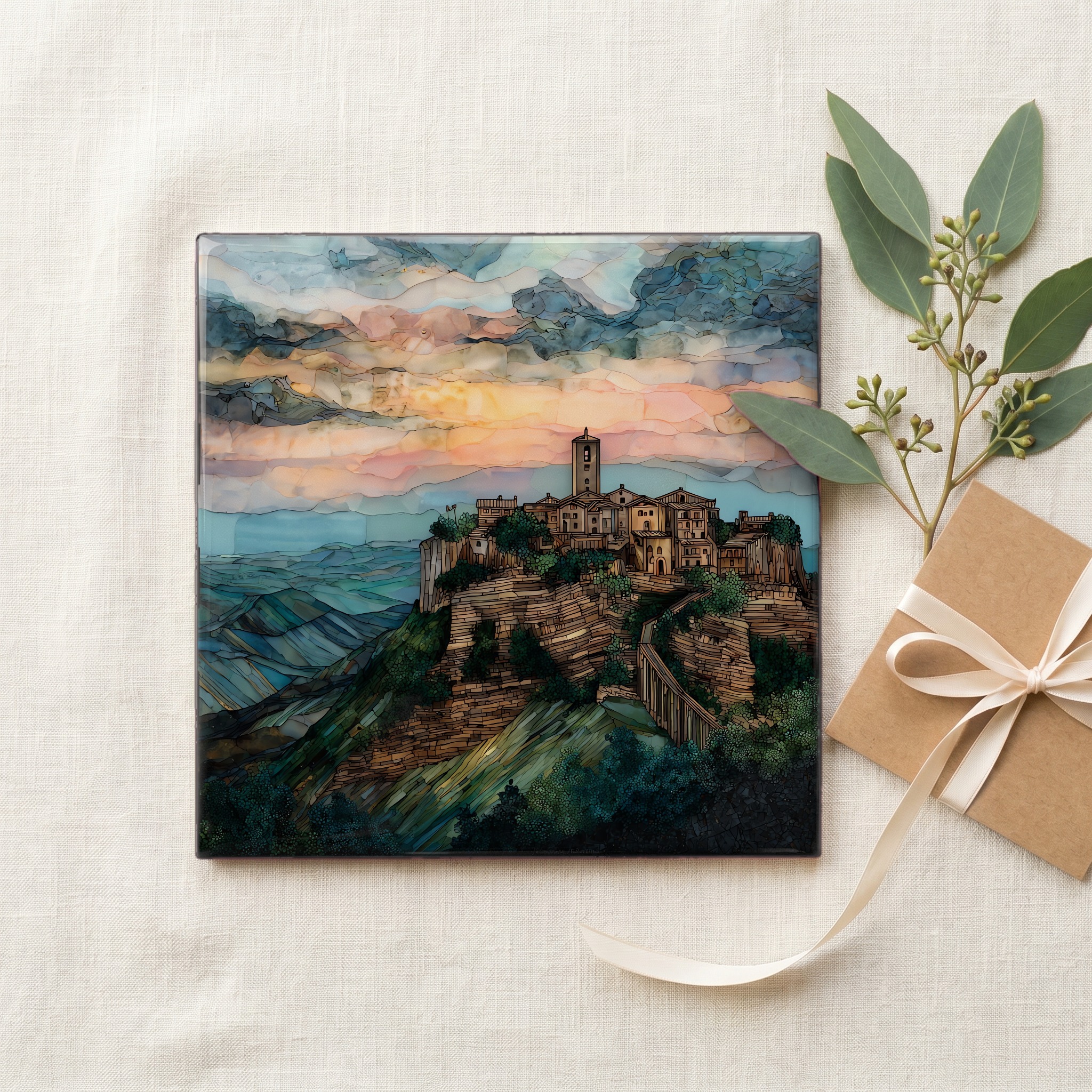
Each tile ships in a kraft box, tied with cream ribbon, with a handwritten note from the studio if you'd like to add one.

Three or five different vistas, hung together — a chapter of places you've been, or want to go.
The place, in three passes.
Civita di Bagnoregio sits on an isolated cap of volcanic tuff in the Valle dei Calanchi, the badlands valley between Lake Bolsena and the Tiber, about 120 kilometres north of Rome in the province of Viterbo, Lazio. It is a frazione of the comune of Bagnoregio, roughly a kilometre east of the modern town, at around 443 metres of elevation. No road reaches it. Since 1965 the only way in has been a reinforced-concrete footbridge that climbs to the Porta Santa Maria, the old gate with its carved lions. The Etruscans laid out the grid of streets more than 2,500 years ago, and the medieval and Renaissance town grew on top of it.
The plateau is a sandwich of two very different rocks: a hard cap of volcanic tuff and lava resting on a soft, far older base of marine clay. Rain and groundwater work the clay loose, the cap above it calves away in slabs, and the surrounding land erodes into the bare, fluted ridges Italians call calanchi. The process is old and continuous. A major earthquake at the end of the 17th century sped it up, and the bishop and town government moved out to Bagnoregio for good. Since the mid-1800s the approach to the village has dropped by about 25 metres. The writer Bonaventura Tecchi, raised nearby, called it la città che muore, the town that is dying.
Civita is pedestrian-only; cars stop in Bagnoregio, and the last stretch is on foot. The footbridge runs roughly 300 metres and rises steeply, a walk of about twenty minutes from the parking below. In 2013 Civita became the first town in Italy to charge admission, partly to fund the constant shoring-up of the rock; the ticket is currently about €5, with a higher price on Sundays and public holidays. Inside the walls, the lanes open onto the central piazza and the church of San Donato. Eleven people live here permanently, and the numbers swell in summer and thin again by evening. The village has been put forward for UNESCO World Heritage status.