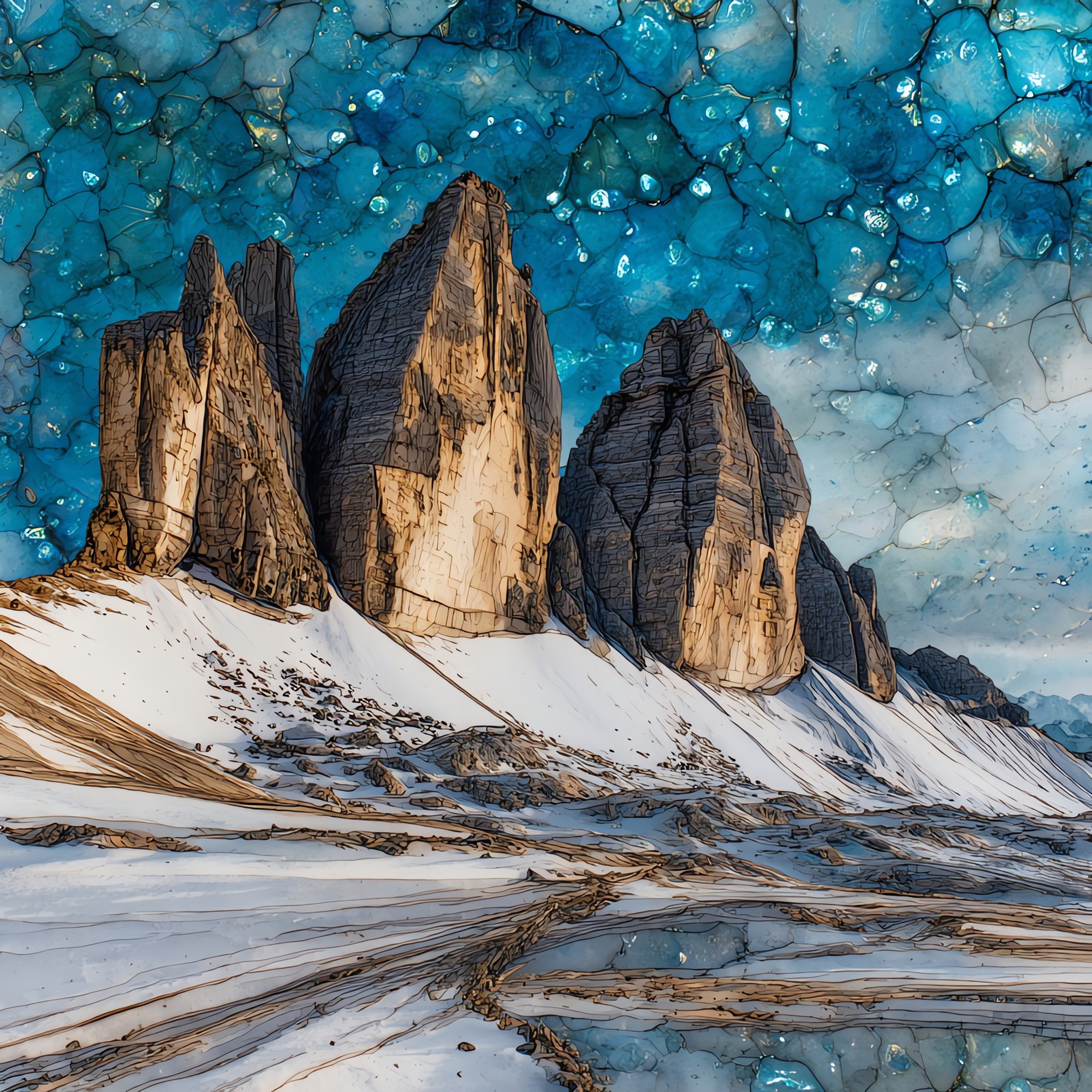
Cinque Torri in Winter
— — stone the snow can't put out.
Not only on a wall.
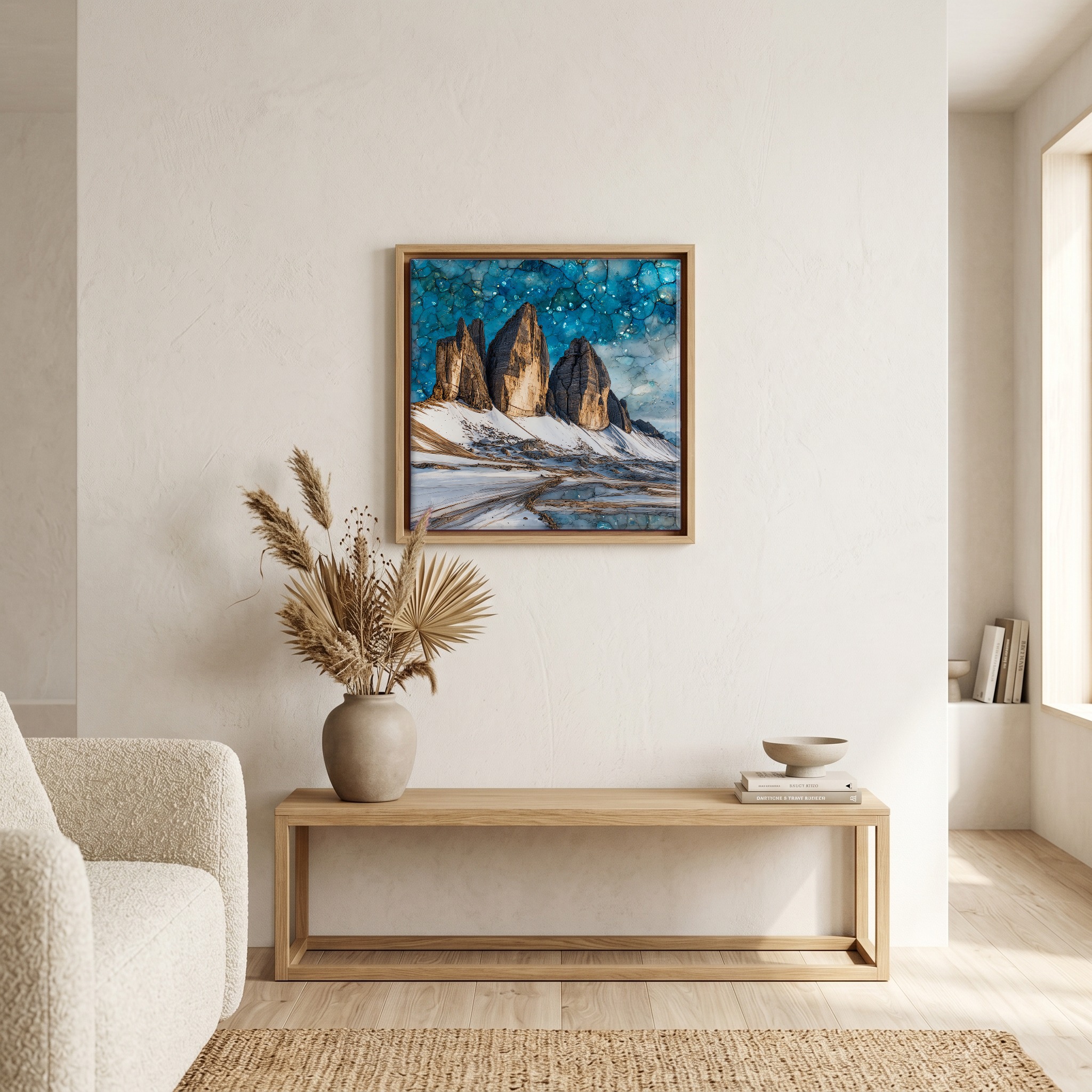
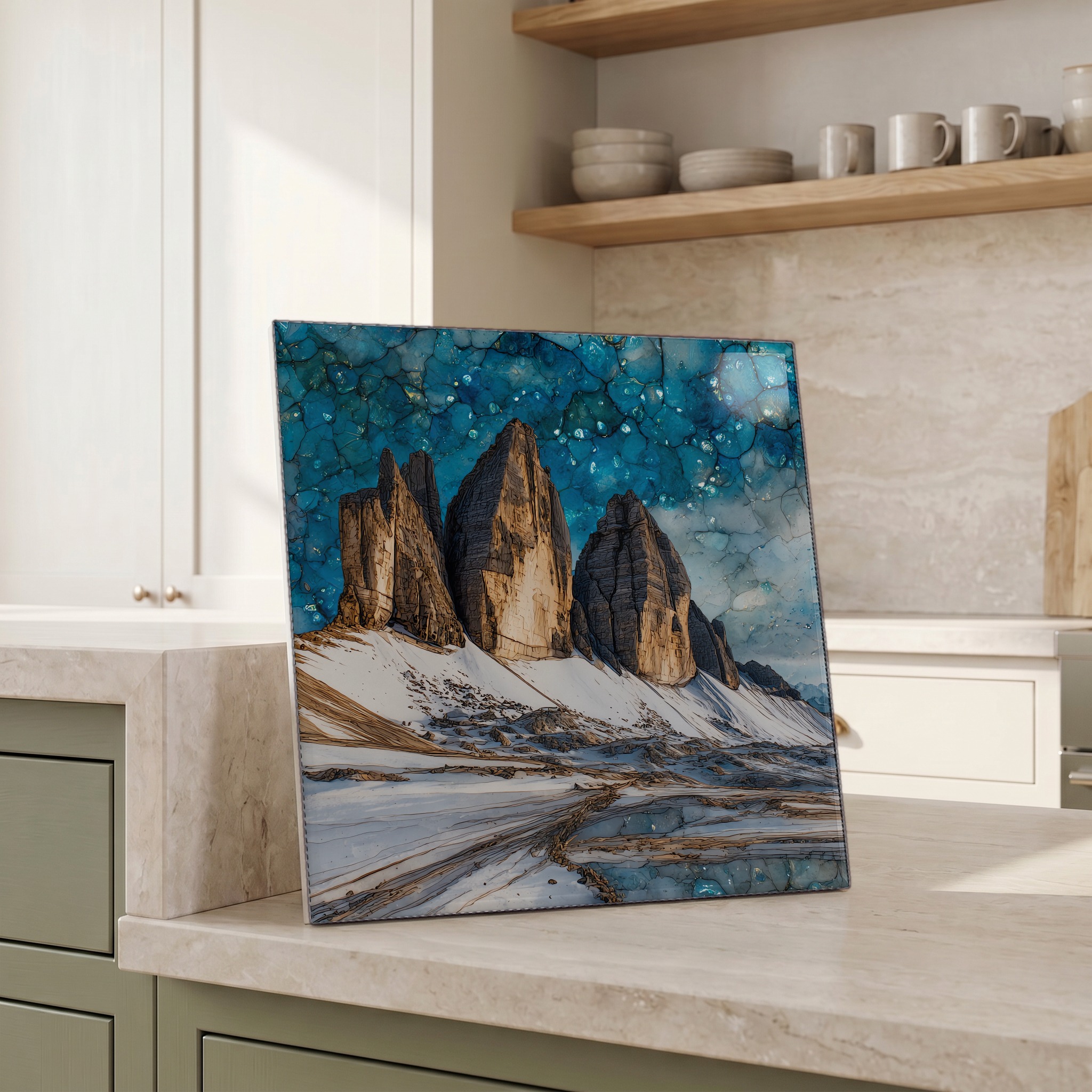
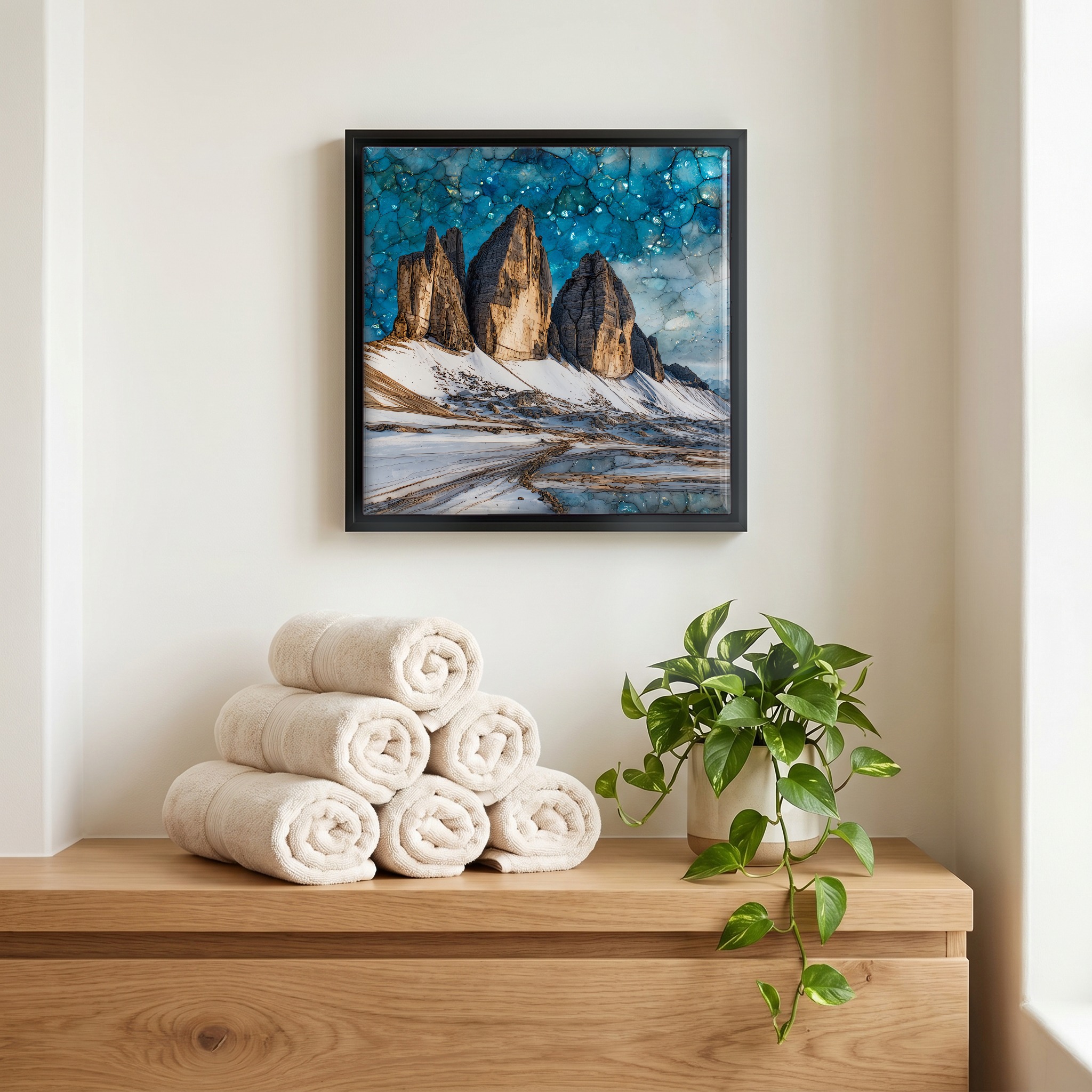
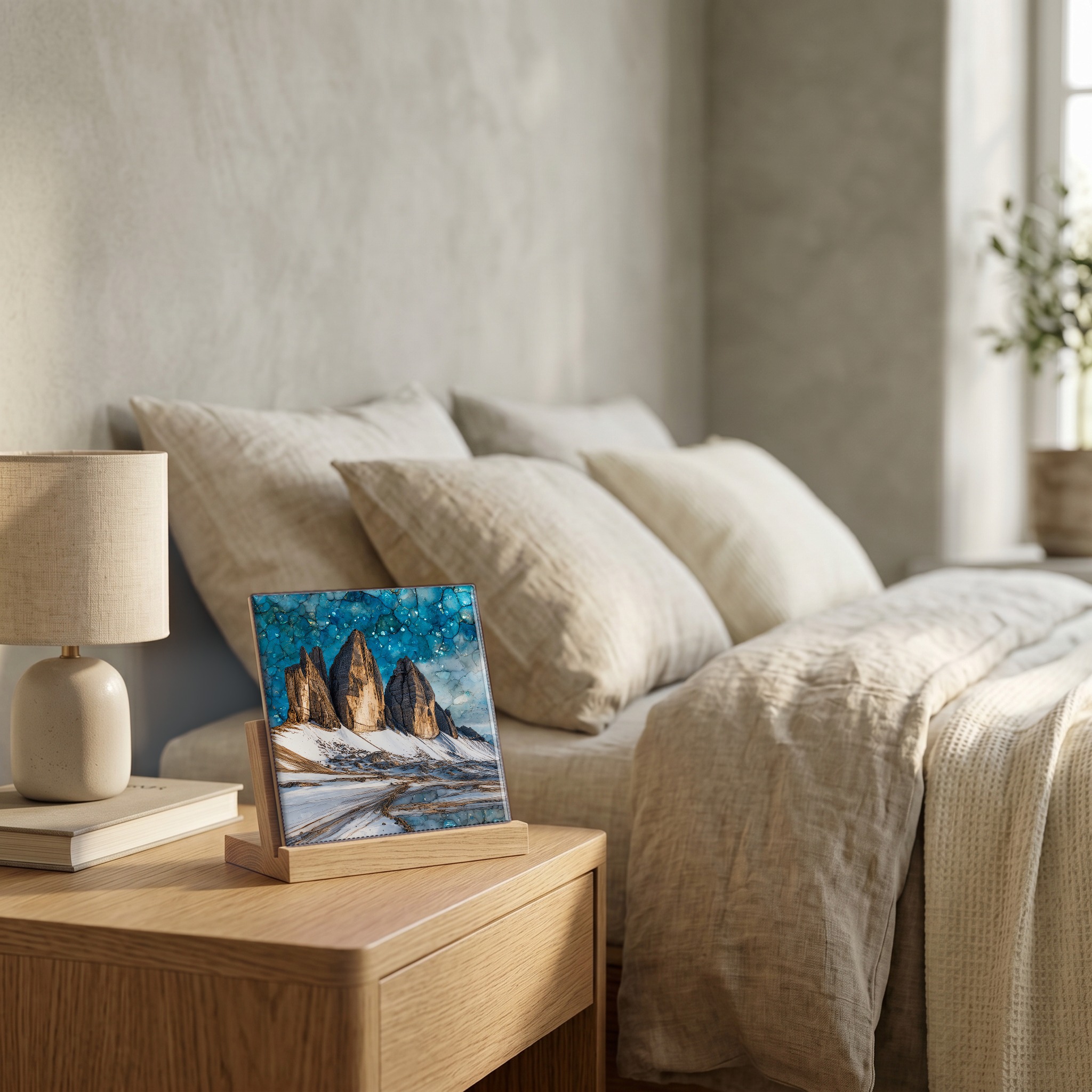
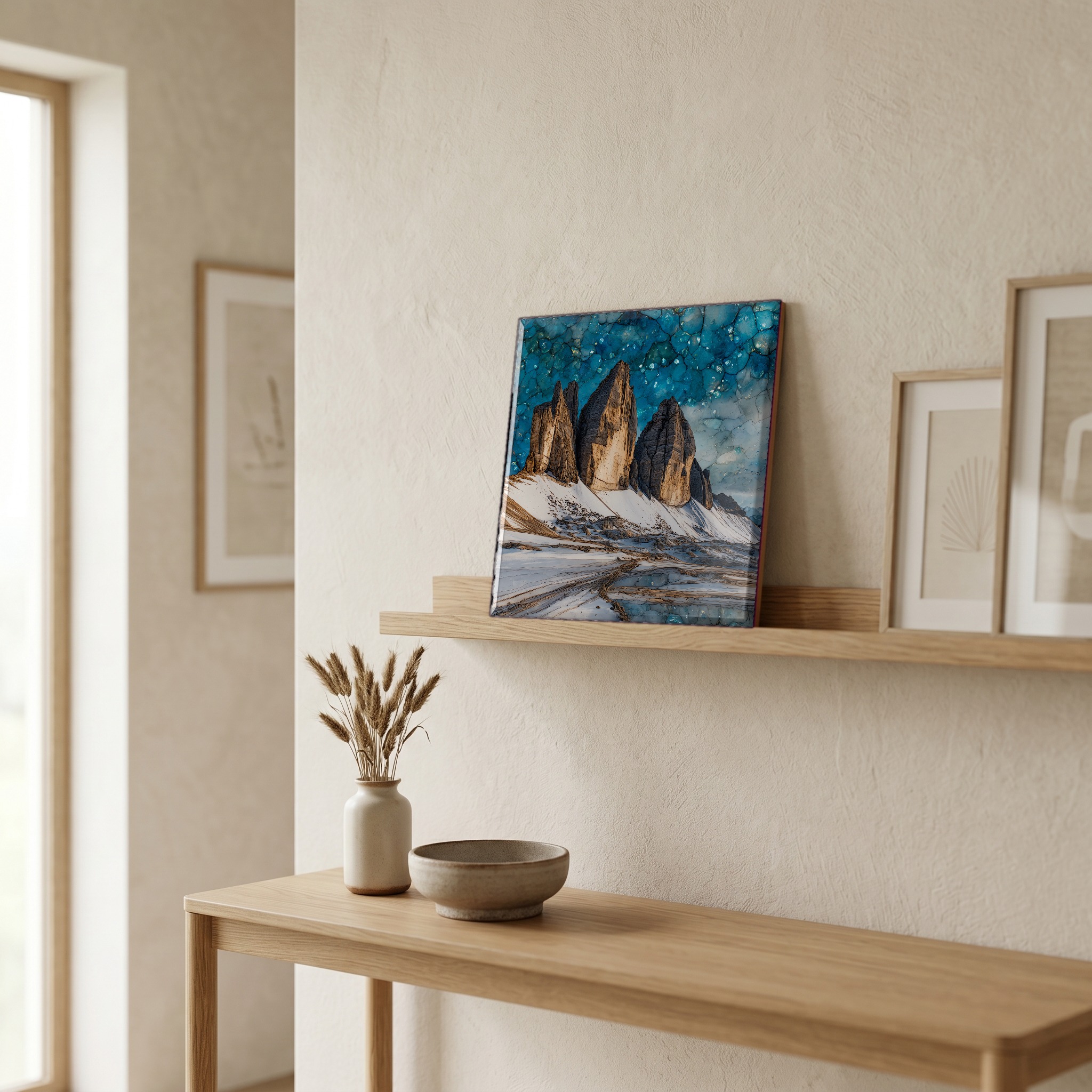
“Five limestone towers above the snowfields between Passo Falzarego and Passo Giau. In winter the Bai de Dones chairlift runs again, lifting skiers to Rifugio Scoiattoli, where the terrace looks straight across at Torre Grande. The towers were a front line in 1916; the open-air museum below them stays buried until June. The last light catches the stone rose, then plum, then gone.
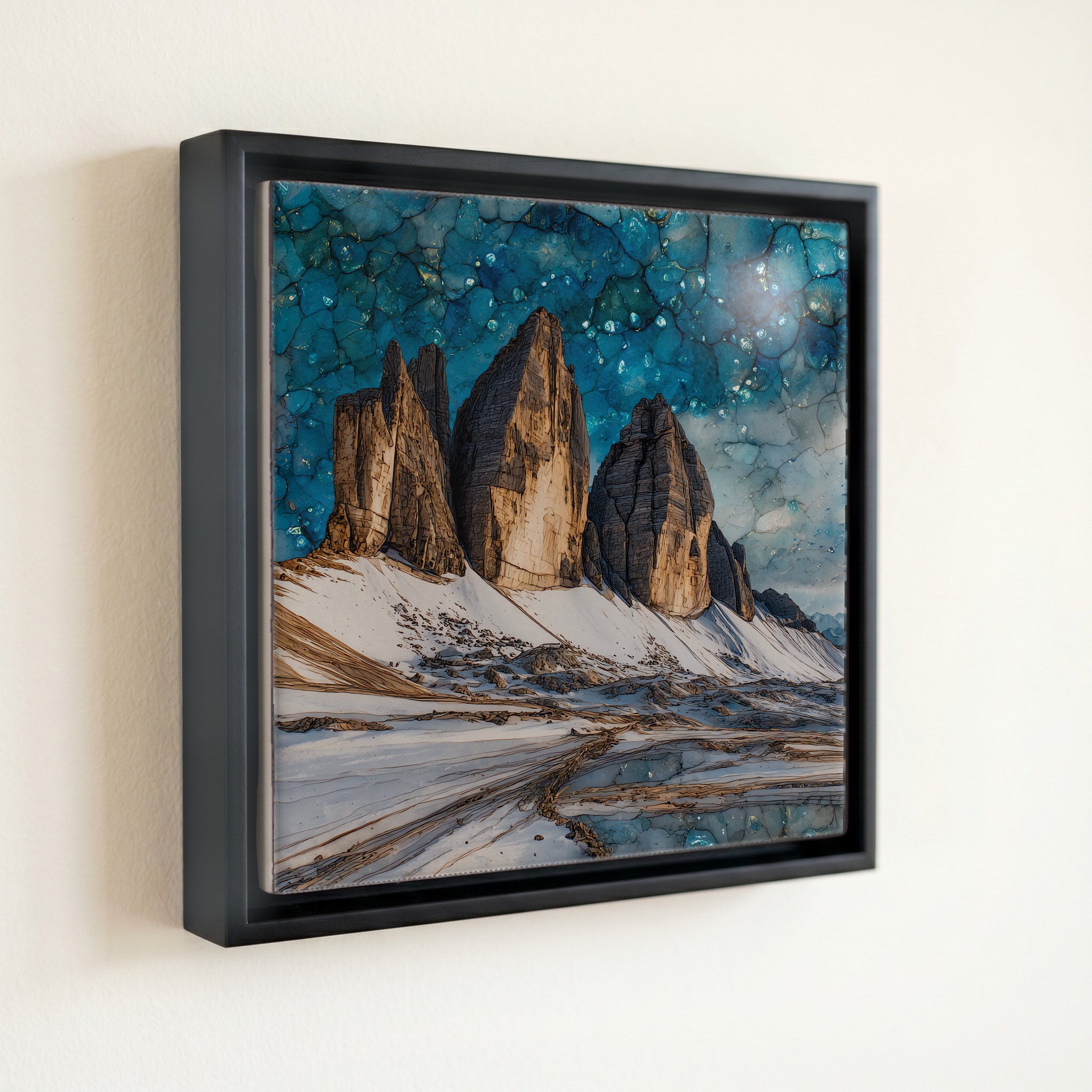
Cinque Torri in Winter, on ceramic.
Each tile is finished by hand in our Knoxville studio. Artwork is slowly infused into the ceramic surface under high heat and pressure, and rests beneath a thin glossy finish. The colour lives in the surface, not on top of it.
Pick any four 4-inch tiles — National Parks you've been to, a Smokies set, the four seasons of one place. $ for a set of , cork-backed, ready to live on the table.
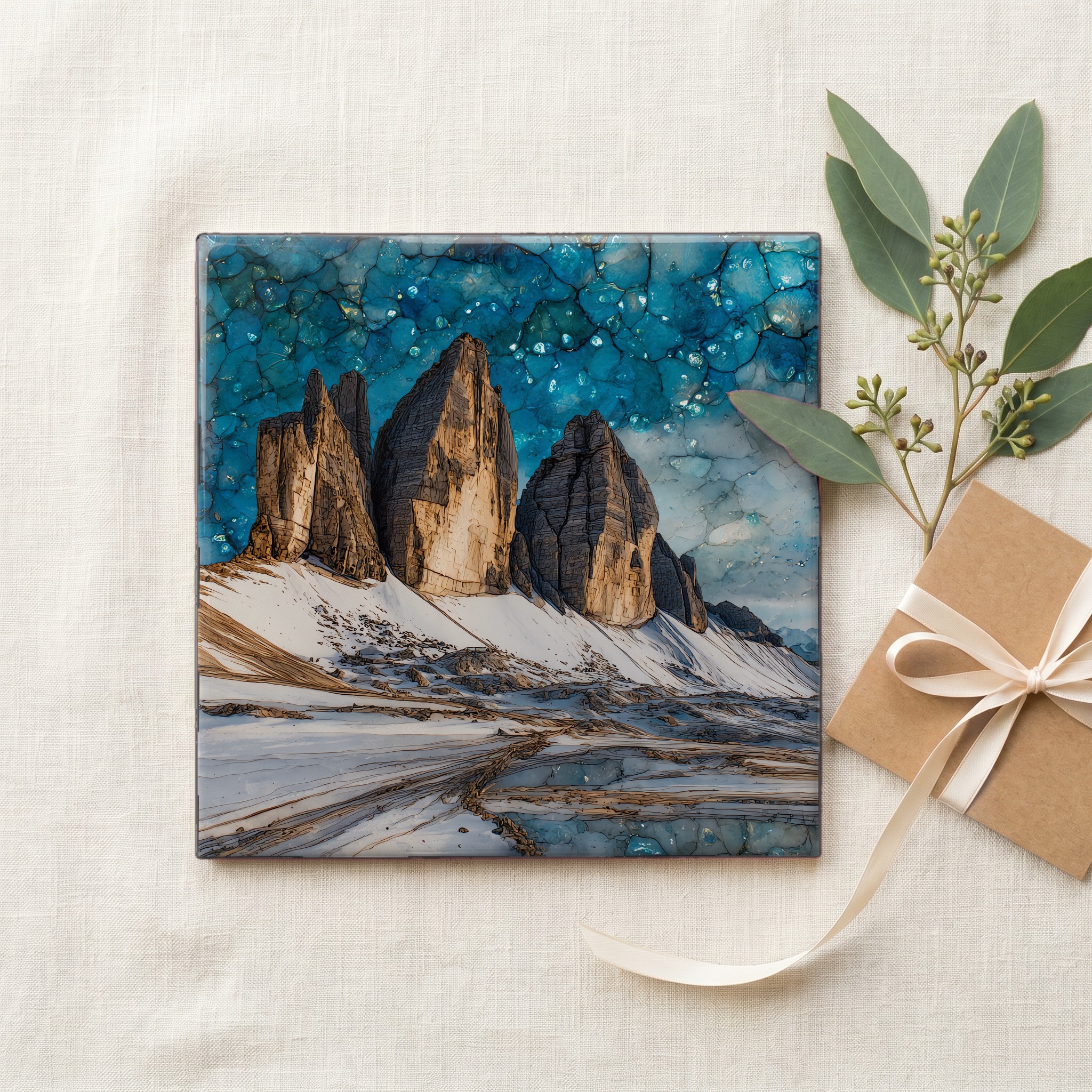
Each tile ships in a kraft box, tied with cream ribbon, with a handwritten note from the studio if you'd like to add one.
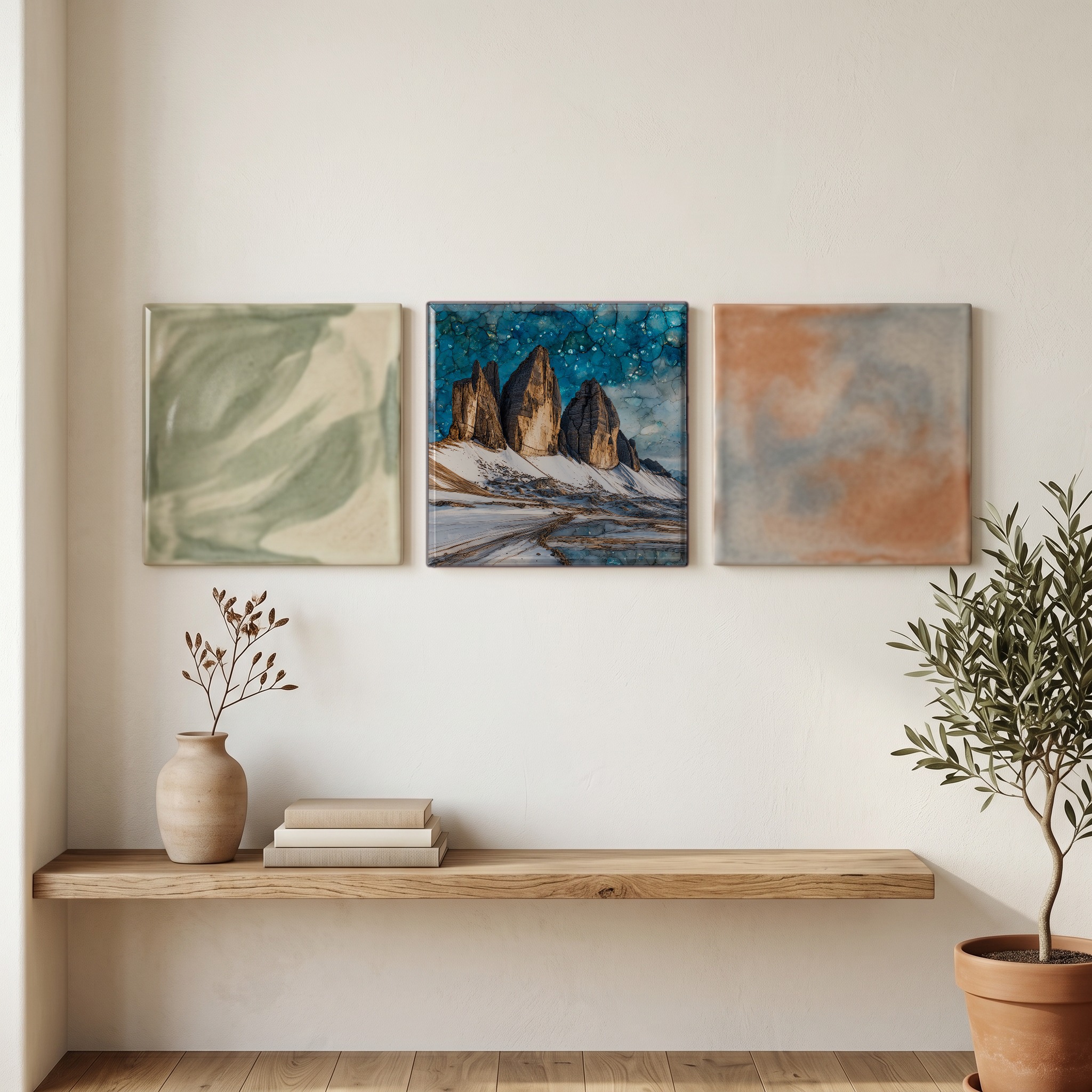
Three or five different vistas, hung together — a chapter of places you've been, or want to go.
The place, in three passes.
The Cinque Torri are a cluster of five limestone towers in the Ampezzo Dolomites, above the town of Cortina d'Ampezzo in the Veneto region of northern Italy. Torre Grande, the highest of the group, rises to 2,361 metres. The towers stand on a saddle between Passo Falzarego and Passo Giau, part of the wider Nuvolau group, and were inscribed within the UNESCO World Heritage Site of the Dolomites in 2009. In summer the towers anchor a popular via ferrata and climbing area; in winter the same saddle becomes a section of the Dolomiti Superski network, reached from Bai de Dones by chairlift to Rifugio Scoiattoli.
The Dolomites are built from a pale dolomitic limestone laid down on tropical reefs in the Triassic, more than 200 million years ago. At dawn and again at sunset the stone catches a low-angle sun and reads gold, then rose, then a deep plum, an effect the Ladin-speaking villages of the Ampezzo and Badia valleys call *enrosadira*. The effect is sharpest in winter, when the snow at the foot of the towers throws warm reflected light back onto the limestone faces and the contrast between cold field and warm stone holds for several minutes after the sun has gone.
The Cinque Torri ski sector opens with the rest of Cortina's slopes in early December and runs until mid-April, weather permitting. The Bai de Dones chairlift carries skiers and walkers from about 1,889 metres to the terrace of Rifugio Scoiattoli at roughly 2,255 metres, directly under Torre Grande. The open-air WWI museum, restored Italian front-line trenches from 1915 to 1917, closes under snow each November and reopens in June. Winter visitors who want the towers without skis can take the lift one way and walk a flat loop around the base in about an hour.