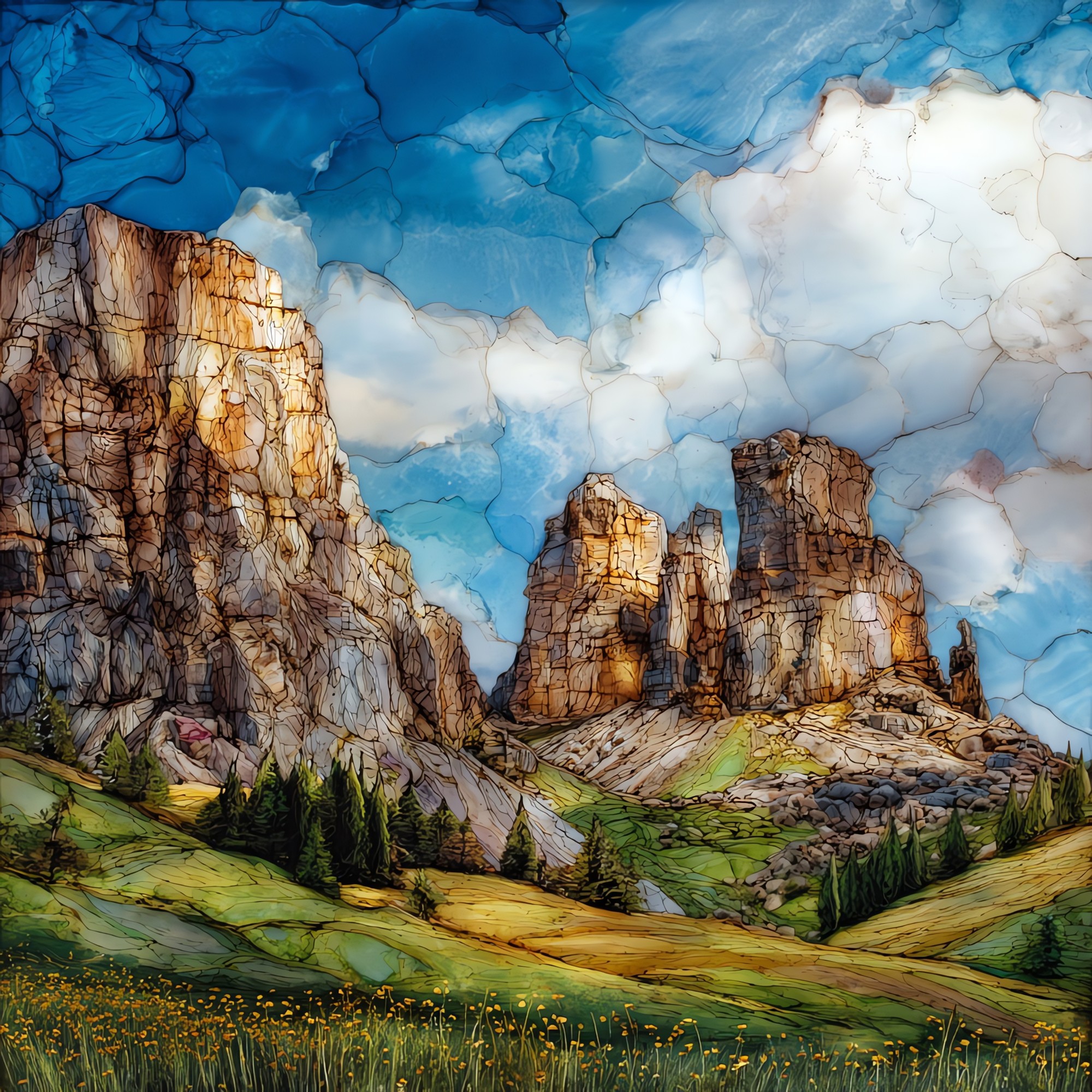
Cinque Torri Summer
— the long gold a summer dusk leaves on pale stone.
Not only on a wall.
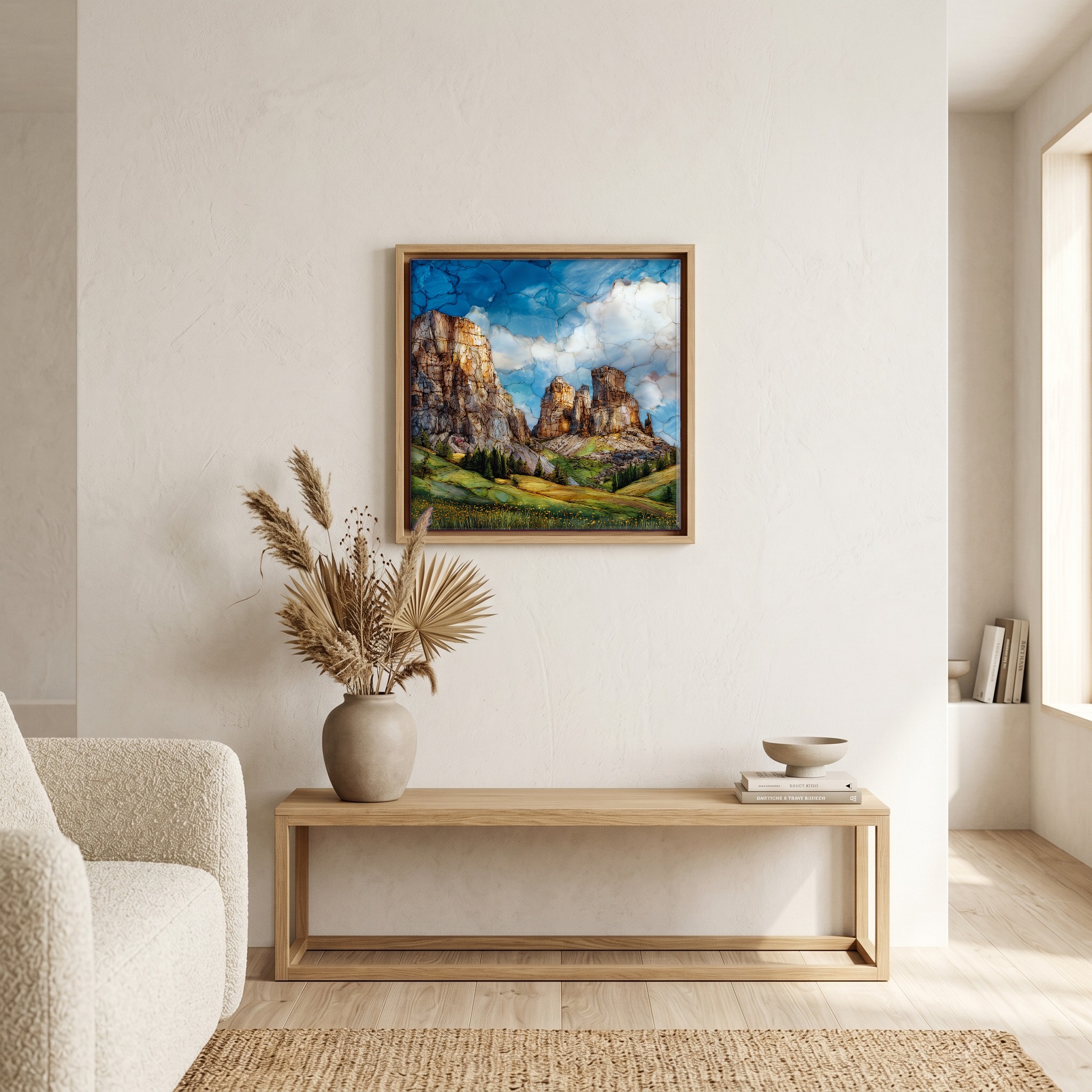
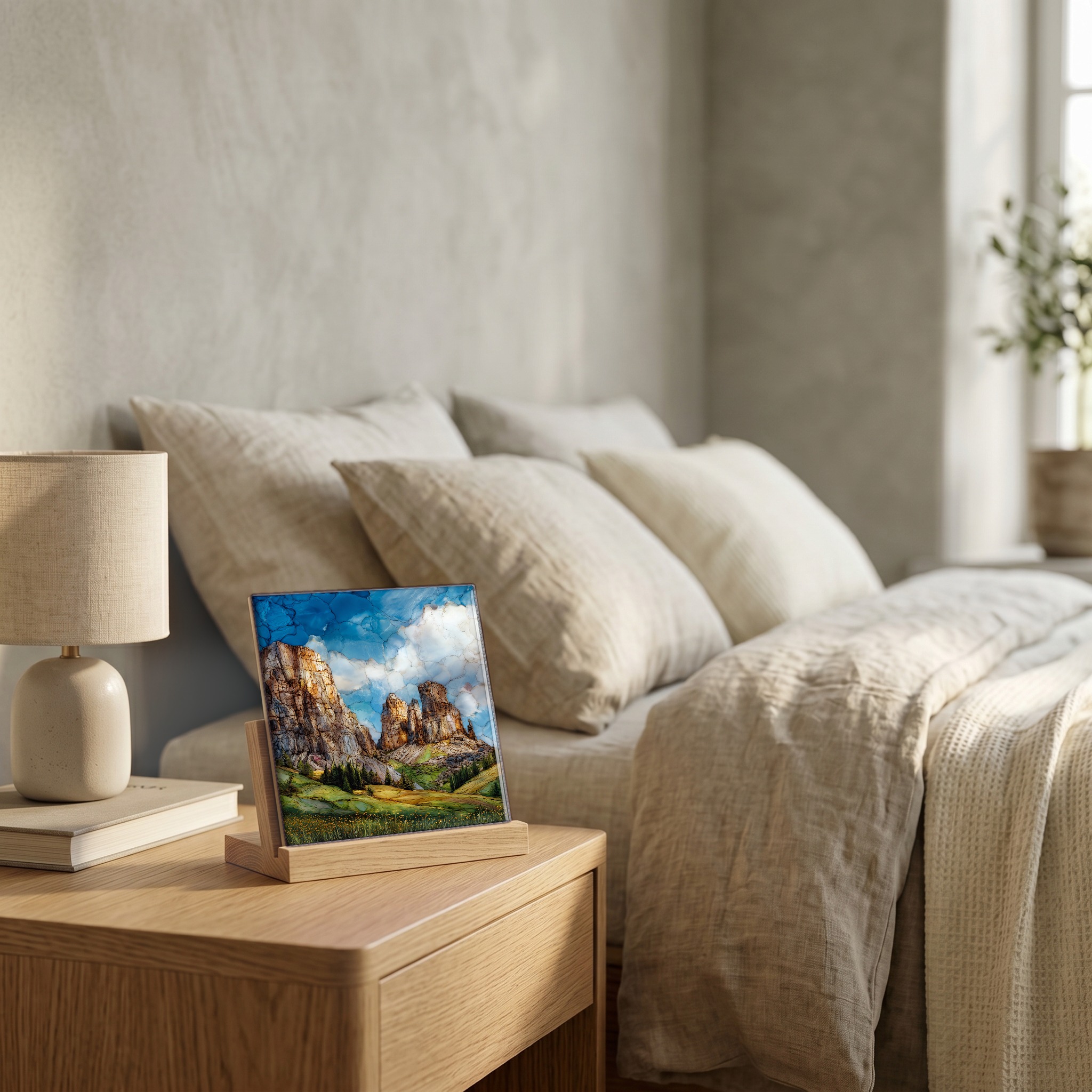
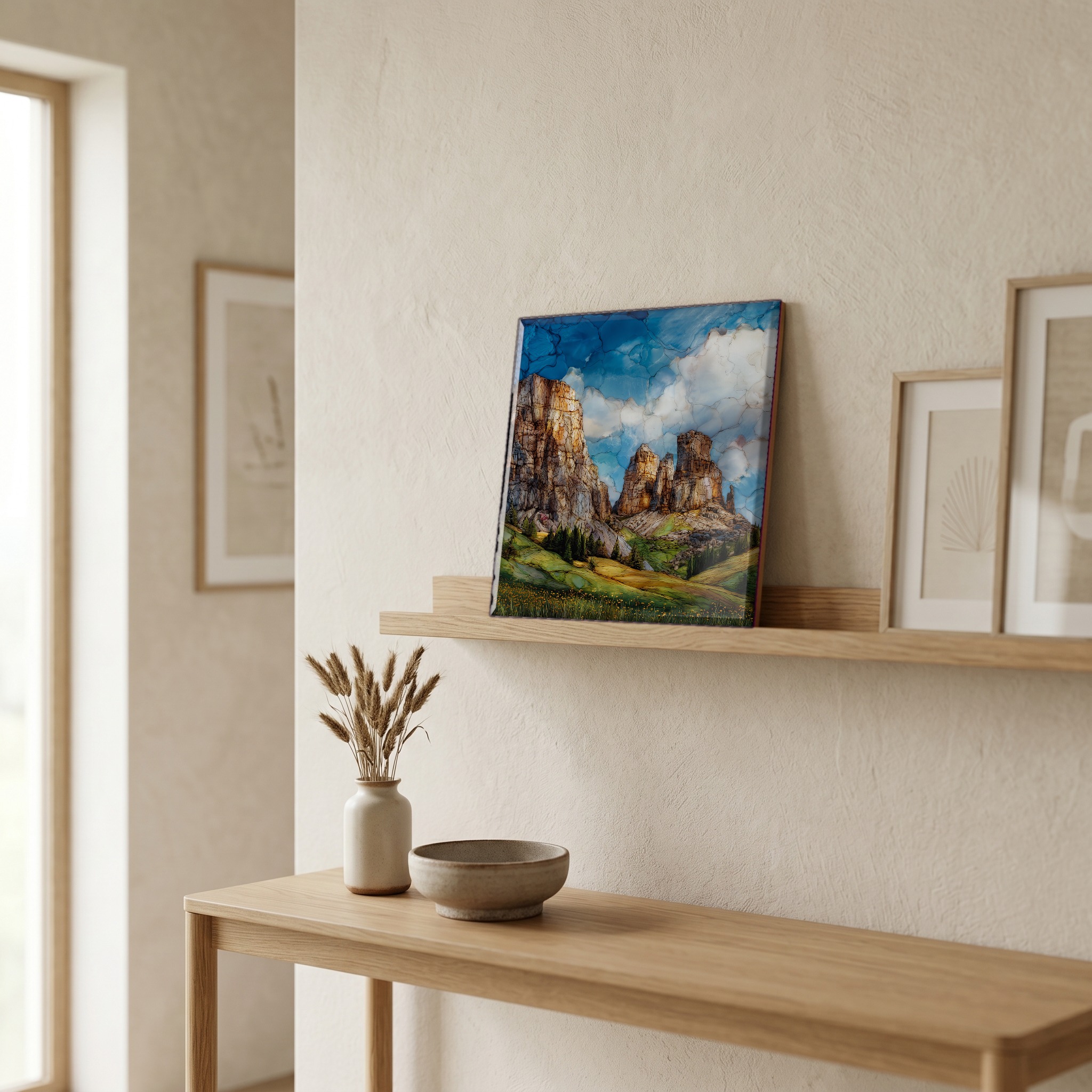
“Five grey dolomite towers above a meadow southwest of Cortina. In summer the chairlift runs from Bai de Dones, the wildflowers come up at the base, and the trenches the Italian and Austro-Hungarian armies cut into this rock a century ago are open to walk. Climbers have worked these faces for generations; the hut at the top of the lift is named for the Scoiattoli di Cortina. Late in the day the pale stone holds the warm light longer than the meadow does. People come down off the loop slow, and nobody hurries the last hour.
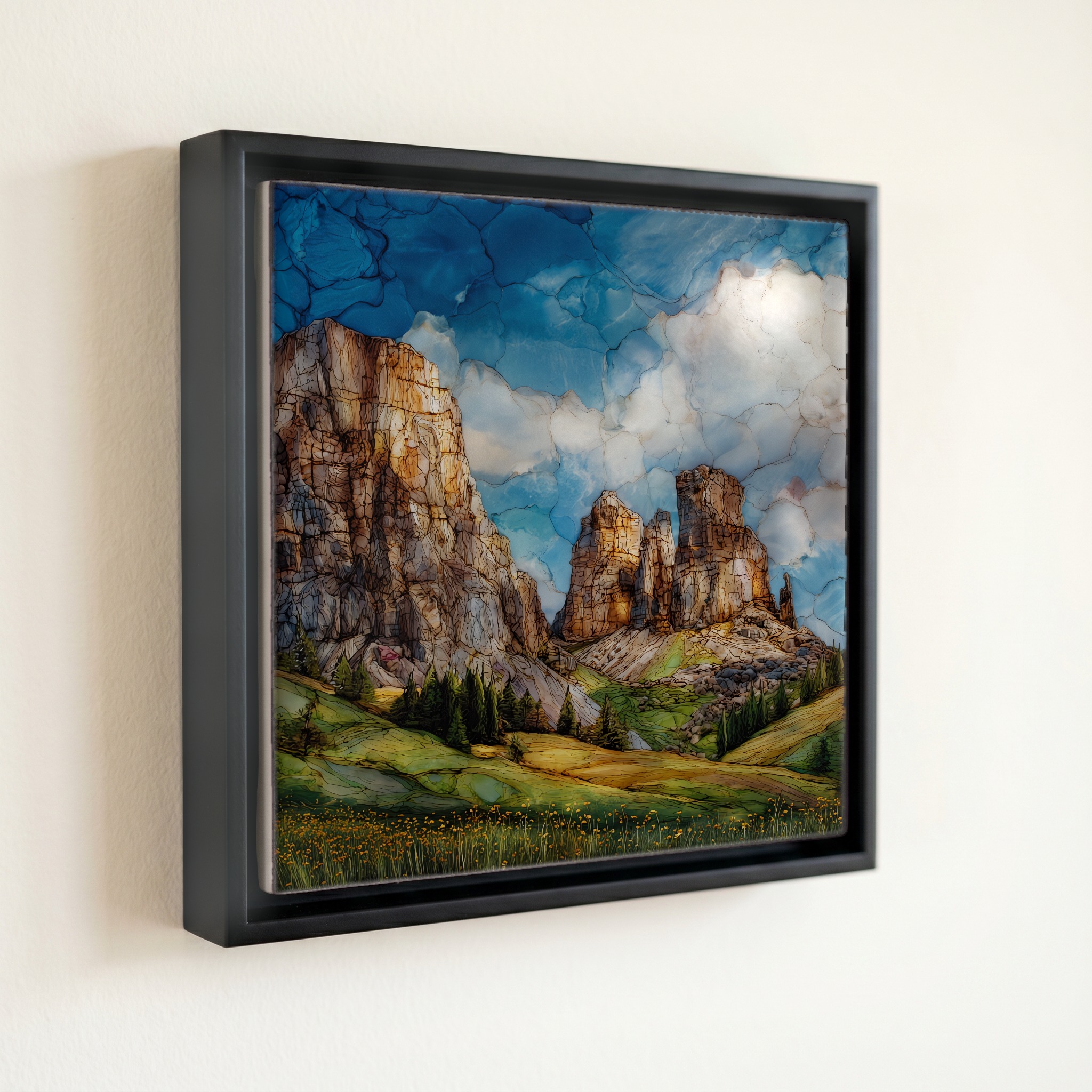
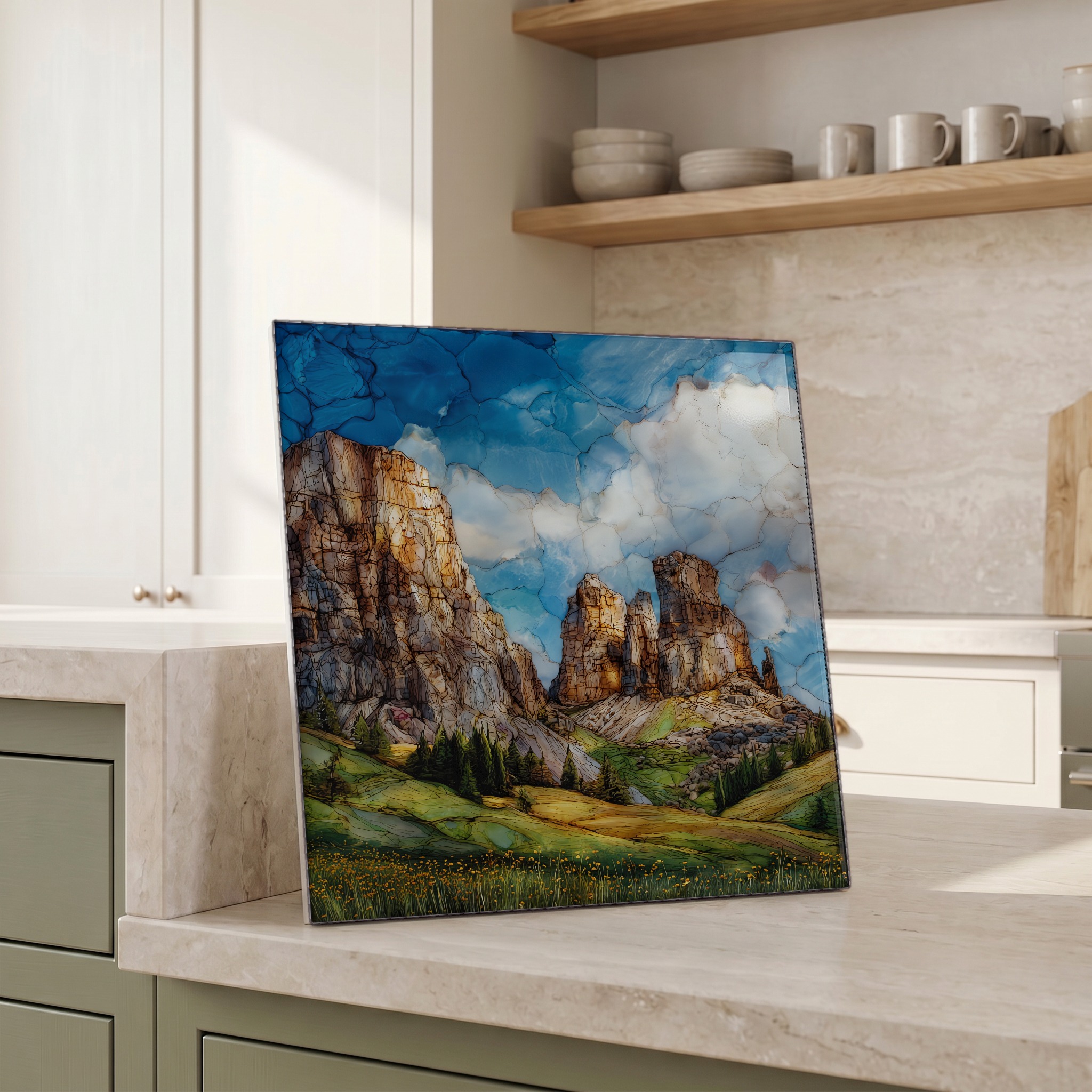
Cinque Torri Summer, on ceramic.
Each tile is finished by hand in our Knoxville studio. Artwork is slowly infused into the ceramic surface under high heat and pressure, and rests beneath a thin glossy finish. The colour lives in the surface, not on top of it.
Pick any four 4-inch tiles — National Parks you've been to, a Smokies set, the four seasons of one place. $ for a set of , cork-backed, ready to live on the table.
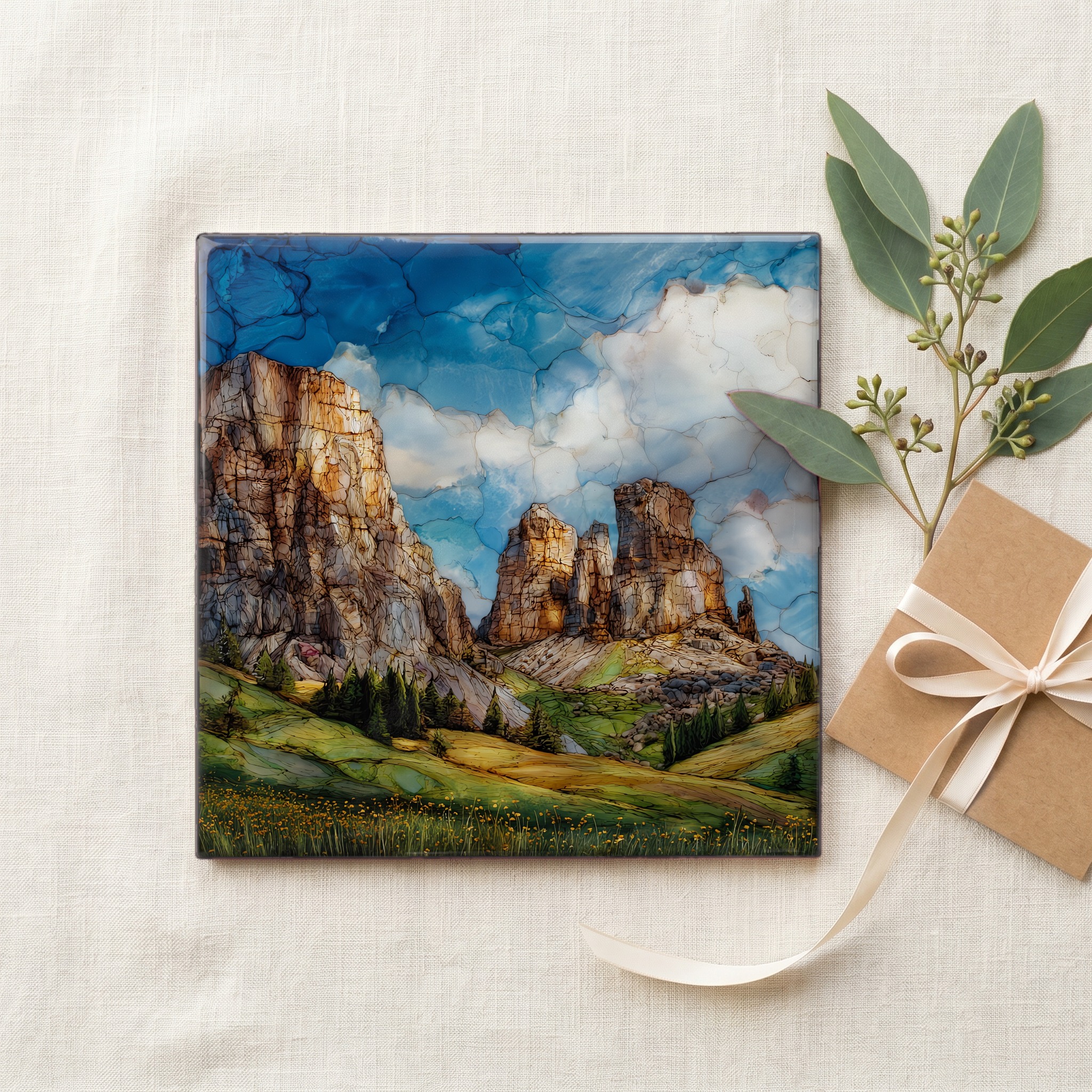
Each tile ships in a kraft box, tied with cream ribbon, with a handwritten note from the studio if you'd like to add one.
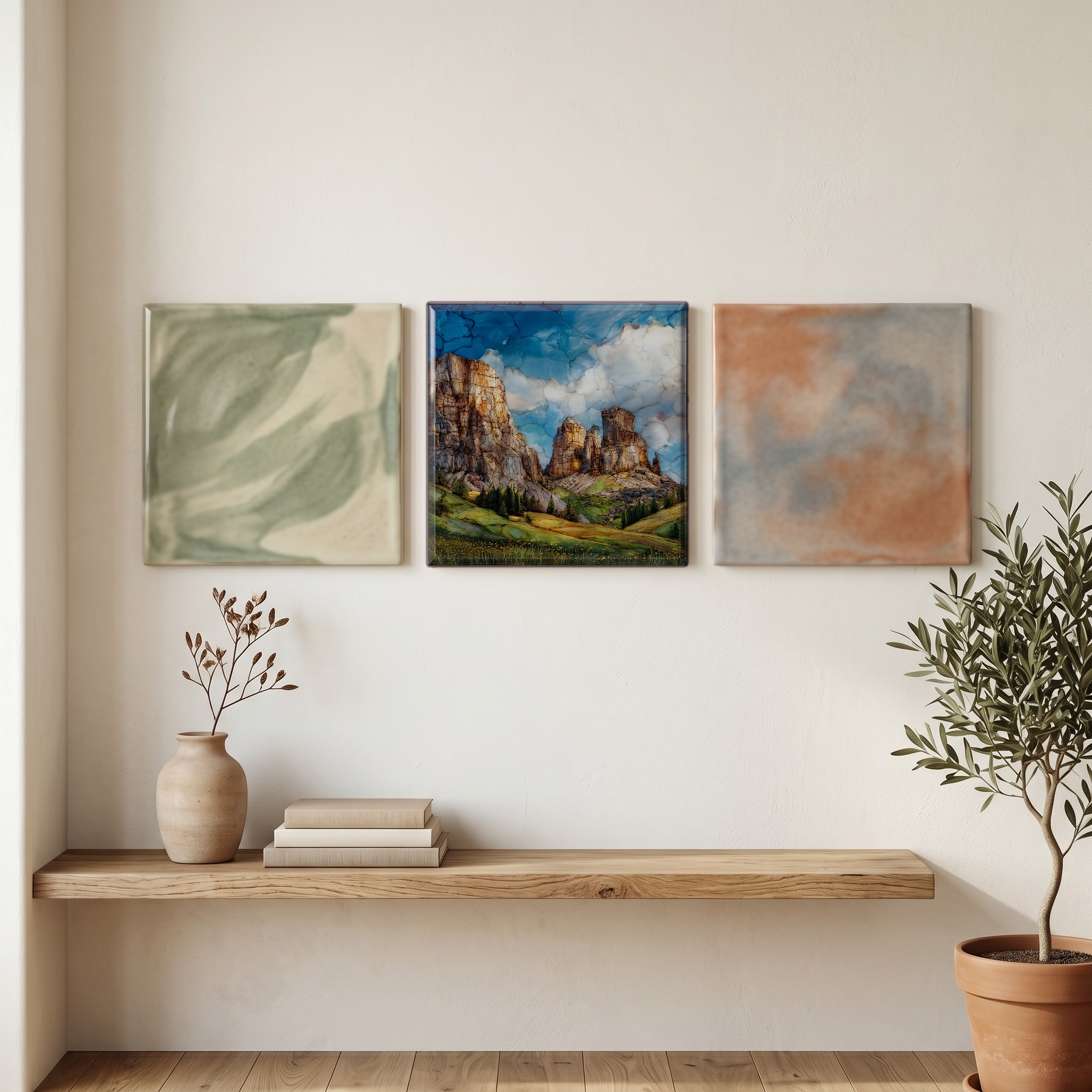
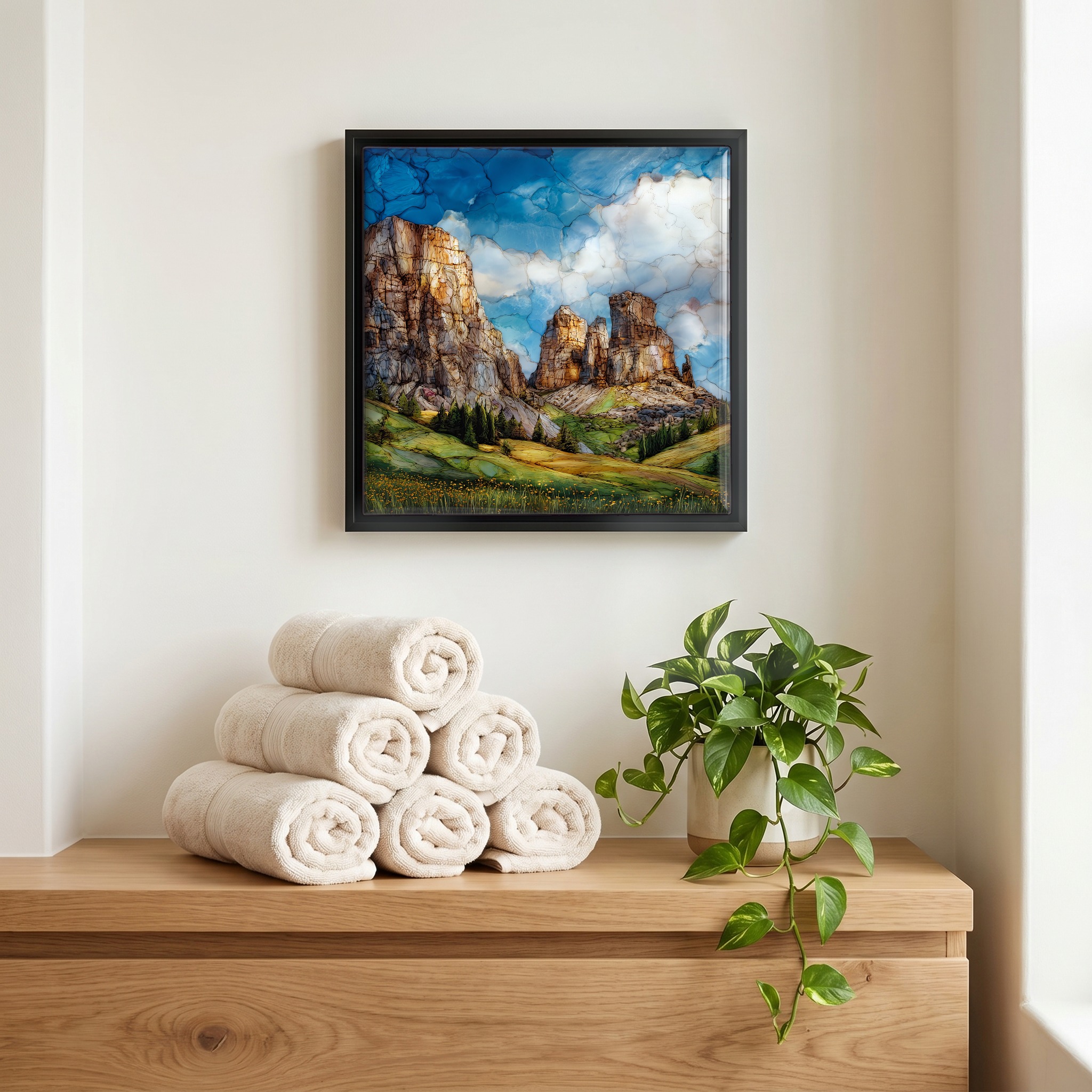
Three or five different vistas, hung together — a chapter of places you've been, or want to go.
The place, in three passes.
Cinque Torri, the Five Towers, are pinnacles of pale grey dolomite rising to 2,361 metres at Torre Grande, the tallest of the group, southwest of Cortina d'Ampezzo in the province of Belluno, Veneto. They stand in the Nuvolau group of the Eastern Dolomites, part of the wider range named a UNESCO World Heritage Site in 2009. The towers rise from a high meadow reached on foot or by the chairlift from Bai de Dones, on the road to Passo Falzarego. They were a First World War front line, and the trenches and gun positions the Italian and Austro-Hungarian armies cut into the rock have been restored as an open-air museum that is free to walk.
Dolomite is a pale carbonate rock, and at the close of a clear day it does what the locals call enrosadira: the grey faces warm to rose and amber as the sun drops, then fade to ash. The colour holds for only a few minutes, strongest in the half hour before the light leaves the western ridgelines. Cinque Torri opens onto meadow to the south and west, so the towers keep this colour cleanly while the grass below has gone to shadow. Walkers climb to Rifugio Scoiattoli, at 2,255 metres, to watch it, and in summer the long evenings push the light past nine o'clock, later than at almost any other time of year.
The chairlift from Bai de Dones runs through the summer, roughly mid-June to early October, and the open-air museum can be walked from about May once the snow has cleared the trench paths. July and August bring the warmest weather and the largest crowds, and the parking area at Bai de Dones often fills by half past nine in August. The loop linking Rifugio Cinque Torri, at 2,137 metres, Rifugio Scoiattoli, and the towers takes most walkers two to three hours, longer with the trench routes added. By late September the meadow grass turns and the first larch gold comes in below Averau, and the lift winds down for the year.