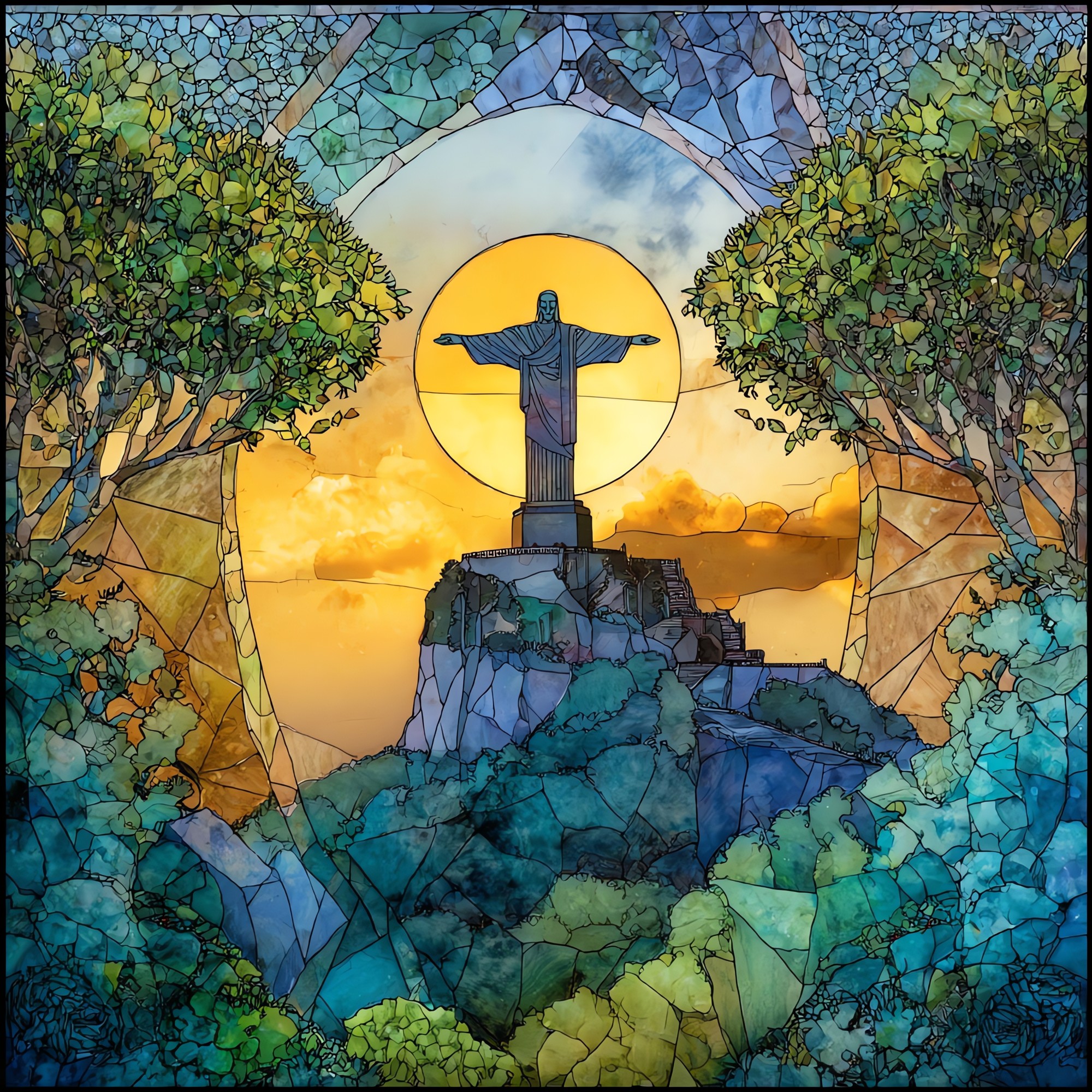
Christ the Redeemer of Maratea
— the figure that turns from the sea.
Not only on a wall.
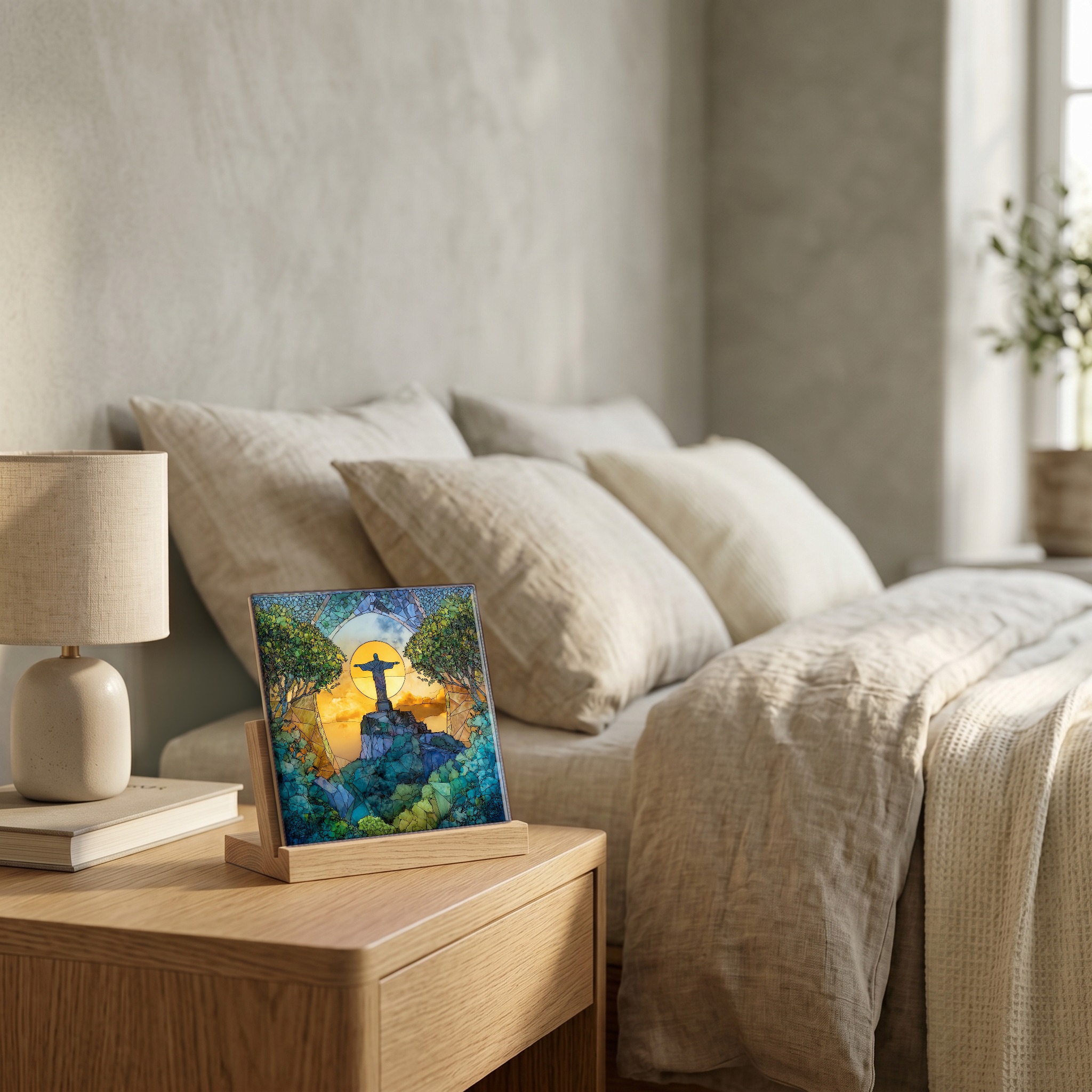
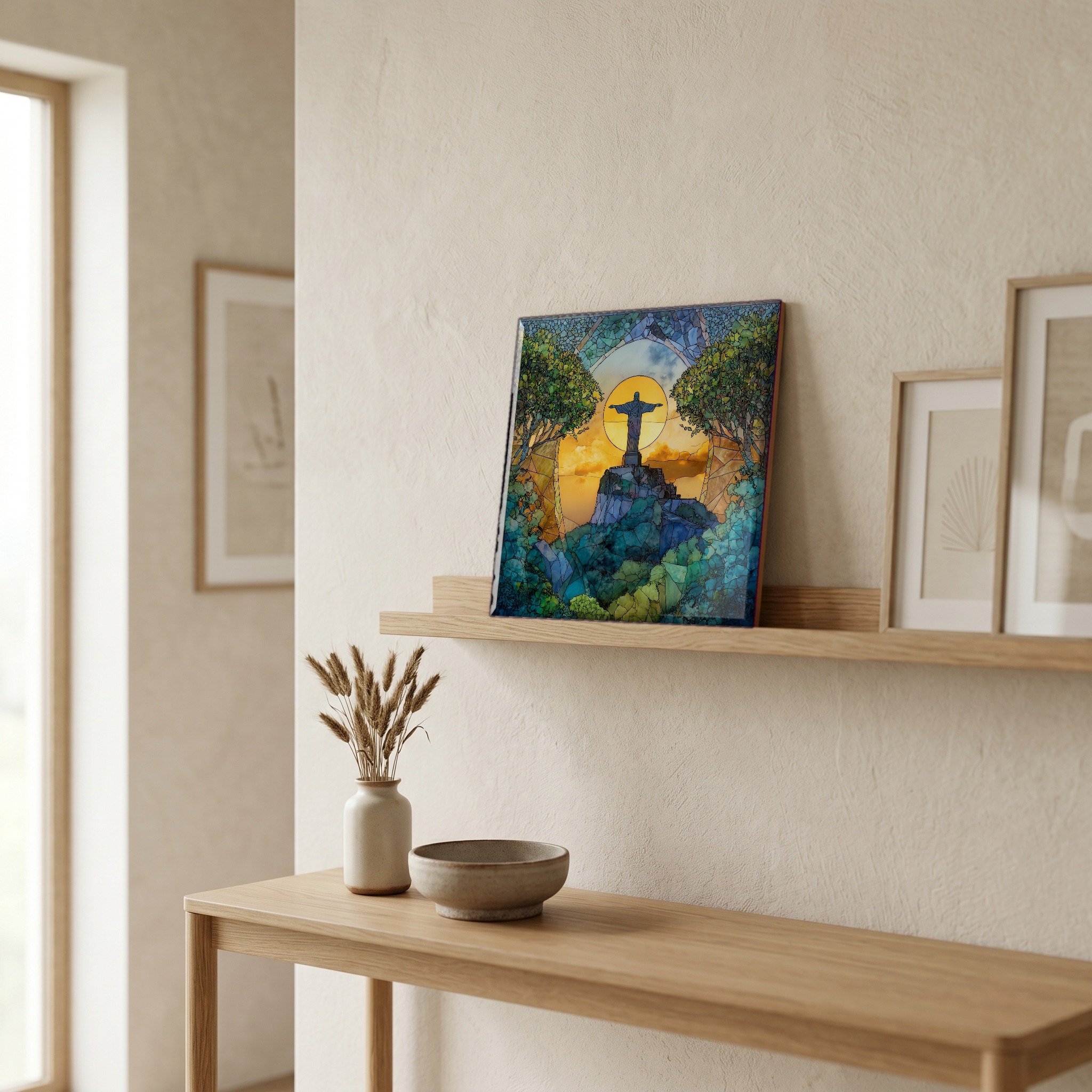
“A 21-metre Christ above a Tyrrhenian town of 44 churches. The figure stands on Monte San Biagio with its arms held open, turned inland toward a small medieval basilica rather than out to the sea below. Bruno Innocenti sculpted it in the mid-1960s, commissioned by a textile baron from Biella who came south and never quite left. From the village of Maratea you climb a switchback road to reach it. People come at evening, when the sun is lower and the Gulf of Policastro turns the colour of pewter.
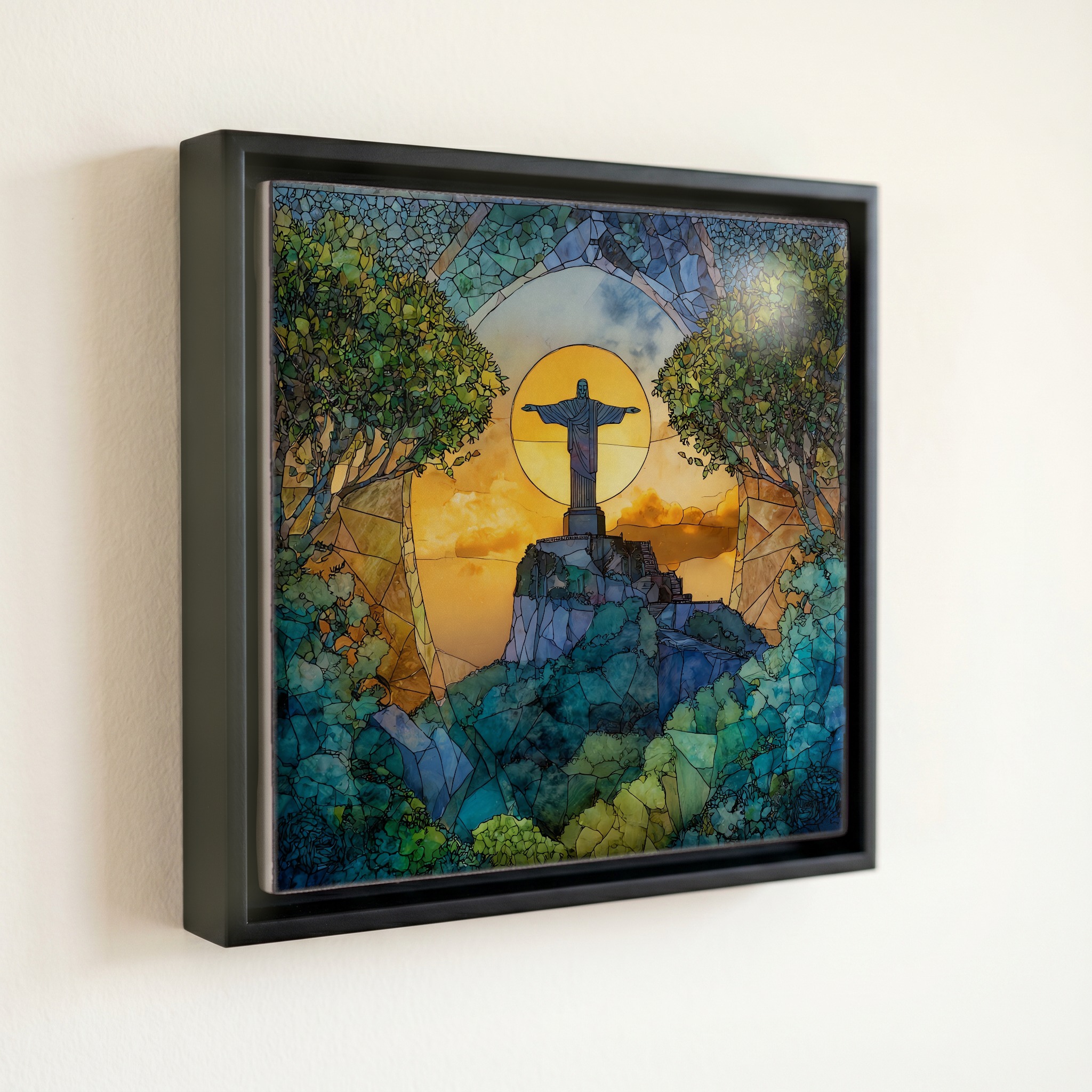
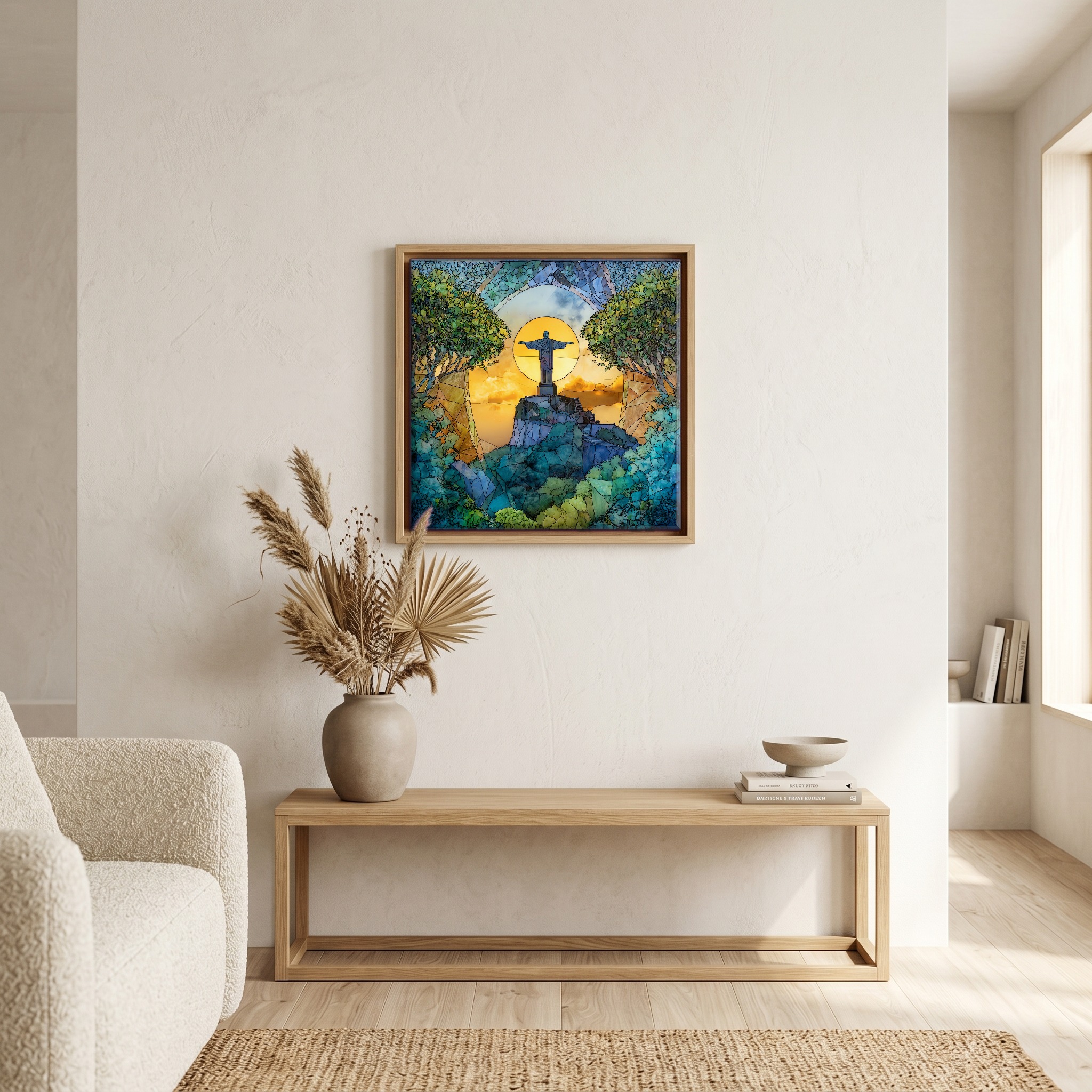
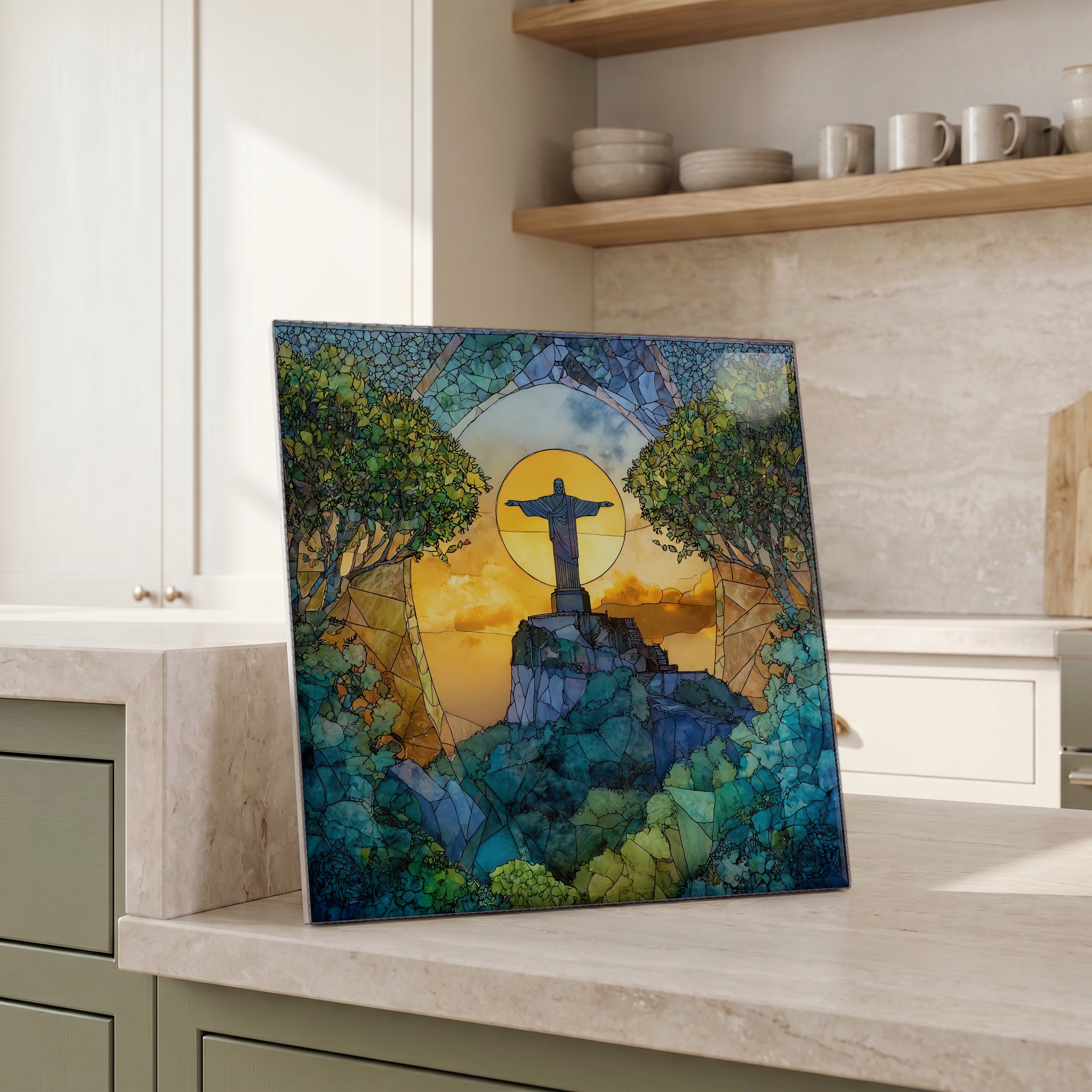
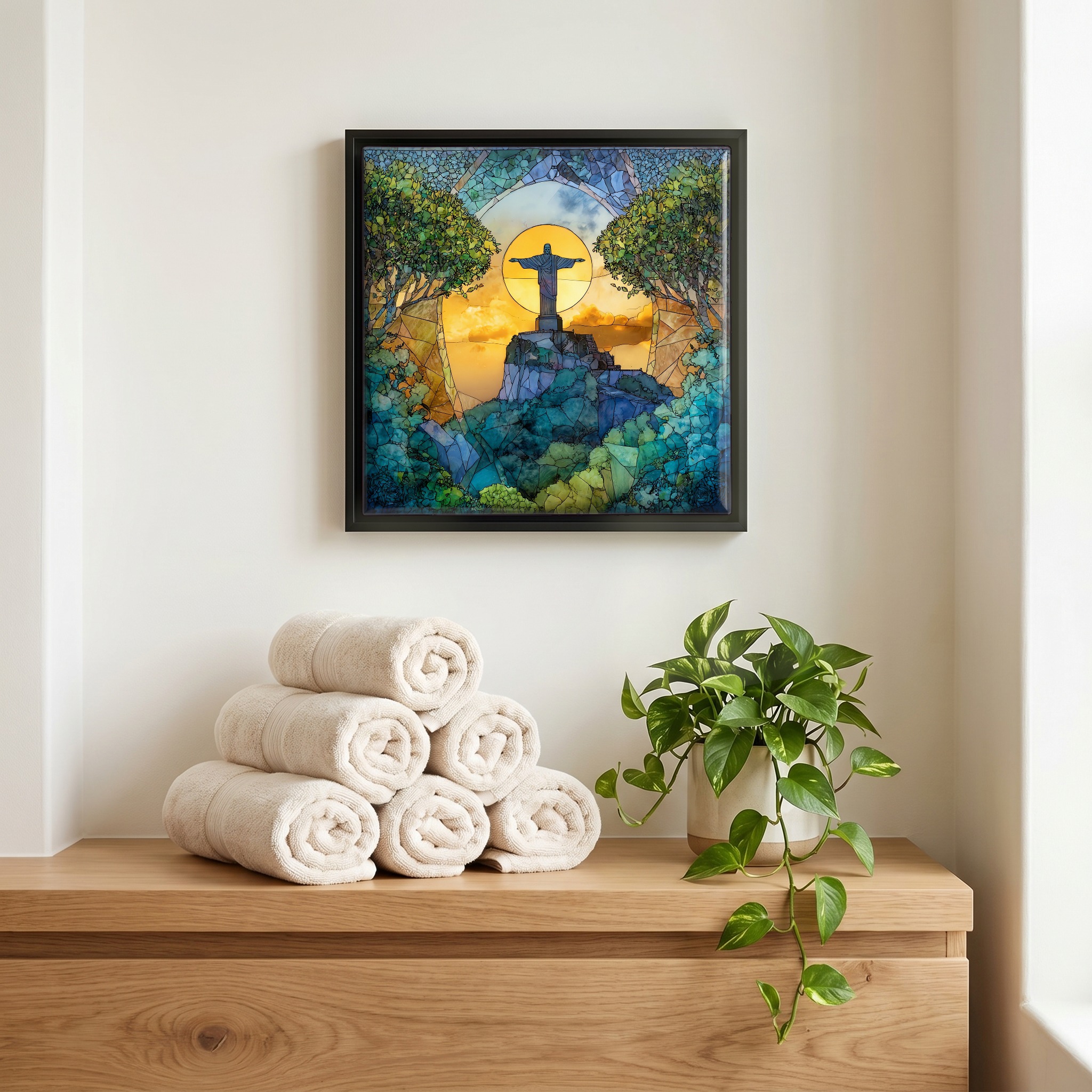
Christ the Redeemer of Maratea, on ceramic.
Each tile is finished by hand in our Knoxville studio. Artwork is slowly infused into the ceramic surface under high heat and pressure, and rests beneath a thin glossy finish. The colour lives in the surface, not on top of it.
Pick any four 4-inch tiles — National Parks you've been to, a Smokies set, the four seasons of one place. $ for a set of , cork-backed, ready to live on the table.
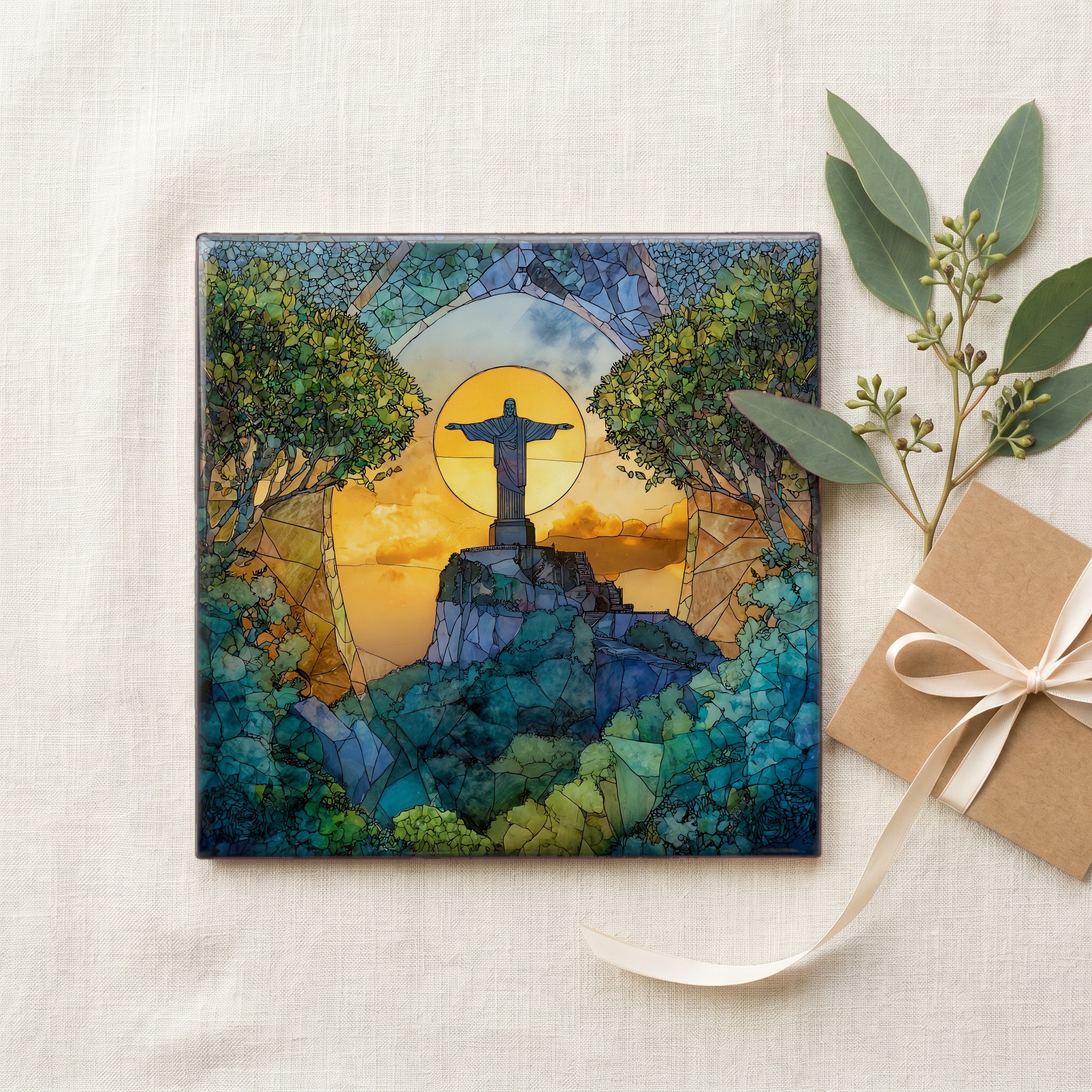
Each tile ships in a kraft box, tied with cream ribbon, with a handwritten note from the studio if you'd like to add one.
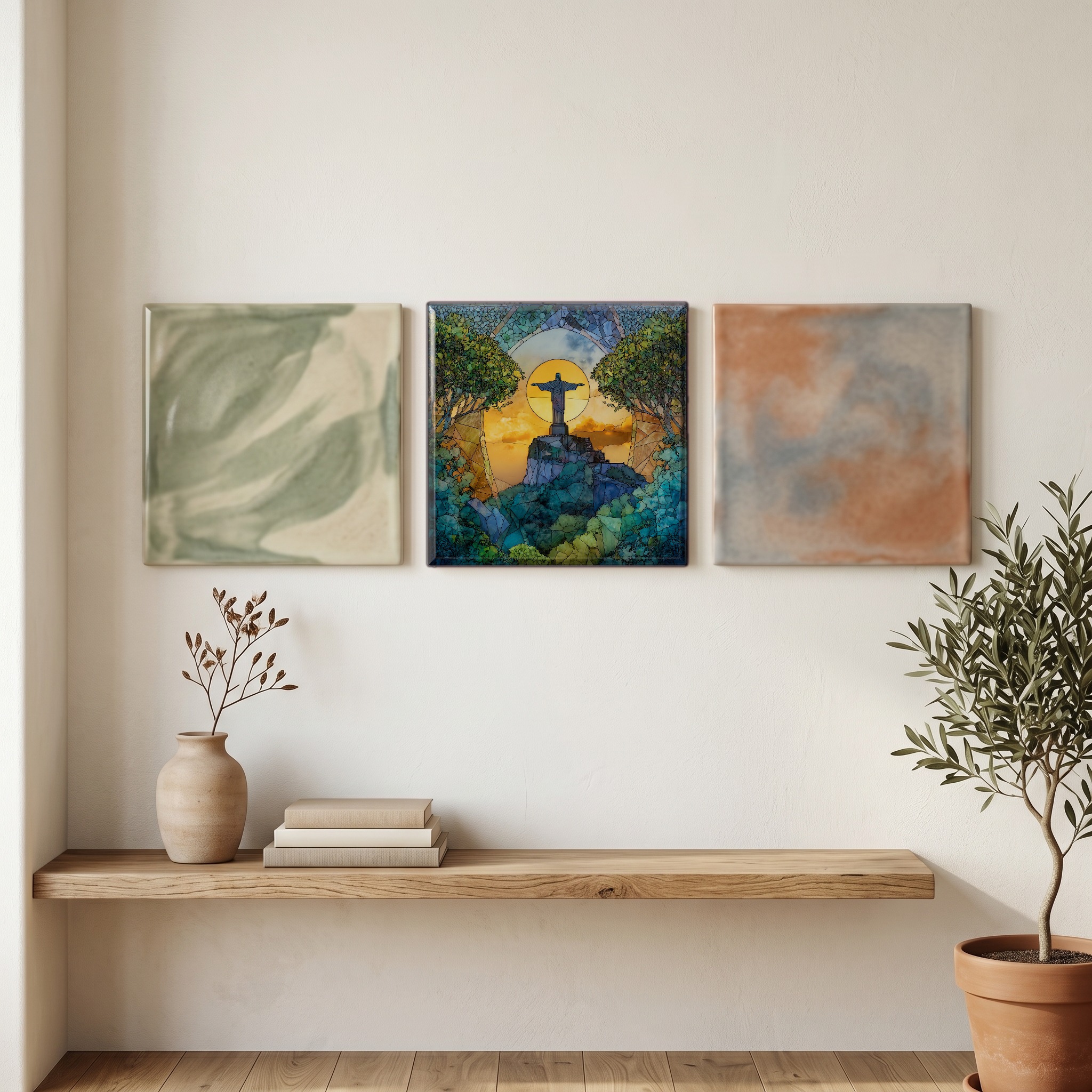
Three or five different vistas, hung together — a chapter of places you've been, or want to go.
The place, in three passes.
The Christ the Redeemer of Maratea stands at the summit of Monte San Biagio, a 644-metre hill on the Tyrrhenian coast of southern Basilicata, in the province of Potenza. The statue is 21.2 metres tall with an arm span of 19 metres, ranking among the tallest statues of Christ in the world. It was sculpted by the Florentine artist Bruno Innocenti and installed in 1965, commissioned by Stefano Rivetti, a Biellese textile industrialist who had settled in Maratea. The summit is reached by a narrow hairpin road that climbs from the medieval borgo of Maratea Castello; the road ends at a parking area below the statue, with a short walk to the figure and the adjacent Basilica di San Biagio.
The figure is built from a steel armature covered in white concrete embedded with chips of Carrara marble, so the surface reads as pale stone from the gulf below without the dead weight of carved blocks. Bruno Innocenti (1906-1986) trained and taught at the Accademia di Belle Arti in Florence and worked across the postwar Italian sculpture revival; the Maratea Christ is his largest commission. The arms span 19 metres, and the figure is hollow inside, a structural decision that let it stand on a hilltop reachable by a single switchback road. Conservation work in recent years has cleaned and stabilised the surface after decades of Tyrrhenian salt and wind.
The summit is reached by a provincial road that climbs in tight hairpins from the medieval borgo of Maratea to roughly 644 metres in under five kilometres. The parking area below the statue is small and fills early in summer; many visitors come at first light or in the hour before sunset, when the Gulf of Policastro takes on its strongest colour and the road is quietest. Entry to the statue and the adjacent Basilica di San Biagio is free. The basilica, founded in the early Middle Ages and rebuilt across the centuries, is the reason Innocenti turned the Christ inland rather than out to the sea. The figure faces the church, not the gulf.