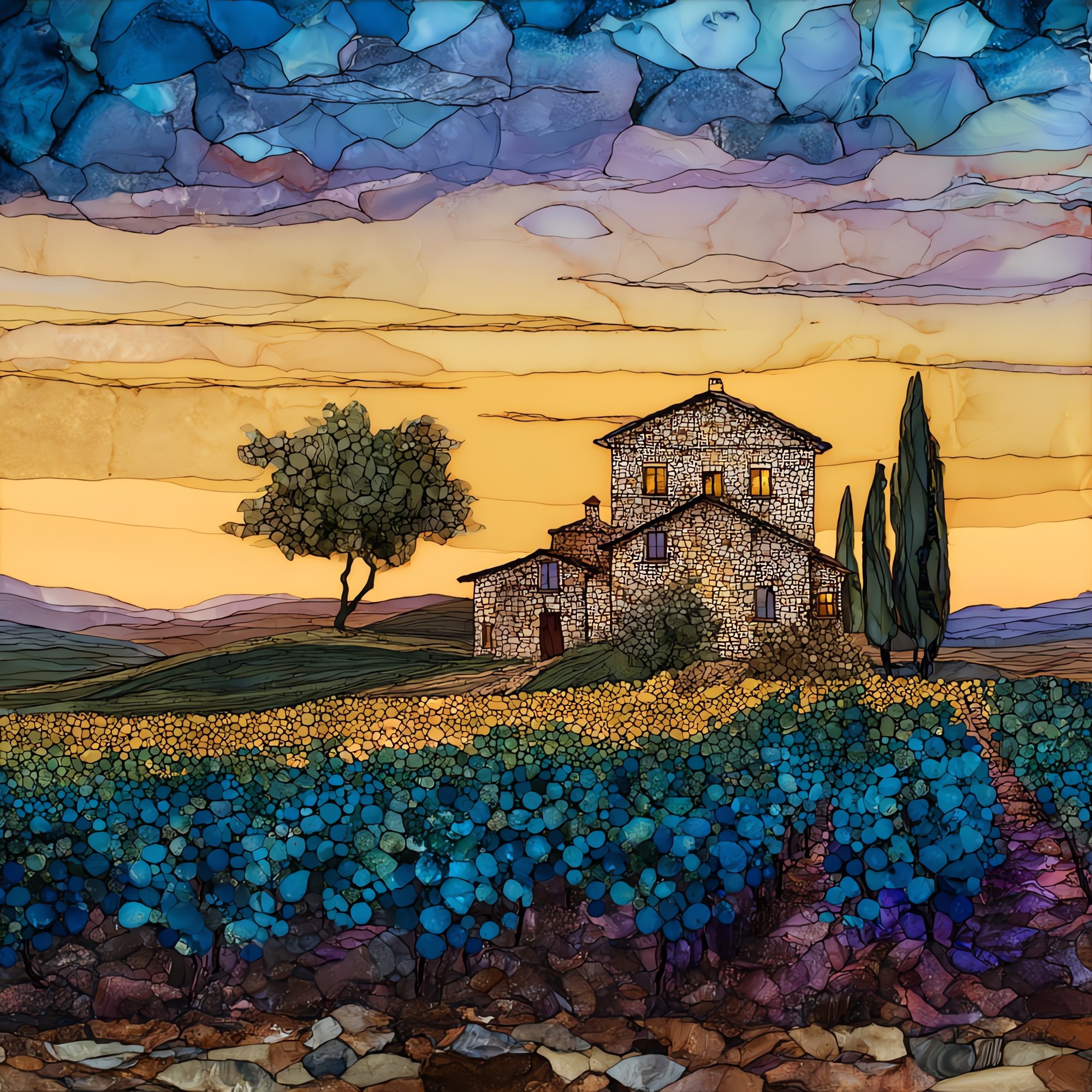
Chianti Vineyards
— the gold the cypress keeps after the light goes.
Not only on a wall.
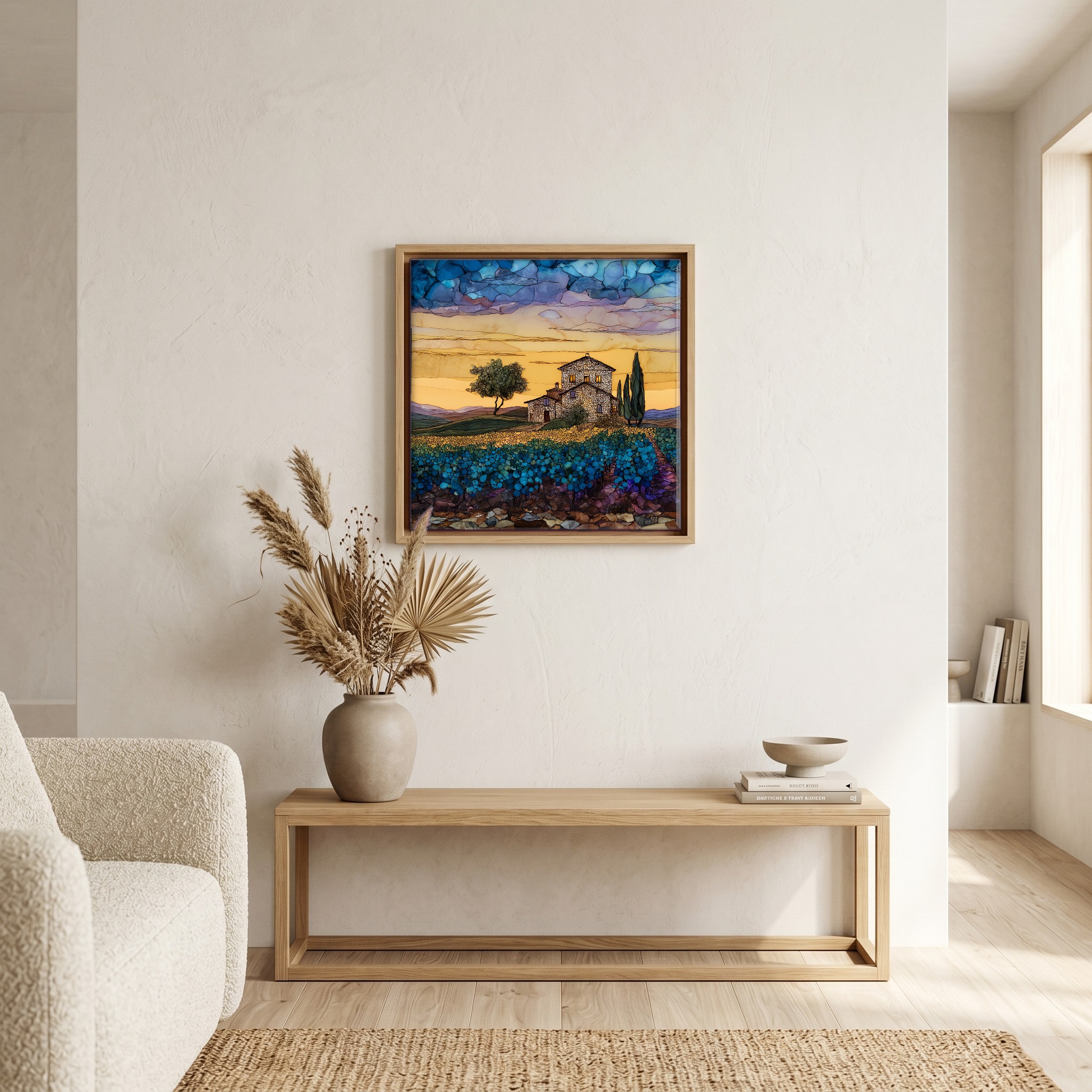
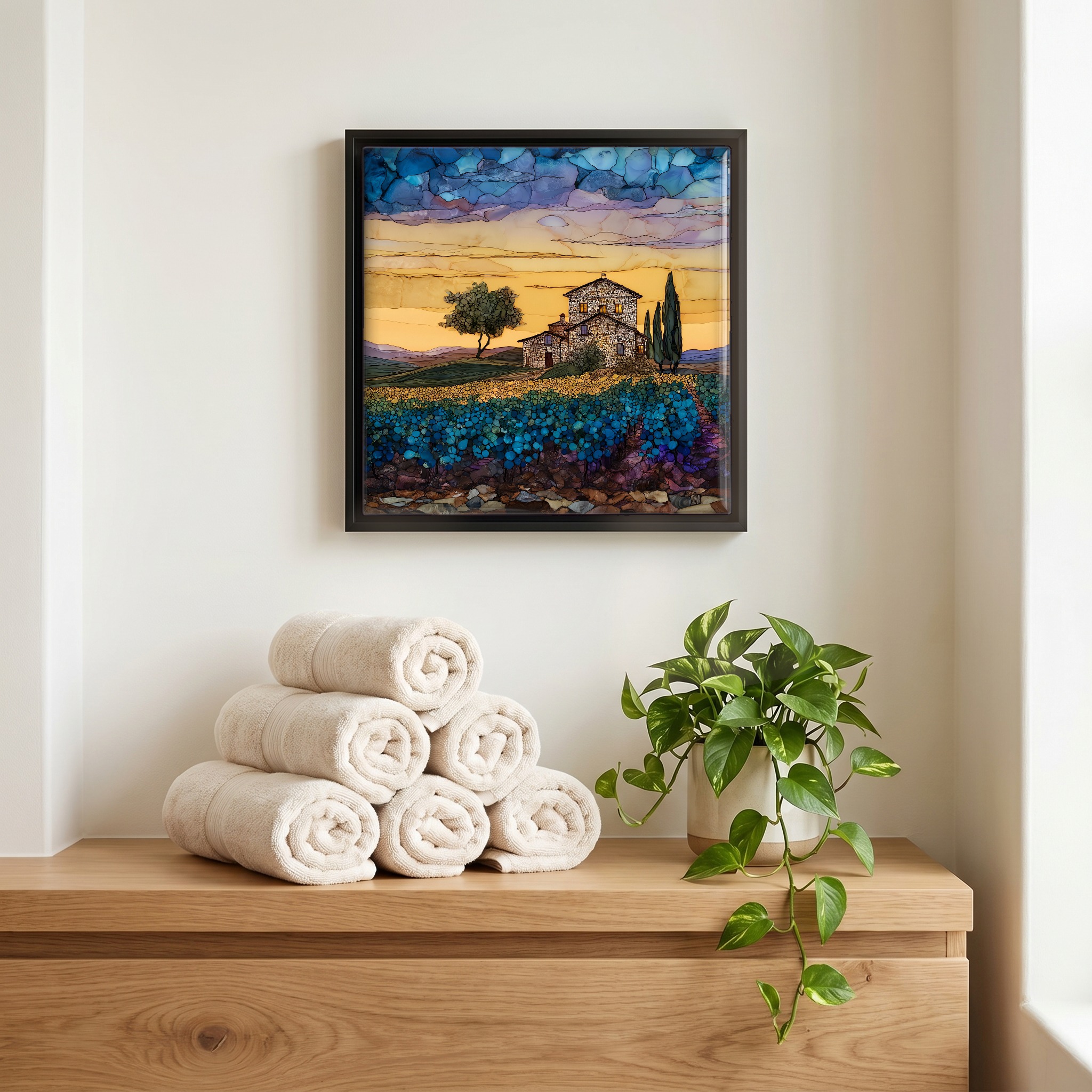
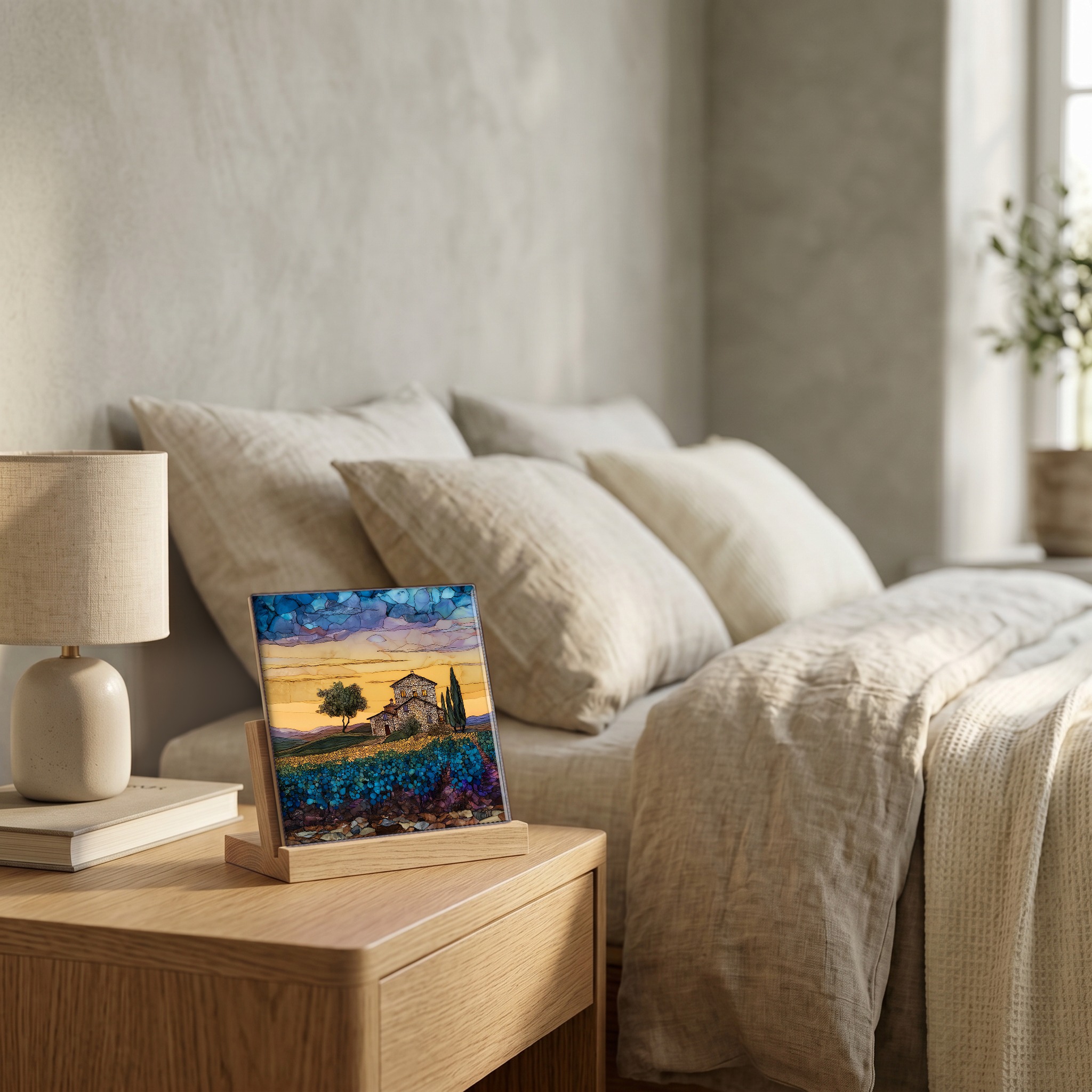
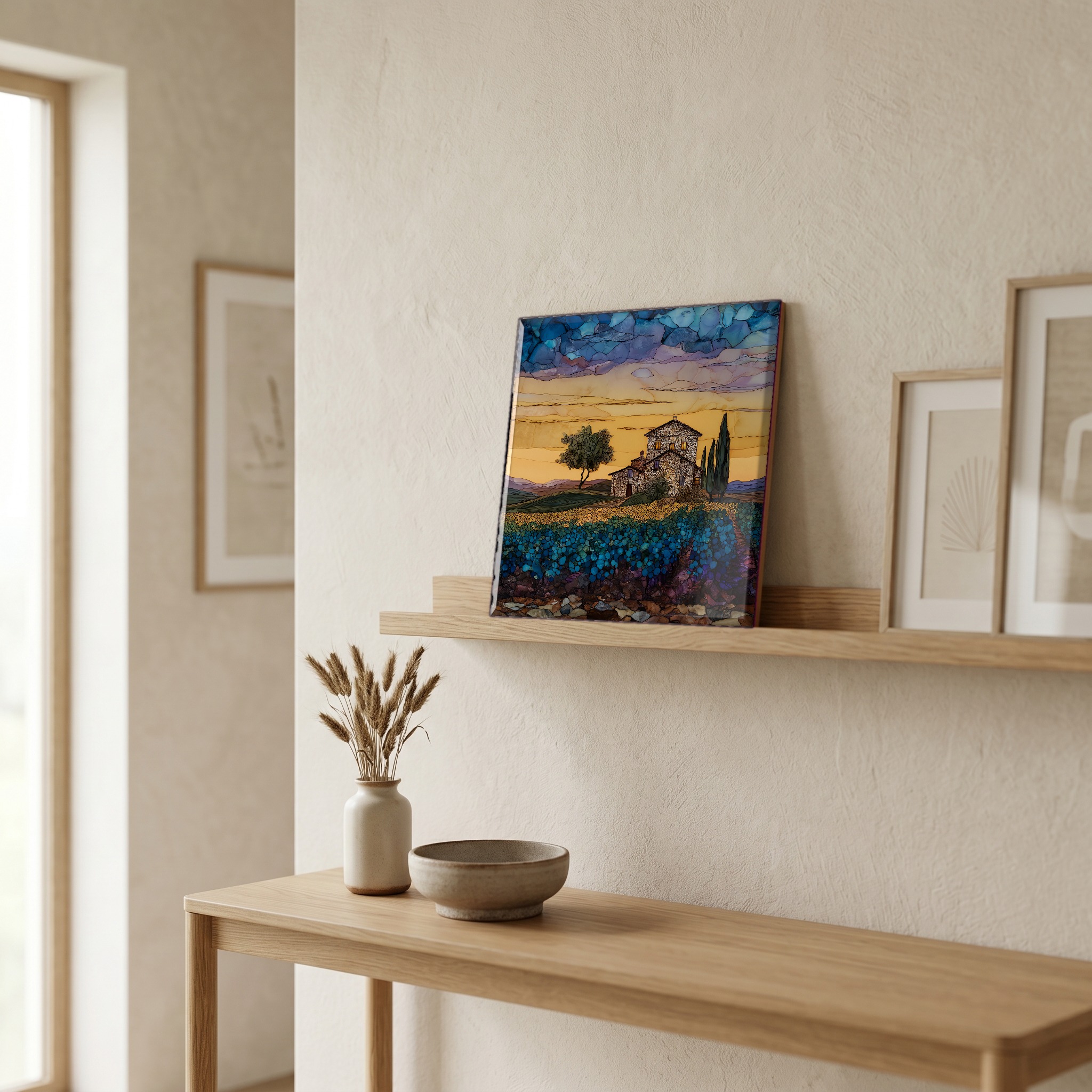
“The hills between Florence and Siena, planted in rows since before the wine had a name. Sangiovese on the slopes, olives on the higher ground, a single road of cypress running up to a farmhouse the colour of the soil. This is the country Cosimo III drew a line around in 1716, one of the first places on earth where a wine was told where it could come from. In late September the pickers come through and the light goes long and amber over everything. Nobody hurries here. The land has been doing this a long time.
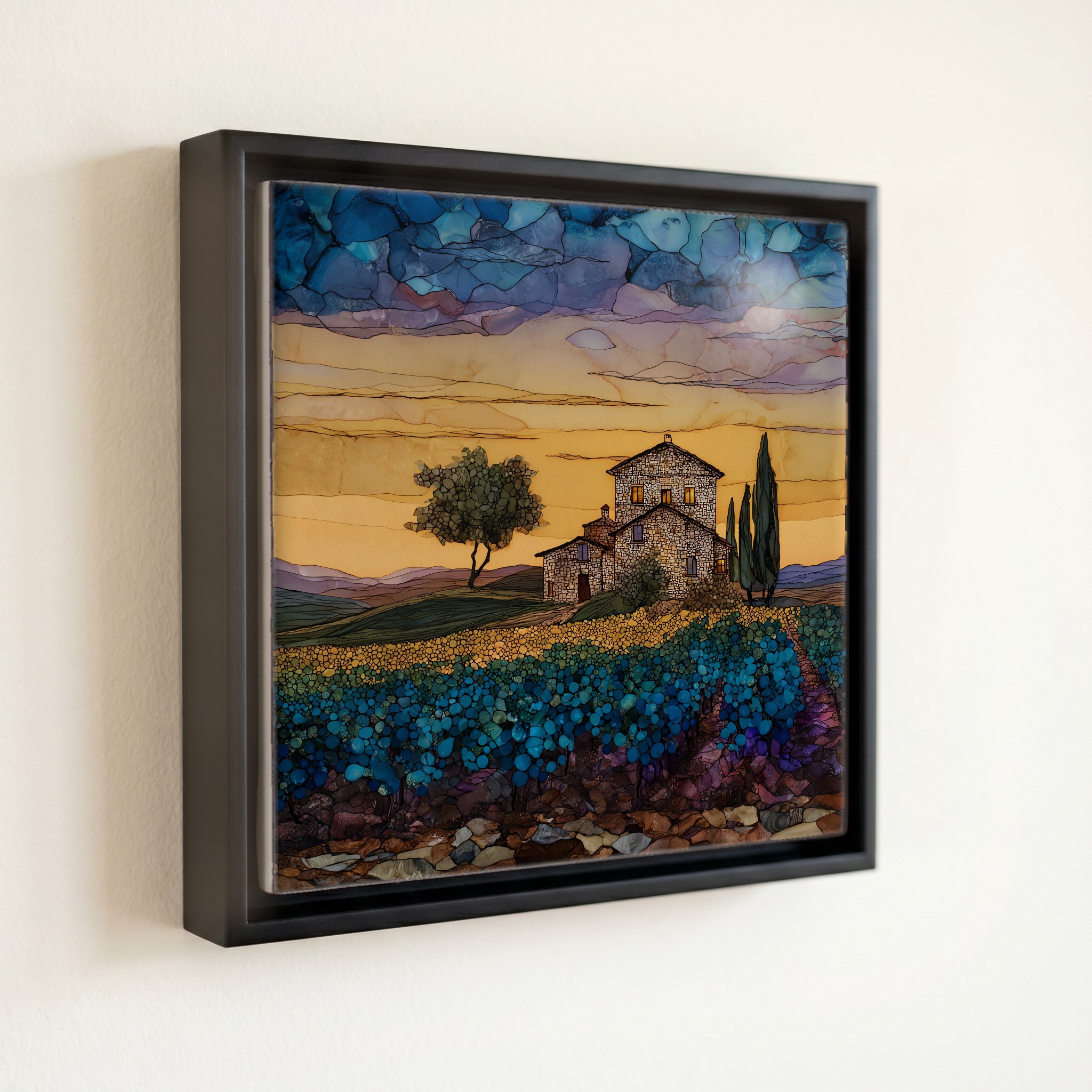
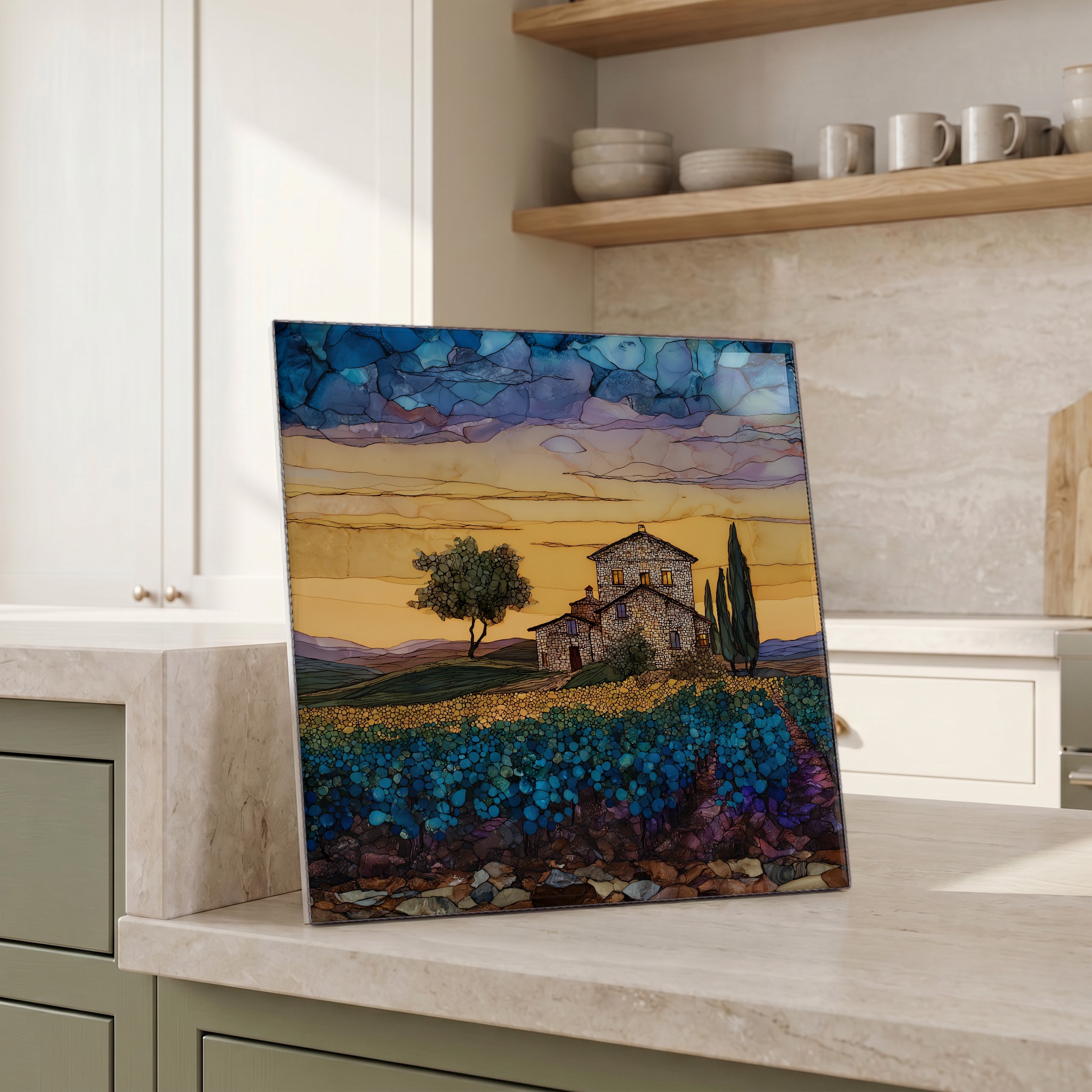
Chianti Vineyards, on ceramic.
Each tile is finished by hand in our Knoxville studio. Artwork is slowly infused into the ceramic surface under high heat and pressure, and rests beneath a thin glossy finish. The colour lives in the surface, not on top of it.
Pick any four 4-inch tiles — National Parks you've been to, a Smokies set, the four seasons of one place. $ for a set of , cork-backed, ready to live on the table.
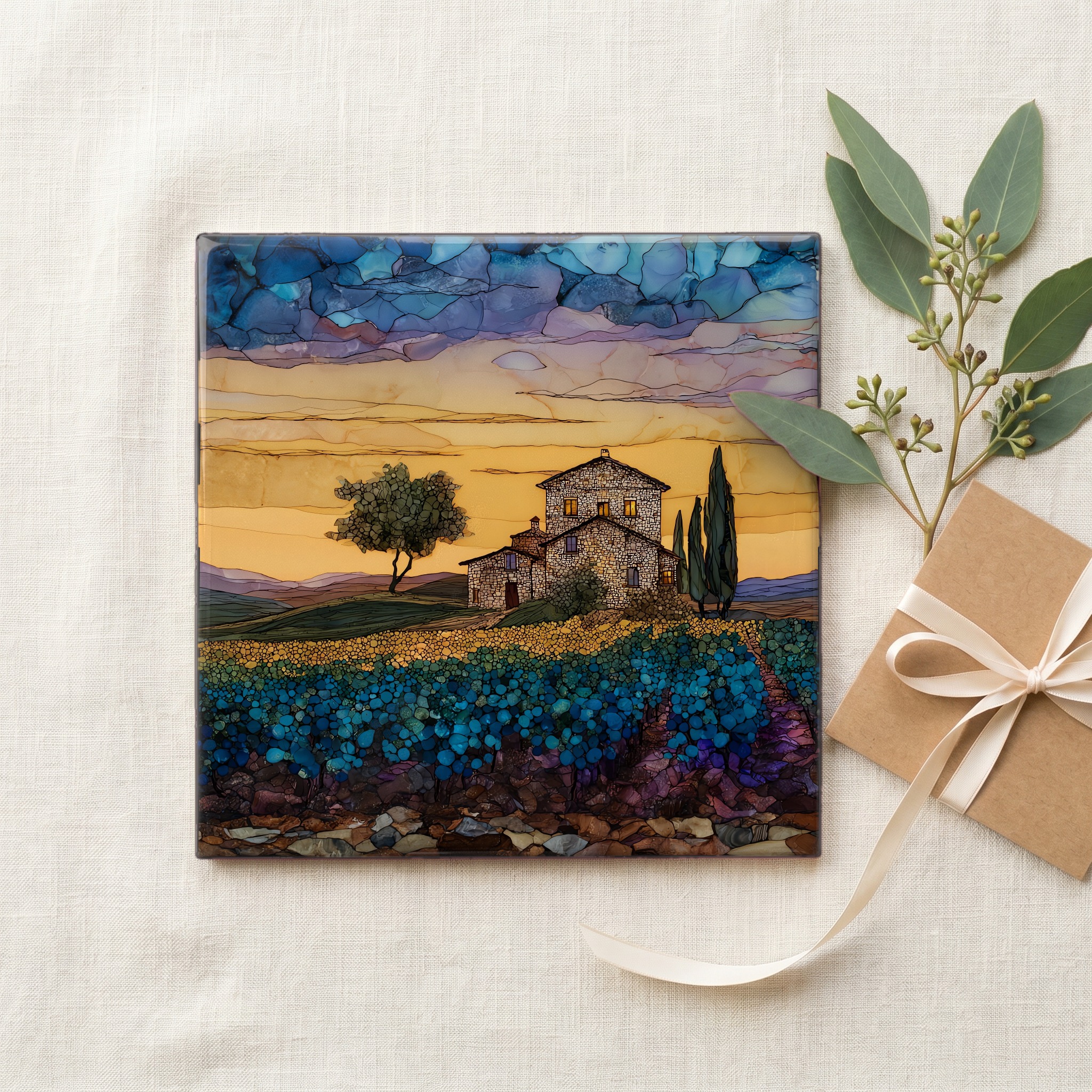
Each tile ships in a kraft box, tied with cream ribbon, with a handwritten note from the studio if you'd like to add one.
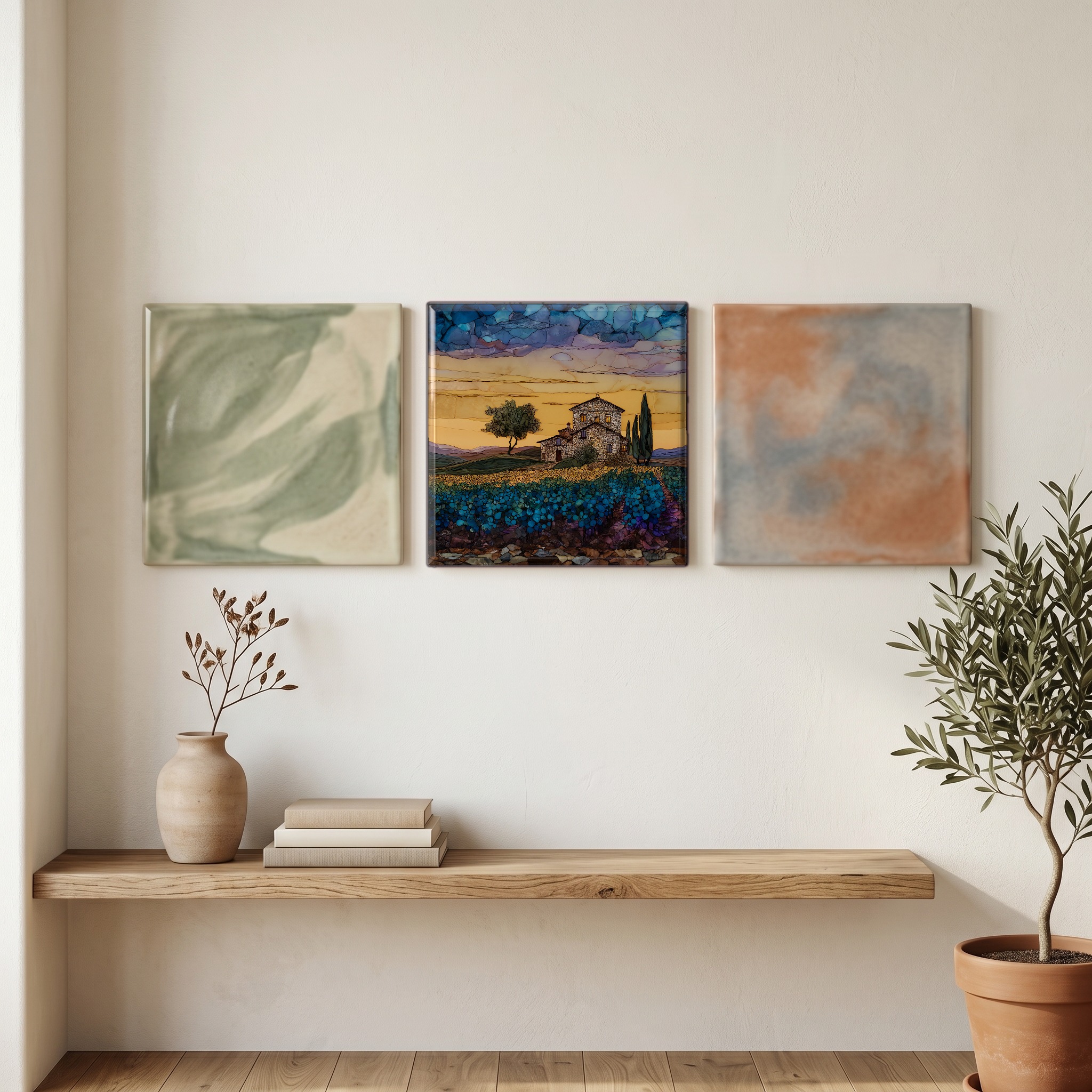
Three or five different vistas, hung together — a chapter of places you've been, or want to go.
The place, in three passes.
Chianti is a band of hills in central Tuscany, running roughly thirty kilometres from the southern edge of Florence down toward Siena. The historic core, Chianti Classico, covers about 260 square kilometres and four communes that took the region into their names: Greve, Castellina, Radda, and Gaiole in Chianti. Vineyards sit between 250 and 610 metres on slopes of two soils with old local names, the sandy alberese and the grey, chalky galestro. To the east the land rises into the Monti del Chianti, topping out at Monte San Michele, 892 metres, above Greve. The whole region is reached by the SR222, the Chiantigiana, the road that threads village to village.
Chianti is one of the oldest legally defined wines on earth. On 24 September 1716 Cosimo III de' Medici, Grand Duke of Tuscany, fixed the boundaries within which the wine could be made, a demarcation that predates the Douro by forty years. The wine is built on Sangiovese, at least eighty percent of the blend in a Chianti Classico, with native Canaiolo and Colorino allowed alongside it. In 1924 the producers met at Radda and formed a consortium to defend the name, taking the black rooster, the Gallo Nero, as their seal; the region reached Italy's top DOCG rank in 1984. The grapes come in late, usually the back half of September.
The Chianti hills are stitched together by stone. The classic farmhouse, the casa colonica, is built of the same pale sandstone, alberese, that lies under the vines, so the buildings seem to grow out of the slope they stand on. Villages hold the high ground: Castellina with its Etruscan roots, Radda, Gaiole, and Greve with its arcaded square. The grandest house is Castello di Brolio, held by the Ricasoli family since the twelfth century; it was Barone Bettino Ricasoli who, in the 1870s, set down the Sangiovese-led formula that became the modern wine. Between the buildings run the cypresses, planted in single file along the approach roads, dark against the gold of the hills.