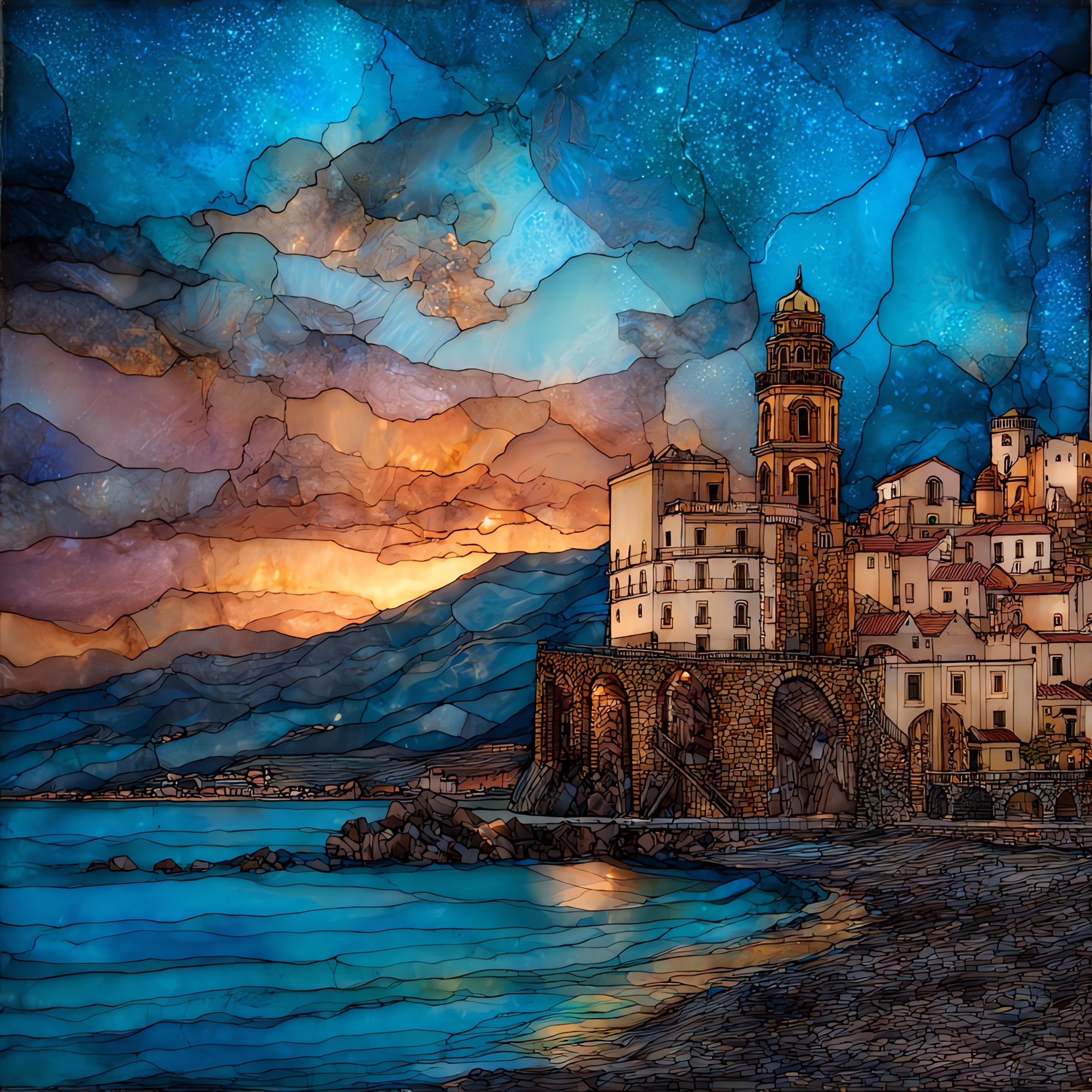
Cefalù
— the headland gone gold above the roofs, just before dark.
Not only on a wall.
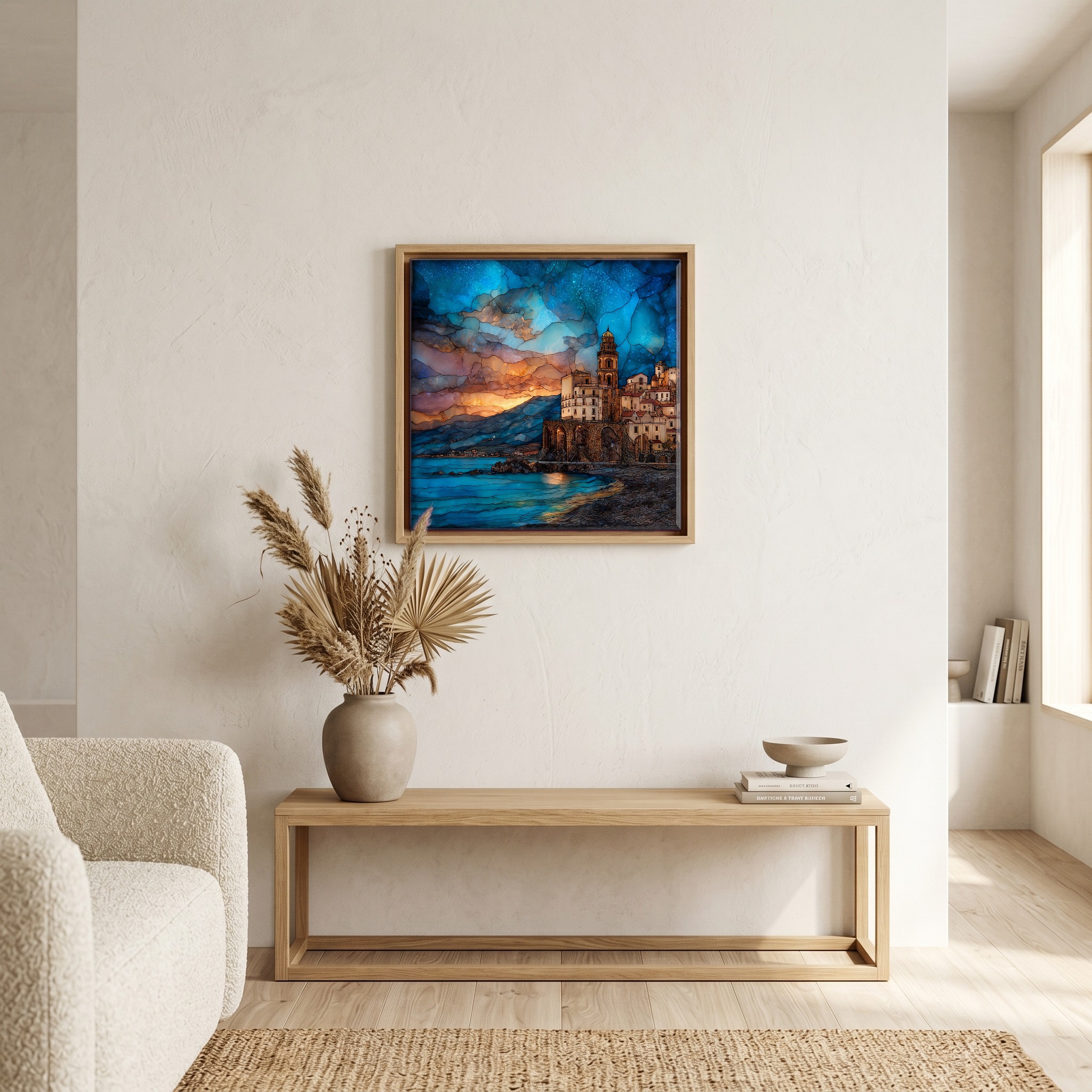
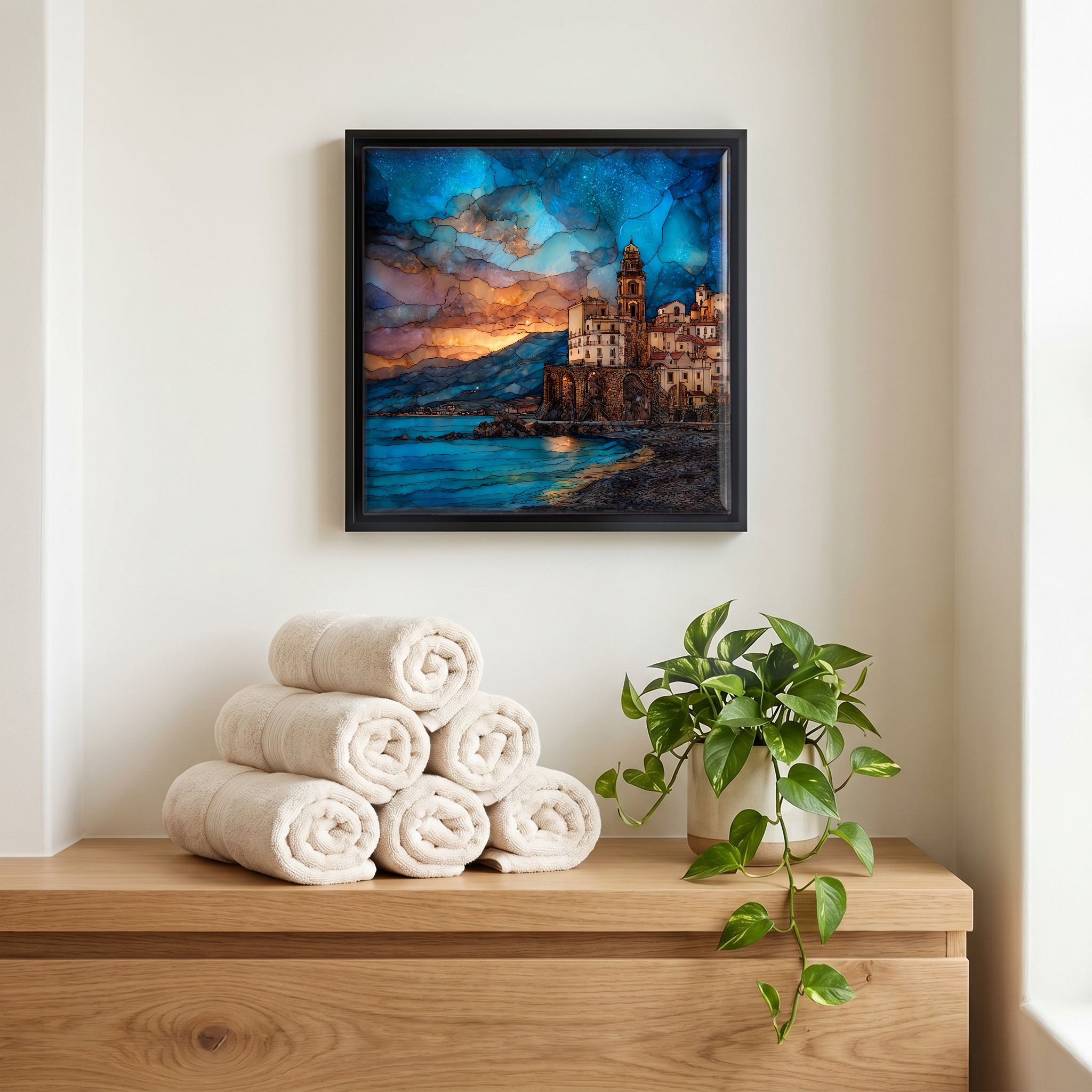
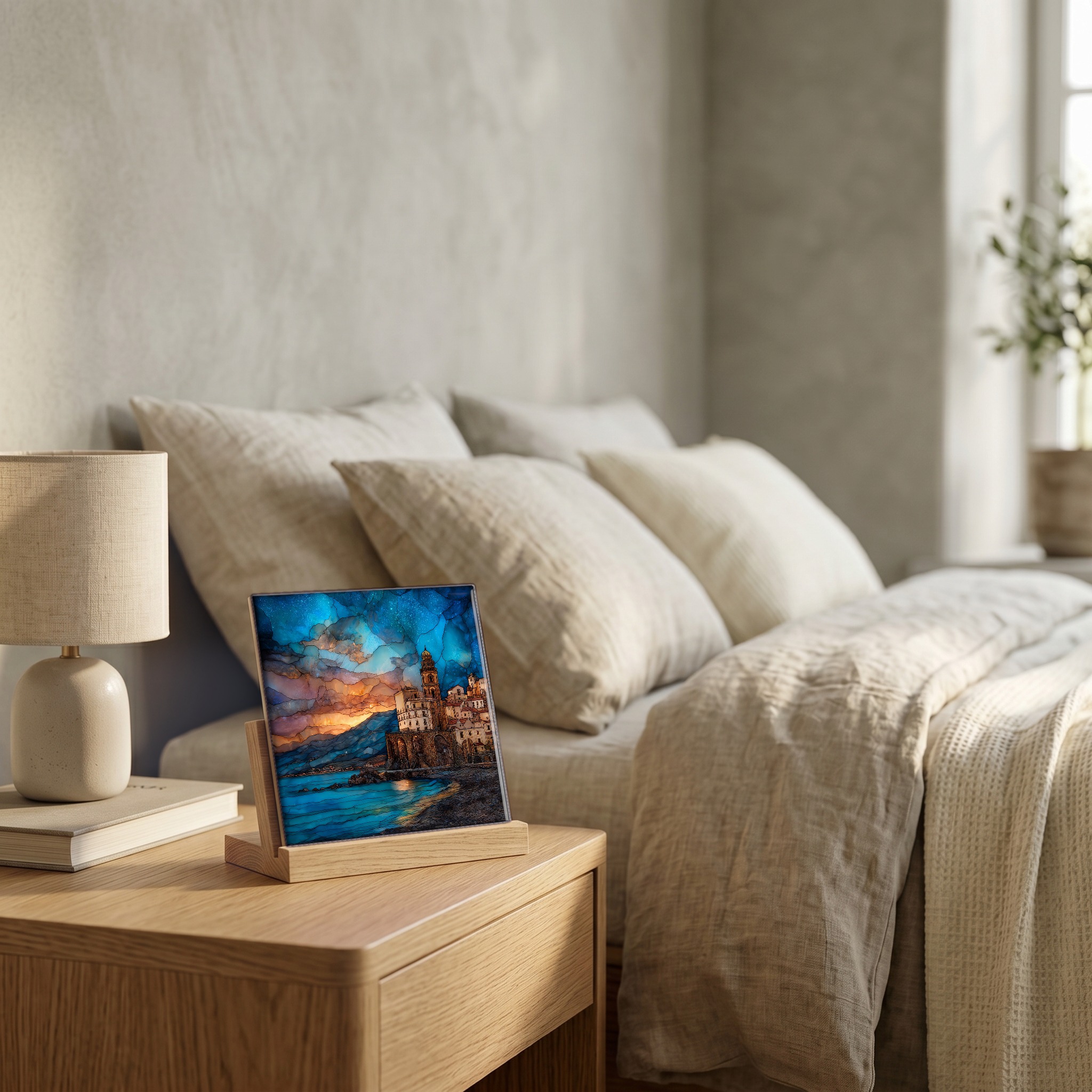
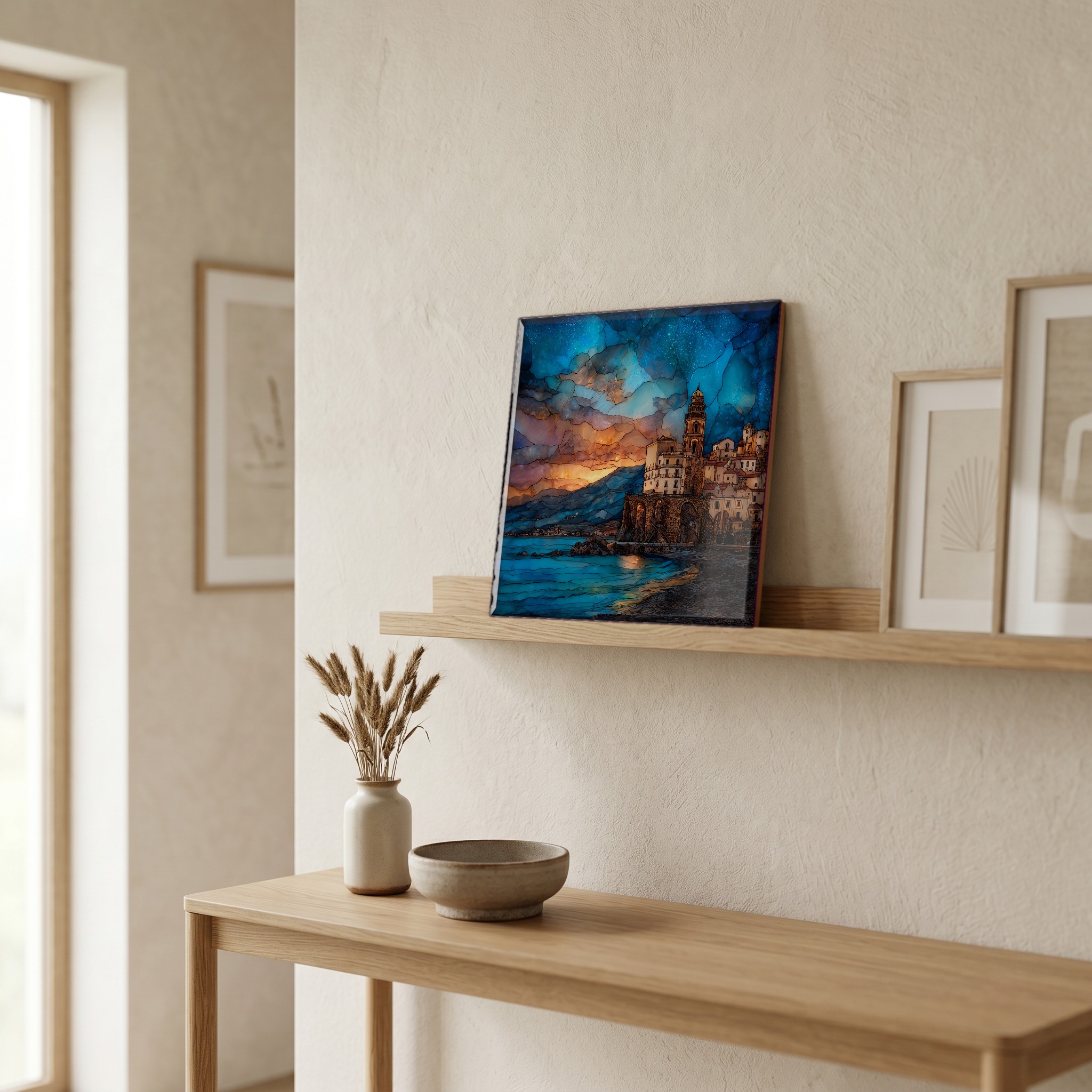
“A small town on the north coast of Sicily, gathered at the foot of one enormous rock. The Greeks called it Kephaloídion, the head, for the way the headland pushes out into the Tyrrhenian. Roger II raised the cathedral here in 1131, the story goes, after a storm put him ashore on this beach. Its two Norman towers stand gold against the grey stone of the crag, and the sea comes right up to the old town. People washed here into living memory, at the medieval lavatoio where the Cefalino still runs out to the water.
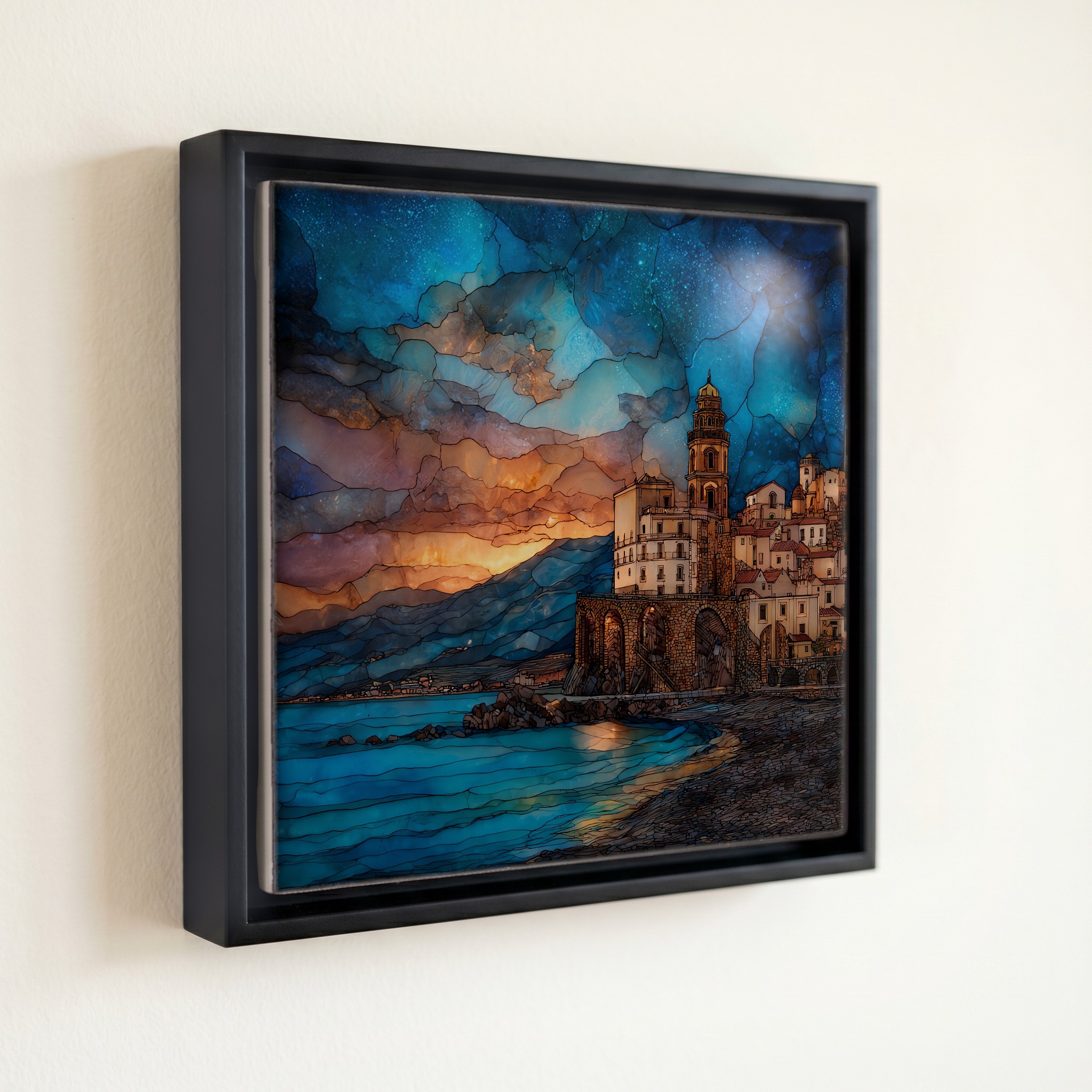
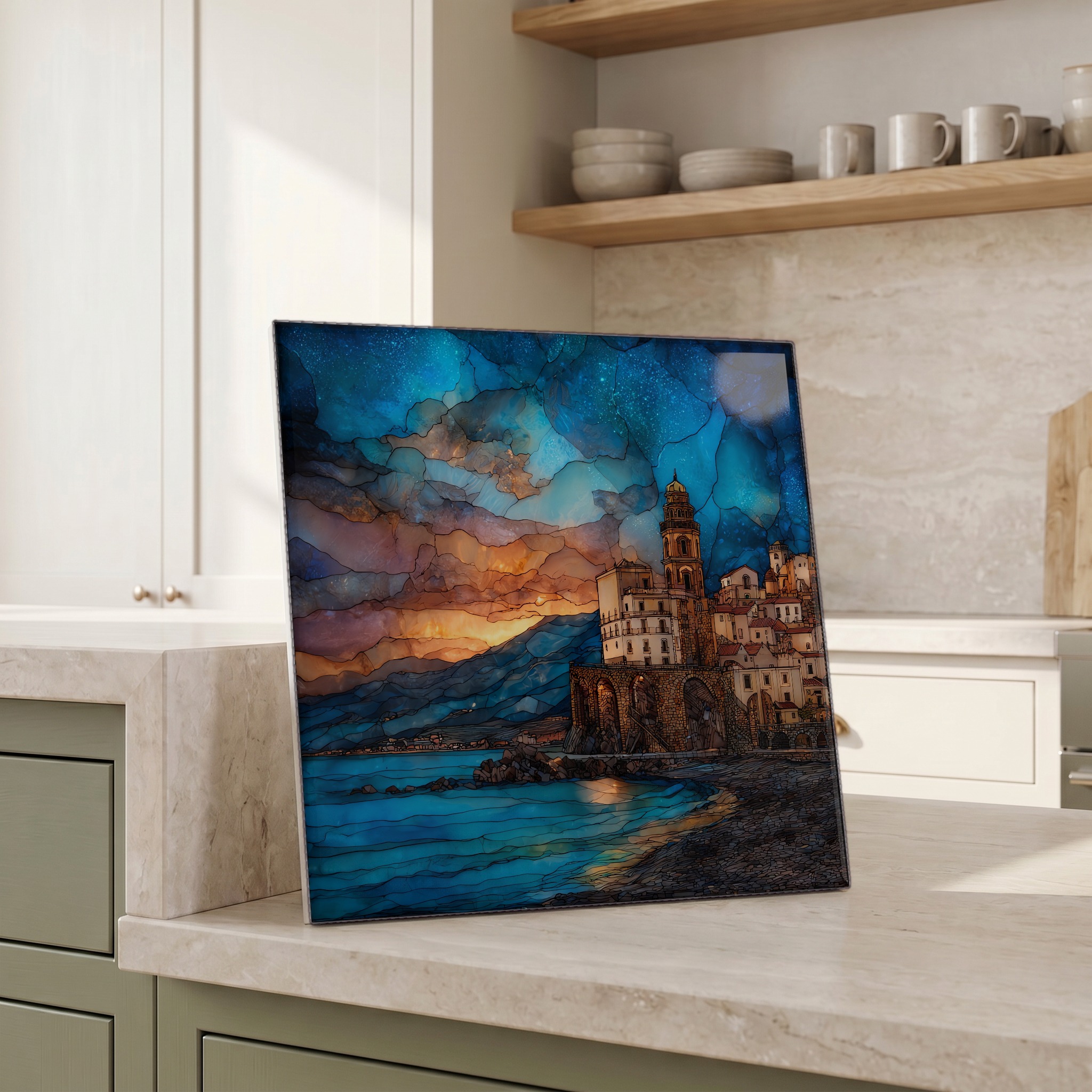
Cefalù, on ceramic.
Each tile is finished by hand in our Knoxville studio. Artwork is slowly infused into the ceramic surface under high heat and pressure, and rests beneath a thin glossy finish. The colour lives in the surface, not on top of it.
Pick any four 4-inch tiles — National Parks you've been to, a Smokies set, the four seasons of one place. $ for a set of , cork-backed, ready to live on the table.
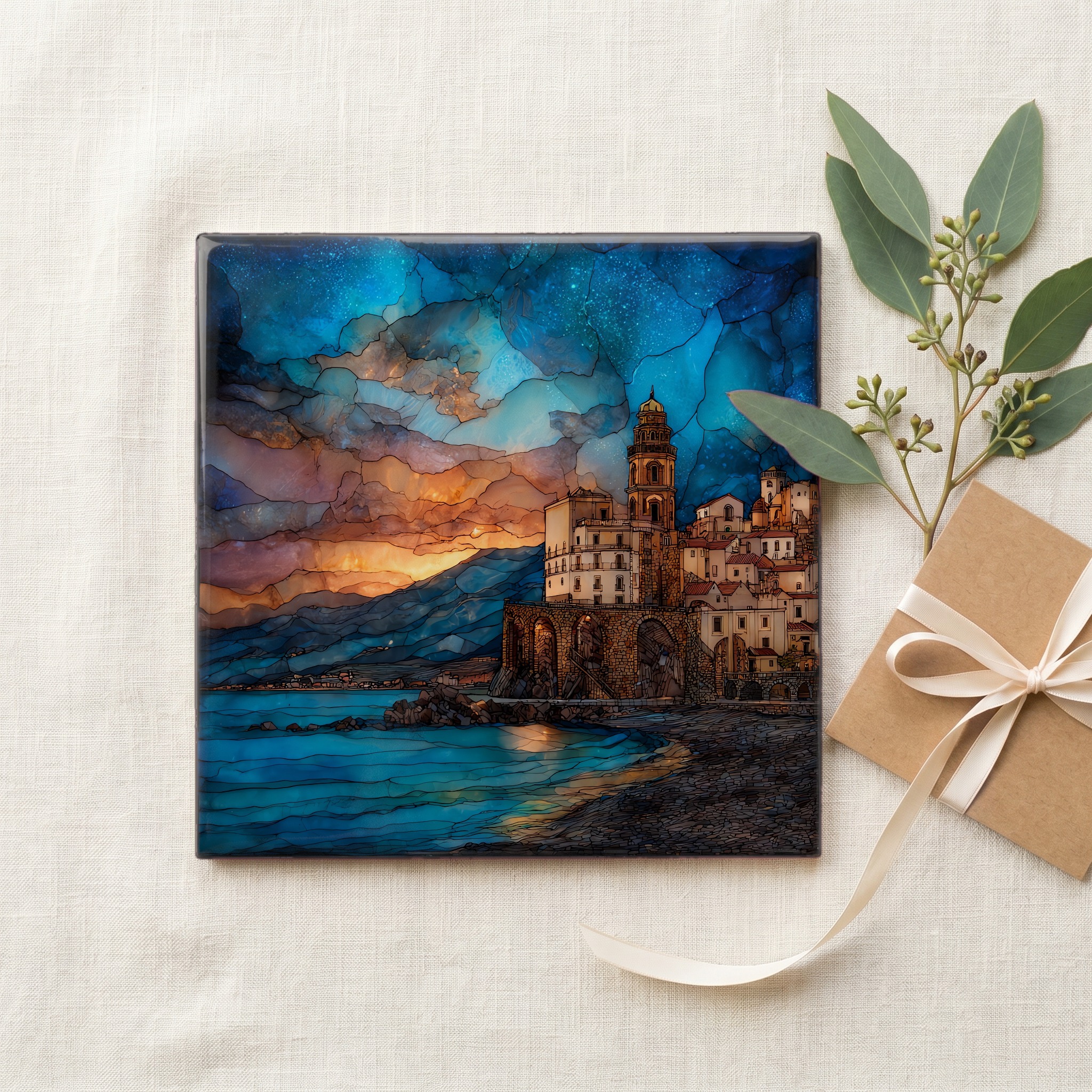
Each tile ships in a kraft box, tied with cream ribbon, with a handwritten note from the studio if you'd like to add one.
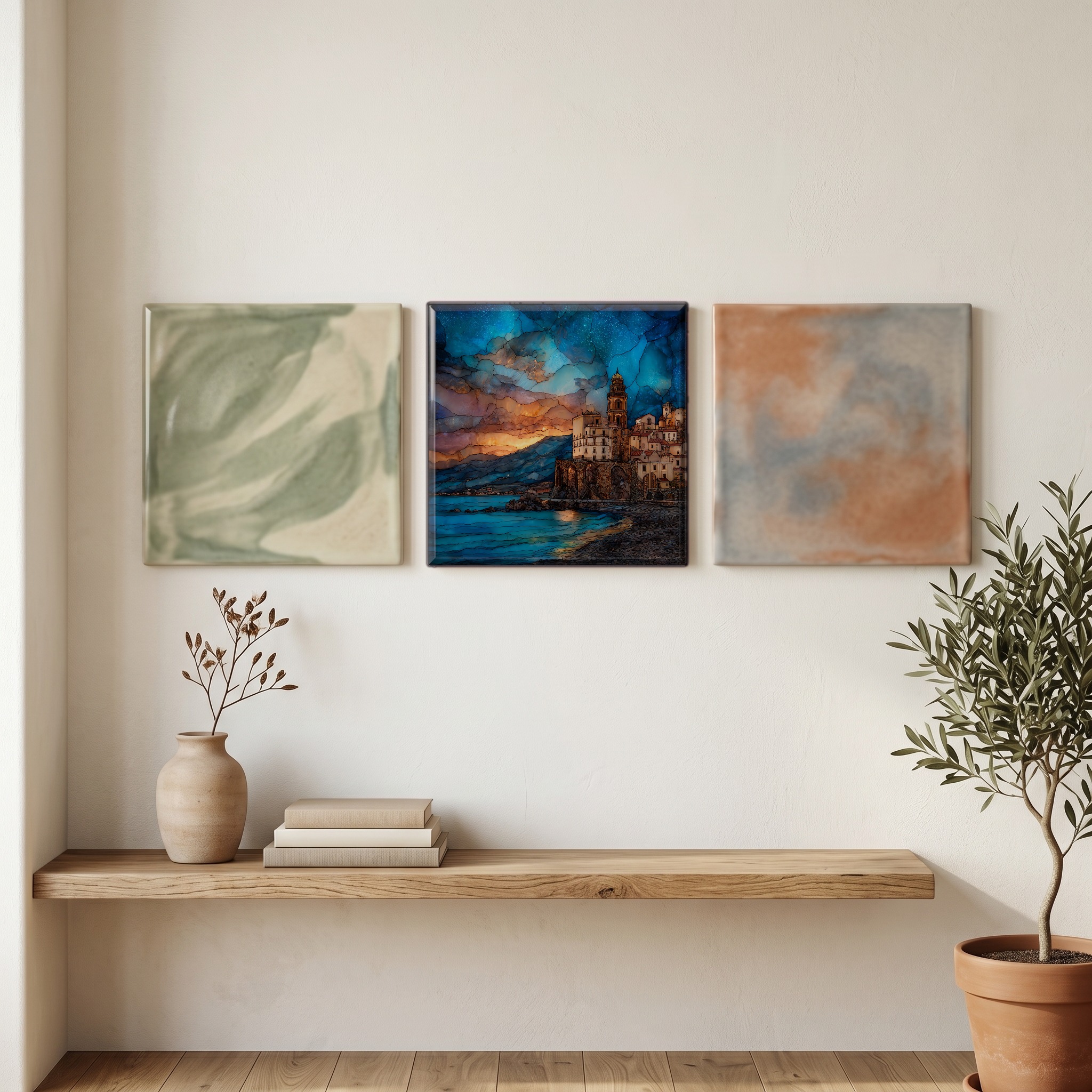
Three or five different vistas, hung together — a chapter of places you've been, or want to go.
The place, in three passes.
Cefalù sits on the Tyrrhenian coast of northern Sicily, about 70 km east of Palermo, within the Metropolitan City of Palermo. The town gathers at the base of La Rocca, a limestone headland that rises roughly 270 metres straight from the sea; the Greeks named the place Kephaloídion, from kephalḗ, 'head', for that bold promontory. It is reached easily by the coastal railway from Palermo, about an hour by regional train, or by the SS113 road. Behind the town stand the Madonie mountains, whose springs feed the Cefalino river that still runs through the old quarter to the sea. About 13,800 people live here today.
The Duomo di Cefalù was begun in 1131 for Roger II, the first Norman king of Sicily, who by tradition vowed to build it after a storm cast him ashore on this beach. Its two square towers and fortress-like front rise above the terracotta roofs, a Norman statement in honey-coloured stone. Inside, the apse carries one of the great Byzantine mosaic cycles of the Mediterranean: a bust of Christ Pantocrator, set by masters trained in Constantinople between 1148 and 1166, covering close to 600 square metres of gold ground. In 2015 the cathedral joined Monreale and Arab-Norman Palermo on the UNESCO World Heritage list.
Most visitors come in the warm months, when the long sandy beach below the old town fills and the sea stays swimmable into October. The medieval core is walkable in an afternoon: the cathedral square, the narrow Via Vittorio Emanuele, and the Lavatoio Medievale, a stone wash-house rebuilt in 1514 over the Cefalino, its water still pouring from twenty-two iron spouts shaped mostly as lion heads. Above the town a marked path climbs La Rocca to the megalithic Temple of Diana, about 150 metres up, and on to the ruined castle near the summit. Scenes of Giuseppe Tornatore's 1988 film Cinema Paradiso were shot in these streets.