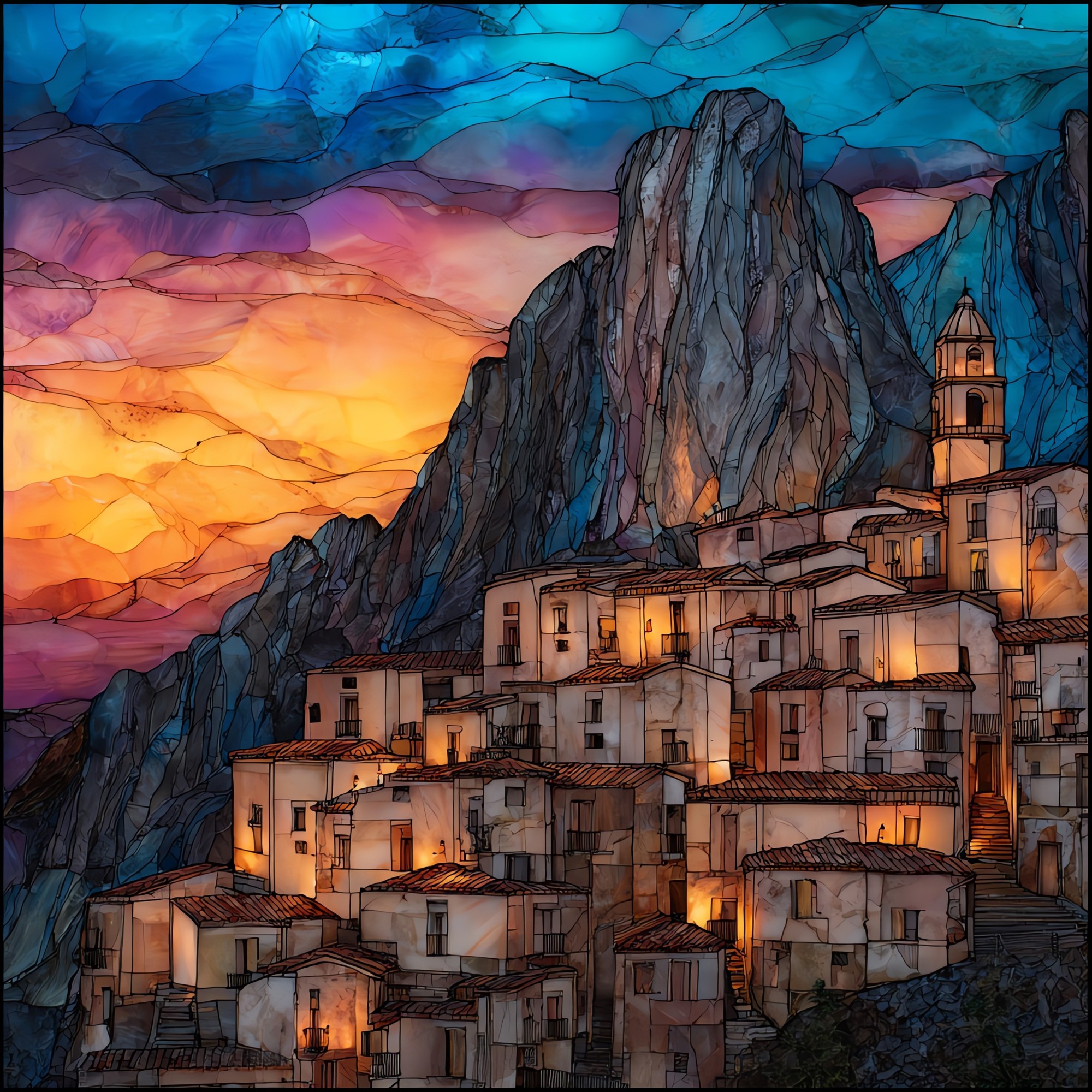
Castelmezzano
— a village the rock made room for.
Not only on a wall.
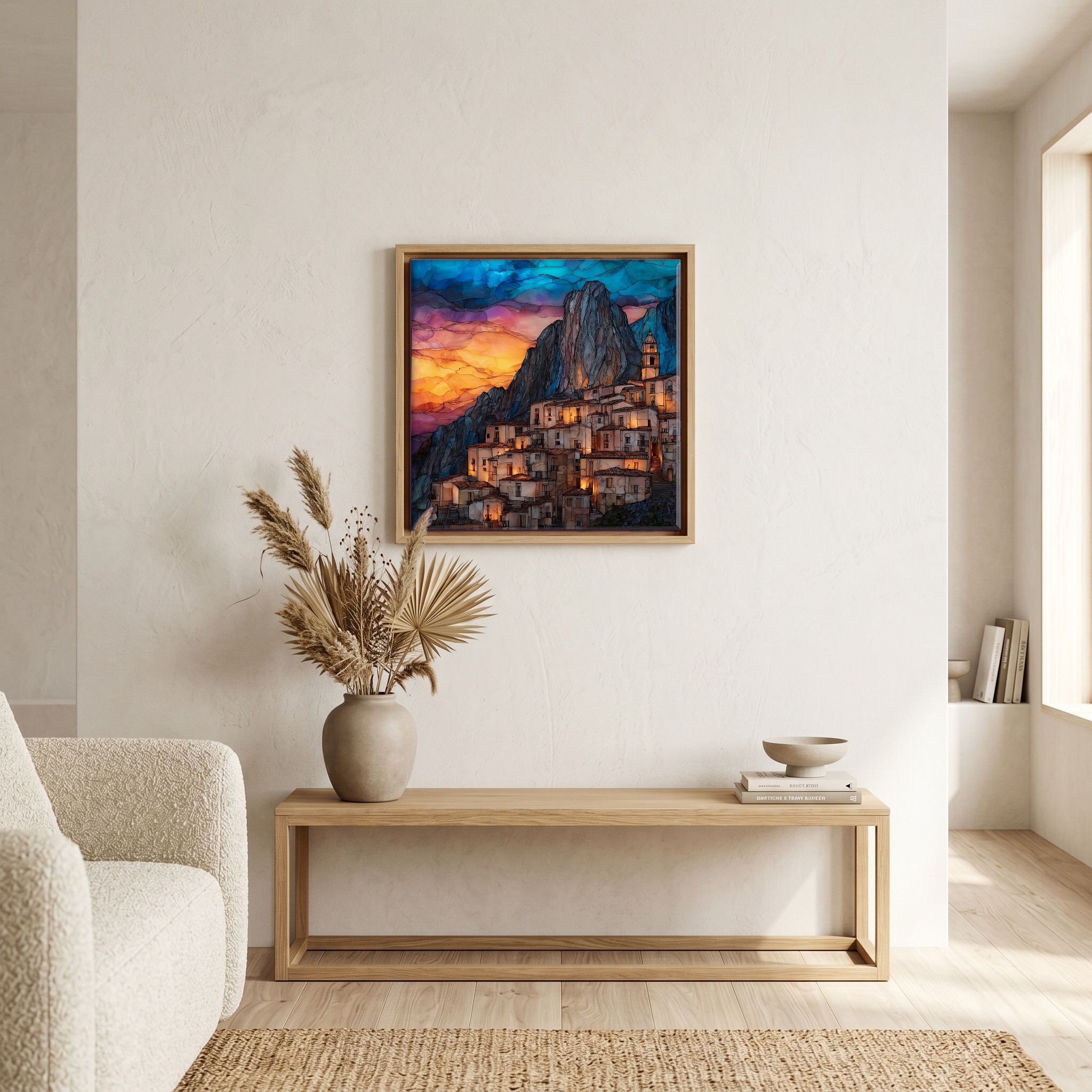
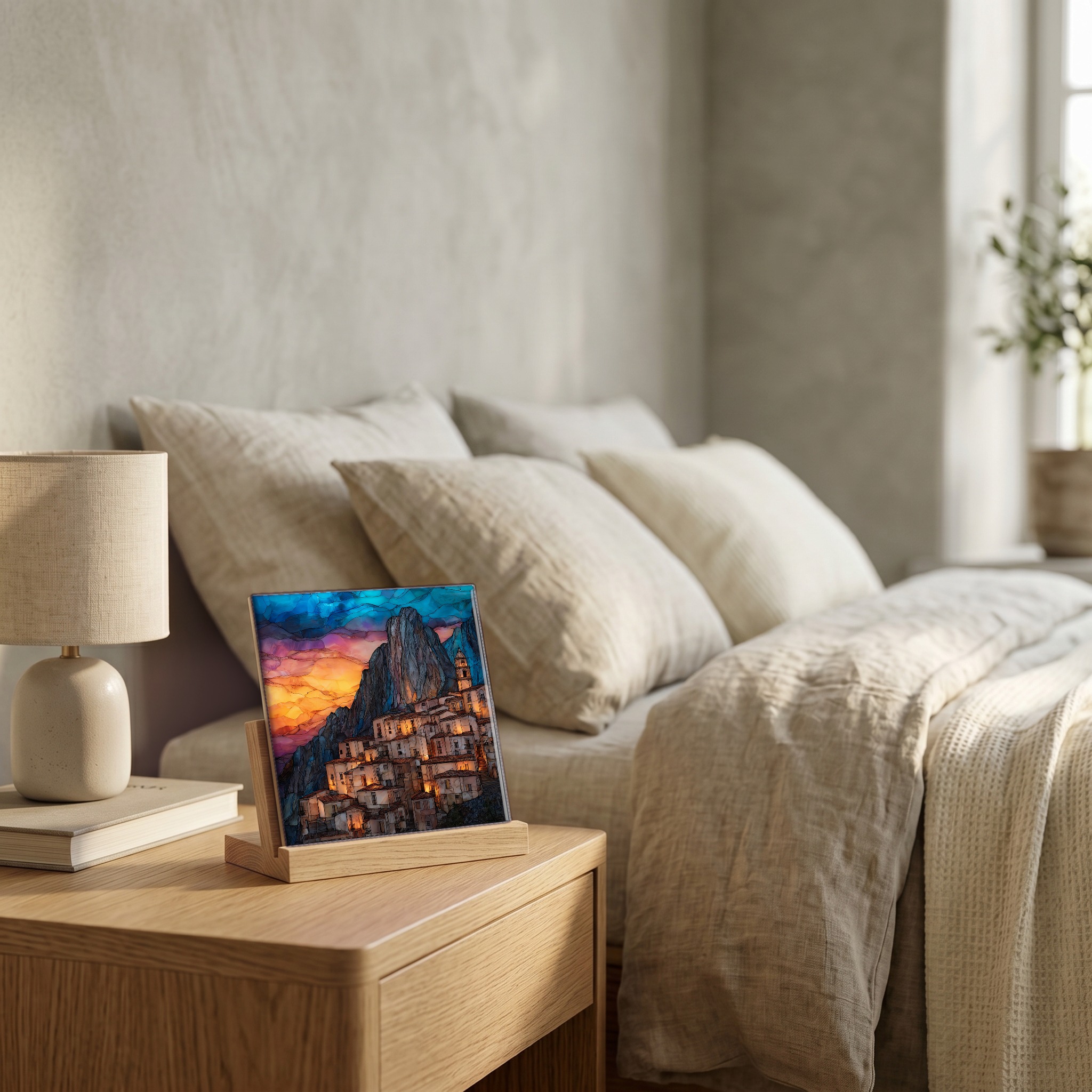
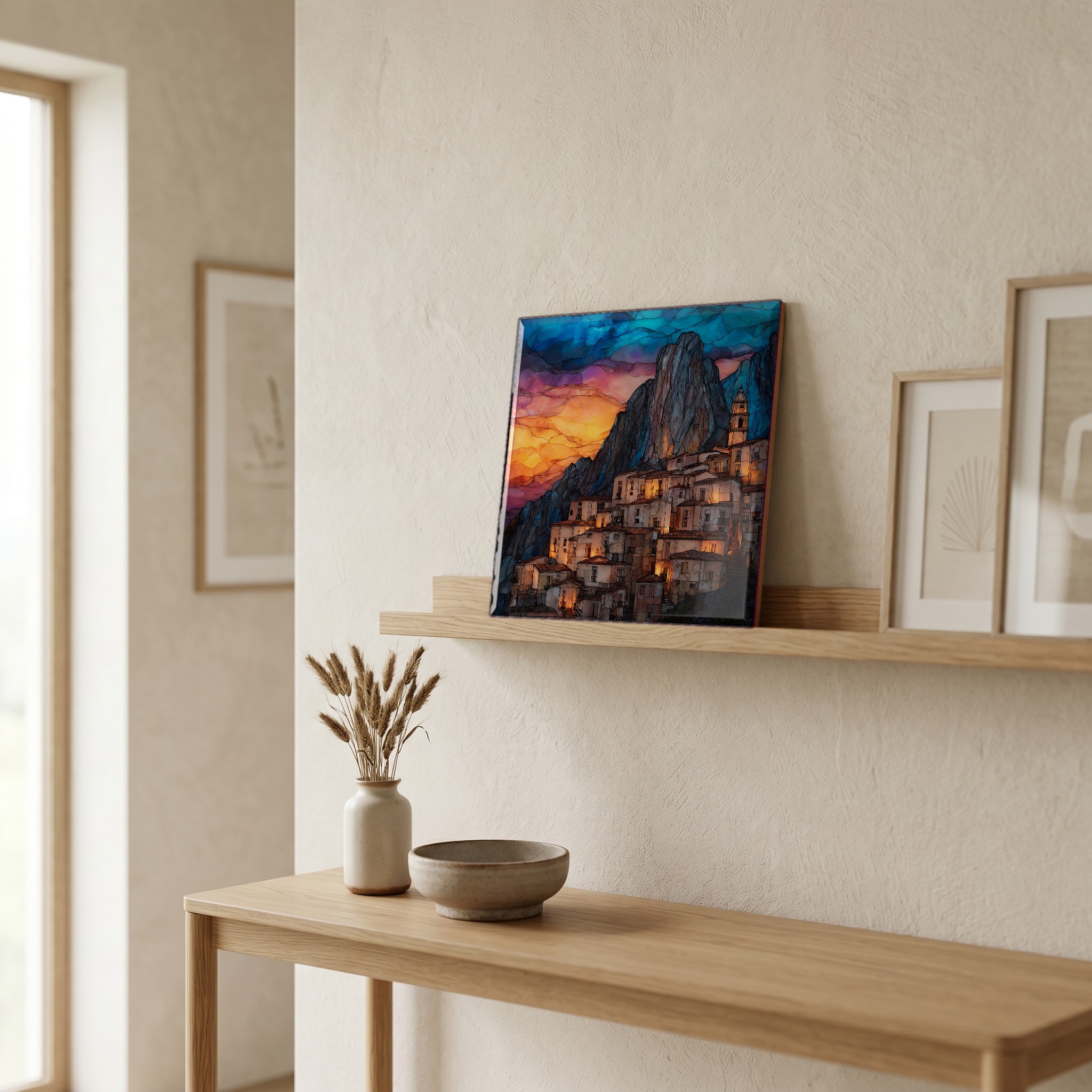
“A small village in southern Italy's Basilicata region, set beneath jagged sandstone peaks the locals call the Piccole Dolomiti Lucane. The houses press up against the cliffs at the base of the spires, and a few of them are cut into the rock itself. The road in opens after the last bend, and the village arrives all at once. A footpath called the Path of the Seven Stones leads over the ridge to Pietrapertosa, the neighbouring village a kilometre away as the crow flies, two hours on foot. A faster way over is the Volo dell'Angelo, the zipline that crosses the valley between them. One of the most beautiful villages in Italy by official count, and one of the least crowded.
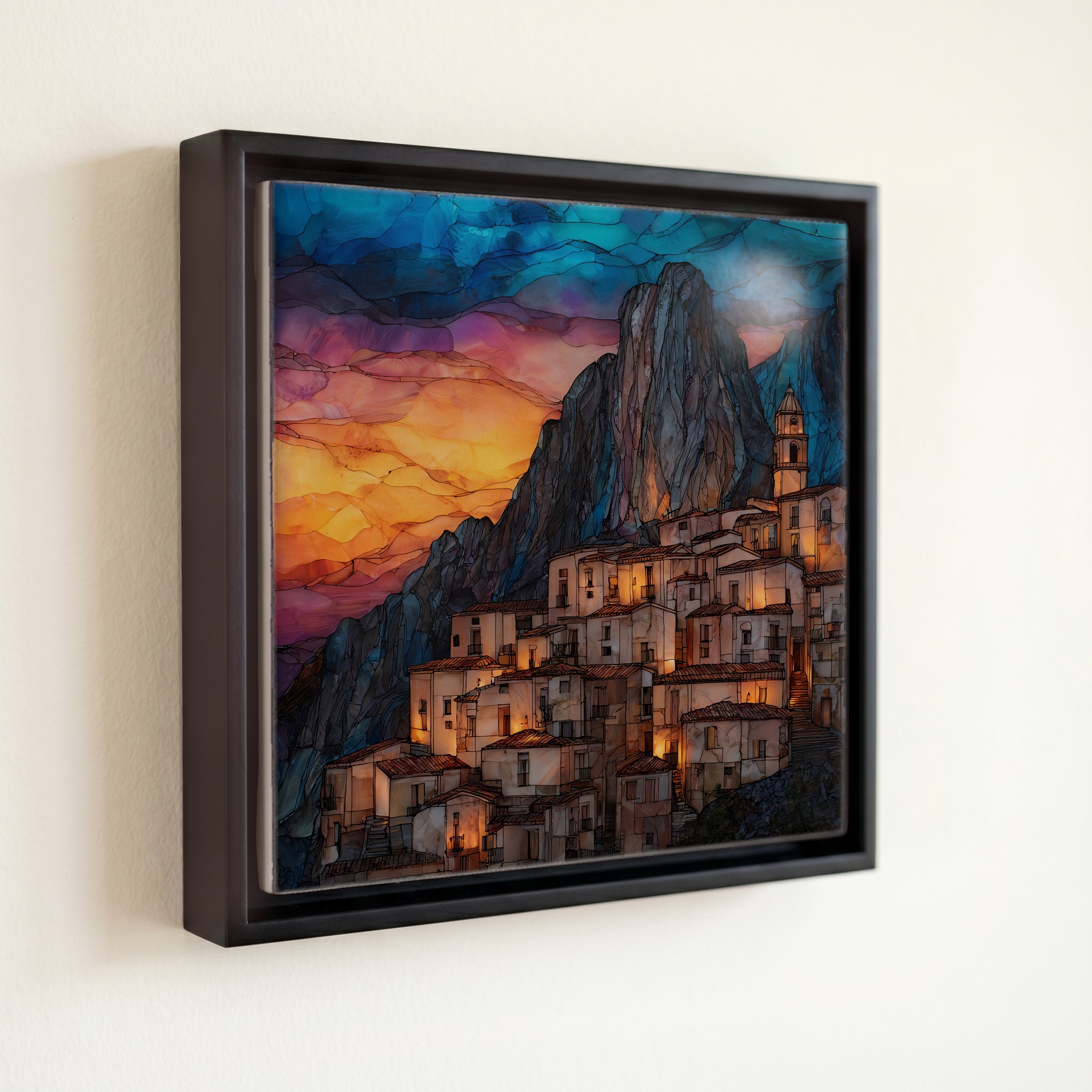
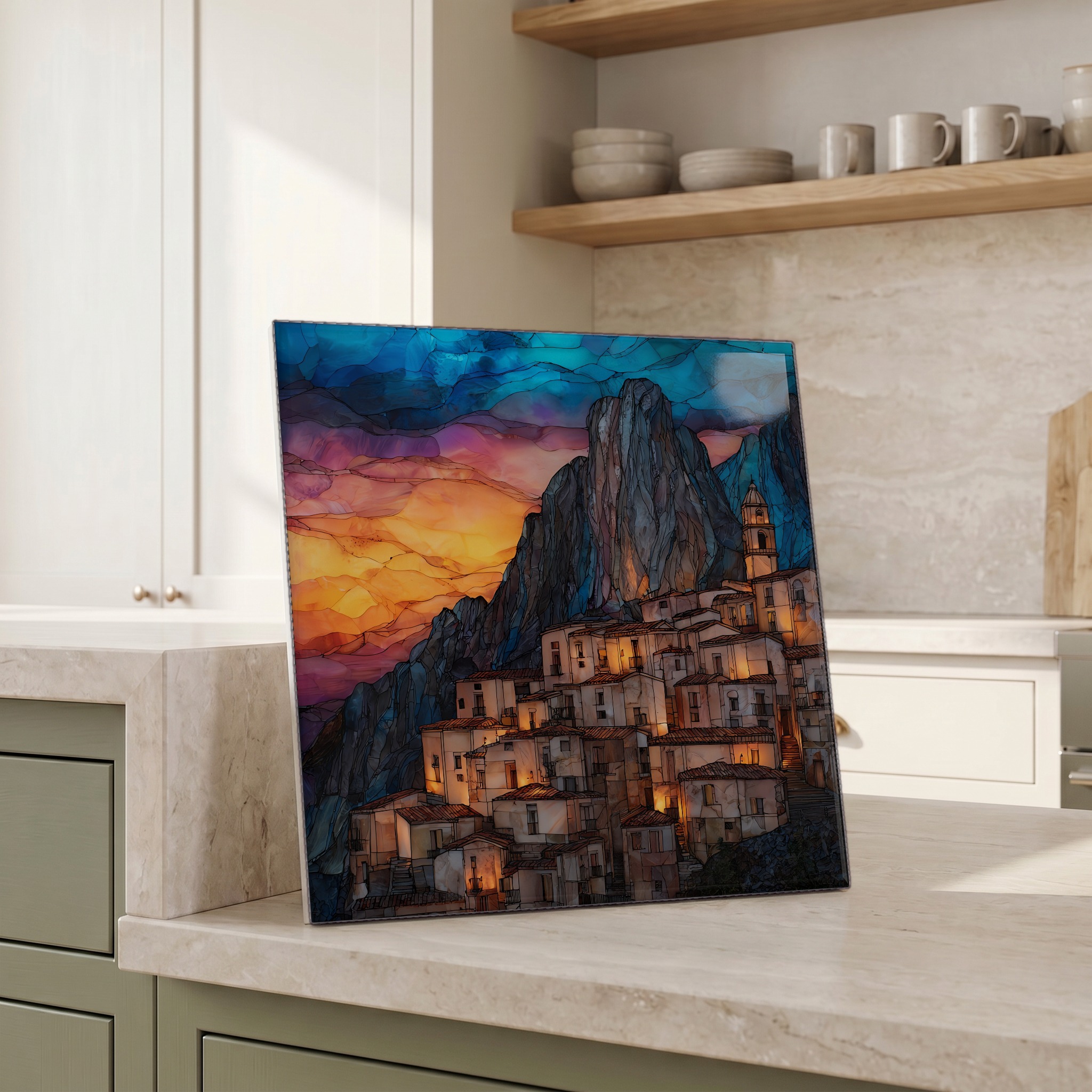
Castelmezzano, on ceramic.
Each tile is finished by hand in our Knoxville studio. Artwork is slowly infused into the ceramic surface under high heat and pressure, and rests beneath a thin glossy finish. The colour lives in the surface, not on top of it.
Pick any four 4-inch tiles — National Parks you've been to, a Smokies set, the four seasons of one place. $ for a set of , cork-backed, ready to live on the table.
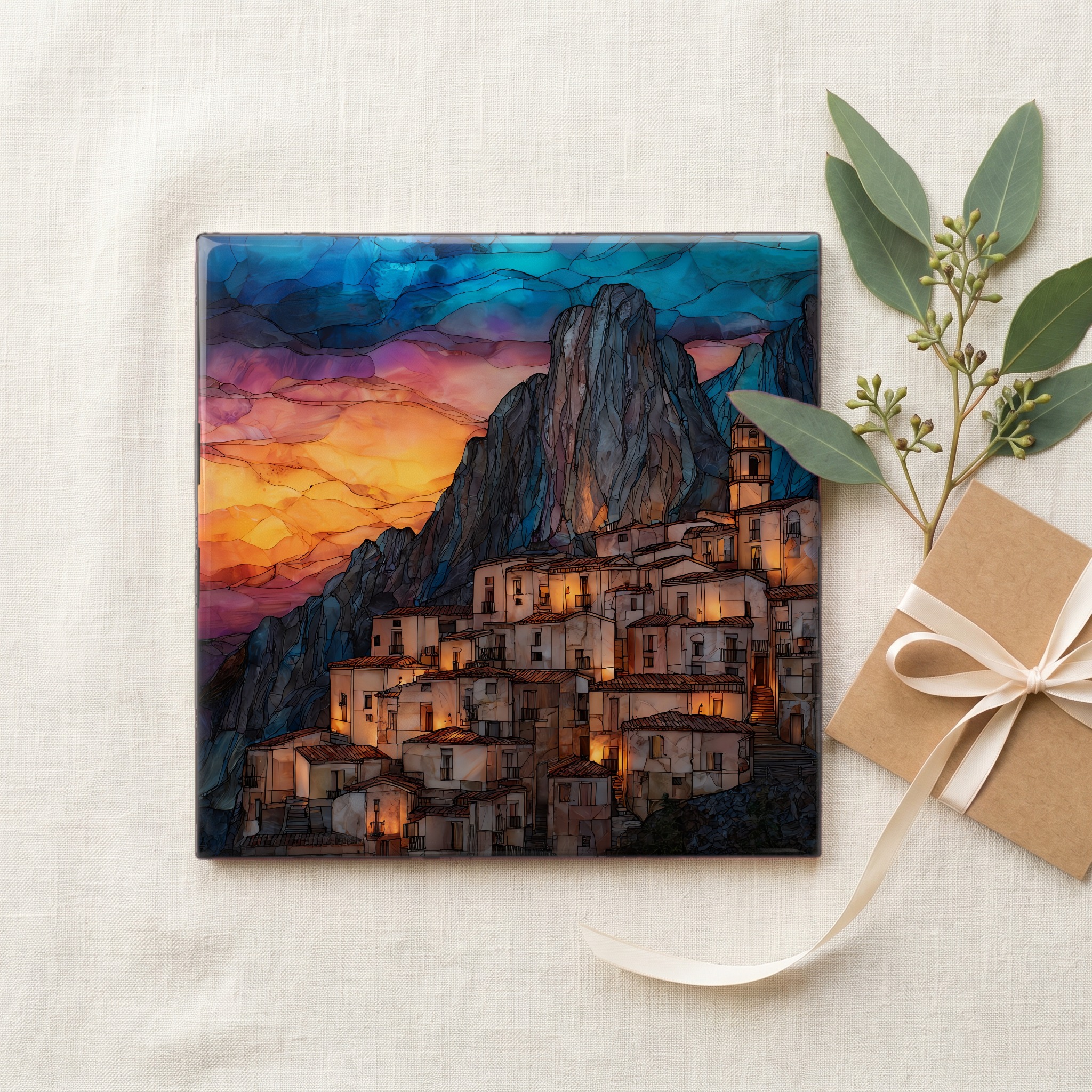
Each tile ships in a kraft box, tied with cream ribbon, with a handwritten note from the studio if you'd like to add one.

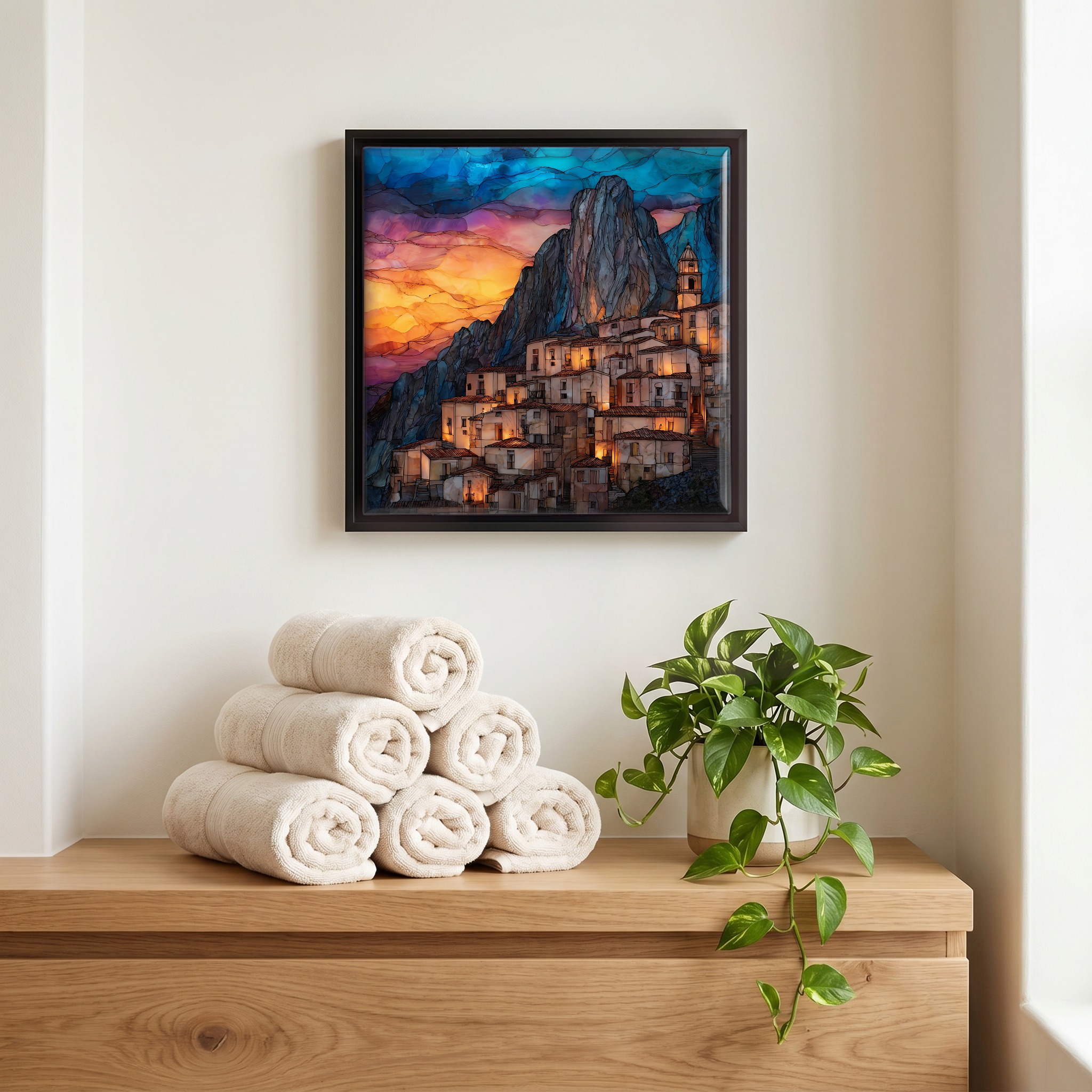
Three or five different vistas, hung together — a chapter of places you've been, or want to go.
The place, in three passes.
Castelmezzano is a comune in the Province of Potenza, in the Basilicata region of southern Italy. The village sits at about 750 metres in the Piccole Dolomiti Lucane, a sandstone range that rises from the surrounding valleys to spires reaching roughly 1,300 metres. The whole area lies inside the Parco Regionale Gallipoli Cognato Piccole Dolomiti Lucane, a protected park that takes in much of the surrounding ridge country. Population is roughly 800. The village is reached from the SS407 Basentana, the trunk road that runs the Basento valley, by a series of narrow switchbacks and a short tunnel cut into the rock. Castelmezzano is a member of I Borghi più belli d'Italia, the official association of Italy's most beautiful villages.
The peaks above Castelmezzano are sandstone, called arenaria in Italian, eroded over millennia into the jagged forms that earned the range its nickname, the Piccole Dolomiti Lucane, the Little Lucanian Dolomites. The name borrows from the Alpine Dolomites about a thousand kilometres to the north, though these are softer rock and lower altitude. A flight of steps carved directly into the cliff above the village, the Gradinata Normanna, climbs to the ruins of the Norman castle that gave Castelmezzano its name, from the medieval Latin castrum medianum, the middle castle. The earliest fortifications on the site date to around the tenth century, when the region was contested by Byzantines, Lombards, and Normans in turn.
The most-told reason to come is the Volo dell'Angelo, a tandem of ziplines opened in 2007 that connects Castelmezzano with Pietrapertosa, the neighbouring sandstone village across the valley. Each cable runs over a kilometre, and riders cross one at a time at speeds approaching 120 km/h. The quieter alternative is the Percorso delle Sette Pietre, the Path of the Seven Stones, a roughly two-hour walking trail between the same two villages drawn from Mimmo Sammartino's novel Vito ballava con le streghe, with seven stone markers keyed to passages in the book. The Volo dell'Angelo operates seasonally, usually from April through early November.