Wender·Vista
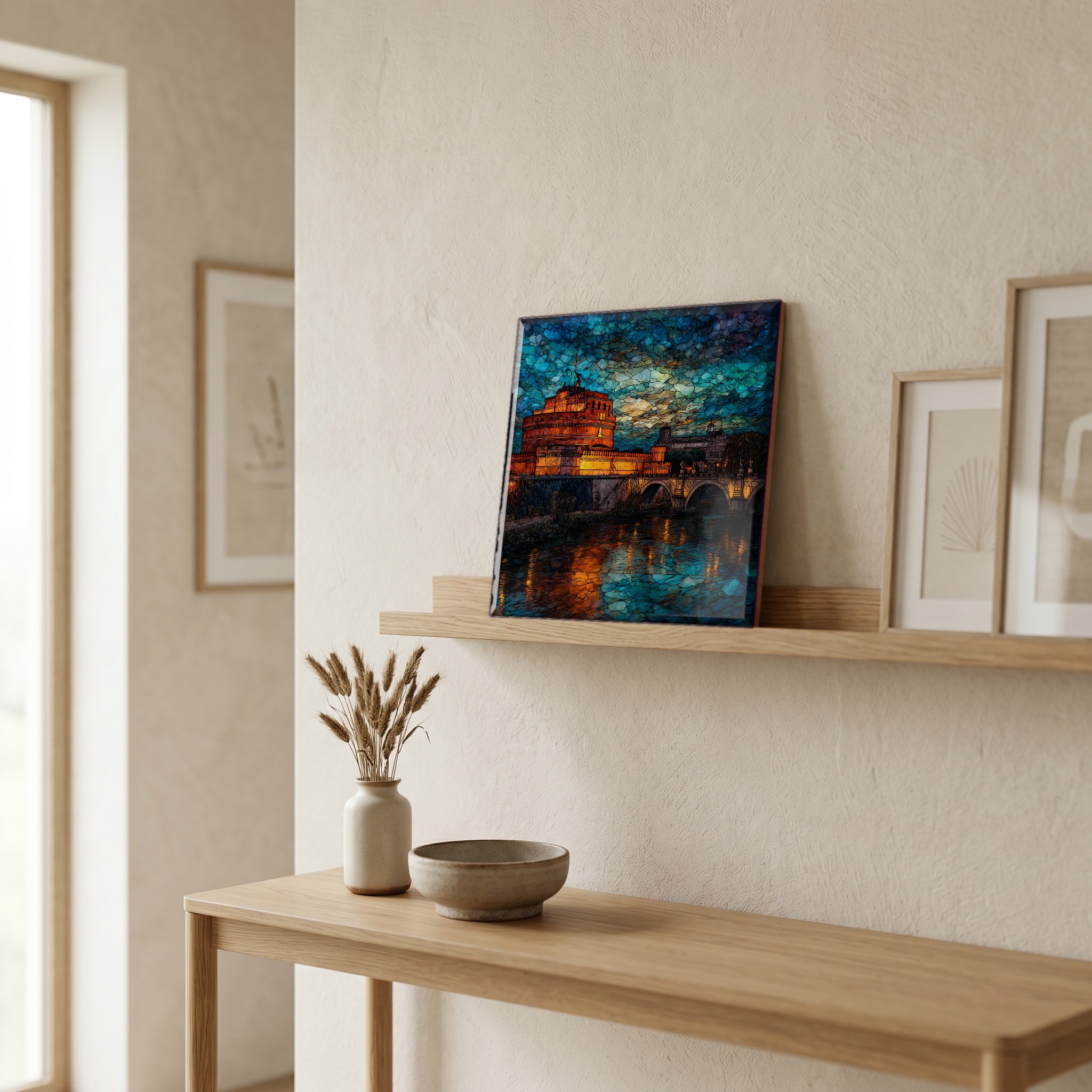
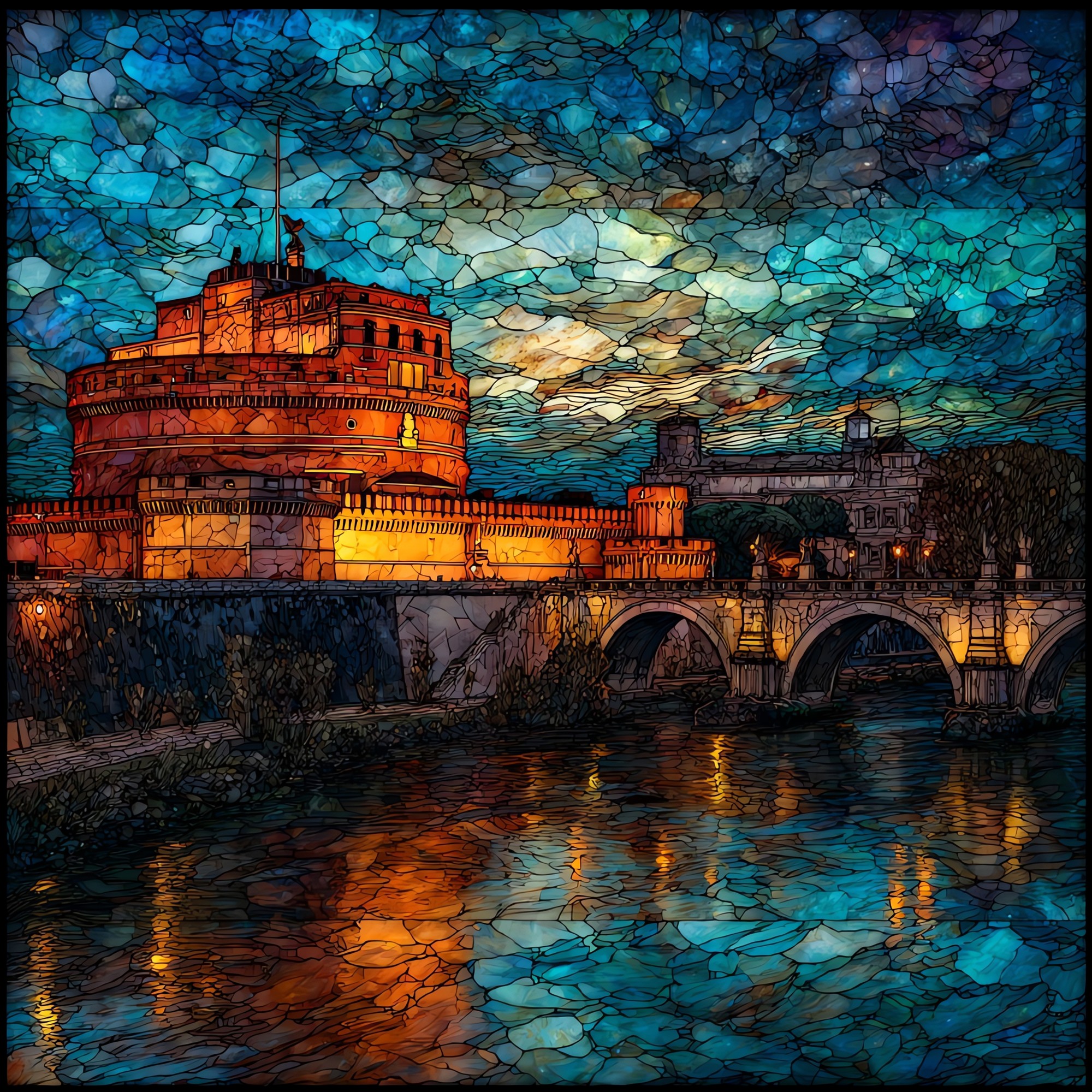
Castel Sant'Angelo
shown on ceramic, 12-inch tileItaly
on the Tiber's right bank, just below the Vatican

Castel Sant'Angelo

the angel that sheathed its sword over the city.

Where it lives

Not only on a wall.

A small tile on the nightstand catching the morning. A larger one above the fire. Yours, wherever you spend the slow hours.
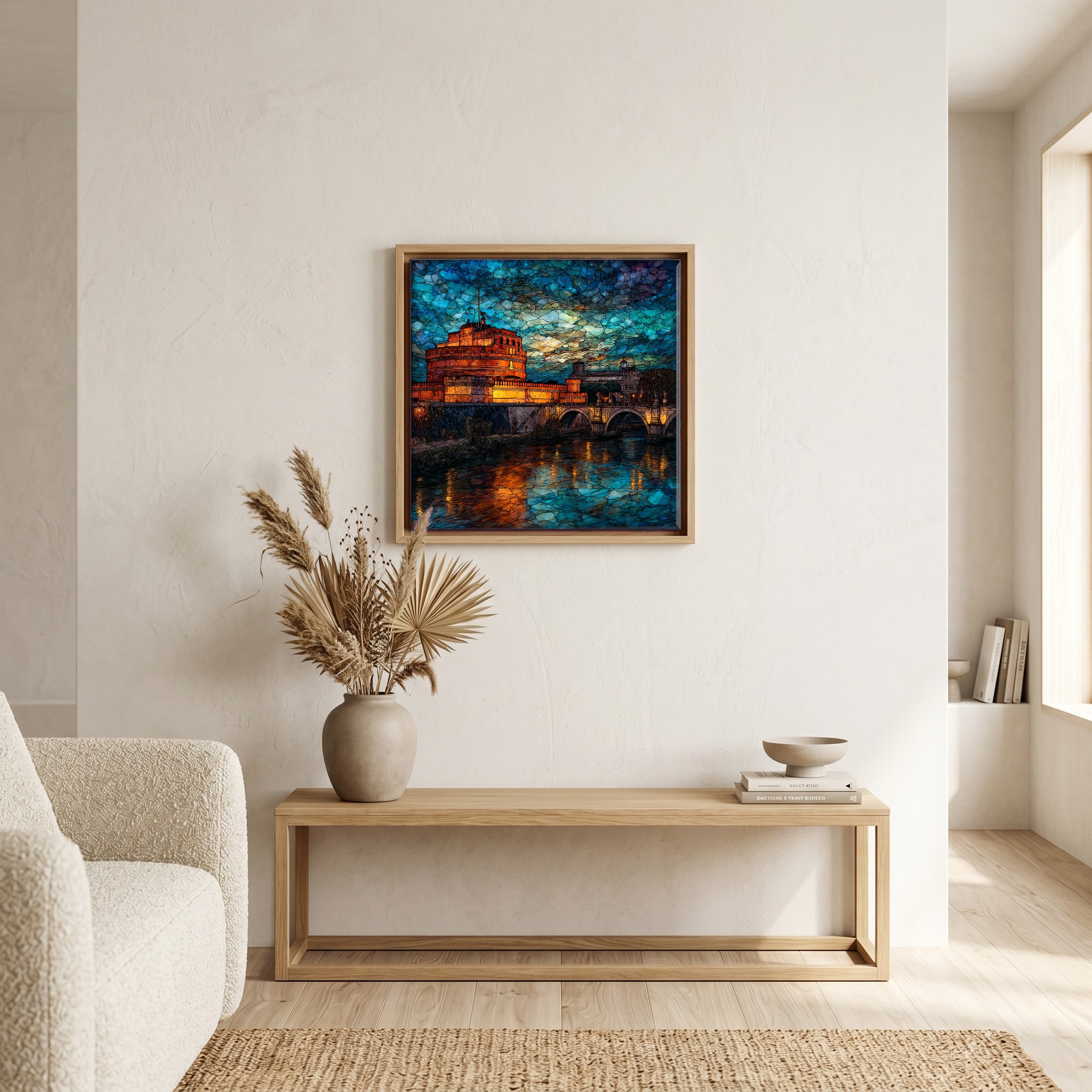
Above the bench, in a warm oak surround.
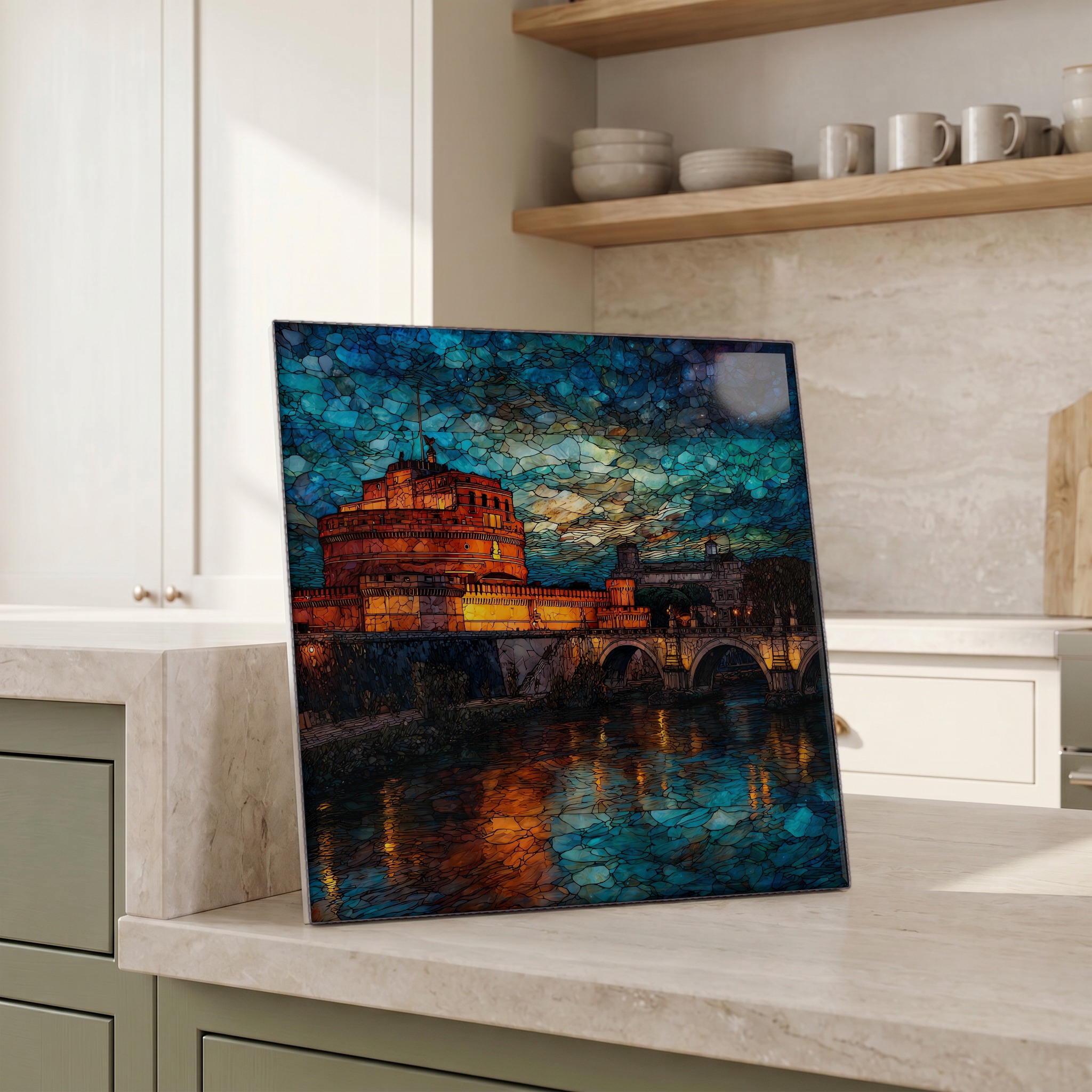
Beside the kettle, propped on the counter.
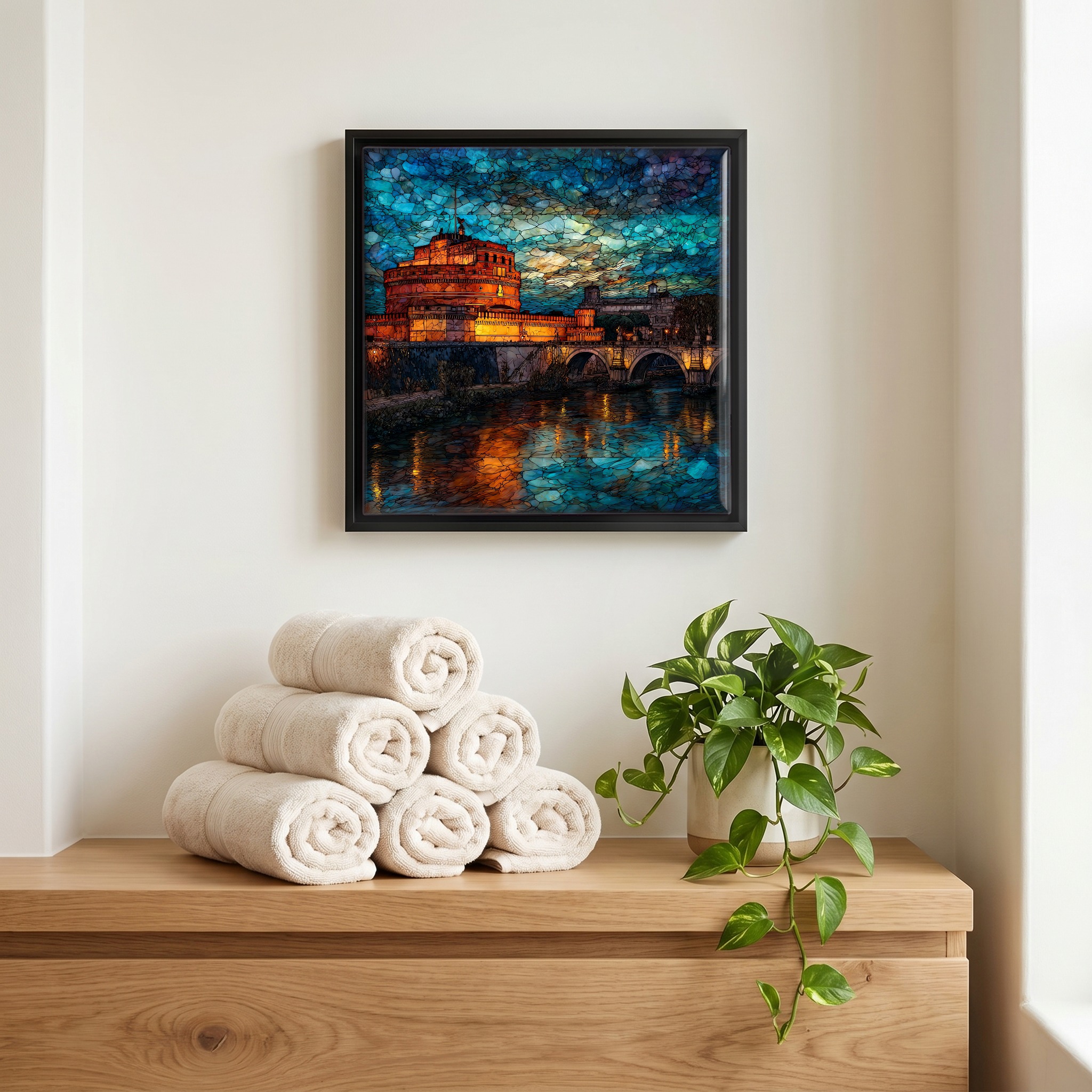
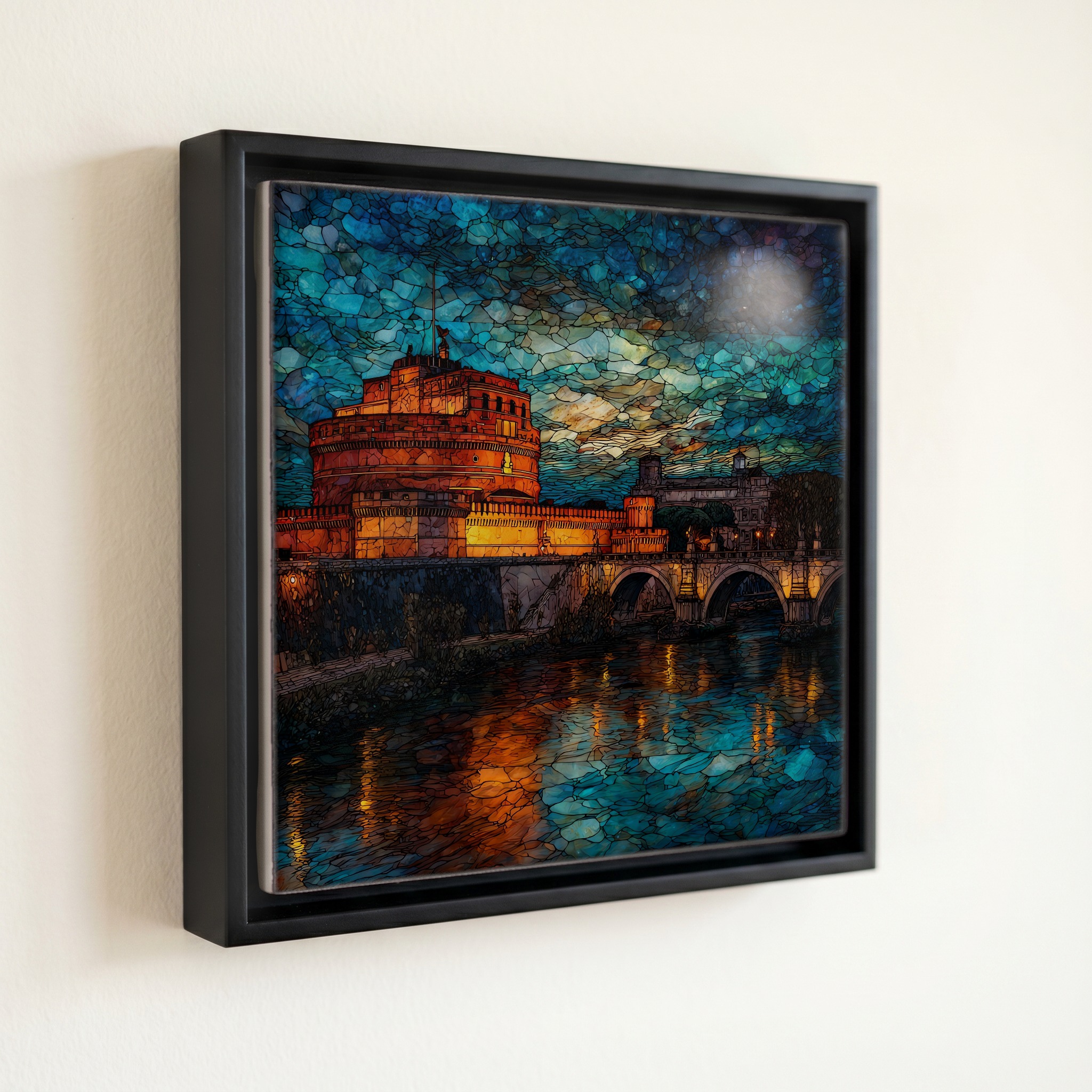
Above the linens, in a slim black surround.
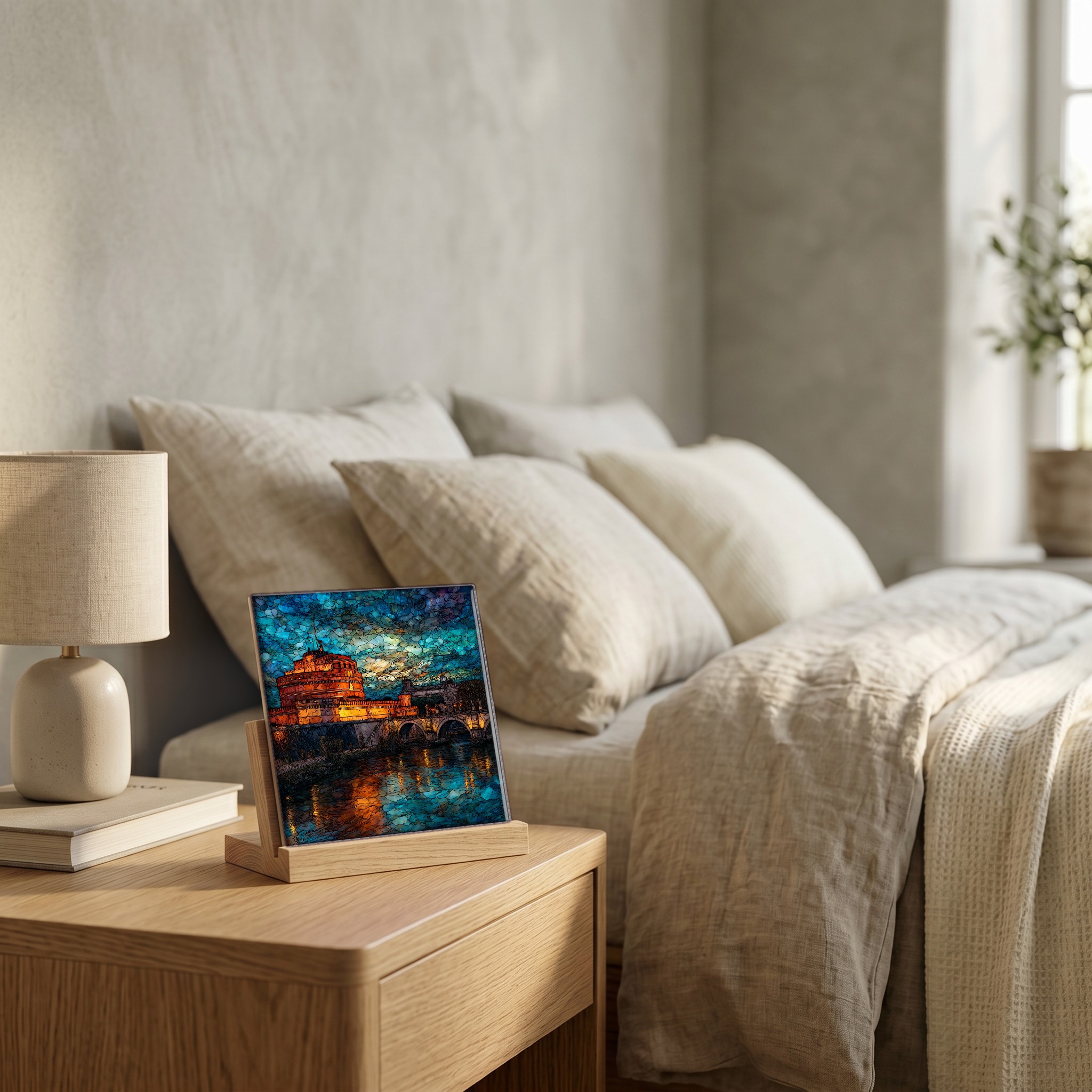
On the nightstand, on a light oak stand.
On a picture ledge, where the light comes in.
a note from the studio

A round drum of brick and travertine on the right bank of the Tiber, built as Hadrian's tomb and renamed for an angel. The story goes that during the plague of 590, Pope Gregory saw the Archangel Michael sheathe his sword above it, and the dying stopped. A bronze Michael keeps that spot today. Across the water, Bernini's angels line the old bridge, each carrying an instrument of the Passion. People cross at dusk, when the brick goes the colour of a banked coal and the river holds the light a little longer than the sky does.
from the studio
shown in a slim black floating frame · 6 × 6 in
— bring it home

Castel Sant'Angelo, on ceramic.

Each tile is finished by hand in our Knoxville studio. Artwork is slowly infused into the ceramic surface under high heat and pressure, and rests beneath a thin glossy finish. The colour lives in the surface, not on top of it.

What kind of piece?
One tile — square or rectangle.
How big?
the popular one — counter, shelf, nightstand
6 × 6 in · 15 cm · 1.6 lb
Surface finish
A clear glossy finish — the artwork reads as if under resin. Ideal for show-pieces and framed wall art.
How it sits
A hidden cleat — sits ¼″ proud of the wall.
$58
Hand-finished and shipped from our studio at the foot of the Smokies. On your wall in about ten days.
size
6 × 6 in
15 cm
weighs
1.6 lb
solid in the hand
surface
ceramic, hand-finished
art rests beneath a thin glossy finish
from
Knoxville, TN
our family studio, at the foot of the Smokies
— start a Coaster Set

Pick any four 4-inch tiles — National Parks you've been to, a Smokies set, the four seasons of one place. $ for a set of , cork-backed, ready to live on the table.
comes gift-ready
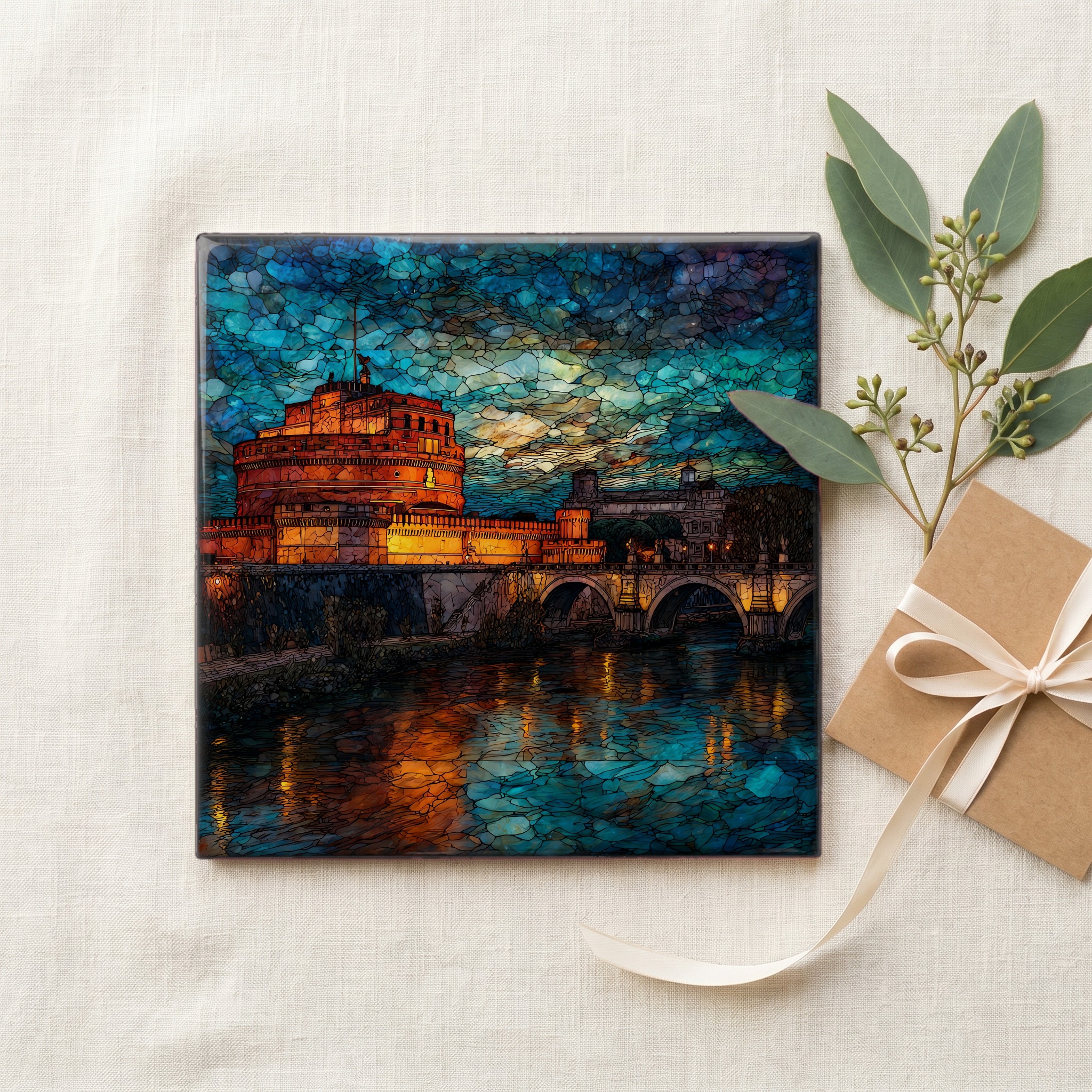
comes gift-ready

Each tile ships in a kraft box, tied with cream ribbon, with a handwritten note from the studio if you'd like to add one.
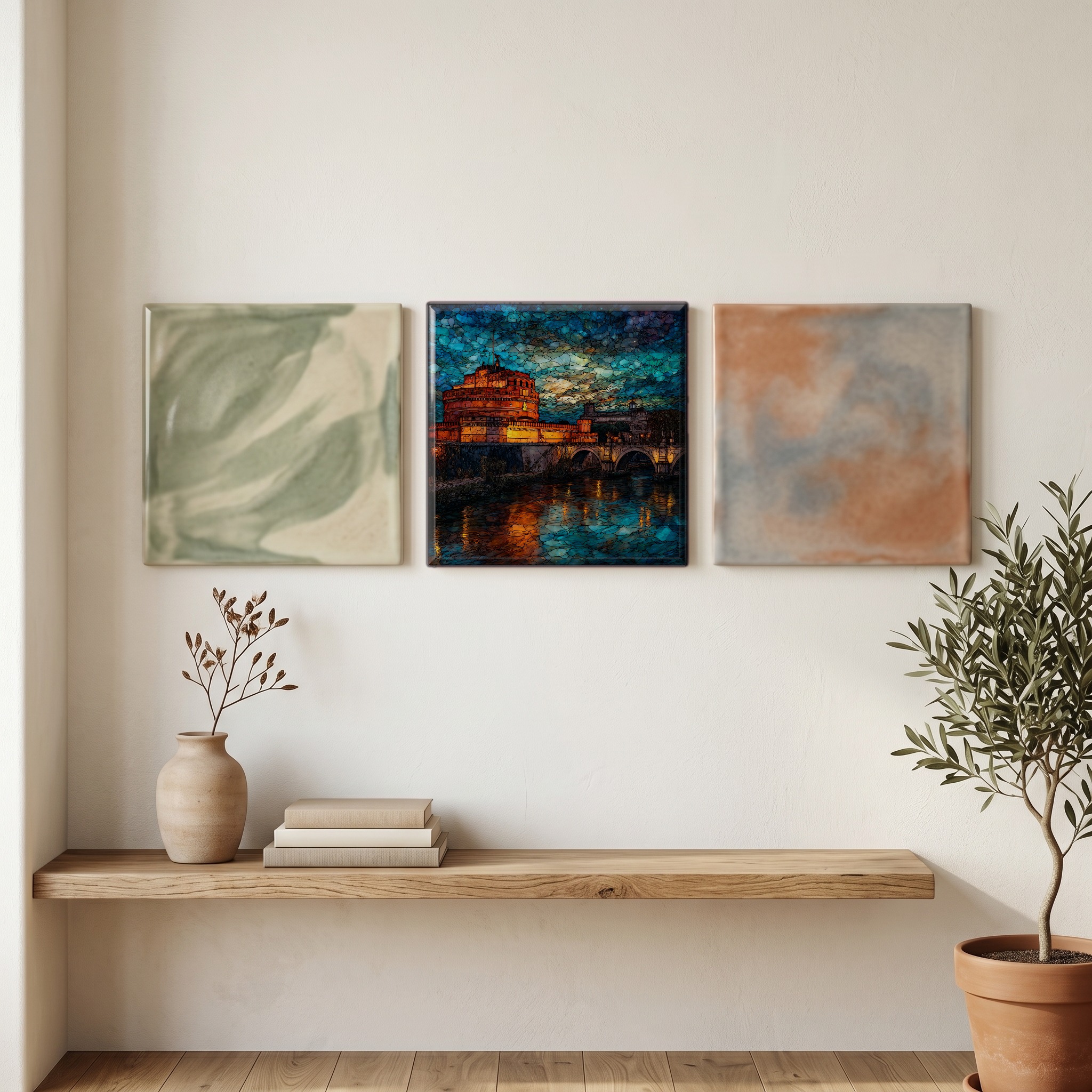
or build a grouping
or build a grouping

Three or five different vistas, hung together — a chapter of places you've been, or want to go.

about Castel Sant'Angelo

The place, in three passes.

A little of what's known, in case you fall down the rabbit hole — or want to go see it yourself.
the place

Castel Sant'Angelo stands on the right bank of the Tiber in Rome, in the Lazio region, directly across the river from the historic centre and a short walk upstream of Vatican City. Emperor Hadrian had it built between 134 and 139 AD as a mausoleum for himself and his family, and his ashes were placed inside in 139, a year after his death, alongside those of his wife Sabina. The Ponte Sant'Angelo, the old Roman Pons Aelius, still carries foot traffic across the water to its base. From the upper terrace the dome of St. Peter's reads close enough to touch.

— informed by Wikipedia, Turismo Roma
the stone

What began as a Roman tomb is now a stack of nearly nineteen centuries of building. Hadrian's cylindrical drum of brick and travertine became a fortress in the Middle Ages, then a papal stronghold, a prison, and a refuge. In 1277 Pope Nicholas III joined it to the Vatican by the Passetto di Borgo, an 800-metre walled corridor a pope could cross unseen. A bronze Archangel Michael stands on the roofline, cast by Peter Anton von Verschaffelt in 1753, marking the spot where, by legend, the angel sheathed his sword to end the plague of 590. Across the river, ten angels designed by Bernini line the bridge, each holding an instrument of the Passion.

the visit

Castel Sant'Angelo is open to the public as the Museo Nazionale di Castel Sant'Angelo, entered from the Lungotevere on the river side. A spiral ramp built for Hadrian's funeral processions climbs through the old drum to the papal apartments, the historic armoury, and the open terrace where the third act of Puccini's Tosca, first staged in Rome in 1900, comes to its end. The terrace holds one of the widest rooftop views in the city, north toward St. Peter's and south over the river bends. The Passetto di Borgo, the popes' escape corridor, opens seasonally. Late afternoon, as the light drops, is when the brick warms and the crowd on Ponte Sant'Angelo thins.

— informed by Wikipedia, Turismo Roma
where
Italy · Rome, Lazio
position
41.9031° N · 12.4663° E
the neighborhood

What's nearby.

A handful of named places within an hour's walk or short drive. Some we've already painted; some we will.
0.1 km S
Ponte Sant'Angelo
Roman bridge
0.9 km W
St. Peter's Basilica
basilica
1.3 km NW
Vatican Museums
museum complex
0.9 km SE
Piazza Navona
Baroque square
1.2 km SE
Pantheon
Roman temple
N
Castel Sant'Angelo
Ponte Sant'Angelo
St. Peter's Basilica
Vatican Museums
Piazza Navona
Pantheon
common questions

What people ask.

A few questions we get about Castel Sant'Angelo — and about bringing the piece home.
about the place

Castel Sant'Angelo stands on the right bank of the Tiber in Rome, in the Lazio region, across the river from the historic centre and a short walk from Vatican City. The Ponte Sant'Angelo, a pedestrian bridge, crosses the river to its base.

The name comes from a legend of 590 AD, when Pope Gregory the Great saw the Archangel Michael sheathe his sword above the building as a sign the plague was ending. A bronze statue of Michael, cast in 1753 by Peter Anton von Verschaffelt, crowns it today.

It was built as the Mausoleum of Hadrian between 134 and 139 AD, a cylindrical tomb for the emperor and his family. Hadrian's ashes were placed inside in 139, a year after his death, alongside those of his wife Sabina.

The Passetto di Borgo is an elevated walled corridor roughly 800 metres long that links Castel Sant'Angelo to the Vatican. Connected under Pope Nicholas III in 1277, it served as a papal escape route, used most famously by Clement VII during the 1527 Sack of Rome.

Gian Lorenzo Bernini designed the program of ten angels on Ponte Sant'Angelo, each holding an instrument of Christ's Passion, begun around 1669 under Pope Clement IX. Bernini carved only two of the originals himself, and his pupils completed the rest.

Yes. The third and final act of Giacomo Puccini's opera Tosca, which premiered in Rome in 1900, is set on the terrace of Castel Sant'Angelo, where the heroine leaps from the ramparts.

Yes. It is open as the Museo Nazionale di Castel Sant'Angelo. A spiral ramp built for Hadrian's funeral leads up through the papal apartments and armoury to a rooftop terrace with broad views over Rome and St. Peter's.

about the piece in your home

It carries well for anyone with ties to Rome or a long memory of the city. Castel Sant'Angelo is one of the most recognised silhouettes on the Tiber, bound to the Vatican and to centuries of the city's story. A Keepsake or Small with a handwritten note from the studio travels easily.

The luminous jewel tones over warm brick suit rooms with depth and colour rather than cool minimalism. It sits well in Jewel-tone Maximalist interiors, Old-World European and heritage-traditional rooms, and warm eclectic spaces that already mix antiques with art.

Yes. The warm, heritage-leaning maximalism that has been replacing cool grey minimalism favours this kind of saturated, story-rich wall piece. It also fits the Grandmillennial and European-heritage looks, where framed art with a sense of place anchors the room.

Above a sofa, a single Large reads from across the room, while a four-tile Mural fills a wider wall with more presence. Above a console or in a hallway, a Medium or a four-tile Mural holds the space without crowding it. For a feature wall, a nine-tile Mural.

Yes. For bathrooms, showers, and kitchen backsplashes, choose the Dura Satin or Matte finish rather than Glossy. Both are scratch-resistant and built for steam and splashes, and the colour lives in the ceramic surface, so it holds up to daily wear.

A soft microfibre cloth and water is all it needs. The colour is slowly infused into the ceramic surface under high heat and pressure and sits beneath a thin glossy finish, so there is nothing on top to wipe away. Skip abrasive cleaners and scouring pads.

Yes. Every WenderVista piece is created by Reid Wender and hand-finished in our Knoxville, Tennessee studio. The work is not licensed from stock libraries, and each place in the atlas is interpreted in our own stained-glass visual language.

if this one stayed with you

A few you might also love.

Hand-picked by the eye that found Sorapis. Same air, same kind of quiet.
— a collection

The Italian Dolomites,
painted slow.

The valleys between Cortina and Val Gardena, the tarns you walk an hour to see, the towers that turn the colour of a banked fire just before dark. Wander the collection by valley, by season, or follow the path Reid walked.

Tre Cime
Braies
Misurina
Sorapis
Cinque Torri
Sassolungo
Marmolada