Wender·Vista
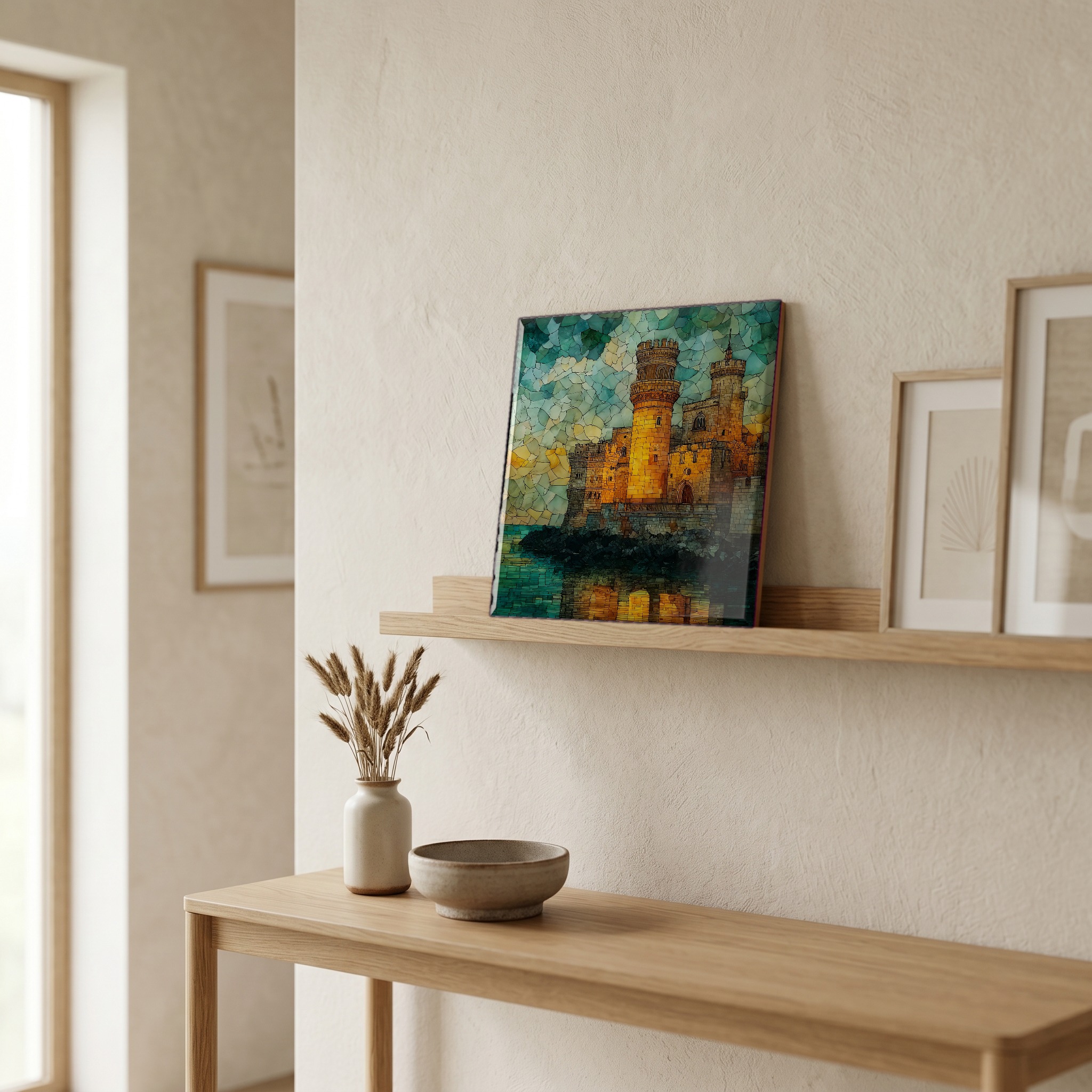
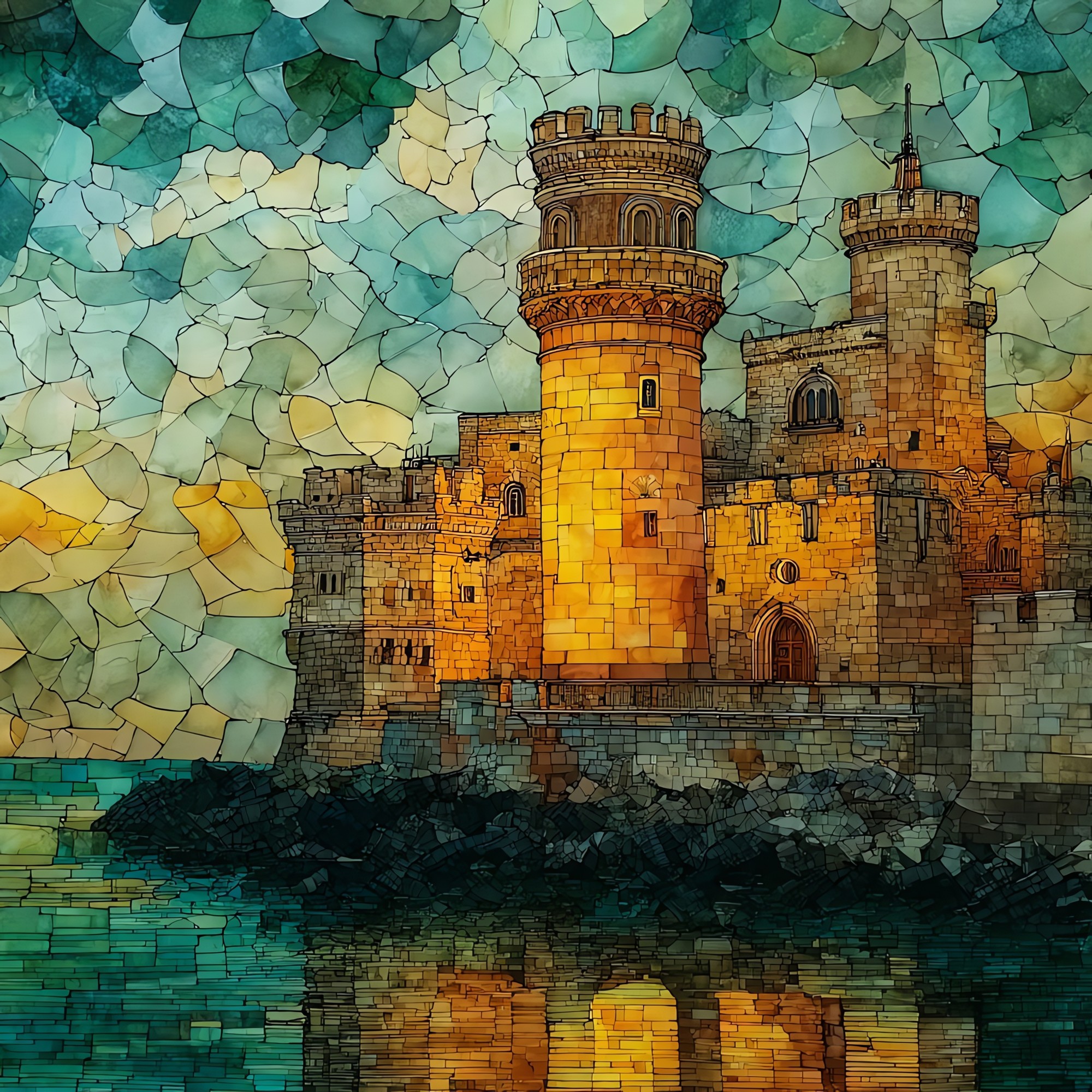
Castel Nuovo
shown on ceramic, 12-inch tileItaly
on the Naples waterfront, between the port and Piazza Municipio

Castel Nuovo

— the white arch the dark towers hold.

Where it lives

Not only on a wall.

A small tile on the nightstand catching the morning. A larger one above the fire. Yours, wherever you spend the slow hours.
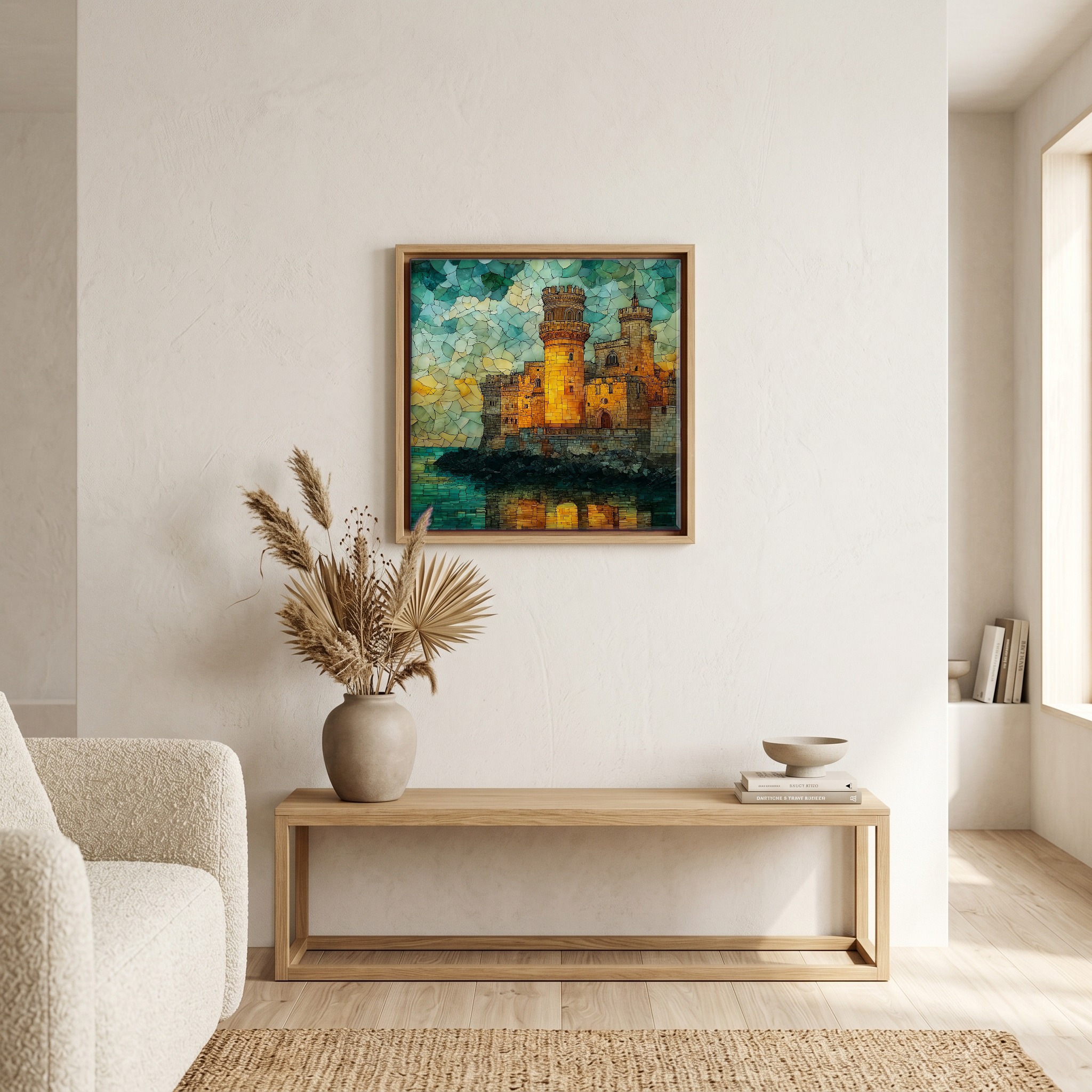
Above the bench, in a warm oak surround.
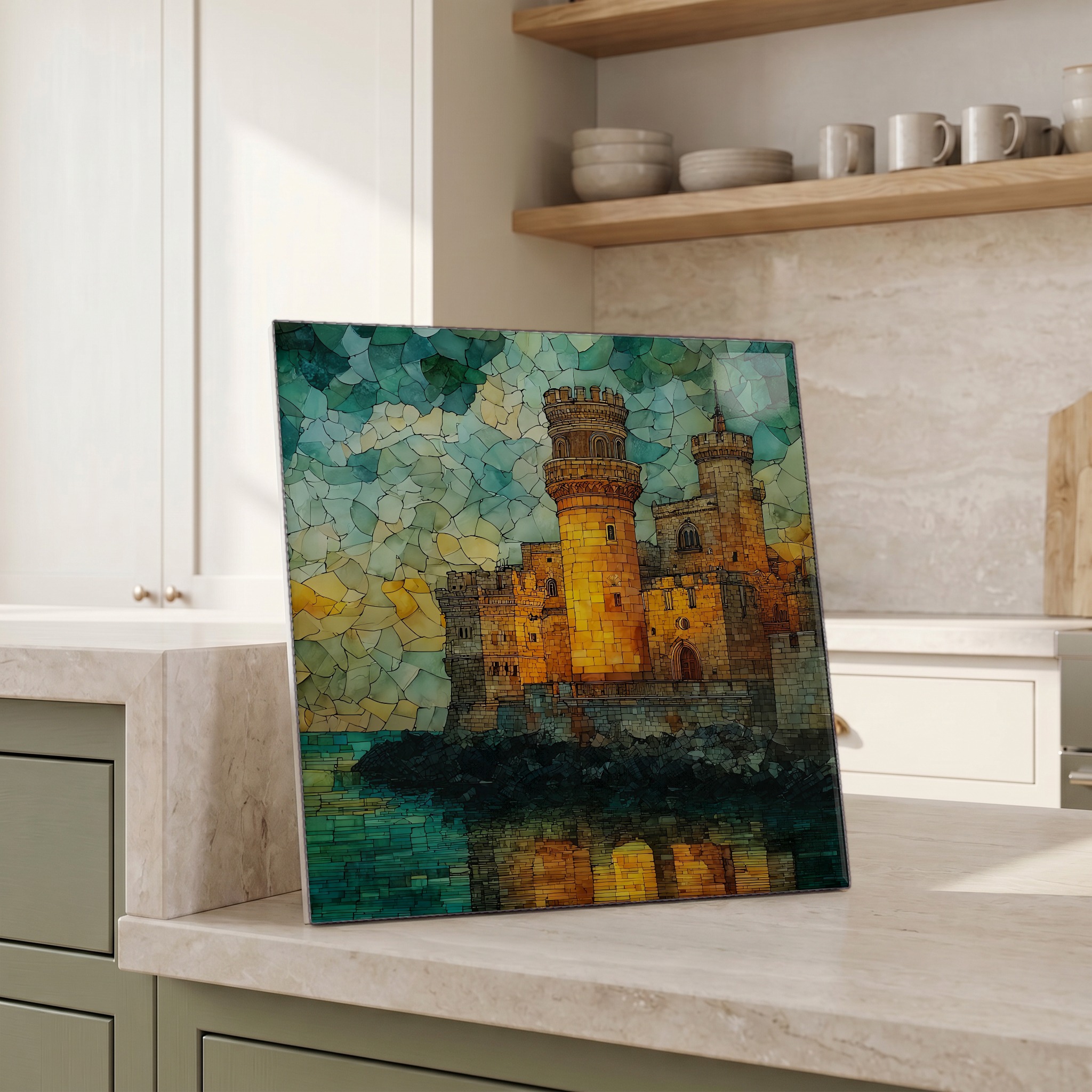
Beside the kettle, propped on the counter.
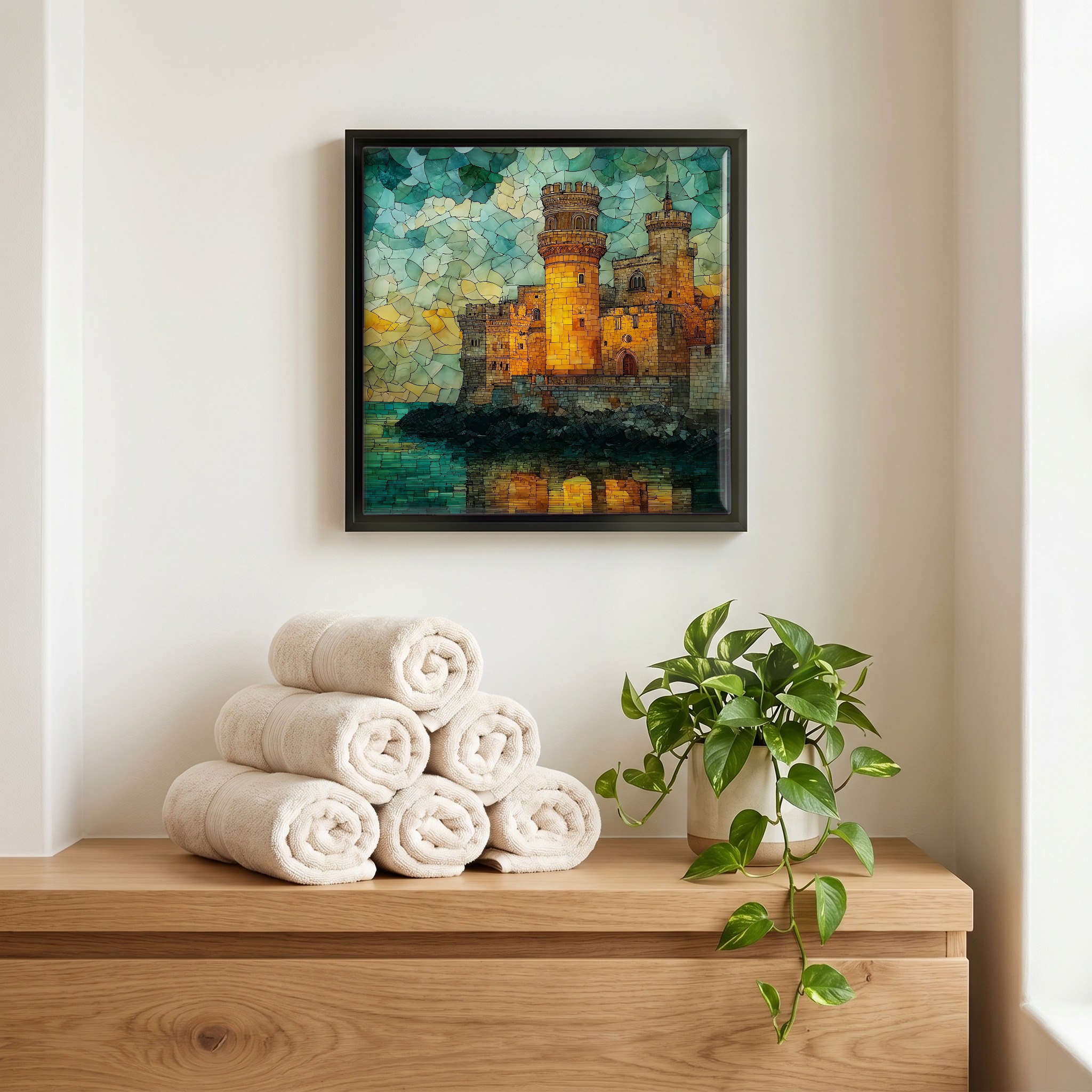
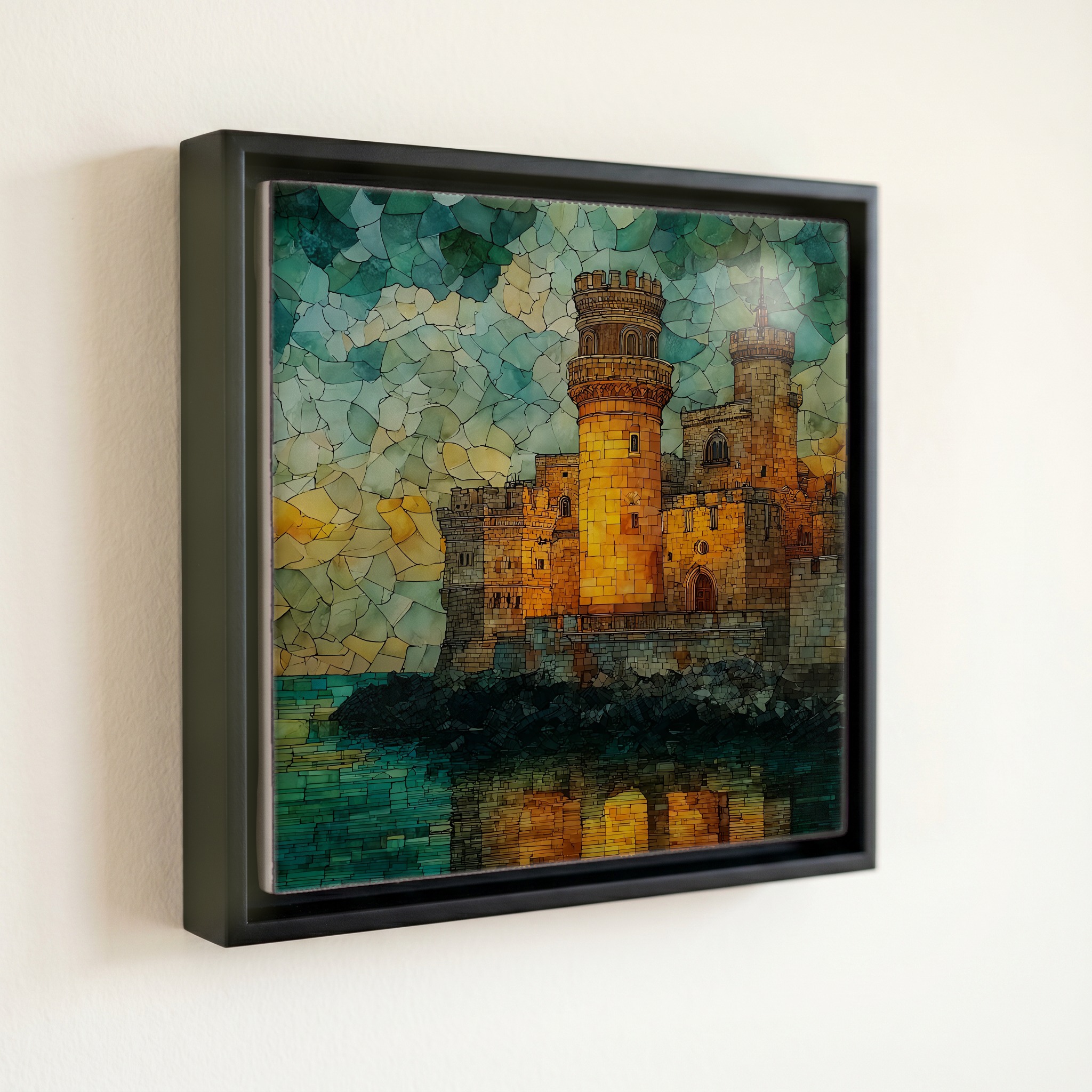
Above the linens, in a slim black surround.
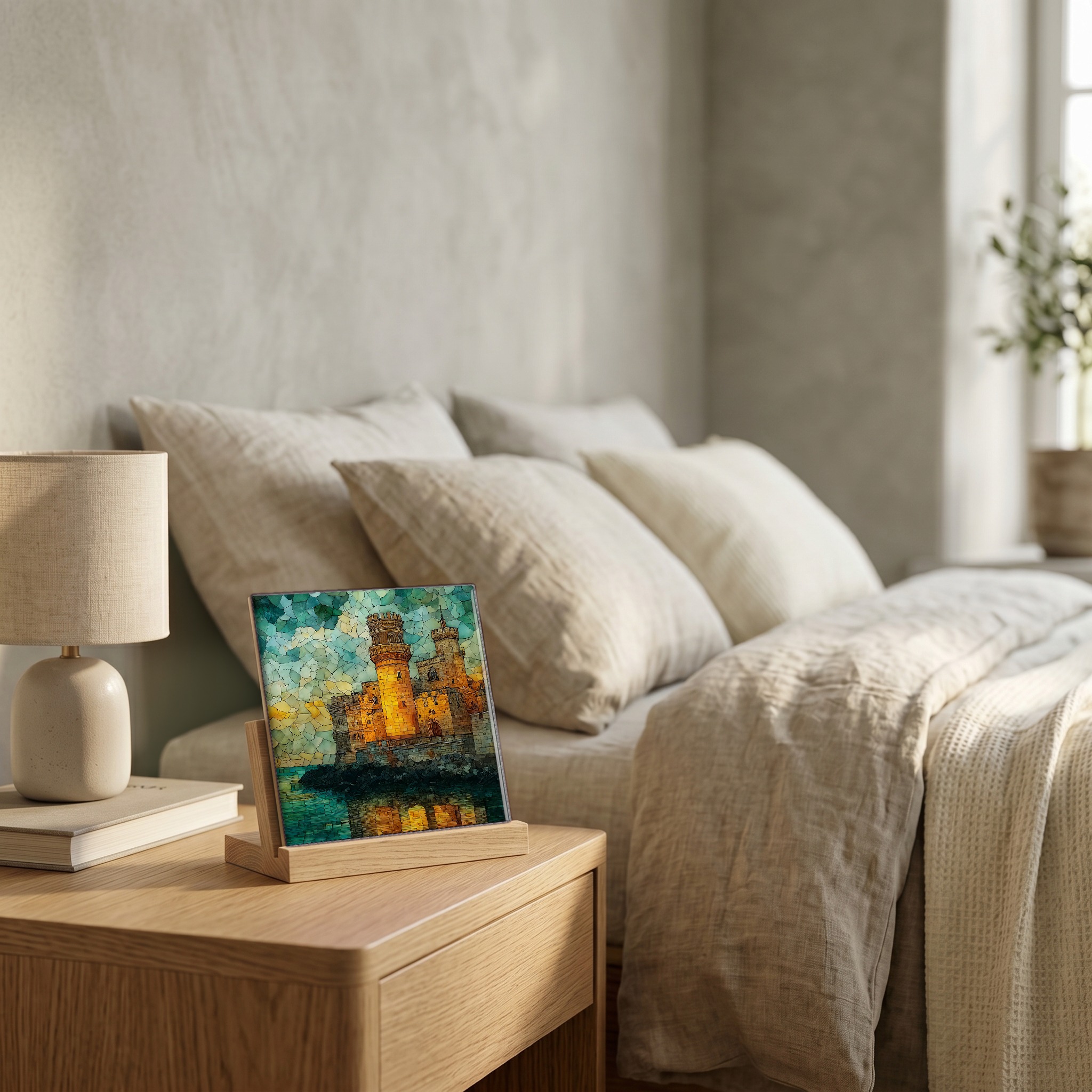
On the nightstand, on a light oak stand.
On a picture ledge, where the light comes in.
a note from the studio

Five round towers of dark piperno stone on the Naples waterfront, with a single white marble arch wedged between two of them: the triumphal arch the Aragonese set there in the 1450s. Behind the castle, the Bay of Naples and Vesuvius across the water. The arch is the singular thing: a Roman form done in early Renaissance marble, placed against a fortress meant to look heavy. It has weathered seven centuries of harbour wind. People still walk past it on their way to the ferry to Capri without quite registering what it is.
from the studio
shown in a slim black floating frame · 6 × 6 in
— bring it home

Castel Nuovo, on ceramic.

Each tile is finished by hand in our Knoxville studio. Artwork is slowly infused into the ceramic surface under high heat and pressure, and rests beneath a thin glossy finish. The colour lives in the surface, not on top of it.

What kind of piece?
One tile — square or rectangle.
How big?
the popular one — counter, shelf, nightstand
6 × 6 in · 15 cm · 1.6 lb
Surface finish
A clear glossy finish — the artwork reads as if under resin. Ideal for show-pieces and framed wall art.
How it sits
A hidden cleat — sits ¼″ proud of the wall.
$58
Hand-finished and shipped from our studio at the foot of the Smokies. On your wall in about ten days.
size
6 × 6 in
15 cm
weighs
1.6 lb
solid in the hand
surface
ceramic, hand-finished
art rests beneath a thin glossy finish
from
Knoxville, TN
our family studio, at the foot of the Smokies
— start a Coaster Set

Pick any four 4-inch tiles — National Parks you've been to, a Smokies set, the four seasons of one place. $ for a set of , cork-backed, ready to live on the table.
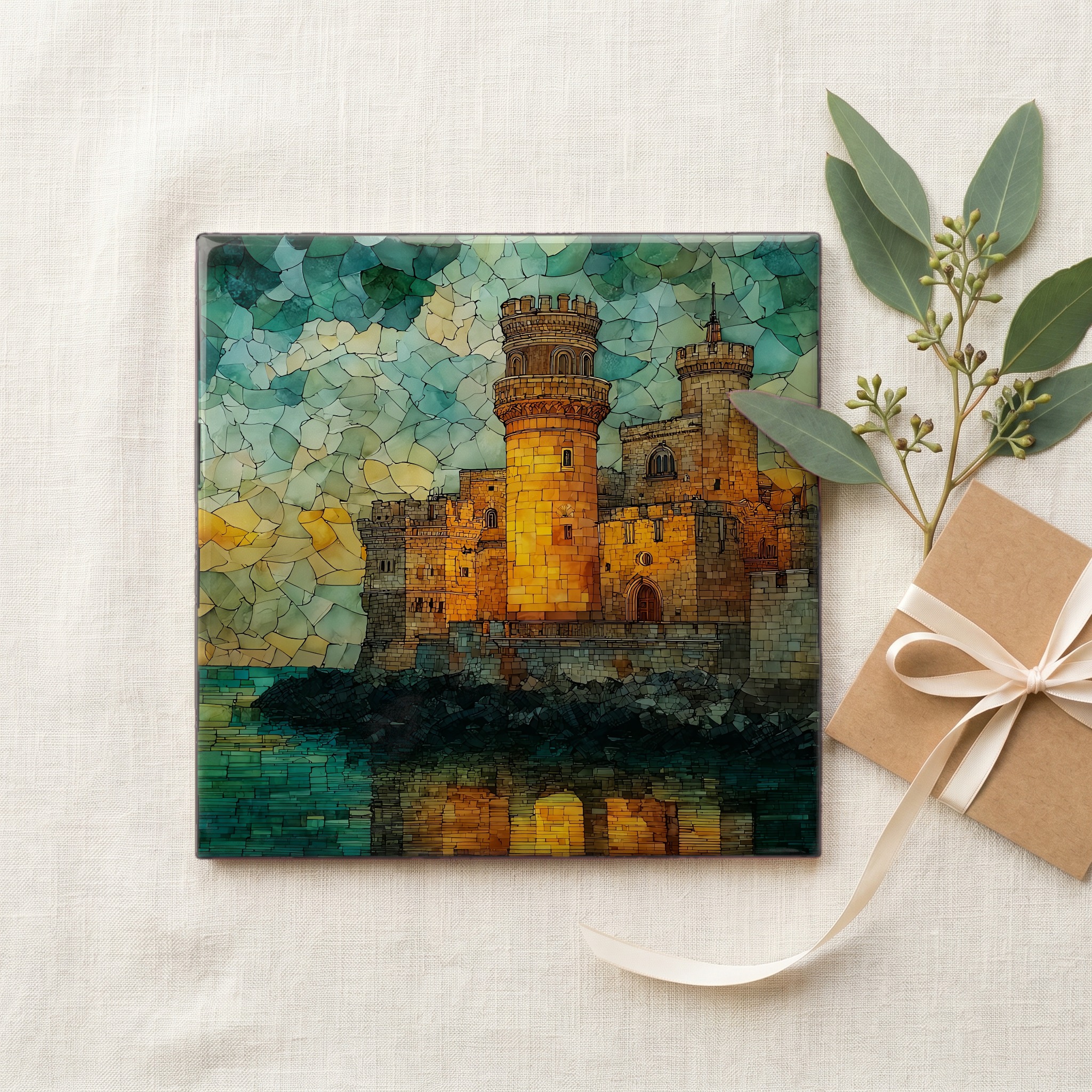
comes gift-ready
comes gift-ready

Each tile ships in a kraft box, tied with cream ribbon, with a handwritten note from the studio if you'd like to add one.
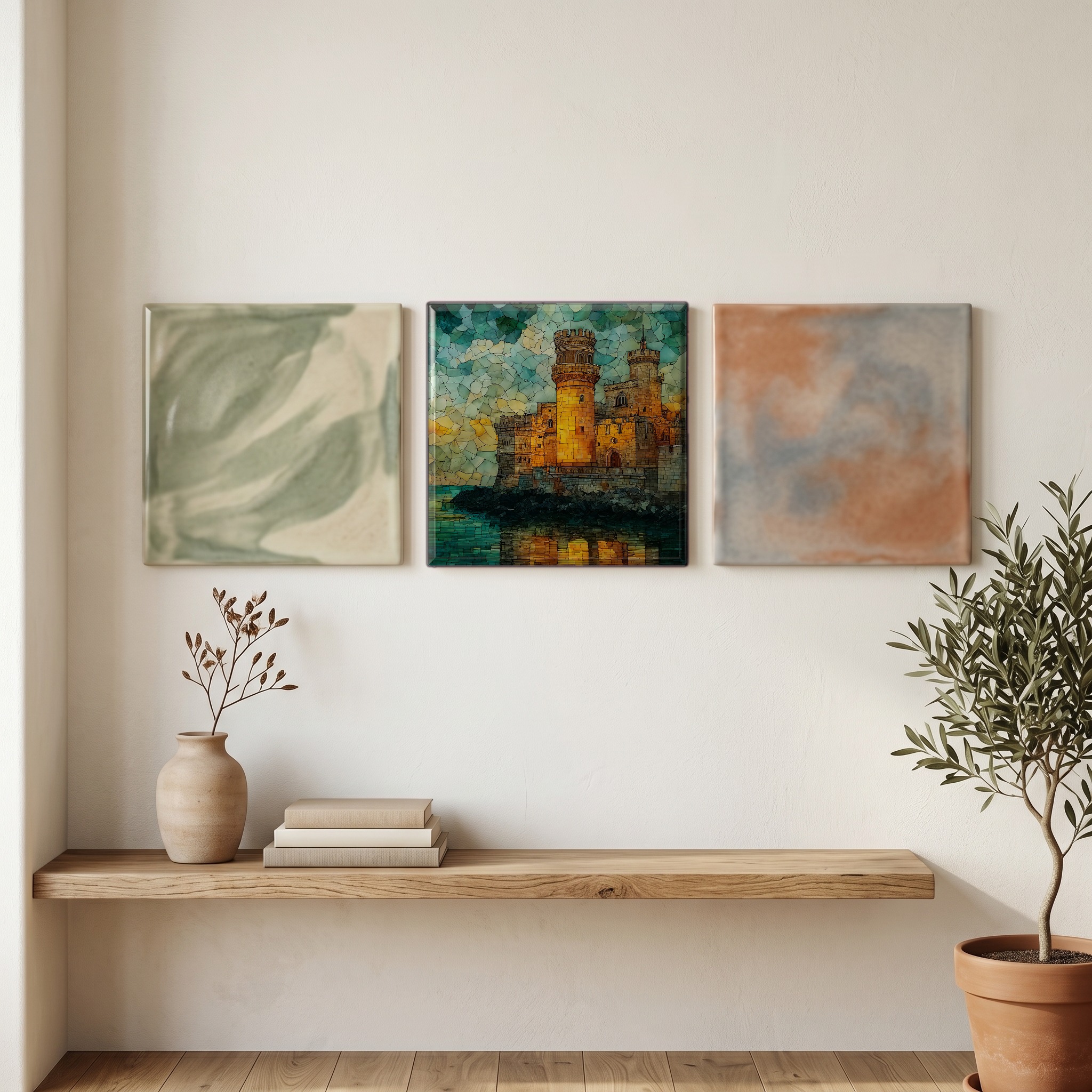
or build a grouping
or build a grouping

Three or five different vistas, hung together — a chapter of places you've been, or want to go.

about Castel Nuovo

The place, in three passes.

A little of what's known, in case you fall down the rabbit hole — or want to go see it yourself.
the place

Castel Nuovo stands on Naples' waterfront, between the cruise terminal at Stazione Marittima and Piazza Municipio, a short walk from the port where ferries leave for Capri, Ischia and Procida. The castle was begun in 1279 under Charles I of Anjou as the royal seat of the Kingdom of Sicily; the current five-tower silhouette in dark piperno stone dates largely from the Aragonese rebuild begun by Alfonso V in 1442. Naples sits in the Campania region of southern Italy, on the western edge of the Bay of Naples, with Mount Vesuvius across the water some twelve kilometres east.

the stone

The castle's heaviness reads as dark grey-brown because the bulk is faced in piperno, a welded volcanic tuff quarried in the Campi Flegrei west of the city. Set between the western towers is the Arco di Trionfo, the triumphal arch of Alfonso of Aragon, built in white Carrara marble between 1453 and roughly 1471. The arch was designed and carved by Francesco Laurana, Pietro di Martino, Domenico Gagini and others, and is considered the first major work of Renaissance sculpture in southern Italy. Its two stacked arches combine Roman triumphal grammar with Aragonese heraldry; the relief at the top records Alfonso's entry into the city in February 1443.

the visit

The castle houses the Museo Civico di Castel Nuovo, run by the Comune di Napoli. The museum occupies the Sala dei Baroni, with Guillermo Sagrera's eight-pointed star vault completed in 1457, together with the Palatine Chapel and two upper-floor picture galleries. Entry is from Via Vittorio Emanuele III on the seaward side; the courtyard and the triumphal arch can be approached without a ticket. The museum is closed Sundays and several public holidays, with a standard admission fee in single digits of euros. Most visitors come straight from the port; the gangways at Stazione Marittima sit roughly two hundred metres from the gatehouse.

where
Italy · Naples, Campania
position
40.8386° N · 14.2528° E
the neighborhood

What's nearby.

A handful of named places within an hour's walk or short drive. Some we've already painted; some we will.
1 km W
Castel dell'Ovo
seafront fortress
1 km W
Palazzo Reale di Napoli
royal palace
1 km W
Piazza del Plebiscito
civic square
1 km NW
Teatro di San Carlo
opera house
1 km NW
Galleria Umberto I
shopping arcade
2 km NW
Castel Sant'Elmo
hilltop fortress
12 km E
Mount Vesuvius
volcano
N
Castel Nuovo
Castel dell'Ovo
Palazzo Reale di Napoli
Piazza del Plebiscito
Teatro di San Carlo
Galleria Umberto I
Castel Sant'Elmo
Mount Vesuvius
common questions

What people ask.

A few questions we get about Castel Nuovo — and about bringing the piece home.
about the place

Castel Nuovo stands on the Naples waterfront on Via Vittorio Emanuele III, between the cruise terminal at Stazione Marittima and Piazza Municipio in the city's historic centre. The Bay of Naples is immediately behind it; the metro is one stop from the central station.

The original Angevin fortress was begun in 1279 under Charles I of Anjou and finished around 1282. The current five-tower silhouette dates from the Aragonese reconstruction begun by Alfonso V in 1442, with the marble triumphal arch added between 1453 and roughly 1471.

It is the Arco di Trionfo, a Renaissance triumphal arch of white Carrara marble set between two of the castle's tuff towers. Carved by Francesco Laurana and others between 1453 and about 1471, it commemorates Alfonso of Aragon's entry into Naples in February 1443.

Maschio Angioino, meaning the Angevin Keep, is the Neapolitan name for the castle, recognising its origin under Charles I of Anjou in 1279. Castel Nuovo means new castle, and the name distinguished it from the older Castel dell'Ovo on the seafront a kilometre west.

Yes. The castle houses the Museo Civico di Castel Nuovo, run by the city of Naples. The Sala dei Baroni, the Palatine Chapel and the picture galleries are open most days except Sundays and public holidays. The courtyard and triumphal arch can be approached without a ticket.

Pope Celestine V renounced the papacy at Castel Nuovo on 13 December 1294, the only voluntary papal abdication until Benedict XVI in 2013. Dante is widely thought to allude to him in Canto III of the Inferno, among the souls of the great refusal.

The bulk of the castle is faced in piperno, a dark welded volcanic tuff quarried in the Campi Flegrei west of Naples. The five round towers and the curtain walls are piperno. Only the triumphal arch between the western towers is white Carrara marble.

about the piece in your home

It has been a meaningful gift for many of our customers with Neapolitan roots or family in Campania. Castel Nuovo sits at the centre of how the city sees itself; the silhouette appears on city seals, on espresso cups, in the tile shops along Via San Gregorio Armeno. A Coaster or Small with a handwritten studio note carries well.

The palette runs from dark piperno greys through warm honey to bone-white marble, a moody but warm range. It sits well in Italianate maximalist rooms, Mediterranean modern interiors, and library-warm studies with leather and walnut. It is less at home in cool Scandinavian or all-white minimalist rooms.

Yes. Warm-toned Italian and Mediterranean modern rooms have moved back into rotation in the last two years, with terracotta, ochre, and travertine showing up alongside walnut and brass. The castle's dark-stone-and-marble palette ties cleanly to those rooms without feeling thematically forced.

For a standard sofa or sideboard, a single Large reads cleanly from across the room. For a longer wall, a four-tile Mural opens the composition out so the towers and the arch each get their own panel. A nine-tile Mural becomes the centrepiece of a dining wall.

Yes. Order the Dura Satin or Matte finish for bathrooms, showers, and backsplashes; both are scratch-resistant and stand up to steam, splash, and household cleaners. The Glossy finish is reserved for framed wall pieces and dry rooms.

A soft microfibre cloth with warm water is enough for everyday cleaning. For kitchen or bathroom installations, mild household cleaners are safe on the Dura Satin and Matte finishes. The colour lives in the ceramic surface, not on top of it, so it will not lift.

Yes. Every WenderVista piece is painted and finished in our Knoxville studio. Reid Wender chooses the place, develops the visual, and signs off on every tile before it ships. We do not license images and do not carry stock art.

if this one stayed with you

A few you might also love.

Hand-picked by the eye that found Sorapis. Same air, same kind of quiet.
— a collection

The Italian Dolomites,
painted slow.

The valleys between Cortina and Val Gardena, the tarns you walk an hour to see, the towers that turn the colour of a banked fire just before dark. Wander the collection by valley, by season, or follow the path Reid walked.

Tre Cime
Braies
Misurina
Sorapis
Cinque Torri
Sassolungo
Marmolada