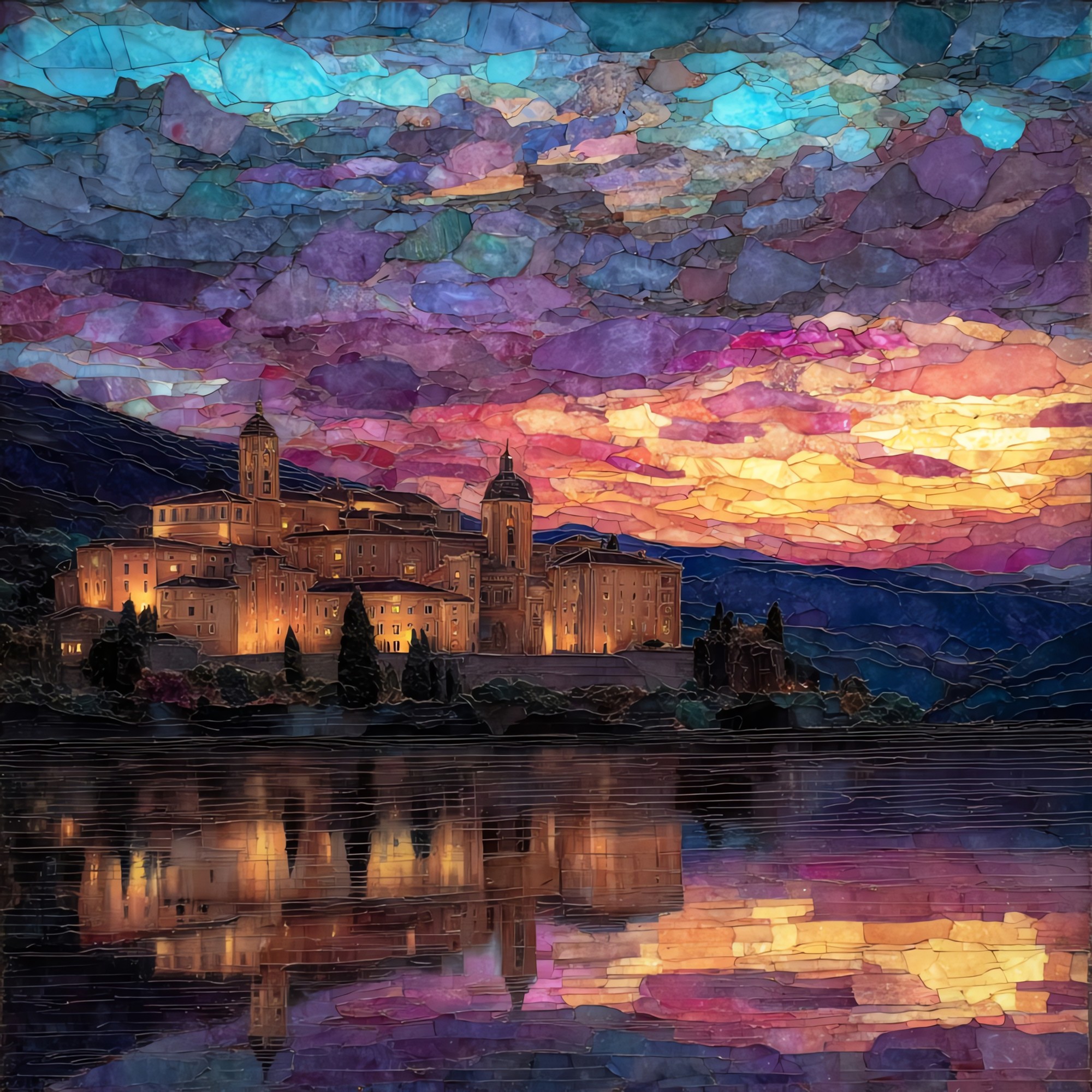
Castel Gandolfo
— — the cool the city climbs the hill to find.
Not only on a wall.
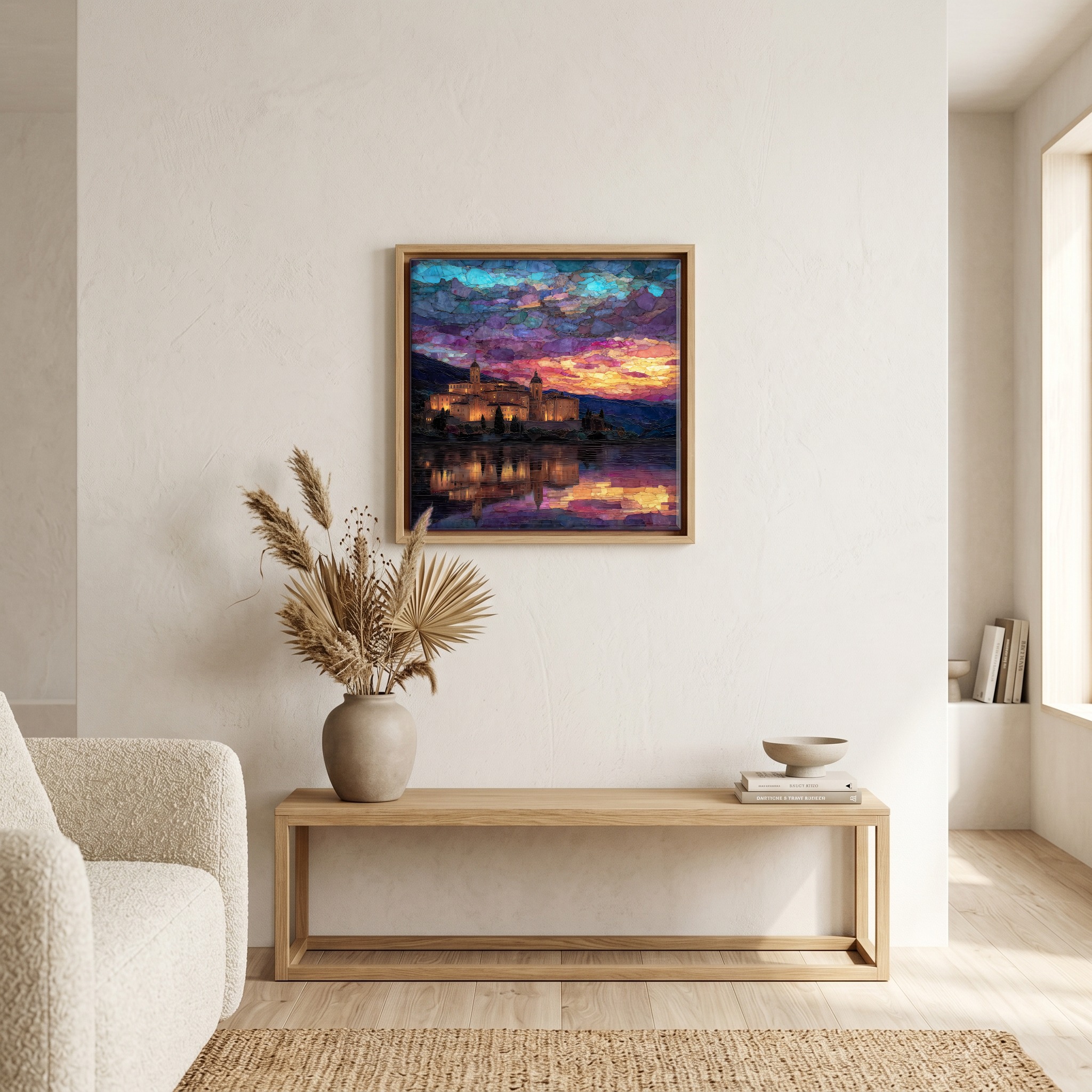
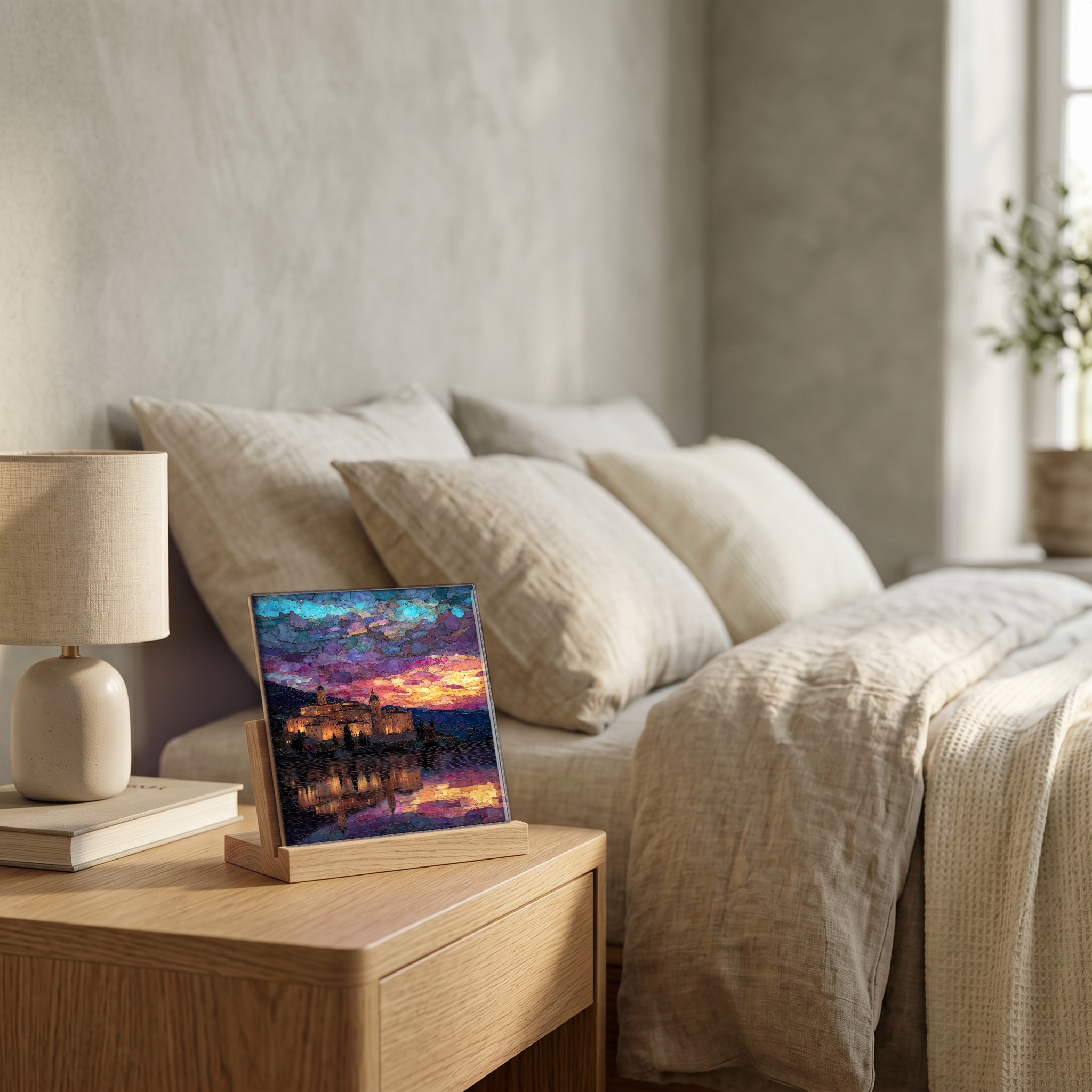
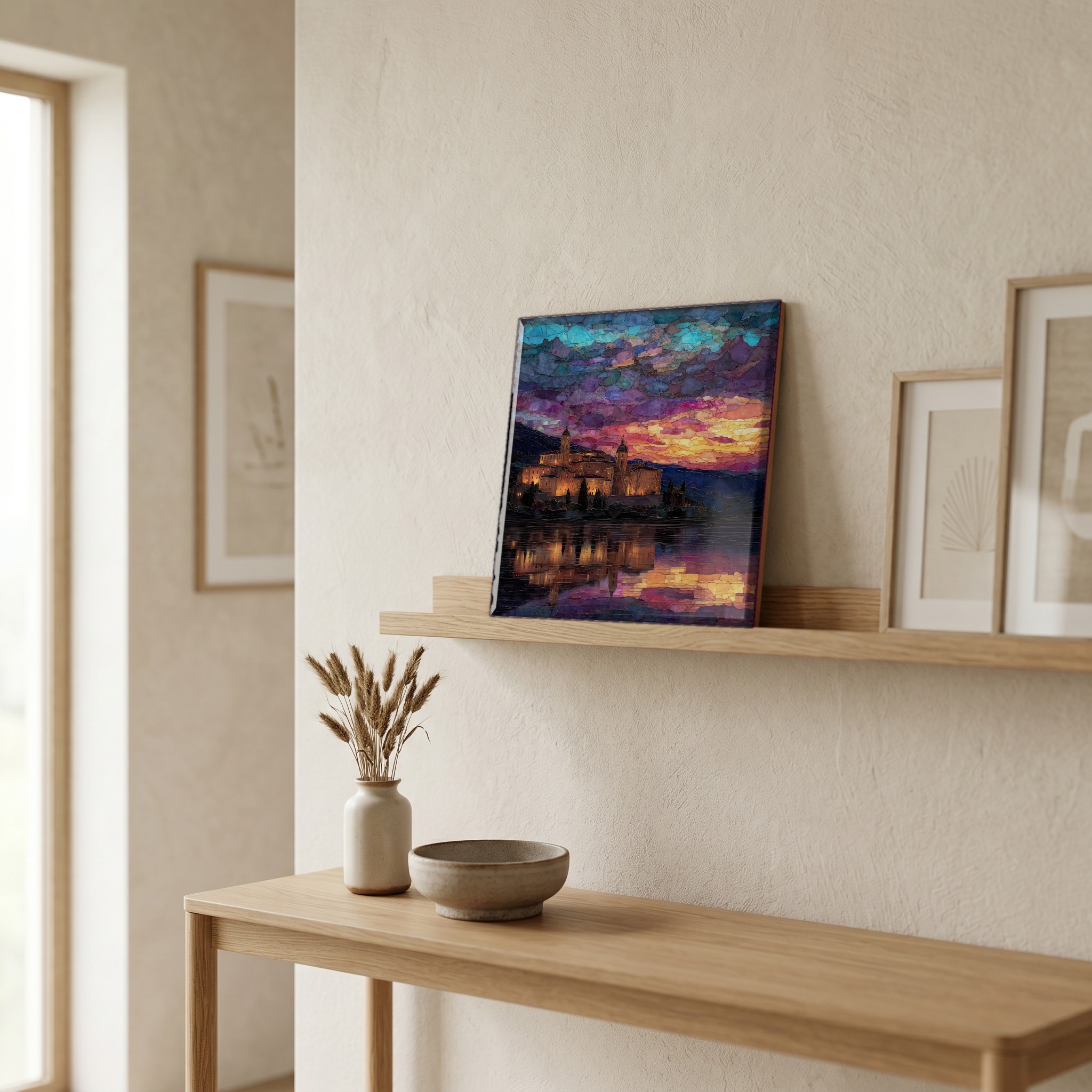
“A hill town on the rim of a volcanic crater, in the hills south of Rome. For four centuries it was where the popes went when the city turned to August heat, up the Alban Hills to the cool, the still water of Lake Albano dropping away below the windows. Pope Francis stopped using it; the palace and the gardens are a museum now, open to anyone who climbs the hill. The lake is the deepest in Lazio, an old crater that filled and went quiet. The town still empties into the piazza in the evening, the way hill towns do.
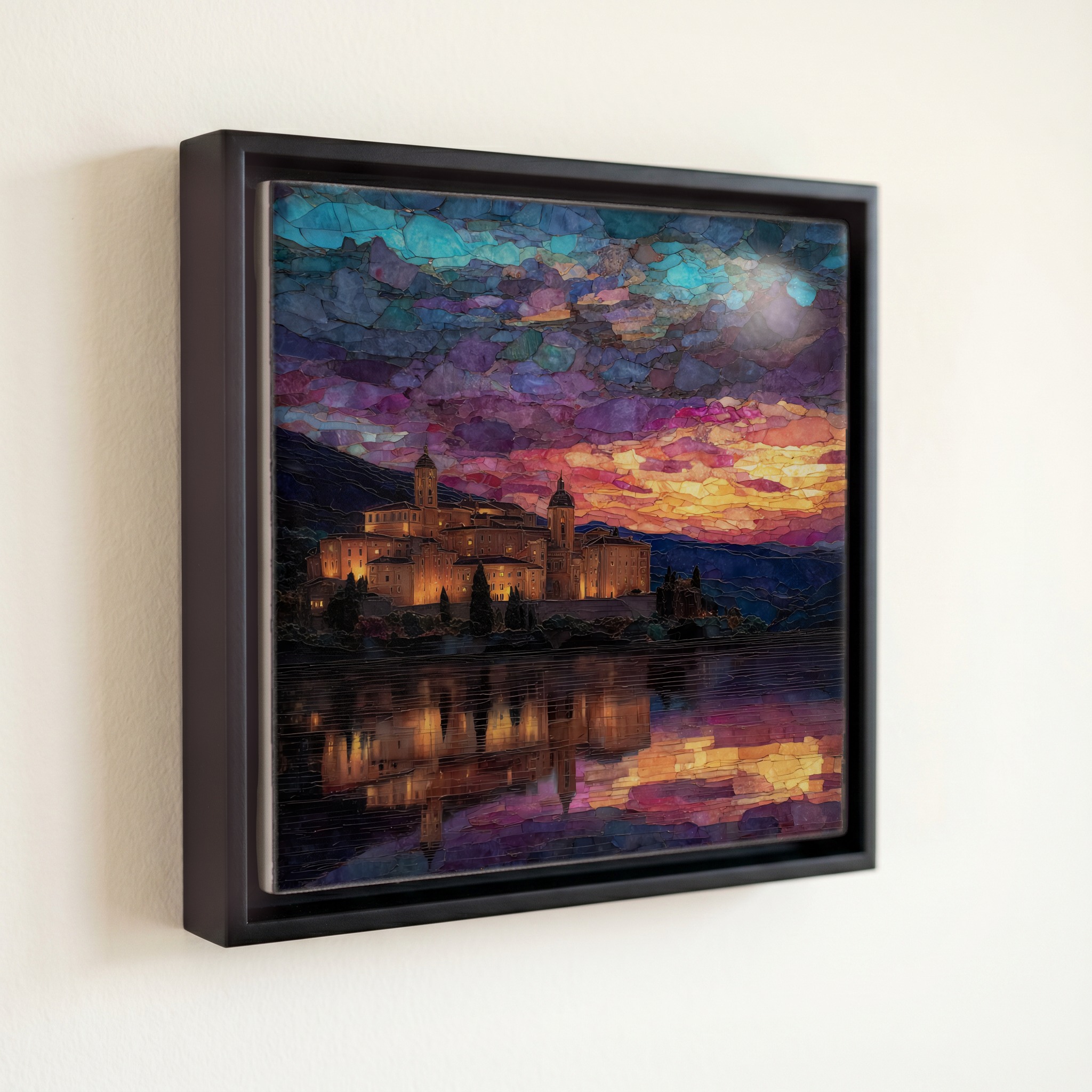
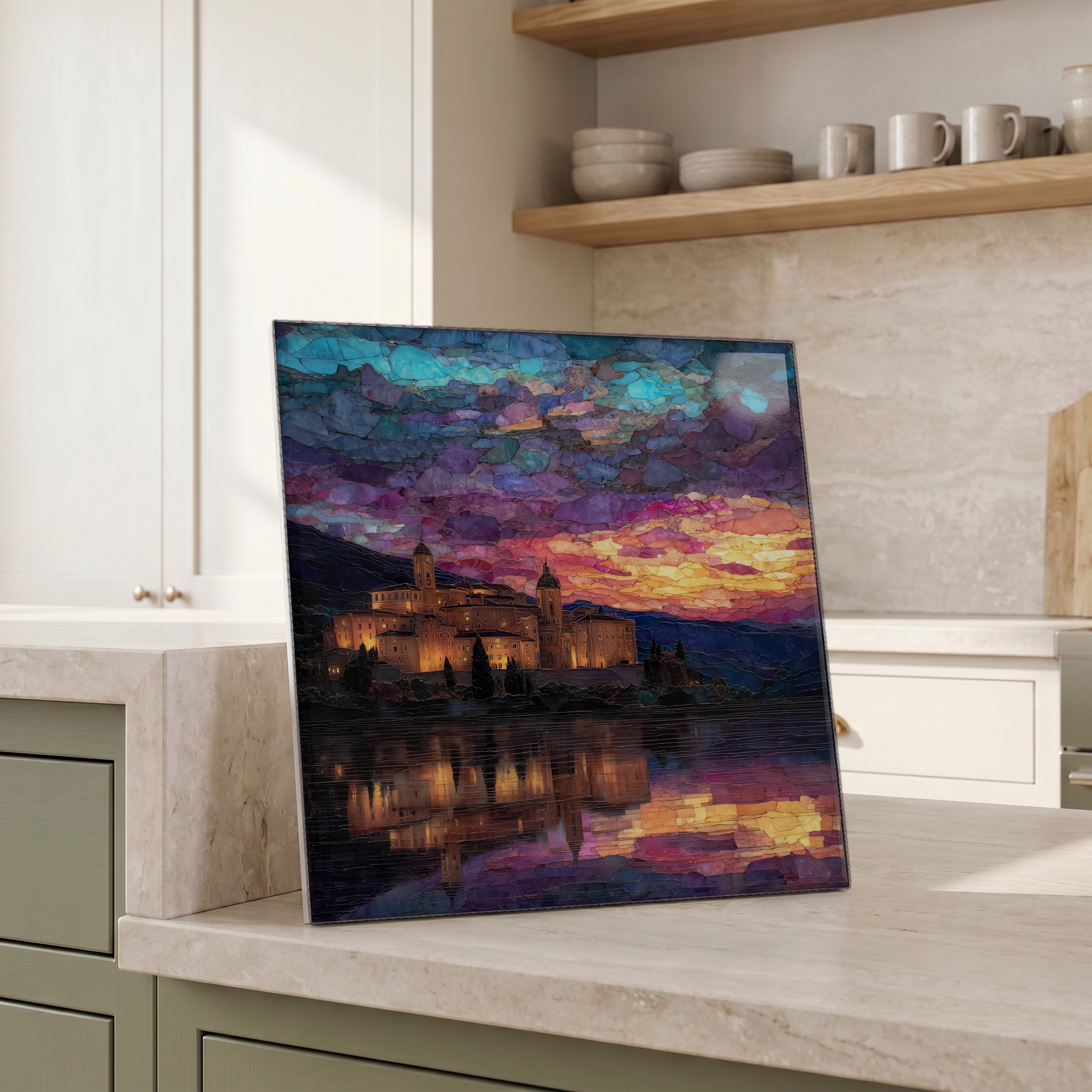
Castel Gandolfo, on ceramic.
Each tile is finished by hand in our Knoxville studio. Artwork is slowly infused into the ceramic surface under high heat and pressure, and rests beneath a thin glossy finish. The colour lives in the surface, not on top of it.
Pick any four 4-inch tiles — National Parks you've been to, a Smokies set, the four seasons of one place. $ for a set of , cork-backed, ready to live on the table.
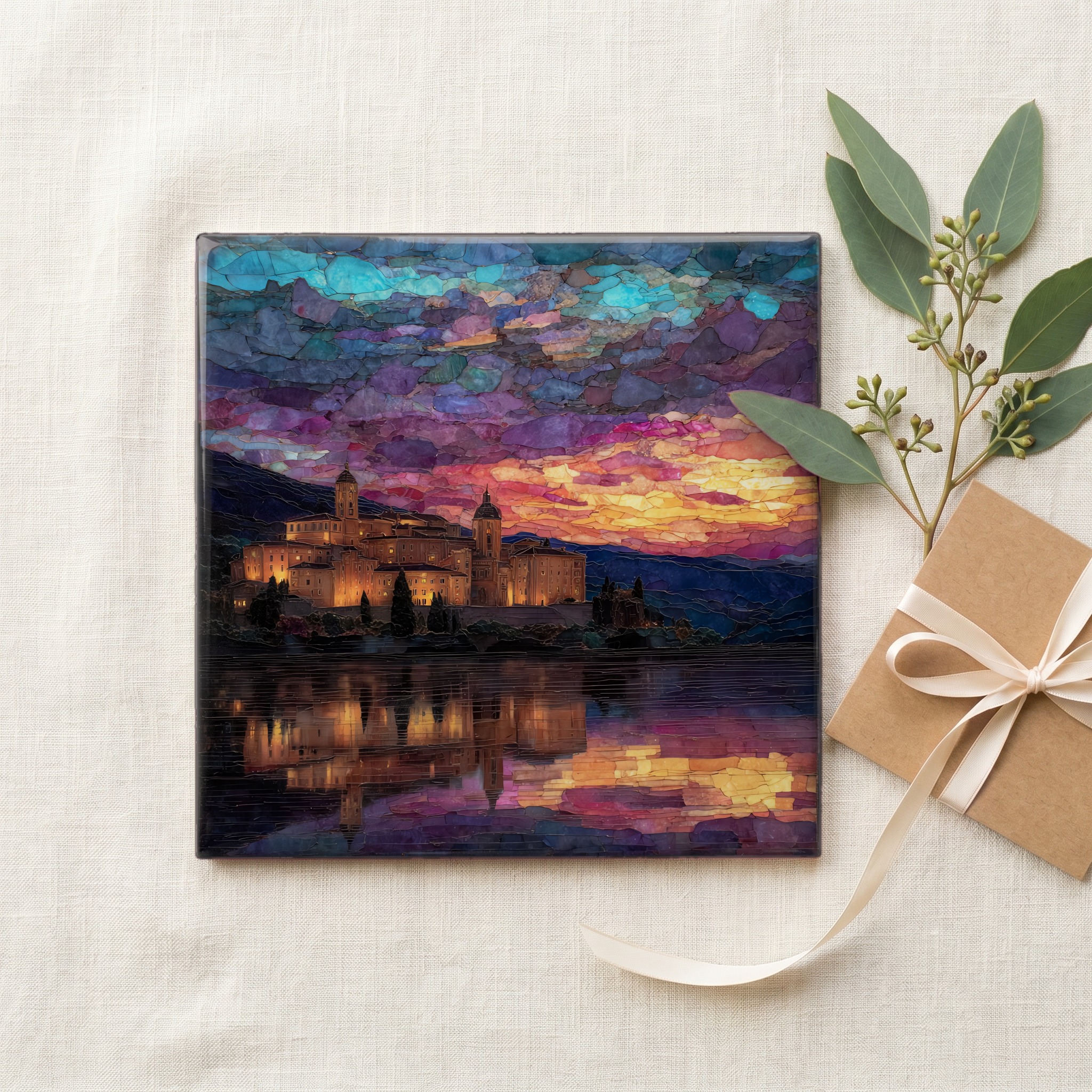
Each tile ships in a kraft box, tied with cream ribbon, with a handwritten note from the studio if you'd like to add one.
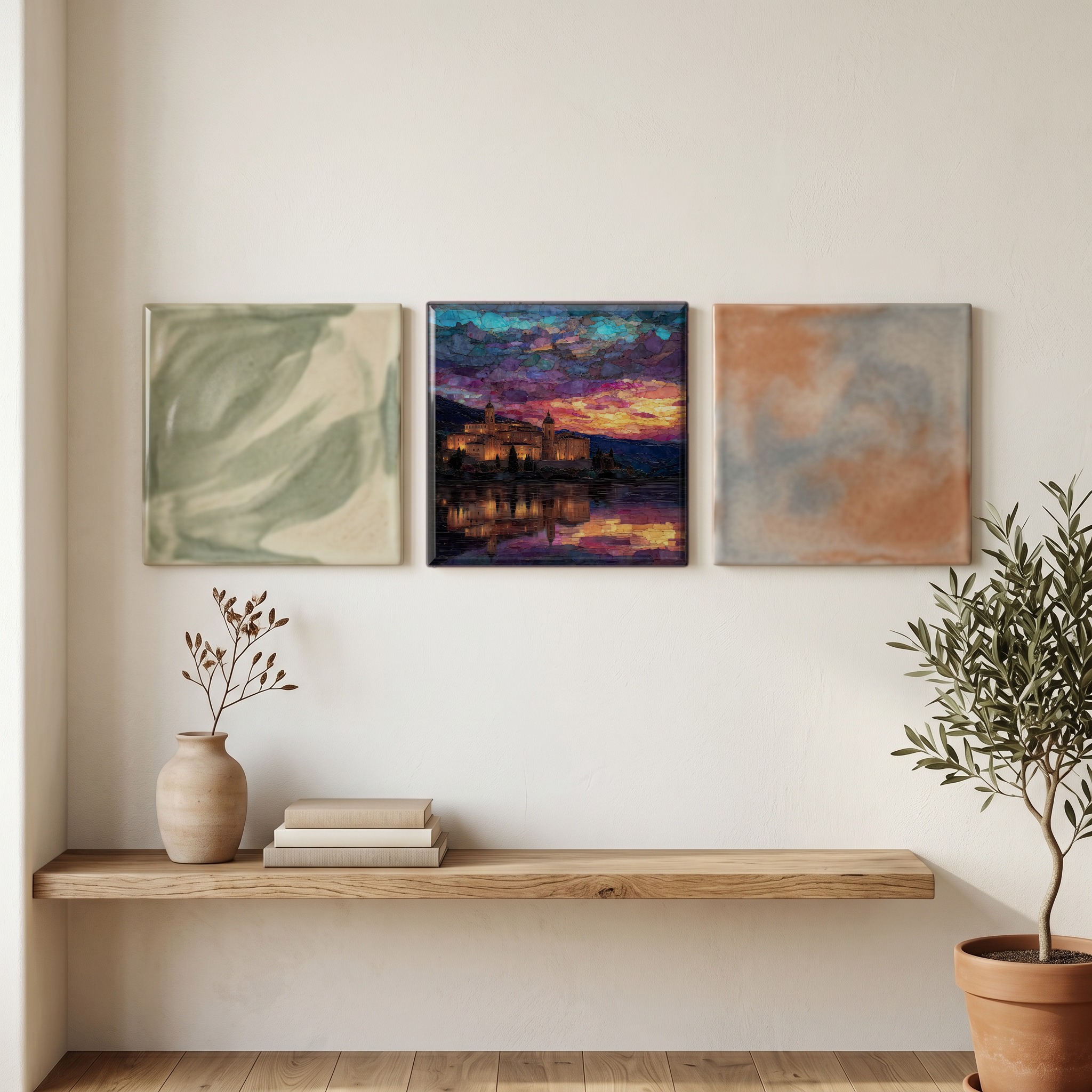
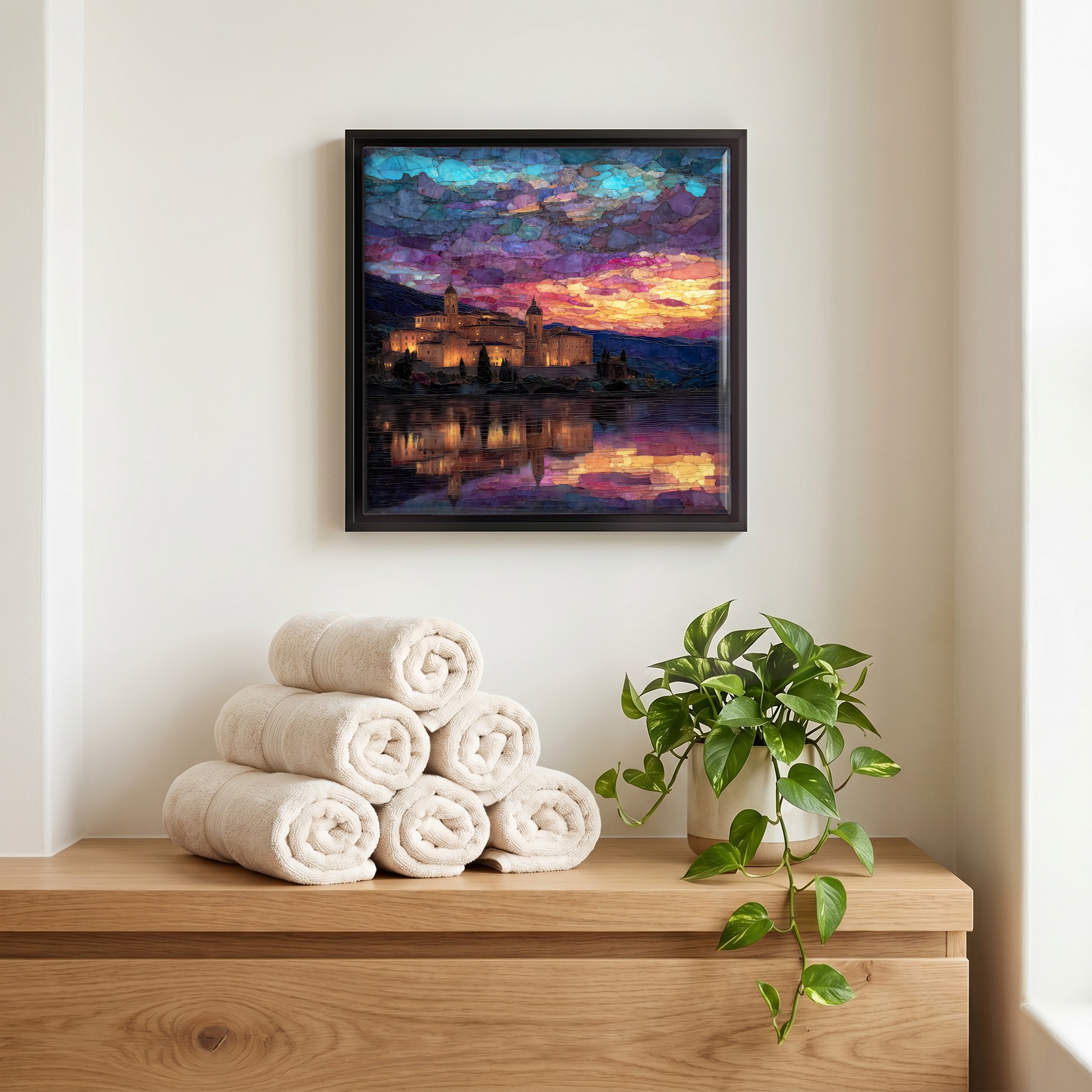
Three or five different vistas, hung together — a chapter of places you've been, or want to go.
The place, in three passes.
Castel Gandolfo sits on the southern rim of Lake Albano in the Alban Hills, about 25 kilometres southeast of Rome, at roughly 425 metres above sea level. It is one of the Castelli Romani, the hill towns south of the capital that include Frascati, Marino, and Albano Laziale, long known for their wine and their cooler summer air. Around 8,900 people live here. The town is best known for the Apostolic Palace, which Pope Urban VIII made an official papal residence in 1626; the property is extraterritorial, held by the Holy See rather than Italy. The hilltop, the lake below it, and the old town centre have stayed compact across four centuries.
Lake Albano fills a volcanic crater below the town, or rather two overlapping craters joined into one basin. At about 170 metres it is the deepest lake in Lazio and the deepest volcanic lake in Italy, though its surface covers only around six square kilometres. The water sits at 293 metres above sea level, a few hundred metres straight down from the palace windows. Romans have used it for a long time: a drainage tunnel cut through the crater wall dates to roughly 395 BC, and the lake hosted the rowing events of the 1960 Rome Olympics. It holds the deep, settled blue that very deep water keeps, the kind that reads almost black toward the centre.
The Apostolic Palace and the Barberini Gardens are open to the public now. For most of four centuries the palace was the pope's summer retreat, but Pope Francis chose not to use it, opening the gardens to visitors in 2014 and the palace itself as a museum in 2016. The Pontifical Villas cover about 55 hectares, larger than Vatican City, and take in Villa Cybo and Villa Barberini along with gardens laid over the ruins of Emperor Domitian's villa. The Vatican Observatory kept its telescopes here from the 1930s until the 1980s and still holds its headquarters in the town. In July 2025 Pope Leo XIV stayed at Villa Barberini, the first pope to return in years.