Wender·Vista
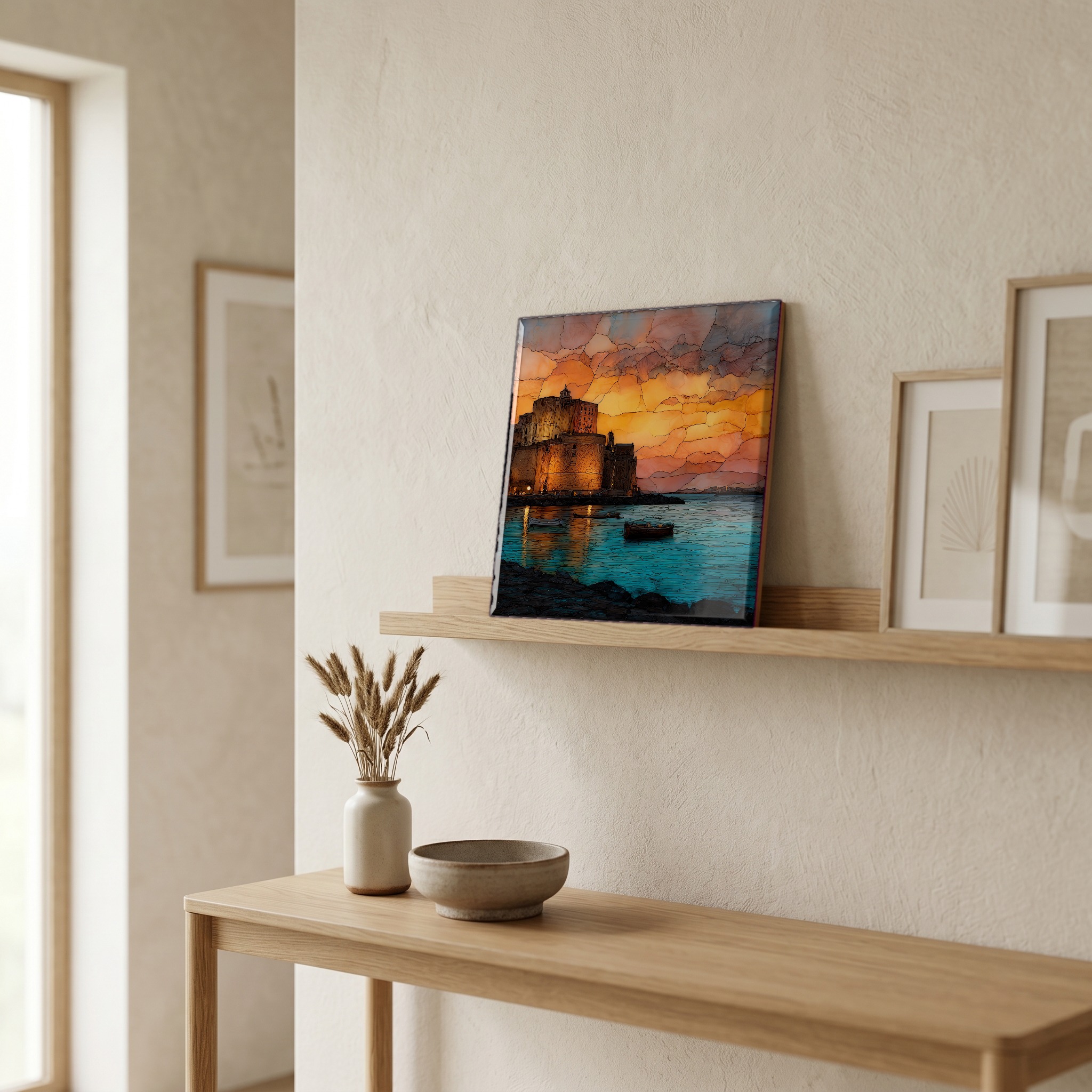
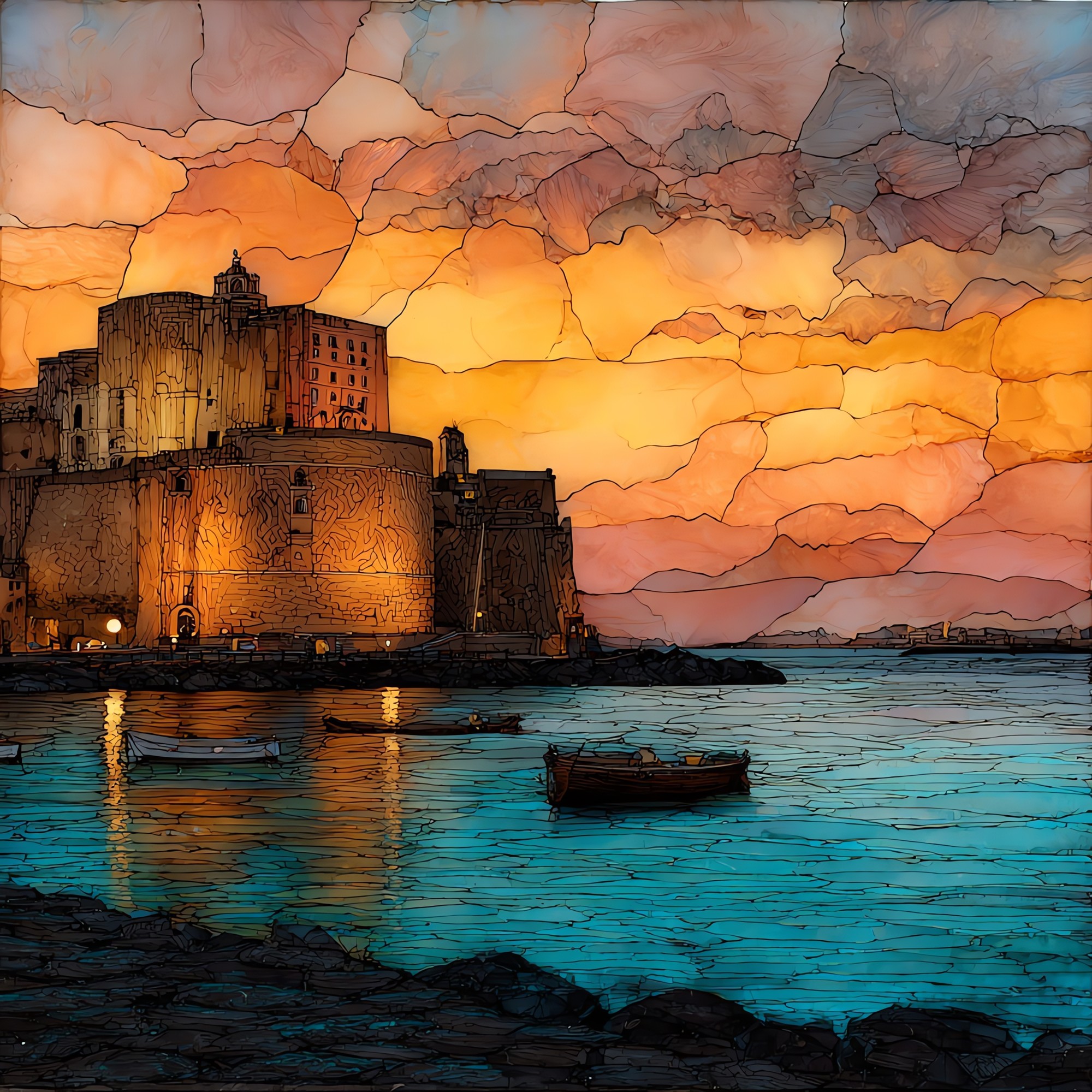
Castel dell'Ovo
shown on ceramic, 12-inch tileItaly
on the Naples waterfront, in sight of Vesuvius

Castel dell'Ovo

a yellow fortress the bay keeps.

Where it lives

Not only on a wall.

A small tile on the nightstand catching the morning. A larger one above the fire. Yours, wherever you spend the slow hours.
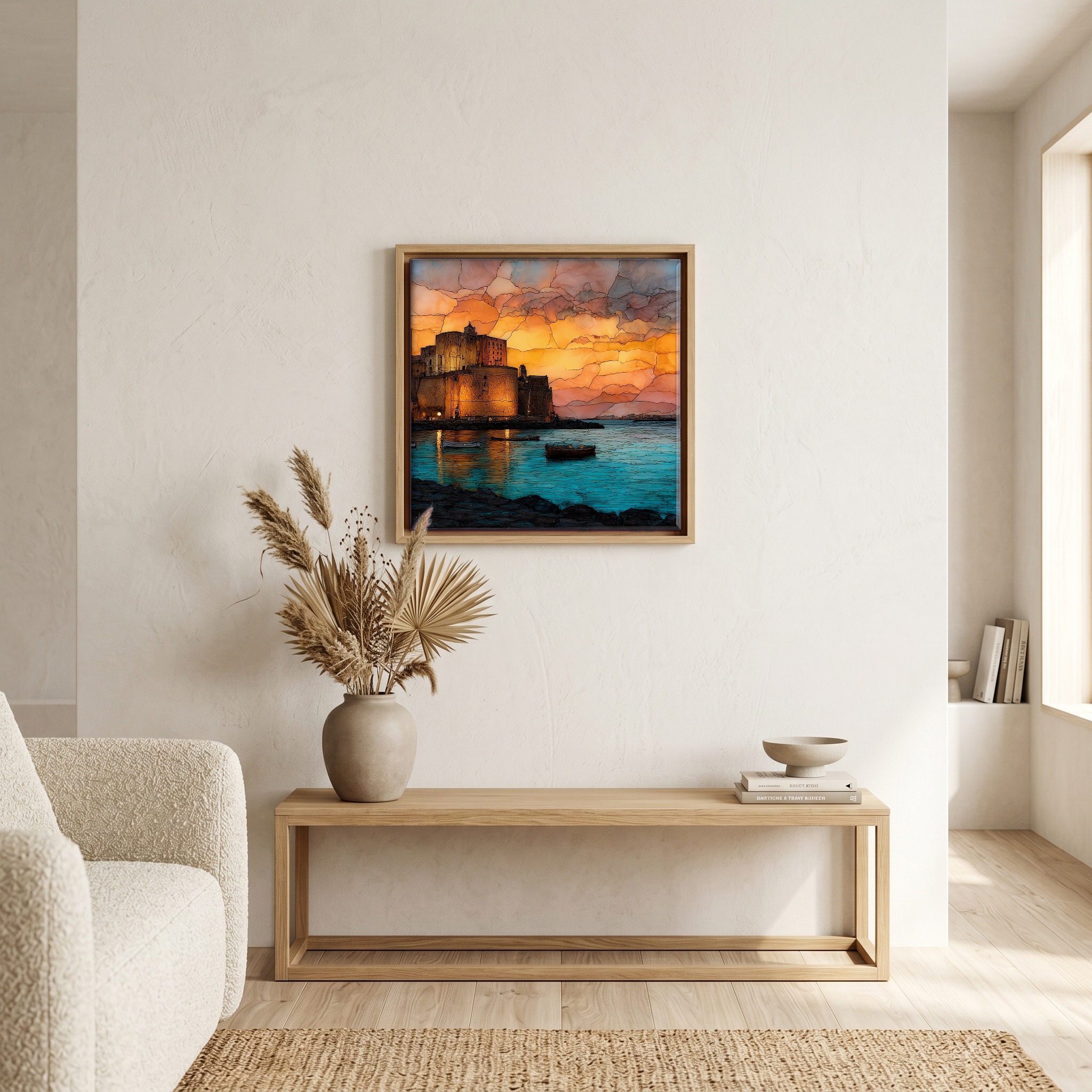
Above the bench, in a warm oak surround.
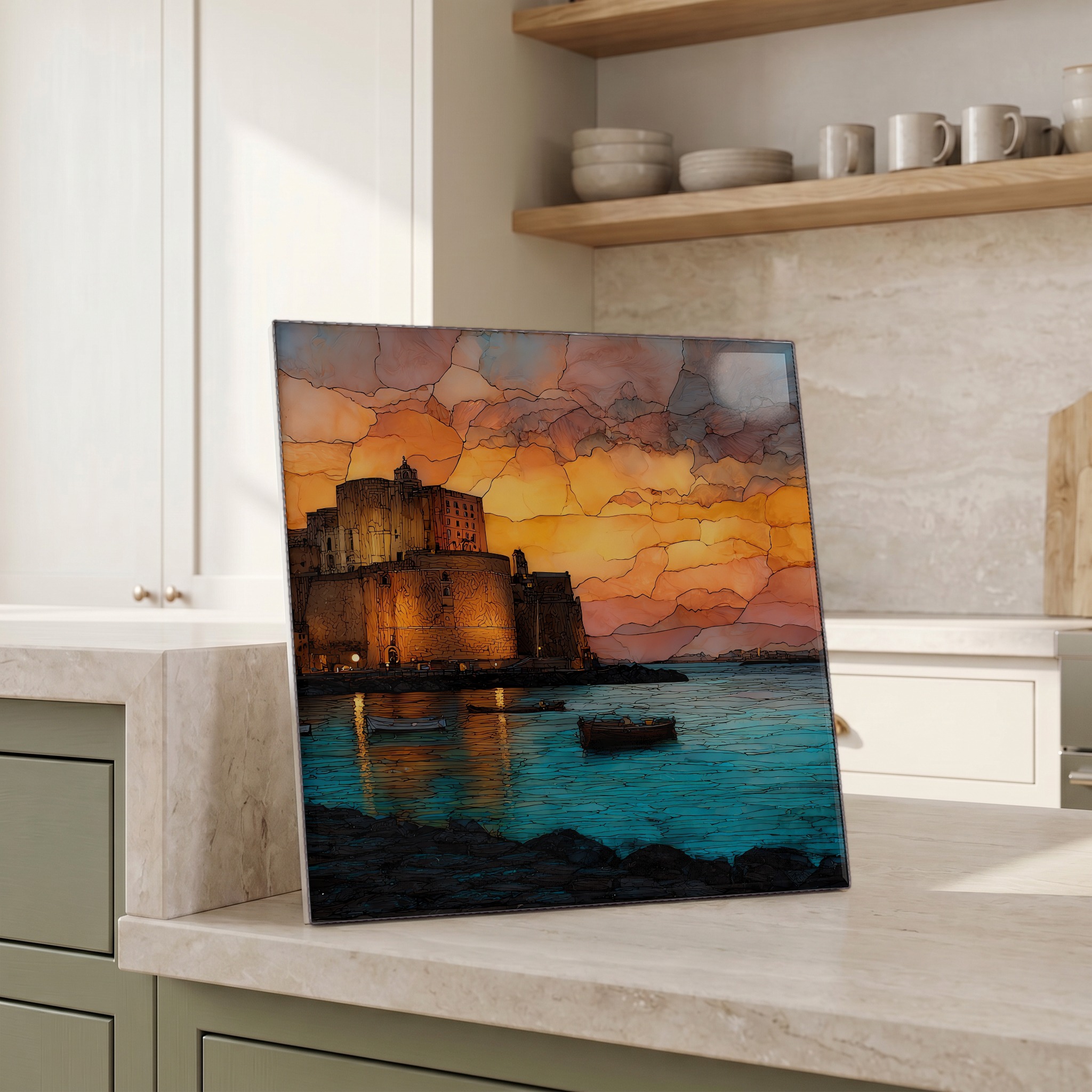
Beside the kettle, propped on the counter.
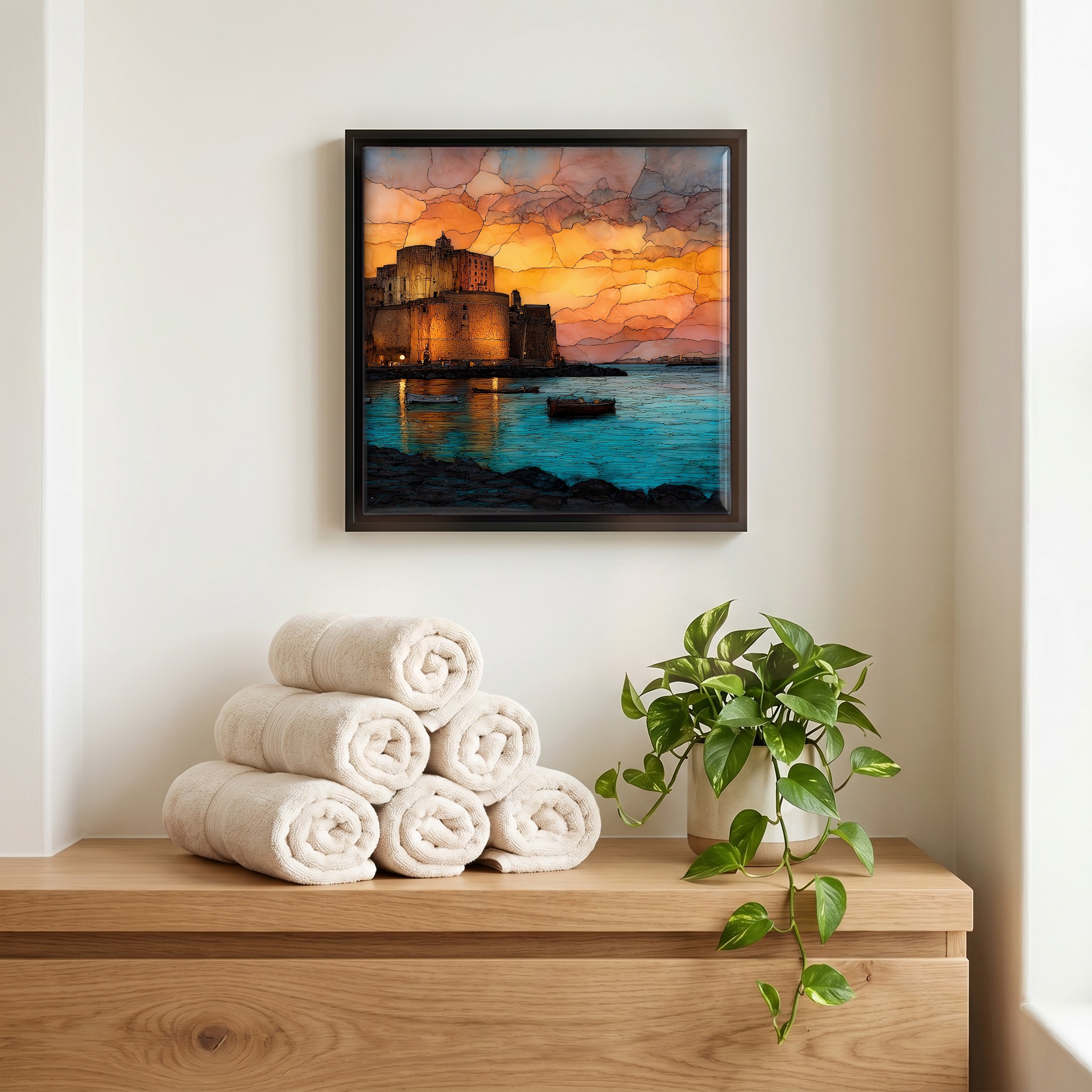
Above the linens, in a slim black surround.
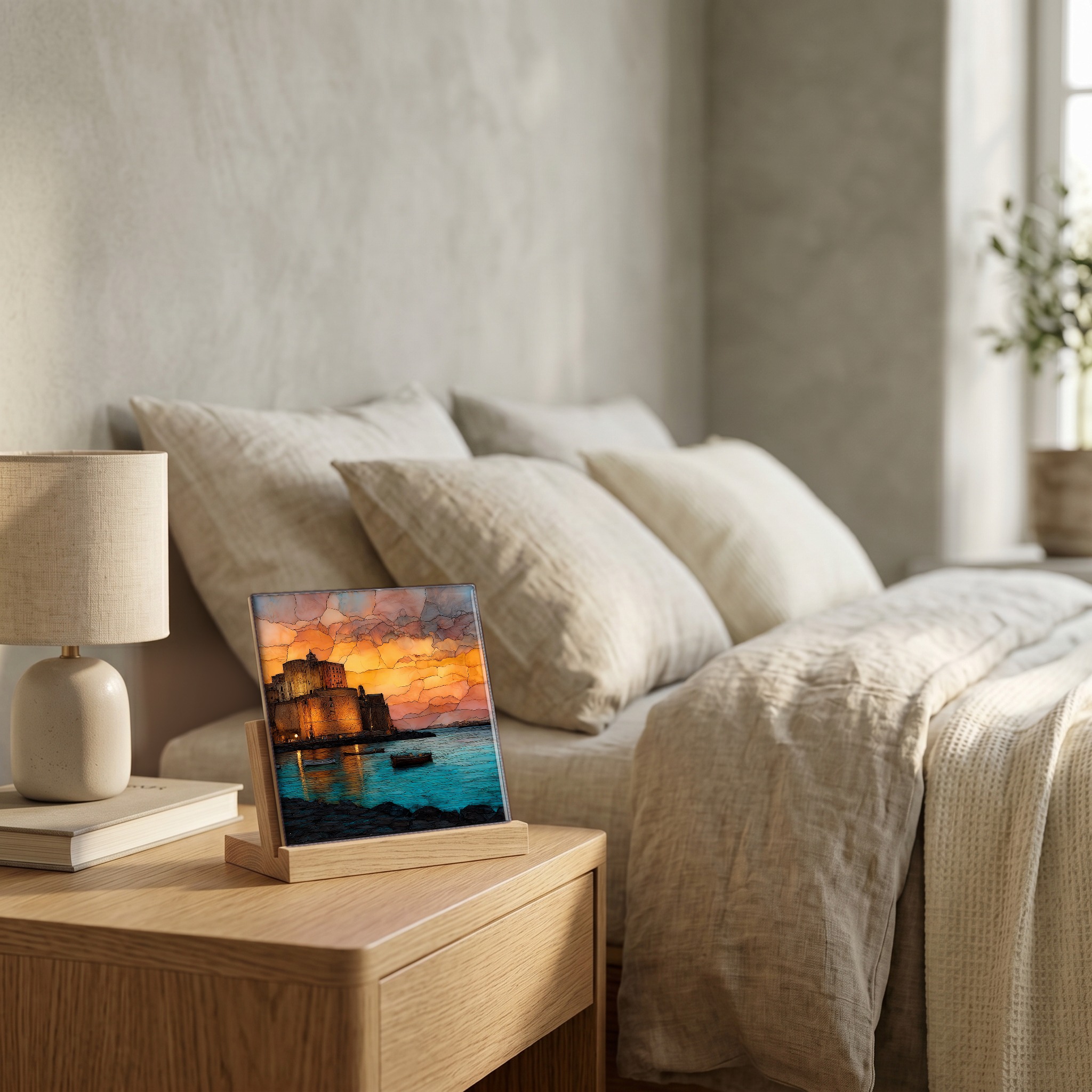
On the nightstand, on a light oak stand.
On a picture ledge, where the light comes in.
a note from the studio

The castle on Megaride, the small island where Naples began. The Greeks who founded Parthenope here in the eighth century BC chose the spot for the harbour it makes; the Romans built Lucullus a villa on the same rock. The yellow tuff that built it is the same stone the city is made of, and from the ramparts you look across the bay to Vesuvius. The legend is that Virgil hid an egg in the foundations and that the castle stands as long as the egg holds. Down at the foot, the Borgo Marinari fishing boats still tie up where they always have.
from the studio
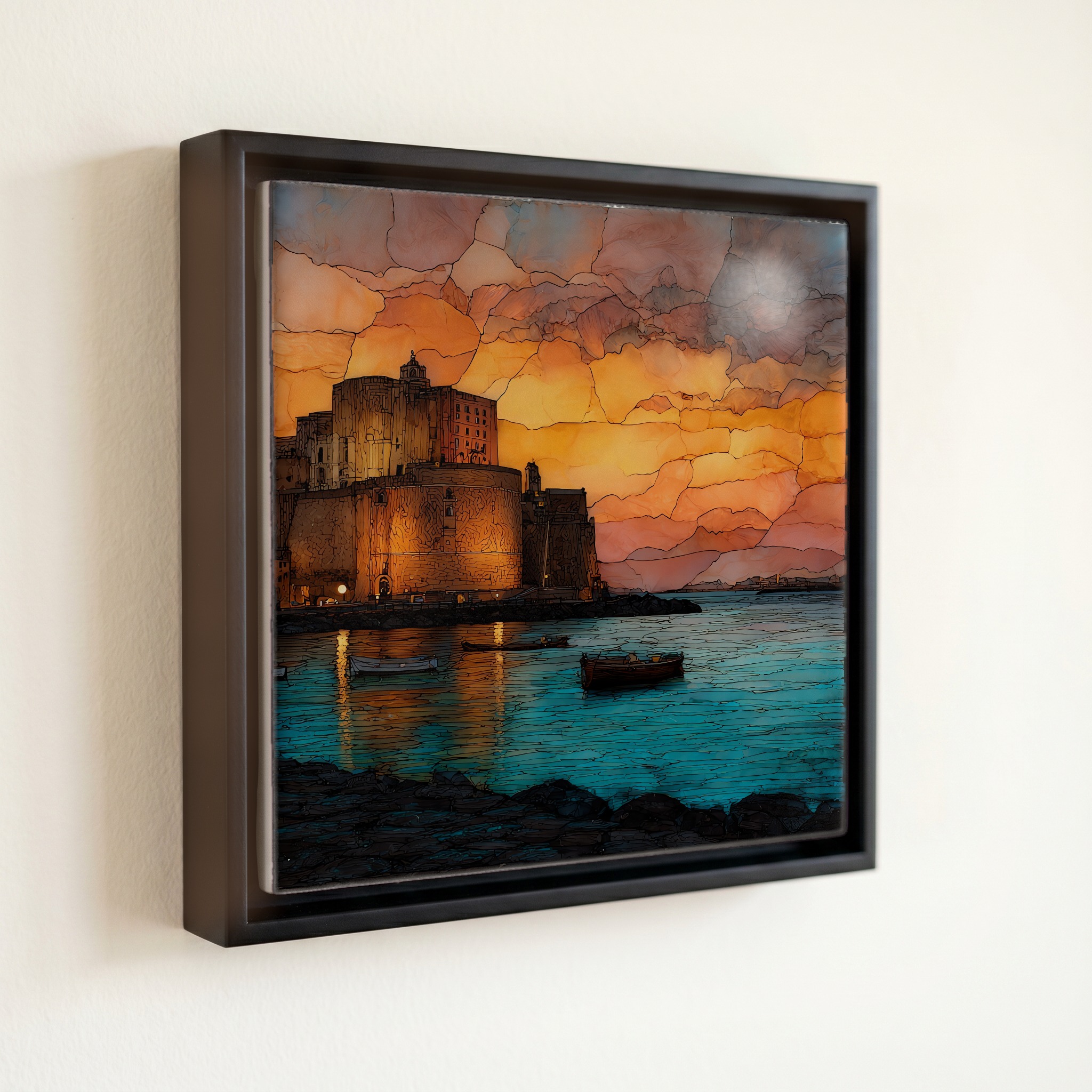
shown in a slim black floating frame · 6 × 6 in
— bring it home

Castel dell'Ovo, on ceramic.

Each tile is finished by hand in our Knoxville studio. Artwork is slowly infused into the ceramic surface under high heat and pressure, and rests beneath a thin glossy finish. The colour lives in the surface, not on top of it.

What kind of piece?
One tile — square or rectangle.
How big?
the popular one — counter, shelf, nightstand
6 × 6 in · 15 cm · 1.6 lb
Surface finish
A clear glossy finish — the artwork reads as if under resin. Ideal for show-pieces and framed wall art.
How it sits
A hidden cleat — sits ¼″ proud of the wall.
$58
Hand-finished and shipped from our studio at the foot of the Smokies. On your wall in about ten days.
size
6 × 6 in
15 cm
weighs
1.6 lb
solid in the hand
surface
ceramic, hand-finished
art rests beneath a thin glossy finish
from
Knoxville, TN
our family studio, at the foot of the Smokies
— start a Coaster Set

Pick any four 4-inch tiles — National Parks you've been to, a Smokies set, the four seasons of one place. $ for a set of , cork-backed, ready to live on the table.
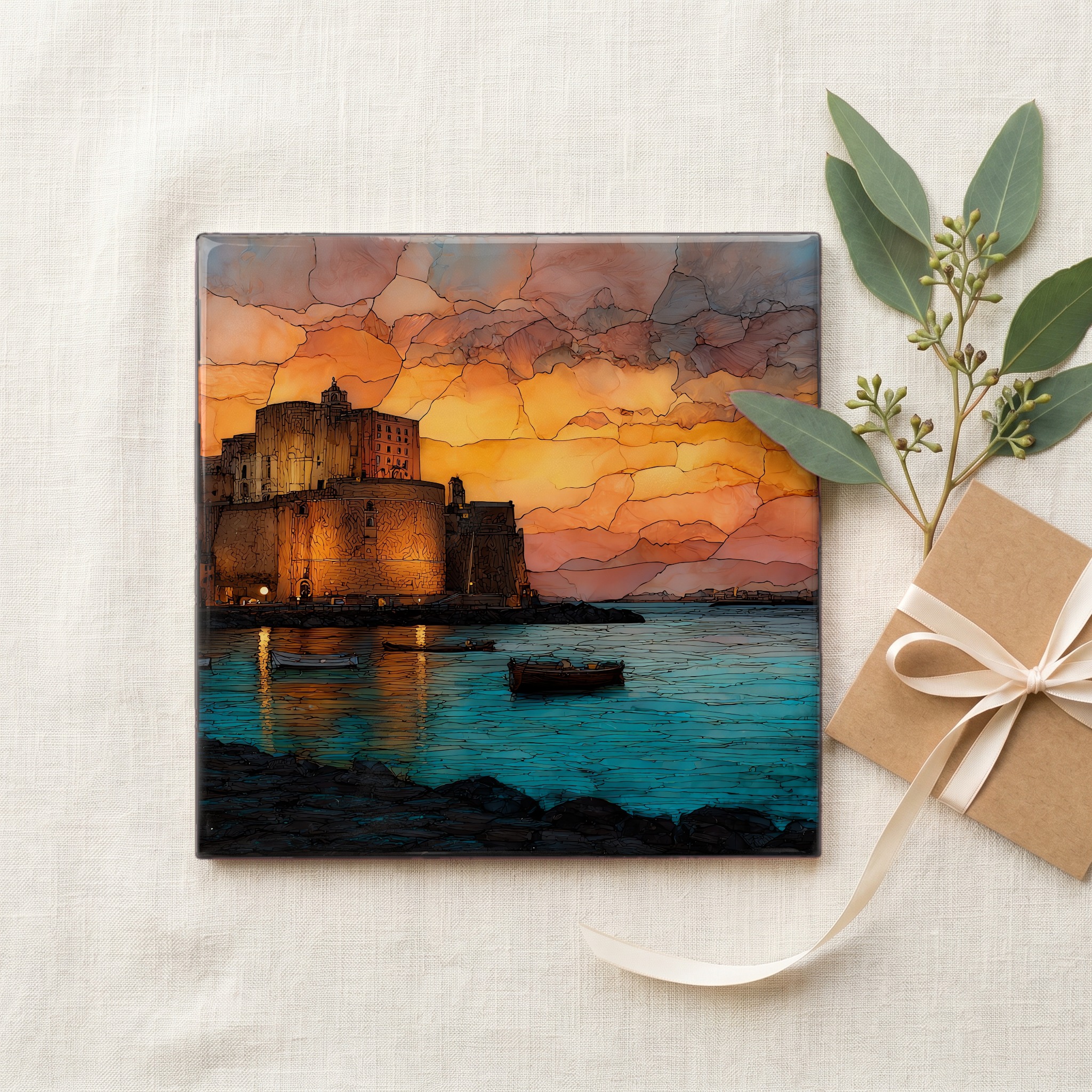
comes gift-ready
comes gift-ready

Each tile ships in a kraft box, tied with cream ribbon, with a handwritten note from the studio if you'd like to add one.
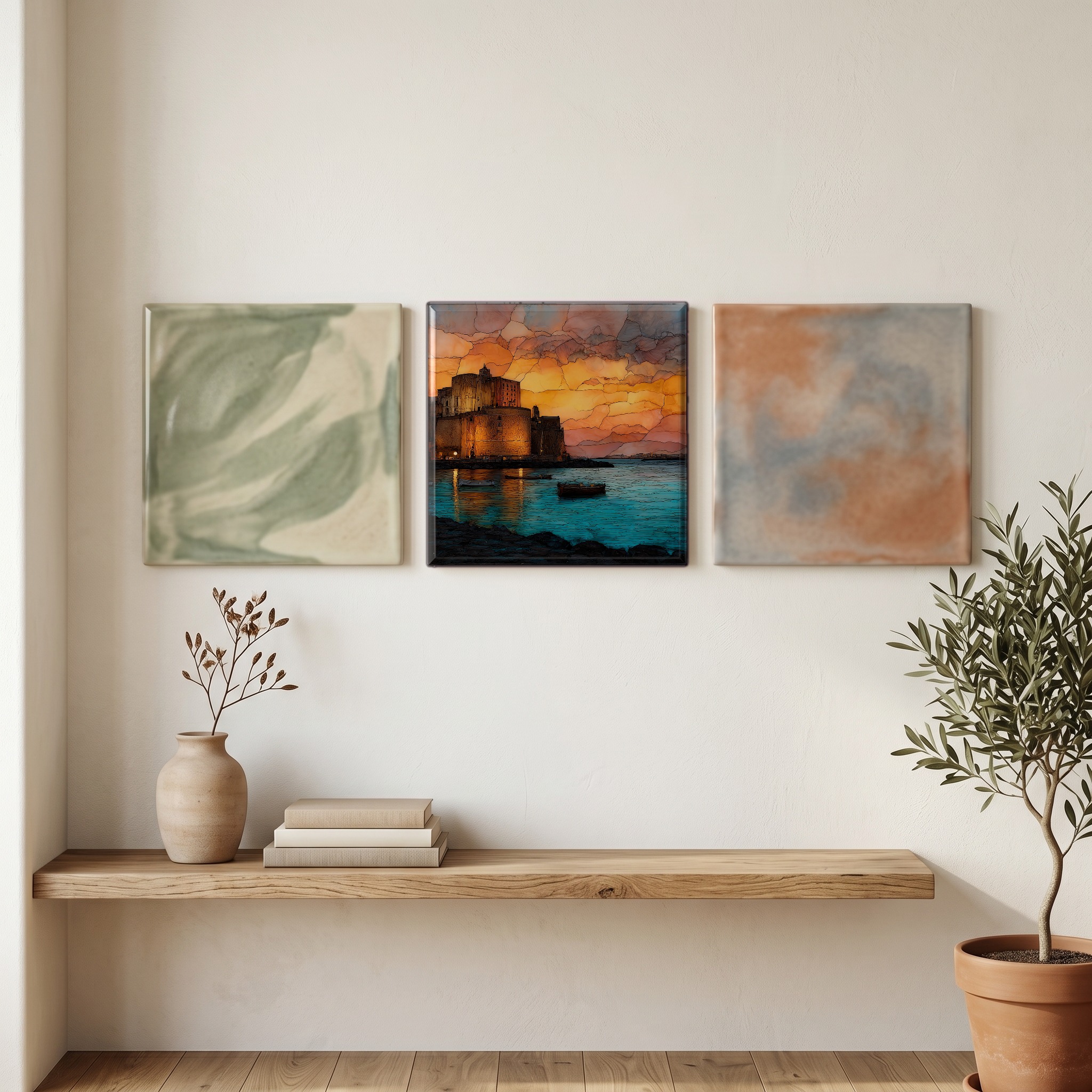
or build a grouping
or build a grouping

Three or five different vistas, hung together — a chapter of places you've been, or want to go.

about Castel dell'Ovo

The place, in three passes.

A little of what's known, in case you fall down the rabbit hole — or want to go see it yourself.
the place

Castel dell'Ovo stands on Megaride, a small tuff-rock islet on the Naples waterfront in the region of Campania, in southern Italy. The island was the landing place of Greek colonists from Cumae who founded Parthenope here around the eighth century BC, the settlement that would later become Naples. A short causeway connects it to Via Partenope at the foot of the Pizzofalcone hill, putting it about a kilometre west of the Royal Palace and Piazza del Plebiscito. The current fortress was raised by the Norman king Roger II beginning around 1140 over the remains of a Roman villa once held by Lucius Licinius Lucullus, and reworked under the Angevins and the Aragonese in the centuries that followed.

the stone

The castle is built from Neapolitan yellow tuff, the volcanic stone that underlies much of the city and gives its older walls their warm ochre cast. The same tuff was quarried for the catacombs, for the Greek city walls, and for the foundations of Castel Nuovo a kilometre to the east. Norman work from the twelfth century survives in the lower courses, with later Angevin and Aragonese fabric layered above; the round Torre Maestra and the Torre Normandia are the most recognisable elements from the bay. Beneath the courtyards, vaulted halls cut into the original rock include the Sala delle Colonne, a hall of slim columns that was once part of the Roman villa on the site.

the visit

Entry to Castel dell'Ovo is free, and the ramparts, the upper terrace, and a selection of inner halls are open to the public on a daily schedule set by the Comune di Napoli. The approach is along Via Partenope on the lungomare promenade, across the short causeway to the Borgo Marinari, the small fishing village at the castle's foot where restaurants line the marina. The ramparts give a wide view across the Bay of Naples to Vesuvius about twelve kilometres east, with Capri and the Sorrento peninsula on the southern horizon. The closest metro stop is Piazza Municipio on Line 1, about fifteen minutes' walk along the seafront. The upper rooms host periodic exhibitions.

— informed by Comune di Napoli
where
Italy · Napoli, Campania
position
40.8283° N · 14.2481° E
the neighborhood

What's nearby.

A handful of named places within an hour's walk or short drive. Some we've already painted; some we will.
1 km E
Piazza del Plebiscito
civic square
1 km E
Castel Nuovo
medieval fortress
1 km NE
Galleria Umberto I
19th-century iron-and-glass arcade
2 km W
Mergellina
harbour district
4 km W
Posillipo
clifftop neighbourhood
12 km E
Mount Vesuvius
stratovolcano
at the lake
Bay of Naples
gulf
N
Castel dell'Ovo
Piazza del Plebiscito
Castel Nuovo
Galleria Umberto I
Mergellina
Posillipo
Mount Vesuvius
Bay of Naples
common questions

What people ask.

A few questions we get about Castel dell'Ovo — and about bringing the piece home.
about the place

The name comes from a medieval legend that the Roman poet Virgil, depicted in Neapolitan folklore as a sorcerer, hid a magic egg in the castle's foundations. The story held that as long as the egg remained intact, the castle and the city of Naples would stand.

The castle stands on Megaride, a small tuff-rock islet on the Naples waterfront, connected to Via Partenope by a short causeway. It sits about a kilometre west of Piazza del Plebiscito in central Naples, in the Campania region of southern Italy.

The current fortress was built by the Norman king Roger II beginning around 1140, making it one of the oldest castles in Naples. It sits on a site that was a Greek harbour in the eighth century BC and a Roman villa belonging to Lucius Licinius Lucullus in the first century BC.

Yes. Entry is free, and the ramparts, the upper terrace, and a selection of inner halls are open daily on a schedule set by the Comune di Napoli. Specific hours vary by season and by current exhibition.

The upper terrace looks across the Bay of Naples to Mount Vesuvius about twelve kilometres east, with the island of Capri and the Sorrento peninsula on the southern horizon. The Borgo Marinari marina sits directly below at the castle's foot.

Borgo Marinari is the small fishing village built around the marina at the foot of Castel dell'Ovo. The harbour has been in use since antiquity and is now lined with seafood restaurants and moored sailing boats. It is reached by the same causeway as the castle.

Castel dell'Ovo is built from Neapolitan yellow tuff, the volcanic stone that underlies Naples and gives the older parts of the city their warm ochre colour. The same tuff was used for the catacombs and for Castel Nuovo a kilometre to the east.

about the piece in your home

It has been a meaningful gift for many customers whose family is from Napoli or who have spent time on the bay. Castel dell'Ovo is one of the city's most recognisable silhouettes against the harbour. A Small or Medium with a handwritten note from the studio is the most common pairing for that gift.

The warm yellow tuff and the deep bay blues of the artwork sit naturally in Mediterranean-modern, Coastal-modern, and Italian-classic rooms. The piece also holds its own in a jewel-tone maximalist room where the saturated stained-glass palette can answer other strong colours.

Yes. Warm-ochre and terracotta palettes with sea-blue accents have held the Mediterranean-modern category through the mid-2020s, leaning on hand-formed ceramics and limewashed walls. A Castel dell'Ovo tile reads as the one strong piece of art that anchors that look.

Above a standard three-seat sofa, a single Large reads well centred at eye-line, a 4-tile Mural fills the wall more deliberately, and a 9-tile Mural takes it as the room's anchor. Above a console or a sideboard, a Medium or a Triptych keeps the scale right.

Yes, in Dura Satin or Matte. Both finishes are scratch-resistant and hold up to daily wipe-down in humid or splash-prone rooms. The Glossy finish is reserved for show pieces and dry wall art.

A soft microfibre cloth with warm water lifts everyday dust and fingerprints. Avoid abrasive scrubs, glass cleaner, and bleach. The colour is slowly infused into the ceramic surface under high heat and pressure, beneath a thin glossy finish, so it does not lift with normal cleaning.

Yes. Every WenderVista piece is painted in our distinctive stained-glass and alcohol-ink visual language by Reid Wender, the studio's curator, and finished in Knoxville. The artwork is not licensed and is not sold through any third party.

if this one stayed with you

A few you might also love.

Hand-picked by the eye that found Sorapis. Same air, same kind of quiet.
— a collection

The Italian Dolomites,
painted slow.

The valleys between Cortina and Val Gardena, the tarns you walk an hour to see, the towers that turn the colour of a banked fire just before dark. Wander the collection by valley, by season, or follow the path Reid walked.

Tre Cime
Braies
Misurina
Sorapis
Cinque Torri
Sassolungo
Marmolada