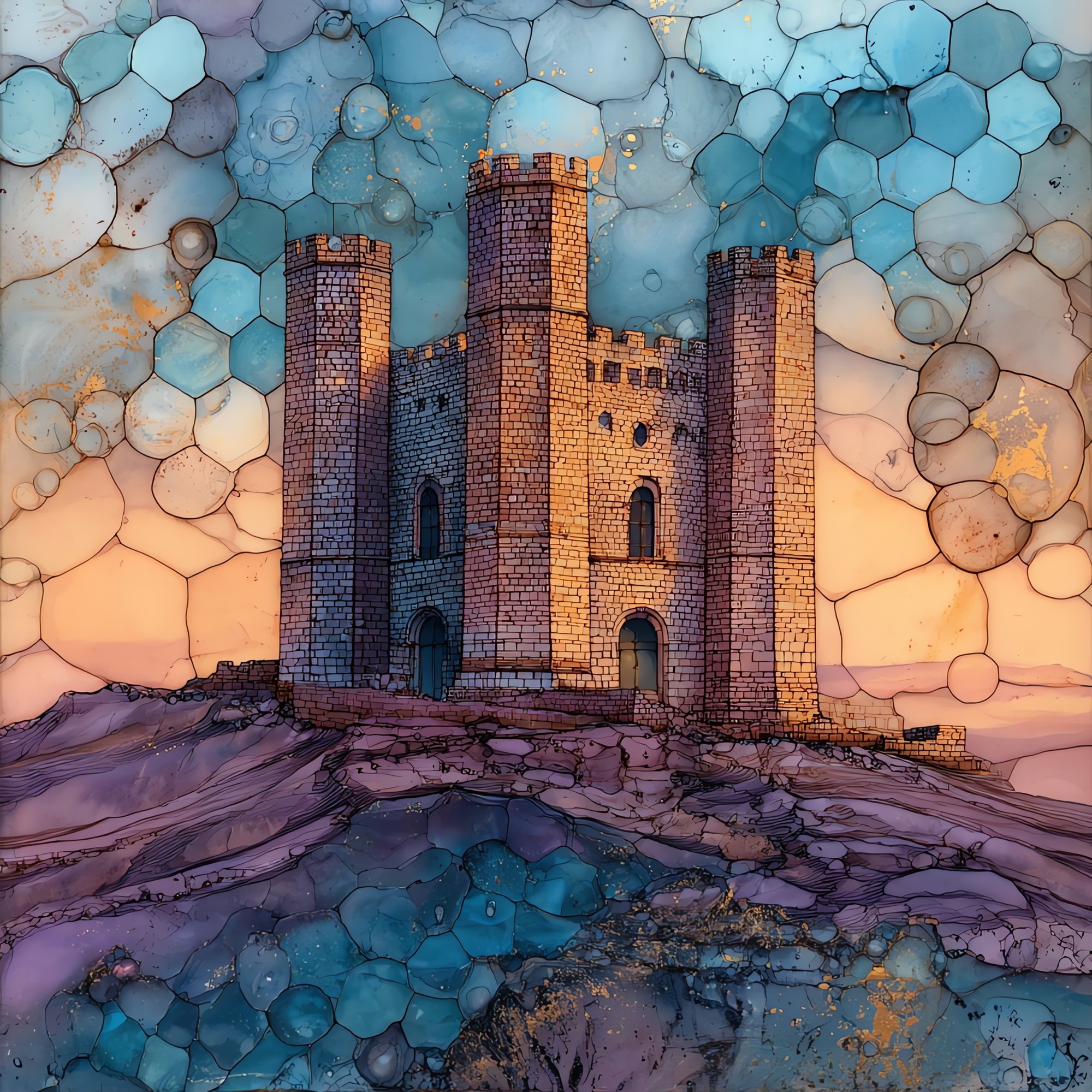
Castel del Monte
— — a crown set down on a bare hill, and left.
Not only on a wall.
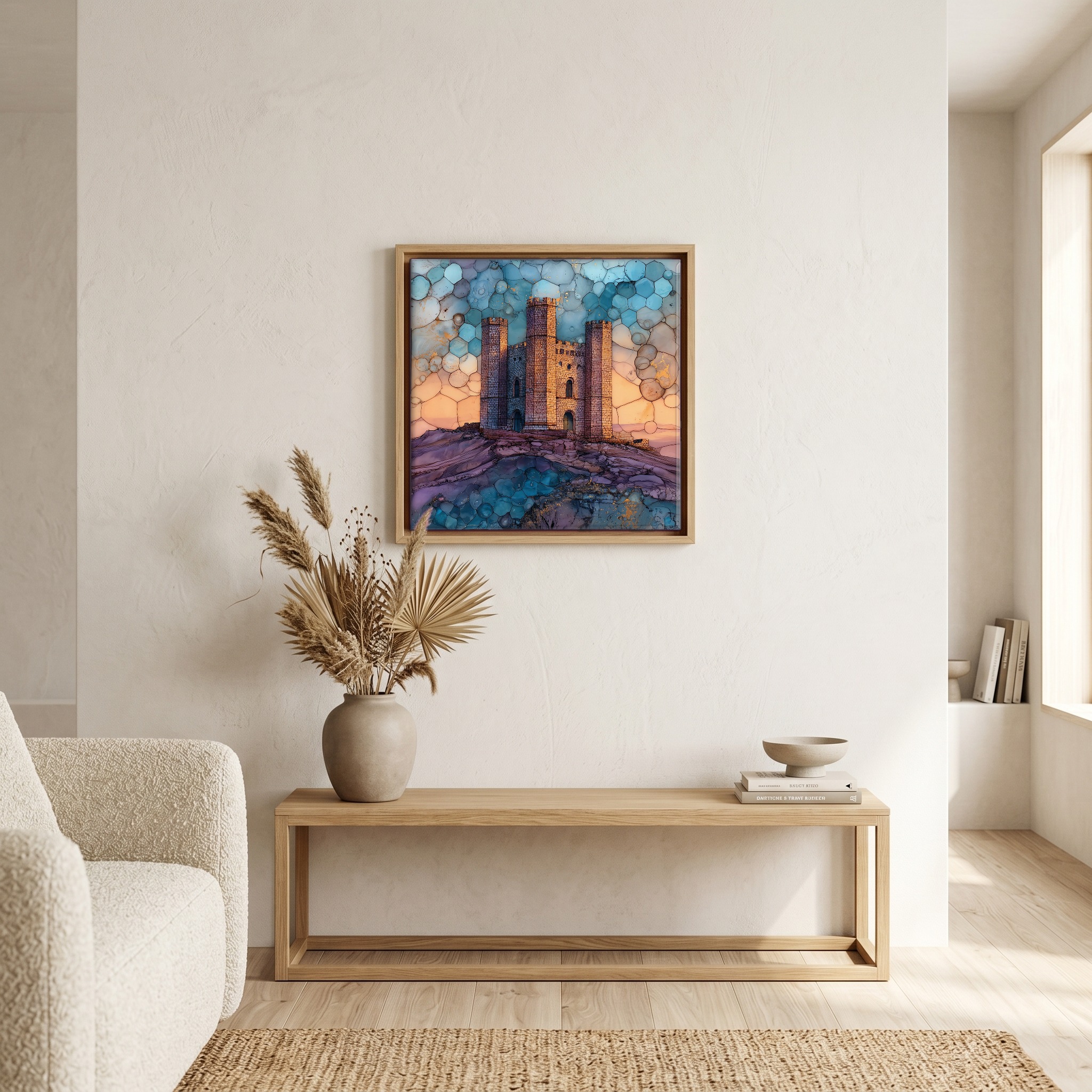
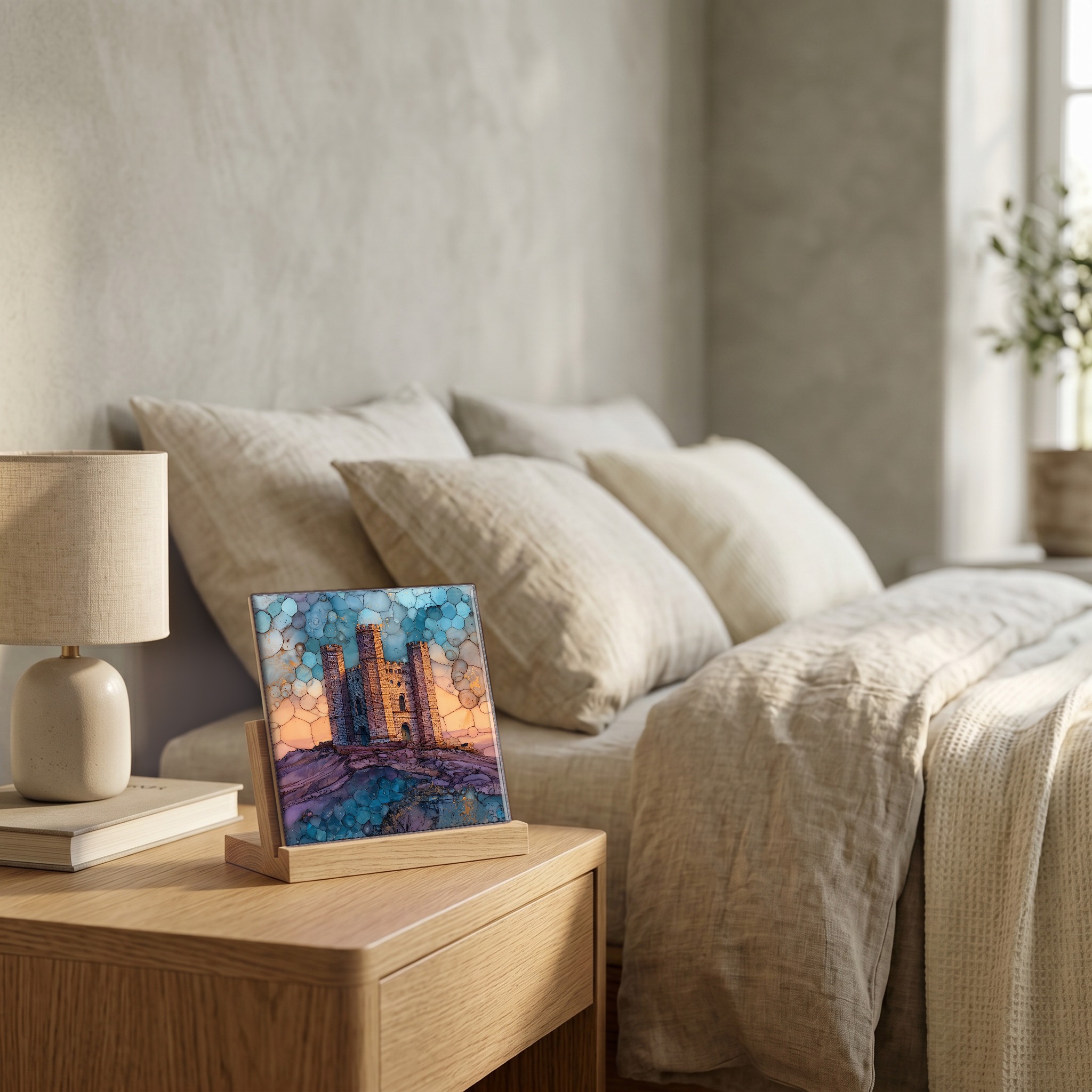
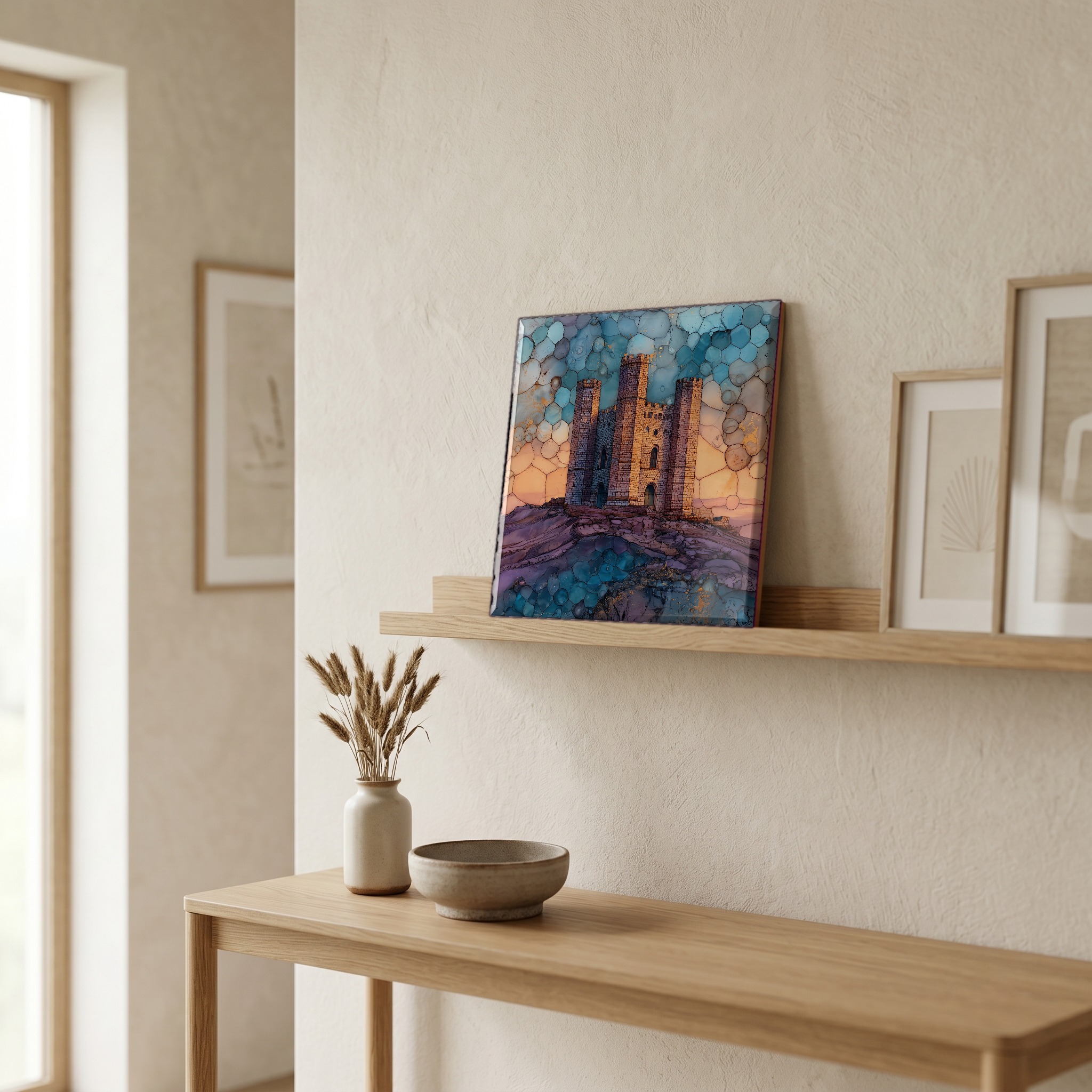
“An octagon alone on a hill above the Puglian plain, eight-sided to the bone. Eight walls, eight towers, eight rooms on each floor, around an eight-sided court. Frederick II raised it in the 1240s and left no record of what it was for. No moat, no drawbridge, nothing a fortress needs. Seven and a half centuries on, the guides still argue: hunting lodge, observatory, a geometer's idea made of limestone. From the road it reads as a single shape, finished and closed. Italy keeps it on the back of the one-cent coin, where most people carry it without ever looking.
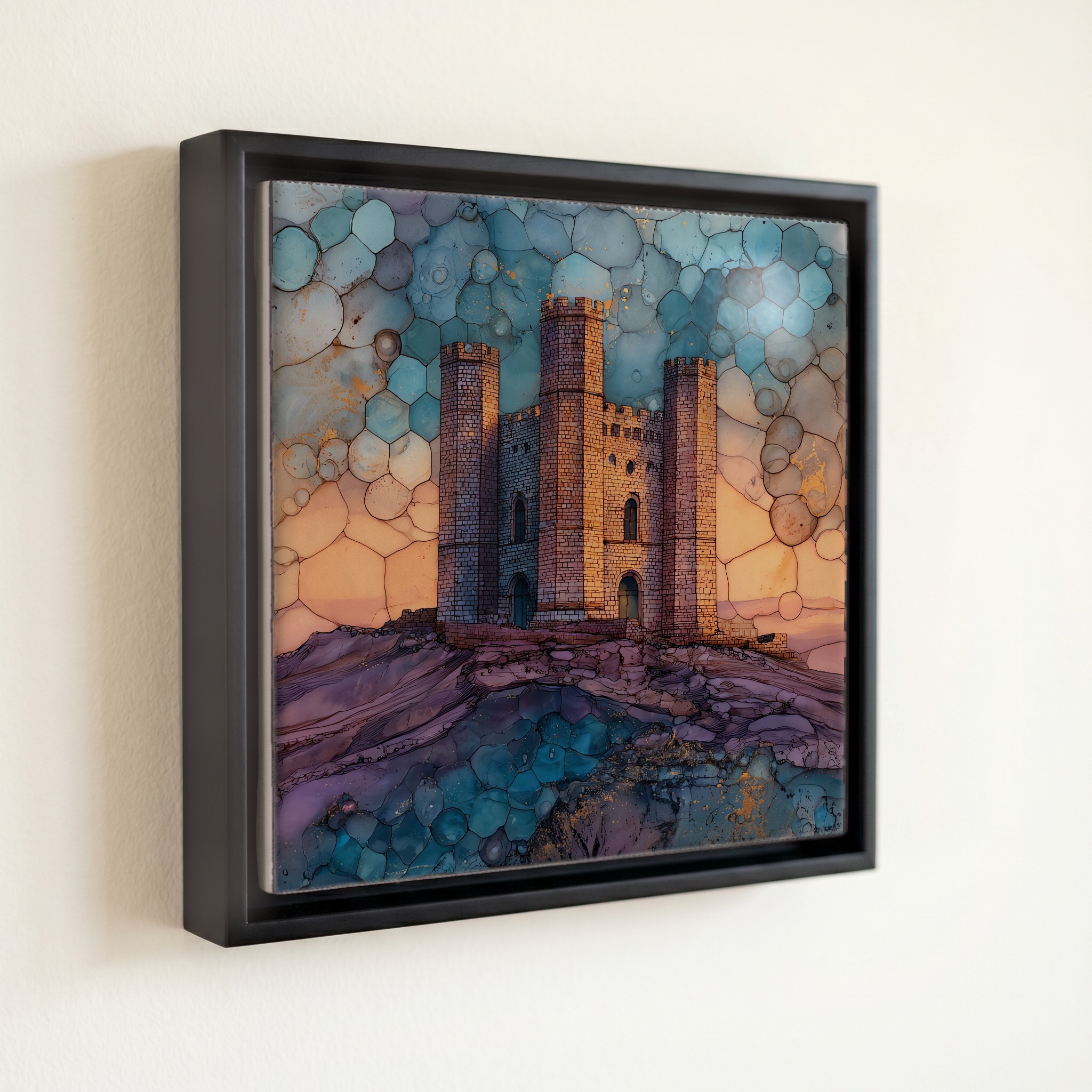
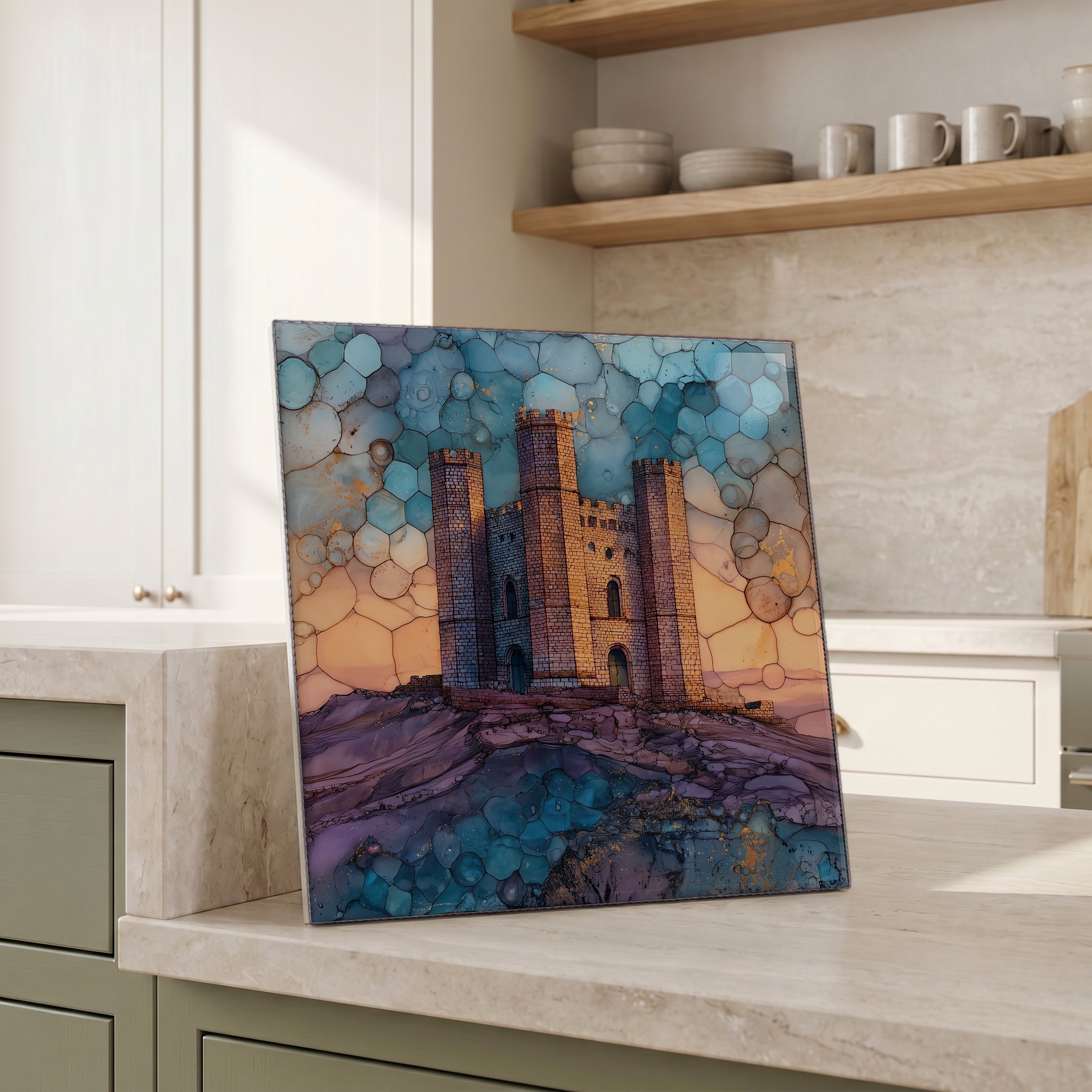
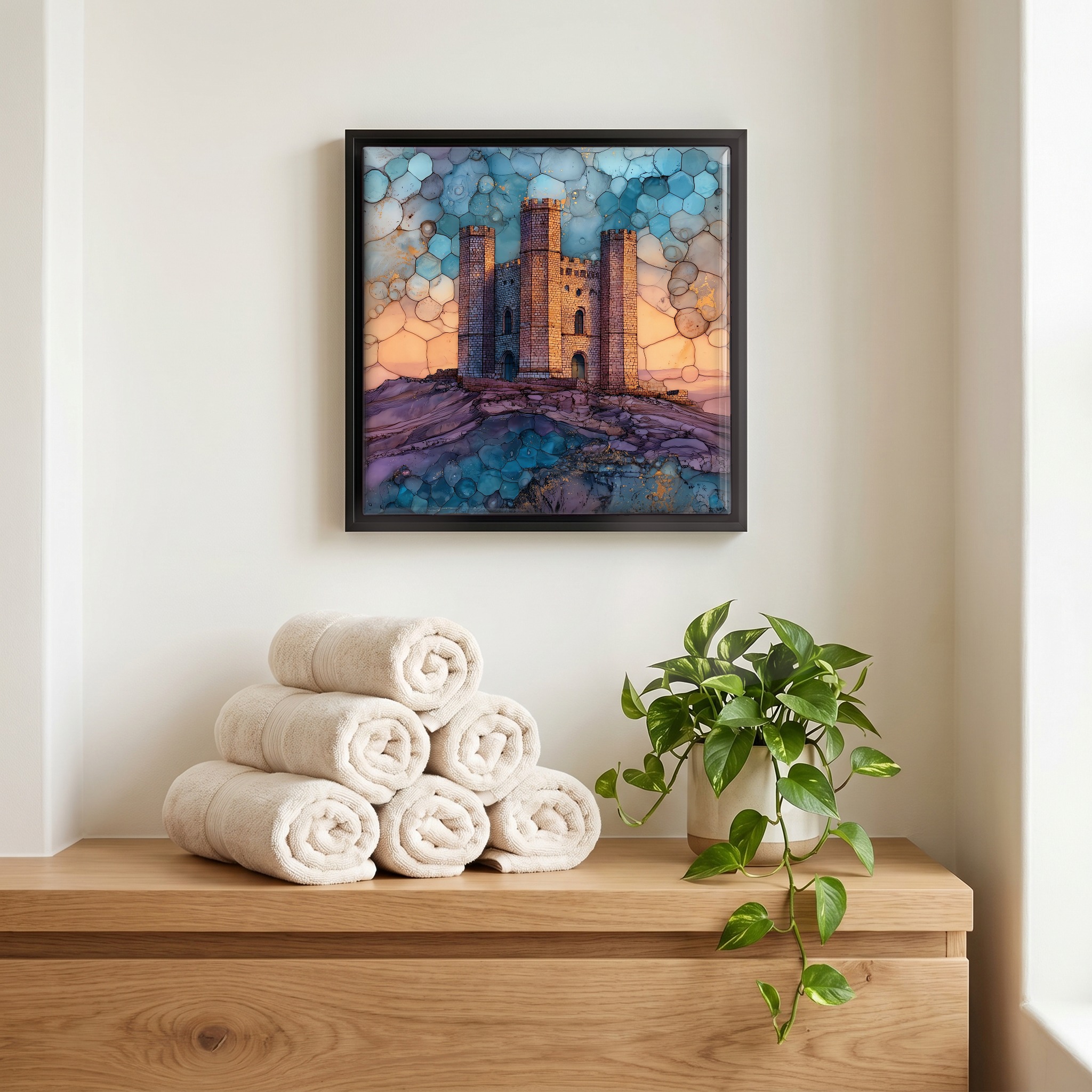
Castel del Monte, on ceramic.
Each tile is finished by hand in our Knoxville studio. Artwork is slowly infused into the ceramic surface under high heat and pressure, and rests beneath a thin glossy finish. The colour lives in the surface, not on top of it.
Pick any four 4-inch tiles — National Parks you've been to, a Smokies set, the four seasons of one place. $ for a set of , cork-backed, ready to live on the table.
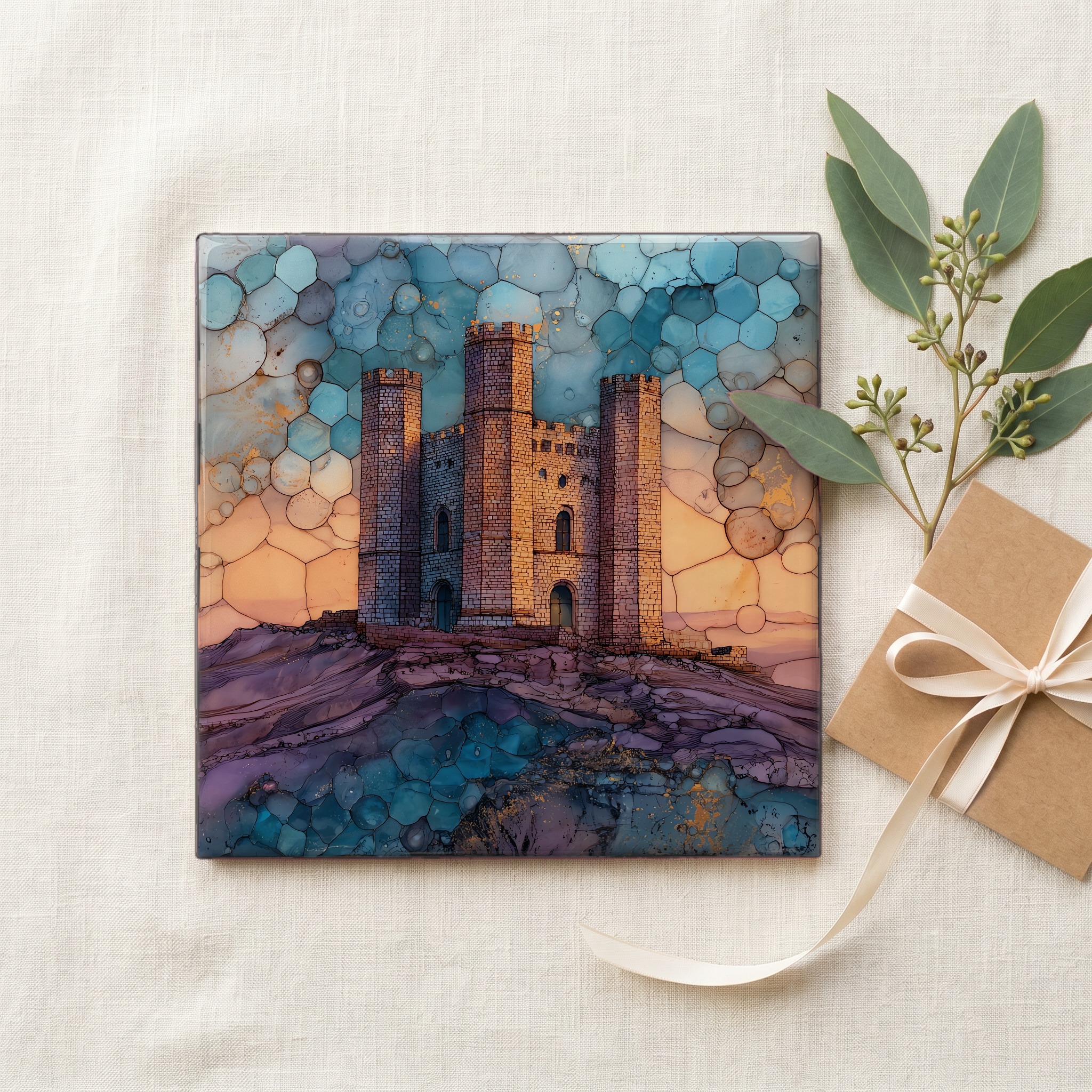
Each tile ships in a kraft box, tied with cream ribbon, with a handwritten note from the studio if you'd like to add one.
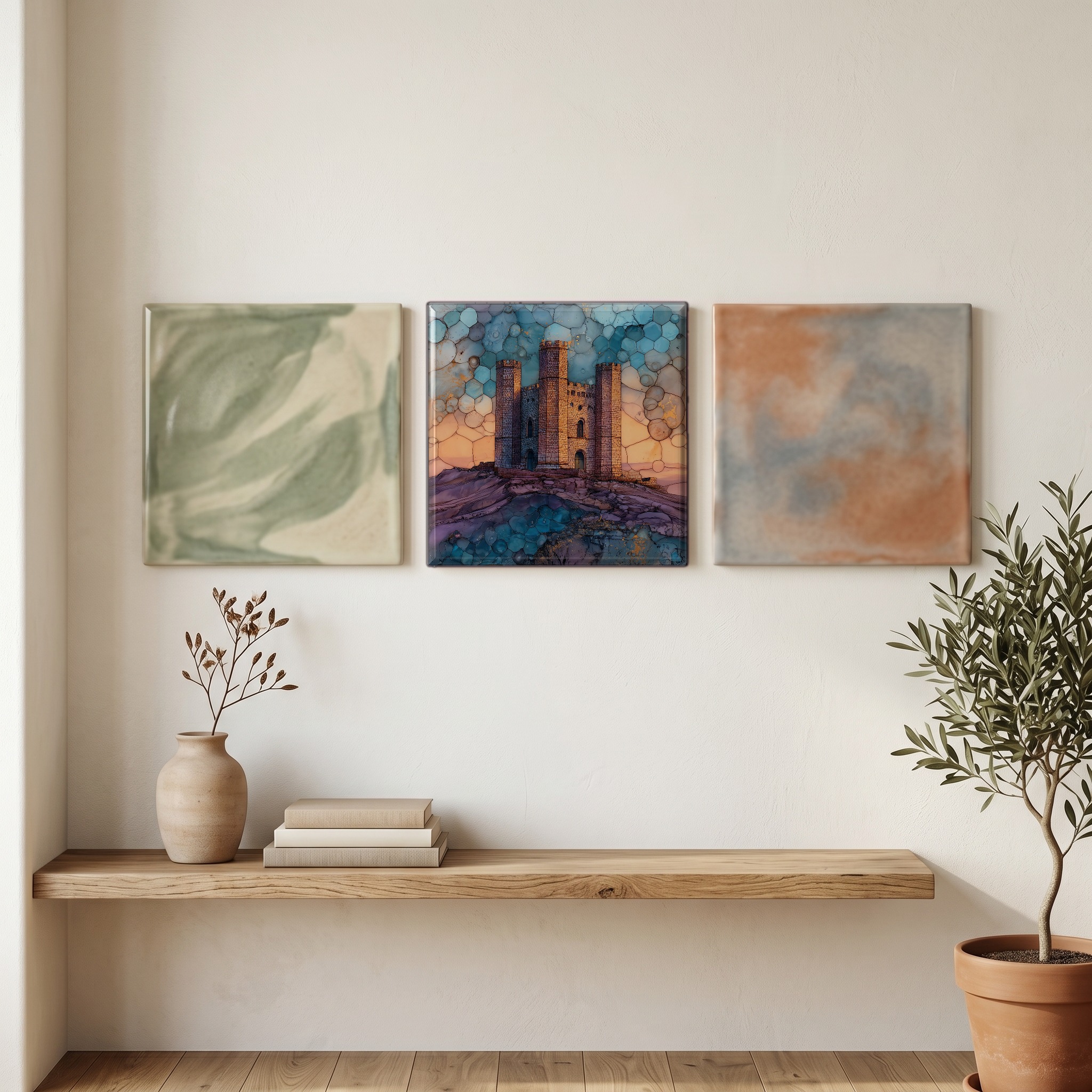
Three or five different vistas, hung together — a chapter of places you've been, or want to go.
The place, in three passes.
Castel del Monte stands at 540 metres on a low rise of the Murgia plateau, about 18 kilometres south of Andria in the Apulia region of southeast Italy. Emperor Frederick II had it built in the 1240s, on land he inherited through his mother, Constance of Sicily. It is one of a ring of castles he raised across the Italian south, but the only one shaped as a regular octagon: eight walls of 16.5 metres, eight corner towers, set 56 metres across. UNESCO added it to the World Heritage list in 1996 as a masterpiece of medieval architecture. Cars stop at a lot below; a short shuttle climbs the last stretch to the gate.
The walls are local limestone, with white marble and coral breccia worked into the courtyard and the main portal, so the stone shifts colour as the day moves. Everything obeys the number eight. Eight rooms ring each of the two floors, trapezoidal and nearly identical, around an eight-sided inner court open to the sky. Scholars have tied the obsessive geometry to medieval number-symbolism, to the octagonal baptistery, and to solar alignments at the equinox, though Frederick II left no plan and no stated purpose. There is no moat, no drawbridge, none of the defensive logic a fortress of the 1240s would carry. What it was built for is still an open question, which is most of why it holds the eye.
The castle sits on the open Murgia upland and keeps seasonal hours through most of the year. A paid car park lies roughly a kilometre below the walls, and a shuttle runs the last climb, since private cars are held off the approach in busy months. Admission to the interior is ticketed, managed by Italy's regional museum authority for Puglia. Andria, the nearest town, is about 18 kilometres off; Bari, the regional capital and its airport, is close to an hour by car. The plateau is treeless and exposed, so the light is flat at midday and long toward evening, when the limestone warms and the octagon throws its shadow down the slope.