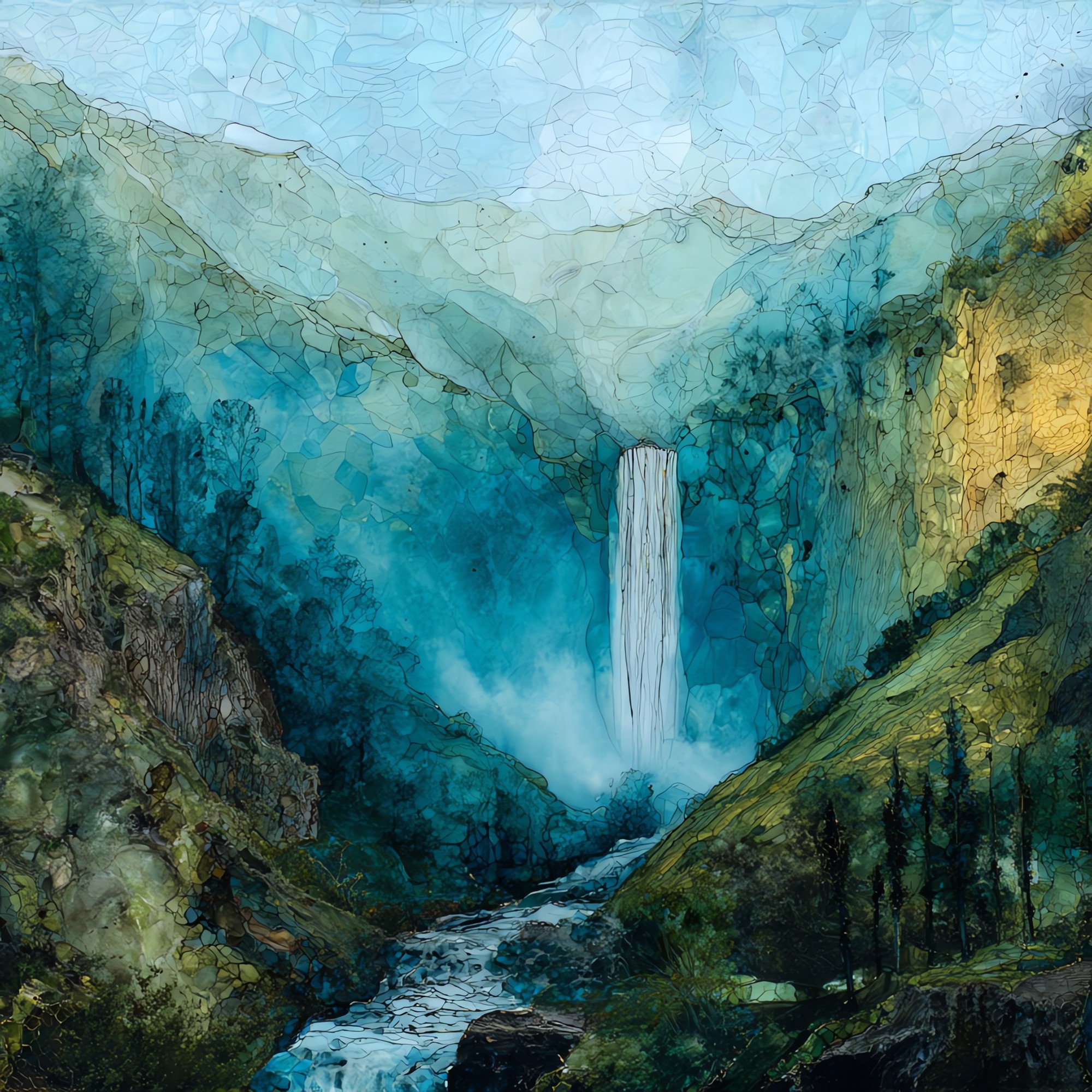
Cascata delle Marmore
— — a river the Romans taught to fall.
Not only on a wall.

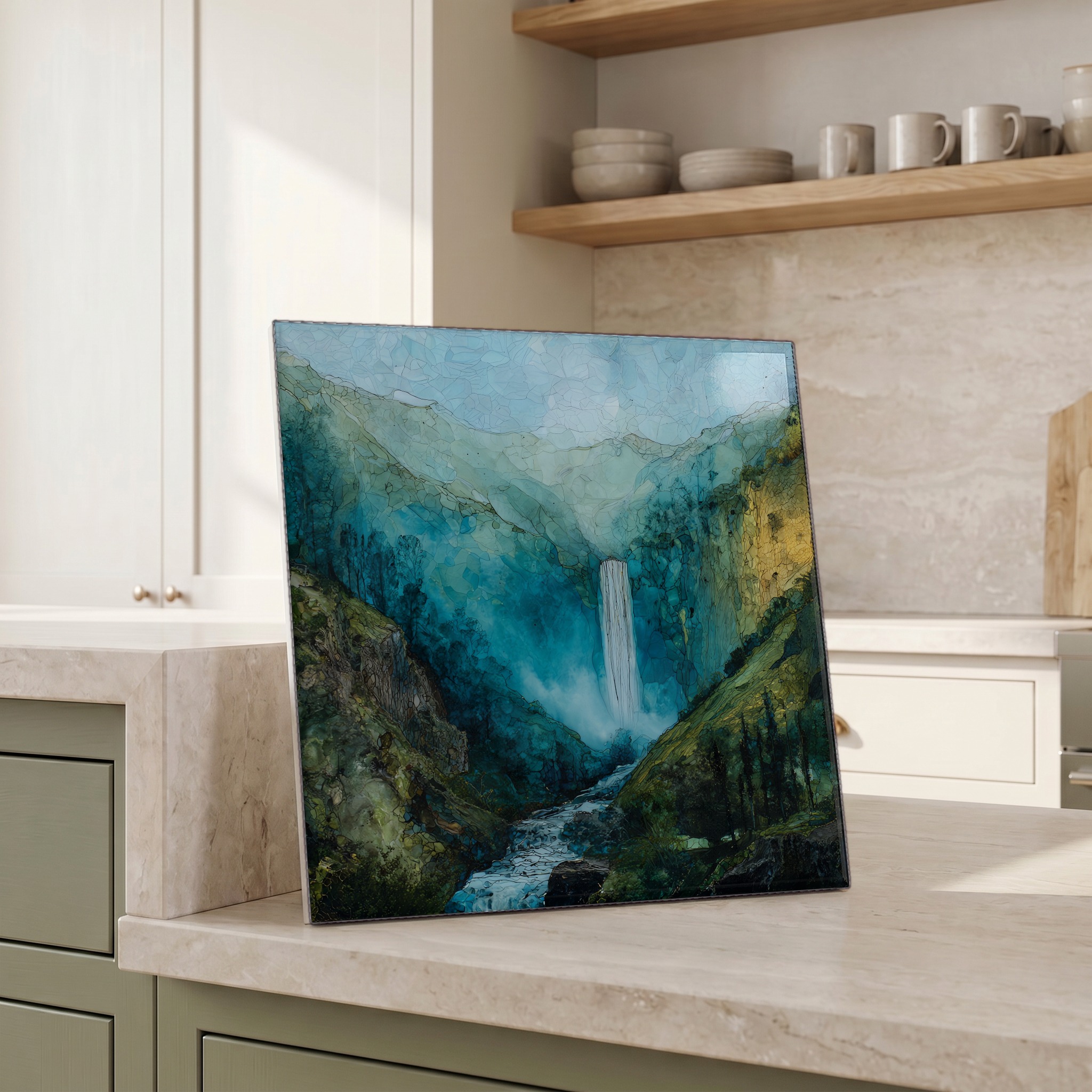



“A waterfall on a schedule. Three drops down a limestone cliff above Terni, the biggest 83 metres, the whole stack 165. The water is the Velino, diverted into the Nera by a Roman consul in 271 BC and still released on a timetable today; the power station downstream keeps the lower stretch dry until the siren goes, and then it doesn't. Before the release the gorge is quiet enough to hear birds. After, you mostly hear the falls.
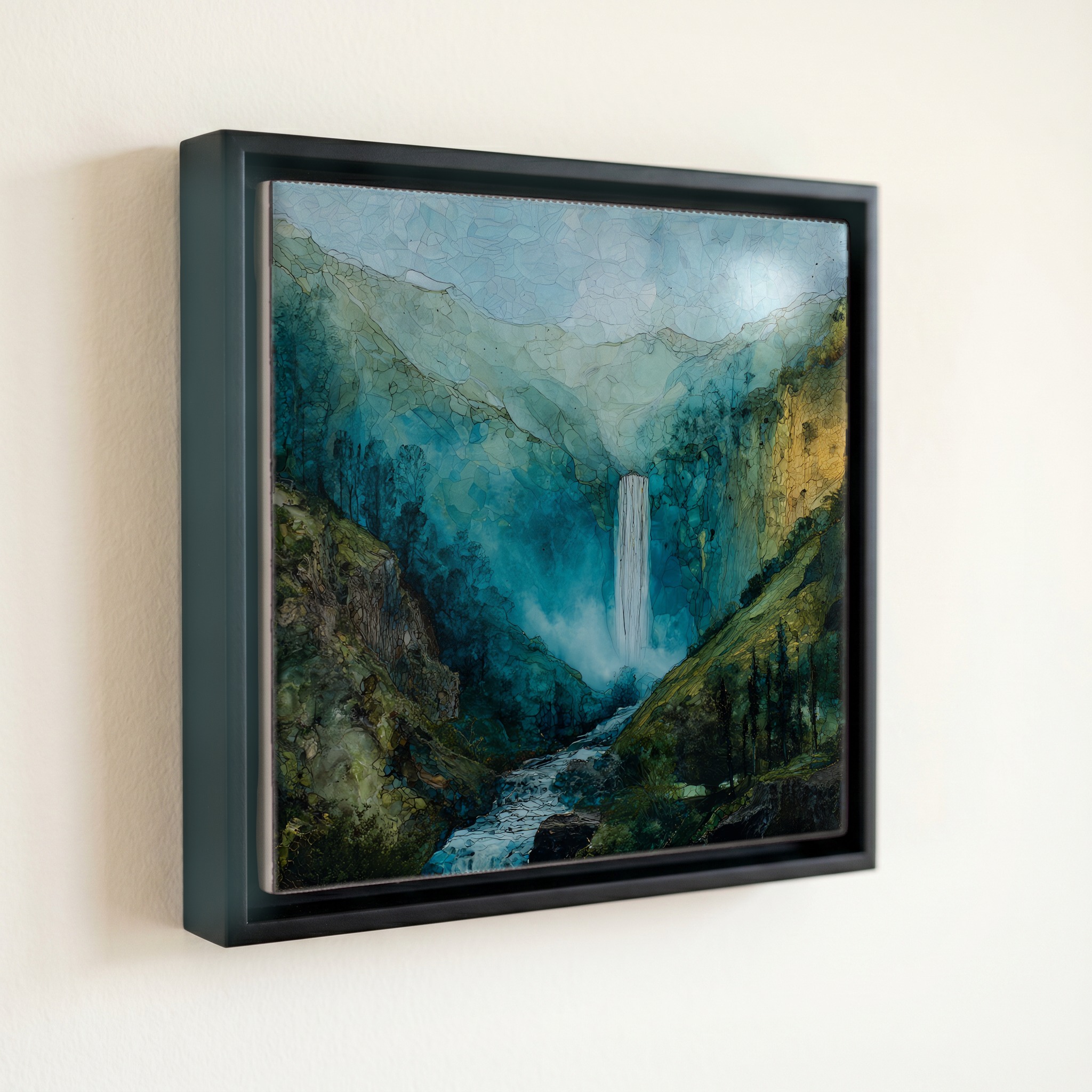
Cascata delle Marmore, on ceramic.
Each tile is finished by hand in our Knoxville studio. Artwork is slowly infused into the ceramic surface under high heat and pressure, and rests beneath a thin glossy finish. The colour lives in the surface, not on top of it.
Pick any four 4-inch tiles — National Parks you've been to, a Smokies set, the four seasons of one place. $ for a set of , cork-backed, ready to live on the table.

Each tile ships in a kraft box, tied with cream ribbon, with a handwritten note from the studio if you'd like to add one.

Three or five different vistas, hung together — a chapter of places you've been, or want to go.
The place, in three passes.
Cascata delle Marmore sits in the Parco Fluviale del Nera in southern Umbria, about seven kilometres east of Terni and roughly 100 kilometres north of Rome. The falls are three tiered drops of the Velino River as it spills into the Nera valley below: the upper drop is 83 metres, with two lower steps making a total descent of 165 metres. The Romans cut the original channel in 271 BC under the consul Manius Curius Dentatus to drain the marshes of the Velino plain above. The cliff is travertine, the same limestone laid down over millennia by the calcium-rich waters themselves.
The Velino above the falls is held back at a regulating station and released on a published timetable, because the same water feeds the Galleto hydroelectric plant downstream. Between releases the cliff runs only with a small reserve flow; when the gates open the discharge surges and the gorge fills with spray within a minute or two. Visitors check the day's schedule before arriving, since the falls run on a tighter cycle in summer and on weekends than in winter. Lord Byron, who saw a release in 1817, wrote about the water in the fourth canto of Childe Harold's Pilgrimage; Camille Corot painted the gorge in the 1820s.
The park has two main belvederes. The Belvedere Inferiore sits at the foot of the falls along the SS209 road, and the Belvedere Superiore looks down on the upper drop from the village of Marmore above. A network of marked trails connects them, including the Anello degli Innamorati (Lovers' Ring) that crosses a footbridge under the second drop and a short tunnel that opens onto the Balcone degli Innamorati, where the spray reaches you directly. There is a per-person entry fee. Release times are published on the park website and posted at the entrances; arriving fifteen minutes ahead lets you watch the cliff change from quiet stone to water.