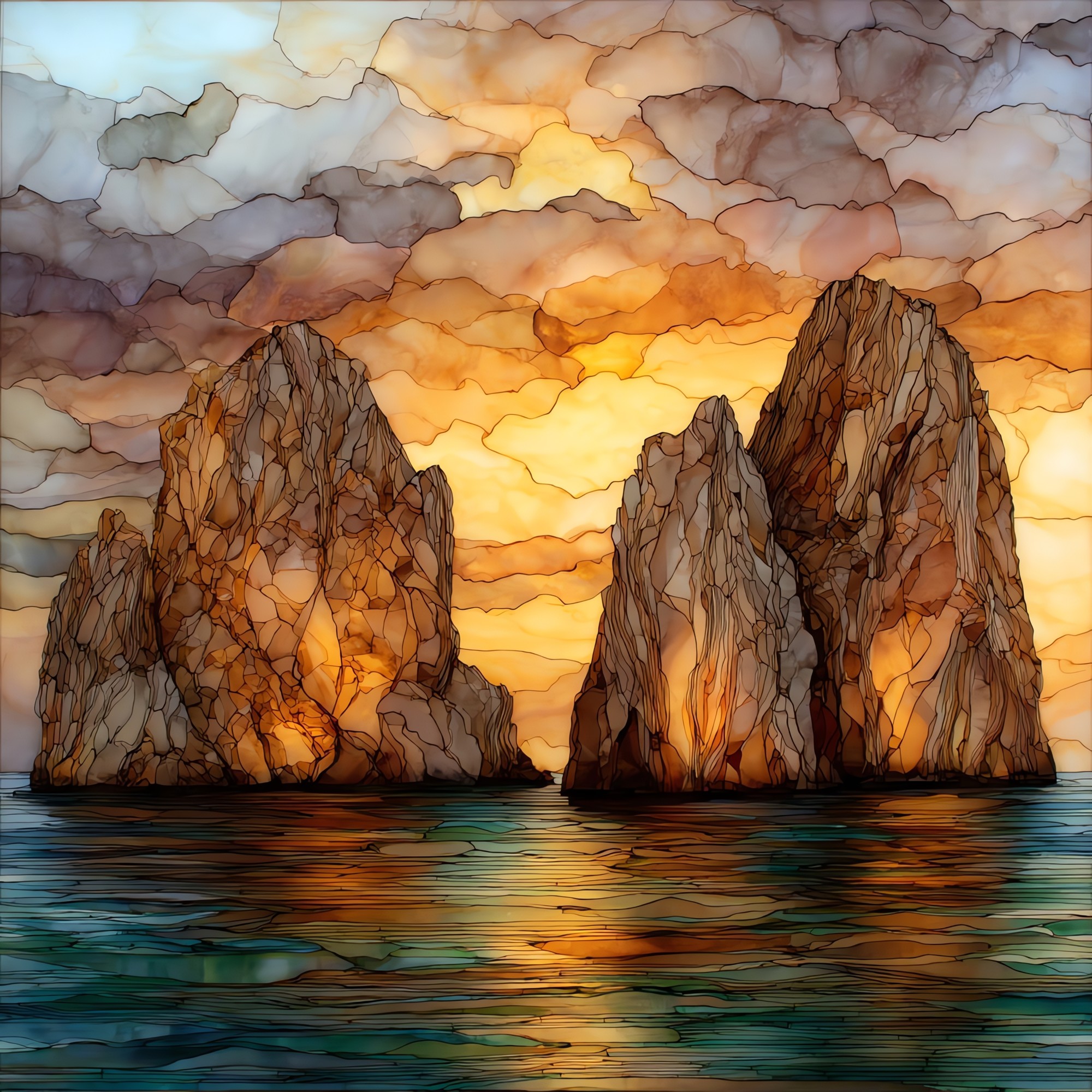
Capri Faraglioni
— three towers the sea left standing.
Not only on a wall.
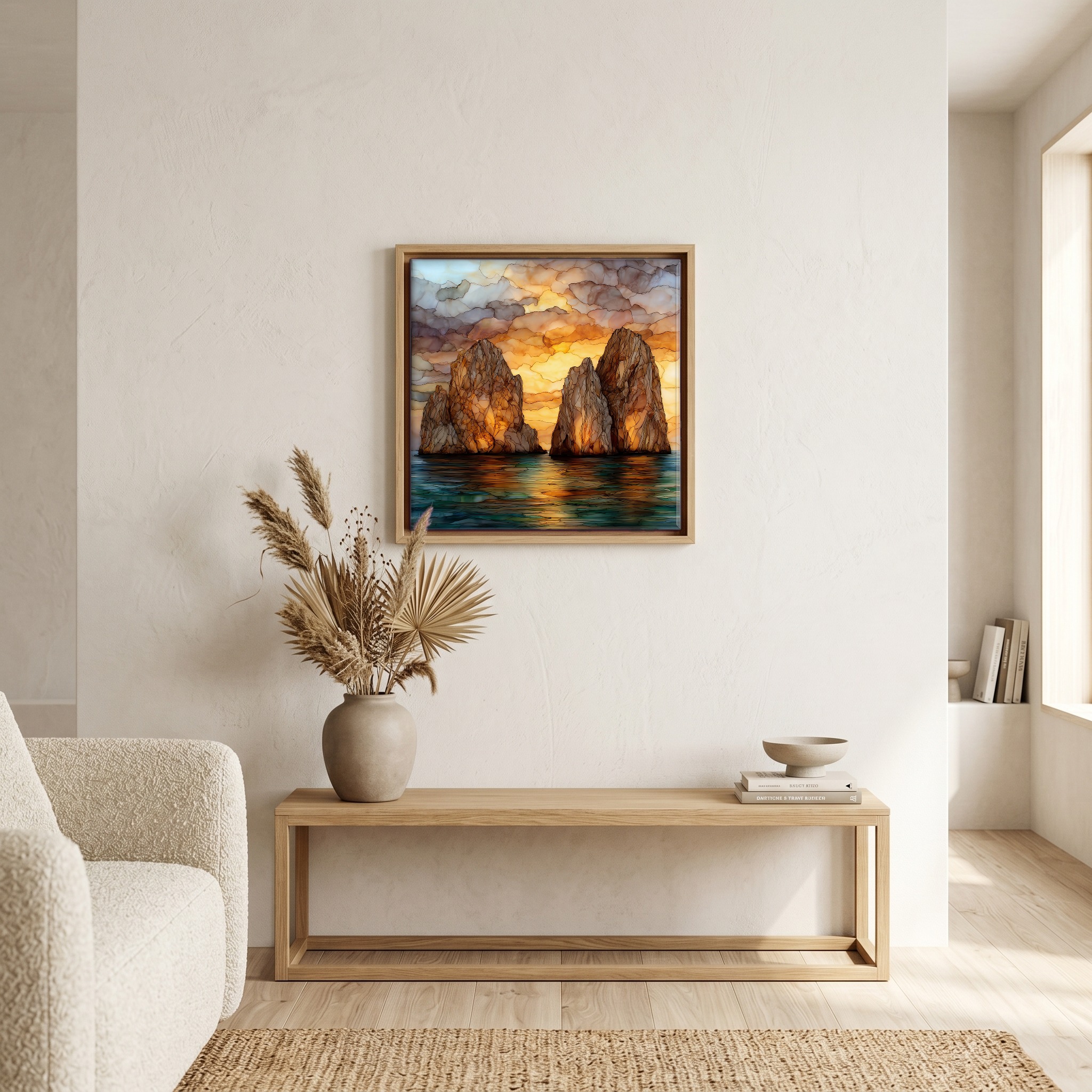
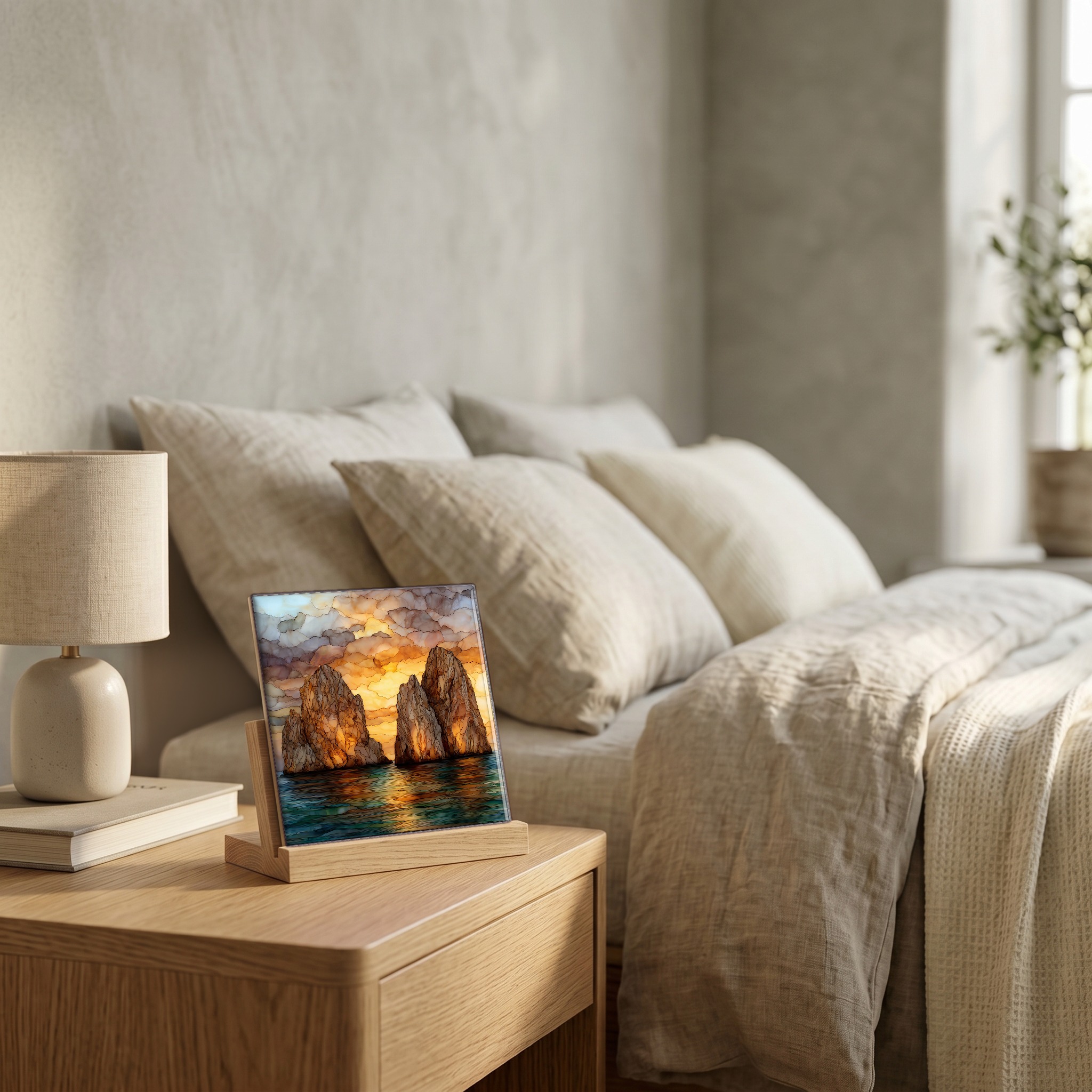
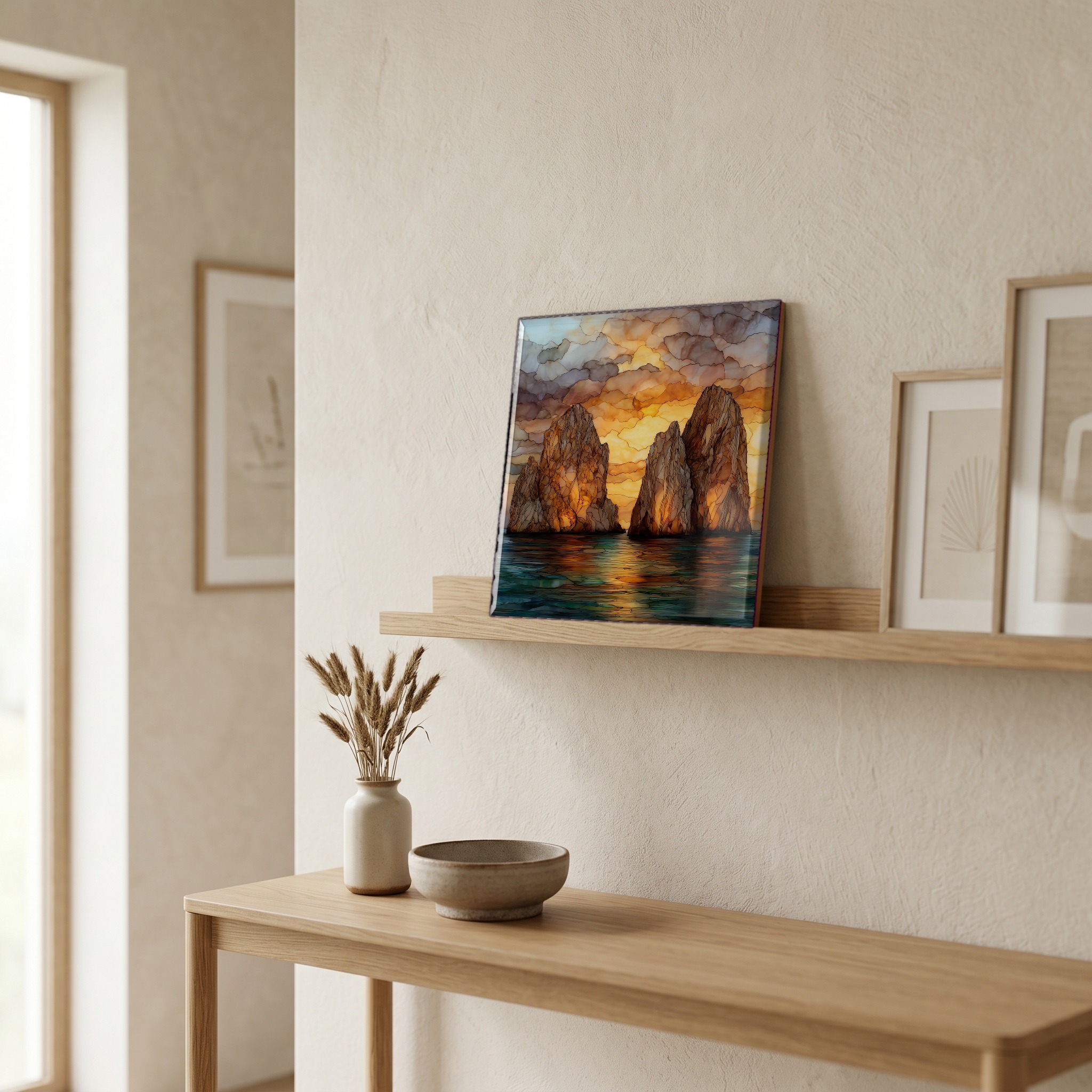
“Three limestone stacks off the southeast cliffs of Capri, where the island runs out of land and the rock keeps going. The middle one has an arch the sea cut clean through, wide enough for a boat. The old habit is to kiss as you pass under it. On the farthest stack lives a wall lizard found nowhere else, gone blue over its long isolation. From the Belvedere di Tragara the three of them sit in the water and don't move. Most people just stop talking for a minute.
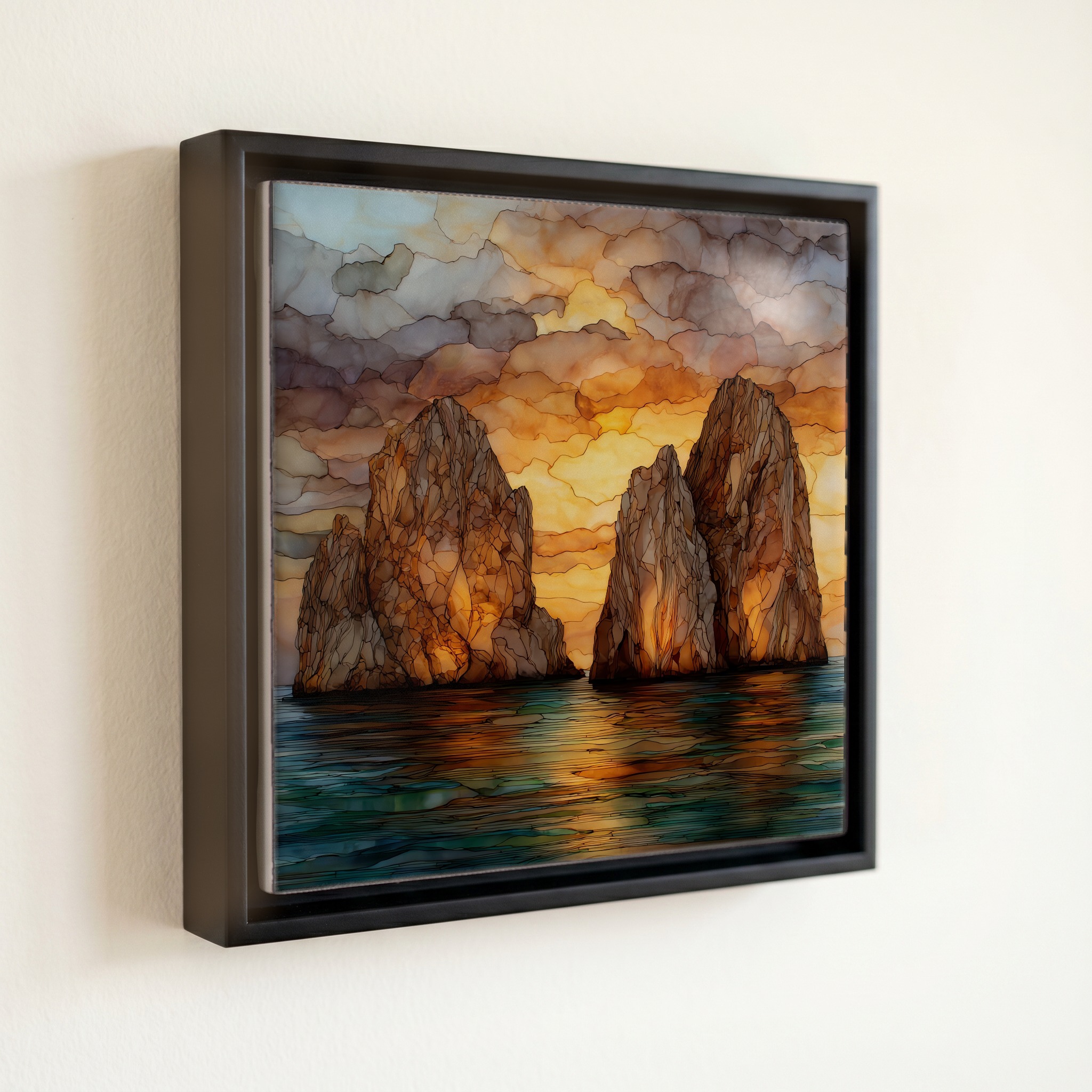
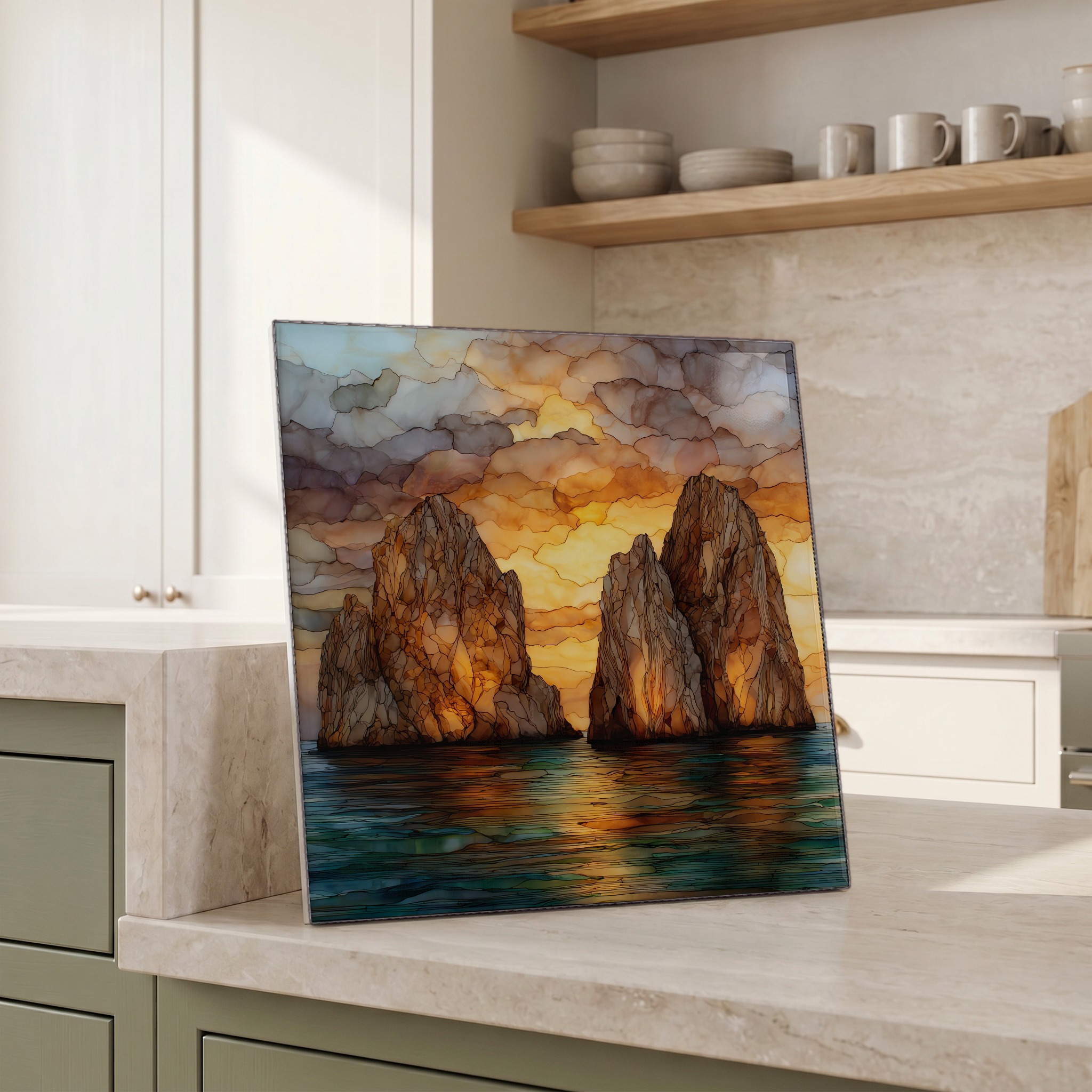
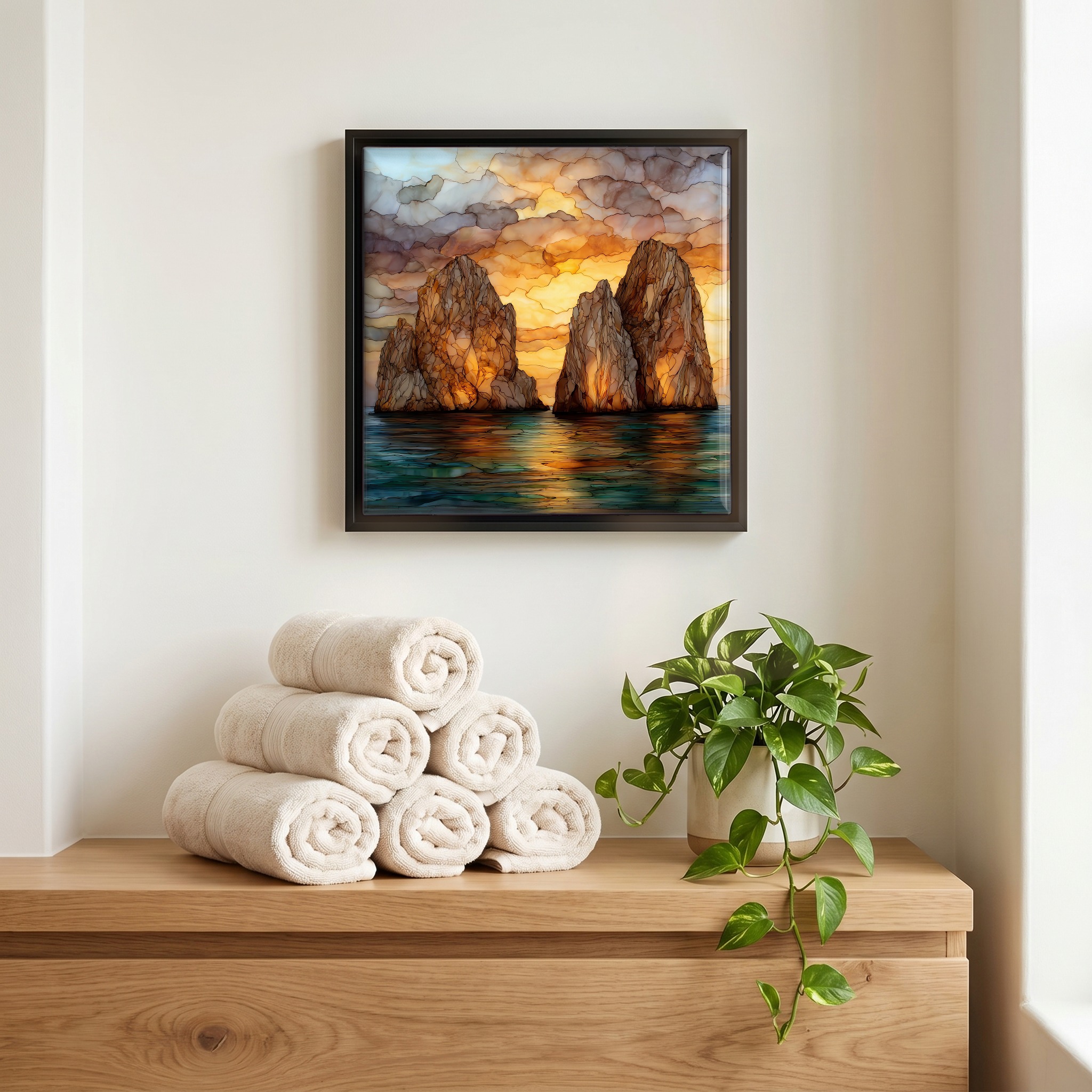
Capri Faraglioni, on ceramic.
Each tile is finished by hand in our Knoxville studio. Artwork is slowly infused into the ceramic surface under high heat and pressure, and rests beneath a thin glossy finish. The colour lives in the surface, not on top of it.
Pick any four 4-inch tiles — National Parks you've been to, a Smokies set, the four seasons of one place. $ for a set of , cork-backed, ready to live on the table.
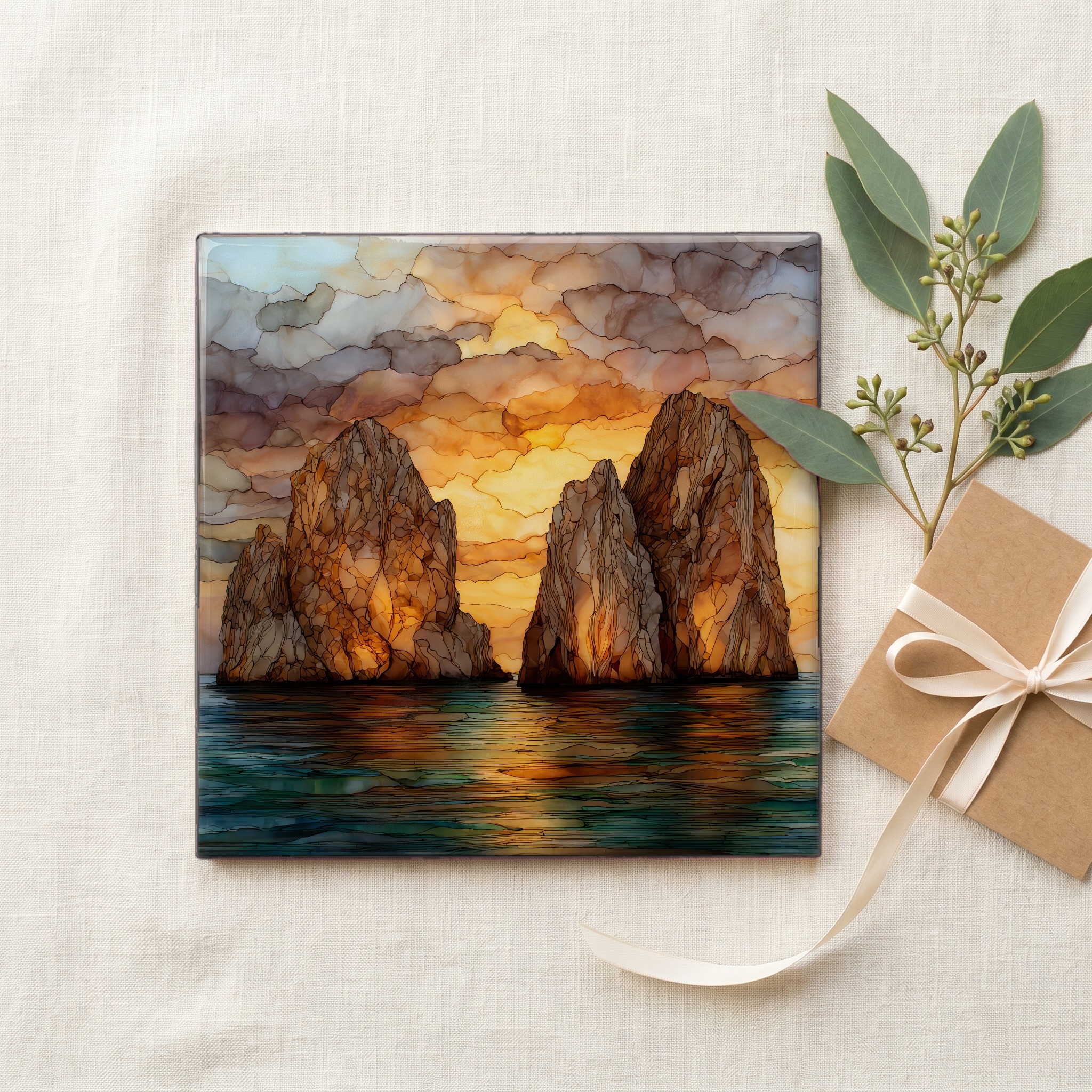
Each tile ships in a kraft box, tied with cream ribbon, with a handwritten note from the studio if you'd like to add one.
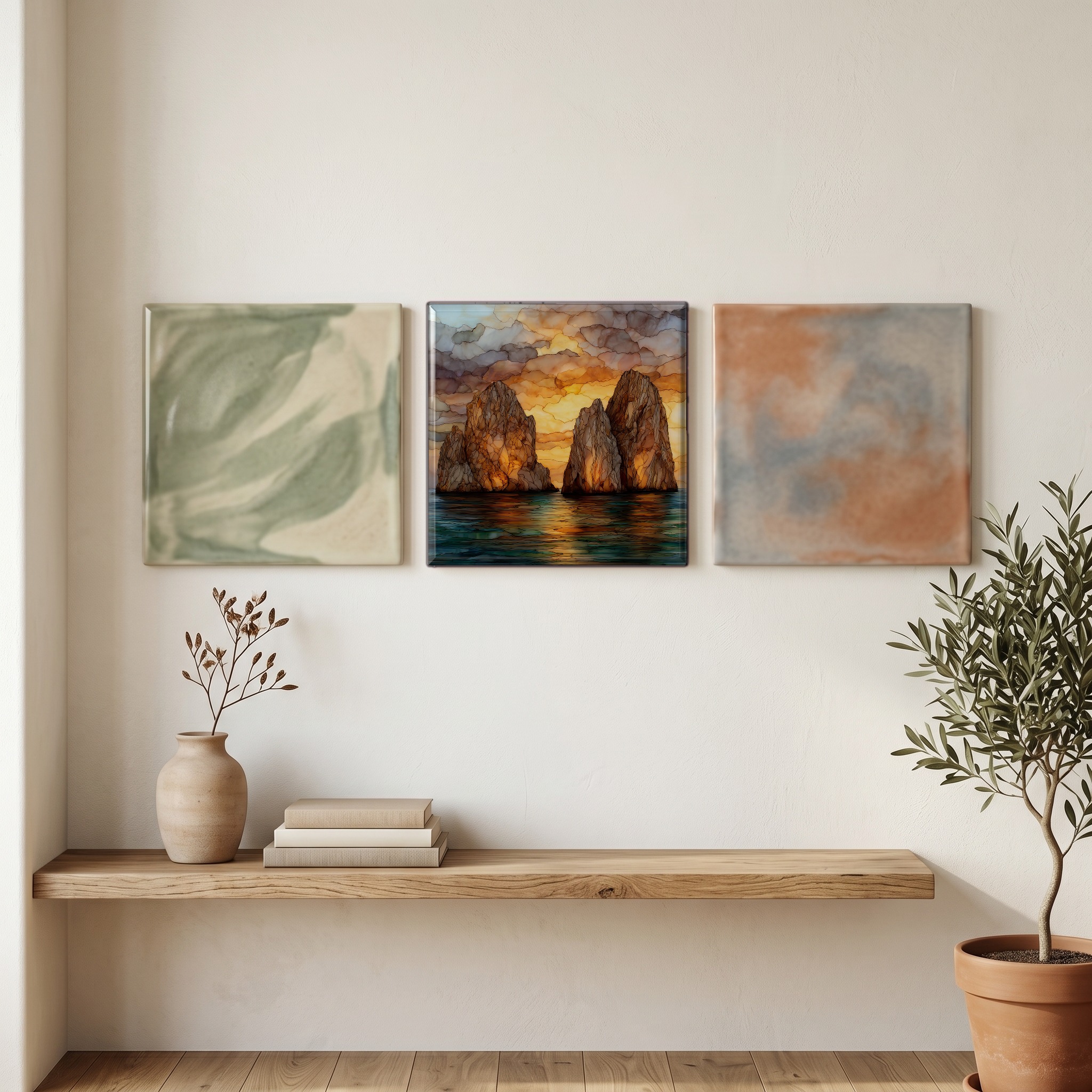
Three or five different vistas, hung together — a chapter of places you've been, or want to go.
The place, in three passes.
The Faraglioni rise off the southeast shore of Capri, in the Gulf of Naples, three limestone stacks standing in the Tyrrhenian Sea. The tallest, Stella, reaches 109 metres and is the only one still joined to the island; the middle stack, Mezzo, runs 82 metres; the outermost, Scopolo, 106 metres. Capri sits at the southern edge of the gulf, off the Sorrentine Peninsula, in the Campania region of Italy. The stacks are reached by boat from Marina Piccola or seen from above along the cliff path to the Belvedere di Tragara. With the Blue Grotto, they are the most recognised silhouette in the bay.
The three stacks are limestone, the same rock that forms the whole island, left standing after wind, rain, and the sea wore away everything softer around them. The middle stack, Mezzo, carries the feature the place is known for: a natural arch worn clean through the rock, wide and tall enough that tour boats pass beneath it. The outermost stack, Scopolo, is the only home of the blue lizard, Podarcis siculus coeruleus, a subspecies of the Italian wall lizard that went blue over its long isolation on the rock and is found nowhere else. The tallest of the three, Stella, stands 109 metres and is still tied to Capri's cliffs.
The closest land view is from the Belvedere di Tragara, a terrace at the end of Via Tragara where the cliff path looks straight down onto the three stacks; the Gardens of Augustus and the switchbacks of Via Krupp give the other high vantage. From the water, boats round the rocks and pass through the arch in Mezzo, where the old tradition is to kiss your companion for luck, by one telling good for another thirty years. Two beach clubs sit at the base on the island side, La Fontelina and Da Luigi ai Faraglioni, reached on foot down from Tragara. The light turns the stone amber in the last hour before sunset.