Wender·Vista
Cappella Sansevero
shown on ceramic, 12-inch tileItaly
in old Naples, off Spaccanapoli

Cappella Sansevero

a cloth that forgot it was stone.

Where it lives

Not only on a wall.

A small tile on the nightstand catching the morning. A larger one above the fire. Yours, wherever you spend the slow hours.
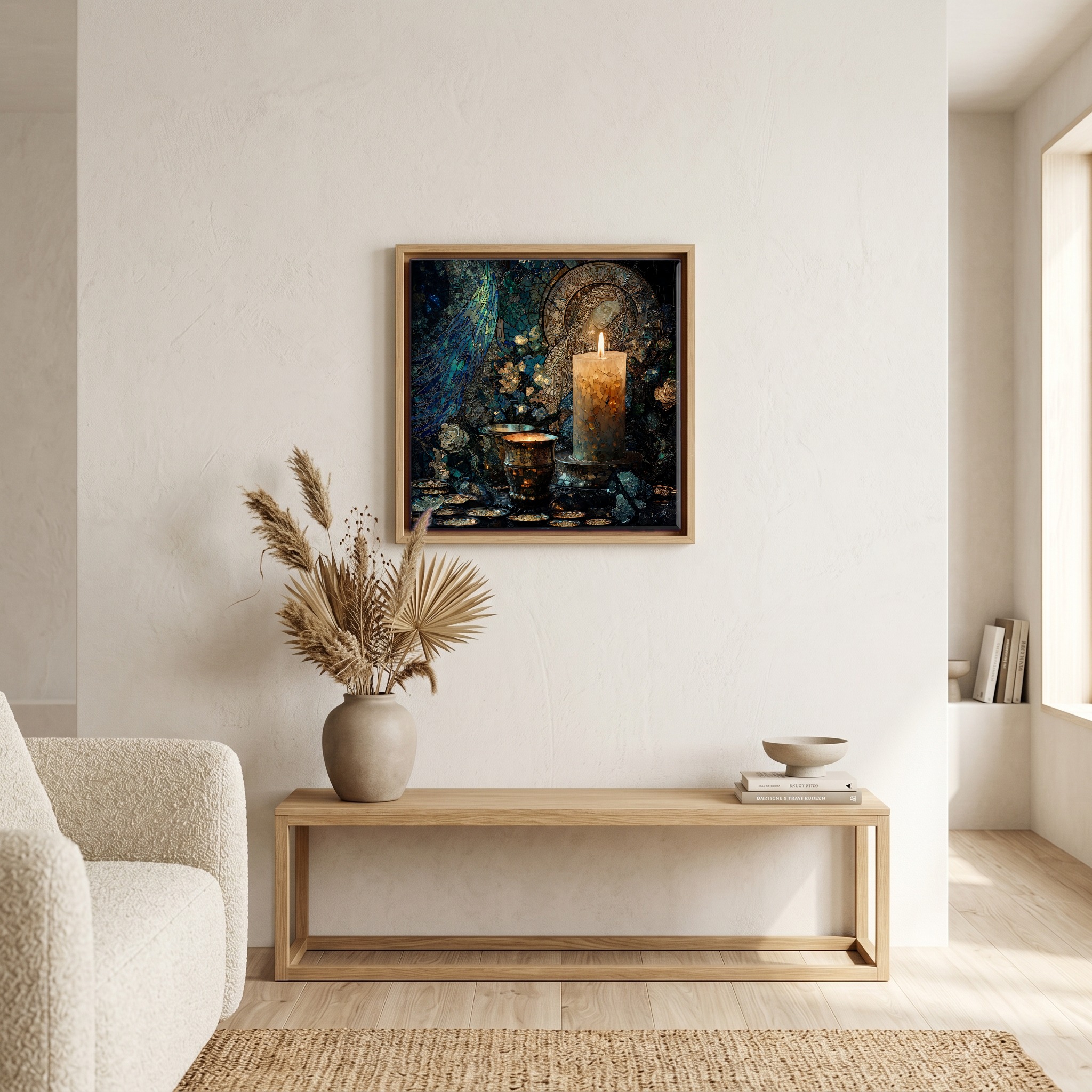
Above the bench, in a warm oak surround.
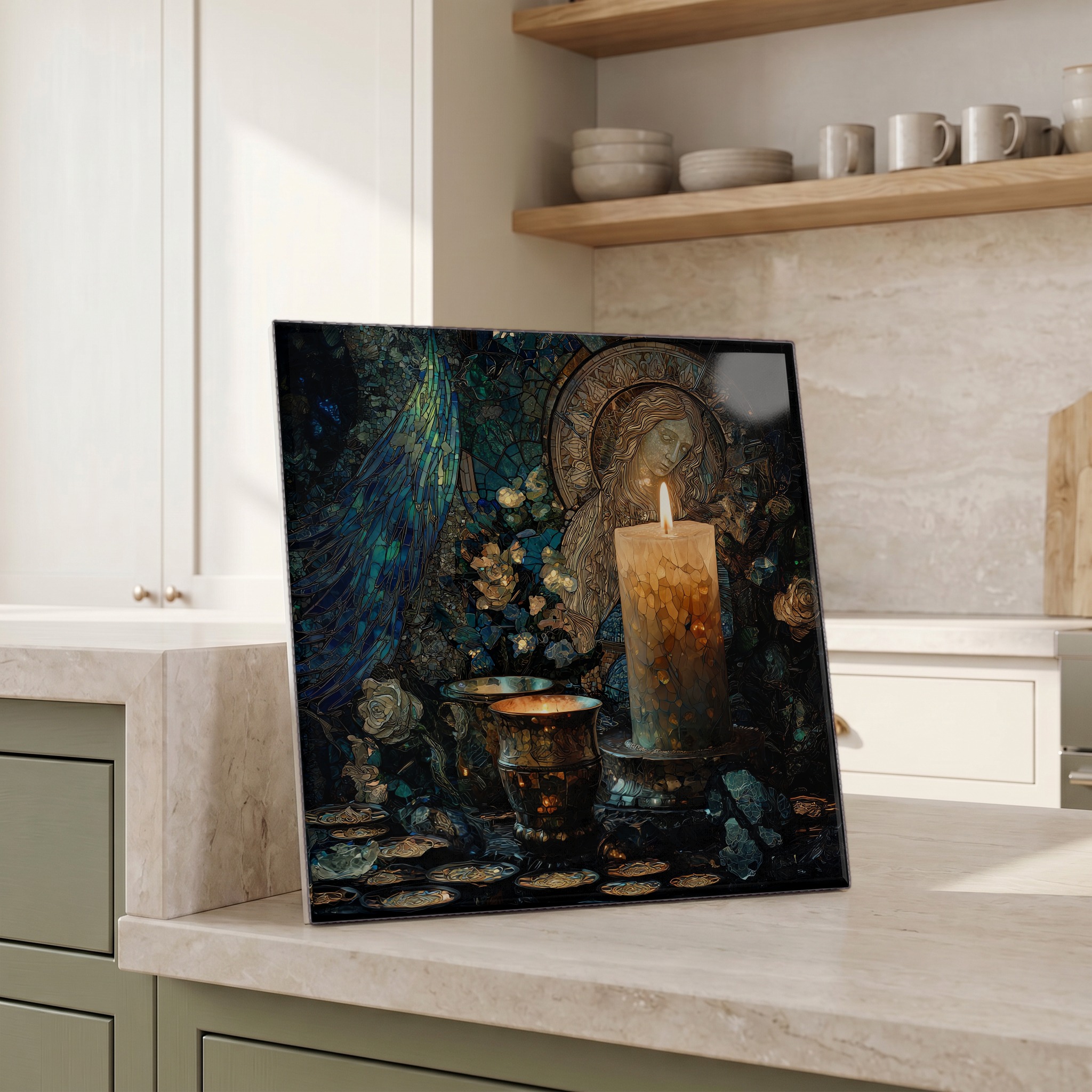
Beside the kettle, propped on the counter.
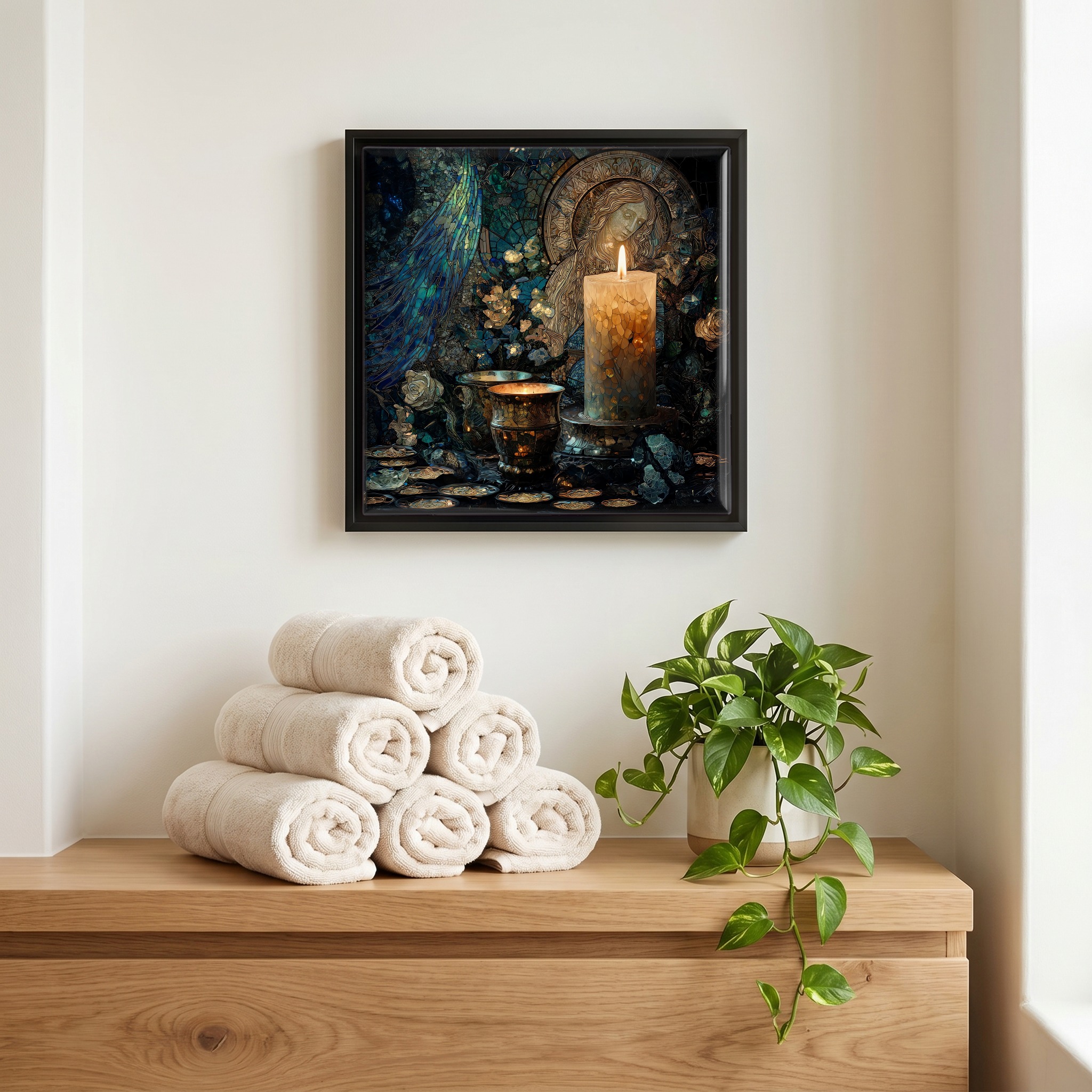
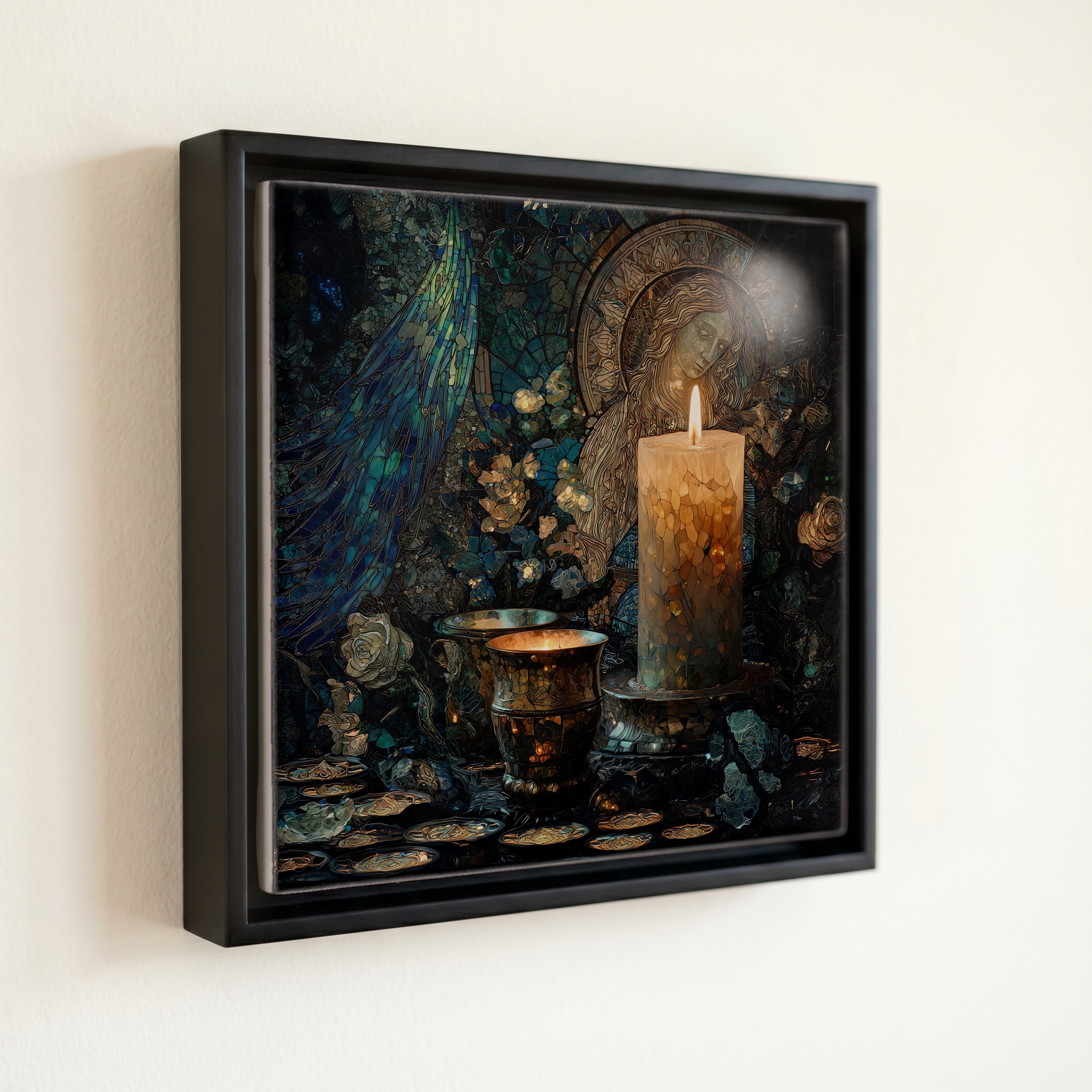
Above the linens, in a slim black surround.
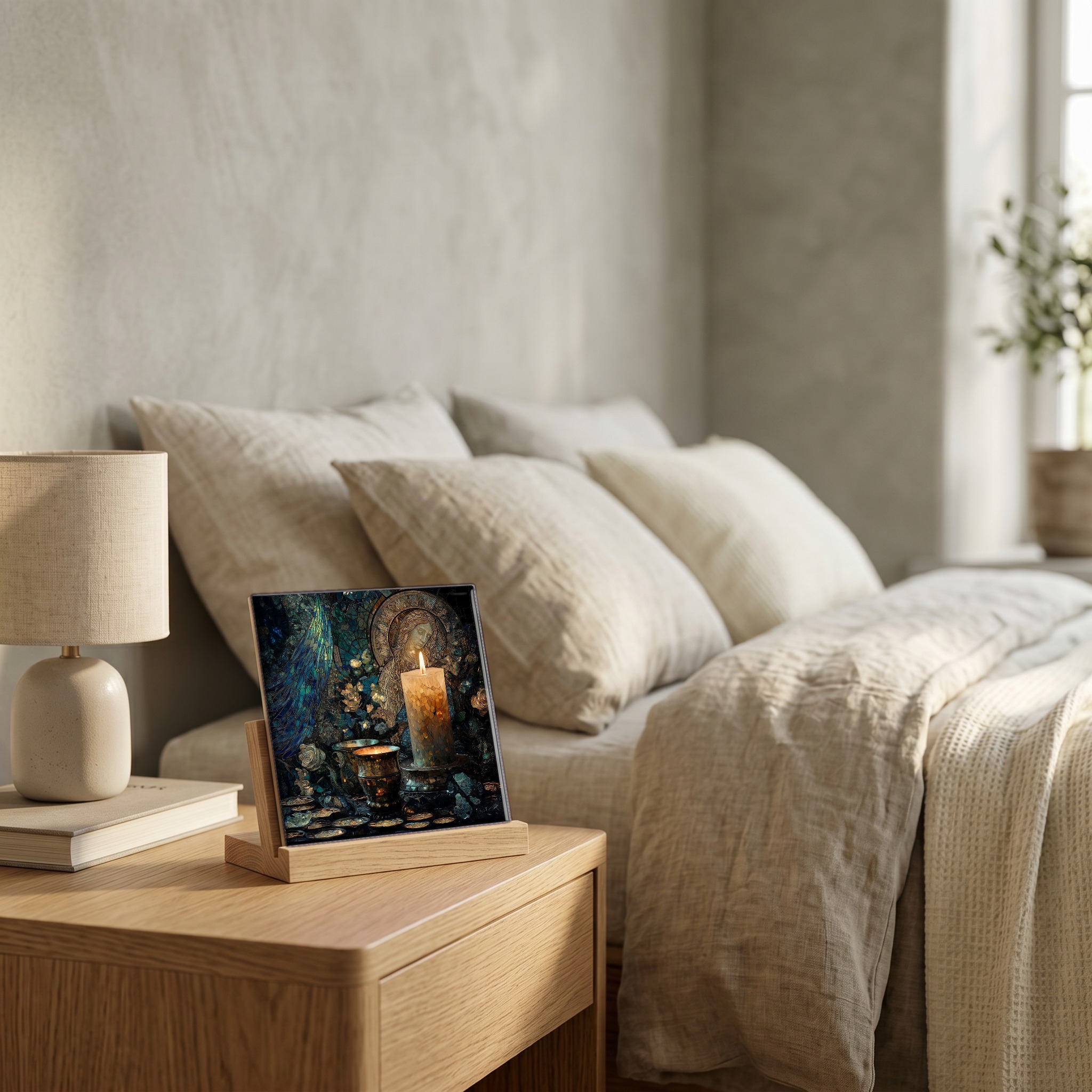
On the nightstand, on a light oak stand.
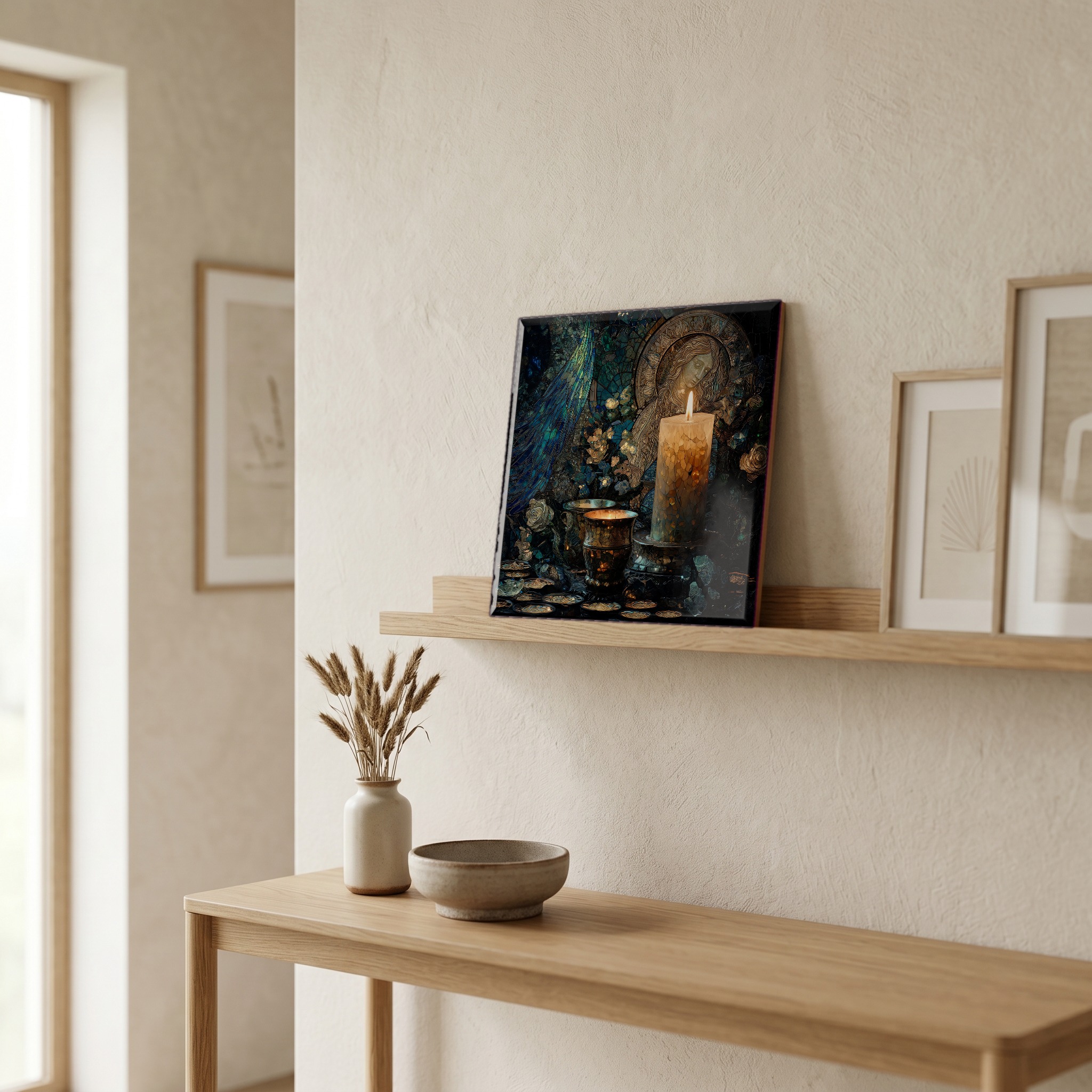
On a picture ledge, where the light comes in.
a note from the studio

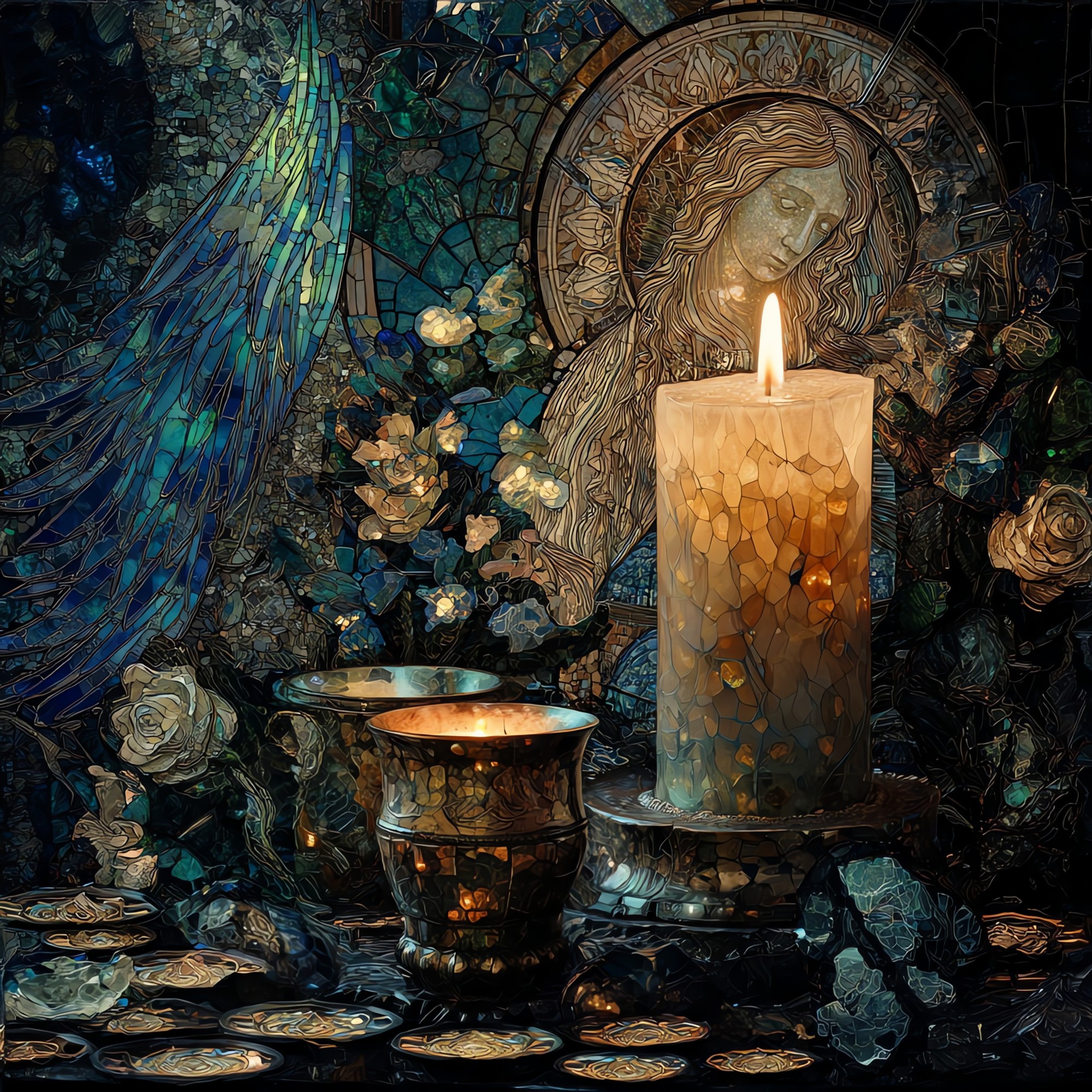
The chapel sits in a narrow lane behind San Domenico Maggiore, in the old centre of Naples. Inside, beneath a frescoed ceiling, a young man lies under a veil, sculpted entirely in marble by Giuseppe Sanmartino in 1753. The figure is Christ, but the eye keeps catching the cloth: how it lifts, how it folds, how the marble pretends to be linen. Around the nave stand more sculptures, more impossibilities. A woman draped in another veil. A man pulling free of a net carved from the same block as himself. The whole chapel was the Sangro family's, kept quietly behind a small door off the lane.
from the studio
shown in a slim black floating frame · 6 × 6 in
— bring it home

Cappella Sansevero, on ceramic.

Each tile is finished by hand in our Knoxville studio. Artwork is slowly infused into the ceramic surface under high heat and pressure, and rests beneath a thin glossy finish. The colour lives in the surface, not on top of it.

What kind of piece?
One tile — square or rectangle.
How big?
the popular one — counter, shelf, nightstand
6 × 6 in · 15 cm · 1.6 lb
Surface finish
A clear glossy finish — the artwork reads as if under resin. Ideal for show-pieces and framed wall art.
How it sits
A hidden cleat — sits ¼″ proud of the wall.
$58
Hand-finished and shipped from our studio at the foot of the Smokies. On your wall in about ten days.
size
6 × 6 in
15 cm
weighs
1.6 lb
solid in the hand
surface
ceramic, hand-finished
art rests beneath a thin glossy finish
from
Knoxville, TN
our family studio, at the foot of the Smokies
— start a Coaster Set

Pick any four 4-inch tiles — National Parks you've been to, a Smokies set, the four seasons of one place. $ for a set of , cork-backed, ready to live on the table.
comes gift-ready
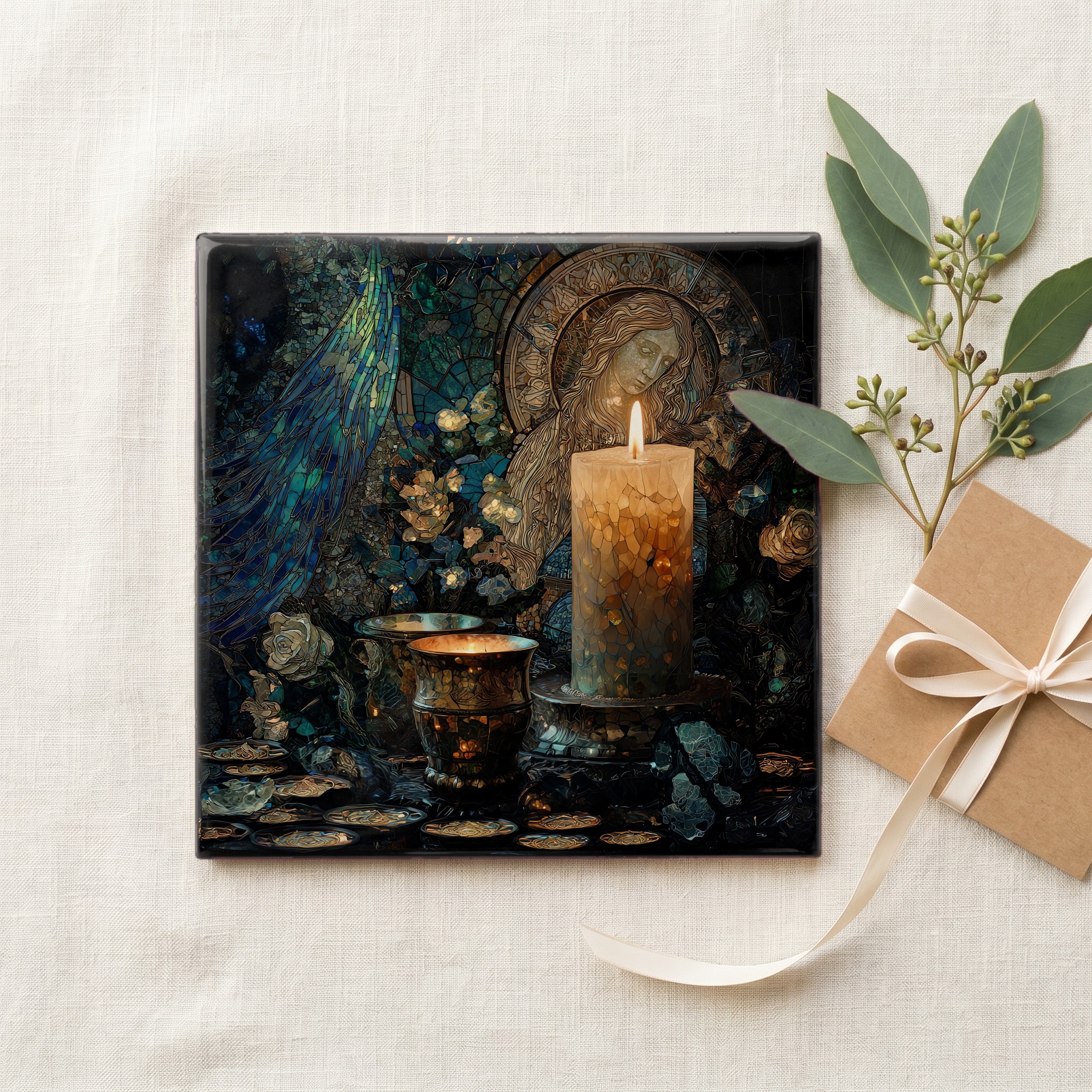
comes gift-ready

Each tile ships in a kraft box, tied with cream ribbon, with a handwritten note from the studio if you'd like to add one.
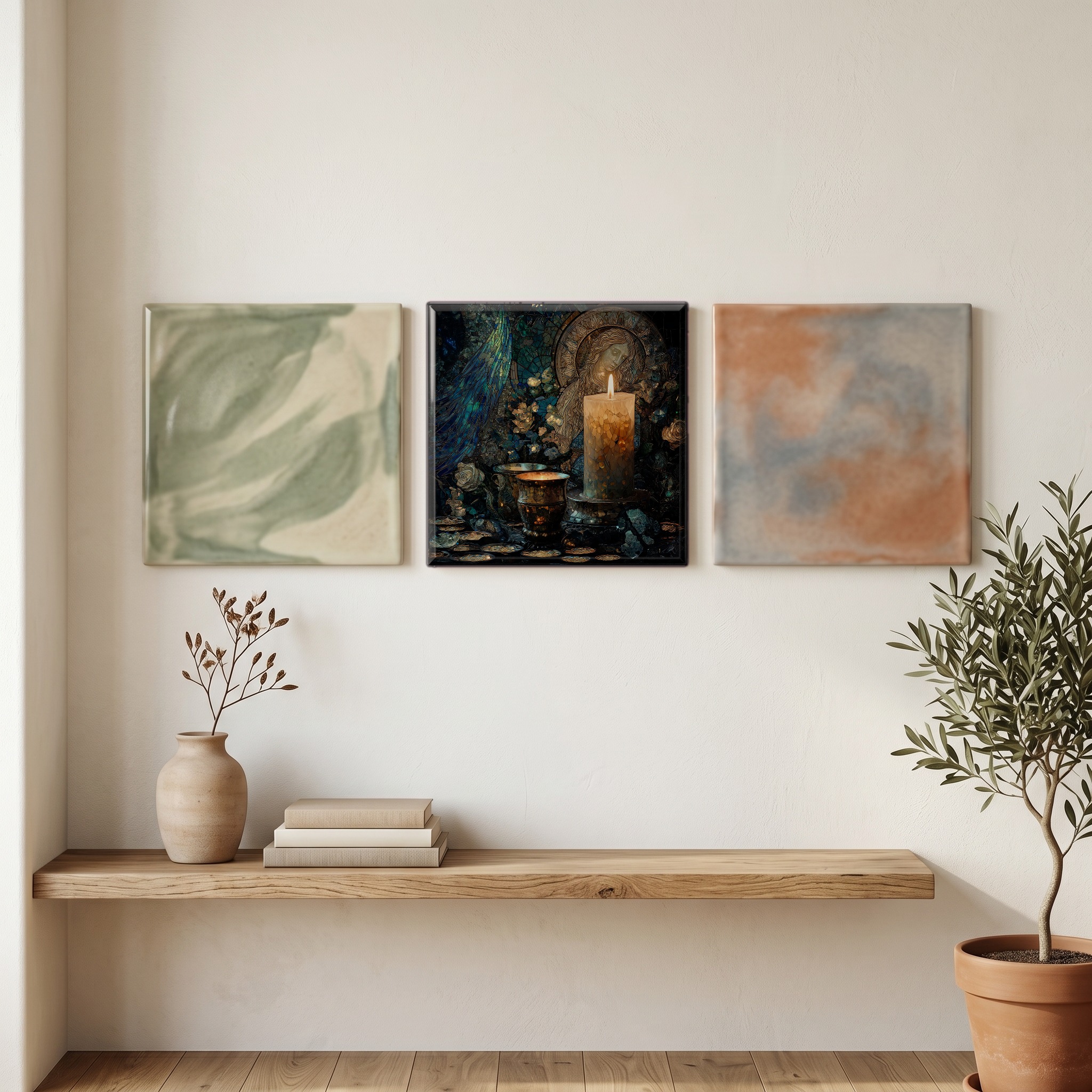
or build a grouping
or build a grouping

Three or five different vistas, hung together — a chapter of places you've been, or want to go.

about Cappella Sansevero

The place, in three passes.

A little of what's known, in case you fall down the rabbit hole — or want to go see it yourself.
the place

The chapel stands at Via Francesco de Sanctis, a few steps north of Spaccanapoli, in the historic centre of Naples in the Campania region of southern Italy. Giovan Francesco di Sangro, Duke of Torremaggiore, raised the first building on the site in 1590 as a private chapel beside the Sangro family palace. The structure now visible took its present form in the mid-eighteenth century under Raimondo di Sangro, Prince of Sansevero (1710-1771), who turned the family mausoleum into a sustained sculptural program. The surrounding district was inscribed by UNESCO in 1995 as part of the Historic Centre of Naples. The Museo Cappella Sansevero operates the site today.

the stone

The central work is the Veiled Christ, carved from a single block of marble by the Neapolitan sculptor Giuseppe Sanmartino in 1753. The veil reads as cloth, with folds that show the body beneath. Around the nave stand the Allegories of the Virtues, ten figures commissioned by Raimondo di Sangro from the leading Baroque sculptors of the day. Antonio Corradini's Pudicizia, completed around 1752, shows a woman draped in a similarly transparent veil. Francesco Queirolo's Disinganno gives a man pulling free of a fishing net carved from the same block as the figure. All three are marble, though a long-standing Neapolitan story credits Raimondo di Sangro with a lost alchemical process.

the visit

The chapel admits visitors in timed slots through the Museo Cappella Sansevero on Via Francesco de Sanctis. Photography is not permitted inside the building, and tickets are best booked through the museum's official site, often several days ahead in high season. The chapel observes a weekly closing day, currently posted on the museum's website. The underground crypt holds the so-called anatomical machines: two skeletal figures with their circulatory systems preserved in remarkable detail, commissioned by Raimondo di Sangro and the subject of ongoing scholarship on their method of preparation. Above ground, the main sculptural program comprises ten Allegories of the Virtues set around the central Veiled Christ.

— informed by Museo Cappella Sansevero
where
Italy · Naples, Campania
position
40.8492° N · 14.2542° E
the neighborhood

What's nearby.

A handful of named places within an hour's walk or short drive. Some we've already painted; some we will.
0.1 km S
San Domenico Maggiore
church and square
0.1 km S
Spaccanapoli
historic street
0.2 km E
San Gregorio Armeno
nativity-figure street
0.7 km NE
Pio Monte della Misericordia
Caravaggio church
0.7 km NE
Naples Cathedral
cathedral
1.2 km SW
Castel Nuovo
medieval castle
N
Cappella Sansevero
San Domenico Maggiore
Spaccanapoli
San Gregorio Armeno
Pio Monte della Misericordia
Naples Cathedral
Castel Nuovo
common questions

What people ask.

A few questions we get about Cappella Sansevero — and about bringing the piece home.
about the place

The chapel is on Via Francesco de Sanctis in the historic centre of Naples, Italy, a short walk north of Spaccanapoli and around the corner from Piazza San Domenico Maggiore. The surrounding district was inscribed by UNESCO in 1995 as the Historic Centre of Naples.

The Veiled Christ, or Cristo Velato, is a marble sculpture carved by Giuseppe Sanmartino in 1753. It depicts the dead Christ lying under a thin veil. The veil, the body, and the base are all worked from a single block of marble.

The chapel was founded in 1590 by Giovan Francesco di Sangro, Duke of Torremaggiore, as a private chapel beside the Sangro palace. Its present form was shaped in the mid-eighteenth century by Raimondo di Sangro, Prince of Sansevero, who commissioned the sculptural program.

Photography is not permitted inside the chapel. Visitors are asked to put cameras and phones away on entry. Official images of the Veiled Christ and the surrounding sculptures are available through the museum's bookshop and its website.

Two anatomical figures in the underground crypt of the chapel, commissioned in the mid-eighteenth century by Raimondo di Sangro. Each shows a skeleton with the arteries and veins preserved in red and blue. Modern study has shown the systems are largely composed of wire, wax, and silk.

Raimondo di Sangro, Prince of Sansevero (1710-1771), was a Neapolitan nobleman, inventor, and Freemason who reshaped the family chapel into the sculptural program now visible. His Enlightenment-era experiments and the chapel's iconography have generated legends about lost arts and alchemical processes that survive in Naples lore today.

The Museo Cappella Sansevero sells timed-entry tickets through its official site. Slots in high season often need to be booked several days ahead. The chapel observes a weekly closing day, posted on the museum's website. Group sizes inside are kept small to manage flow around the central Veiled Christ.

about the piece in your home

It has carried well for customers connected to the city. Cappella Sansevero sits inside the old centre most Neapolitans grew up walking through, and the Veiled Christ is one of the works locals point to first. A Small or a Coaster Set with a handwritten note from the studio suits someone who was born in Naples or studied there.

The colour signature is dim ivory, candle gold, and the deep cool of marble shadow. It sits well in Old World Maximalist, Italian Modern, and Dark Academia rooms. It also lifts a quieter Minimalist interior where a single piece of warm, complicated art is meant to be the point.

Yes. The piece carries the Old World vocabulary Dark Academia rooms are built on: warm marble, dim gilt, and a sense of held attention. It reads well next to bookshelves, leather, and lamp-light, and works on a wall by itself or in a small group of three.

Above a console or a love seat, a single Large holds the wall on its own. Above a full-size sofa, most rooms want more presence: a 4-tile Mural for a balanced block, or a 9-tile Mural where the Veiled Christ can sit at the centre with the surrounding sculptures arranged around it.

Yes. For a bathroom, shower, or kitchen backsplash, choose the Dura Satin or Matte finish; both are scratch-resistant and built for damp, vertical installation. The Glossy finish is best kept to drier walls and framed display.

A soft microfibre cloth with plain water is all it needs. The colour is slowly infused into the ceramic surface under high heat and pressure and lives beneath a thin glossy finish, so it will not fade or rub off with normal cleaning. Skip abrasive pads and harsh solvents.

Yes. Every WenderVista piece is created in-house by Reid Wender and hand-finished in our Knoxville studio. The art is not licensed or reprinted from another source; each place is painted in our own visual language and made to order.

if this one stayed with you

A few you might also love.

Hand-picked by the eye that found Sorapis. Same air, same kind of quiet.
— a collection

The Italian Dolomites,
painted slow.

The valleys between Cortina and Val Gardena, the tarns you walk an hour to see, the towers that turn the colour of a banked fire just before dark. Wander the collection by valley, by season, or follow the path Reid walked.

Tre Cime
Braies
Misurina
Sorapis
Cinque Torri
Sassolungo
Marmolada