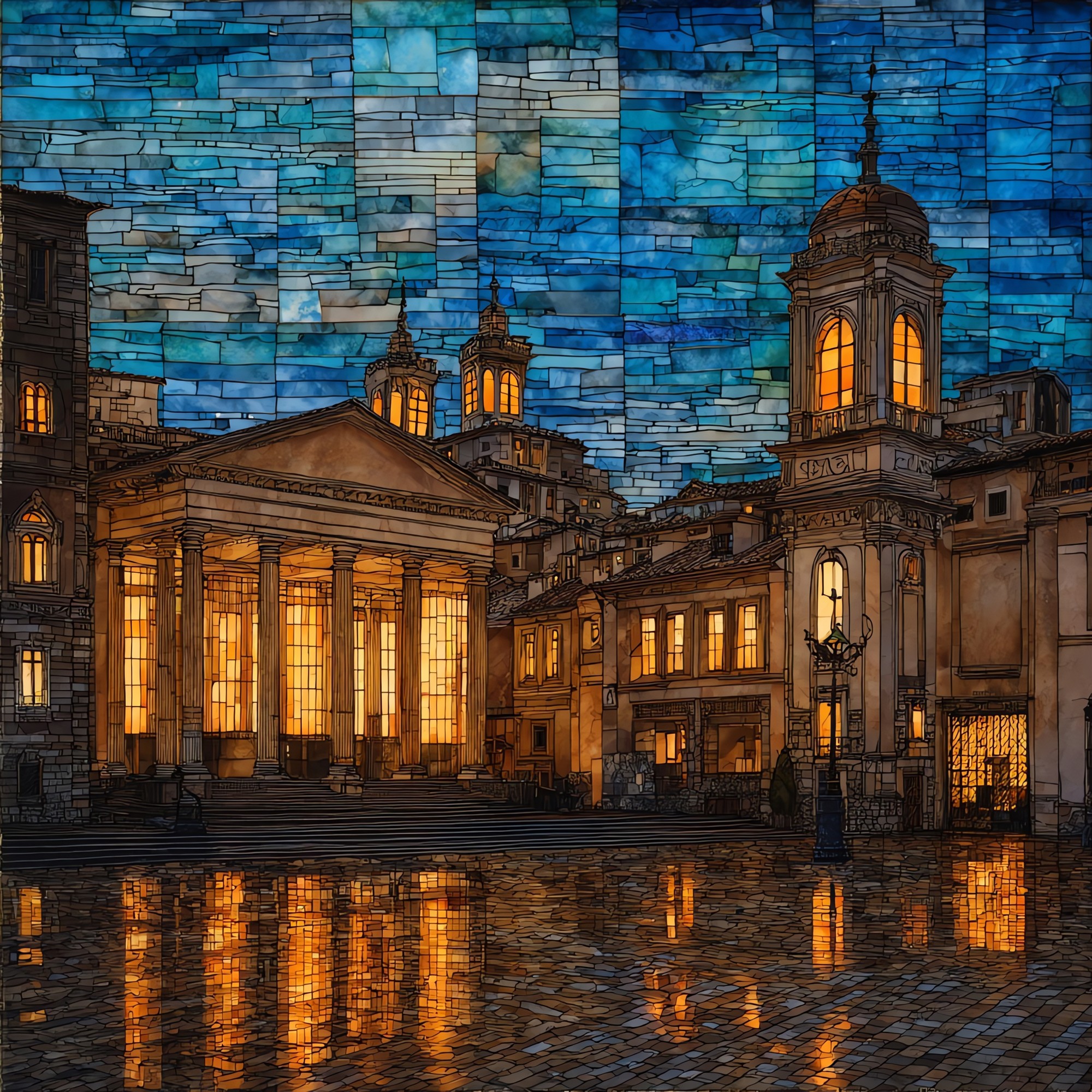
Piazza del Campidoglio
— the star drawn in stone, laid four centuries late.
Not only on a wall.
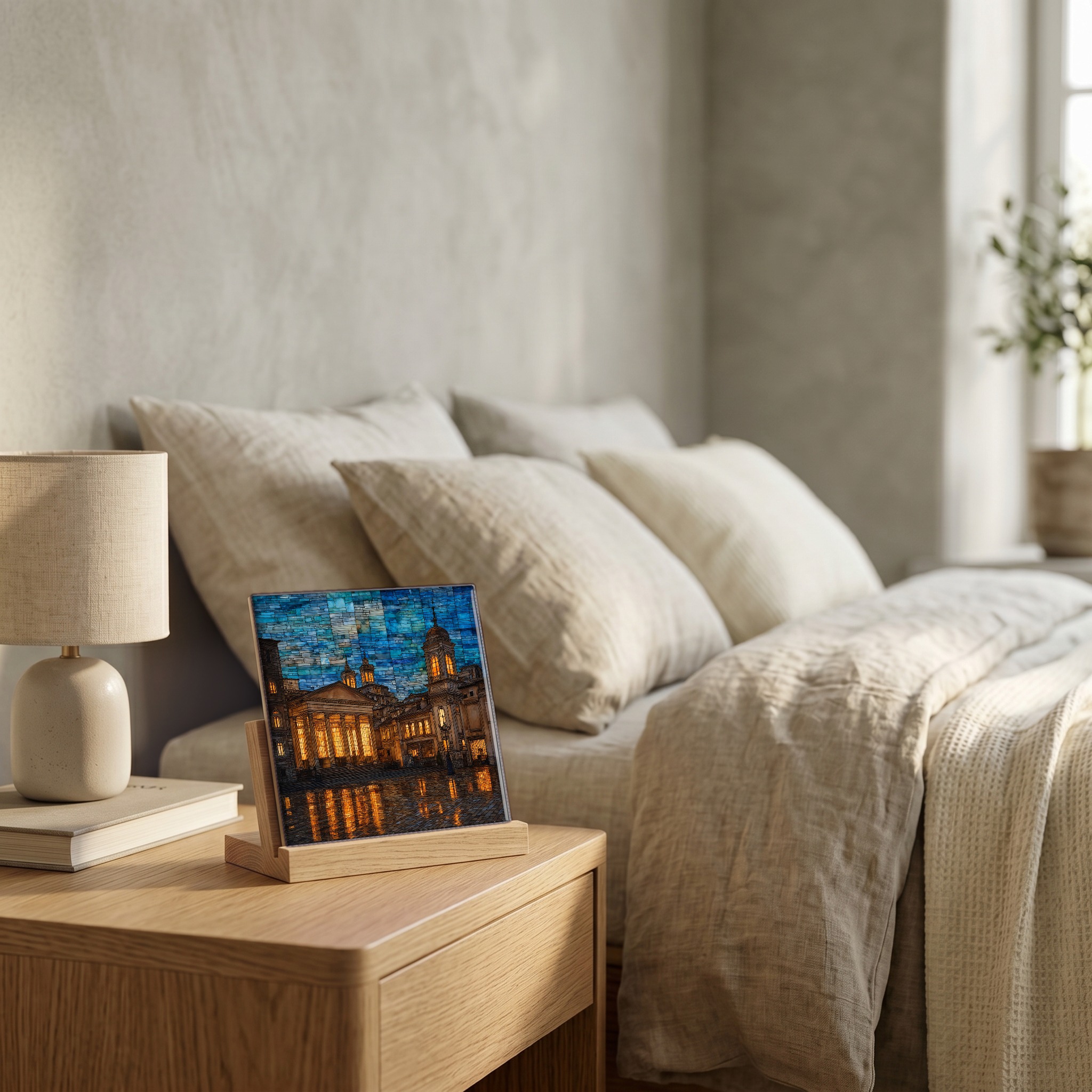
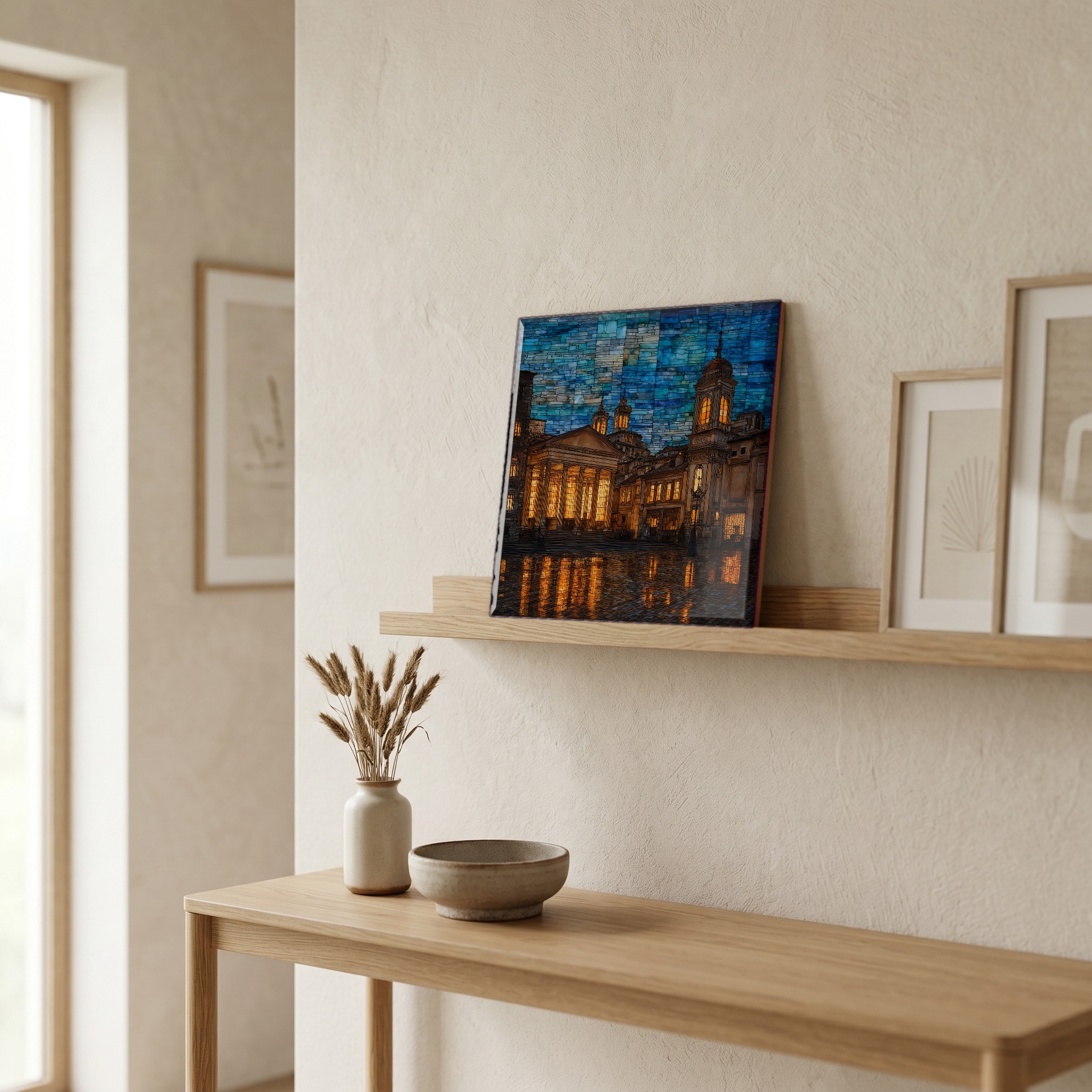
“A square you don't so much enter as fall into the center of. Michelangelo drew it for Pope Paul III in the 1530s: the trapezoid of the buildings, the oval pavement, the twelve-pointed star unrolling from under the bronze horseman at its heart. He never saw the stone laid; the pattern waited four hundred years for the floor. The horseman is Marcus Aurelius, or a copy of him now, the original kept safe indoors. People come up the long ramp from the street and slow without deciding to. It is the quietest crowded place in Rome.
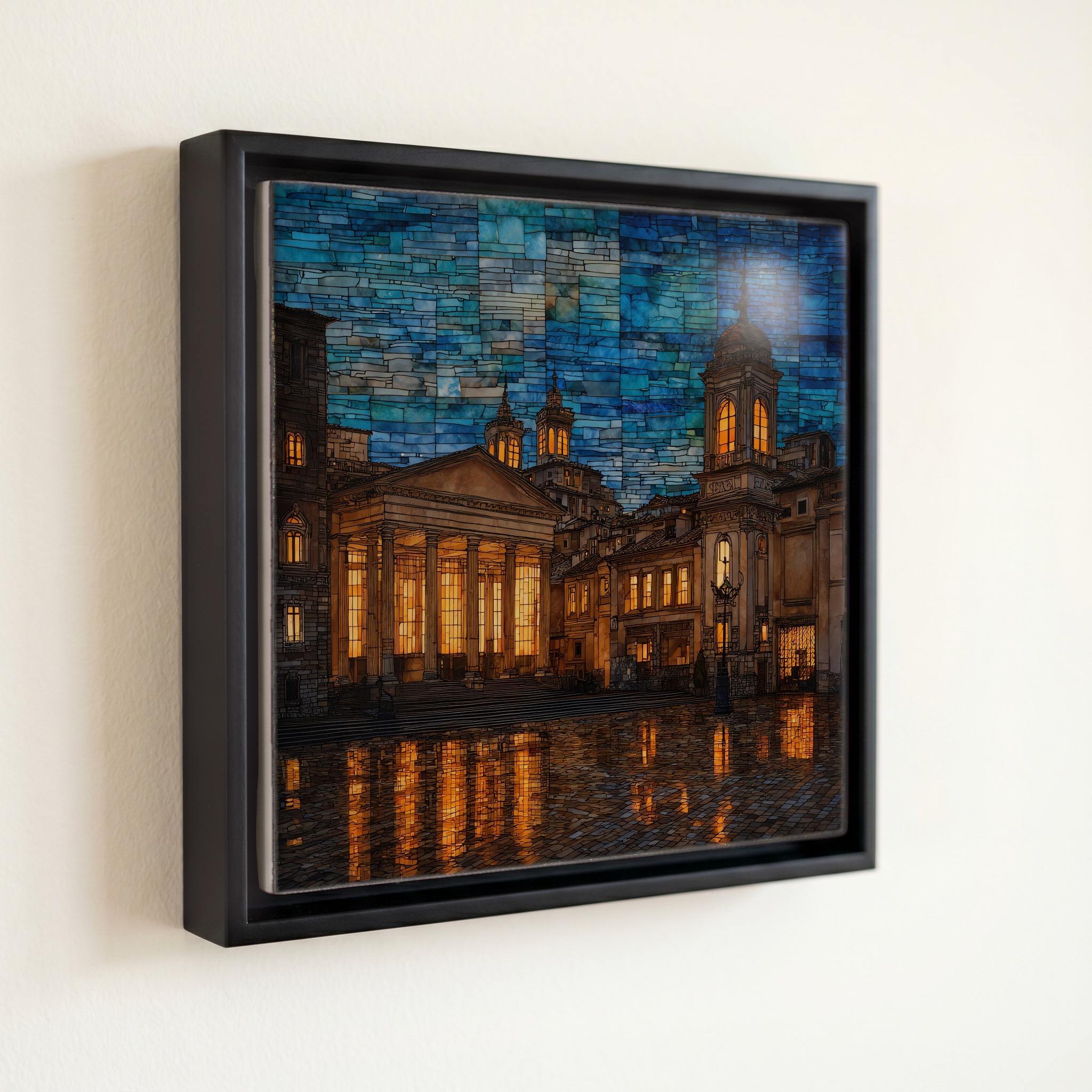
Piazza del Campidoglio, on ceramic.
Each tile is finished by hand in our Knoxville studio. Artwork is slowly infused into the ceramic surface under high heat and pressure, and rests beneath a thin glossy finish. The colour lives in the surface, not on top of it.
Pick any four 4-inch tiles — National Parks you've been to, a Smokies set, the four seasons of one place. $ for a set of , cork-backed, ready to live on the table.
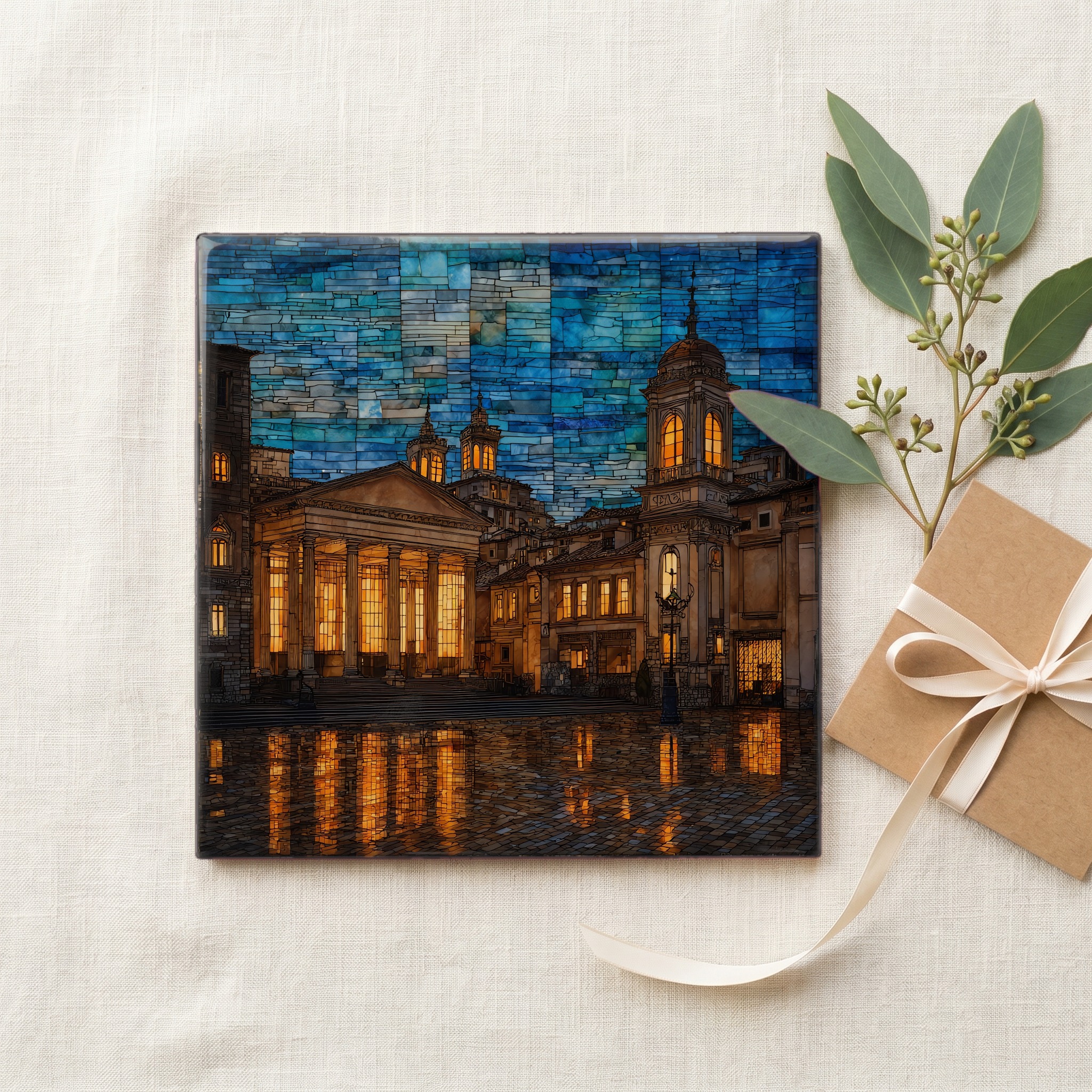
Each tile ships in a kraft box, tied with cream ribbon, with a handwritten note from the studio if you'd like to add one.
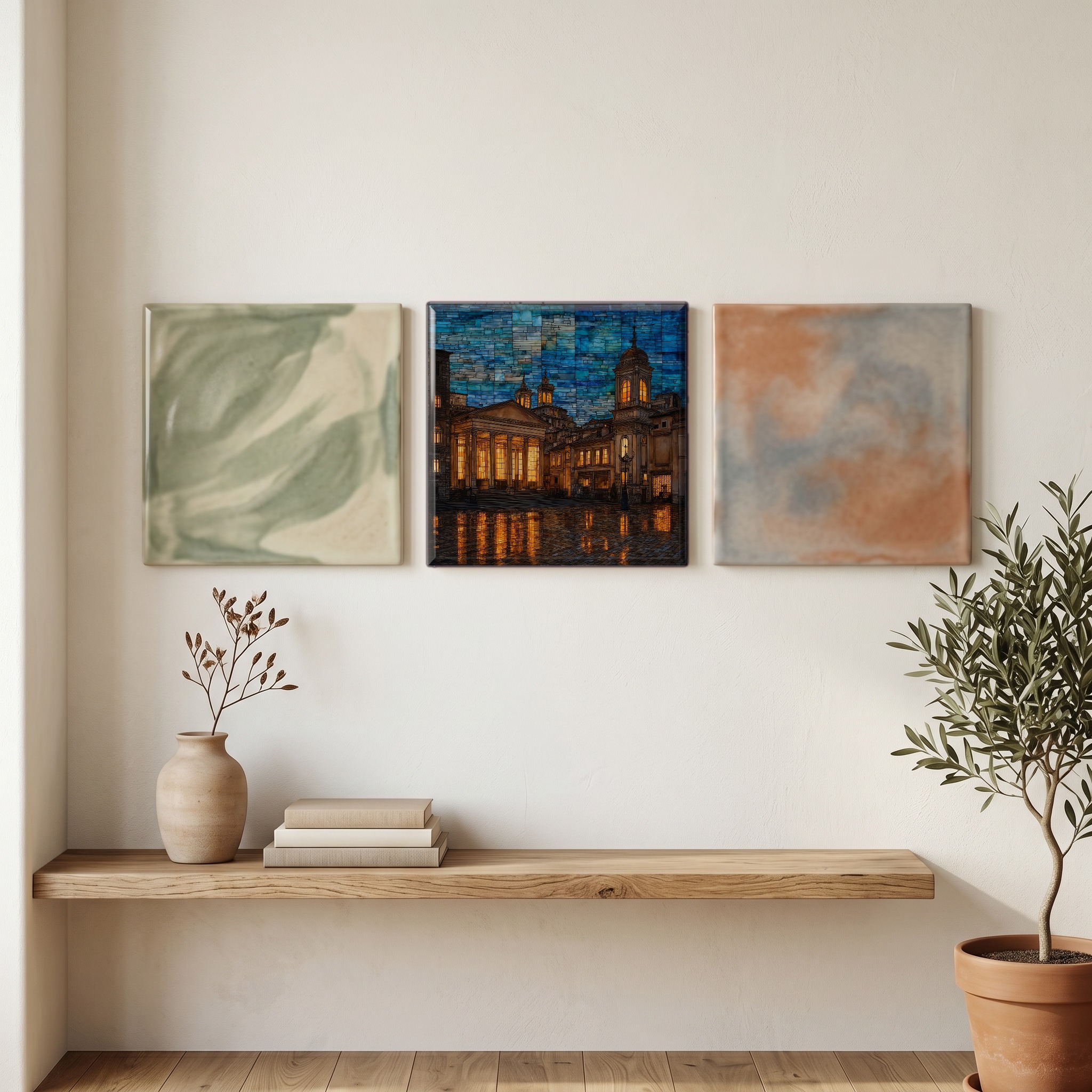
Three or five different vistas, hung together — a chapter of places you've been, or want to go.
The place, in three passes.
Piazza del Campidoglio sits on the summit of the Capitoline, one of Rome's seven hills and, for centuries, its religious and political center, the ground that once held the Temple of Jupiter Optimus Maximus. The square rises roughly 30 metres above the Tiber, set between the Roman Forum on one side and the Campus Martius on the other, in the Lazio region. Michelangelo redesigned the whole hilltop for Pope Paul III between 1536 and 1546, framing the space with three palazzi: the Palazzo Senatorio, which still serves as Rome's city hall, and the Palazzo dei Conservatori and Palazzo Nuovo, which together hold the Capitoline Museums. You reach it from the street below by the Cordonata, the long stepped ramp Michelangelo set to climb toward the square.
Almost nothing here is accidental. Facing two medieval palaces set at an awkward angle, Michelangelo bent the square into a trapezoid and laid out an oval pavement of interlocking lines that pulls the eye to a single point. He drew the twelve-pointed star around 1546, but it stayed on paper: the travertine pattern was not actually laid until 1940, worked by the architect Antonio Muñoz from a 1568 engraving by Étienne Dupérac. At the center stands the bronze equestrian Marcus Aurelius, cast around 175 AD and the only intact bronze rider to survive from antiquity. The figure in the square today is a careful copy; the original was moved indoors to the Capitoline Museums in 1981 to protect it from the weather.
The square itself is open ground: free, unticketed, and walkable at any hour, which is part of why it reads so differently at midday and at dusk. Most visitors climb the Cordonata from the Piazza d'Aracoeli, passing the colossal statues of Castor and Pollux at the top of the ramp. The Capitoline Museums, in the Palazzo dei Conservatori and Palazzo Nuovo on either side, are ticketed and keep regular hours; founded in 1471 from a gift of bronzes by Pope Sixtus IV, they are among the oldest public museums in the world. The Palazzo Senatorio between them is Rome's working city hall, so the piazza is a civic space as much as a monument.