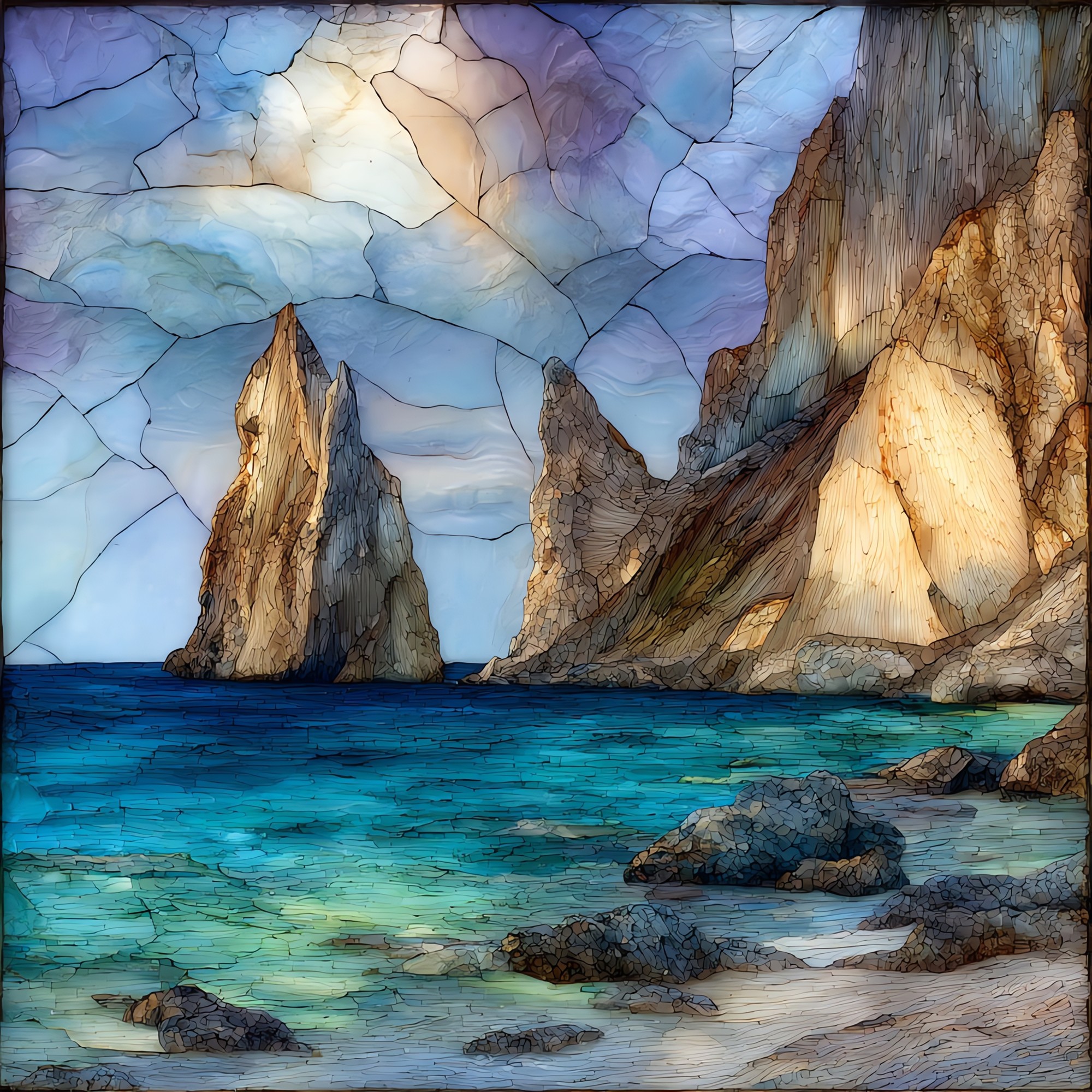
Cala Goloritzé
— — a cove the landslide left.
Not only on a wall.
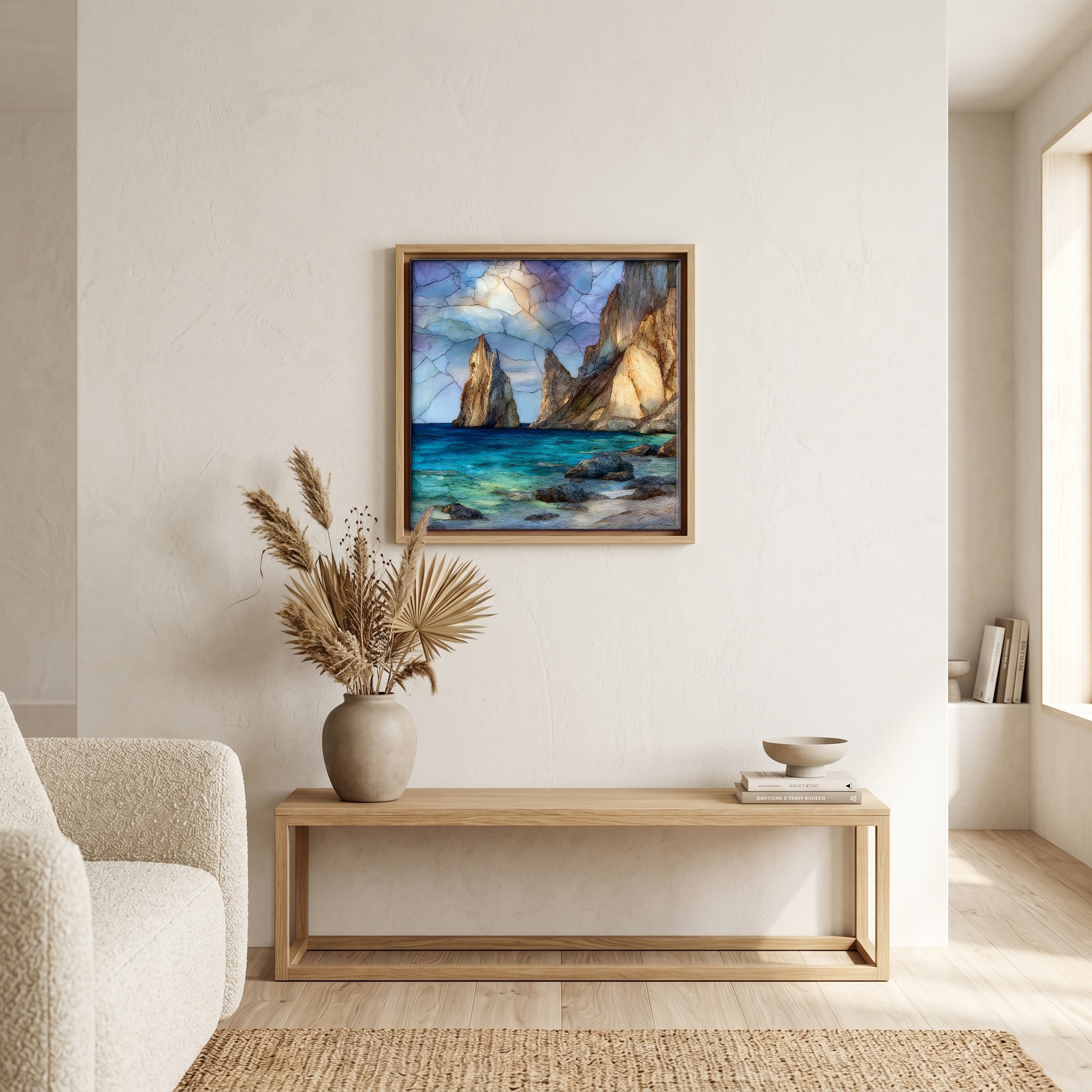

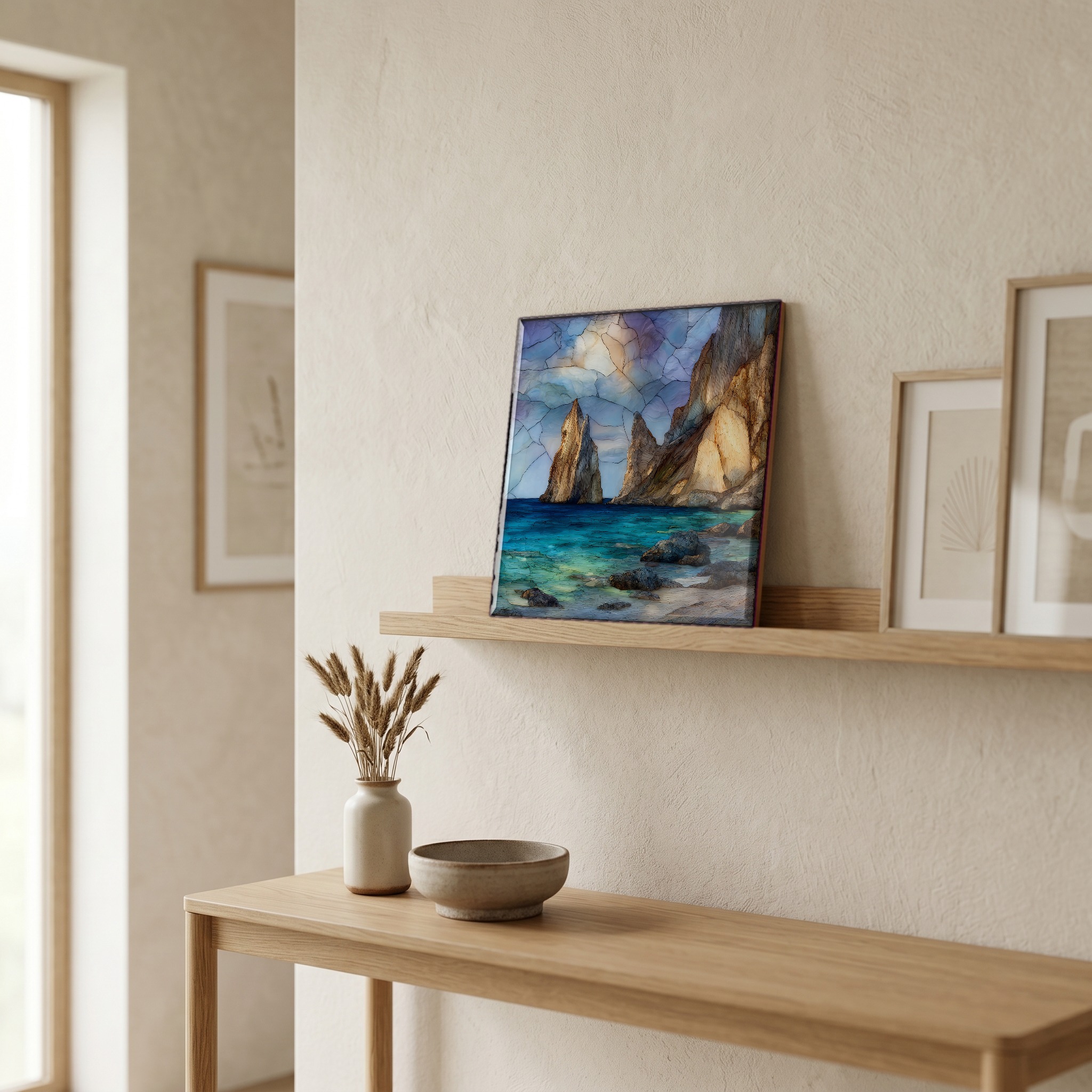
“A cove on the eastern coast of Sardinia, cut by a landslide in 1962 and reached only on foot or by sea. The walk down from the Altopiano del Golgo plateau takes about an hour; boats run in from Cala Gonone in season. The beach is white limestone pebble, the water a pale turquoise, and a 143-metre needle of rock called the Aguglia di Goloritzé rises straight from the southern end. Italy declared the cove a Natural Monument in 1995. The local council caps daily visitors and asks that the beach be left as found.
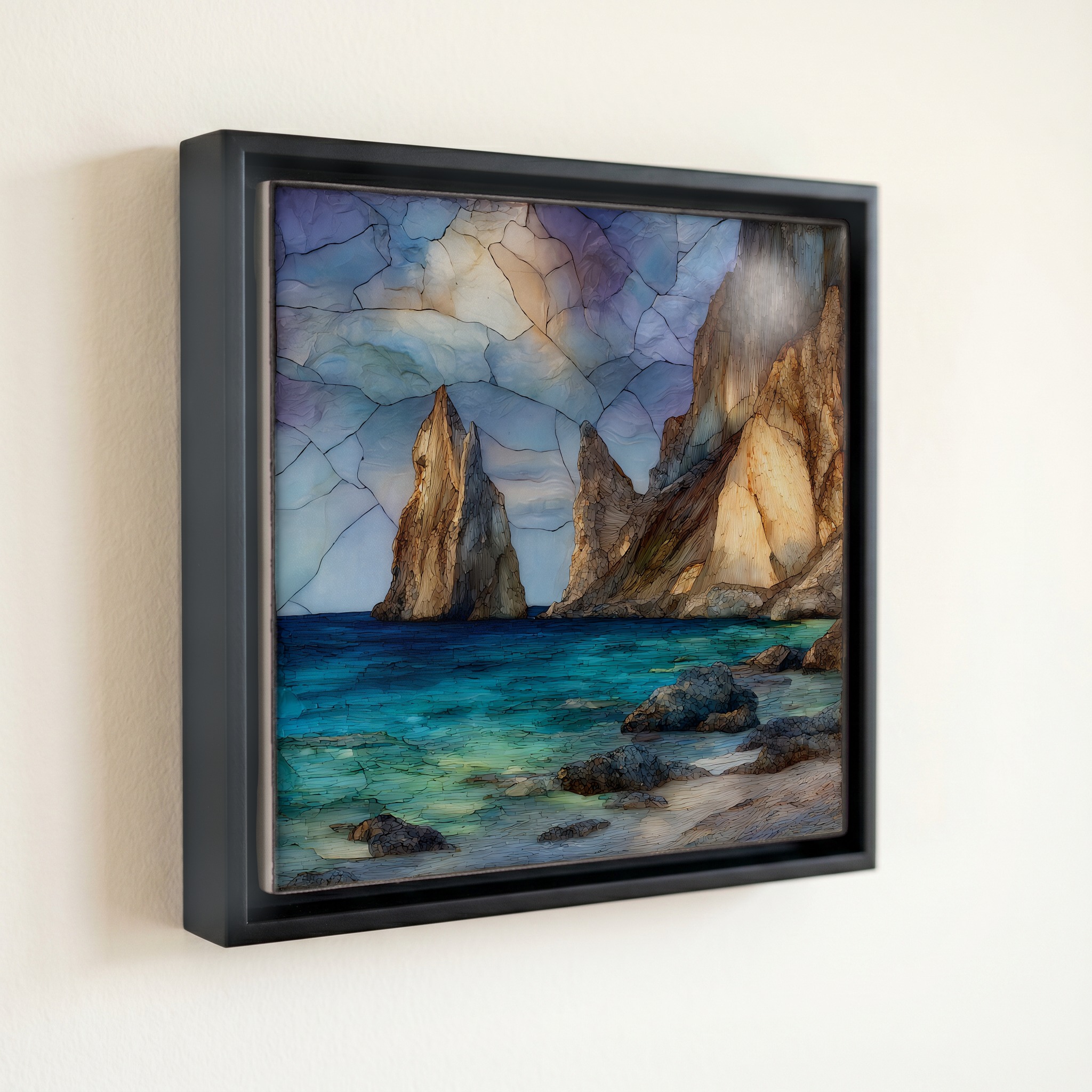
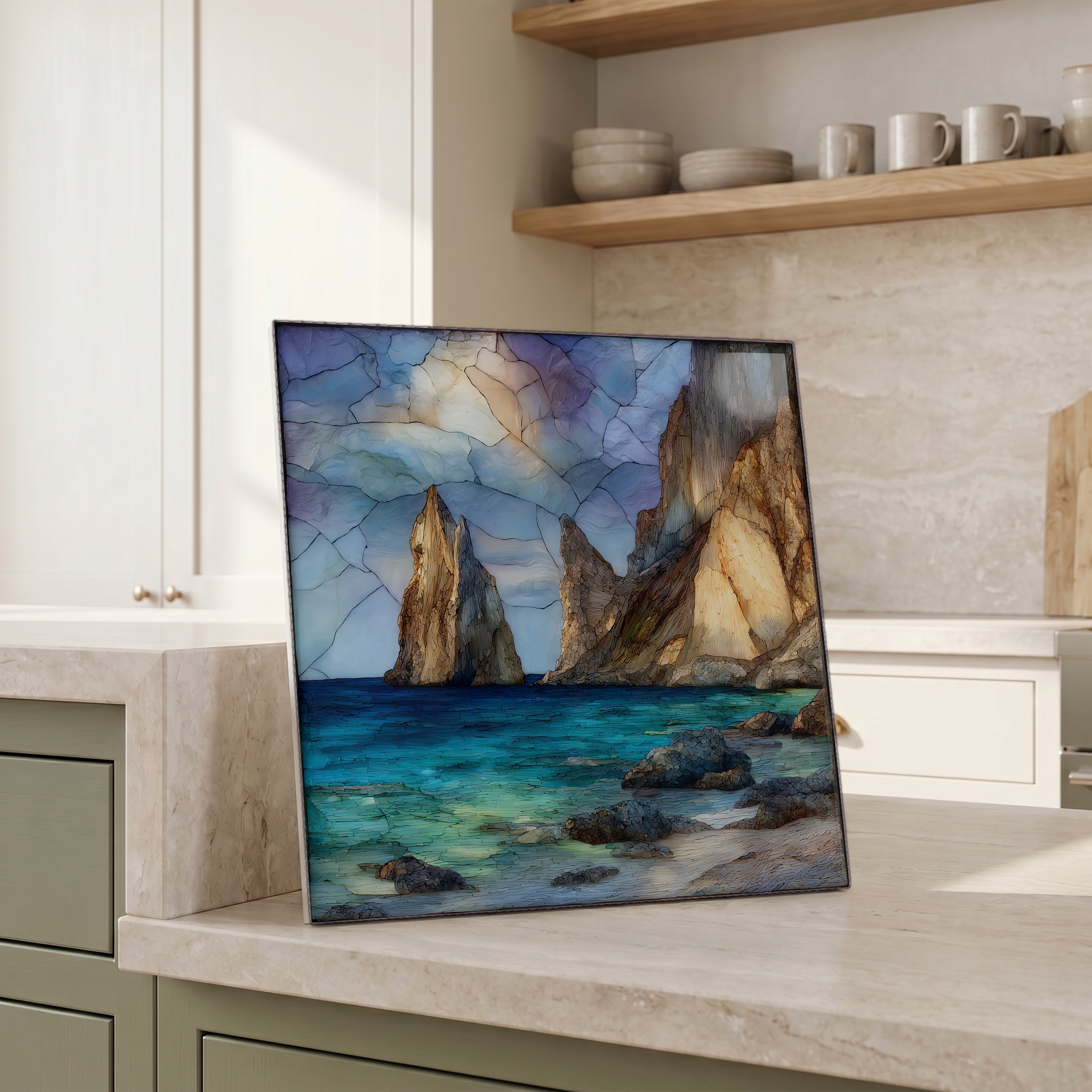
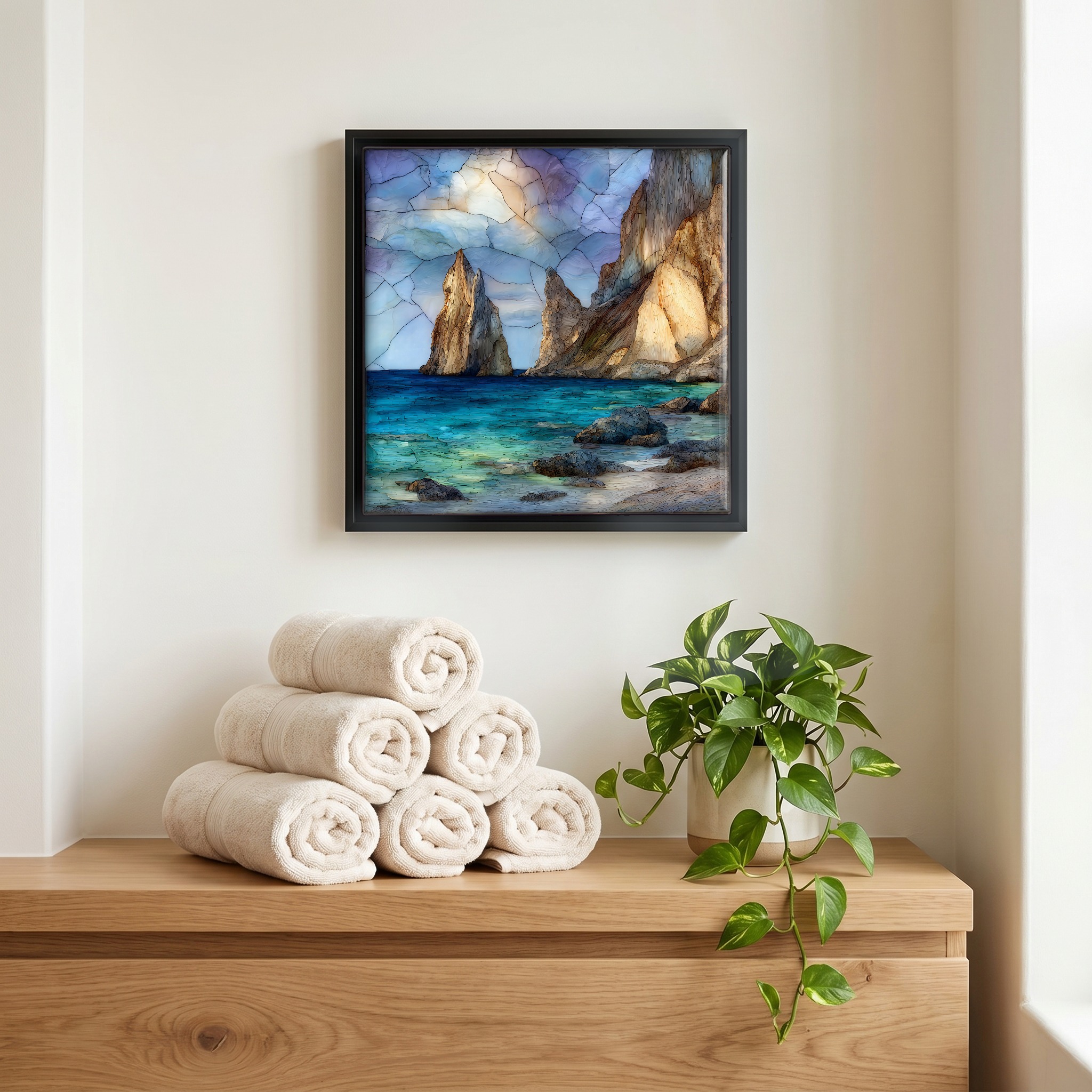
Cala Goloritzé, on ceramic.
Each tile is finished by hand in our Knoxville studio. Artwork is slowly infused into the ceramic surface under high heat and pressure, and rests beneath a thin glossy finish. The colour lives in the surface, not on top of it.
Pick any four 4-inch tiles — National Parks you've been to, a Smokies set, the four seasons of one place. $ for a set of , cork-backed, ready to live on the table.
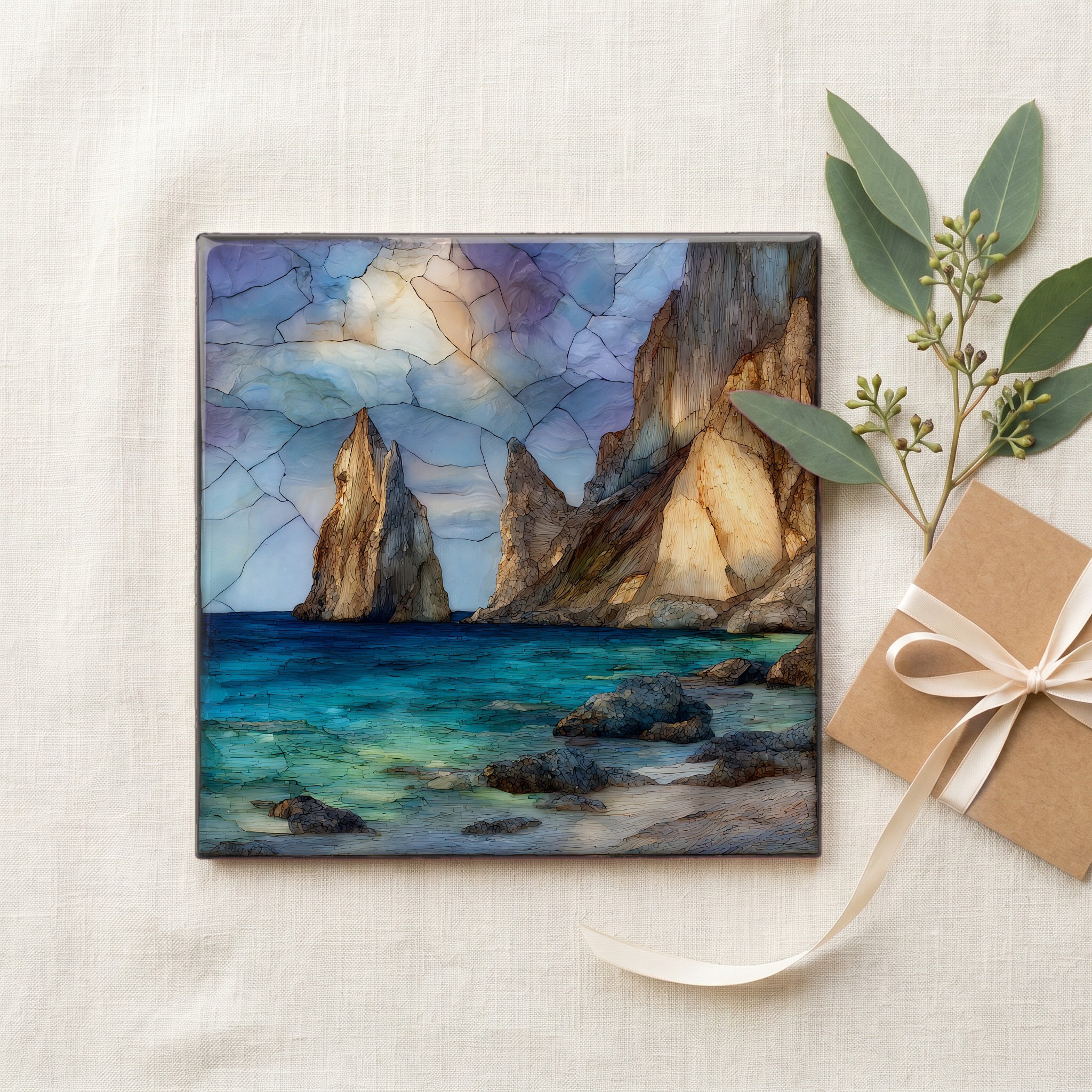
Each tile ships in a kraft box, tied with cream ribbon, with a handwritten note from the studio if you'd like to add one.
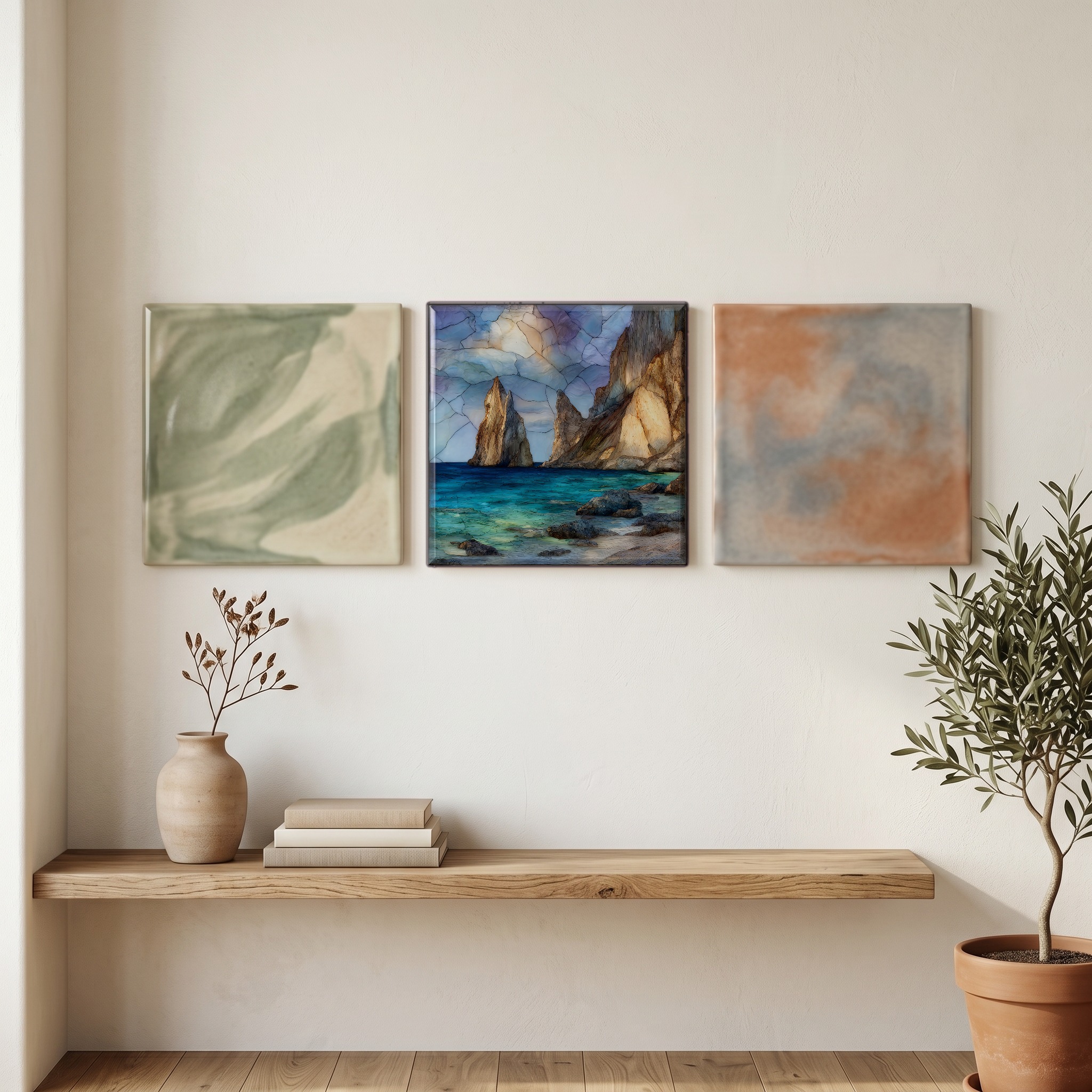
Three or five different vistas, hung together — a chapter of places you've been, or want to go.
The place, in three passes.
Cala Goloritzé sits on the eastern coast of Sardinia, in the municipality of Baunei in the Province of Nuoro, near the southern end of the Gulf of Orosei. The cove took its present shape in 1962, when a landslide reshaped the mouth of the Codula di Goloritzé canyon and left a short curve of white limestone pebble at the sea. The Italian government declared the cove a Natural Monument in 1995. No road reaches it. Visitors arrive on the Su Porteddu footpath descending from the Altopiano del Golgo plateau, a walk of roughly 3.5 kilometres, or by boat from Cala Gonone and Santa Maria Navarrese. The surrounding cliffs belong to the Supramonte limestone massif.
The cove's signature feature is the Aguglia di Goloritzé, also called Monte Caroddi: a free-standing limestone pinnacle that rises about 143 metres from the beach at the southern end of the cove. It has drawn rock climbers since the 1980s and is now one of the most photographed sea cliffs in the Mediterranean. The same Mesozoic limestone forms the natural arch at the northern end of the beach, the Arco di Goloritzé. Both features belong to the Supramonte karst system that runs the spine of central-eastern Sardinia. Climbing the pinnacle is permitted only by reservation, on a small number of established routes.
Access to Cala Goloritzé is regulated to protect the cove. The municipality of Baunei caps the daily visitor count and charges an entry fee, collected at the Altopiano del Golgo trailhead and at the boat landing. The Su Porteddu trail from the plateau runs roughly 3.5 kilometres each way, with about 480 metres of descent, and walking shoes are required for the rocky final stretch. Umbrellas, sun tents, and dogs are not permitted on the beach. Swimming is allowed; mooring boats inside the cove is not, so tour boats anchor offshore. The cove opens from May through early October, when both the trail and the boat service operate.