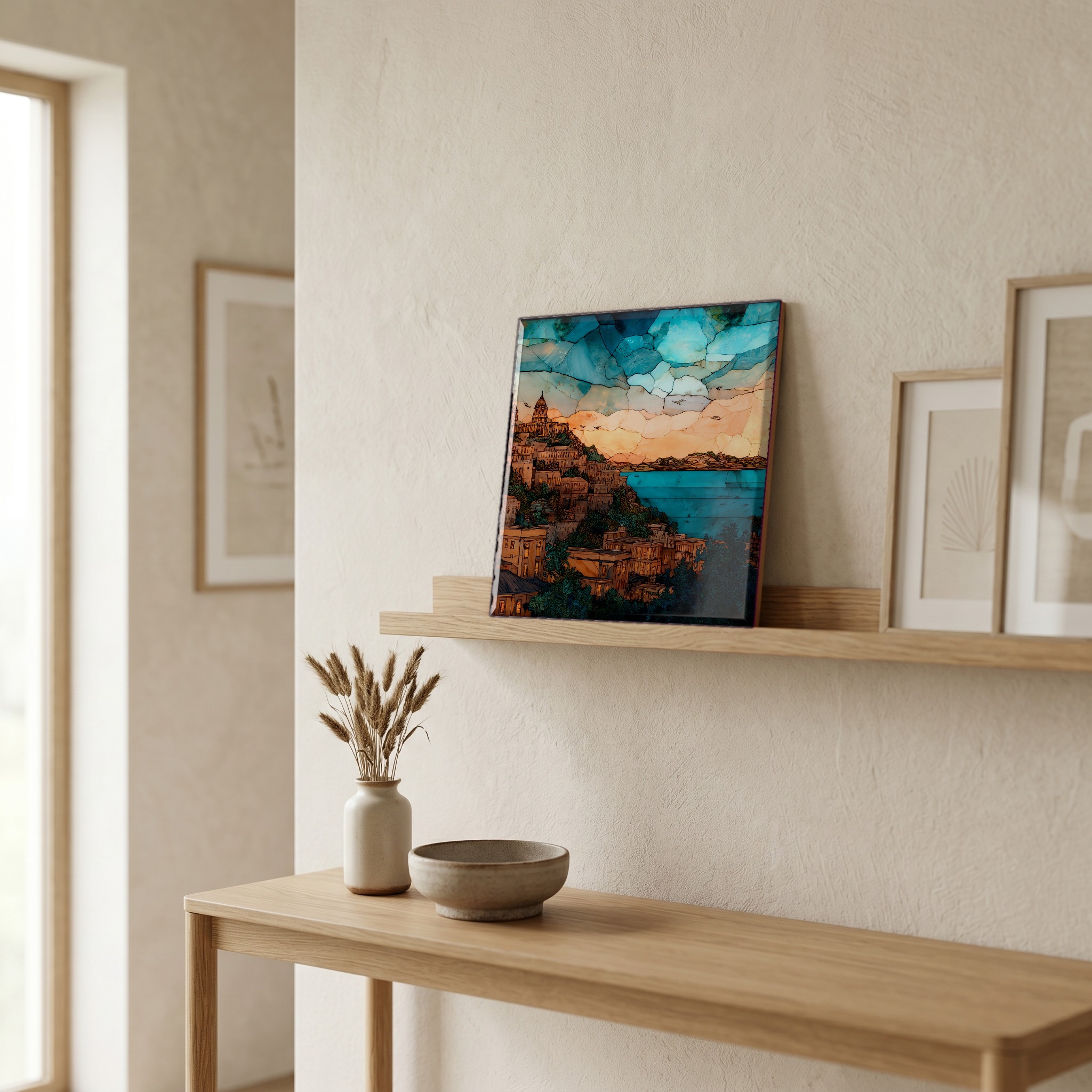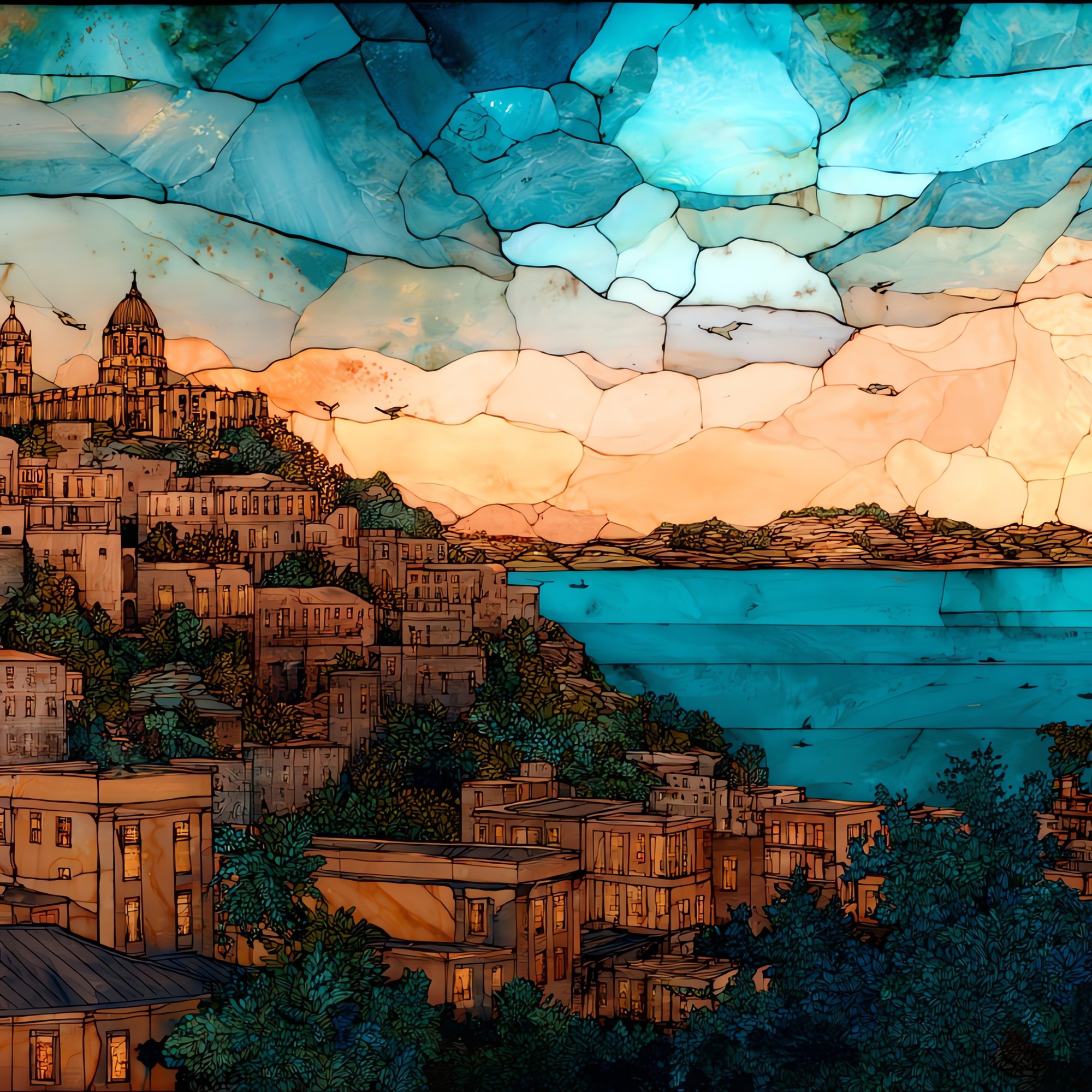
Wender·Vista
Cagliari Old Town
shown on ceramic, 12-inch tileItaly
on the hill above Cagliari, in southern Sardinia

Cagliari Old Town

the high town the light leaves last.

Where it lives

Not only on a wall.

A small tile on the nightstand catching the morning. A larger one above the fire. Yours, wherever you spend the slow hours.
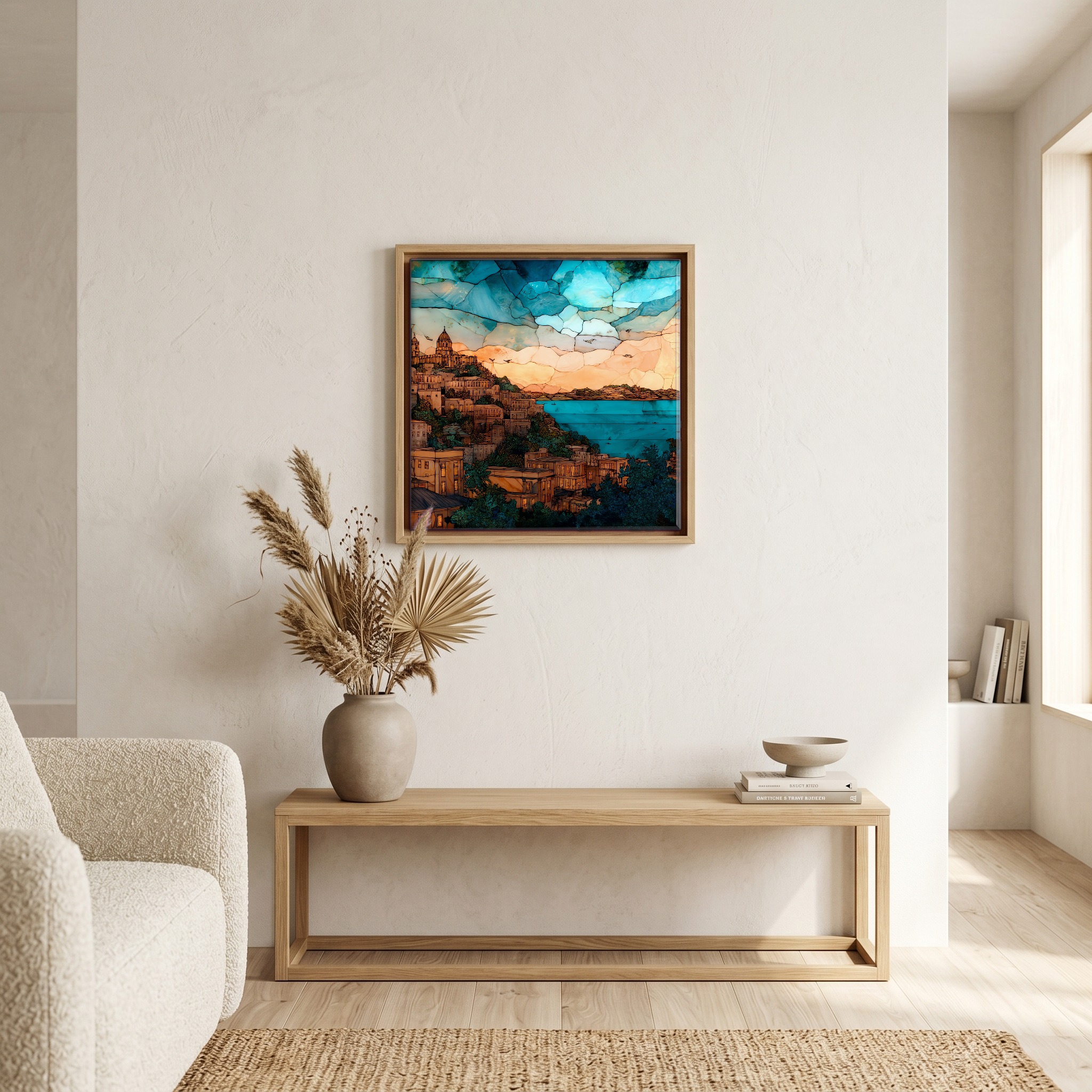
Above the bench, in a warm oak surround.
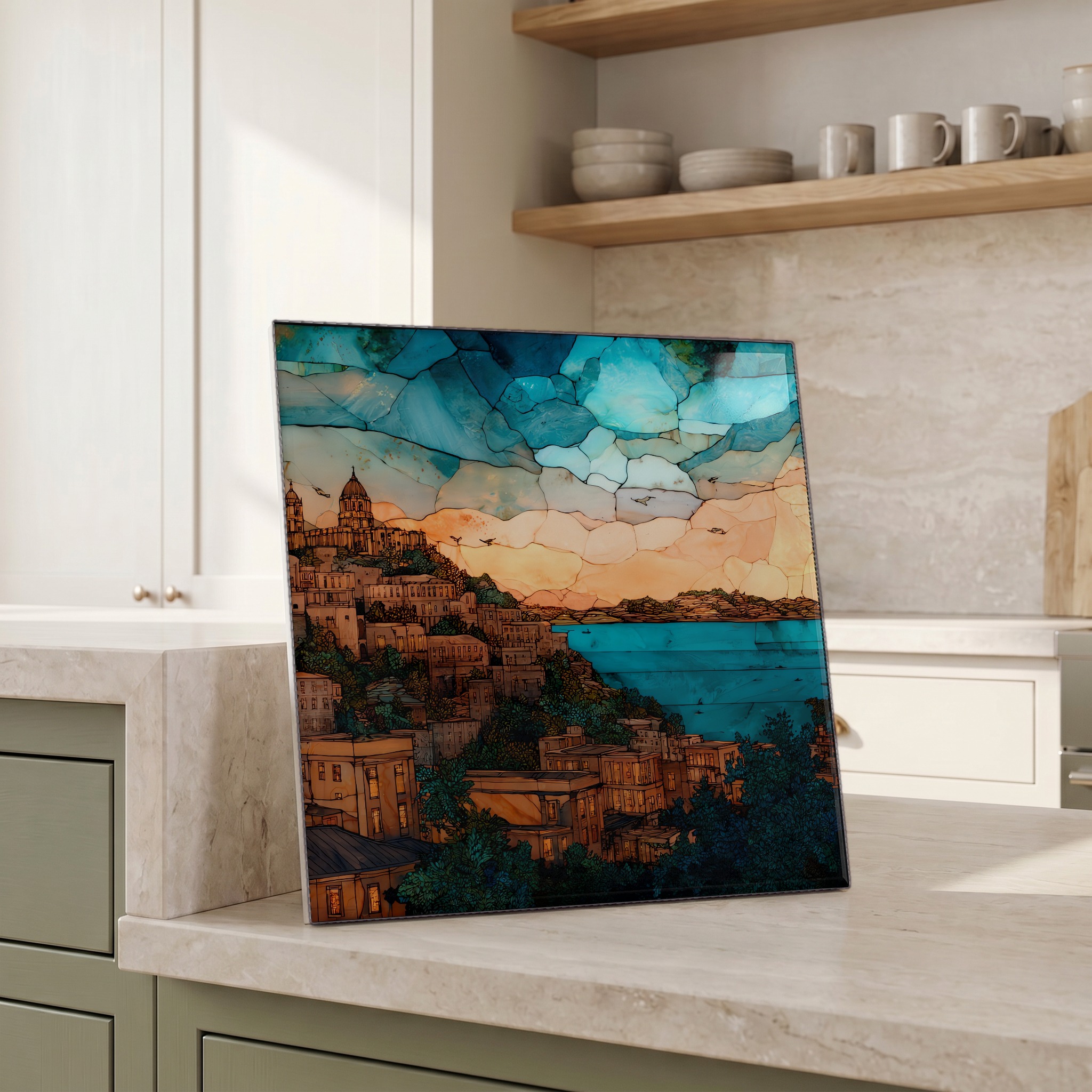
Beside the kettle, propped on the counter.
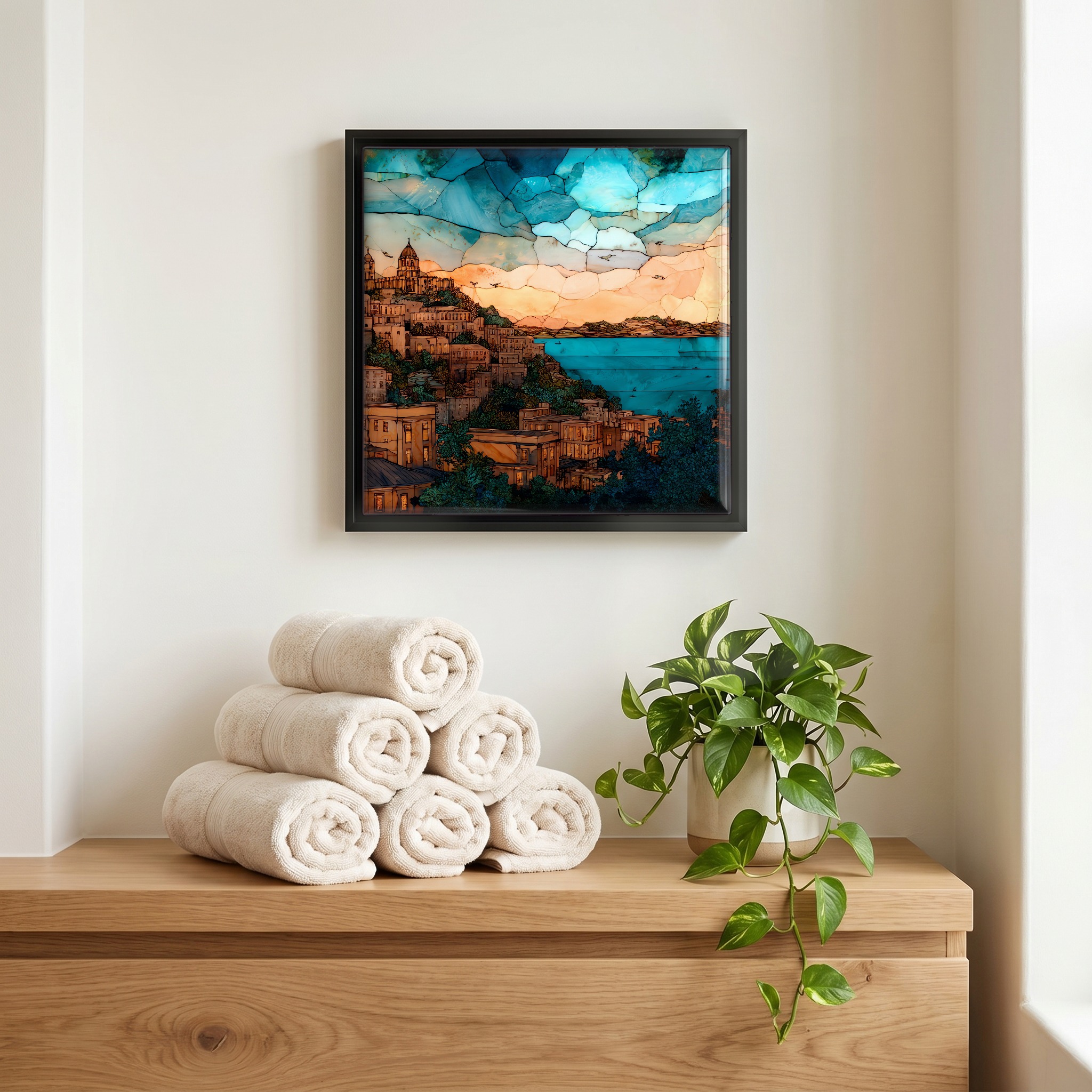
Above the linens, in a slim black surround.
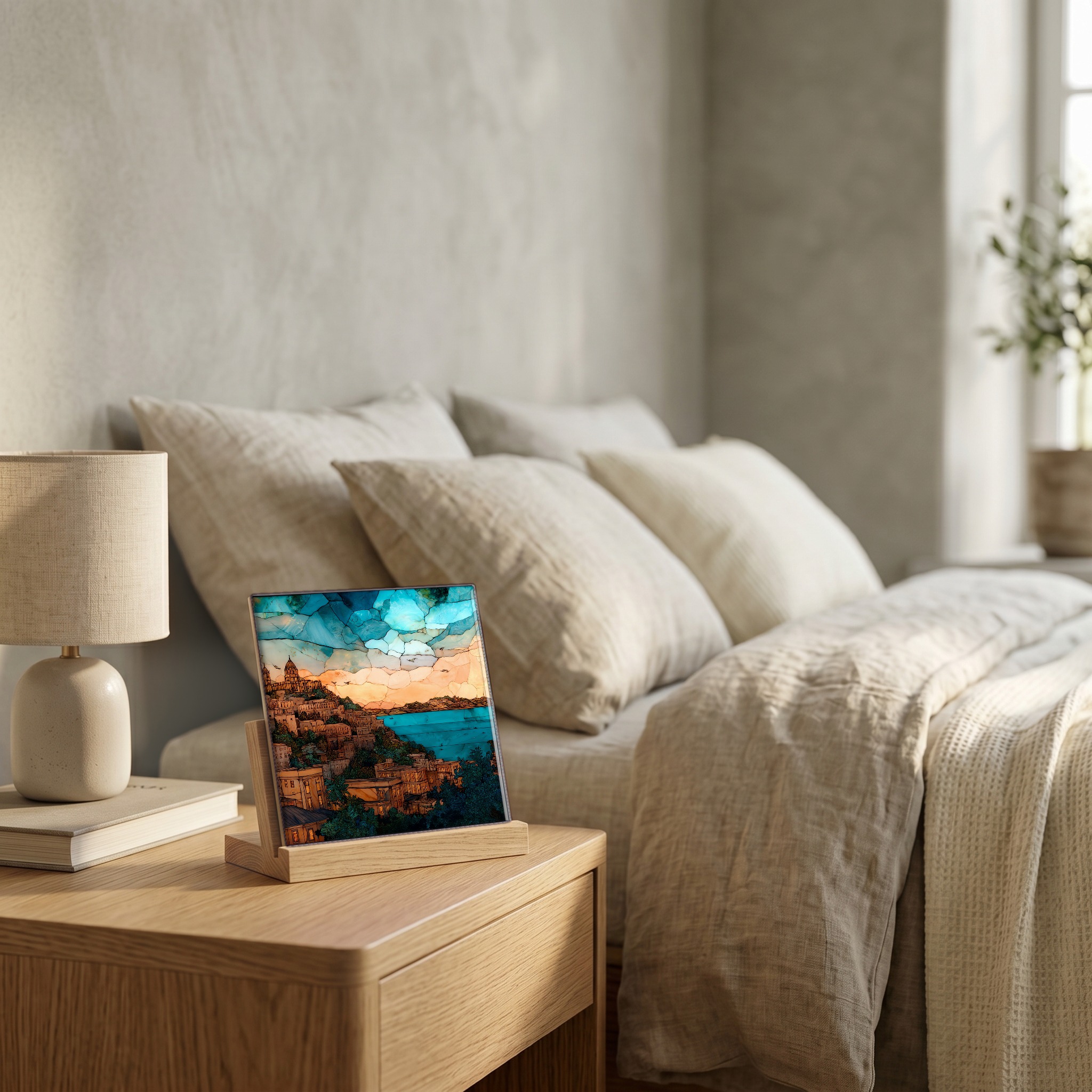
On the nightstand, on a light oak stand.
On a picture ledge, where the light comes in.
a note from the studio

The old citadel of Cagliari, stacked on a limestone hill above the harbour. The Pisans walled it in the early 1300s and left two pale towers standing over the rooftops; the stone came from a hill just down the coast, and at the end of the day it goes warm, the way the water below goes dark. From the terrace at Saint Remy the whole Gulf of Angels opens out. People come up in the evening, when the heat lets go and the streets begin to fill.
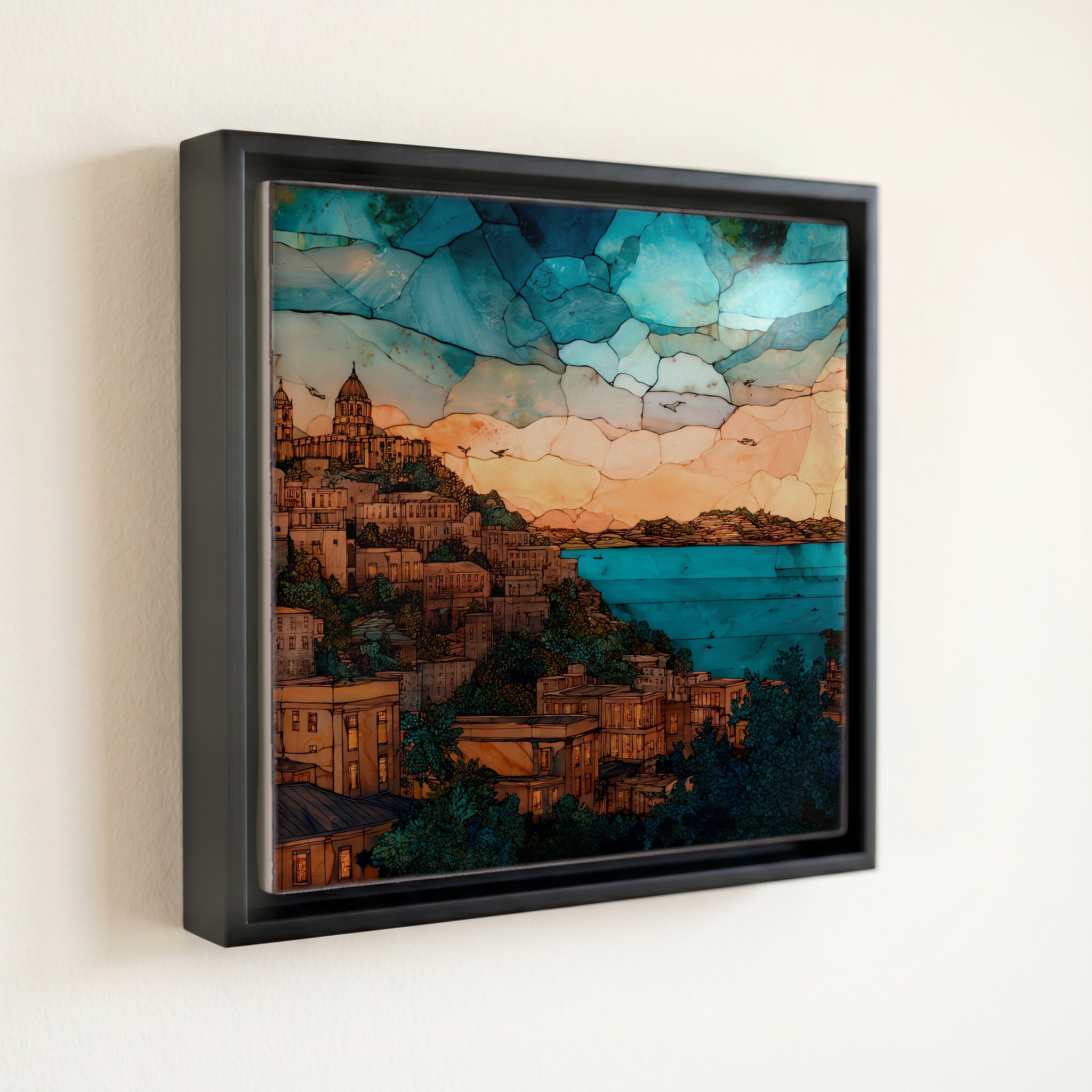
from the studio
shown in a slim black floating frame · 6 × 6 in
— bring it home

Cagliari Old Town, on ceramic.

Each tile is finished by hand in our Knoxville studio. Artwork is slowly infused into the ceramic surface under high heat and pressure, and rests beneath a thin glossy finish. The colour lives in the surface, not on top of it.

What kind of piece?
One tile — square or rectangle.
How big?
the popular one — counter, shelf, nightstand
6 × 6 in · 15 cm · 1.6 lb
Surface finish
A clear glossy finish — the artwork reads as if under resin. Ideal for show-pieces and framed wall art.
How it sits
A hidden cleat — sits ¼″ proud of the wall.
$58
Hand-finished and shipped from our studio at the foot of the Smokies. On your wall in about ten days.
size
6 × 6 in
15 cm
weighs
1.6 lb
solid in the hand
surface
ceramic, hand-finished
art rests beneath a thin glossy finish
from
Knoxville, TN
our family studio, at the foot of the Smokies
— start a Coaster Set

Pick any four 4-inch tiles — National Parks you've been to, a Smokies set, the four seasons of one place. $ for a set of , cork-backed, ready to live on the table.
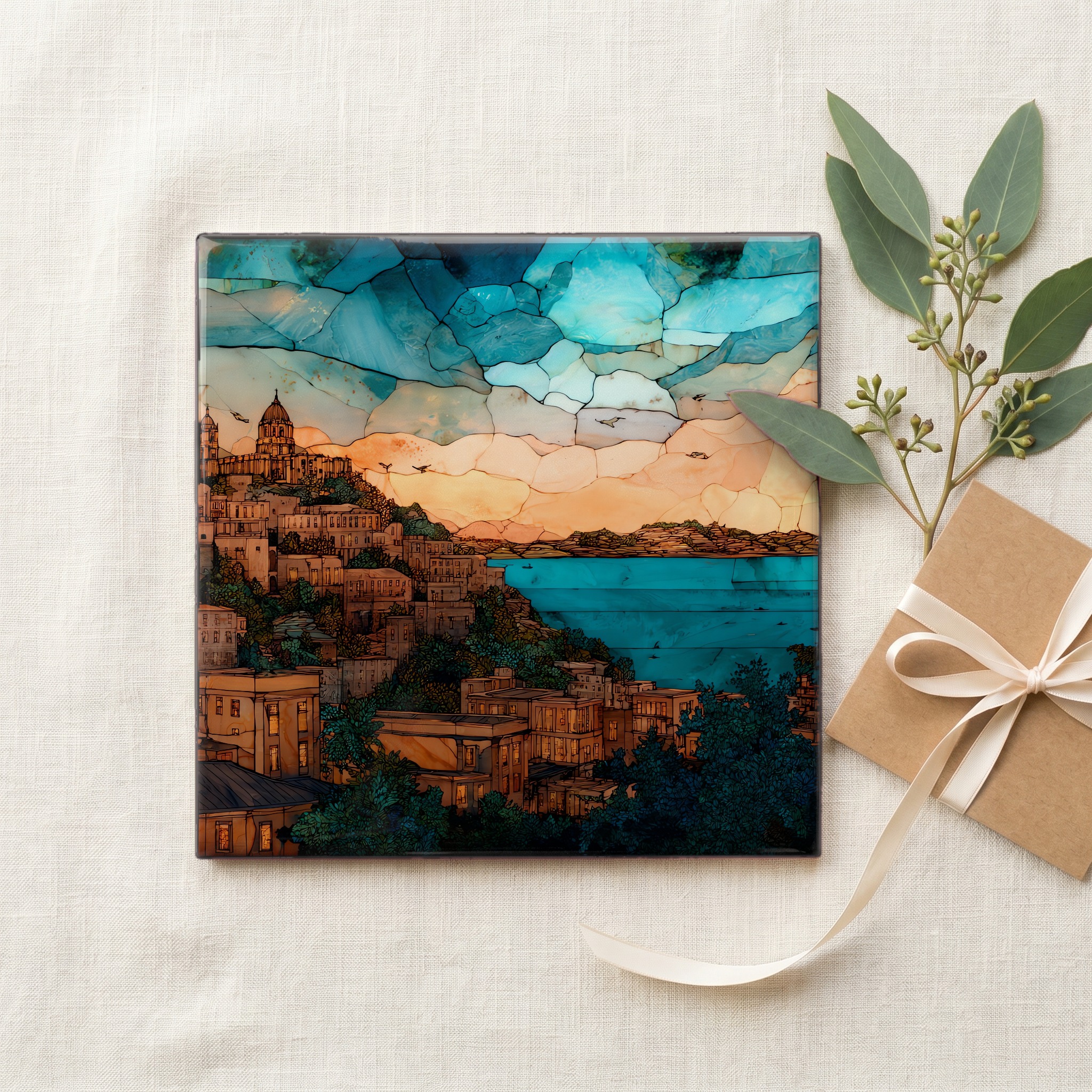
comes gift-ready
comes gift-ready

Each tile ships in a kraft box, tied with cream ribbon, with a handwritten note from the studio if you'd like to add one.
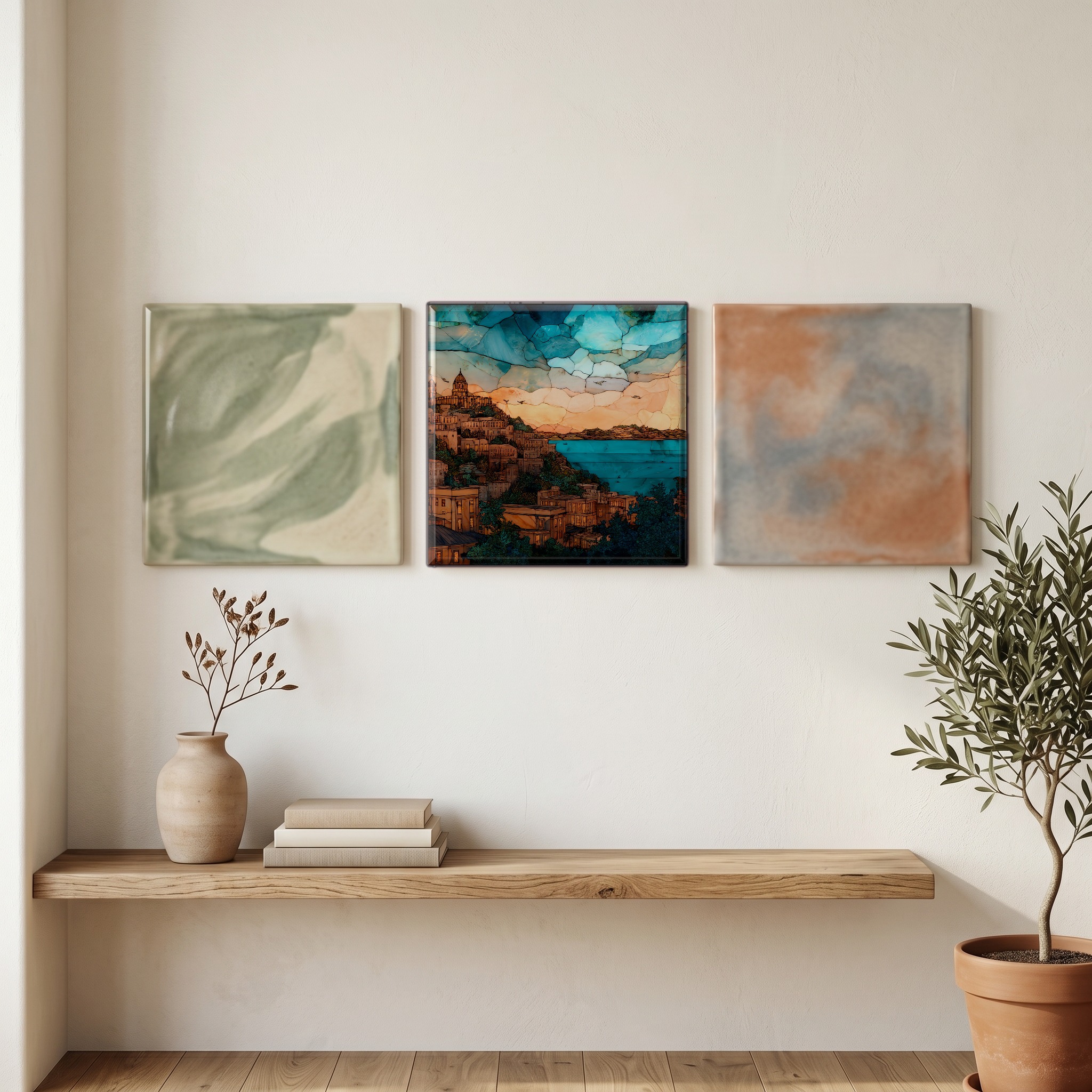
or build a grouping
or build a grouping

Three or five different vistas, hung together — a chapter of places you've been, or want to go.

about Cagliari Old Town

The place, in three passes.

A little of what's known, in case you fall down the rabbit hole — or want to go see it yourself.
the place

Cagliari Old Town is the Castello district, the medieval citadel at the top of Sardinia's capital, rising on a limestone ridge about 100 metres above the Gulf of Angels on the island's southern coast. The Pisans fortified the hill in the thirteenth century, walling it with towers and bastions and moving the seat of civil, military and religious power up from the older settlement of Santa Igia. Through Pisan, Aragonese-Spanish and Piedmontese rule the quarter held the palaces of government and the noble houses, and much of that fabric still stands. Cagliari itself is a city of about 146,000 on a low shore, but Castello looks down on all of it. The district is reached on foot through the old gates or by the public lift beside the Bastione di Saint Remy.

— informed by Wikipedia, Cagliari Turismo
the stone

The walls and towers are built of pale limestone quarried from the Colle di Bonaria, the hill southeast of the citadel. Two of the original Pisan towers still stand: the Torre di San Pancrazio, finished in 1305 and rising about 37 metres to guard the northern gate, and the Torre dell'Elefante, finished in 1307 and named for the small marble elephant set into its base. Both were the work of the Cagliari-born architect Giovanni Capula, built open on one inner side in the Pisan manner, with wooden galleries climbing four levels inside. The later Bastione di Saint Remy, raised between 1896 and 1903 by Giuseppe Costa and Fulgenzio Setti in white and yellow limestone, carries the same pale stone up into a broad terrace and gallery on the southern wall.

the light

Cagliari sits under a cold semi-arid climate, and from mid-June to mid-September rain is a rare event, so the citadel spends the long Mediterranean summer dry and bright. Pale calcareous stone takes warm light readily, and Castello stands higher than anything around it. In the last hour before sunset the walls, the two Pisan towers and the columns of the Saint Remy terrace turn from white to a deep honey, while the Gulf of Angels below shifts from blue to slate. Because the hill rises about 100 metres over the lower city, the light reaches it first in the morning and leaves it last in the evening, after the streets below have fallen into shade. The terrace looks roughly southeast over the water, which is why evening, not midday, is when the old town is most itself.

— informed by Wikipedia
where
Italy · Metropolitan City of Cagliari, Sardinia
elevation
100 m · 328 ft
position
39.2168° N · 9.1120° E
the neighborhood

What's nearby.

A handful of named places within an hour's walk or short drive. Some we've already painted; some we will.
at the lake
Bastione di Saint Remy
panoramic terrace
at the lake
Torre dell'Elefante
Pisan tower
at the lake
Torre di San Pancrazio
Pisan tower
at the lake
Cagliari Cathedral
cathedral
1 km NW
Roman Amphitheatre of Cagliari
Roman amphitheatre
5 km SE
Poetto
beach
4 km E
Molentargius-Saline Park
flamingo wetland
N
Cagliari Old Town
Bastione di Saint Remy
Torre dell'Elefante
Torre di San Pancrazio
Cagliari Cathedral
Roman Amphitheatre of Cagliari
Poetto
Molentargius-Saline Park
common questions

What people ask.

A few questions we get about Cagliari Old Town — and about bringing the piece home.
about the place

Cagliari Old Town is the Castello district, the medieval citadel at the top of Cagliari, the capital of Sardinia. It stands on a limestone hill about 100 metres above the Gulf of Angels, on the island's southern coast.

The Pisans fortified the hill in the thirteenth century. The two surviving towers, the Torre di San Pancrazio of 1305 and the Torre dell'Elefante of 1307, were designed in white limestone by the Cagliari-born architect Giovanni Capula.

It is a monumental terrace and covered gallery on the southern wall of Castello, built between 1896 and 1903 by Giuseppe Costa and Fulgenzio Setti in white and yellow limestone. From the Umberto I terrace the view runs over the city and the gulf.

On foot through the old medieval gates, or by the public lift that climbs from Piazza Costituzione beside the Saint Remy bastion. The quarter is steep and largely pedestrian, a knot of narrow lanes between the towers and the cathedral.

Late afternoon into evening, when the heat eases and the low sun warms the limestone. Cagliari summers are dry, with rain rare from mid-June to mid-September, so settled evenings on the Saint Remy terrace are the norm rather than the exception.

The walls and towers are built of pale calcareous limestone from the nearby Colle di Bonaria. Pale stone takes warm light readily, so in the last hour of daylight the whole citadel shifts from white to a deep honey before dark.

Cagliari Cathedral, Santa Maria, founded in the thirteenth century and later reworked in Baroque style, sits among the palaces and the two Pisan towers. Below the hill lie the Roman Amphitheatre and, further out, the long Poetto beach.

about the piece in your home

It carries well for people connected to Cagliari or to Sardinia. The Castello skyline, with its two pale Pisan towers above the bay, is the image islanders hold of the capital. A Coaster or Small with a handwritten note from the studio travels nicely.

The warm honey stone and deep sea blues sit easily in coastal-modern, warm Mediterranean and jewel-tone rooms. Against white or pale plaster the colour carries the wall; in a darker room it works as the warm point the eye returns to.

It fits the coastal-modern and warm-Mediterranean direction, where natural stone tones and deep sea blue have taken over from cooler grey palettes. The pale-gold limestone gives it more warmth than a plain blue coastal print, so it does not read as generic seaside decor.

Above a standard sofa, a single Large holds the wall on its own, or a four-tile Mural fills it with more presence. Over a console or a bed, a Medium or a four-tile Mural sits in proportion; a nine-tile Mural suits a tall feature wall.

Yes. For a bathroom, shower or kitchen backsplash, order it in the Dura Satin or Matte finish, which is scratch-resistant and made for damp, vertical installation. The glossy finish is better kept to dry display walls and framed pieces.

A soft microfibre cloth and water is all it needs. The colour lives in the ceramic surface beneath a thin finish, so it will not fade or lift with wiping, and you never need a chemical cleaner.

Yes. Every WenderVista piece is made by Wender Studios, a family studio in Knoxville, Tennessee. The art is original to the studio and not licensed from anyone else, and each tile is hand-finished in-house.

if this one stayed with you

A few you might also love.

Hand-picked by the eye that found Sorapis. Same air, same kind of quiet.
— a collection

The Italian Dolomites,
painted slow.

The valleys between Cortina and Val Gardena, the tarns you walk an hour to see, the towers that turn the colour of a banked fire just before dark. Wander the collection by valley, by season, or follow the path Reid walked.

Tre Cime
Braies
Misurina
Sorapis
Cinque Torri
Sassolungo
Marmolada