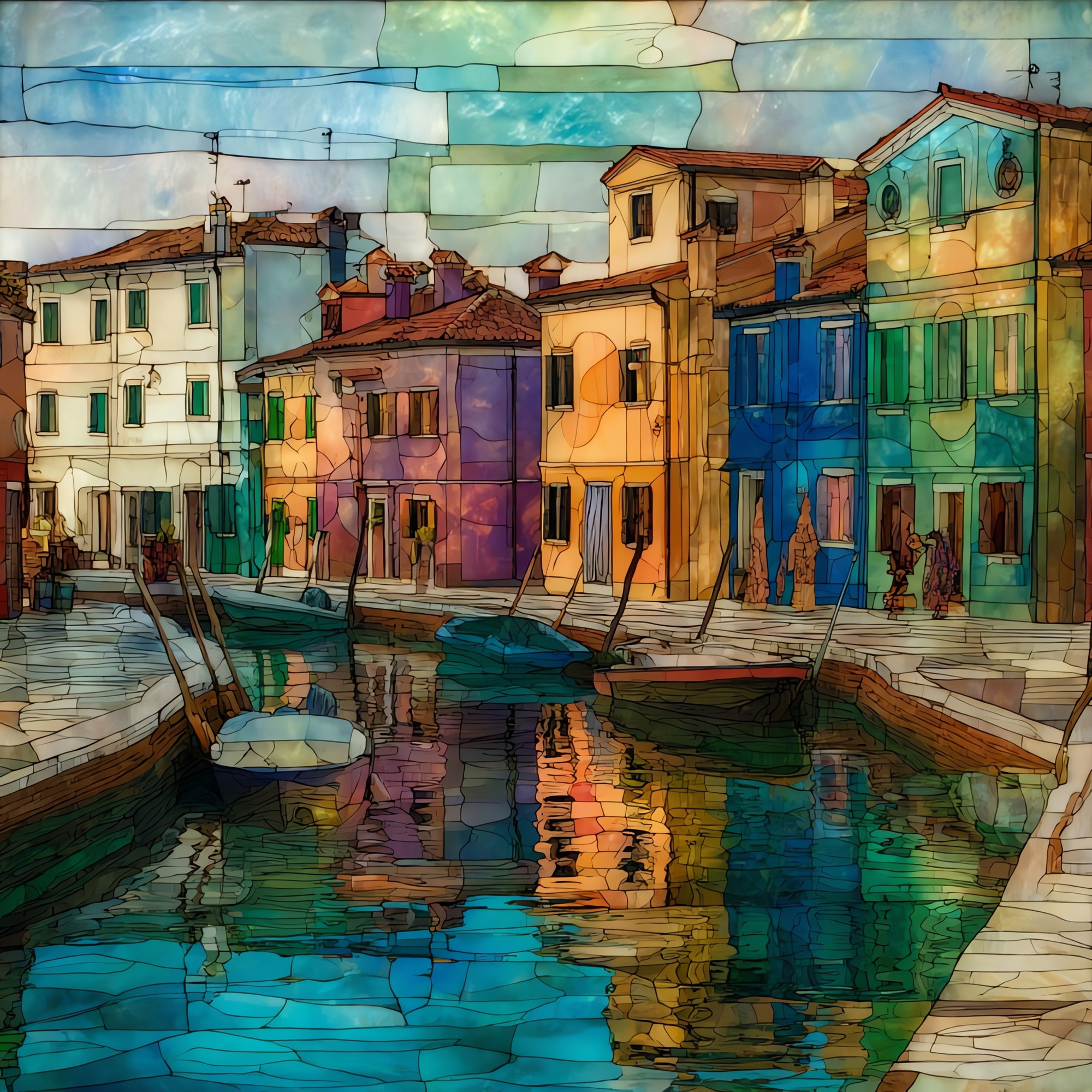
Burano
— the colour the fog could not take.
Not only on a wall.
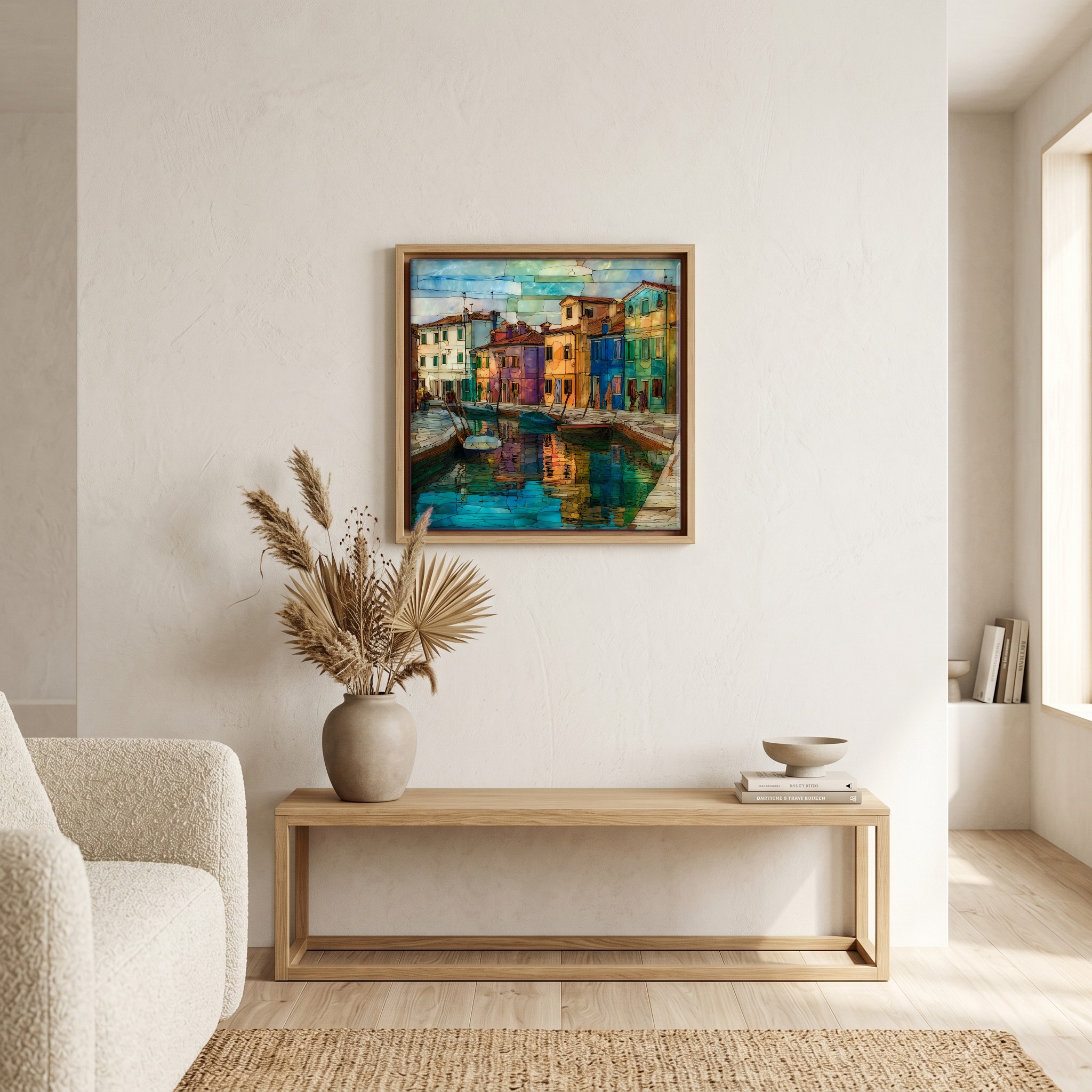
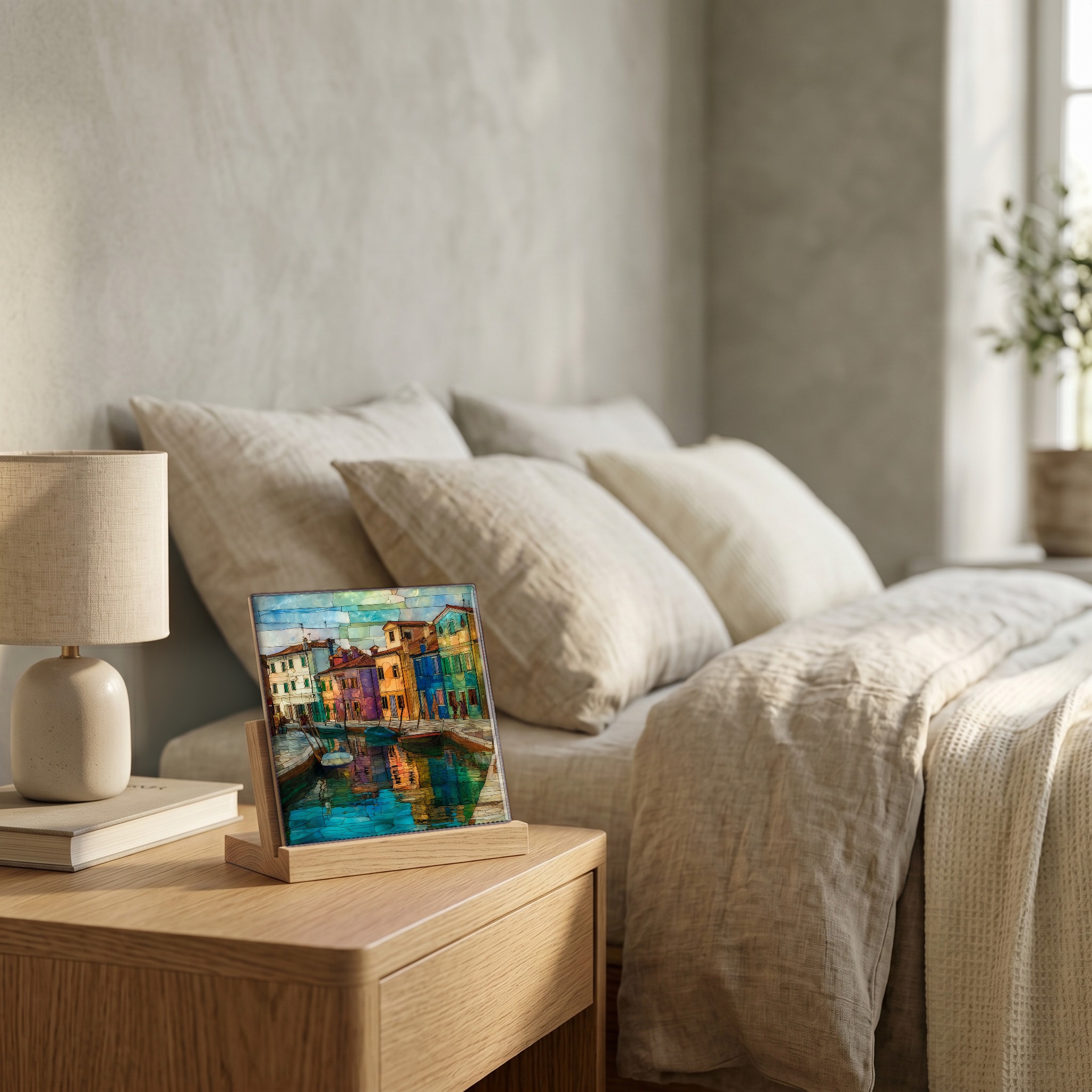
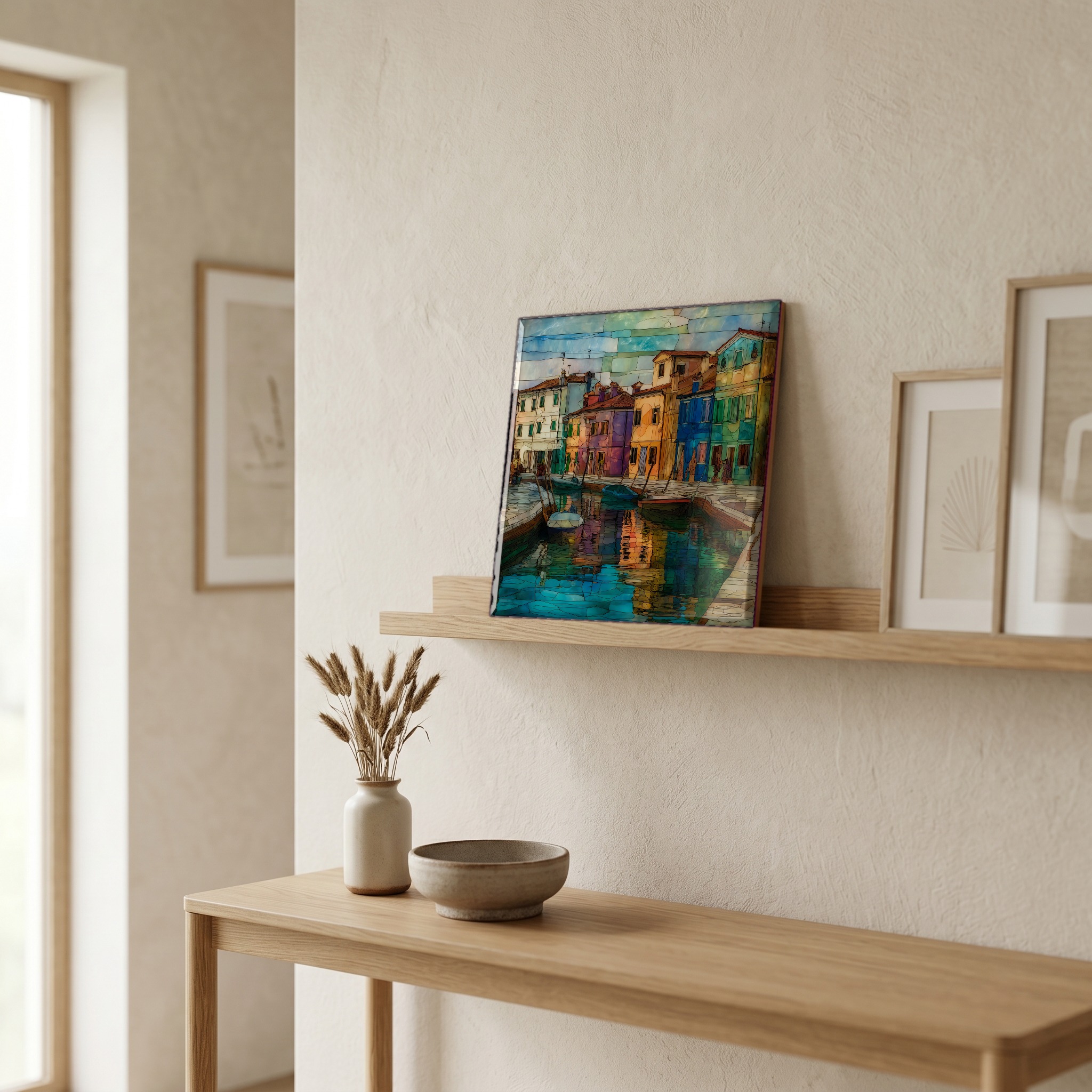
“A small island in the Venetian Lagoon, an hour by vaporetto north of San Marco. The houses are painted in bands of cadmium and cobalt and rose, a tradition the fishermen kept so they could find the right door coming home through the fog. The bell tower of San Martino leans a few degrees off true. Women still work lace on the cushions at the doors of the houses on Via Galuppi, the same fine merletto Burano has been known for since the seventeenth century. Most day-trippers come and go on the half-hour boats. The light at four in the afternoon is the thing.
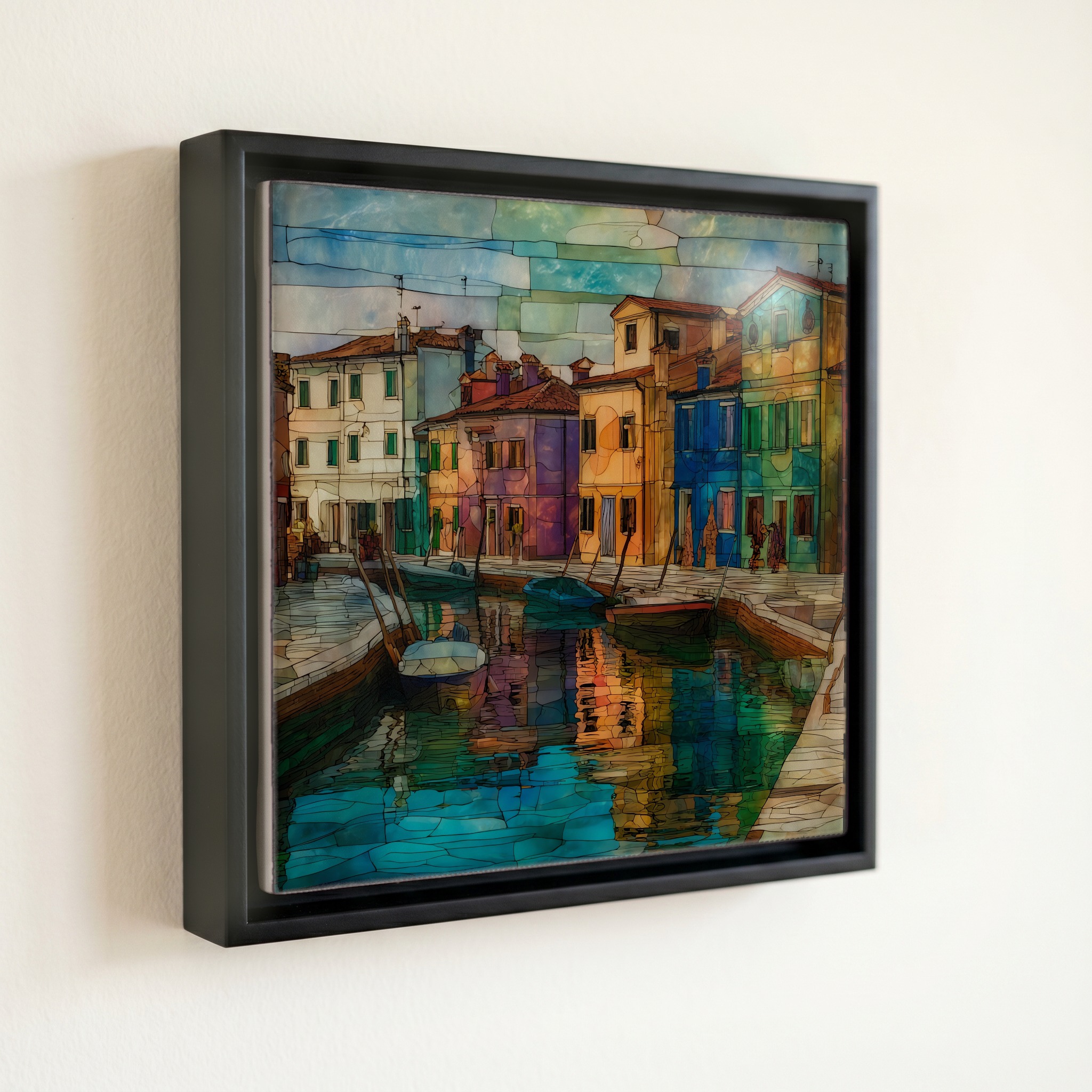
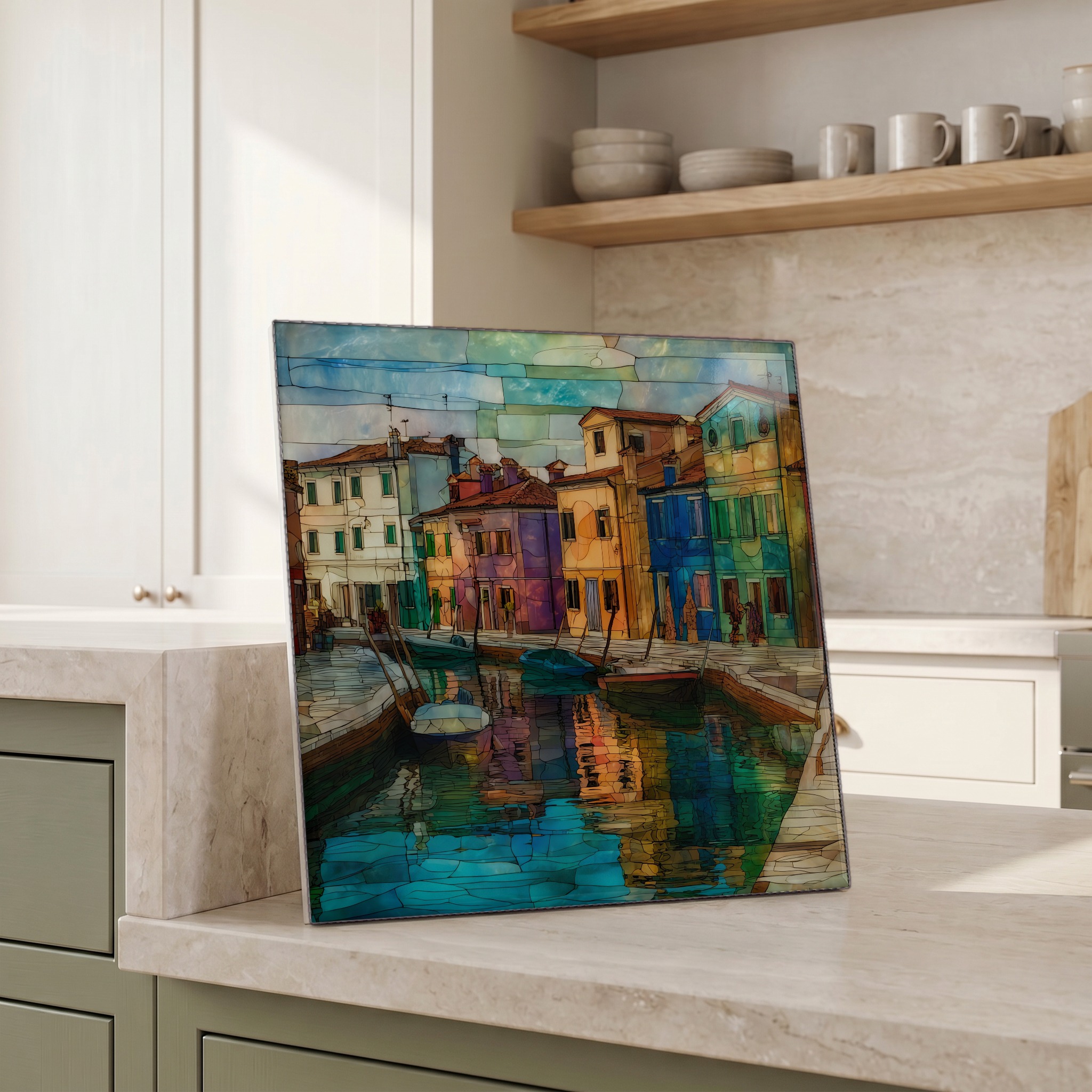
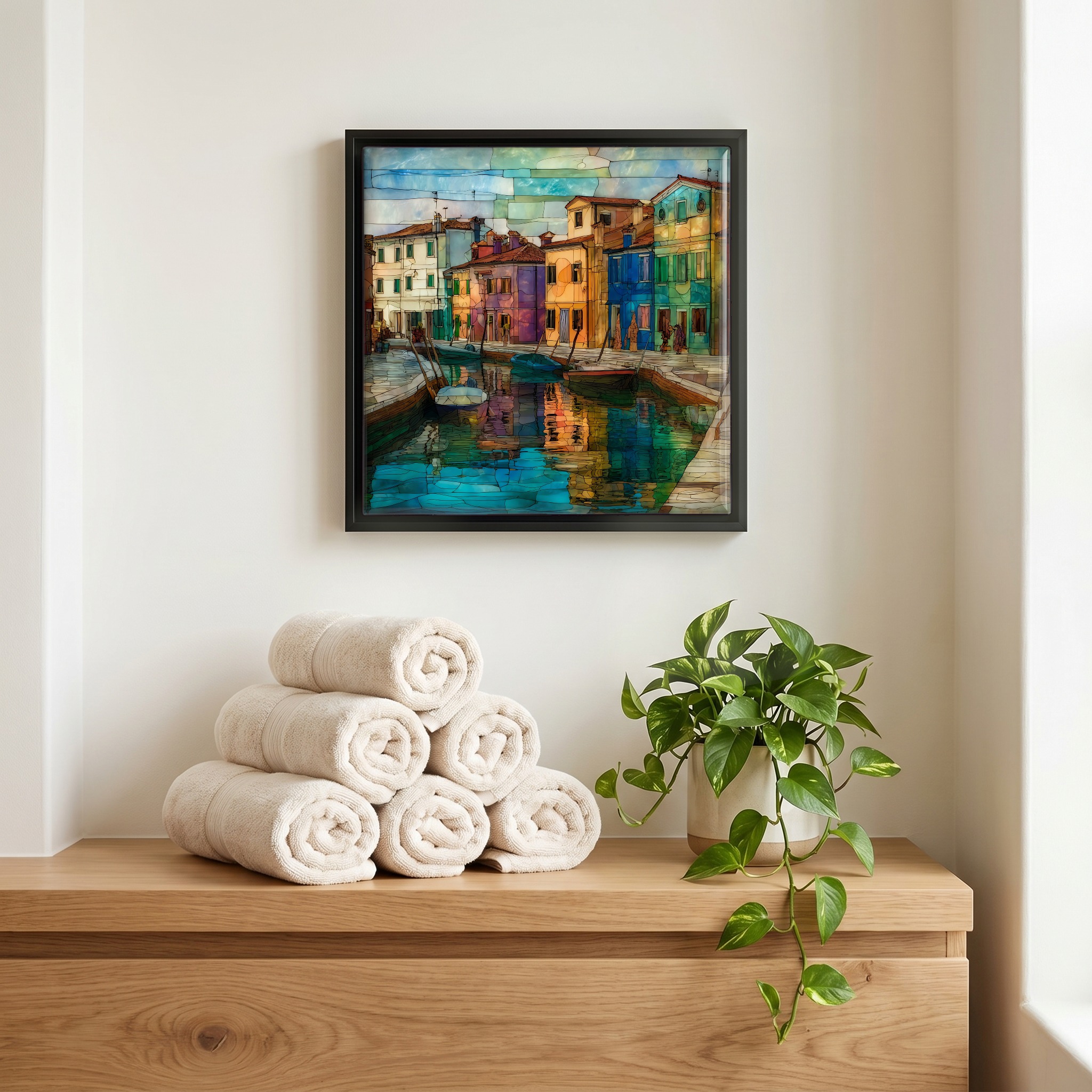
Burano, on ceramic.
Each tile is finished by hand in our Knoxville studio. Artwork is slowly infused into the ceramic surface under high heat and pressure, and rests beneath a thin glossy finish. The colour lives in the surface, not on top of it.
Pick any four 4-inch tiles — National Parks you've been to, a Smokies set, the four seasons of one place. $ for a set of , cork-backed, ready to live on the table.
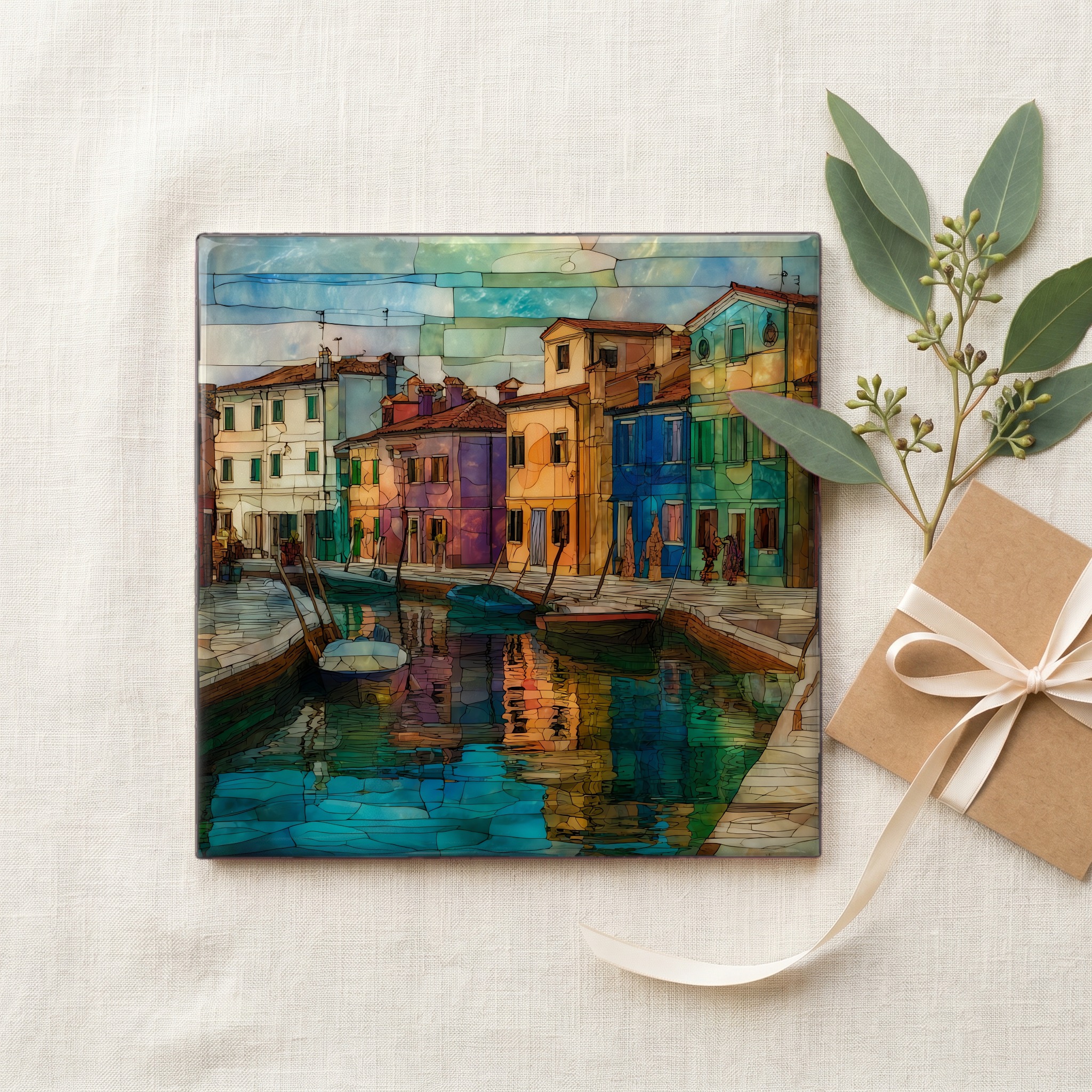
Each tile ships in a kraft box, tied with cream ribbon, with a handwritten note from the studio if you'd like to add one.
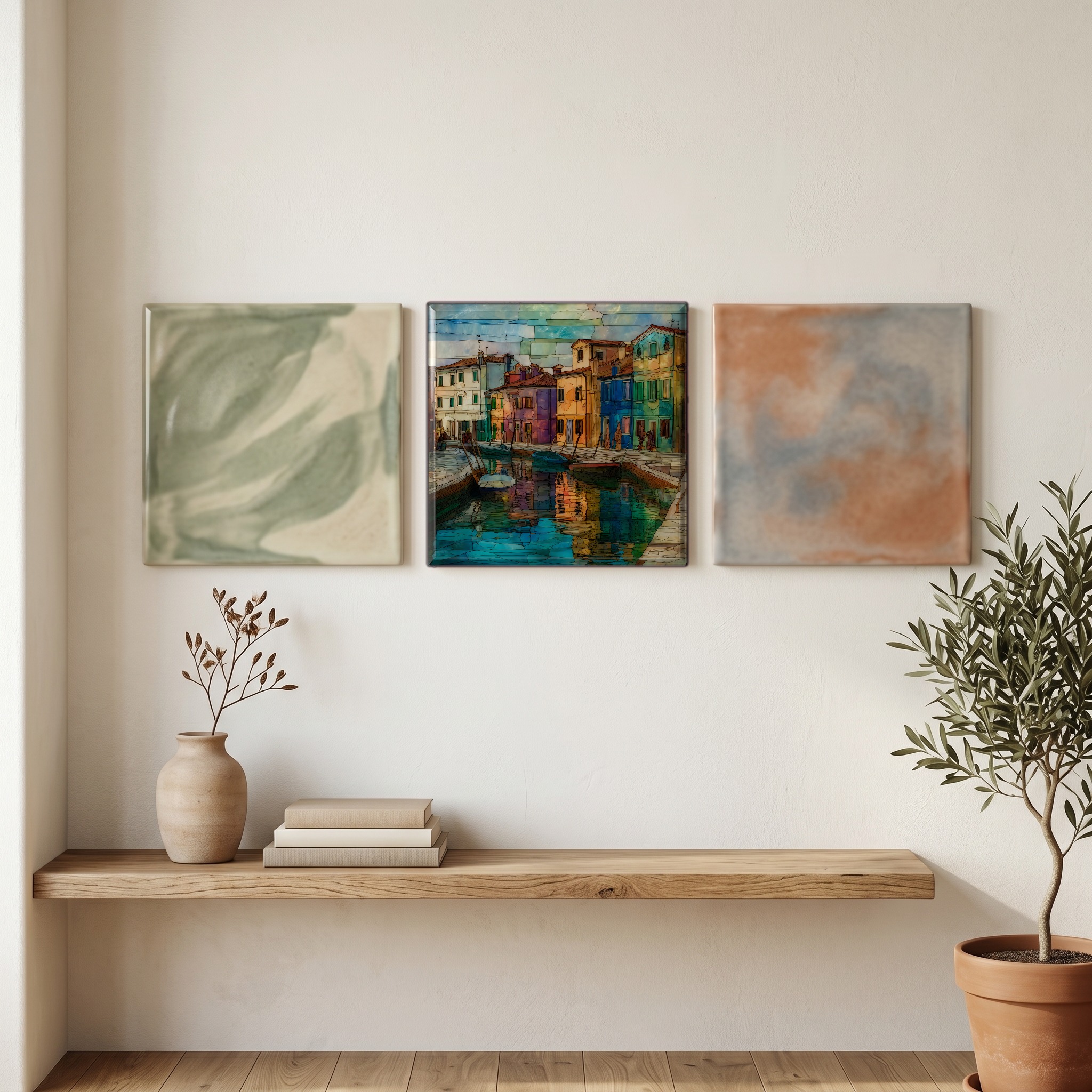
Three or five different vistas, hung together — a chapter of places you've been, or want to go.
The place, in three passes.
Burano sits in the northern Venetian Lagoon, about 7 kilometres northeast of Piazza San Marco and reachable by vaporetto line 12 from Fondamente Nove. It is a small island, really four islets joined by short bridges, with a permanent population of around 2,400, part of the Comune di Venezia. The lagoon around it, inscribed on the UNESCO World Heritage list in 1987 as Venice and its Lagoon, is shallow and ringed with reed beds and fishing weirs. To the north, across a wooden footbridge from neighbouring Mazzorbo, the older settlement of Torcello holds the lagoon's earliest church. Most visitors arrive between ten and four; the boats run until well after dark.
Burano's colour is regulated by the Comune di Venezia: an owner who wants to repaint a façade petitions the office and is sent back a short list of approved hues for that lot. The custom is older than the regulation. Fishermen painted their houses in distinct bands of vermilion, cobalt, and ochre so that, returning across a shallow lagoon in low cloud, each man could pick out his own door from the next. The four small islets that make up Burano, joined by short bridges and home to roughly 2,400 residents, together hold one of the most consistent painted palettes in Europe. The lagoon light at four in the afternoon does the rest.
Burano is reached by vaporetto line 12 from Fondamente Nove on the north side of Venice, a roughly forty-five-minute crossing that usually stops at Murano along the way. The boats run about every half hour during the day and continue, less frequently, into the evening. On the island itself, the lace tradition for which Burano has been known since the sixteenth century is shown at the Museo del Merletto on Piazza Galuppi, housed in the former Scuola dei Merletti that ran from 1872 until 1970. The bell tower of the church of San Martino leans visibly off true. Most day-trippers come and go between ten and four; the village is quietest in the hour after they leave.