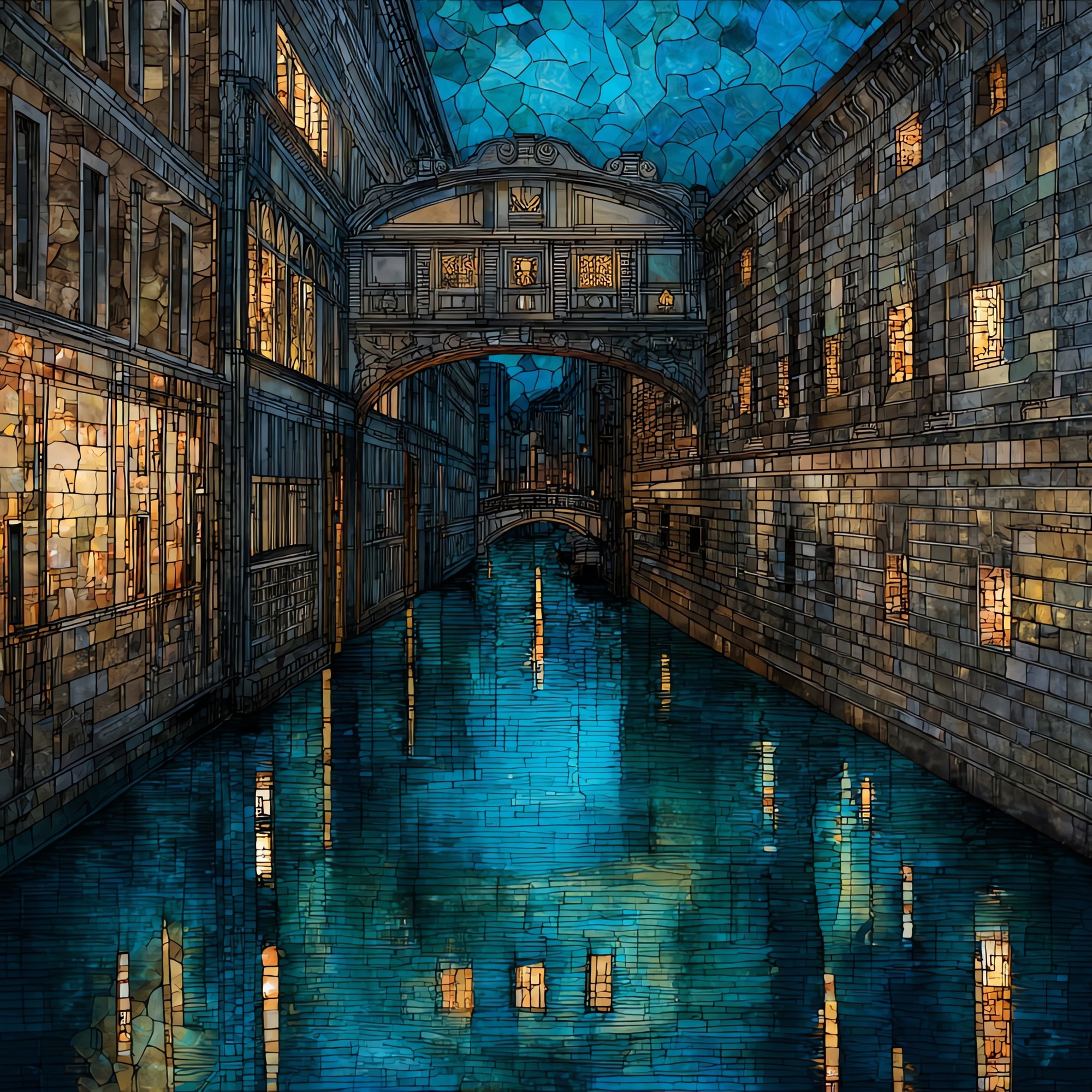
Bridge of Sighs
— the last of the daylight, through a narrow stone window.
Not only on a wall.
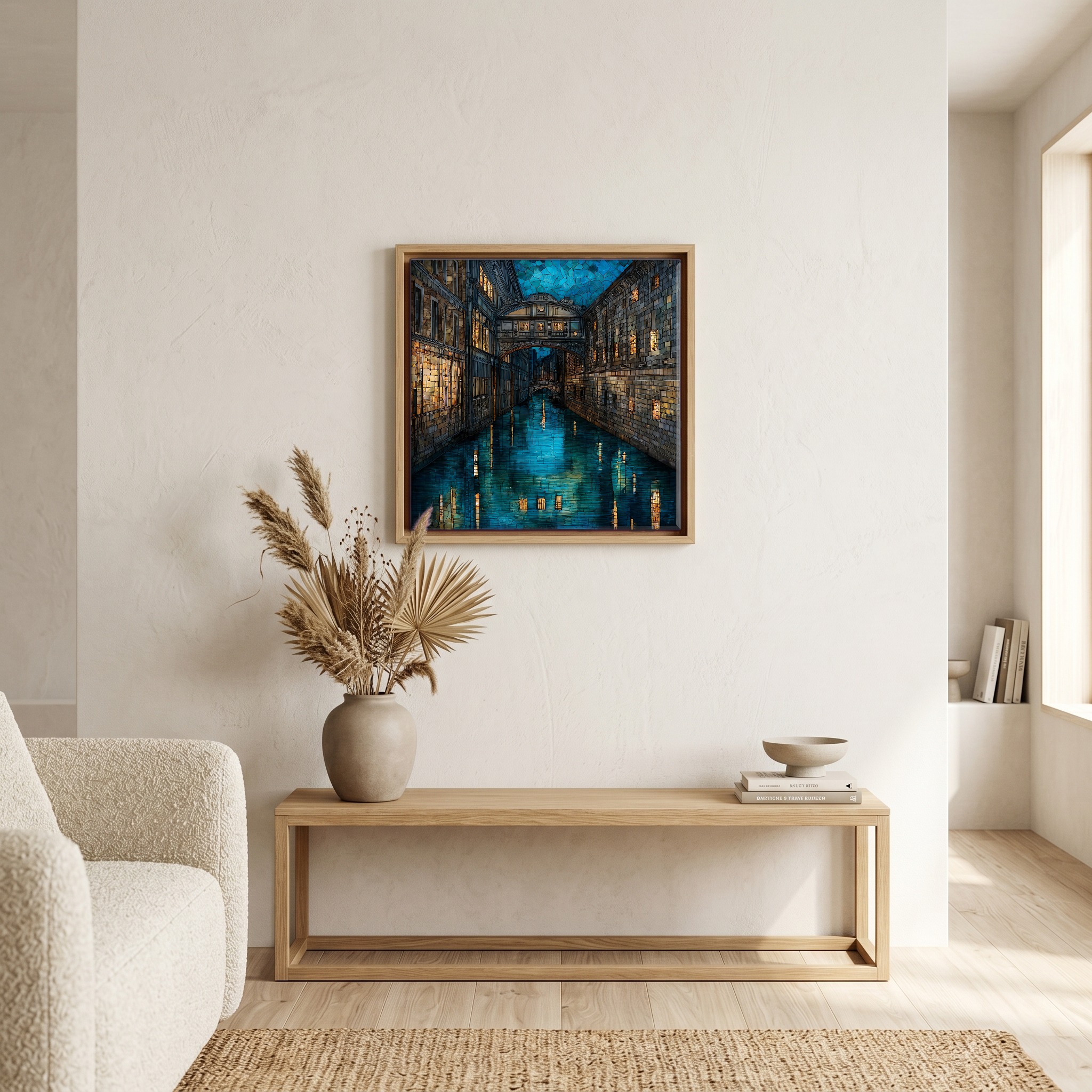
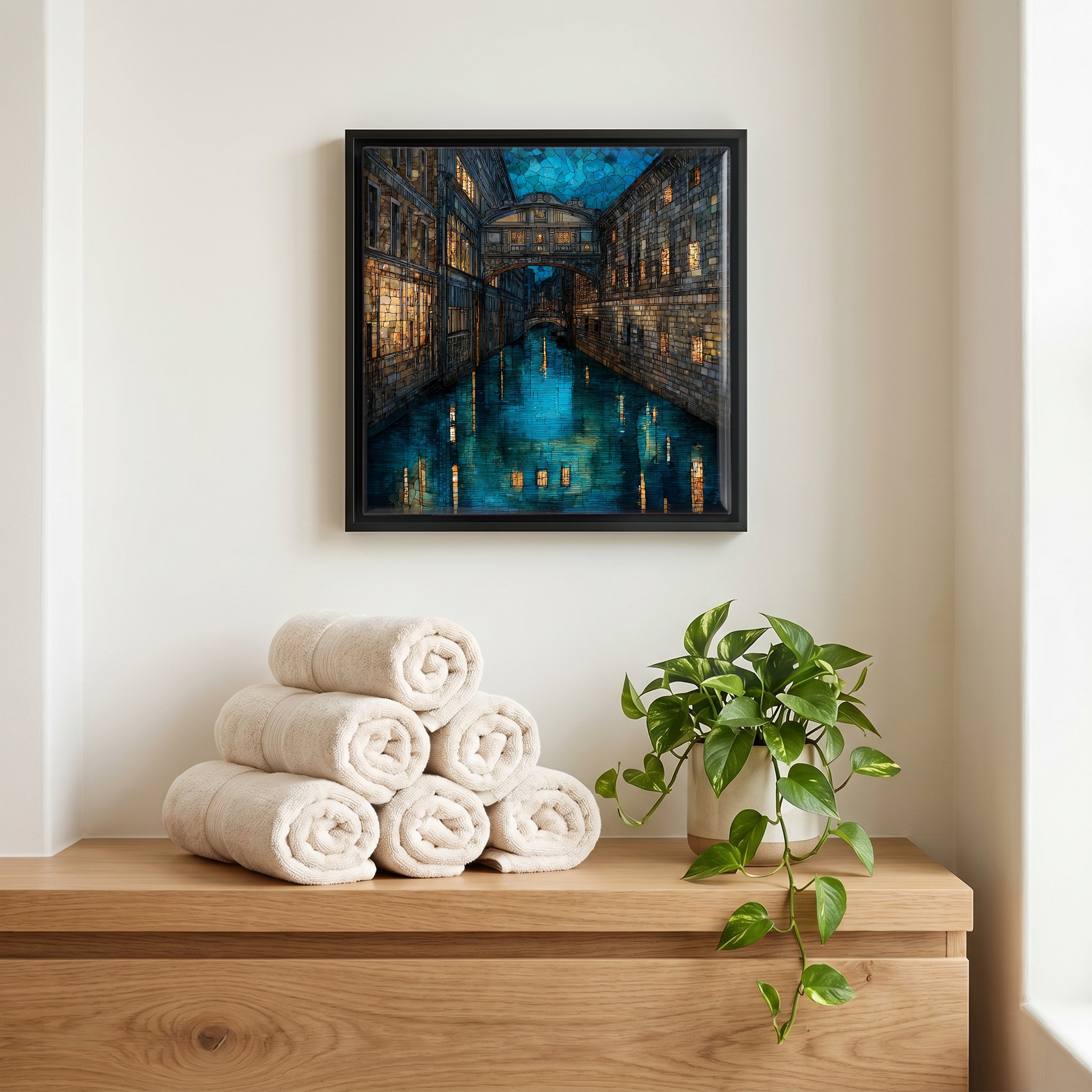
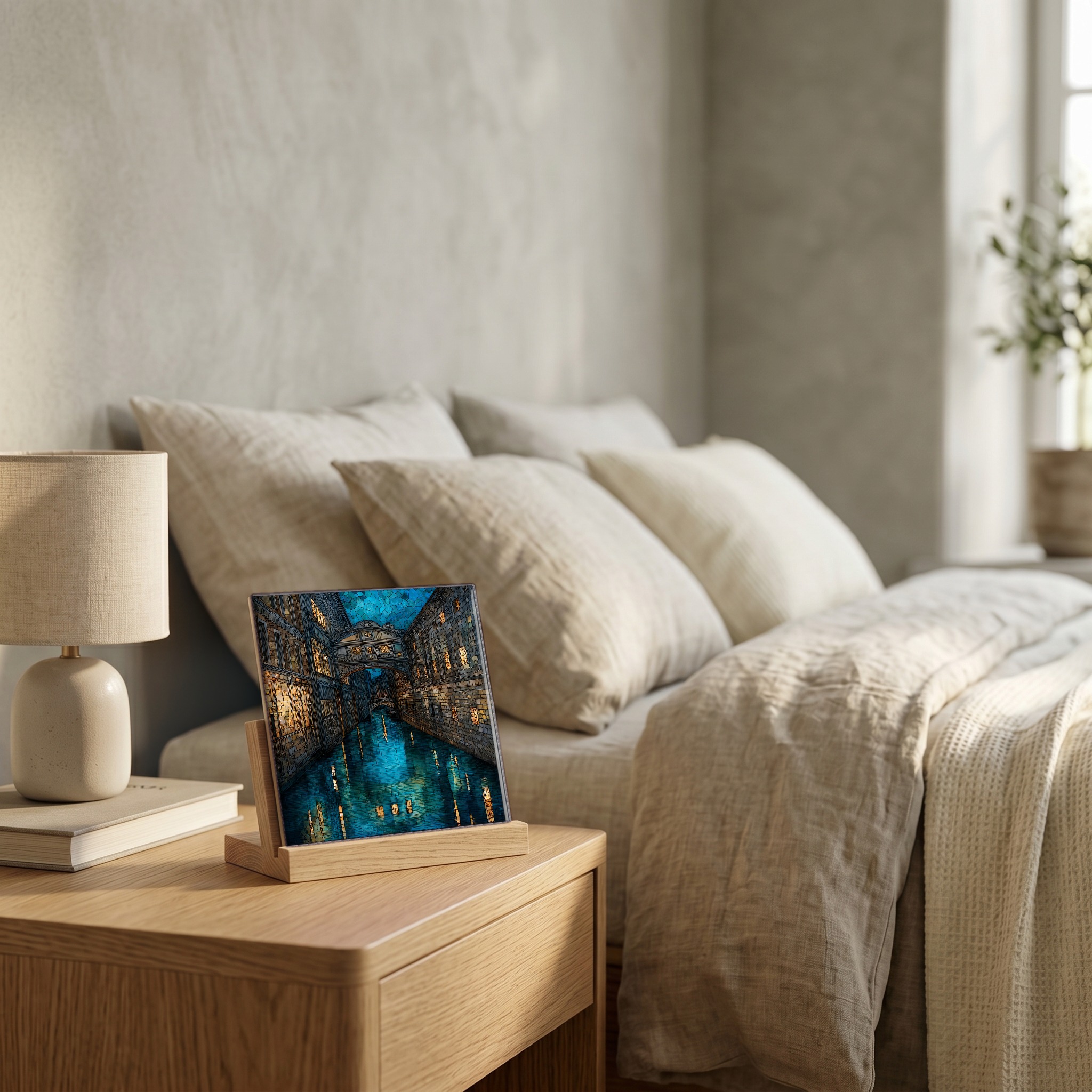
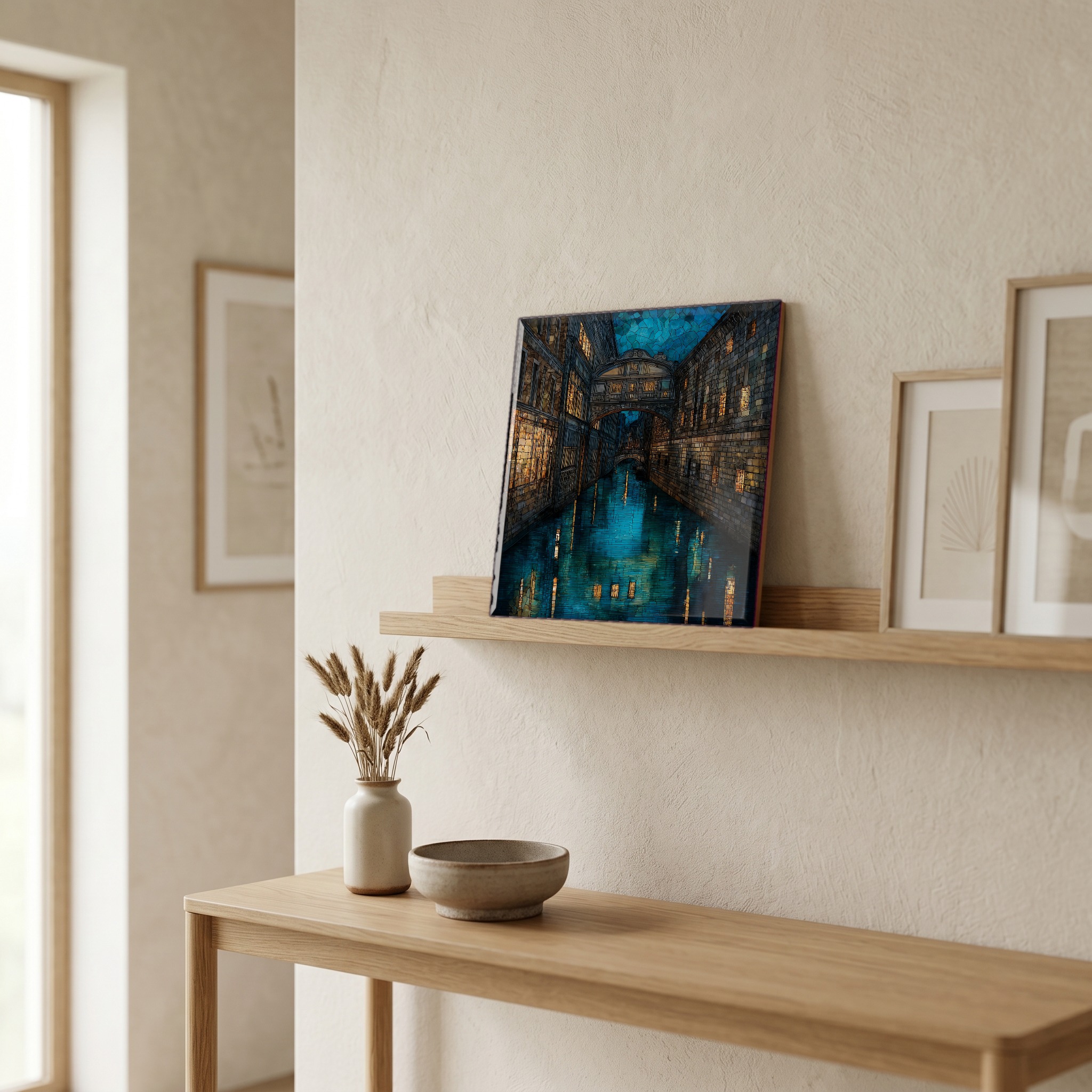
“A covered bridge of white Istrian stone, arched over a narrow canal between the Doge's Palace and the old prison. Prisoners crossed it on the way to their cells; the story goes they sighed at the last of Venice through the stone grille, and Lord Byron gave it the name that stuck. From the water below, gondolas slow under the arch at dusk. The two small windows are barred, and the view through them is exactly as wide as the legend needs it to be.
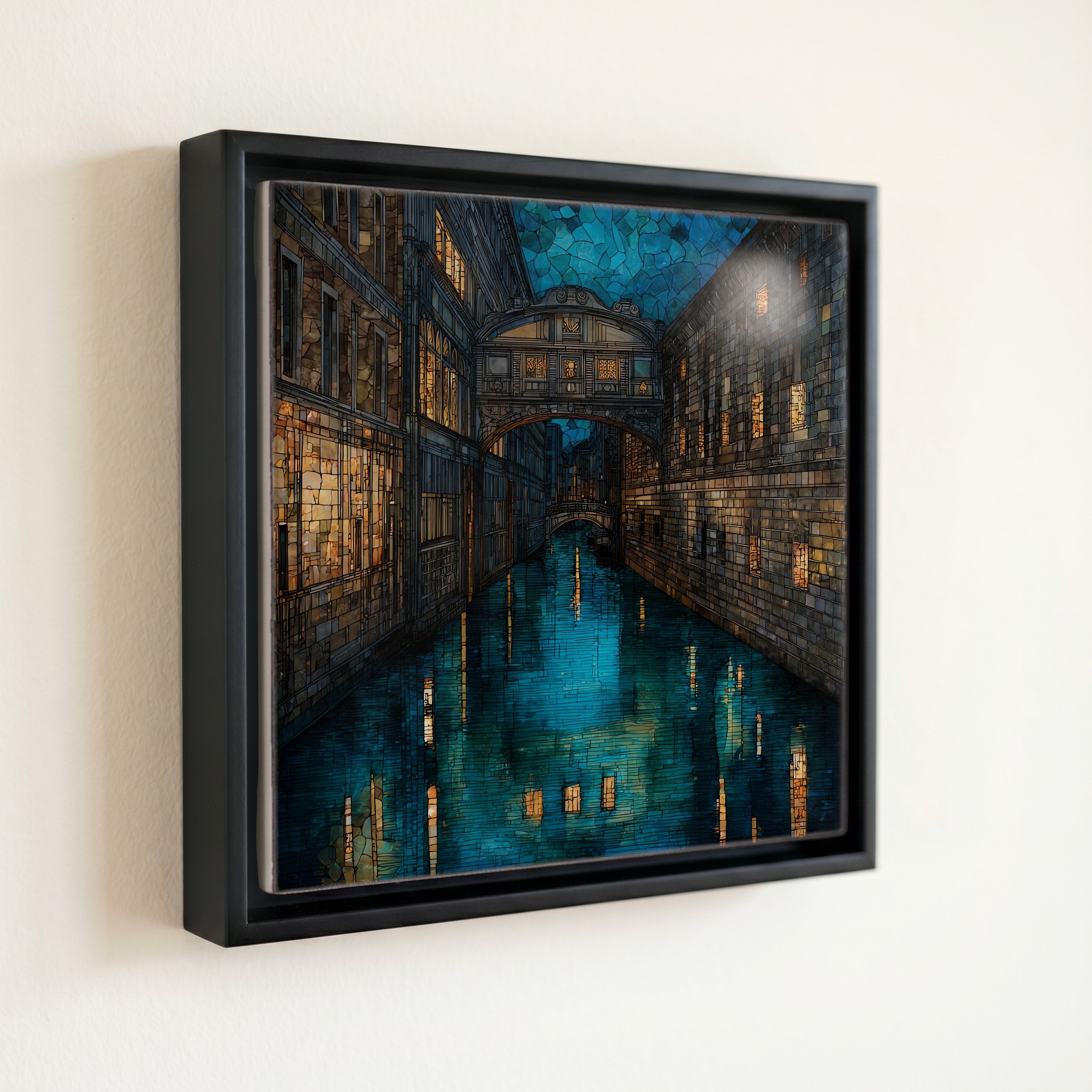
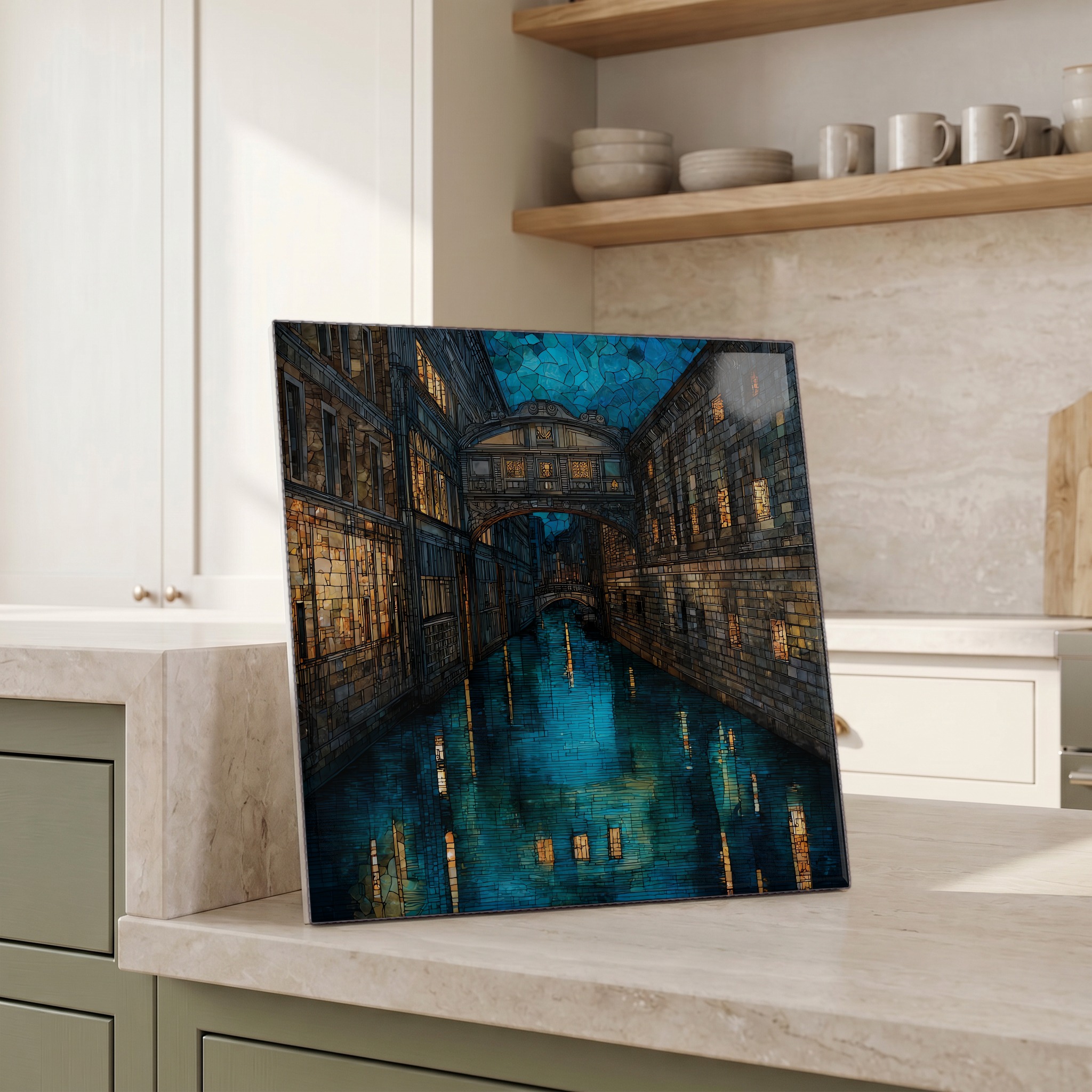
Bridge of Sighs, on ceramic.
Each tile is finished by hand in our Knoxville studio. Artwork is slowly infused into the ceramic surface under high heat and pressure, and rests beneath a thin glossy finish. The colour lives in the surface, not on top of it.
Pick any four 4-inch tiles — National Parks you've been to, a Smokies set, the four seasons of one place. $ for a set of , cork-backed, ready to live on the table.
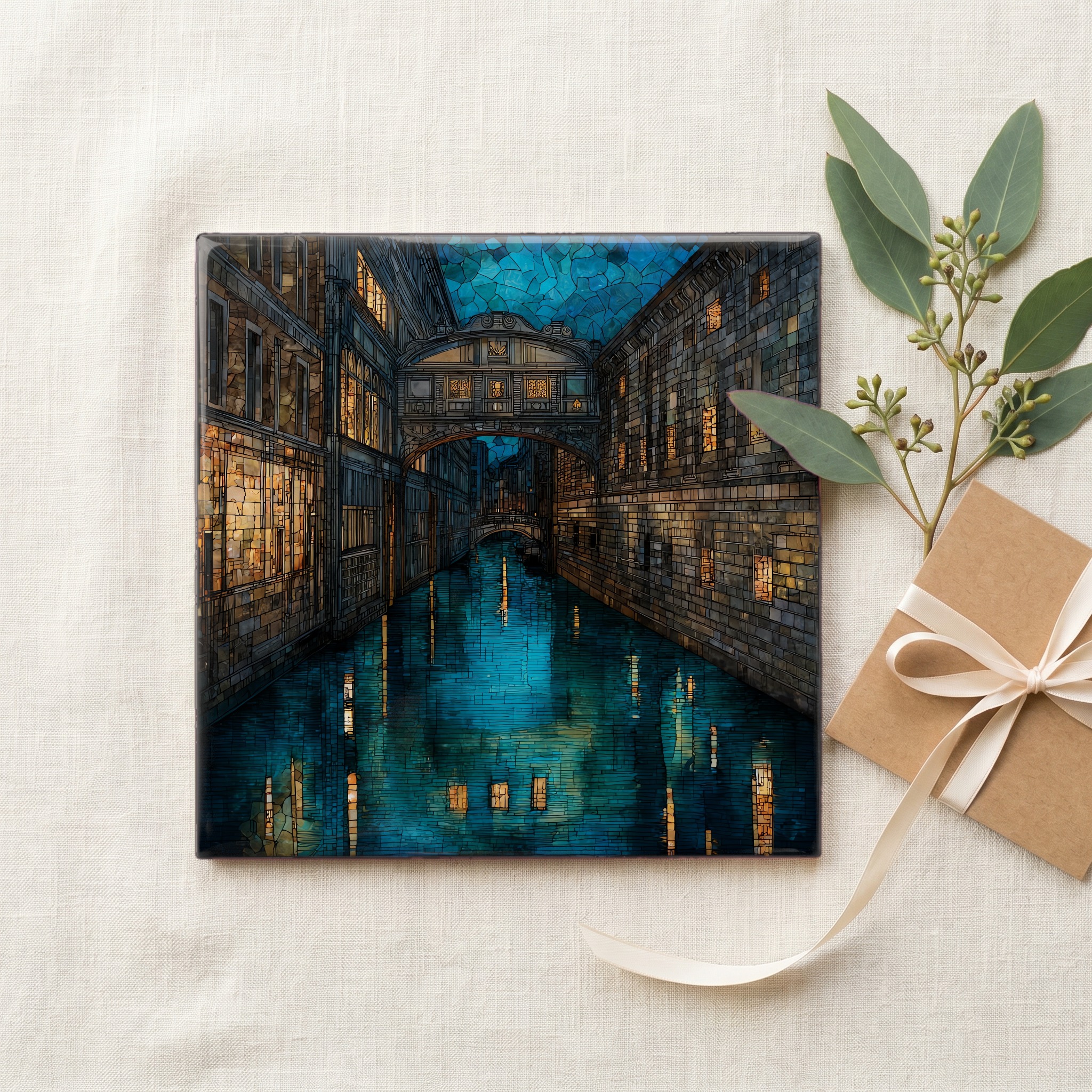
Each tile ships in a kraft box, tied with cream ribbon, with a handwritten note from the studio if you'd like to add one.
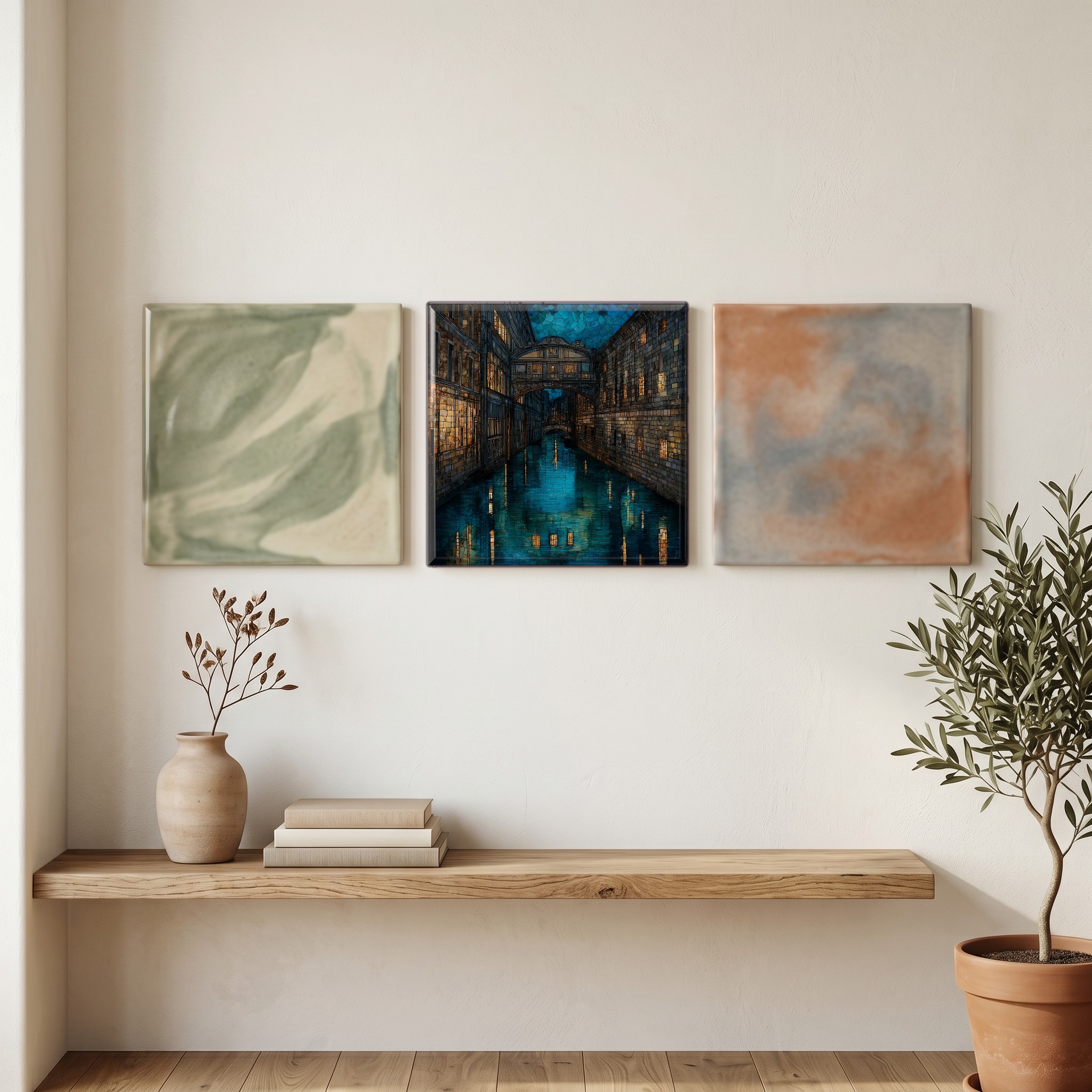
Three or five different vistas, hung together — a chapter of places you've been, or want to go.
The place, in three passes.
The Bridge of Sighs crosses the Rio di Palazzo in the San Marco district of Venice, linking the Doge's Palace to the Prigioni Nuove, the New Prison, on the far bank. Antonio Contin designed it around 1600, and it was finished by 1603, in white Istrian stone quarried across the Adriatic in what is now Croatia. Contin was the nephew of Antonio da Ponte, who built the Rialto Bridge a few hundred metres up the Grand Canal. The bridge is enclosed, with a wall down the middle dividing the two walkways, and its only openings are two small stone-grilled windows facing the lagoon.
The name is Lord Byron's. In the fourth canto of Childe Harold's Pilgrimage, published in 1818, he wrote of standing 'in Venice, on the Bridge of Sighs, a palace and a prison on each hand,' and the English name fixed itself to what Venetians call the Ponte dei Sospiri. The sighs were said to be the prisoners', taking a last look at the lagoon through the stone grille before the cells. The truth is plainer: most were led across blindfolded. Giacomo Casanova was confined in the Doge's Palace in 1755 and made one of its few recorded escapes. The melancholy is largely Byron's, and it has outlived the prison it described.
The closest public view is from the Ponte della Paglia, the stone footbridge over the Rio di Palazzo on the Riva degli Schiavoni, a short walk east of Piazza San Marco. From there the white arch reads clearly against the green canal, and the crowd is thickest near midday. To cross the bridge itself you go inside, on the Doge's Palace route that runs from the magistrates' rooms to the New Prison and back. A separate legend, younger than Byron's and carried by the 1979 film A Little Romance, holds that a couple who kiss in a gondola beneath the arch at sunset, as the Campanile bells sound, will stay in love.