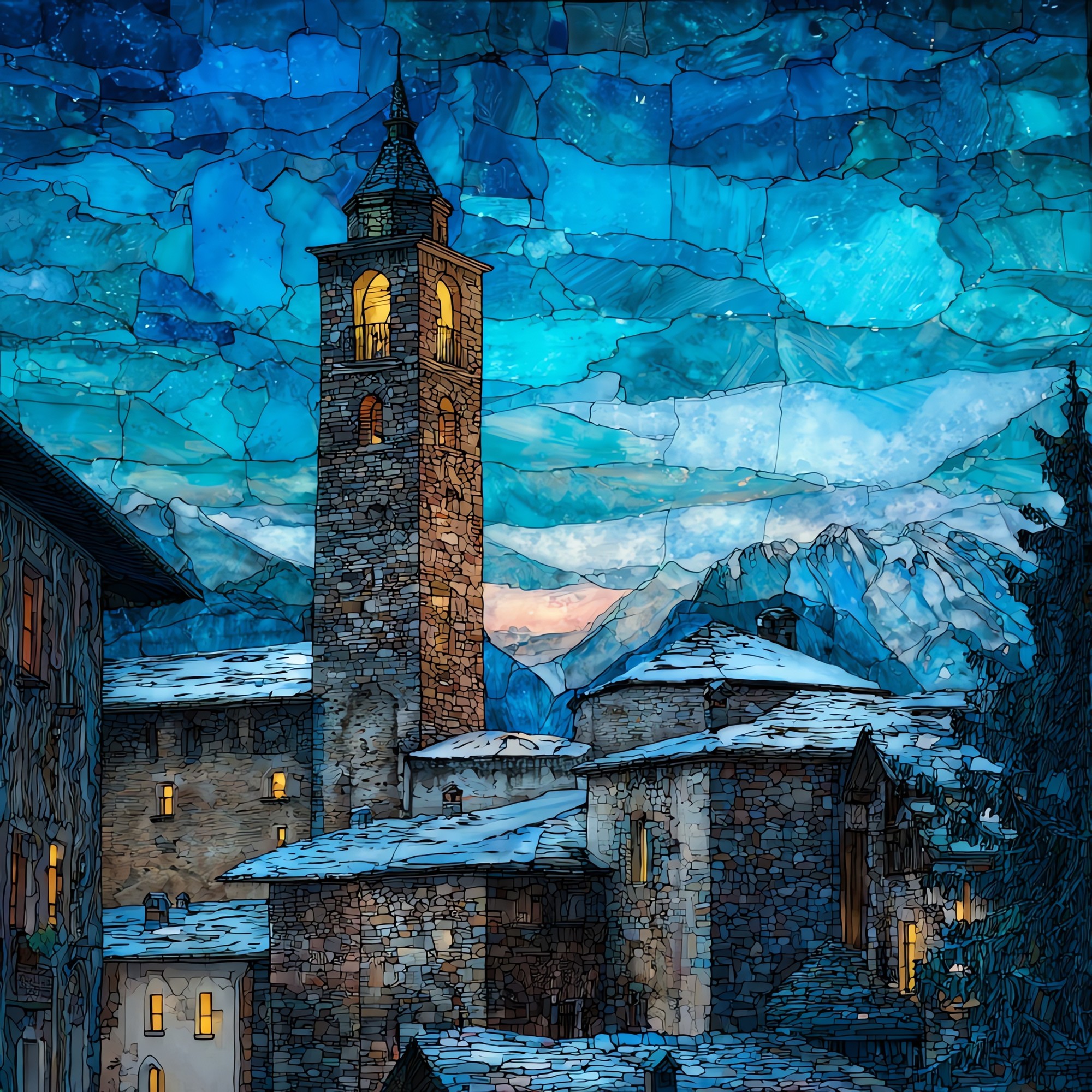
Bormio Old Town Winter
— — the hour the snow turns blue under the bell tower.
Not only on a wall.
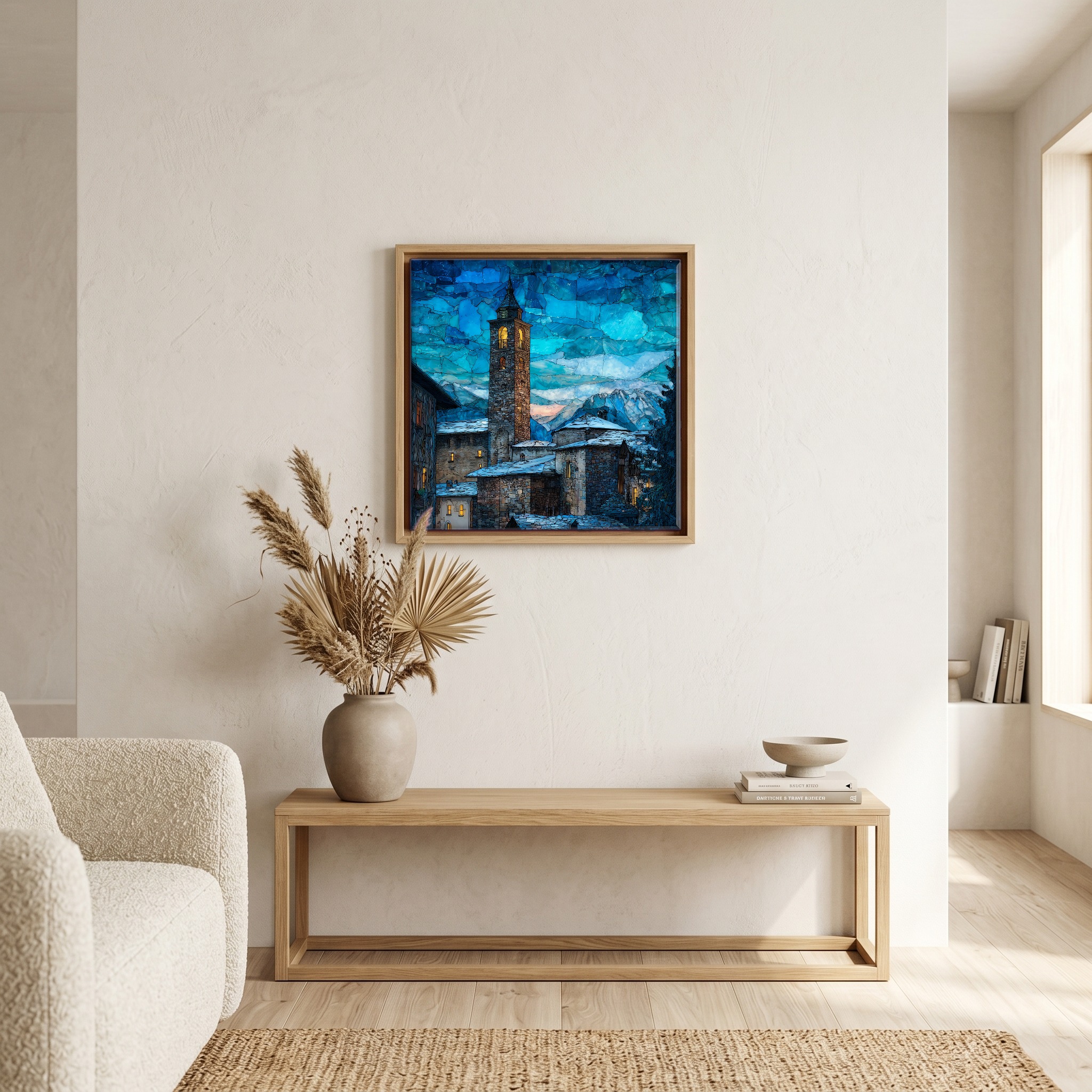
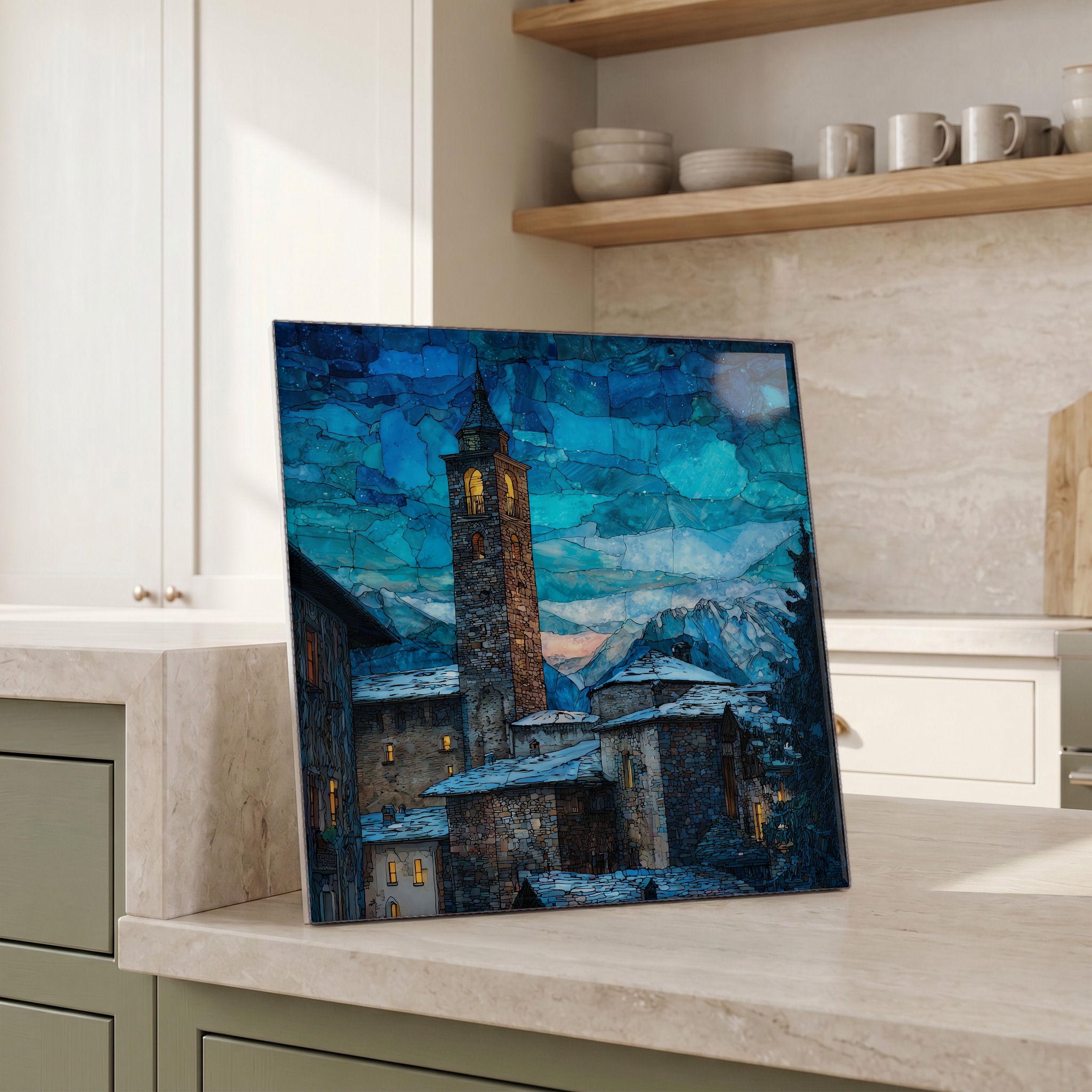
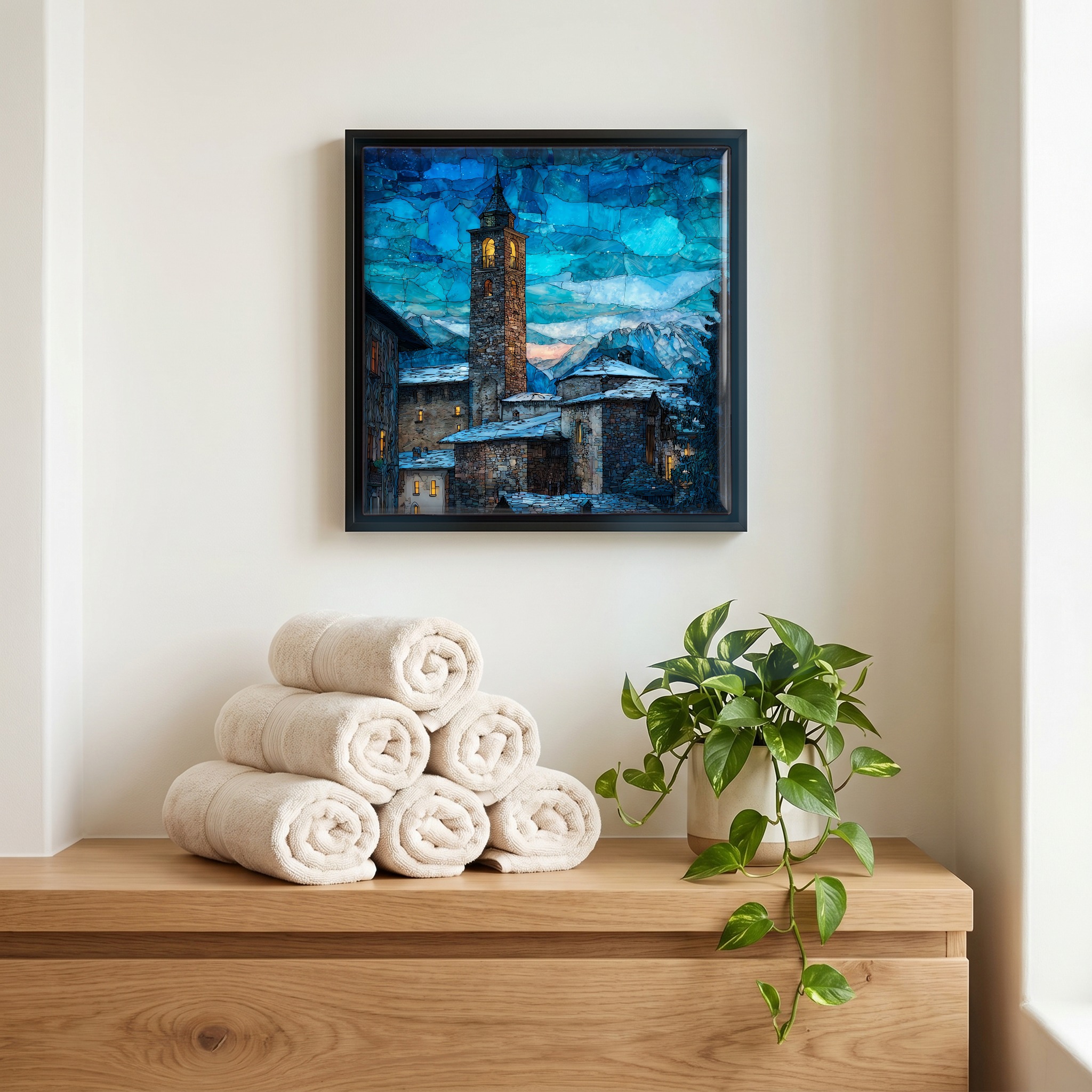
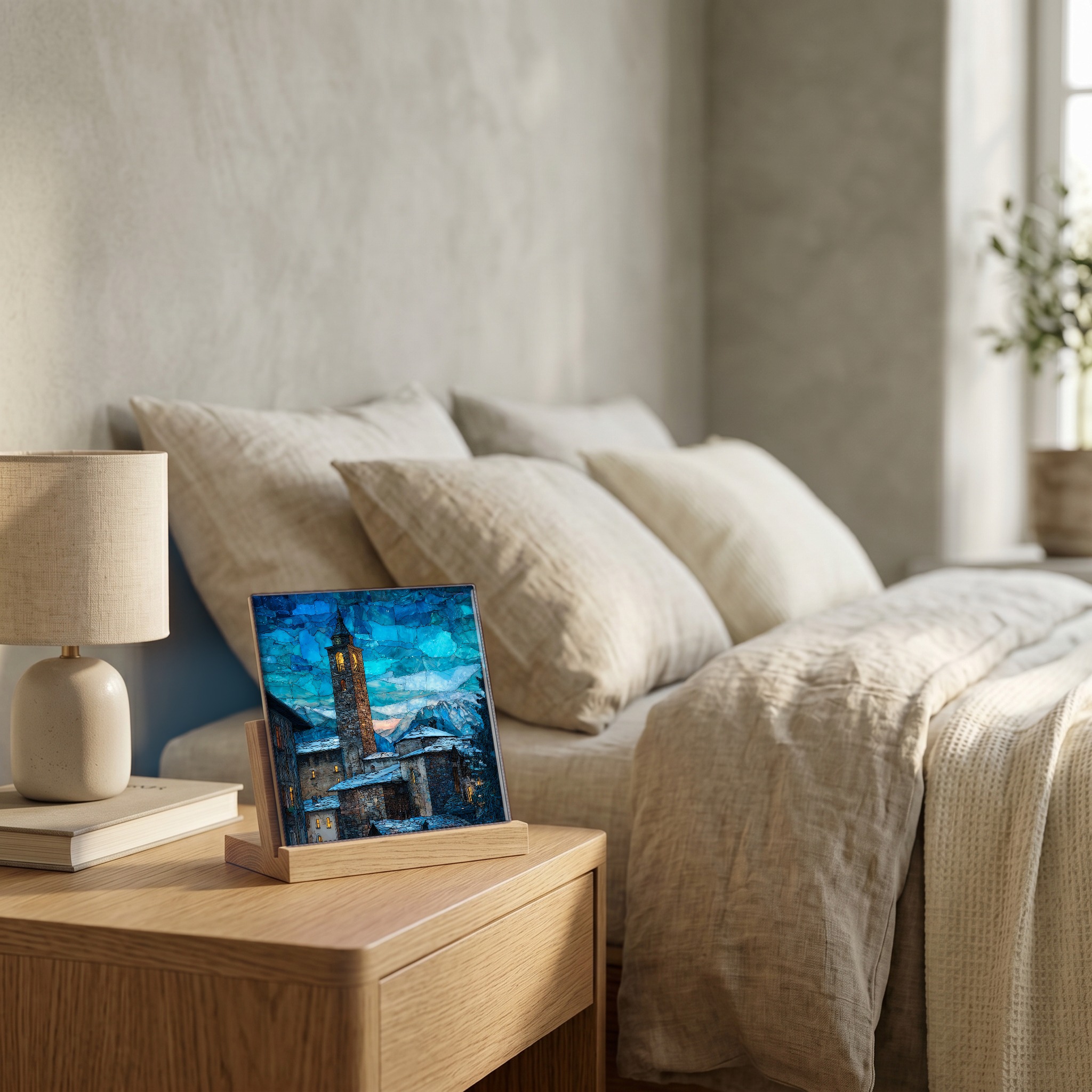
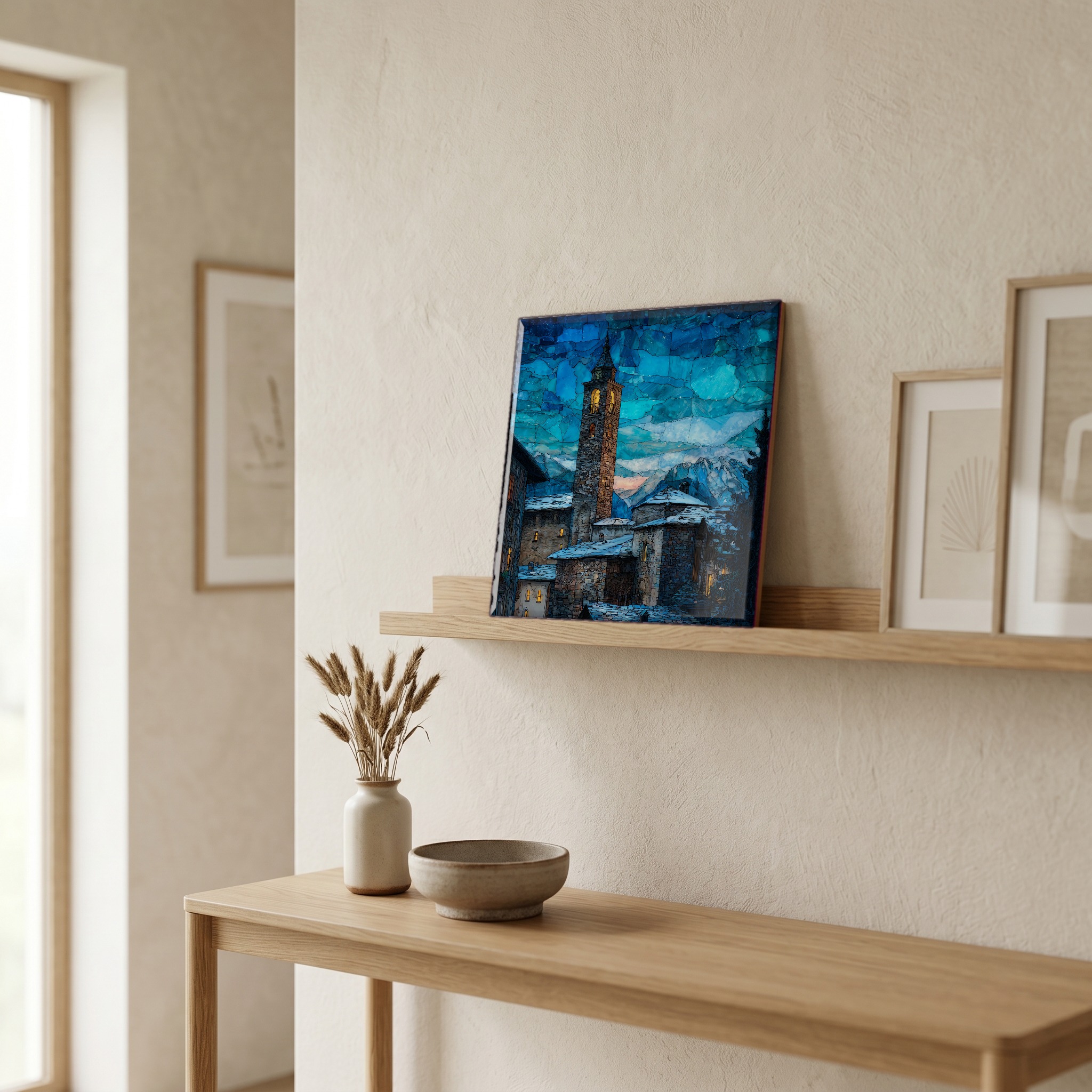
“A medieval town high in the Italian Alps, at the foot of the Stelvio Pass road. The old centre is stone and pitched roofs and narrow ways the snow narrows further. The Kuerc loggia. Piazza Cavour. The Torre delle Ore. Romans came here for the thermal springs and called it Burmium; the springs still run, hot, a short walk from the square. In January the light goes early and the lamps come on early to meet it. There is a moment around four when the white turns the colour of old slate, and the stone holds the last of the day before letting it go.
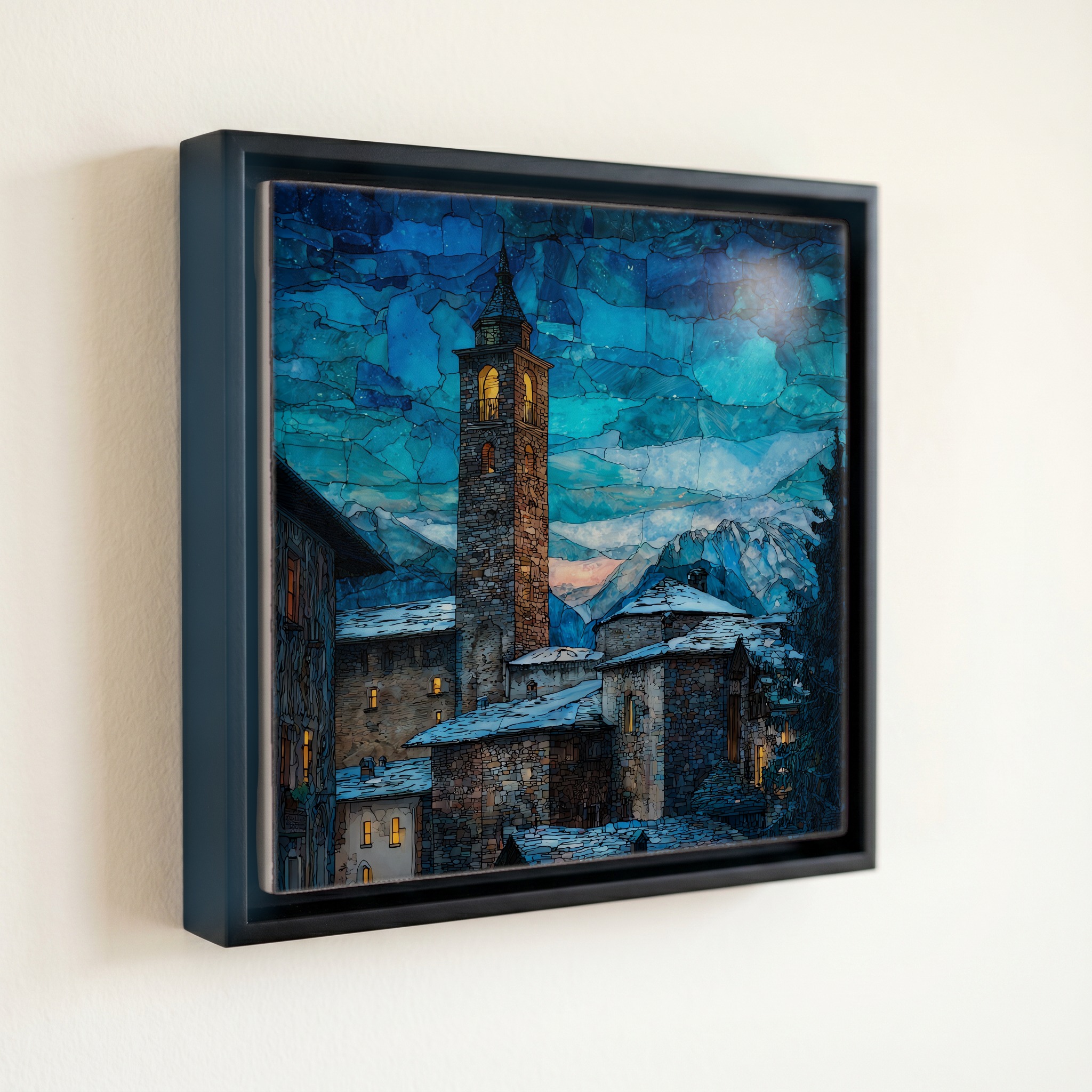
Bormio Old Town Winter, on ceramic.
Each tile is finished by hand in our Knoxville studio. Artwork is slowly infused into the ceramic surface under high heat and pressure, and rests beneath a thin glossy finish. The colour lives in the surface, not on top of it.
Pick any four 4-inch tiles — National Parks you've been to, a Smokies set, the four seasons of one place. $ for a set of , cork-backed, ready to live on the table.
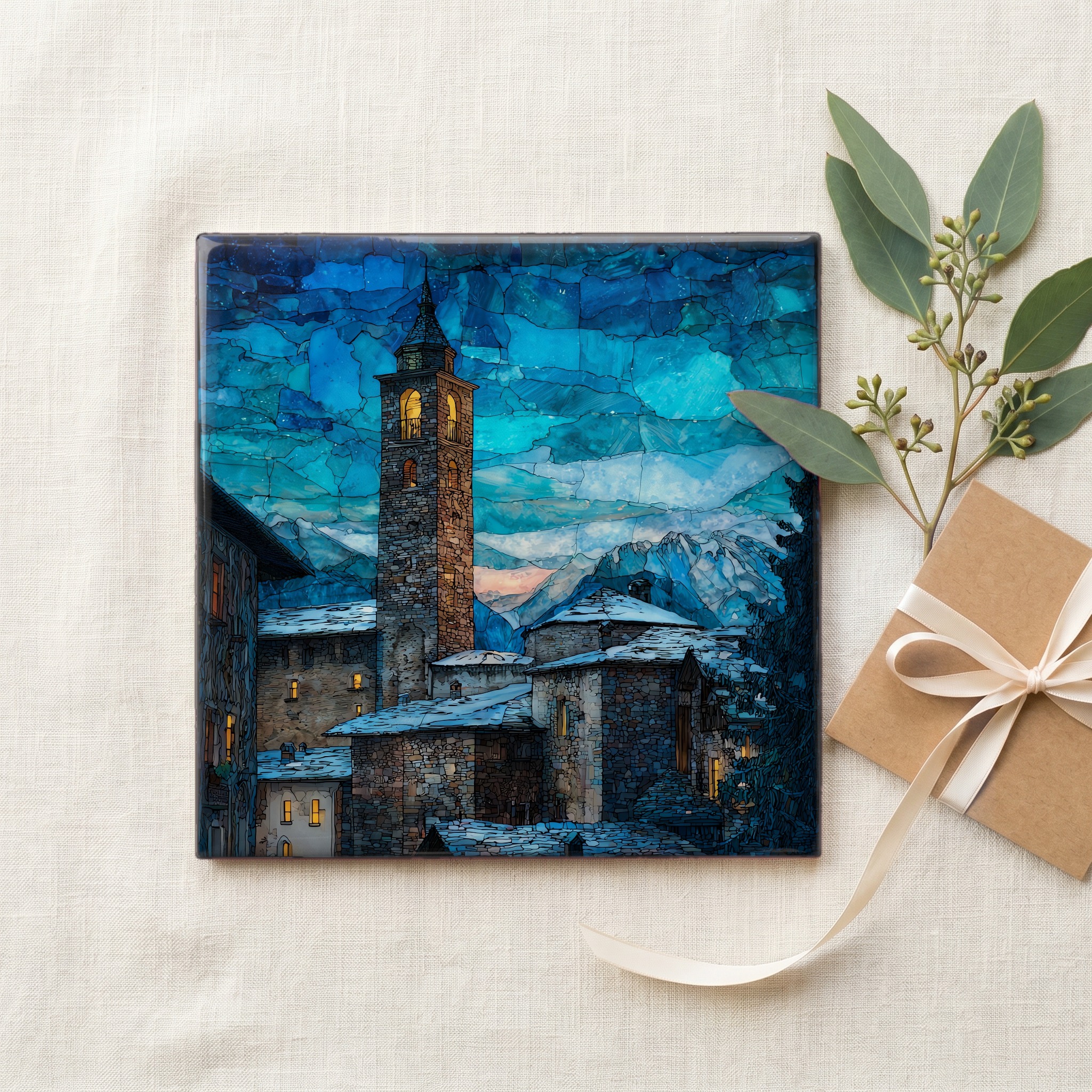
Each tile ships in a kraft box, tied with cream ribbon, with a handwritten note from the studio if you'd like to add one.
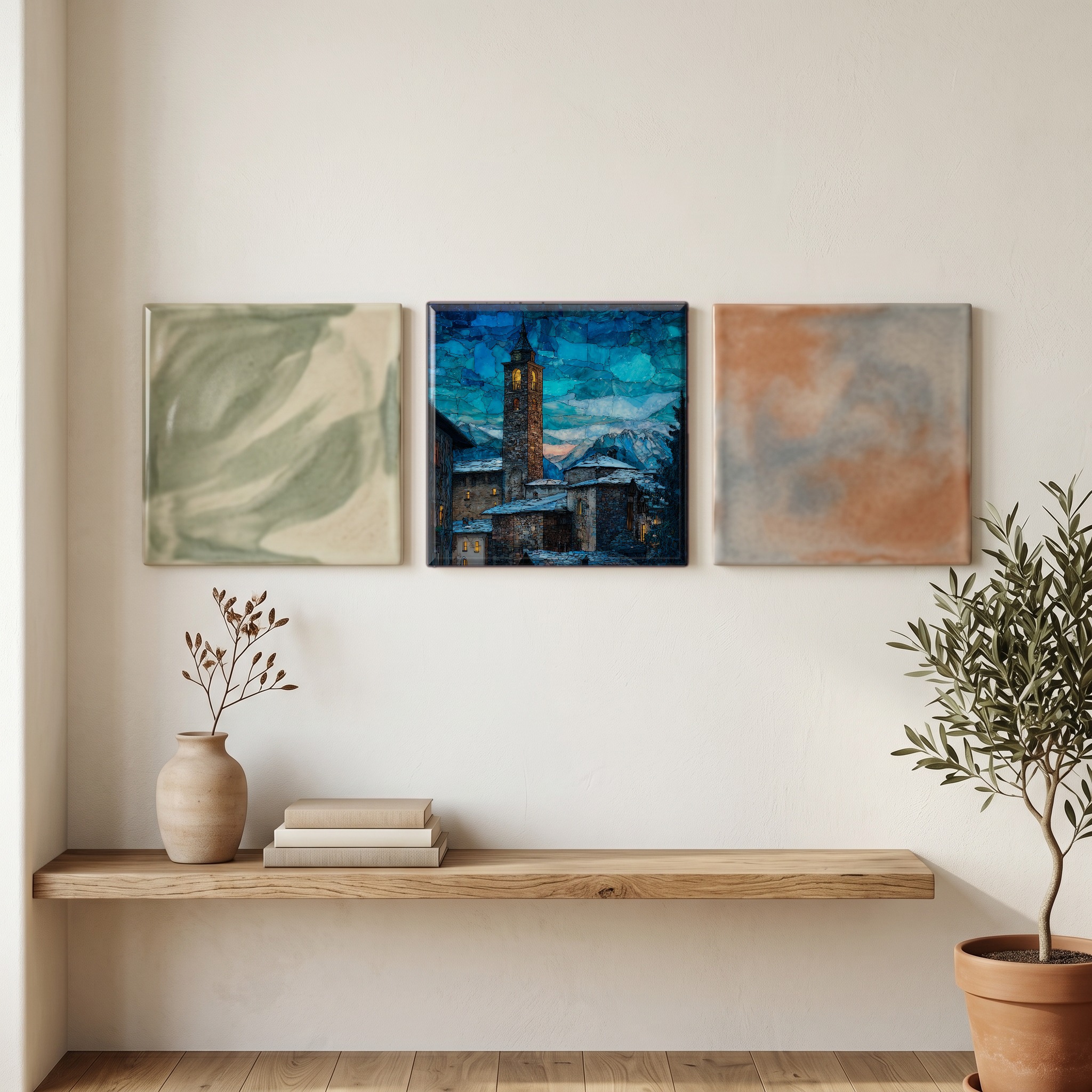
Three or five different vistas, hung together — a chapter of places you've been, or want to go.
The place, in three passes.
Bormio sits at 1,225 metres in the upper Valtellina valley of Lombardy, in the province of Sondrio. The town lies about forty kilometres above Tirano and the railhead, reached by bus or by car along the SS38. To the north it touches the Swiss border at the Umbrail Pass; to the east, the road climbs the Stelvio Pass, at 2,758 metres among the highest paved roads in the Alps, into South Tyrol. Bormio is a main gateway to Stelvio National Park, one of the largest protected areas in the Italian Alps. The historic centre is small, walkable, and largely closed to cars.
The centro storico is concentrated around Piazza del Kuerc and Piazza Cavour, where the Kuerc itself, a covered stone loggia from 1304, served as the meeting place of the medieval Magnifica Terra communal council. Bormio kept its own civic statutes from the fourteenth century, a status the town still marks each Easter at the Pasquali festival. Across the square the Collegiata dei Santi Gervasio e Protasio rises in baroque white above lower stone houses; the bell tower carries a clock visible from most of the old centre. The Torre degli Alberti and the medieval Torre delle Ore stand among quieter lanes, the kind a snowfall settles into.
Bormio's winter runs roughly from December into April, with the high season concentrated around Christmas and the ski weeks. The Stelvio piste above town, the FIS Alpine Ski World Cup's marquee men's downhill, drops 1,010 metres from start to finish and historically hosts a December race that ends a short walk from the medieval centre. Bormio will host the men's alpine events for the Milano-Cortina 2026 Winter Olympics in February. Below the snow line, the Roman thermal baths at Bagni Vecchi and Bagni Nuovi stay hot at around 37°C, fed by the same springs Pliny the Elder noted in the first century. The old centre keeps a low profile against the slopes: stone houses, lit lanes, and the bell at the hour.