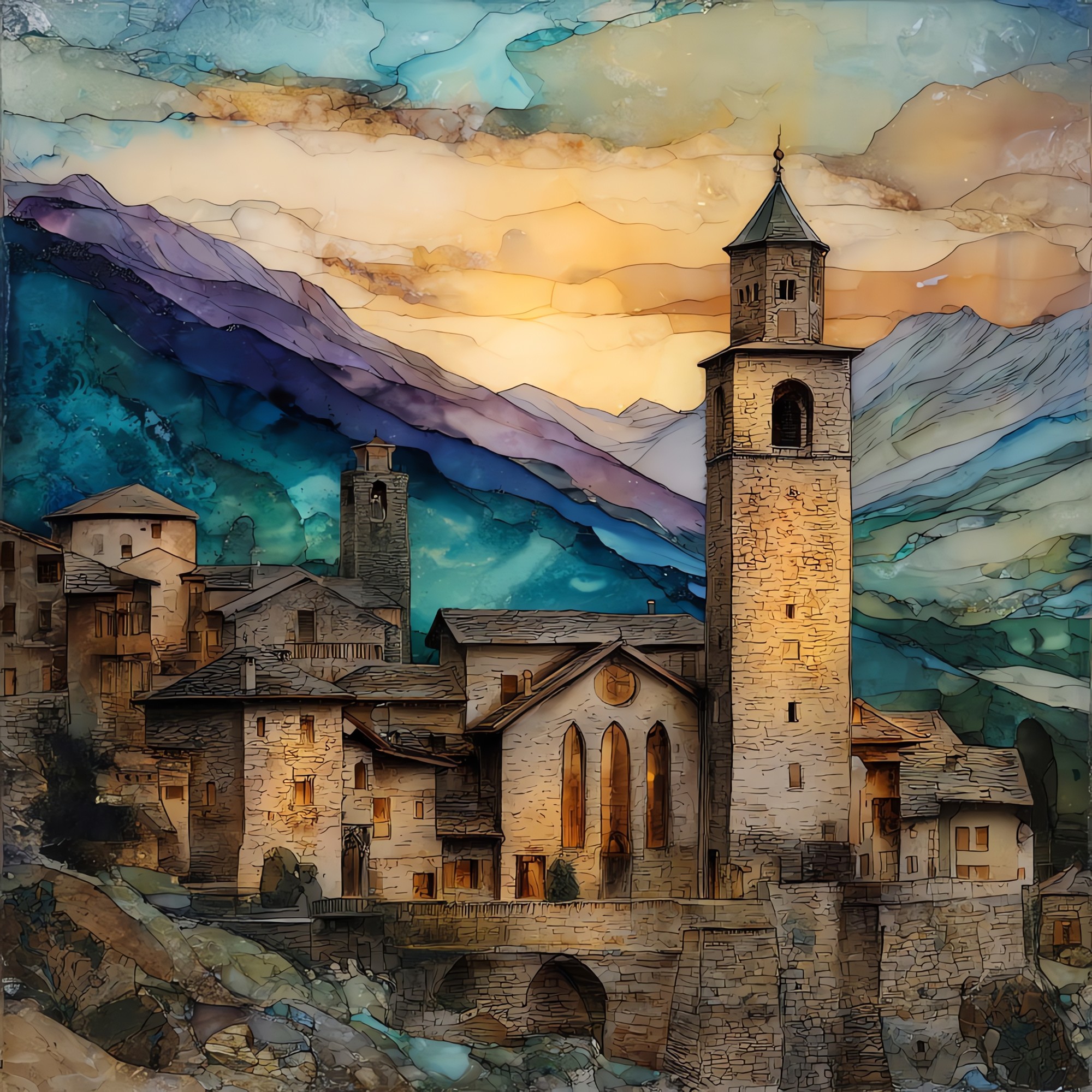
Bormio Old Town
— — warm water under a town of cold stone.
Not only on a wall.
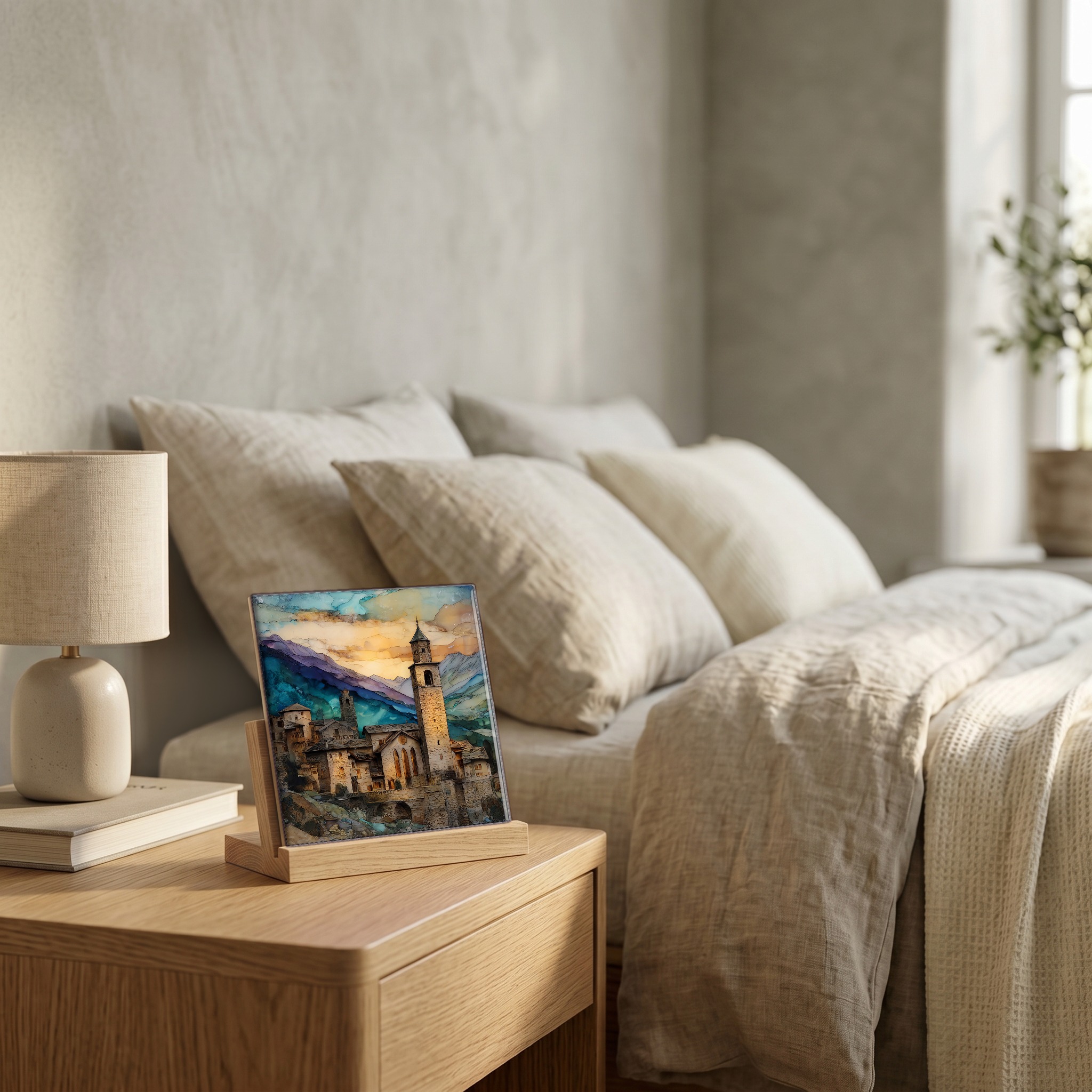
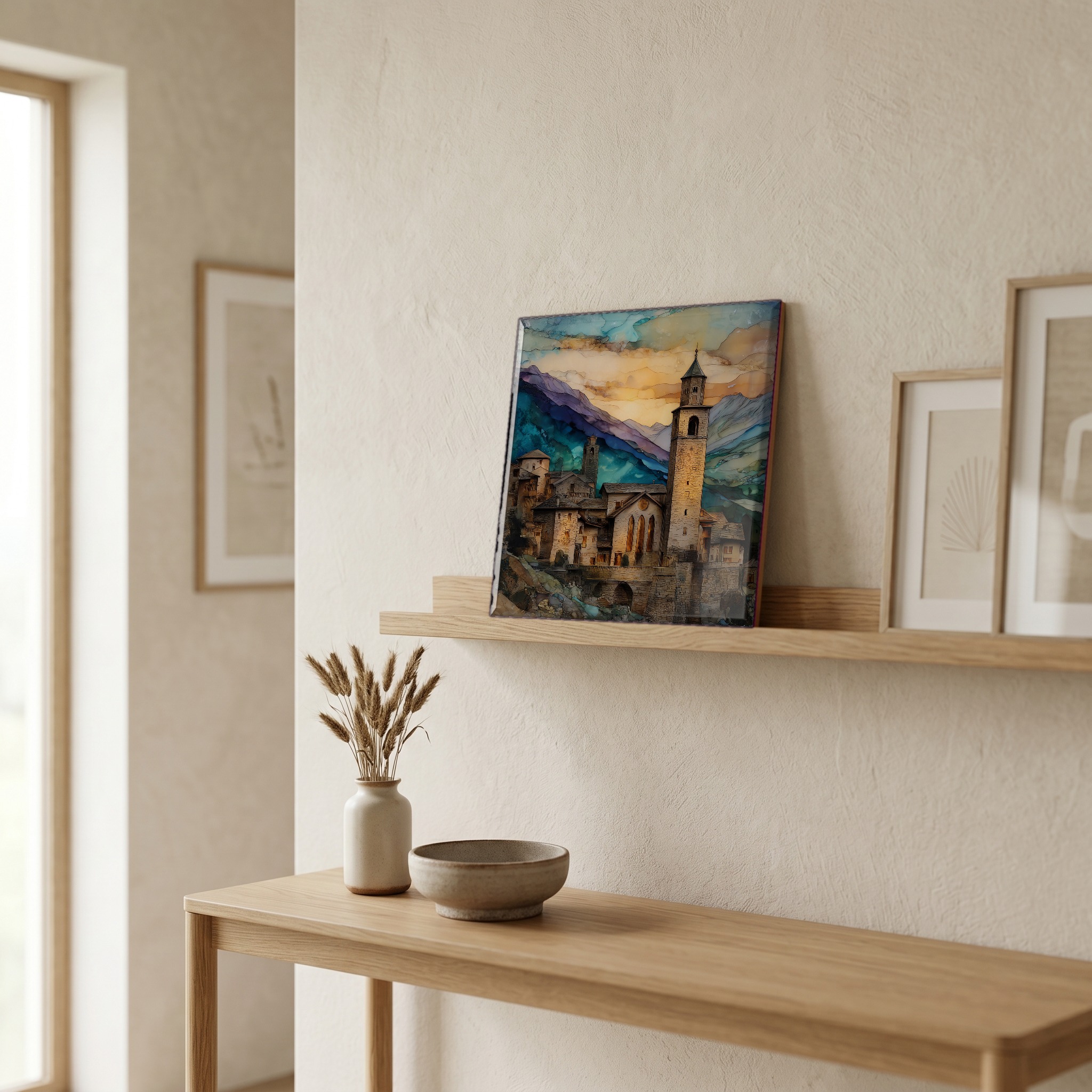
“The old town sits at the top of the Valtellina, where four mountain passes come down to meet. For centuries that crossing made Bormio rich and nearly self-governing, the Magnifica Terra, free to settle its own disputes in the open air under the stone canopy of the Kuerc. The Romans had climbed up here long before, for the warm springs Pliny wrote about. In summer the high roads clear of snow, cyclists grind up toward the Stelvio, and the arcade keeps its cool while the heat sits on the valley below. People still come down off the passes dusty, and the old square is where the town waits for them.
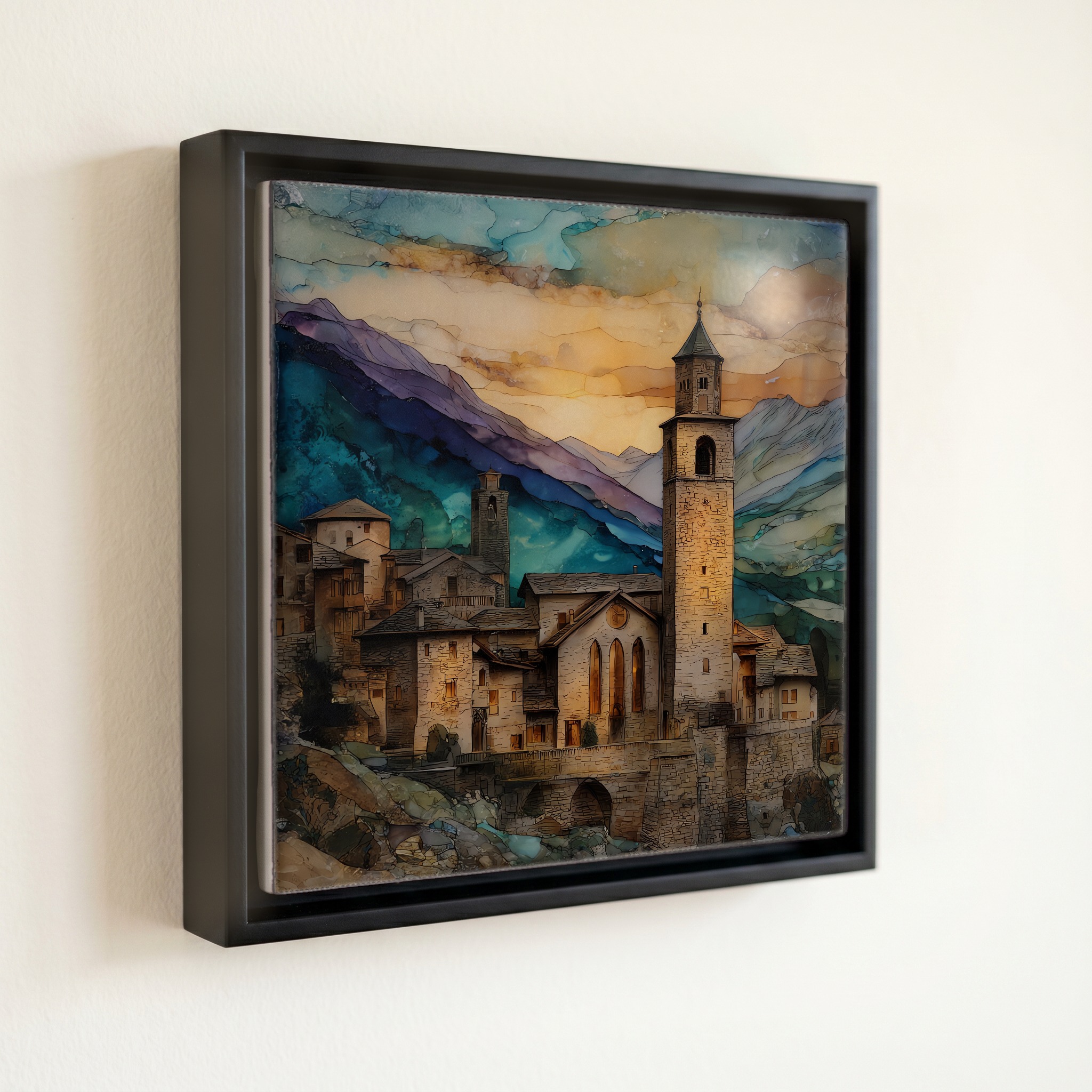
Bormio Old Town, on ceramic.
Each tile is finished by hand in our Knoxville studio. Artwork is slowly infused into the ceramic surface under high heat and pressure, and rests beneath a thin glossy finish. The colour lives in the surface, not on top of it.
Pick any four 4-inch tiles — National Parks you've been to, a Smokies set, the four seasons of one place. $ for a set of , cork-backed, ready to live on the table.
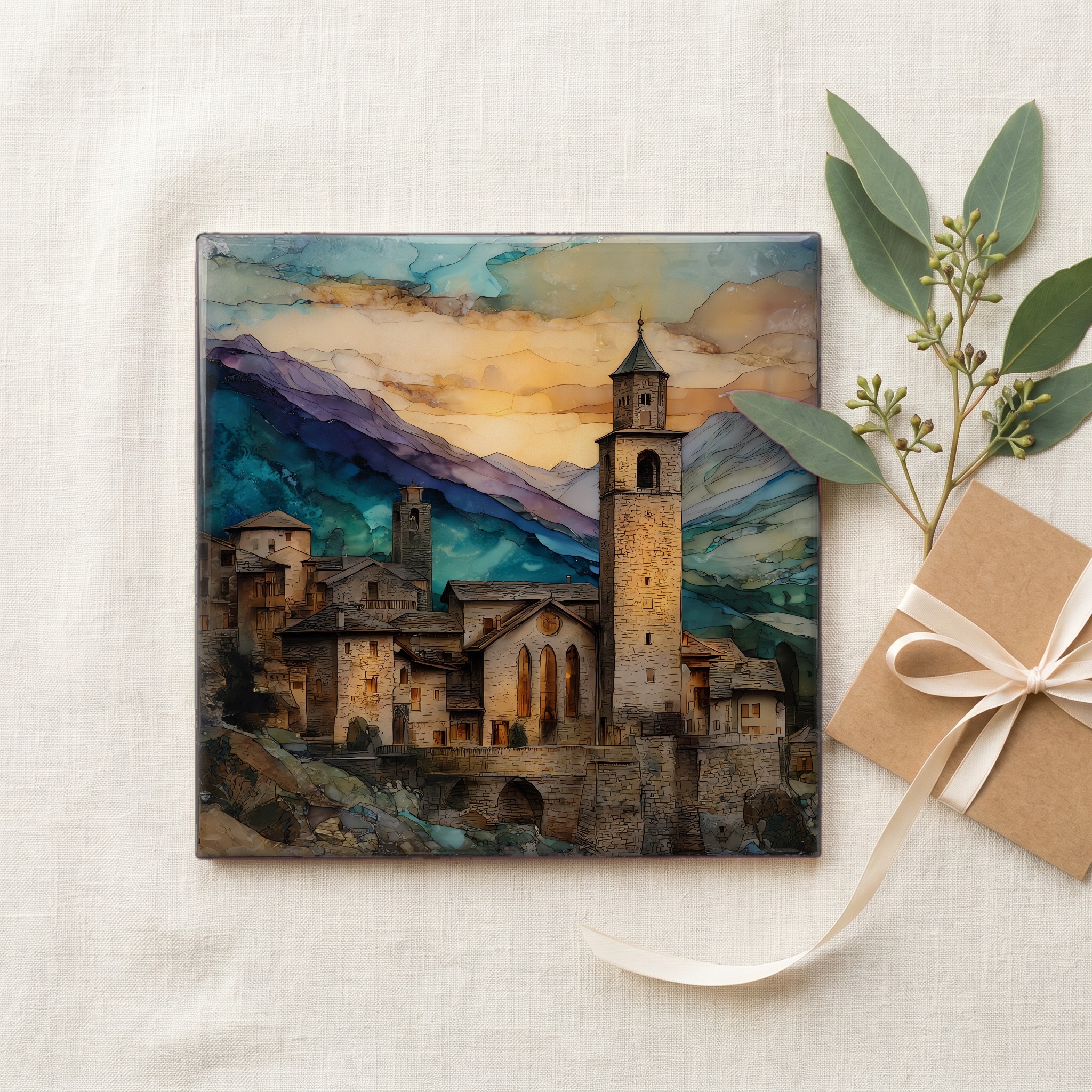
Each tile ships in a kraft box, tied with cream ribbon, with a handwritten note from the studio if you'd like to add one.
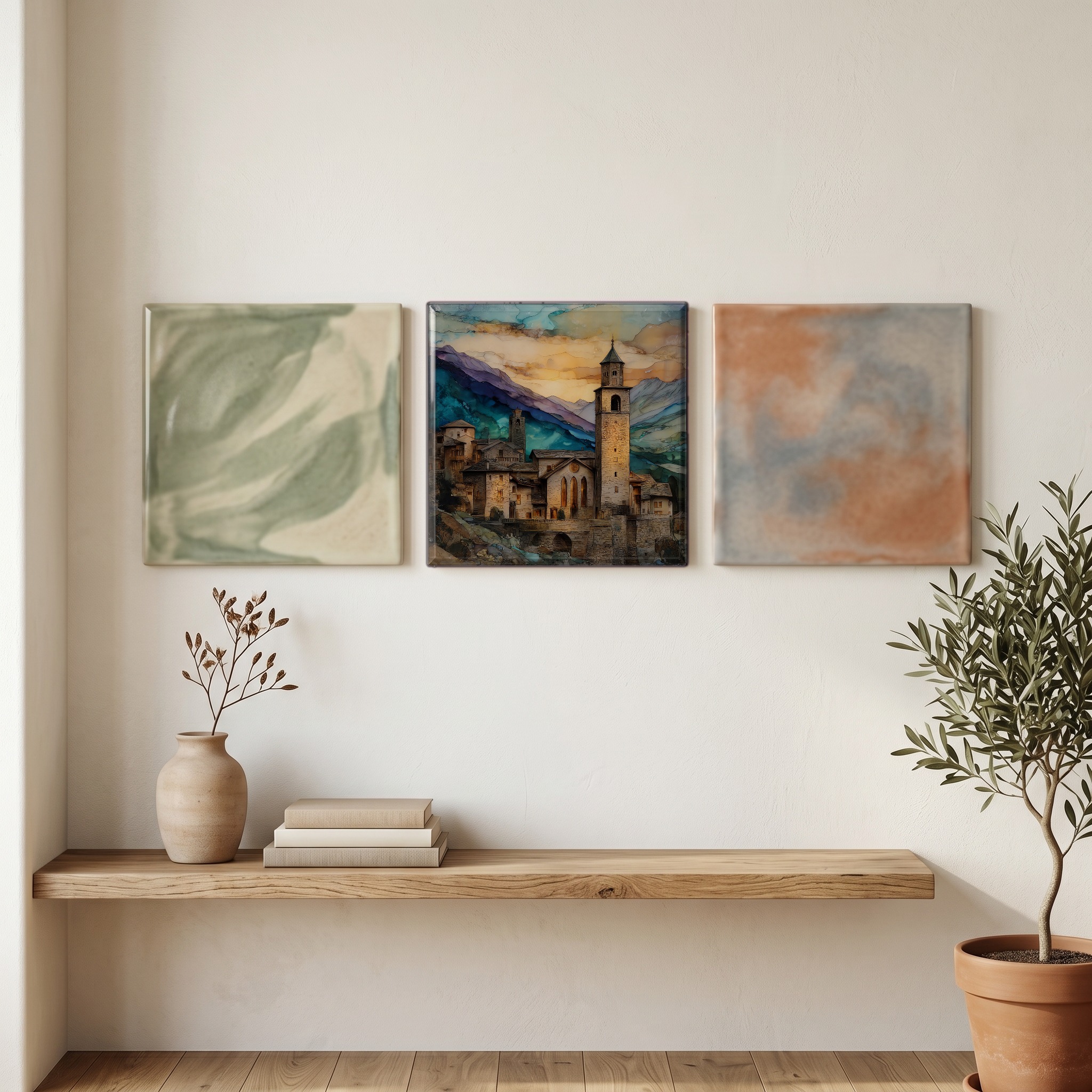
Three or five different vistas, hung together — a chapter of places you've been, or want to go.
The place, in three passes.
Bormio is a town of around 4,000 people in the upper Valtellina, in the province of Sondrio in Lombardy, northern Italy, set at about 1,225 metres above sea level. It lies just below the Stelvio Pass, and the mountain roads that meet near it, over the Stelvio, the Umbrail, the Foscagno and the Gavia, once carried trade between Lombardy, the Swiss Engadine and the Tyrol. That traffic made the medieval town wealthy and largely self-governing, the Contado di Bormio, known to its people as the Magnifica Terra. The whole town sits inside Stelvio National Park, established in 1935 and the largest in the Italian Alps, under the Ortles and Cevedale peaks to the north and east.
The historic centre gathers around Piazza Cavour, which everyone in Bormio calls the Piazza del Kuerc. The Kuerc itself is a low stone loggia built in the 1300s, where the free commune once held its assemblies and gave judgment in the open air; the word means 'lid' in the local dialect, for its broad covering roof. The fourteenth-century Torre delle Ore, the clock tower, rises just behind it, carved with crests and a painted sundial. From the square Via Roma runs on past stone houses with wooden balconies and coats of arms cut into their walls, and the small deconsecrated church of Santo Spirito, whose frescoes by the Giotto school are dense enough that the town calls it its Sistine Chapel.
Summer is when the high roads open. The pass road clears of snow by about June, climbing roughly 1,500 metres of hairpins from the town to the 2,757-metre Stelvio, where cyclists arrive having ridden one of the climbs the Giro d'Italia made famous. From Bormio the trails into Stelvio National Park lead up toward the glaciers of the Ortles-Cevedale group, and the old thermal baths at Bagni Vecchi stay warm whatever the month. In the town the Kuerc holds its shade through the long afternoons, much as it did when the commune met beneath it in summer. By late September the snow returns to the passes and the valley turns back toward its World Cup ski season.