Wender·Vista
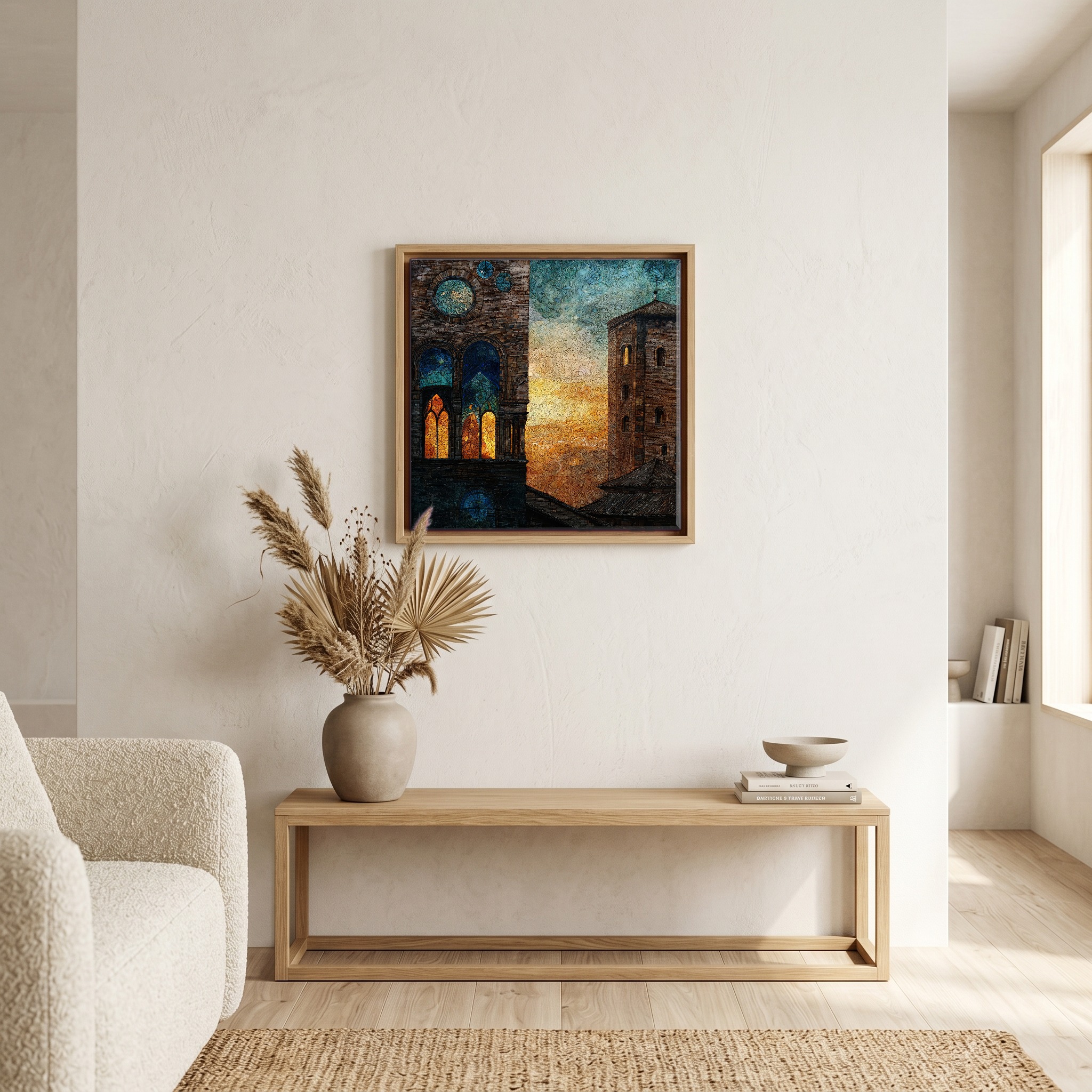
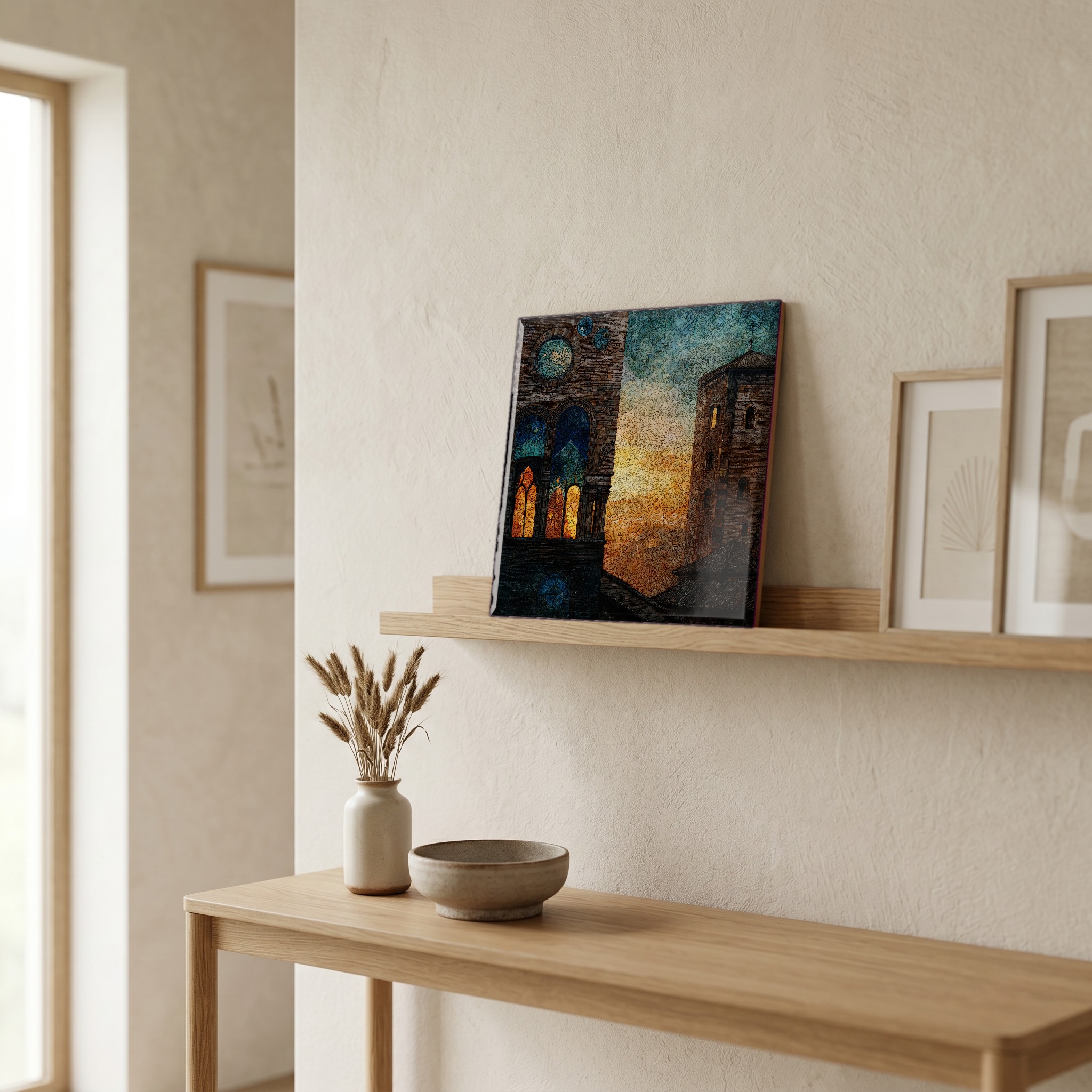
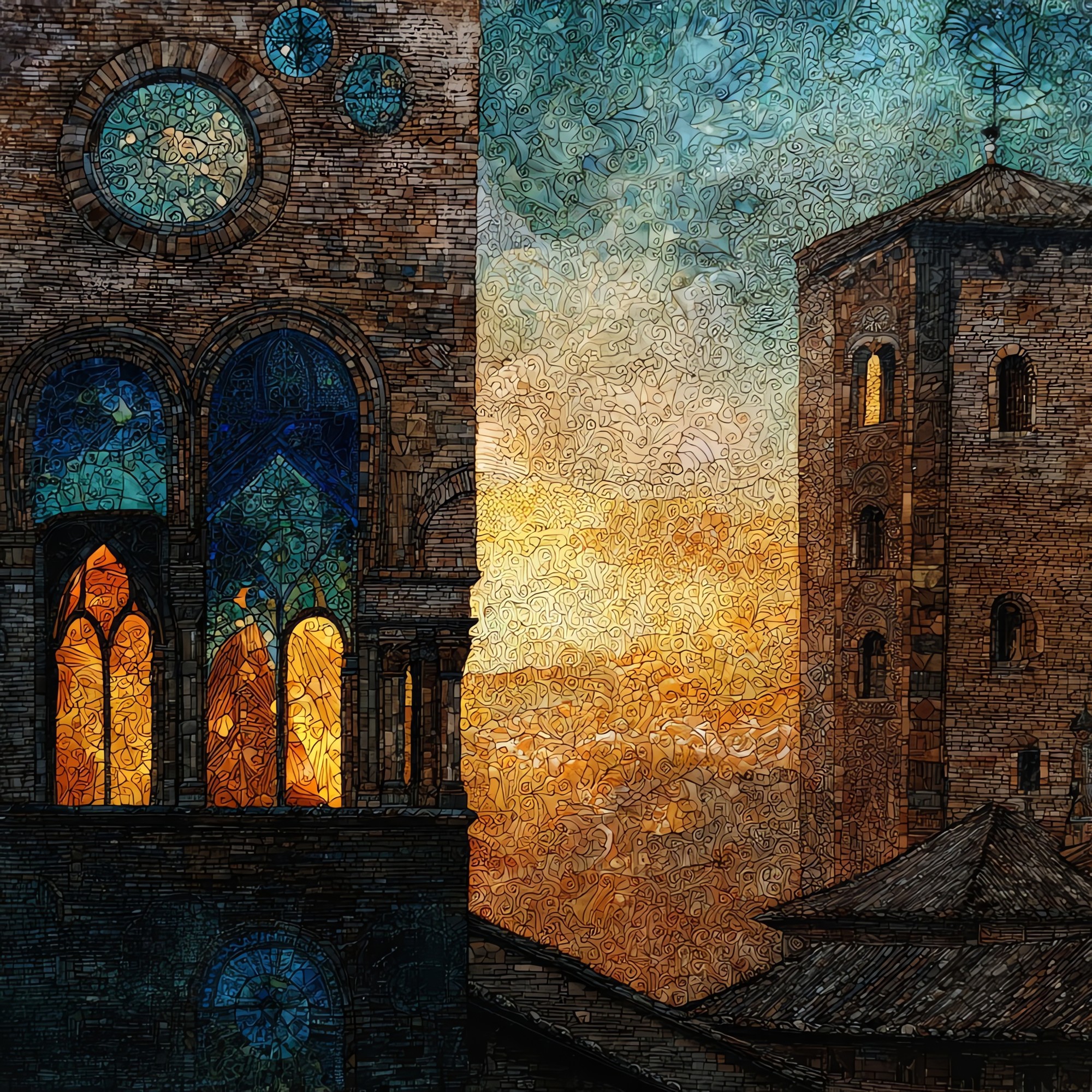
Bologna Porticoes
shown on ceramic, 12-inch tileItaly
in the old red city of Emilia-Romagna

Bologna Porticoes

— the warm red shade the city walks under.

Where it lives

Not only on a wall.

A small tile on the nightstand catching the morning. A larger one above the fire. Yours, wherever you spend the slow hours.
Above the bench, in a warm oak surround.
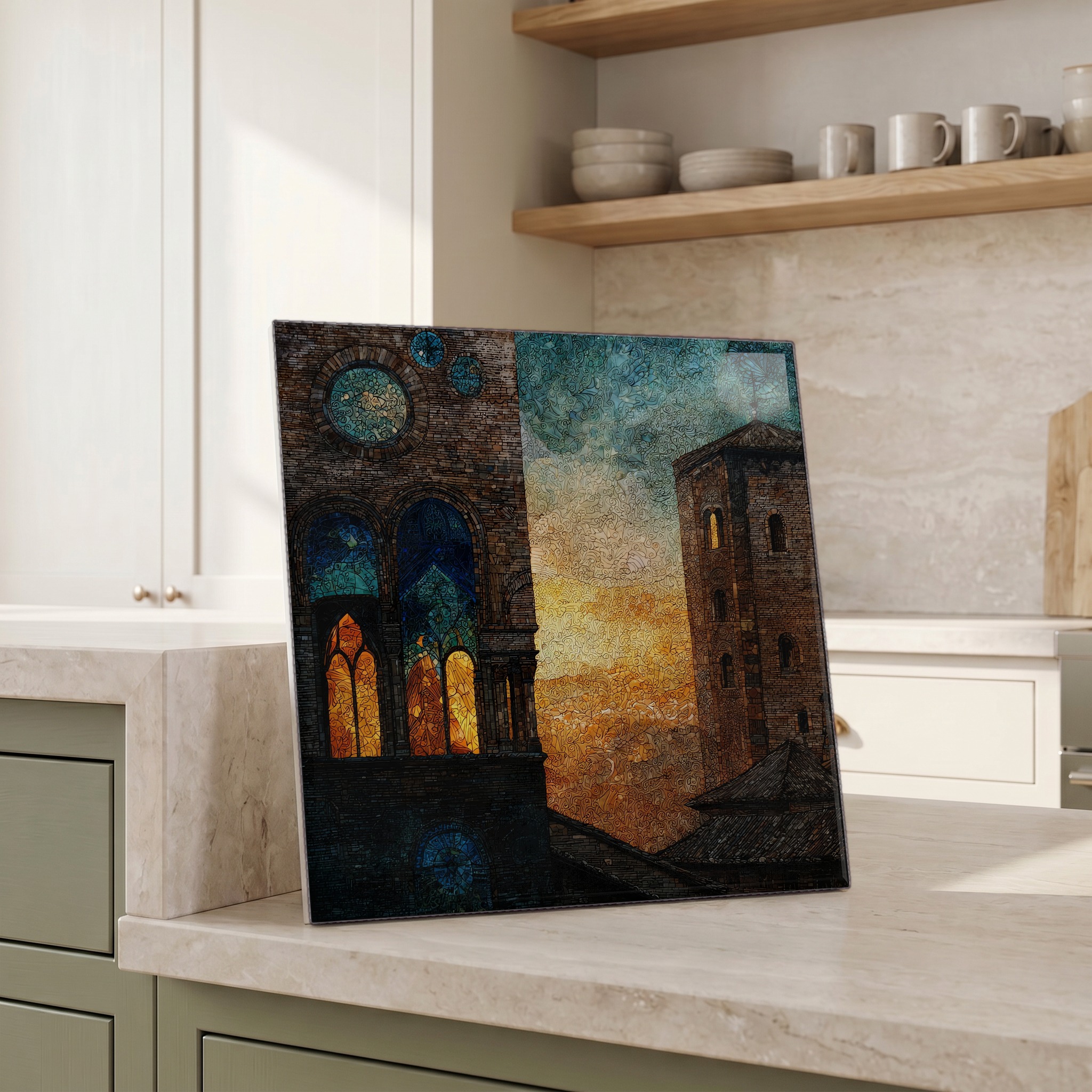
Beside the kettle, propped on the counter.
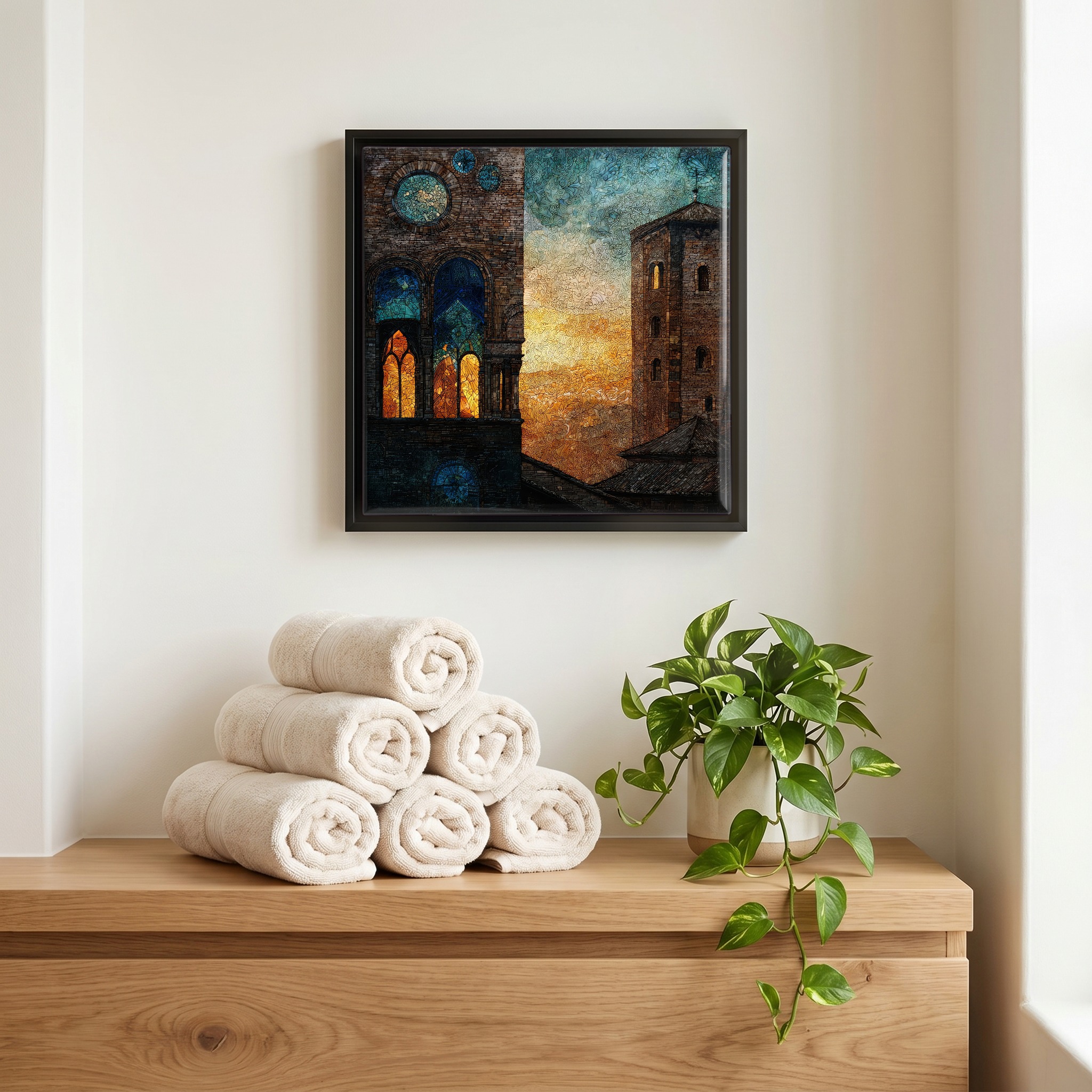
Above the linens, in a slim black surround.
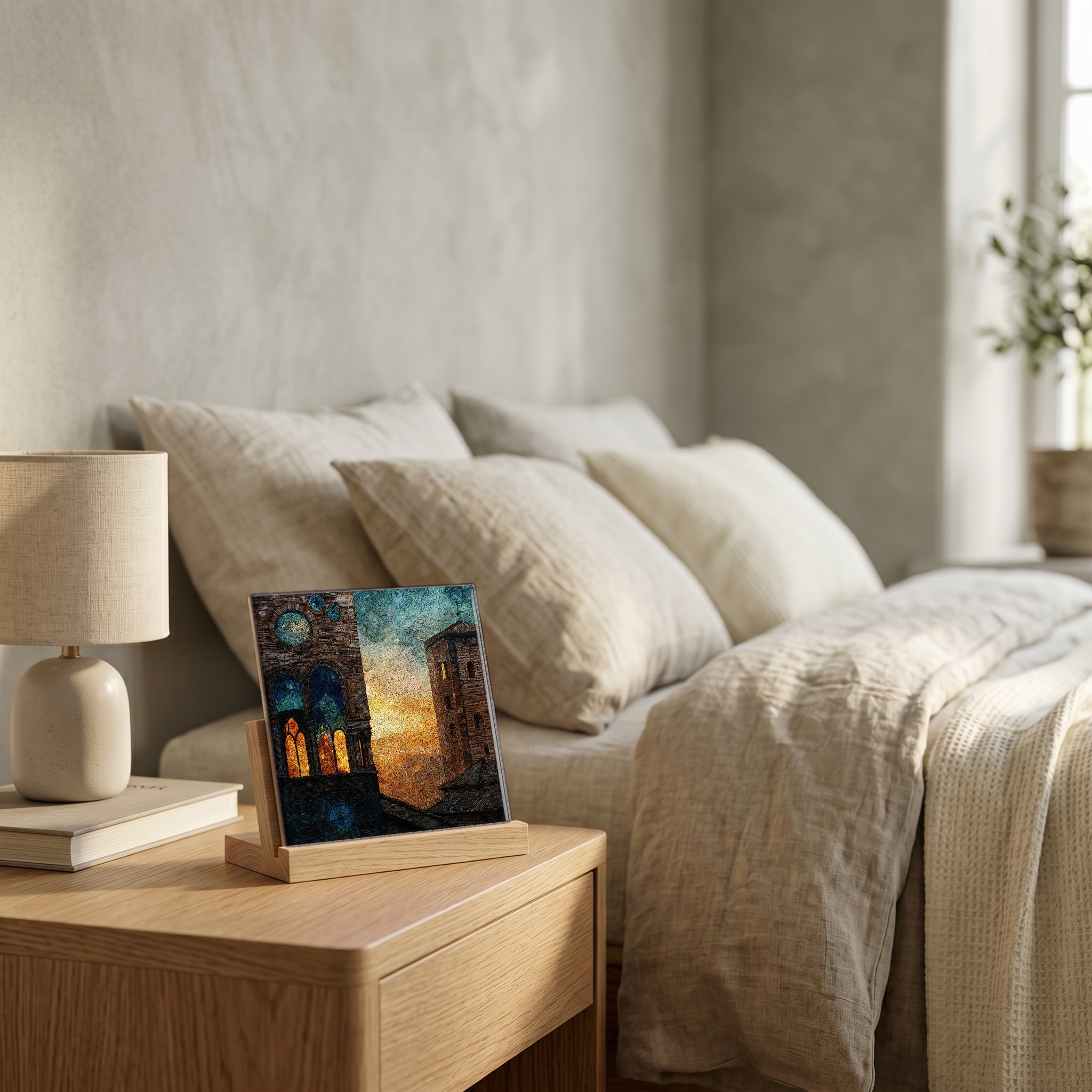
On the nightstand, on a light oak stand.
On a picture ledge, where the light comes in.
a note from the studio

There are about forty kilometres of porticoes in the old centre of Bologna, more if you count the climb out to San Luca. The covered walks were written into the city in 1288, when the council ordered every new building to carry one. The result is a city you can cross in the rain without opening an umbrella. The Portico di San Luca runs three and a half kilometres up the hill to the sanctuary, with six hundred and sixty-six arches, the longest covered walkway in the world. Locals call Bologna La Rossa for the warm terracotta. In the right late light, that is the colour the streets keep.
from the studio
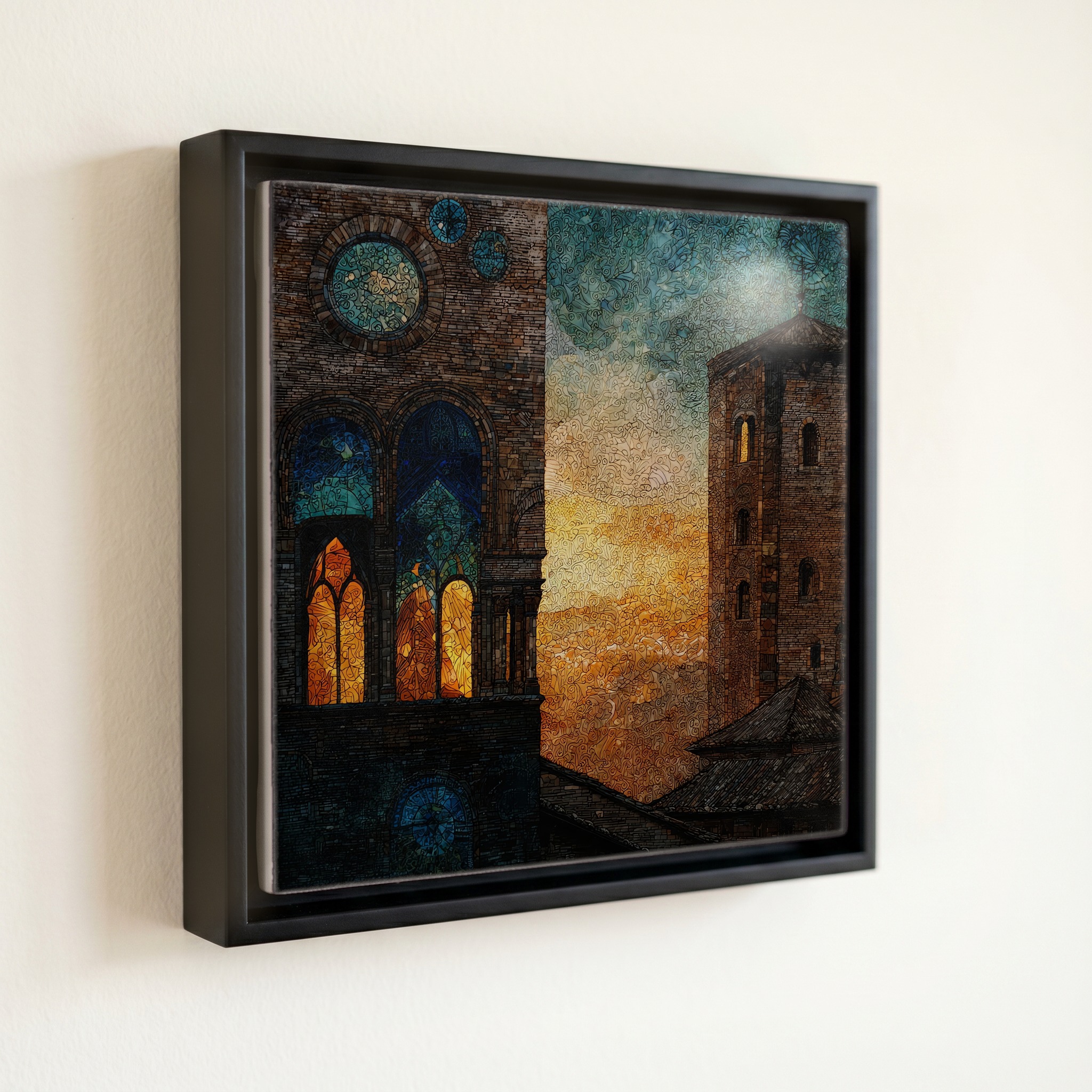
shown in a slim black floating frame · 6 × 6 in
— bring it home

Bologna Porticoes, on ceramic.

Each tile is finished by hand in our Knoxville studio. Artwork is slowly infused into the ceramic surface under high heat and pressure, and rests beneath a thin glossy finish. The colour lives in the surface, not on top of it.

What kind of piece?
One tile — square or rectangle.
How big?
the popular one — counter, shelf, nightstand
6 × 6 in · 15 cm · 1.6 lb
Surface finish
A clear glossy finish — the artwork reads as if under resin. Ideal for show-pieces and framed wall art.
How it sits
A hidden cleat — sits ¼″ proud of the wall.
$58
Hand-finished and shipped from our studio at the foot of the Smokies. On your wall in about ten days.
size
6 × 6 in
15 cm
weighs
1.6 lb
solid in the hand
surface
ceramic, hand-finished
art rests beneath a thin glossy finish
from
Knoxville, TN
our family studio, at the foot of the Smokies
— start a Coaster Set

Pick any four 4-inch tiles — National Parks you've been to, a Smokies set, the four seasons of one place. $ for a set of , cork-backed, ready to live on the table.
comes gift-ready
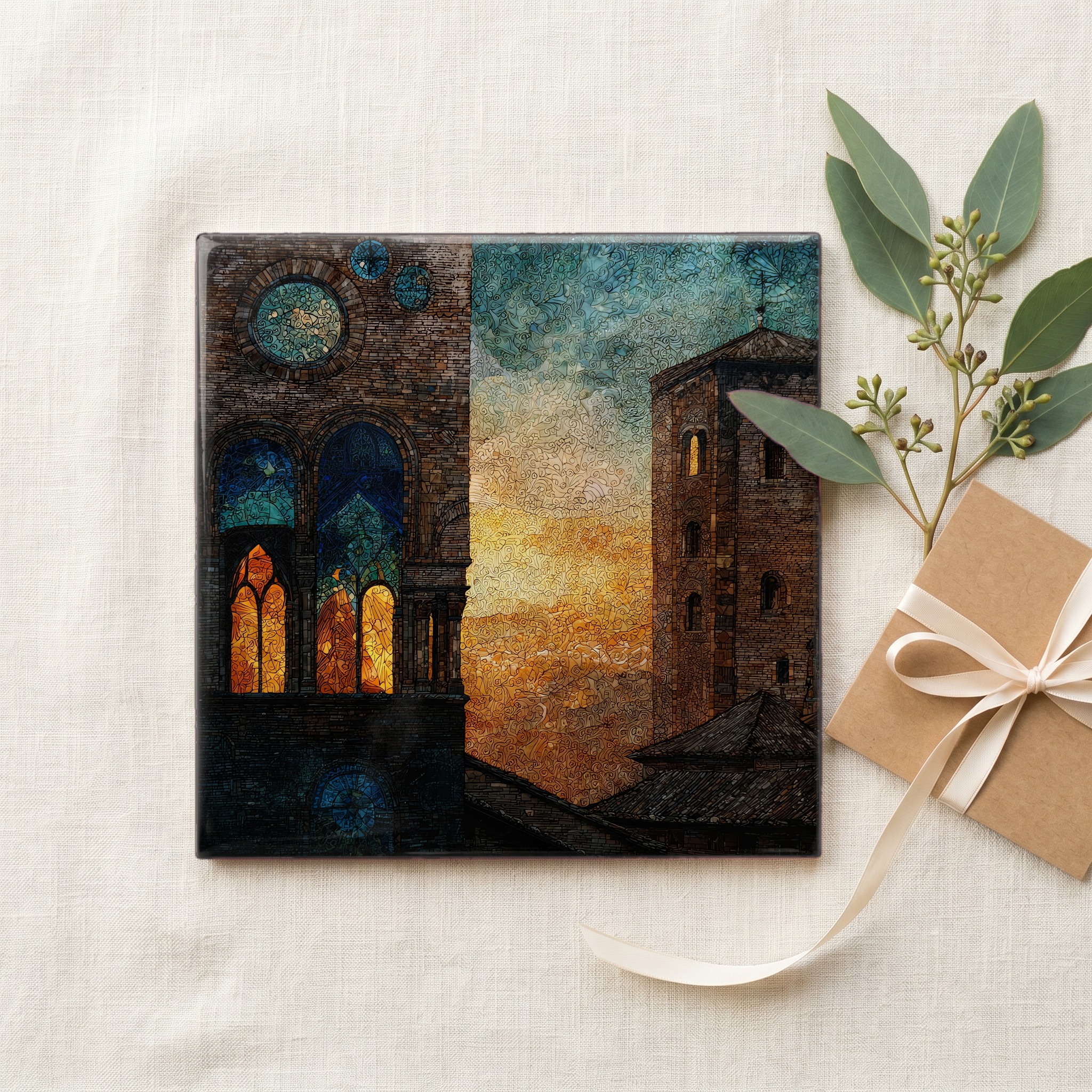
comes gift-ready

Each tile ships in a kraft box, tied with cream ribbon, with a handwritten note from the studio if you'd like to add one.
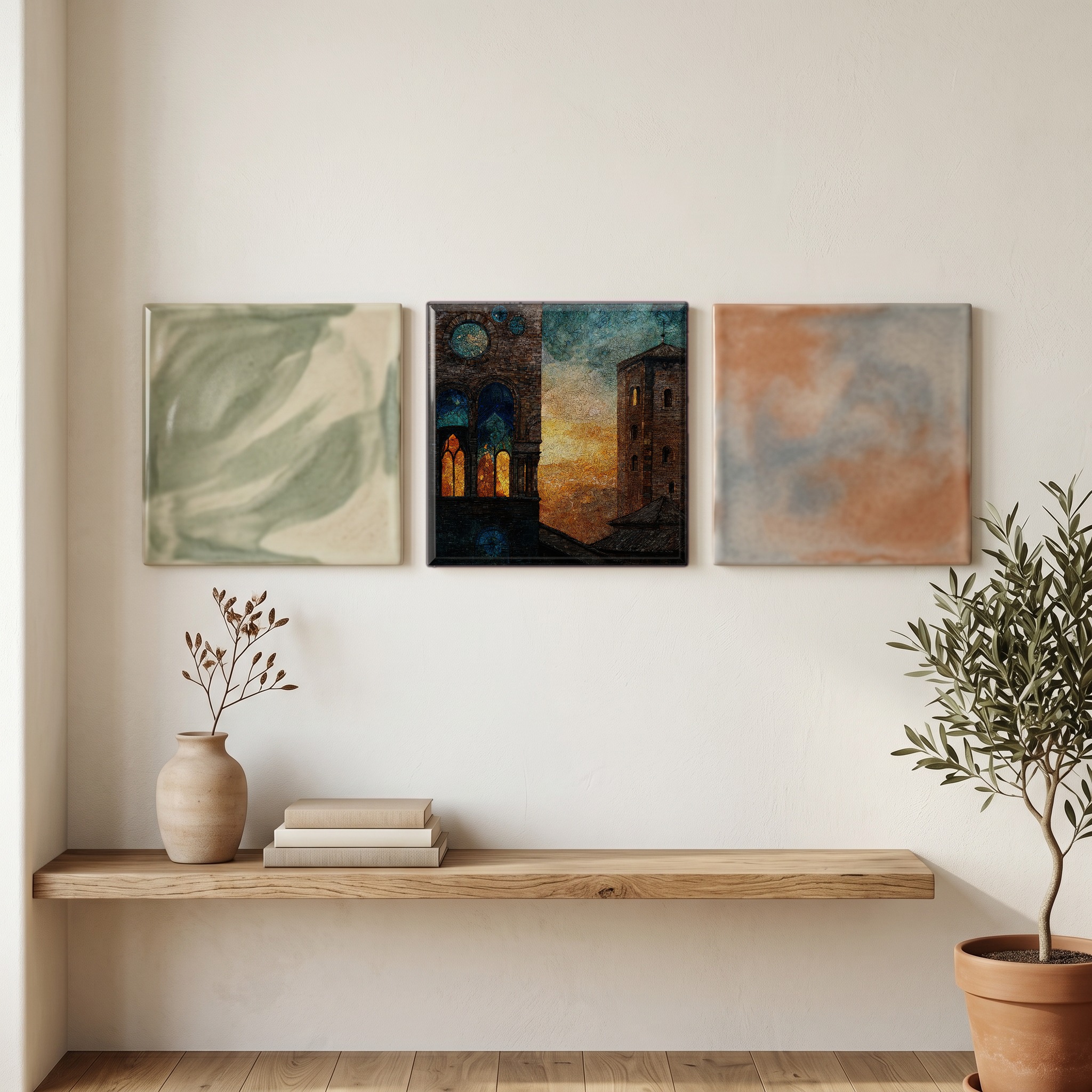
or build a grouping
or build a grouping

Three or five different vistas, hung together — a chapter of places you've been, or want to go.

about Bologna Porticoes

The place, in three passes.

A little of what's known, in case you fall down the rabbit hole — or want to go see it yourself.
the place

The porticoes are the covered arcades that line the streets of Bologna, the capital of Emilia-Romagna and the seat of the oldest continuously operating university in Europe. The historic centre carries about 42 kilometres of porticoes; the wider city counts roughly 62. They reach from Piazza Maggiore, where the Basilica of San Petronio anchors the old centre, out along Strada Maggiore and Via Zamboni, then over the city walls and up Colle della Guardia to the Sanctuary of San Luca. Twelve representative sections were inscribed on the UNESCO World Heritage List in July 2021. Bologna sits about 54 metres above sea level, north of the Apennines, halfway between Florence and Venice on the old Via Emilia.

the stone

The columns are mostly brick faced in plaster, set on stone bases, supporting timber or vaulted ceilings that step up and down the line of each street. The earliest surviving wooden portico belongs to Casa Isolani on Strada Maggiore and dates from the mid-13th century; its three oak beams stand close to nine metres tall. A 1288 municipal statute folded the porticoes into the city's building code, requiring private owners to carry the public walk past their façades. Bologna is called La Rossa for the warm red of its brick and roof tile, a colour that holds across the old centre at every elevation.

the visit

The porticoes are free, open to walk at any hour, and connect almost every street of the historic centre under cover. The longest single stretch is the Portico di San Luca, which climbs about 3.8 kilometres from the Meloncello arch through 666 arches up Colle della Guardia to the Sanctuary of the Madonna di San Luca; the climb takes most walkers about an hour. The sanctuary itself is open daily from morning to early evening, with shorter hours in winter. Inside the old centre, the Portico del Pavaglione runs past the Archiginnasio, the first home of the University of Bologna, founded in 1088.

where
Italy · Bologna, Emilia-Romagna
elevation
54 m · 177 ft
position
44.4938° N · 11.3428° E
the neighborhood

What's nearby.

A handful of named places within an hour's walk or short drive. Some we've already painted; some we will.
at the lake
Piazza Maggiore
civic square
at the lake
Basilica of San Petronio
basilica
1 km E
Two Towers of Bologna
medieval towers
4 km SW
Sanctuary of the Madonna di San Luca
hilltop sanctuary
at the lake
Archiginnasio of Bologna
Renaissance palace
at the lake
Fontana del Nettuno
Renaissance fountain
N
Bologna Porticoes
Piazza Maggiore
Basilica of San Petronio
Two Towers of Bologna
Sanctuary of the Madonna di San Luca
Archiginnasio of Bologna
Fontana del Nettuno
common questions

What people ask.

A few questions we get about Bologna Porticoes — and about bringing the piece home.
about the place

The historic centre carries about 42 kilometres of porticoes, and roughly 62 kilometres if the wider city is counted. Twelve representative sections were inscribed on the UNESCO World Heritage List in July 2021, recognising the porticoes as the most extensive system of covered walkways of any city in the world.

They began appearing in the 11th and 12th centuries as wooden extensions of upper floors over the street. A 1288 municipal statute folded them into the city's building code, requiring new buildings to carry a portico. Construction has continued in masonry since.

The Portico di San Luca, running about 3.8 kilometres from the Meloncello arch up Colle della Guardia to the Sanctuary of the Madonna di San Luca, with 666 arches. It was built between 1674 and 1793 and is the longest covered walkway in the world.

Medieval owners began extending upper rooms over the street to gain floor space. The city council, instead of demolishing the encroachments, made them public in 1288 by requiring every new building to carry a portico for shared use. The system grew from there.

Bologna is called La Rossa for the warm red of its brick and clay roof tiles, which the porticoes also share. The city has two other traditional epithets: La Dotta, the Learned, for its university, and La Grassa, the Fat, for its kitchen.

Yes. Twelve component sections were inscribed in July 2021 under the title 'The Porticoes of Bologna'. The selection covers the major civic, religious, and residential porticoes from the 12th through the 20th century, and the Portico di San Luca up the Colle della Guardia.

about the piece in your home

It has been a meaningful gift for many customers with a connection to the city, whether they studied at the university, walked the Portico di San Luca, or simply love the warm red of the old centre. A Coaster or Small with a handwritten note from the studio carries well.

The warm terracotta and amber light read strongly against neutral plaster, white oak, and old wood. It sits well in a Mediterranean-modern kitchen, a warm minimalist living room, or a study lined in books and lamps.

The terracotta-and-amber palette runs with the warm-modern wave that has replaced the cooler grey-and-white of the previous decade. It pairs particularly well with brown furniture, brass fixtures, and the unbleached linen palette that has carried through the last several seasons.

Above a standard three-seat sofa, a single Large reads well from across the room. For a wider wall, a four-tile Mural carries the architecture out at scale. Above a console, the Medium sits at eye level with the room.

Yes. Choose the Dura Satin or Matte finish for any bathroom, kitchen, or splash-prone wall. The colour is slowly infused into the ceramic surface under high heat and pressure, so the surface stays the colour you bought even with daily contact with water and steam.

Wipe with a soft microfibre cloth and water. For kitchen splashes, a drop of mild dish soap. No solvents, no abrasive pads. The colour lives in the surface and is not painted on.

Yes. Reid Wender, the studio's curator, makes the paintings that go on every Wender Studios tile. We do not license artwork in from anyone else. The Bologna Porticoes tile is part of the WenderVista line, our atlas of places.

if this one stayed with you

A few you might also love.

Hand-picked by the eye that found Sorapis. Same air, same kind of quiet.
— a collection

The Italian Dolomites,
painted slow.

The valleys between Cortina and Val Gardena, the tarns you walk an hour to see, the towers that turn the colour of a banked fire just before dark. Wander the collection by valley, by season, or follow the path Reid walked.

Tre Cime
Braies
Misurina
Sorapis
Cinque Torri
Sassolungo
Marmolada