Wender·Vista
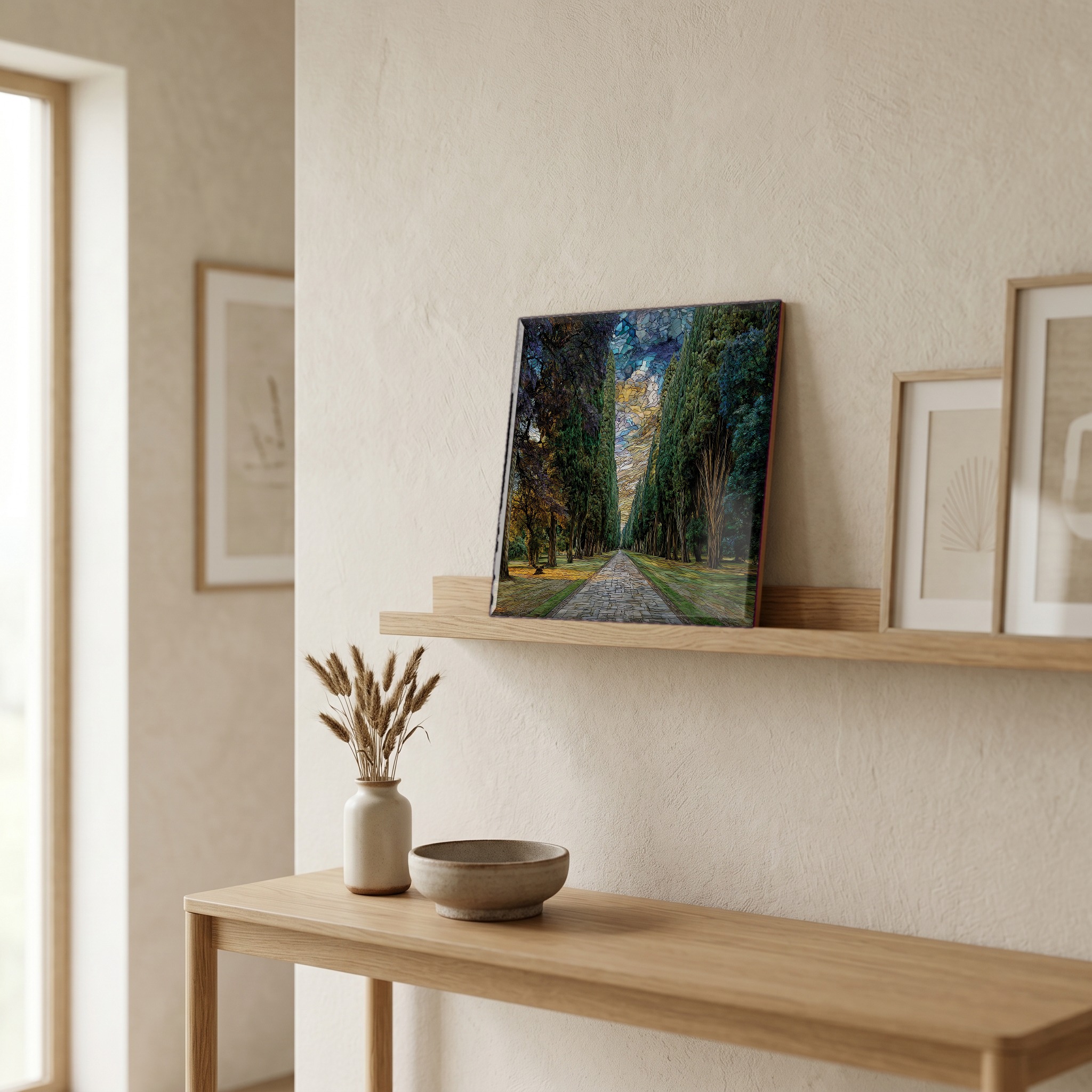
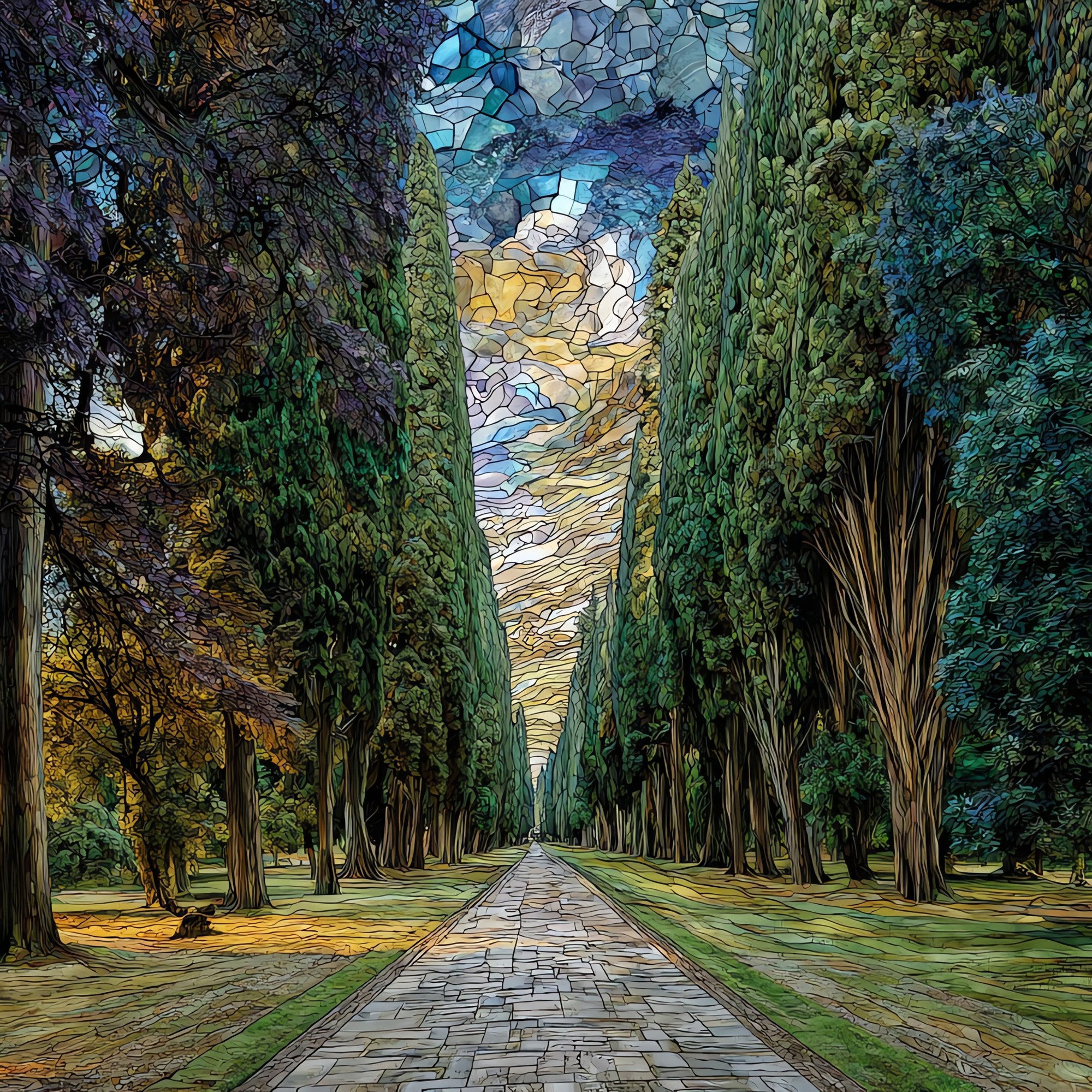
Boboli Gardens
shown on ceramic, 12-inch tileItaly
in Florence, up the hill behind the Palazzo Pitti

Boboli Gardens

— the hill the Medici shaped into rooms.

Where it lives

Not only on a wall.

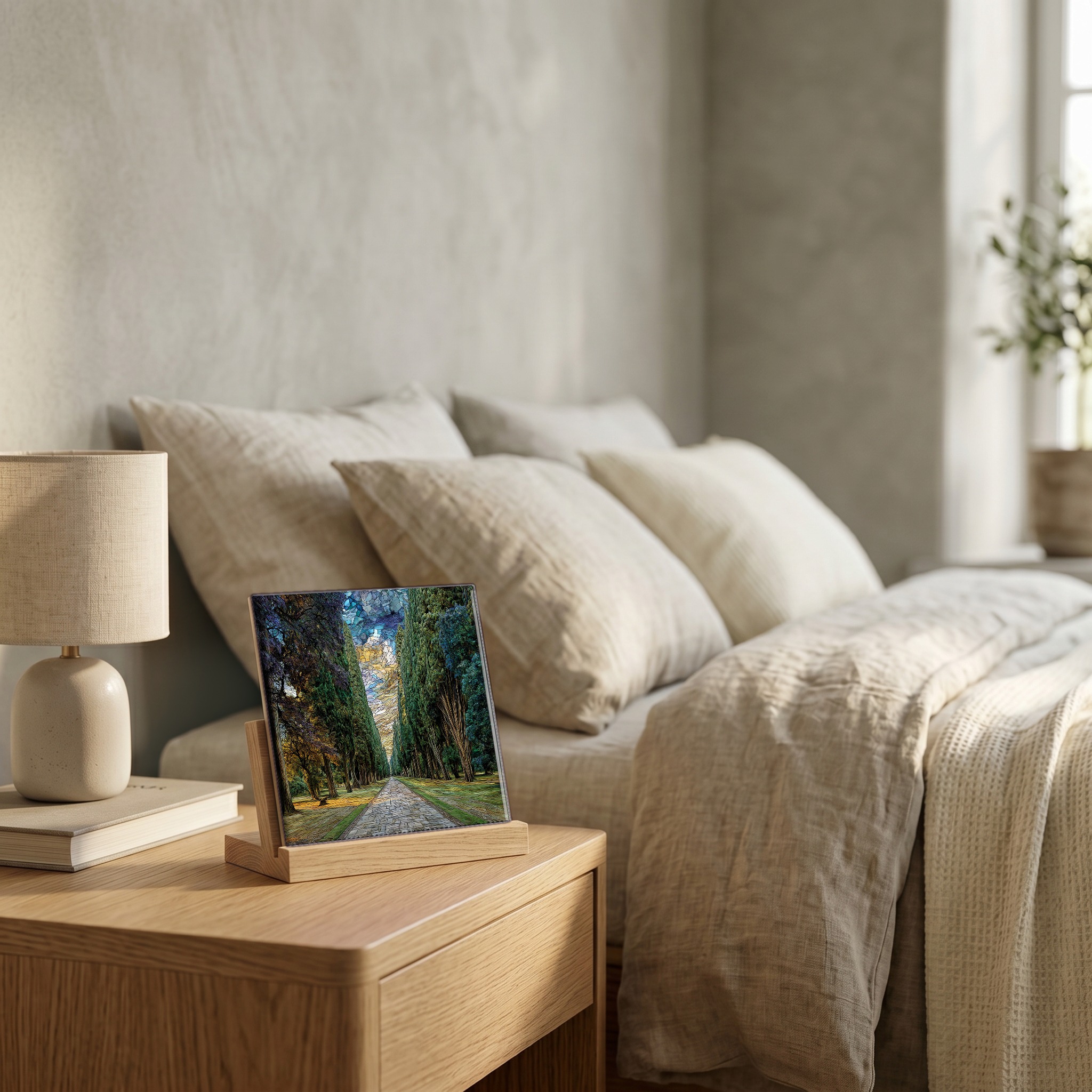
A small tile on the nightstand catching the morning. A larger one above the fire. Yours, wherever you spend the slow hours.
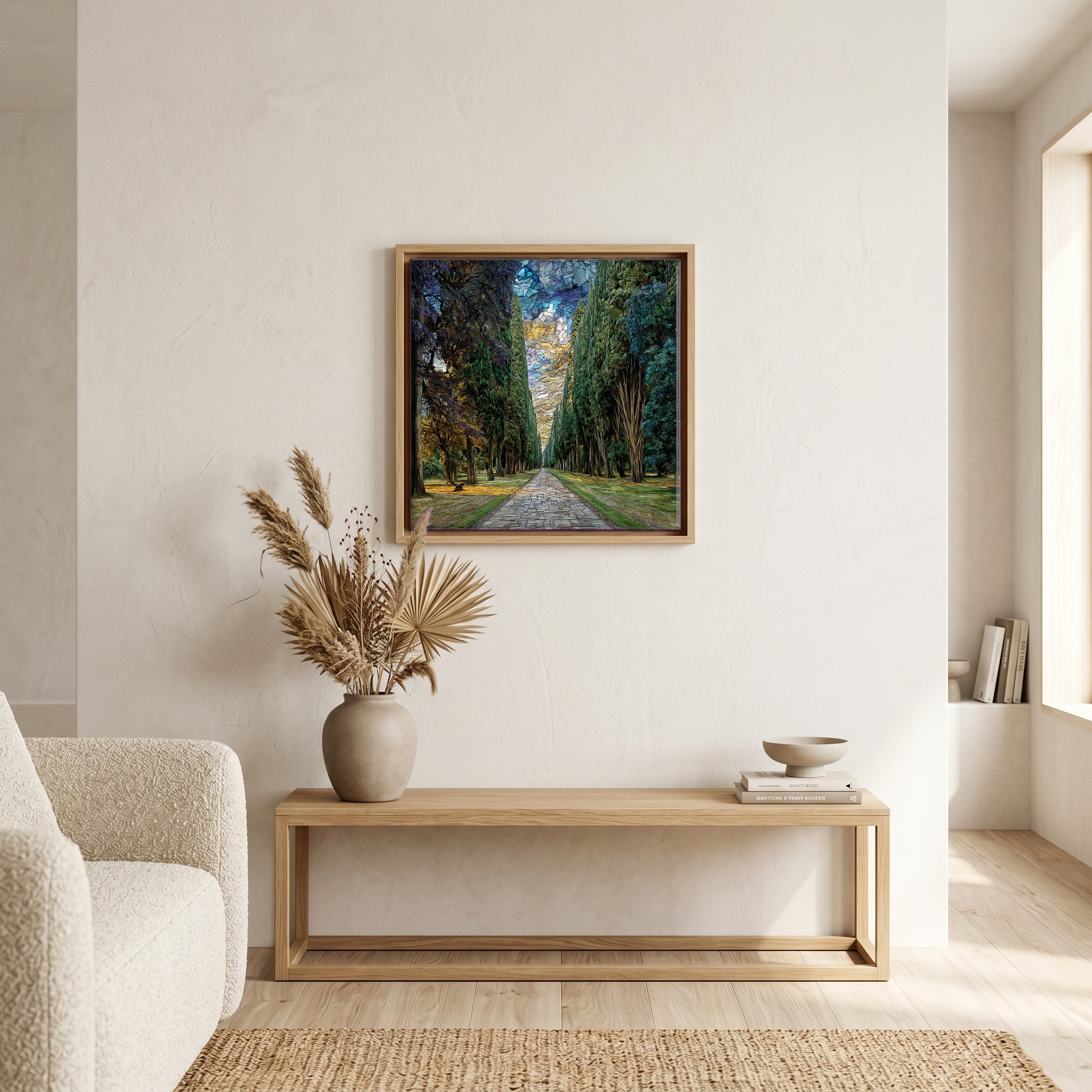
Above the bench, in a warm oak surround.
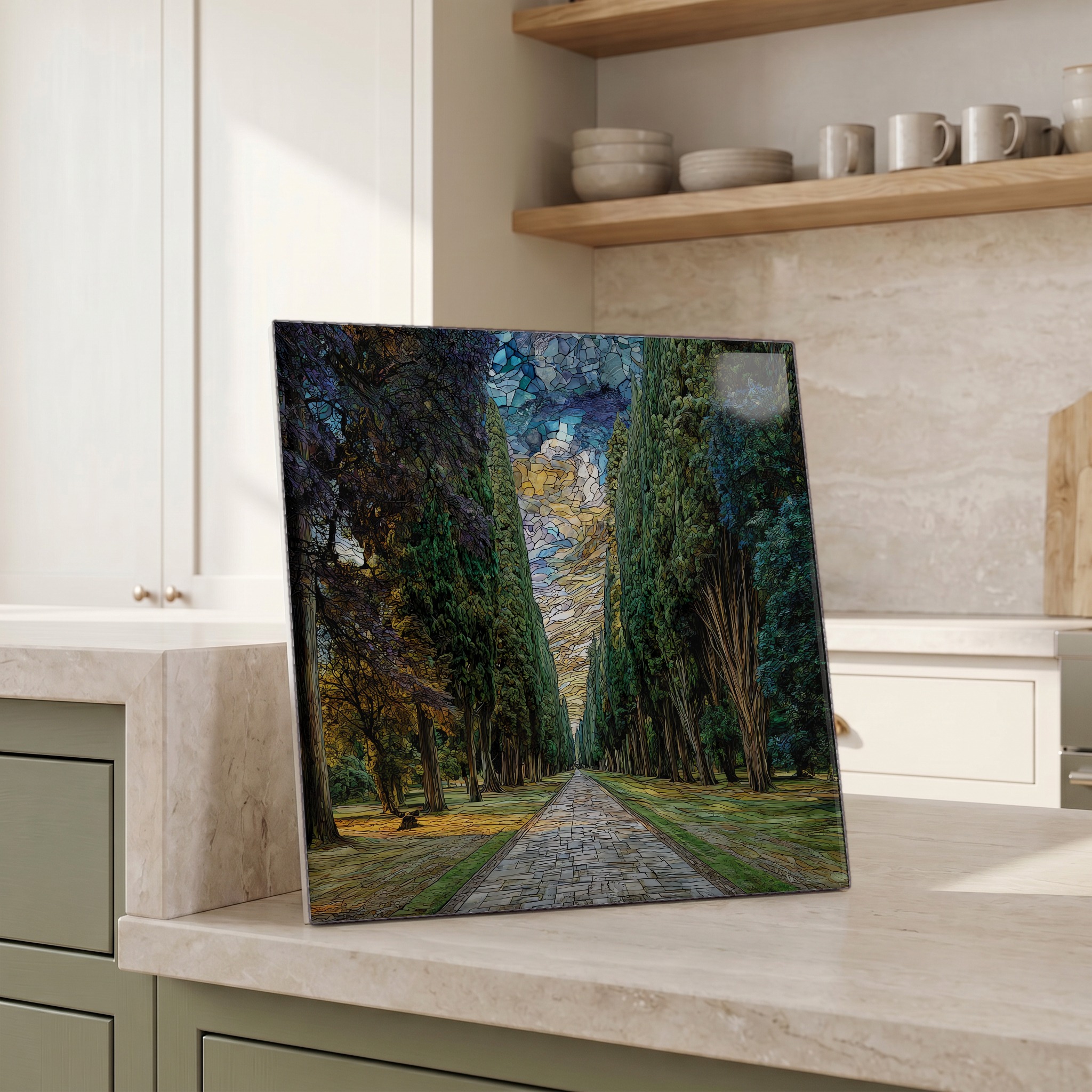
Beside the kettle, propped on the counter.
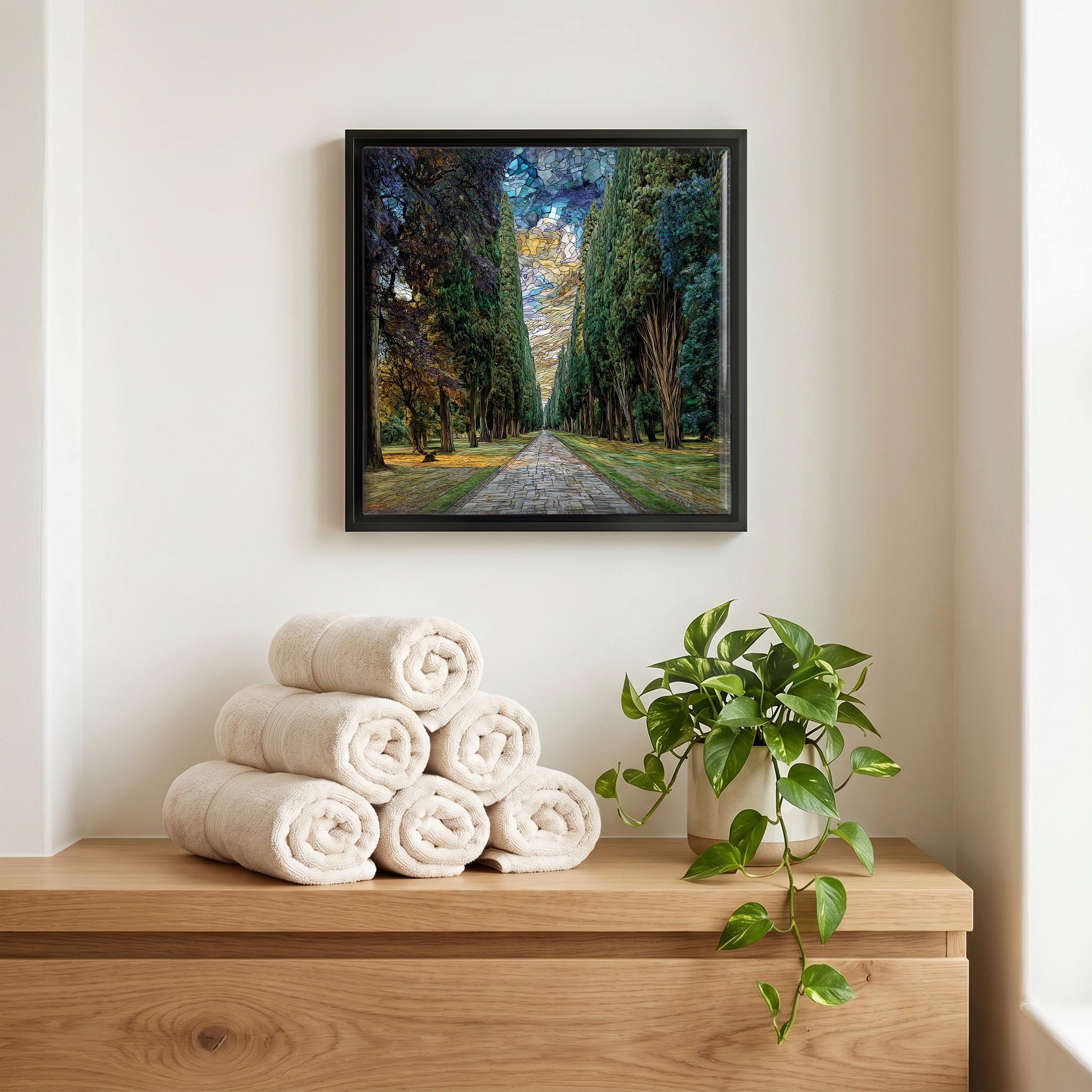
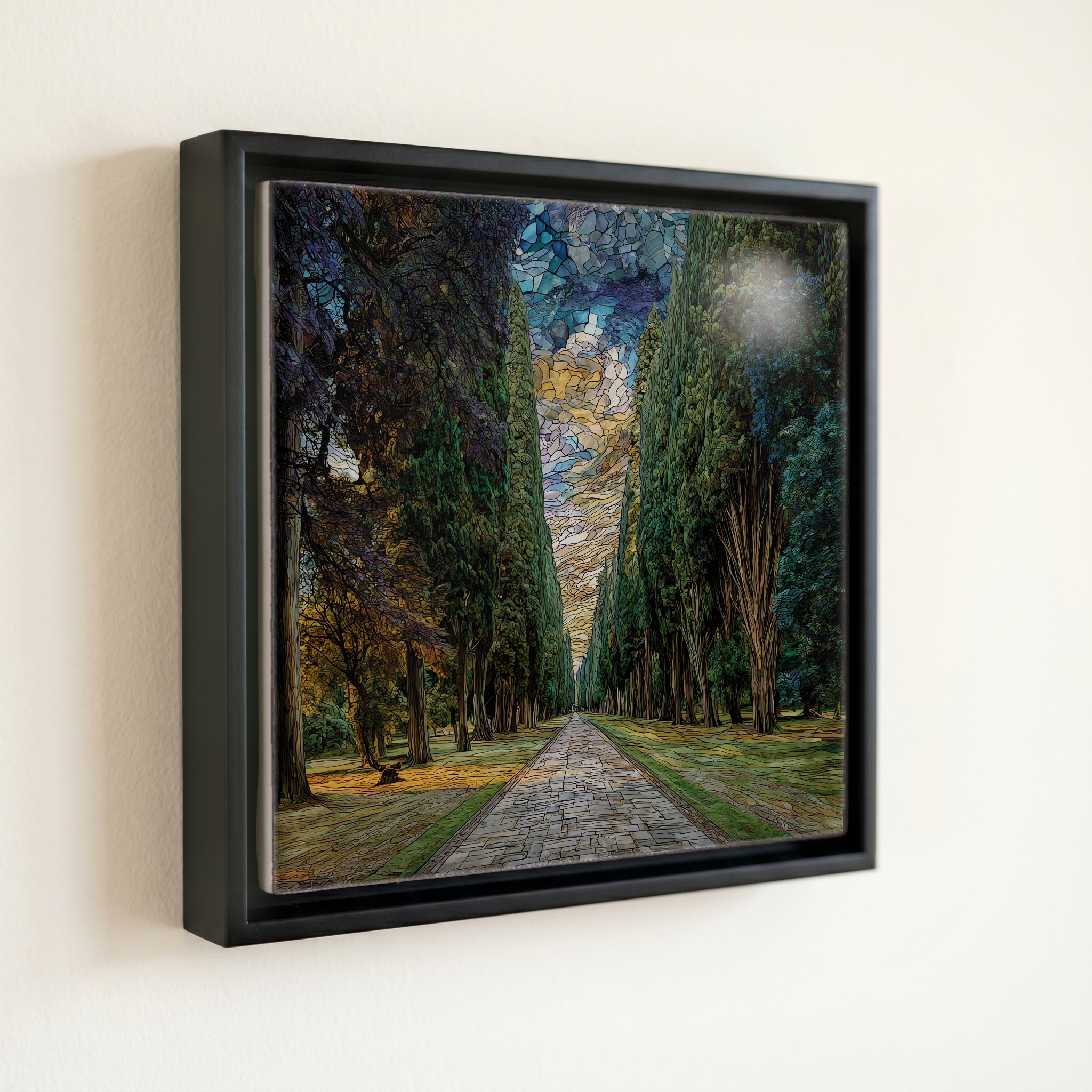
Above the linens, in a slim black surround.
On the nightstand, on a light oak stand.
On a picture ledge, where the light comes in.
a note from the studio

The garden behind the Palazzo Pitti, cut into the hillside above the Arno. The Medici started it in 1550 and kept building for two hundred years: an amphitheatre with an Egyptian obelisk at its centre, a cypress avenue running down to a pond with an island in it, a grotto where water once ran over false stalactites. Box hedge clipped to the same lines since the sixteenth century. Part of it opened to the public in 1766, and on a weekday morning, before the coach tours, the gravel paths are nearly empty and Florence lies below through gaps in the trees.
from the studio
shown in a slim black floating frame · 6 × 6 in
— bring it home

Boboli Gardens, on ceramic.

Each tile is finished by hand in our Knoxville studio. Artwork is slowly infused into the ceramic surface under high heat and pressure, and rests beneath a thin glossy finish. The colour lives in the surface, not on top of it.

What kind of piece?
One tile — square or rectangle.
How big?
the popular one — counter, shelf, nightstand
6 × 6 in · 15 cm · 1.6 lb
Surface finish
A clear glossy finish — the artwork reads as if under resin. Ideal for show-pieces and framed wall art.
How it sits
A hidden cleat — sits ¼″ proud of the wall.
$58
Hand-finished and shipped from our studio at the foot of the Smokies. On your wall in about ten days.
size
6 × 6 in
15 cm
weighs
1.6 lb
solid in the hand
surface
ceramic, hand-finished
art rests beneath a thin glossy finish
from
Knoxville, TN
our family studio, at the foot of the Smokies
— start a Coaster Set

Pick any four 4-inch tiles — National Parks you've been to, a Smokies set, the four seasons of one place. $ for a set of , cork-backed, ready to live on the table.
comes gift-ready
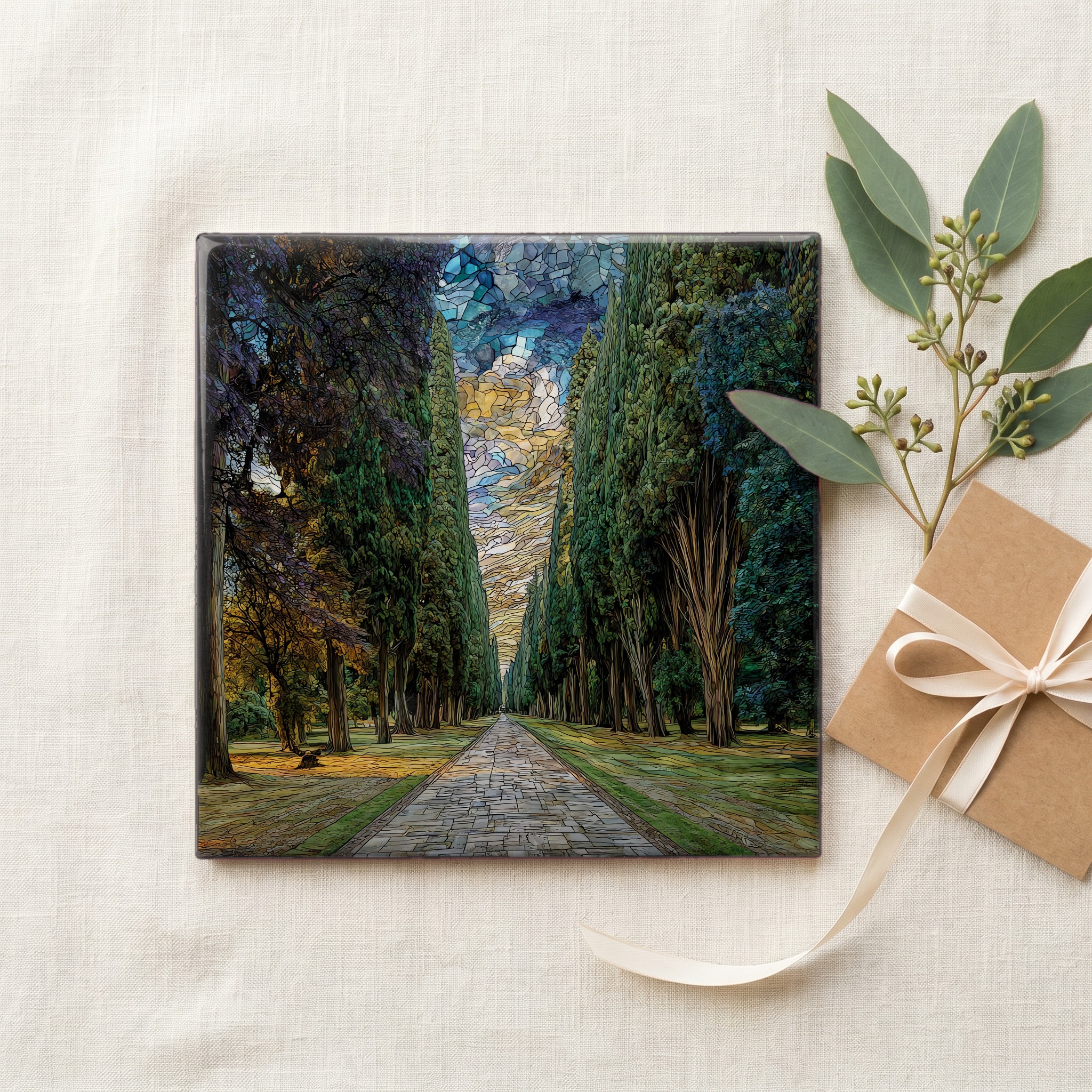
comes gift-ready

Each tile ships in a kraft box, tied with cream ribbon, with a handwritten note from the studio if you'd like to add one.
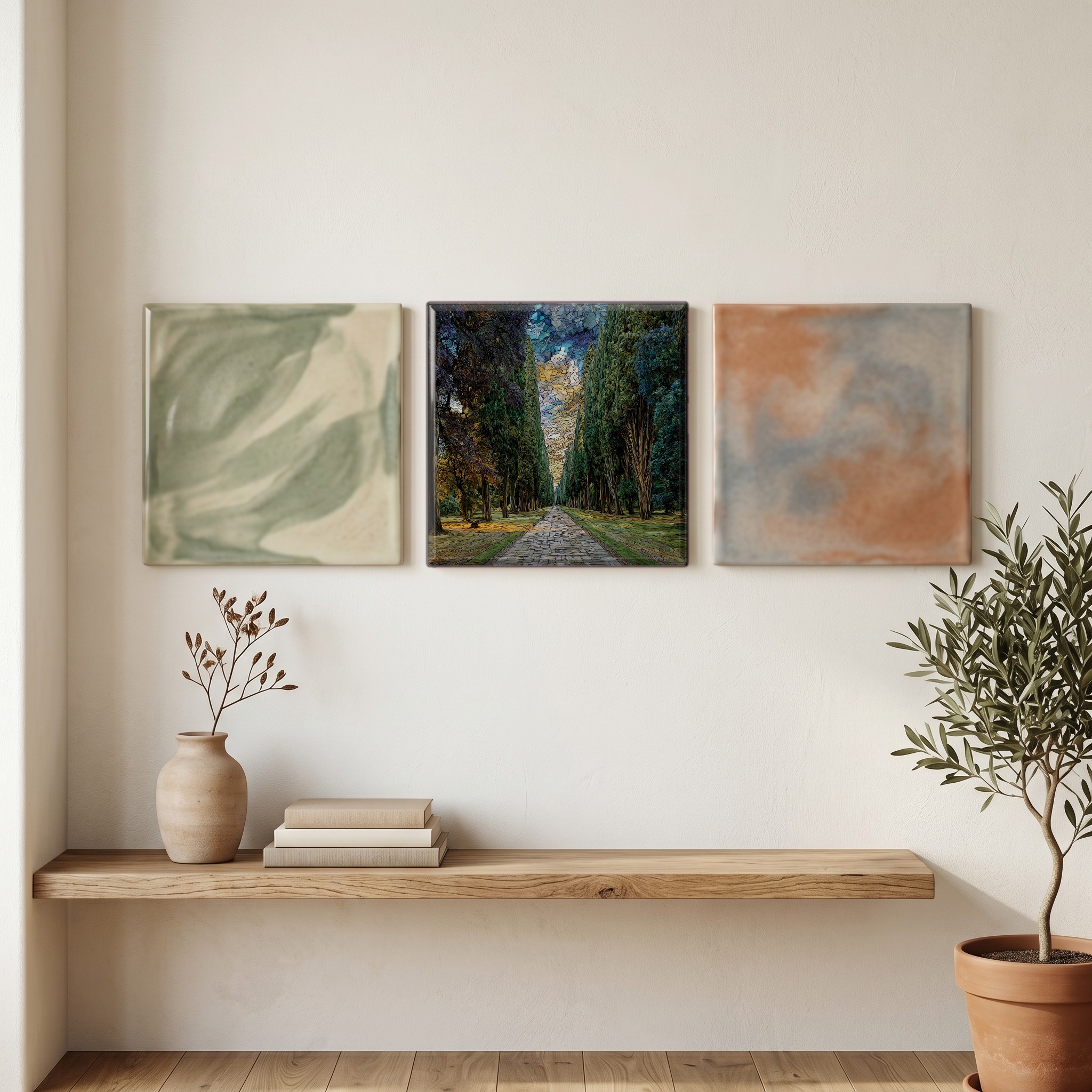
or build a grouping
or build a grouping

Three or five different vistas, hung together — a chapter of places you've been, or want to go.

about Boboli Gardens

The place, in three passes.

A little of what's known, in case you fall down the rabbit hole — or want to go see it yourself.
the place

The Boboli Gardens climb the hillside directly behind the Palazzo Pitti, on the south bank of the Arno in the Oltrarno district of Florence, in Tuscany. They cover about 45,000 square metres and form one of the earliest and largest formal Italian gardens, the model later copied at royal courts across Europe. Eleonora di Toledo, wife of Cosimo I de' Medici, bought the palace in 1549, and the garden was begun the next year by Niccolo Tribolo. When Tribolo died in 1550 the work passed to Bartolomeo Ammannati, Giorgio Vasari, and Bernardo Buontalenti, and later to Giulio and Alfonso Parigi, who extended the long Viottolone axis early in the seventeenth century.

— informed by Wikipedia, Uffizi Galleries
the stone

Behind the palace the ground opens into a horseshoe amphitheatre, cut from the quarry that gave the Pitti its stone, where the Medici staged court spectacles. At its centre stands an ancient Egyptian obelisk carved for Ramesses II at Heliopolis, carried to Rome in antiquity, kept for years at the Villa Medici, and raised here in 1790 above a great Roman granite basin. Higher up, the Grotta del Buontalenti, built between 1583 and 1593, drips with false stalactites and shells; it once held Michelangelo's unfinished Prisoners, now shown as casts with the originals in the Accademia, and still shelters Giambologna's bathing Venus. At the foot of the long cypress avenue the Fountain of the Ocean rises on its island, and near the palace the court dwarf Morgante rides a tortoise, carved by Valerio Cioli in 1560.

the visit

Part of the garden first opened to the public in 1766, under the Habsburg-Lorraine grand dukes, and it is now run by the Gallerie degli Uffizi, entered through the courtyard of the Palazzo Pitti. A single ticket usually takes in the neighbouring Bardini garden and the porcelain museum at the top of the hill. It is a steep, mostly open place, best walked early: the gravel climbs from the amphitheatre past the Kaffeehaus, a coffee-house finished in 1775 to designs by Zanobi Del Rosso, toward the Forte di Belvedere and the long view over the rooftops to the Duomo. Summer afternoons fall hot and shadeless on the upper terraces, so the first hours after opening, or the last before the gates close, suit it best.

where
Italy · Florence, Tuscany
position
43.7631° N · 11.2486° E
the neighborhood

What's nearby.

A handful of named places within an hour's walk or short drive. Some we've already painted; some we will.
0.2 km N
Palazzo Pitti
Renaissance palace
0.4 km NE
Forte di Belvedere
fortress
0.5 km E
Giardino Bardini
terraced garden
0.6 km NW
Basilica di Santo Spirito
Renaissance church
0.6 km N
Ponte Vecchio
medieval bridge
1 km E
Piazzale Michelangelo
panoramic terrace
N
Boboli Gardens
Palazzo Pitti
Forte di Belvedere
Giardino Bardini
Basilica di Santo Spirito
Ponte Vecchio
Piazzale Michelangelo
common questions

What people ask.

A few questions we get about Boboli Gardens — and about bringing the piece home.
about the place

The Boboli Gardens lie directly behind the Palazzo Pitti, on the south bank of the Arno in the Oltrarno district of Florence, in Tuscany, Italy. They climb the hillside between the palace and the Forte di Belvedere.

They were begun in 1550 for Eleonora di Toledo, wife of Cosimo I de' Medici, who had bought the Palazzo Pitti the year before. Niccolo Tribolo laid out the first design; after his death the work passed to Ammannati, Vasari, and Buontalenti.

The gardens cover about 45,000 square metres, roughly 11 acres, on the hillside behind the Palazzo Pitti. They are one of the earliest and largest formal Italian gardens, and the style was later copied at royal courts across Europe.

It is an ancient Egyptian obelisk carved for Ramesses II at Heliopolis. It was carried to Rome in antiquity, stood for years at the Villa Medici, and was raised at the centre of the Boboli amphitheatre in 1790.

It is an artificial cave built between 1583 and 1593 by Bernardo Buontalenti, its walls covered in false stalactites, shells, and figures. It once held Michelangelo's unfinished Prisoners, now shown as casts, and still contains Giambologna's bathing Venus.

Part of the gardens first opened to the public in 1766, under the Habsburg-Lorraine grand dukes. Today the garden is administered by the Gallerie degli Uffizi and reached through the courtyard of the Palazzo Pitti.

The main sights are the amphitheatre with its Egyptian obelisk, the Buontalenti Grotto, the long cypress avenue called the Viottolone, and the Isolotto with Giambologna's Fountain of the Ocean. The upper paths reach the Forte di Belvedere and views over Florence.

about the piece in your home

It has been a meaningful gift for people with ties to the city. The Boboli Gardens are Florence's great Renaissance garden, behind the Palazzo Pitti, and many Florentines grew up walking them. A Small or Medium with a handwritten note from the studio carries well.

The deep stained-glass greens, golds, and shadowed blues settle into Old-World and Tuscan rooms, jewel-tone maximalist walls, and warm Mediterranean interiors. The colour lives in the ceramic surface, so it holds its depth against pale plaster or a dark painted wall.

Yes. The return to Old-World, grand-tour, and garden-room decorating favours places with real history, and a luminous Italian garden in this palette reads as collected rather than decorated. It pairs with antique wood, brass, and botanical prints.

Above a sofa, a single Large anchors the wall, or a four-tile Mural fills a wider span. Over a console or in a hallway a Medium sits comfortably, and a nine-tile Mural reads as one continuous painting on a focal wall.

Yes. For a bathroom, shower, or kitchen backsplash, choose the Dura Satin or Matte finish, which is scratch-resistant and made for damp, vertical installation. The Glossy finish is best kept to framed wall art and show-pieces in drier rooms.

Wipe it with a soft microfibre cloth and a little water. The colour is infused into the ceramic surface under high heat and pressure, beneath a thin glossy finish, so it will not fade or lift with normal cleaning. Avoid abrasive pads and harsh solvents.

Yes. Every WenderVista piece is made in one studio in Knoxville, Tennessee, by Reid Wender, in our own stained-glass and ink visual language. There is no licensing and no stock imagery; this view of the Boboli Gardens is painted once, for this atlas.

if this one stayed with you

A few you might also love.

Hand-picked by the eye that found Sorapis. Same air, same kind of quiet.
— a collection

The Italian Dolomites,
painted slow.

The valleys between Cortina and Val Gardena, the tarns you walk an hour to see, the towers that turn the colour of a banked fire just before dark. Wander the collection by valley, by season, or follow the path Reid walked.

Tre Cime
Braies
Misurina
Sorapis
Cinque Torri
Sassolungo
Marmolada