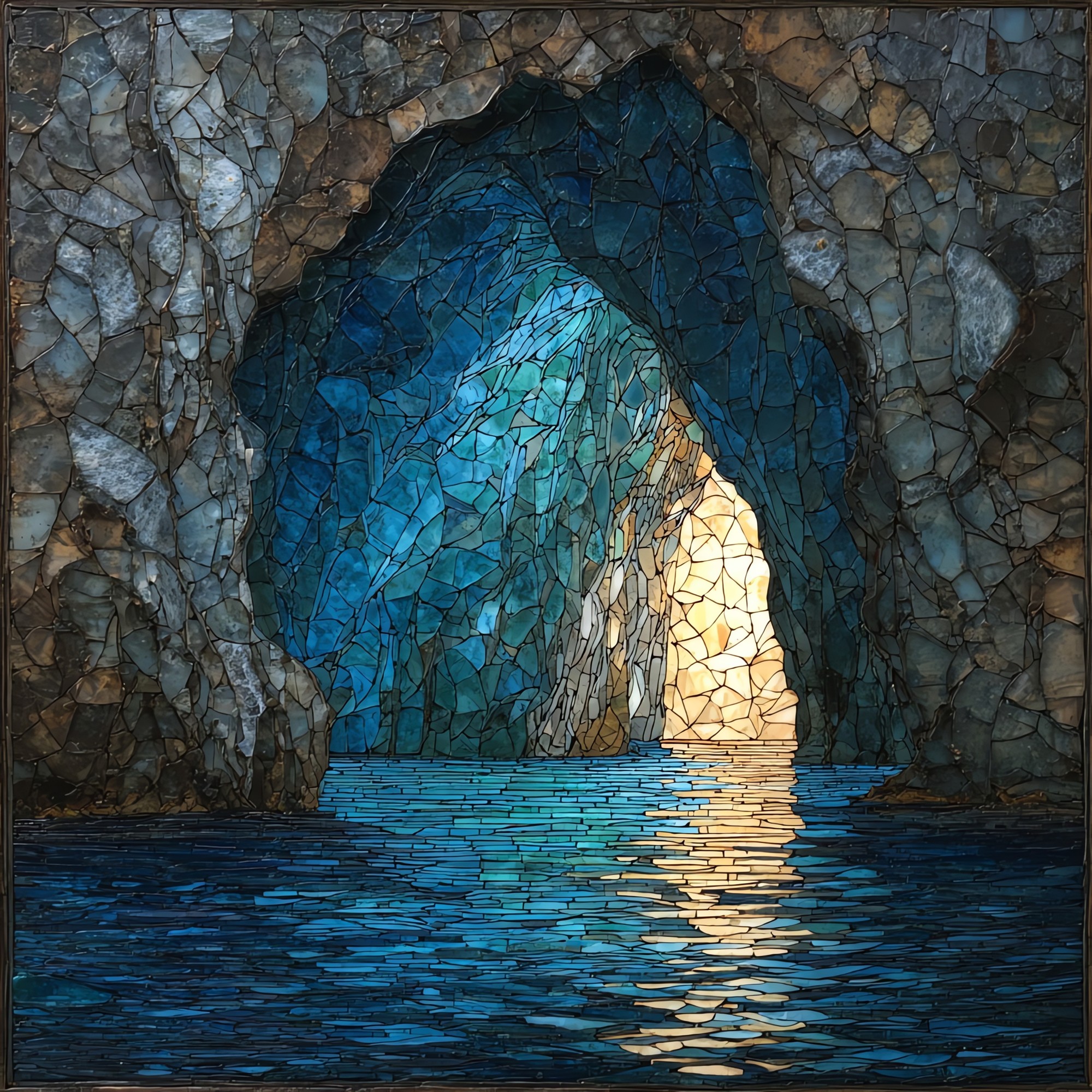
Blue Grotto Capri
— the light comes up through the water, not down.
Not only on a wall.
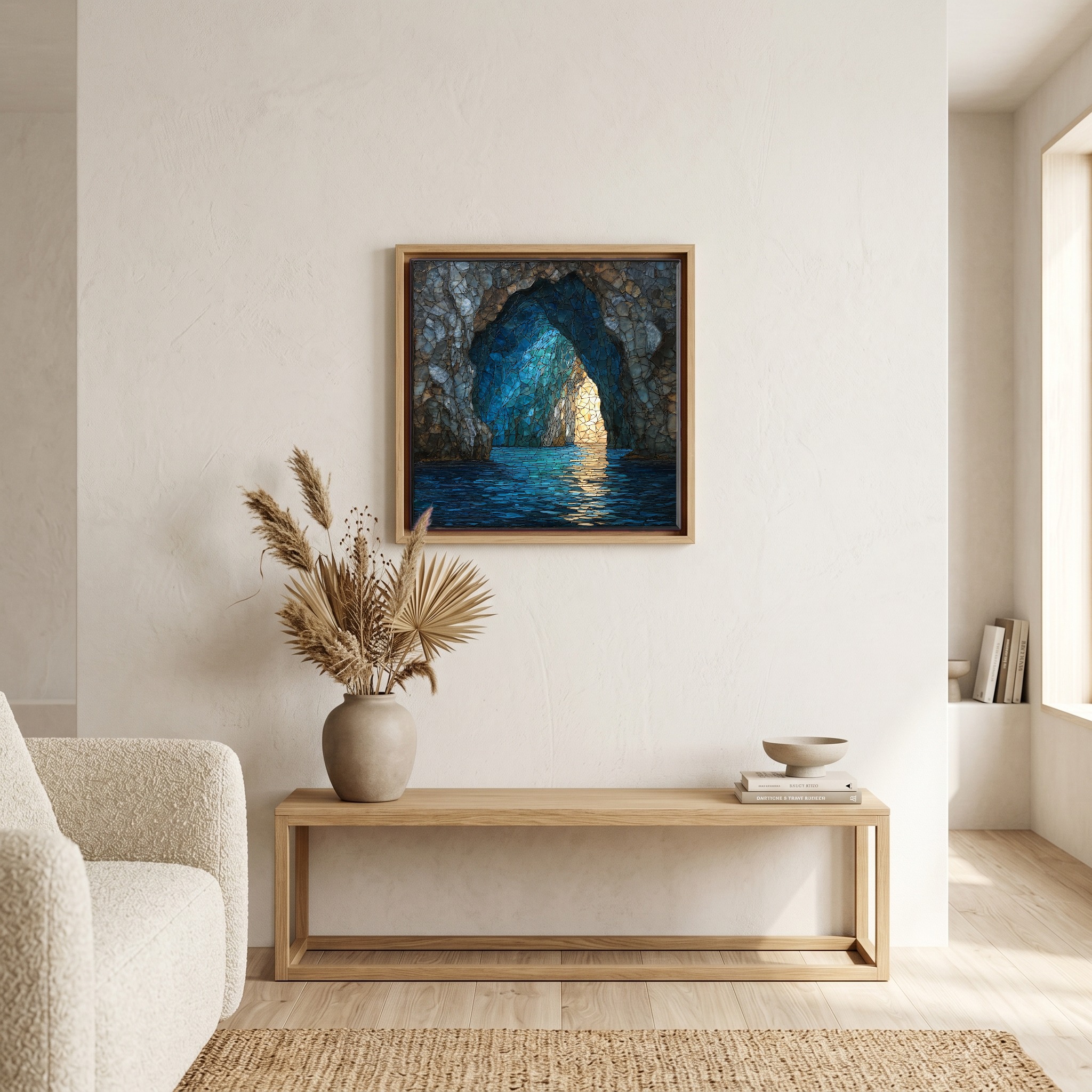
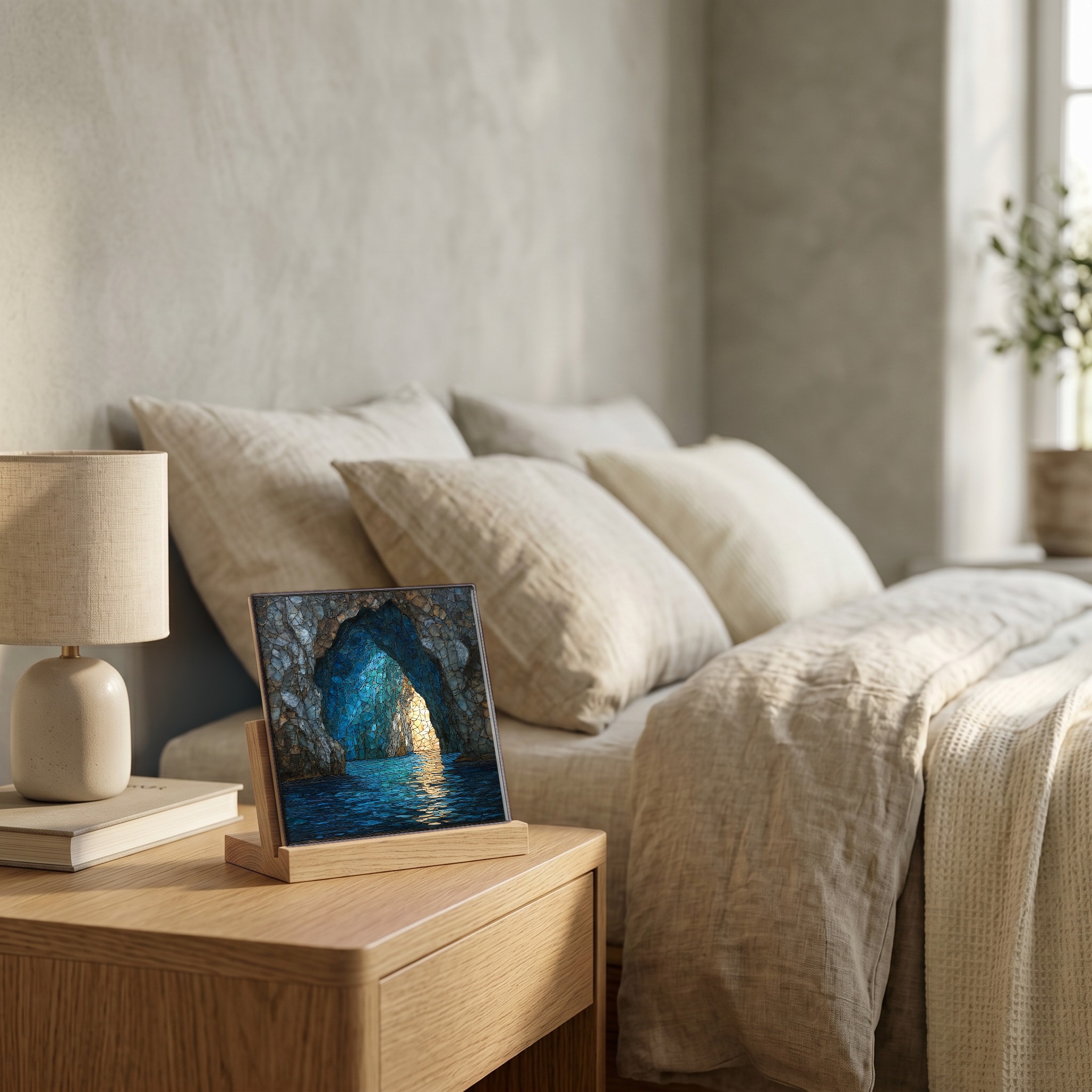
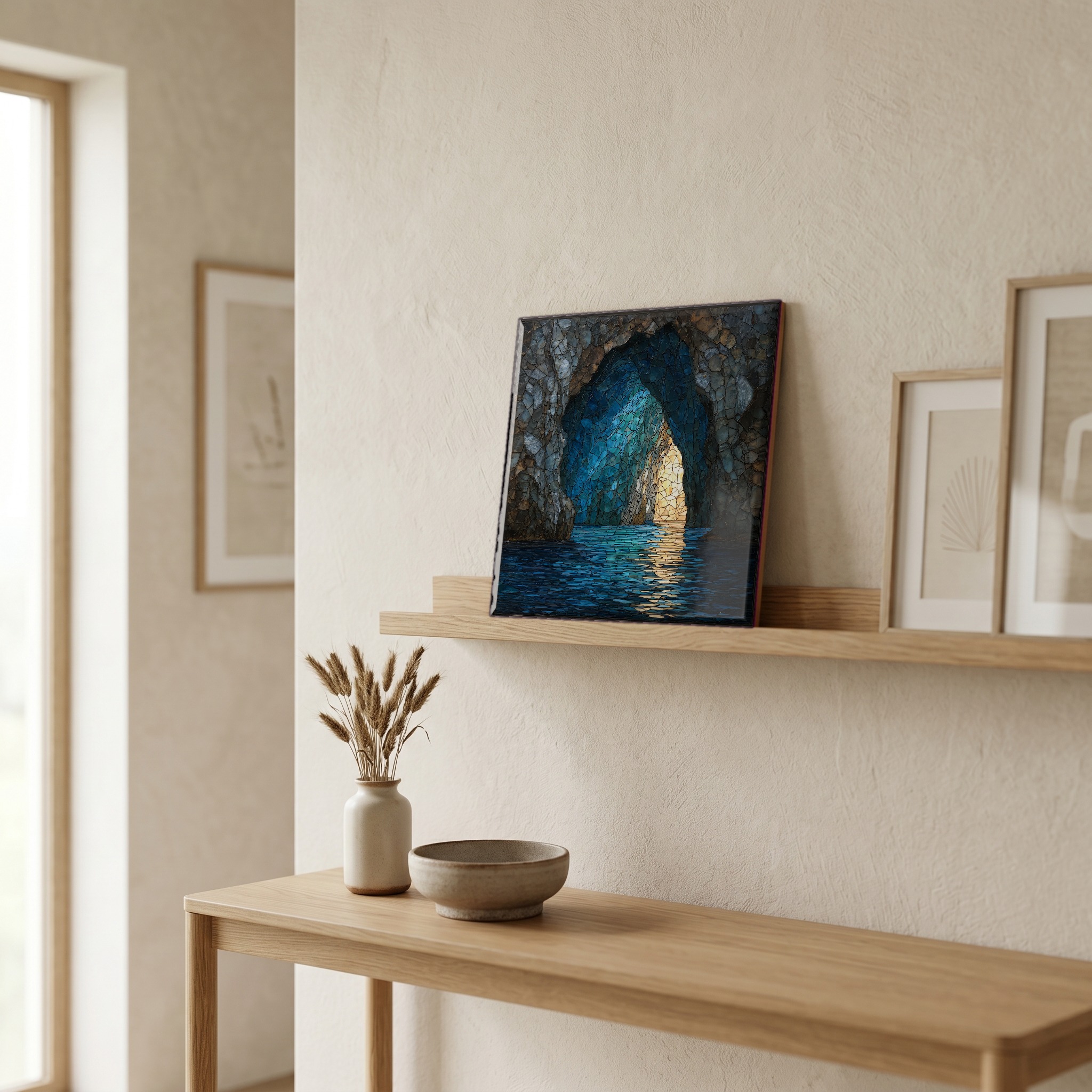
“A sea cave on the north shore of Capri, reached by rowboat through a mouth barely a metre high. The boatmen have you lie flat and pull the boat through on a chain bolted to the rock. Then the dark opens and the whole cavern is lit from underneath, the water gone the colour of a lamp left on in another room. The light does not fall in from above. It rises through a second opening below the waterline, so the blue seems to come from the floor. Most days it is only open a few hours, when the sea lies still enough to let a small boat in.
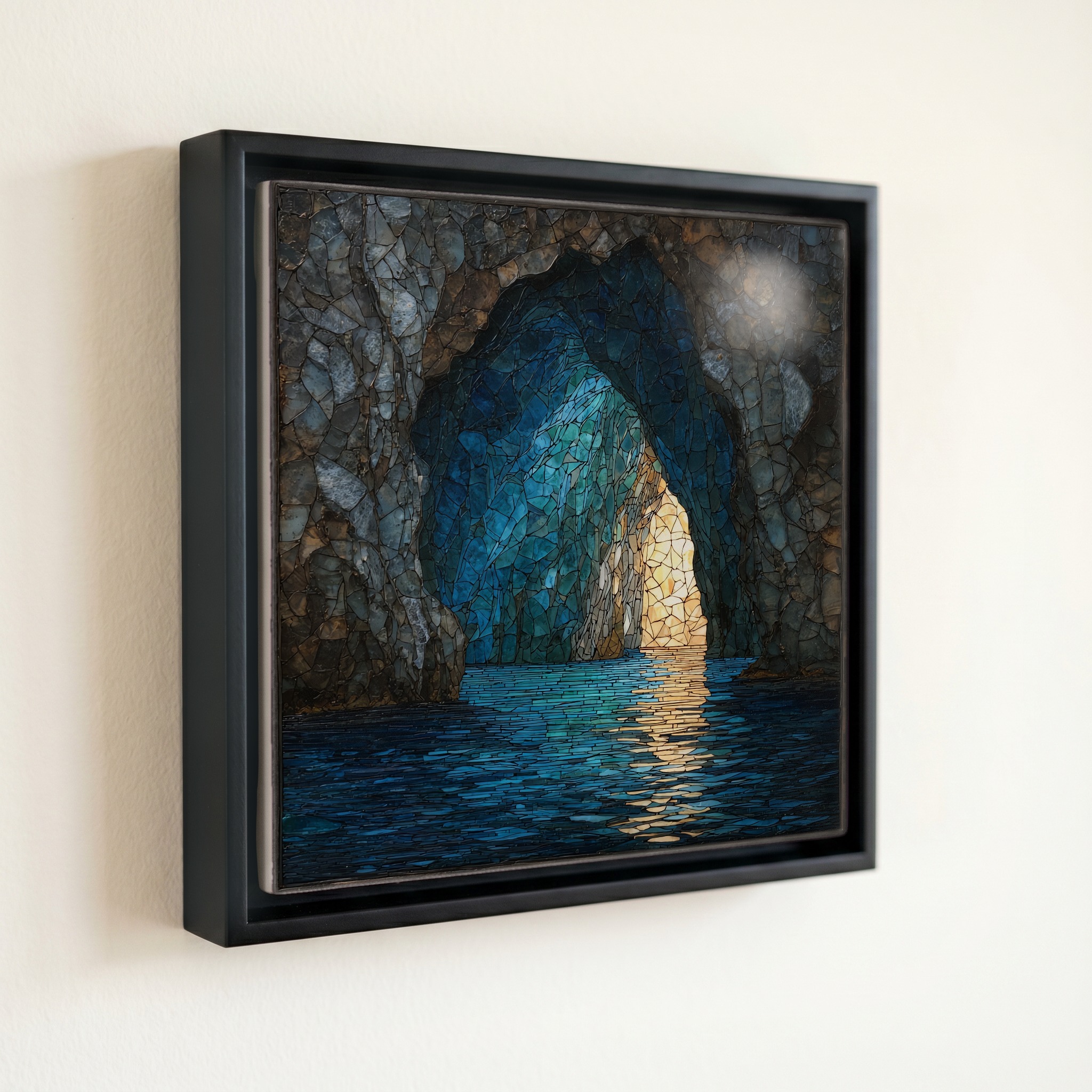
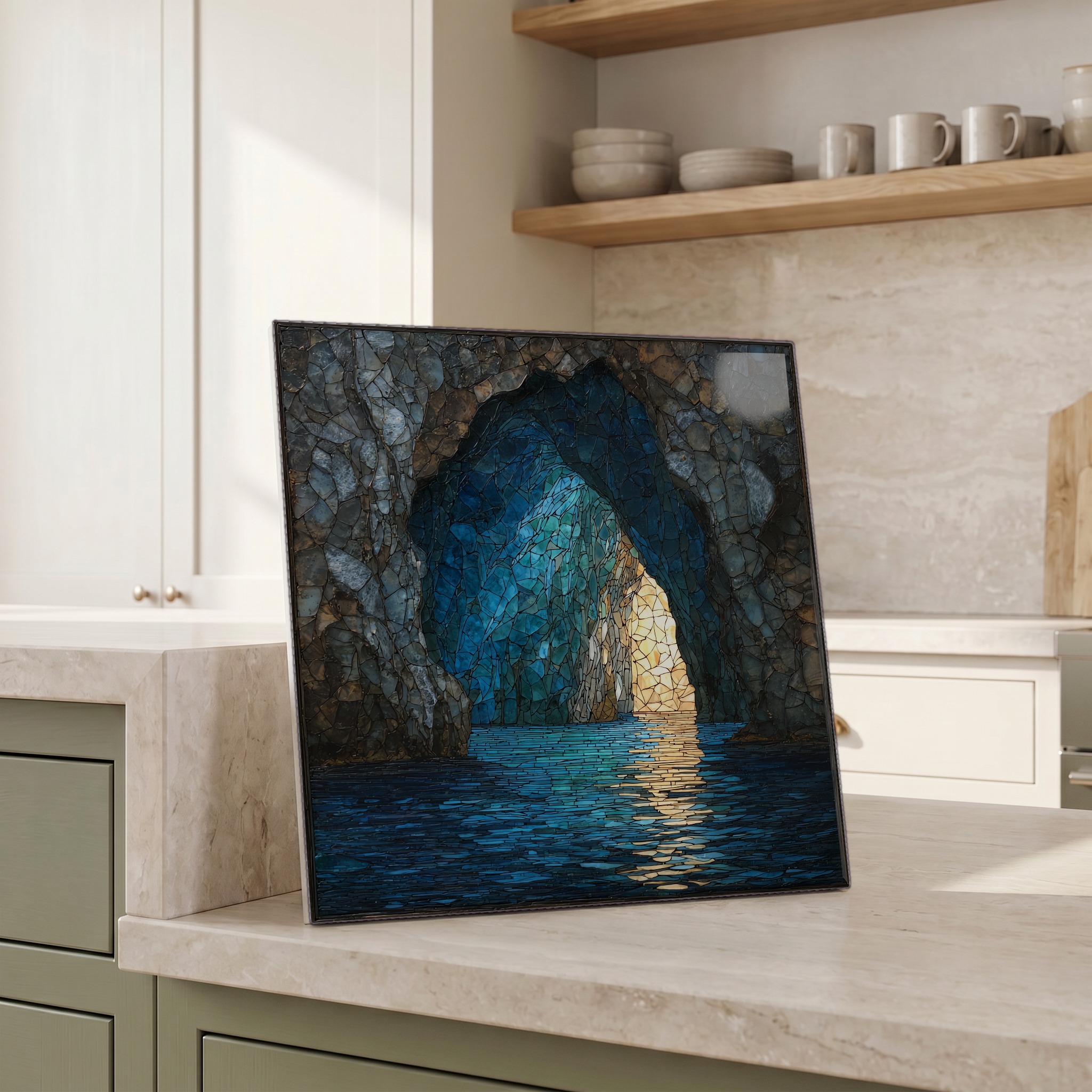
Blue Grotto Capri, on ceramic.
Each tile is finished by hand in our Knoxville studio. Artwork is slowly infused into the ceramic surface under high heat and pressure, and rests beneath a thin glossy finish. The colour lives in the surface, not on top of it.
Pick any four 4-inch tiles — National Parks you've been to, a Smokies set, the four seasons of one place. $ for a set of , cork-backed, ready to live on the table.
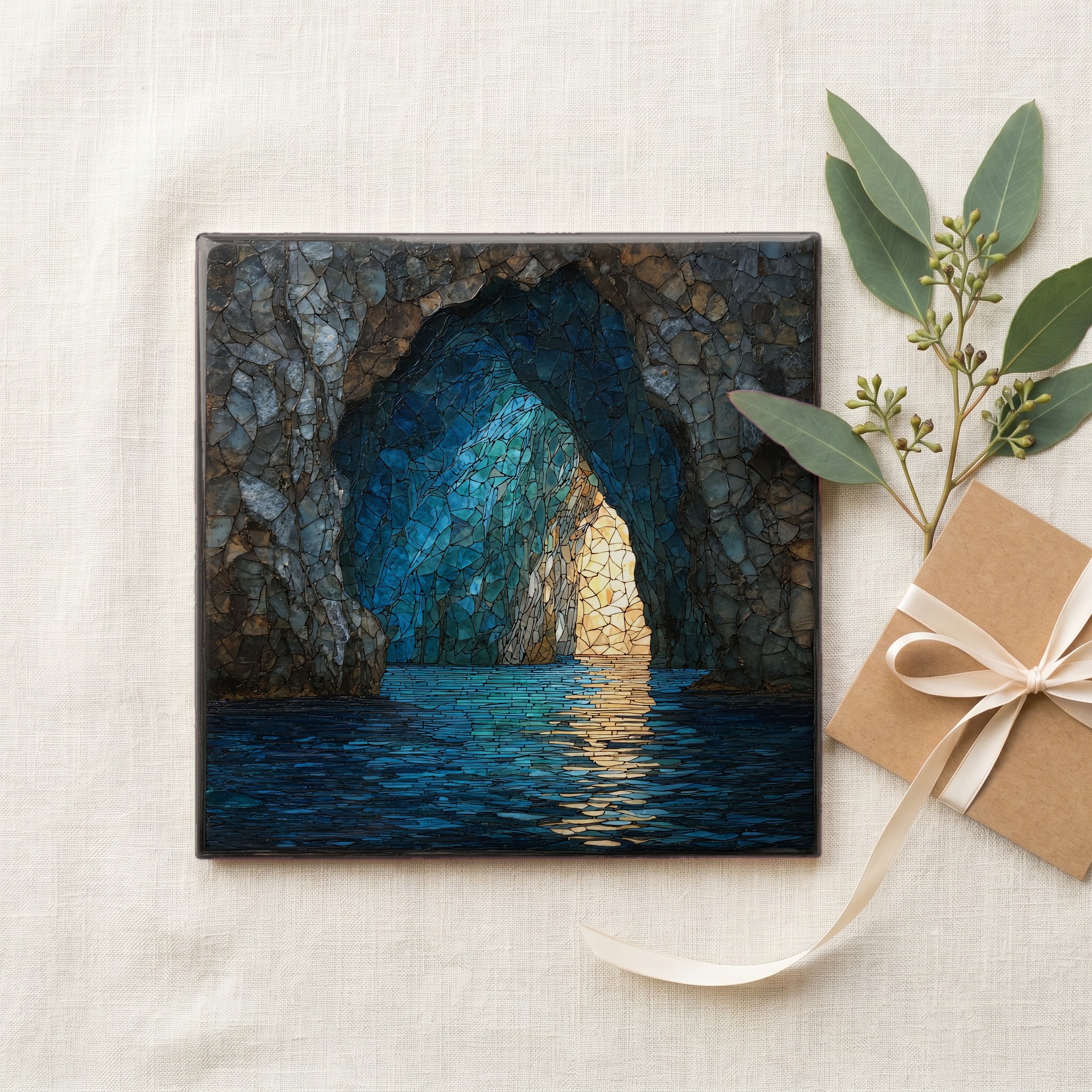
Each tile ships in a kraft box, tied with cream ribbon, with a handwritten note from the studio if you'd like to add one.
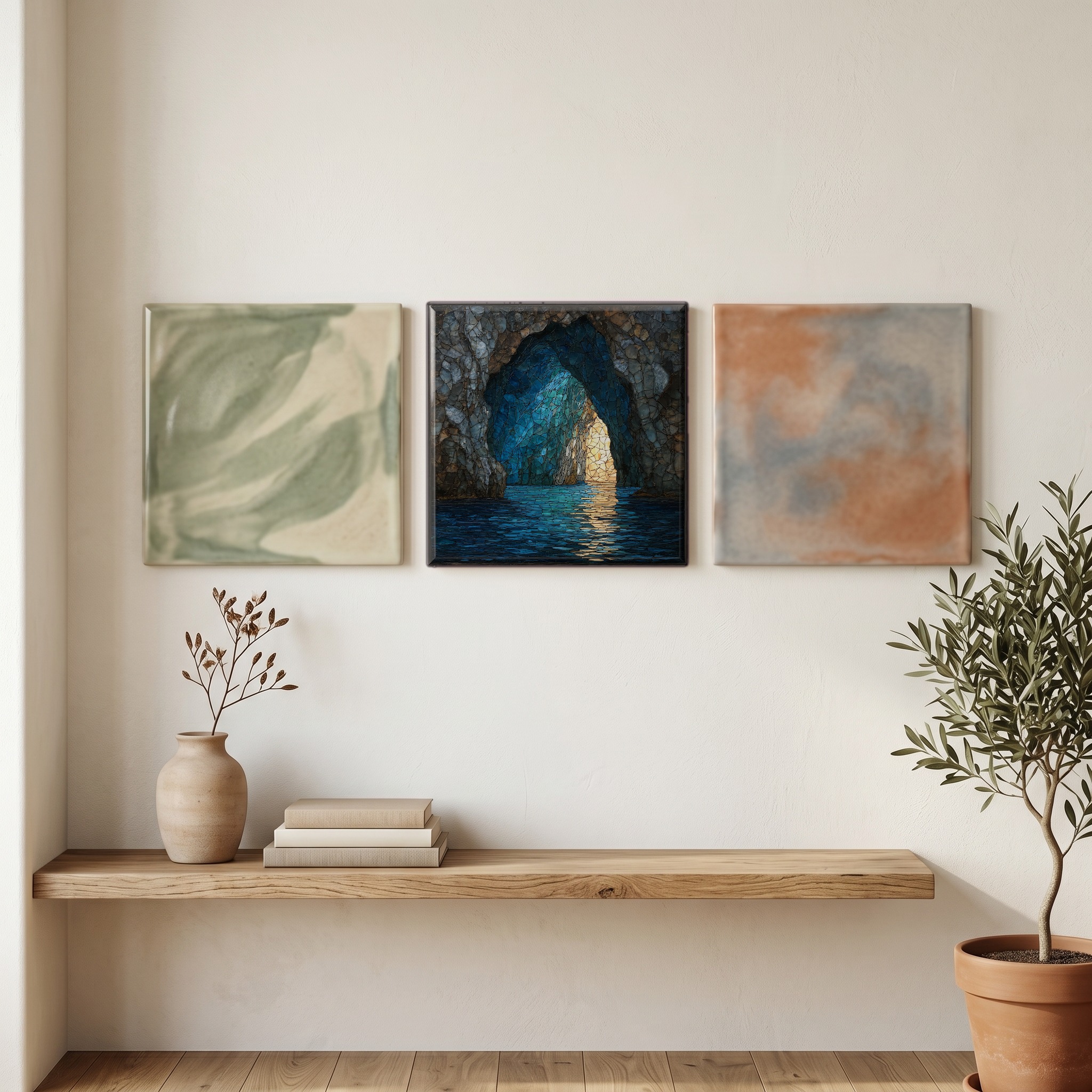
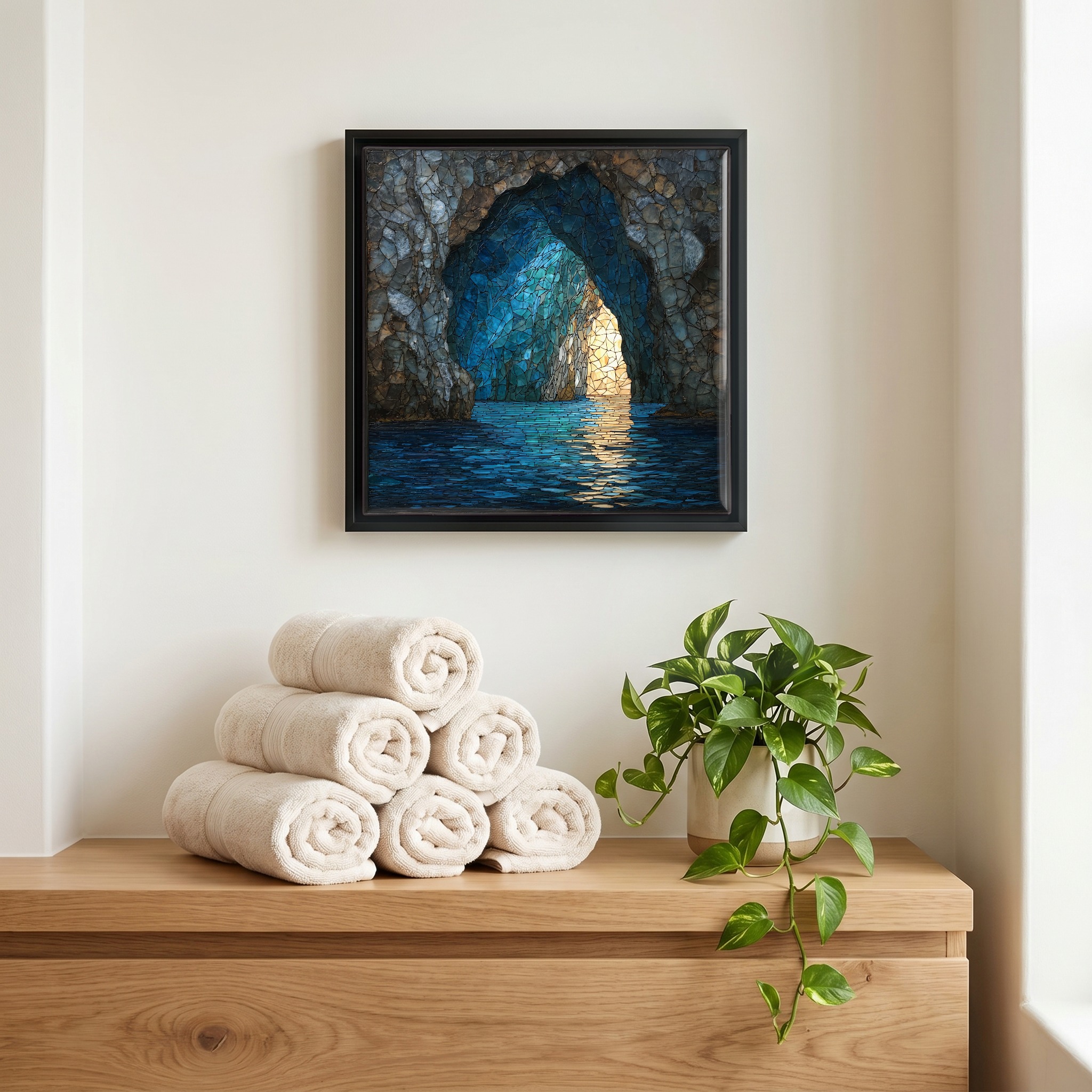
Three or five different vistas, hung together — a chapter of places you've been, or want to go.
The place, in three passes.
The Blue Grotto is a sea cave in the limestone cliffs on the northwest coast of Capri, in the Bay of Naples off southern Italy. It runs about 60 metres long and 25 metres wide, with a sandy floor and water reaching close to 150 metres at its deepest. The cave was formed by karst erosion, and in prehistoric times part of it sank by around 20 metres, sealing every way in except the low arch at the waterline. The nearest town is Anacapri, above on the headland; the cave is reached either by boat from Marina Grande or by the road and stairs down from Via Grotta Azzurra.
The blue comes from light entering below the surface, not from above. The visible entrance is only about a metre high, so little daylight passes through it. Most of the glow comes from a larger opening submerged just beneath that arch: sunlight rises up through the clear water of the Tyrrhenian Sea, which absorbs the red end of the spectrum and passes the blue, so the whole cavern reads as a deep luminous blue and anything in the water takes on a silver cast. The colour is strongest near midday, roughly between noon and 2 p.m., when the sun sits high enough to push light through the lower opening. On overcast days, or when the swell comes up, the blue thins and goes.
Entry is by rowboat. The boats carry up to four people, and because the mouth is roughly a metre high, the oarsman has each passenger lie back while he hauls the boat through on a chain fixed to the rock. Boats leave from a floating platform reached by tour boat from Marina Grande or down the stairs from the Anacapri road. A combined ticket runs about 18 euros, with a separate charge of around 12 euros for the rowboat. The cave is open most days from 9 a.m. to 5 p.m., closed only on 25 December and 1 January, but access depends entirely on the sea: in any real swell the entrance is impassable, and winter storms can shut it for days.