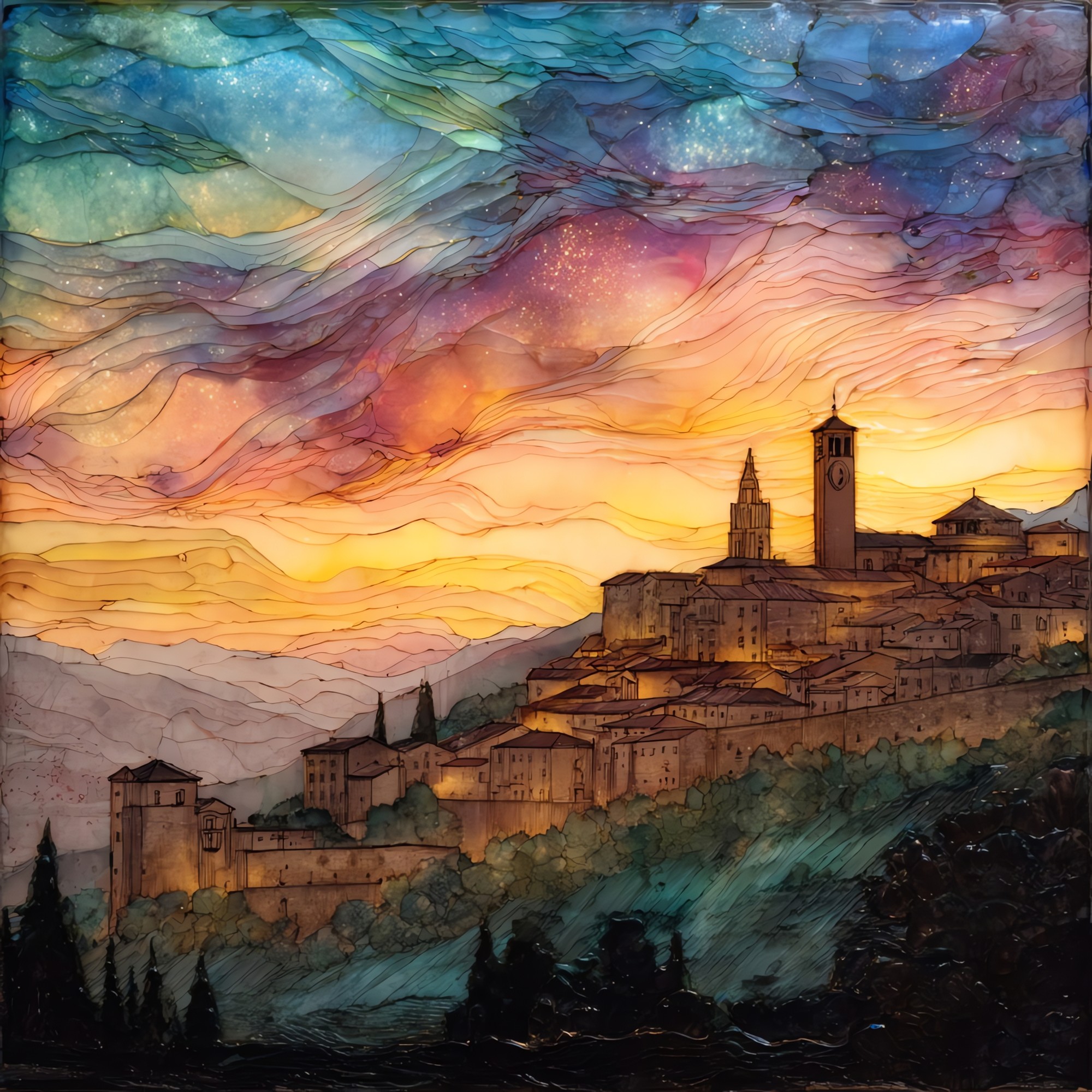
Bergamo Alta
— — the hundred strokes that still close the gates at ten.
Not only on a wall.
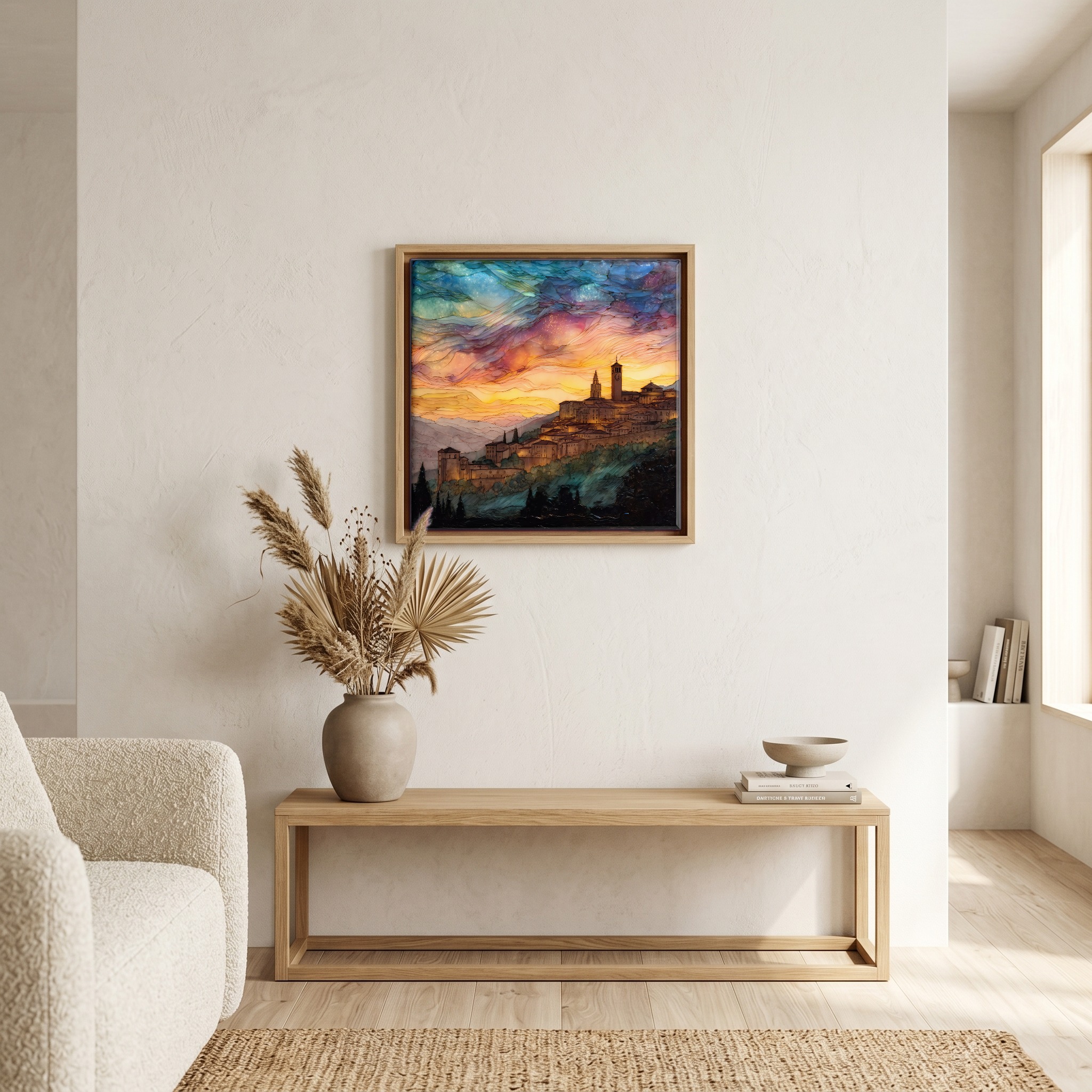
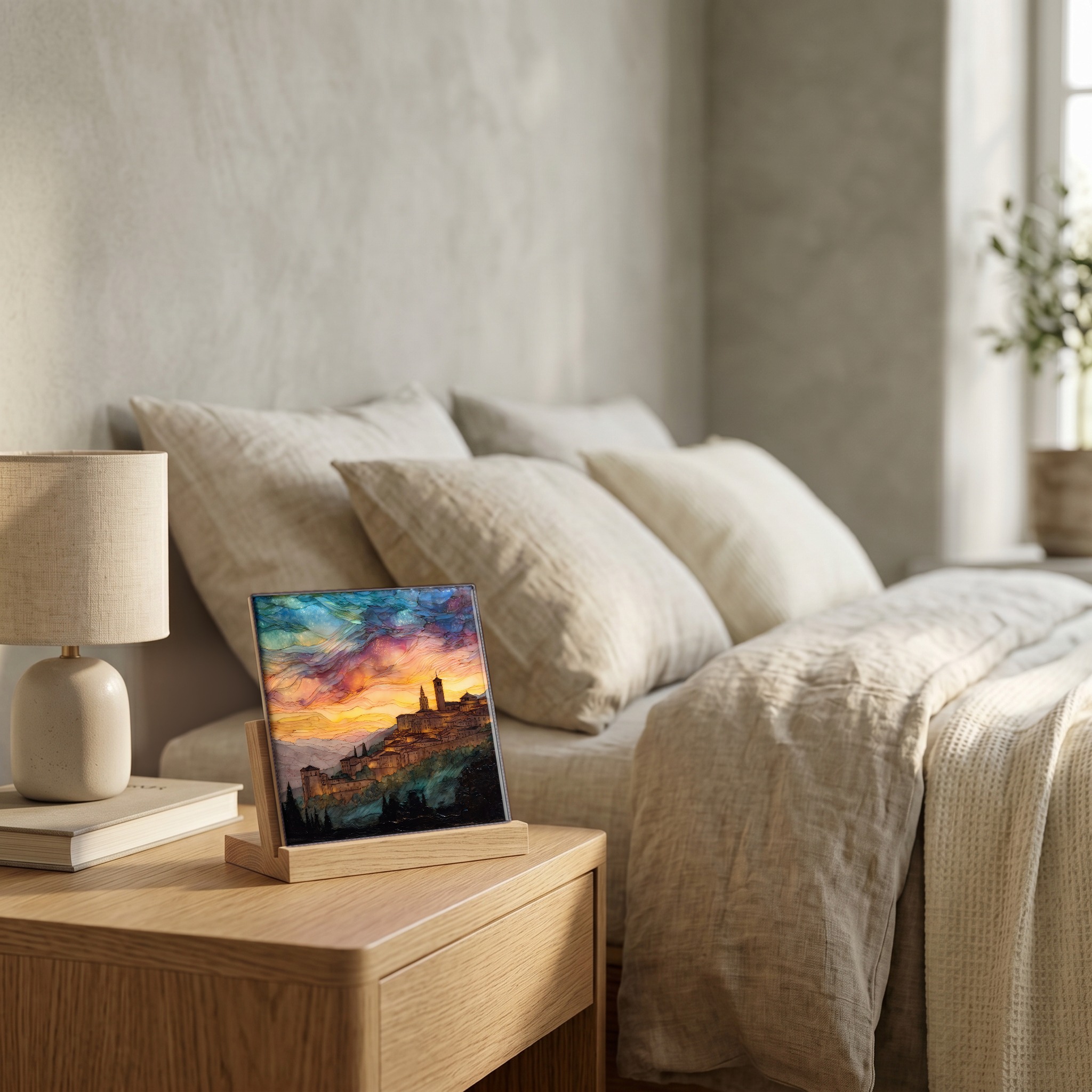
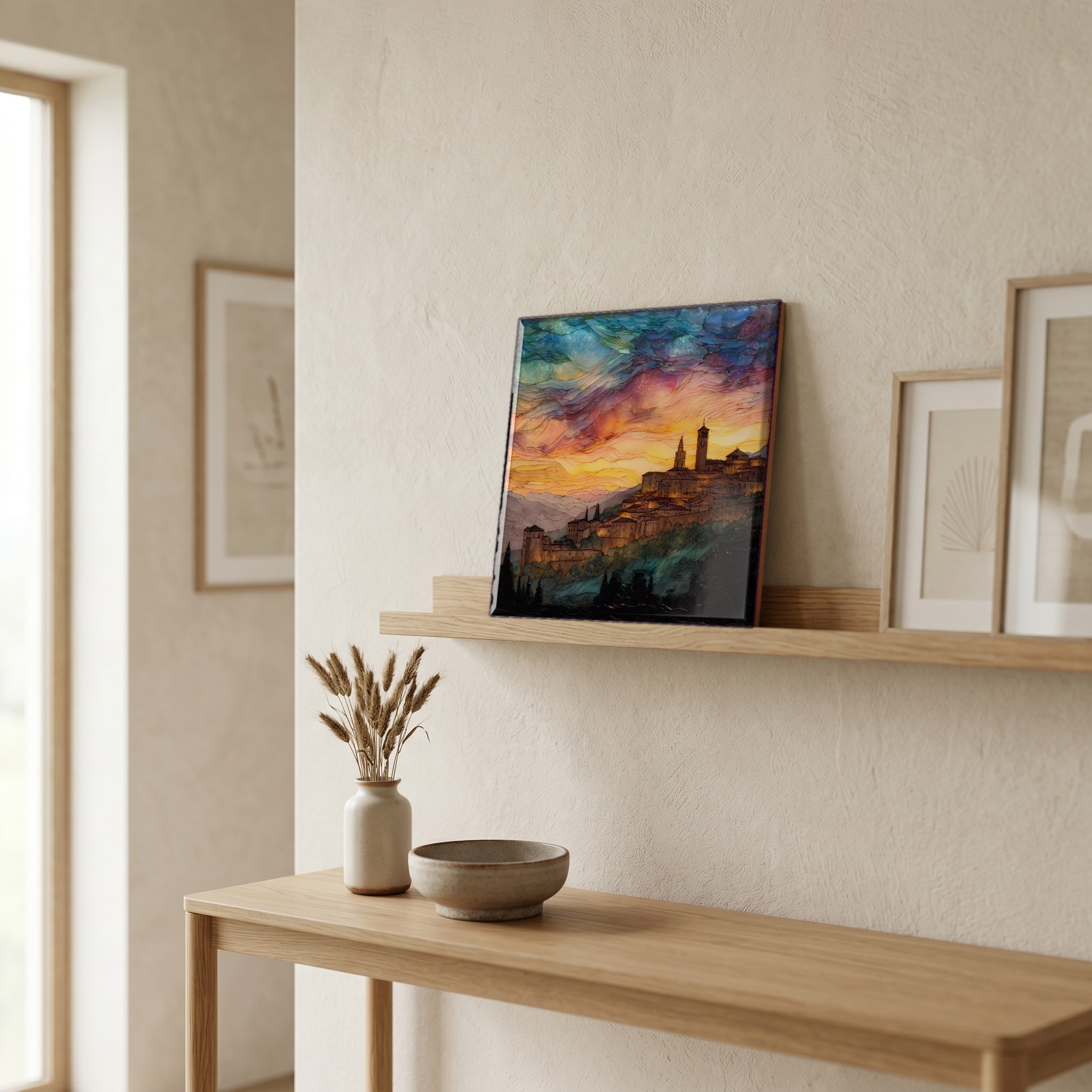
“The old city stands on its hill above Bergamo, ringed by walls the Republic of Venice raised in 1561. Inside them, Piazza Vecchia holds a fountain, a tower, and the worn stone of five centuries of market mornings. Every night the Campanone rings a hundred strokes at ten, the way it once called the gates shut. The funicular still climbs the eighty-five metres up from the lower town, as it has since 1887. People come for a day and stay past dark, when the lamps catch the marble of the Colleoni chapel and the plain below goes to lights.
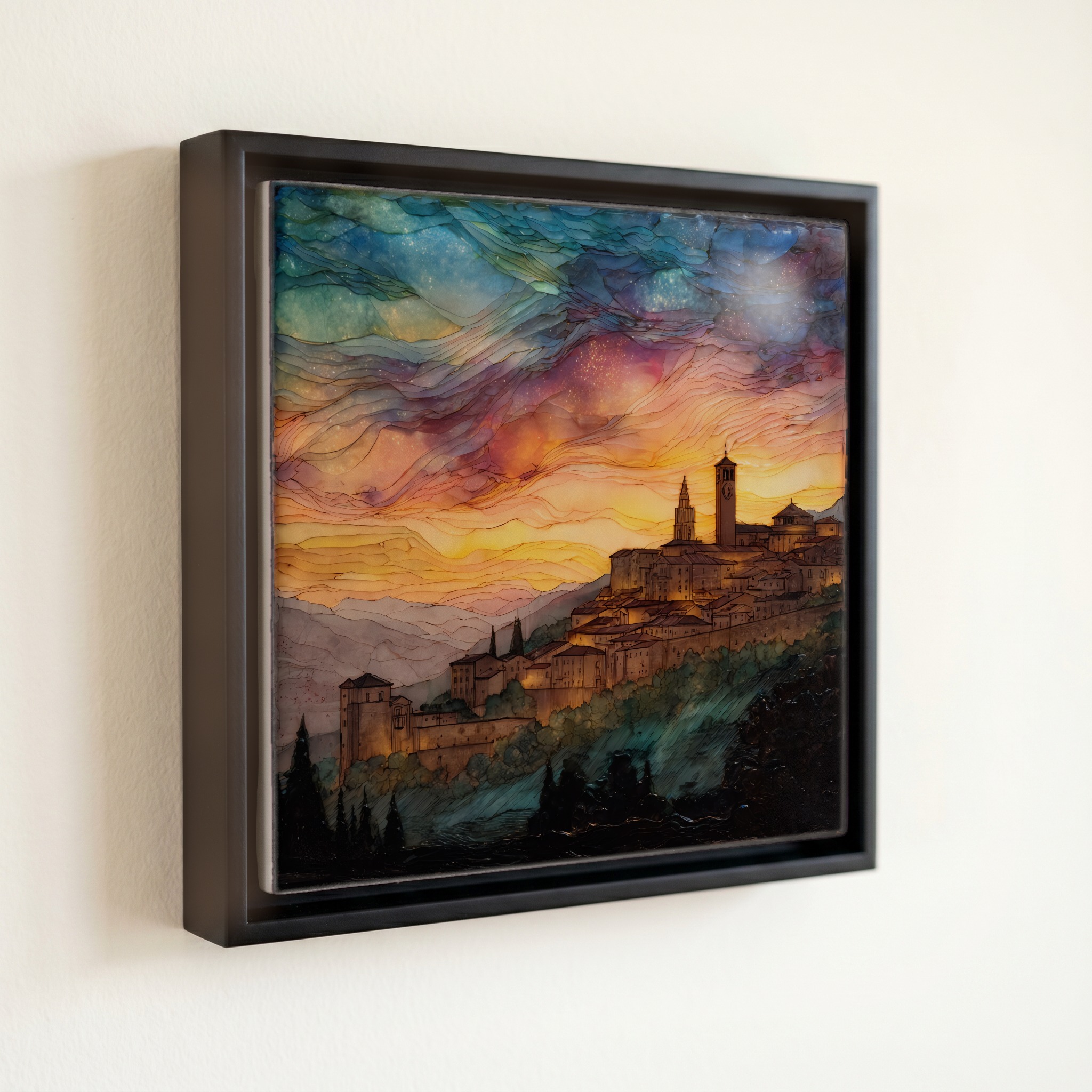
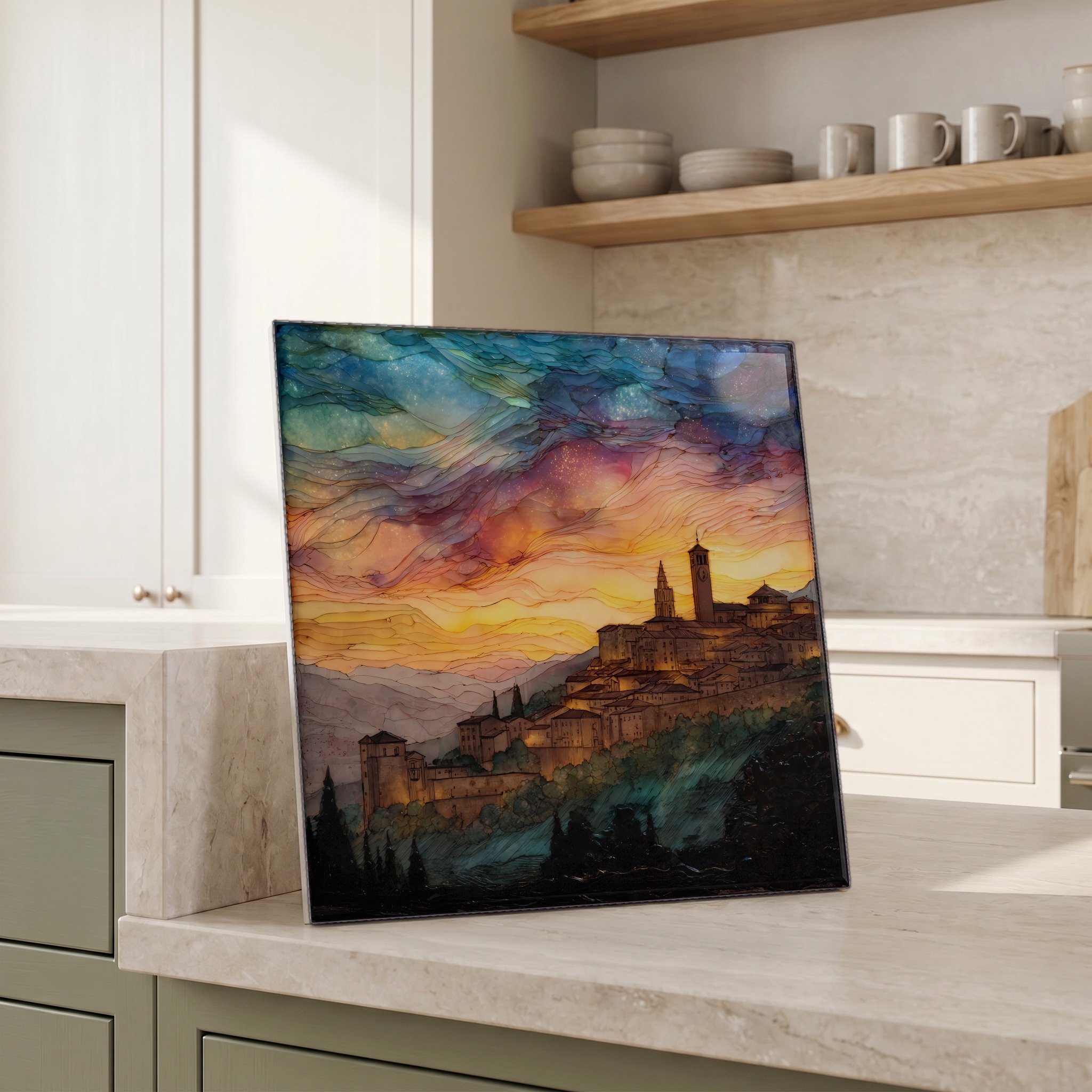
Bergamo Alta, on ceramic.
Each tile is finished by hand in our Knoxville studio. Artwork is slowly infused into the ceramic surface under high heat and pressure, and rests beneath a thin glossy finish. The colour lives in the surface, not on top of it.
Pick any four 4-inch tiles — National Parks you've been to, a Smokies set, the four seasons of one place. $ for a set of , cork-backed, ready to live on the table.

Each tile ships in a kraft box, tied with cream ribbon, with a handwritten note from the studio if you'd like to add one.
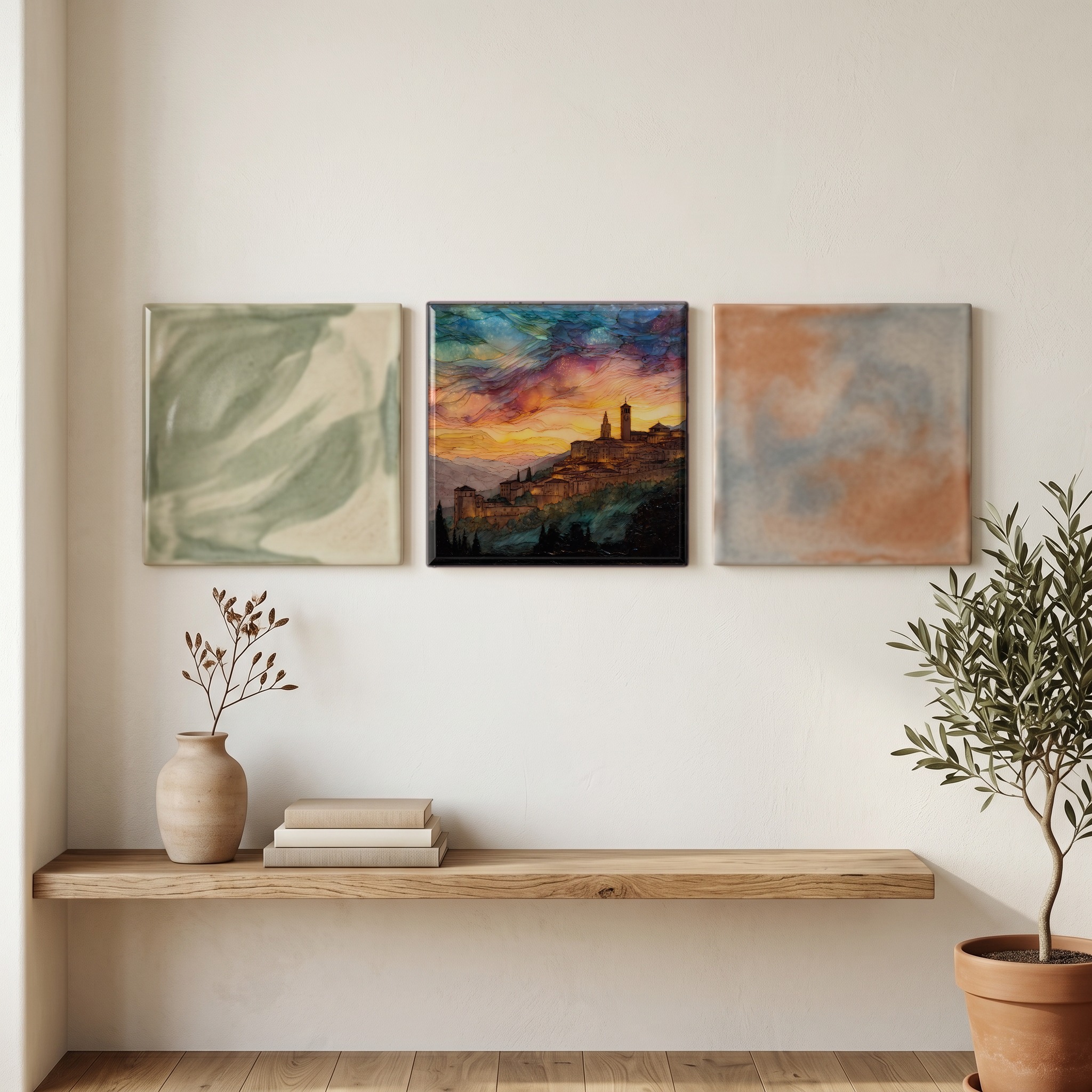
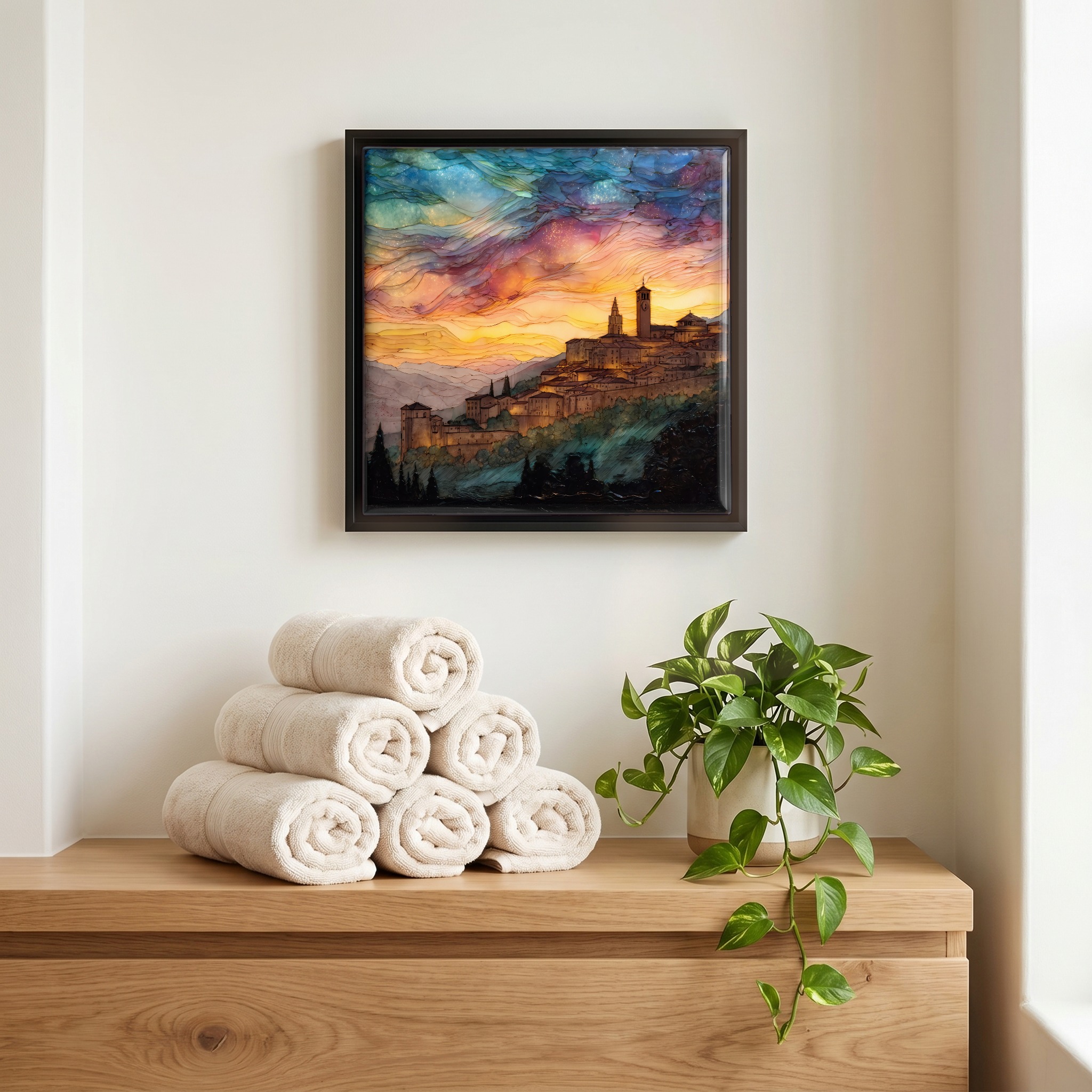
Three or five different vistas, hung together — a chapter of places you've been, or want to go.
The place, in three passes.
Bergamo Alta is the walled upper town of Bergamo, in the Lombardy region of northern Italy, about 40 km northeast of Milan. It sits on a hill some 365 metres above sea level, roughly 120 metres over Citta Bassa, the lower town on the plain, and the two are joined by a funicular that has run since 1887. A six-kilometre ring of Venetian walls, begun in 1561 by the Republic of Venice, encloses the old streets; in 2017 they joined UNESCO's list as part of the Venetian Works of Defence between the 16th and 17th Centuries. Venice held Bergamo from 1428 until Napoleon's arrival, and the lion of Saint Mark still marks the Palazzo della Ragione.
The walls are the first stone you meet, six kilometres of Renaissance rampart rising in places to fifty metres and never once tested in war. Inside, the architecture climbs in age. The Basilica di Santa Maria Maggiore was begun in 1137; beside it the Cappella Colleoni, finished in 1476 as the tomb of the mercenary captain Bartolomeo Colleoni, fronts the square in banded white and red marble. Giovanni Antonio Amadeo designed it, the same hand that worked the Certosa di Pavia. In Piazza Vecchia the Campanone, the civic tower, stands close to fifty-three metres, and its bell still sounds a hundred strokes at ten each night, the old signal to shut the gates.
Most visitors ride up. The funicular from the lower town climbs eighty-five metres along a 240-metre track to Piazza Mercato delle Scarpe, and has done so since 1887; from the upper station the lanes open onto Piazza Vecchia in a few minutes' walk. Bergamo's own airport, Orio al Serio, is one of Italy's busiest, which makes the upper town an easy half-day from Milan or a quiet base for the lakes. The streets are best near dusk, when the day-trippers thin and the Campanone counts down the hour. A second, smaller funicular carries on up to San Vigilio, the highest of the hills, for the long view back over the walls.