Wender·Vista
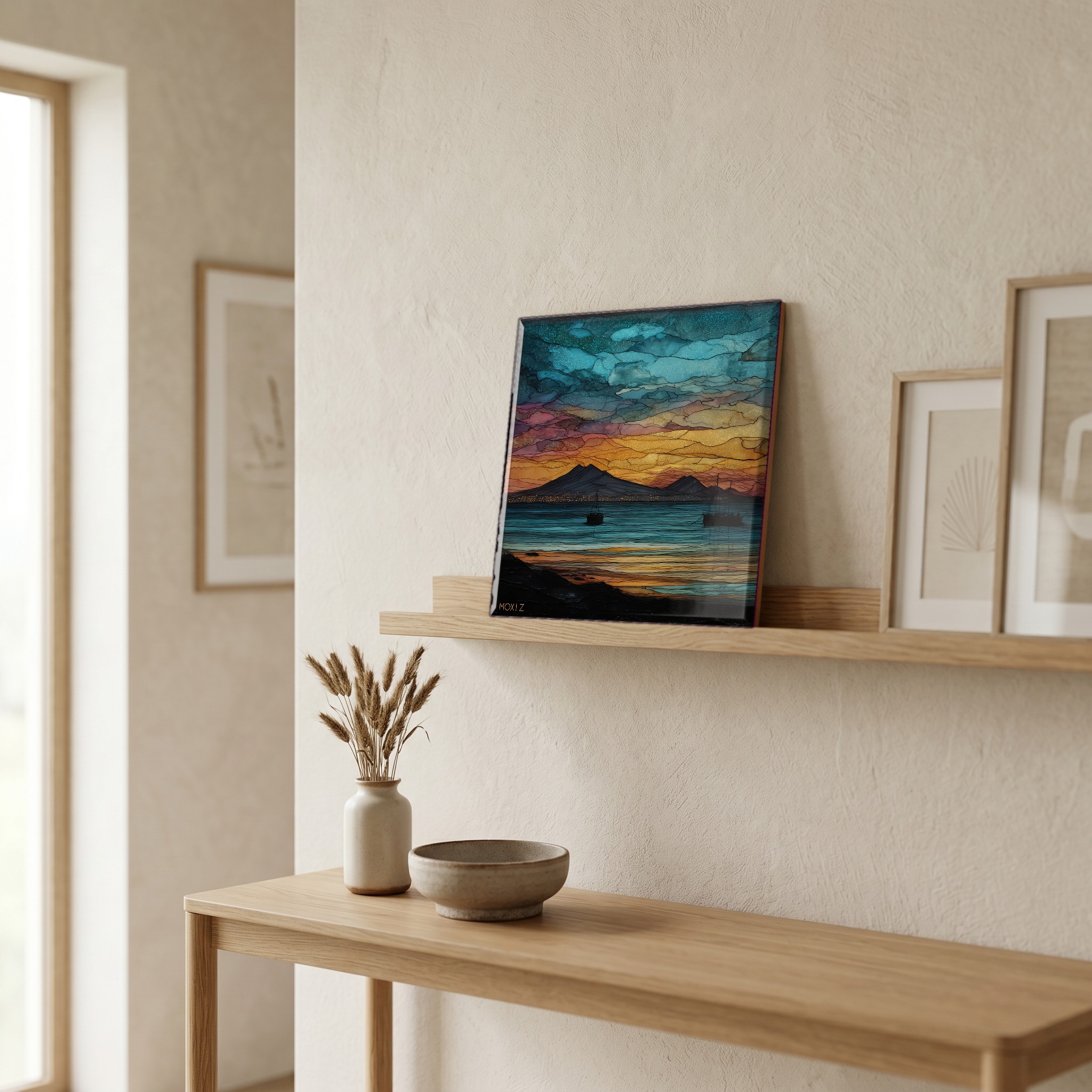
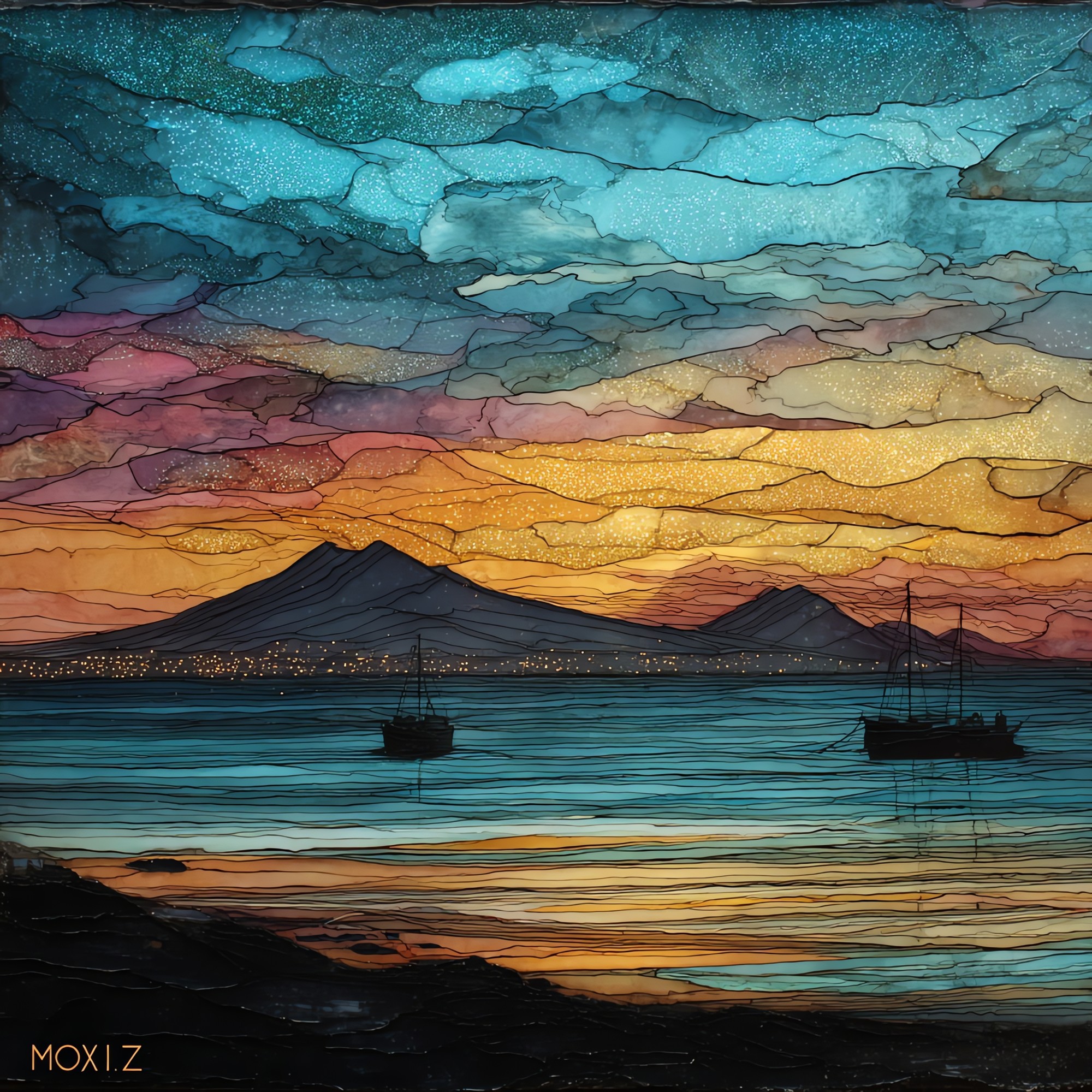
Bay of Naples
shown on ceramic, 12-inch tileItaly
on the southwestern coast of Italy, between Vesuvius and Capri

Bay of Naples

a coastline that lives under a volcano.

Where it lives

Not only on a wall.

A small tile on the nightstand catching the morning. A larger one above the fire. Yours, wherever you spend the slow hours.
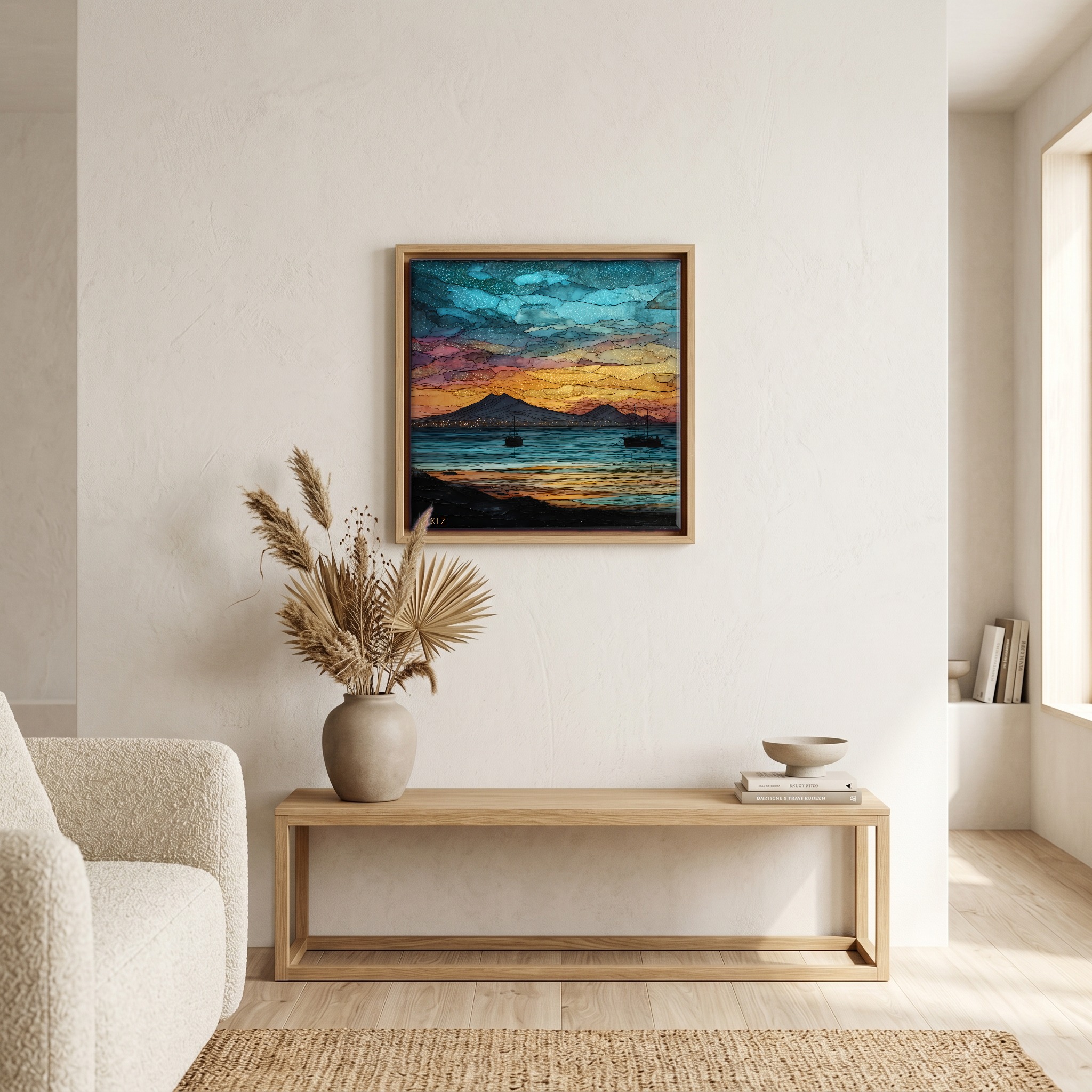
Above the bench, in a warm oak surround.
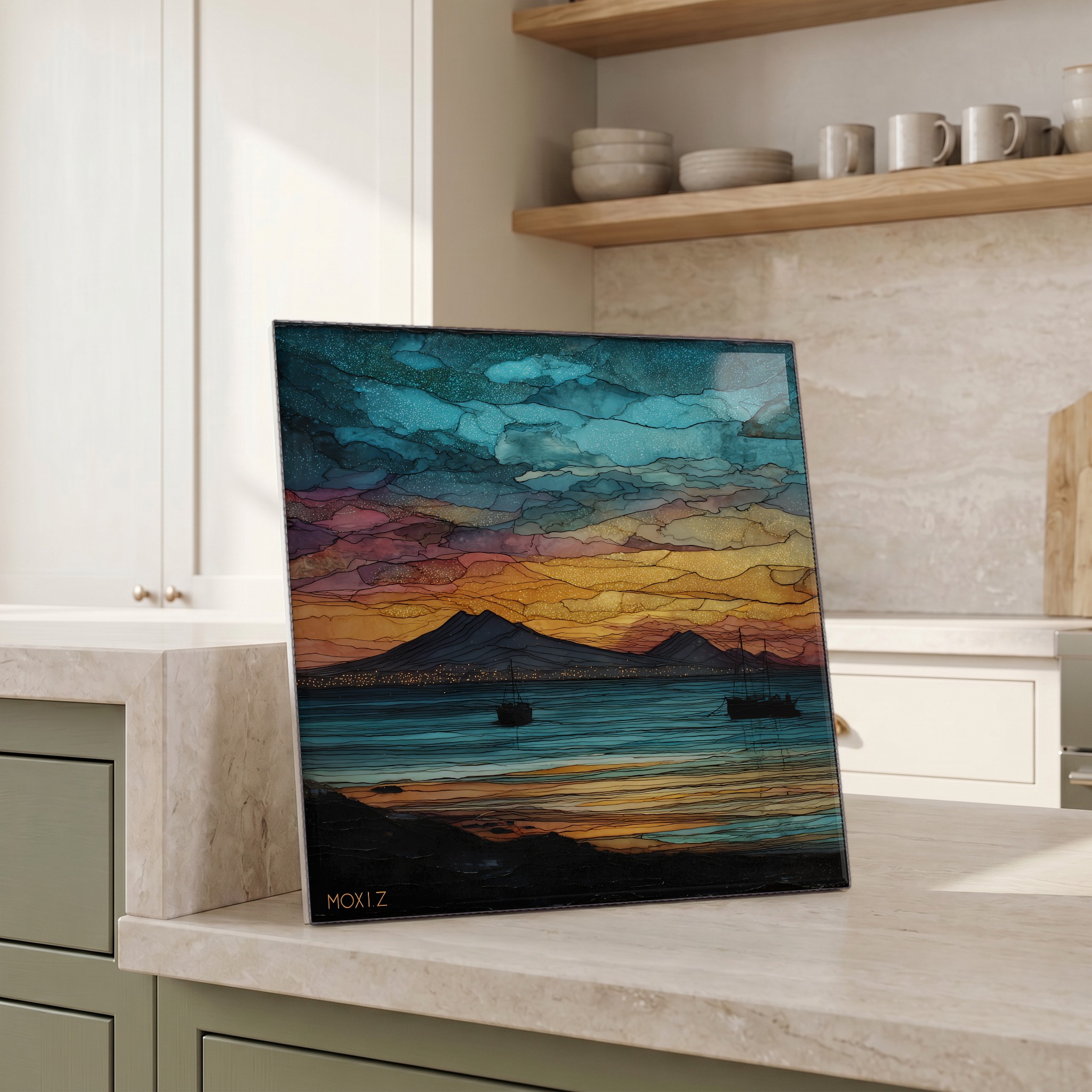
Beside the kettle, propped on the counter.
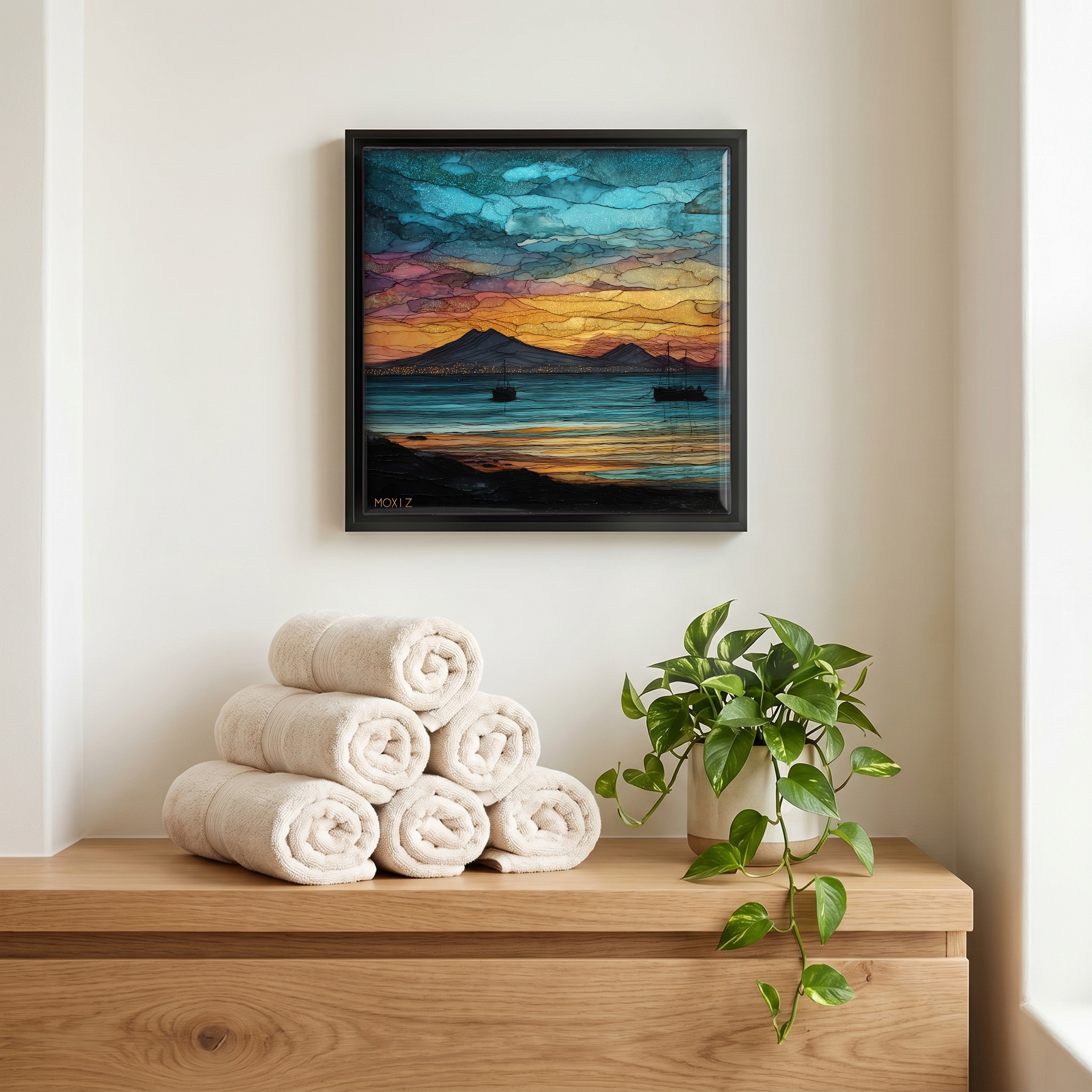
Above the linens, in a slim black surround.
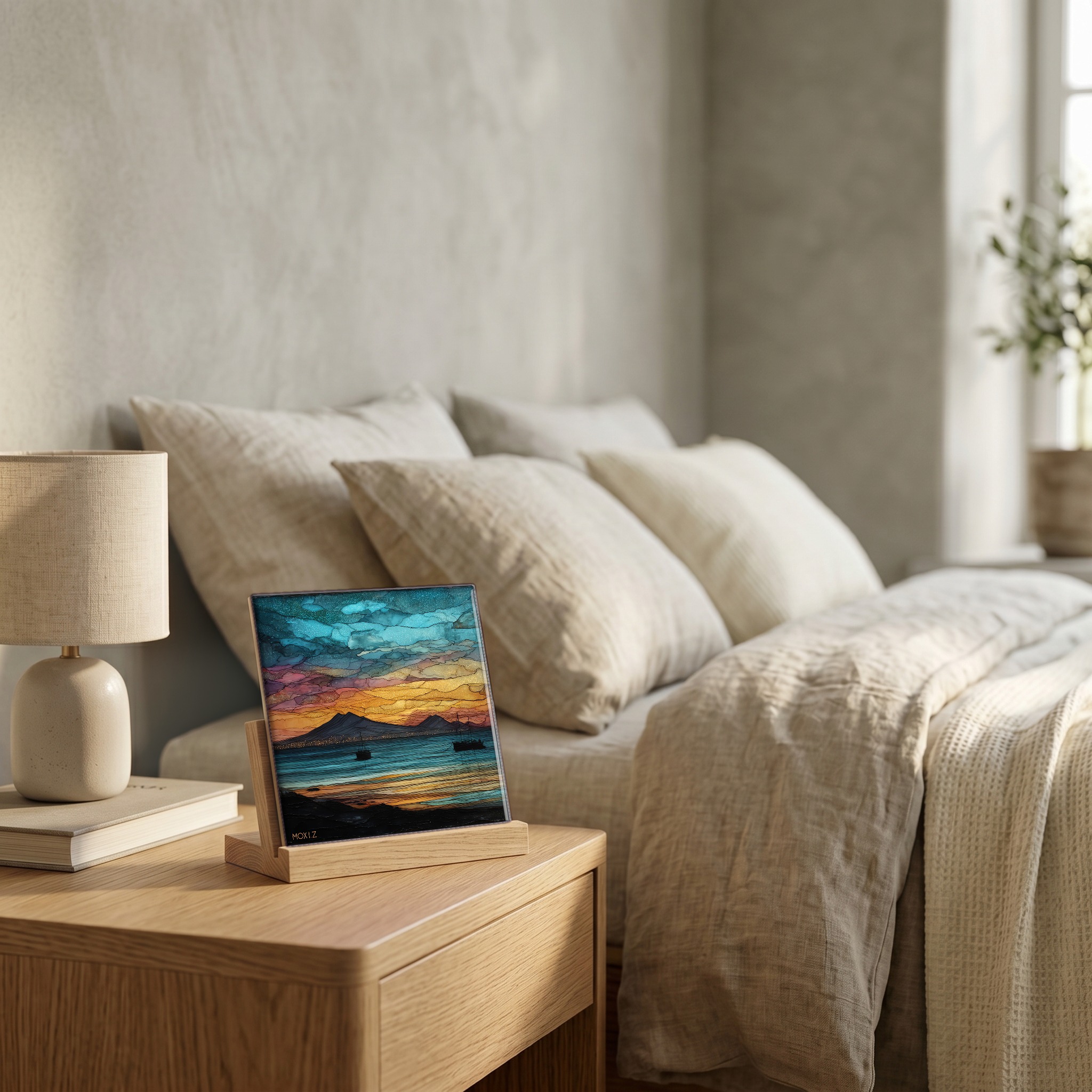
On the nightstand, on a light oak stand.
On a picture ledge, where the light comes in.
a note from the studio

The water curves between Vesuvius and the Sorrentine Peninsula, with Capri sitting like punctuation at the far edge. Fishermen still leave from Mergellina at first light. The old city climbs the hills behind the harbour, layered the way cities do when they have been built and rebuilt for two and a half thousand years. From Posillipo at sunset, the bay reads as one long shallow arc of light, the volcano holding the eastern end of it, the islands holding the western. Goethe wrote about this view in 1787. The view has not changed much.
from the studio
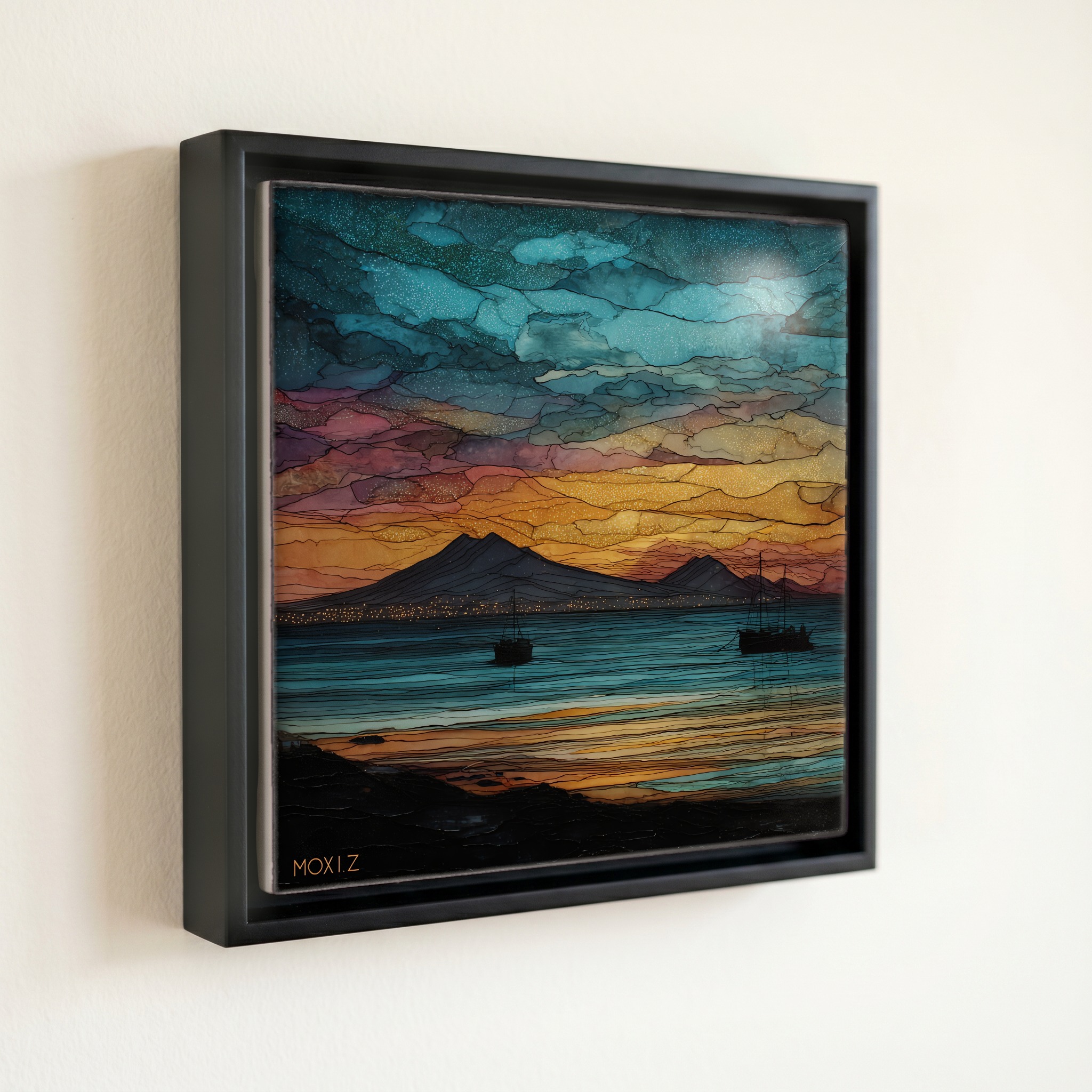
shown in a slim black floating frame · 6 × 6 in
— bring it home

Bay of Naples, on ceramic.

Each tile is finished by hand in our Knoxville studio. Artwork is slowly infused into the ceramic surface under high heat and pressure, and rests beneath a thin glossy finish. The colour lives in the surface, not on top of it.

What kind of piece?
One tile — square or rectangle.
How big?
the popular one — counter, shelf, nightstand
6 × 6 in · 15 cm · 1.6 lb
Surface finish
A clear glossy finish — the artwork reads as if under resin. Ideal for show-pieces and framed wall art.
How it sits
A hidden cleat — sits ¼″ proud of the wall.
$58
Hand-finished and shipped from our studio at the foot of the Smokies. On your wall in about ten days.
size
6 × 6 in
15 cm
weighs
1.6 lb
solid in the hand
surface
ceramic, hand-finished
art rests beneath a thin glossy finish
from
Knoxville, TN
our family studio, at the foot of the Smokies
— start a Coaster Set

Pick any four 4-inch tiles — National Parks you've been to, a Smokies set, the four seasons of one place. $ for a set of , cork-backed, ready to live on the table.
comes gift-ready
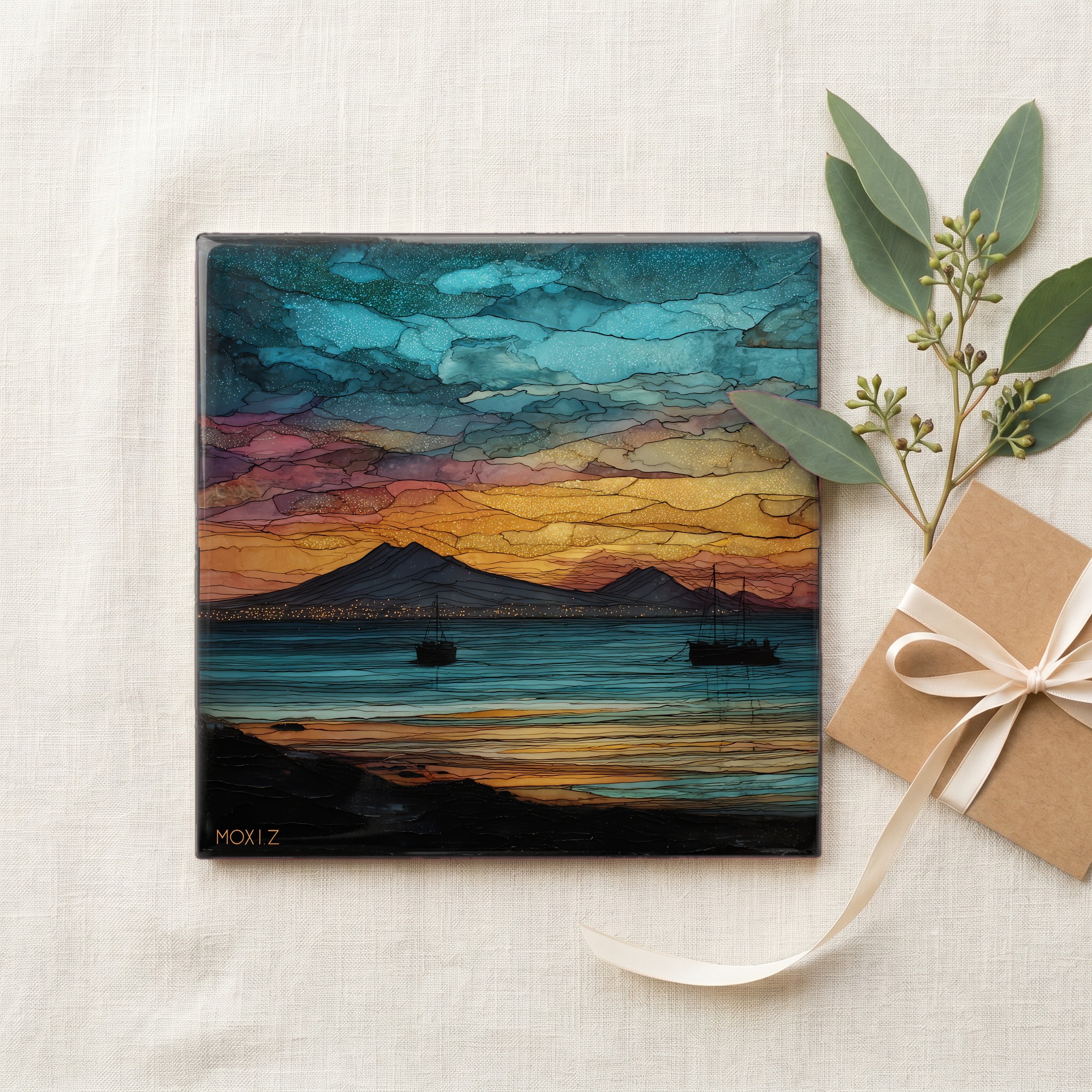
comes gift-ready

Each tile ships in a kraft box, tied with cream ribbon, with a handwritten note from the studio if you'd like to add one.
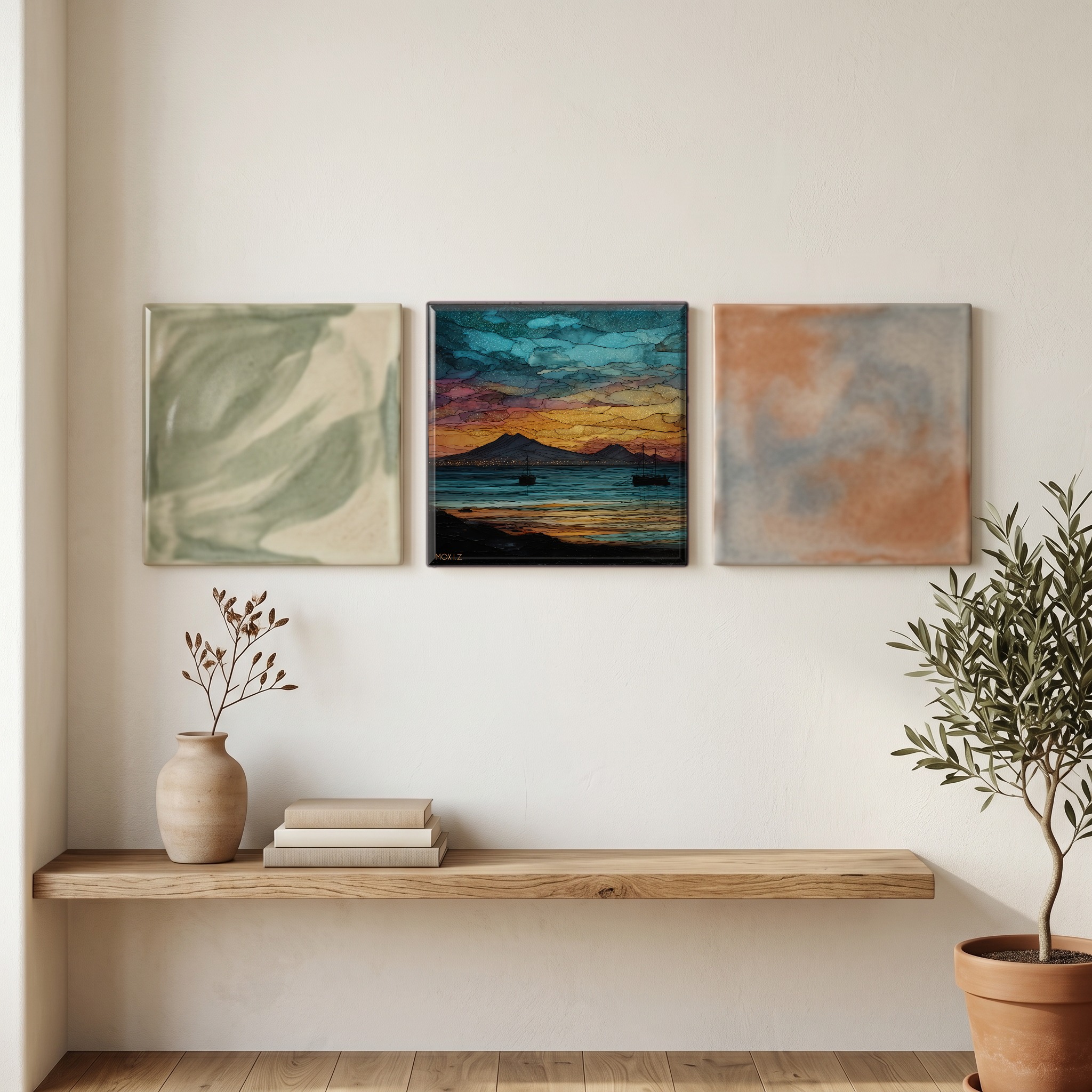
or build a grouping
or build a grouping

Three or five different vistas, hung together — a chapter of places you've been, or want to go.

about Bay of Naples

The place, in three passes.

A little of what's known, in case you fall down the rabbit hole — or want to go see it yourself.
the place

The Bay of Naples, in Italian the Golfo di Napoli, is a semicircular gulf on the southwestern coast of Italy, opening onto the Tyrrhenian Sea. It spans roughly thirty kilometres from Cape Miseno in the north to the Sorrentine Peninsula in the south, and the islands of Capri, Ischia, and Procida sit along its mouth. The city of Naples, Neapolis to the Greeks who founded it around 600 BC, rises on the northern shore in tiers behind the port. Mount Vesuvius stands directly across the bay, 1,281 metres of stratovolcano whose last major eruption was in 1944. The bay is part of the Campania region and includes the wider crescent shore from Posillipo to Punta Campanella.

the stone

Most of the bay's coastline is volcanic. The eastern shore is shaped by Vesuvius, the stratovolcano whose AD 79 eruption buried Pompeii and Herculaneum under metres of ash and pumice; both sites were rediscovered in the 18th century and inscribed on the UNESCO World Heritage list in 1997. To the north and west lies the Phlegraean Fields, a much larger volcanic caldera whose surface still rises and falls (the geological term is bradyseism) by centimetres a year at Pozzuoli. Even the building stone of old Naples is volcanic: yellow tuff quarried from the local hills. The historic centre of Naples was itself inscribed on the World Heritage list in 1995.

the visit

The bay is easy to reach. Naples Centrale connects directly to Rome by high-speed train in about an hour and ten minutes, and Naples International Airport sits five kilometres from the centre. Public ferries and hydrofoils run from Molo Beverello to Capri, Ischia, Procida, and Sorrento, with reduced winter schedules. Mount Vesuvius is reached by bus from Pompeii or Herculaneum to the Gran Cono trailhead near 1,000 metres, then a thirty-minute walk to the rim at 1,281 metres; tickets are timed through the national park. The most-cited viewpoint of the whole bay is from Posillipo, on the headland west of the city, best at sunset when the volcano sits in silhouette.

where
Italy · Napoli, Campania
elevation
0 m · 0 ft
position
40.8000° N · 14.2500° E
the neighborhood

What's nearby.

A handful of named places within an hour's walk or short drive. Some we've already painted; some we will.
9 km E
Mount Vesuvius
stratovolcano
23 km SE
Pompeii
Roman archaeological site
8 km E
Herculaneum
Roman archaeological site
30 km S
Capri
island
30 km W
Ischia
volcanic island
20 km W
Procida
island
30 km SE
Sorrento
coastal town
N
Bay of Naples
Mount Vesuvius
Pompeii
Herculaneum
Capri
Ischia
Procida
Sorrento
common questions

What people ask.

A few questions we get about Bay of Naples — and about bringing the piece home.
about the place

The Bay of Naples is a semicircular gulf on the southwestern coast of Italy, in the Tyrrhenian Sea. It belongs to the Campania region and opens between Cape Miseno to the north and the Sorrentine Peninsula to the south, with Capri, Ischia, and Procida at its mouth.

The bay is defined by three things: the city of Naples, founded by Greek colonists around 600 BC; Mount Vesuvius, the volcano whose AD 79 eruption preserved Pompeii and Herculaneum; and the islands of Capri, Ischia, and Procida that sit across its mouth.

The bay is roughly fifteen kilometres deep and thirty kilometres across at the mouth, with a total surface area of about 870 square kilometres. The crescent shoreline runs from Cape Miseno in the north to Punta Campanella, the tip of the Sorrentine Peninsula, in the south.

Vesuvius stands 1,281 metres on the eastern shore of the bay, classified as a stratovolcano. Its most famous eruption was in AD 79; its most recent significant eruption was in March 1944. The mountain and its surrounding cone are protected as Vesuvius National Park.

Herculaneum was rediscovered in 1709 and Pompeii in 1748, both during Bourbon-era excavations under King Charles III. The two archaeological parks, together with Torre Annunziata, were inscribed on the UNESCO World Heritage list in 1997.

Three islands sit across the mouth of the bay: Capri, a limestone island known for the Blue Grotto and the Faraglioni sea stacks; Ischia, the largest, a volcanic island known for its thermal springs; and Procida, the smallest, with the painted houses of Corricella harbour.

The most cited viewpoint is from Posillipo, the headland west of the city, where the road climbs above the harbour and the whole crescent reads as a single shallow arc with Vesuvius at the eastern end. Sunset is the photographed hour.

about the piece in your home

It has been a meaningful gift for many customers with family in Naples, Sorrento, or the islands. The bay is one of the most recognised views in Italy, and a tile of it carries differently for someone who grew up looking at it. A Small or Medium with a handwritten note from the studio travels well.

The palette of coastal blues, volcanic charcoal, and the terracotta of the tile roofs sits naturally in Coastal-modern, Mediterranean-modern, and Jewel-tone Maximalist rooms. It anchors a wall with warm wood tones or whitewashed plaster, and it does not need to be the only image on the wall.

Yes. Mediterranean-modern has held as a kitchen and dining style through the mid-2020s, leaning on hand-formed ceramics, limewashed walls, and one strong piece of coastal artwork. A Bay of Naples tile reads as that one piece without going kitsch.

Above a standard three-seat sofa, a single Large reads well centred at eye-line, a 4-tile Mural fills the wall more deliberately, and a 9-tile Mural takes it as the room's anchor. Above a console or a sideboard, a Medium or a Coaster Set in a stand keeps the scale right.

Yes, in Dura Satin or Matte. The colour is slowly infused into the ceramic surface under high heat and pressure, beneath a thin glossy finish, so the tile handles humidity and splash without fading. Glossy belongs on a dry wall.

A microfibre cloth and water. Wipe in the direction of the painting. No glass cleaner, no abrasive sponges, no spray polishes. If a tile is mounted in a kitchen and picks up oil, a single drop of dish soap on the cloth lifts it.

Yes. Every WenderVista piece is painted in our distinctive stained-glass and alcohol-ink visual language by Reid Wender, the studio's curator, and finished in Knoxville. The artwork is not licensed and is not sold through any third party.

if this one stayed with you

A few you might also love.

Hand-picked by the eye that found Sorapis. Same air, same kind of quiet.
— a collection

The Italian Dolomites,
painted slow.

The valleys between Cortina and Val Gardena, the tarns you walk an hour to see, the towers that turn the colour of a banked fire just before dark. Wander the collection by valley, by season, or follow the path Reid walked.

Tre Cime
Braies
Misurina
Sorapis
Cinque Torri
Sassolungo
Marmolada