Wender·Vista
Basilica of San Vitale
shown on ceramic, 12-inch tileItaly
in Ravenna, near the Adriatic

Basilica of San Vitale

a green meadow that has not faded in fifteen hundred years.

Where it lives

Not only on a wall.

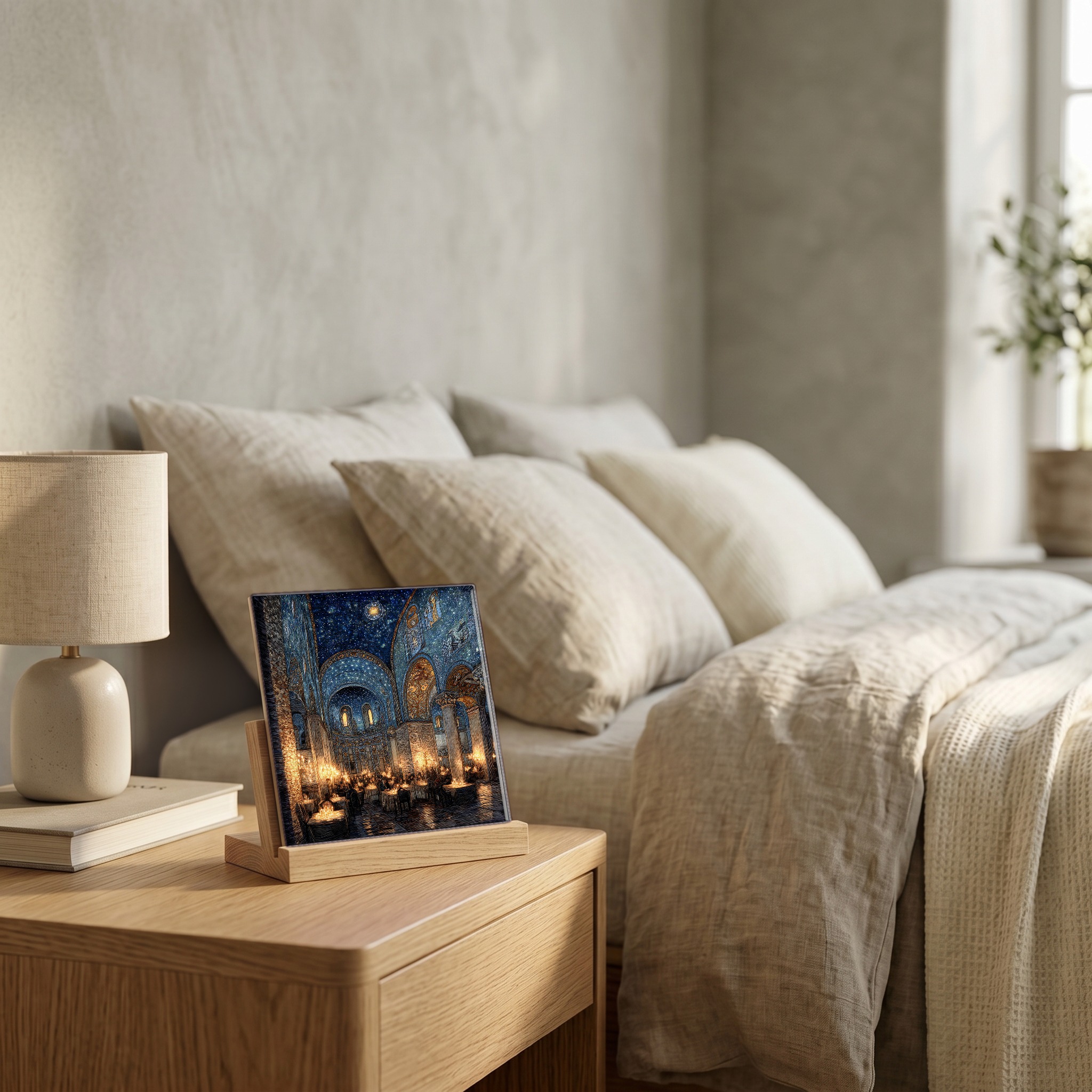
A small tile on the nightstand catching the morning. A larger one above the fire. Yours, wherever you spend the slow hours.
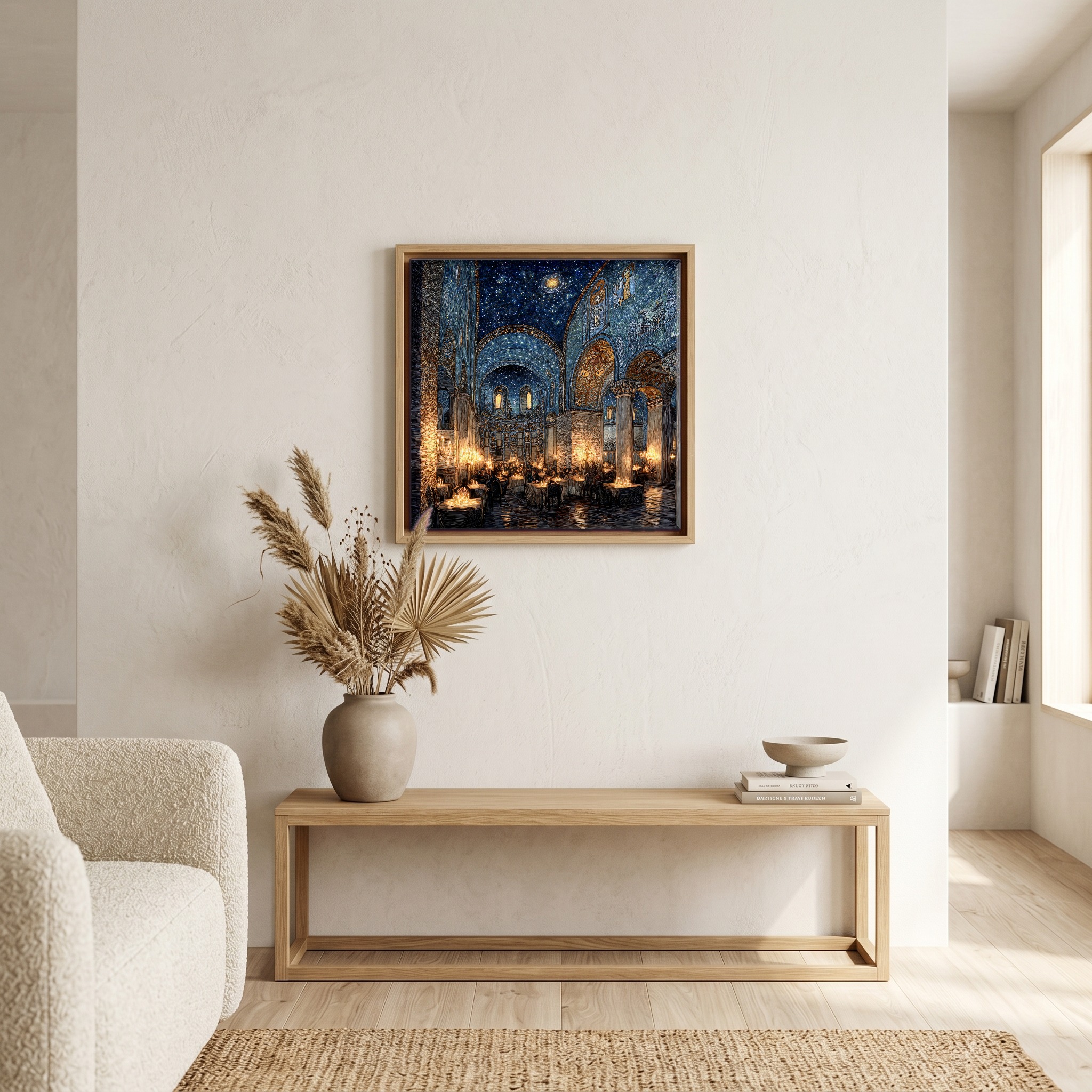
Above the bench, in a warm oak surround.
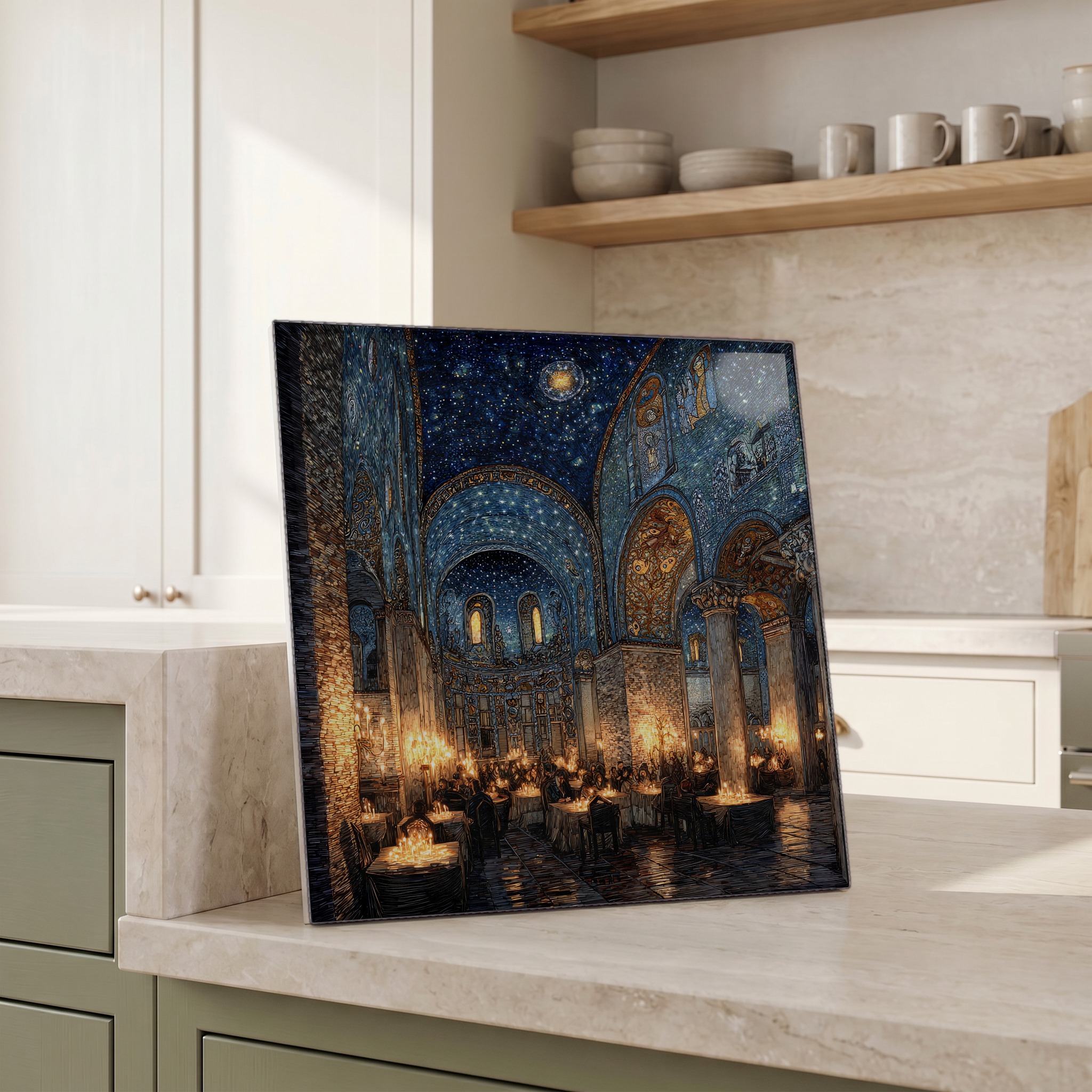
Beside the kettle, propped on the counter.
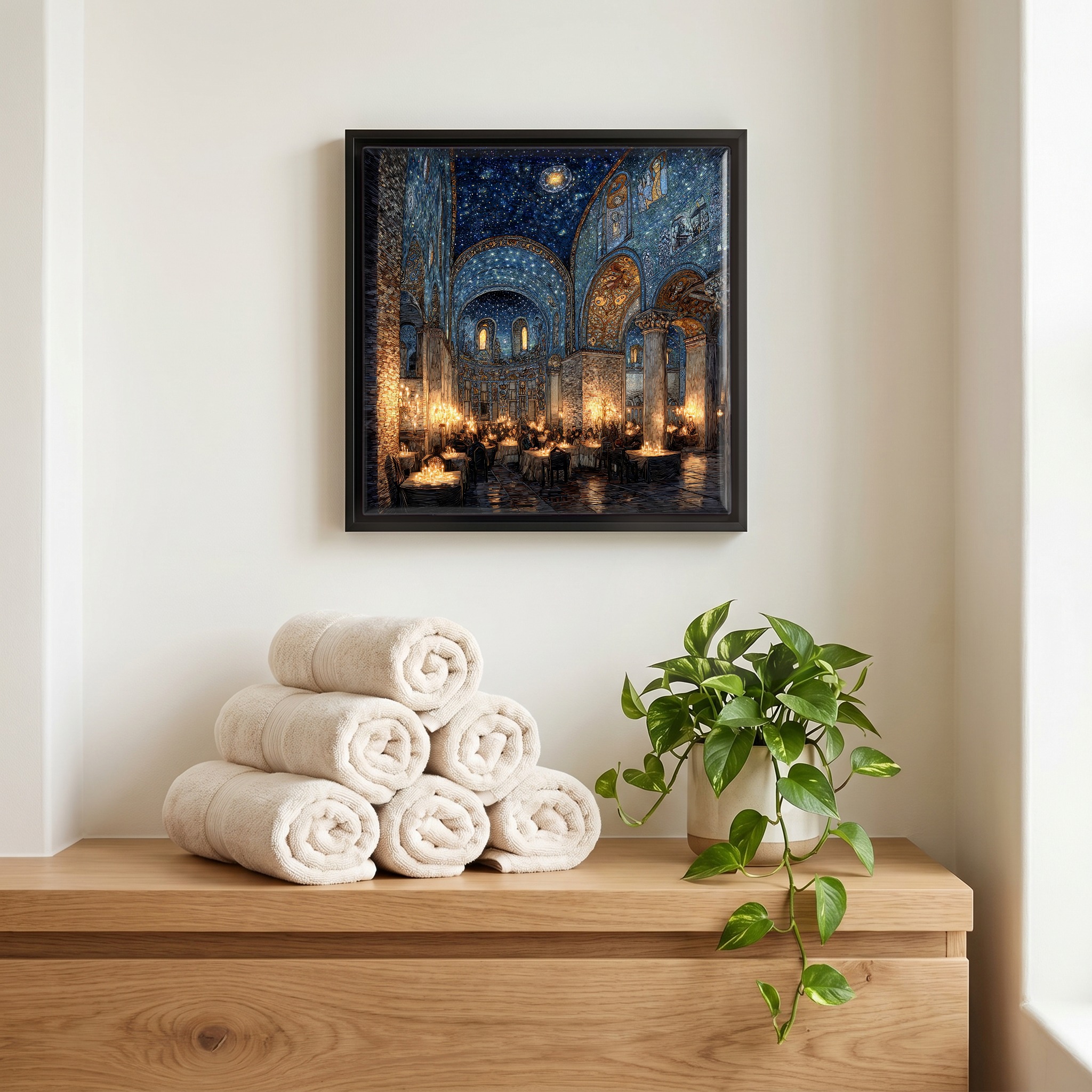
Above the linens, in a slim black surround.
On the nightstand, on a light oak stand.
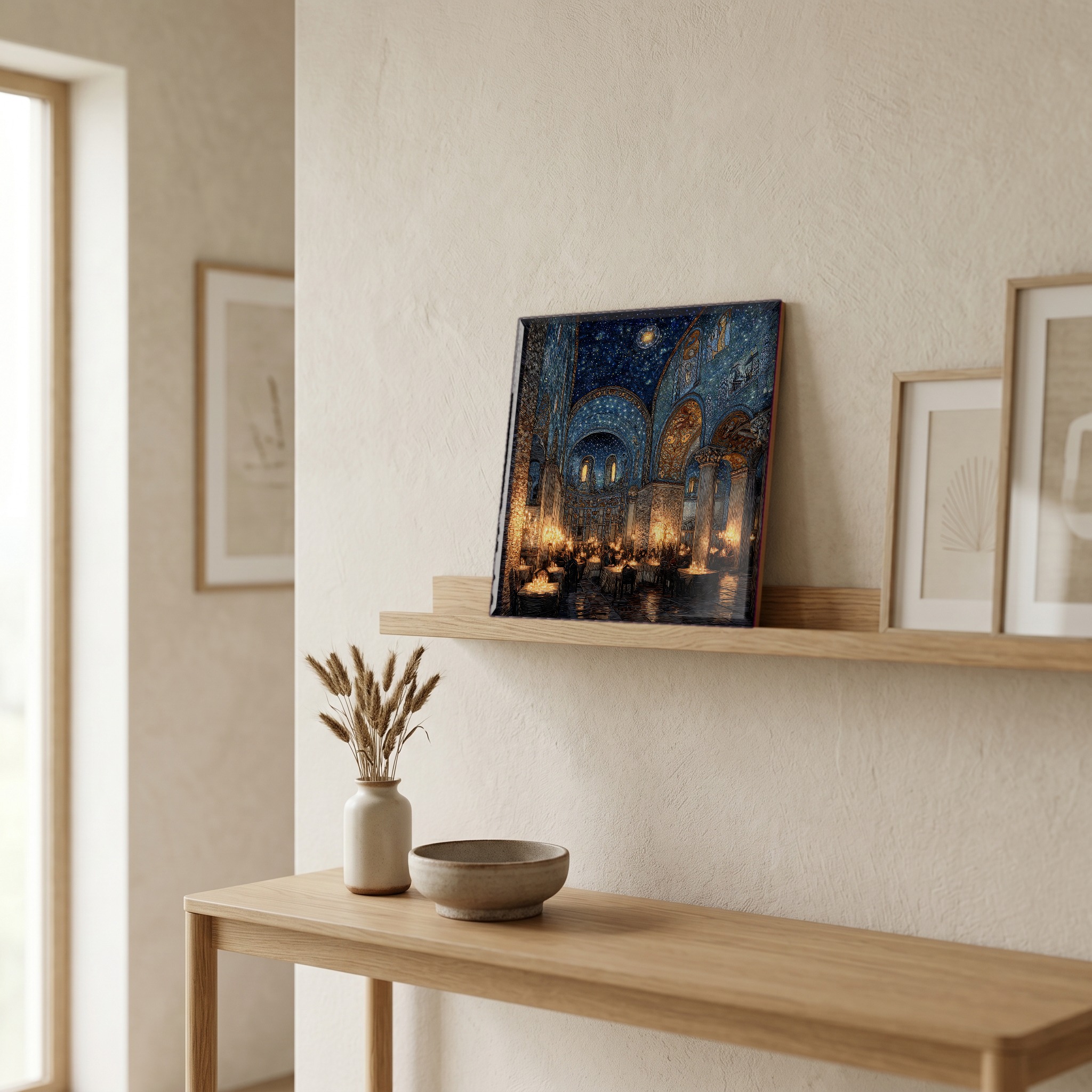
On a picture ledge, where the light comes in.
a note from the studio

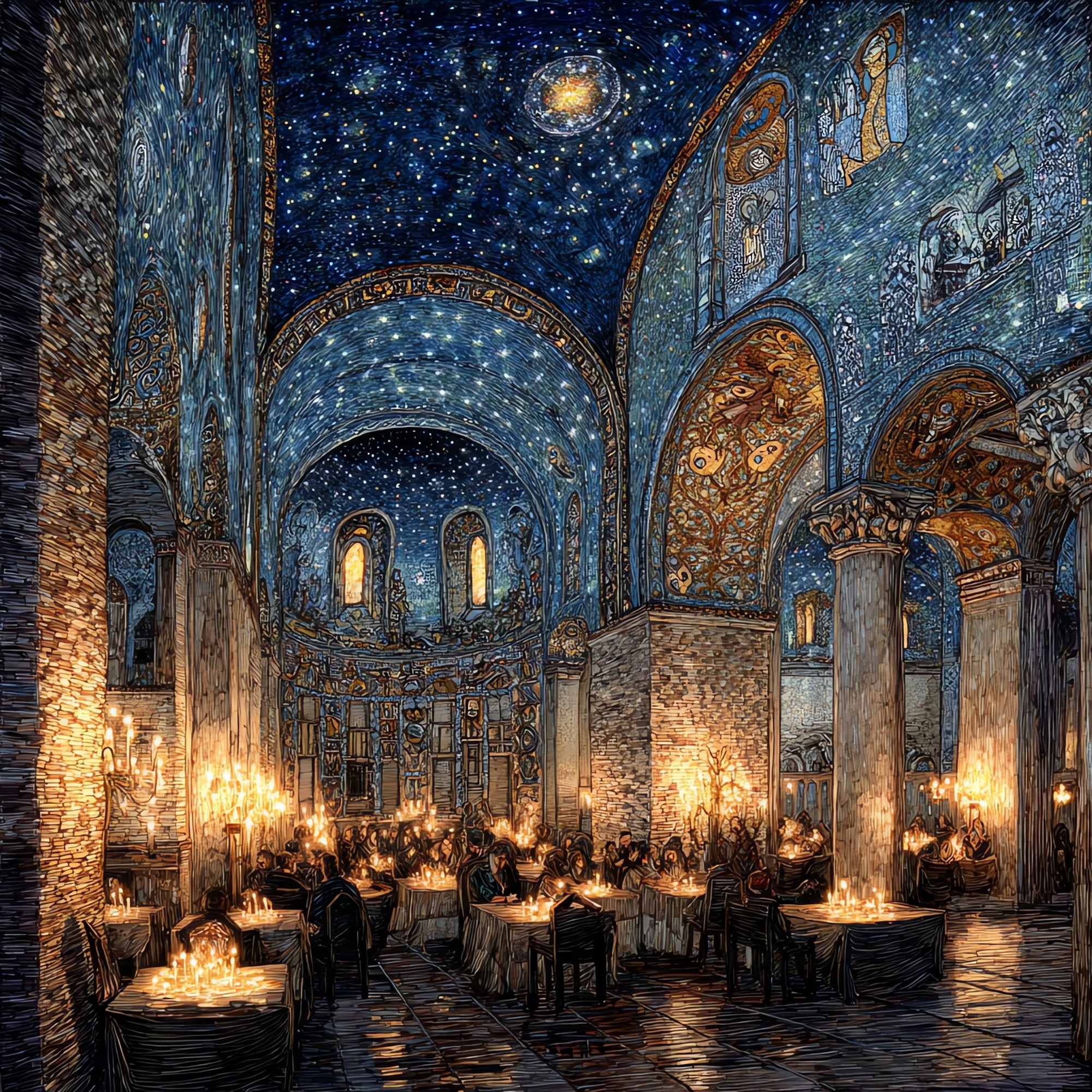
From a plain brick courtyard in Ravenna, the door opens onto gold. Above the altar a young Christ sits on a blue globe in a green meadow, the four rivers of paradise running out beneath him. On the side walls the emperor Justinian and the empress Theodora stand in procession, where they have stood since the year 547. It holds the largest spread of Byzantine mosaic outside Istanbul, and it is the only church of its age to come down to us whole. People tend to go quiet at the door.
from the studio
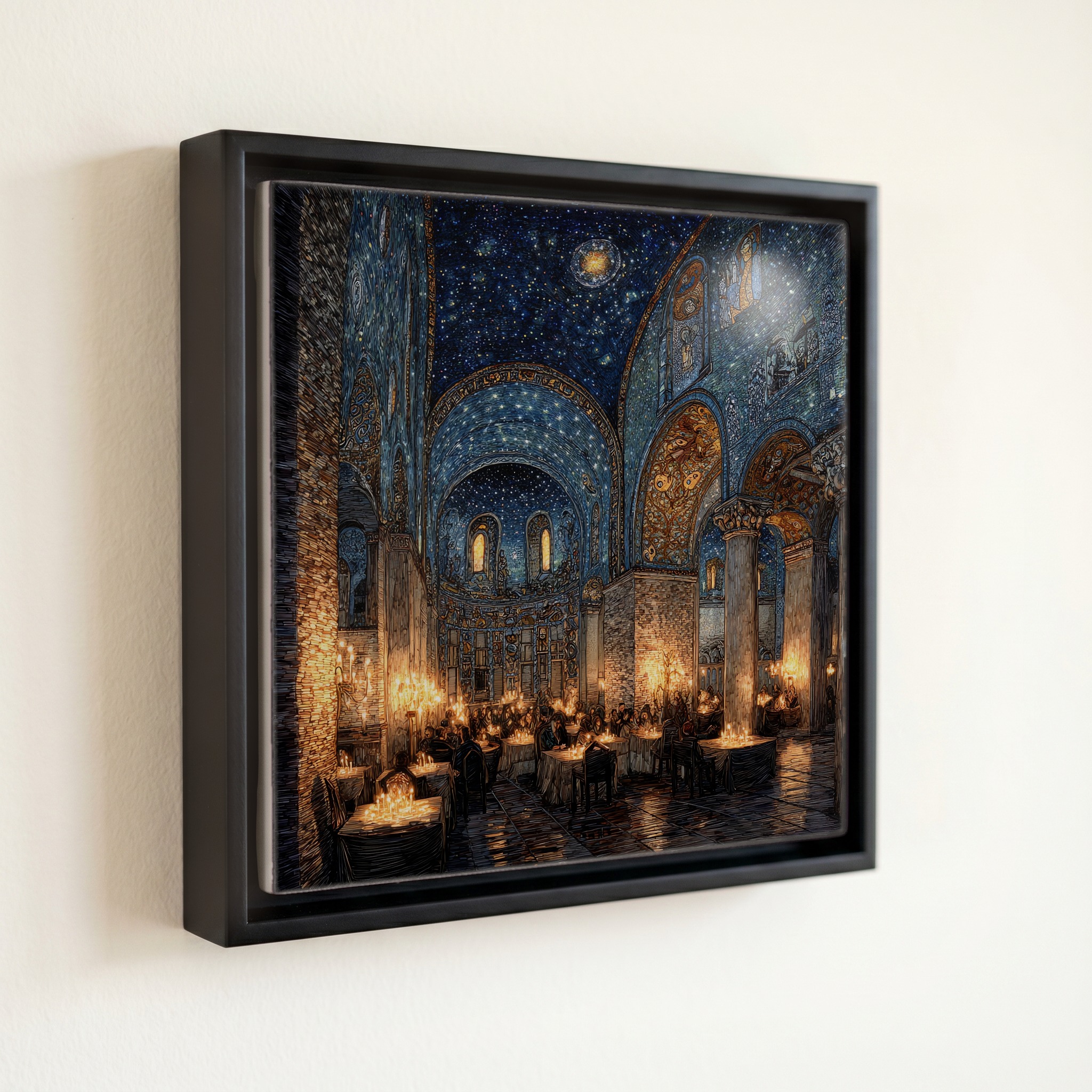
shown in a slim black floating frame · 6 × 6 in
— bring it home

Basilica of San Vitale, on ceramic.

Each tile is finished by hand in our Knoxville studio. Artwork is slowly infused into the ceramic surface under high heat and pressure, and rests beneath a thin glossy finish. The colour lives in the surface, not on top of it.

What kind of piece?
One tile — square or rectangle.
How big?
the popular one — counter, shelf, nightstand
6 × 6 in · 15 cm · 1.6 lb
Surface finish
A clear glossy finish — the artwork reads as if under resin. Ideal for show-pieces and framed wall art.
How it sits
A hidden cleat — sits ¼″ proud of the wall.
$58
Hand-finished and shipped from our studio at the foot of the Smokies. On your wall in about ten days.
size
6 × 6 in
15 cm
weighs
1.6 lb
solid in the hand
surface
ceramic, hand-finished
art rests beneath a thin glossy finish
from
Knoxville, TN
our family studio, at the foot of the Smokies
— start a Coaster Set

Pick any four 4-inch tiles — National Parks you've been to, a Smokies set, the four seasons of one place. $ for a set of , cork-backed, ready to live on the table.
comes gift-ready
comes gift-ready

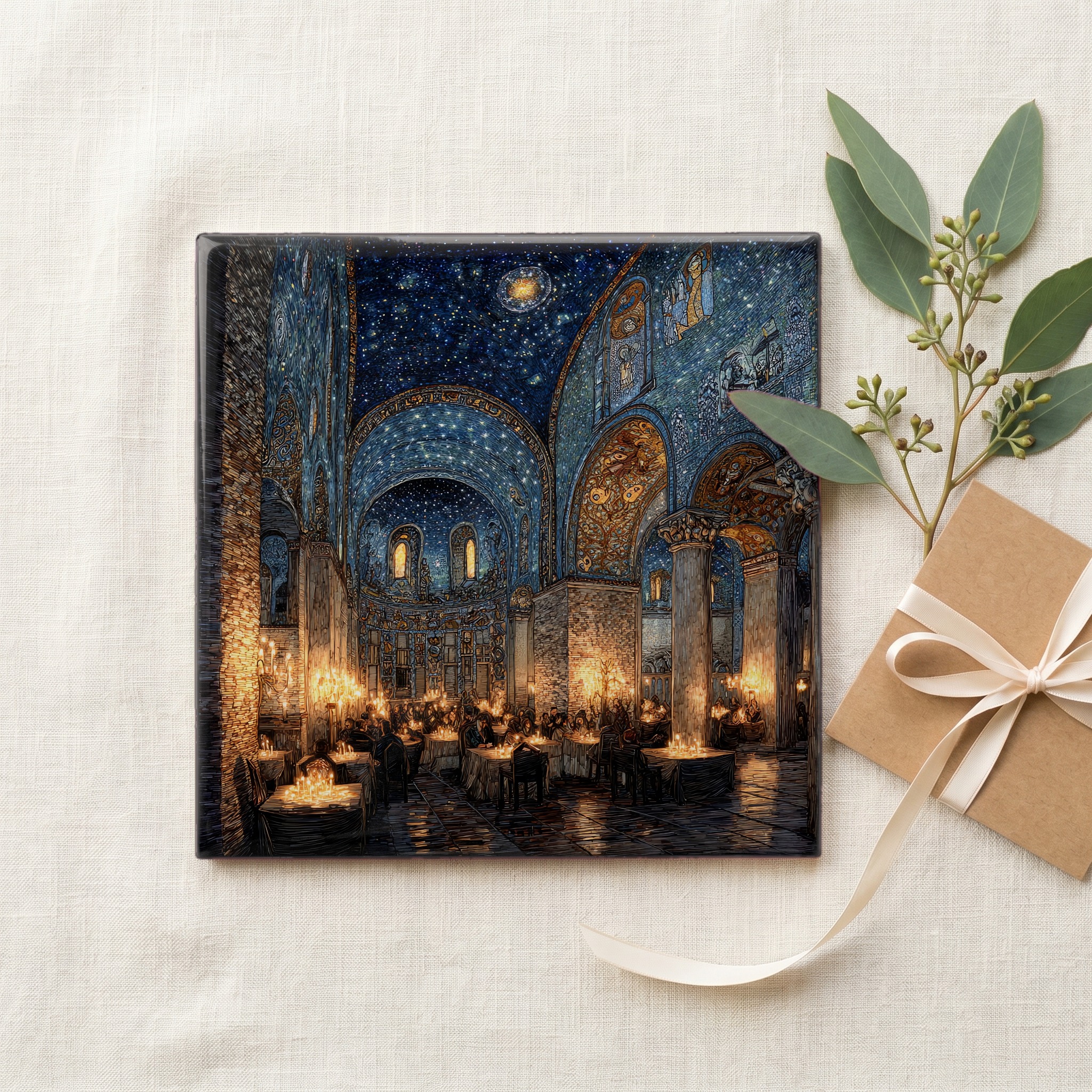
Each tile ships in a kraft box, tied with cream ribbon, with a handwritten note from the studio if you'd like to add one.
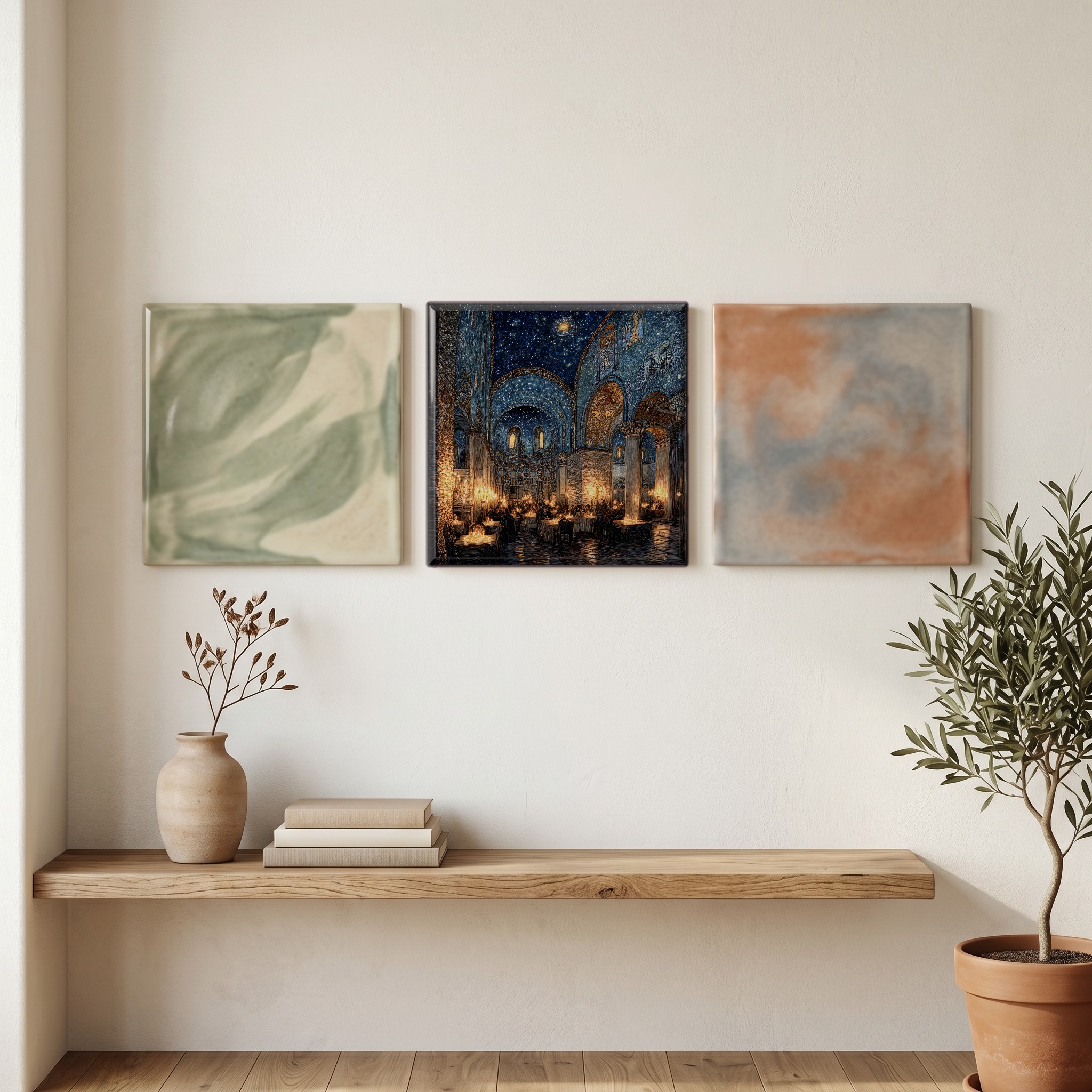
or build a grouping
or build a grouping

Three or five different vistas, hung together — a chapter of places you've been, or want to go.

about Basilica of San Vitale

The place, in three passes.

A little of what's known, in case you fall down the rabbit hole — or want to go see it yourself.
the place

San Vitale stands in the old centre of Ravenna, on the Adriatic plain of the Emilia-Romagna region in northern Italy. Bishop Ecclesius began it around 526, while the city was still the seat of the Ostrogothic kings, and Bishop Maximian consecrated it in 547, after Justinian's armies had drawn Ravenna into the Eastern Roman Empire. A local banker, Julius Argentarius, paid for the work. The plan is an octagon set inside an octagon, two rings of brick wrapped around a central dome. Since 1996 it has been one of the eight Early Christian Monuments of Ravenna on the UNESCO World Heritage List.

the light

The reason to come is the mosaic. Above the altar, in the half-dome of the apse, a beardless young Christ sits on a blue globe in a green meadow, holding out the martyr's crown to Saint Vitalis while Bishop Ecclesius offers him a model of the church; the four rivers of paradise run from beneath his feet. The side walls of the chancel carry the processions of the emperor Justinian and the empress Theodora, each haloed in gold. Overhead, in the vault, the Lamb of God rides a medallion held by four angels. It is the largest and best-preserved spread of Byzantine mosaic anywhere outside Istanbul.

— informed by Ravenna Mosaici, Smarthistory
the visit

The basilica is open to visitors most of the year, broadly 9am to 7pm in the warm months and on shorter winter hours, and a single combined ticket covers it with the other central monuments. Right beside it, sharing the same garden, stands the small Mausoleum of Galla Placidia, whose deep-blue starry vault is older than San Vitale by about a century. The Basilica of Sant'Apollinare Nuovo and the Neonian Baptistery are each roughly a fifteen-minute walk away through the old town. The address is Via San Vitale 17.

where
Italy · Ravenna, Emilia-Romagna
position
44.4206° N · 12.1964° E
the neighborhood

What's nearby.

A handful of named places within an hour's walk or short drive. Some we've already painted; some we will.
0.1 km S
Mausoleum of Galla Placidia
mausoleum
1 km SE
Basilica of Sant'Apollinare Nuovo
basilica
1 km SE
Neonian Baptistery
baptistery
1 km SE
Archiepiscopal Chapel
chapel
2 km NE
Mausoleum of Theodoric
mausoleum
5 km S
Basilica of Sant'Apollinare in Classe
basilica
N
Basilica of San Vitale
Mausoleum of Galla Placidia
Basilica of Sant'Apollinare Nuovo
Neonian Baptistery
Archiepiscopal Chapel
Mausoleum of Theodoric
Basilica of Sant'Apollinare in Classe
common questions

What people ask.

A few questions we get about Basilica of San Vitale — and about bringing the piece home.
about the place

The Basilica of San Vitale stands in the centre of Ravenna, in the Emilia-Romagna region of northern Italy, at Via San Vitale 17. It was built between about 526 and 547, when Ravenna was the capital of late-Roman and then Byzantine Italy.

It holds the largest and best-preserved Byzantine mosaics outside Istanbul. The most celebrated are the apse panels of the emperor Justinian and the empress Theodora in procession, and the young Christ seated on a blue globe above a green meadow in the half-dome.

Bishop Ecclesius began the church around 526, while Ravenna was ruled by the Ostrogothic kings, and Bishop Maximian consecrated it in 547, after Justinian's reconquest of Italy. A local banker, Julius Argentarius, funded the construction.

They show the emperor Justinian and the empress Theodora, each haloed and crowned, advancing in procession with courtiers, soldiers, and clergy around the year 547. Neither ruler ever visited Ravenna; the panels assert imperial and church authority over the newly reconquered city.

Yes. San Vitale is one of eight Early Christian Monuments of Ravenna inscribed together on the UNESCO World Heritage List in 1996, a group that also includes the Mausoleum of Galla Placidia and the Basilica of Sant'Apollinare in Classe.

The church is a double-shelled octagon, an eight-sided outer wall wrapped around an eight-sided core beneath a central dome. The design looks to Constantinople rather than Rome, and it later shaped Charlemagne's Palatine Chapel at Aachen, begun around 792.

Yes. It is open to visitors most days, generally from 9am into the early evening in the warm months and on shorter winter hours, and a single combined ticket admits you to the central group of monuments. The Mausoleum of Galla Placidia stands in the same garden.

about the piece in your home

It has been a meaningful gift for our customers with ties to Ravenna or a love of Byzantine art. San Vitale holds the city's most celebrated mosaics, the processions of Justinian and Theodora among them. A Keepsake or Small with a handwritten note from the studio carries well.

The piece runs to deep gold, green, and imperial purple, the colours of the apse and the side-wall processions. It sits well in jewel-tone Maximalist rooms, in Old-World Traditional studies, and against a warm neutral wall where the gold can do the work.

Yes. Ecclesiastical gold and saturated jewel tones have moved back into interiors alongside the heritage-revival look, and a Byzantine mosaic reads as both old and current. The colour lives in the ceramic surface, so it holds its depth under lamplight.

Above a sofa or a long console, a single Large holds the wall on its own. For a wider span, a four-tile Mural reads as one image, and a nine-tile Mural becomes the room's focal point. Smaller walls take a Medium.

Yes. For a bathroom, shower, or kitchen backsplash, choose the Dura Satin or Matte finish, both scratch-resistant and made for vertical, damp settings. The Glossy finish is better kept to framed wall pieces away from direct splashing.

Wipe it with a soft microfibre cloth and a little water. The colour is slowly infused into the ceramic surface under high heat and pressure and lives beneath a thin finish, so it needs no polish and no special cleaner.

Yes. Every WenderVista piece is original to Wender Studios, our family studio in Knoxville, Tennessee. We paint and hand-finish each one in-house, with no outside licensing, so the San Vitale image is ours alone.

if this one stayed with you

A few you might also love.

Hand-picked by the eye that found Sorapis. Same air, same kind of quiet.
— a collection

The Italian Dolomites,
painted slow.

The valleys between Cortina and Val Gardena, the tarns you walk an hour to see, the towers that turn the colour of a banked fire just before dark. Wander the collection by valley, by season, or follow the path Reid walked.

Tre Cime
Braies
Misurina
Sorapis
Cinque Torri
Sassolungo
Marmolada