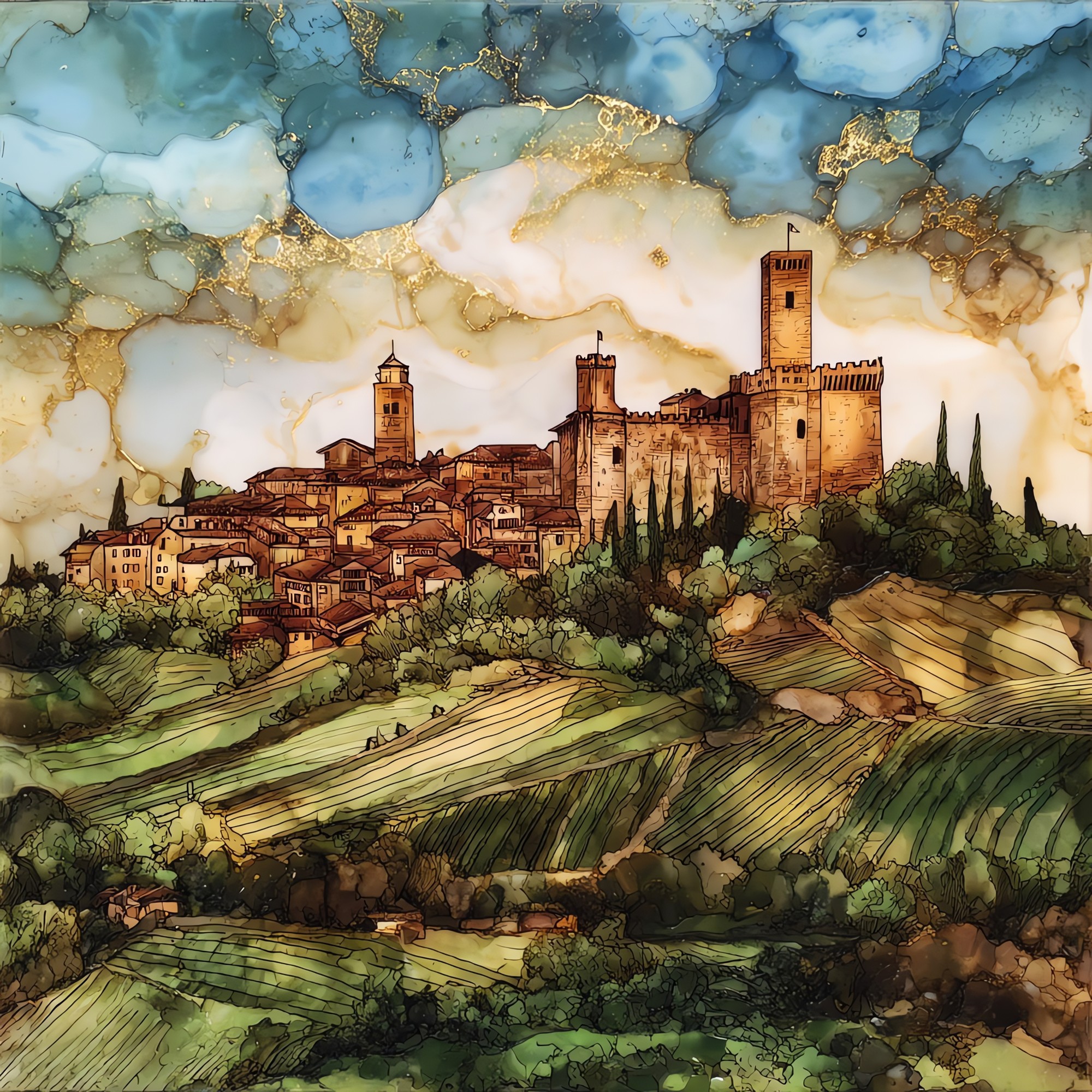
Barolo Wine Country
— the fog the grape was named for.
Not only on a wall.
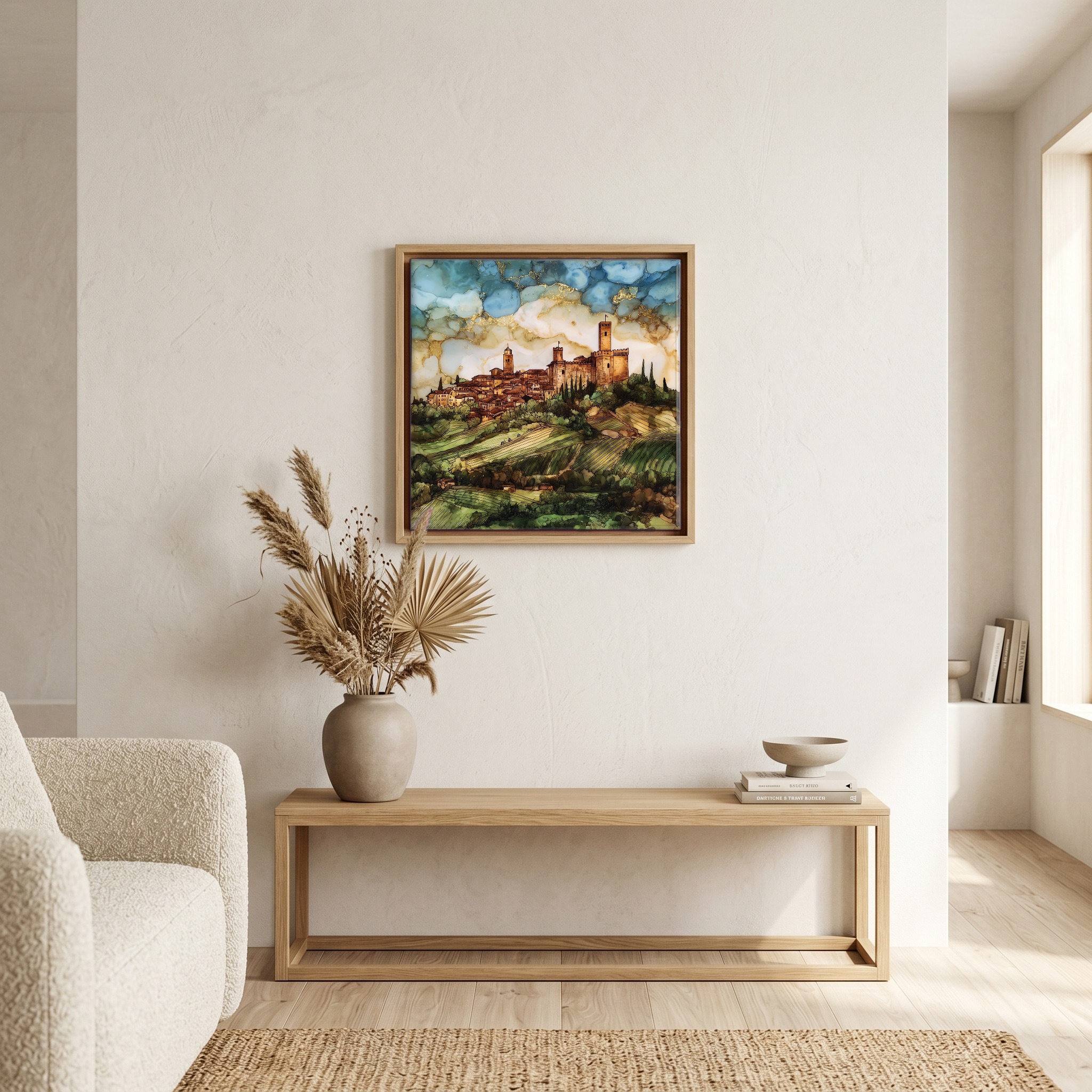
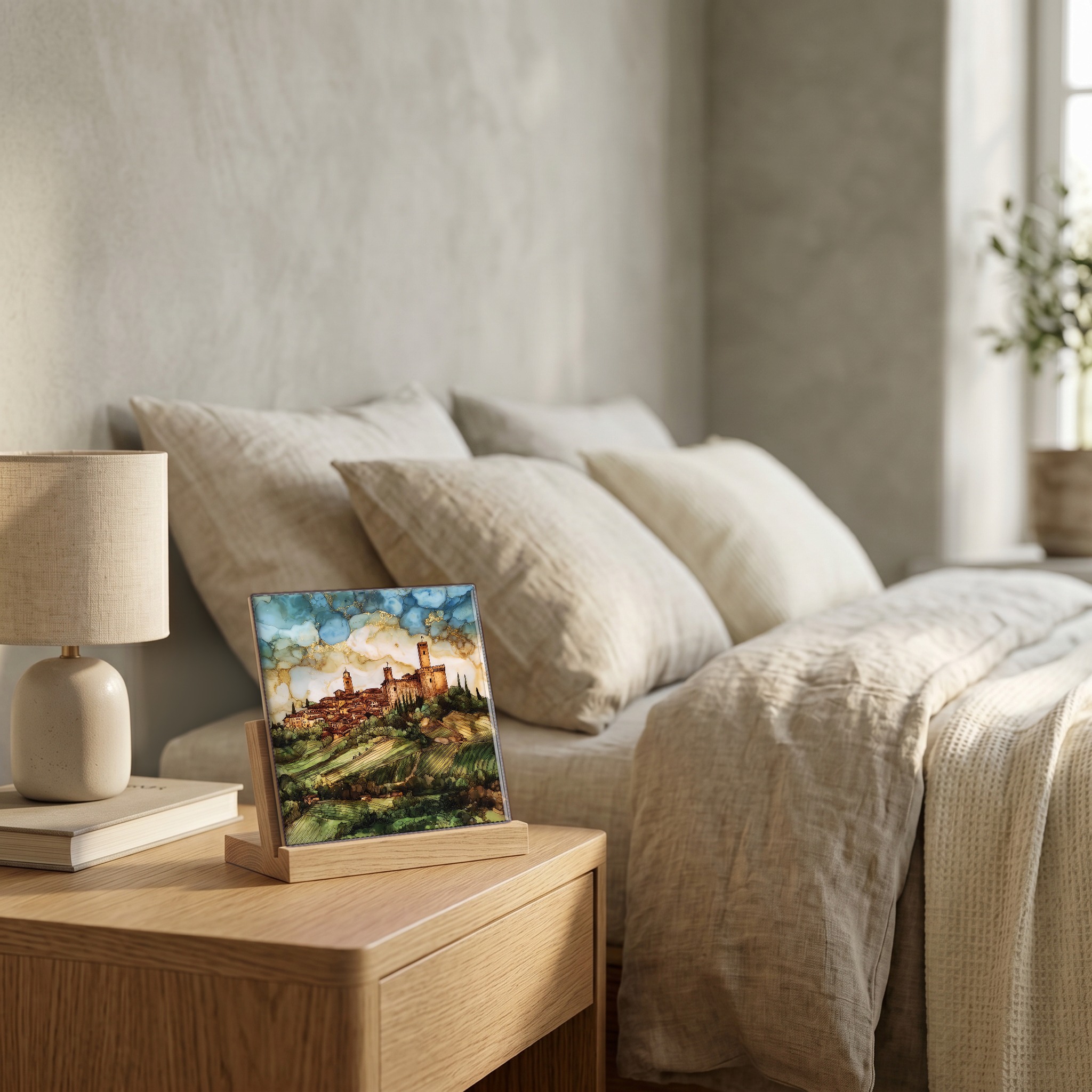
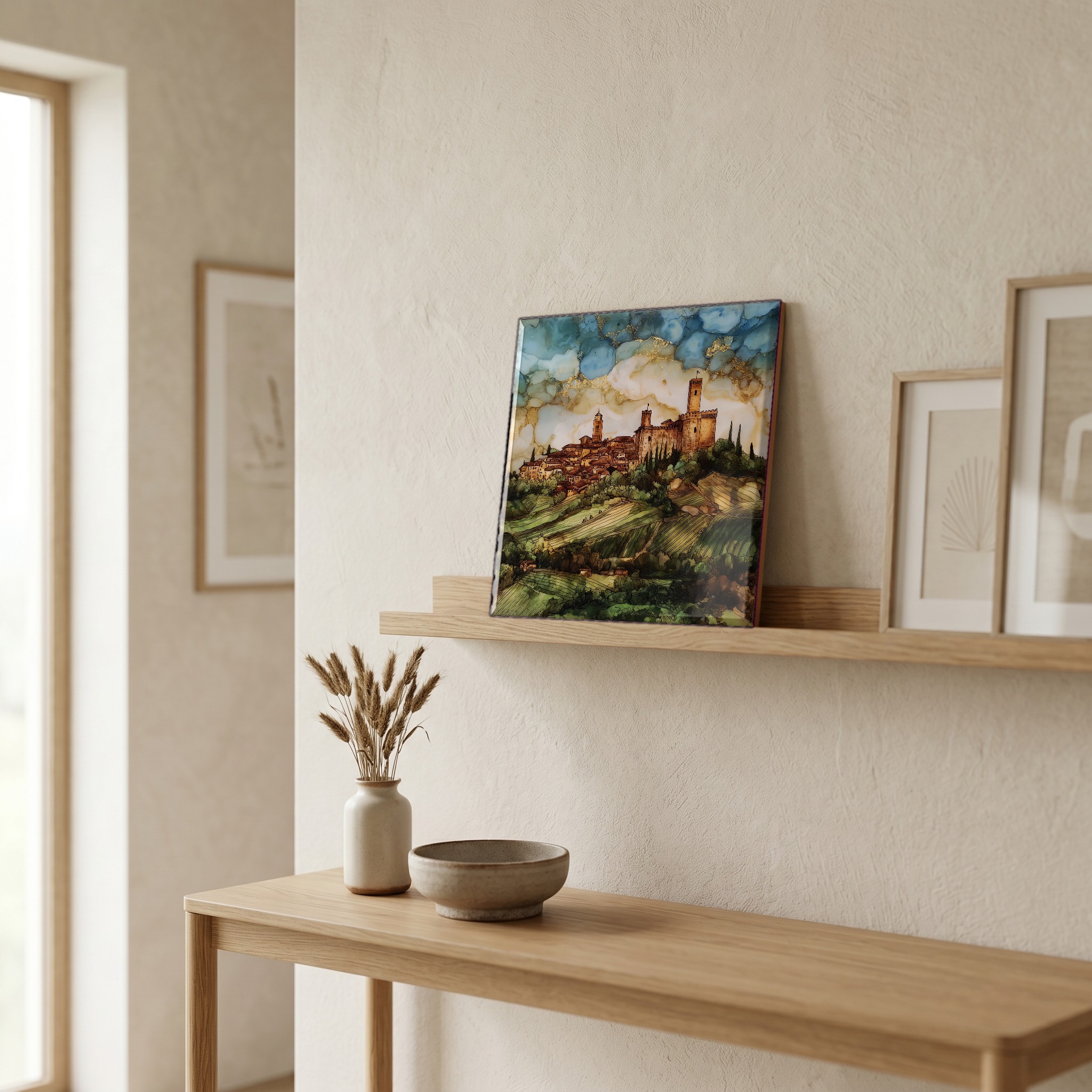
“Eleven villages on the Langhe hills south of Alba, where the Nebbiolo grape ripens last and slow, picked in the October fog the wine takes its name from. The hills run in long combed rows, with a castle on most of the high points, Barolo and La Morra and Serralunga each looking across at the others. By harvest the vineyards turn rust and gold, and the valleys hold the morning mist until almost noon. Growers here count their patience in decades. The wine is meant to be waited for, and so is the light.
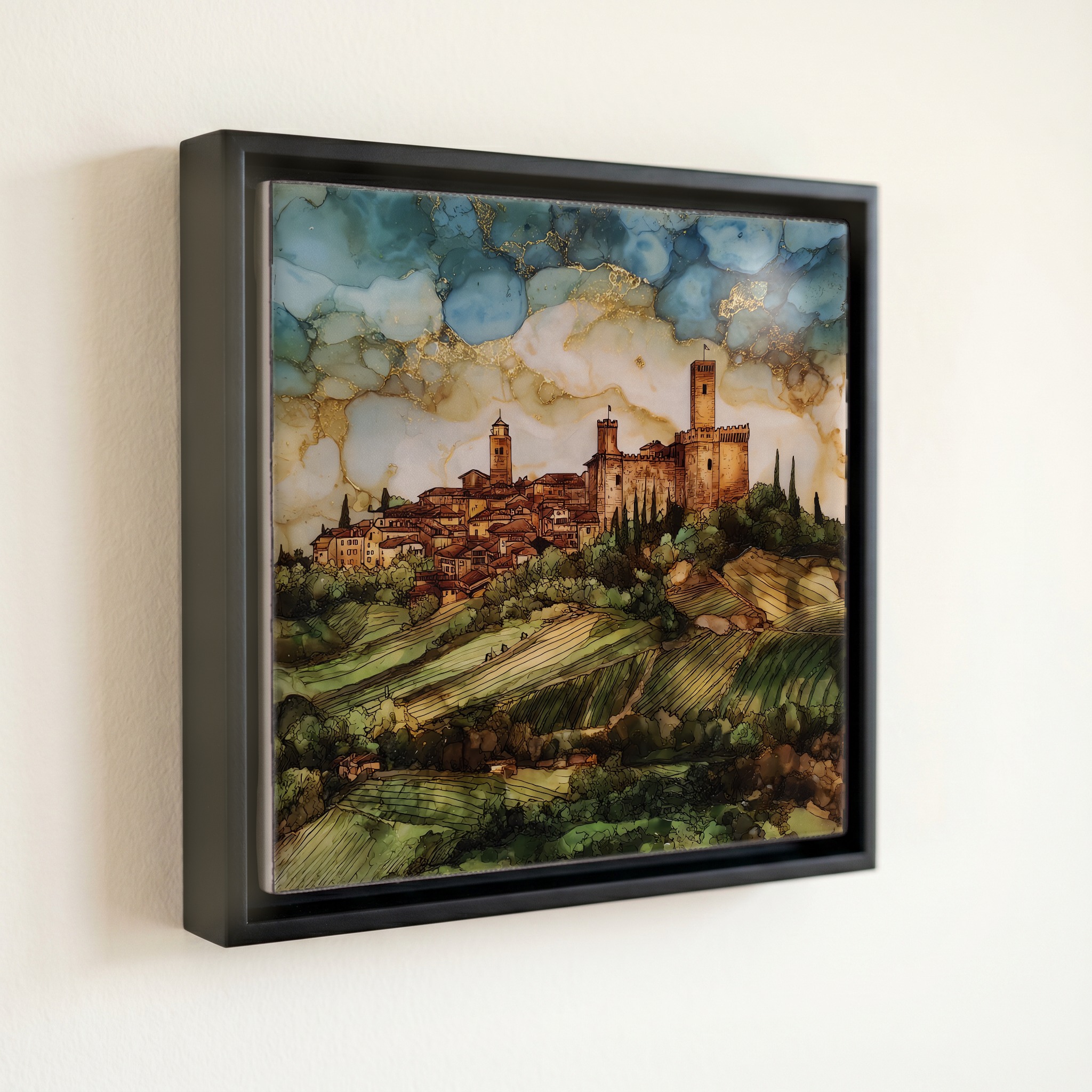
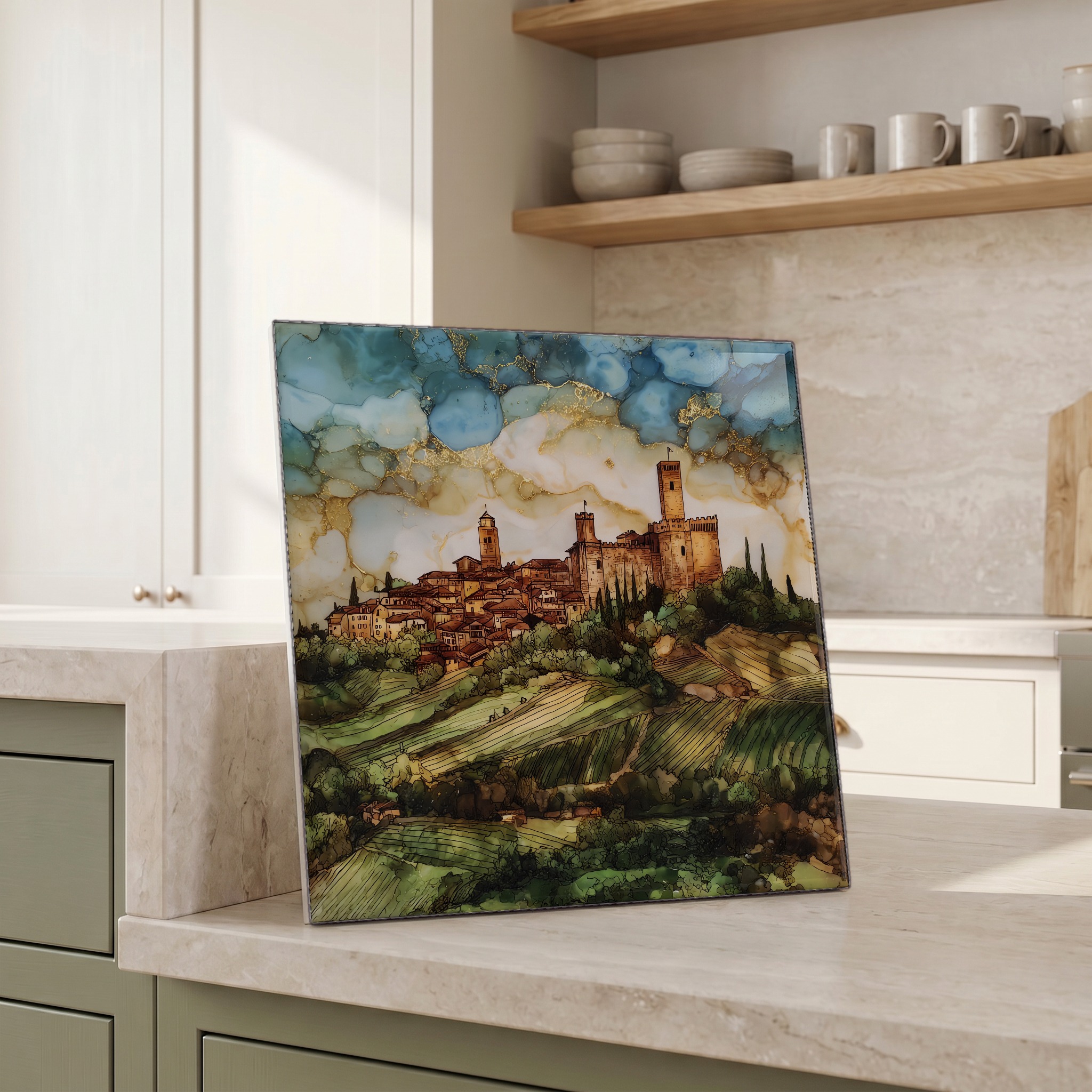
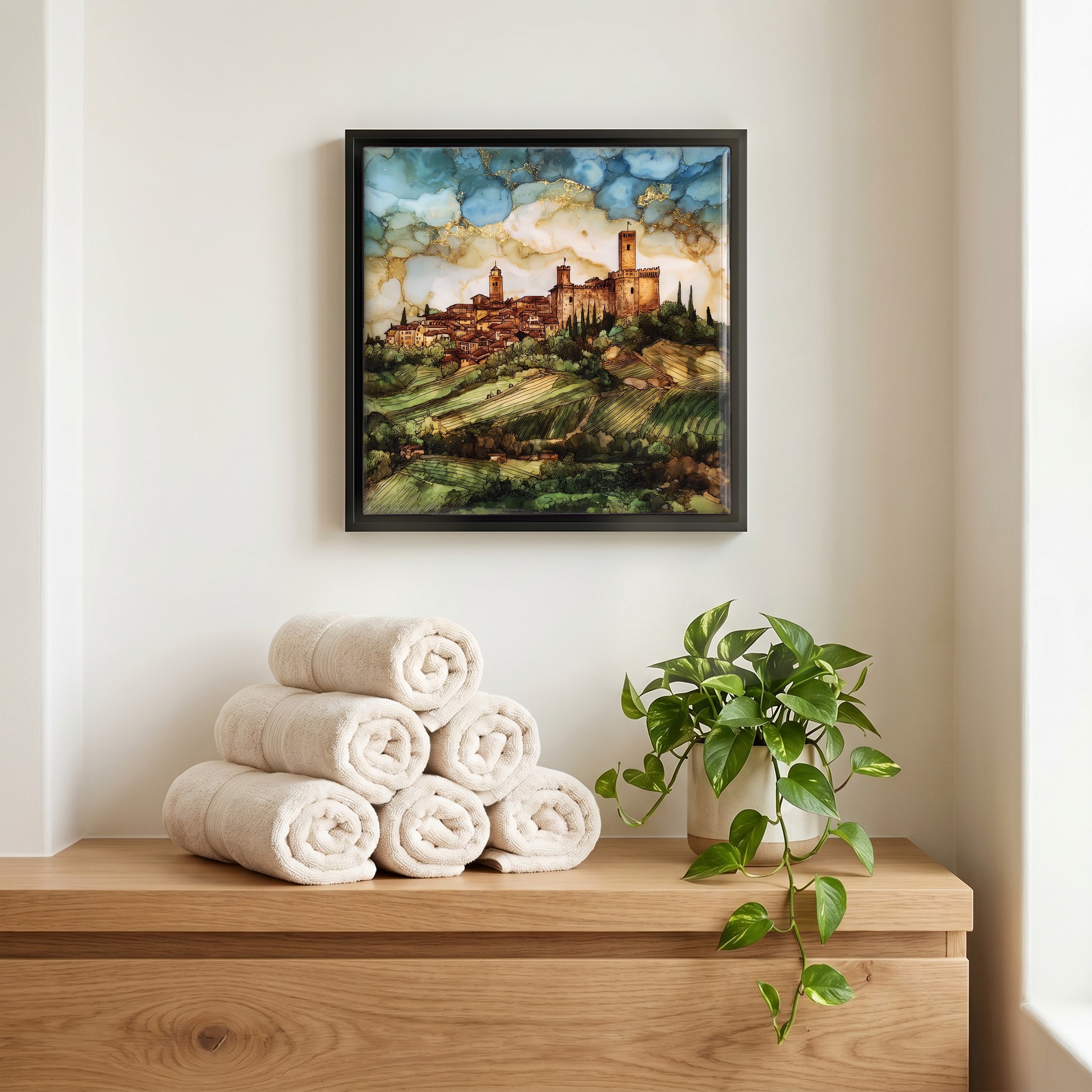
Barolo Wine Country, on ceramic.
Each tile is finished by hand in our Knoxville studio. Artwork is slowly infused into the ceramic surface under high heat and pressure, and rests beneath a thin glossy finish. The colour lives in the surface, not on top of it.
Pick any four 4-inch tiles — National Parks you've been to, a Smokies set, the four seasons of one place. $ for a set of , cork-backed, ready to live on the table.
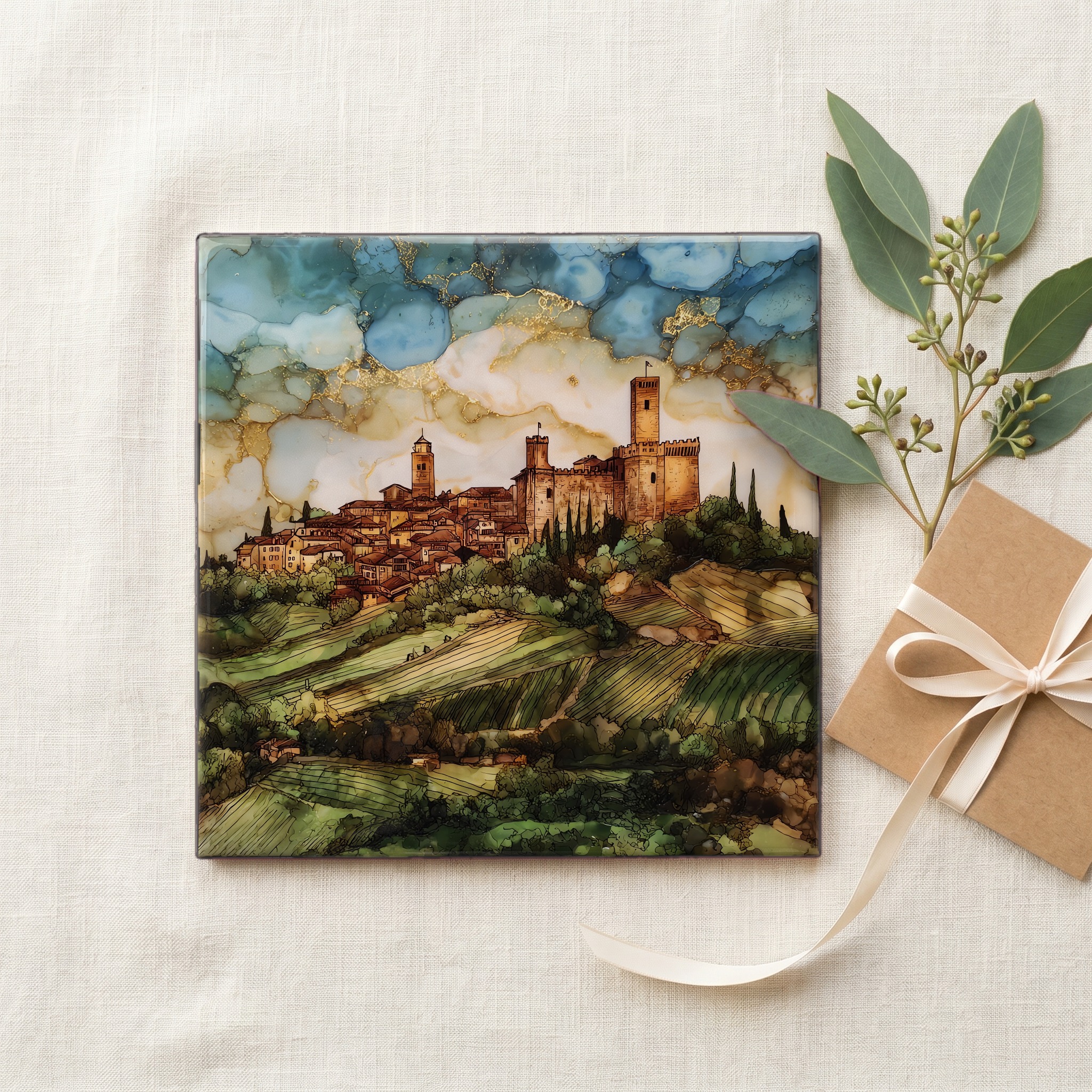
Each tile ships in a kraft box, tied with cream ribbon, with a handwritten note from the studio if you'd like to add one.
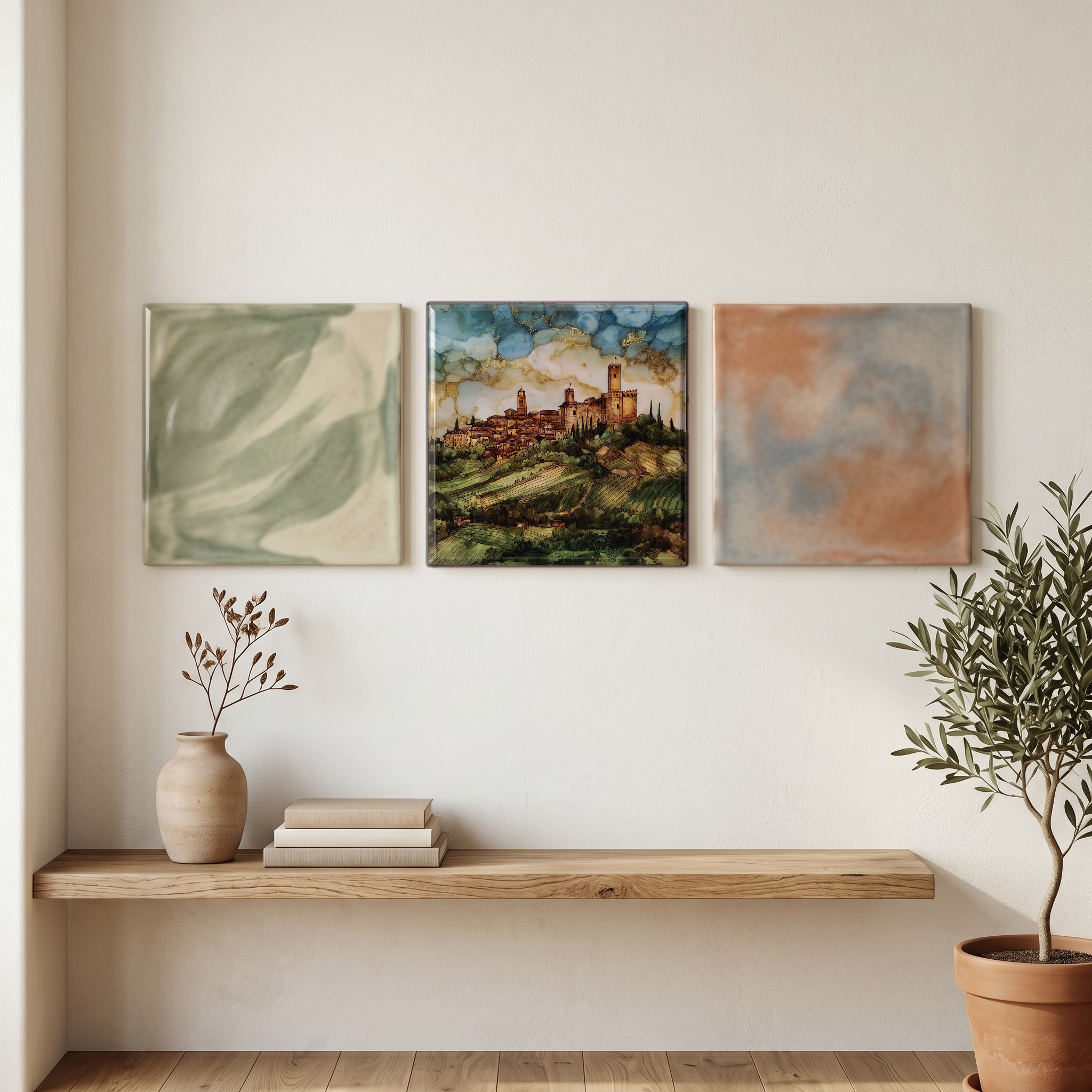
Three or five different vistas, hung together — a chapter of places you've been, or want to go.
The place, in three passes.
Barolo names both a single hill village of roughly 700 people and the larger wine country around it, in the Langhe hills of Piedmont, in the province of Cuneo, about fifteen kilometres south of the town of Alba. The growing zone spreads across eleven communes, among them La Morra, Serralunga d'Alba, Castiglione Falletto and Monforte d'Alba, each on its own ridge. The vineyards climb the slopes between roughly 170 and 540 metres. Since 2014 the surrounding landscape, the Vineyard Landscape of Piedmont: Langhe-Roero and Monferrato, has been a UNESCO World Heritage Site. The region is reached by road from Alba or from Cuneo, then by the small ridge roads that link one village to the next.
The Nebbiolo grape that makes Barolo is one of the last in Italy to be picked, usually through October, after most other vines are already in. Its name is thought to come from nebbia, the Piedmontese and Italian word for fog, the heavy mist that fills the Langhe valleys on autumn mornings while the grapes still hang. The vine ripens slowly and rewards patience; Pliny the Elder wrote of a vine here that alone among grapes did well in the fog. By late October the vineyards turn rust, copper and gold across the hills. Winter strips the rows bare, and the wine, by the appellation rules, must age at least 38 months before release, so the whole place is built around waiting.
At the centre of the village of Barolo stands the Falletti castle, bought by the municipality in 1970 and now home to the WiMu, the Wine Museum, set over several floors of the keep. The wine country is small enough to drive in a day: ridge roads link Barolo to La Morra, with its wide view across the valley, to the castle at Grinzane Cavour tied to the nineteenth-century statesman Camillo Cavour, and on to Serralunga d'Alba. Nearby Alba holds its white-truffle fair each autumn. Spring and autumn are the gentlest seasons on the hills; the cellars and the museum keep regular visiting hours, while the October harvest is the busiest stretch for the growers.