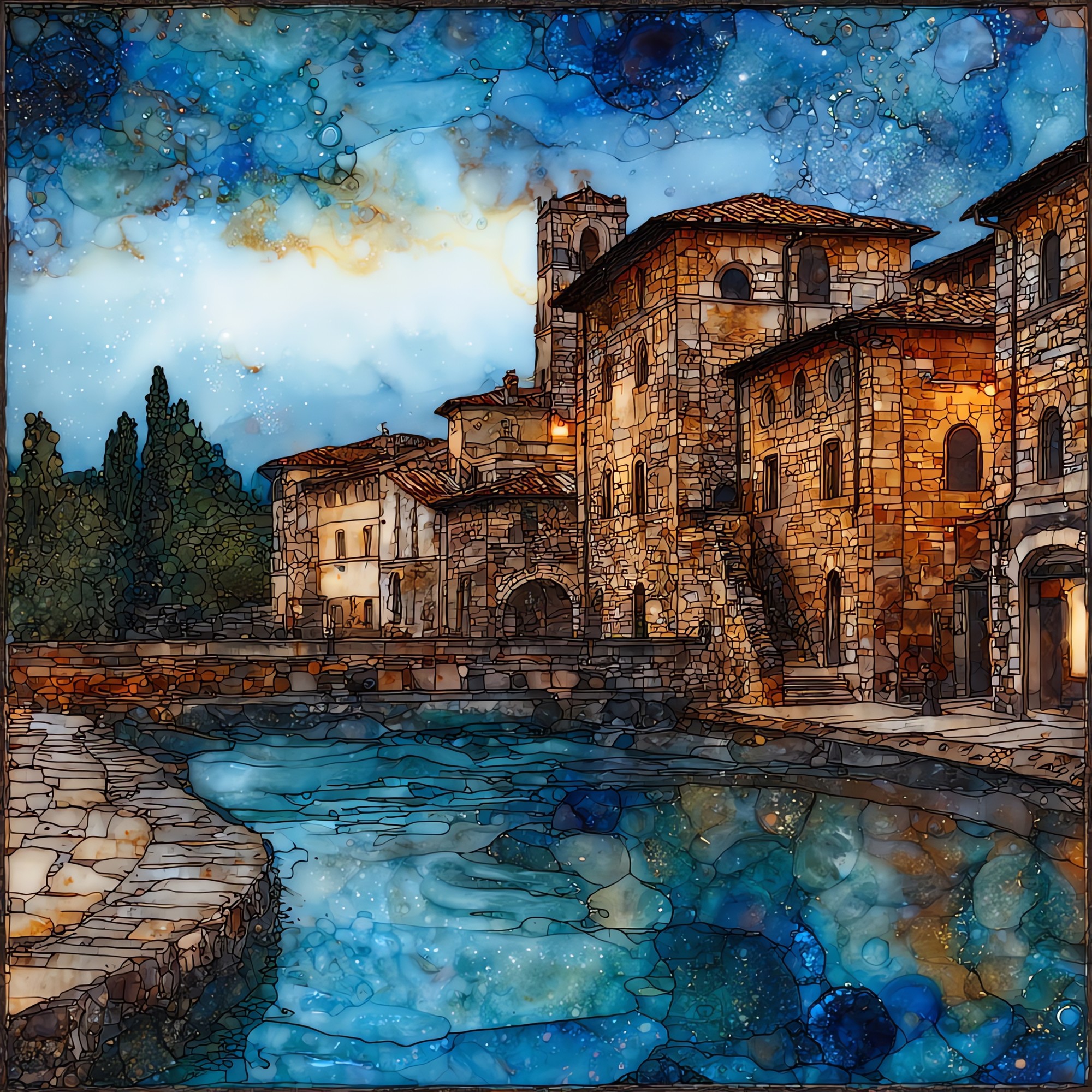
Bagno Vignoni
— — the square that has always been water.
Not only on a wall.
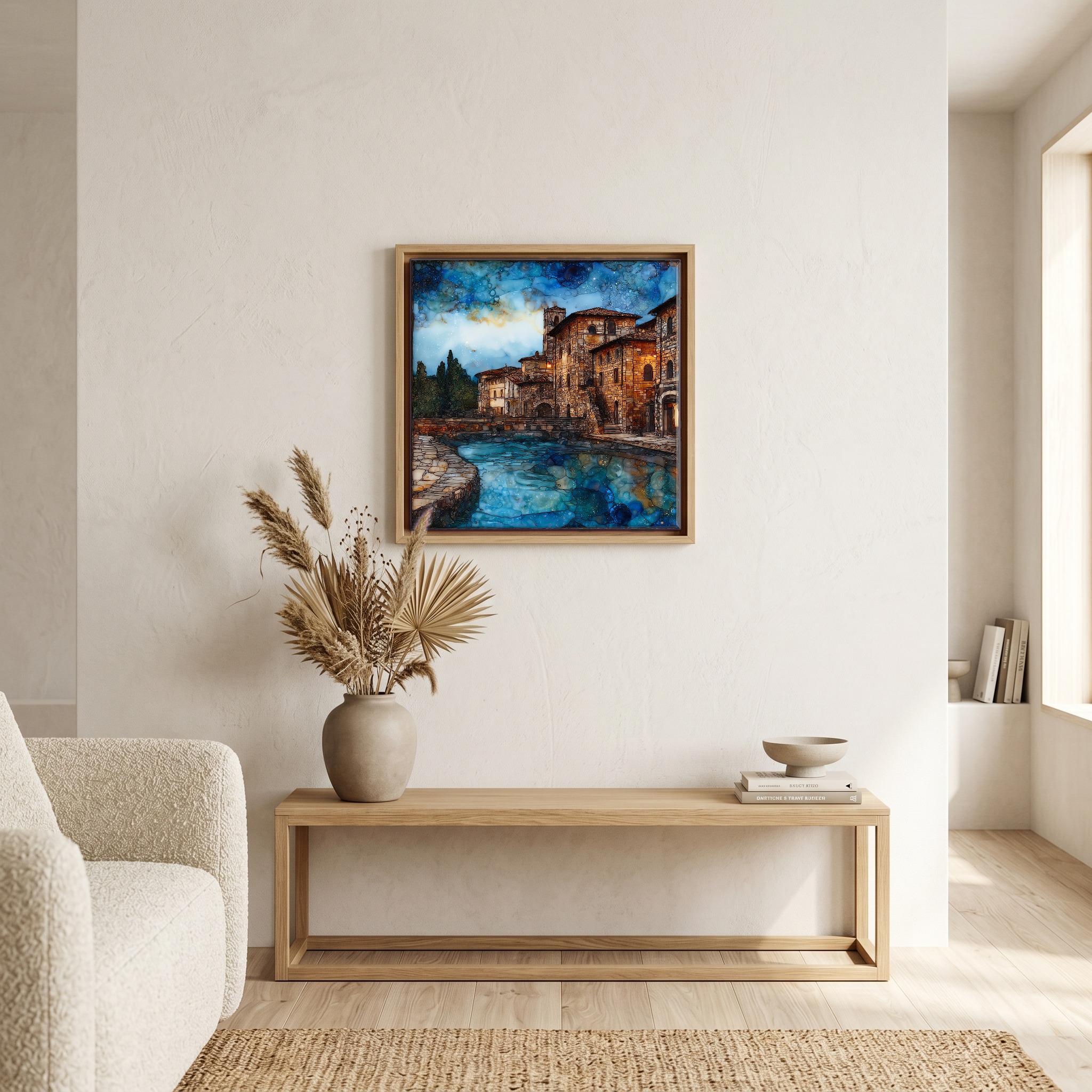
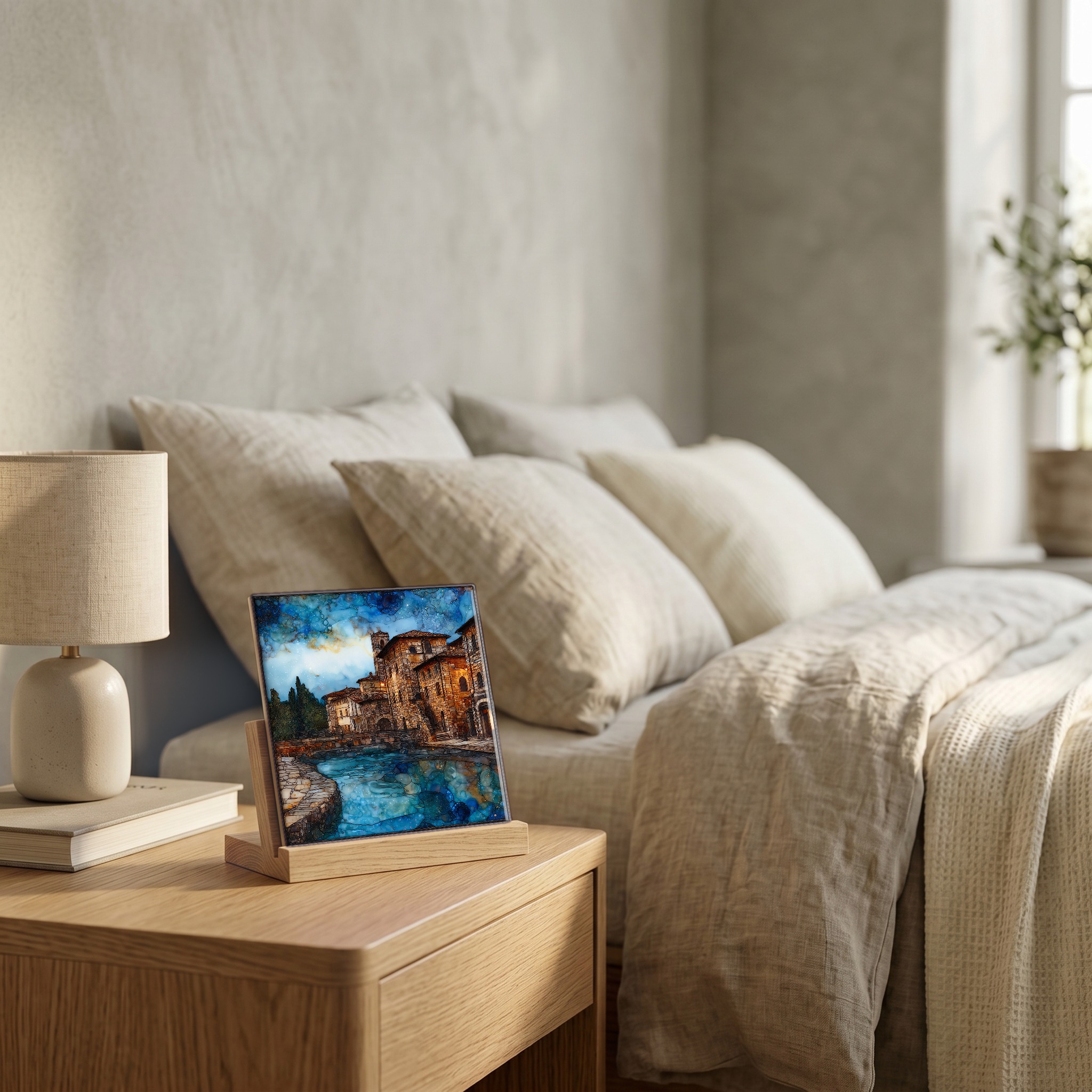
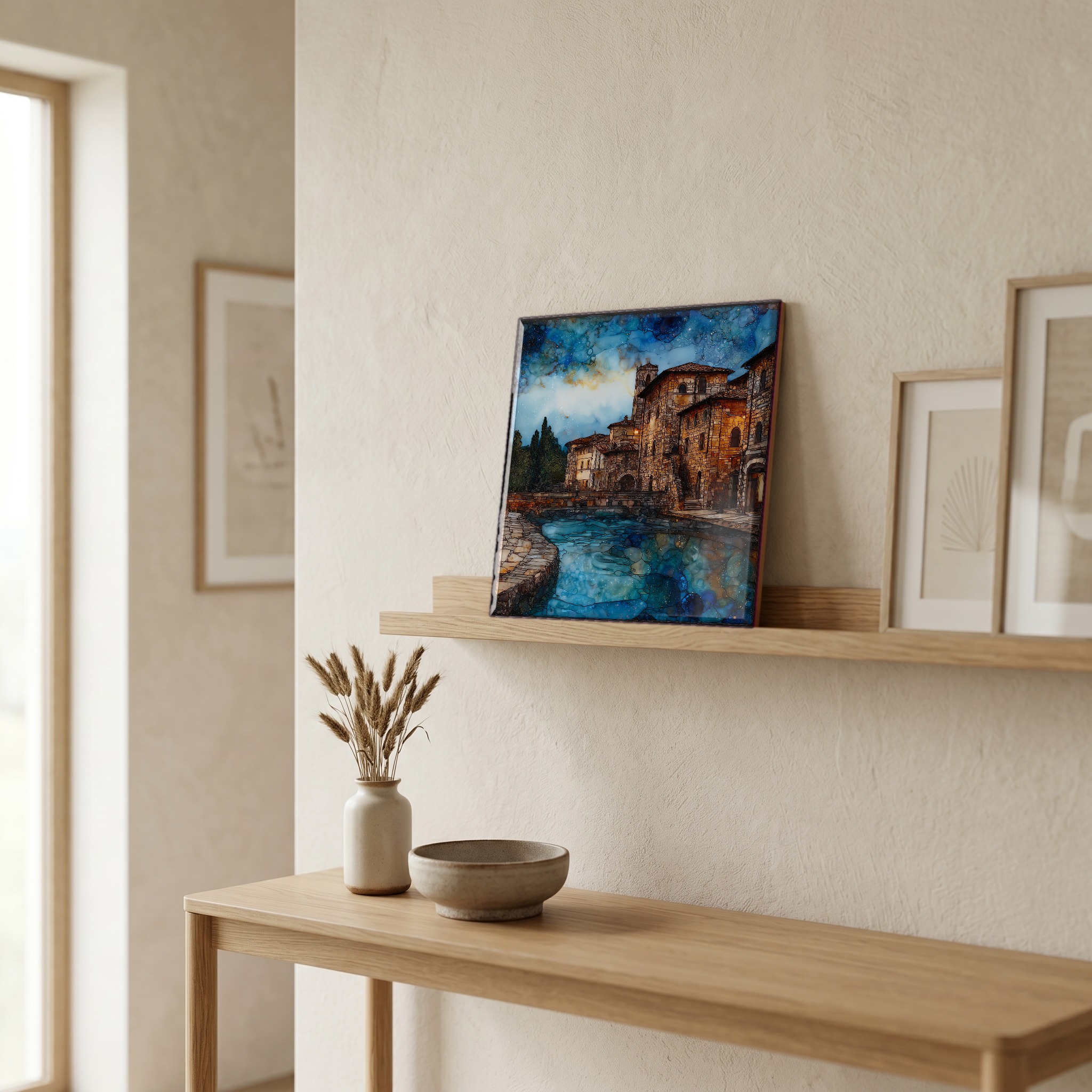
“In most Tuscan towns the center is a piazza you cross to reach the church. Here the center is the water. A long rectangle of warm mineral spring sits where the square should be, steaming in the same spot since Romans walked the Via Francigena south to Rome. Saint Catherine of Siena came for the heat. So did Lorenzo de' Medici. The water spills downhill to old mills cut into the rock. On a cold morning, before the day warms, the steam lifts off the surface and the whole village seems to breathe.
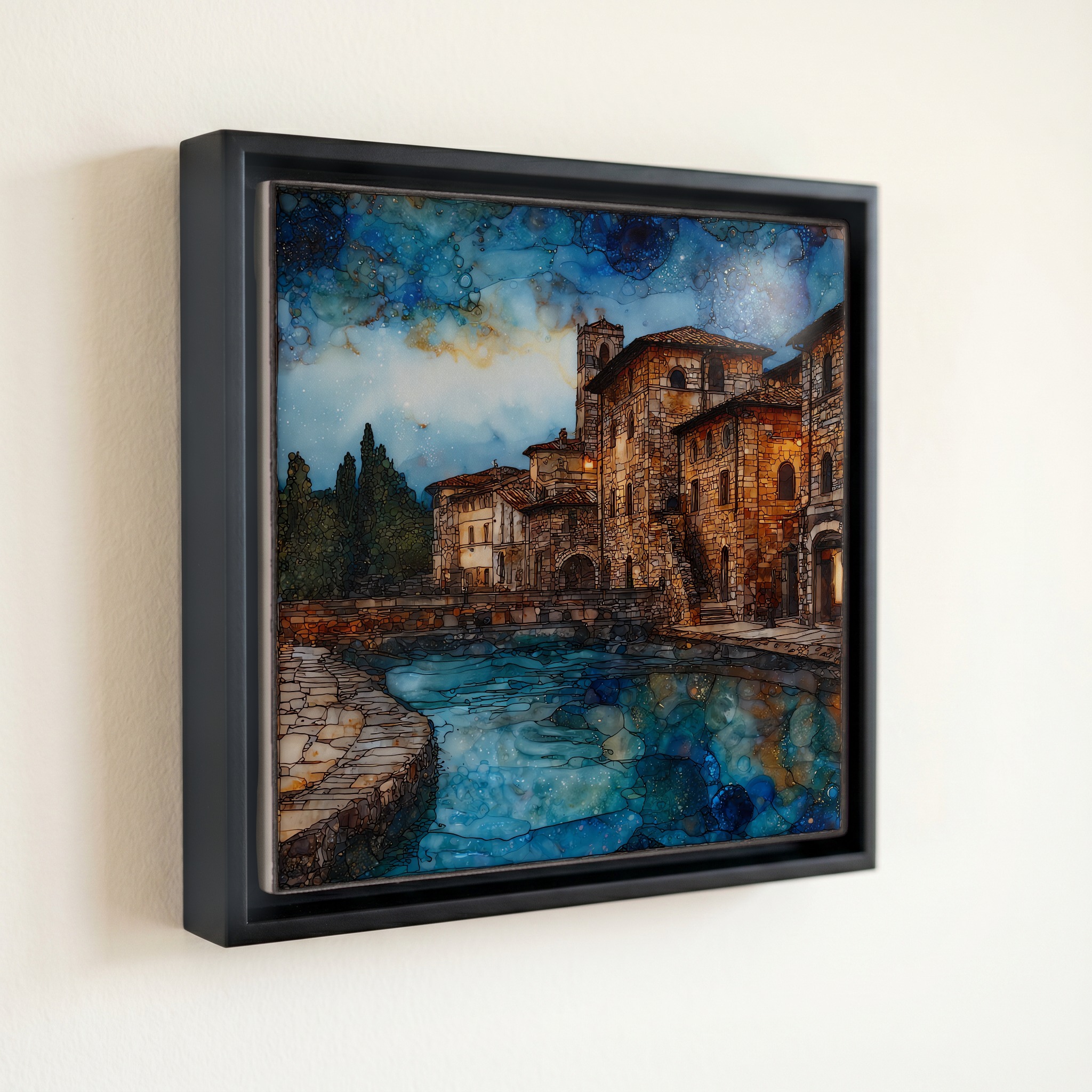
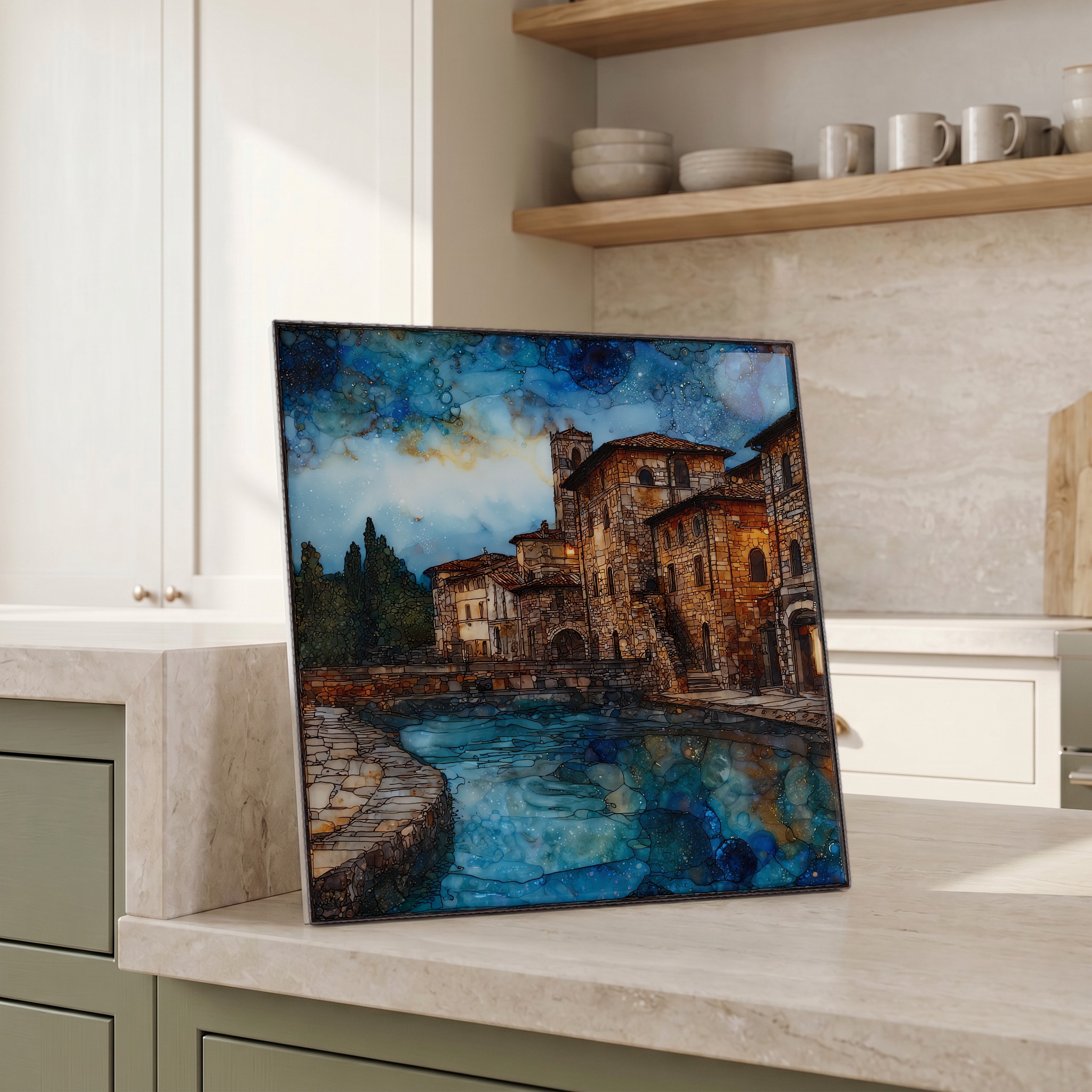
Bagno Vignoni, on ceramic.
Each tile is finished by hand in our Knoxville studio. Artwork is slowly infused into the ceramic surface under high heat and pressure, and rests beneath a thin glossy finish. The colour lives in the surface, not on top of it.
Pick any four 4-inch tiles — National Parks you've been to, a Smokies set, the four seasons of one place. $ for a set of , cork-backed, ready to live on the table.
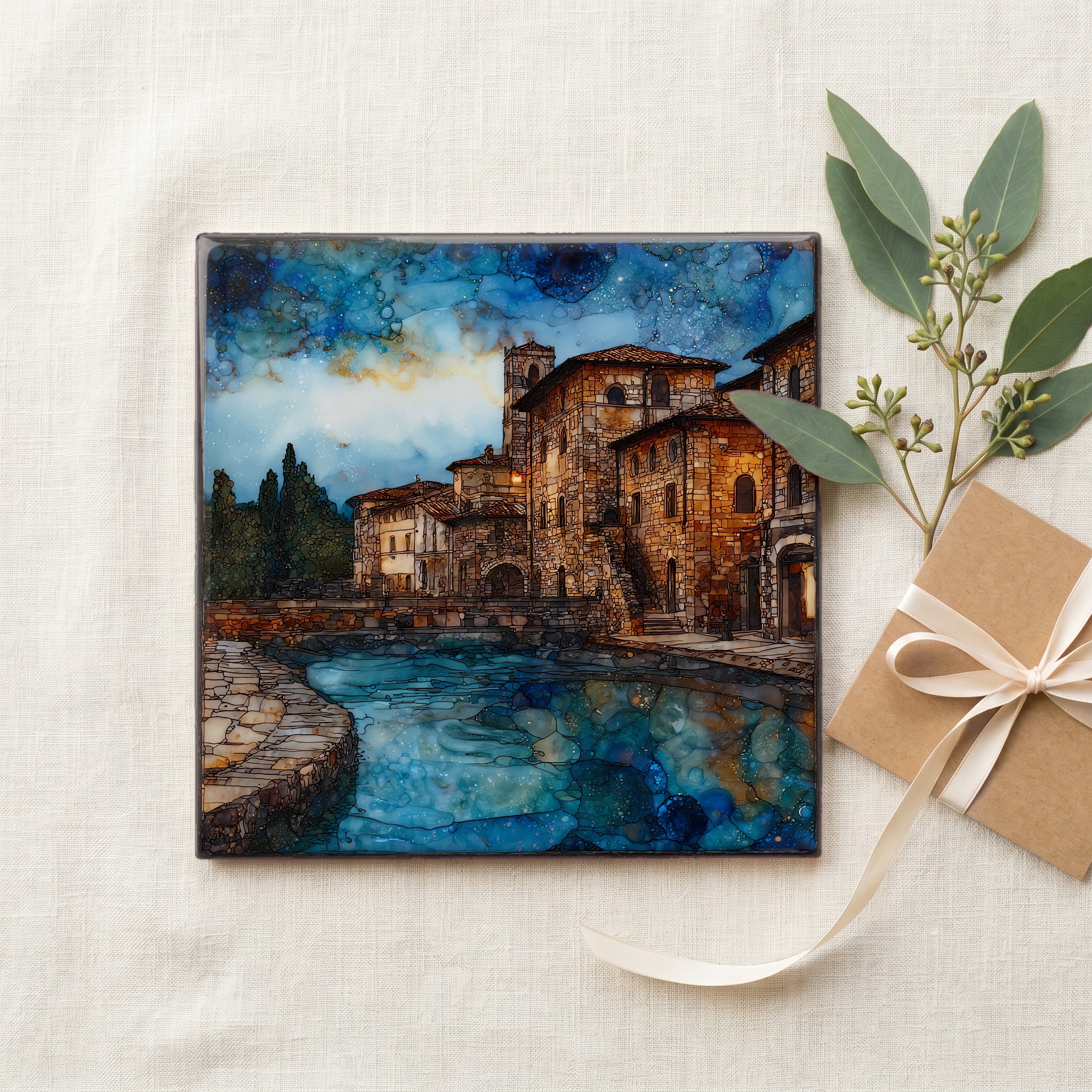
Each tile ships in a kraft box, tied with cream ribbon, with a handwritten note from the studio if you'd like to add one.
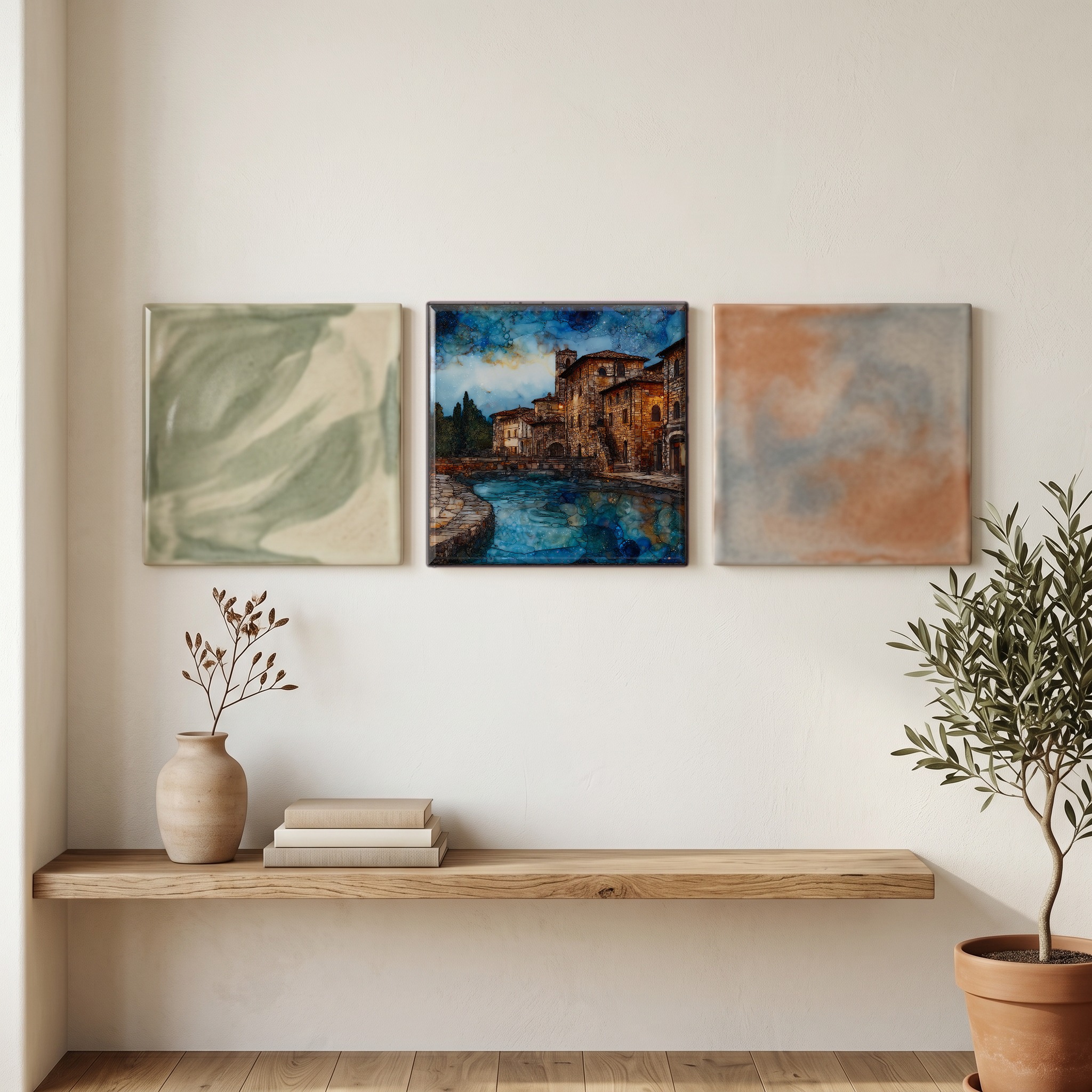
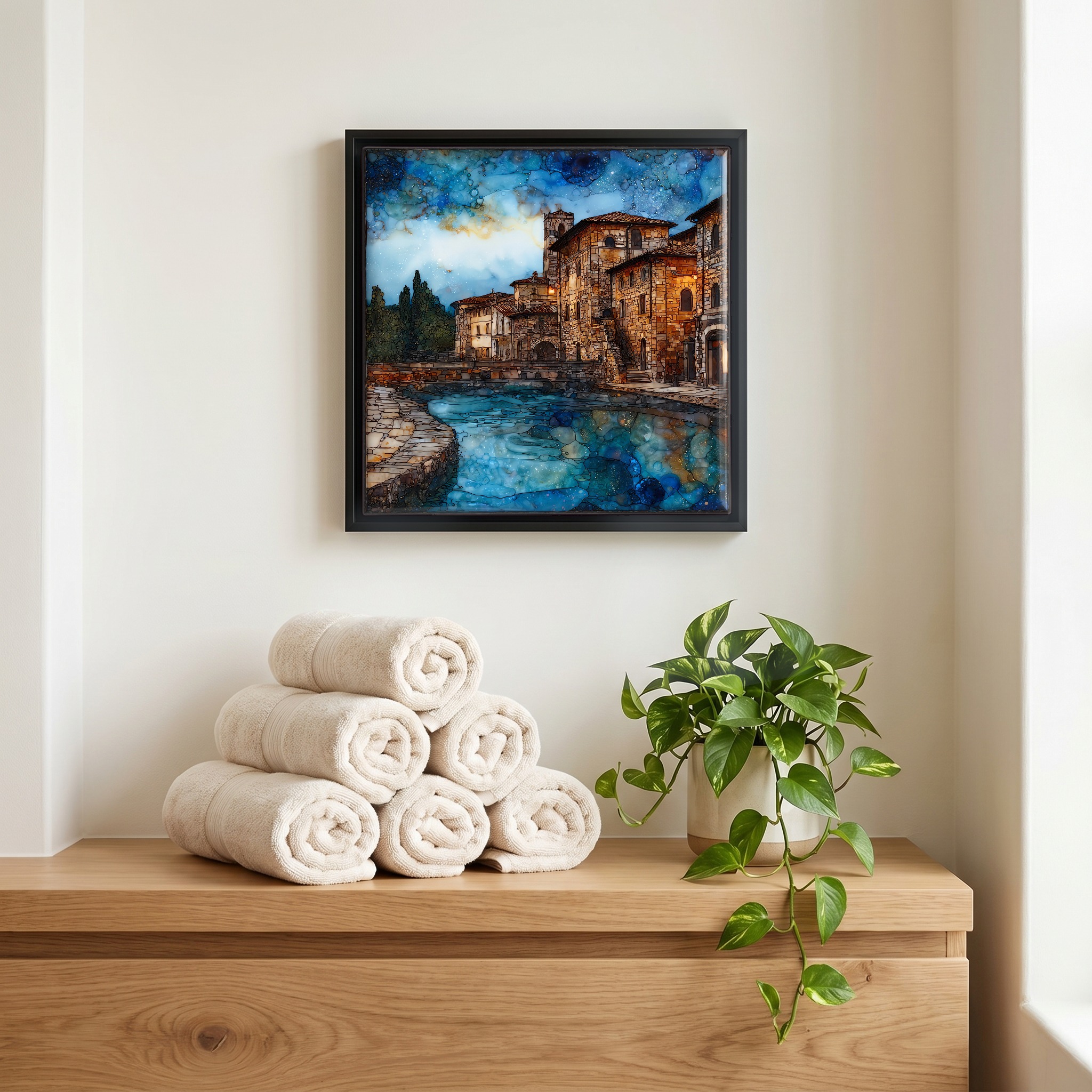
Three or five different vistas, hung together — a chapter of places you've been, or want to go.
The place, in three passes.
Bagno Vignoni is a hamlet of about thirty residents in the comune of San Quirico d'Orcia, in the province of Siena, set at 306 metres in the Val d'Orcia of southern Tuscany. The valley has been a UNESCO World Heritage cultural landscape since 2004, known for its rolling clay hills, cypress lines, and Renaissance towns. The village sits roughly 5 kilometres south of San Quirico and 13 from Pienza, on the line of the Via Francigena, the medieval pilgrim road from Canterbury to Rome. Below the village the thermal water drains through the Parco dei Mulini, where mills were once cut straight into the travertine rock above the Orcia river.
The center of the village is not a paved square but a pool. The Piazza delle Sorgenti, the Square of Sources, is a rectangular basin of sixteenth-century origin fed by water rising from a volcanic aquifer beneath the Val d'Orcia. The spring surfaces at roughly 49 degrees Celsius, warm enough to steam in open air through the cold half of the year. The minerals it carries, among them bicarbonate, sulphur, and calcium, gave the place its long reputation as a cure. Water has flowed in this spot since Etruscan and Roman times, and from the basin it runs downhill to the old mills before reaching the Orcia river.
The famous pool cannot be swum in. The Piazza delle Sorgenti is a protected monument, fenced and looked at rather than entered. Bathers go instead to the Parco dei Mulini below the village, where free thermal pools collect the runoff among the ruined mills, or to one of the village spas. The water is most striking in winter, when cold air turns the rising steam visible across the whole basin. Bagno Vignoni belongs to San Quirico d'Orcia and sits within day-trip reach of Pienza, Montalcino, and the slopes of Monte Amiata, the extinct volcano of 1,738 metres whose deep heat feeds the spring.