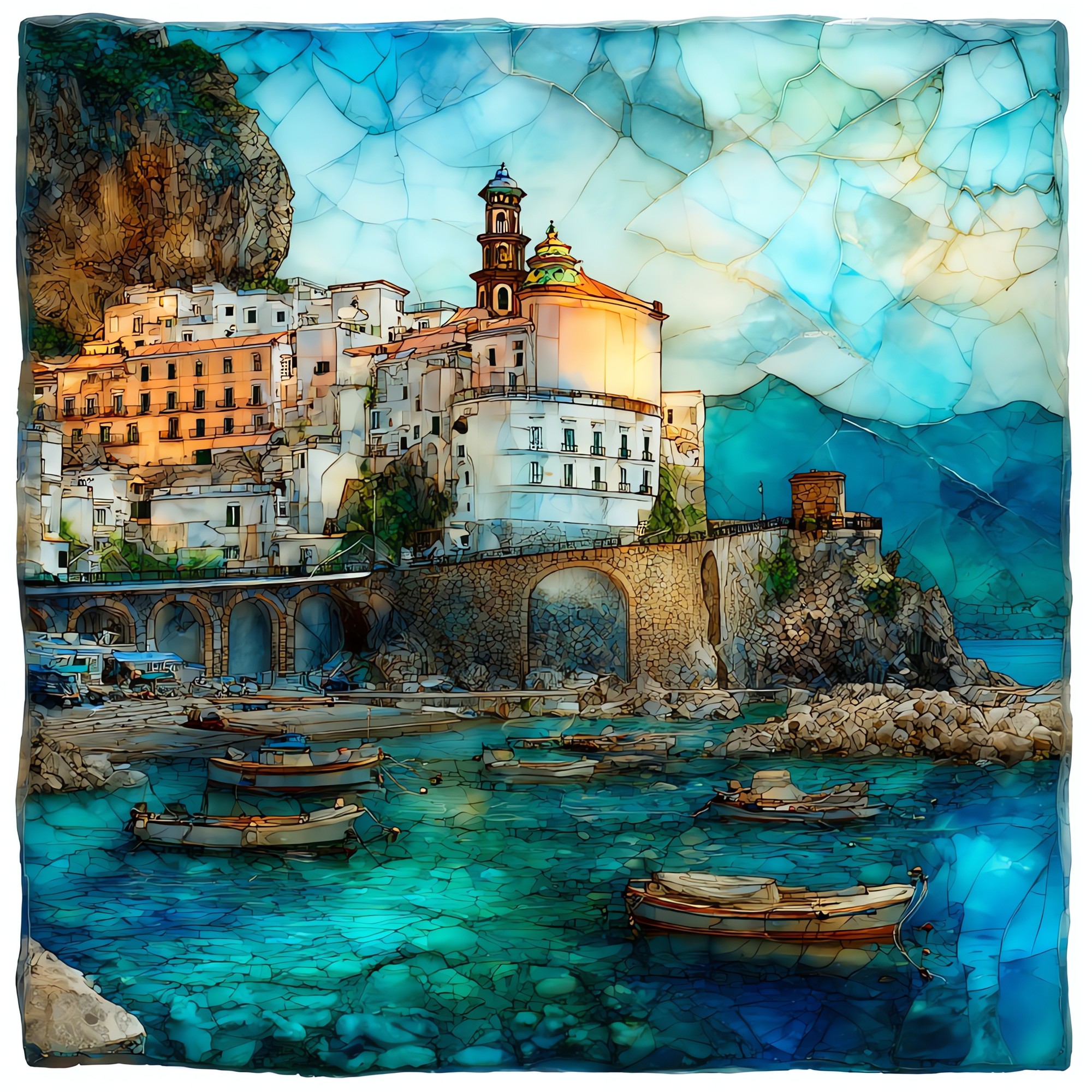
Atrani
— — the sea, waiting at the bottom of the stairs.
Not only on a wall.
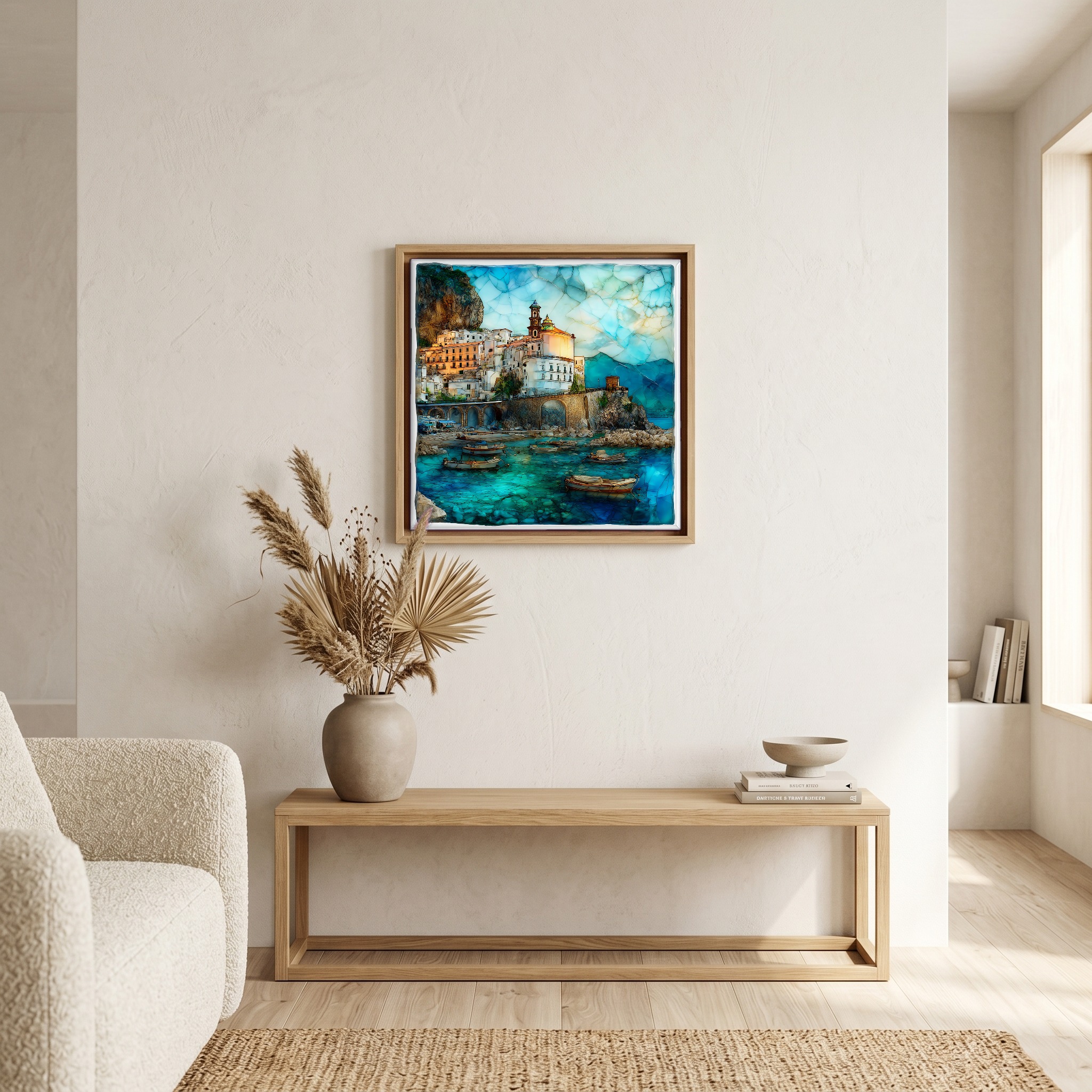
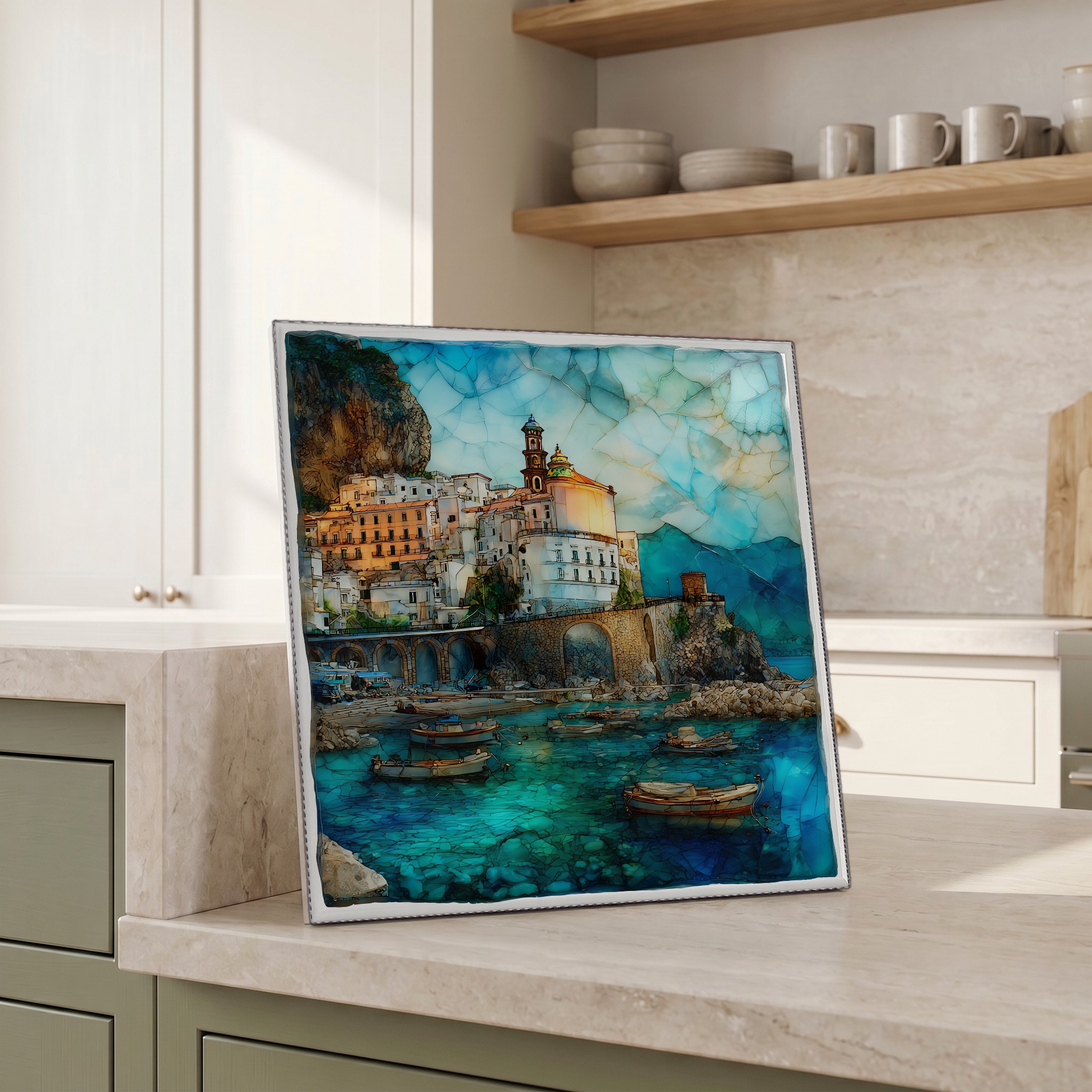
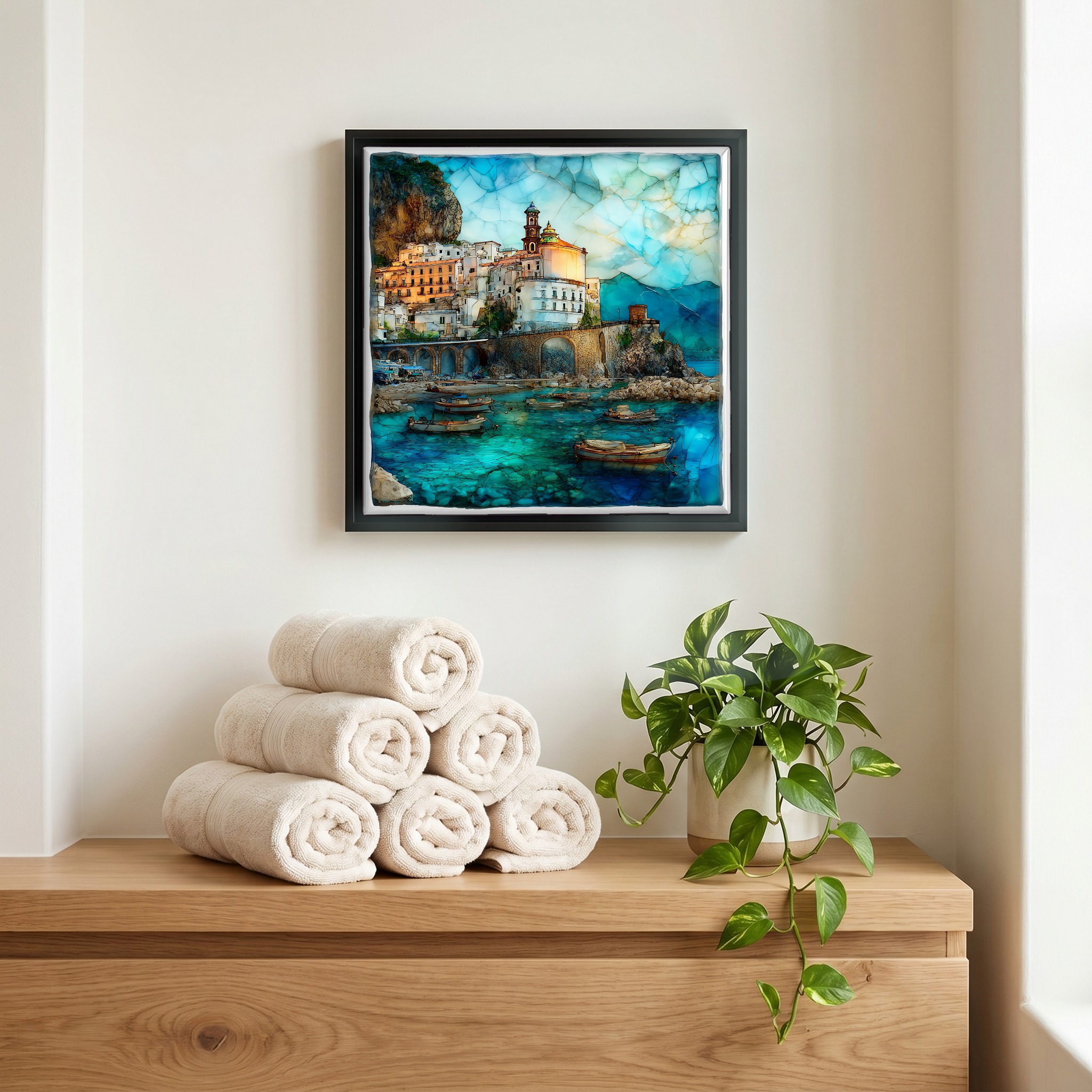
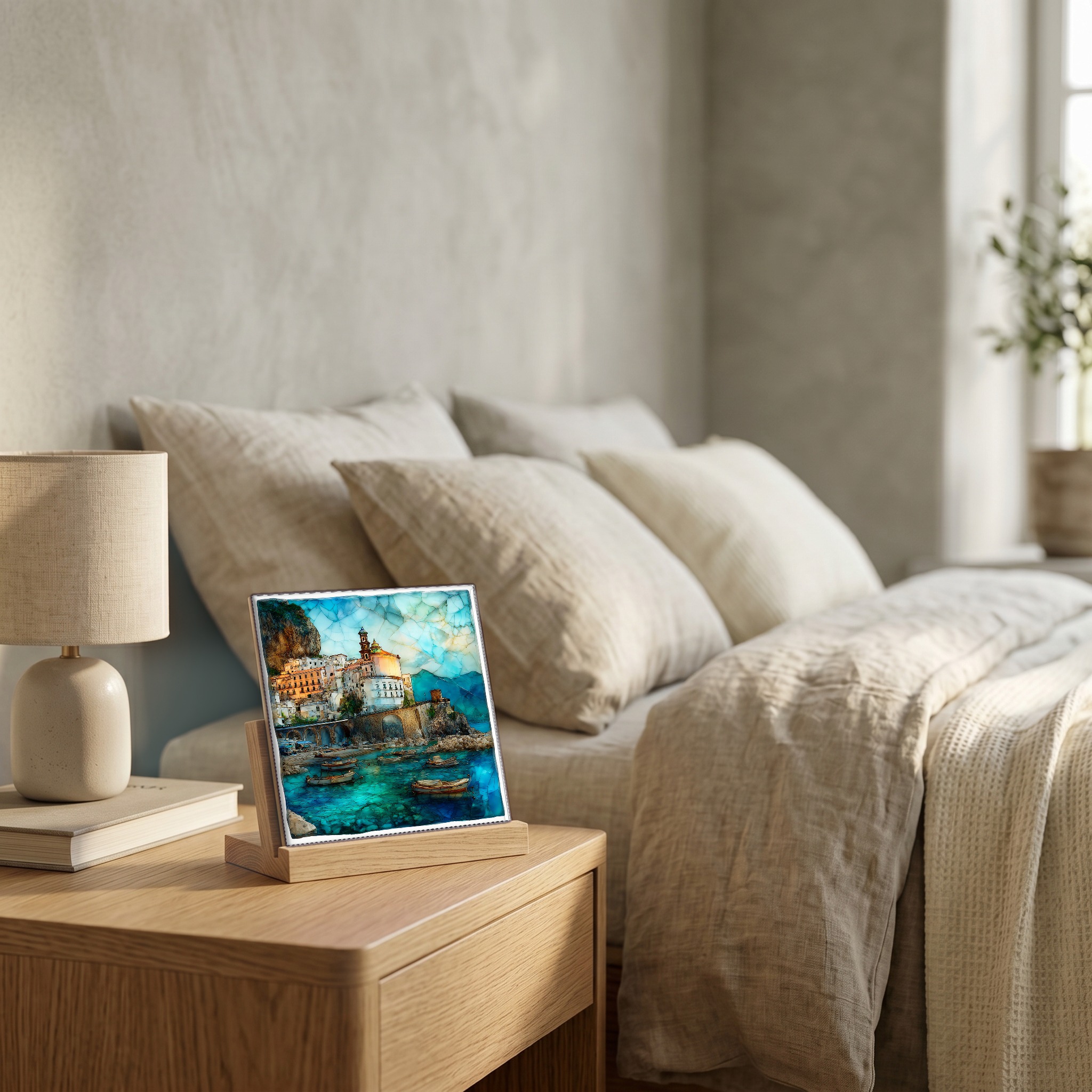
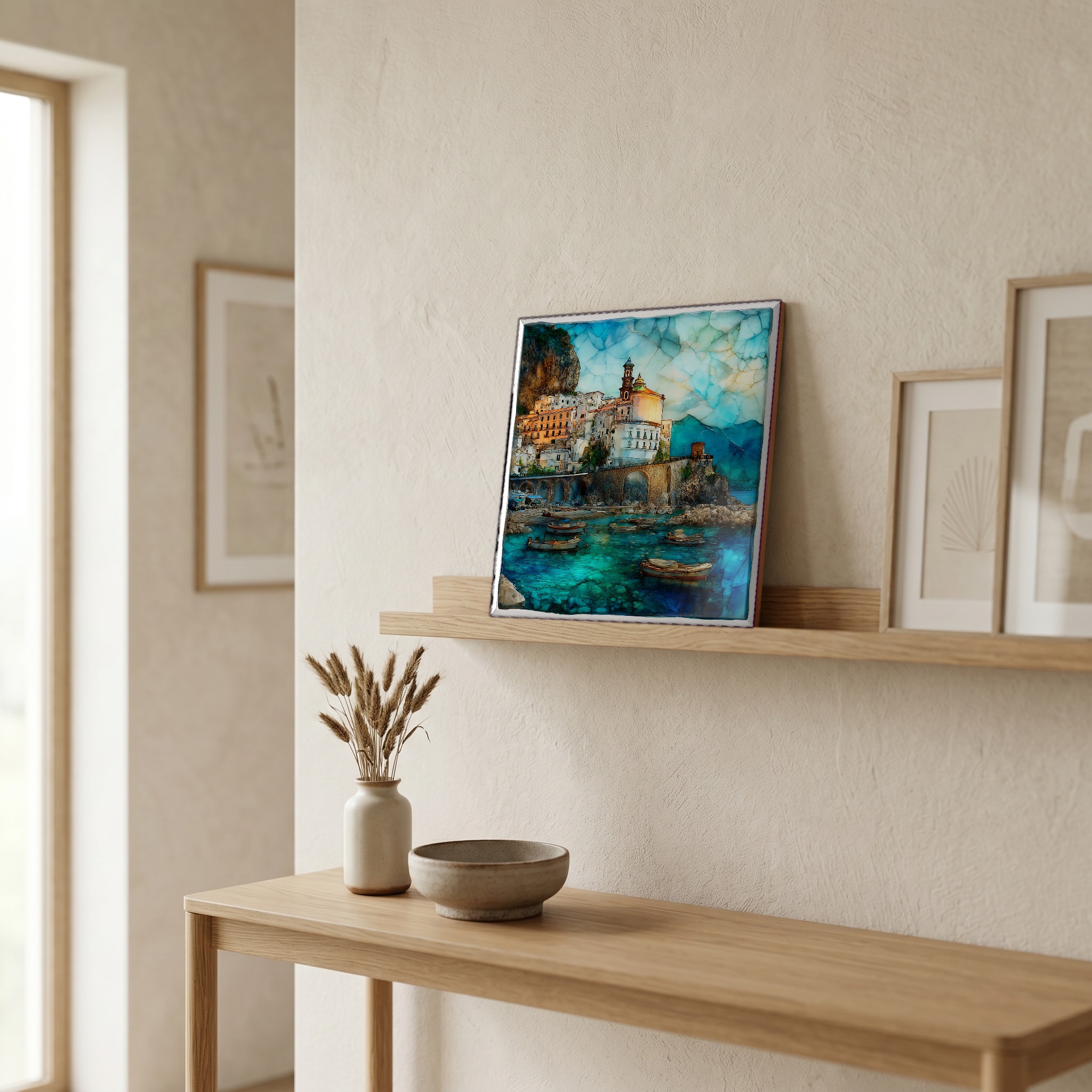
“The smallest comune in Italy, folded into a ravine just east of Amalfi where the Dragone river reaches the sea. The whole town is one piazza, a few stairways, and a tunnel that opens onto a dark-sand beach. Escher drew it in 1931 and then spent years redrawing it, because the houses stack in a way the eye keeps trying to resolve. Most of the day-trippers stop in Amalfi and never make the short walk around the headland. The ones who do find the square mostly empty, and the sea at the end of it.
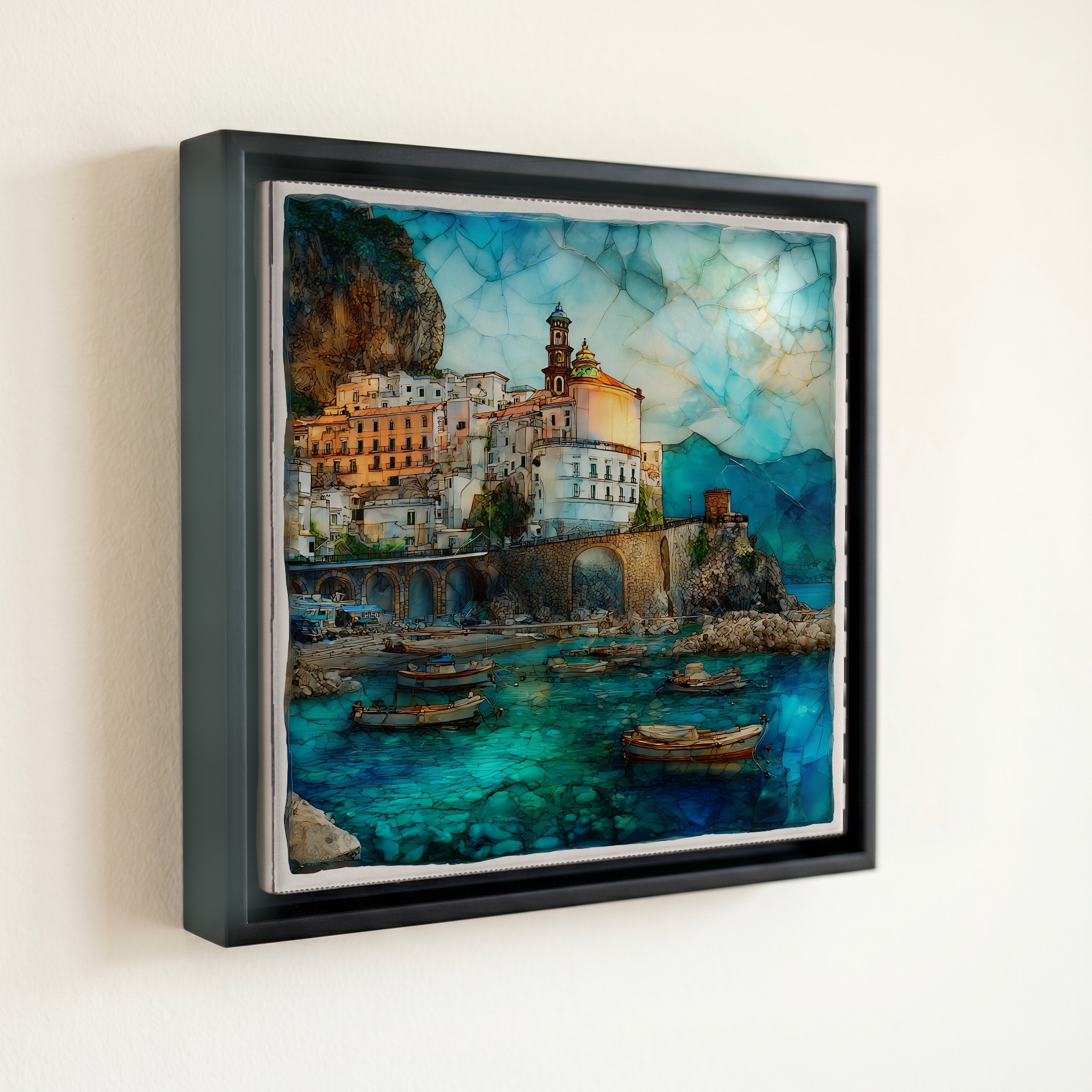
Atrani, on ceramic.
Each tile is finished by hand in our Knoxville studio. Artwork is slowly infused into the ceramic surface under high heat and pressure, and rests beneath a thin glossy finish. The colour lives in the surface, not on top of it.
Pick any four 4-inch tiles — National Parks you've been to, a Smokies set, the four seasons of one place. $ for a set of , cork-backed, ready to live on the table.
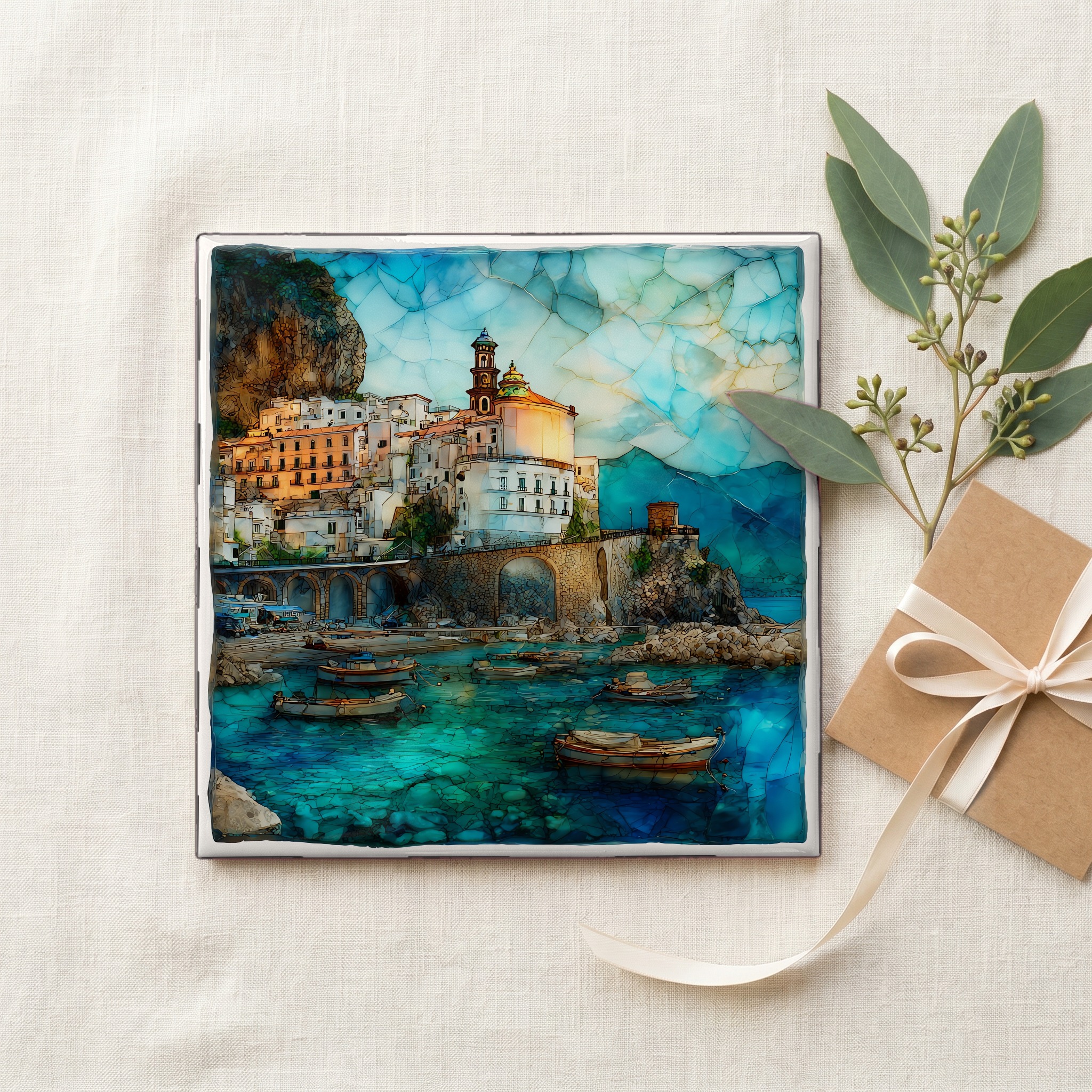
Each tile ships in a kraft box, tied with cream ribbon, with a handwritten note from the studio if you'd like to add one.
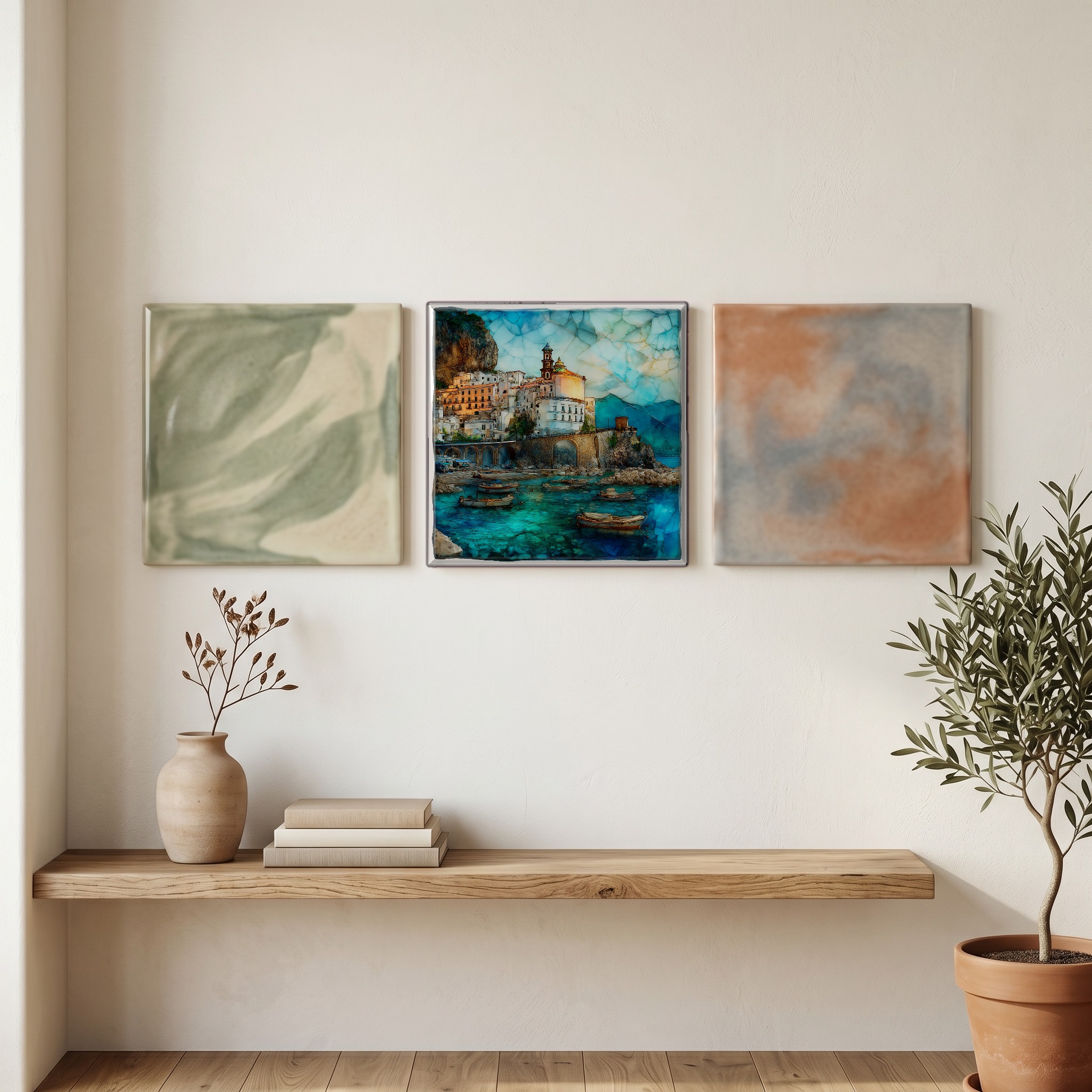
Three or five different vistas, hung together — a chapter of places you've been, or want to go.
The place, in three passes.
Atrani is the smallest comune in Italy by area, about 0.12 square kilometres, on the Amalfi Coast in the province of Salerno, Campania. It sits at the mouth of the Dragone valley, wedged between the Civita and Aureo hills a few hundred metres east of Amalfi, with which it once shared a maritime republic. About 764 people live here, stacked in tall houses that climb the ravine from a single beach to the cliffs above. The two towns are linked by the coast road and an older footpath that ducks through a tunnel into the central square. Atrani stands about 21 metres above the sea.
Atrani reads as a single structure rather than a row of buildings. Tall houses, four and five storeys, lock together up the ravine, stitched by covered passages and stone staircases. Two churches anchor it: San Salvatore de' Birecto, built in the tenth century on a square plan, where the doges of the Maritime Republic of Amalfi were crowned and buried; and the Collegiate Church of Santa Maria Maddalena, founded in 1274 on a terrace above the sea. The Dutch artist M.C. Escher drew the town in 1931 and returned to it for years, because the way the houses interlock is the kind of impossible-looking order his later work chased.
For all that it is the most densely populated comune in the province of Salerno, Atrani is the quiet one on this stretch of coast. About 764 people live here permanently, and most of the day-trippers who fill Amalfi never make the few hundred metres east to find it. The single square, Piazza Umberto I, is enclosed on every side by houses, so the noise of the coast road stays out and the sound that carries is the sea through the tunnel to the beach. The exception is 22 July, the feast of Santa Maria Maddalena, the town's patron, when the square fills and the night ends with fireworks over the water.