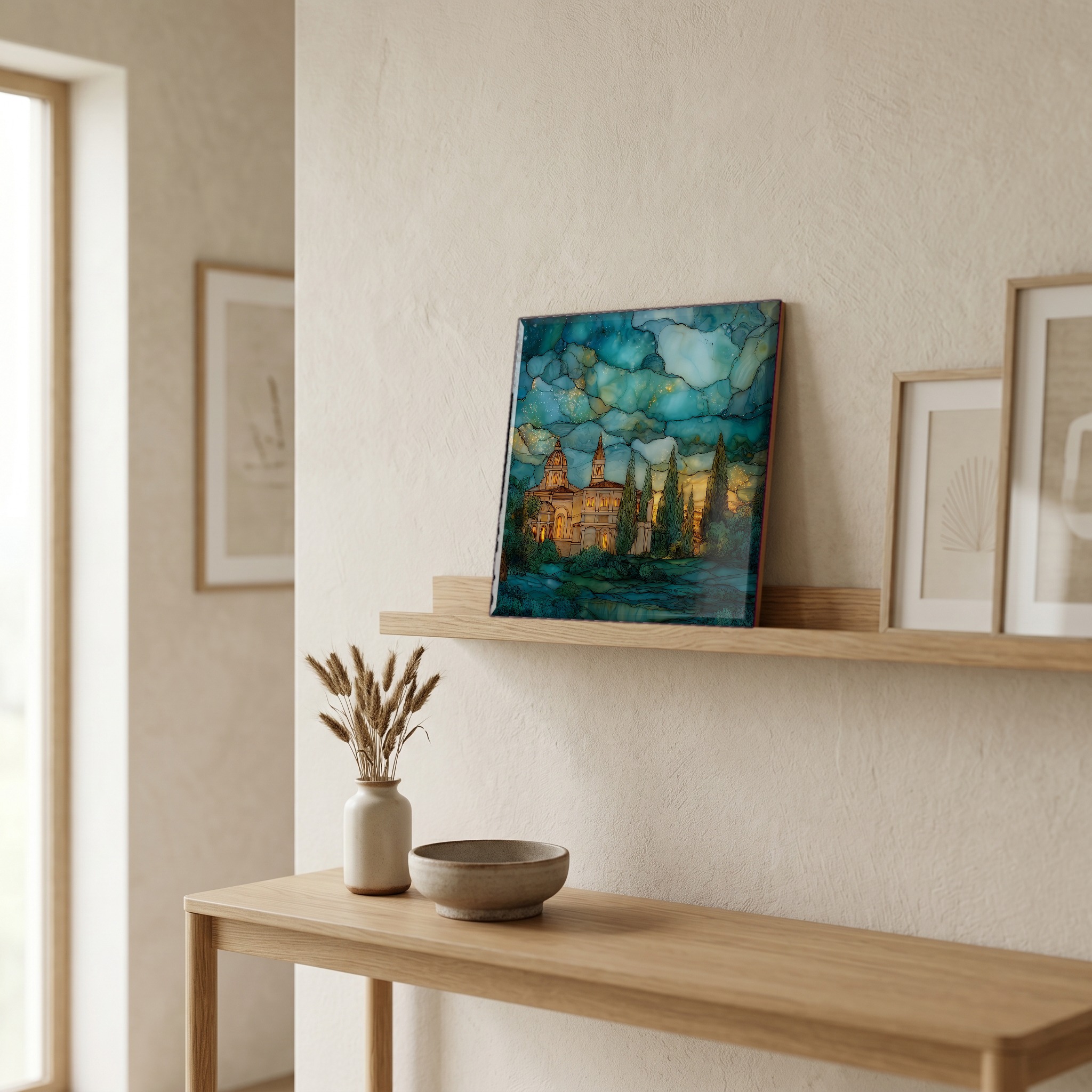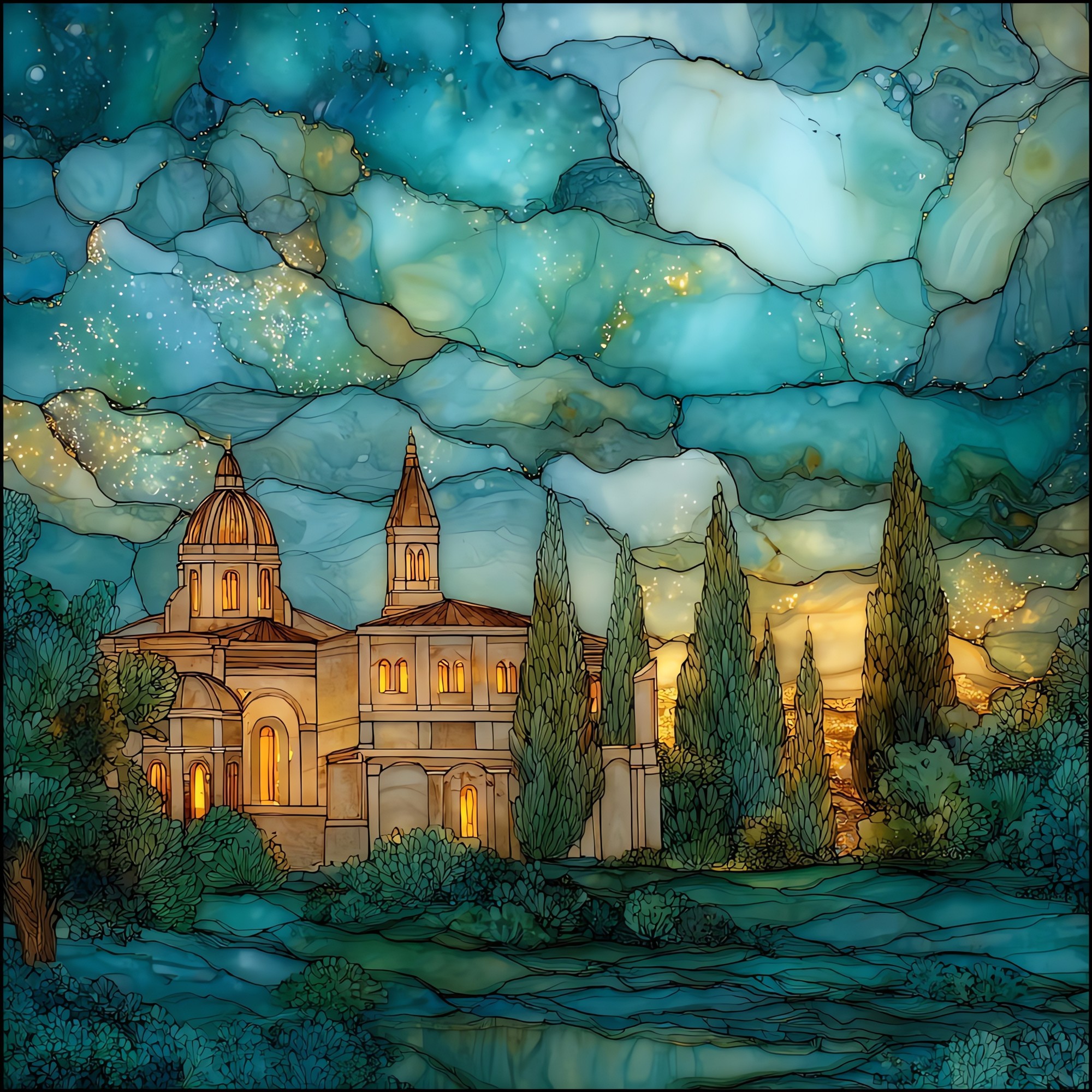
Wender·Vista
Aquileia
shown on ceramic, 12-inch tileItaly
on the Friulian plain, near the head of the Adriatic

Aquileia

— the floor outlived the city.

Where it lives

Not only on a wall.

A small tile on the nightstand catching the morning. A larger one above the fire. Yours, wherever you spend the slow hours.
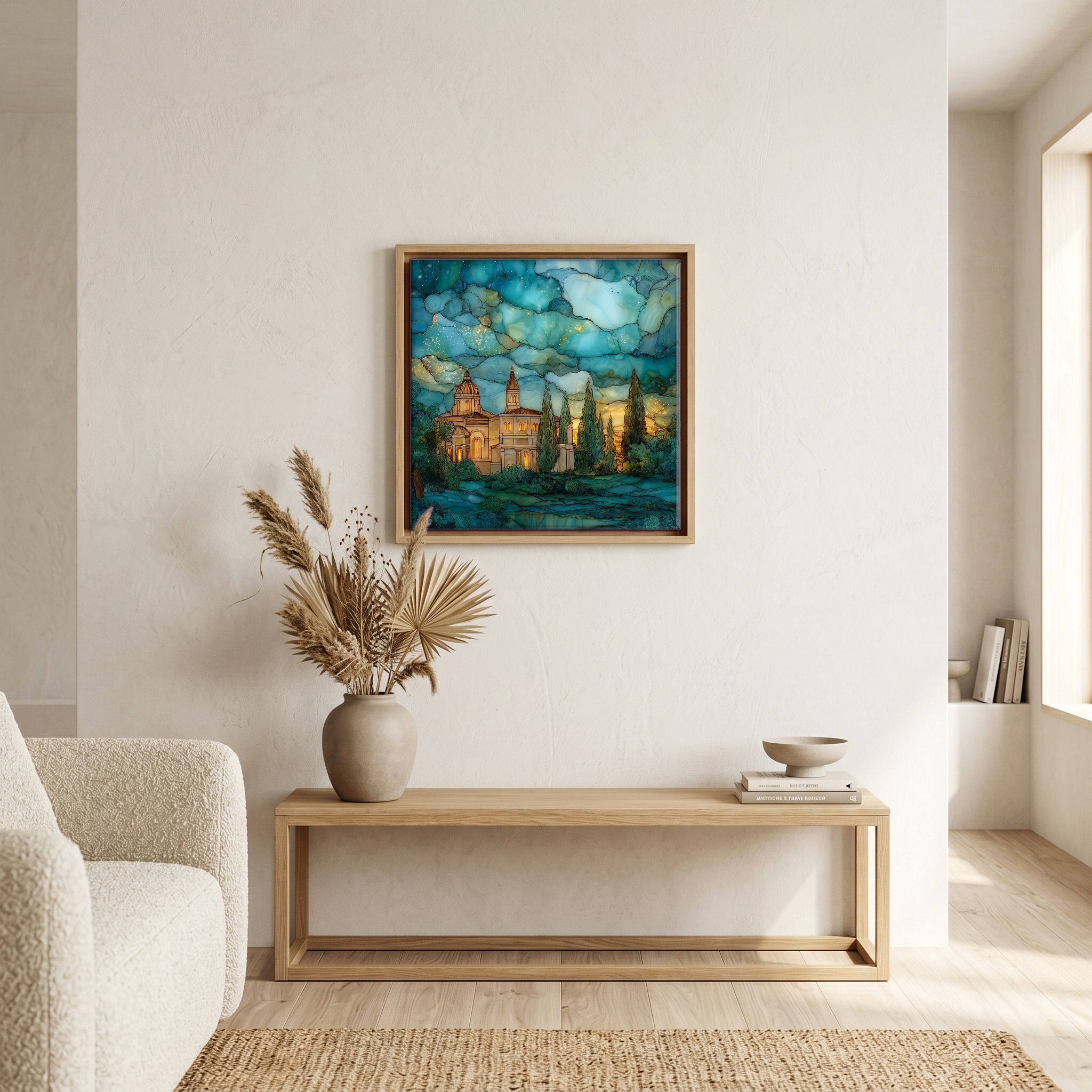
Above the bench, in a warm oak surround.
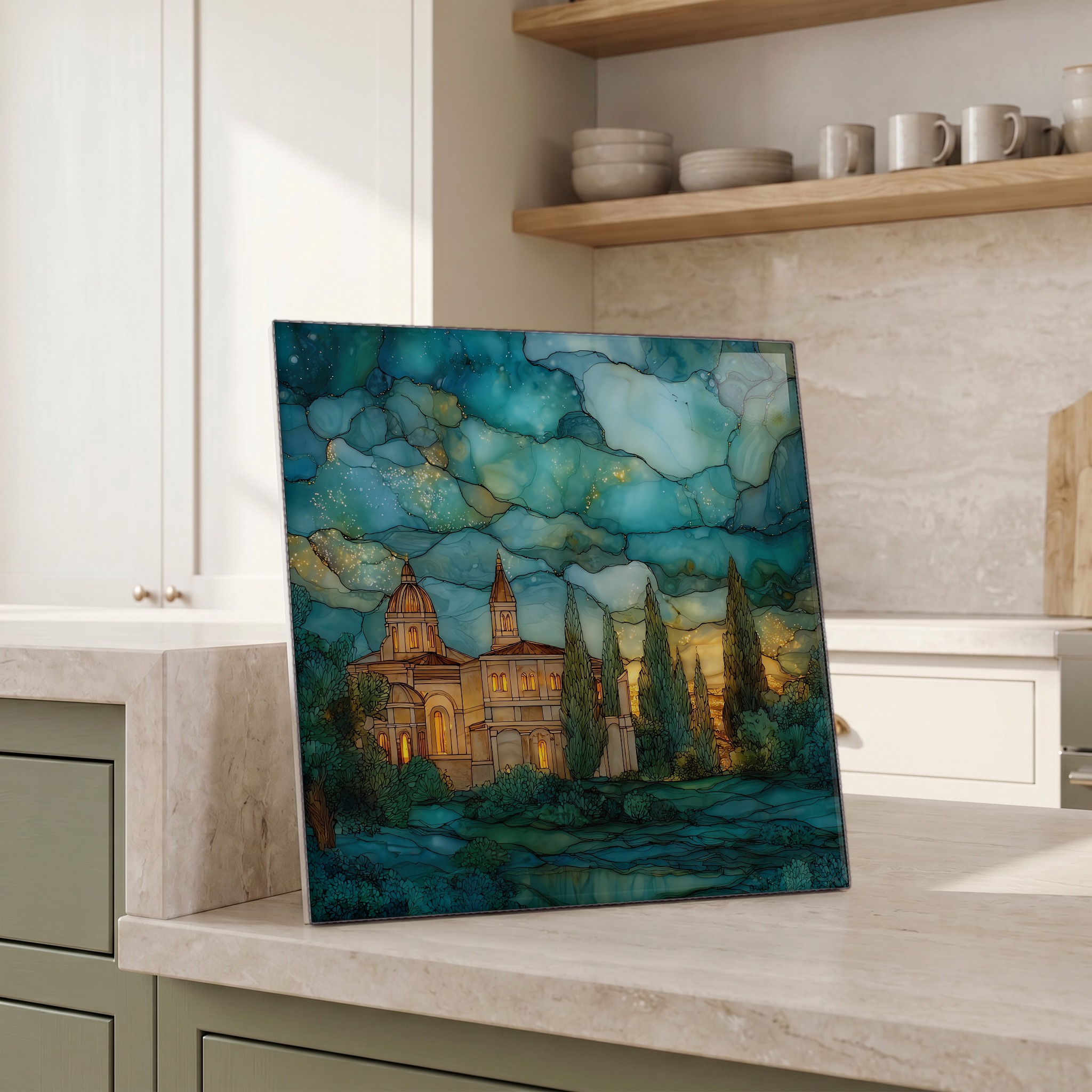
Beside the kettle, propped on the counter.
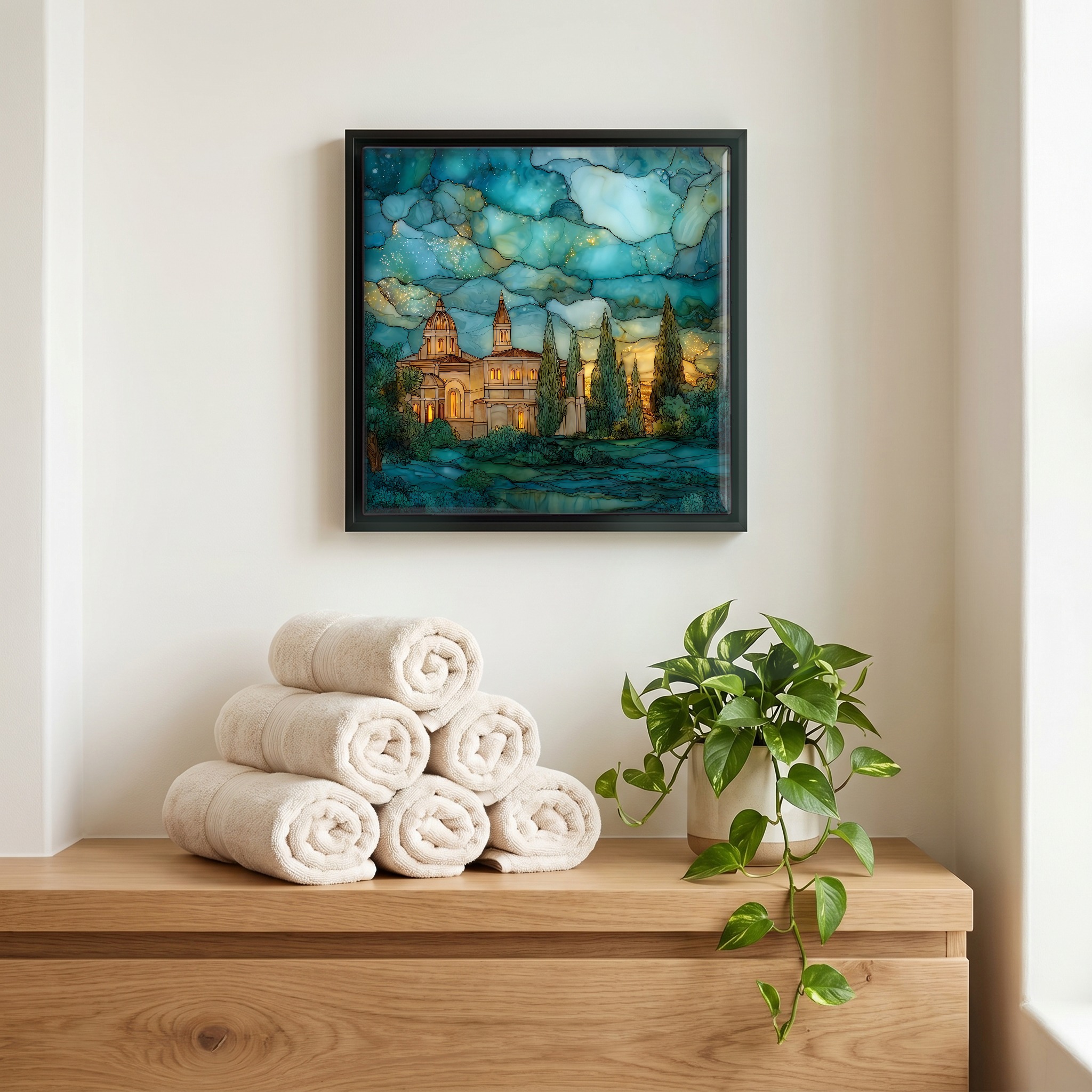
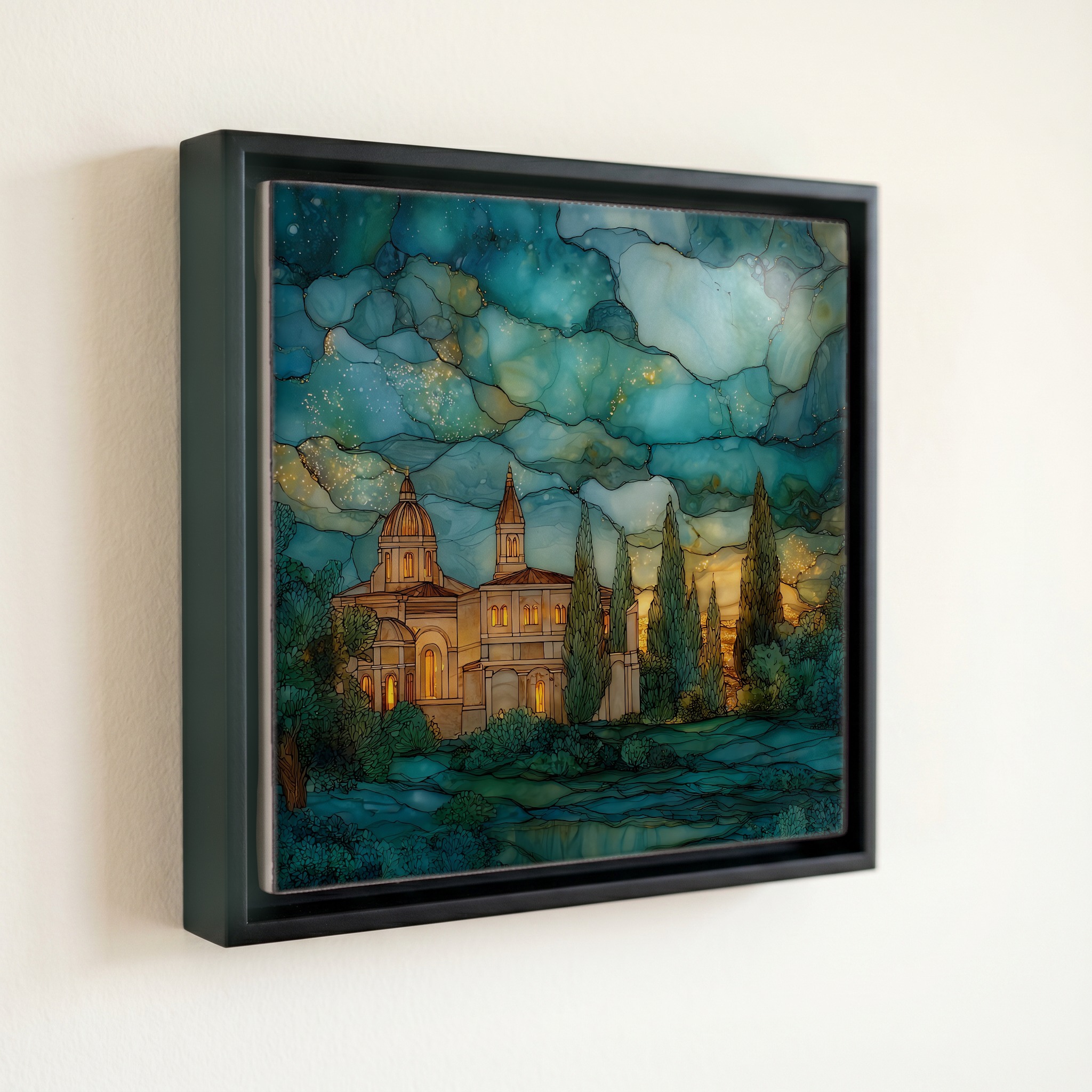
Above the linens, in a slim black surround.
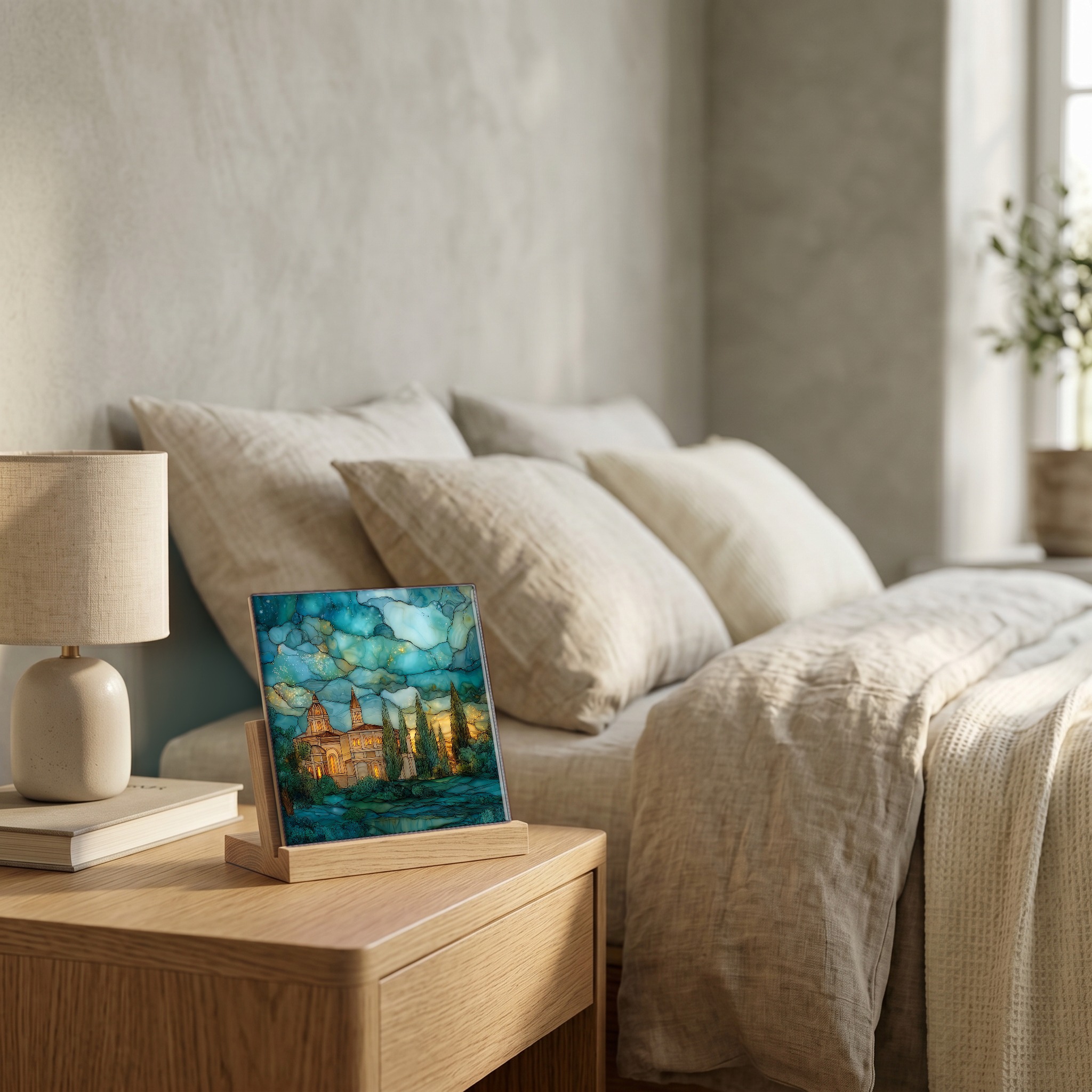
On the nightstand, on a light oak stand.
On a picture ledge, where the light comes in.
a note from the studio

Aquileia was one of the largest cities of the Roman world, close to a hundred thousand people, until Attila came through in 452. Most of it is still down there, under the wheat and the vines, never excavated. What surfaced is the floor: seven hundred and sixty square metres of fourth-century mosaic inside the basilica, a sea full of fish, a rooster facing a tortoise, crossed now on a glass walkway. People come for the day from Grado and leave quiet. The city is a field. The floor is still bright.
from the studio
shown in a slim black floating frame · 6 × 6 in
— bring it home

Aquileia, on ceramic.

Each tile is finished by hand in our Knoxville studio. Artwork is slowly infused into the ceramic surface under high heat and pressure, and rests beneath a thin glossy finish. The colour lives in the surface, not on top of it.

What kind of piece?
One tile — square or rectangle.
How big?
the popular one — counter, shelf, nightstand
6 × 6 in · 15 cm · 1.6 lb
Surface finish
A clear glossy finish — the artwork reads as if under resin. Ideal for show-pieces and framed wall art.
How it sits
A hidden cleat — sits ¼″ proud of the wall.
$58
Hand-finished and shipped from our studio at the foot of the Smokies. On your wall in about ten days.
size
6 × 6 in
15 cm
weighs
1.6 lb
solid in the hand
surface
ceramic, hand-finished
art rests beneath a thin glossy finish
from
Knoxville, TN
our family studio, at the foot of the Smokies
— start a Coaster Set

Pick any four 4-inch tiles — National Parks you've been to, a Smokies set, the four seasons of one place. $ for a set of , cork-backed, ready to live on the table.
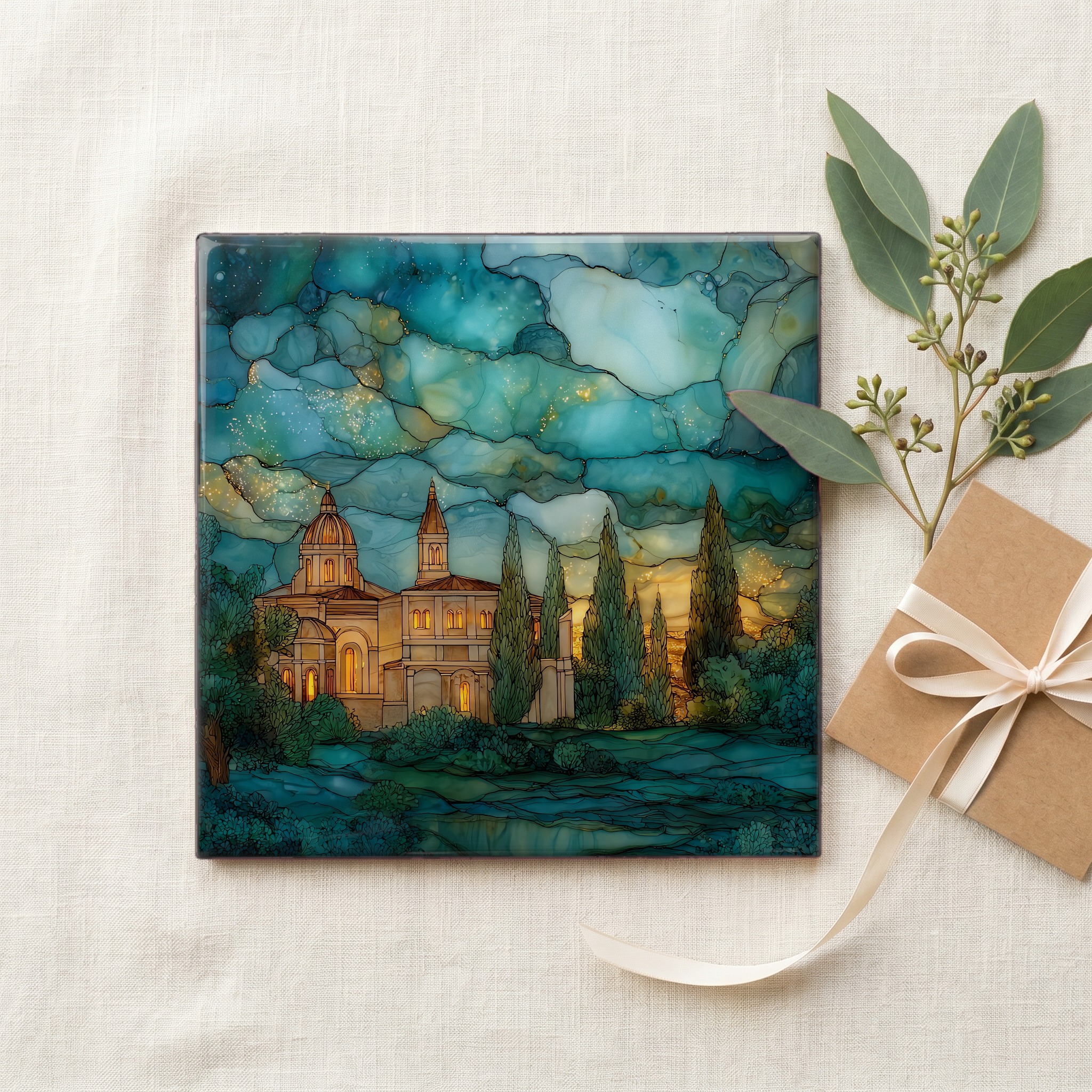
comes gift-ready
comes gift-ready

Each tile ships in a kraft box, tied with cream ribbon, with a handwritten note from the studio if you'd like to add one.
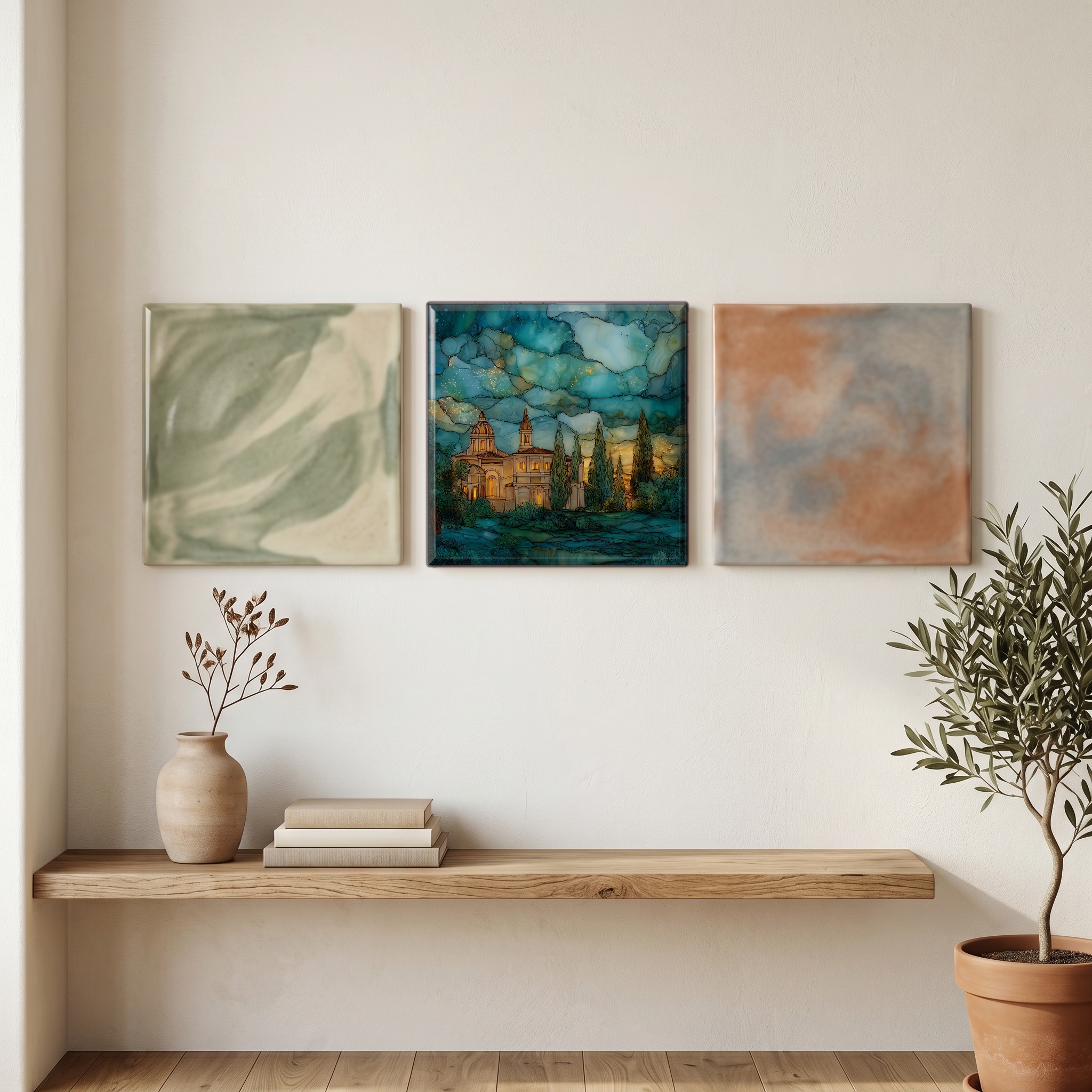
or build a grouping
or build a grouping

Three or five different vistas, hung together — a chapter of places you've been, or want to go.

about Aquileia

The place, in three passes.

A little of what's known, in case you fall down the rabbit hole — or want to go see it yourself.
the place

Aquileia sits on the Friulian plain in northeastern Italy, in the region of Friuli-Venezia Giulia, about ten kilometres inland from the Adriatic and a short drive north of the lagoon island of Grado. Rome founded it as a frontier colony in 181 BC, and by the second century AD it had grown to nearly a hundred thousand people, one of the largest cities of the empire and the gateway between Italy and the provinces along the Danube. Attila's army destroyed it in 452, and it never recovered its scale. Today it is a small town of a few thousand, set among the farms that grew over the ruins. UNESCO listed the archaeological area and its basilica in 1998.

the stone

Most of Roman Aquileia is still underground. Founded in 181 BC at the crossing of the great roads toward the Danube, the city grew, was sacked by Attila, and was then slowly buried by the silting Natiso and centuries of farming, so that today only a fraction has been excavated. What has surfaced traces a working port: the paved forum, house foundations, and the river harbour where quays once handled cargo moving between the Adriatic and central Europe. It leaves one of the most complete buried Roman cities in the Mediterranean. The excavated streets end where the fields begin, Roman pavement giving way to wheat.

the visit

The reason most people come is the floor. Inside the basilica, beneath the present church, lies a mosaic pavement of about seven hundred and sixty square metres, laid in the early fourth century under Bishop Theodore, the largest early Christian mosaic floor in the Western world. Hidden under later flooring for centuries, it was uncovered around 1900. A glass walkway now carries visitors above it, past a wide sea scene of fish and fishermen, the story of Jonah, and a rooster set against a tortoise. Above stands the campanile that Patriarch Poppo raised in the eleventh century, seventy-three metres tall, with the Crypt of the Frescoes and its painted legend of Saint Mark below.

where
Italy · Udine, Friuli-Venezia Giulia
elevation
5 m · 16 ft
position
45.7697° N · 13.3712° E
the neighborhood

What's nearby.

A handful of named places within an hour's walk or short drive. Some we've already painted; some we will.
11 km S
Grado
lagoon island town
16 km N
Palmanova
star fort
35 km N
Udine
city
40 km SE
Trieste
port city
N
Aquileia
Grado
Palmanova
Udine
Trieste
common questions

What people ask.

A few questions we get about Aquileia — and about bringing the piece home.
about the place

Aquileia is a small town on the Friulian plain in Friuli-Venezia Giulia, in northeastern Italy, about ten kilometres inland from the Adriatic and a short drive north of the lagoon island of Grado.

It was one of the largest cities of the Roman Empire and is now a UNESCO archaeological site. Its basilica holds a fourth-century mosaic floor of about 760 square metres, the largest early Christian mosaic in the Western world.

At its height in the second century AD, Aquileia held close to 100,000 people and guarded the road between Italy and the Danube provinces. Attila's army destroyed it in 452, and it never regained that scale.

Laid in the early fourth century under Bishop Theodore, the 760-square-metre pavement is the largest early Christian mosaic floor in the West. Hidden under later flooring, it was uncovered around 1900 and is now crossed on a glass walkway.

Yes. UNESCO inscribed the Archaeological Area and the Patriarchal Basilica of Aquileia in 1998, recognising both the basilica's mosaics and the largely unexcavated Roman city buried beneath the surrounding fields.

The Patriarchal Basilica and its mosaic floor, the crypts with twelfth-century frescoes, Poppo's 73-metre campanile, and the excavated forum and river port. Most of the Roman city, though, still lies under farmland.

Rome founded Aquileia as a frontier colony in 181 BC to anchor its northeastern border. It grew into a major port and trade hub linking the Adriatic with central Europe before its destruction in 452 AD.

about the piece in your home

It carries well for people drawn to Aquileia, classical history, or the Friuli coast. The piece holds a place few outside Italy know, which makes it a considered gift. A Small or Medium with a note from the studio suits a desk or a reading wall.

The deep blues, sea-greens, and golds of the artwork sit well in jewel-tone maximalist, old-world classical, and warm heritage rooms. It holds its own as a single Large or anchors a gallery wall of darker, antique-leaning pieces.

Yes. The current move toward old-world and heritage-revival rooms favours pieces with history and depth of colour. A mosaic-rooted image like this reads as collected rather than bought, which is the look those rooms are after.

Above a sofa, a single Large or a four-tile Mural holds the wall well. Over a console or a reading chair, the Medium sits at eye level. For a stairwell or a long entry, a nine-tile Mural carries the distance.

Yes. Order it in the Dura Satin or Matte finish for a bathroom, shower, or kitchen backsplash; both are scratch-resistant and made for damp, vertical settings. The Glossy finish is better kept to dry walls and framed display.

Wipe it with a soft microfibre cloth and a little water. The colour lives in the ceramic surface beneath a thin protective finish, so it will not fade or lift with normal cleaning. Skip abrasive pads and harsh solvents.

Yes. Every WenderVista piece is made in one studio in Knoxville, Tennessee, from original art, with no licensing or stock imagery. The image of Aquileia was composed for this place and exists nowhere else.

if this one stayed with you

A few you might also love.

Hand-picked by the eye that found Sorapis. Same air, same kind of quiet.
— a collection

The Italian Dolomites,
painted slow.

The valleys between Cortina and Val Gardena, the tarns you walk an hour to see, the towers that turn the colour of a banked fire just before dark. Wander the collection by valley, by season, or follow the path Reid walked.

Tre Cime
Braies
Misurina
Sorapis
Cinque Torri
Sassolungo
Marmolada