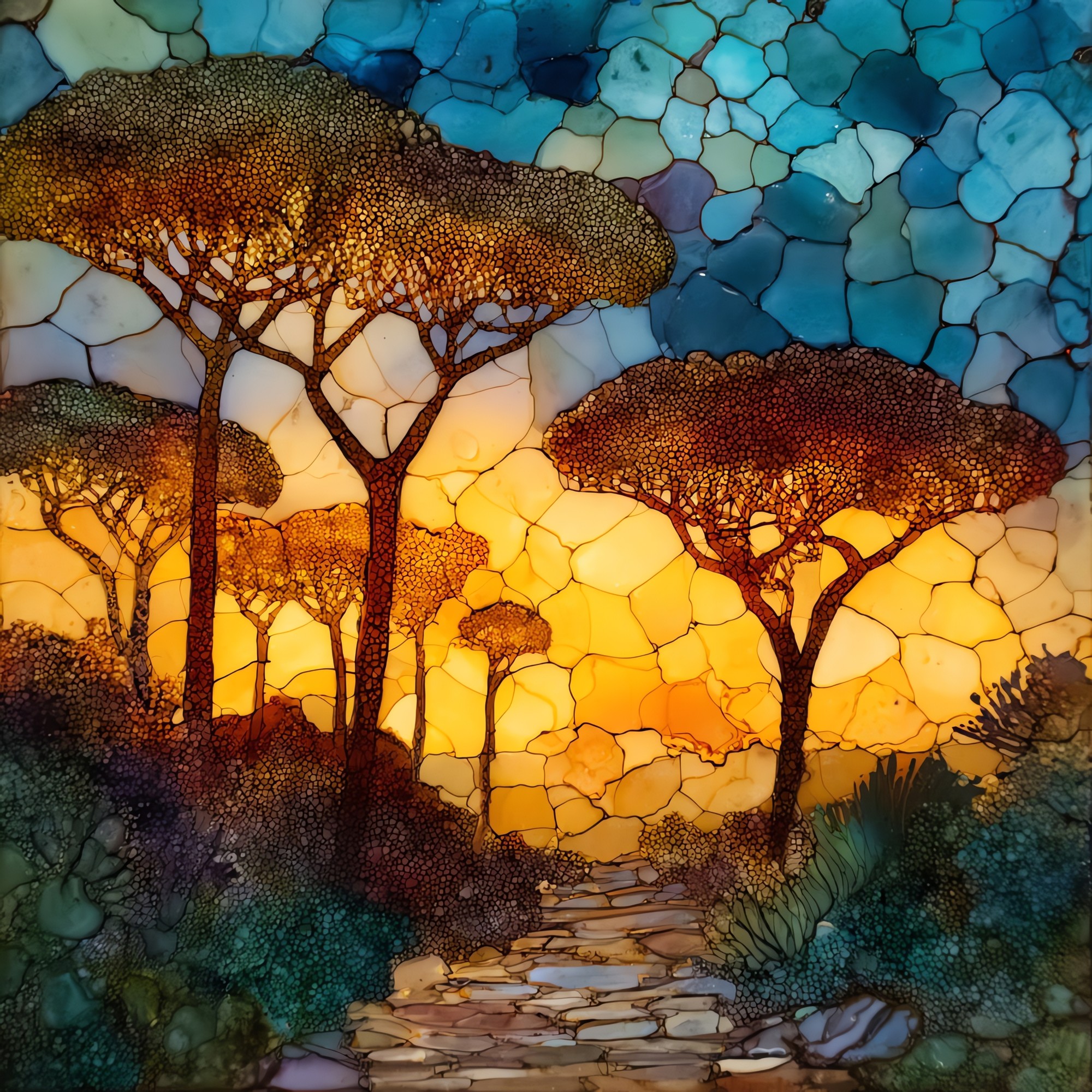
Appian Way
— the road that outlived the empire that built it.
Not only on a wall.

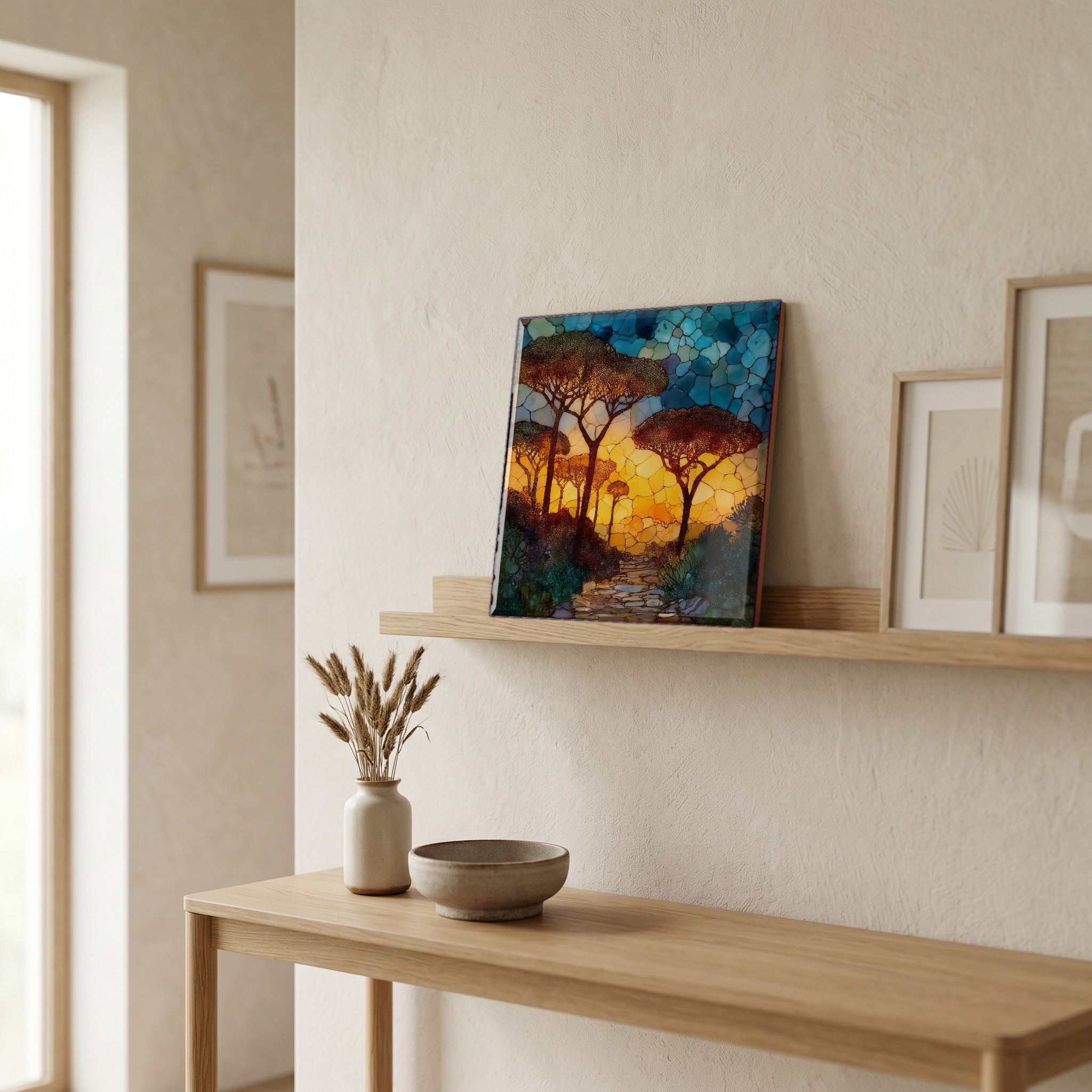
“The oldest stretch runs south from Rome's old gate, paved in the same dark basalt the Republic laid down. Umbrella pines lean in over the stones; tombs and broken statues line the verges where Roman families once buried their dead in sight of the road. Crassus crucified six thousand of Spartacus's followers along here in 71 BC. Most of the noise of the city falls away by the second mile. People come to walk it on Sundays, when the road is closed to cars, and nobody hurries.
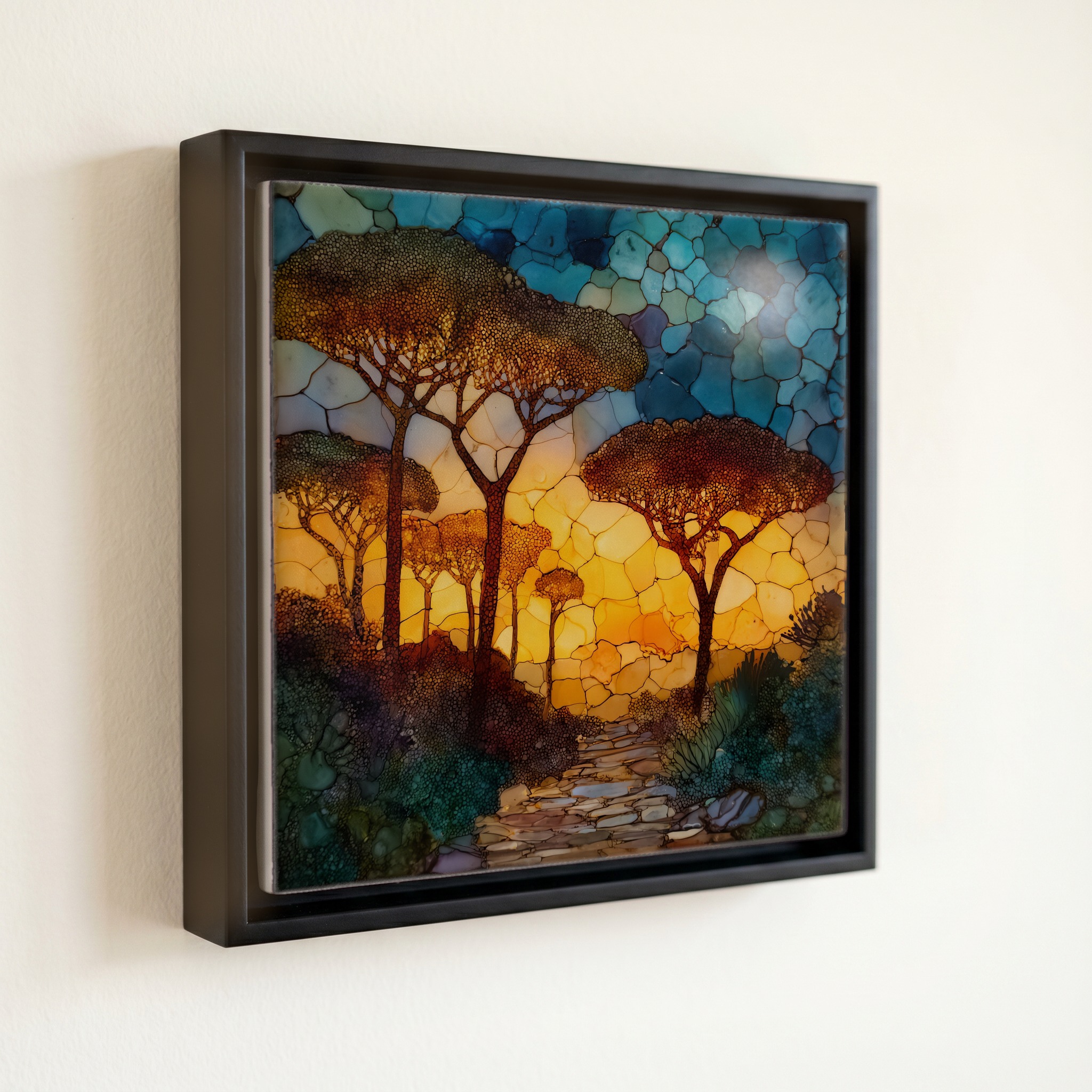
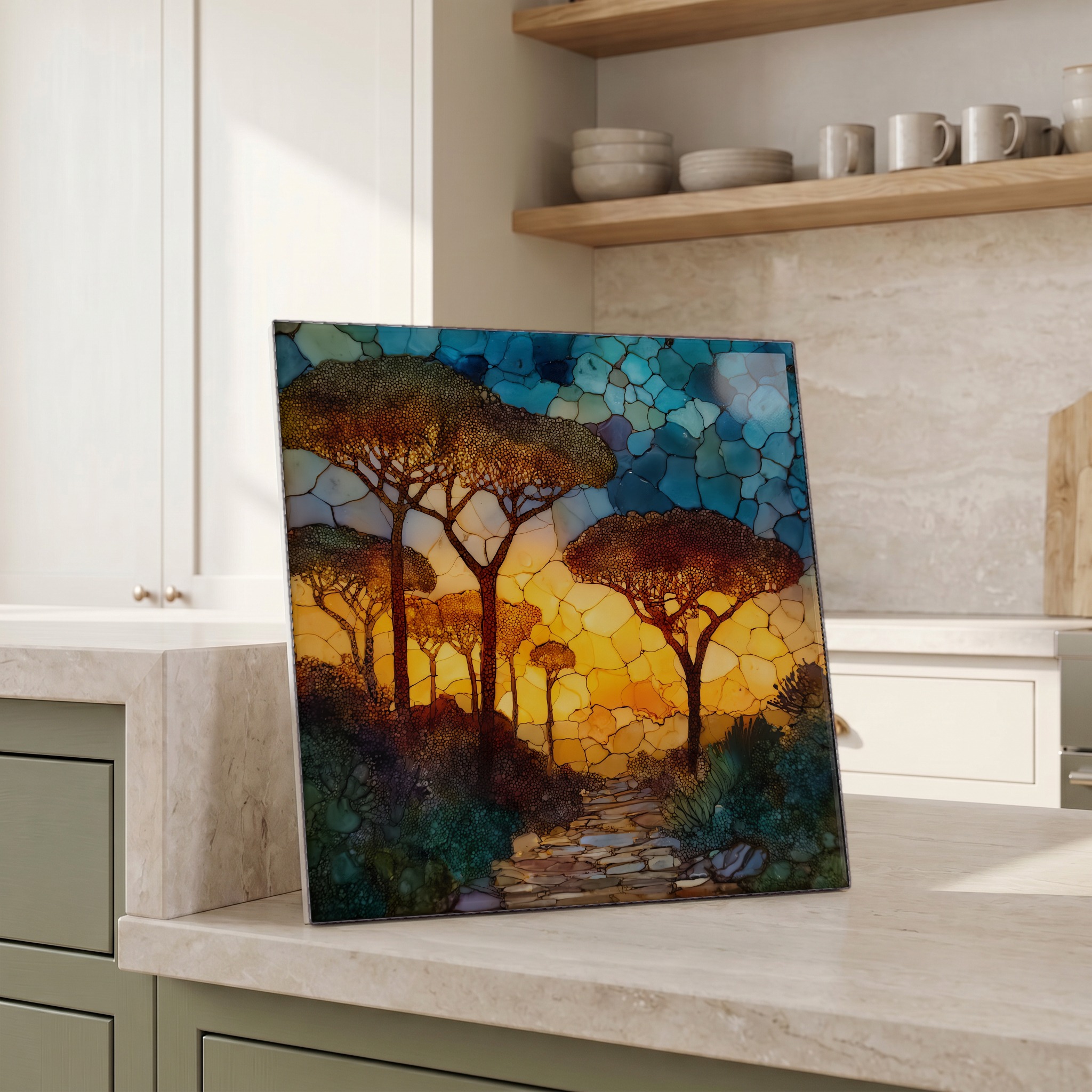
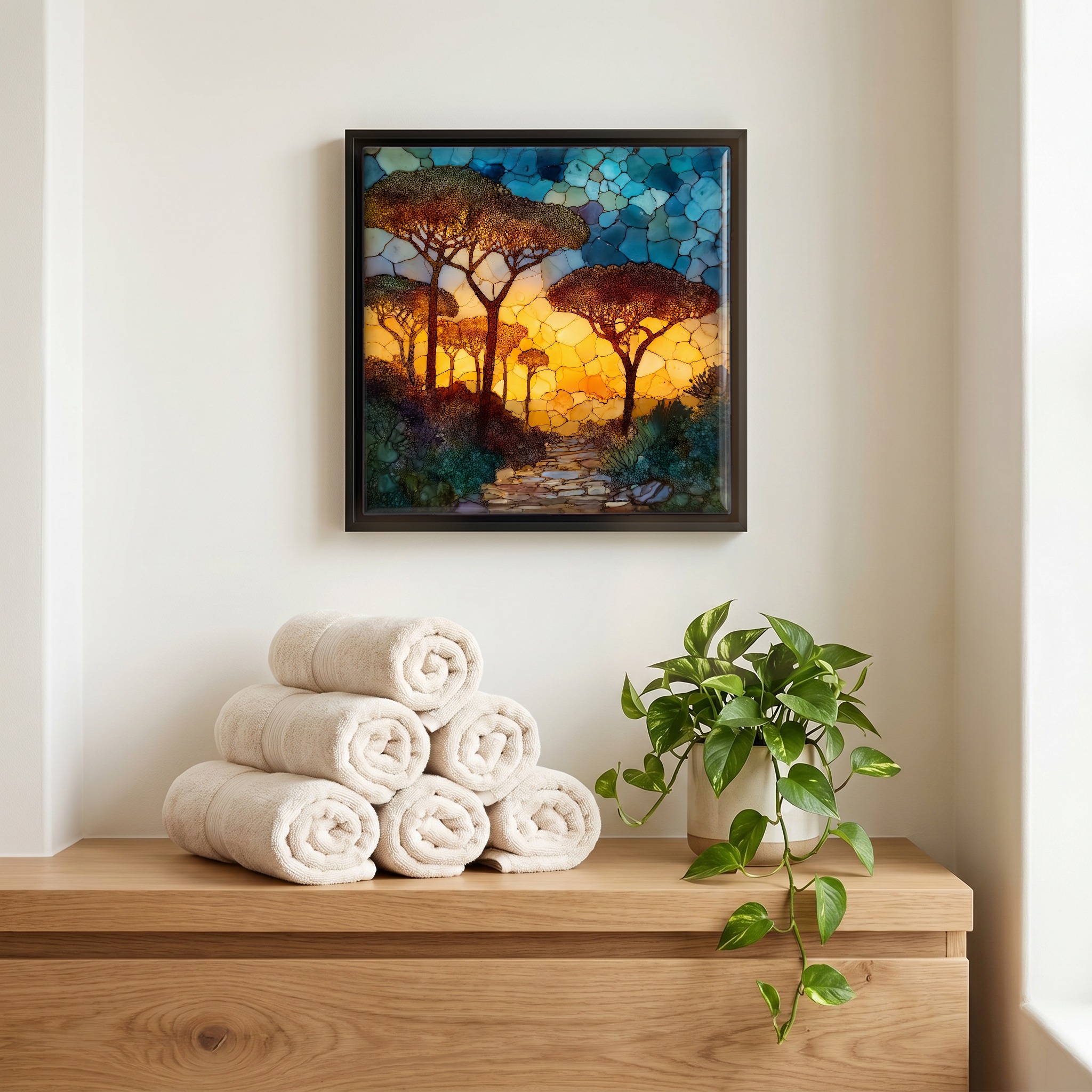
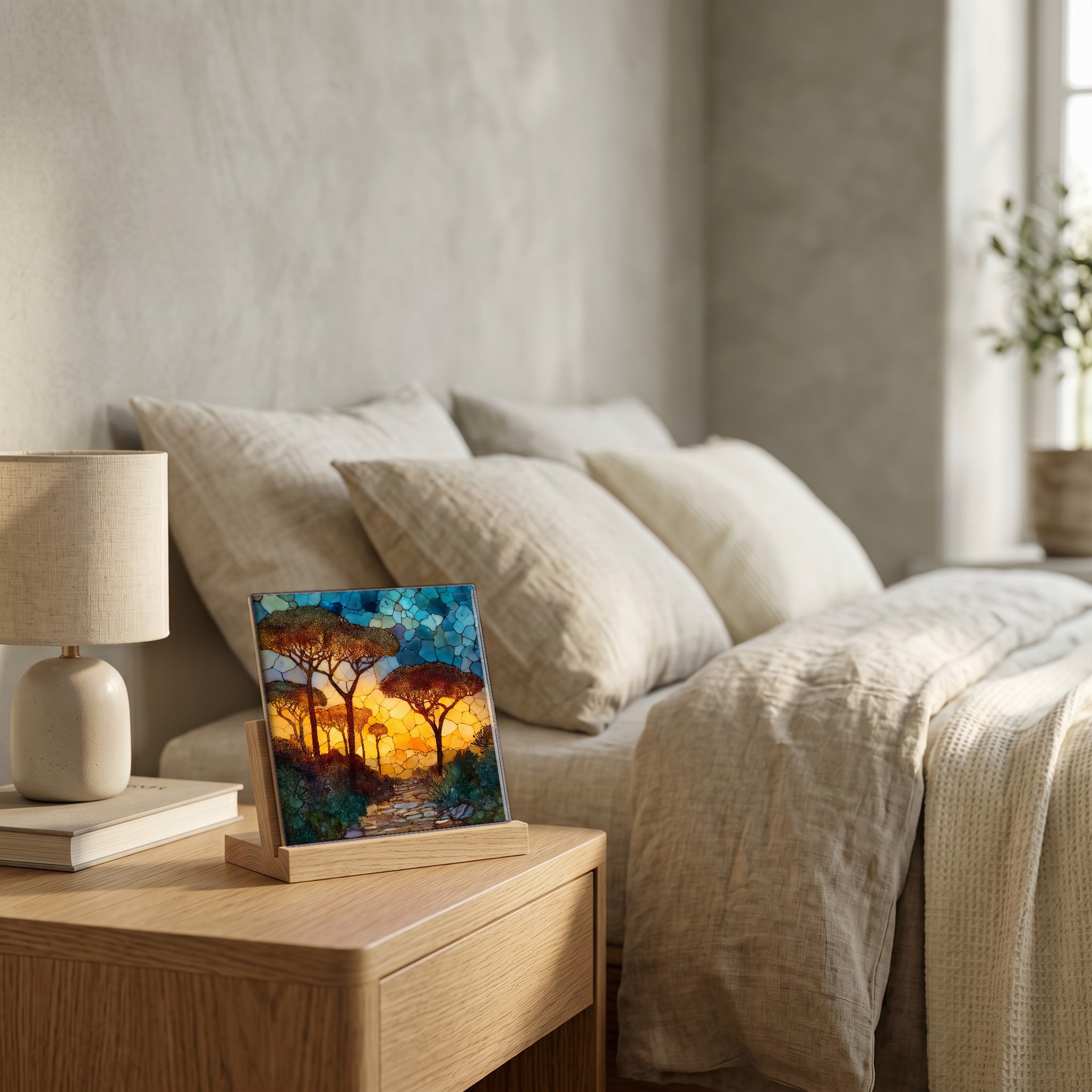
Appian Way, on ceramic.
Each tile is finished by hand in our Knoxville studio. Artwork is slowly infused into the ceramic surface under high heat and pressure, and rests beneath a thin glossy finish. The colour lives in the surface, not on top of it.
Pick any four 4-inch tiles — National Parks you've been to, a Smokies set, the four seasons of one place. $ for a set of , cork-backed, ready to live on the table.
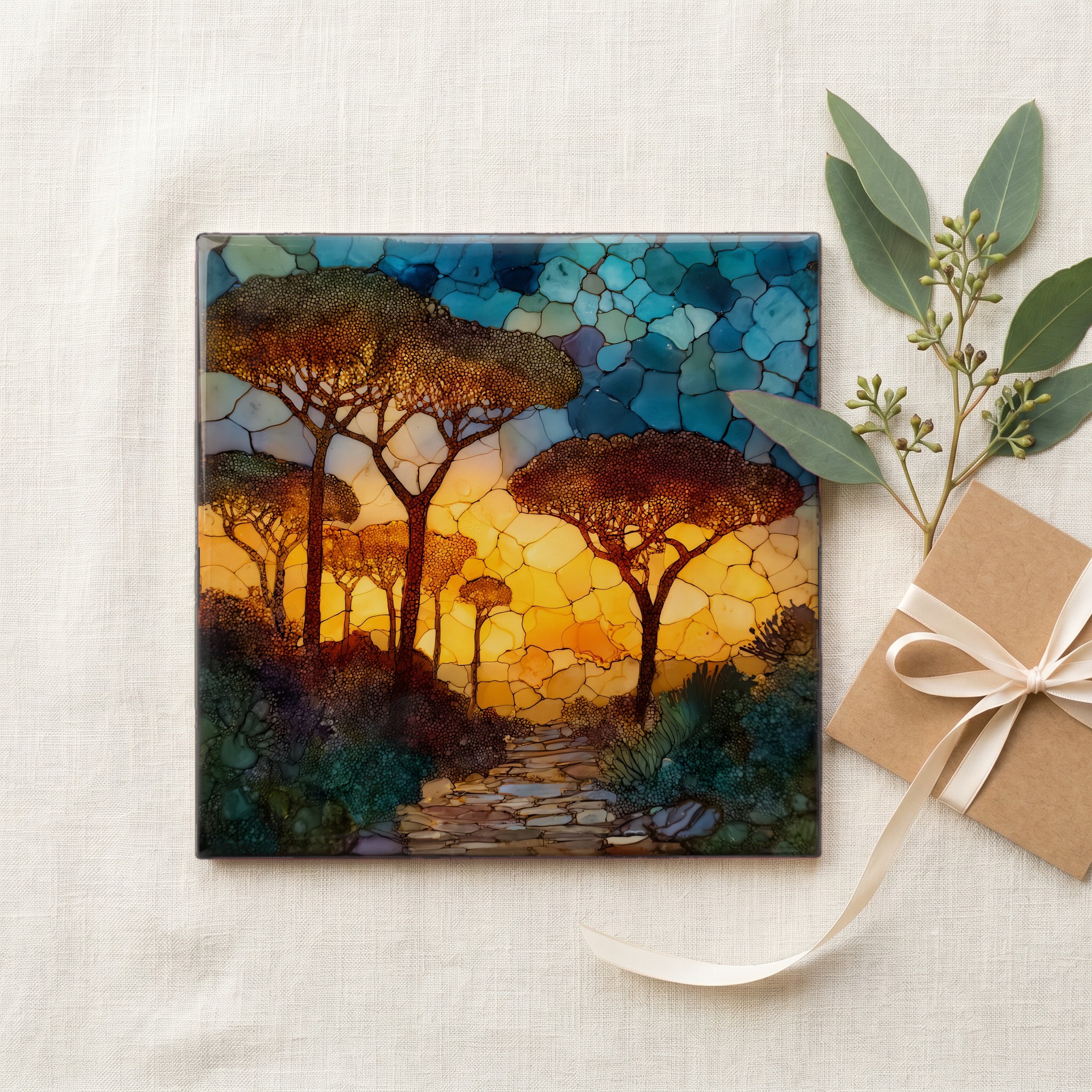
Each tile ships in a kraft box, tied with cream ribbon, with a handwritten note from the studio if you'd like to add one.
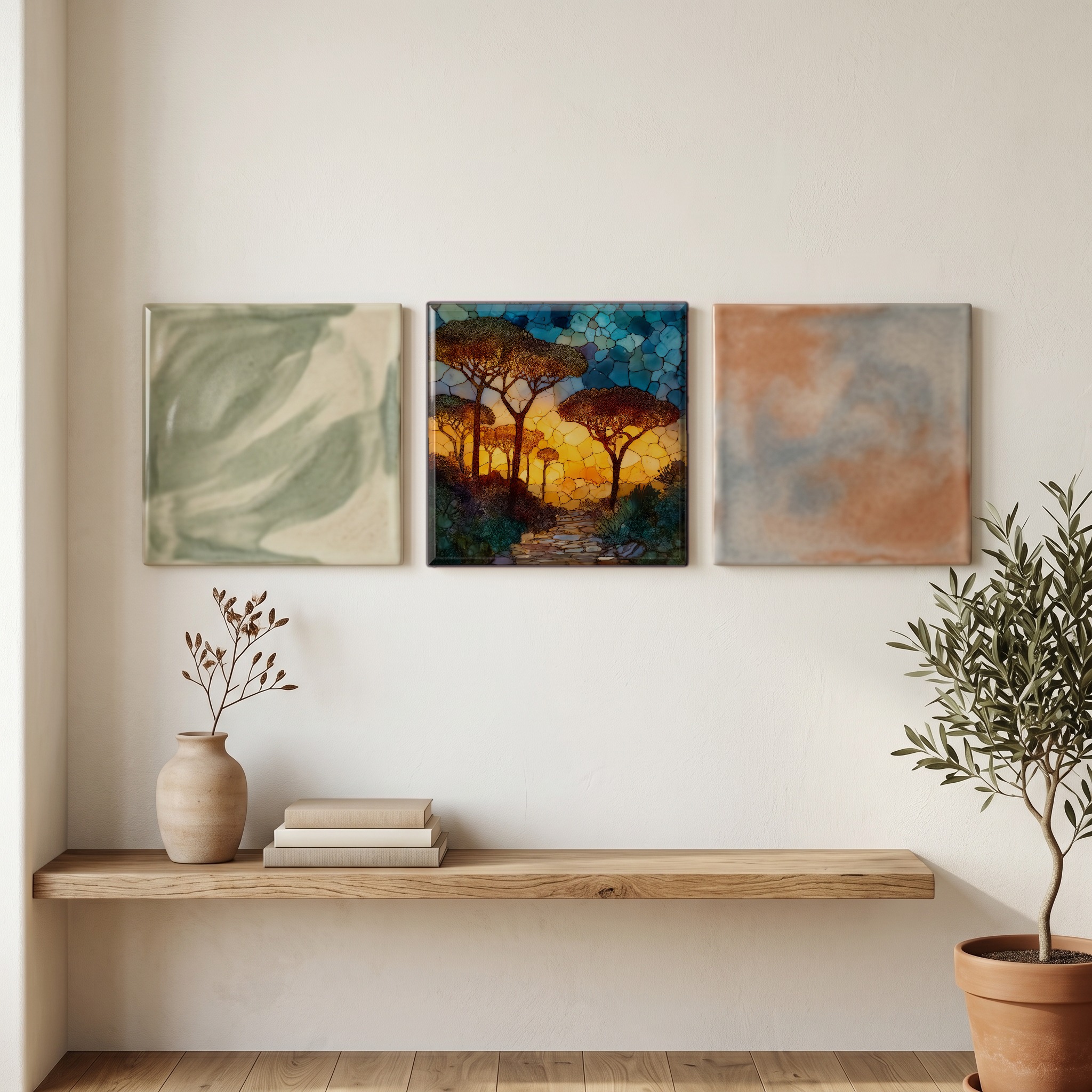
Three or five different vistas, hung together — a chapter of places you've been, or want to go.
The place, in three passes.
The Appian Way began in 312 BC, when the censor Appius Claudius Caecus pushed a military road south from Rome toward Capua, 132 Roman miles away. Later extensions carried it on to Brindisi on the Adriatic, some 540 kilometres in all, which is why the poet Statius called it regina viarum, the queen of roads. It started at the Porta Capena in the old Servian Wall and ran out of the city through what is now the Porta San Sebastiano. The first ten miles south of Rome are protected today as the Parco Regionale dell'Appia Antica, established in 1988, and in July 2024 the road was inscribed as Italy's sixtieth UNESCO World Heritage Site.
What survives is the paving itself: large polygonal blocks of dark volcanic basalt, fitted so tightly the surface needed no mortar, laid over deeper courses of gravel and cemented stone. Along the verges stand the tombs that Roman law required to be built outside the city walls, the largest of them the cylindrical Tomb of Cecilia Metella, raised for the daughter-in-law of Crassus in the first century BC and later walled into a medieval fortress. The umbrella pines and cypresses that frame the road were planted between 1909 and 1913, during a restoration meant to recover its ancient feeling, so the silhouette most people picture is barely a century old.
The most walkable stretch starts past the Porta San Sebastiano and runs south through the regional park, where long sections of original basalt survive almost intact between the pines. On Sundays the historic road is closed to traffic, and Romans come out to walk and cycle the old surface. Within the first few miles lie the Catacombs of San Callisto and San Sebastiano, the ruined Circus of Maxentius, and the small church of Domine Quo Vadis at the second milestone, where legend places the apostle Peter's encounter on the road out of the city. The catacombs charge admission and keep limited hours; the open road costs nothing and is busiest in spring and early autumn, when the heat eases.