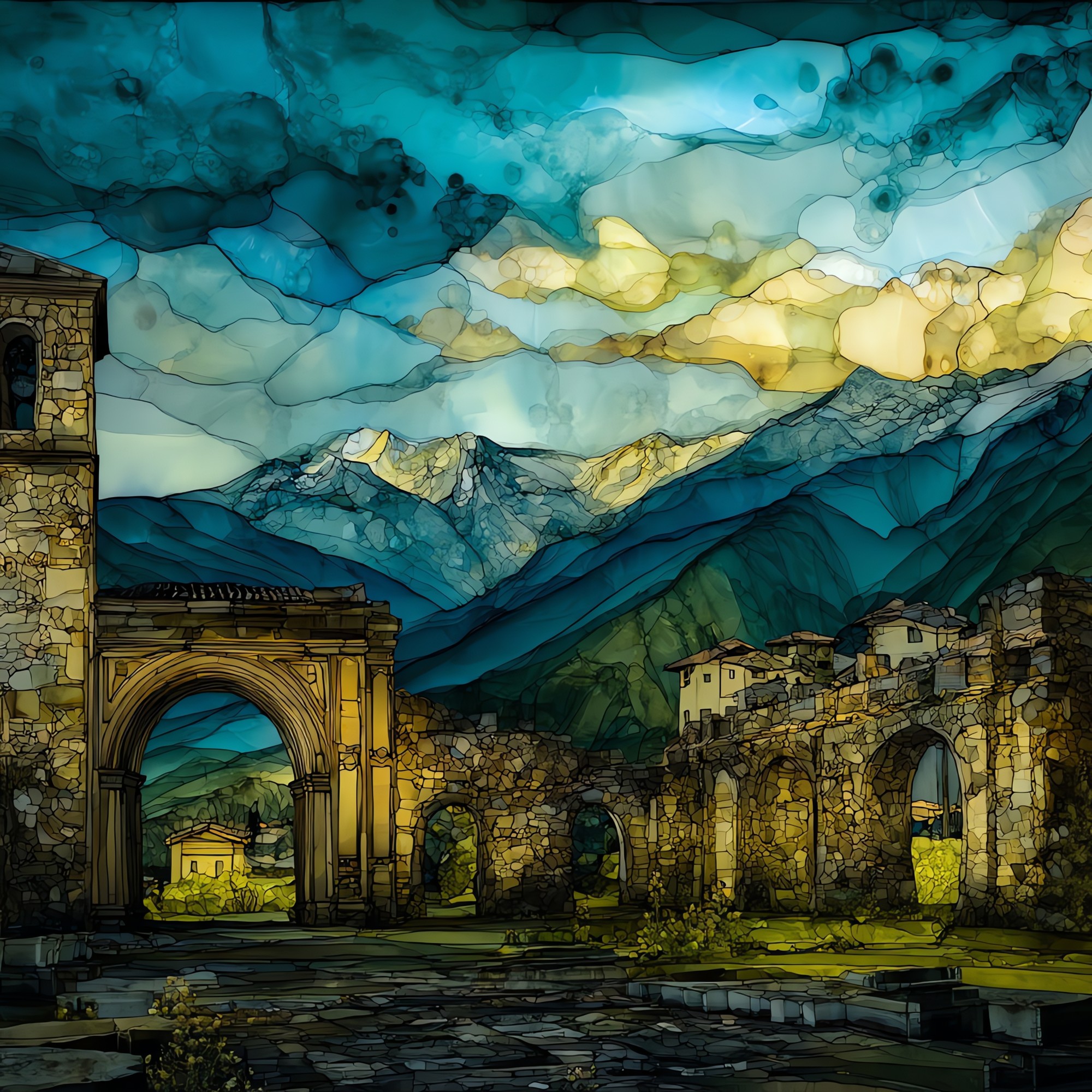
Aosta Roman Gate
— — still the way in, two thousand years on.
Not only on a wall.
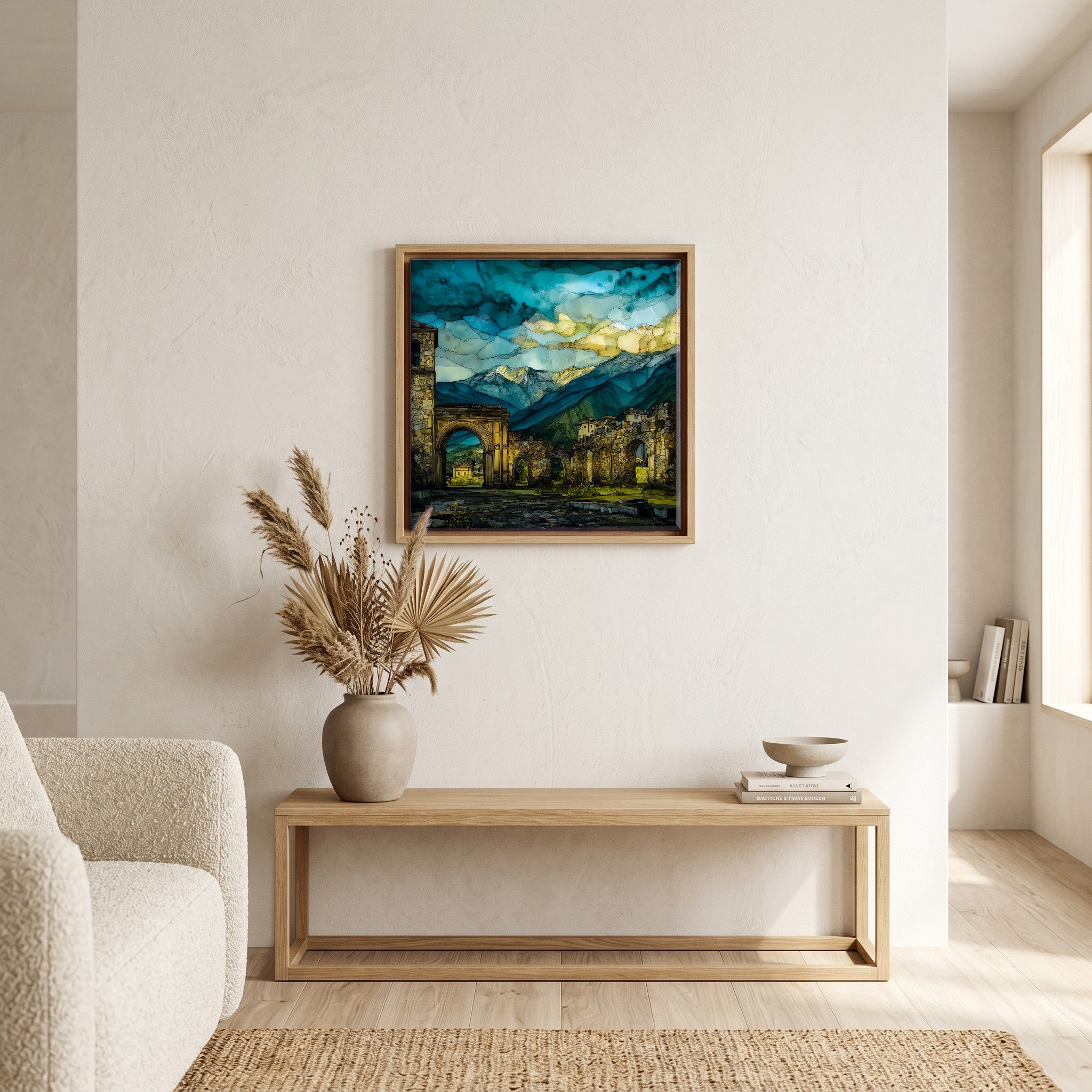
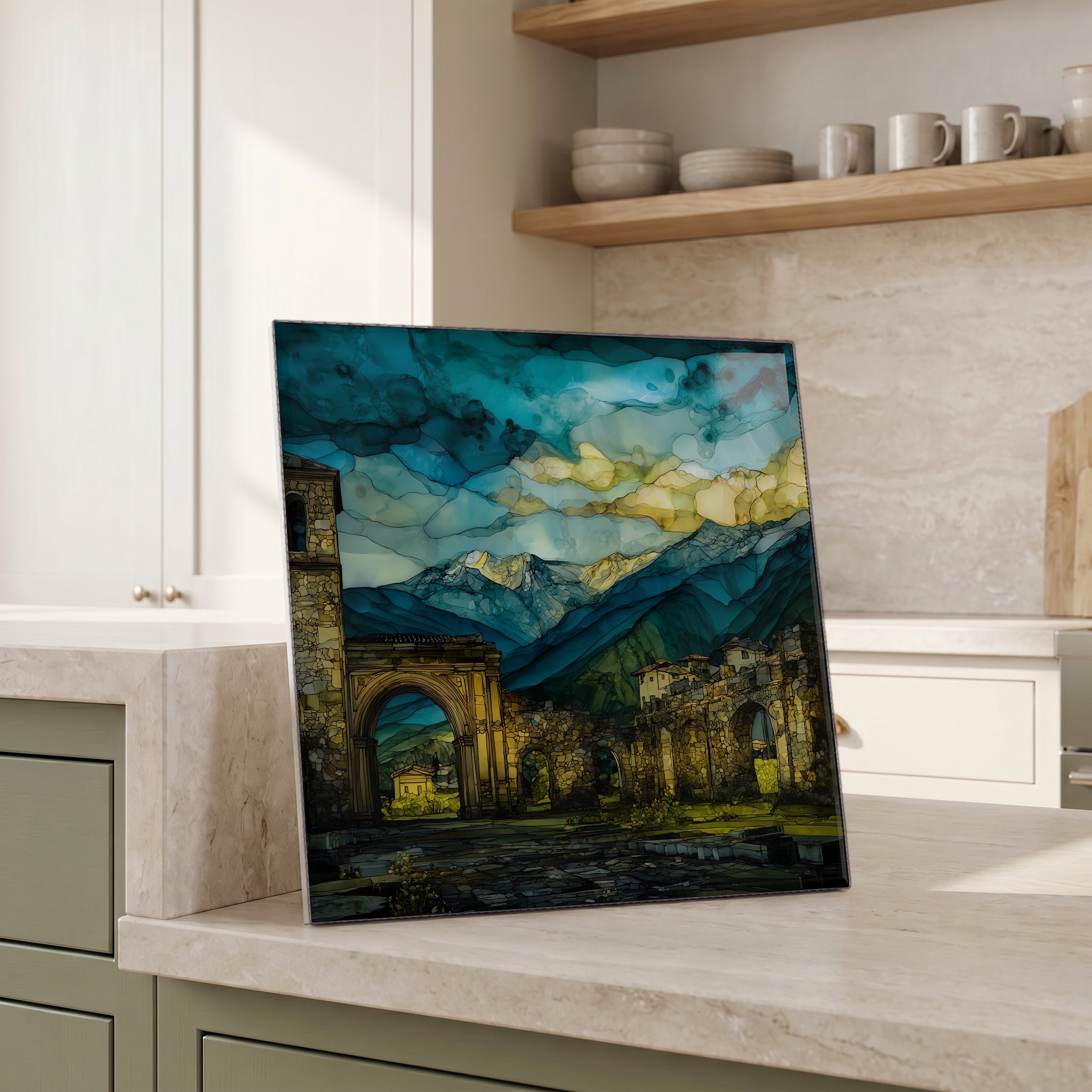
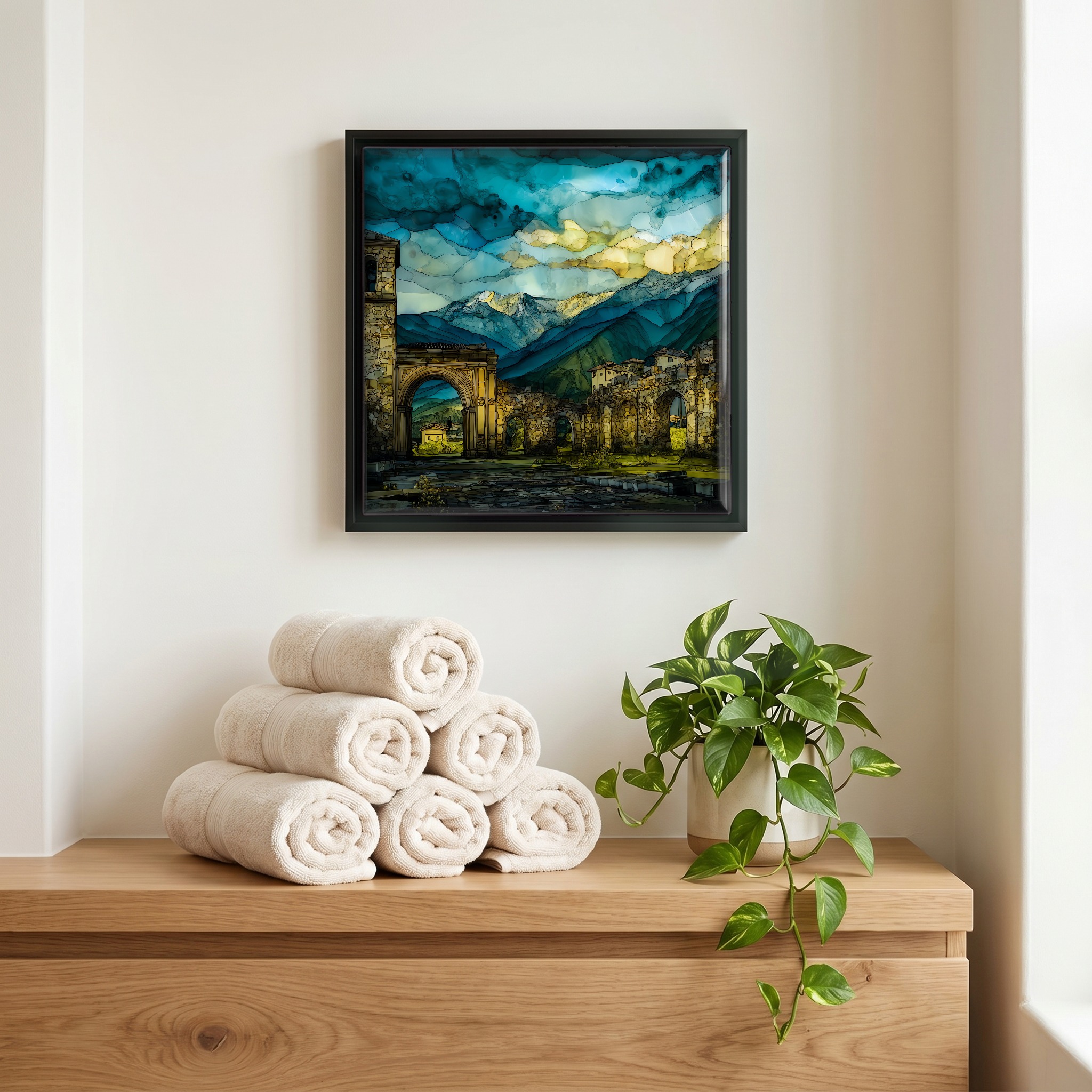
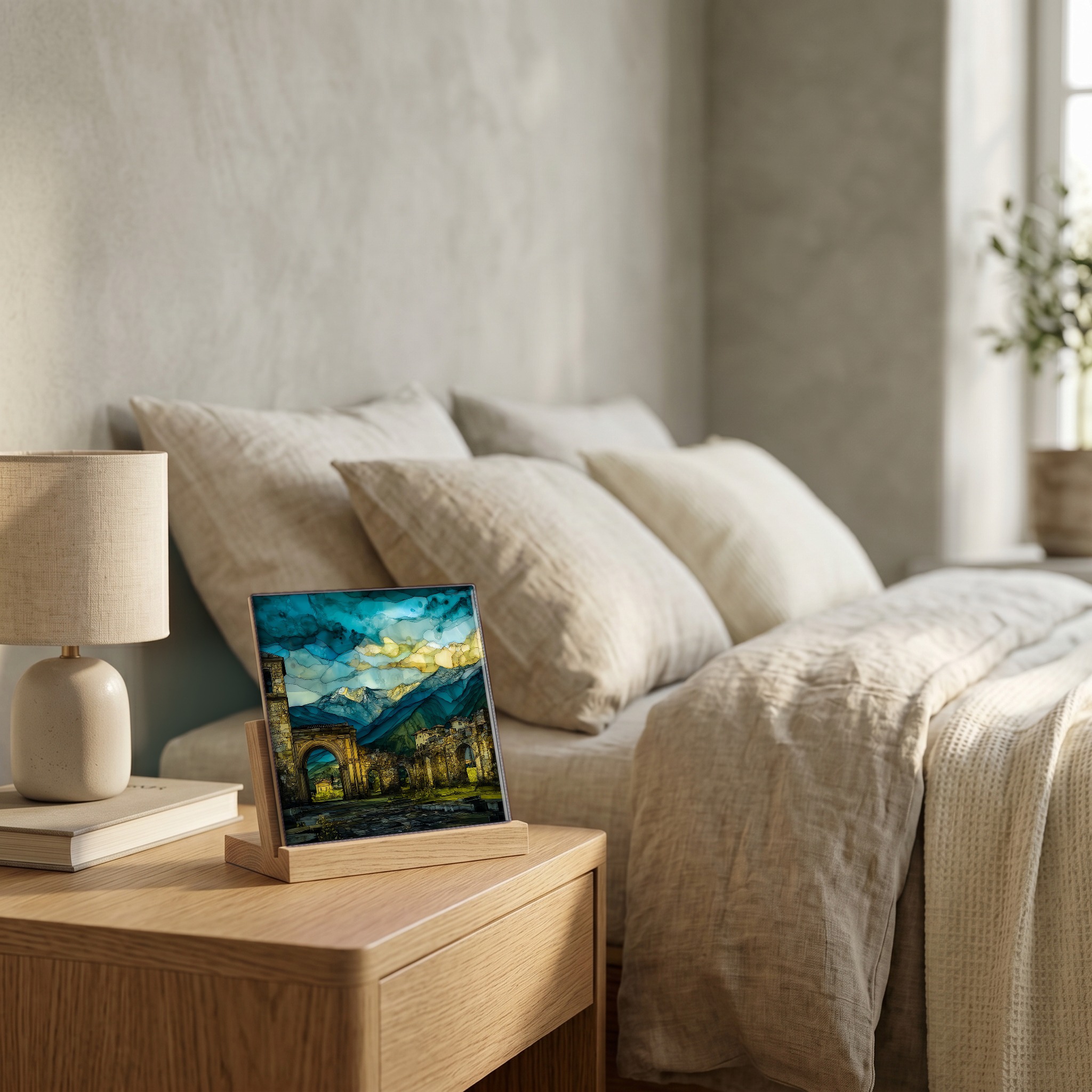
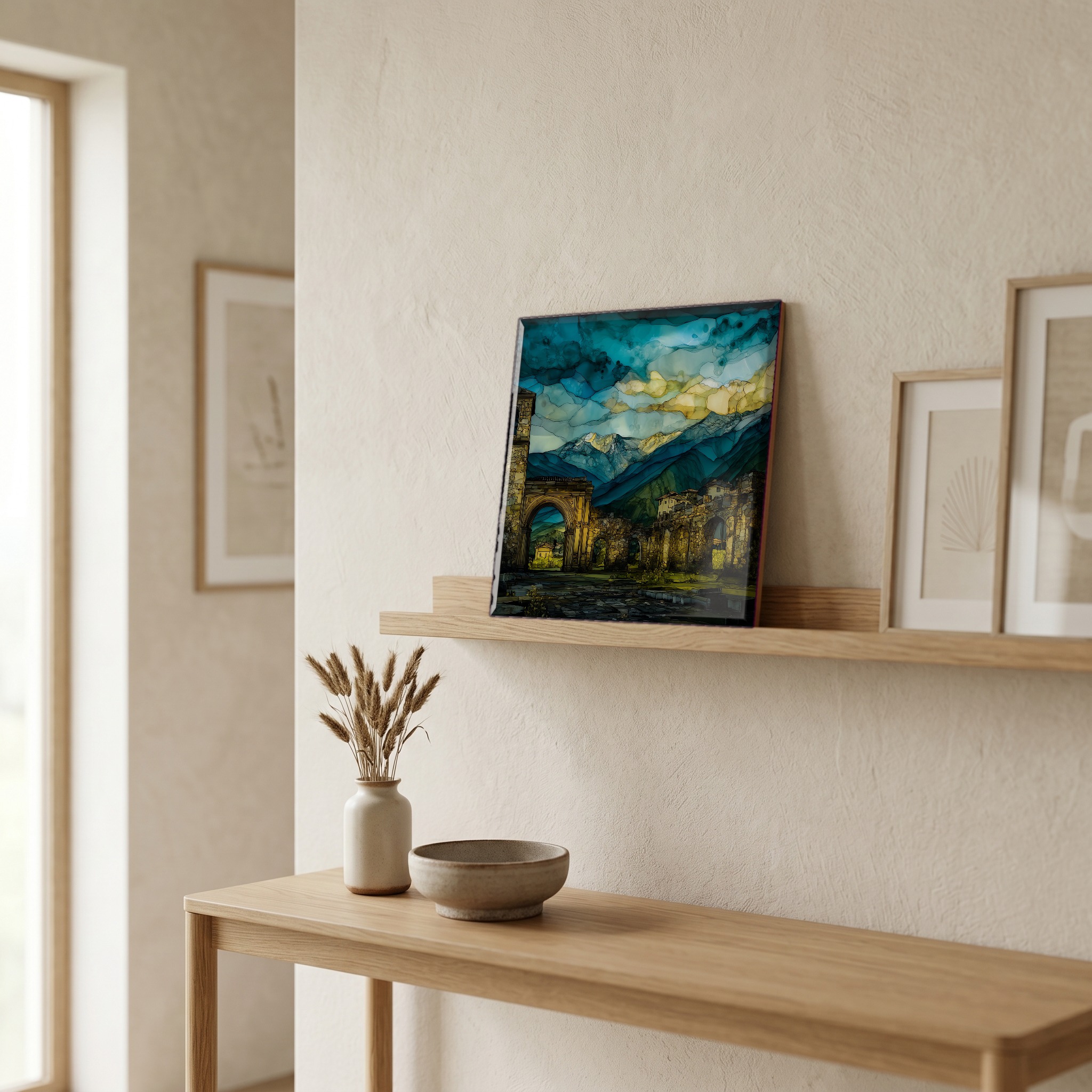
“The eastern gate of Augusta Praetoria, the colony Rome laid out in 25 BC where the valley narrows toward the high passes. Two parallel walls of grey conglomerate, three arches deep, with a courtyard between them where soldiers once formed up. People still take the central passage to reach the old town. The marble that once faced the stone is long gone, and the gate now sits a couple of metres below the modern street. Aosta is called the little Rome of the Alps. This is the part you walk through to believe it.
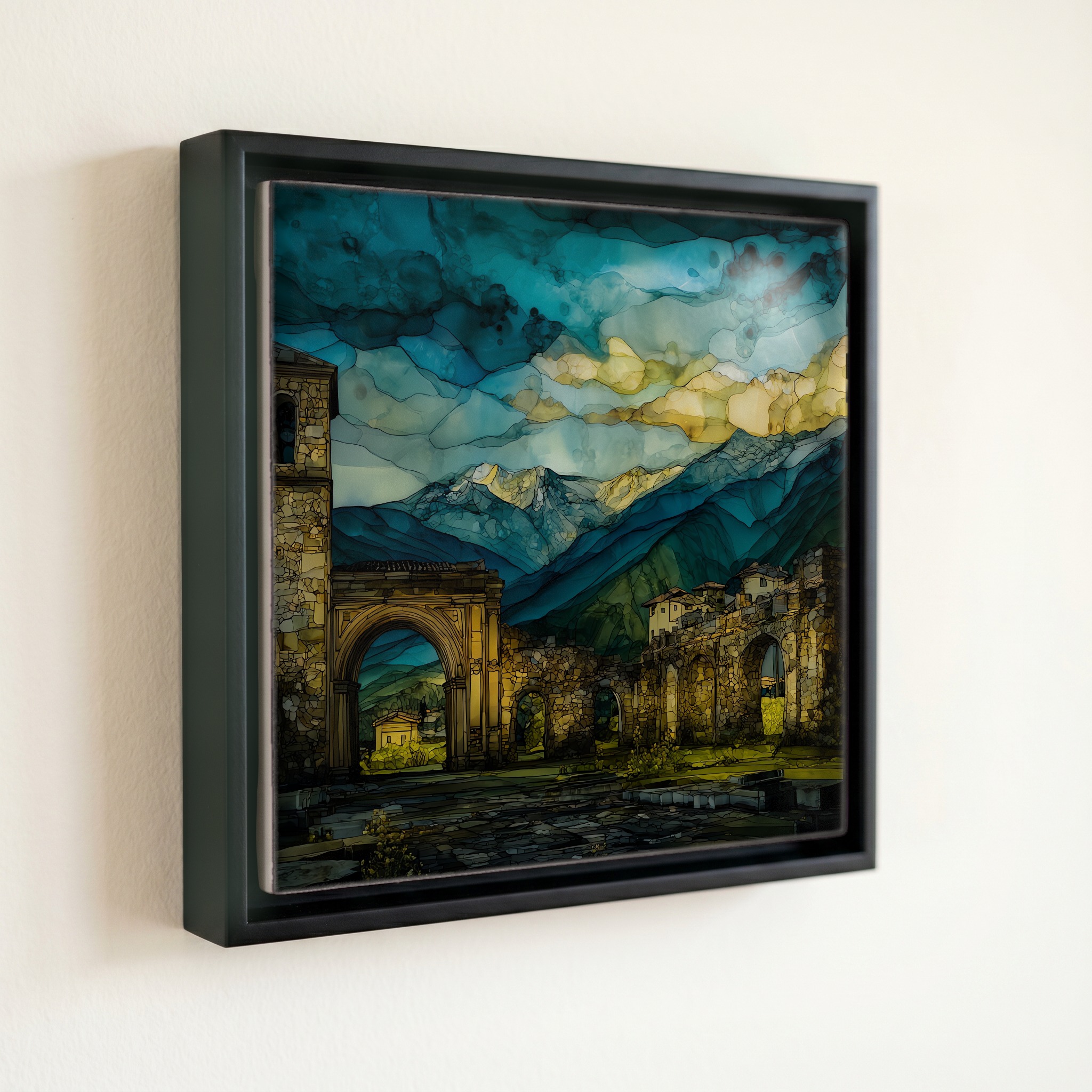
Aosta Roman Gate, on ceramic.
Each tile is finished by hand in our Knoxville studio. Artwork is slowly infused into the ceramic surface under high heat and pressure, and rests beneath a thin glossy finish. The colour lives in the surface, not on top of it.
Pick any four 4-inch tiles — National Parks you've been to, a Smokies set, the four seasons of one place. $ for a set of , cork-backed, ready to live on the table.
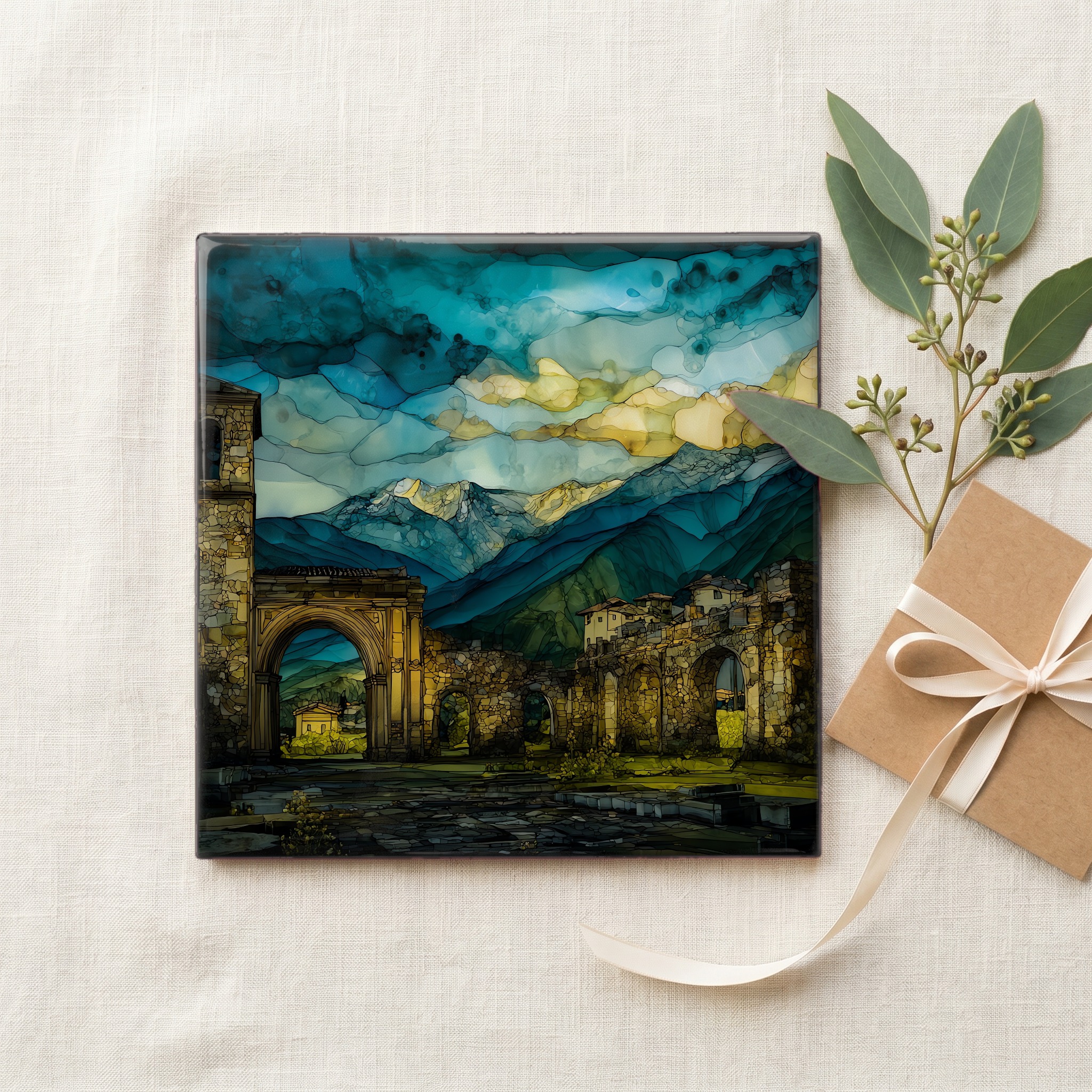
Each tile ships in a kraft box, tied with cream ribbon, with a handwritten note from the studio if you'd like to add one.
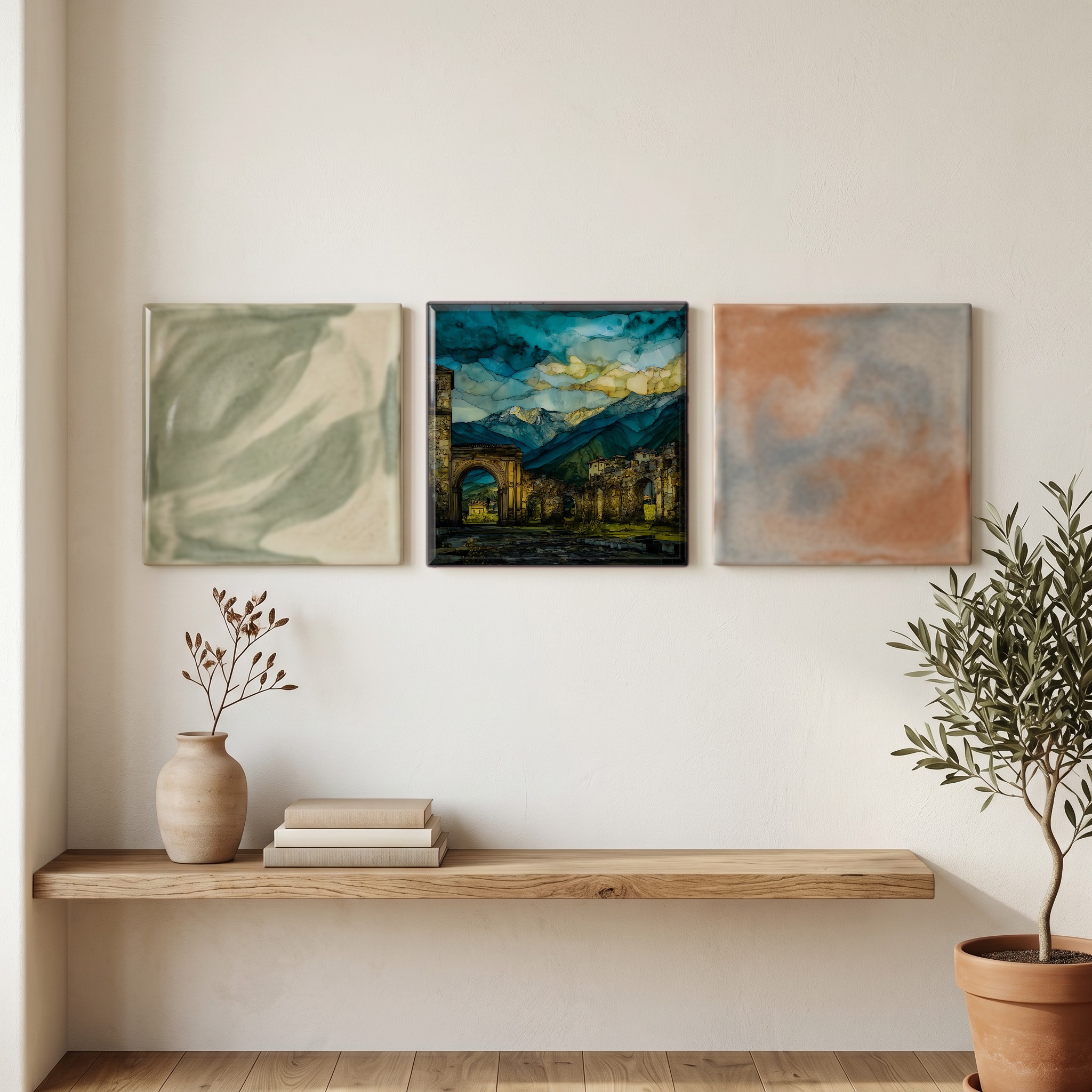
Three or five different vistas, hung together — a chapter of places you've been, or want to go.
The place, in three passes.
Aosta sits at 583 metres in the Aosta Valley, the bilingual Alpine region of northwest Italy, about 110 km north of Turin where the Dora Baltea and Buthier rivers meet. Rome founded the town in 25 BC as Augusta Praetoria Salassorum, settling 3,000 veterans on a grid laid over ground taken from the Salassi. The Porta Praetoria was the eastern of the colony's gates, opening onto the Via delle Gallie, the road that climbed toward the Great and Little St Bernard passes into Gaul. That grid is still legible in the streets today, which is why Aosta is called the little Rome of the Alps.
The gate is built of puddingstone, a hard local conglomerate, in two parallel screens that stand about twelve metres apart with a paved court between them where the garrison could muster. Each screen carries three arches: a wide central passage for carts and two narrower ones for people on foot. The outer face was once clad in marble, long since stripped, and vertical grooves still mark where wooden gates were lowered each night. Two flanking towers rise roughly eleven metres. Centuries of silt off the Buthier and the Dora Baltea have raised the ground, so the original Roman threshold now sits about two metres below the modern street.
The gate stands open on a pedestrian street between Via Sant'Anselmo and Via Porta Praetoria, free to walk through at any hour, at the centre of a town that reads like an open-air museum. Within a few minutes' walk are the Arch of Augustus, raised in the same Augustan moment, a Roman theatre whose facade still rises 22 metres, and long stretches of the original walls. In the Middle Ages a chapel to the Holy Trinity stood on top and the gate took the name Porta Sant'Orso; the chapel came down in 1926. Mont Blanc and the Great St Bernard pass lie close at hand.