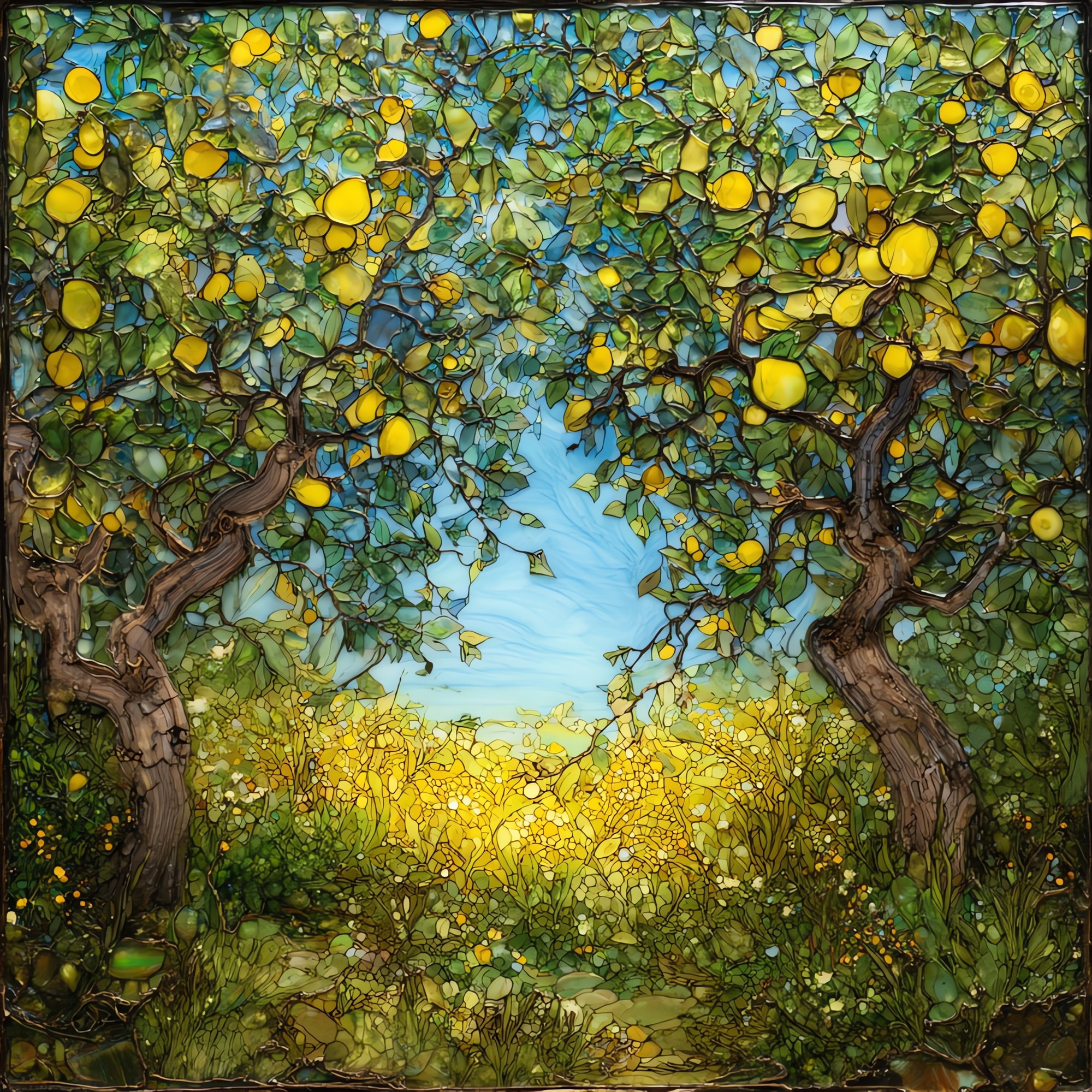
Amalfi Lemon Grove
— — the yellow that hangs in the shade above the sea.
Not only on a wall.
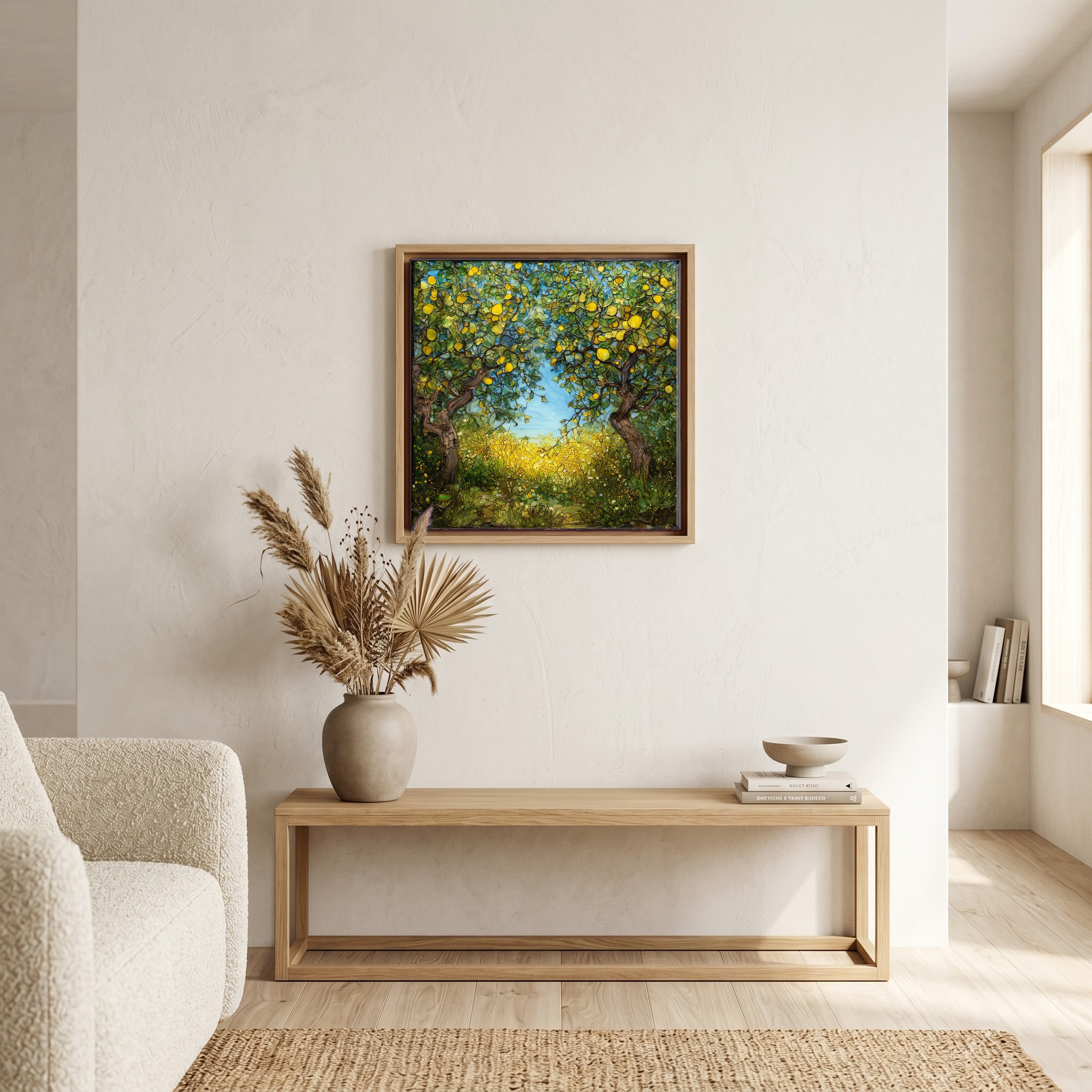
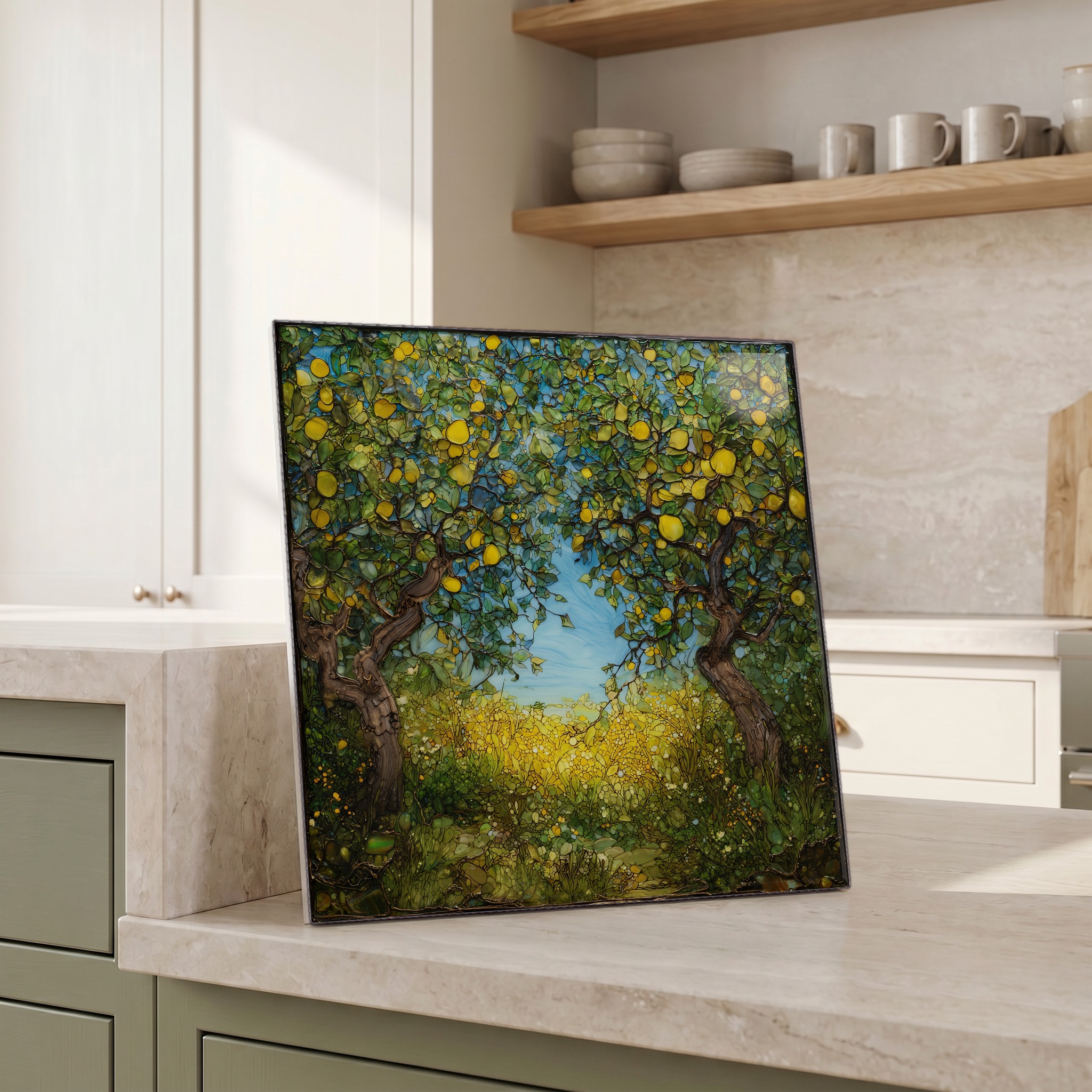
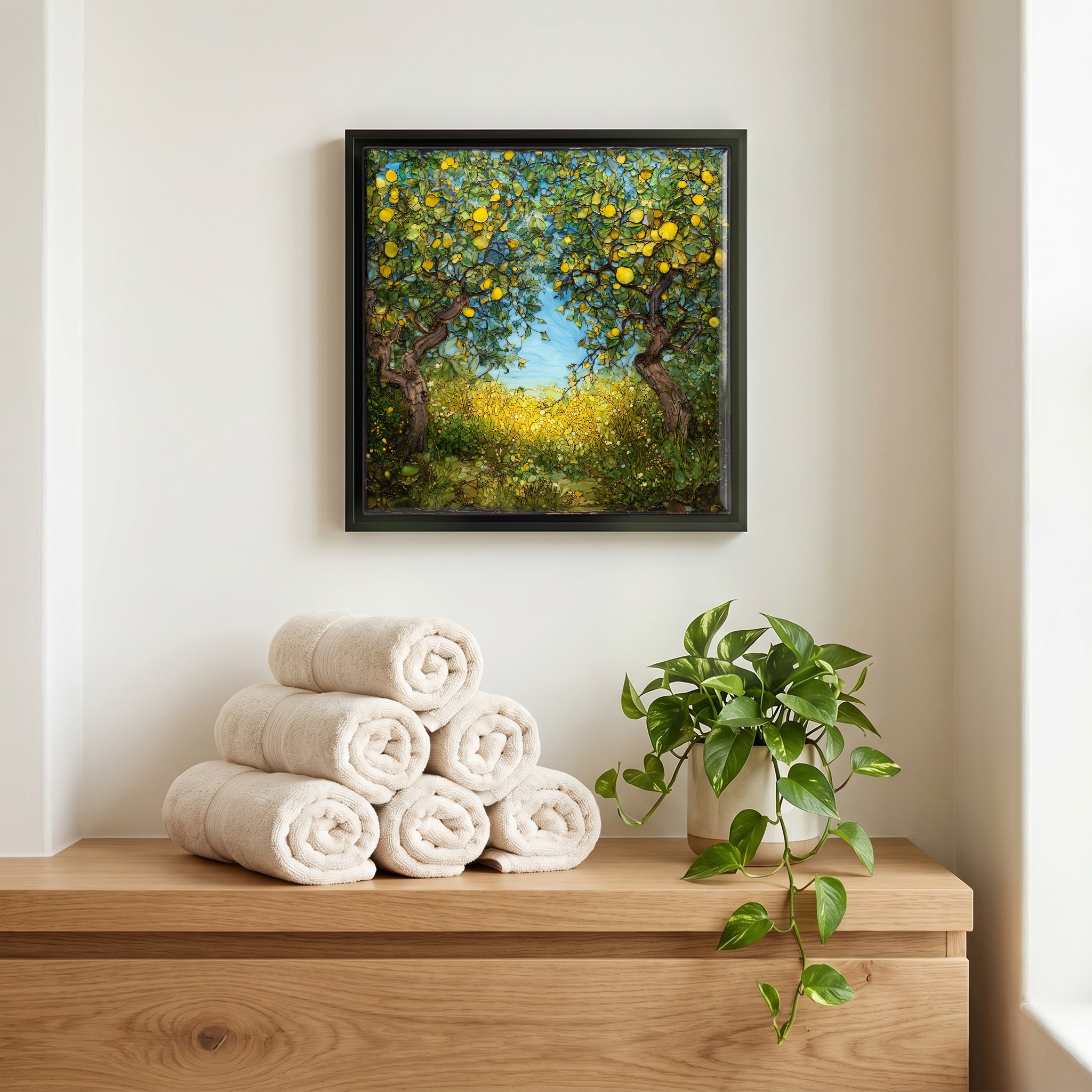

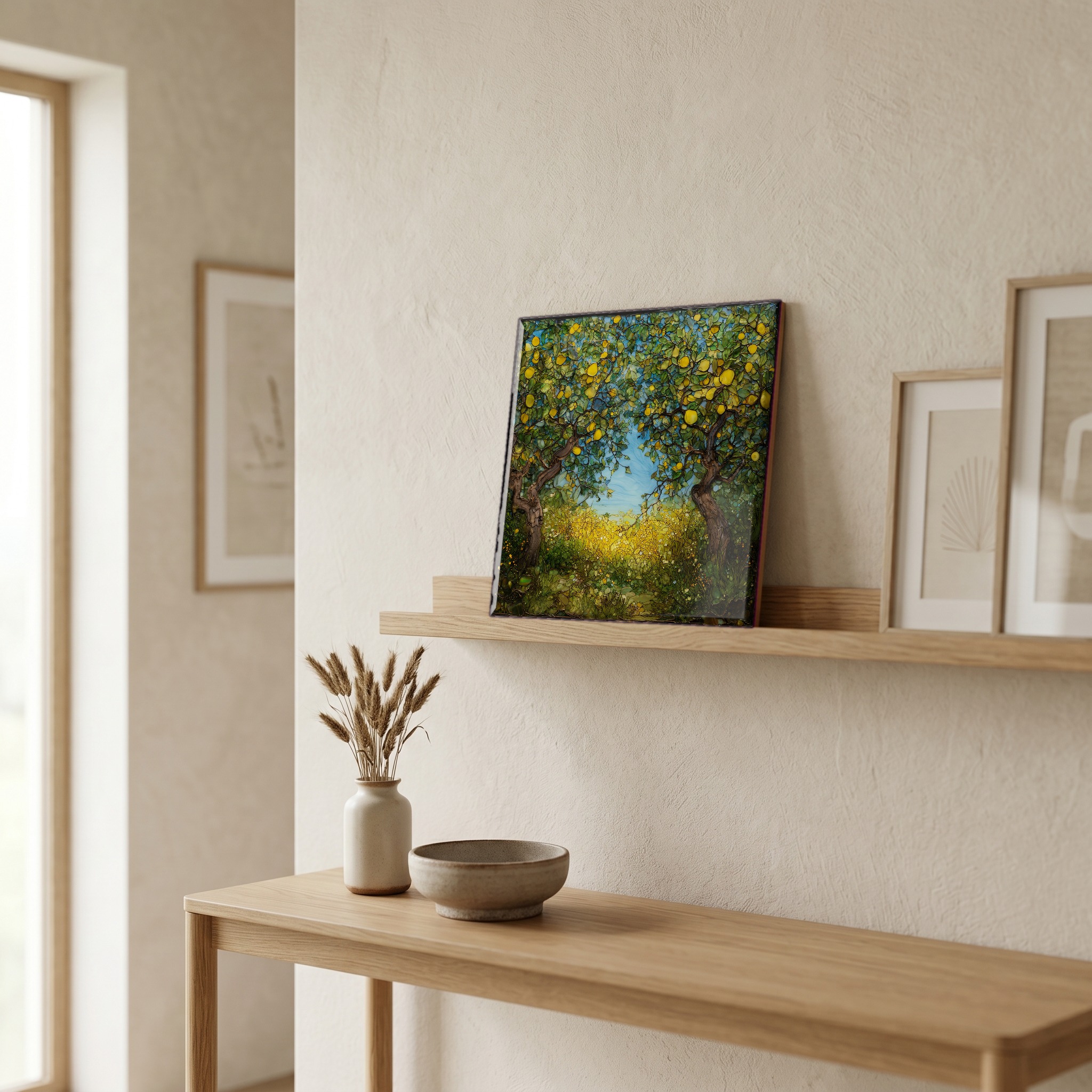
“Terraces of lemon trees stacked up the cliffs behind Amalfi, each one held by a dry-stone wall and roofed with a lattice of chestnut poles. The fruit is the Sfusato, long and thick-skinned, grown nowhere else. The growers who tend it work the pergolas overhead, and have long been called the flying farmers. The scent reaches the old path between Maiori and Minori before the groves come into view. Nothing about it is fast. The walls are stacked by hand, the way they were a thousand years ago, and the fruit comes down a basket at a time.
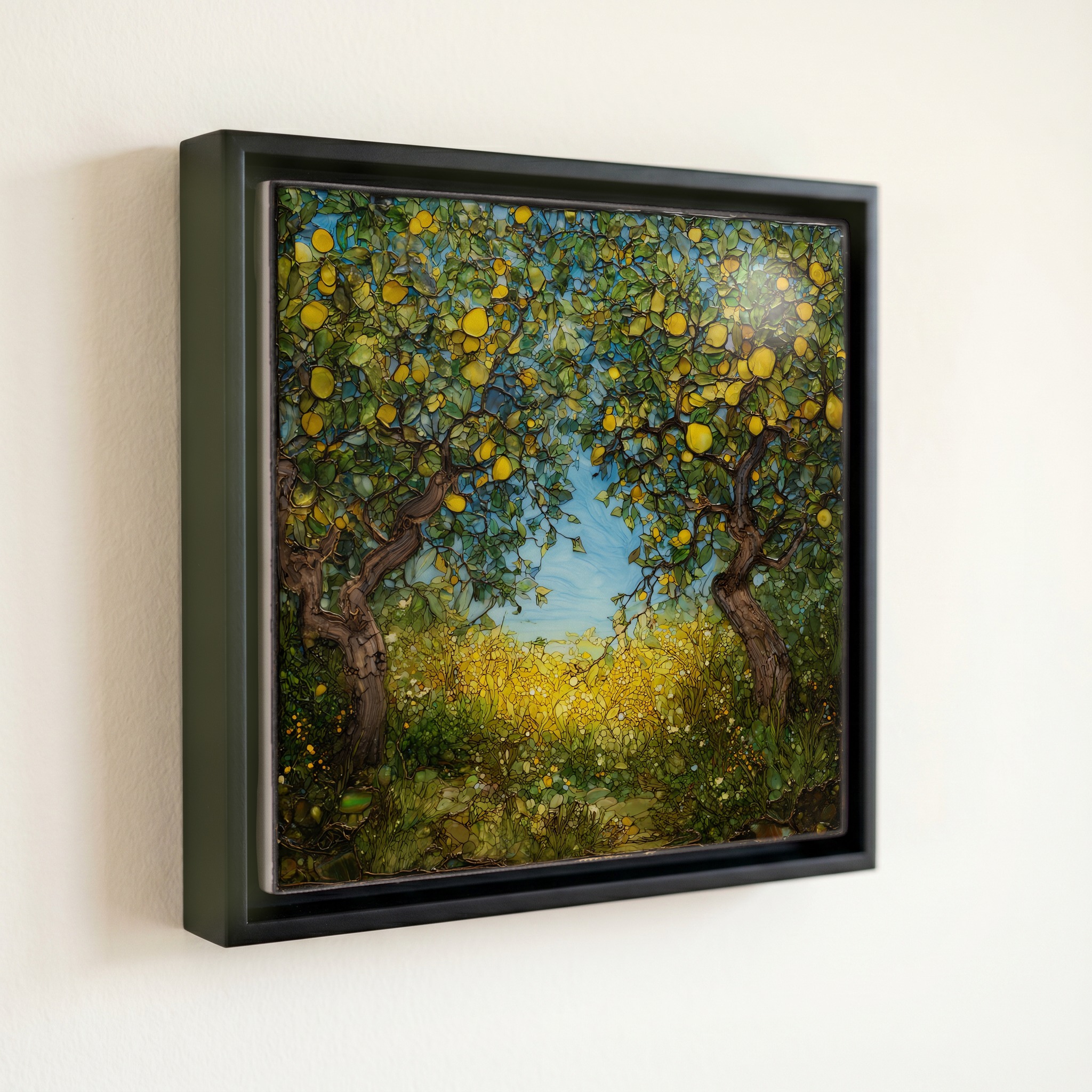
Amalfi Lemon Grove, on ceramic.
Each tile is finished by hand in our Knoxville studio. Artwork is slowly infused into the ceramic surface under high heat and pressure, and rests beneath a thin glossy finish. The colour lives in the surface, not on top of it.
Pick any four 4-inch tiles — National Parks you've been to, a Smokies set, the four seasons of one place. $ for a set of , cork-backed, ready to live on the table.

Each tile ships in a kraft box, tied with cream ribbon, with a handwritten note from the studio if you'd like to add one.

Three or five different vistas, hung together — a chapter of places you've been, or want to go.
The place, in three passes.
The lemon groves of Amalfi climb the slopes of the Costiera Amalfitana, a coastline of about 50 kilometres along the southern edge of the Sorrentine Peninsula in Campania, southern Italy. The coast faces the Tyrrhenian Sea and was named a UNESCO World Heritage Site in 1997. The groves gather around Amalfi, Minori, and Maiori in the Province of Salerno, reached today by the SS163 road that runs along the cliffs. Before that road was built, the terraces could be worked only on foot. The fruit is the Sfusato Amalfitano, which carries Limone Costa d'Amalfi IGP protection and grows along this coastline alone.
The terraces are the achievement here as much as the fruit. Each platform sits on a dry-stone retaining wall, called a macera, stacked without mortar and kept up by hand; overhead, the trees are trained across pergolas built from chestnut poles cut in the forests above the coast. A single hectare can hold up to 800 lemon trees and yield as much as 35 tons, grown without pesticides. Cultivation on this scale reaches back to between the tenth and twelfth centuries. In August 2025 the FAO added these terraces to its register of Globally Important Agricultural Heritage Systems, the only system in Italy to grow lemons on both terraces and pergolas.
The groves can be walked. The Sentiero dei Limoni, the Path of the Lemons, runs about three kilometres between Maiori and Minori through working terraces above the sea, climbing and dropping roughly 400 steps in each direction. Before the SS163 coast road was cut, this footpath was the only land route between the two towns. The Sfusato is picked over a long season, broadly from late winter into autumn, and the fruit is still lowered down the terraces by hand. Several family groves near Amalfi open their gates for tours and tastings.