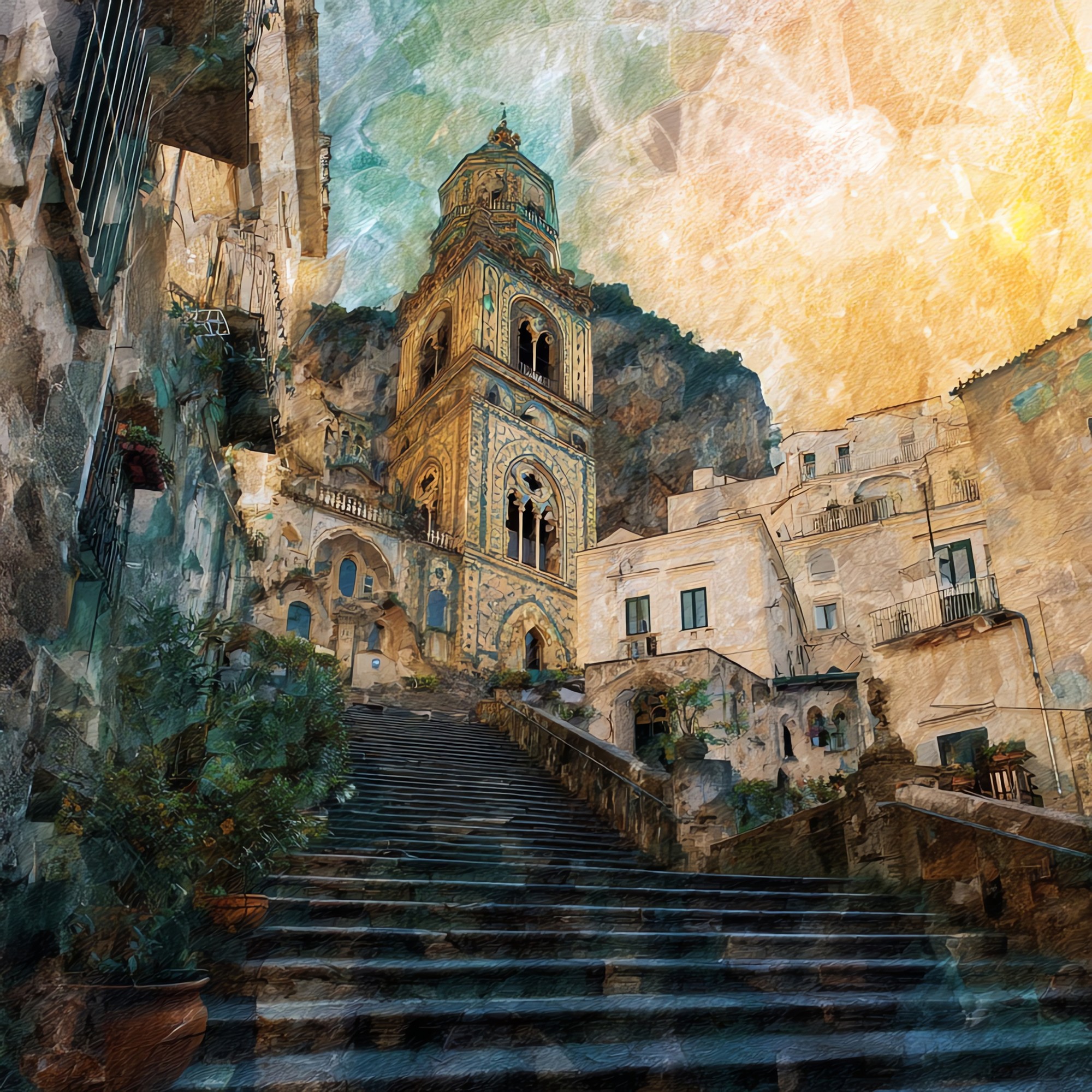
Amalfi Cathedral
— the gold at the top of the climb.
Not only on a wall.
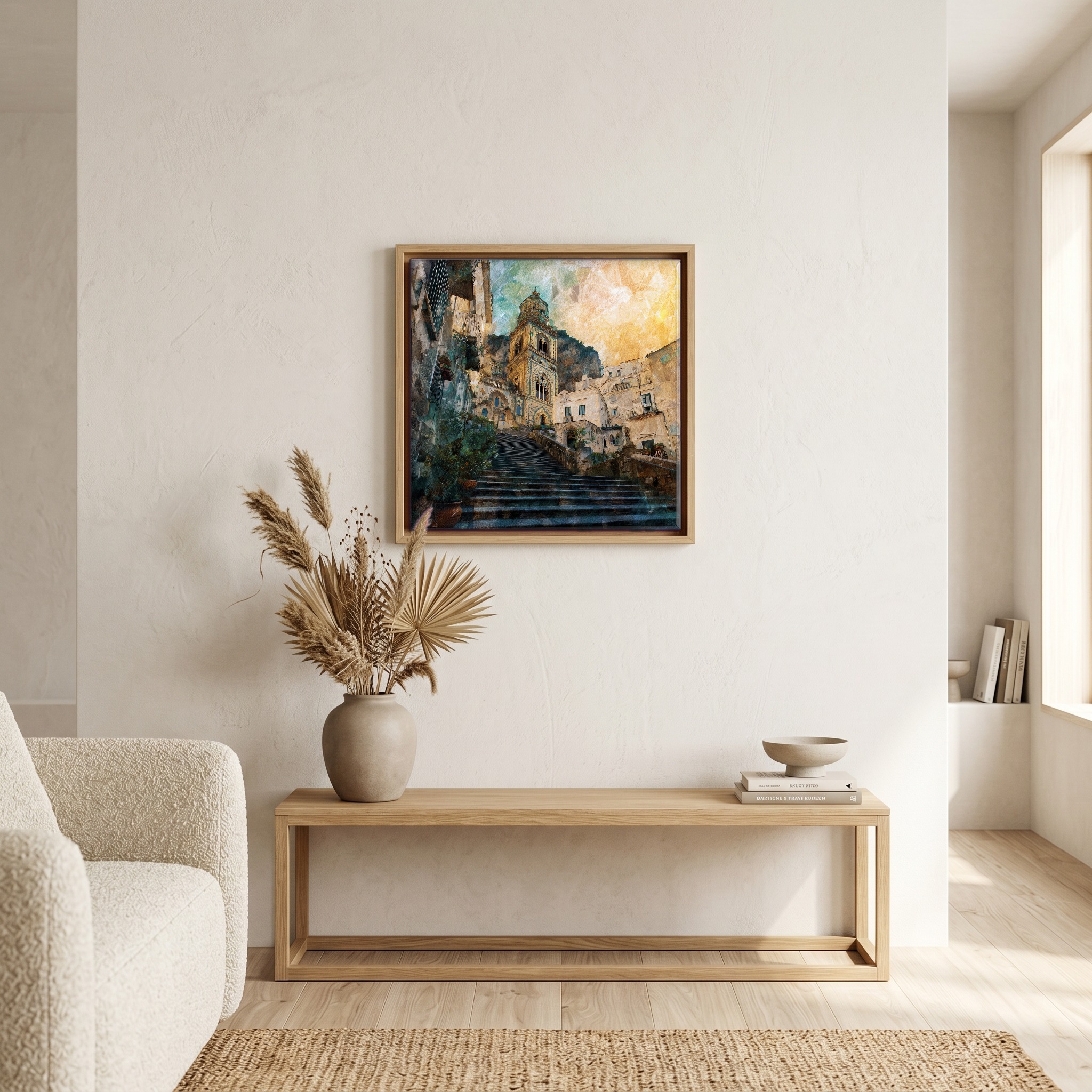
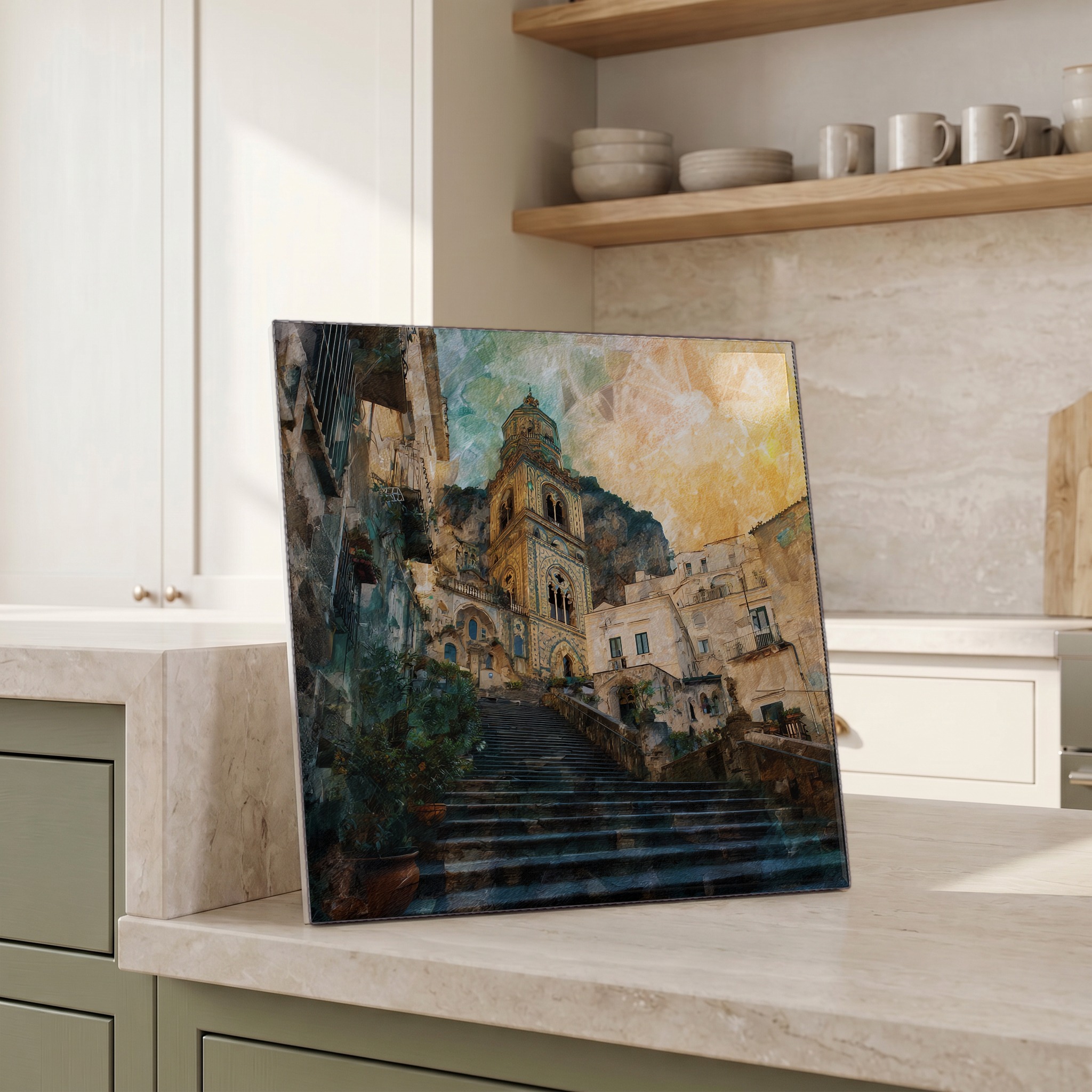
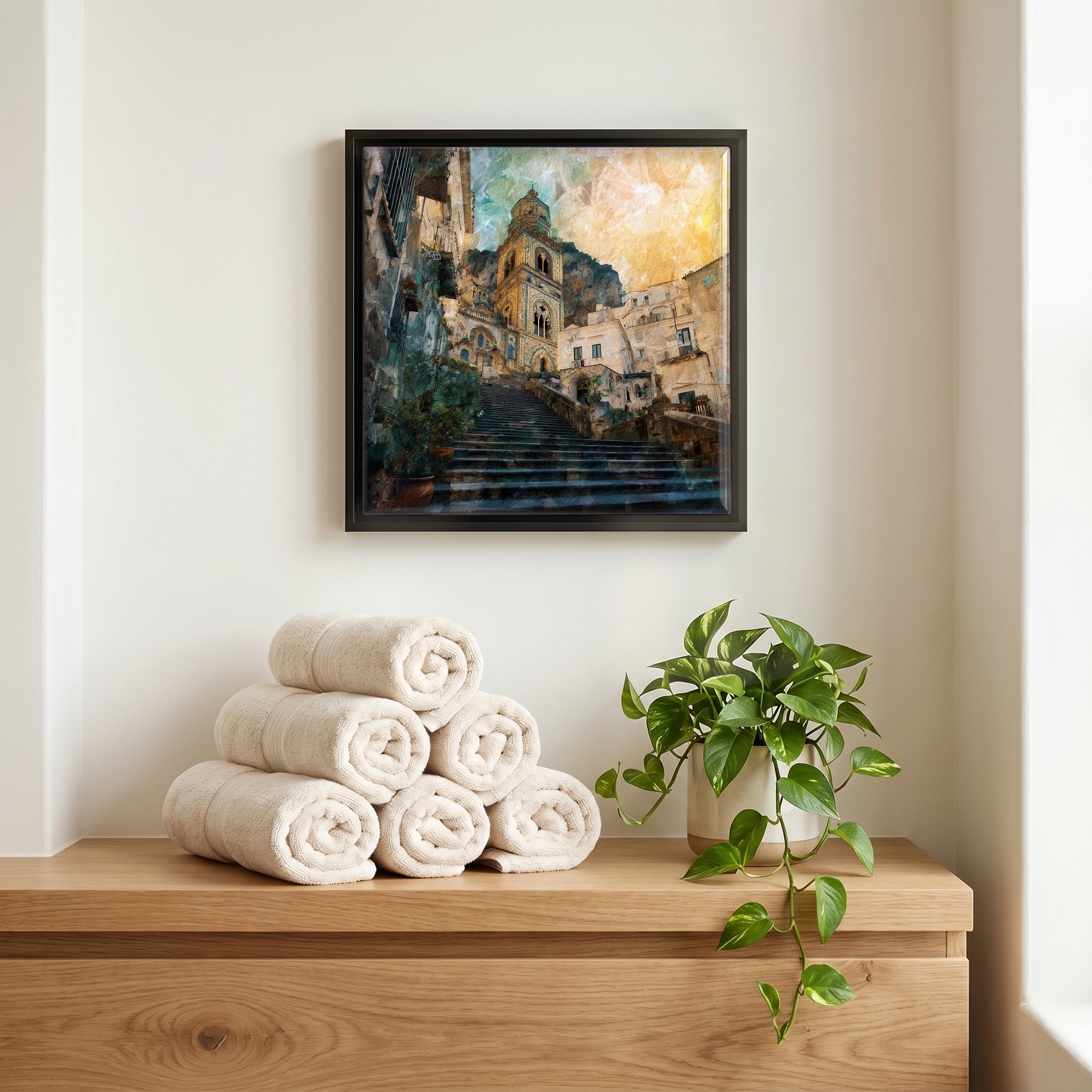
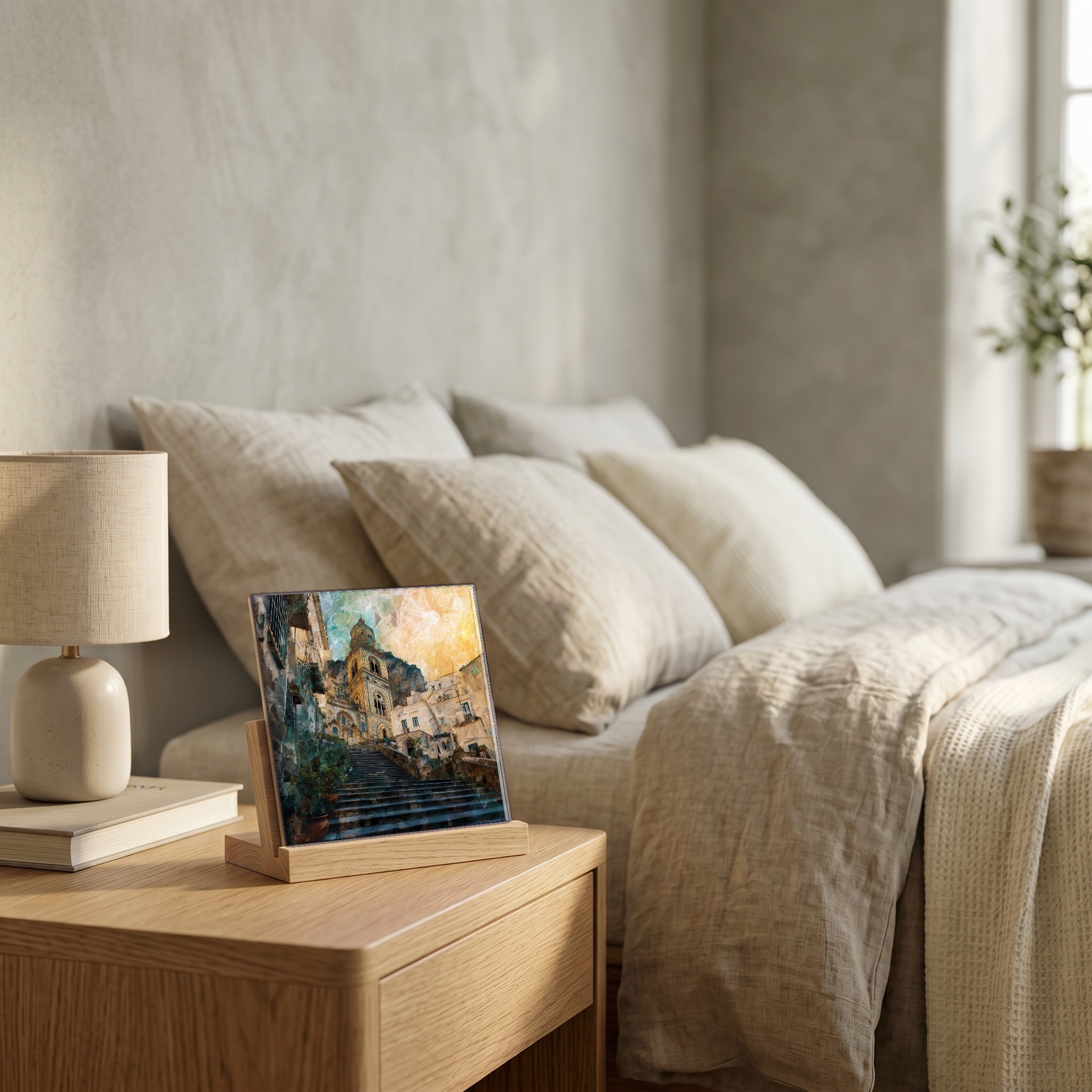
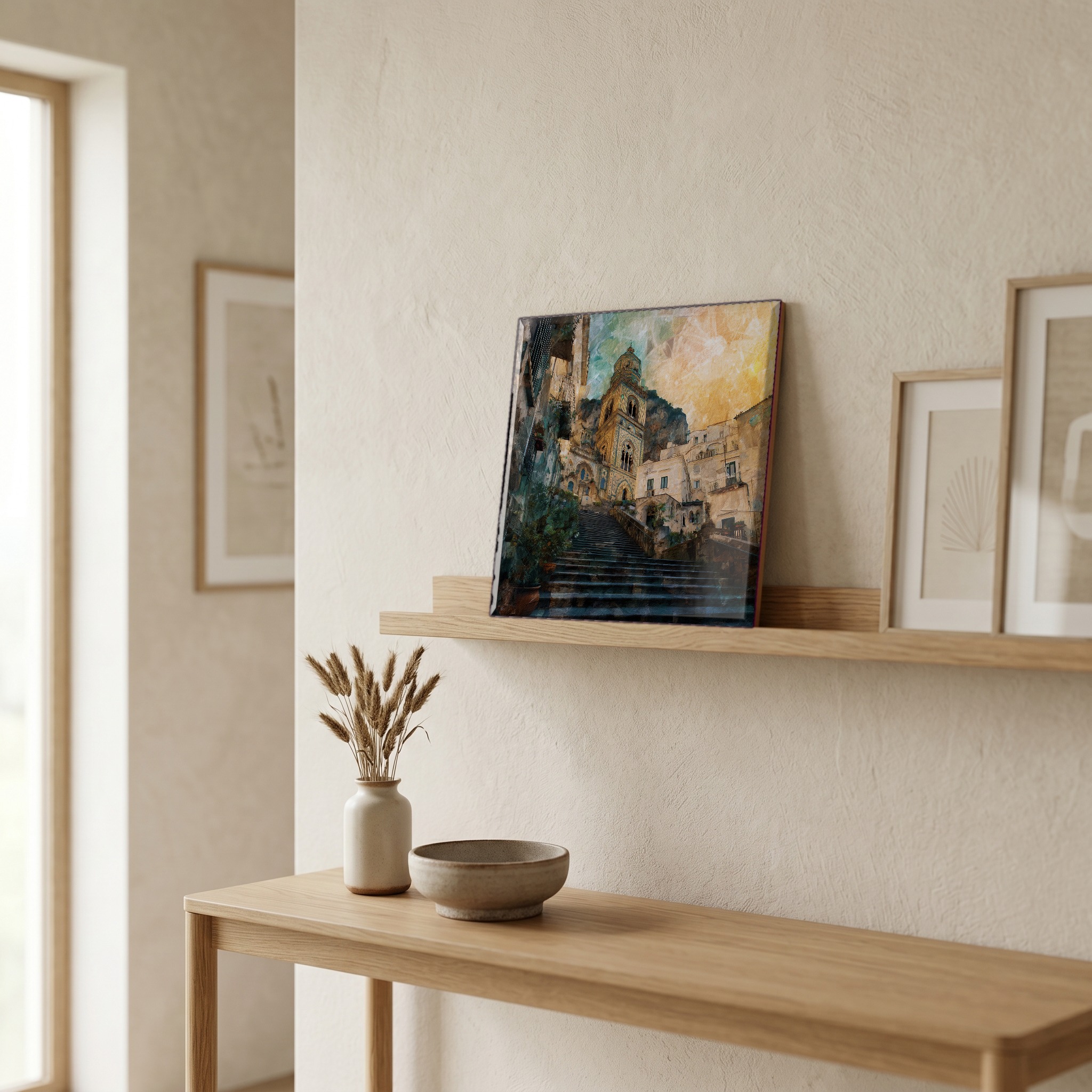
“Sixty-two steps climb from the square to a striped facade of marble and gold, the front of a church the town of Amalfi has rebuilt and re-dressed for a thousand years. The bronze doors came by sea from Constantinople before the First Crusade. Saint Andrew rests in the crypt below. People stop halfway up the steps, turn around, and look back at the harbour before they go in. The cathedral does not hurry them.
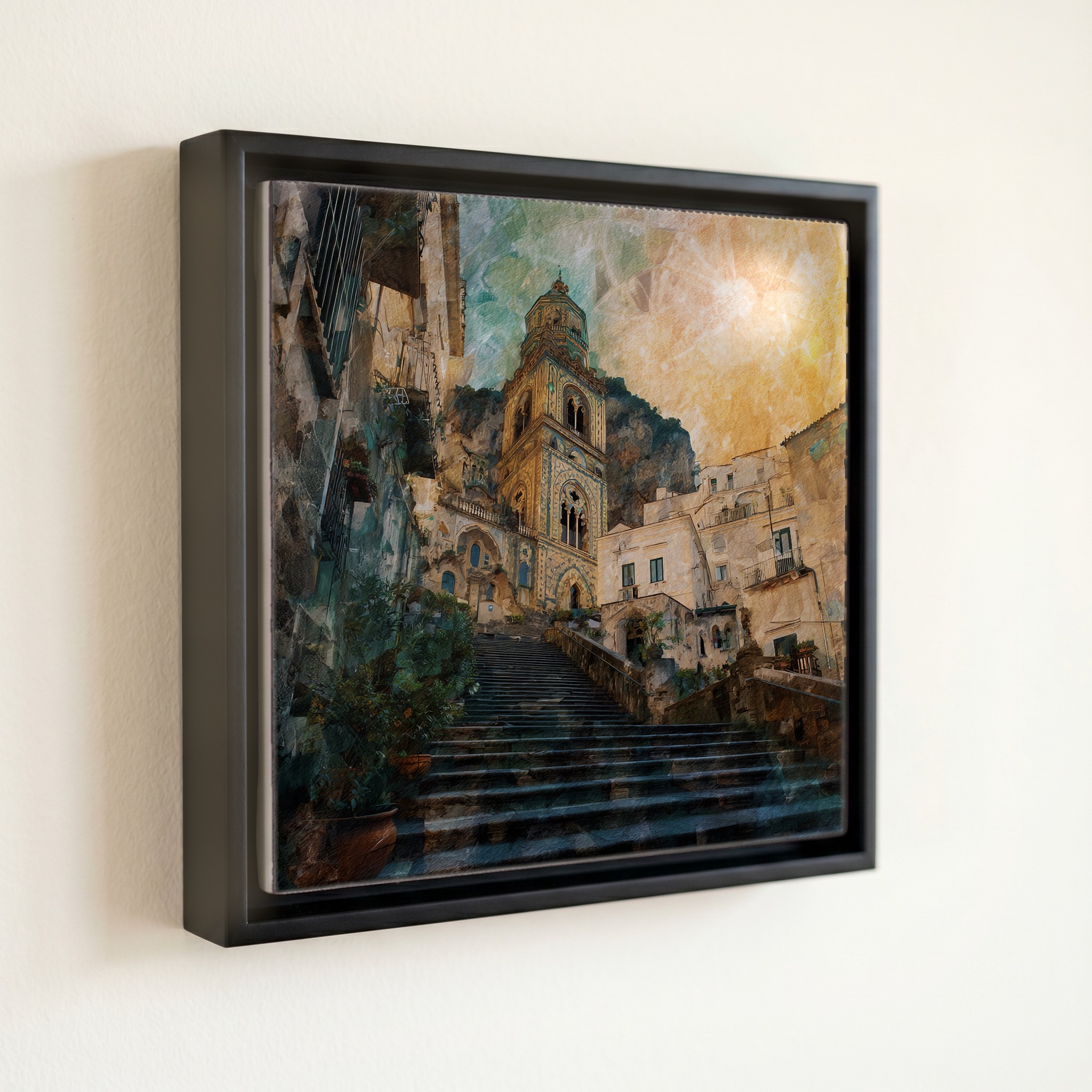
Amalfi Cathedral, on ceramic.
Each tile is finished by hand in our Knoxville studio. Artwork is slowly infused into the ceramic surface under high heat and pressure, and rests beneath a thin glossy finish. The colour lives in the surface, not on top of it.
Pick any four 4-inch tiles — National Parks you've been to, a Smokies set, the four seasons of one place. $ for a set of , cork-backed, ready to live on the table.
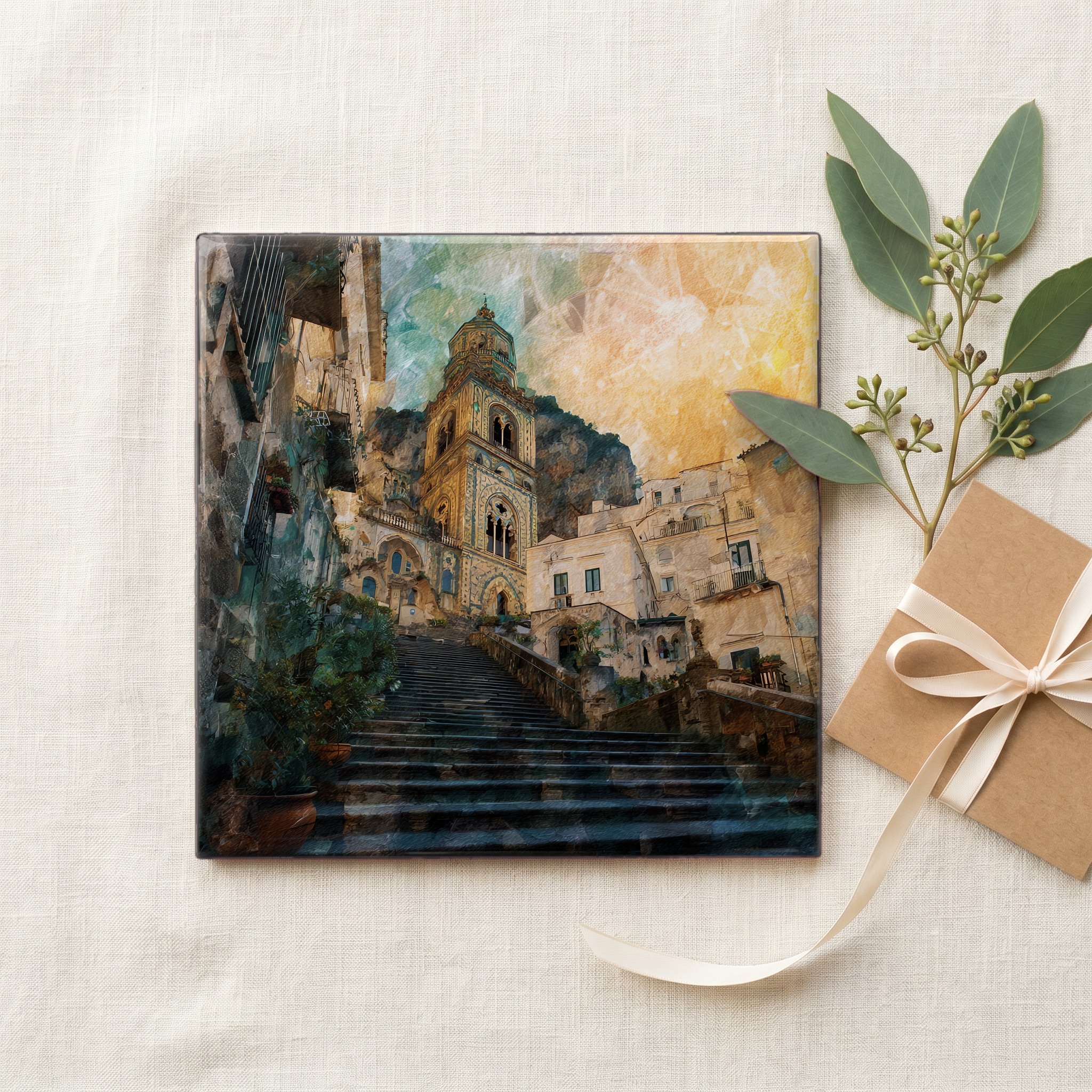
Each tile ships in a kraft box, tied with cream ribbon, with a handwritten note from the studio if you'd like to add one.
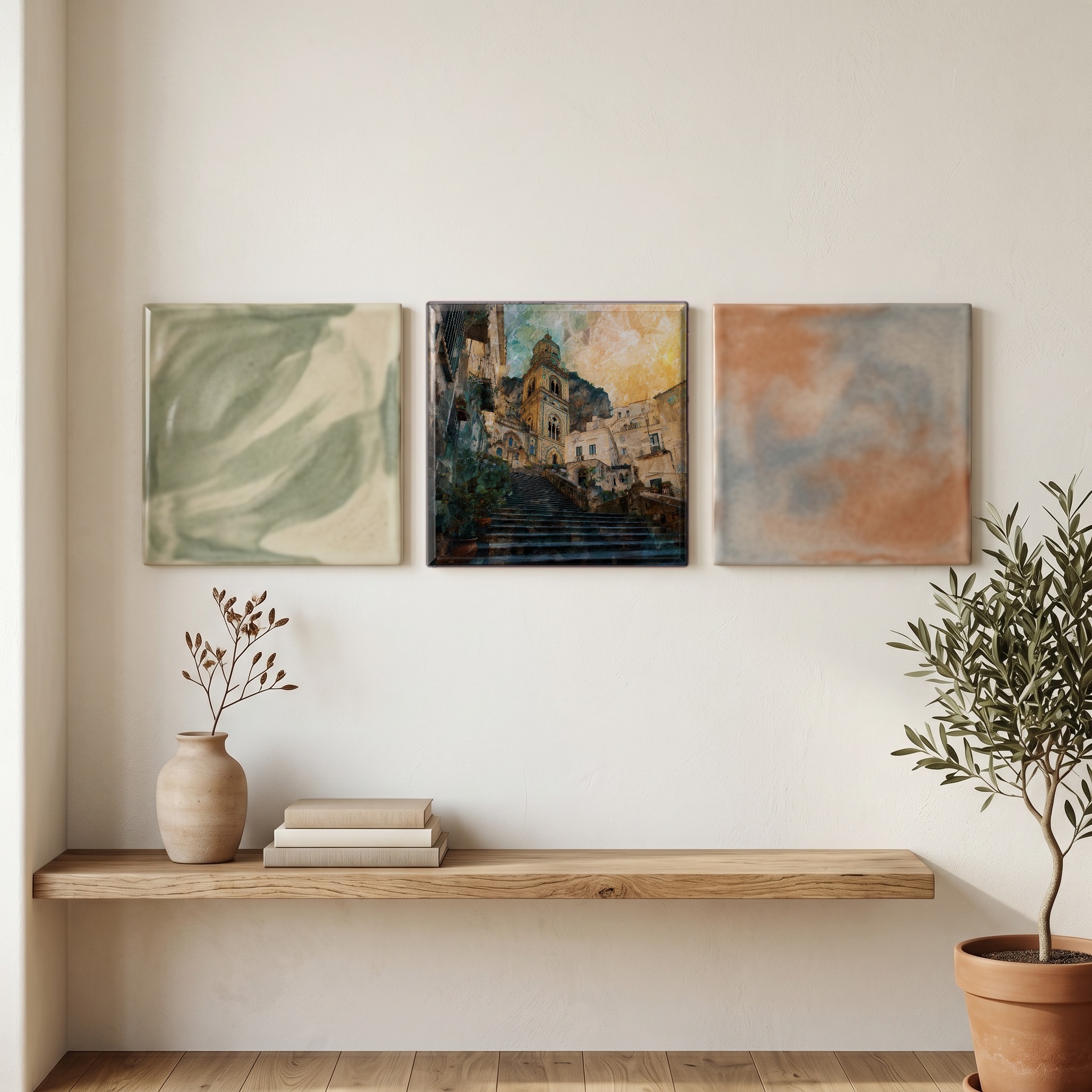
Three or five different vistas, hung together — a chapter of places you've been, or want to go.
The place, in three passes.
Amalfi Cathedral stands at the head of Piazza del Duomo in Amalfi, a town of roughly five thousand people on the Tyrrhenian coast of Campania, in the Province of Salerno, about an hour and a half south of Naples by the coast road. It is dedicated to Saint Andrew the Apostle, whose relics were brought from Constantinople in 1206 and laid in the crypt two years later. A first church rose on the site in the ninth and tenth centuries; a second was built beside it and became the cathedral. Sixty-two wide steps climb from the square to its doors, which is why the whole of Amalfi seems to gather and look up at a single building.
The front is a band of striped marble and grey stone rising to a tall mosaic of Christ enthroned, finished in 1891 after part of the older facade collapsed in 1861. The architect Errico Alvino rebuilt it in the Norman-Arab-Byzantine manner the coast had used for centuries. The bronze doors below are older than the building's fame: cast in Constantinople before 1066 and signed by Simeon of Syria, they are among the earliest such doors in Italy. To the left lies the Cloister of Paradise, raised in the thirteenth century as a burial ground for Amalfi's nobles, its slender paired columns set under interlaced pointed arches, Arab and Norman lines held in one quiet square.
A single ticket leads through the four parts of the complex in turn: the Cloister of Paradise, the older Basilica of the Crucifix that now holds the cathedral's museum, the crypt where Saint Andrew lies beneath a Baroque altar, and the cathedral itself. The climb is the thing most visitors remember, sixty-two steps steep enough that people pause and turn back toward the harbour. Twice a year a clear liquid is gathered from the saint's tomb, which the town has called the manna of Saint Andrew for centuries. His feast falls on the thirtieth of November, when the relics are carried down the steps and into the streets.