Wender·Vista
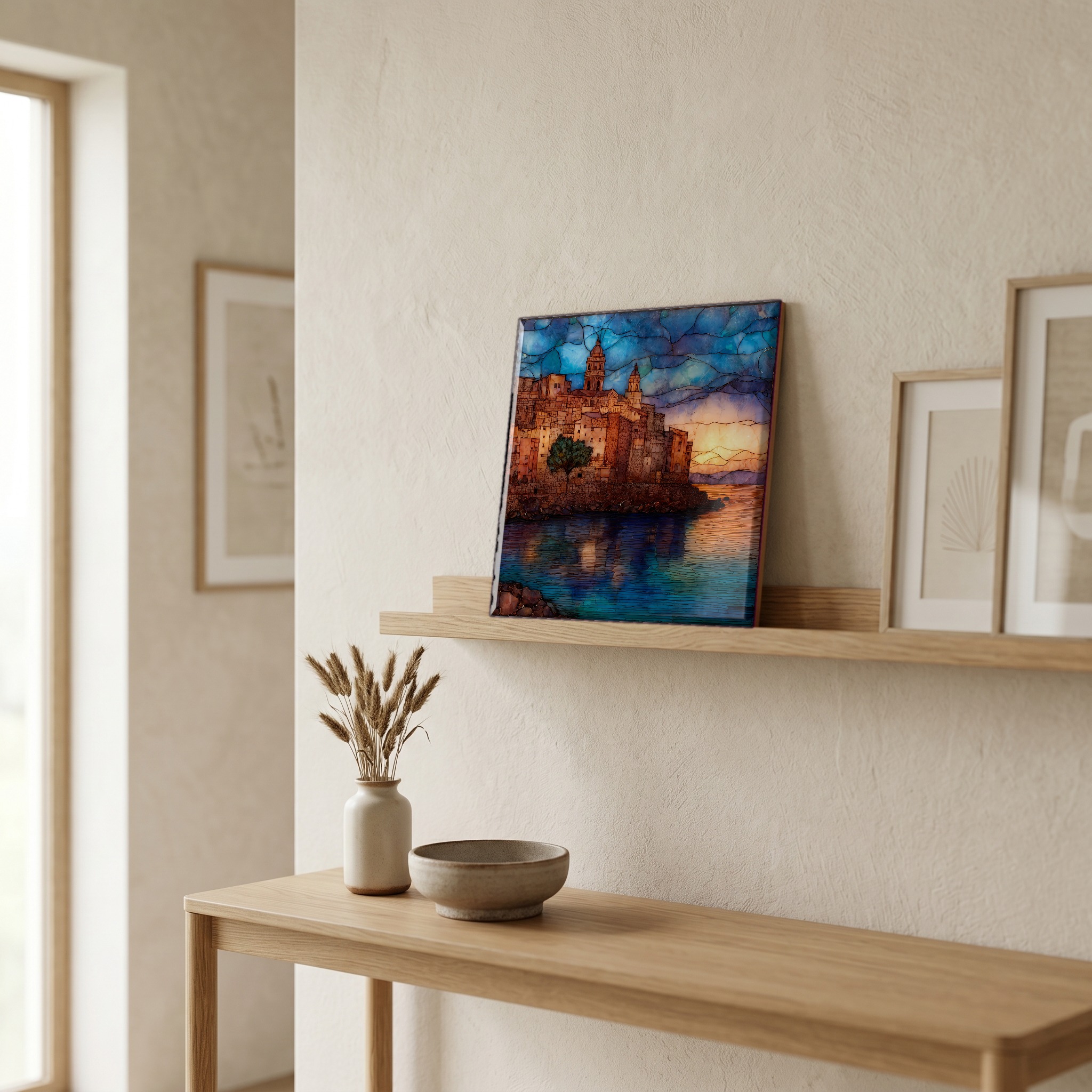
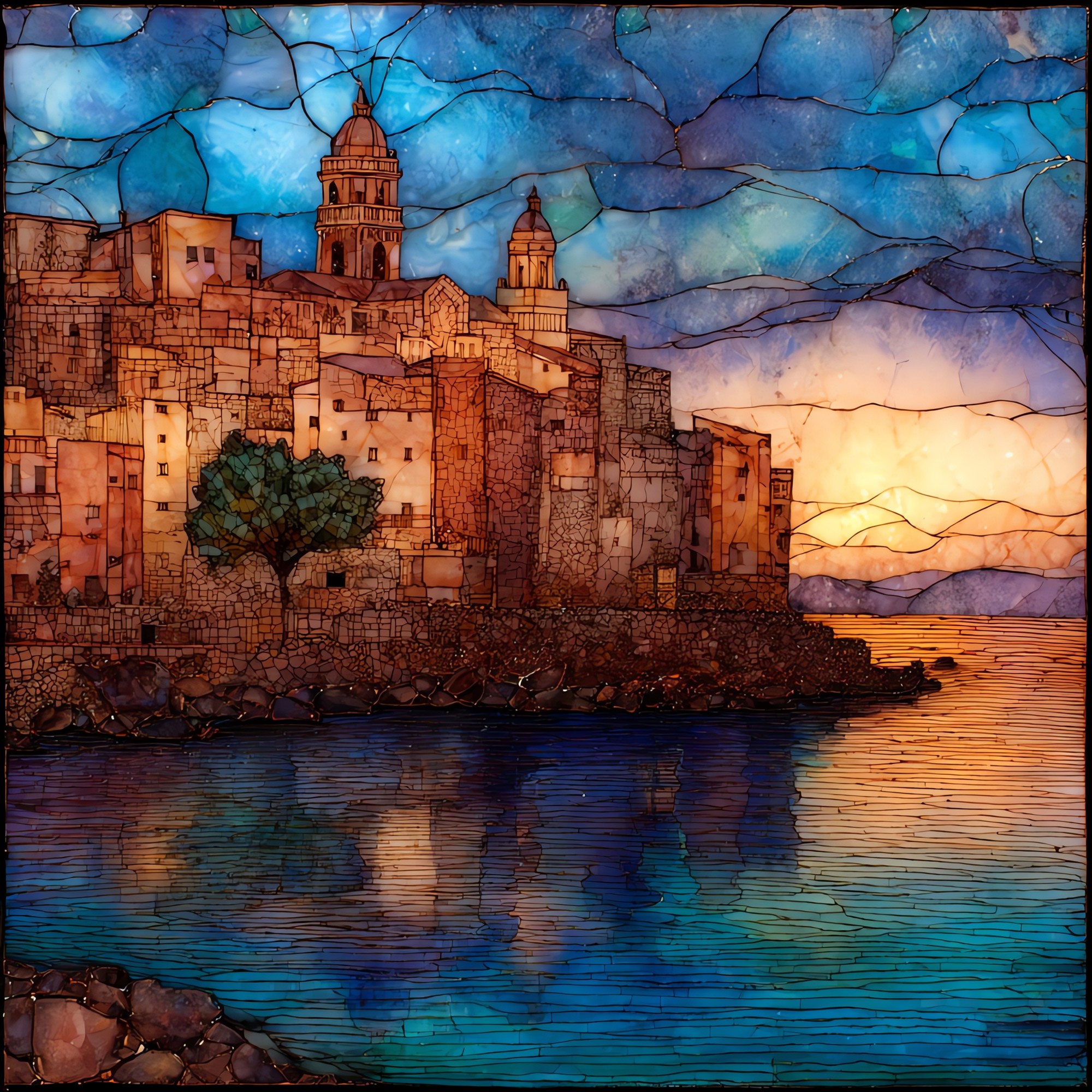
Alghero
shown on ceramic, 12-inch tileItaly
on the Coral Riviera, in northwest Sardinia

Alghero

the walls go gold when the sea takes the sun.

Where it lives

Not only on a wall.

A small tile on the nightstand catching the morning. A larger one above the fire. Yours, wherever you spend the slow hours.
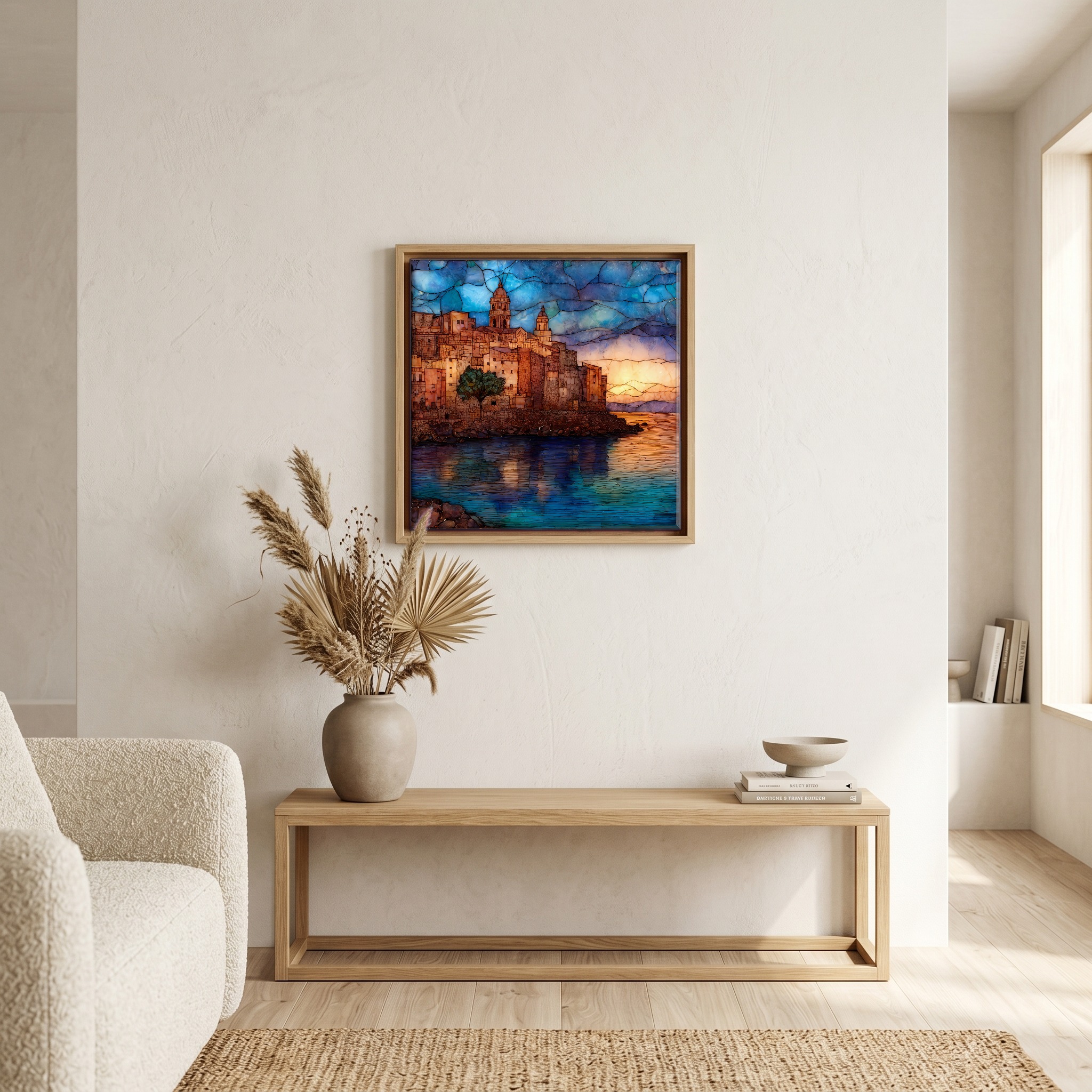
Above the bench, in a warm oak surround.
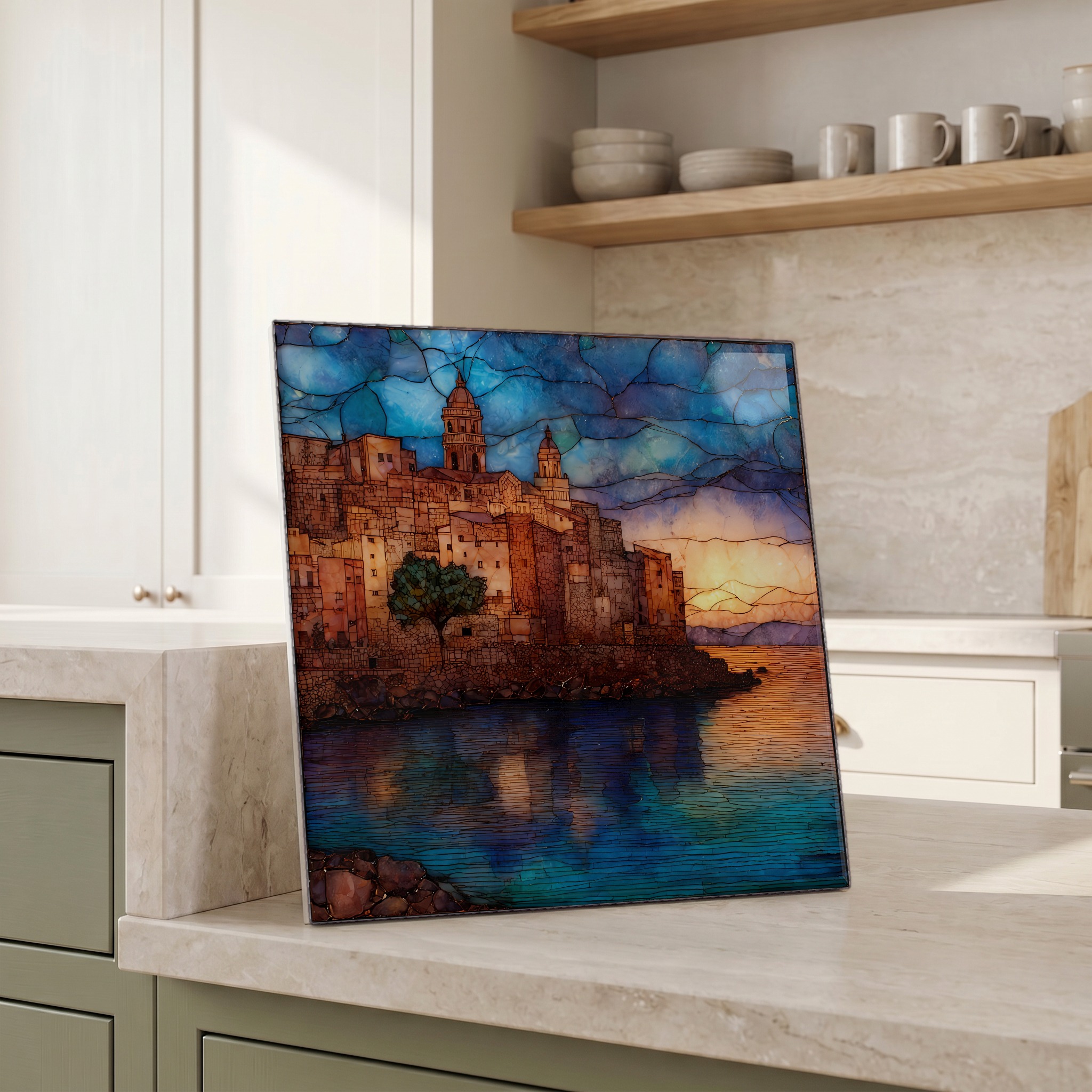
Beside the kettle, propped on the counter.
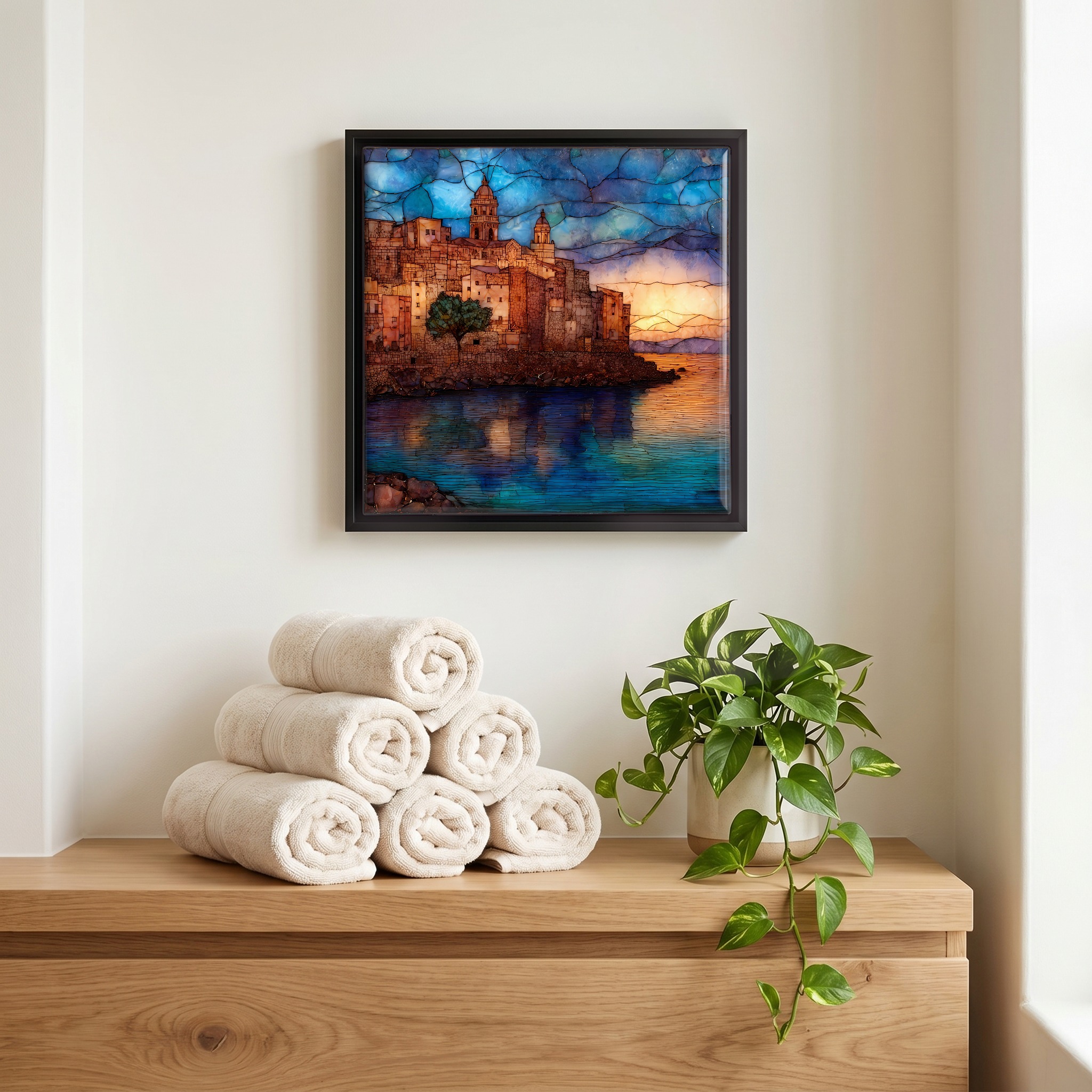
Above the linens, in a slim black surround.
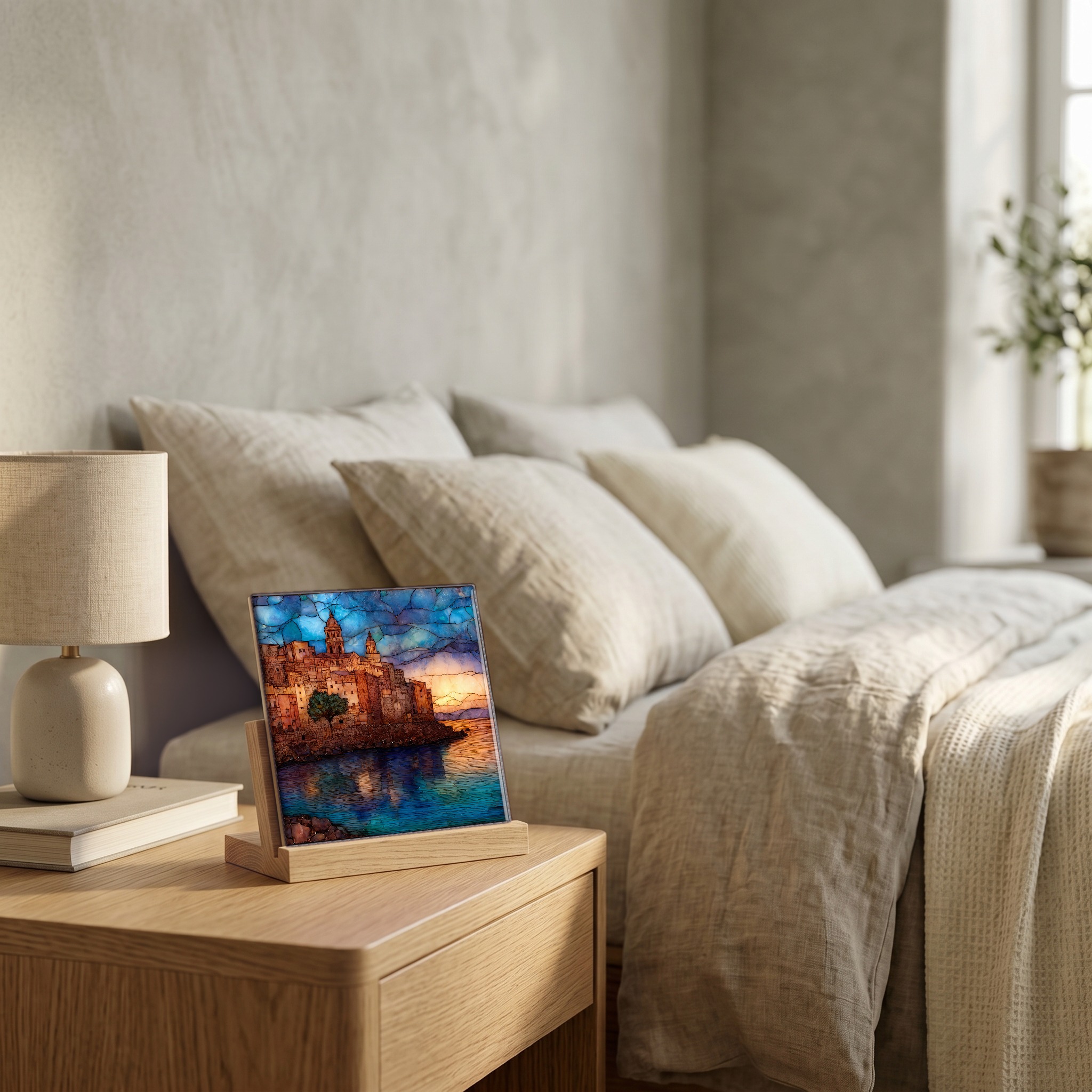
On the nightstand, on a light oak stand.
On a picture ledge, where the light comes in.
a note from the studio

A Catalan town on a Sardinian shore. The street signs read carrer, not via. This is Barcelona's language, kept alive here for more than six hundred years after the rest of the island moved on. The old quarter is honey-coloured sandstone, walls and seven towers facing west, so the whole front of the town turns gold in the last hour before dark. People come out onto the ramparts to watch it. Below, the boats that still work the red coral the coast is named for. Nobody is in a hurry.
from the studio
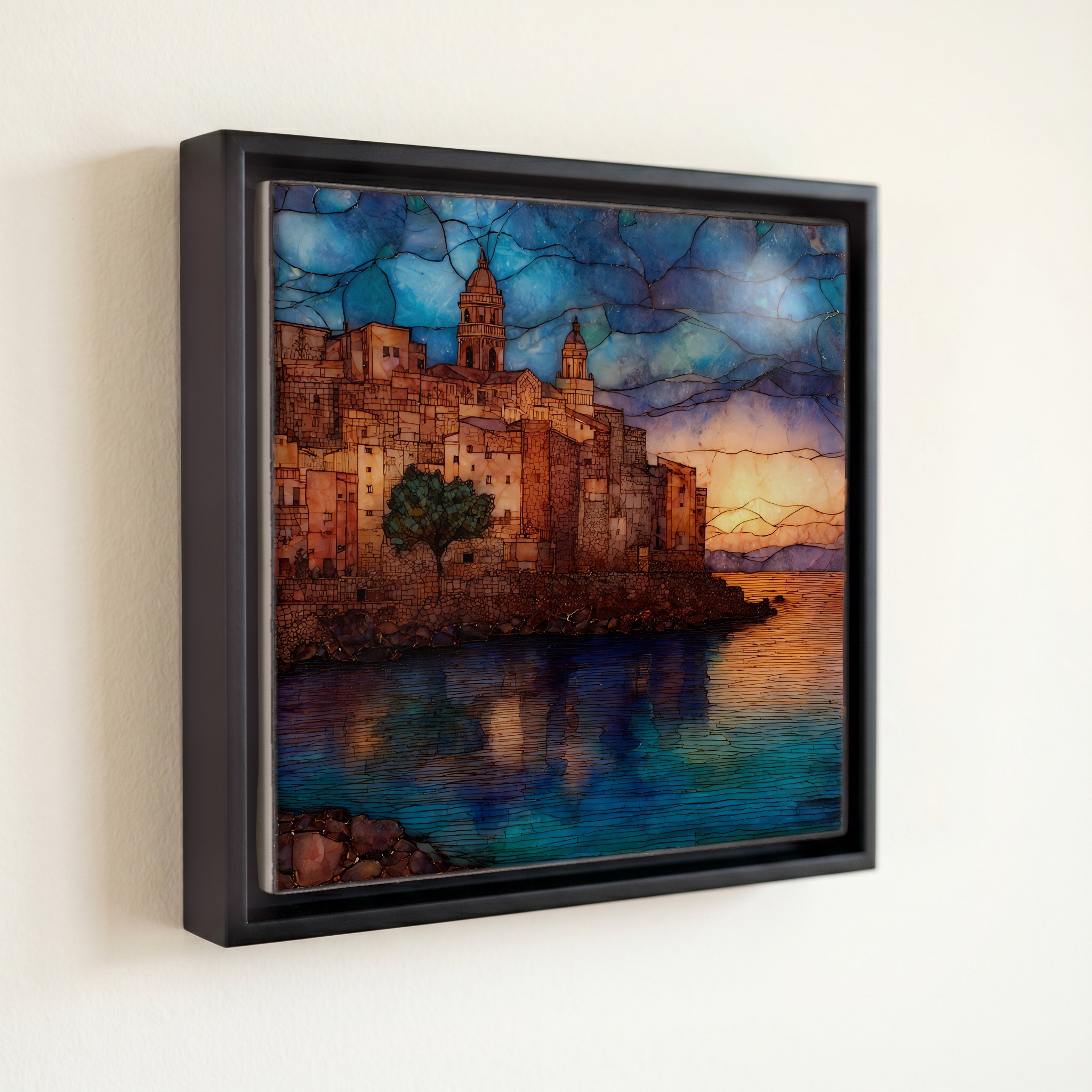
shown in a slim black floating frame · 6 × 6 in
— bring it home

Alghero, on ceramic.

Each tile is finished by hand in our Knoxville studio. Artwork is slowly infused into the ceramic surface under high heat and pressure, and rests beneath a thin glossy finish. The colour lives in the surface, not on top of it.

What kind of piece?
One tile — square or rectangle.
How big?
the popular one — counter, shelf, nightstand
6 × 6 in · 15 cm · 1.6 lb
Surface finish
A clear glossy finish — the artwork reads as if under resin. Ideal for show-pieces and framed wall art.
How it sits
A hidden cleat — sits ¼″ proud of the wall.
$58
Hand-finished and shipped from our studio at the foot of the Smokies. On your wall in about ten days.
size
6 × 6 in
15 cm
weighs
1.6 lb
solid in the hand
surface
ceramic, hand-finished
art rests beneath a thin glossy finish
from
Knoxville, TN
our family studio, at the foot of the Smokies
— start a Coaster Set

Pick any four 4-inch tiles — National Parks you've been to, a Smokies set, the four seasons of one place. $ for a set of , cork-backed, ready to live on the table.
comes gift-ready
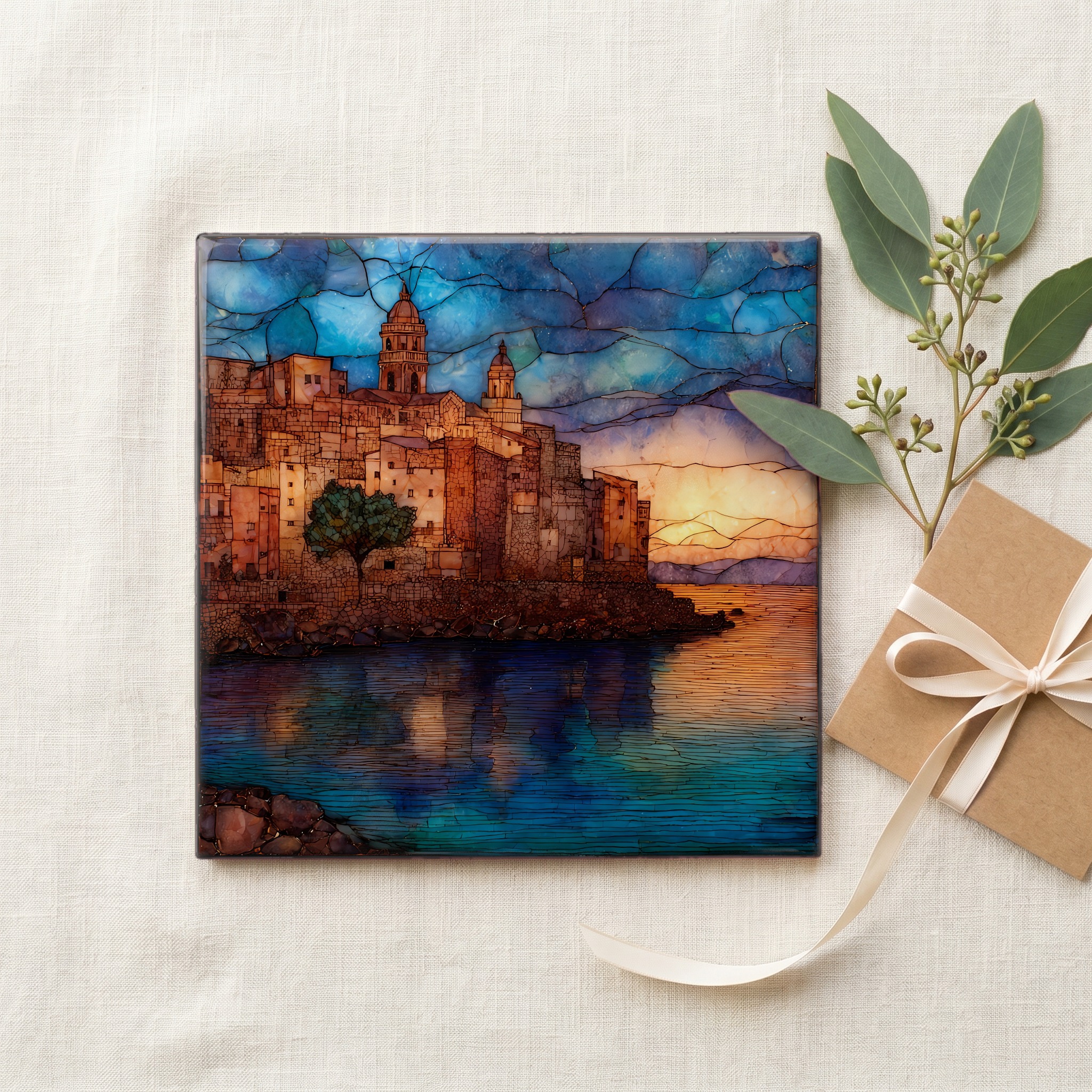
comes gift-ready

Each tile ships in a kraft box, tied with cream ribbon, with a handwritten note from the studio if you'd like to add one.
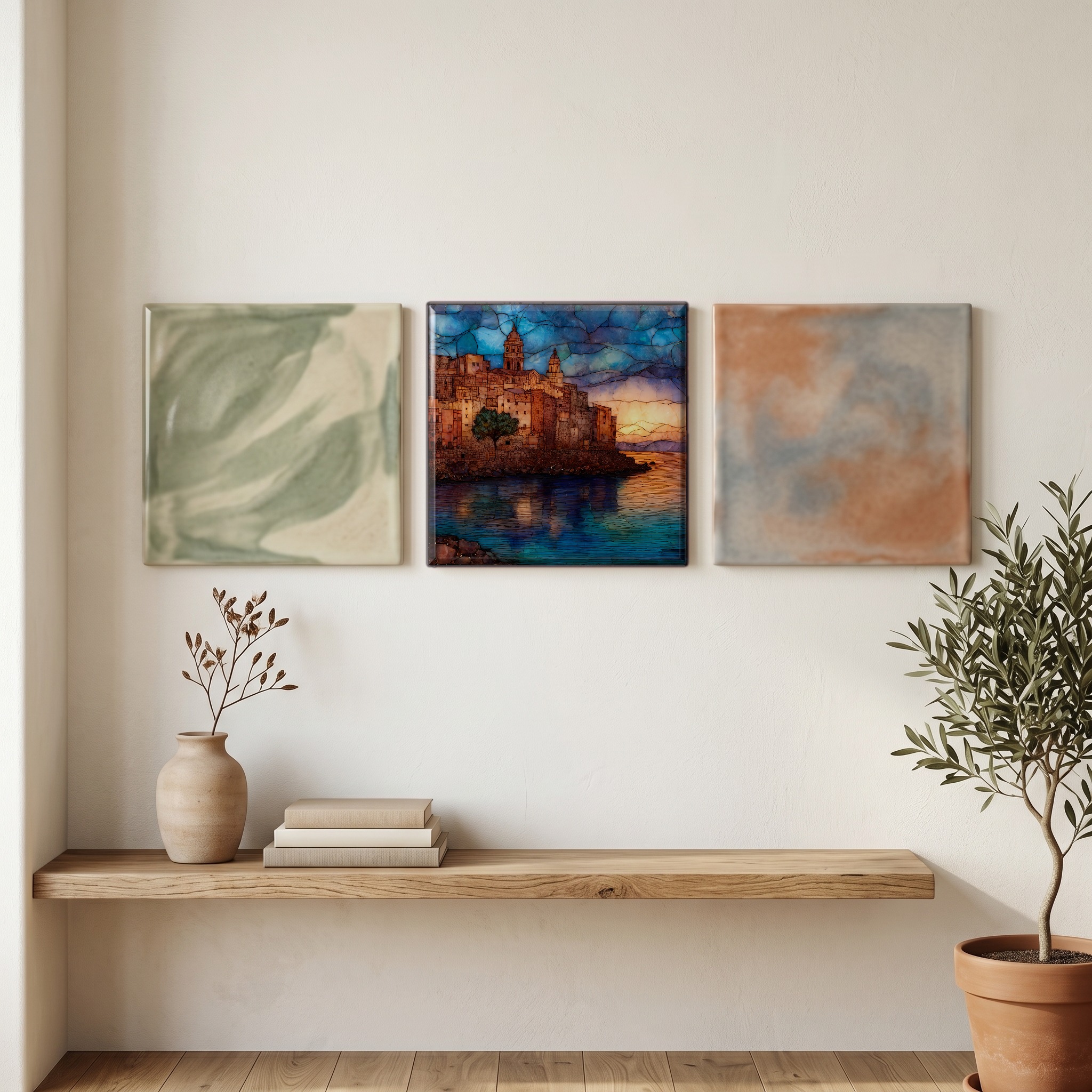
or build a grouping
or build a grouping

Three or five different vistas, hung together — a chapter of places you've been, or want to go.

about Alghero

The place, in three passes.

A little of what's known, in case you fall down the rabbit hole — or want to go see it yourself.
the place

Alghero sits on the northwest coast of Sardinia, in the Metropolitan City of Sassari, a town of about 42,000 on a low shore roughly seven metres above the sea. The Genoese Doria family founded it around 1102; in 1354 Peter IV of Aragon took the town and resettled it with families from Barcelona, Valencia and Majorca. That Catalan colony held for more than four centuries, and its language outlasted the empire that brought it. Roughly a quarter of residents still speak Alguerès, the local Catalan dialect, and Italy recognises it as a protected minority language. Sassari lies about 35 kilometres northeast, with the planned town of Fertilia a short drive up the coast.

— informed by Wikipedia, Britannica
the stone

The old town is a compact grid of honey-coloured sandstone behind sea walls largely rebuilt in the 16th century under Ferdinand the Catholic, who reinforced the older Genoese and Aragonese defences. Seven towers and three forts still stand along the line, from the Porta a Mare gate to the Torre Sulis on Piazza Sulis. Inside the walls the streets carry Catalan names, carrer rather than via, and the churches keep the Catalan-Gothic manner the Aragonese builders brought from the mainland. The stone holds one warm tone throughout, so in low sun the whole quarter reads as a single colour rather than a patchwork of facades.

— informed by Wikipedia
the water

The coast north of town is the Riviera del Corallo, named for the red coral, Corallium rubrum, that has been harvested off these cliffs since Roman times and is still cut into jewellery in Alghero's workshops. The line ends at Capo Caccia, a limestone promontory about 186 metres high that closes the bay to the north. Cut into its base is the Grotta di Nettuno, Neptune's Grotto, a sea cave running roughly four kilometres into the rock around an underground saltwater lake. You reach it by boat from the harbour, about 24 kilometres, or on foot down the Escala del Cabirol, 654 steps pinned to the cliff face. The cape and its waters are protected within Porto Conte park.

— informed by SardegnaTurismo, Wikipedia
where
Italy · Metropolitan City of Sassari, Sardinia
elevation
7 m · 23 ft
position
40.5600° N · 8.3150° E
the neighborhood

What's nearby.

A handful of named places within an hour's walk or short drive. Some we've already painted; some we will.
24 km W
Capo Caccia
limestone cape
24 km W
Grotta di Nettuno
sea cave
10 km NW
Nuraghe di Palmavera
Bronze Age nuraghe
13 km NW
Porto Conte
bay
6 km NW
Fertilia
planned town
45 km S
Bosa
river town
35 km NE
Sassari
city
N
Alghero
Capo Caccia
Grotta di Nettuno
Nuraghe di Palmavera
Porto Conte
Fertilia
Bosa
Sassari
common questions

What people ask.

A few questions we get about Alghero — and about bringing the piece home.
about the place

Alghero is on the northwest coast of Sardinia, in the Metropolitan City of Sassari, a town of about 42,000 on the stretch of shore called the Riviera del Corallo. Sassari, the nearest city, lies roughly 35 kilometres northeast.

In 1354 the Crown of Aragon under Peter IV took the town and resettled it with families from Barcelona, Valencia and Majorca. Their language stayed. About a quarter of residents still speak Alguerès, the local Catalan dialect, which Italy recognises as a protected minority language.

It is the coast around Alghero, named for the red coral, Corallium rubrum, that grows on its cliffs. The coral has been harvested here since Roman times and is still cut and set into jewellery in the town's workshops.

The Grotta di Nettuno is a sea cave at the foot of Capo Caccia, running about four kilometres into the rock around an underground saltwater lake. You reach it by boat from Alghero, roughly 24 kilometres, or on foot down the Escala del Cabirol, 654 steps cut into the cliff.

The Genoese Doria family founded Alghero around 1102. The sea walls standing today were largely rebuilt in the 16th century under Ferdinand the Catholic; seven towers and three forts still hold the line, from the Porta a Mare gate to the Torre Sulis.

Late spring through early autumn is the settled season, with warm sea and long evenings; July and August are busiest. The old town faces west, so the ramparts above the sea are where people gather for the last of the light.

Residents call it Barceloneta, Little Barcelona, for its Catalan roots. After the Aragonese resettlement of 1354 the town kept Barcelona's language, street names and Catalan-Gothic churches, and the link to Catalonia is still marked in civic life today.

about the piece in your home

It carries well for people connected to the town or to Catalonia. Alghero is the one corner of Italy that still speaks Barcelona's language, so the piece reads as a nod to that heritage. A Coaster or Small with a handwritten note from the studio travels nicely.

The warm sandstone golds, sea blues and coral reds sit easily in coastal-modern, warm Mediterranean and jewel-tone maximalist rooms. Against white or pale plaster the colour carries the wall; in a darker room it works as the warm point the eye returns to.

It fits the coastal-modern and warm-Mediterranean direction, where natural stone tones and deep sea colour have replaced cooler grey palettes. The coral red gives it more warmth than a typical blue coastal print, which keeps it from reading as generic seaside decor.

Above a standard sofa, a single Large holds the wall on its own, or a four-tile Mural fills it with more presence. Over a console or a bed, a Medium or a four-tile Mural sits in proportion; a nine-tile Mural suits a tall feature wall.

Yes. For a bathroom, shower or kitchen backsplash, order it in the Dura Satin or Matte finish, which is scratch-resistant and made for damp, vertical installation. The glossy finish is better kept to dry display walls and framed pieces.

A soft microfibre cloth and water is all it needs. The colour lives in the ceramic surface beneath a thin finish, so it will not fade or lift with wiping, and you never need a chemical cleaner.

Yes. Every WenderVista piece is made by Wender Studios, a family studio in Knoxville, Tennessee. The art is original to the studio and not licensed from anyone else, and each tile is hand-finished in-house.

if this one stayed with you

A few you might also love.

Hand-picked by the eye that found Sorapis. Same air, same kind of quiet.
— a collection

The Italian Dolomites,
painted slow.

The valleys between Cortina and Val Gardena, the tarns you walk an hour to see, the towers that turn the colour of a banked fire just before dark. Wander the collection by valley, by season, or follow the path Reid walked.

Tre Cime
Braies
Misurina
Sorapis
Cinque Torri
Sassolungo
Marmolada