Wender·Vista
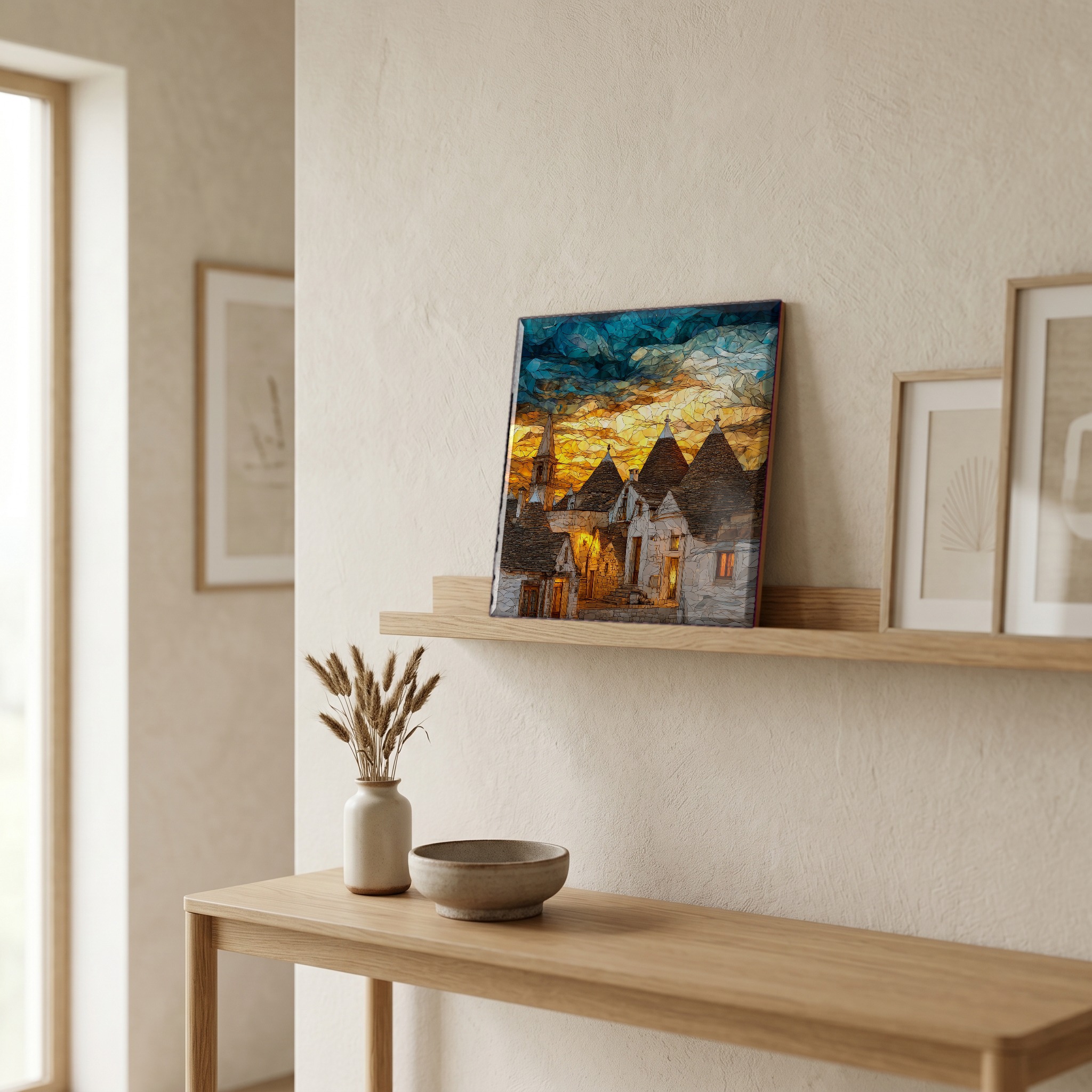
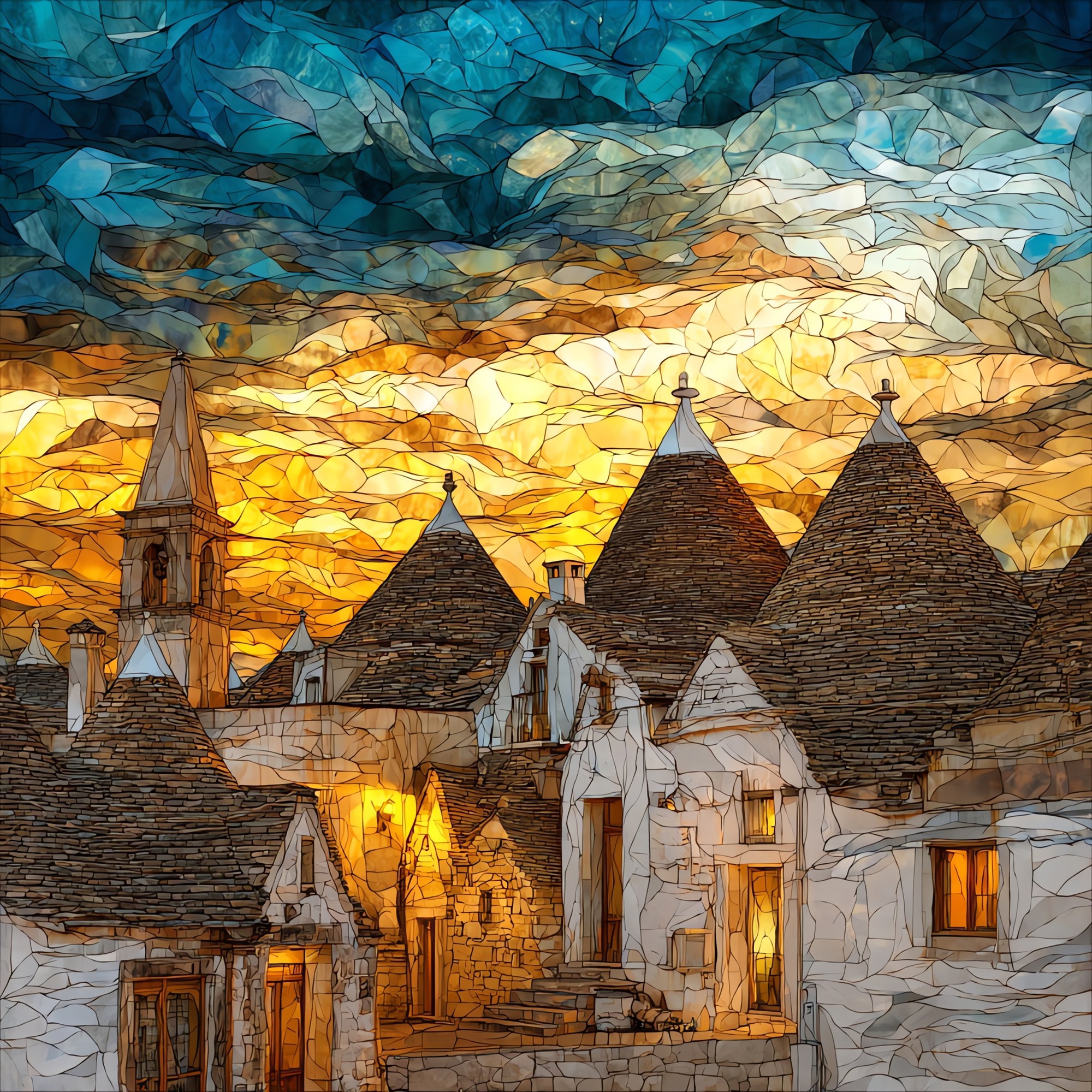
Alberobello Trulli
shown on ceramic, 12-inch tileItaly
in Puglia's Itria Valley, southeast of Bari

Alberobello Trulli

a town built to come apart, and never did.

Where it lives

Not only on a wall.

A small tile on the nightstand catching the morning. A larger one above the fire. Yours, wherever you spend the slow hours.
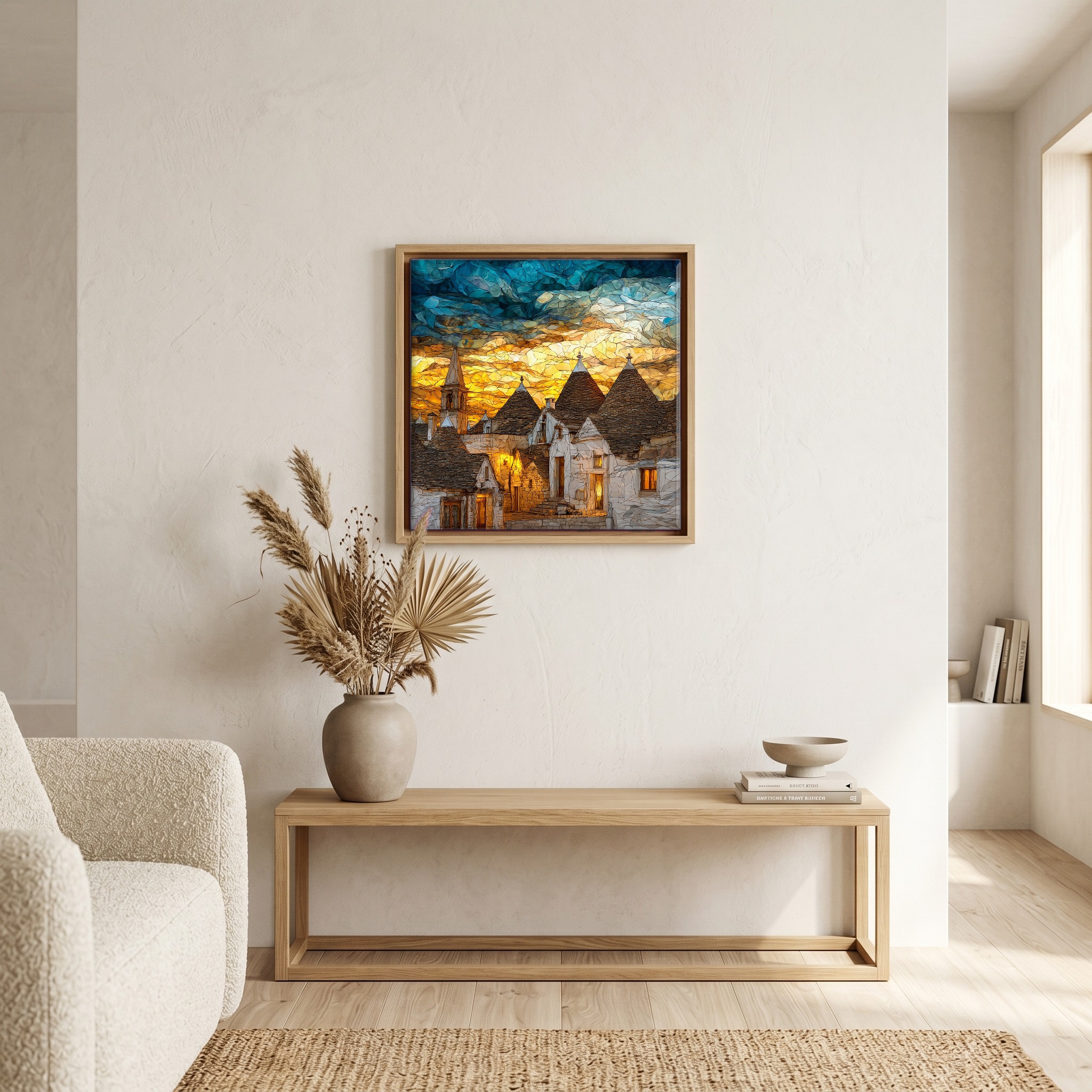
Above the bench, in a warm oak surround.
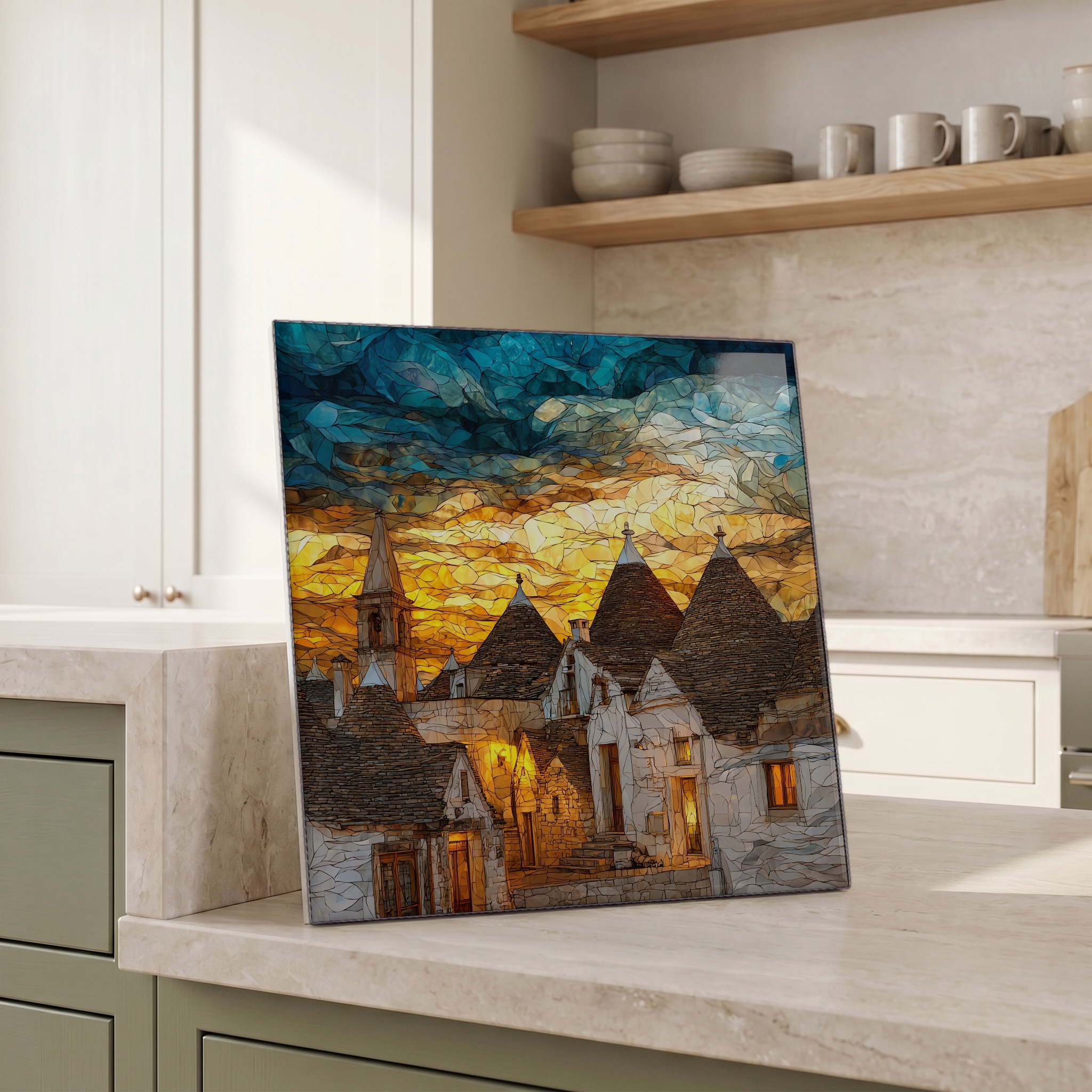
Beside the kettle, propped on the counter.
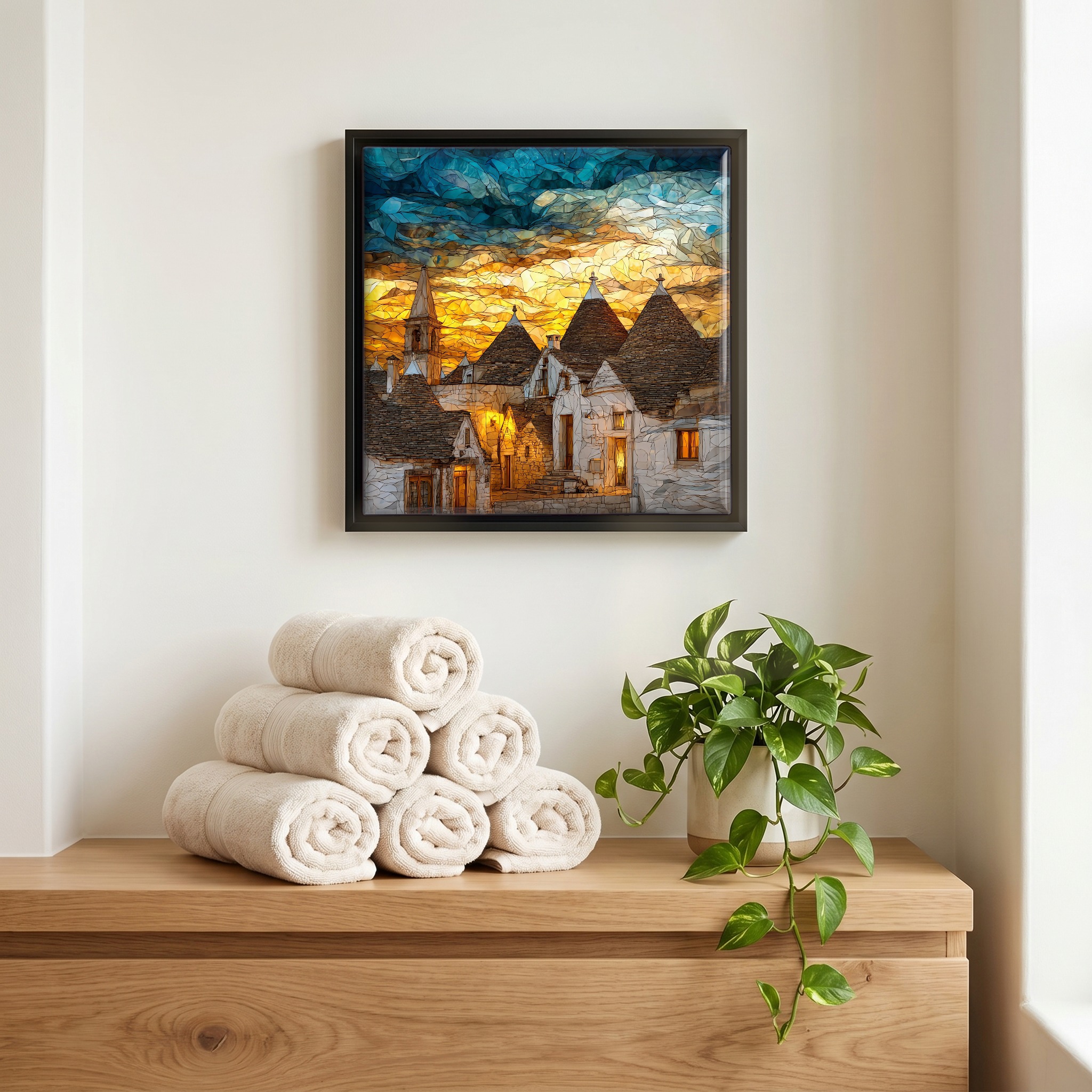
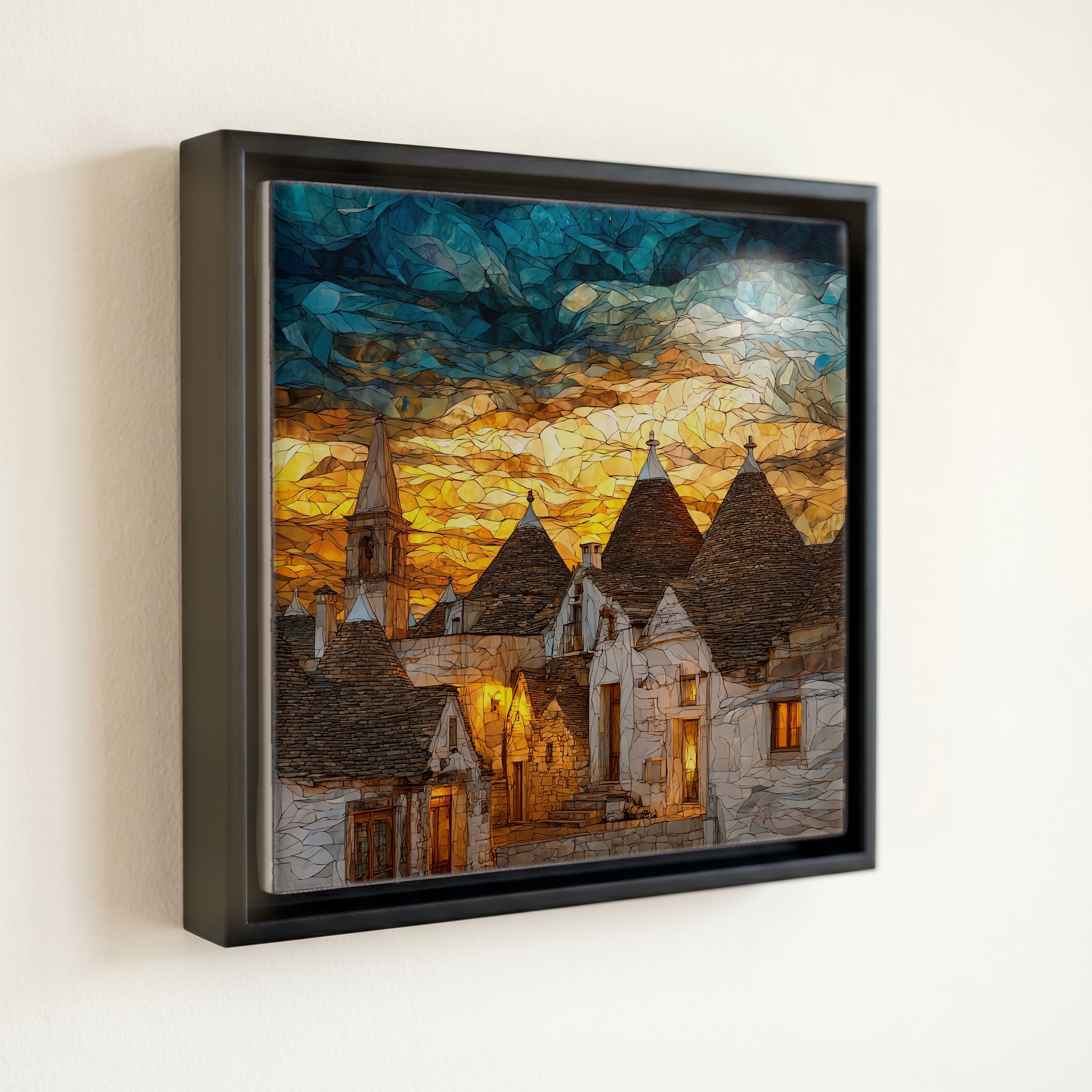
Above the linens, in a slim black surround.
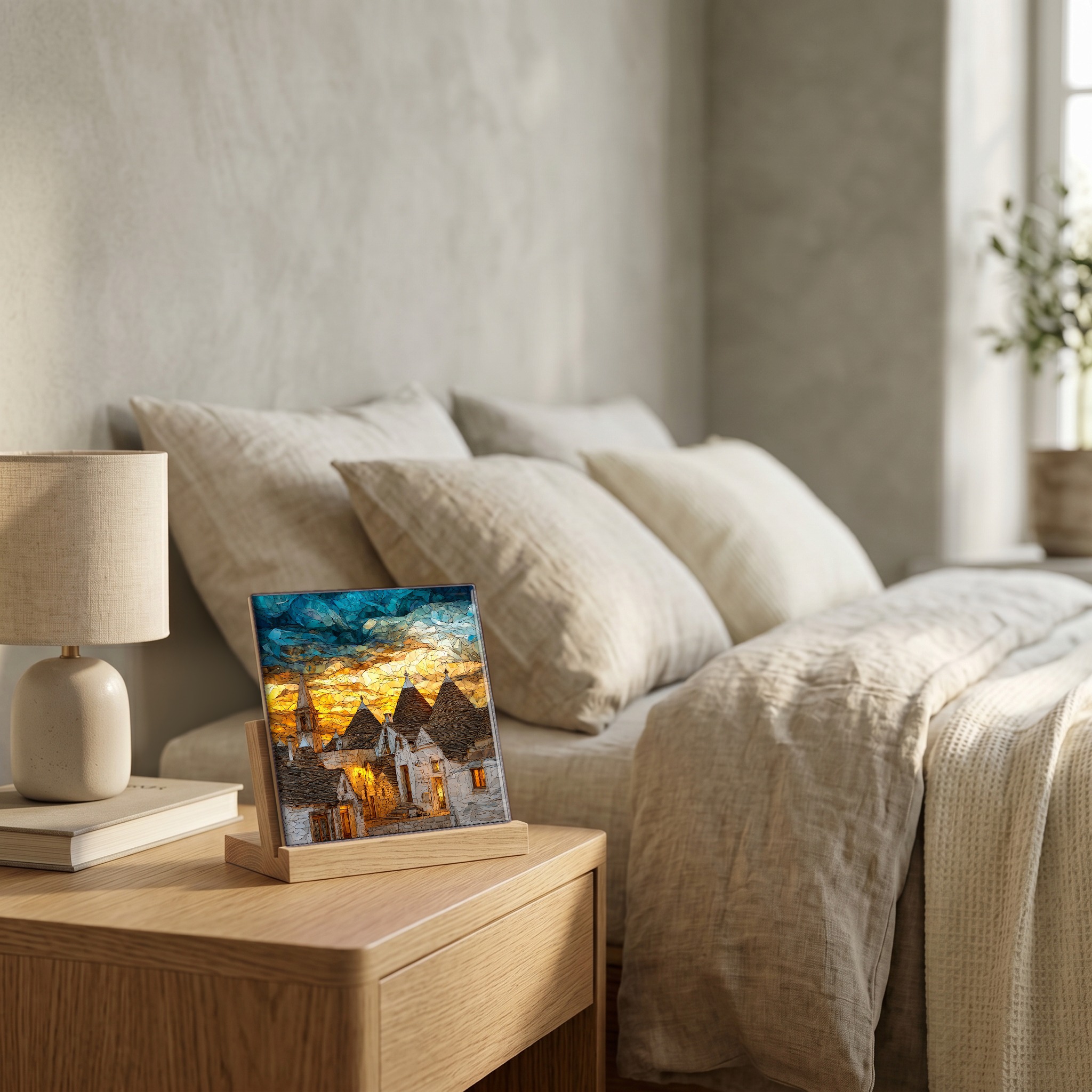
On the nightstand, on a light oak stand.
On a picture ledge, where the light comes in.
a note from the studio

Fifteen hundred conical roofs in two old quarters of a small town in the Itria Valley. The houses were built dry, stone on stone without mortar, so they could be pulled down fast when the tax man came up from Bari, then stacked back into homes after he left. The builder's signature sat in the pinnacle at the top of each cone; a cross or a sun, painted in whitewash on the grey slabs. Most of the dismantling stories are half legend now. The roofs stayed. People still live under them, in Rione Monti, where the lanes climb.
from the studio
shown in a slim black floating frame · 6 × 6 in
— bring it home

Alberobello Trulli, on ceramic.

Each tile is finished by hand in our Knoxville studio. Artwork is slowly infused into the ceramic surface under high heat and pressure, and rests beneath a thin glossy finish. The colour lives in the surface, not on top of it.

What kind of piece?
One tile — square or rectangle.
How big?
the popular one — counter, shelf, nightstand
6 × 6 in · 15 cm · 1.6 lb
Surface finish
A clear glossy finish — the artwork reads as if under resin. Ideal for show-pieces and framed wall art.
How it sits
A hidden cleat — sits ¼″ proud of the wall.
$58
Hand-finished and shipped from our studio at the foot of the Smokies. On your wall in about ten days.
size
6 × 6 in
15 cm
weighs
1.6 lb
solid in the hand
surface
ceramic, hand-finished
art rests beneath a thin glossy finish
from
Knoxville, TN
our family studio, at the foot of the Smokies
— start a Coaster Set

Pick any four 4-inch tiles — National Parks you've been to, a Smokies set, the four seasons of one place. $ for a set of , cork-backed, ready to live on the table.
comes gift-ready
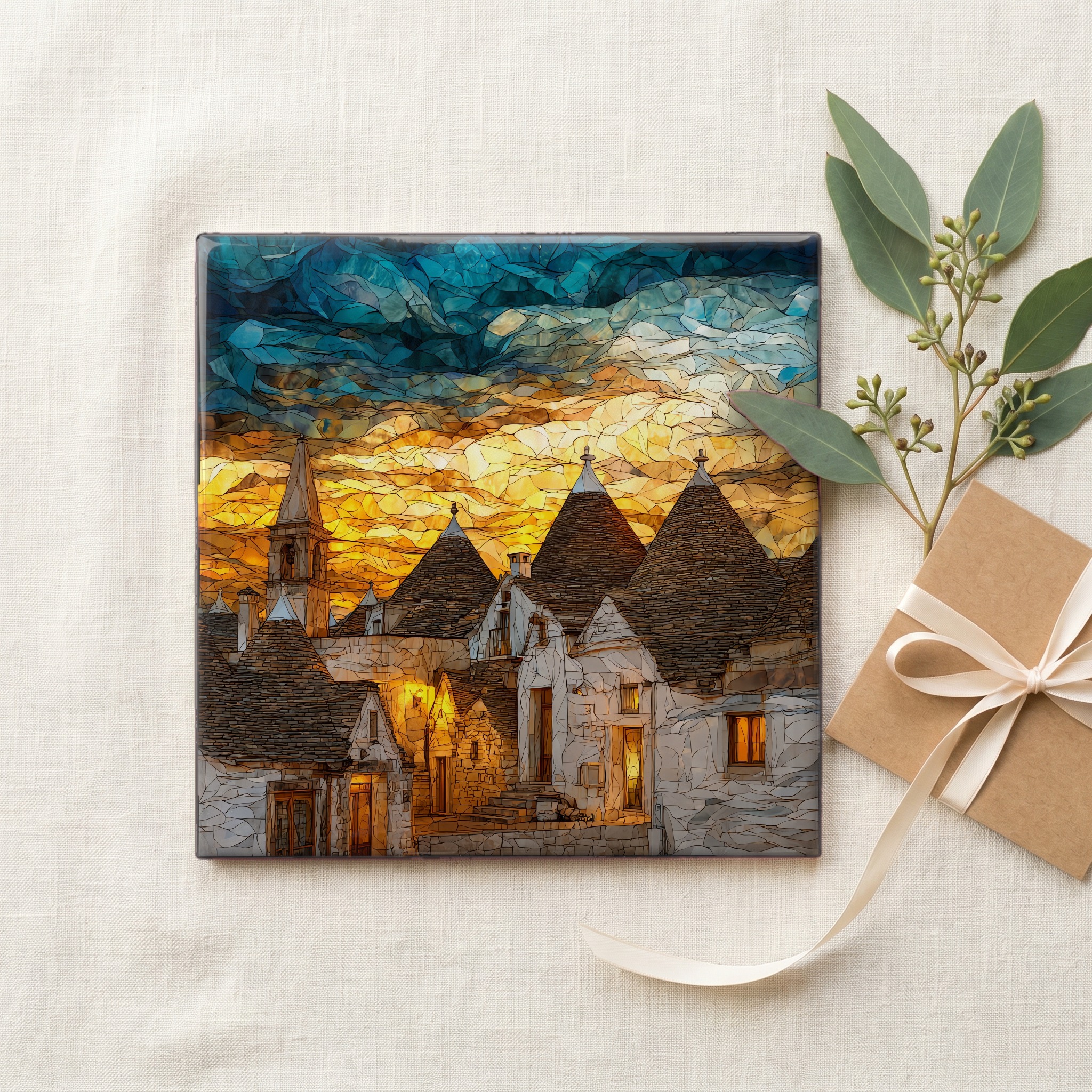
comes gift-ready

Each tile ships in a kraft box, tied with cream ribbon, with a handwritten note from the studio if you'd like to add one.
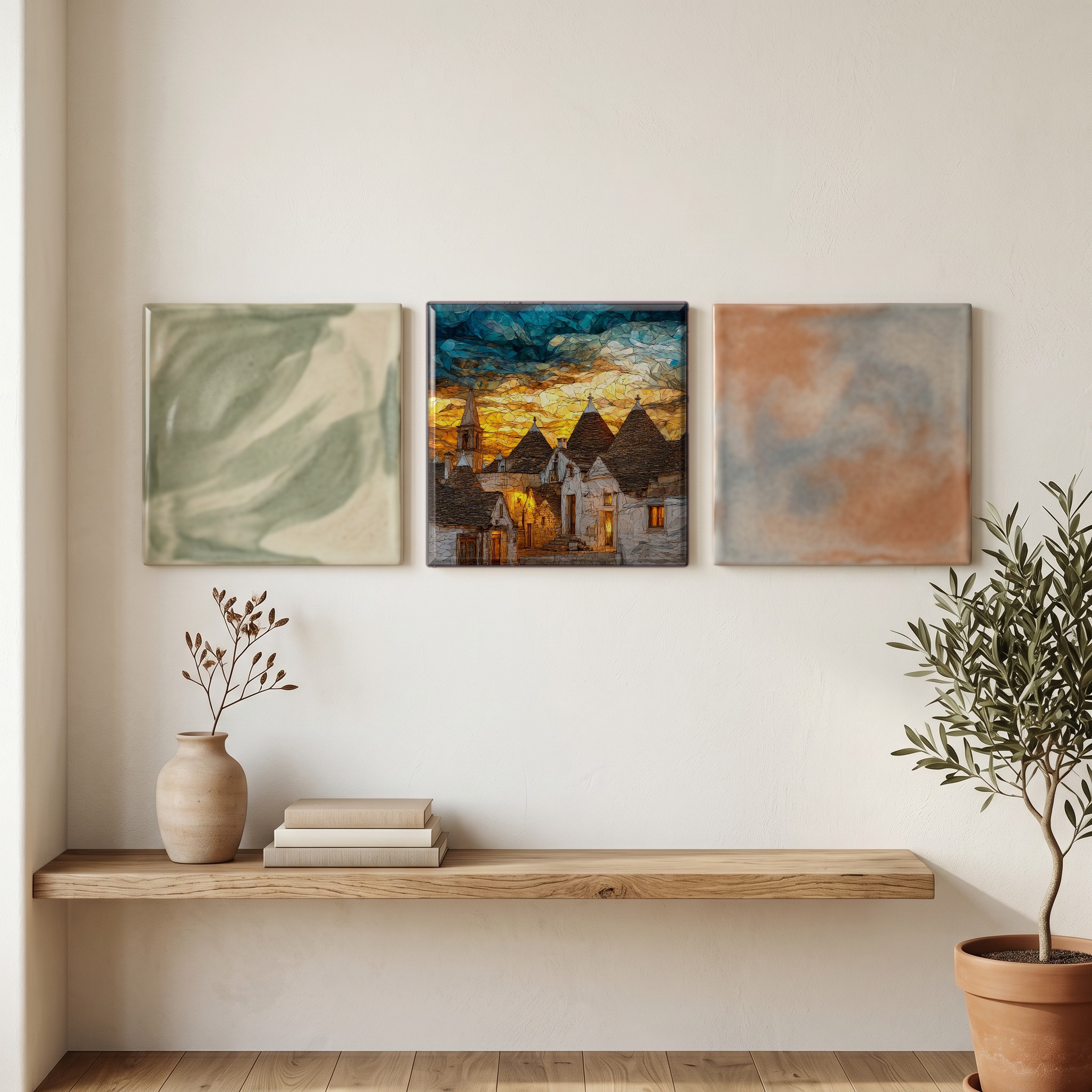
or build a grouping
or build a grouping

Three or five different vistas, hung together — a chapter of places you've been, or want to go.

about Alberobello Trulli

The place, in three passes.

A little of what's known, in case you fall down the rabbit hole — or want to go see it yourself.
the place

Alberobello sits in the Itria Valley of Puglia, in the Metropolitan City of Bari, about 55 kilometres southeast of the regional capital and 402 metres above the sea. Its two historic quarters, Rione Monti and Aia Piccola, hold more than 1,500 trulli, the conical drystone houses that give the town its name and its UNESCO World Heritage listing, granted in 1996. The settlement grew from scattered farms around the year 1000 into villages under the Acquaviva counts; in 1797 Ferdinand IV, the Bourbon king of Naples, granted Alberobello the status of a royal town and freed it from feudal rule. The name traces to the medieval Latin silva arboris belli, the wood of the tree of war.

the stone

The trulli are built by corbelling: flat limestone slabs laid in rings, each course stepped slightly inward until the cone closes at the top, with no mortar holding any of it. The stone came from the Murge, the karst plateau the town stands on, quarried on site as the builders dug cisterns beneath the floors. The grey slab roofs, called chiancarelle, sit over walls washed each year with lime. A carved pinnacle caps each cone as the builder's signature, and many roofs carry a painted symbol in whitewash: a cross, a heart, a sun, a zodiac sign. The oldest standing trulli date to the 14th century, and the technique is still practised by a handful of local masters.

the visit

Two quarters make up the protected zone. Rione Monti, the larger, holds about 1,030 trulli along steep lanes that climb to the church of Sant'Antonio, itself built in trullo form in 1926. Many of its houses are now shops and guesthouses, and it draws the crowds. Aia Piccola, with roughly 590 trulli, stays residential and quiet, closer to how the town once lived. The one trullo to break the single-storey rule is the Trullo Sovrano, raised in the mid-1700s by the Perta family and now a small house-museum. The streets are free to wander in every season; entry is charged only at a few museum trulli. The patron feast of Saints Cosmas and Damian fills the town each September.

where
Italy · Metropolitan City of Bari, Puglia
elevation
402 m · 1,321 ft
position
40.7833° N · 17.2333° E
the neighborhood

What's nearby.

A handful of named places within an hour's walk or short drive. Some we've already painted; some we will.
8 km SE
Locorotondo
hilltop town
15 km SE
Martina Franca
baroque town
17 km E
Cisternino
white town
9 km W
Putignano
carnival town
14 km NW
Grotte di Castellana
limestone caves
N
Alberobello Trulli
Locorotondo
Martina Franca
Cisternino
Putignano
Grotte di Castellana
common questions

What people ask.

A few questions we get about Alberobello Trulli — and about bringing the piece home.
about the place

Alberobello is a town in the Itria Valley of Puglia, in southern Italy, about 55 kilometres southeast of Bari at 402 metres above sea level. It belongs to the Metropolitan City of Bari and is known for its trulli districts.

A trullo is a traditional Puglian house built of limestone laid without mortar, with a corbelled conical roof of grey stone slabs over whitewashed walls. The plural is trulli. Alberobello holds the largest concentration, with more than 1,500 of them.

Local tradition holds that drystone houses could be pulled down quickly to avoid a property tax levied by the Kingdom of Naples, then rebuilt once inspectors left. The technique is also simply the regional way of building with the limestone at hand.

More than 1,500 trulli survive in two quarters: about 1,030 in Rione Monti and 590 in Aia Piccola. UNESCO inscribed them as a World Heritage Site in 1996, covering roughly 11 hectares of the town.

Many cones carry a symbol painted in whitewash, such as a cross, a heart, a sun, or a zodiac sign, read as religious, protective, or superstitious marks. The carved stone pinnacle on top served as the builder's personal signature.

The Trullo Sovrano is the only two-storey trullo in Alberobello, built in the mid-1700s by the Perta family and reached inside by a stone staircase. It now houses a small museum showing how a trullo family once lived.

The streets are open in every season and free to walk. Spring and autumn bring mild weather and thinner crowds; Rione Monti is busiest, while Aia Piccola stays quiet. The patron feast of Saints Cosmas and Damian fills the town each September.

about the piece in your home

It has been a meaningful gift for people with ties to the region. Alberobello is one of the most loved places in Puglia, and its trulli are a point of local pride. A Keepsake or Small with a handwritten note from the studio carries well.

The grey stone cones and whitewash, lifted by the deep stained-glass colour of the artwork, sit easily in Mediterranean-modern, warm minimalist, and earthy rustic rooms. It works against white or limewashed walls and natural wood, as a single piece or a small grouping.

Yes. The Mediterranean-revival look of limewash walls, terracotta, and natural stone has carried into mainstream interiors, and a piece of Puglian stone architecture reads as part of that language rather than a souvenir. The colour keeps it from feeling flat or rustic.

Above a sofa, a single Large anchors the wall, or a 4-tile Mural fills it with more presence. Above a console or in a hallway, a Medium or a 9-tile Mural grid both work. For a shelf or desk, the Small and Keepsake sit upright in a stand.

Yes. For a kitchen backsplash, a shower, or any damp or vertical spot, choose the Dura Satin or Matte finish; both are scratch-resistant and made for those uses. The glossy finish is better kept to framed wall pieces in drier rooms.

A soft microfibre cloth and water is all it needs. The colour is slowly infused into the ceramic surface under high heat and pressure and lives in the surface, so it will not fade or lift with normal cleaning. Skip abrasive pads and harsh solvents.

Yes. Every WenderVista piece is created in-house by Reid Wender and produced by our own studio, with no licensed or stock imagery. The Alberobello tile is part of our atlas of places, made the same way as every other piece in the line.

if this one stayed with you

A few you might also love.

Hand-picked by the eye that found Sorapis. Same air, same kind of quiet.
— a collection

The Italian Dolomites,
painted slow.

The valleys between Cortina and Val Gardena, the tarns you walk an hour to see, the towers that turn the colour of a banked fire just before dark. Wander the collection by valley, by season, or follow the path Reid walked.

Tre Cime
Braies
Misurina
Sorapis
Cinque Torri
Sassolungo
Marmolada