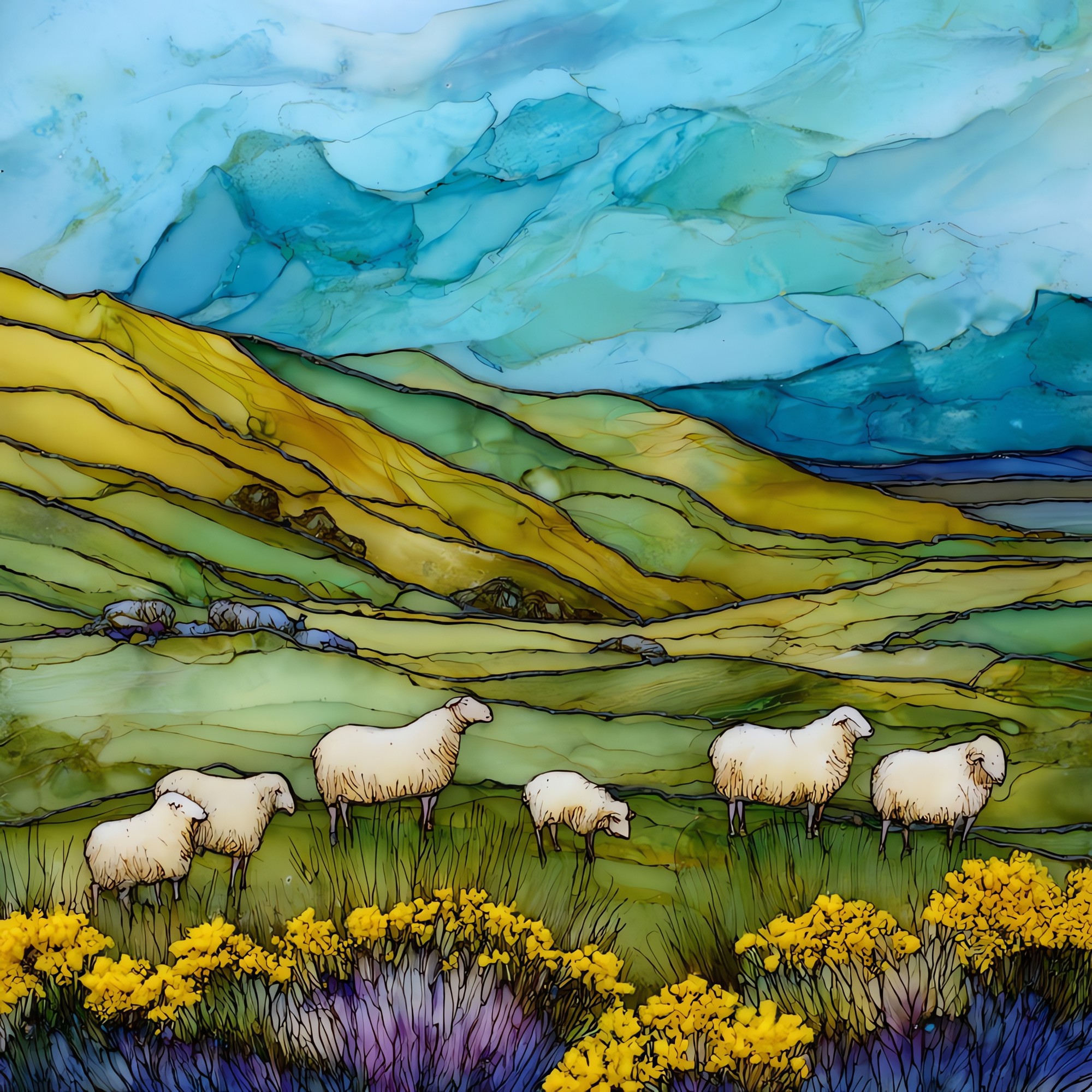
Wicklow Mountains Pastoral
— — stone walls and the colour of wet heather.
Not only on a wall.
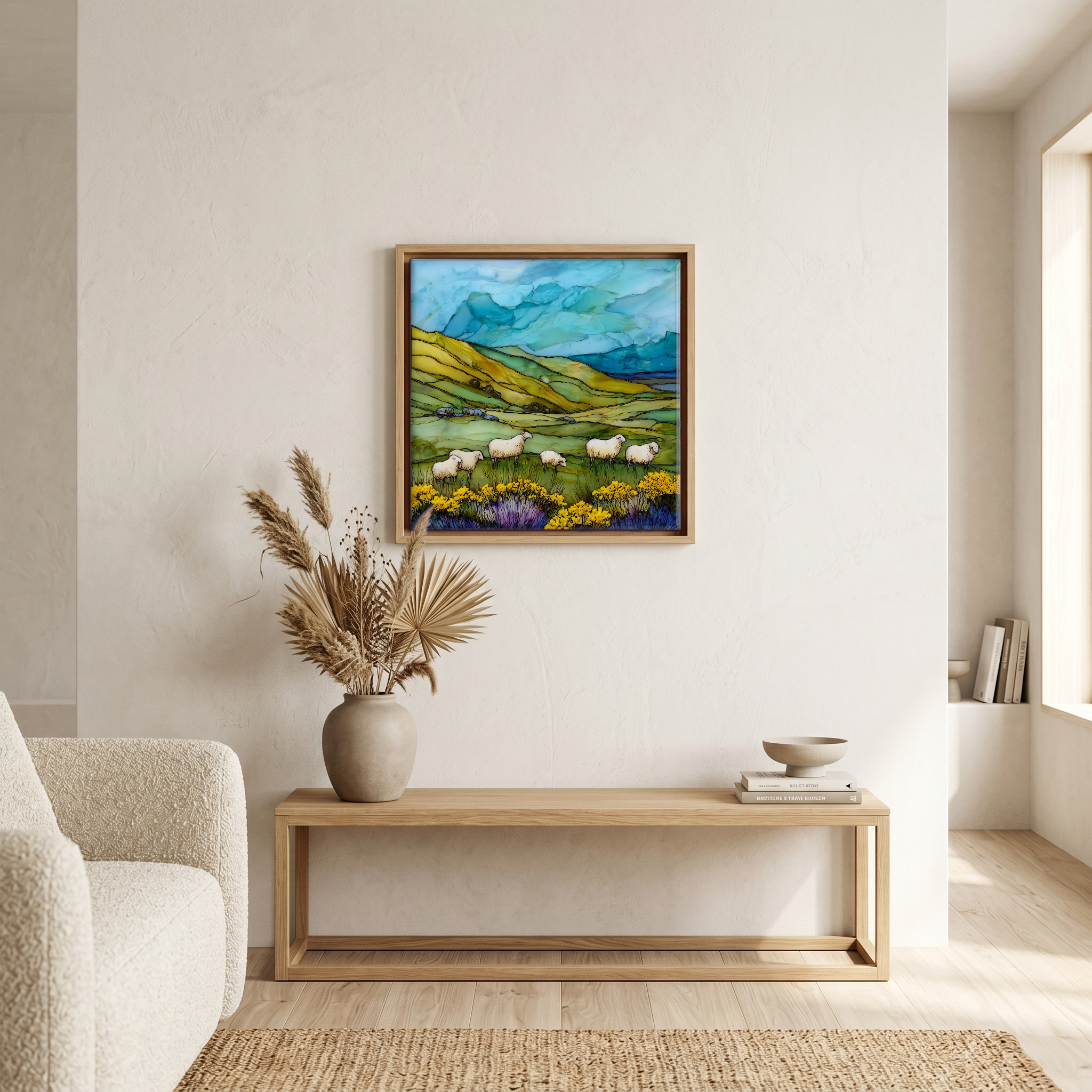
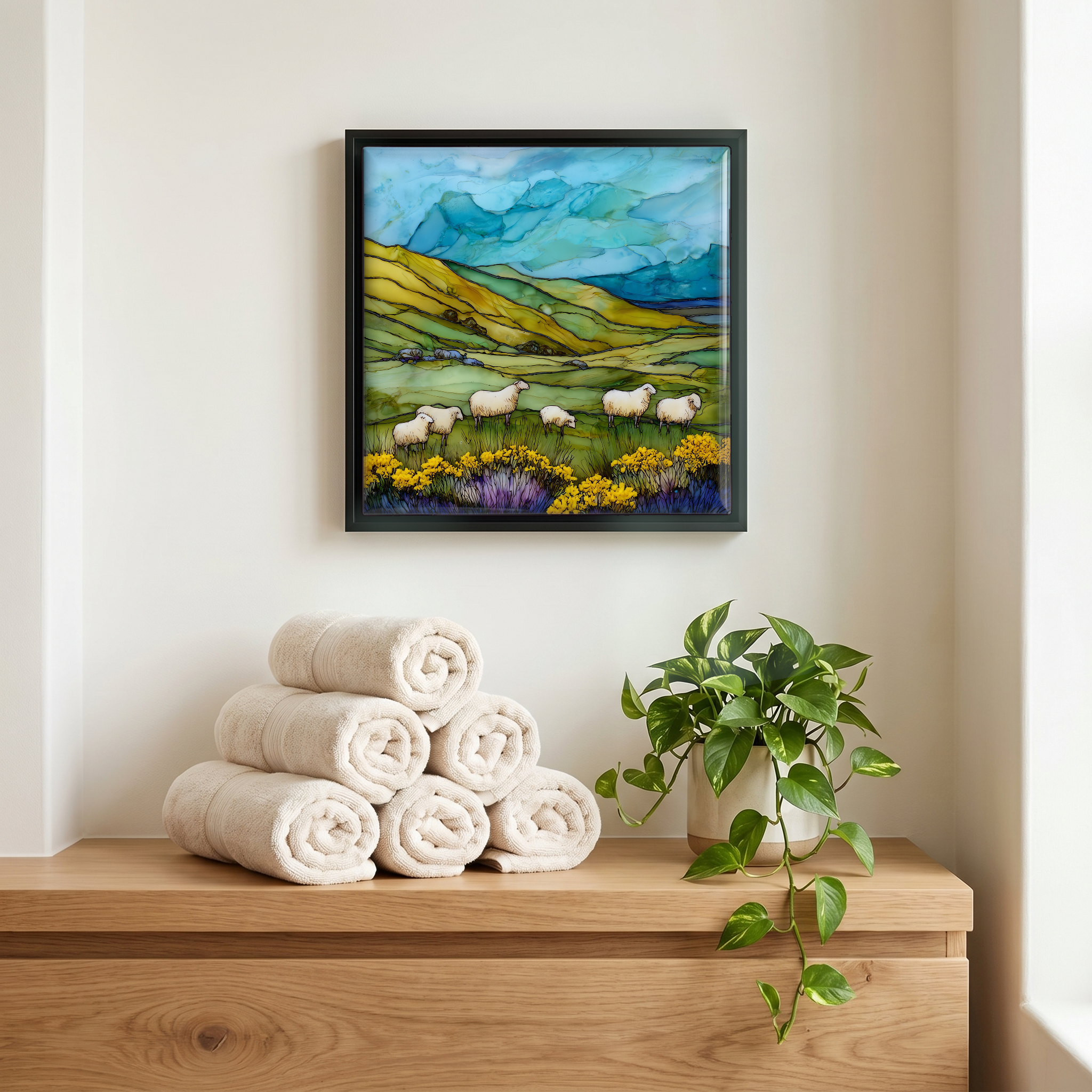
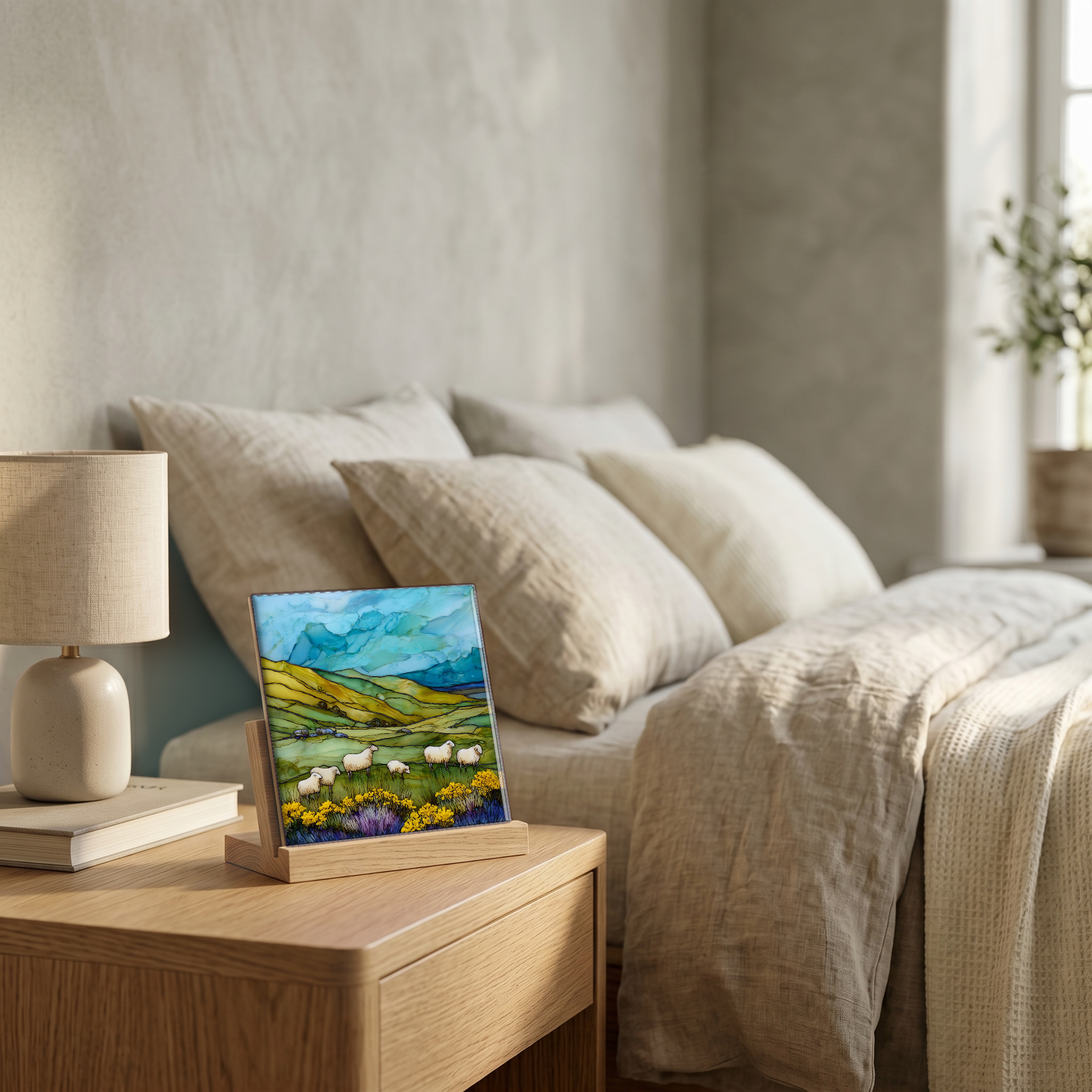
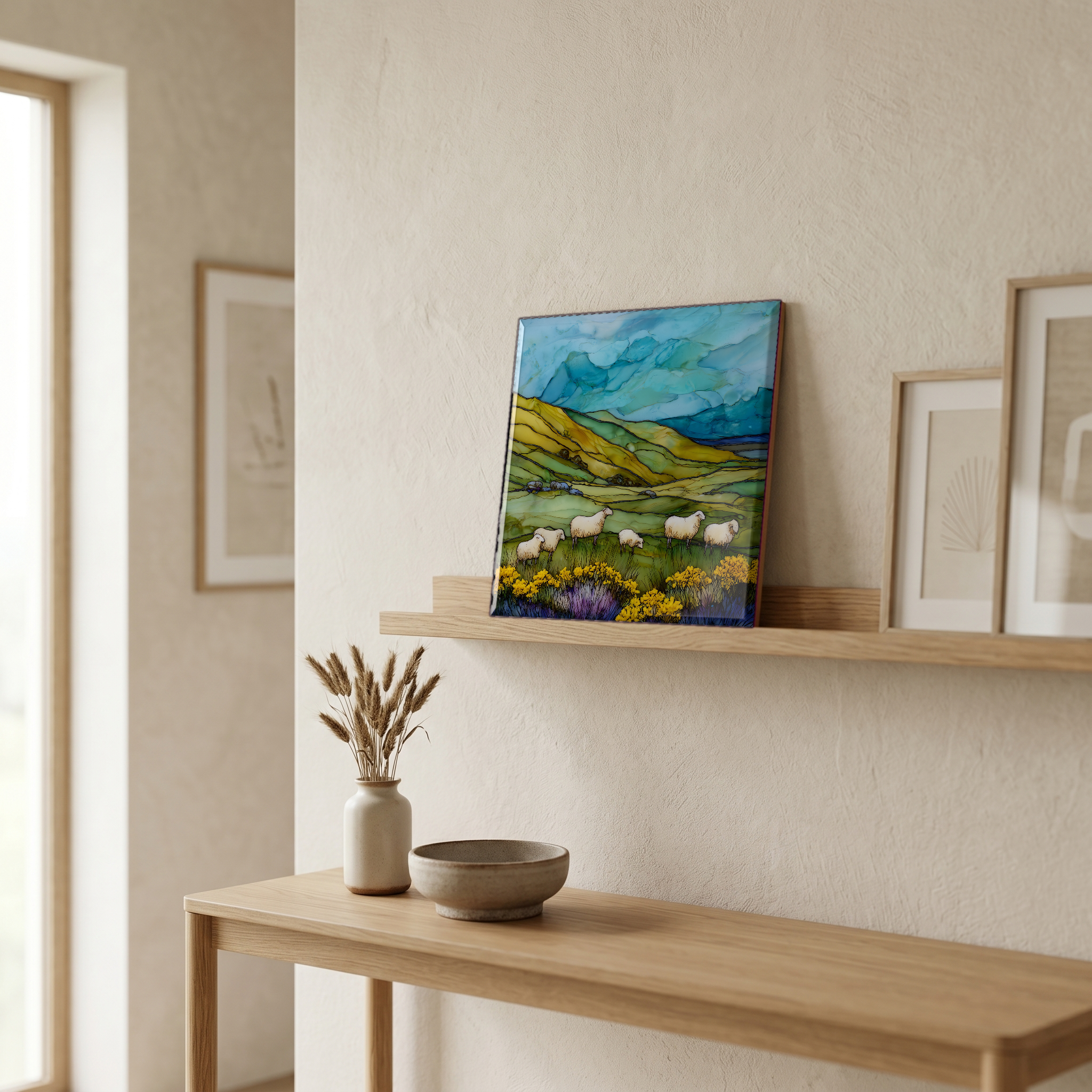
“The granite uplands south of Dublin. Sheep on the lower slopes, blanket bog and heather above, and a long line of drystone walls climbing as high as anyone bothered to take them. The pastoral country sits on the flanks of a mountain range that gets its colour from the weather more than from the season. The heather goes purple in August. The bracken goes copper in October. The rain comes sideways most days, which is why the green stays.
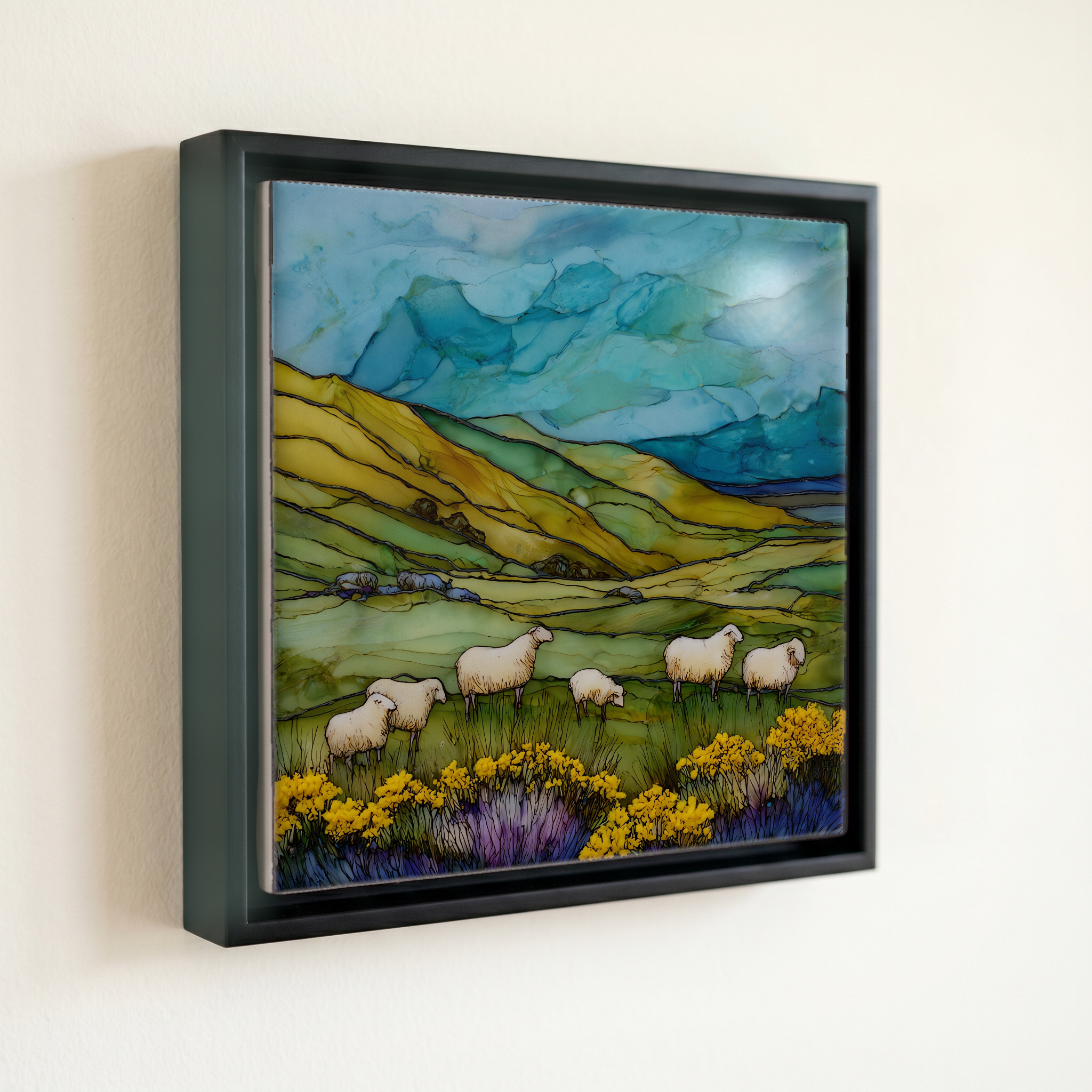
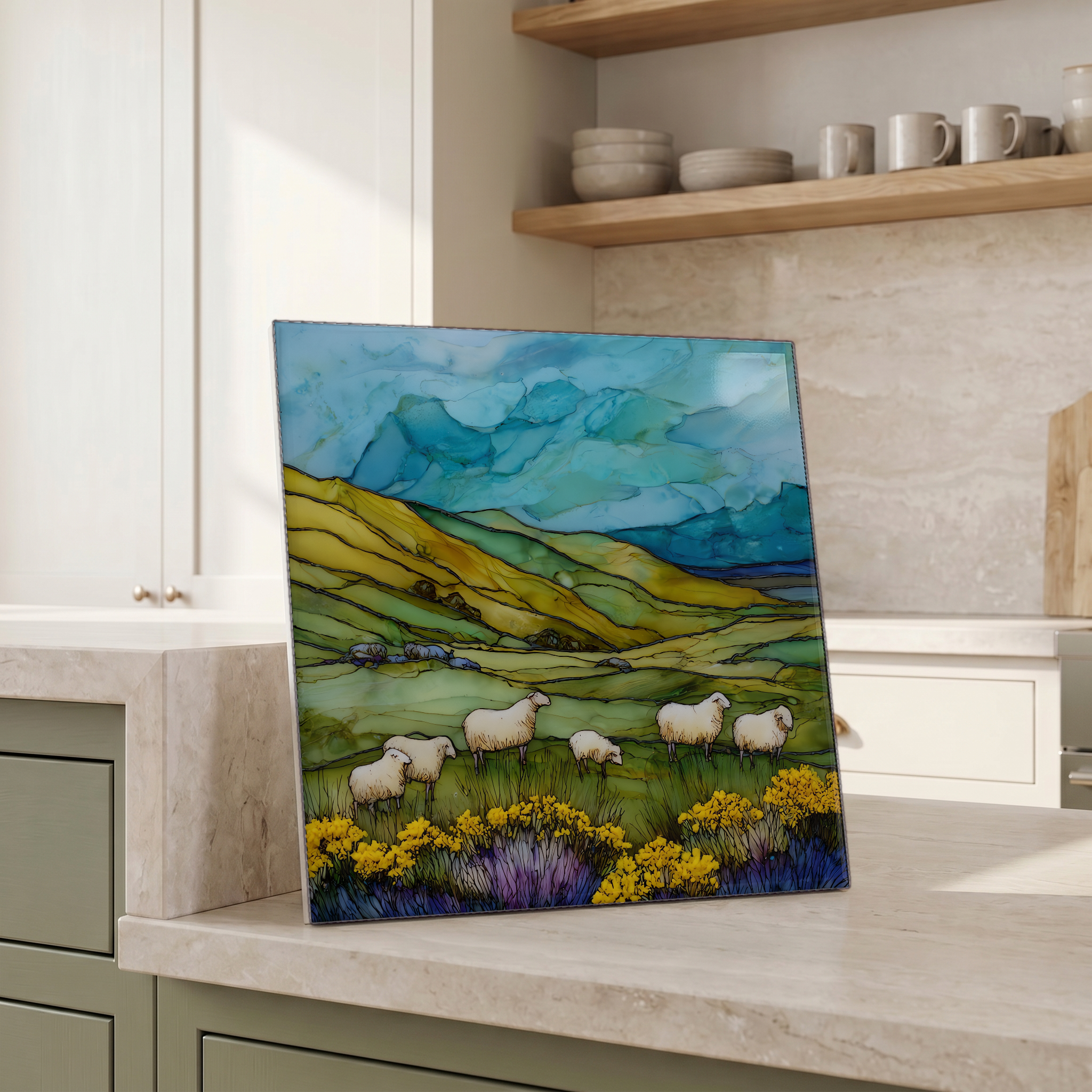
Wicklow Mountains Pastoral, on ceramic.
Each tile is finished by hand in our Knoxville studio. Artwork is slowly infused into the ceramic surface under high heat and pressure, and rests beneath a thin glossy finish. The colour lives in the surface, not on top of it.
Pick any four 4-inch tiles — National Parks you've been to, a Smokies set, the four seasons of one place. $ for a set of , cork-backed, ready to live on the table.
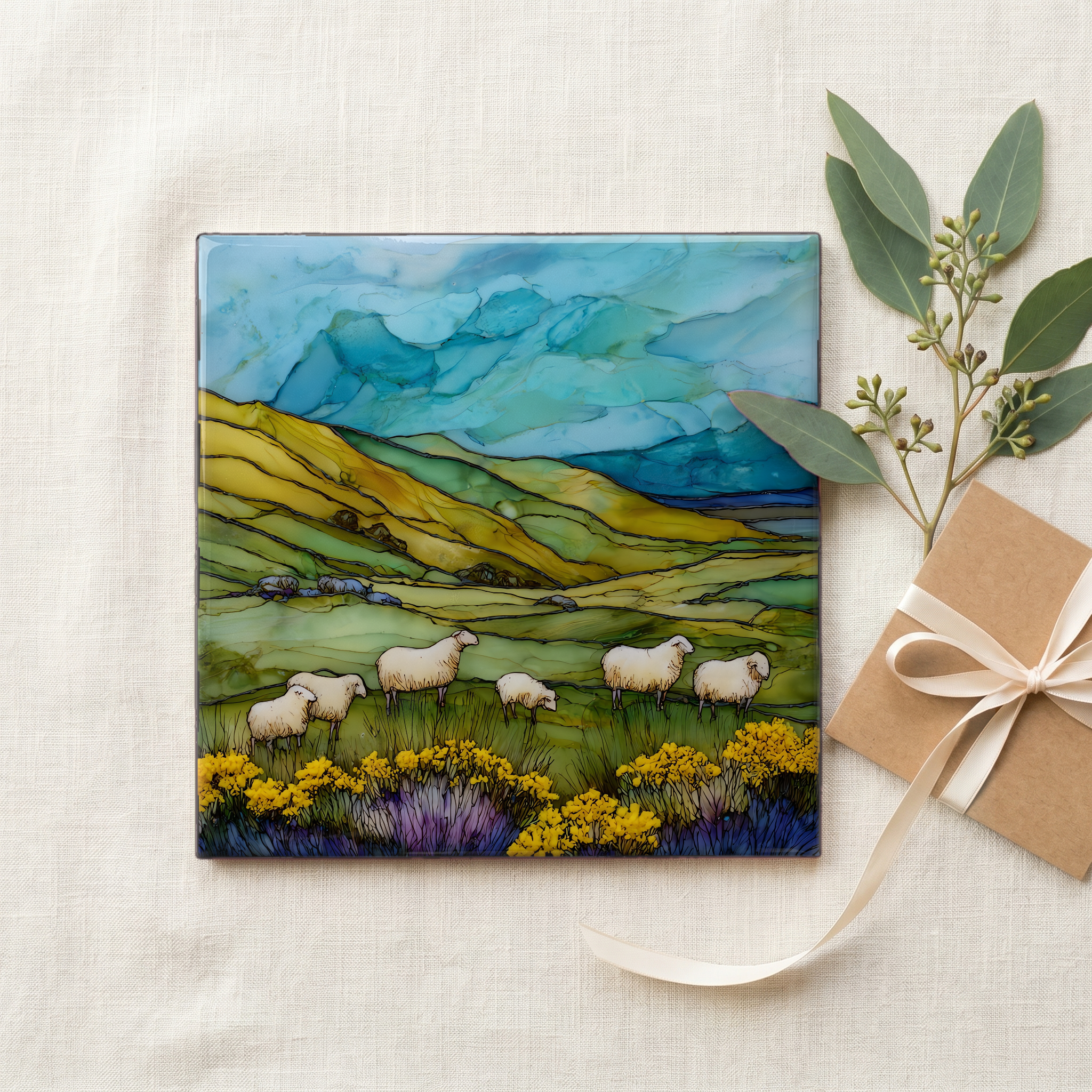
Each tile ships in a kraft box, tied with cream ribbon, with a handwritten note from the studio if you'd like to add one.
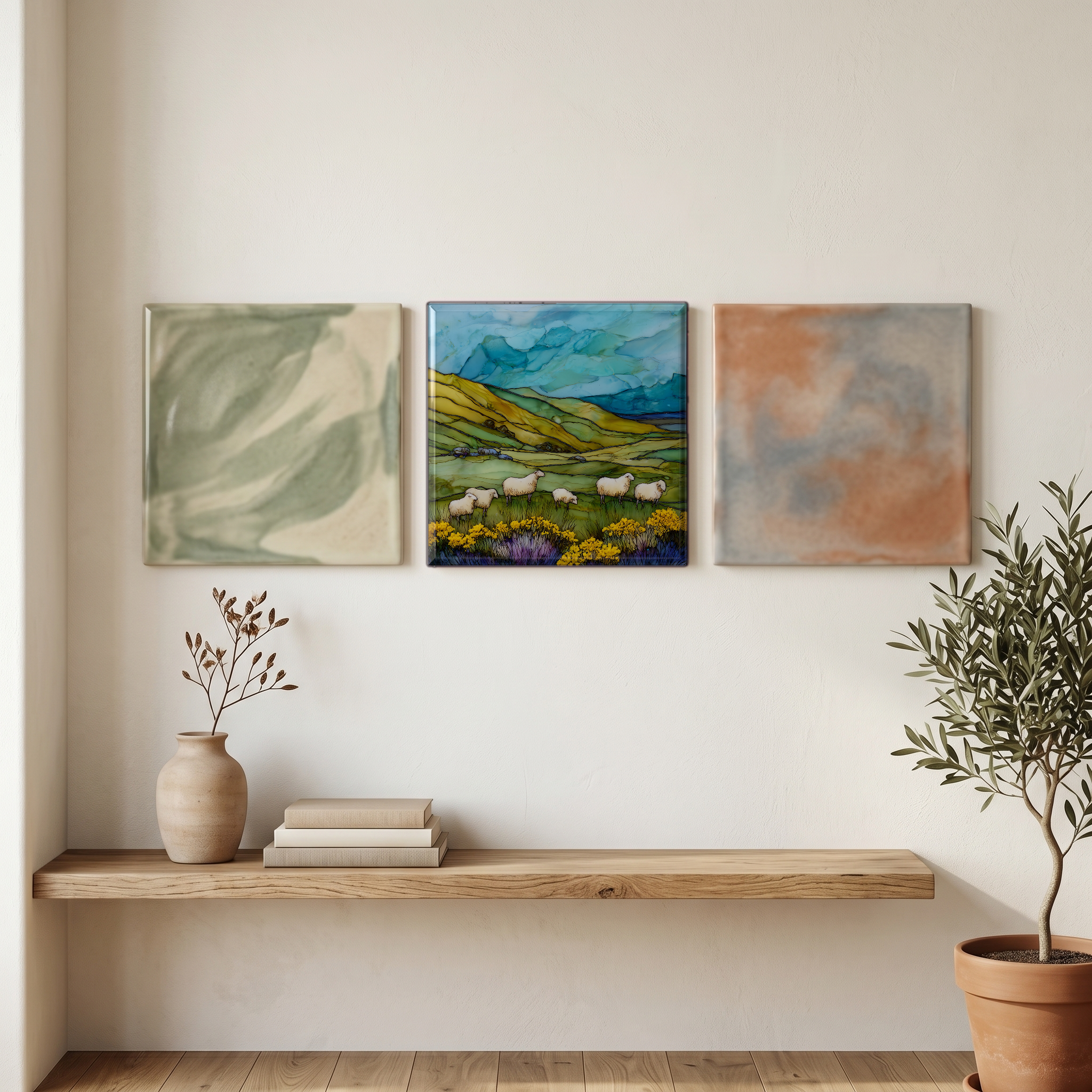
Three or five different vistas, hung together — a chapter of places you've been, or want to go.
The place, in three passes.
The Wicklow Mountains run southeast of Dublin and form the largest continuous upland area in Ireland. Lugnaquilla, at 925 metres, is the highest peak; the range as a whole is the surface of the Leinster Granite, an intrusion that pushed up roughly 404 million years ago and is the largest exposed granite body in Britain or Ireland. Wicklow Mountains National Park, established in 1991, covers about 220 square kilometres and is the largest of Ireland's six national parks. The Wicklow Way, a 131-kilometre walking route from Marlay Park in south Dublin to Clonegal in County Carlow, opened in 1980 as the first long-distance trail in the country.
Underneath everything is the Leinster Granite, the largest single granite intrusion in Britain and Ireland, with an exposed surface area of roughly 1,500 square kilometres. The rock weathers slowly into coarse grit and rounded boulders, which is why the drystone walls dividing the lower fields look the way they do: blocky, irregular, stacked dry without mortar. Where peat covers the granite, the surface reads as blanket bog. Where the granite is exposed near the summits, you get the pale grey outcrops the local sheep farmers call slabs. The same granite was quarried at Ballyknockan, on the western edge of the range, for parts of the Bank of Ireland building and Trinity College Dublin.
Heather blooms across the slopes from late July into September, with the purple of Calluna vulgaris most concentrated in August. By October the bracken on the lower flanks turns copper, and the pastoral fields hold their green through the mild Atlantic winters that rarely freeze the lowland ground. The summits of the range receive around 2,000 millimetres of rain a year, more than three times what Dublin gets thirty kilometres to the north. Snow is intermittent from November through March on the higher tops; the lower pastoral country usually sees only a few light dustings a winter. The best walking weather sits between May and early October.